

The 5 best chainsaws for land clearing of 2026 are the EGO Power+ CS2005 20 in (Best Overall), the PROYAMA 68cc Gas Chainsaw 22″ 24″ Bar (Best for Professionals), the PROYAMA 68cc Gas Chainsaw 20″ 24″ Bar (Best Ergonomic Design), the Husqvarna 460 Rancher 24 Inch (Best Premium), and the Baococo 62cc Gas Chainsaw (Best for Cold Climates).
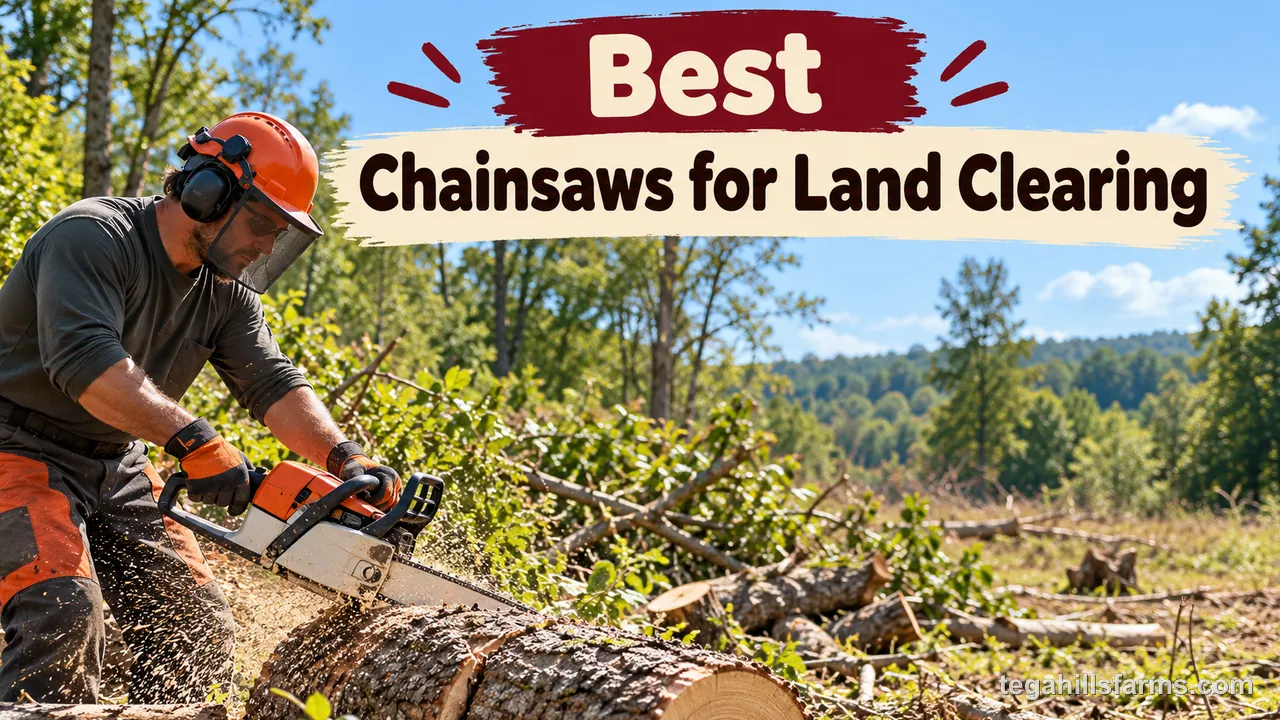
Clearing work rewards the right mix of engine or motor power, bar length, weight, and starting reliability. A saw that is strong but exhausting to carry will slow you down just as much as one that is light but underpowered.
The real worry is stamina. Dense brush, stumps at ground level, and hours of continuous cutting expose weak points that a few pruning cuts never reveal.



Before you compare models, walk the area you plan to clear and note how far you will carry the saw over rough ground. Carrying weight tires you out before the cutting does.
What Makes a Chainsaw Right for Land Clearing?
A land clearing chainsaw is built for long, repeated cutting sessions through dense brush, stumps, and ground-level wood, with sustained power, adequate bar reach, manageable weight, and reliable starting.
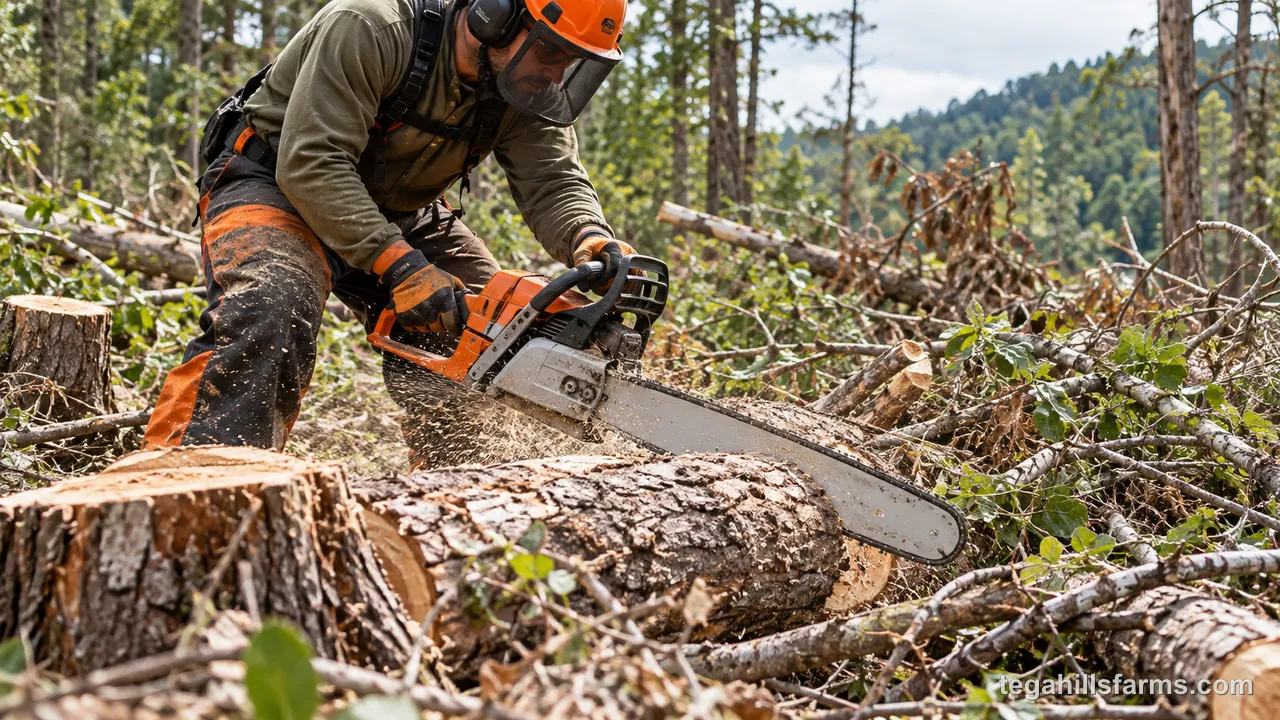
That workload is harder on a saw than occasional pruning or firewood cutting. Brush dulls a chain quickly, stumps put the chain close to dirt, and a saw that is hard to start or tiring to hold turns every break into a delay. If you want to compare every chainsaw type before narrowing to clearing work, our guide to the best chainsaws covers the full category. Owners of bigger parcels can narrow it further with the best chainsaws for large properties.
What Should You Look for in a Chainsaw for Land Clearing?
Four criteria decide a clearing saw: power output, bar length, weight and vibration, and safety and starting features. Power and bar length set how much wood the saw moves through per pass. Weight, vibration, and starting features decide whether you can keep cutting once the first stretch of work is behind you.
How Much Power Does Land Clearing Take?
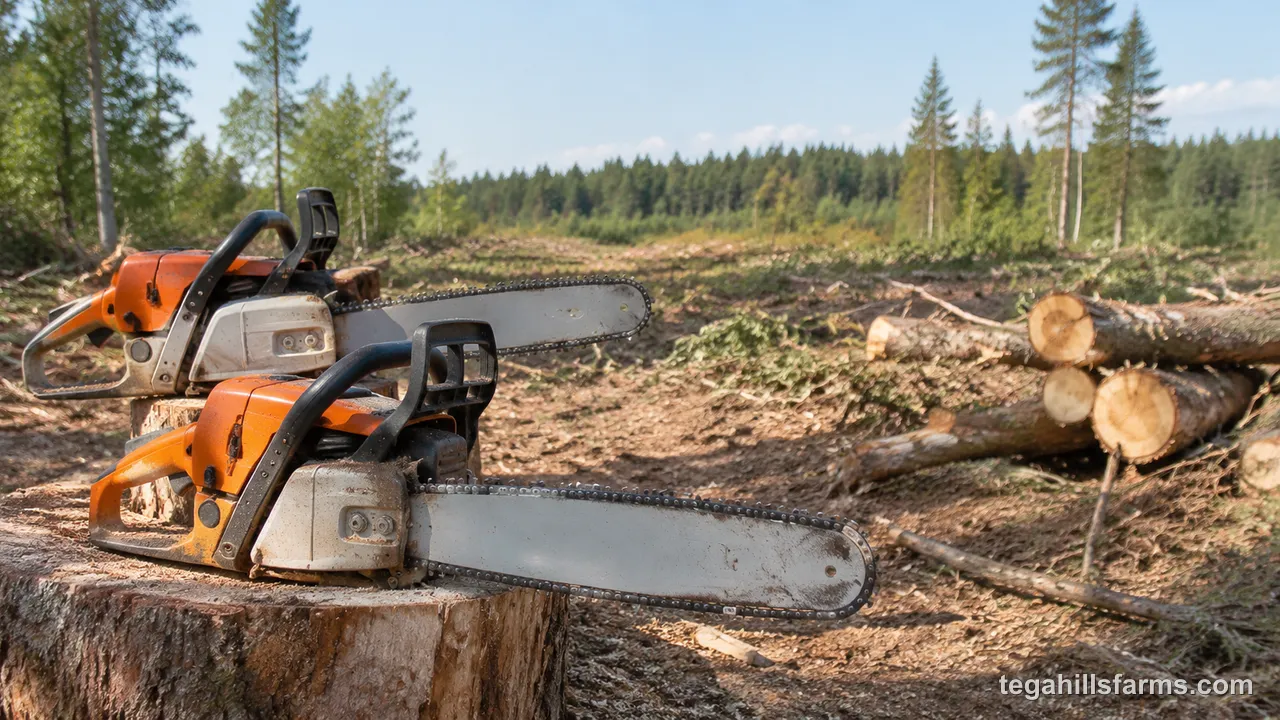
Power on a clearing saw comes from engine displacement and horsepower on gas models and brushless motor output on battery models, and it sets how fast the chain moves through dense wood and stumps.
A bigger engine holds chain speed when the bar sits deep in a stump, which is why it suits sustained clearing. A smaller engine is fine for occasional jobs, but it bogs down sooner and forces you to ease off the cut. Battery saws describe output in gas-equivalent terms, so a brushless motor rated near a given cc class cuts like a saw of that size, at least until the pack runs low. Gas saws in the 60cc class are a common starting point for sustained work, and the best 60cc chainsaws show what that class offers.
Which Bar Length Works for Land Clearing?
Longer bars win on thick trunks and reach through tangled growth, shorter bars win on control and lower fatigue, and clearing usually lands on mid-length to long bars.
A longer bar widens cutting capacity, so it handles thick trunks more easily, and the tip reaches into tangled growth without you stepping in. The cost is leverage. More bar out front means more kickback to manage and more strain on your arms. A shorter bar stays easier to control and tires you less, which suits pruning and light brush.
For clearing, bars from 20 to 24 inches, the sizes these saws carry, balance reach and control. Firewood and pruning often work fine with less. The best 20 inch chainsaws cover that class in more detail.
Do Weight and Vibration Matter on a Long Clearing Day?
Yes, weight and vibration matter on a long clearing day because saw weight, balance, and anti-vibration handles decide how tired your arms and hands get and how steady your cuts stay.
A heavy saw makes you cut slower and less accurately as the day wears on, and poor balance forces you to fight the bar. Anti-vibration handles take the buzz out of your hands, which also helps you keep control.
Battery packs add weight, so a cordless saw can carry heavier than a gas saw. The EGO Power+ CS2005 is 30 pounds, while the Husqvarna 460 Rancher is 13.2 pounds. A lighter gas saw is also easier to carry across rough ground.
Which Safety and Starting Features Are Worth Having?
Four features change the buying decision: inertia or anti-kickback chain brakes, easy-start systems, winterized carburetors, and tool-free chain tensioning.
- Chain brakes cut injury risk by stopping the chain when the saw kicks. Hidden wire and rocks in brush make kickback a real possibility.
- Easy-start systems save frustration, since a saw that takes many pulls costs you time all day.
- Winterized carburetors help gas saws run in cold conditions, which matters if you clear in colder months.
- Tool-free chain tensioning lets you tighten a loosening chain on the spot, which comes up often when dirt and brush wear on the chain.
Gas or Battery: Which Is Better for Land Clearing?
Gas saws win on sustained power and fast refueling, battery saws win on low noise and minimal maintenance, and gas is the safer choice for long clearing days far from a charger.
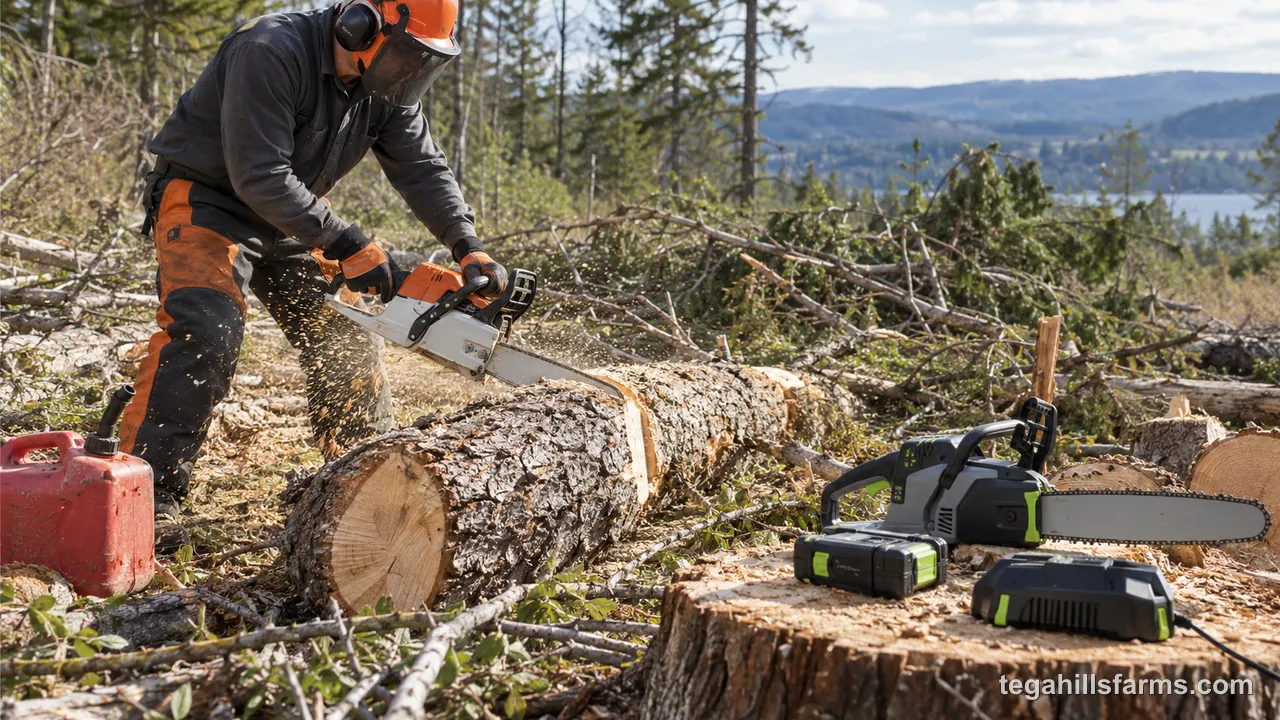
Refueling takes a minute, while a drained battery means swapping in a charged spare or waiting on the charger. A cordless saw like the EGO Power+ CS2005 closes that gap with extra packs, but spare packs add weight to carry.
Noise and fumes also differ. Battery saws run much quieter with no exhaust, which matters near neighbors or in early hours. Gas saws need fuel mix, air filter care, spark plug checks, and careful winter storage. Cold weather affects both types differently. A gas saw needs a carburetor that copes with low temperatures, as on the Baococo, while a battery loses runtime in the cold.
Weight sometimes favors gas. The EGO weighs 30 pounds, while the Husqvarna 460 Rancher weighs 13.2 pounds.
Choose gas for acreage, thick stumps, and long days. Choose battery for smaller cleanup where quiet, easy starts, and no fuel handling matter more. The best battery chainsaws cover cordless options in more depth, and the best gas chainsaws do the same for engines.
The 5 Best Chainsaws for Land Clearing, Ranked
The 5 best chainsaws for land clearing of 2026 are EGO Power+ CS2005 20 in, PROYAMA 68cc Gas Chainsaw 22″ 24″ Bar, PROYAMA 68cc Gas Chainsaw 20″ 24″ Bar, Husqvarna 460 Rancher 24 Inch, and Baococo 62cc Gas Chainsaw.
The cordless EGO trades weight for convenience, and the four gas saws trade fueling and upkeep for sustained cutting. The Husqvarna and Baococo differ mainly in handling and cold-weather starting. Between them they serve owners of rough acreage and farm properties as well as anyone who clears in cold conditions.
#1 EGO Power+ CS2005 20 in — Best Overall
Owners who would rather skip fuel mix and pull cords will like this cordless saw. Its brushless motor delivers power equivalent to a 55cc gas chainsaw, with chain speeds up to 82 ft/s, which is enough to work through large branches and stumps.
Key Specs:
- Power: 56V brushless motor, 55cc gas equivalent
- Battery: 6.0Ah EGO 56V ARC Lithium, charger included
- Bar and chain: 20-inch, full chisel tooth, 3/8-inch pitch, 0.050-inch gauge
- Chain speed: up to 82 ft/s (25 m/s)
- Runtime: up to 135 cuts on a 6×6 per charge
- Weight: 30 pounds
Detailed Review:
The brushless motor carries the case for this saw. It delivers power equivalent to a 55cc gas chainsaw, and the full chisel tooth chain takes large branches and stumps cleanly. The 20-inch bar gives useful reach for thick trunks.
The 6.0Ah battery in the box fits the EGO 56V ARC Lithium platform, so owners of other 56V tools can swap packs. That platform also opens up more saws in the best 56v chainsaws class. Runtime is rated in cuts on a 6×6, and dense stumps drain a pack faster than clean lumber, so a spare battery is worth owning.
Weight is the trade-off. At 30 pounds, it is far heavier than a gas saw like the 14.5-pound PROYAMA PCS68, and you notice that over rough ground. In return you skip fuel mixing, pull cords, and exhaust, and you get a digital display for battery charge and brake status.
A front LED work light and IPX4 weather resistance help when clearing runs into dusk or damp conditions.
Pros:
- Brushless motor delivers power equivalent to a 55cc gas saw
- No fuel mixing or pull cord needed
- Battery shares the EGO 56V ARC platform
- LED work light helps at dusk
Cons:
- Heavy at 30 pounds for carrying over rough ground
- Cuts per charge limit long continuous sessions
Who It’s For:
Homeowners who want clearing power without fuel mix, pull cords, or engine upkeep will find a lot to like here, especially anyone already holding 56V batteries from other tools. Readers who carry a saw across rough ground all day, or who can’t charge spare packs, should look at a gas saw instead.
Editor’s Verdict:
Brushless power with no fuel mixing, no pull cord, and no engine upkeep makes this a low-fuss clearing saw, provided you can live with the weight.
#2 PROYAMA 68cc Gas Chainsaw 22″ 24″ Bar — Best for Professionals
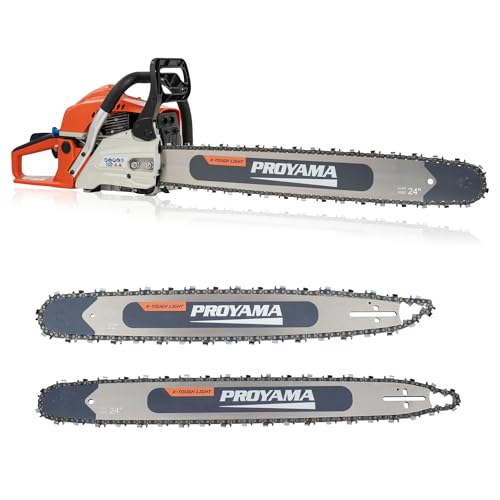
Heavy farm and forest clearing is where a 68cc engine makes sense. This one pairs a 4.5HP two-cycle engine with both a 22-inch and a 24-inch bar in the box, so a single saw covers small lumber and large logs.
Key Specs:
- Engine: 68cc, 4.5HP, 2-cycle
- Bars: 22-inch and 24-inch alloy guide bars included
- Weight: 17 pounds
- Chain brake and case: magnesium alloy
- Model: PCS68X
Detailed Review:
The 68cc, 4.5HP 2-cycle engine gives steady torque for heavy farm and forest work, where a smaller engine would labor in thick wood. That engine class is what working land asks for, and owners comparing options for that kind of property can look at the best chainsaws for ranch use.
Two alloy guide bars come in the box. The 22-inch bar handles flexible, precise trimming and small lumber, and the 24-inch bar takes large logs and thick branches. Using the shorter bar for lighter work saves your arms.
A magnesium alloy chain brake and case resist deformation and wear during heavy cutting, which counts when the saw gets dragged through brush all season. The starting system is built for quick, reliable starts, including in cold weather, and the simplified internal structure is meant to cut down on oil use and repairs.
The trade-offs are weight and upkeep. At 17 pounds it is heavier than the 14.5-pound PROYAMA PCS68, and it still runs on a 2-cycle fuel mix with bar oil.
Pros:
- 68cc engine delivers steady torque for heavy cutting
- Two bars cover small lumber and large logs
- Magnesium alloy chain brake and case resist wear
- Quick starting, even in cold weather
Cons:
- Weight adds fatigue over long clearing days
- Two-cycle engine means fuel mixing and bar oil
Who It’s For:
Landowners facing thick timber and farm-scale cleanup, who want a bar choice per task and an engine that doesn’t labor, will get the most from this saw. Those who prefer a lighter tool, or who clear only the occasional overgrown corner, may find a gentler machine easier to handle.
Editor’s Verdict:
Engine size, dual bars, and a magnesium-alloy build suit sustained heavy cutting well. Plan on carrying the extra weight and handling fuel mix.
#3 PROYAMA 68cc Gas Chainsaw 20″ 24″ Bar — Best Ergonomic Design
Long days on the saw are easier when the handle works with you. An anti-vibration system and ergonomic handle on this 68cc saw reduce hand fatigue and sharpen control, while the 14.5-pound weight keeps carrying manageable.
Key Specs:
- Engine: 68cc, 4.5HP, 2-cycle
- Bars: 20-inch and 24-inch included
- Weight: 14.5 pounds
- Handling: anti-vibration system, ergonomic handle
- Chain brake and case: magnesium alloy
- Model: PCS68
Detailed Review:
Hand fatigue is what ends a long clearing day early, and this saw is built to delay it. The built-in anti-vibration system reduces hand fatigue and improves control during extended cutting, while the ergonomic handle gives better balance.
Underneath is a 68cc 2-cycle engine rated at 4.5HP, enough for tree felling, firewood, storm cleanup, and land clearing. An easy start system keeps pulling effort down, and the magnesium alloy chain brake and case resist wear in heavy cutting.
The 20-inch bar suits tighter brush and smaller trunks, and the 24-inch bar adds capacity for large trees and thick logs. Swapping between them lets one saw handle both stages of a clearing job.
Compared with the PROYAMA PCS68X, this model weighs less and carries a 20-inch bar where the PCS68X carries a 22-inch one. For long sessions through brush, the comfort features matter more than that bar difference.
Pros:
- Anti-vibration system reduces hand fatigue
- Ergonomic handle improves balance and control
- Lighter than the other 68cc PROYAMA
- Two bars suit varied clearing tasks
- Easy start system cuts pulling effort
Cons:
- Two-cycle engine means fuel mixing and upkeep
- Bar sizes are overkill for light pruning
Who It’s For:
Anyone who spends long stretches on the saw and wants less buzz in the hands will appreciate this design, from homeowners with rough land to people doing steady farm work. It is a poor match for readers who want a battery saw’s quiet and zero fueling, or who only prune now and then.
Editor’s Verdict:
Comfort-focused handling on a 68cc engine makes long sessions less punishing. Choose it when hand fatigue worries you more than bar choice.
#4 Husqvarna 460 Rancher 24 Inch — Best Premium
Dependable starts and low-vibration handling matter most on a day of steady cutting. The 460 Rancher’s 60.3cc X-TORQUE engine and LowVib system are built for exactly that, with a Smart Start system that gets it running with minimal effort.
Key Specs:
- Engine: 60.3cc, 3.6HP, 2-cycle X-TORQUE
- Bar: 24-inch (recommended range 13 to 24 inches)
- Weight: 13.2 pounds
- Handling: 7 degree offset front handle, LowVib
- Safety: inertia-activated chain brake
- Starting: Smart Start, combined choke/stop control
Detailed Review:
X-TORQUE engine technology keeps power up even at low RPMs, which helps the chain keep moving when the bar sits deep in dense wood. The 60.3cc, 3.6HP engine favors refinement over sheer displacement.
Air injection technology spins larger dust and debris away before it reaches the air filter, which protects engine life in dirty clearing conditions. A combined choke/stop control lowers the risk of flooding, and Smart Start gets the saw running with minimal effort.
Handling is where the 460 Rancher stands out. At 13.2 pounds, with a 7 degree offset front handle and LowVib technology, it handles easily across the recommended 13- to 24-inch bar range. An inertia-activated chain brake reduces the chance of injury from kickback.
Premium positioning is the trade-off, since the gains are in refinement and handling rather than extra displacement.
Pros:
- X-TORQUE engine holds power at low RPMs
- LowVib and offset handle ease long sessions
- Air injection keeps debris from the air filter
- Inertia-activated chain brake reduces kickback injury risk
- Smart Start needs minimal effort
Cons:
- Smaller engine than the PROYAMA 68cc saws
- Premium positioning asks more of the budget
Who It’s For:
Owners who clear in long sessions and value predictable starting, smooth handling, and engine longevity over raw displacement will be happy with this one. Readers on a tight budget, or those who need more engine for big timber, may do better elsewhere.
Editor’s Verdict:
Smart starting, low vibration, and an engine built for longevity make this a dependable clearing partner. Premium positioning is the only trade-off.
#5 Baococo 62cc Gas Chainsaw — Best for Cold Climates
Cold mornings are where a winterized carburetor with pre-heating pays off. This 62cc saw adds a 3D anti-kickback chain brake and tool-free chain tensioning, so it is set up for field work when temperatures drop.
Key Specs:
- Engine: 62cc, 2-cycle
- Bars: 20-inch and 24-inch
- Weight: about 16.6 pounds
- Carburetor: winterized, with pre-heating
- Chain brake: 3D anti-kickback
- Chain tensioning: tool-free
Detailed Review:
A winterized carburetor with pre-heating is the reason to consider this saw for cold-season clearing. Cold fuel systems are where gas saws tend to give trouble, and this design is aimed at easier running in low temperatures.
Tool-free chain tensioning means you can tighten a loosening chain right at the cut without hunting for a wrench, which helps when dirt and brush keep working on the chain. The 3D anti-kickback chain brake adds protection when hidden wire or rocks make the bar kick.
The 62cc 2-cycle engine sits in a forged magnesium crankcase that is built for durability. The engine is EPA Phase III and CARB compliant.
Compared with the Husqvarna 460 Rancher, the Baococo weighs about 16.6 pounds against 13.2 pounds, so it asks more of your arms on long carries. What it offers in return is the cold-weather carburetor and tool-free tensioning.
Pros:
- Winterized carburetor with pre-heating suits cold starts
- Tool-free chain tensioning speeds field adjustments
- 3D anti-kickback chain brake adds protection
- Forged magnesium crankcase adds durability
Cons:
- Heavier than the Husqvarna 460 Rancher
- Fuel mixing and upkeep come with any gas saw
Who It’s For:
People who clear land through colder months and want a saw that fires up without fuss will find a good match here, particularly if they like adjusting chain tension without tools. Readers in mild climates won’t use its main strength, and anyone prioritizing low weight should compare lighter gas saws.
Editor’s Verdict:
Cold-weather starting and tool-free tensioning make this a practical field saw for winter clearing. Weight is the cost.
How Do These Chainsaws Compare Side by Side?
The EGO CS2005 wins on cordless convenience, the Husqvarna 460 Rancher on lighter weight, the PROYAMA saws on engine size and bar options, and the Baococo on cold-weather starting.
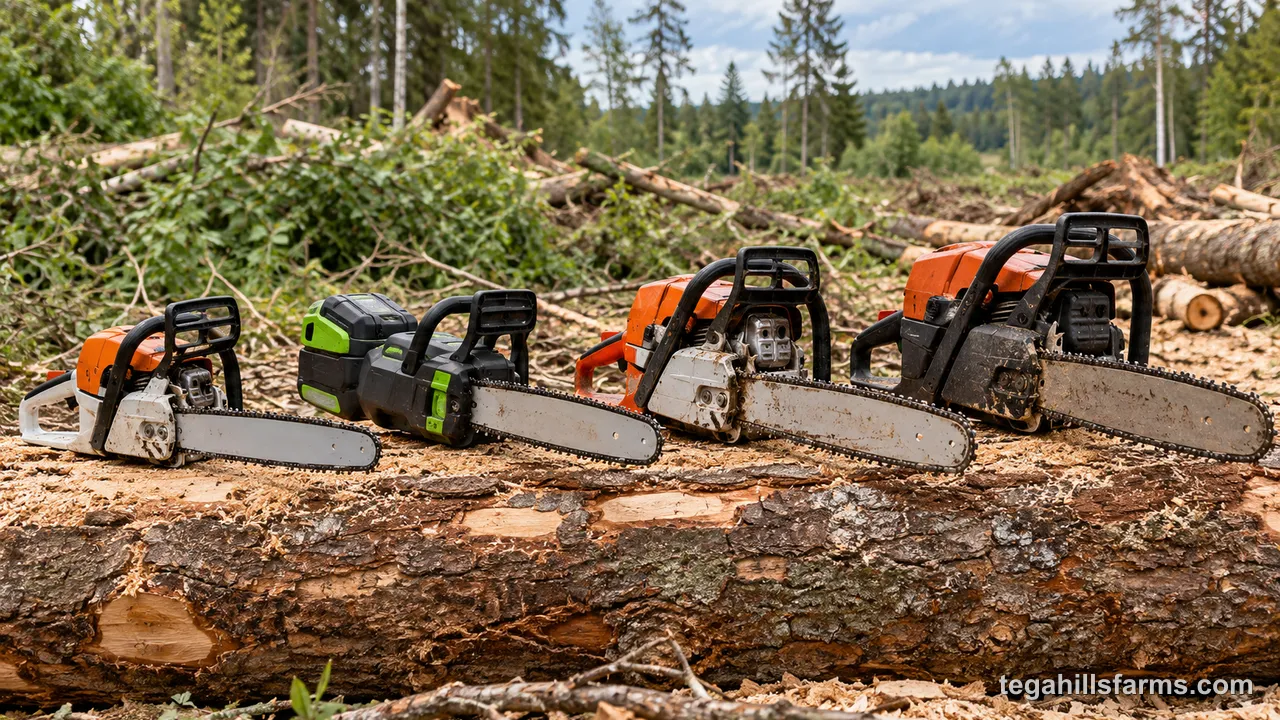
| Saw | Power source | Bar options | Weight | Standout feature | Best fit |
|---|---|---|---|---|---|
| EGO Power+ CS2005 | 56V battery | 20-inch | 30 pounds | Brushless motor, 55cc gas equivalent | Quiet, fuel-free cleanup |
| PROYAMA PCS68X | Gas, 68cc | 22- and 24-inch | 17 pounds | Dual bars, magnesium alloy chain brake and case | Heavy farm and forest clearing |
| PROYAMA PCS68 | Gas, 68cc | 20- and 24-inch | 14.5 pounds | Anti-vibration system, ergonomic handle | Long sessions where hand fatigue matters |
| Husqvarna 460 Rancher | Gas, 60.3cc | 24-inch | 13.2 pounds | X-TORQUE engine, LowVib | Dependable day-long handling |
| Baococo 62cc | Gas, 62cc | 20- and 24-inch | about 16.6 pounds | Winterized carburetor with pre-heating | Cold-weather clearing |
Weight against power type is the main trade-off. The EGO is far heavier than the gas saws but needs no fuel. The gas saws are lighter and keep cutting as long as the tank is topped off. Within the gas group, the Husqvarna weighs the least, and the PROYAMA PCS68 adds vibration control.
Do You Need a Professional-Grade Saw or a Homeowner Model?
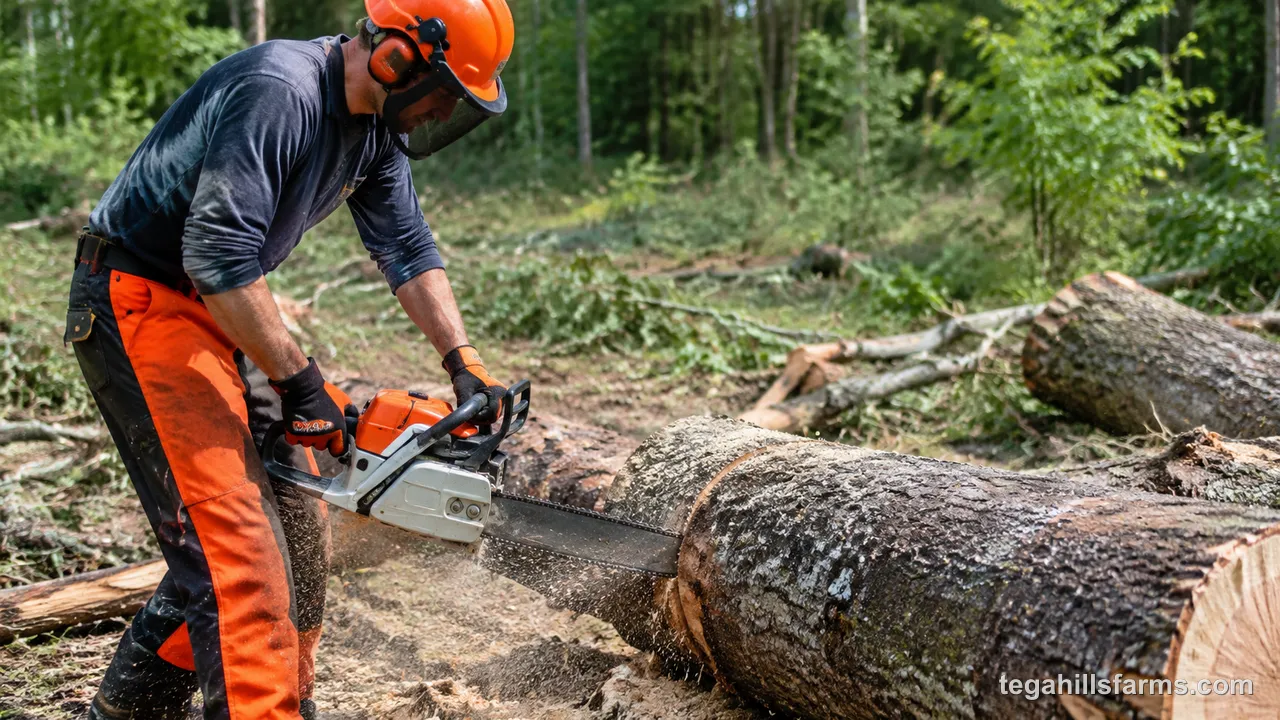
A homeowner-grade saw is enough for smaller properties with occasional clearing, while a professional-grade saw pays off on large, heavily wooded parcels with repeated clearing seasons. Match the class to how often the saw runs, how dense the growth is, and how much upkeep you will accept.
When Is a Homeowner-Grade Saw Enough?
A homeowner-grade saw is enough when the property is small, clearing is occasional, and lighter weight and simpler upkeep matter more than maximum output.
If you clear overgrowth now and then, you don’t need an engine built for daily work. A lighter saw is easier to carry, easier to store, and less tiring to run. The EGO Power+ CS2005 fits this profile with no fuel to manage, and the lighter gas saws suit owners who want a bit more cutting stamina. Simpler upkeep also counts. Fewer parts to service means the saw is more likely to start when you pick it up after a quiet stretch. Readers in that spot can start with the best chainsaws for homeowners.
When Should You Step Up to a Professional-Grade Saw?
Step up to a professional-grade saw when the parcel is large or heavily wooded, clearing repeats season after season, and thick stumps and trunks demand durability and sustained output.
Repeated seasons wear on a saw, so build quality starts paying for itself. Heavy timber and big stumps also reward more engine and a longer bar. The PROYAMA PCS68X, with its 68cc engine and magnesium alloy chain brake and case, suits that kind of work, and the Husqvarna 460 Rancher brings refined engineering for dependable use. Weight matters less here than steady, durable output. For more options in this class, see the best professional chainsaws.
A chain that clips a strand of buried fence wire or a rock hidden under leaf litter can throw the bar back toward your face in a fraction of a second. Tangled brush makes it worse, because you are often cutting from awkward footing with limbs under tension. Which pieces of protective gear would actually stop an injury in that moment, and which can you skip?
What Safety Gear Do You Need for Land Clearing?
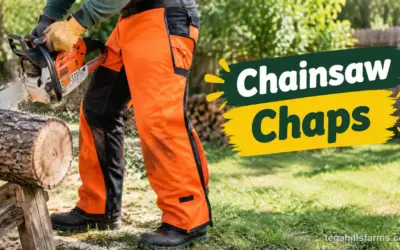
Land clearing calls for head, eye, and hearing protection, cut-resistant chaps, gloves, and sturdy boots.
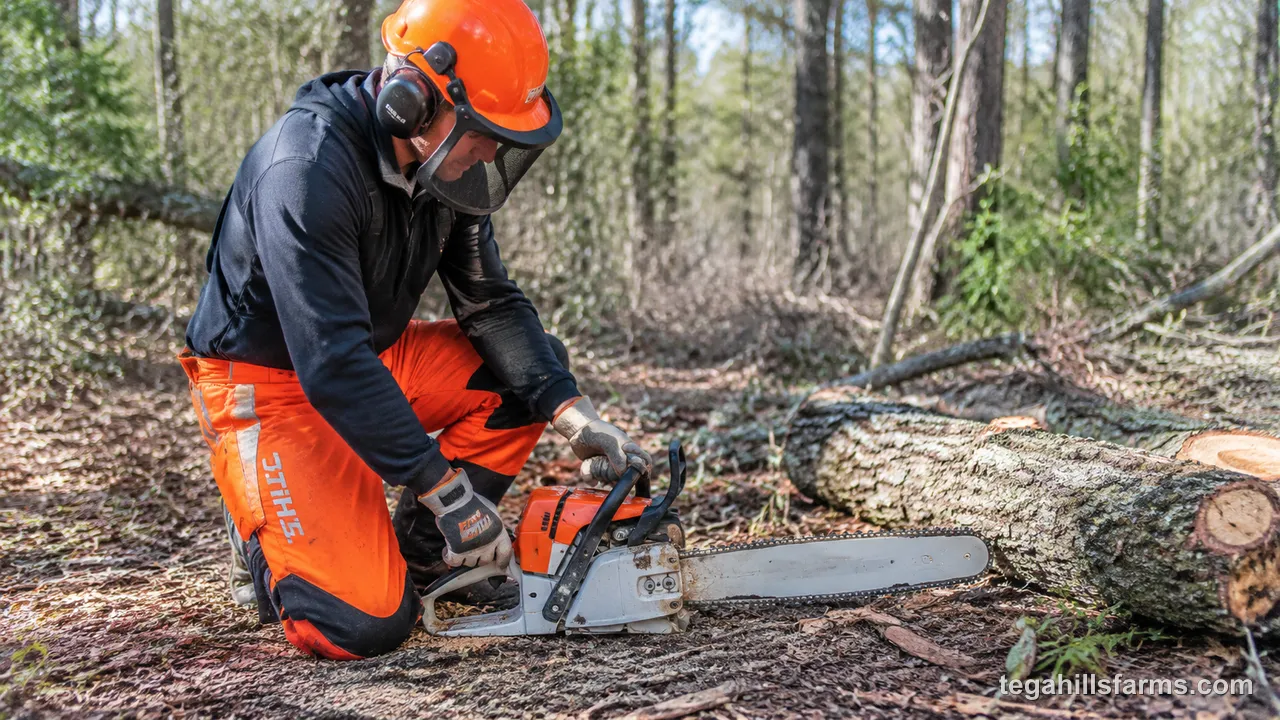
Properly equipped work and unprotected work are very different. Without gear, flying chips reach your eyes, branches whip back at your face, long sessions of engine noise wear on your hearing, and one kickback can reach your legs. In dense brush and on uneven ground, a few pieces matter most.
- Helmet with face shield and hearing protection: guards against whipping branches, chips, and loud engines.
- Chaps: legs take the brunt of ground-level cuts, where the saw is closest to them.
- Gloves: improve grip and protect hands from thorns and bark.
- Boots: sturdy soles and ankle support matter on slopes and rough ground.
Many of these items also appear among the best chainsaw accessories, so one shopping trip can cover them.
How Is Clearing Brush and Stumps Different From Felling a Single Tree?
Clearing differs from felling one tree because you work through tangled growth in a planned order instead of making a single controlled drop.
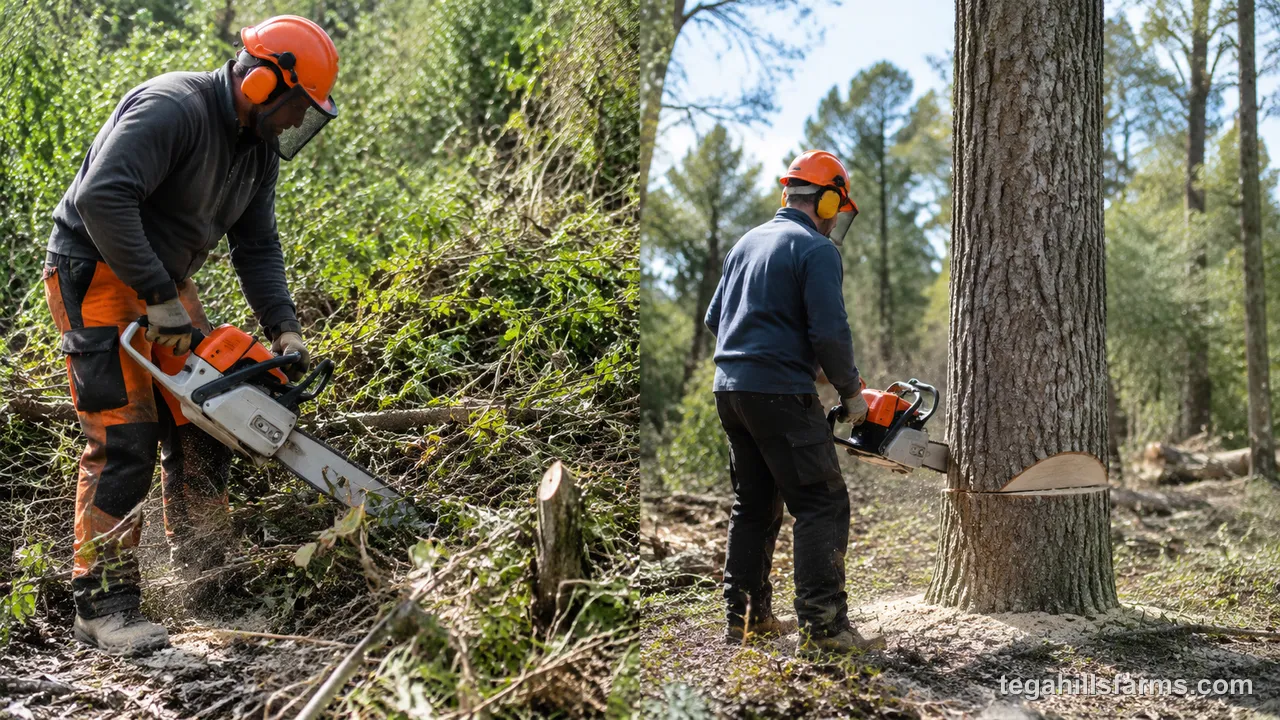
In a clearing job, you decide which stems to cut first so nothing falls onto your path or pins the saw. Limbs and leaning trunks can be under tension, which means the wood can pinch the bar or spring when it parts, so you read the bind before you cut.
Much of the work happens at ground level, where stumps and low stems put the chain close to dirt and stones. Dirt dulls a chain quickly, so cut just above the soil line when you can.
That pattern changes what you ask of a saw. Clearing needs steady power for long stretches, a bar you can control from awkward positions, and a chain brake you trust when the saw kicks. Felling a single tree puts more weight on bar length and one accurate cut.
How Can You Tell a Chain or Saw Is Wearing Out?
You can tell a chain is wearing out when cutting throws fine dust instead of chips.
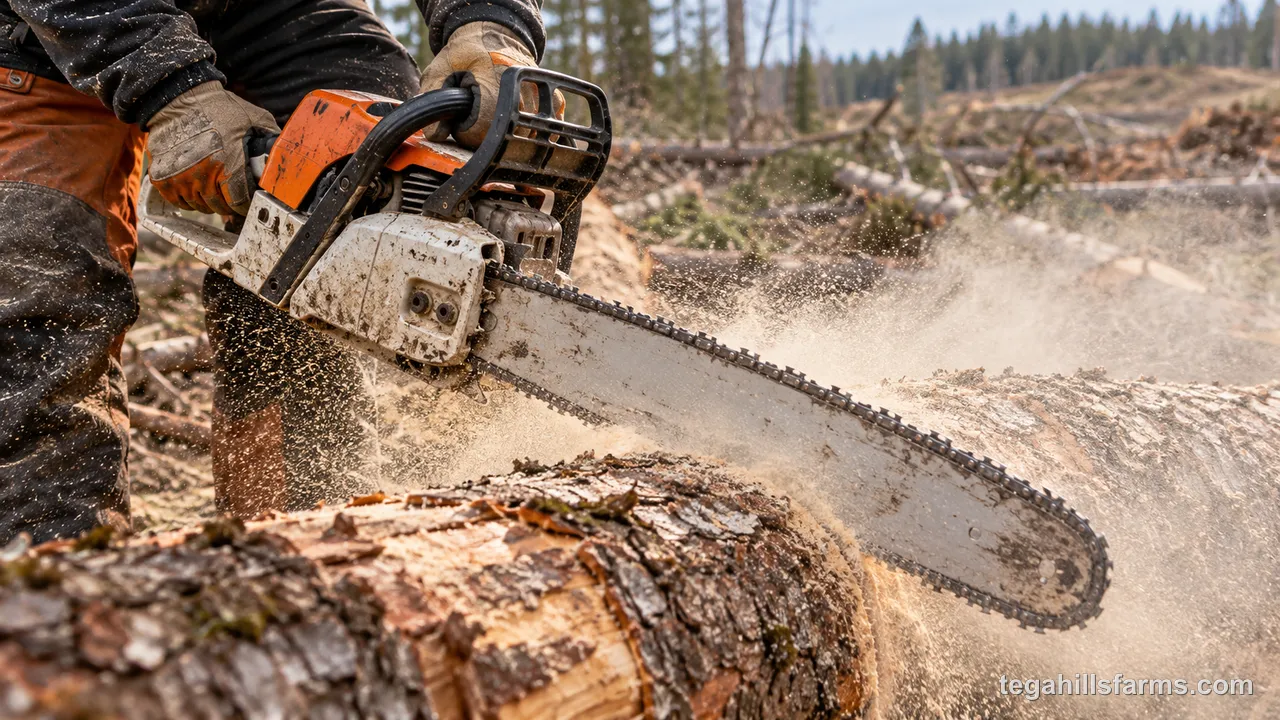
Other signs follow. The saw pulls to one side, you have to lean on it to get through wood, and the cut comes out crooked. Hard starting can point to a worn or poorly maintained engine, and dirt contact during ground-level cuts wears the bar and chain fast.
Sharpen the chain as soon as dust replaces chips. A good sharpener makes that quick, and the best chainsaw sharpener options are worth a look if you clear often. Replace the chain when teeth are too short to sharpen or damaged, and the best chainsaw chain guide helps with matching a new one. Replace the bar when its rails are worn.
If trouble keeps returning, with constant sharpening, bogging, or hard starts, the saw may be too small for the job.
Do Rated Runtime and Fuel Claims Hold Up During Long Clearing Days?
Rated runtime and fuel claims rarely survive continuous clearing, because battery runtime drops in dense wood with dull chains and heat, and gas fuel use climbs when you cut hard for hours.
How Long Does a Battery Last During Continuous Clearing?
A battery lasts less in continuous clearing than rated figures suggest, because dense wood, dull chains, and heat drain a pack faster than the light cuts behind most ratings.
Rated figures usually reflect clean cuts in lumber, while clearing means stumps, knotty trunks, and dirty wood. Every one of those pulls more power. Spare batteries are the first fix, with one charging while another works, so the saw rarely sits idle. Chain sharpness is the second fix, since a sharp chain cuts with less effort and drains less charge. Keep packs out of direct sun and let them cool between sessions where you can.
How Should You Plan Fueling for a Gas Saw on Long Jobs?
Plan fueling around fuel mix and bar oil on long jobs, because both run down faster than expected when you cut continuously.
Mix fuel fresh and keep a labeled can with you. Old or poorly mixed fuel causes hard starting and rough running. Top off bar oil whenever you refuel, since dry bars and chains wear fast. In cold weather, expect harder starts and give the saw a short warm-up before heavy cuts. Refuel on a flat, clear spot away from brush, with the engine off and cool.
Land Clearing Chainsaw FAQs
Can a battery chainsaw handle larger land clearing jobs?
Yes, within limits. A brushless saw like the EGO Power+ CS2005 cuts large branches and stumps with gas-equivalent power. What limits it is battery capacity: dense wood drains a pack faster than the rated cut count suggests, so larger jobs need spare packs and a charging routine, or a gas saw for sustained work.
Which bar and power class suits typical land clearing?
Look for a gas saw around 60cc or more, or a battery saw rated near that class, paired with a 20- to 24-inch bar. That combination moves through thick growth without becoming unwieldy. Smaller saws suit pruning better. If you are still deciding between types, our guide on how to choose a chainsaw covers the full set of choices.
Is a chainsaw the right tool for light brush?
Usually not. Light brush and thin stems go faster with loppers, a pole pruner, or a brush cutter, which are lighter and carry less kickback risk. Reach for a chainsaw once stems thicken into trunks or when stumps need cutting at ground level.
How do you protect a chainsaw from dirt and cold?
Keep the chain out of soil by cutting just above ground, clean the bar groove and air filter after each session, and store the saw dry. In cold weather, use fresh fuel mix, let a gas saw warm up before heavy cuts, and keep battery packs indoors until needed.



Write Your Review
No reviews yet. Be the first to share your experience!