

PROYAMA 68cc Gas Chainsaw (Best Overall), DOWILIN 62cc 20″ Chainsaw (Best Easy-Start), NEO-TEC NS892V1 92cc 28″ Chainsaw (Best for Professionals), NEO-TEC NS892V1 92cc 36″ Chainsaw (Also Great), Husqvarna 460 Rancher 24 Inch (Best Ergonomic Design), NEO-TEC NS872 72cc 24″ Chainsaw (Best Value), NEO-TEC NH8120 120cc 36″ Chainsaw (Best Performance) and Husqvarna 555 (Best Premium) are the saws worth a look for milling.
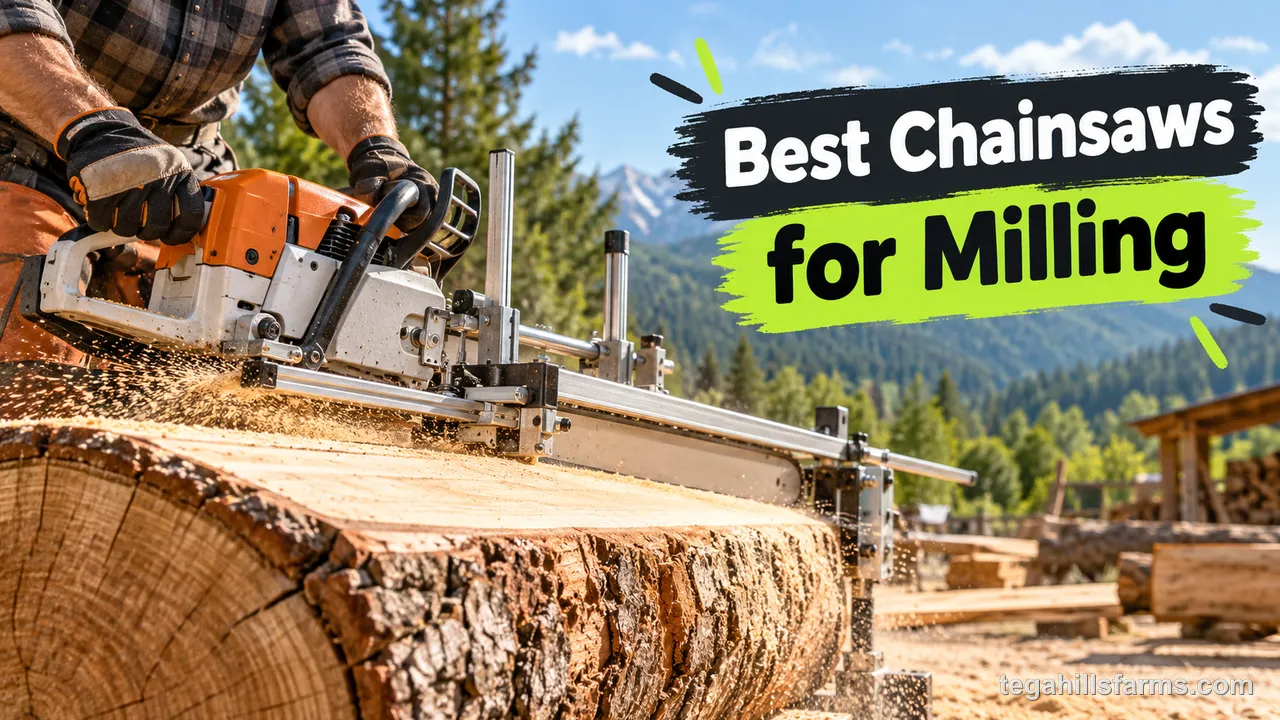
Engine displacement, bar length and cooling separate a saw that mills from one that merely cuts. These saws run from 59.8cc to 120cc, with bars from 20 to 36 inches and compatibility up to 42.
The real worry is heat. Milling keeps the chain buried in wood for long stretches, and a saw built for quick crosscuts can bog down or overheat partway through a slab.


Before comparing specs, picture the wide logs you plan to mill. Then pick a bar that crosses it and an engine strong enough to pull that bar.
What Makes a Chainsaw Suitable for Milling?
A milling chainsaw needs sustained low-end torque, a rigid bar and the ability to run under continuous load without overheating. Milling demands more from a saw than any other task, so understanding what sets these apart from general-purpose best chainsaws helps you avoid underpowered choices that bog down or overheat.
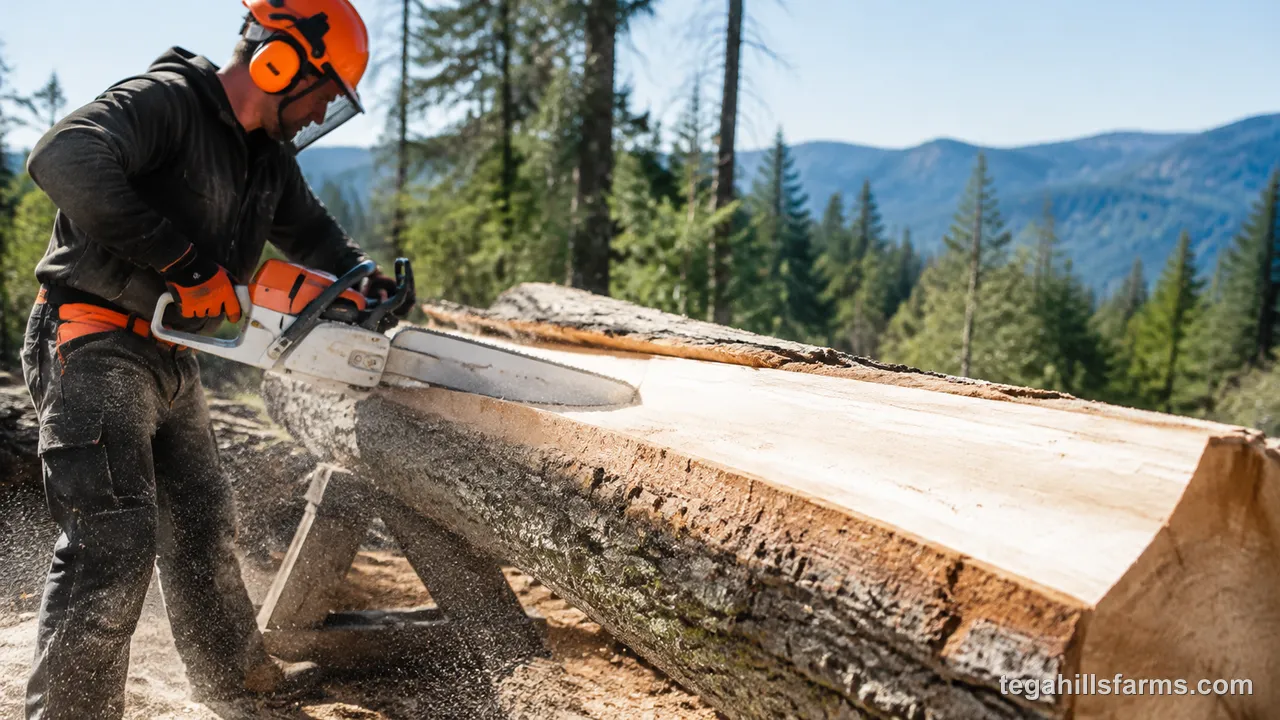
Power-to-weight matters too, because you hold the saw steady for long passes. Before milling enters the picture, how to choose a chainsaw comes down to size and fuel, but milling narrows the field quickly. A stiff bar resists flexing in a wide cut, and an engine with real cooling capacity keeps power from fading as the session drags on.
The 8 Best Chainsaws for Milling of 2026
The 8 best chainsaws for milling of 2026 are the PROYAMA 68cc Gas Chainsaw (Best Overall), DOWILIN 62cc 20″ Chainsaw (Best Easy-Start), NEO-TEC NS892V1 92cc 28″ Chainsaw (Best for Professionals), NEO-TEC NS892V1 92cc 36″ Chainsaw (Also Great), Husqvarna 460 Rancher 24 Inch (Best Ergonomic Design), NEO-TEC NS872 72cc 24″ Chainsaw (Best Value), NEO-TEC NH8120 120cc 36″ Chainsaw (Best Performance) and Husqvarna 555 (Best Premium). Occasional slabbing doesn’t need the 120cc monster. Its extra output only pays off once milling turns into regular, wide-log work.
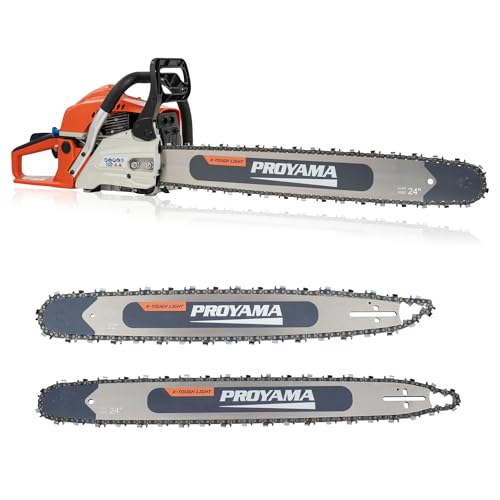
#1 PROYAMA 68cc Gas Chainsaw — Best Overall
A good fit when your logs vary from week to week. The 68cc, 4.5HP engine arrives with both a 22-inch and a 24-inch bar, so one saw covers smaller stock and wider logs.
Key Specs:
- Engine: 68cc, 2-cycle, 4.5HP
- Bars included: 22″ and 24″ alloy guide bars
- Weight: 17 pounds
- Chain brake and case: magnesium alloy
- Model: PCS68X
Detailed Review:
The 68cc, 2-cycle engine puts out 4.5HP and delivers strong, steady torque. That steadiness matters in milling, where the saw sits in a long cut instead of making quick crosscuts. Torque you can count on is what keeps the chain moving through a slab.
Two alloy guide bars come in the box, a 22-inch and a 24-inch. The shorter bar handles precise work and small lumber, while the 24-inch takes on large logs and thick limbs. You can match the bar to the log without buying a second one.
A magnesium alloy chain brake and case add shock resistance and keep the structure from deforming under heavy cutting. At 17 pounds, the saw is heavier than the Husqvarna 460 Rancher, though it brings a bigger engine to make up for it.
The ignition system is set up for quick starts, even in cold weather, and the simplified internal design keeps routine upkeep light. That suits owners who would rather cut than tune.
Pros:
- Both 22-inch and 24-inch bars come included
- Strong 4.5HP output from the 68cc engine
- Magnesium alloy chain brake and case
- Ignition built for quick cold-weather starts
Cons:
- Heavier than the Husqvarna 460 Rancher
- Included bars are 22 and 24 inches, which limits very wide logs
Who It’s For:
Weekend millers who switch between smaller stock and wider logs will appreciate a choice of bar lengths. It also suits owners who want a capable saw for firewood and farm work without moving into a much heavier class. Anyone planning daily professional slabbing should look at a larger engine.
Editor’s Verdict:
Pairs steady 4.5HP power with a choice of bar lengths in a package that stays manageable at 17 pounds.
#2 DOWILIN 62cc 20″ Chainsaw — Best Easy-Start
Cold mornings are where this saw earns its keep. The winterized carburetor with pre-heating is built for cold-weather running, and the tool-free chain tensioning means adjustments don’t send you hunting for a wrench.
Key Specs:
- Engine: 62cc, 2-cycle
- Bar: 20″
- Weight: 16.47 pounds
- Crankcase: forged magnesium
- Chain tensioning: tool-free
- Emissions: EPA Phase III and CARB compliant
Detailed Review:
Cold starts are where many saws let owners down, and this one is built to avoid that. A winterized carburetor with pre-heating is aimed at all-weather performance. Quick-start technology rounds out the starting setup, so you spend less time tugging the cord.
Milling stretches and heats the chain, so tension needs frequent attention. Tool-free tensioning lets you adjust it without digging out a wrench. Those quick tweaks add up over a long cut. A 3D anti-kickback chain brake adds a layer of safety.
The crankcase is forged magnesium, and an anti-vibration system takes some of the buzz out of the handles. The 62cc engine and 20-inch bar suit narrower logs better than wide ones.
The engine is EPA Phase III and CARB compliant, so it’s an easier fit for California buyers than the NEO-TEC saws, which cannot ship there. Compared with the PROYAMA, it gives up some displacement in exchange for that simplicity.
Pros:
- Winterized carburetor with pre-heating for cold starts
- Tool-free chain tensioning speeds adjustments
- Forged magnesium crankcase
- EPA Phase III and CARB compliant engine
- 3D anti-kickback chain brake
Cons:
- Shorter bar restricts very wide logs
- Smaller displacement than the PROYAMA
Who It’s For:
Newer millers and anyone tired of fighting a stubborn pull cord will like how simple this saw is to run. California residents who need an emissions-compliant engine also get a straightforward option here. Crews working very wide logs all day will want more bar and more engine.
Editor’s Verdict:
Easy starting, hand-adjustable chain tension and a compliant engine make this a low-fuss saw for lighter milling jobs.
#3 NEO-TEC NS892V1 92cc 28″ Chainsaw — Best for Professionals
Heavy logs need heavy power. With 7HP from a 92cc engine and a 28-inch bar, this saw has the output and reach that larger-diameter milling asks for.
Key Specs:
- Engine: 92cc, 2-cycle, air-cooled full crank
- Output: 7HP (5.2kW)
- Bar: 28″ (3/8″ pitch, .063″ gauge, 92 drive links)
- Chain: full chisel
- Parts: magnesium alloy
- Compatibility: MS660 / G660 parts
Detailed Review:
The 92cc full-crank engine makes 7HP (5.2kW), and the air-cooled design with a fast cooling system helps prevent overheating under heavy load. Sustained cutting is what cooks an engine, so cooling capacity matters as much as the horsepower number.
Key parts are magnesium alloy instead of plastic. That means better impact resistance, faster heat dissipation and more structural rigidity, which is what you want from a saw pushing a bar through a slab.
The 28-inch bar runs 3/8″ pitch, .063″ gauge and 92 drive links, paired with a full chisel chain for fast, clean cuts. A quick-stop chain brake halts the chain during kickback, and a safety switch guards against accidental starts.
Next to the NS872, the jump is clear: 7HP against 4.9HP, and 92cc against 72cc. The power head also fits G660 and is compatible with MS660 and 066 parts, which helps when replacements are needed. It ships in separate packages, so make sure everything has arrived before you start.
Pros:
- 7HP output from a 92cc full-crank engine
- Magnesium alloy parts add rigidity and heat dissipation
- Quick-stop chain brake and safety switch
- Full chisel chain on a 28-inch bar
Cons:
- Not CARB certified; cannot ship to California addresses
- Arrives in separate packages
Who It’s For:
Experienced operators who run big logs and want engine headroom for sustained cuts will get the most from this saw. Forestry and ranch users will appreciate the rugged build. Casual users cutting the occasional small log would be paying for power they won’t use, and California buyers need to look elsewhere.
Editor’s Verdict:
A high-output saw built around sustained power and a rigid magnesium body, suited to demanding timber work.
#4 NEO-TEC NS892V1 92cc 36″ Chainsaw — Also Great
Wide logs are the reason to pick this version. It keeps the same 7HP, 92cc engine as the 28-inch model but adds a 36-inch bar, so you can reach across much larger trunks.
Key Specs:
- Engine: 92cc, 2-cycle, air-cooled full crank
- Output: 7HP (5.2kW)
- Bar: 36″ (3/8″ pitch, .063″ gauge, 114 drive links)
- Chain: full chisel
- Parts: magnesium alloy
Detailed Review:
This version keeps the 92cc full-crank engine and its 7HP (5.2kW) output, and swaps in a 36-inch bar with 114 drive links, 3/8″ pitch and .063″ gauge. The extra reach lets you work wider logs in a pass.
Compared with the 28-inch version, the engine is identical but the bar is longer, so each cut drags more chain through the wood. You gain width, but the engine works harder on every cut. The NH8120 shares the 36-inch bar length but brings 120cc and 8.4HP, which makes the NS892V1 the lighter-duty engine for that reach.
Magnesium alloy parts give the saw rigidity and rapid heat dissipation, and the full chisel chain cuts quickly. The fast air-cooling system is there to prevent overheating when the saw works hard.
Safety comes from a quick-stop chain brake and a safety switch. The spark plug and carburetor are chosen for easy starts and smooth fuel mixing.
Pros:
- 36-inch bar reaches across wide logs
- Same 7HP engine as the 28-inch version
- Magnesium alloy parts add rigidity
- Quick-stop chain brake plus safety switch
Cons:
- Long bar loads the engine harder per cut
- Not CARB certified; cannot ship to California addresses
Who It’s For:
Anyone slabbing very wide trunks who wants more reach without moving to a bigger engine will find this setup logical. It fits experienced operators comfortable controlling a long bar. Those who need California delivery, or who mostly cut modest logs, are better served elsewhere.
Editor’s Verdict:
Adds long-bar reach to a capable 7HP platform, which pays off on wide timber and demands steady hands.
#5 Husqvarna 460 Rancher 24 Inch — Best Ergonomic Design
Long sessions wear on your hands and shoulders. At 13.2 pounds with LowVib damping and an offset front handle, this saw takes some of the strain out of slow, steady cuts.
Key Specs:
- Engine: 60.3cc X-TORQ, 3.6HP, 2-cycle
- Bar: 24″ (recommended range 13″ to 24″)
- Weight: 13.2 pounds
- Front handle: 7 degree offset
- Vibration control: LowVib
- Starting: Smart Start
Detailed Review:
The 60.3cc X-TORQ engine makes 3.6HP, and the patented design maximizes power even at low RPMs. That low-end pull helps when the chain is loaded in a long cut. It’s a moderate engine, so expect it to work best on narrower logs.
Comfort is the main story. A 7 degree offset front handle improves grip, and LowVib technology reduces vibration. At 13.2 pounds, it’s lighter than the PROYAMA, which helps over a long afternoon.
Smart Start gets the saw going with minimal effort, and a combined choke/stop control lowers the risk of flooding. Air injection technology expels larger debris before it reaches the air filter, which supports engine life. An inertia-activated chain brake reduces the likelihood of injury from kickback.
The recommended bar range runs from 13 to 24 inches. Against the PROYAMA, you trade some output for lower weight, and that compromise suits lighter jobs.
Pros:
- LowVib technology reduces vibration
- Offset front handle improves grip
- 13.2-pound weight eases long sessions
- Air injection keeps debris from the filter
Cons:
- 3.6HP trails the PROYAMA in output
- Recommended bar tops out at 24 inches
Who It’s For:
Hobby millers who spend long afternoons on the saw and care more about comfort than raw output should look here. It also suits anyone who wants easy starting from a forgiving engine. Operators chasing wide logs or heavy daily production need a bigger engine.
Editor’s Verdict:
Comfort and low-RPM torque make this a smart choice for lighter milling, as long as you accept moderate power.
#6 NEO-TEC NS872 72cc 24″ Chainsaw — Best Value
Room to grow matters. This 72cc, 4.9HP power head runs a 24-inch bar today and accepts a 28-inch bar when your logs get wider.
Key Specs:
- Engine: 72cc, 2-cycle, air-cooled full crank
- Output: 4.9HP
- Weight: 20 pounds
- Body: magnesium alloy
- Vibration control: LowVib damping
Detailed Review:
The 72cc, 2-cycle engine is air-cooled and full crank, rated at 4.9HP. Its cooling system is built to hold steady performance through prolonged heavy-duty work, which is what milling asks of any saw. That’s a solid mid-sized foundation.
A 24-inch bar comes on the saw, and the power head also accepts 28-inch bars. That gives you room to grow into wider logs without replacing the saw. It’s the main reason the value story holds up.
The LowVib damping system cuts handle vibration, and an extended grip balances the saw during long sessions. A smart start system, an HLHIC carburetor and a premium spark plug are meant to deliver consistent cold starts, while the magnesium alloy body helps shed heat.
At 20 pounds, this saw is heavier than the PROYAMA at 17, but it pushes out more horsepower, 4.9 against 4.5. You’re trading weight for that extra output. An inertia-activated chain brake stops the chain instantly if kickback hits.
Pros:
- 28-inch bar compatibility leaves room to grow
- LowVib damping reduces handle vibration
- Magnesium alloy body aids heat dissipation
- Inertia-activated chain brake
Cons:
- At 20 pounds, heavier than the PROYAMA
- Not CARB certified; cannot ship to California addresses
Who It’s For:
Budget-minded millers stepping up from a basic homeowner saw will find plenty of professional-style features here. Folks who expect to tackle wider logs later can take advantage of the longer-bar compatibility. Anyone who needs delivery to California, or wants a lighter saw, should look elsewhere.
Editor’s Verdict:
Delivers a respectable mix of power, vibration control and bar flexibility at a value-minded level, provided you accept the extra weight.
#7 NEO-TEC NH8120 120cc 36″ Chainsaw — Best Performance
Big timber demands big displacement. The 120cc, 8.4HP engine drives a 36-inch bar and accepts bars up to 42 inches, which is the kind of reserve that wide slabbing needs.
Key Specs:
- Engine: 120cc, 2-cycle, air-cooled full crank
- Output: 8.4HP (6.2kW @ 9000)
- Bar: 36″ seamless hard steel (114 drive links, 3/8″ pitch, .063″ gauge)
- Bar compatibility: 24″, 28″, 36″ and 42″
- Parts: magnesium alloy
- Oil pump: adjustable
Detailed Review:
Displacement is the story: 120cc of full-crank, air-cooled 2-cycle engine producing 8.4HP (6.2kW @ 9000). Against the NS892V1, that’s a clear step up on the same 36-inch bar length, so the extra output goes into pulling the chain through wide cuts.
The 36-inch bar is seamless hard steel with 114 drive links, 3/8″ pitch and .063″ gauge. A high-temperature quenched alloy chain is built for hardness and wear resistance. The power head also takes 24, 28, 36 and 42-inch bars, so you can switch jobs without changing saws.
Upkeep features are thoughtful. Side-mounted chain tensioners, a quick-release cover and a quick-release air filter speed routine work. A centrifugal air-cleaning system and an adjustable oil pump support long sessions, and magnesium alloy parts and low vibration levels round it out.
Parts are compatible with the Husqvarna 3120 XP, and the saw arrives pre-inspected. The trade-off is that this much engine is more than small-log work needs.
Pros:
- 8.4HP from a 120cc full-crank engine
- Accepts bars from 24 to 42 inches
- Side-mounted tensioners and quick-release filter simplify upkeep
- Adjustable oil pump
Cons:
- Overkill for occasional small-log milling
- Arrives in separate packages
Who It’s For:
Professional millers and landowners who process large timber regularly will use every bit of this saw’s output and bar range. It also suits anyone who wants a power head that can swap between light pruning and heavy logging. Occasional users or newer millers will find it more saw than they need.
Editor’s Verdict:
Built for demanding milling, it puts serious output and a wide range of bar sizes in your hands.
#8 Husqvarna 555 — Best Premium
Durability is the story here. The three-piece crankshaft, magnesium crankcase and AutoTune carburetor are built for hard, regular use, and the 4.16HP X-Torq engine keeps the weight at 13 pounds.
Key Specs:
- Engine: 59.8cc X-Torq, 4.16HP
- Bar: 24″ (recommended range 18″ to 24″)
- Weight: 13 pounds
- Crankcase: magnesium, with three-piece crankshaft
- Carburetor: AutoTune
- Chain: X-Cut
Detailed Review:
Durability starts at the crankcase. A magnesium crankcase and a three-piece crankshaft give the 555 cutting capacity and long-term toughness in a slimmed-down design. The X-Torq engine makes 4.16HP from 59.8cc and has strong cooling capacity for extended engine life.
The AutoTune carburetor offers optimal engine performance in any environment, and Smart Start makes pulling the saw to life easy. Those two features matter when a saw sees regular, hard use.
Compared with the 460 Rancher, the 555 makes more horsepower from a slightly smaller engine at nearly the same weight, 13 pounds against 13.2. Both top out at 24 inches in their recommended bar ranges.
Side-mounted tensioning keeps chain adjustments simple, and an inertia-activated chain brake lowers kickback risk. The recommended bar range is 18 to 24 inches, so it handles medium logs well but isn’t built for very wide timber.
Pros:
- AutoTune carburetor adjusts to conditions
- Magnesium crankcase and three-piece crankshaft
- 4.16HP from a 59.8cc X-Torq engine
- Smart Start eases starting
Cons:
- Recommended bar tops out at 24 inches
- Less output than the larger NEO-TEC saws
Who It’s For:
Working pros and serious hobbyists who run a saw hard and expect it to keep going will appreciate the build here. Those who value proven engineering over maximum displacement fit well. Anyone slabbing very wide logs will outgrow its bar range quickly.
Editor’s Verdict:
Durability, self-adjusting carburetion and a light frame make this a dependable choice for demanding but moderate-sized milling.
What Engine Size Do You Need for Chainsaw Milling?
Engine size for milling falls into three bands: occasional small-log work at 50-60cc, regular milling at 60-80cc, and daily large-log work at 80cc and above. Displacement drives torque, and torque is what keeps the chain moving when the cut is wide.
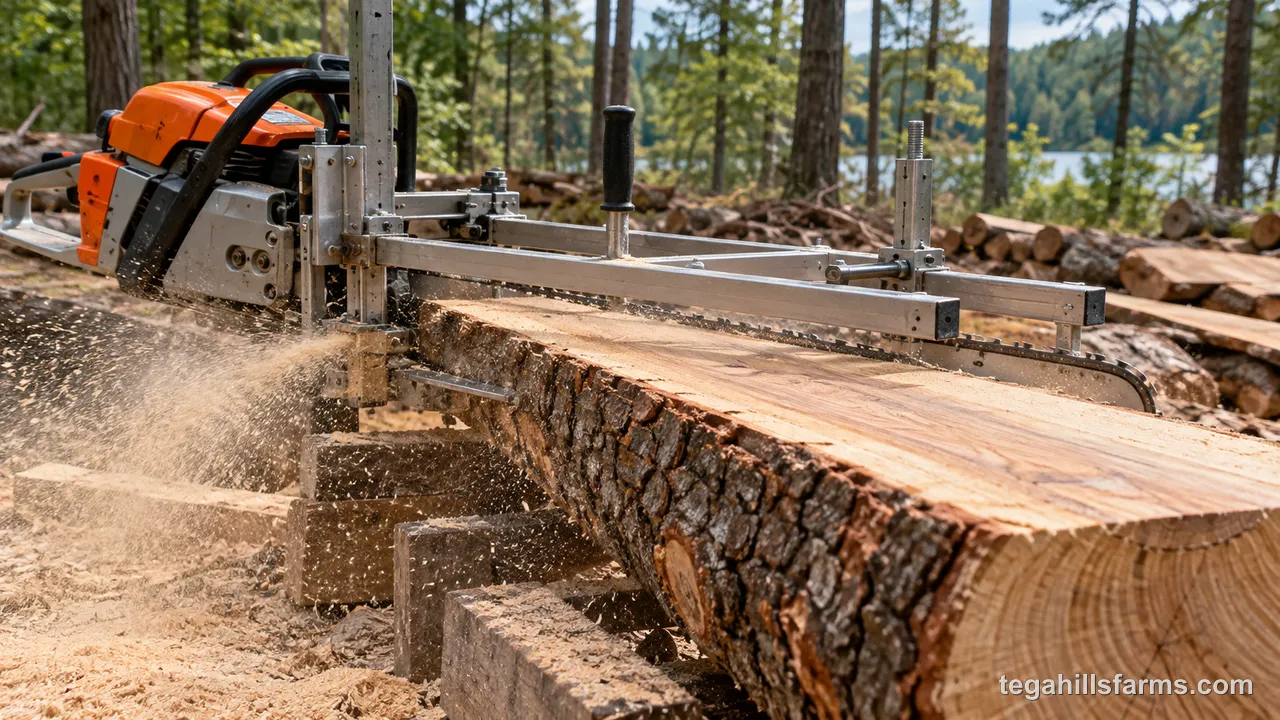
Minimum Viable: 50-60cc
A 50-60cc engine is the smallest that can mill, and it suits only occasional cuts on small logs before heat becomes a problem. Sustained passes push these engines hard, and overheating is the main risk. You’ll feel the saw bog down in dense wood, so plan on shallow cuts and frequent rests. The Husqvarna 555 at 59.8cc and the 460 Rancher at 60.3cc sit right at the edge of this band. Both are better treated as light-duty milling saws than as production tools. If you only mill a few boards a season, this range keeps the saw light and manageable.
Regular Milling: 60-80cc
The 60-80cc range is the practical choice for regular milling of medium logs, balancing power against handling. Engines here have the cooling capacity to stay stable through longer cuts, and they pull bars in the 20 to 28 inch range without straining. The DOWILIN at 62cc, the PROYAMA at 68cc and the NS872 at 72cc all fall in this band. For homeowners and small operations milling lumber on a regular basis, this is the sweet spot. You get enough torque to keep the chain moving without the weight and fuel appetite of the biggest engines.
Heavy-Duty: 80cc and Above
Engines of 80cc and above are for daily milling of large logs and sustained workloads that smaller saws can’t keep up with. The NS892V1 at 92cc and the NH8120 at 120cc are examples, and anyone shopping among the best professional chainsaws will find this displacement standard. The trade-off is weight and thirst: bigger engines are heavier to hold through a long pass and burn more fuel per hour. If you mill occasionally, that extra bulk works against you. If milling is your job, the headroom is worth it.
How Does Bar Length Determine What You Can Mill?
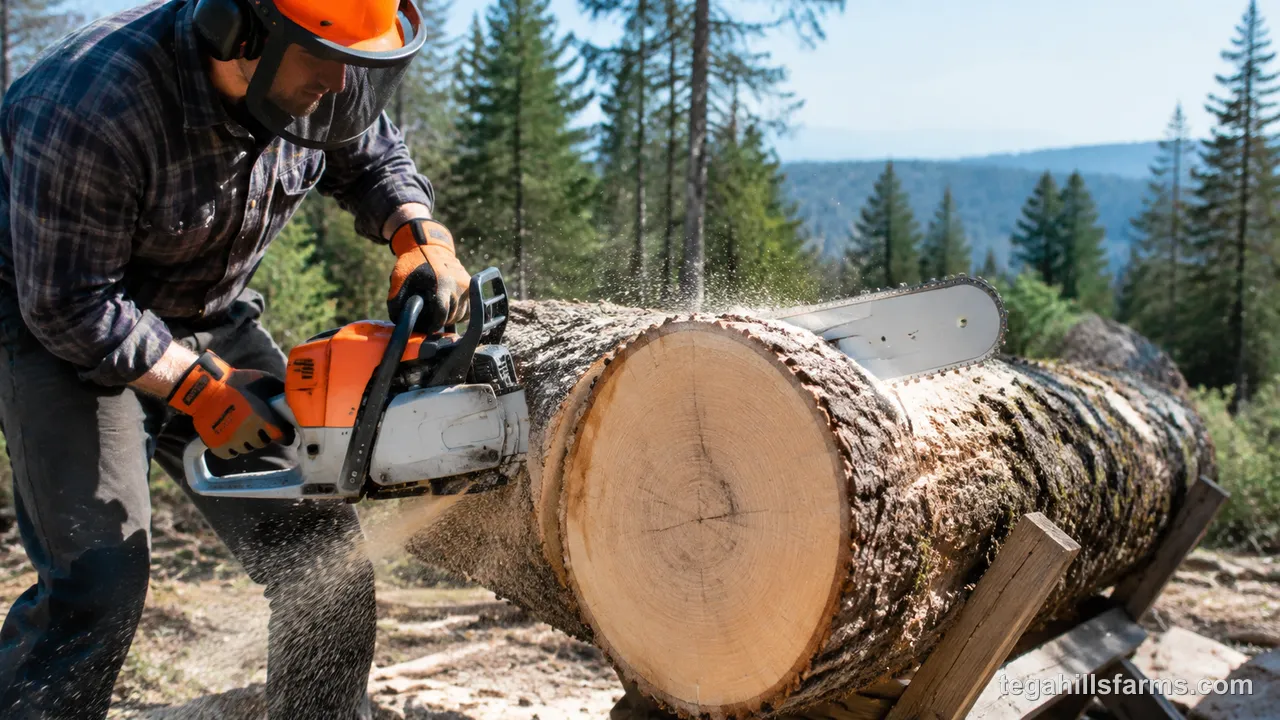
Bar length sets your maximum log diameter, from small logs to medium logs to large timber, and a longer bar demands more engine to pull the chain through the wider cut. Small logs suit 18-20 inch bars, medium logs suit 24-28 inch bars, and large timber calls for 28 inches and longer.
18-20 Inch Bars
18-20 inch bars mill logs up to about 16 inches in diameter, which suits fence posts and small dimensional lumber. Some bar length is lost to the milling attachment, so usable log width is always less than the bar’s stated length. That’s why a 20-inch bar like the DOWILIN’s fits narrower stock best. These bars pair with modest engines and keep the saw light, so homeowners milling a few posts or boards at a time rarely need more. Anyone planning to cut wider logs will outgrow this size quickly.
24-28 Inch Bars
24-28 inch bars mill logs up to about 24 inches in diameter and offer the best balance of versatility and power demand. They cover most residential and small commercial milling without pushing you into a heavy saw. The PROYAMA’s 24-inch bar, the NS872 with its 24-inch bar and 28-inch compatibility, and the NS892V1 with a 28-inch bar all land here. Engines in the 60-80cc range handle the lower end comfortably, while the top of the range benefits from more displacement. If you’re unsure what you’ll mill next year, this is the safest range to buy into.
28 Inches and Longer
Bars of 28 inches and longer handle logs over 24 inches in diameter, but they need engines above 80cc to pull the chain properly. They also add weight and vibration, and you feel both over a long pass. The NS892V1 with a 36-inch bar and the NH8120, which accepts bars up to 42 inches, are built for this work. A long bar on an underpowered engine bogs down and runs hot, so match the two carefully. These setups are for large timber and regular production.
What Chain Type Should You Use for Milling?
A ripping chain uses a much shallower tooth angle to cut along the grain, giving faster, smoother milling, while a standard crosscut chain is angled to sever fibers and leaves a rougher, slower cut when run with the grain.
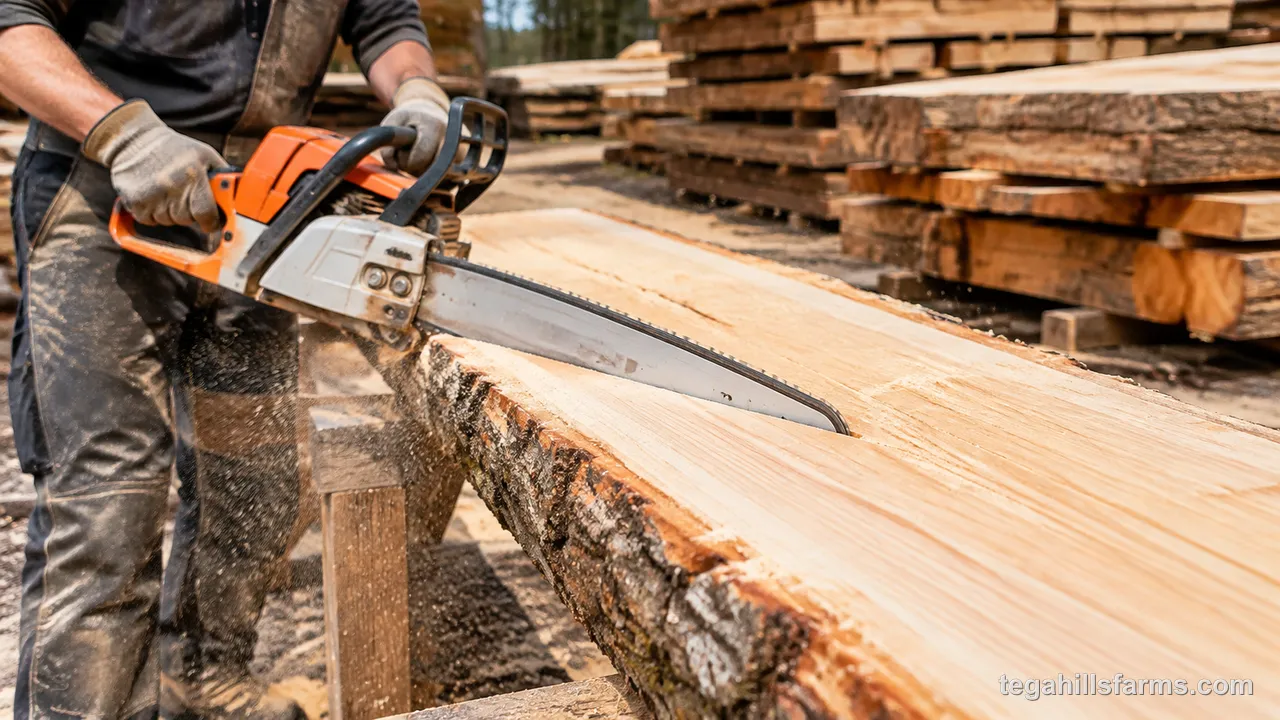
Crosscut teeth act like a row of knives slicing across fibers, while ripping teeth work more like tiny chisels shaving along the length of the log. The ripping design pulls less aggressively, which eases the load on the engine and leaves a flatter surface that needs less planing. You can run a crosscut chain in a pinch, but expect more bogging and a ragged board. Shopping for a replacement is a good time to compare the best chainsaw chain choices for ripping, and keep spare loops on hand because milling dulls them quickly.
A saw that cruises through an afternoon of firewood can be running hot and bogging down after a single wide slab, because a ripping cut keeps the chain loaded and the engine working the whole way. That heat and friction wear on the bar, chain and cylinder in ways crosscutting never does. Miss the early warning signs, and you could be looking at a scorched bar or a seized engine halfway through a log.
How Do You Keep Performance Consistent During Long Milling Sessions?
Consistent milling comes down to managing heat with regular breaks and keeping the chain sharp and the bar evenly worn. Skip either one and cutting efficiency drops as the session wears on.
Managing Heat and Taking Breaks
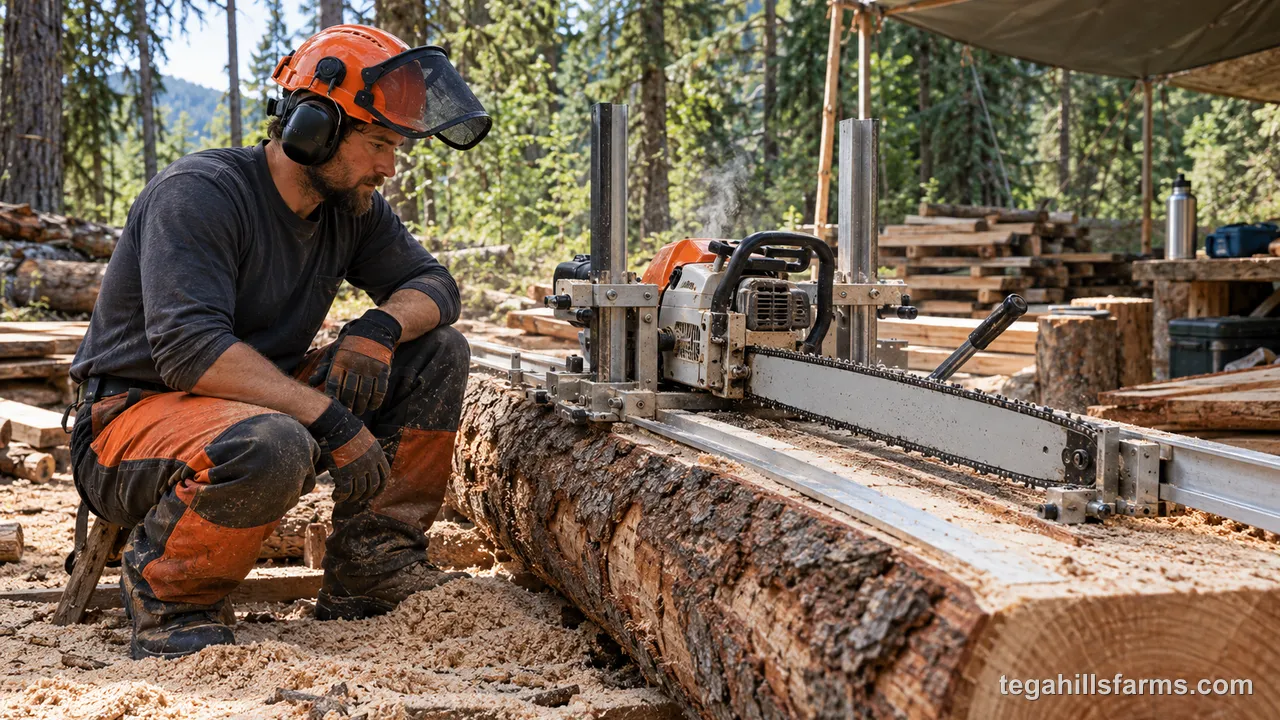
Rest the saw after every long pass so the engine can shed heat before it climbs into the danger zone. Warning signs include loss of power, bogging in the cut, a hot smell, smoke from the wood and a rough-running engine. Smaller engines need breaks more often, while larger air-cooled engines last longer between rests but still need them. Hot days shorten safe milling time, so slow down when the weather turns warm. Ignore these signs, and the engine can shut down on its own or take permanent damage. Let it idle briefly before shutting off, and keep the cooling fins clear of sawdust.
Sharpening and Bar Care
Milling dulls a chain faster than crosscutting, so touch up the teeth at every refuel in hardwood and a bit less often in softwood. A dull chain creates extra heat, loads the engine and wears the bar unevenly. A quality best chainsaw sharpener makes this quick enough to do right at the log. Flip the bar regularly so the rails wear evenly and heat doesn’t warp one side. Dress the rails with a flat file to keep them square, and clear the groove of packed sawdust. Careful bar care protects the cut quality and extends the life of the whole setup.
Common Questions About Chainsaw Milling
Can a battery chainsaw mill lumber?
Only for small, narrow logs. Most battery saws lack the sustained torque and runtime a long rip cut demands, and the pack drains fast. If you want to try it anyway, start with the best battery chainsaws and keep cuts short and shallow.
How much lumber can you mill in a day?
It depends on the log, the wood species, chain sharpness and your stamina, so any single figure would mislead. Expect a slow, steady pace compared with a sawmill. Larger engines hold up through more passes, but cooling breaks and chain sharpening still set the real pace of the day.
Do you need an auxiliary oiler for chainsaw milling?
Yes, in most cases. Slow rip cuts in wide wood heat the bar, and the saw’s built-in oiler often can’t keep up. An auxiliary oiler feeds extra bar oil during the cut, reducing friction and wear. You’ll find one among the best chainsaw accessories for milling setups.
Is hardwood harder to mill than softwood?
Yes. Hardwood dulls the chain faster, loads the engine harder and generates more heat, so cuts go slower and you stop to sharpen more often. Softwood mills quicker but can gum the chain with resin. A sharp ripping chain and a larger engine make hardwood far more manageable.
How long does a ripping chain last?
A ripping chain lasts as long as you keep it sharp and clean, which for milling means frequent touch-ups rather than replacing it. Dirt, sand or embedded debris in the log dulls it quickly, so brush the bark off first. With good care, a ripping chain gives many sharpenings before it needs replacement.



Write Your Review
No reviews yet. Be the first to share your experience!