

A reel mower gives a cleaner, quieter cut on small, flat lawns of fine warm-season grass. A rotary mower is the better tool for larger yards, tall or wet grass, debris and cool-season turf. A rotary forgives missed weeks and messy yards, while a reel rewards a specific kind of lawn and a regular mowing routine.
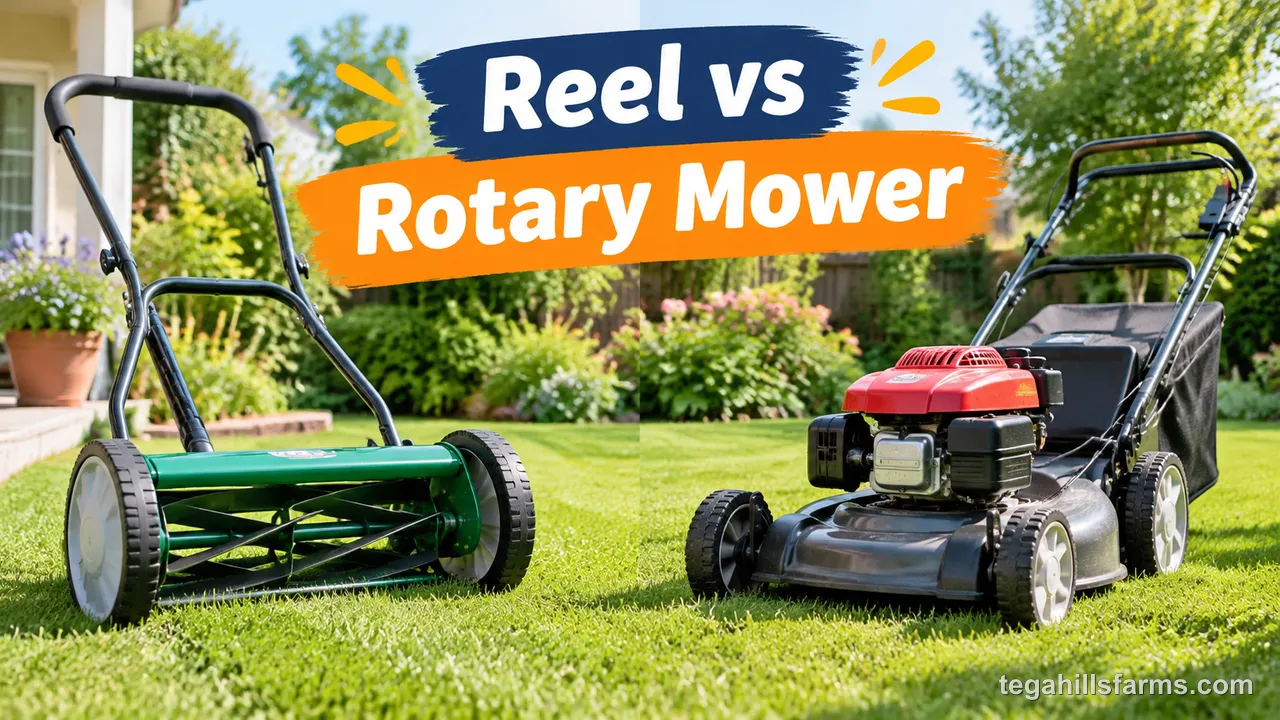
The choice comes down to how each machine cuts: shearing versus impact. That difference shows up in cut quality, how each copes with grass in poor shape, lawn size, terrain, grass species, upkeep, noise and lifespan.
The real risk is buying a mower your lawn isn’t ready for. A reel bought for a bumpy, tree-shaded yard of tall fescue jams, skips and ends up unused in the garage. A gas rotary on a tiny bermuda lawn gives a rougher cut and more noise than the job needs.
What Is the Difference Between a Reel Mower and a Rotary Mower?
A reel mower shears grass like scissors between a spinning cylinder and a fixed bed knife, while a rotary mower strikes grass with a fast horizontal blade under a deck.
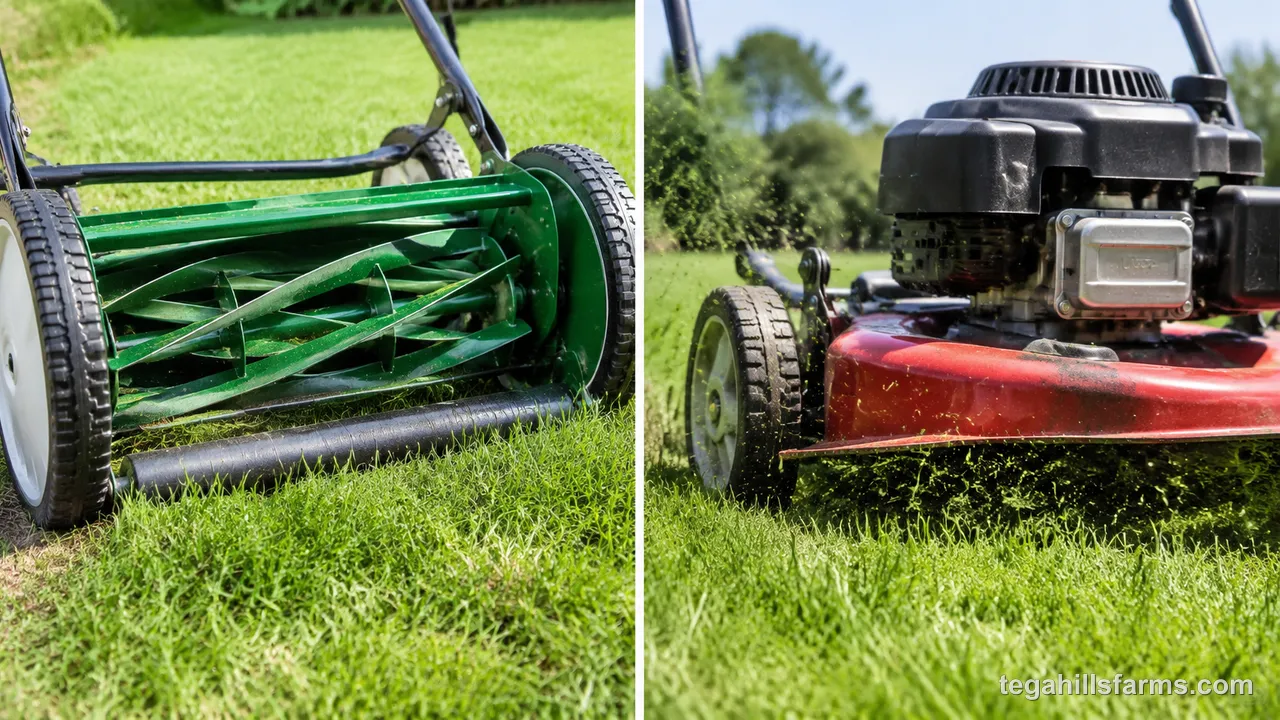
The reel’s cylinder carries 5 to 7 spiral blades. Each one sweeps grass against the bed knife as the wheels turn, so a push reel mower cuts only as fast as you walk. A rotary mower spins 1 or 2 horizontal blades and cuts by speed and impact rather than contact. That is why it needs an engine or battery, and why a self-propelled rotary mower can also drive its own wheels.
That one mechanical split explains the rest of this comparison. Shearing gives a cleaner cut but needs short, upright grass. Impact cutting tolerates tall growth and debris, at the cost of a rougher edge on each grass blade.
The two cutting methods divide the main buying criteria like this:
| Criterion | Reel Mower | Rotary Mower |
|---|---|---|
| Cutting action | Scissor-like shear | High-speed impact |
| Cut quality | Clean, even tips | Rougher, can tear tips |
| Tall or wet grass | Struggles | Handles well |
| Debris tolerance | Low | High |
| Weight | Light | Heavier |
| Best lawn size | Small | Medium to large |
| Noise | Nearly silent | Loud on gas models |
| Blade sharpening | Infrequent but precise | Frequent but simple |
| Lifespan | Long with care | Shorter for walk-behind models |
| Power options | Manual push, gas, battery | Walk-behind gas, self-propelled, electric, riding |
If you’re still weighing every mower type before narrowing it down to reel or rotary, the guide on how to choose a lawn mower covers the full decision.
What Are the Pros and Cons of Reel and Rotary Mowers?
Reel mowers trade versatility for cut quality and quiet, while rotary mowers trade a clean cut for power and range. The right set of trade-offs depends on how tall your grass gets between mowings and how much ground you cover. A drawback that sounds minor on paper can decide the purchase if your yard has trees, slopes or an irregular mowing schedule.
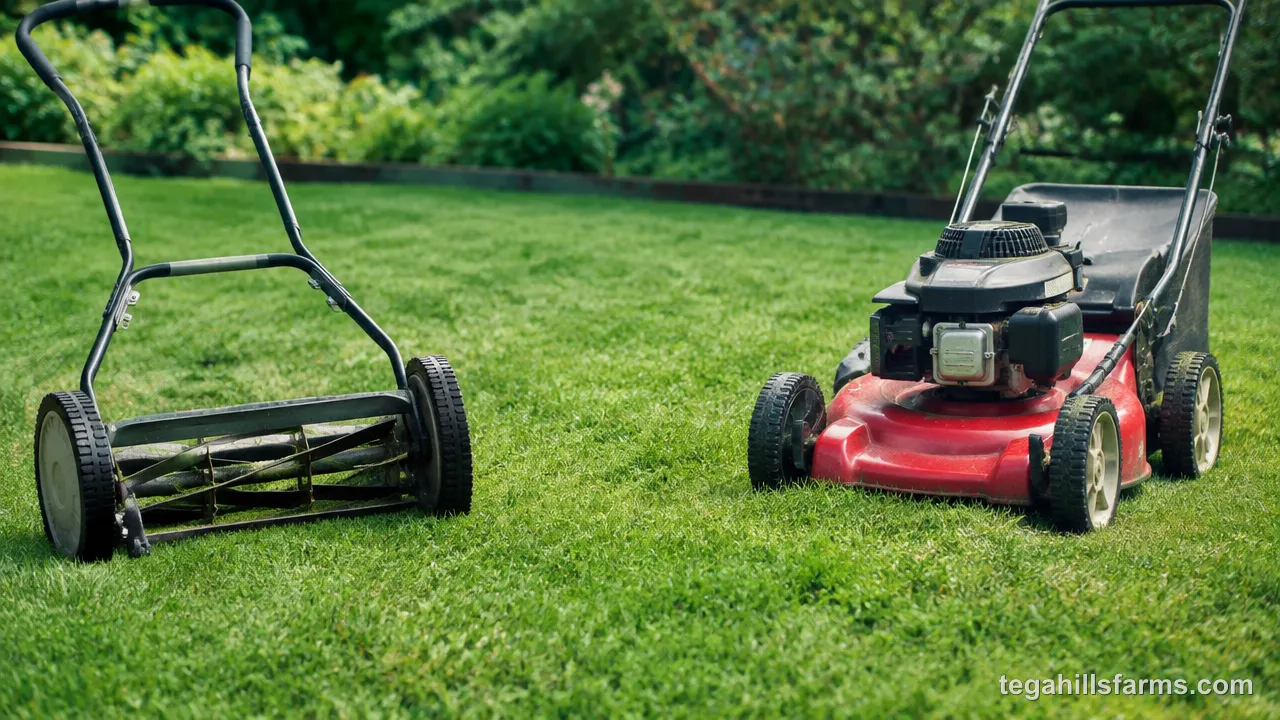
Reel Mower Pros: Where It Shines
A reel mower’s biggest advantage is the cut itself. The cylinder slices each grass blade cleanly against the bed knife, so the tips stay green instead of fraying. On a small, flat, well-kept lawn, that produces an even, carpet-like finish.
Push models have no engine, which removes several chores at once. There’s no gas to store, no oil to change and no exhaust. The machine runs nearly silently, so you can mow early on a weekend without bothering the neighbors. Without a heavy motor, a push reel mower is also easy to lift over edging, steer around beds and hang on a garage wall.
Upkeep stays simple because the mechanism is only wheels, gears, the spiral blades and the bed knife. If you keep those parts adjusted and clean, little else can wear out.
Reel Mower Cons: Why Fewer People Use One
Reel mowers are less common because they only cut well in narrow conditions: short, dry, upright grass on fairly even ground. Tall grass gets pushed over by the cylinder instead of drawn into it. Wet or matted grass smears against the bed knife instead of shearing.
Debris is a bigger problem. A twig can jam the cylinder mid-pass. A stone can nick the bed knife, which then leaves strips of uncut grass. Bumps and dips cause skipped or scalped patches, because the cutting height follows the wheels closely.
The mower also asks more of its owner. You have to mow often to keep grass within reach of the cylinder. The bed knife needs precise adjustment to keep light, even contact with every blade. On yards with mature trees, rough ground or an irregular mowing schedule, these limits usually rule a reel out.
Rotary Mower Pros: Why Most Lawns Use One
Rotary mowers became the default because they cut almost any lawn in almost any condition. The fast blade chops overgrown or uneven grass that a reel would roll over. The deck also shrugs off small twigs and leaves, which matters on lots with trees.
Range is the other advantage. Rotary designs come as:
- walk-behind gas models,
- self-propelled rotary mowers that drive the wheels for you,
- electric rotary mowers on a cord or battery,
- riding mowers for acreage.
That lets you match the machine to the yard. A battery push model fits a suburban lot, self-propelled drive helps on hills, and a riding mower makes sense when walking the lawn takes too long.
Wider decks and powered drive also cover ground faster. Medium and large lawns get finished in one session instead of being spread across the week.
Rotary Mower Cons: What You Give Up
The price of that versatility is a rougher cut. A rotary blade hits grass at speed rather than slicing it, so a less-than-sharp edge tears the tips and leaves a ragged look.
Gas models add loud noise, exhaust and fuel to store. Rotary mowers are also heavier than reels. That makes them harder to lift into a truck or maneuver around tight beds without self-propelled drive.
Engine upkeep follows a gas rotary through every season: oil, spark plugs, air filters, and blades that dull faster than a reel cylinder. Owners who want a manicured look, mow small lots or live close to neighbors will notice these drawbacks most. On a large or rough yard, they’re a fair trade.
Which Cuts Better: Reel or Rotary?
A reel mower gives the cleaner, healthier cut, but only when grass is short and dry. A rotary mower cuts more consistently across tall, wet or debris-strewn lawns. The condition of the grass on mowing day decides which advantage you actually get, and that depends as much on your habits as on the machine.
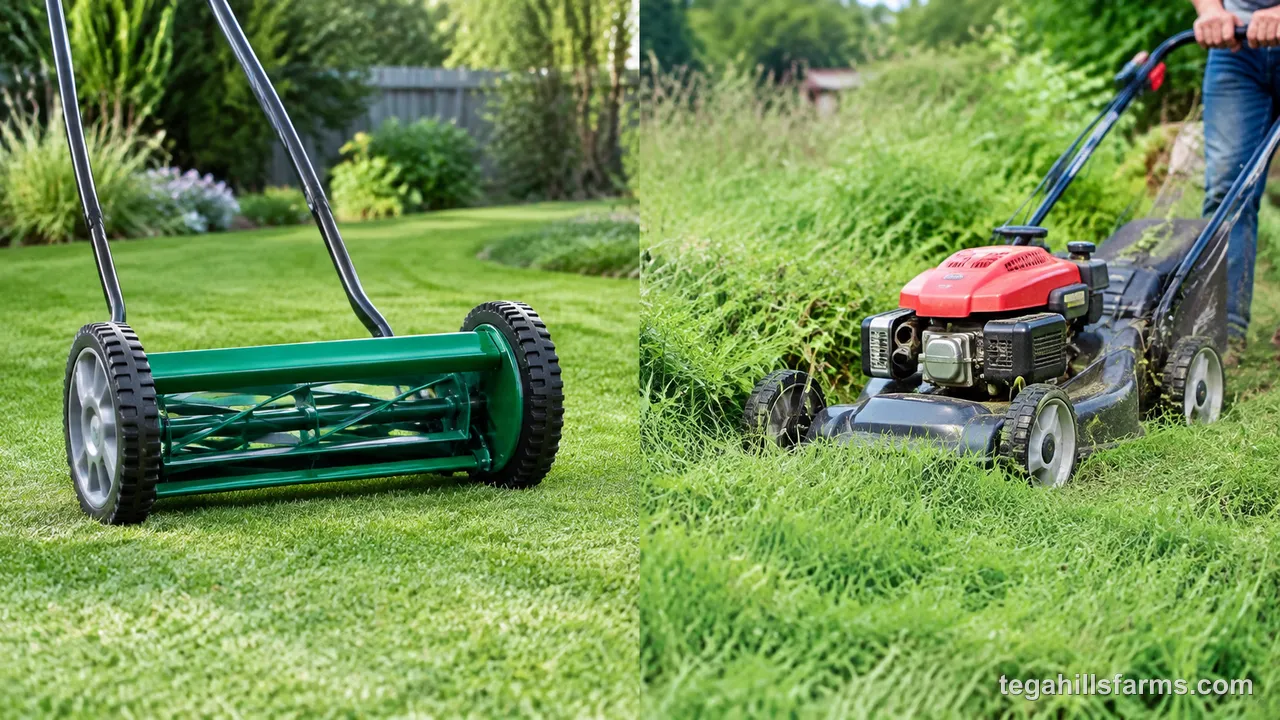
Cut Quality and Grass Health
A clean shear cut heals faster than a torn one, which is why reel-cut lawns tend to look greener the day after mowing. The bed knife and cylinder close on each grass blade like scissors. That leaves a flat wound that seals quickly and loses less moisture.
A rotary blade cuts by impact. When it’s sharp and spinning at full speed, the result is decent. As the edge wears, it rips the grass and leaves shredded tips that dry out and turn tan. Frayed ends also give the plant more damaged tissue to repair, which adds stress in hot, dry weather.
Mowing frequency shapes the result for both types. A reel works best taking a little off often, because it can only cut grass that stands within reach of the cylinder. A rotary tolerates longer gaps, though removing too much at once stresses any lawn. Matching your schedule to your grass, as covered in how often to mow the lawn, matters more with a reel.
On a lawn mowed regularly, the reel mower delivers the better cut.
Tall, Wet and Thin Grass: Which Mower Copes Better?
When grass is overgrown, damp or patchy, a rotary mower copes far better. Its blade can handle grass standing 4 inches tall or more. The airflow under the deck lifts stems before the cut, so a week of rain or a missed weekend doesn’t stop the job.
A reel cylinder needs grass that stands up and feeds into the bed knife. Problems show up in each condition:
- Tall stems fold over and slip under the reel.
- Wet clippings cling to the blades and clog them.
- Thin, sparse patches give the cylinder nothing to pull against, so it skips.
- Grass matted down by storms gets rolled flat instead of cut.
Mowing wet grass with either machine leaves clippings in clumps. Those clumps hold moisture against the turf and can encourage lawn disease, so waiting for a dry afternoon helps both types. A reel owner has less room to delay, though. Falling behind by a week can mean a second pass, or cutting the lawn down with a different machine first.
For lawns that often get ahead of you, the rotary mower is the safer choice.
Clippings, Mulching and Debris
A rotary deck gives you more options for clippings. Most can mulch them into fine pieces, bag them or discharge them to the side. The blade also chops through small sticks and fallen leaves without stopping, which makes fall mowing under trees much easier.
A reel mower drops fine clippings straight back onto the lawn. Because they’re short and evenly cut, they break down quickly, so bagging is usually unnecessary on a regularly mowed lawn. The catch is the lawn surface. Twigs, nuts, gravel and dog toys have to be picked up first, or the cylinder jams and the bed knife gets nicked.
In a yard where trees drop debris, the rotary mower handles the mess with less prep work.
Which Mower Fits Your Lawn Size and Terrain?
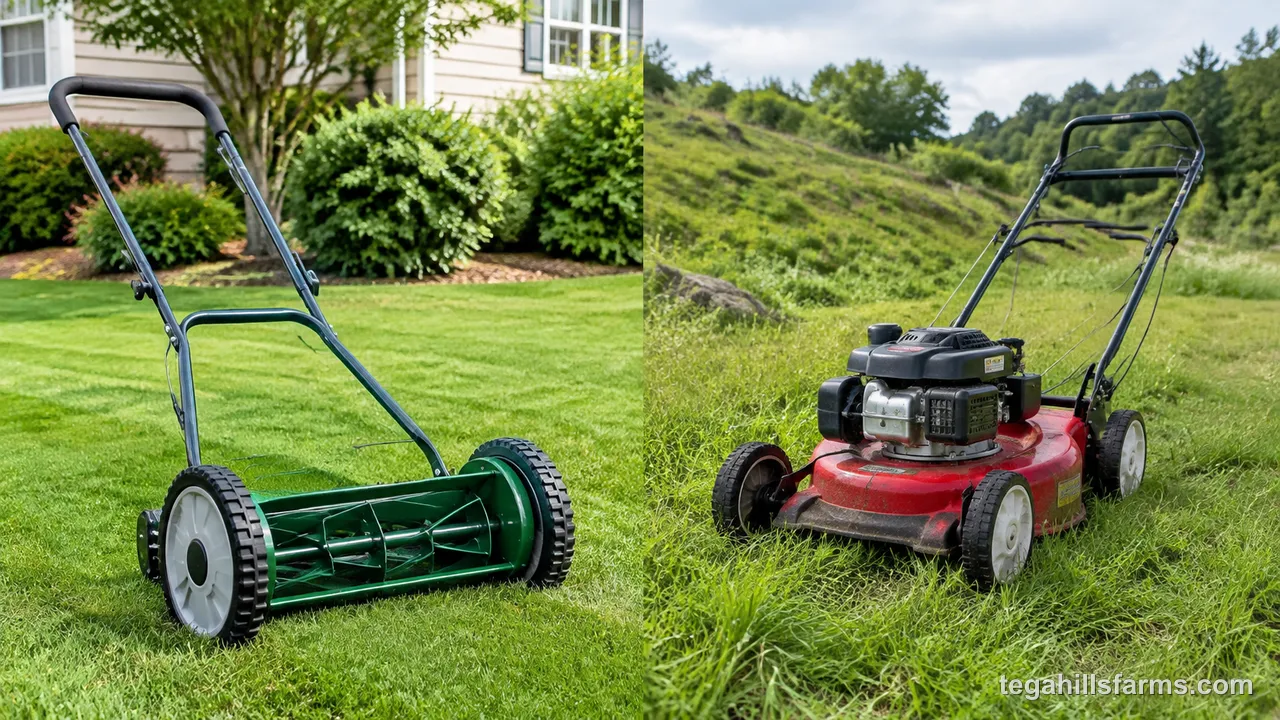
Small, flat, open lawns suit a reel mower, while larger or uneven yards suit a rotary mower, especially a self-propelled or riding model. Lawn size sets how long each mowing takes, and terrain sets how hard it feels. Together they decide whether a reel stays practical after the first few weeks.
Lawn Size and Mowing Speed
A reel mower fits lawns under 5,000 square feet. Rotary mowers suit lawns larger than that, where push effort and mowing time start to add up.
The gap comes from speed:
- A reel mower covers roughly 0.1 to 0.3 acres per hour.
- A rotary mower covers about 0.2 to 0.5 acres per hour, with self-propelled models at the faster end.
Two factors drive that difference. Cutting width sets how many passes a lawn needs, and push reels tend to have narrower cylinders than rotary decks. Ground speed matters just as much. A manual reel only cuts while you keep walking at a steady pace, while a powered rotary keeps cutting even when you slow down.
On acreage, a riding mower turns an afternoon of walking into a short session in the seat. Deck size, drive type and power source are all part of what to look for in a lawn mower at that scale.
For anything beyond a small lot, the rotary mower saves real time.
Terrain, Weight and Maneuvering
A push reel mower weighs about 17 to 35 pounds. That’s light enough to steer around flower beds, pivot in tight corners and carry up steps. Walk-behind rotary models weigh roughly 50 to 150 pounds, so they take more effort to turn and lift. That extra mass helps them roll over bumps and rough ground without bouncing.
Light weight works against a reel on uneven turf. The cylinder rides every dip and rise, so it can scalp humps and leave tufts in hollows.
Self-propelled drive changes the picture for rotary mowers. The wheels pull the machine forward, so its weight matters mainly when you turn it or load it into a vehicle.
On small, level yards with lots of beds, the reel mower is easier to handle. On bumpy or sloped ground, a self-propelled rotary mower is the better fit.
Which Grass Types Work Best With Each Mower?
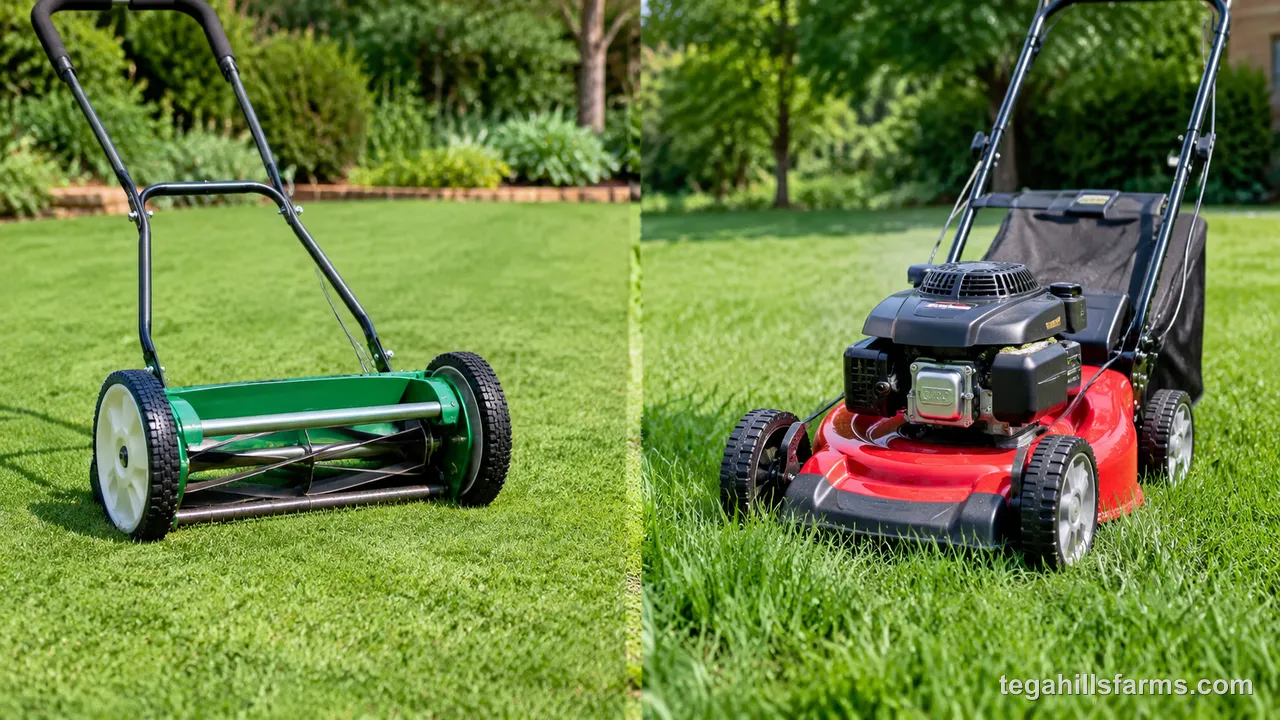
Fine, dense warm-season grasses such as St. Augustine, zoysia and bermuda suit a reel mower, while cool-season and coarse grasses like tall fescue do better under a rotary. Mixed lawns with uneven growth also lean rotary. The deciding traits are how low the grass is meant to be kept and how evenly it grows.
Best Grass for a Reel Mower
Low-growing, dense warm-season grasses take best to a reel mower. These include St. Augustine, zoysia and bermuda. They’re kept short and form a tight surface that the cylinder can shear evenly.
Bermuda and zoysia in particular look their best at low heights. There, a reel’s clean cut leaves a smooth, uniform finish that a rotary can struggle to match without scalping.
Zeon zoysia, a fine-bladed variety, suits a reel especially well. Its narrow, soft blades shear cleanly. Its dense growth keeps the cylinder supplied with upright grass rather than scattered stems.
St. Augustine is the exception to the low-height rule. Its blades are wide and it is usually kept taller, so check that a reel’s maximum height setting reaches the level your grass needs. Some push reels can’t be set high enough. Matching the mower to the grass starts with knowing how short to cut grass for your species.
For dense, low-cut warm-season lawns, the reel mower is the stronger fit.
Best Grass for a Rotary Mower
Cool-season grasses such as tall fescue do better under a rotary mower, and so do coarse, tall-growing or mixed lawns. These grasses are kept at higher heights that a reel often can’t reach. Tall fescue’s wide, stiff blades and clumping growth resist being drawn into a cylinder. A rotary’s adjustable deck handles those higher settings easily.
Mixed lawns give a reel uneven material to work with. Several grass types, weeds and patches grow at different rates across the same yard. A rotary blade cuts whatever stands in its path to the same height, so a lawn with fescue in the shade and bermuda in the sun still comes out even.
Cool-season lawns in northern regions also grow fast in spring and fall. A missed week in those seasons can leave grass too tall for a reel.
For cool-season, coarse or mixed lawns, the rotary mower is the practical choice.
Which Mower Needs More Maintenance and Lasts Longer?
A reel mower needs less frequent but more precise care and often lasts longer, while a rotary mower needs routine attention to its blade and, on gas models, its engine. The kind of upkeep you’re comfortable doing matters as much as how often it comes due.
Blade Sharpening and Adjustment
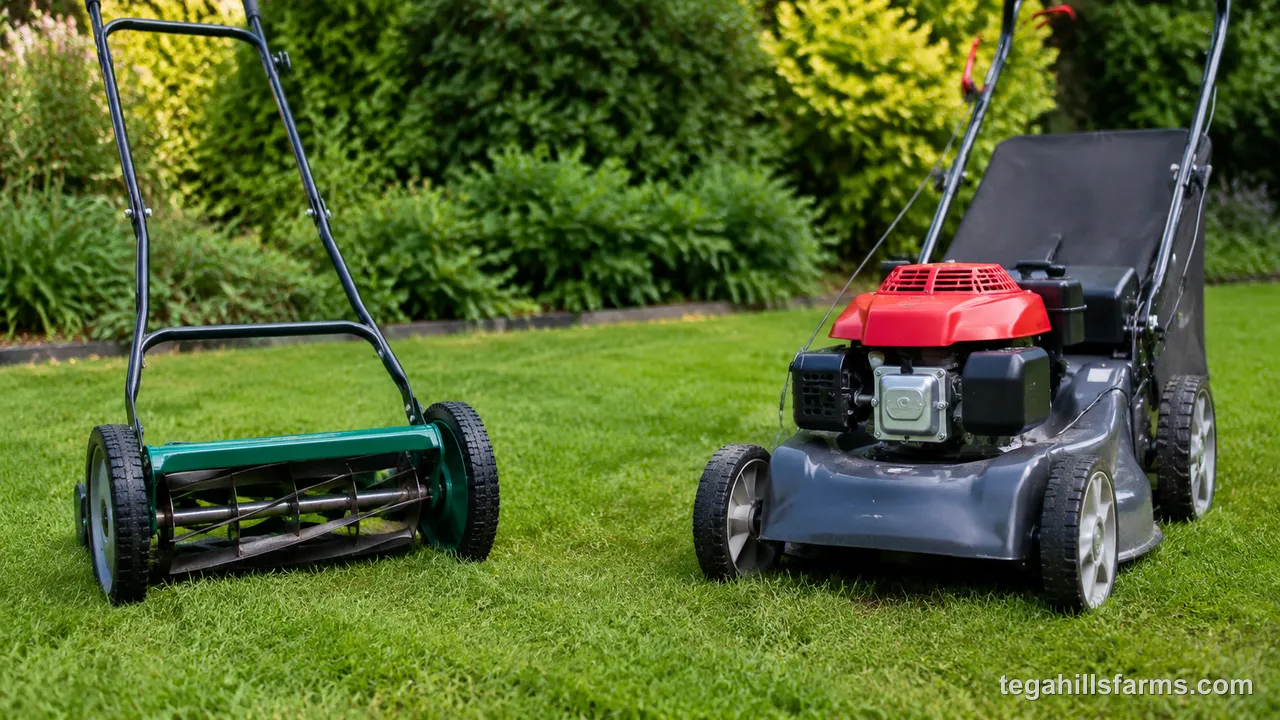
A reel mower’s blades typically need sharpening every 1 to 2 years, while a rotary blade needs it every 20 to 25 hours of use. The intervals differ partly because they’re measured differently: one by calendar time, the other by hours of use. The blades also wear differently. A reel cylinder slides against the bed knife and stays honed by that contact, while a rotary blade takes repeated impacts from grass, sand and debris.
Between sharpenings, a reel needs adjustment. The bed knife should lightly touch every spiral blade along its full length. If it’s too loose, grass folds instead of cutting. If it’s too tight, the reel drags. Restoring the edge and relief angle on a cylinder takes a backlapping kit or professional grinding equipment, which usually means a trip to a shop.
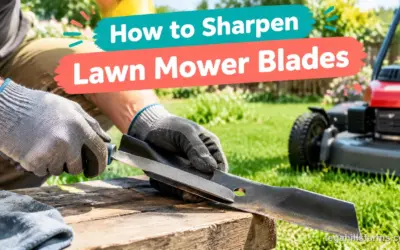
A rotary blade comes off with one bolt, and a file or bench grinder restores it at home. The steps are covered in how to sharpen lawn mower blades.
Reel care comes due less often, but rotary care is easier to do yourself.
Durability, Repairs and Running Costs
A reel mower can last 10 to 20 years, or close to indefinitely with good care. A push model has almost nothing to fail beyond the cylinder, bed knife, bearings and wheels. Walk-behind rotary mowers typically last 5 to 10 years, and riding mowers 10 to 20 years.
The engine is what shortens a rotary’s life. Gas models need an oil change about every 50 hours, plus spark plugs, air filters and fresh fuel. Skipped service shows up as hard starts and worn parts. Common rotary mower repairs run about $75 to $550.
Yearly running costs follow the same split:
- Reel mower: roughly $10 to $30, mostly for sharpening.
- Gas rotary mower: roughly $50 to $150.
- Electric rotary mower: roughly $40 to $80.
Purchase price is a separate question, covered in how much a lawn mower costs.
For long, low-cost ownership, the reel mower wins.
Which Mower Is Quieter and Better for the Environment?
A push reel mower runs nearly silently with no emissions, while gas rotary mowers reach 75 to 105 decibels and produce exhaust. The upper end of that range is loud enough that hearing protection makes sense. Early-morning mowing near neighbors favors the reel.
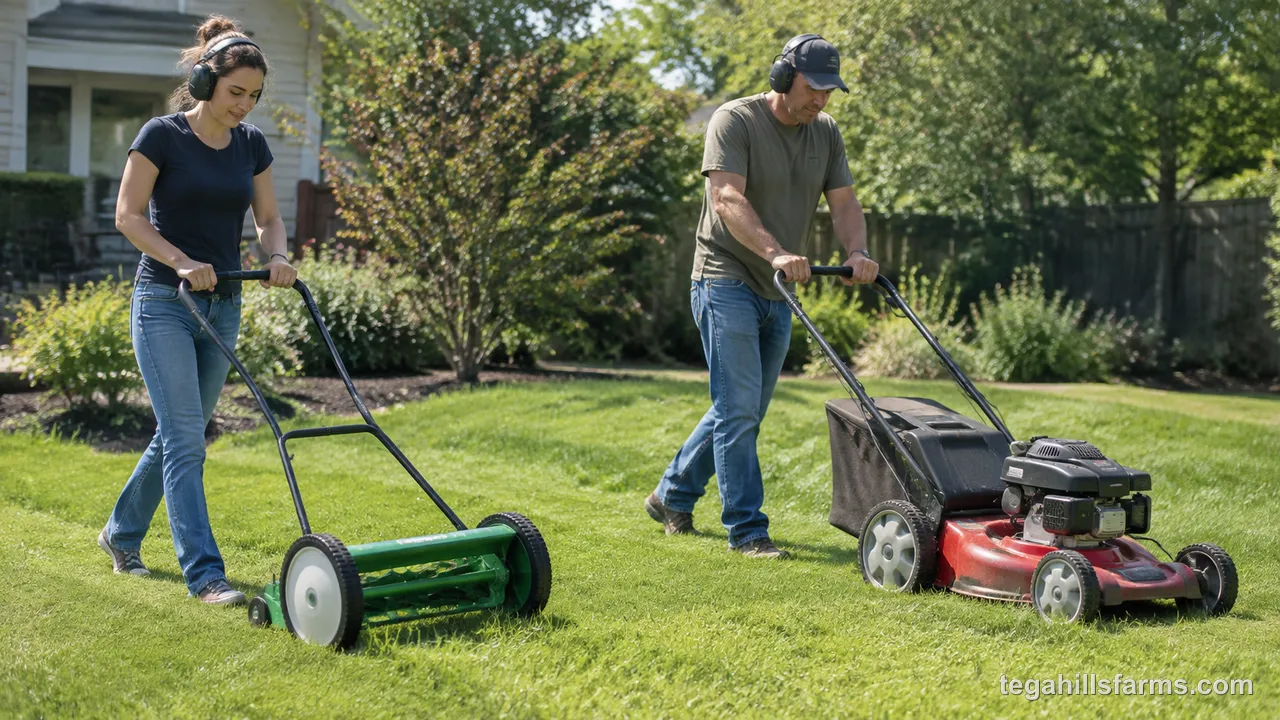
Gas rotary models also burn fuel and release fumes at the operator’s level. Spills during refueling add to the mess.
Electric rotary mowers sit in between. They produce no exhaust and far less noise than gas, though the motor and blade still hum. The battery or cord brings its own trade-offs, which gas vs electric lawn mowers covers in depth.
Pushing a reel is also exercise, burning about 165 to 198 calories per 30 minutes of mowing.
On noise and emissions, the push reel mower comes out ahead.
Reel or Rotary: Which Should You Choose?
Choose a reel mower for a small, flat, fine-grass lawn you mow often, and a rotary mower for anything larger, rougher or less regularly kept.
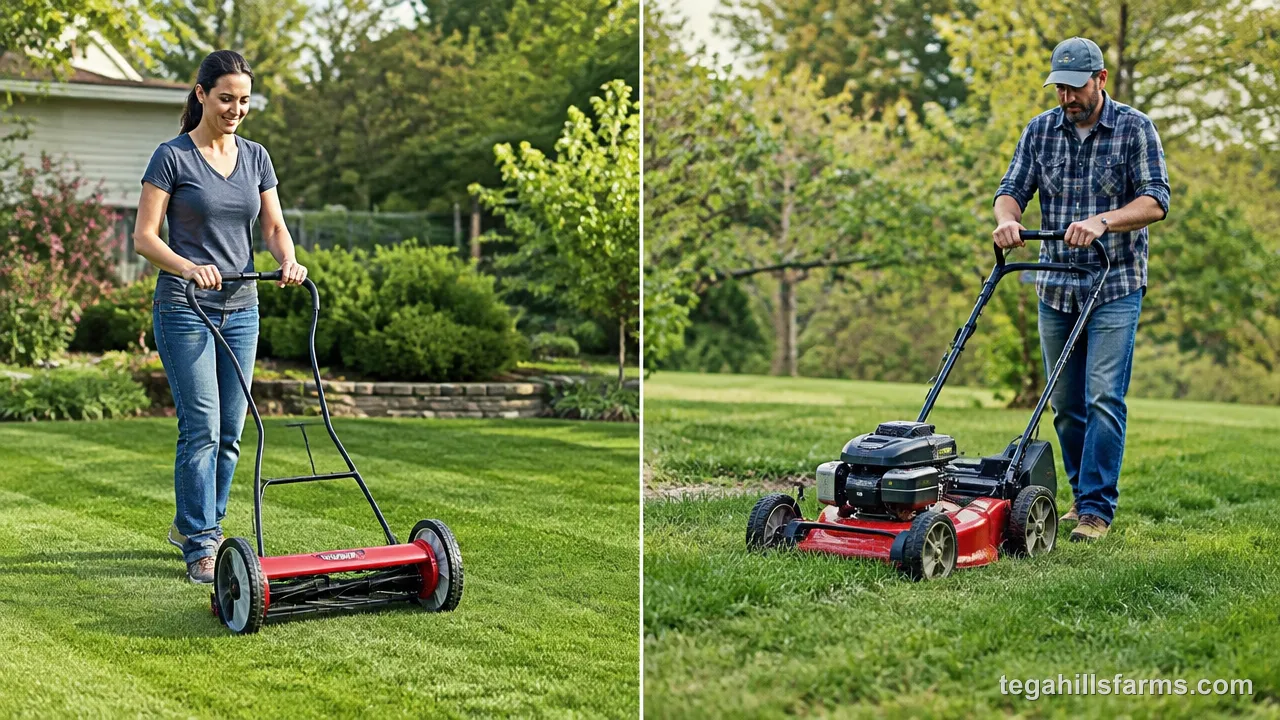
- Choose the reel mower if your lawn is small and level, planted in a low-growing warm-season grass and mostly free of sticks. You also need to be willing to mow often in exchange for a quiet, clean cut.
- Choose the rotary mower if your yard is medium or large or has trees, slopes or cool-season grass. It’s also the better pick if your schedule sometimes lets grass grow tall between mowings.
The toss-up is a small cool-season lawn, or a tidy lot with a few trees. There, I’d lean rotary, specifically a battery model, because it forgives a missed week while keeping noise down. Whichever way you go, measure your lawn and identify your grass type before you shop.
A blade that has lost its edge gives no warning noise or light; it simply starts tearing grass tips instead of slicing them. Within a few days those shredded ends turn brown, and a lawn mowed right on schedule can look drought-stressed and stay open to disease while you look for a watering problem that isn’t there.
How Can You Tell When a Blade Is Dull or Misadjusted?
The clearest sign shows up on the grass a day after mowing. The tips look frayed and whitish, then turn tan, instead of ending in a clean green edge. Uneven height, ragged streaks and strips of uncut stems point to the same problem.
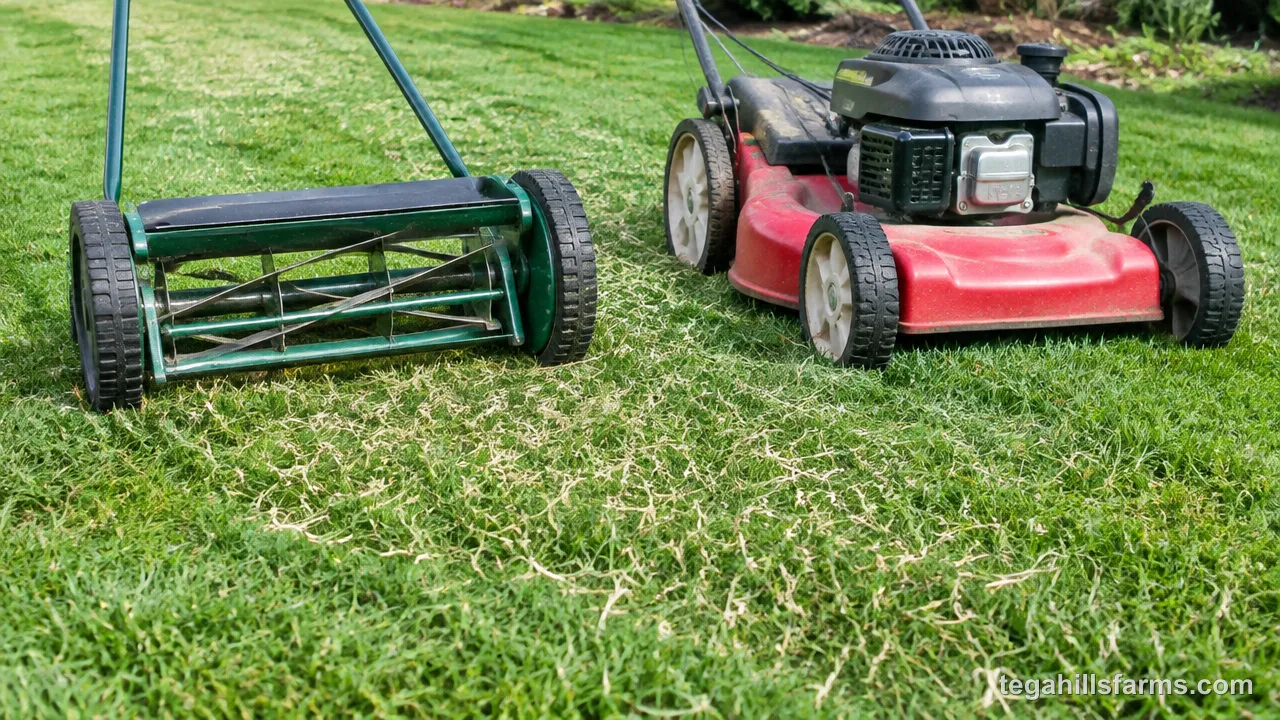
On a reel mower, the usual culprit is bed knife contact. To check it:
- Slip a strip of paper between the bed knife and a spiral blade.
- Turn the reel by hand.
- Repeat across the full width.
A sharp, well-adjusted reel cuts the paper cleanly everywhere. If it folds the paper in spots, adjust the bed knife first, and sharpen only if adjustment doesn’t fix it.
On a rotary mower, check the blade edge for rounding, nicks and bends. Sharpen a dull edge, but replace a bent or cracked blade, since it can’t be balanced safely. Grass caked under the deck can also mimic a dull blade, so it’s worth knowing how to clean a lawn mower before you blame the edge.
Are Powered Reel Mowers and Manual Rotary Mowers Worth Considering?
Powered reel mowers suit readers who want a reel-quality cut without pushing the cylinder by hand. Gas-powered reel mowers spin their cylinders at about 2,000 to 2,500 RPM, so the cut no longer depends on walking speed. Battery reel mowers do the same job quietly and without fuel. Either way, the shear cut stays clean and even.
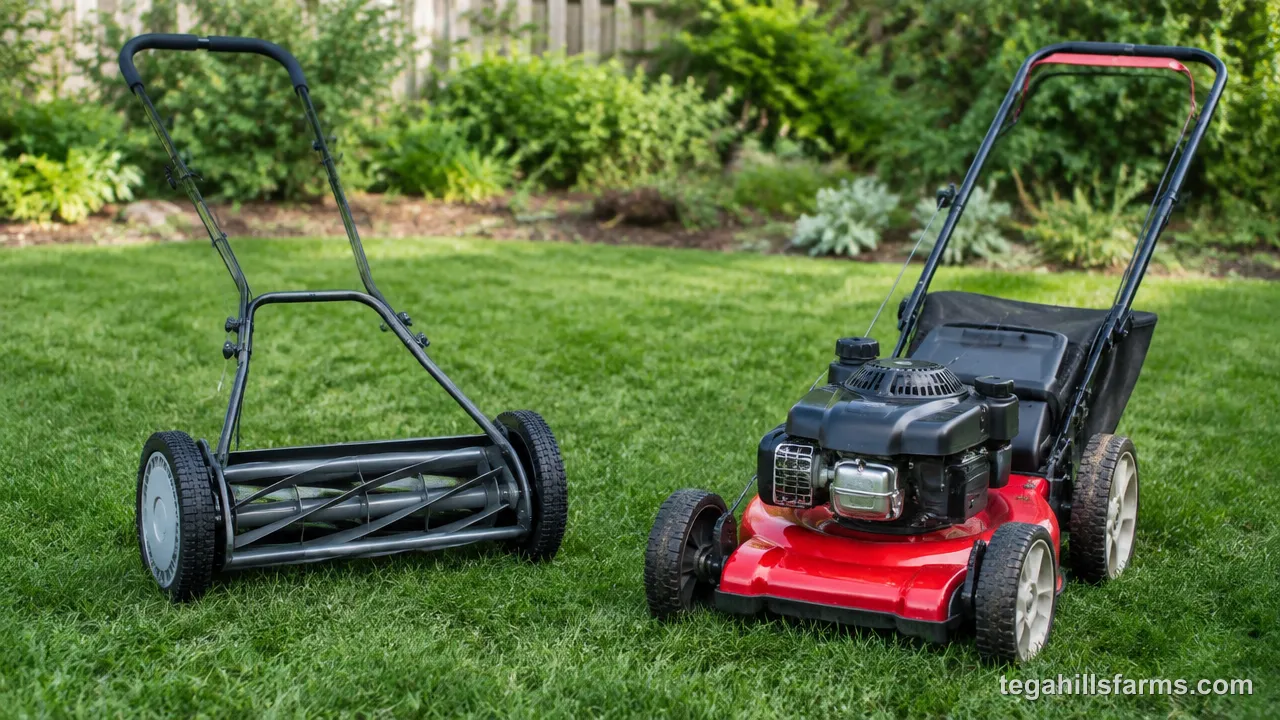
Their limits are still the reel’s limits. A motor doesn’t help the cylinder take in tall, wet or matted grass, and debris still jams it. Powered reels also bring back an engine or battery to maintain, and they weigh more than a push reel. That gives up two of the reel’s main advantages.
A manual rotary mower goes the other way. It’s a non-motorized push mower whose wheels drive the cutting blades through gears. It’s quiet and fuel-free, but blade speed depends on how fast you push. That makes it suited to small, regularly mowed lawns rather than tough or overgrown grass.
Can You Switch From Rotary to Reel Without Hurting Your Lawn?
You can switch to a reel without hurting your lawn, but a lawn cut by a rotary for years usually needs a few weeks of preparation first. Rotary mowers are often set high, and grass kept that way grows its green leaf higher up the stem. Dropping straight to a reel’s lower setting can scalp the turf and expose brown stems.
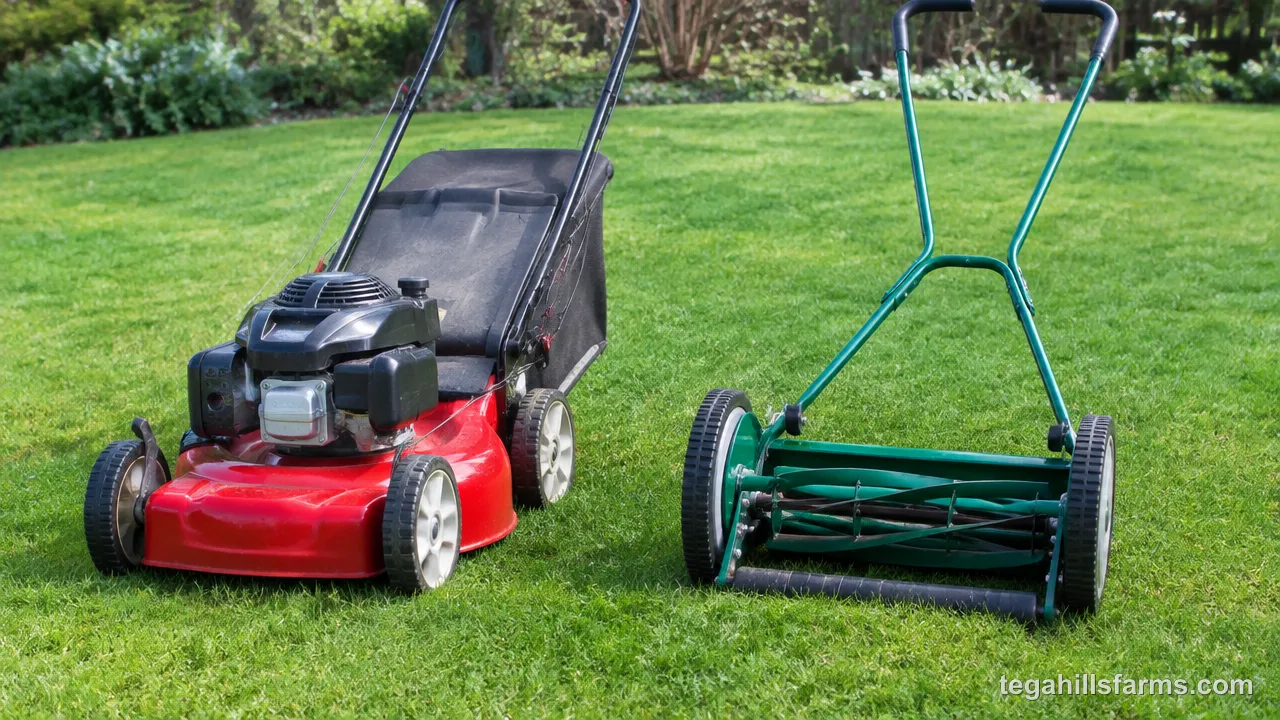
To prepare the lawn:
- Mow the existing grass down with the rotary first.
- Lower the cutting height gradually over several mowings rather than in one pass.
- Fill low spots with topdressing and level humps, since a light reel follows every contour and will gouge high points.
- Rake up sticks, nuts and stones before the first reel pass.
Technique matters too. Walk at a steady, brisk pace so the cylinder spins fast enough to shear. Overlap each pass slightly, and change direction from one mowing to the next to keep grass upright. The basics of how to use a lawn mower still apply, but a reel rewards consistency more than any rotary does.
How Do Safety and Storage Compare?
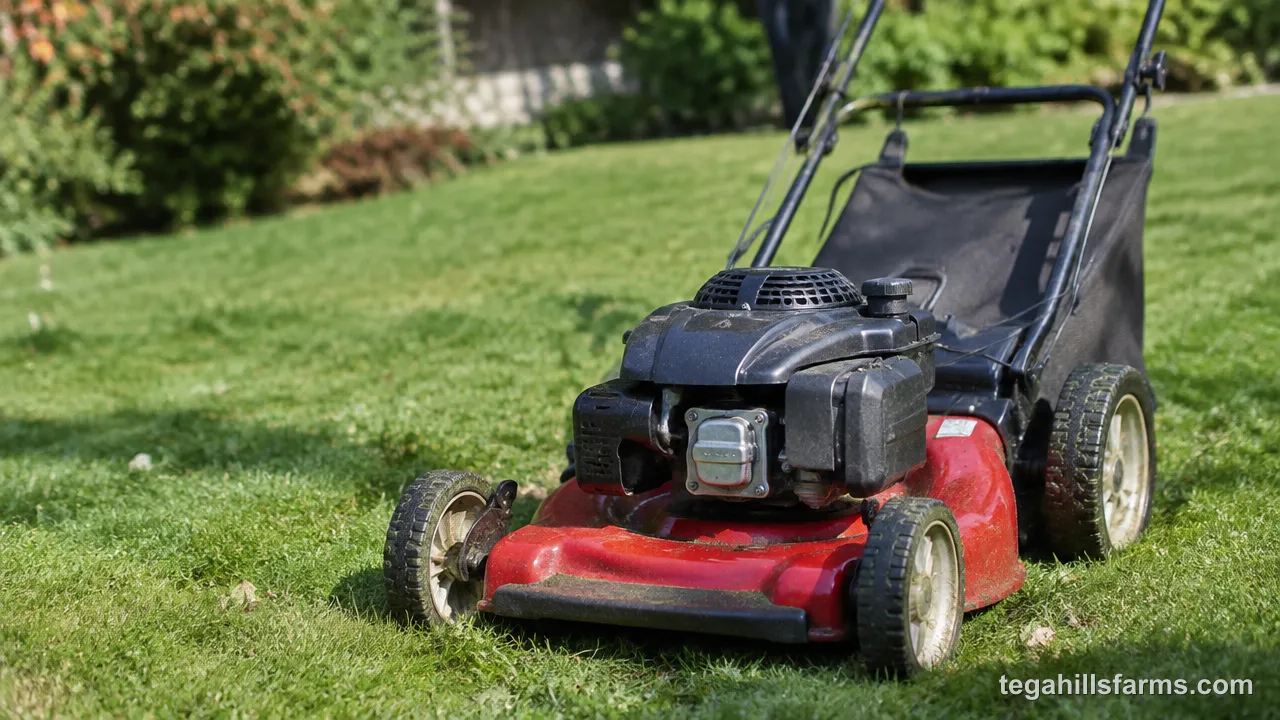
A rotary mower carries the greater injury risk. Its blade spins fast enough to throw stones and sticks out of the deck, and it can cause severe cuts if a hand or foot slips underneath. To mow safely:
- Keep children and pets away while you mow.
- Wear closed-toe shoes.
- Wait for the blade to stop fully before clearing a clog.
A push reel’s cylinder moves more slowly and throws little debris. It can still pinch fingers near the bed knife, so never clear it while the wheels can turn.
Storage favors the reel. A push reel mower is compact and light enough to hang on a garage wall. A rotary mower needs floor space, and a riding mower needs a shed or garage bay. Gas rotary models also need their fuel stabilized or drained before winter. Battery packs for either type should stay indoors, away from freezing temperatures. The steps for each are part of how to store a lawn mower.
Reel vs Rotary Mower FAQ
Why do some people still choose a reel mower?
A reel mower appeals to homeowners with small, level lawns who value a clean scissor cut, quiet mornings and no fuel. It needs little upkeep, takes up little storage space and turns mowing into light exercise. The trade-off is mowing more often and clearing debris before each pass.
Can a reel mower handle tall grass?
Not well. A reel cylinder needs upright grass that it can draw against the bed knife, so overgrown stems fold over and get missed. If the grass gets away from you, cut it down with a rotary mower or string trimmer first. Then return to the reel on a regular schedule.
Which mower is better for a small lawn?
A push reel mower usually suits a small, flat lawn best, since it’s light, quiet, compact and cuts cleanly without an engine. A battery rotary model is the better pick for a small lawn with trees, bumps or cool-season grass, where debris and taller growth would frustrate a reel.
Is a golf-course look realistic with a reel mower at home?
A home lawn can come close with a reel mower, a fine-bladed grass and frequent mowing at a low height. Golf courses also rely on professional reel equipment, daily care, irrigation and leveled ground. Expect a noticeably sharper finish than a rotary gives, but not a putting green.
Do reel mowers work on cool-season grass?
They can, but cool-season grasses like tall fescue are usually kept taller than many push reels can cut. Their fast spring growth also punishes missed mowings. A rotary mower handles those heights more easily. If you try a reel, first confirm that its maximum height setting suits your grass.






Write Your Review
No reviews yet. Be the first to share your experience!