

Battery mowers come out ahead on noise, starting, storage, and routine upkeep. Gas mowers still lead on unlimited runtime, heavy or wet grass, steep slopes, and large lots. The long-term value of a battery mower depends mostly on one future expense: the replacement battery. A gas mower spreads its costs across fuel and yearly engine service.
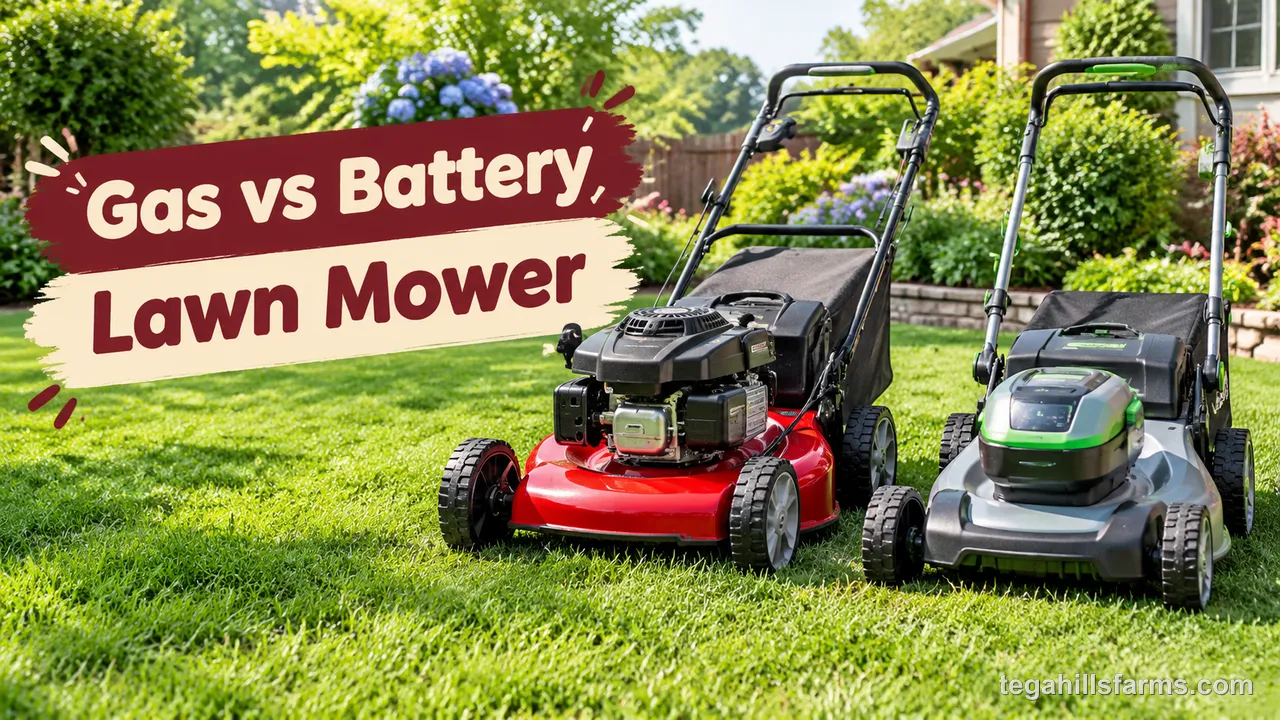
The fair way to choose is to compare both types on the same criteria. Those are cut quality, runtime per charge or tank, maintenance, running costs, noise and emissions, and how each handles your yard’s size and slope.
Most homeowners worry less about the purchase price than about buying a machine that dies halfway across the lawn or sits in the garage refusing to start. Each of those risks belongs mainly to one power type, so the real question is which of them your yard makes more likely.
What Separates a Gas Mower From a Battery Mower?
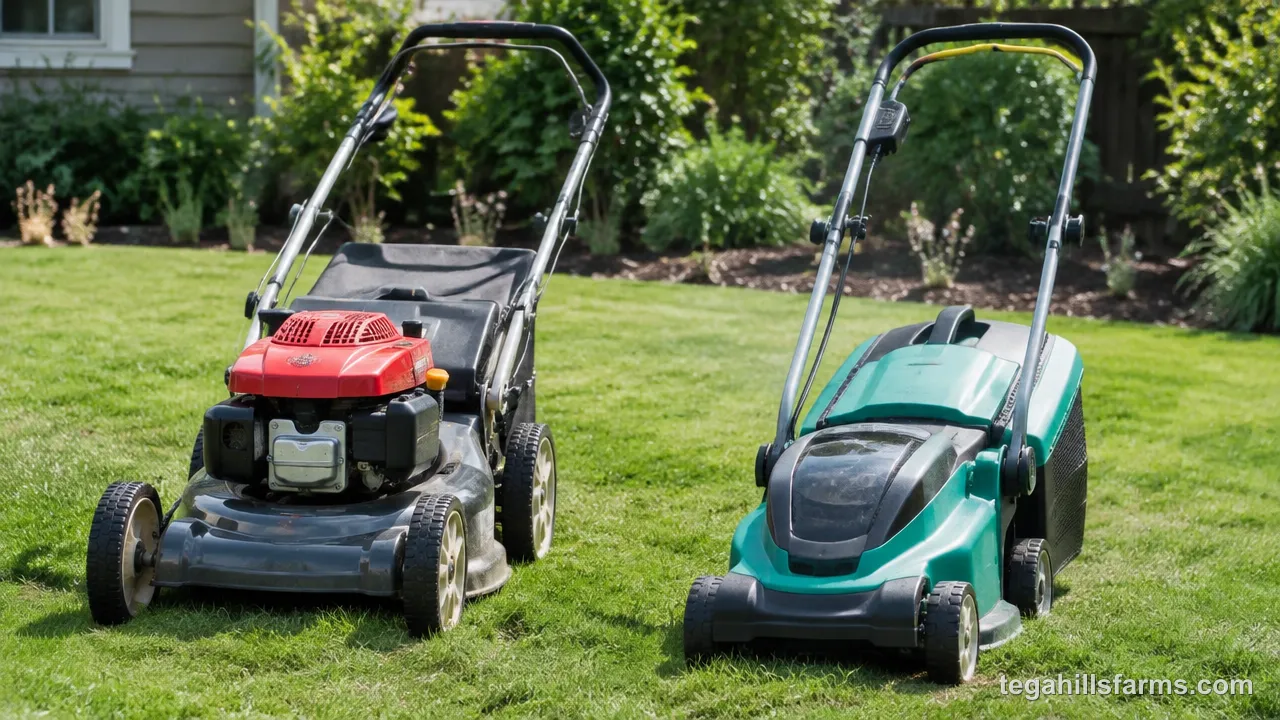
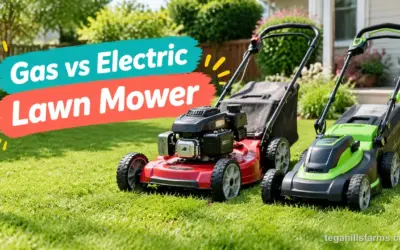
The power source does: a gas mower spins its blade with a small gasoline engine, while a battery mower uses an electric motor fed by a rechargeable lithium-ion pack. That single difference changes how each machine starts, refills, and handles.
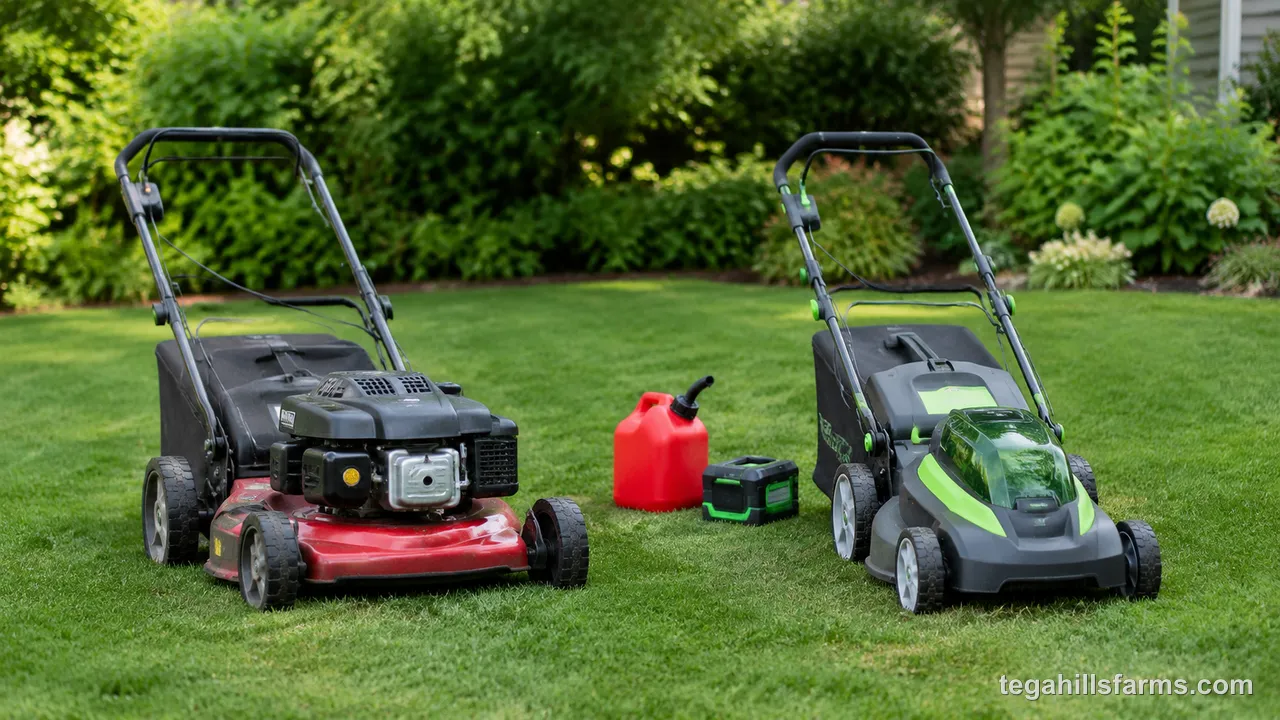
Most gas push mowers start with a pull cord and refill from a fuel can. A battery mower starts with a button and recharges from a wall outlet. Without an engine block and a fuel tank, battery models are usually lighter to push and turn.
Entry prices run the opposite way from upkeep. A basic gas push mower typically costs about $150 to $350. Battery push mowers start around $300, and self-propelled battery versions often run $700 or more.
The table lines the two types up across the main criteria:
| Criterion | Gas | Battery Mowers |
|---|---|---|
| Starting | Pull cord on most push models | Push button |
| Refilling | Gasoline from a can, done in minutes | Recharge from a wall outlet |
| Entry price | Lower | Higher |
| Cut quality | Slightly more even | Nearly the same |
| Runtime | Limited only by the fuel tank | Limited by pack capacity |
| Routine upkeep | Oil, spark plug, air filter, fuel care | Blade, deck, battery care |
| Noise | Louder | Much quieter |
| Largest future expense | Engine repairs | Replacement battery |
If you are still narrowing down your options, the guide on how to choose a lawn mower walks through the other factors that matter before you settle on a power type.
Which Cuts Better, Gas or Battery?
Gas mowers cut slightly better, but the margin on an ordinary lawn is too narrow to see. The two types separate more clearly once the grass gets thick, tall, or wet, because that is when sustained power at the blade starts to matter. On a lawn kept in regular shape, cutting performance is rarely the deciding factor.
How Do They Compare on Cut Quality and Mulching?
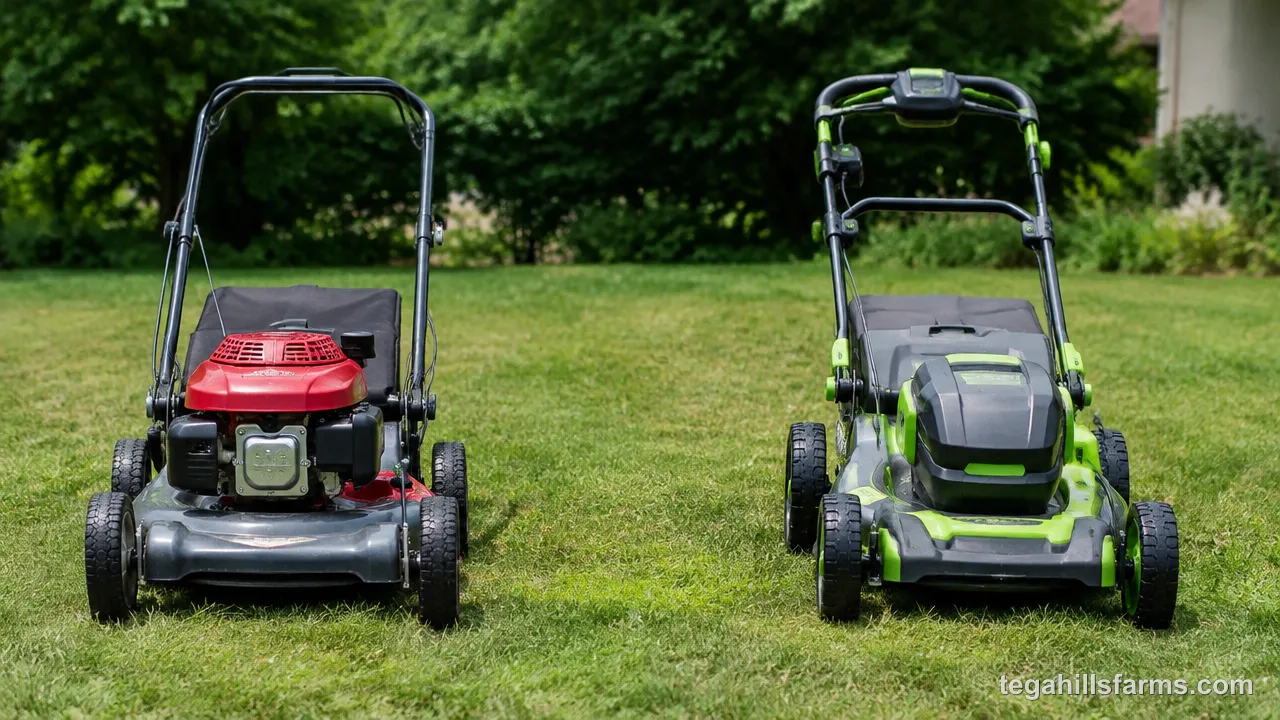
The gap on rating scores is small. On a 1-to-5 scale, gas mowers score 4.7 for cutting evenness against 4.5 for battery mowers, and 4.7 for mulching against 4.6.
The scores sit this close because both types do the same basic job. Each spins a single blade under a deck, and a clean cut depends more on blade sharpness, deck shape, and mowing height than on whether gasoline or a battery turns the blade. A gas engine’s extra power gives it a slight edge at lifting grass and chopping clippings fine. On a lawn mowed at a normal height, that edge rarely shows once the clippings settle.
Mulching follows the same pattern. A battery mower with a sharp blade and a well-designed deck returns clippings to the lawn almost as finely as a gas model. The difference shows up mainly when the grass has grown longer than usual between cuts.
Gas wins on cut quality by a hair, but battery mowers come close enough that cut quality alone should rarely decide the purchase.
Which Handles Tall or Wet Grass Better?
A gas mower handles overgrown, thick, or damp grass better. Its engine keeps blade speed up under heavy load, and its fuel supply does not drain faster as the work gets harder.
A battery motor behaves differently in dense or wet grass. It pulls more current to keep the blade turning, so the pack runs down noticeably faster than it does on dry, trimmed turf. Wet clippings also cling to the deck and add drag, which raises the load further. Some battery models respond by slowing the blade or asking you to raise the deck, and either one leaves a rougher finish.
How much grass comes off in each pass decides how hard any mower works. Cutting a lawn that has doubled in height forces the blade through far more material than a routine trim does. Knowing how short to cut grass for your turf type, and mowing before it gets ahead of you, keeps the load within what a battery handles comfortably.
Gas handles tall or wet grass better. Battery mowers do best on lawns mowed often enough that the grass never gets out of hand.
How Long Can Each Type Mow Before It Stops?
Runtime is the main practical limit of a battery mower, while a gas mower keeps going as long as there is fuel in the tank. For a battery owner, the questions are whether one charge finishes the whole lawn and what happens when it does not. Gas owners rarely think about runtime at all.
How Much Lawn Does One Charge Cover?
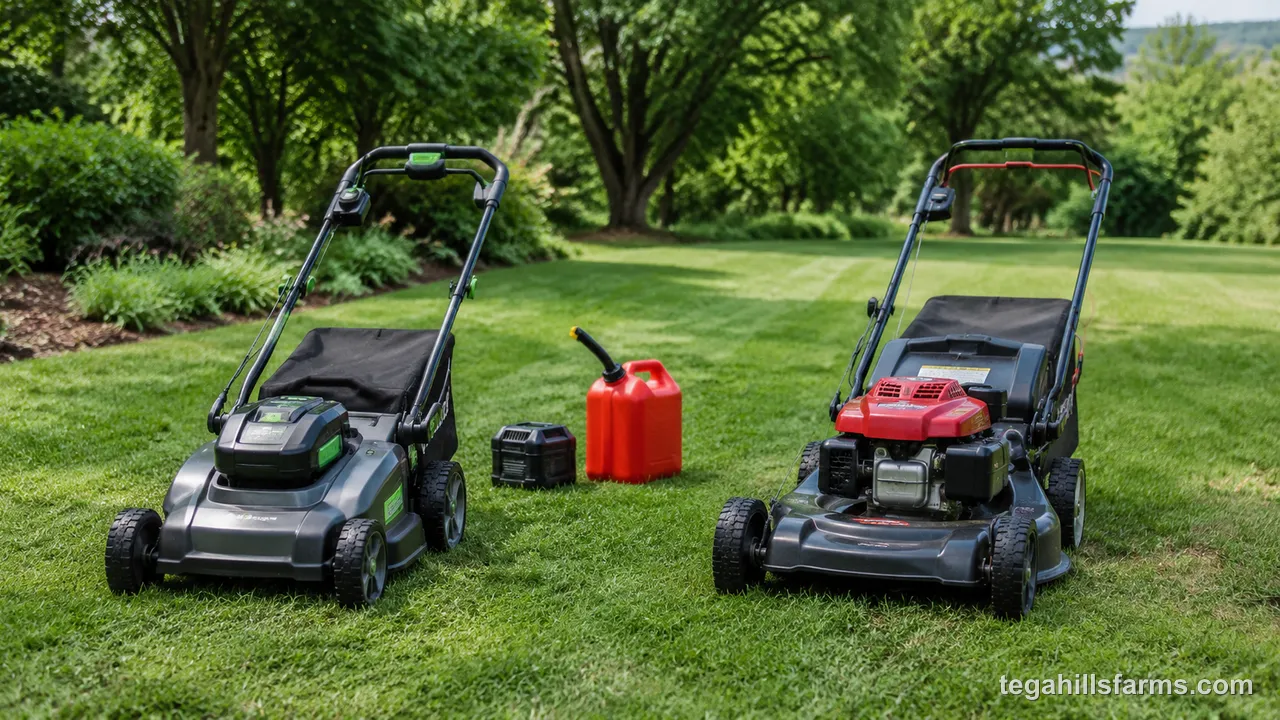
A typical battery mower covers about a quarter acre per charge on somewhat sloped land and up to half an acre on flat, unobstructed ground.
Real-world coverage often falls 20 to 30 percent below the manufacturer’s figure on hilly lots or in thick spring grass. Rated coverage reflects easy conditions. Climbing, dense growth, and running the self-propel drive all pull extra current from the pack, so the same battery covers less ground on a demanding lot.
Larger lawns have more options than they used to. Several electric zero-turn riding mowers cover more than an acre of grass per charge, and a couple of models run for nearly 2 hours, enough for close to 2 acres.
To judge your own yard, start from the lower end of a mower’s rated coverage and allow for your slopes and the way your grass grows in spring. A lot that sits near the limit on paper will likely need a second pack in practice.
Gas covers any size lawn without stopping. A battery mower matches it only when one charge, or one spare pack, finishes your whole yard.
How Do Refueling and Recharging Fit Into a Mowing Session?
Refilling a gas mower takes a few minutes with a fuel can, and the mowing session continues right away. The tradeoff is keeping fresh gasoline on hand and handling it safely.
A battery mower recharges in less than an hour and a half, which is roughly the length of a long break. On a lawn that one pack covers, recharging happens between mowings and never interrupts the work. On a lawn that needs more than one pack, a dead battery stops the job until it charges.
A spare battery changes that. You swap packs, keep mowing, and put the empty one on the charger, so the session runs much like it would with gas.
Gas wins on refill speed. A battery mower with a spare pack comes close enough for most mid-sized lawns.
What Upkeep Does Each Type Need?
Upkeep is where the two types differ most in day-to-day ownership: a gas mower carries a small engine that needs regular service, while a battery mower trades that engine work for simpler battery care. Blade and deck work apply to both, and off-season storage asks something different of each.
What Maintenance Does a Gas Mower Require?
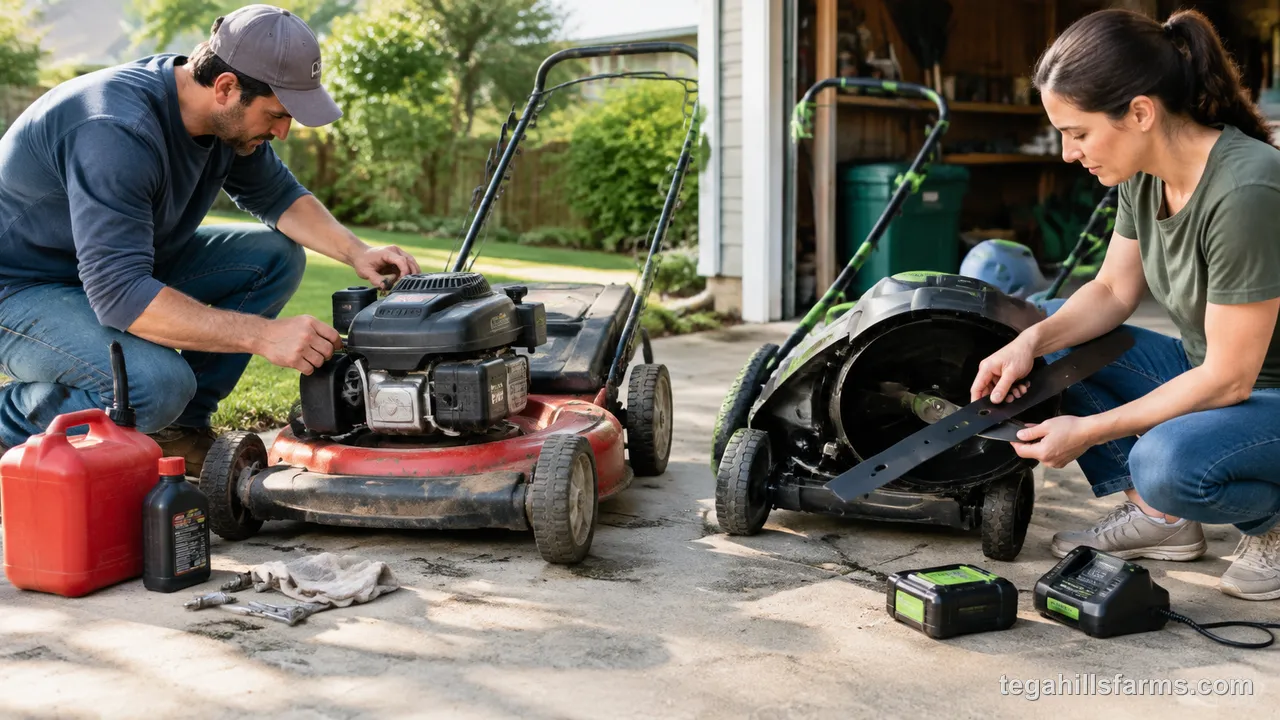
A gas mower needs regular engine service: oil changes, spark plug replacement, air filter replacement, fuel stabilizer, and occasional carburetor work. For an owner who does the work himself, that adds up to one to two hours per year.
Each task heads off a specific problem. Old oil loses its ability to protect the engine’s moving parts. A clogged air filter starves the engine of air and costs power. A worn spark plug is one of the most common reasons a mower refuses to start in spring. Untreated gasoline goes stale over the off-season and leaves gummy deposits in the carburetor, and that cleanup takes longer than any of the other jobs.
None of this is difficult. It does need to happen on schedule, and skipping it usually shows up as hard starts and rough running. On top of the engine work, a gas mower needs the same blade sharpening and deck cleaning as any other mower.
What Maintenance Does a Battery Mower Require?
A battery mower drops the engine work entirely, with no oil, spark plugs, air filter, or fuel to manage. It still needs blade sharpening at least once a season, and more often if you mow frequently or run over debris.
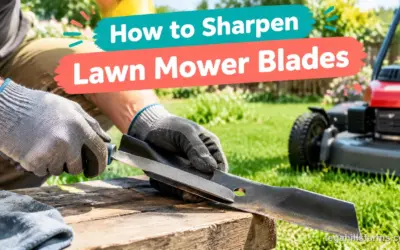
Blade care matters more than many buyers expect. A dull blade tears grass tips instead of slicing them, so the lawn browns at the edges after each cut. Tearing through grass also takes more force, which makes the motor work harder and shortens runtime per charge. Learning how to sharpen lawn mower blades pays off quickly on a battery model for that reason.
Beyond the blade, scrape clippings from under the deck so they do not build up and add drag. Keep the battery terminals clean, and avoid leaving packs fully drained.
How Do Storage Needs Differ Between the Two?
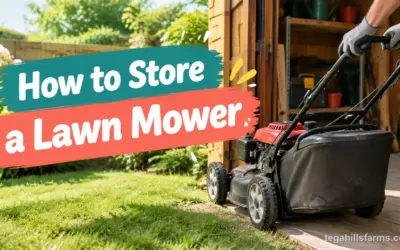
A gas mower needs its fuel stabilized or drained before winter so stale gasoline does not clog the carburetor. A battery mower needs its packs kept indoors, away from extreme heat and cold, and stored with a partial charge rather than empty.
Space is the other difference. Many battery mowers fold their handles flat and stand upright against a wall, which frees up floor space in a tight garage or shed. A gas mower generally cannot stand upright without the risk of oil or fuel leaking, so it needs a full footprint of floor space.
The full routine for how to store a lawn mower covers the step-by-step details for both types.
Battery mowers are easier to store, both in the prep they need and in the space they take up.
What Does Each Type Cost to Keep Running?
Long-term value comes from recurring expenses, not the purchase price. A gas mower’s costs arrive every season in small amounts, while a battery mower’s costs stay low until one large replacement. Which pattern costs less depends on how much lawn you cut and how long you keep the machine.
How Do Fuel, Electricity, and Parts Differ?
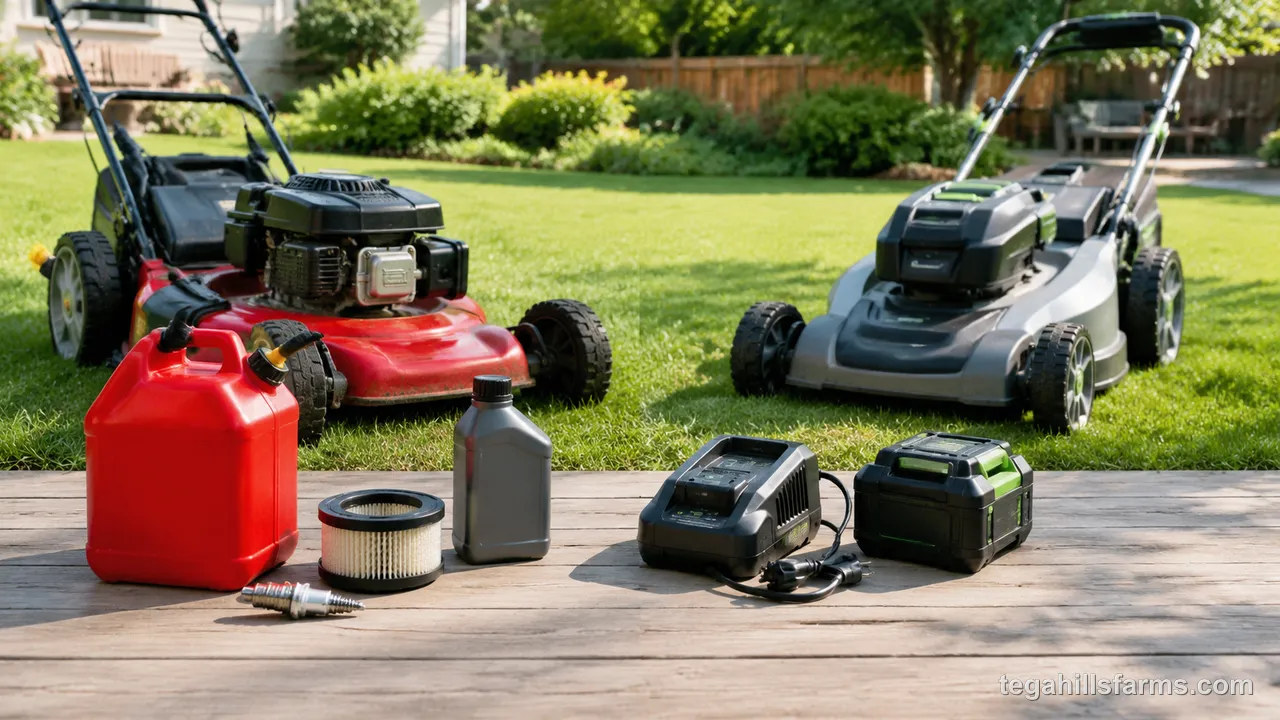
A gas mower needs fresh supplies every season: gasoline, oil, fuel stabilizer, and periodic spark plugs and air filters. A battery mower needs electricity and few wear parts beyond the blade.
How much a battery mower saves depends on how often you mow and how large the lawn is. A big lawn mowed weekly through a long growing season burns through a lot of gasoline and wears an engine faster, so dropping fuel and engine parts saves more. A small lawn mowed lightly uses so little fuel that the gap between the two types narrows to the yearly engine-service items.
Purchase prices by mower type are a separate question, and the breakdown of how much a lawn mower costs covers them by category.
Battery mowers cost less to run season to season, and the savings grow with lawn size and mowing frequency.
How Much Does a Replacement Battery Change the Long-Term Value?
The battery is the one large future expense on a battery mower, and a replacement pack typically costs $100 to $300, sometimes more.
That expense arrives all at once rather than spread across seasons, and it is the main reason entry price alone misleads. On a basic battery mower, a new pack can cost a large share of what the whole mower cost. Owners of those models often face a choice between buying a pack and replacing the mower.
A pricier model often holds its value better. Higher-end mowers commonly run on a battery platform that also powers trimmers, blowers, and other tools. A replacement pack then serves several machines, and the cost spreads across all of them. A sturdier deck and motor also give the mower a better chance of outlasting its first battery, which makes buying the second one worthwhile.
Before buying, check that the manufacturer still sells replacement packs for the model and that the platform is likely to stay in production.
Gas offers more predictable long-term costs. A battery mower holds its value better when its pack is shared across other tools you own.
Which Is Quieter and Cleaner to Run?
Battery mowers run far quieter, at about 65 to 75 decibels compared with 90 to 95 decibels for gas mowers. They also produce no exhaust at the point of use.
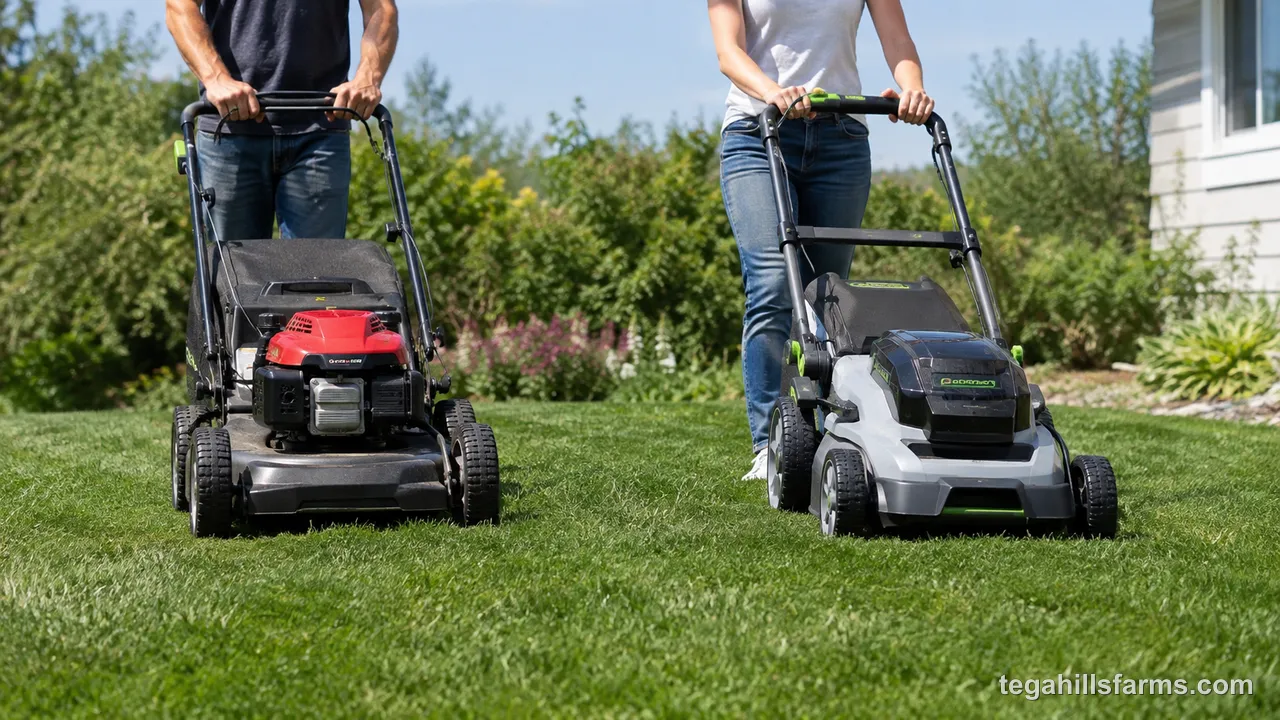
The noise gap changes when and where you can mow. A battery mower runs at roughly the level of a loud conversation, so early-morning or evening mowing is less likely to bother neighbors, and you can hear someone speaking nearby. At gas-mower levels, hearing protection is a sensible habit for every session, not just long ones.
Emissions follow the same split. A gas mower puts out exhaust you breathe while walking behind it. It carries a fuel smell into the garage, and refilling it brings the risk of spills on the driveway or lawn. A battery mower has none of these, which matters most in small yards where you stay close to the machine the whole time.
Battery mowers win on both noise and cleanliness.
Which Type Fits Your Yard Size and Terrain?
Your lot’s size and slope settle the power type more reliably than any spec sheet. Power source is only one part of what to look for in a lawn mower, but it is the part your yard decides most clearly.
Which Type Suits Small and Medium Lots?
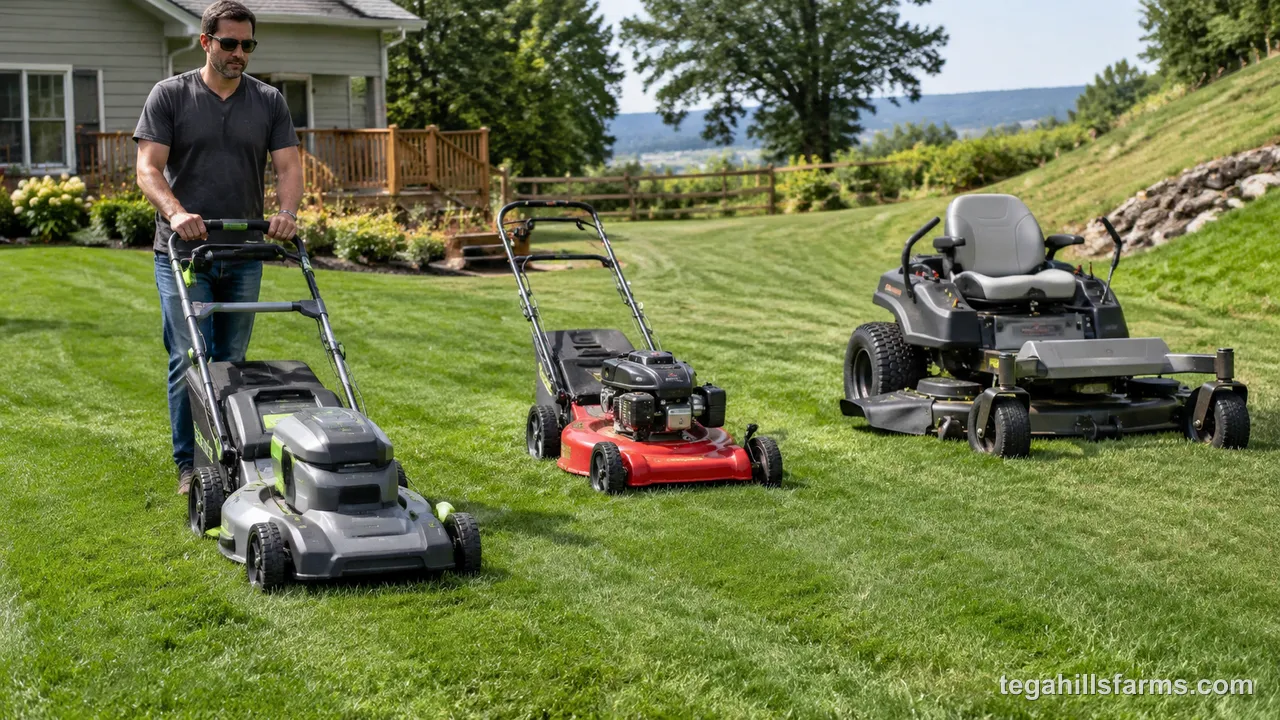
Battery mowers suit small and medium lots well, because a single charge covers most small lawns with room to spare. Their light weight makes tight turns around beds and trees easier, and push-button starting removes the pull-cord hassle for quick weekly cuts.
On a mid-sized lawn the deciding factor is whether one pack finishes the job in real conditions, including spring growth and any gentle slopes. If it falls a little short, a spare battery is usually enough. You swap packs partway through and finish without waiting on the charger.
Gas still works on these lots. It just carries more upkeep and noise than a small lawn requires, because its unlimited runtime goes unused when a charge already covers the yard.
A battery mower is the better fit for small and medium lots.
Which Type Suits Large Lots?
Gas mowers keep their edge on large lots, because their runtime is limited only by the fuel tank. A big yard can be mowed in one session with a quick refill partway through, and a gas riding mower handles acreage without any planning around charge levels.
Electric zero-turn riding mowers have narrowed that gap. The longest-running models cover acreage that once required gas, with the same quiet operation and low upkeep as smaller battery mowers. For a large, mostly flat lot mowed on a regular schedule, they are now a real alternative.
The limits show up on the biggest and roughest properties. On a lawn that pushes past a single charge, or one cut only occasionally where the grass grows tall between mowings, gas keeps working with no recharge to wait on.
Gas suits the largest and most demanding lots. An electric zero-turn fits big lawns that one charge can cover.
Which Type Suits Sloped or Uneven Lots?
Slopes steeper than 25 percent favor gas power. At that grade, battery runtime becomes the limiting factor.
Sustained climbing is hard on a battery. Pushing a mower uphill, especially with the self-propel drive engaged, pulls current steadily, so the pack drains much faster than it does on flat ground. On a steep yard, rated coverage overstates what you will actually get.
Traction matters too. A gas mower’s heavier weight helps keep its wheels planted on a grade, while a lighter battery model can slip on damp or uneven slopes.
On gentle rolling ground, a battery mower still works well if you plan for shorter runs. On steep or uneven lots, gas is the better choice.
Which Should You Pick: Gas or Battery?
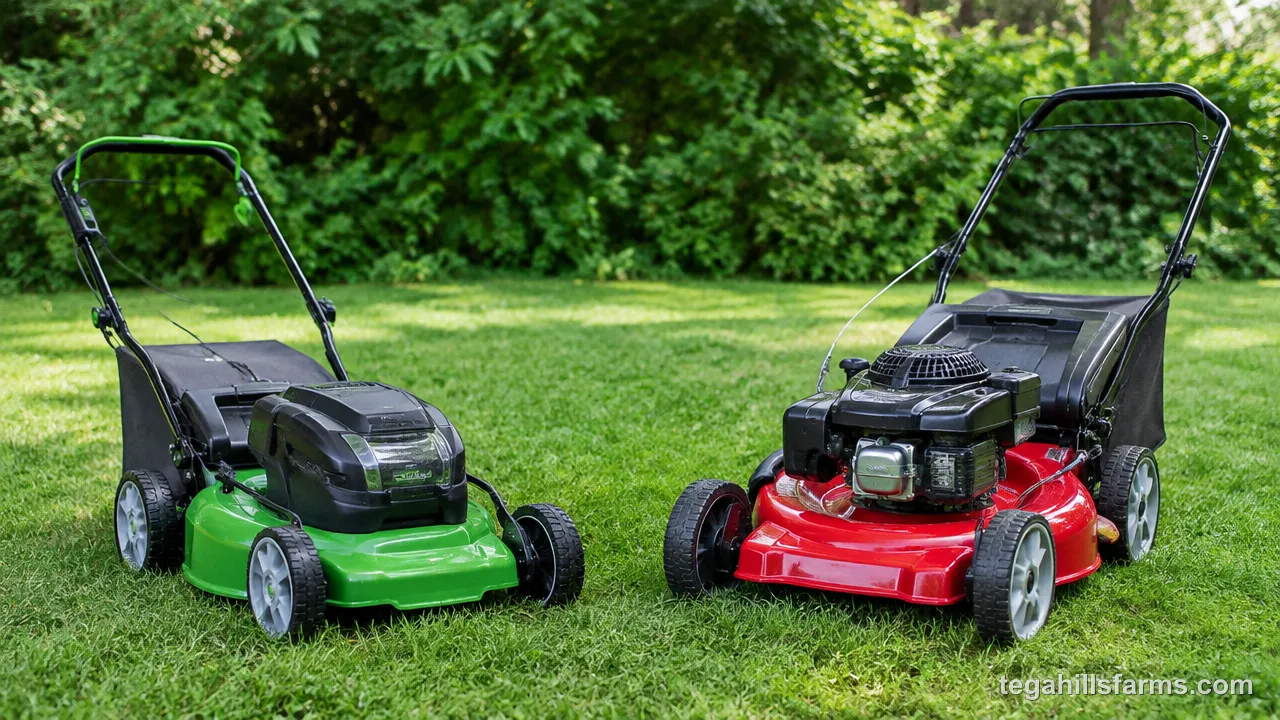
Choose a battery mower if quiet, easy starting, and light upkeep matter most and one or two packs cover your lawn. Choose gas if you need unlimited runtime, steep-slope power, or strength in heavy grass.
- Choose gas if your lot is large and a single charge would not finish it.
- Choose gas if your yard has slopes steeper than gentle rolling ground.
- Choose gas if your grass often grows tall or stays damp between mowings.
- Choose gas if you don’t mind spending a couple of hours a year on engine service.
- Choose a battery mower if your lot is small or medium.
- Choose a battery mower if you mow early or near close neighbors, where noise matters.
- Choose a battery mower if you want push-button starting with no fuel, oil, or spark plugs.
- Choose a battery mower if garage space is tight.
- Choose a battery mower if you already own batteries from the same tool line.
A battery pack rarely dies all at once; it starts finishing the front yard but not the back, or bogging down on a stretch of grass it used to clear without trouble. Those early drops are easy to blame on thick grass or a hot afternoon, so many owners keep pushing a fading pack until mowing day turns into a stop-and-recharge routine and the replace-or-retire decision arrives with no time to compare options.
How Can You Tell a Mower Battery Is Wearing Out?
A worn battery gives clear warning signs before it fails. The most common is a shorter run on the same lawn in the same conditions, followed by a blade that slows or bogs down sooner than it used to. A pack that takes longer to reach full charge, or that shows full but drops quickly once you start mowing, is also losing capacity.
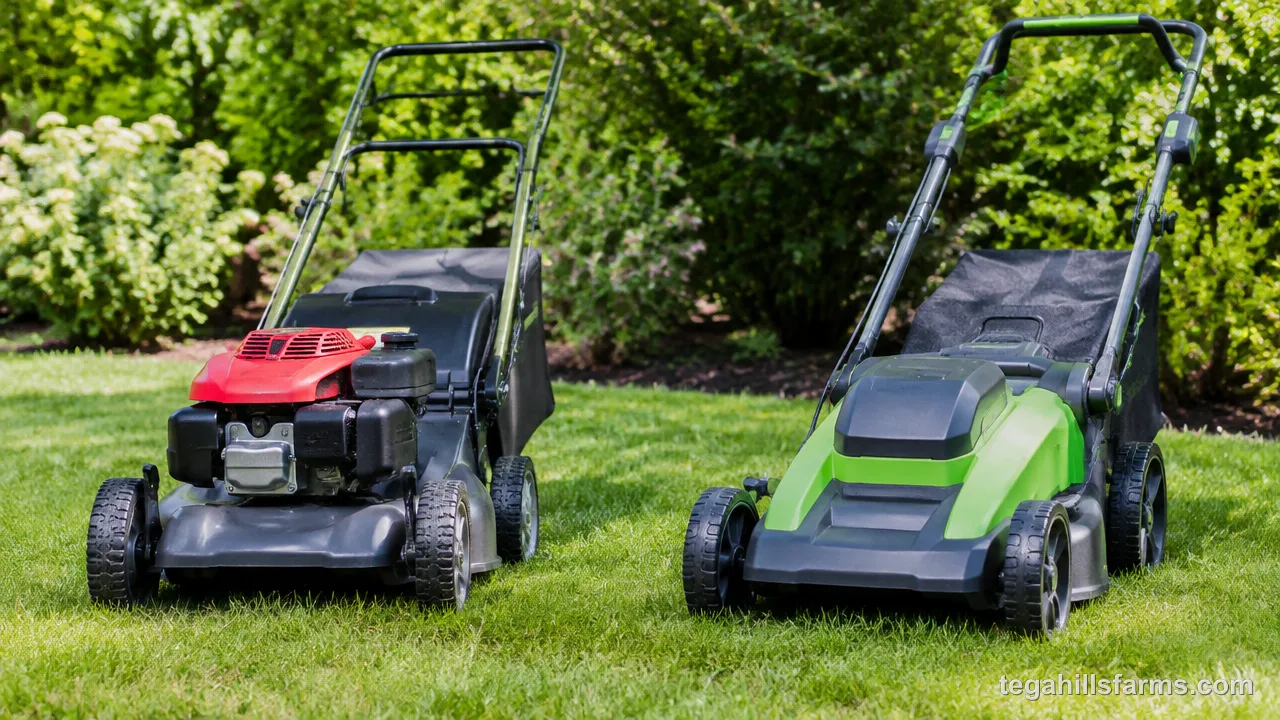
Some conditions speed up that decline. Storing packs in a hot shed or a freezing garage, charging a pack while it is still hot from use, and leaving batteries fully drained for weeks all wear lithium-ion cells faster. Storing them indoors at a partial charge slows the process.
Once the signs appear, whether to replace the pack or the whole mower depends on the rest of the machine. If the deck is solid, the motor runs smoothly, and replacement packs are still sold, a new battery restores the mower to full use. If the deck is rusting through, the motor is struggling, or the pack has been discontinued, putting that money toward a new mower makes more sense.
Should an Existing Battery Platform Decide Your Choice?
It often should. If you already own batteries from a tool line such as EGO or ECHO 56V, a mower on the same platform can cost less and be more convenient than starting fresh. Many manufacturers sell their mowers as bare tools without a pack, so your existing batteries and charger cover a large part of the cost.
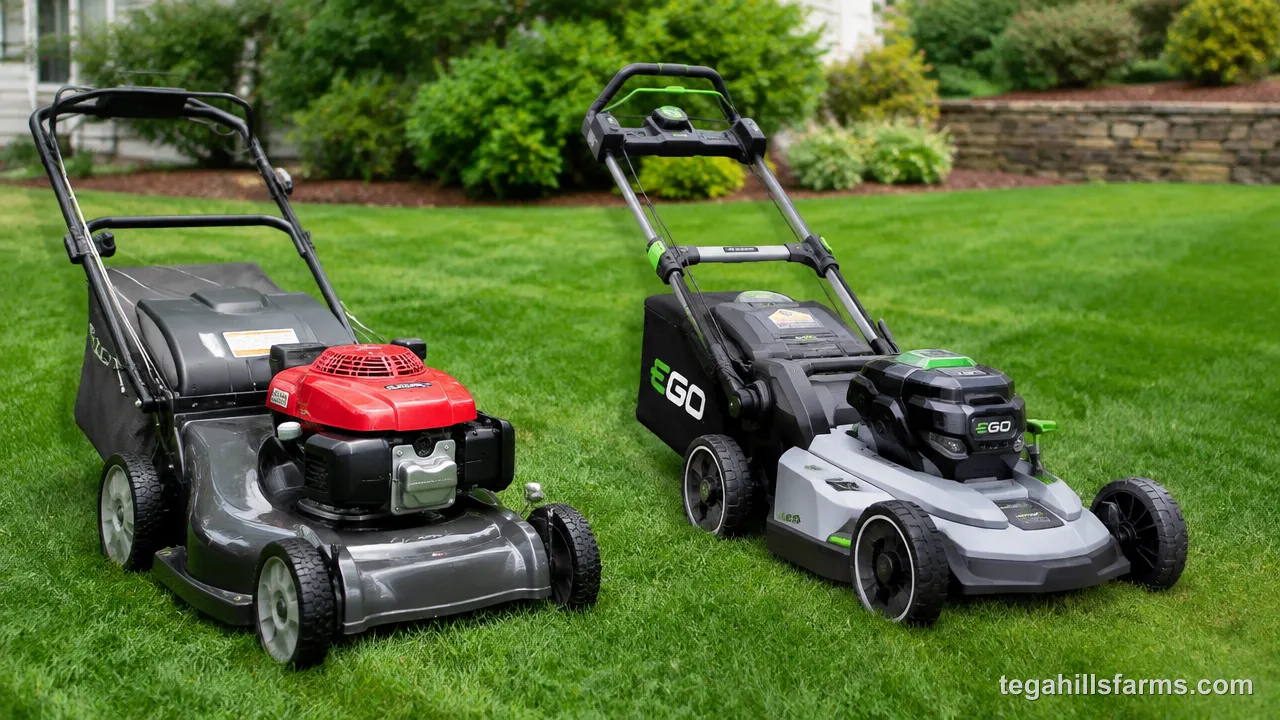
Shared packs also help with runtime. The trimmer or blower battery can serve as the mower’s spare, which stretches coverage on a mid-sized lawn without buying another pack.
Staying on a platform is not always the right call. If your existing packs are low-capacity batteries meant for handheld tools, they may run a mower only briefly, and you would end up buying a larger pack anyway. It also makes little sense if the platform’s mower lineup doesn’t match your lawn size, or if you own just one small tool on that system. In those cases, choose the mower that fits your yard best and let the platform follow.
Are Gas Lawn Mowers Being Phased Out?
Not nationwide. Gas mowers are still widely sold across most of the country, but some places are restricting new gas equipment. California Air Resources Board rules limit the sale of new gas-powered small-engine equipment in California, and some communities elsewhere have adopted their own limits on gas lawn equipment.
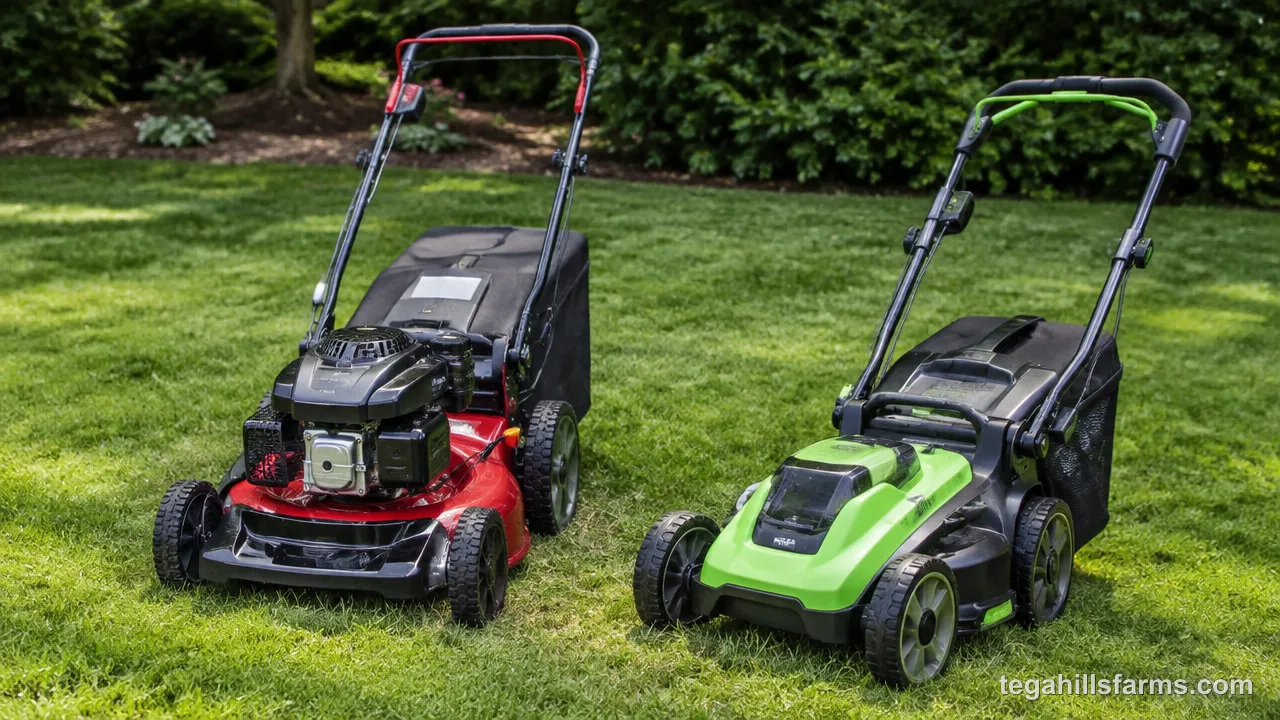
These rules vary by state and city. Some apply to new sales, some to use during certain hours, and some to commercial crews rather than homeowners. A gas mower you already own is generally not affected the same way a new purchase is, but the details depend on where you live.
Before buying, check your state and local rules, along with any homeowners association guidelines. If restrictions are already in place or under discussion where you live, a battery mower avoids the risk of owning equipment that becomes harder to fuel, repair, or replace locally.
When Does a Robot Mower Make More Sense Than Either?
A robot mower makes more sense when you want to stop mowing yourself, not just mow more easily. Instead of improving a mowing session, it replaces it, trimming the lawn a little at a time on a schedule while you do something else.
Models such as Sunseeker and Dreame A3 AWD Pro show the kind of lawn that suits this approach. Moderately sized, regularly maintained yards with clear boundaries and gentle terrain fit best, because frequent light trims keep the grass at a steady height and the clippings fine enough to disappear into the turf.
A robot mower cannot do everything a push mower does. It struggles with a lawn that has already grown tall, it does not bag clippings or handle leaf cleanup, and narrow corners or edges often still need a trimmer. It also needs setup time to define the mowing area. Many owners keep a push mower around for the first cut of spring and the occasional cleanup job.
Gas vs Battery Lawn Mower FAQs
Are battery mowers strong enough for thick grass?
Yes, for thick grass mowed on a regular schedule. Dense or overgrown grass makes the motor pull more current, so runtime drops and some models slow the blade. Raising the deck for the first pass and mowing more often keeps a battery mower working well in thick turf.
Do I need a second battery?
Only if one charge falls short of your lawn in real conditions. Thick spring grass and slopes cut coverage below the rated figure. If your lawn sits near a single pack’s limit, a spare lets you swap and keep mowing instead of waiting on the charger partway through.
How does hot weather affect battery runtime?
Heat makes a lithium-ion pack work harder and can trigger built-in protection that slows or stops the motor. Mowing in the cooler morning or evening helps. Letting a hot pack cool before recharging and storing batteries out of direct sun also protects their capacity over the long term.
Which type is better for a first-time buyer?
A battery mower suits most first-time buyers with a small or medium lawn. It starts with a button, needs no fuel or engine service, and is easier to handle and store. A first-time buyer with a large or steep lot is usually better served by gas.
Write Your Review
No reviews yet. Be the first to share your experience!