

Keep most lawns on the taller side of your mower’s height range, and never take more than a small share of the blade off in one pass. That habit, called the one-third rule, does more for a green, thick lawn than any fertilizer schedule. The deck setting that suits your yard depends on two things: the type of grass you grow and the type of mower you use.
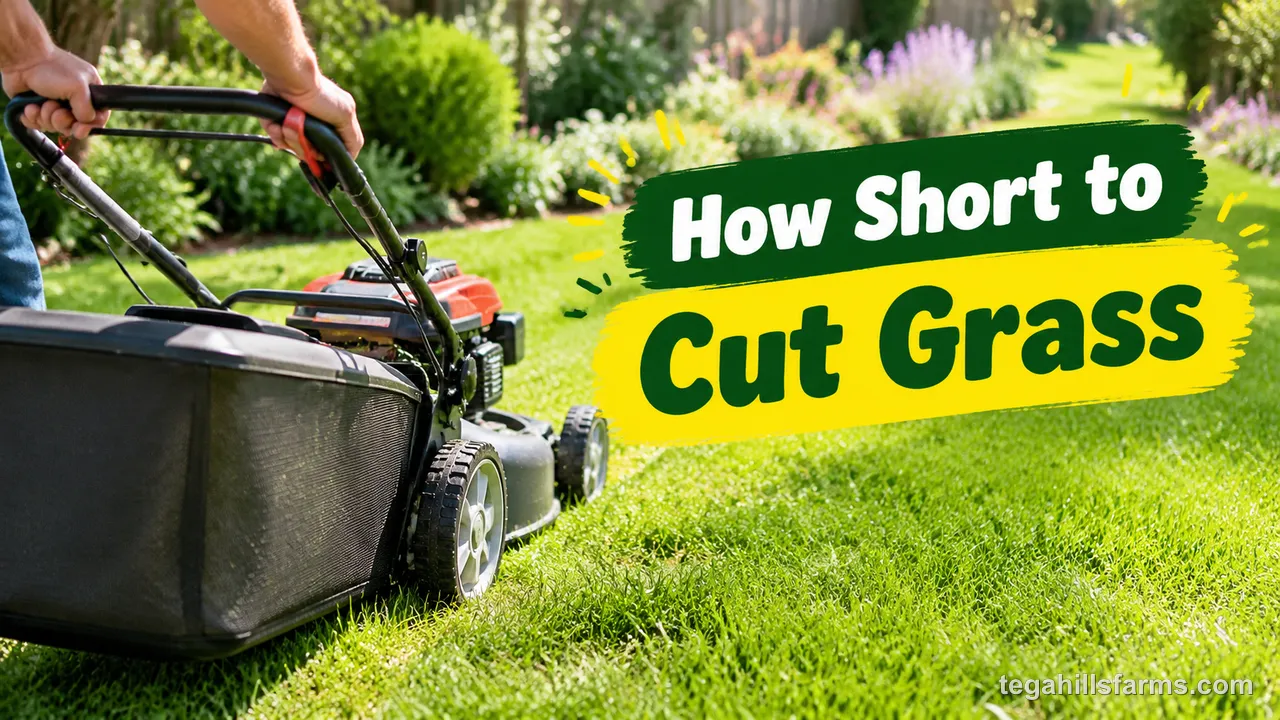
Grass type sets how low the plant can go before it runs short of leaf. Cool-season grasses in the North and warm-season grasses in the South handle a short cut very differently. The mower affects how accurately you can hit a target height, because a reel mower and a rotary mower set height by different parts of the machine.
The usual problem is scalping. A low cut looks tidy for a day or two, but it leaves brown stubble, bare soil and space for weeds, and in hot weather the damage spreads quickly.
The season matters too. A height that works during spring growth can stress the same lawn in a July heat wave, so expect to move the deck lever a few times a year.
What Is the Right Height to Cut Grass?
Most lawns do best at 2½ to 3 inches. That height leaves enough leaf above the soil to feed deep roots and to shade the ground. The exact setting within that range depends on your grass type and your mower.
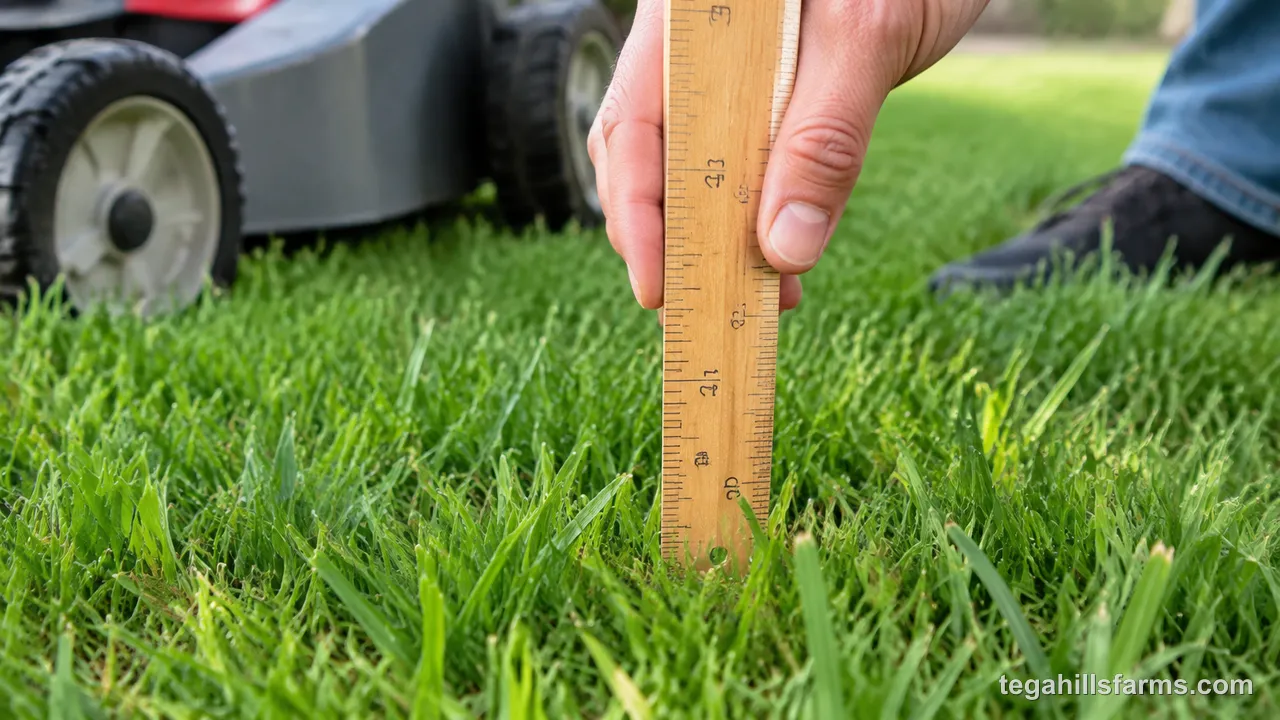
The leaf blade is the plant’s food factory. More leaf surface means more photosynthesis, and the plant puts that energy into roots that grow deeper and reach water in dry spells. A short cut forces the plant to spend its reserves regrowing leaf, so the roots stay shallow.
Height also controls what happens at ground level. Taller grass shades the soil, which keeps it cooler and slows evaporation. Grass grown this way handles heat, drought and foot traffic better than turf kept close to the dirt.
If you are still deciding which machine fits your yard, the guide on how to choose a lawn mower covers the deck and height-adjustment features worth paying attention to.
How Does the One-Third Rule Work?
Remove no more than one-third of the grass blade in a single mowing, whatever your target height is. This limit keeps enough leaf on the plant for it to keep feeding itself while it regrows.
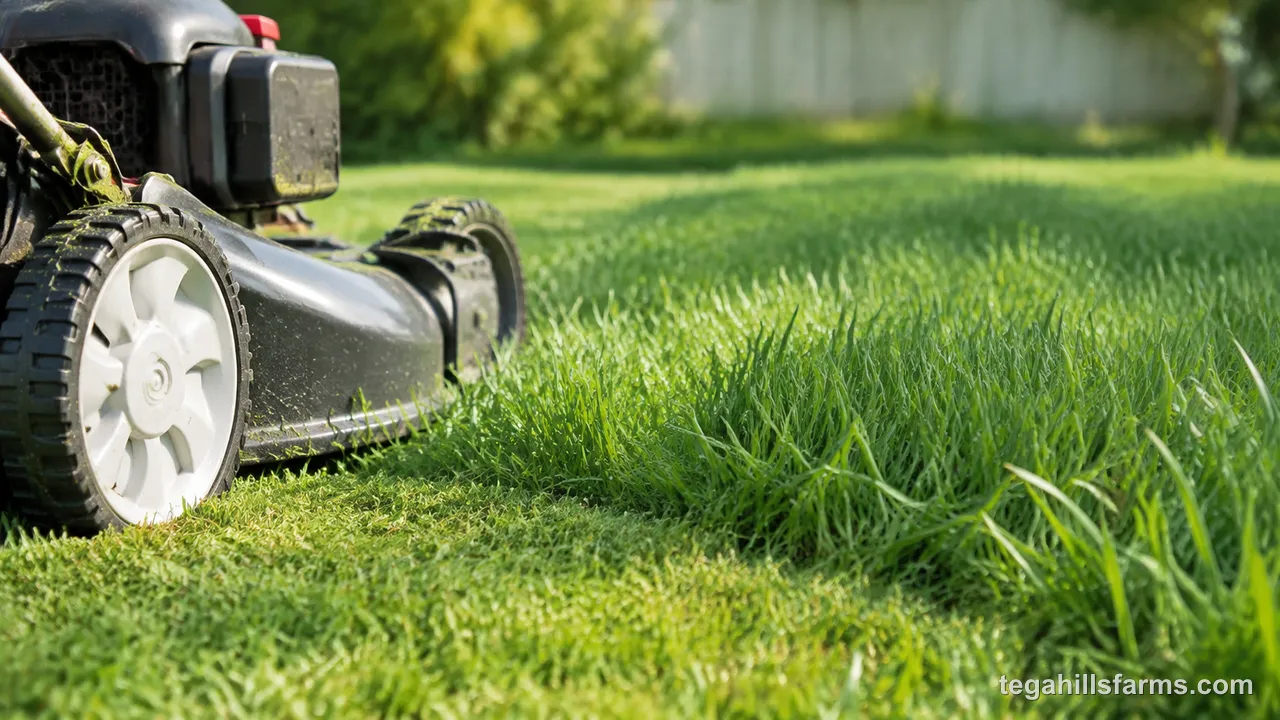
In practice, the rule depends on timing more than on the height setting. You mow when the grass has grown a third past your target, not when the calendar says it’s Saturday. Get the timing right and the plant barely notices the cut. Let it slip and every mowing becomes a setback the lawn has to recover from.
Why Does Cutting Too Short Stress the Lawn?
Cutting too short stresses grass. Scalping removes most of the leaf surface the plant uses for photosynthesis, so it has to draw on stored reserves just to replace what was lost.
That drain has knock-on effects. Roots stop growing deeper because the plant can’t afford to feed them, so the lawn depends on frequent watering. Bare soil between the stubble heats up in the sun and dries out quickly. A lawn in that condition turns brown within days when a heat wave hits.
A short cut also doesn’t save mowing time. Grass under stress pushes out new top growth before it does anything else, so you are back behind the mower soon. You also end up dealing with brown patches and the weeds that move into them. A taller lawn grows at a steadier pace and needs less repair work.
What Should You Do If the Grass Gets Too Tall?
Bring an overgrown lawn down in stages instead of one drastic cut. Set the deck to its highest position and take off about a third of the blade. Wait a few days, lower the deck one notch, and mow again. Repeat until you reach your normal height.
The pause between passes is important. Each cut removes leaf the plant needs, and the rest period lets it rebuild before you take more. If you cut tall grass down to normal height in one pass, you scalp it as badly as if it had been short all along. You also leave heavy clumps of clippings that smother the grass underneath.
Overgrowth usually means the mowing schedule fell behind during a growth spurt. Matching how often to mow the lawn to how fast it is actually growing, which is weekly or more in peak spring growth, makes the one-third rule easy to follow.
What Mowing Height Suits Your Grass Type?
Cool-season grasses generally want a taller cut than warm-season grasses. The difference comes from where each type keeps its growing points and how it spreads.
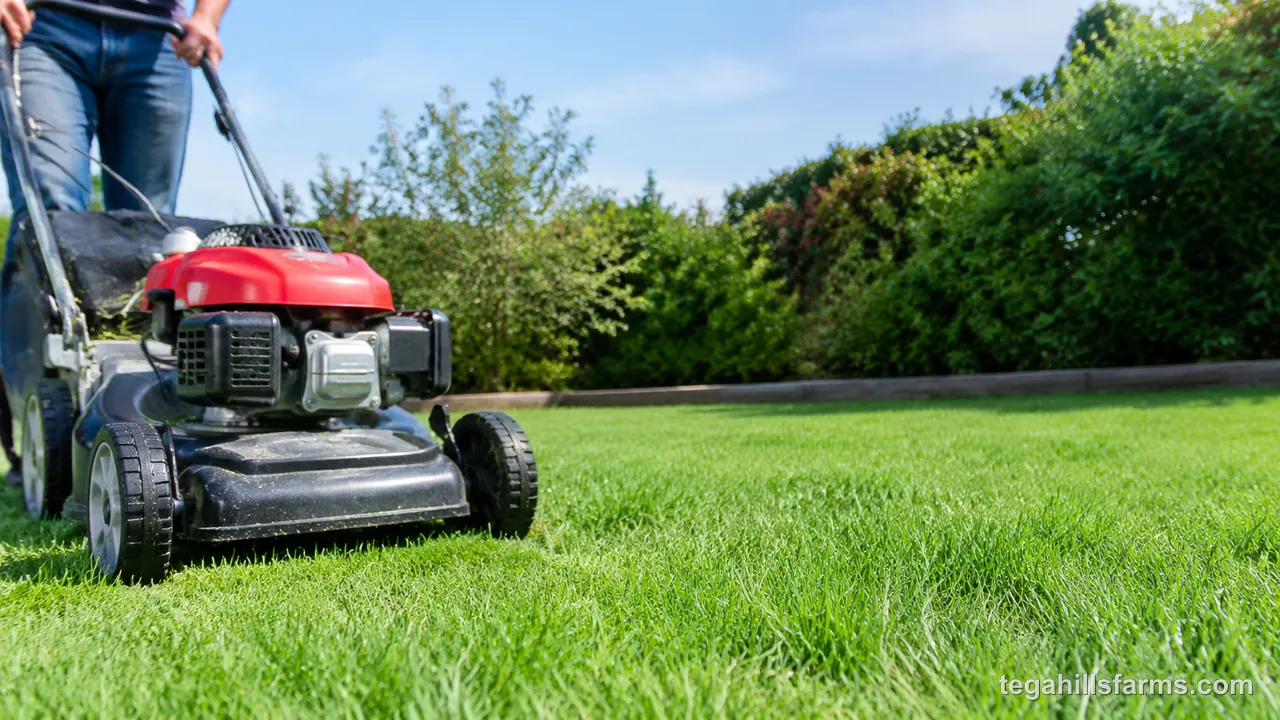
This matters because the general 2½-to-3-inch guideline is a middle ground. Grasses that grow upright in bunches need leaf height to stay healthy. Grasses that creep sideways across the soil carry their growing points low and recover from closer cuts. A new lawn of either type follows its own rules until its roots are established.
Which Height Works for Cool-Season Grasses?
Kentucky bluegrass, perennial ryegrass, tall fescue and creeping red fescue all do better at the upper end of the usual range, especially through summer. These grasses grow most in the cool weather of spring and fall and slow down in heat, so the leaf they carry into July is what protects them.
Tall fescue is the clearest example. It is a coarse-leaf bunch grass that grows upright and doesn’t spread much to fill gaps, so a short cut leaves thin spots that stay thin. Perennial ryegrass also grows in bunches and is easily stressed by a low cut in hot weather. Kentucky bluegrass spreads by underground rhizomes and repairs itself better, but it still thins when mowed low in summer.
Creeping red fescue has fine, narrow blades and is often planted in shade. Fine leaves give it less surface per blade to catch light, so it relies on height to keep enough leaf working. In mixed cool-season lawns, I’d set the deck for the most sensitive grass in the mix.
Which Height Works for Warm-Season Grasses?
Bermudagrass and zoysiagrass handle a lower cut than cool-season types. Both spread sideways by stolons, rhizomes or both, which keeps their growing points close to the soil, below where the blade passes.
That growth habit produces a dense, carpet-like lawn, which is why Bermudagrass is used on golf courses and sports fields. A dense mat shades its own soil even when the leaves are short. Zoysiagrass forms a similarly thick turf but grows more slowly, so it recovers from a scalping mistake more slowly too.
Buffalograss works differently. It is a native prairie grass that grows low and is often mowed infrequently or left taller for a natural look. It doesn’t respond well to being kept short and frequently mowed, so don’t treat it like Bermudagrass. Warm-season lawns grow fastest in summer heat, which is when they most need a steady mowing schedule.
How Short Should You Cut a New Lawn the First Time?
Let a seeded or newly laid lawn grow to at least 2 inches before the first cut, and set the blades to the highest setting. Young grass has short, weak roots, and that first mowing should only trim the tips.
Height is what feeds root growth in the early weeks. If you cut too soon or too low, the seedling loses the leaf area it needs to anchor itself. A dull blade or a sharp turn can also pull young plants out of loose soil. Mow when the soil is dry enough that wheels don’t leave ruts, and make wide, gentle turns.
If you’ve never run a mower before, learn how to use a lawn mower on established grass or hard ground first. Practice starting, turning and adjusting the deck before you take it onto fragile new turf.
How Should Mowing Height Change With the Seasons?
Cut at a moderate height during spring growth, raise the deck for summer heat, then bring it down slightly for the final cuts of fall. Each change responds to what the grass is doing at that point in the year.
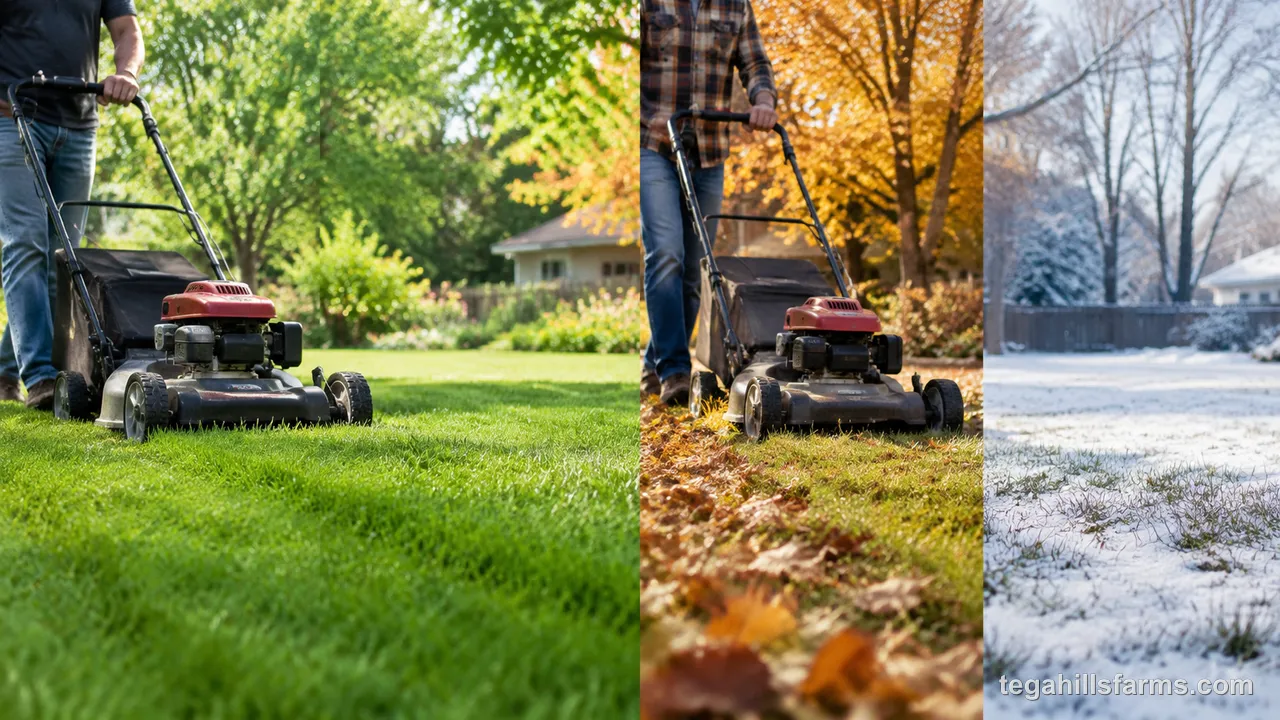
The reason is that the lawn’s needs change through the year. In some months the plant is growing fast and recovers well from cutting. In others it is under heat stress or getting ready for dormancy. Adjusting height a few times a year lets the cut work with the plant instead of against it.
What Height Works in Spring and Summer?
Spring growth calls for frequent, moderate cuts. Cool-season grass grows fastest in mild spring weather, and mowing often keeps each cut within the one-third limit. If you let it go two weeks, the next pass removes too much at once.
Summer changes the priority from keeping up with growth to protecting the plant. Cool-season grasses slow down and get stressed in heat, so raise the deck and leave more leaf to shade the soil and hold moisture. A taller lawn keeps its roots cooler and goes longer between waterings.
Warm-season grasses work the other way. Bermudagrass and zoysiagrass grow fastest in summer and handle heat well, so they can stay at their lower normal height. During their peak growth, cutting more often matters more than raising the deck.
What Height Works in Fall and Winter?
As growth slows in fall, mow less often but keep cutting as long as the grass keeps growing. For cool-season lawns, lowering the deck slightly for the last few cuts keeps long blades from matting down under snow and leaves. Matted grass holds moisture, which can lead to disease over winter. Keep within the one-third rule even then, because a scalped lawn goes into winter weakened.
Warm-season lawns go dormant and turn tan once cold weather sets in. A dormant lawn isn’t growing, so it doesn’t need mowing apart from an occasional pass to tidy it up.
Once the last cut is done, knowing how to store a lawn mower over winter, including fuel, battery and blade care, matters more than any height setting until spring.
Does Mowing Height Affect Weeds and Watering?
Yes. A taller cut shades the soil surface, which makes it harder for weed seeds to germinate and slows moisture loss. The result is fewer weeds and less irrigation.
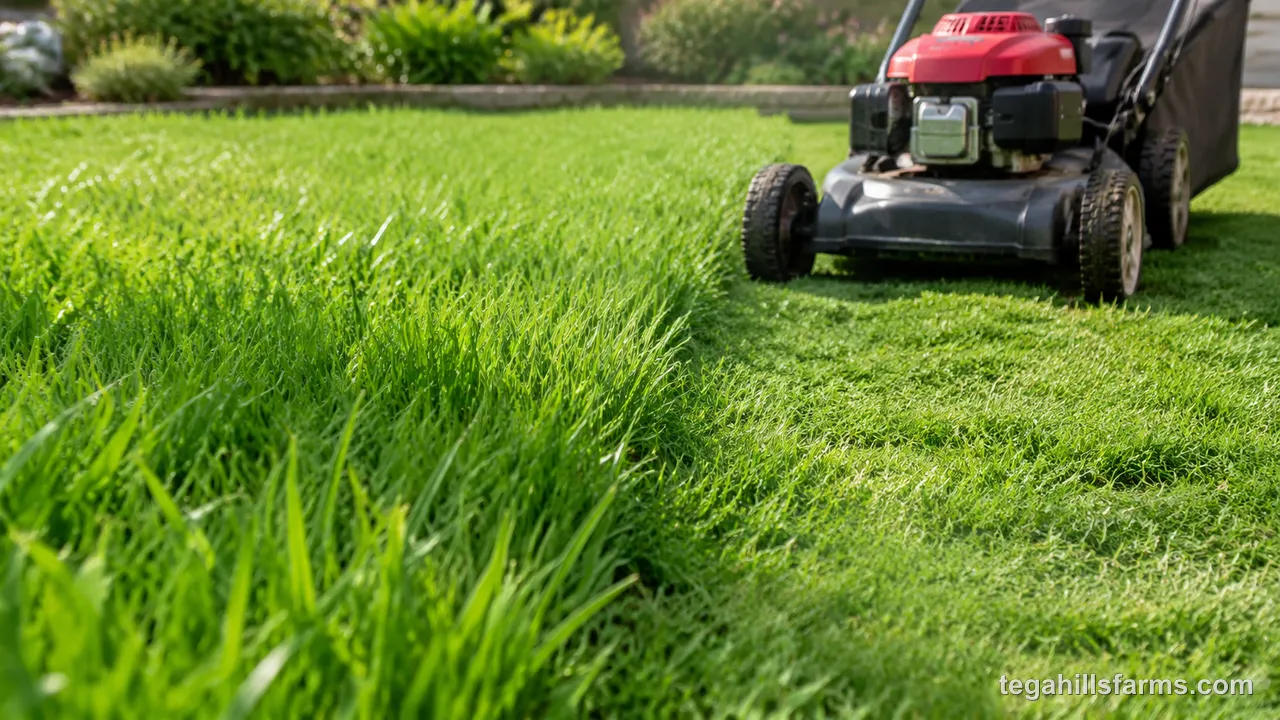
Many common lawn weeds, crabgrass in particular, need sunlight on bare soil to sprout. A taller canopy blocks that light, so seeds already in the soil stay dormant. A short lawn exposes the soil and gives those seeds what they need.
Water follows a similar pattern. Shaded soil stays cooler, so less water evaporates between rain or irrigation. Taller grass also grows deeper roots, which can draw on moisture below the dry surface layer. How much water you actually save depends on your climate, soil type and how much sun the yard gets. Sandy soil in full sun still dries faster than clay in partial shade at any mowing height.
How Do You Set Your Mower to the Right Height?
Set the deck with the height adjuster, then measure the cut grass to confirm the result. The number on the adjuster and the actual cut height don’t always match.
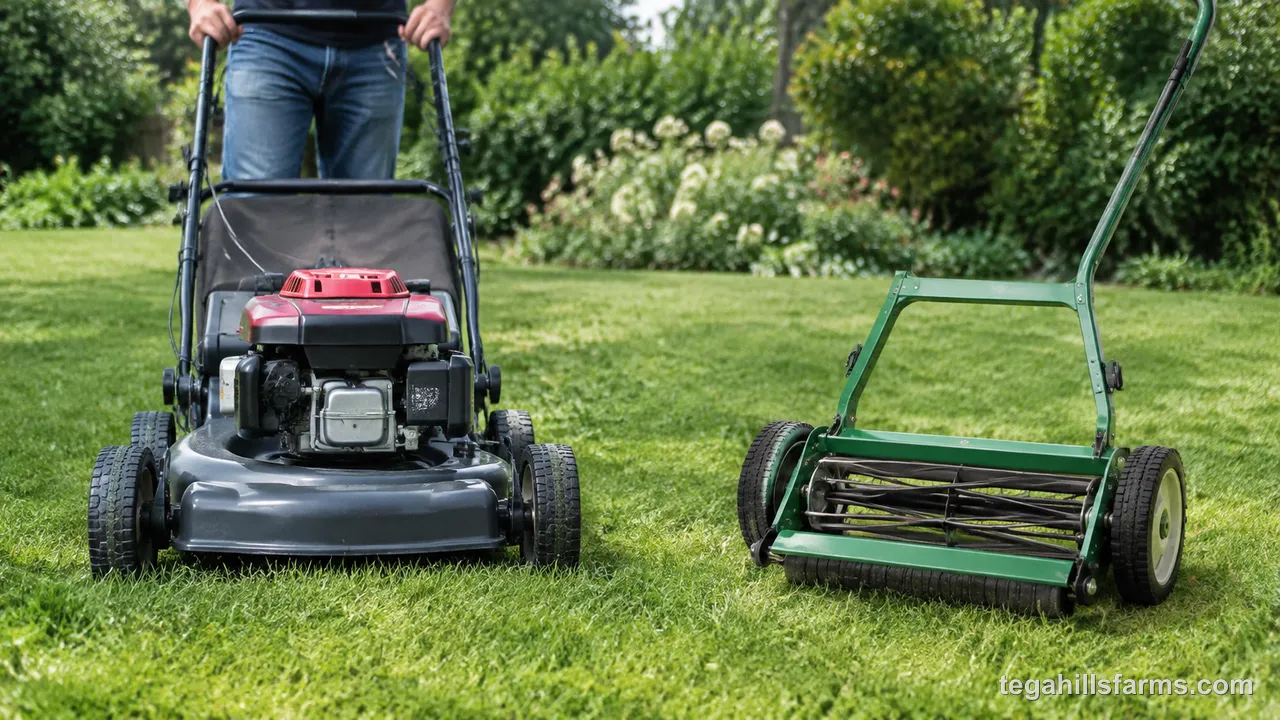
This matters because every mower measures height in its own way, and the deck sits differently on soft turf than on a driveway. The adjustment method also depends on the type of mower. Checking the result once after any change gives you a height you can trust for the rest of the season.
How Do You Adjust Rotary and Mulching Mowers?
Most rotary and mulching mowers set height with a single lever that raises the whole deck, or with separate adjusters on each wheel. Moving the lever or wheel position changes the gap between the blade and the ground.
That setting is only approximate. Manufacturers label positions with numbers or notches that don’t always match inches, and the wheels sink slightly into soft lawn. With per-wheel adjusters, setting one wheel differently from the others tilts the deck and gives you an uneven cut.
To check, park the mower on a driveway or garage floor and measure from the ground to the blade edge with a ruler. Then mow a strip and measure the grass itself. If you’re shopping, a single-lever adjuster is high on the list of what to look for in a lawn mower, since it changes all four wheels at once.
How Do You Set a Reel Mower?
A reel mower cuts like scissors. Spinning blades sweep the grass against a fixed bedknife. Height is set by moving the rear roller or wheels up or down relative to that bedknife, usually with adjusters on each side, so set both to match.
Reel mowers do their best work on fine lawns cut low, which typically means ¼ to ½ inch. The scissor action gives a very clean cut at those heights, which is why they are used on putting greens. Many push reel mowers can’t go as high as a typical home lawn needs, so check the top setting against your grass type.
Reel mowers handle overgrown grass poorly. Tall blades get pushed over instead of fed into the reel, leaving uncut stems behind. If the lawn gets away from you, the staged cutting needed to bring it back is much harder with a reel.
Why Do Sharp Blades Matter at Any Height?
A dull blade tears grass tips instead of cutting them, even when the height is set correctly. The ragged ends dry out and turn brown within a day or two, giving the whole lawn a gray, frayed look. Each torn tip is also a larger wound than a clean cut, so the plant loses more moisture and is more open to disease.
You can check by pulling a few blades after mowing. Clean, straight tips mean the blade is sharp. Shredded or split ends mean it’s time for maintenance. Learning how to sharpen lawn mower blades and doing it once or twice a season keeps the height you chose looking the way it should.
Lawn stripes come from light reflecting off grass blades bent in opposite directions, so the look depends on how much blade there is to bend. On a lawn cut close to the soil, the alternating passes catch the light the same way, and the pattern you spent an hour mowing disappears as soon as you look at it from the street.
What Height Gives the Best Lawn Stripes?
Clear stripes come from grass kept at the taller end of what your grass type tolerates. A longer blade bends further and holds the bend longer, and the light reflecting off it creates the contrast between light and dark rows. Rows mowed away from you look lighter because you see the sides of the blades. Rows mowed toward you look darker because you see the tips.
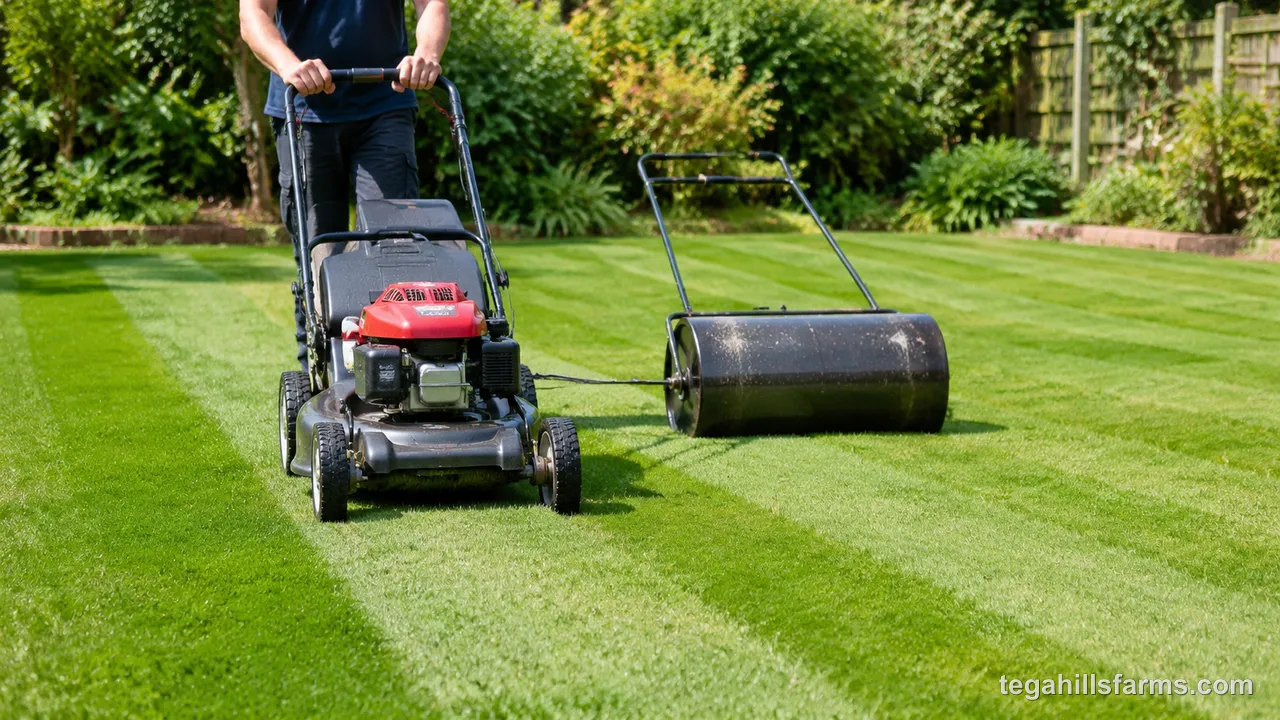
A roller or striping kit makes the effect stronger by pressing the grass down in the direction of travel after the blade passes. Many reel mowers and some rotary mowers have a rear roller that does this already. Without enough height, though, a roller just flattens short stubble that won’t hold a bend.
Cool-season grasses with flexible blades, such as Kentucky bluegrass and perennial ryegrass, show the sharpest stripes. Stiff, dense warm-season turf stripes less clearly. Don’t cut below what your grass tolerates to get a showpiece pattern, because a stressed lawn doesn’t stripe well anyway.
How Can You Tell the Lawn Was Cut Too Short?
A lawn cut too short looks pale and patchy and turns brown quickly in dry weather, while one cut at a good height stays evenly green and springs back when you walk on it. The difference shows within a few days of mowing and becomes more obvious the longer the low cut continues.
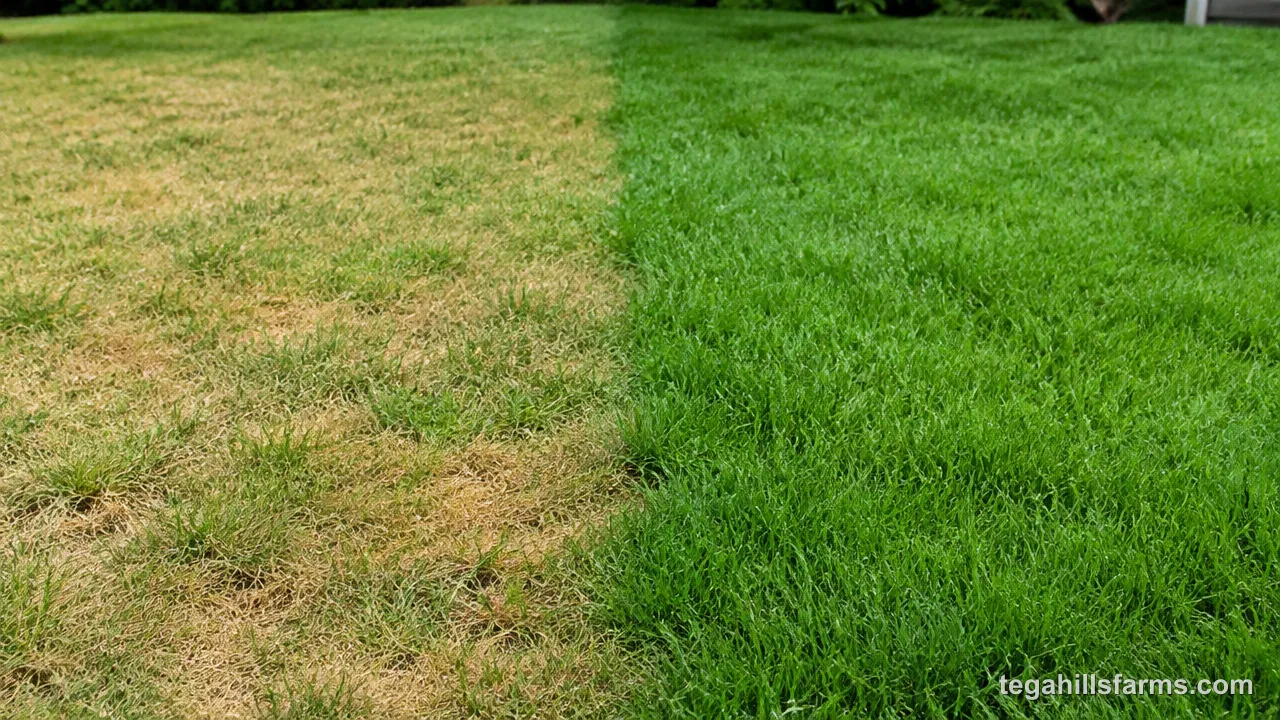
Catching it early decides how much repair the lawn needs. One low pass is easy to recover from. A whole season at that height leaves thin turf and weeds that take much longer to fix.
What Are the Early Warning Signs of Scalping?
Brown or straw-colored stubble right after mowing is the first sign, often along the high spots and ridges where the deck dropped closest to the ground. Those areas show soil between the grass plants, especially when you look across the lawn at a low angle.
Bare patches follow if the low cuts continue. Weeds appear in those patches within weeks, because exposed soil is exactly what weed seeds need to sprout. The lawn also dries out faster after watering and wilts in afternoon heat while nearby turf stays green. If you see these signs on high spots only, check for an uneven deck or bumpy ground before lowering the whole lawn’s height.
How Does a Scalped Lawn Recover?
Raise the deck to the upper end of your grass type’s range and leave it there. The plant needs leaf surface to rebuild its reserves, and every mowing that takes leaf away slows recovery.
Water deeply and less often instead of lightly every day, since shallow watering keeps roots near the surface. Avoid both drought and soggy soil while the grass is weak. Then give it time. Spreading grasses such as Bermudagrass and Kentucky bluegrass fill bare spots on their own, while bunch grasses like tall fescue often need overseeding to cover thin areas. How fast a lawn comes back depends on the grass, the season and how deep the damage went.
How Do Climate and Terrain Change the Ideal Height?
Hot, dry, shaded and sloped yards all call for a taller cut than the general guideline, while mild, moist, open yards can sit lower in the range. This is why the setting that works for a neighbor may not work for you, even with the same grass.
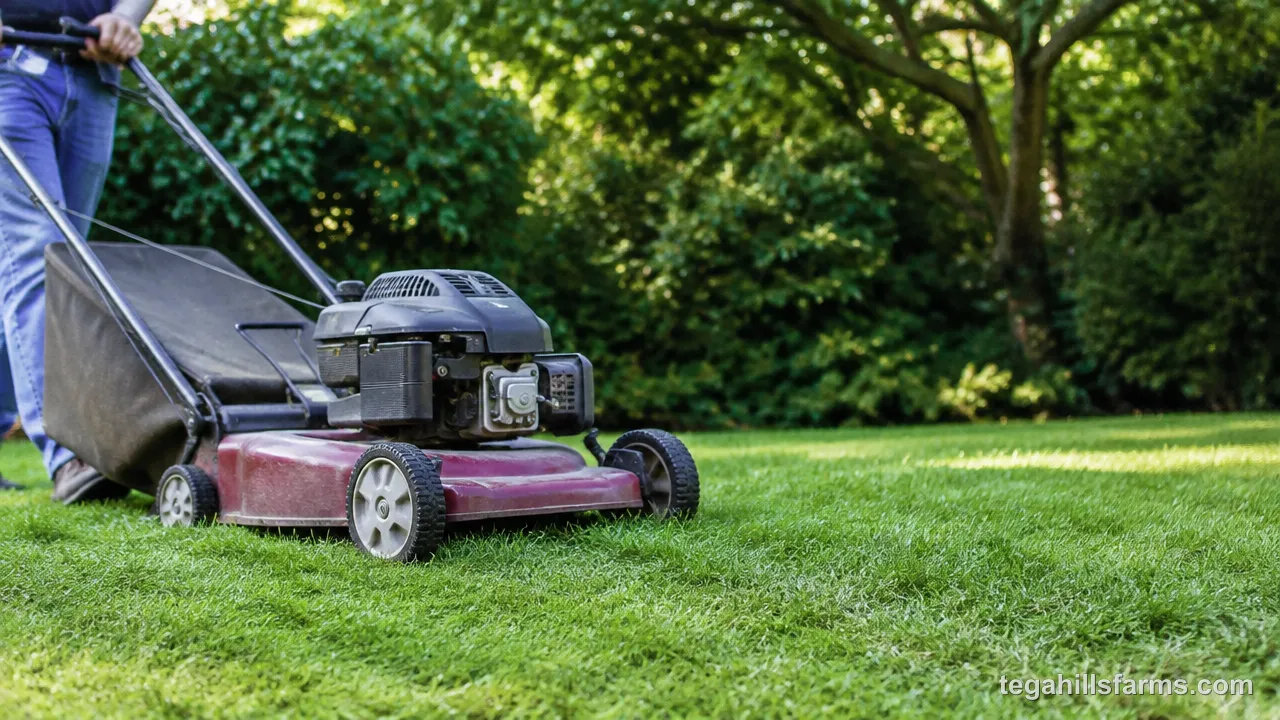
In desert and arid conditions, extra height shades the soil and slows evaporation, which matters most when water is scarce. At high elevation, strong sun and a short growing season favor leaving more leaf so the plant can recover between cuts. In coastal yards with salty wind and sandy soil that drains fast, a taller lawn holds moisture better.
Shade changes how the plant uses its leaves. Grass under trees gets less light, so it needs more leaf area to photosynthesize, which means raising the deck in those areas. On slopes and uneven ground, a taller setting keeps the deck from scalping bumps and crests as the mower rolls over them.
Mowing Height FAQ
Is it OK to mow wet grass?
Wait until the grass is dry when you can. Wet blades bend over instead of standing up for the cut, so the result is uneven and ragged. Clippings clump and smother the turf, the deck clogs, and the wheels can rut soft soil. Wet grass also makes footing slippery, especially on slopes.
Should you leave grass clippings on the lawn?
Yes, when you follow the one-third rule. Short clippings drop down between the blades, break down quickly and return nutrients to the soil without causing thatch. Bag them only when the grass is overgrown, wet or diseased. The choice between mulching vs bagging depends on your mower and how often you mow.
Does cutting grass shorter mean you mow less often?
No. Scalped grass sends out new top growth quickly to replace the leaf it lost, so you’re back mowing about as soon as before. You also take on browning, weeds and extra watering. A taller lawn grows more steadily and needs less repair work.
Should the last mow of the year be shorter?
Slightly, for cool-season lawns. Lowering the deck a notch for the final cuts reduces matting under snow and leaves, which helps prevent winter disease. Stay within the one-third rule, because a lawn scalped in late fall goes into winter weak and comes back thin.

Write Your Review
No reviews yet. Be the first to share your experience!