

Before you put a chainsaw away, clean it, handle the fuel based on how long it will sit, sharpen and oil the chain, and cover the bar. Then stand or hang the saw in a dry, ventilated spot away from heat. Bar oil causes most storage messes, so the oil tank and whatever sits under the saw need as much attention as the gas.
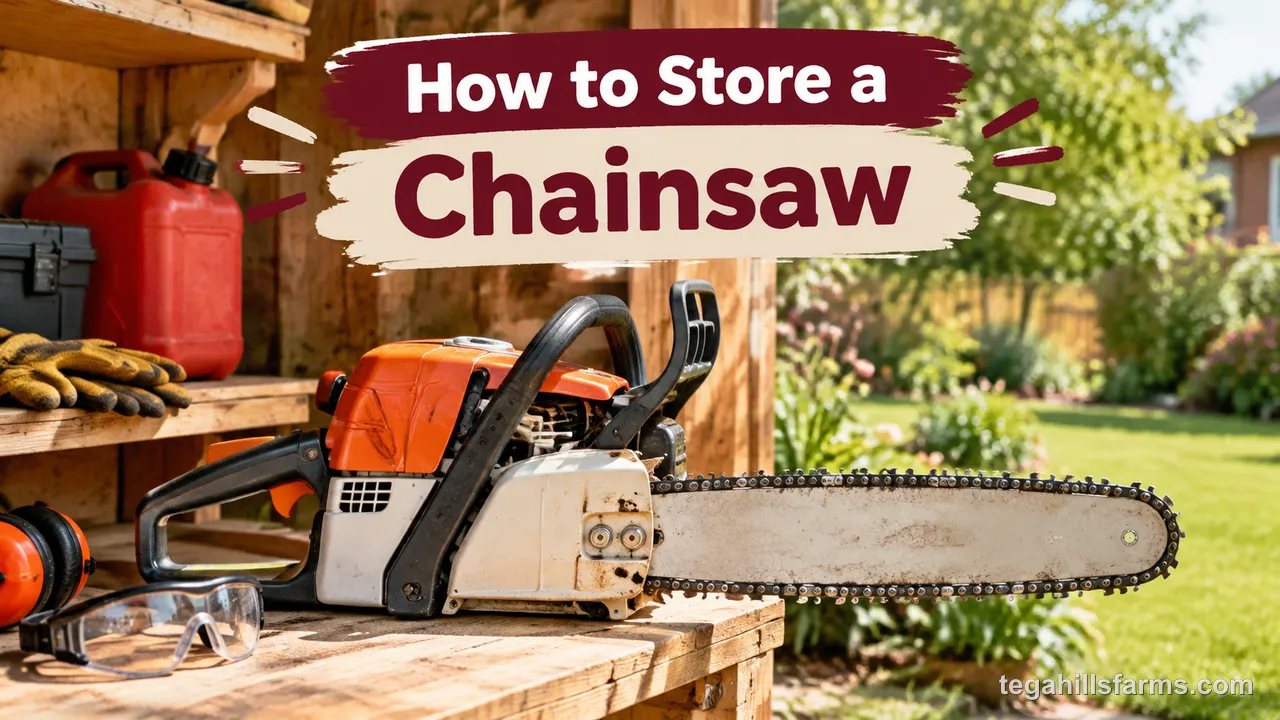
How long the saw will sit decides the fuel routine. A pause between jobs needs less work than a winter layup. The storage spot decides how much rust and seepage you find when the saw comes back out.
Two problems tend to show up after a season: an oil stain spreading under the bar, and an engine that sputters in spring. Both come from steps that are easy to do before the saw goes away.
What Does Proper Chainsaw Storage Involve?
It comes down to a clean saw, fuel and bar oil handled to match the layup, and a dry, sheltered spot where the saw stands upright or hangs with the bar covered.
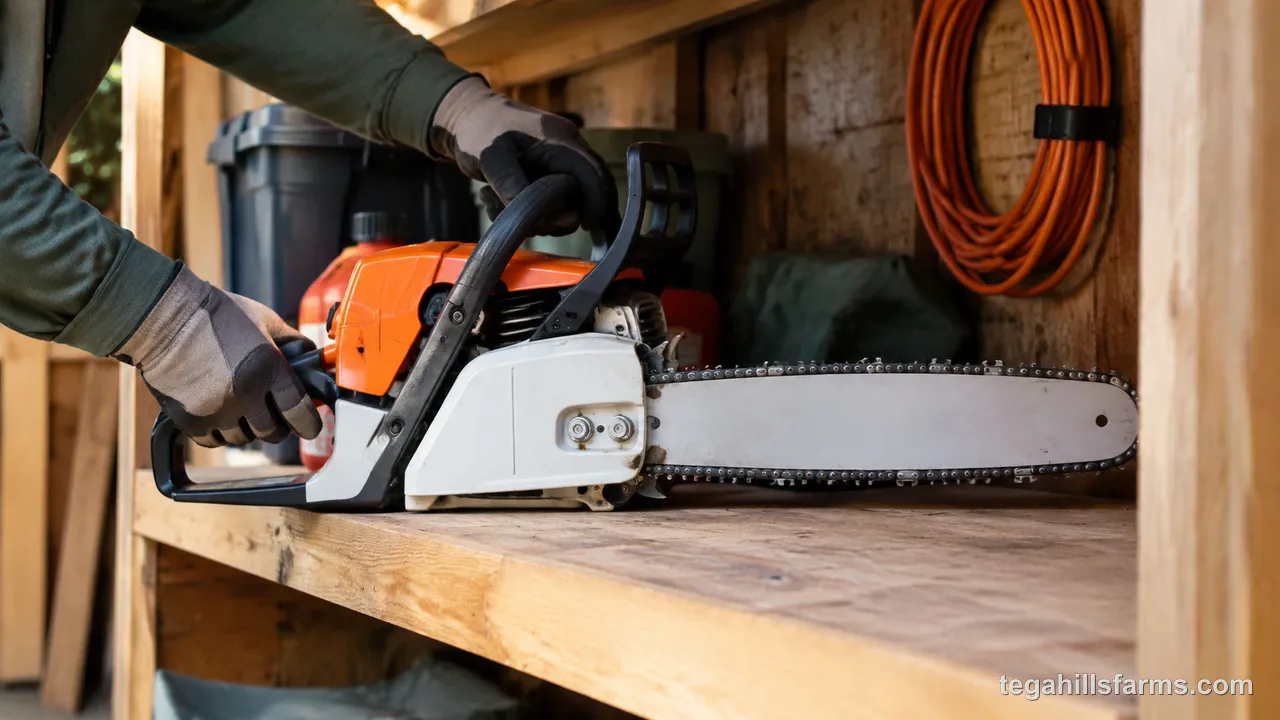
Each piece prevents a specific problem. Sawdust packed around the bar and sprocket holds moisture against bare steel, so a saw put away dirty starts rusting on the chain and bar while it sits. Gas left in the tank and carburetor slowly breaks down into varnish that narrows the fuel passages, which is why a neglected saw is hard to start. Bar oil can keep seeping through the oiling system after the engine stops, so the saw’s position and the room temperature decide whether the oil stays in the tank or ends up on the floor.
None of this needs special tools. It needs the steps done in the right order before the saw goes on the wall. If you are still weighing which saw fits the space you have for storing it, our guide on how to choose a chainsaw covers the size and power-source tradeoffs.
How Do You Prep a Chainsaw Before Storing It?
Do the dirty work first and the protective coatings last, so the oil you wipe on the chain doesn’t get caked with sawdust and the saw goes into storage clean and dry. If you do it the other way around, you end up handling a freshly oiled bar while you scrub the housing, which undoes the rust protection you just added.
How Should You Clean a Chainsaw Before Putting It Away?
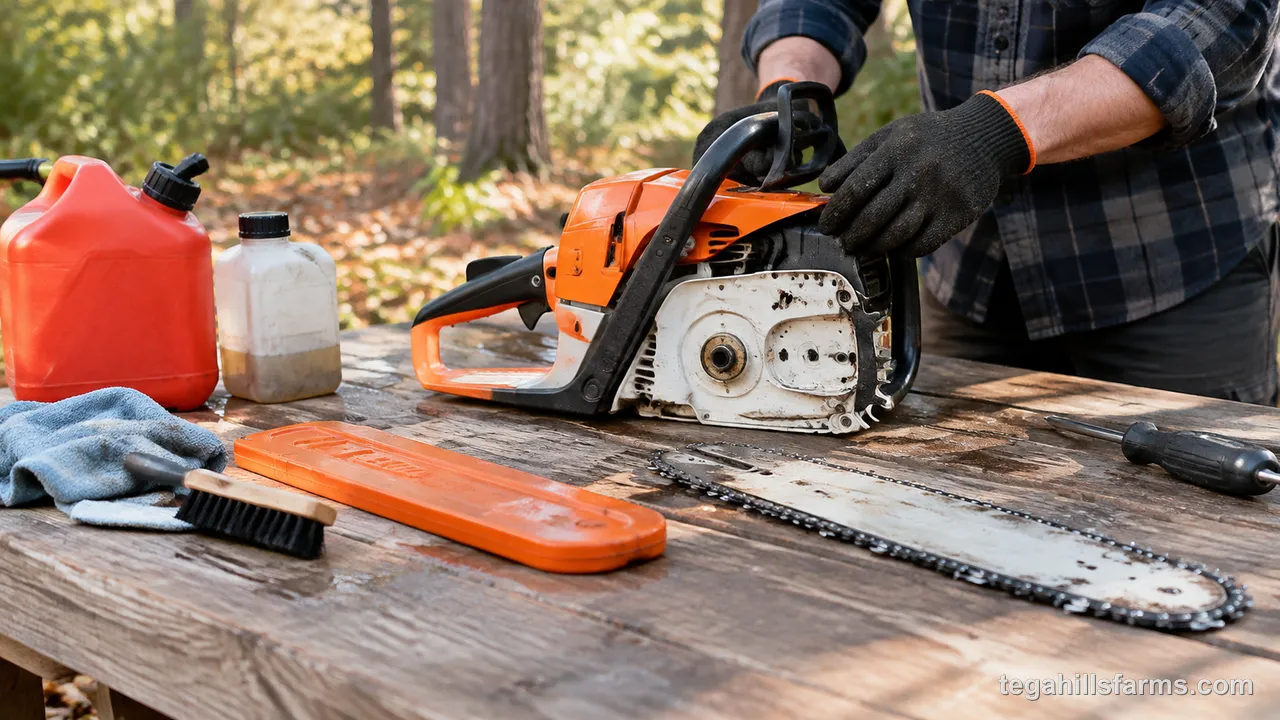
Clear the sawdust, oil sludge and chips from the chain, guide bar, air filter and cylinder ribs, then wipe down the body so nothing damp sits on the saw for months. Packed debris holds moisture against bare steel, which is how rust starts on a chain that looked fine when you hung it up.
Take off the bar and chain, then scrape out the bar groove and the oil hole so fresh oil can reach the chain next season. The air filter comes next. If it’s a washable felt or nylon filter, washing it in soap and water takes about 15 minutes. Let it air dry completely before it goes back in, because a damp filter restricts airflow at the first start. Brush out the cylinder ribs too, since packed fins trap heat once the engine runs again. For the full sequence, including the sprocket cover and clutch area, follow the steps on how to clean a chainsaw.
What Do You Do With the Fuel and Carburetor?
Drain the fuel tank into an approved gas can. Then start the saw and let it idle until the engine stops on its own, which pulls the last fuel out of the carburetor. With both the tank and the carburetor dry, there is nothing left to go stale.
Work outdoors on a level surface with the engine cold. Pour slowly so the mix doesn’t splash onto the muffler or housing. The idle step matters as much as the draining, because a tank can look empty while the carburetor and fuel lines still hold fuel. Gas left in a two-stroke mix oxidizes over time and leaves varnish that narrows the jets and the small diaphragm passages. The result is a saw that floods, sputters or won’t idle when you need it.
Whether you drain the tank at all depends on how long the saw will sit. A short break between jobs is the one case where treated fuel can stay in.
How Do You Get the Chain and Bar Ready for Storage?
Sharpen the chain before storage, coat the chain and bar with a light film of oil, and slip on the bar cover. If you sharpen now, the saw is ready to cut the day it comes off the hook, and you can file while the dull spots from the last job are still obvious.
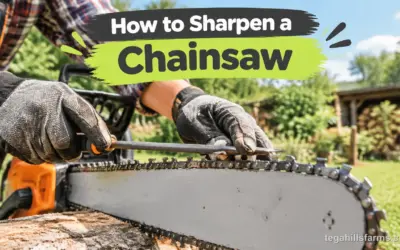
The oil film keeps humid air off bare steel, so the cutters and the bar rails don’t pit over the season. The bar cover protects the cutting edges from knocks, and it protects anyone who brushes past the saw on a crowded wall. Keep the scrench with the saw, clipped to the case or hung next to it, because you’ll want to check chain tension before the first cut. If filing is new to you, the walkthrough on how to sharpen a chainsaw covers file size and angles.
How Do You Stop Chainsaw Oil From Leaking in Storage?
You control most of the mess through where the saw sits, how warm it gets, and what is underneath it. The oiling system is built to let bar oil move, so a little seepage is normal. Some fixes cost nothing, like moving the saw out of a sunny corner. Others mean deciding how full to leave the oil tank.
Why Does a Chainsaw Leak Oil When It Sits?
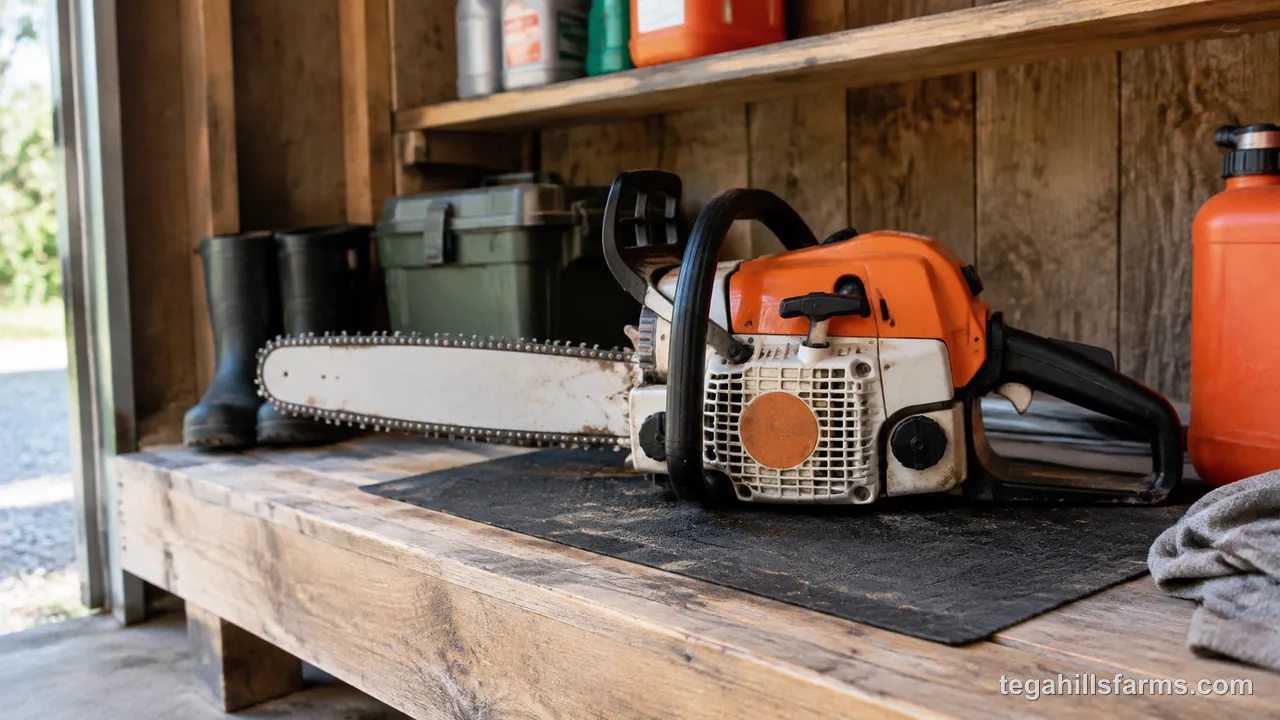
Bar oil leaks from a resting saw because the passage from the oil tank to the guide bar stays open after the engine stops. Gravity and wicking let oil creep from the tank through the oiler and along the bar groove. From there it drips off the bar or the clutch cover onto whatever is below.
Position and heat speed this up. If the saw rests at an angle that gives oil a downhill path toward the bar, more oil escapes. Warm air thins the oil so it flows faster. Temperature swings also expand the air in the tank, which pushes oil out through the vent and the oiler.
A thin stain under the bar after a few days is normal seepage. A real fault looks different: oil wetting the outside of the tank, oil running from around the cap, or a puddle that keeps growing. Those point to a cracked tank, a worn cap seal or a split oil line, and they need a repair rather than a drip pan. Oil viscosity plays a part as well, and the guide to chainsaw bar oil explains how weight and tackiness change the way oil clings to the bar.
Should the Chain Oil Tank Be Full or Empty During Storage?
Fill the chain oil tank before storage and put a drip catch under the saw, rather than emptying the tank. Filling is the approach that manufacturer storage instructions support. STIHL’s guidance, for example, calls for a completely full tank when the saw runs a vegetable-based chain oil such as STIHL BioPlus.
The reason is air. Vegetable-based chain oil reacts with the air in a half-empty tank and can thicken and gum up the pump and oil lines over a long layup. A full tank leaves little room for that air. Emptying the tank does cut seepage, but it leaves a film inside the tank and lines that can turn sticky with the same oil. You also have to remember to refill it before the first cut.
With a petroleum or semi-synthetic oil such as STIHL SynthPlus, gumming is less of a worry, so the decision comes down mostly to drips. Either way, a full tank works best with a clean, tightened cap seal, the saw in a stable position, and something absorbent underneath.
What Can Catch Drips While the Saw Is Stored?
A drip tray, a flattened piece of cardboard or an absorbent shop mat under the saw catches seepage before it stains the floor or soaks into a wooden shelf. Set the saw so the bar end tilts slightly down toward the tray. That way oil runs off the tip instead of back toward the clutch cover and housing, where it collects dust.
These are shop habits, not manufacturer procedures, so use them alongside the storage steps in your manual rather than instead of them. Check the tray whenever you look in on the saw. Cardboard that’s soaked through stops absorbing and starts passing oil to the floor.
Don’t put collected oil or oily cardboard and pads into a storm drain or out in the yard. Many auto parts stores and household hazardous waste sites take used oil, but local rules decide what goes where. Check with your county or city before you throw a saturated mat in the trash.
Which Chainsaw Storage Position Works Best?
Upright or hung is the position manufacturer guidance shows. Lying flat with the bar down is a shop habit that works on a shelf if you accept more seepage risk. Wall space usually decides it: if you have room for a hook or rack, store it upright; if you only have shelf space, lay it flat on a tray.
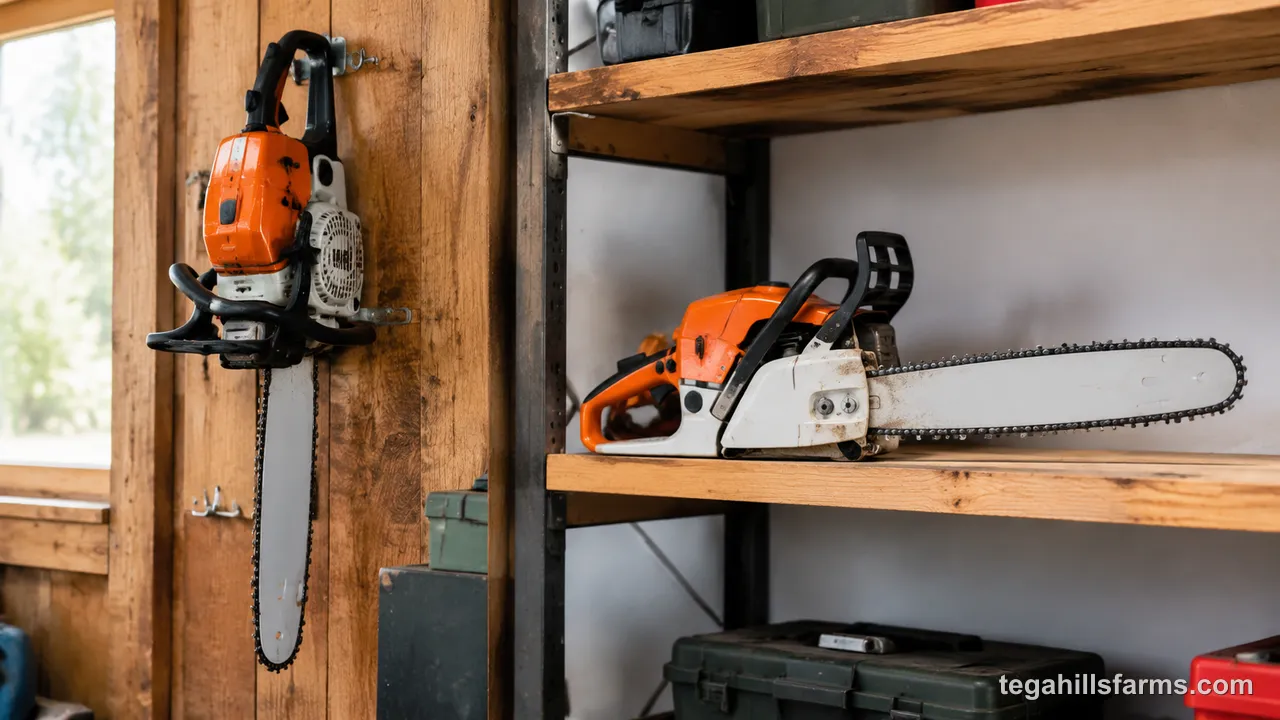
Is Hanging or Standing a Chainsaw Upright Better?
Hanging the saw or standing it on its base is the better choice for most garages, and it’s the position manufacturers such as STIHL show in their storage guidance. It keeps the chain off concrete, which wicks moisture, and keeps the saw from being bumped or kicked on the floor.
It also frees up floor space for mowers and wheelbarrows, and a saw on the wall is easy to check for drips. When it stands on its base, the saw sits the way it does during refueling, with the tanks level, so seepage stays slow. When it hangs by the rear handle, the bar points down and any oil that escapes runs off the bar tip, so a tray below still helps.
Before you trust a hook, make sure it’s anchored into a stud rather than drywall. It should hold the saw by a handle, not by the bar, and leave room for the bar cover to stay on.
Can You Store a Chainsaw Lying Flat With the Bar Down?
Laying the saw flat with the bar angled down works on a shelf or in a tight corner. It’s a shop habit, though, not the position manufacturer guidance shows. It makes sense when you have no wall space or the saw lives on a workbench shelf between jobs.
The risk is oil. Depending on the saw’s design, lying on its side can give bar oil a path out of the chain oil tank through the oiler or around the cap. The oil then spreads across the shelf instead of dripping into one spot. The chain also rests on the surface, so a damp shelf or bare concrete puts moisture right against the cutters.
If flat is your only option, keep the bar cover on, set the saw on a tray or cardboard, and turn it so the fuel and oil caps face up. That orientation gives the oil the least direct route out of the tank.
Where Should You Store a Chainsaw: Garage, Shed or Indoors?
The best spot is dry, ventilated and out of direct sun. Moisture rusts the chain, still air lets fuel vapor build up, and sunlight heats the tank and thins the bar oil. A garage, a shed and an indoor closet can each meet that standard, and each can fall short in its own way.
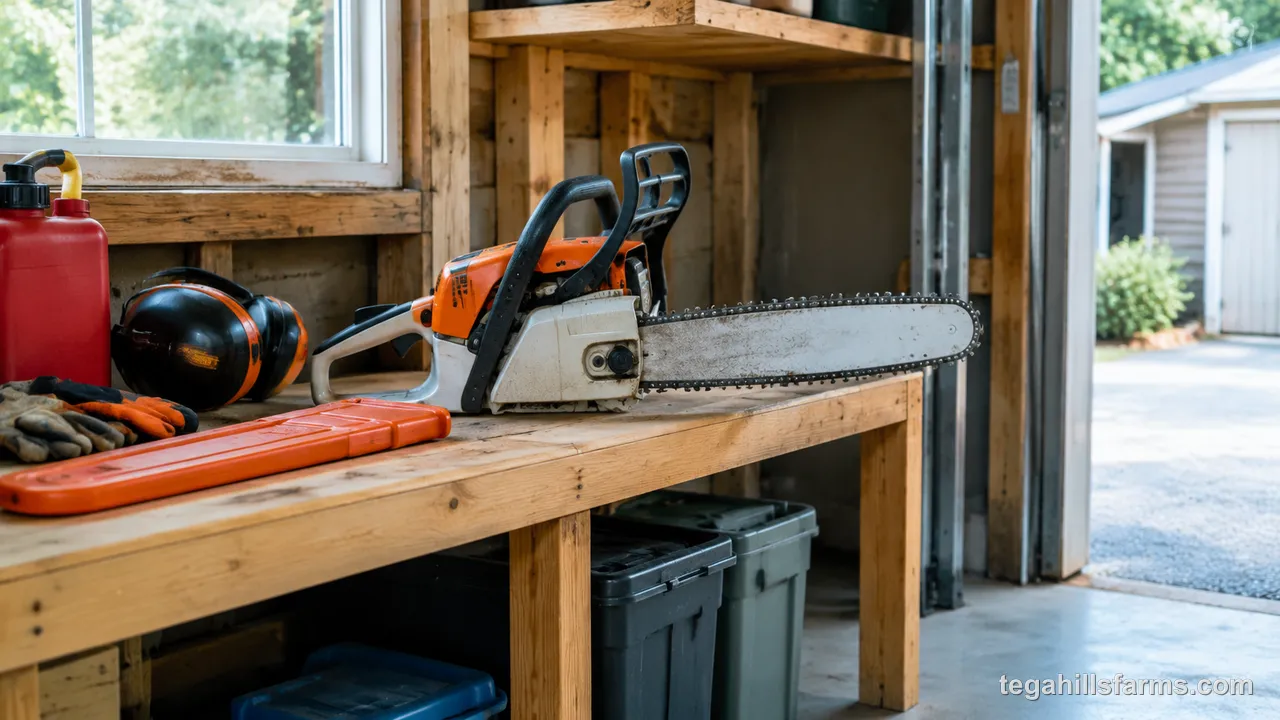
Is a Garage or Shed Good for Chainsaw Storage?
A garage or shed works well if it stays dry, has some airflow and keeps rain and snow off the saw. Damp air is the main threat. In a shed with a dirt floor or a leaky roof, condensation settles on the chain and bar, and rust starts on the cutters.
Watch for sunlight coming through a window onto the saw. A closed shed can heat up like a greenhouse, and temperatures above 100°F thin the bar oil and push it out of the tank faster. Keep the saw, its fuel can and any vapor well away from ignition sources, such as a water heater or furnace pilot light, a bench grinder, or anything else that throws sparks.
Should You Keep a Chainsaw Indoors?
Storing the saw in a closet or utility room helps if your garage or shed swings between hot and cold or stays humid. A conditioned room keeps the saw dry and at a steady temperature, which protects the chain, bar and seals.
The drawbacks are oil and smell. A saw with oil in the tank will still seep, and finished floors and carpet stain far more easily than concrete, so a tray underneath is a must indoors. Any fuel left in the tank also gives off a gasoline smell that lingers in a closed room.
Only bring a gas saw inside after draining the fuel and running the carburetor dry. Keep it away from furnaces and water heaters in a utility room.
How Is Winter Storage Different From a Short Break?
How long the saw will sit sets the routine. Fuel that’s fine for a short pause goes stale over a season and turns into carburetor varnish. That’s why “drain the tank” and “leave the fuel in” are both correct advice, just for different lengths of downtime.
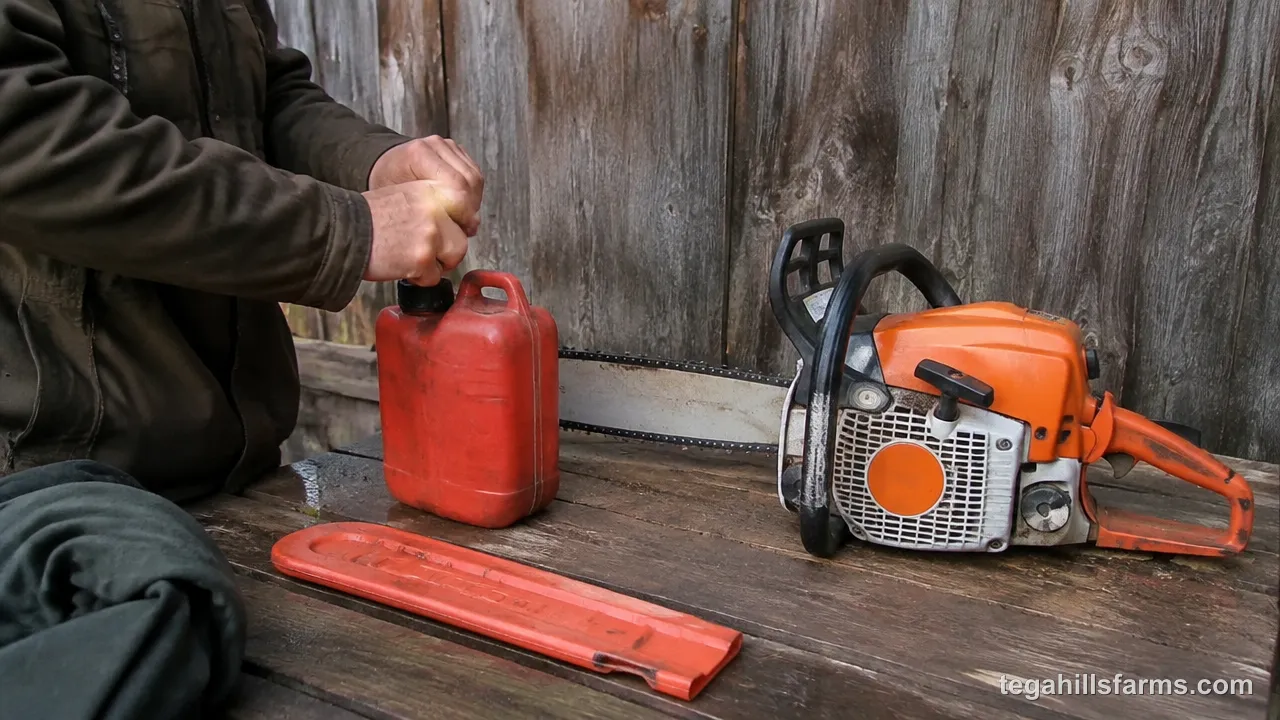
What Should You Do for a Short Break Between Jobs?
If the saw goes back to work in under a month, a quick clean, the bar cover and a safe upright or hung spot are enough. Fuel can stay in the tank as long as you add a fuel stabilizer and run the saw for a few minutes so the treated fuel reaches the carburetor.
Brush the sawdust off the chain, bar and air intake so it doesn’t hold moisture between jobs. Check the oil tank so the next session starts with oil on the chain. You can skip the full drain-down here, since it adds a step without much benefit over a short break.
This only works if the fuel mix in the tank is fresh. Stabilizer slows fuel breakdown but can’t reverse it. A mix made with old gas, or at a ratio other than the one in your saw’s manual, will still cause hard starts after a short pause.
How Do You Store a Chainsaw for Winter or Long Periods?
For a month or longer, drain the fuel and run the carburetor dry. Then fill the chain oil tank, oil the chain and cover the bar before the saw goes on the wall. This is the routine manufacturer guidance supports for a seasonal layup.
Leaving fuel in with a stabilizer over a full winter is a shortcut, not the manufacturer route. It can work if the fuel was fresh going in, but stabilizer only slows breakdown. A saw sitting through a cold, damp winter gives the fuel months to varnish and gives moisture months to work on the bar and chain.
Long layups raise the stakes because you won’t see a problem until spring. A properly stored saw can last more than 20 years, and the habits that decide how long chainsaws last are mostly the ones done at the end of each season.
What Racks, Cases and Bags Work for Chainsaw Storage?
The options split into gear that holds the saw off the floor, which keeps it dry and in sight, and gear that encloses it, which keeps dust out and limits who can reach it. Many garages use both: a wall hook during the season and a case for transport.
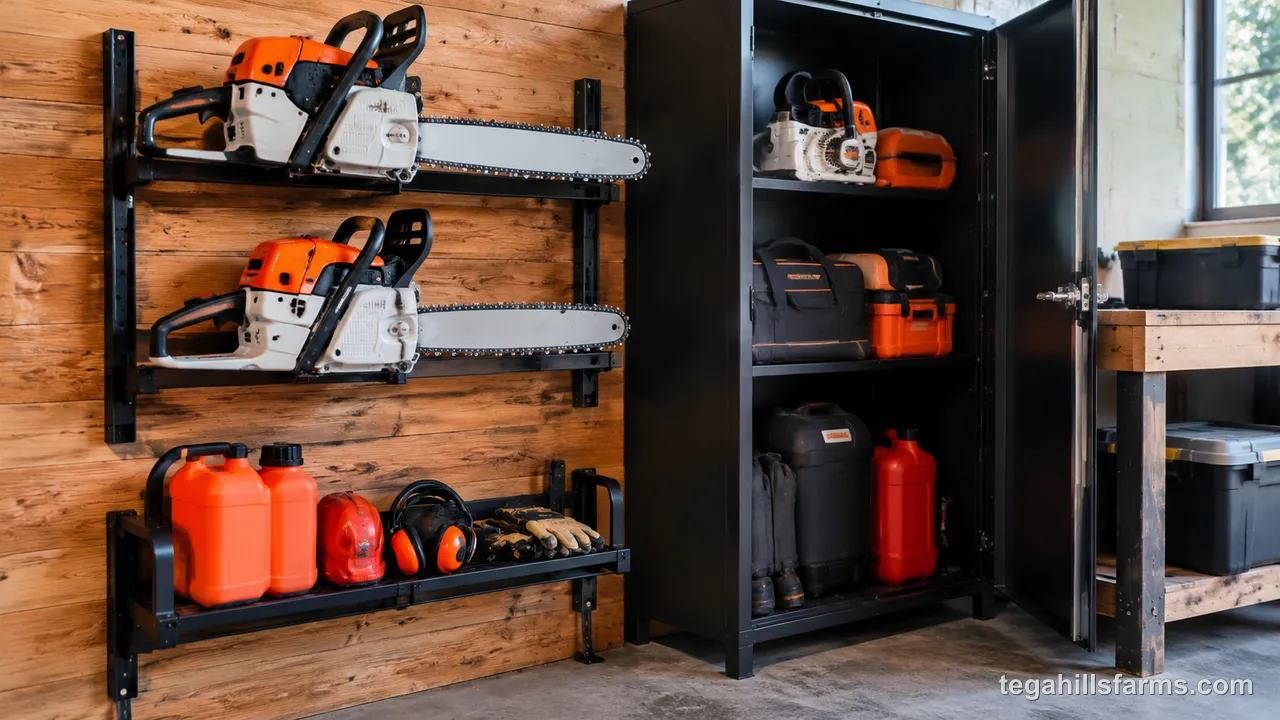
Wall Racks, Hooks and DIY Holders
A wall rack or a pair of hooks keeps the saw upright and off the floor. Most wall mounts hold more than 100 pounds when they’re installed correctly into studs. Look for a mount that holds the saw by its handle or body, not by the bar or chain, and that leaves room for the bar cover.
A homemade holder is enough for one saw. A board screwed to the studs, with two pegs or a bent bracket that catches the front handle, does the job. Whatever holds the saw, put a drip tray or a square of cardboard on the floor or shelf beneath it, because some oil will still drip down.
Hard Cases, Carry Bags and Locked Cabinets
A hard case shields the saw from dust and knocks. A carry bag keeps the scrench, files and spare chain together. A locked cabinet restricts who can get to the saw. Only put a saw into any of them when it’s clean and dry, since a closed case traps moisture against the chain.
Oil can still drip inside a case, so line the bottom with cardboard or an absorbent pad. A plastic tote makes a cheap homemade case. Cut a ¾-inch slot in one end with a utility knife so the covered bar sticks out and the body sits inside.
Gas left in a carburetor through a long layup turns into varnish that narrows the jets, and the engine pays for it on the first warm spring day. A saw in that condition fires, sputters and dies, and yanking the starter rope harder only floods it.
How Do You Restart a Chainsaw After Long Storage?
Before the first pull after months of storage, check the fuel, fuel lines, air filter, starter rope, chain and bar, because any of them can change while the saw sits. If the fuel in the tank looks darker than fresh mix or smells sour, drain it and refill with fresh mix.
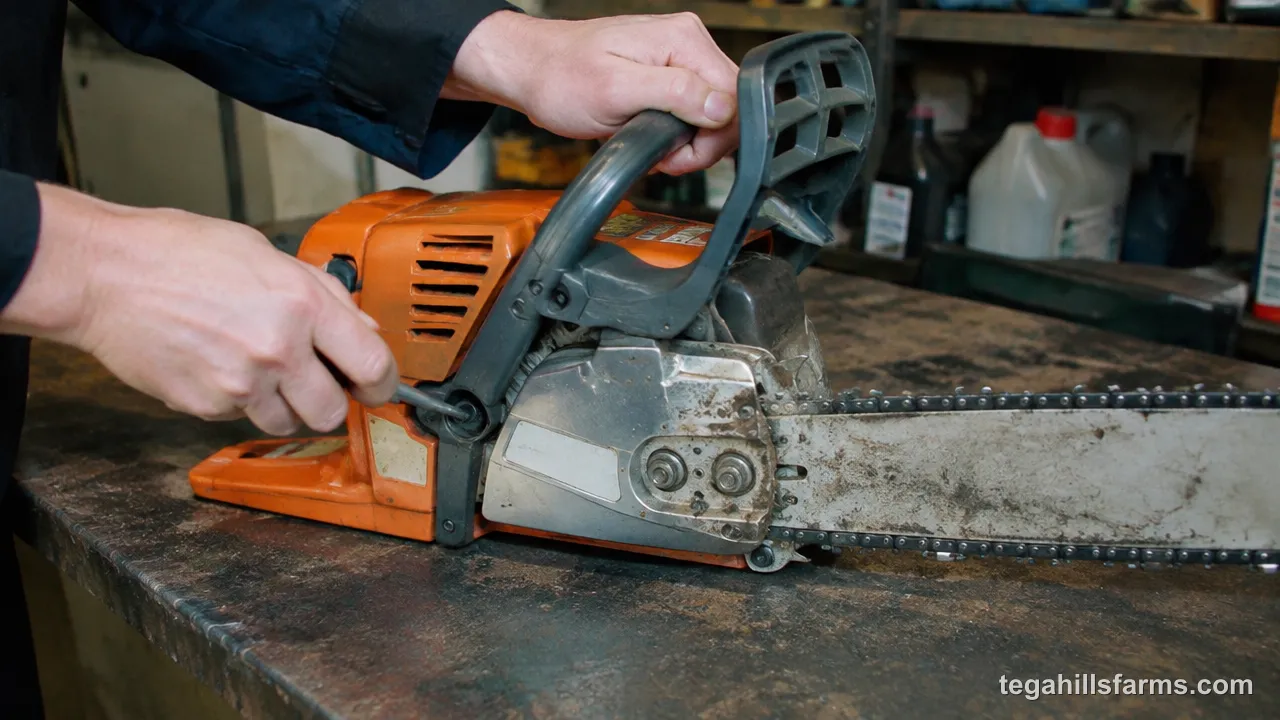
Look at the fuel lines for cracks or stiffness. Pull the air filter to make sure it’s clean and dry. Pull the starter rope out slowly a few times to check for fraying. Then inspect the chain for an orange film and the bar for gummy oil in the groove.
A saw that stored well looks the way you left it: a dry filter, a clean bar, and a chain that moves freely when you turn it by hand with gloves on. The engine starts on the normal choke routine and settles into a steady idle. Rust on the cutters, a varnish smell, or an engine that fires and dies points to fuel or moisture damage. That usually means cleaning the carburetor or replacing the fuel lines before you run it. If it won’t fire at all, the troubleshooting steps for when a chainsaw won’t start walk through spark, fuel and air.
How Do You Store an Electric or Battery Chainsaw?
A battery or corded chainsaw skips the fuel steps entirely, but the battery needs to come off the tool. Store it somewhere that stays between 50°F and 80°F, the range that best preserves lithium-ion battery life. That rules out a hot car trunk or an unheated shed through a hard winter.
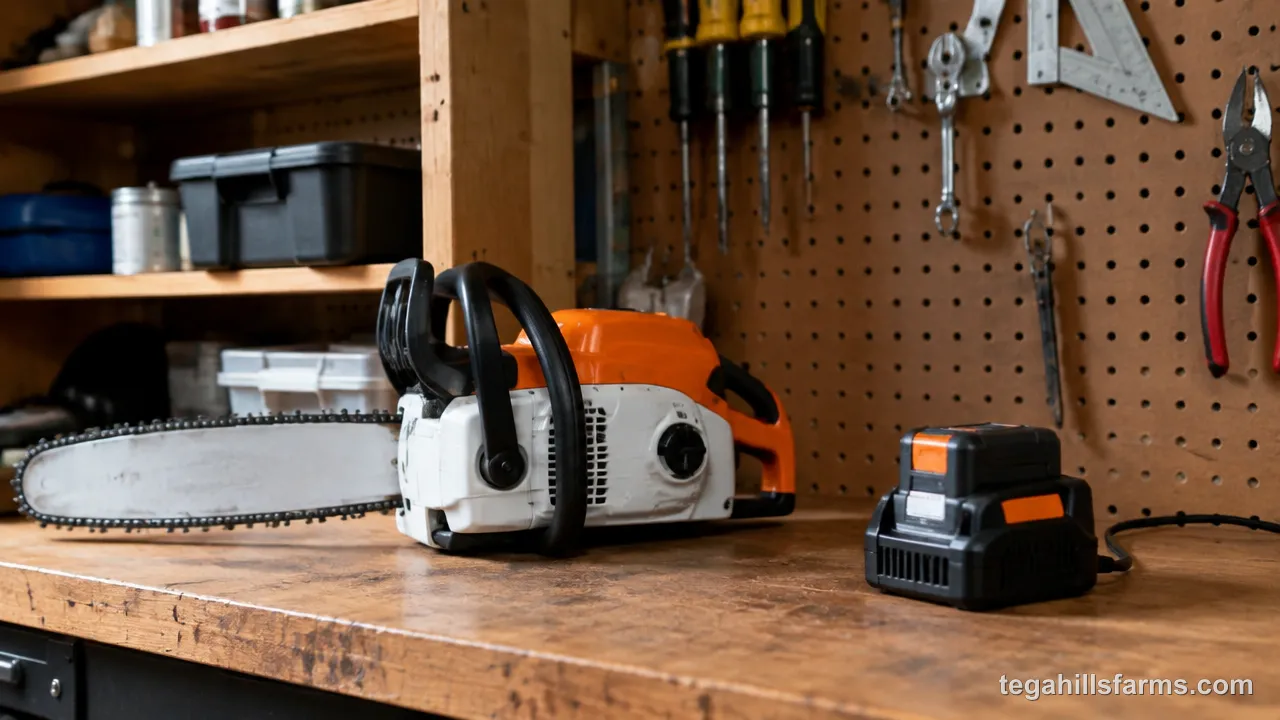
The chain and bar steps still apply. Clean off the sawdust, sharpen and oil the chain, fill or check the chain oil tank, and cover the bar. Battery saws use the same kind of oiling system and leak the same way. For a corded saw, coil the cord loosely and keep it off damp floors.
Compared with the gas routine, the drain, the idle-dry step and the stabilizer all drop out, and the battery becomes the part you protect. That shorter list is a real point in the debate over gas vs battery chainsaws, especially if you don’t want to winterize an engine every fall.
Where Do Spare Chains, Bars and Fuel Cans Belong?
Cutting parts and fluids fail in different ways, so they need separate spots. Spare chains and bars rust when moisture reaches bare steel. Fuel and oil break down, or become a fire hazard when they sit near heat. One job is about preventing corrosion; the other is about safe containment.
How Should You Store Spare Chains and Bars?
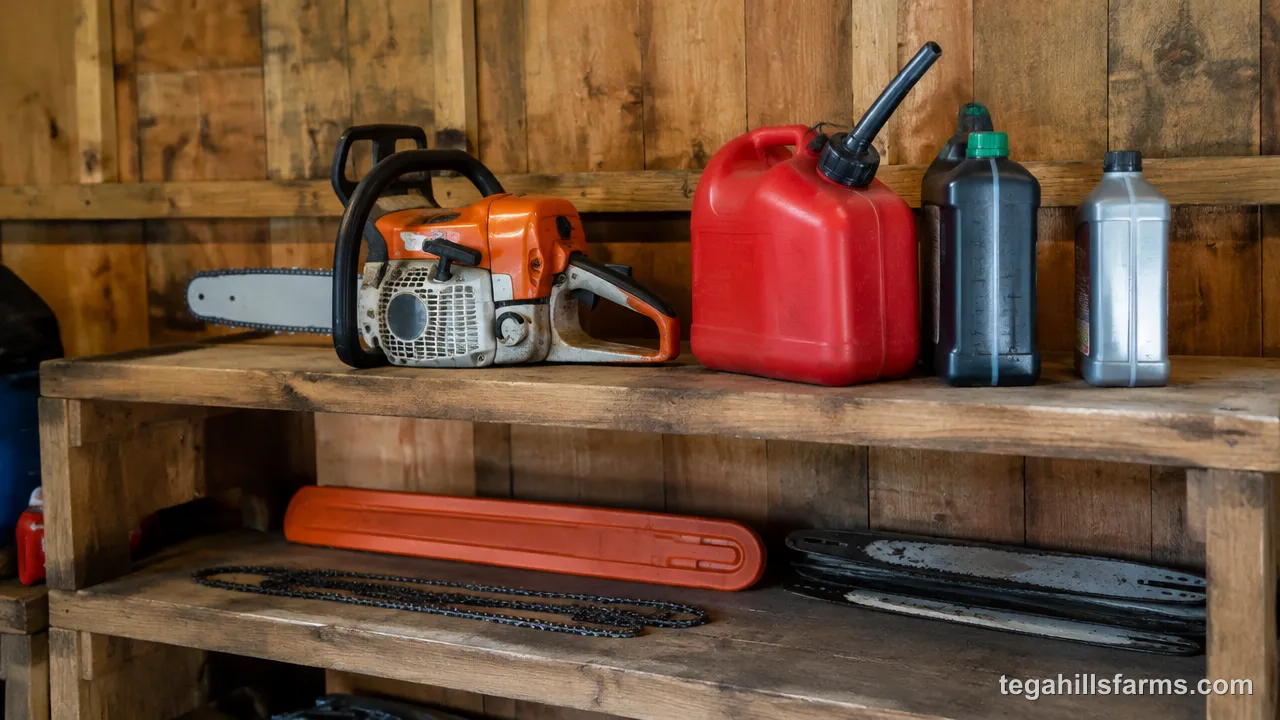
Wipe spare chains and bars clean, coat them lightly with oil, and seal them in a zip bag, jar or lidded container so moisture can’t reach the steel and the chains can’t tangle. Label each bag with the bar length or chain type, since loose chains look alike once they’re off the saw.
Clean them first, because sawdust and old oil trap moisture under the new coating. Give bars the same treatment, with extra attention to the groove and the nose sprocket, where grime collects.
A chain that stored well still has a faint oily sheen, and its links flex freely when you run it through gloved hands. An orange film, dark pitting on the cutters, or stiff links that won’t straighten mean corrosion has started. Light surface rust comes off with a brush and oil, but stiff links mean the chain needs replacing.
How Should You Store Fuel Cans and Oil Bottles?
Keep fuel in an approved, labeled gas can stored away from heat and ignition sources, and keep chain oil bottles capped and upright. Mark the label with the mix and the date so nobody pours two-stroke mix into a mower or straight gas into the saw.
Store the can in a ventilated spot, never in the house, and away from pilot lights and sunny windows. Chain oil bottles stored on their side tend to weep around the cap, so stand them upright on a tray.
Never pour old fuel or used oil on the ground or down a drain. Take it to a household hazardous waste collection or another facility your local rules allow.
How Do You Store a Chainsaw Safely Around Kids?
A secured saw sits in a locked cabinet or on a high wall mount, with the bar covered and the fuel stored separately, out of a child’s reach. A saw that’s simply put away leans in a corner or sits on a low shelf, where a curious kid can grab the handle or touch the chain.
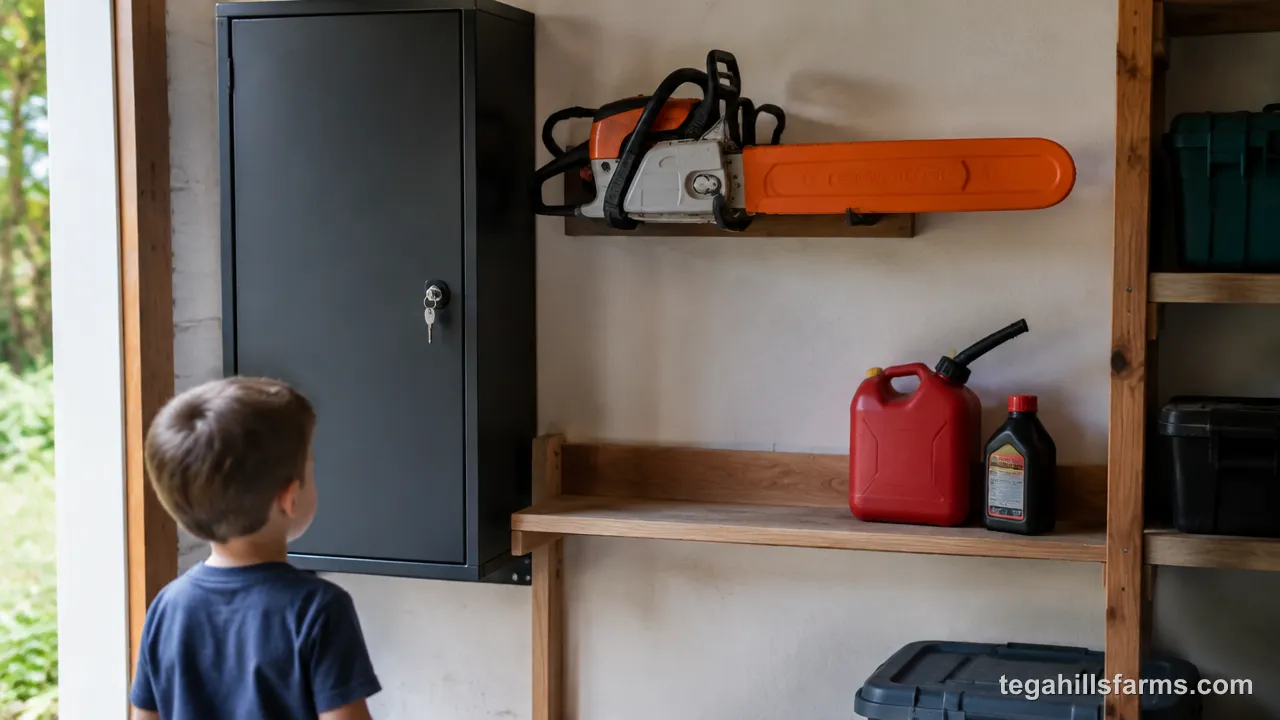
The difference matters because a bar cover alone doesn’t stop a child from pulling the starter rope or pulling the saw off a shelf onto themselves. A locked cabinet removes access entirely, and a high mount puts the saw out of reach while keeping it visible. With a battery saw, store the battery separately and out of reach, since a saw with the battery attached is ready to run.
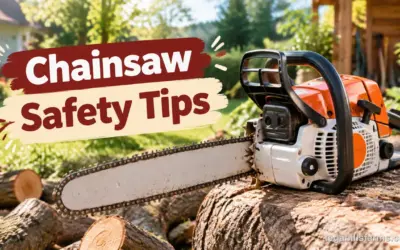
Fuel needs the same care. A gas can on the garage floor is something a child can tip over, open or carry near a water heater, so lock it up or store it high and away from heat. Broader chainsaw safety tips cover the protective gear and handling habits that go along with secure storage.
Chainsaw Storage FAQs
Can you leave fuel in a chainsaw over winter?
It’s better to drain it. For a seasonal layup, drain the tank and run the carburetor dry so no fuel is left to varnish. Leaving stabilized fuel in is the approach for a short break. Over a full winter, it’s a shortcut that risks hard starting and carburetor cleaning in spring.
Can a chainsaw be stored on its side?
It can, but it’s a shop habit rather than the position manufacturer guidance shows. Lying on its side gives bar oil an easier path out of the tank, and the chain rests on the surface. Keep the bar cover on, set the saw on a tray or cardboard, and keep the caps facing up.
Should you drain the bar oil tank before storage?
No. Filling it is the approach manufacturer storage instructions support, especially with a vegetable-based oil, which can gum up in a half-empty tank. An empty tank cuts seepage but leaves a film that can turn sticky. Keep the cap clean and tight on a full tank, and put a drip tray underneath.
Is a cold garage okay for storing a chainsaw?
Yes, a cold garage is fine for a drained gas saw as long as it stays dry and ventilated, since moisture, not cold, causes rust. Bring a battery saw’s battery inside where temperatures stay moderate, and keep the saw and fuel away from pilot lights and sparks year-round.




Write Your Review
No reviews yet. Be the first to share your experience!