

A chainsaw that won’t start almost always comes down to a break in the fuel, spark, air, and compression triangle that a 2-stroke engine needs to fire. When one of those four is missing or weak, the engine cranks but never catches.
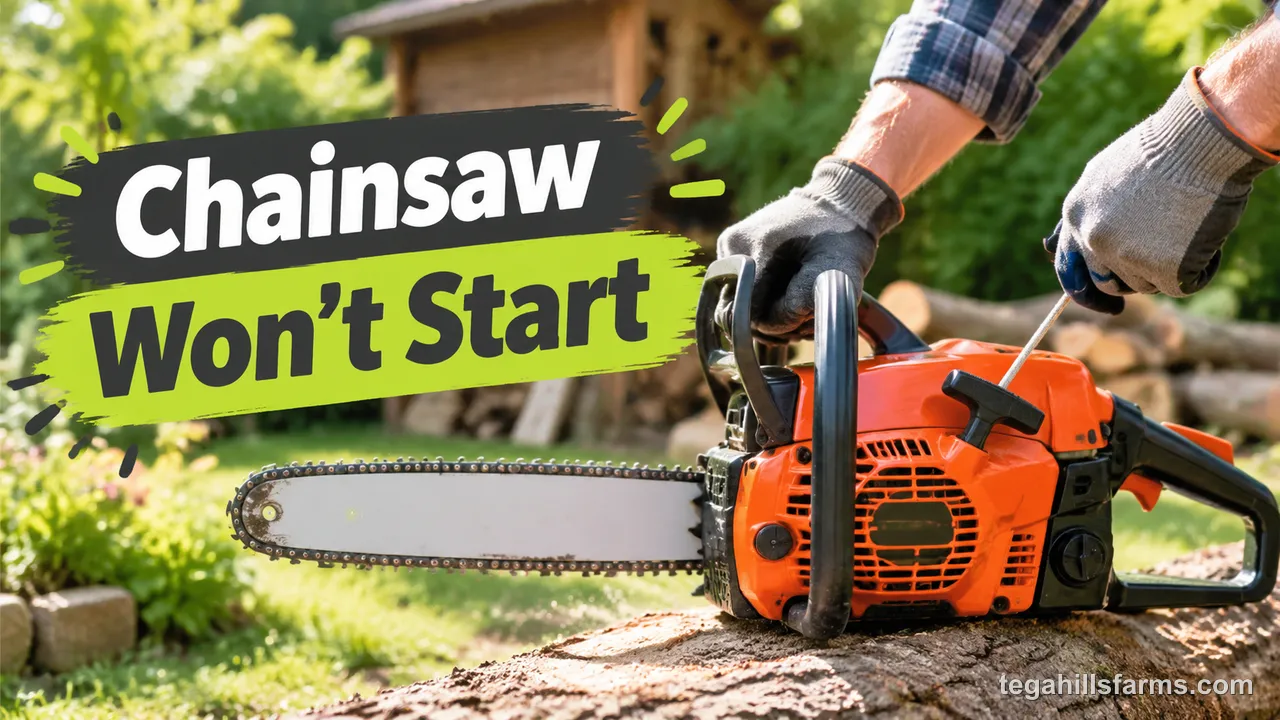
The fix depends on sorting fuel problems from spark, airflow, and mechanical issues in order, rather than guessing and swapping parts. Checking stale gas first, then the plug and filter, saves pulls and flooded cylinders.
Many no-starts look dramatic but trace to small oversights like old ethanol gas, a fouled plug, a choked filter, or the wrong cold-start sequence — all preventable with a few habits.
Below, walk through each system step by step to find why your saw stays silent and how to get it firing again.
Why Won’t Your Chainsaw Start at All?
A chainsaw that won’t start is a 2-stroke engine missing one or more of fuel, spark, air, or compression needed for combustion. Without that triangle working together, the piston turns but the charge never ignites.
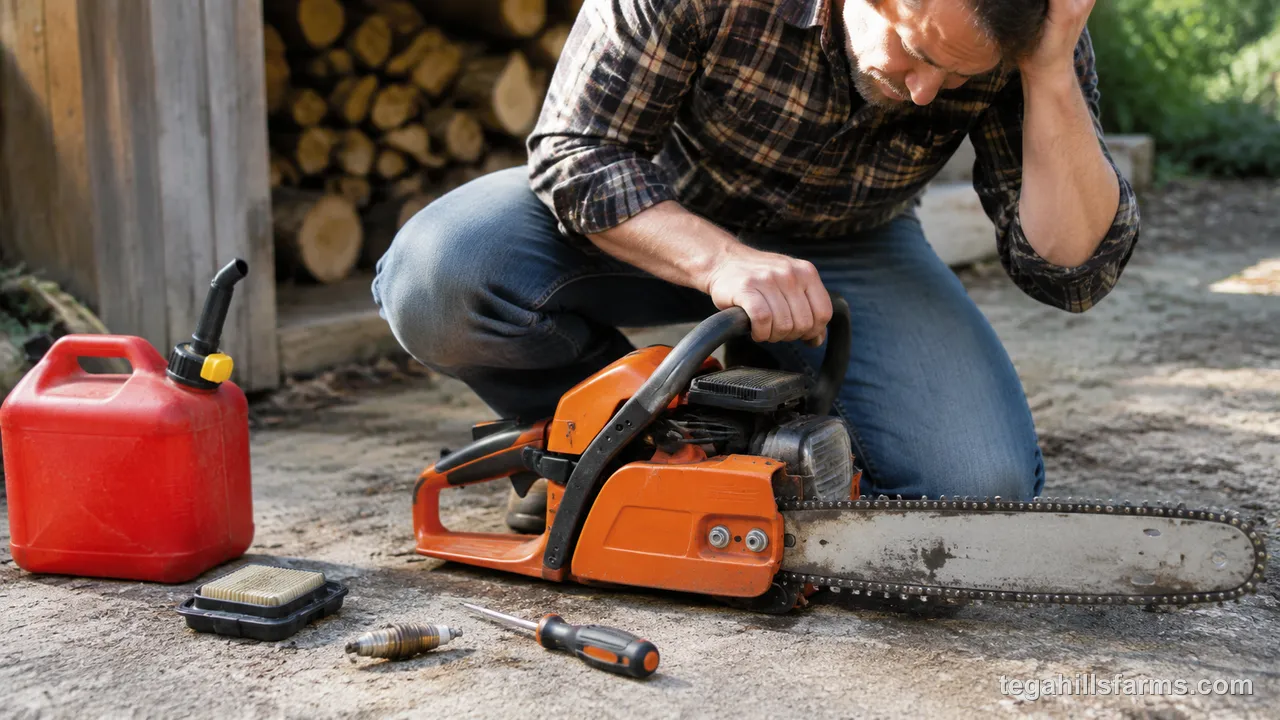
Fuel delivers the combustible mix, spark ignites it, air supplies oxygen, and compression squeezes the mix tight enough to burn. If you are pulling a cord with no pop at all, one link has failed completely; if it pops but won’t catch, one link is weak. Start with the easiest checks — fresh fuel, spark, and air — before suspecting internal wear. If repeated starting trouble makes you question your current saw, our guide on how to choose a chainsaw can help you match engine type and size to your yard before you troubleshoot further.
Is Bad Fuel the Reason Your Chainsaw Won’t Start?
Yes, bad fuel will stop a chainsaw when fuel has gone stale, the gas-to-oil mix ratio is wrong, or the fuel filter or carburetor is clogged. Ethanol gas ages fast and starves the engine.
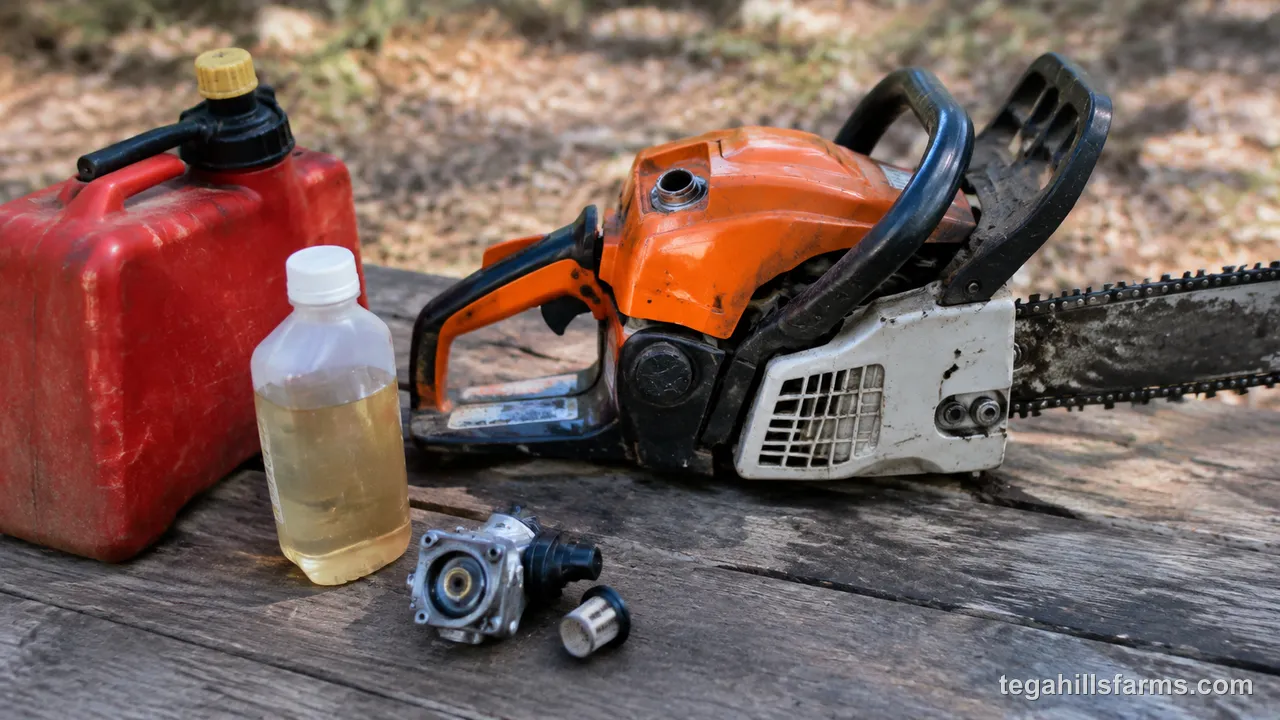
Next, check each fuel culprit in order from the tank outward, because stale gas ruins filters and gums carburetors quickly.
How Can You Tell Your Fuel Has Gone Stale?
Fuel goes stale in about 30 days when gasoline oxidizes and ethanol separates and the saw smells sour, looks cloudy, or leaves varnish.
Fresh 2-stroke mix smells sharp and uniform. After a month in a vented can, especially with ethanol-blended regular, the light ends evaporate and ethanol pulls moisture, forming a cloudy layer or slight phase separation at the bottom. The saw may crank without a pop, pop once and die, or idle rough if it does catch. If you suspect stale fuel, drain the tank and the carburetor bowl into an approved container, refill with fresh 90-octane ethanol-free gas mixed that day, and try again. For a deeper carburetor clean after old fuel has sat, see our guide on how to clean a chainsaw carburetor. Don’t store mixed fuel longer than 30 days, even with stabilizer, if you want reliable spring starts.
Are You Using the Wrong Gas-to-Oil Mix Ratio?
Yes, the wrong gas-to-oil mix ratio will prevent starting because too much oil fouls the plug and too little oil risks seizure while leaning the charge.
Most modern chainsaws call for a 50:1 ratio of 90-octane unleaded gas to quality 2-stroke oil — roughly one small bottle of oil per gallon of gas. Mixing rich on oil (like 32:1 or 40:1 in a 50:1 saw) coats the plug and muffler with wet oil, causing no-start or heavy smoke. Mixing lean on oil makes the engine run hot and can score the piston. Always mix by volume using a ratio cup, not by eye, shake the can well before fueling, and use fresh oil rated for air-cooled engines. If your manual specifies a different ratio, follow that number exactly.
Is Your Fuel Filter or Carburetor Clogged?
Yes, a clogged fuel filter or gummed carburetor will starve the engine when varnish and debris block the filter, fuel lines, or carburetor bowl.
Lift the fuel filter from the tank with a hook — it should look white or light tan and drip freely. A dark, sludgy filter or cracked, stiff fuel line restricts flow and needs replacement. Inside the carburetor, old gas leaves amber varnish across jets and the needle valve, so fuel never reaches the cylinder despite a full tank. Cleaning the bowl and jets or rebuilding with a kit often restores flow, and this job pairs naturally with a seasonal chainsaw tune up. Replace the filter yearly and inspect lines for brittleness to avoid repeat clogs.
How Do You Diagnose a Spark Problem?
Diagnose spark problems by checking a fouled, worn, or mis-gapped spark plug, a failing ignition coil or flywheel magnet, and a flooded engine.
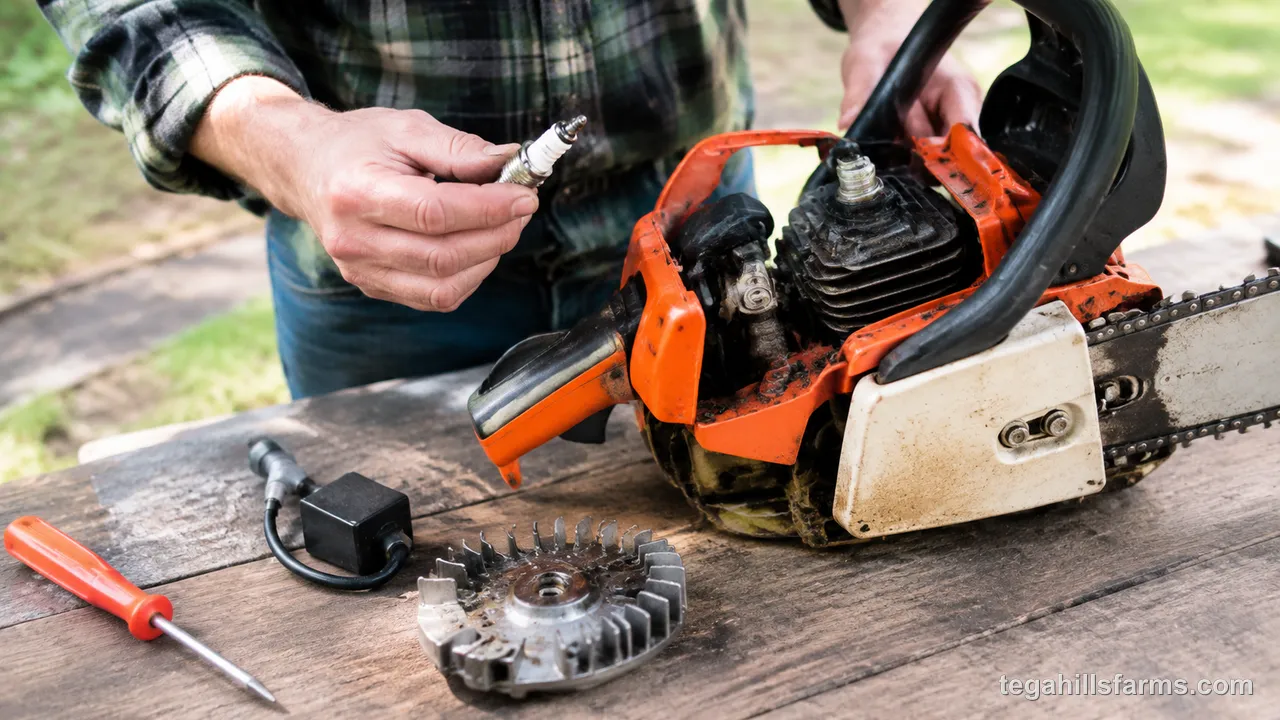
Test them in that order — plug first because it is cheap and exposed, then spark strength, then flooding.
Is Your Spark Plug Fouled, Worn, or Gapped Wrong?
Yes, a spark plug fouled with carbon, fuel, or oil will kill spark when deposits short the electrode or the gap is outside the 0.6–0.8 mm range.
Pull the boot and unscrew the plug. A tan insulator means healthy burn; black soot means rich fuel, wet fuel means flooding, and oily residue means too much oil in the mix. Clean light carbon with a brush and check the gap with a feeler gauge against your manual’s spec, often around 0.6–0.8 mm for many saws. Replace a plug with rounded electrodes, cracked porcelain, or heavy glazing rather than reusing it. For gap setting and replacement steps specific to your saw, see our guide on chainsaw spark plug care.
Is the Ignition Coil or Flywheel Magnet Failing?
Yes, a failing ignition coil or weak flywheel magnet causes no spark when the coil air gap drifts or the magnet loses strength.
The coil sits with a narrow air gap — often about 0.2 mm — to the flywheel. If that gap opens from vibration or rust builds on the flywheel magnets, spark weakens. Test by grounding a tester or a known-good plug against the cylinder and pulling briskly in dim light; a strong system throws a crisp blue snap, while a weak orange spark or none points to the coil. Clean rust off the flywheel lightly and reset the gap with a feeler gauge per your manual. Persistent no-spark after a fresh plug and correct gap usually means coil replacement.
Did You Flood the Engine?
Yes, a flooded engine soaks the plug and won’t start when too many choked pulls or extra primer presses fill the cylinder with fuel.
Signs include a strong gas smell, a wet plug, and no pop after 8–10 pulls on choke. To clear it, move the saw to fresh air, set the master control to the run position, remove and dry the plug, pull the cord 10–15 times with the plug out to vent fuel, then reinstall a dry plug and retry with no choke and no prime. Avoid repeated choked pulls once you smell fuel — that only deepens the flood. A single throttle lock with choke open often clears a mild flood faster than endless pulls.
Is Your Air System Choking the Engine?
Yes, a choked air system will keep a chainsaw from starting when a dirty air filter blocks inflow or the muffler or spark arrestor is carbon-clogged.
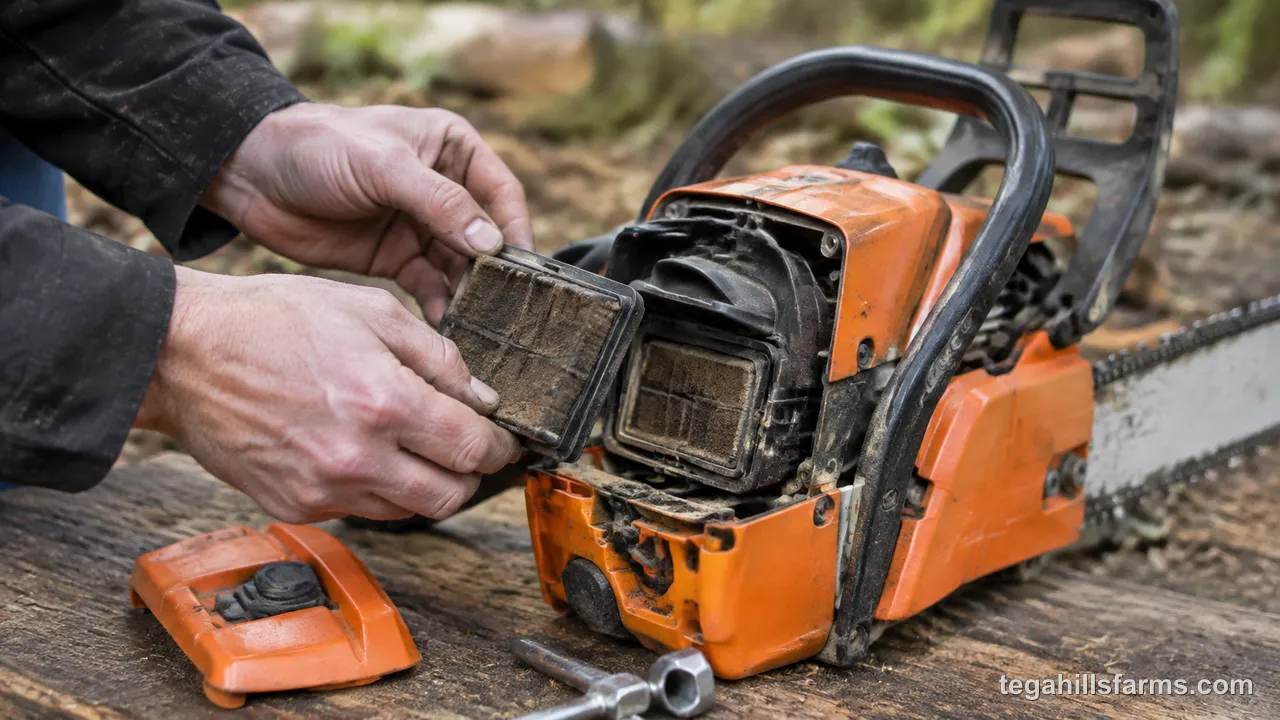
Air has to move freely in and exhaust has to escape; either blockage makes the mix too rich to ignite.
Is a Dirty Air Filter Blocking Airflow?
Yes, a dirty air filter blocks airflow and floods the mix when sawdust and oil cake the foam or felt element.
A clogged filter acts like permanent choke. Tap the filter gently to drop loose dust, then wash a foam element in warm soapy water, rinse well, dry completely, and lightly oil per your manual if required; replace a felt paper element rather than washing it. Check the filter box for fines that bypassed the element and wipe it clean. If you work in dusty conditions, inspect the filter every few tanks. For the full wash-and-oil routine, see our guide on how to clean a chainsaw. A clean filter often restores starting immediately after fuel and spark check out.
Is the Muffler or Spark Arrestor Carbon-Clogged?
Yes, a carbon-clogged spark arrestor screen or muffler will prevent starting when oily exhaust carbon seals the fine mesh.
The arrestor is a small screen at the muffler outlet that catches sparks. On saws run rich or on too much oil, it cakes with hard carbon, trapping exhaust backpressure so the engine cannot breathe and often shows as heavy smoke if it does sputter. Remove the muffler cover, pull the screen, and hold it to light — if you cannot see through it, clean it with a soft brush and solvent or replace it. While open, check the muffler port for heavy carbon buildup. Clearing this restriction often cures both no-start and chainsaw blowing smoke on rich starts.
Are You Using the Wrong Starting Procedure?
Yes, the wrong starting procedure floods or starves the engine when choke, primer bulb, and throttle lock are set for the wrong temperature.
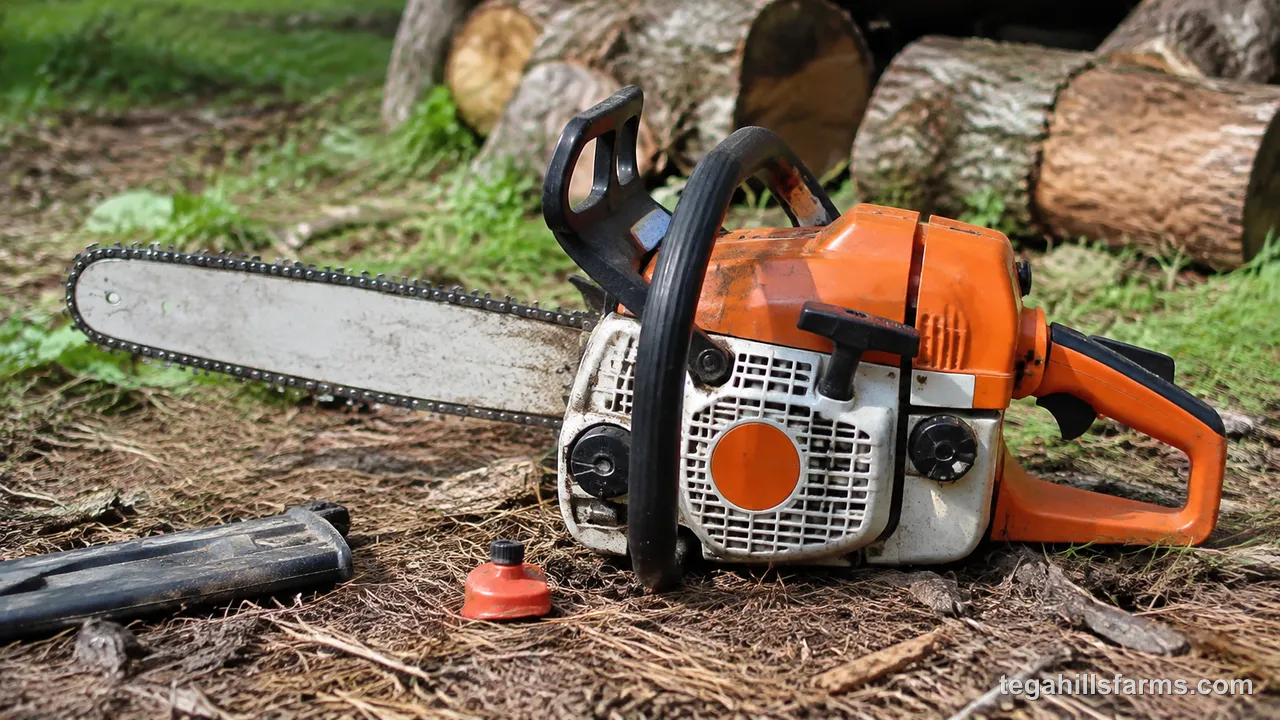
Cold and warm starts need opposite settings.
What Is the Correct Cold Start Sequence?
A correct cold start uses choke closed, primer bulb pressed 5–10 times, throttle lock engaged, and steady pulls until a pop.
Set the chain brake, switch on, close the choke, press the primer bulb until fuel moves visibly without air bubbles, engage the throttle lock, and pull smoothly with the saw on firm ground. After the first pop or burble, immediately open the choke to half or off and pull again to run; leaving it closed after the pop floods the cylinder. For model-specific choke and primer positions, see our guide on how to start a chainsaw. Steady, full-length pulls start better than short jerks.
How Should You Handle a Warm Start or a Flooded Clear?
A correct warm start or flooded clear uses choke open, no priming, throttle lock off, and a venting sequence to dry the cylinder.
If the saw ran within the last 10–15 minutes, do not choke or prime — set to run and pull. If you flooded it on a cold attempt, open the choke, skip the primer, hold the throttle wide, and pull 10–15 times to push excess fuel out before retrying with a dry plug. Keep your footing stable, keep the bar clear of your body and bystanders, and always set the chain brake before pulling, as covered in our chainsaw safety tips. Patience clearing the flood beats more priming.
What If Fuel, Spark, and Air Check Out but It Still Won’t Start?
If fuel, spark, and air check out, a no-start comes down to a damaged recoil starter that won’t spin the engine or low compression that cannot ignite the mix.
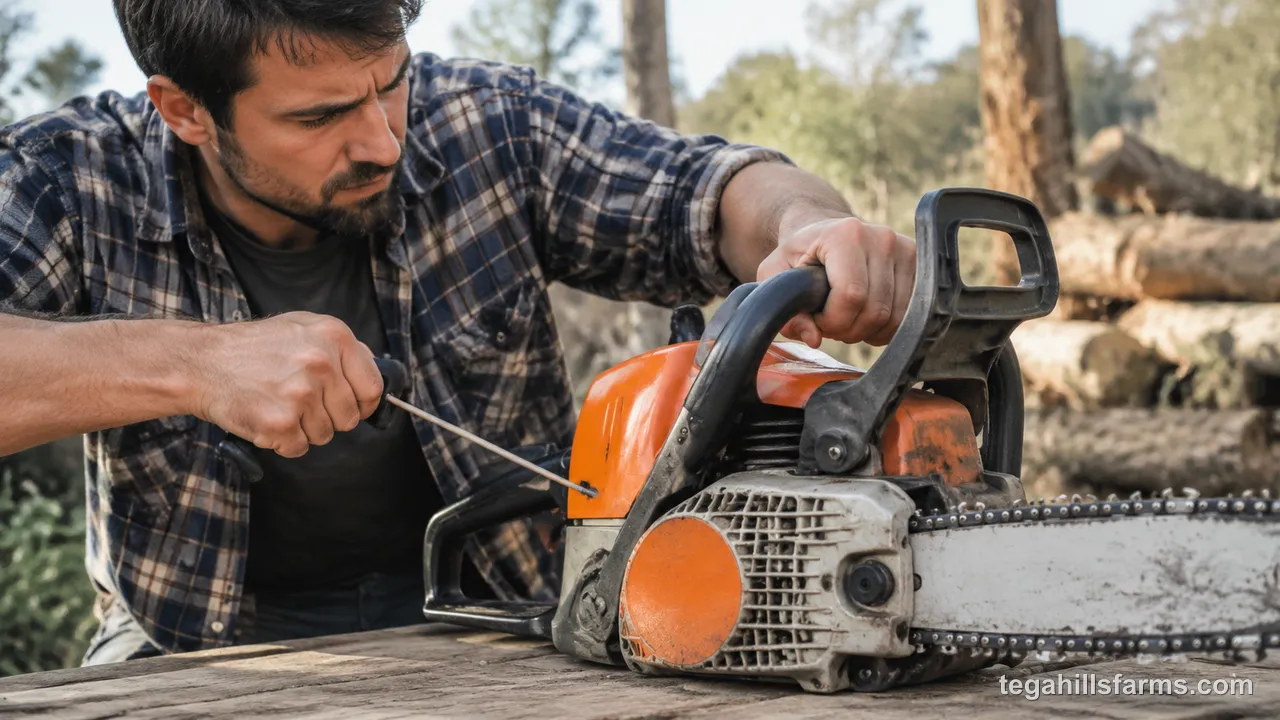
These mechanical checks come last because they need tools and disassembly.
Is the Recoil Starter Rope or Spring Damaged?
Yes, a damaged recoil rope or spring prevents starting when a frayed cord, weak spring, or stripped flywheel pawl fails to spin the engine fast enough.
Pull the cord — it should retract crisply and turn the engine with resistance. A frayed or snagged rope, a spring that won’t retract, or a handle that pulls with no resistance often means broken pawls not engaging the flywheel. Remove the starter housing and inspect for a tangled cord, broken spring, or worn pawls. A starter that spins without turning the flywheel mimics fuel failure, but listening closely reveals the engine itself is not turning. Replacing the cord or spring assembly restores proper cranking speed.
Does Your Engine Have Low Compression?
Yes, low compression will keep an engine from starting even with good fuel and spark when worn rings or leaking seals drop pressure below usable range.
A healthy small 2-stroke often reads around 90–110 psi on a threaded gauge — your manual lists the minimum — but the feel test matters too: hard, springy resistance with an audible pop means compression is present, while easy pulls with no pop suggest leakage. Remove the plug, thread in the gauge, hold throttle open, and pull briskly several times for a reading. If the saw pops but immediately stalls, that pattern often points toward chainsaw wont stay running caused by air leaks or scored cylinders. Scoring from lean running or age usually requires professional rebuild. If the gauge reads low, see also whether your situation matches chainsaw starts then dies to separate fuel starvation from true compression loss.
How Can You Prevent Your Chainsaw From Not Starting Next Time?
Preventing a future no-start depends on fresh fuel rotation, regular cleaning, and seasonal prep for storage.
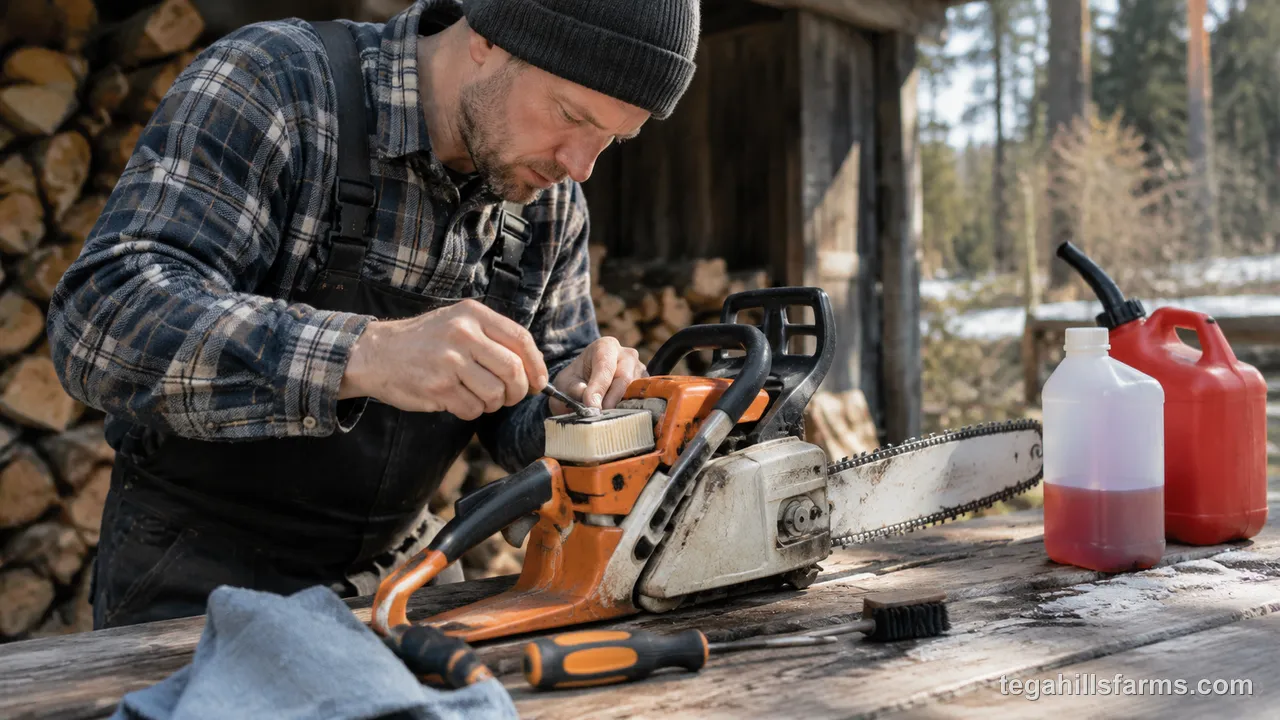
After a successful start, adopt three habits. Mix only a 30-day supply of 50:1 fuel with stabilized, high-octane gas and date the can; dump old mix into your truck or approved disposal rather than the saw. Clean the air filter, bar groove, and sprocket area every few uses and replace fuel filters yearly. For downtime, drain or stabilize fuel, remove the plug for a drop of oil, and store the saw dry and covered — details covered in our guides on how to store a chainsaw and how to winterize a chainsaw. Those steps eliminate most spring frustrations.
You’ve now walked through the full fuel, spark, and air checks that solve most chainsaw no-start cases reviewed above.
While those core fixes get you running today, long-term reliability depends on the small storage and wear details that owners often overlook.
The next section zooms in on those rare but decisive factors that separate a saw that starts every time from one that leaves you pulling the cord all spring.
Rare Culprits Most Owners Miss When a Chainsaw Won’t Start
Rare culprits that mimic fuel or spark failure include a stuck on/off switch, a tripped chain brake interlock, a sheared flywheel key, and vapor lock from overheating.
These hide in plain sight. A kill switch cracked inside can stay grounded even when flipped to run — wiggle it and test for spark to rule it out. Some saws won’t crank properly with the chain brake fully engaged or the bar pinched under load, so reset the brake and relieve bar pressure. A sheared flywheel key from striking the bar or a drop throws ignition timing off, giving weak or erratic spark despite a good coil. Heat also matters: a saw put away hot, then restarted hot, can vapor-lock fuel in the line, a relative of chainsaw overheating that feels like fuel starvation — let it cool in shade, open the gas cap to vent pressure, and retry with no choke.
When Should You Stop Troubleshooting and Get Service?
When fuel, spark, air, and starting technique all check out, getting service is the right call once compression reads low, spark stays absent after a new plug and coil gap check, or fuel still won’t flow after a filter and line swap.
Use these thresholds as your stop points.
How long should a chainsaw last before these failures become normal? Most homeowner saws deliver many years with proper mix and storage, but heavy use, chronic stale fuel, or dust without filter care shortens life. If you are seeing rising no-starts year over year, consider how long do chainsaws last for your model class and whether rebuild cost outweighs replacement.
Do Stihl, Husqvarna, and other brands start differently? The fuel-spark-air fundamentals are the same, but choke labels, primer counts, and decompression valves differ — always follow the decal on your saw rather than a generic video.
What should you tell the shop? Note what you already tried — fresh fuel, new plug, filter check, arrestor cleaning, and whether it pops at all — so a technician can jump straight to compression, leak-down, and timing tests instead of repeating basics.


Write Your Review
No reviews yet. Be the first to share your experience!