

Most home gardens do well with one 55-gallon rain barrel under each downspout you plan to use. A vegetable garden that needs steady watering through midsummer usually calls for two or more barrels linked together. The right size is where your roof’s runoff meets your garden’s thirst.
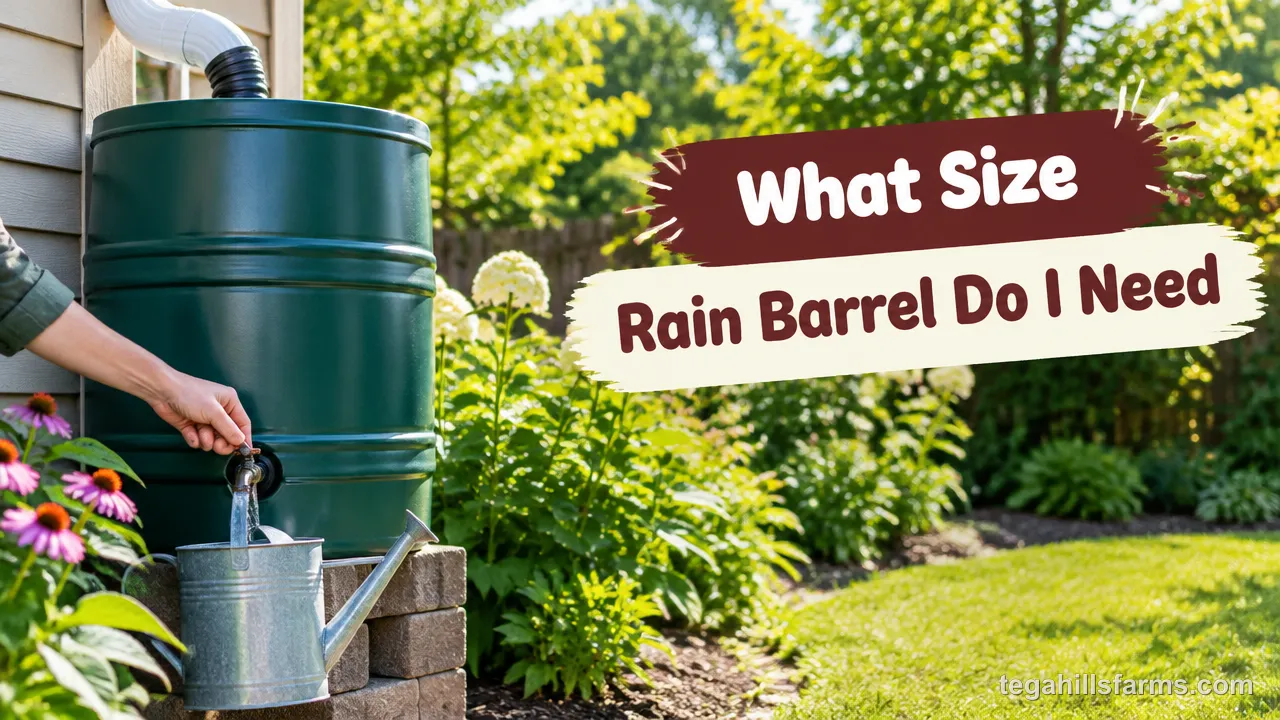
Two things set that point: how much water your roof sheds in an ordinary storm, and how much your beds and containers use between storms. A small patio garden empties a barrel slowly, so extra capacity just sits there. A row of raised beds can drain the same barrel during one stretch of hot, dry weather.
The other concerns are practical. Water is heavy, so a full barrel can’t sit just anywhere. A barrel that’s too small for the roof above it overflows in the first good rain, and that water can end up pooling against your foundation instead of feeding your tomatoes.
Before you shop, look at which part of the roof feeds the downspout you’ll use. Most houses split their roof among several downspouts, and the section draining toward your garden is what sets your collection, not the size of the whole house.
How Much Rainwater Can Your Roof Collect?
Each square foot of roof sheds about 0.6 gallons during a one-inch rain, so your collection depends on roof area multiplied by rainfall. That yield is almost always larger than you expect, and it tells you whether your barrel or your roof will run out first.
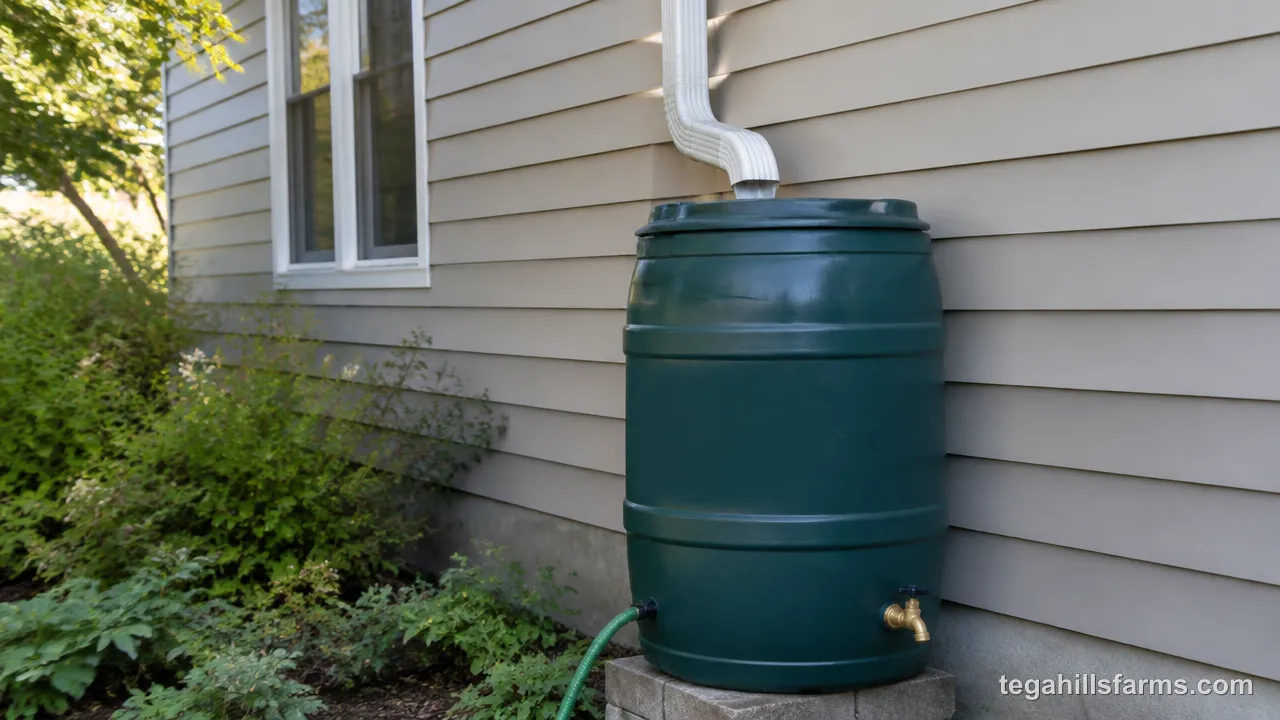
Knowing your roof’s yield comes first when you work out how to choose a rain barrel that fits what your gutters can actually deliver. A barrel far smaller than that runoff fills in a single storm and spills the rest. A garden that drinks more than the roof supplies needs a backup plan in dry months.
The Basic Calculation
The formula is square feet of roof × inches of rain × 0.623 = gallons collected. The 0.623 factor converts a depth of rain over one square foot into gallons, so it does the unit work for you.
Measure the roof’s footprint, not its sloped surface. Rain falls straight down, so a steep roof and a flat roof covering the same ground catch the same amount. Walk the outside of the house, measure the length and width of the section that drains to your chosen downspout, and multiply them for square footage.
For rainfall, use the size of a typical storm in your area rather than your annual total. Your barrel fills one storm at a time.
What a Typical House Generates
A 1,200-square-foot roof produces about 750 gallons from a one-inch rain. A downspout that drains a quarter of that roof, around 300 square feet, still collects roughly 185 gallons from the same storm.
That second figure matters most, because most barrels sit under a single downspout. Even that one section sheds far more water than a standard barrel holds, so in most storms your barrel will fill and overflow while the rain is still falling.
For a garden, this works in your favor. Even a light rain refills a drained barrel, so capacity limits how long you can water between storms, not how much your roof can deliver.
What Size Barrel Matches Your Garden?
A single 55-gallon barrel handles containers and a small bed, while a full vegetable garden usually needs two or more linked barrels to carry it between storms.
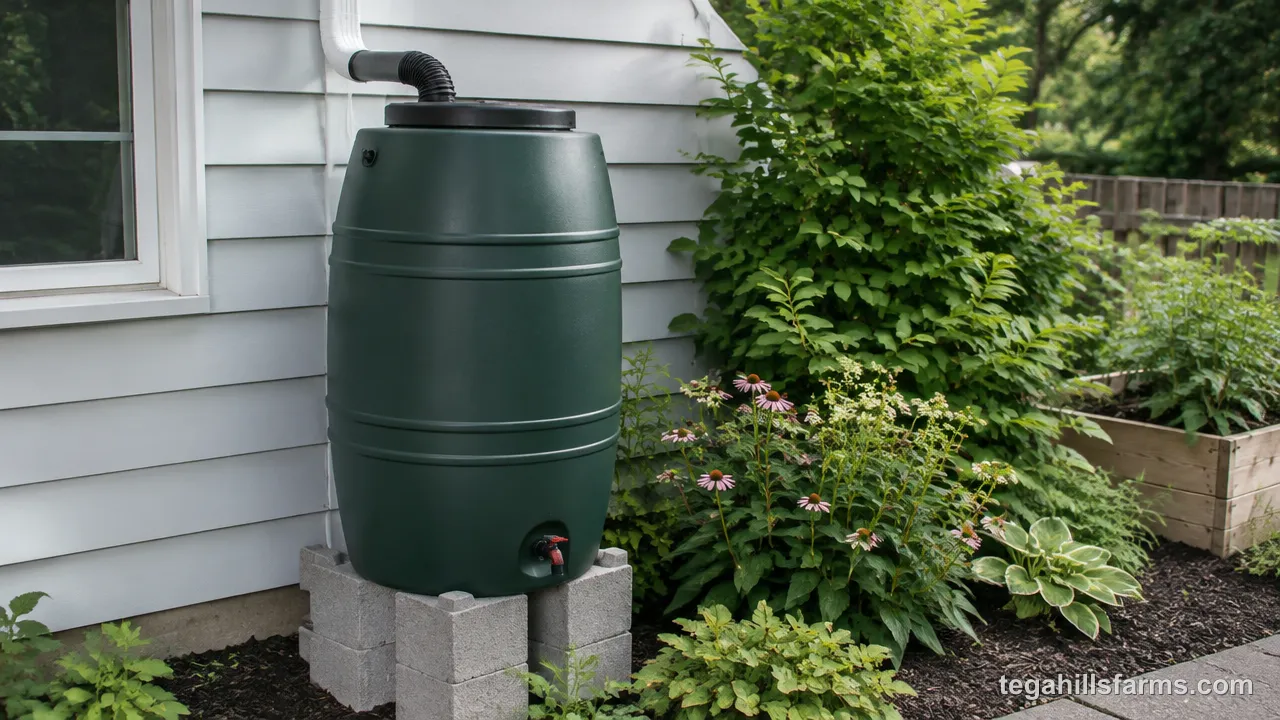
What decides the size is how quickly your plants drain the barrel during the gaps between rains. Lawn and garden watering accounts for about 40 percent of typical household water use in summer, the same season rain is least reliable in most USDA zones. A barrel that runs dry in July sends you back to the hose just when your plants need water most.
Small Gardens and Container Growers
One standard barrel is plenty for patio containers, window boxes and a single small bed. On a balcony or tight deck, a smaller barrel still keeps up. Containers use water a little at a time, usually a watering can or two a day, and each storm refills the barrel before that slow draw empties it.
Pots dry out fastest in heat and wind, which is when a full barrel beside the door saves the most trips to the spigot. Extra capacity beyond that mostly goes unused, so a larger barrel only adds weight and footprint you don’t need.
Mid-Size Vegetable Beds
Vegetable beds usually need about an inch of water a week during the growing season. The same conversion factor from your roof calculation works in reverse: multiply your bed’s square footage by it to see how many gallons that inch takes.
Raised beds drain faster than in-ground rows, and tomatoes, squash and cucumbers drink heavily once they set fruit. In southern zones with long, hot seasons, one barrel can run dry during a single dry spell. For that reason I lean toward linking two or more barrels for a real vegetable garden.
A single barrel can still save about 1,300 gallons over the peak summer months. Linked barrels stretch that supply across the longer gaps between storms.
What Are the Common Rain Barrel Sizes?
Home rain barrels range from compact models smaller than a drum up to the 55-gallon standard, and cisterns cover anything much larger.
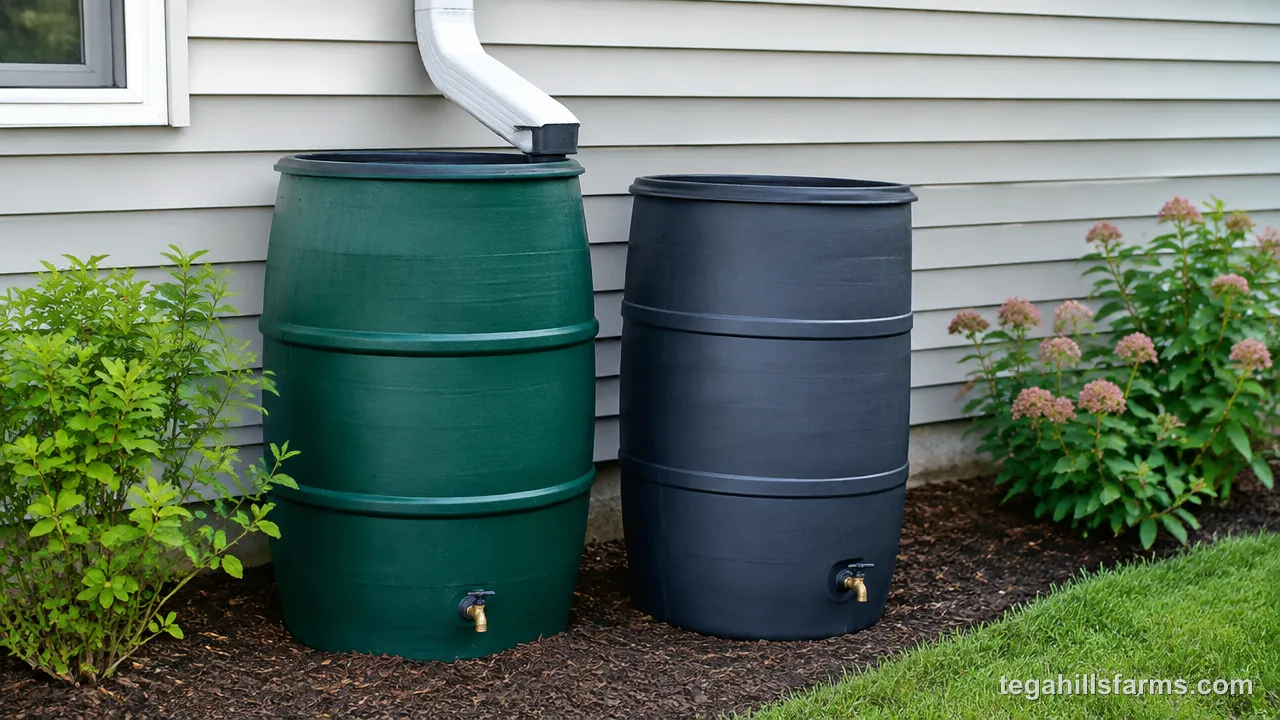
Each step up trades footprint and weight for longer stretches between refills. Capacity also affects how much a rain barrel costs, because larger tanks use more material and take more effort to ship and set up. Match the size to the spot where it will sit as well as to your plants.
Entry-Level Barrels
Smaller barrels, often slim or decorative, are built for decks, balconies and narrow side yards where a full drum won’t fit or would be too heavy. They suit first-time collectors and gardeners who want rainwater for containers and seedlings rather than for a whole garden.
The trade-off is how quickly they fill and overflow. Under a busy downspout, a compact barrel tops off early in a storm. Plan the overflow route from day one, even though the barrel itself looks too small to cause trouble.
Standard Residential Capacity
The 55-gallon size follows the standard industrial drum, and many rain barrels began as food-grade drums before being fitted with a spigot, screen and overflow. That size is the common choice for home gardens because it balances capacity against a footprint that fits beside most downspouts.
Full, it is heavy but manageable on a sturdy stand. Most models come with an overflow port that accepts a linking hose. That makes this size an easy starting point: begin with one barrel and add a second later if your garden outgrows it.
Should You Link Multiple Barrels or Buy One Large One?
Linked barrels win on flexibility and built-in overflow handling, while one large barrel or cistern wins on simplicity with fewer fittings that can leak.
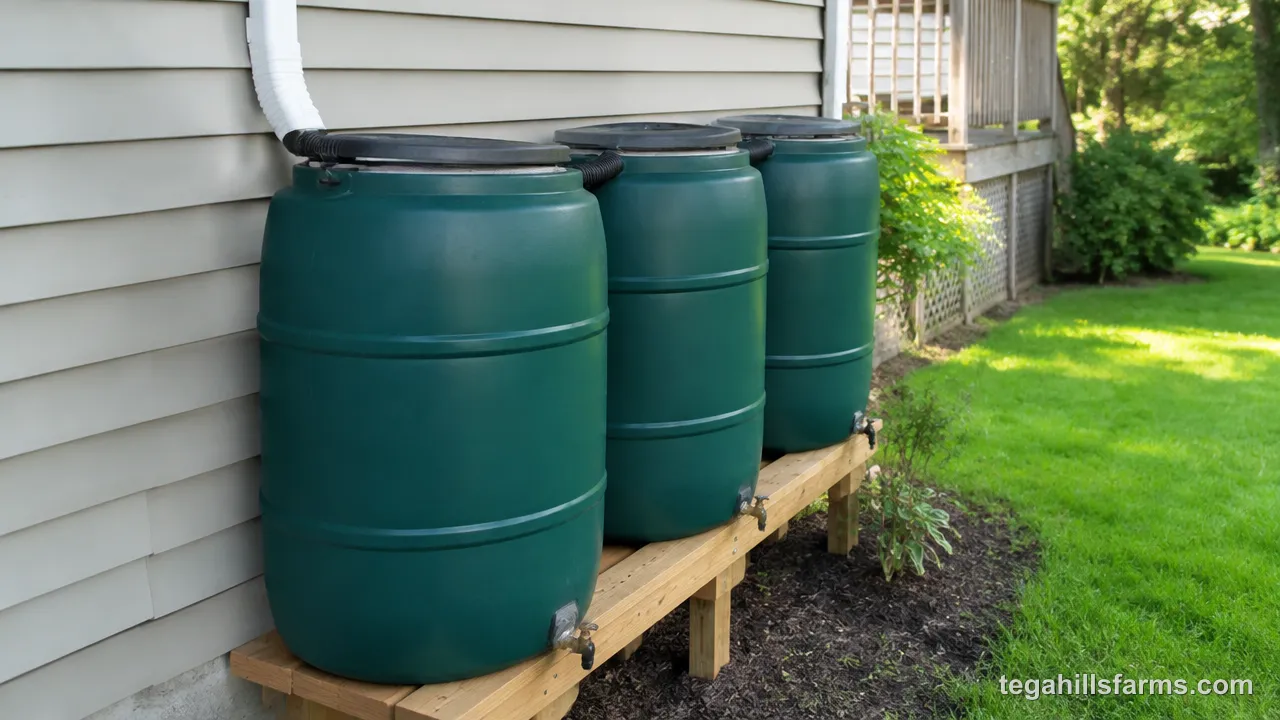
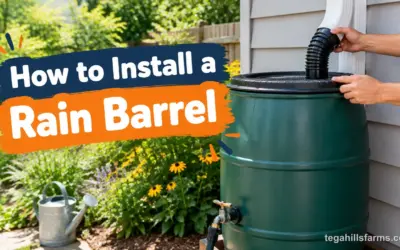
Both setups use the same gravity-fed design behind how rain barrels work, so the choice comes down to your space and how much plumbing you want to manage. Linking adds steps to how to install a rain barrel, since every barrel needs its own level base and every joint needs a watertight seal.
When Linking Makes Sense
Linking suits gardeners who want to grow their capacity over time. You can start with one barrel, then add more as beds expand, with overflow from the first barrel running through a connecting hose into the next.
Smaller barrels also fit where a single big tank won’t, such as around a corner, along a narrow side yard, or tucked behind shrubs. Each one stays light enough to move or tip for cleaning. In northern zones, you can drain and store individual barrels for winter one at a time instead of wrestling one huge tank.
When One Large Barrel Works Better
A single large barrel or cistern makes sense when you have open ground beside the downspout and a garden big enough to use the volume. One tank means one inlet, one spigot and one overflow, with no connecting hoses to kink, clog or loosen.
The catch is permanence. A large tank needs a solid, level pad, and once full it effectively stays put. If you garden in a cold zone, look for a model that drains completely from the bottom. You won’t be tipping it over before the first hard freeze.
One heavy afternoon storm can fill a barrel long before the gutters stop running, and every gallon after that has to go somewhere. Without a planned path for that extra water, it spills over the rim, soaks the soil under the barrel, and can wash out the base that keeps the barrel level or end up against your foundation.
How Overflow Affects Size Choice
The smaller the barrel compared with the roof section feeding it, the sooner and more often it overflows. With a small barrel, the overflow route matters as much as the barrel itself. Because even a modest roof section fills a standard barrel in an ordinary storm, every barrel needs a planned overflow, whatever its size.
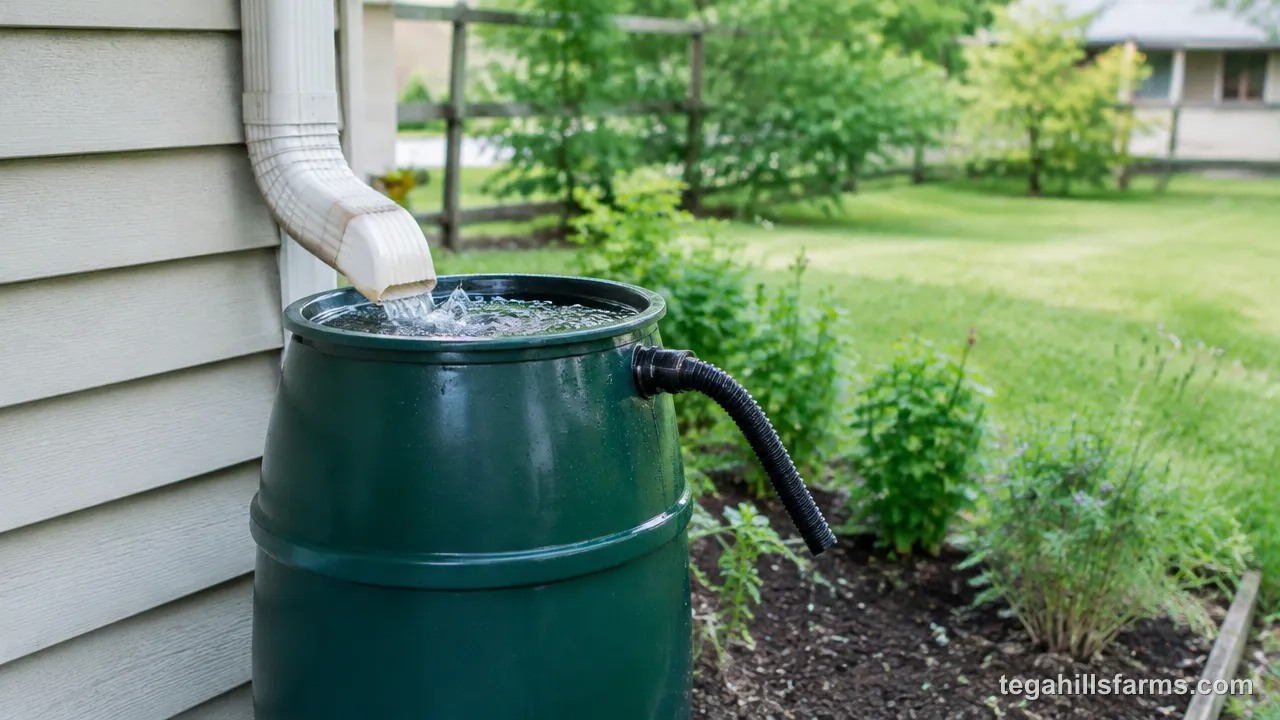
Most barrels have an overflow port near the top. A hose attached there can carry water to a garden bed, a rain garden, or the next barrel in a chain. Another option is a downspout diverter, which sends water into the barrel until it’s full and then back down the downspout.
Wherever the overflow goes, route it well away from the house and toward soil that can absorb it. A larger barrel overflows less often, but it still needs that path for the storms that fill it completely.
Weight Limits and Where You Can Put Them
Water weighs about 8.3 pounds per gallon, so a full standard barrel weighs several hundred pounds and a large cistern far more. Size therefore decides where the barrel can safely sit.
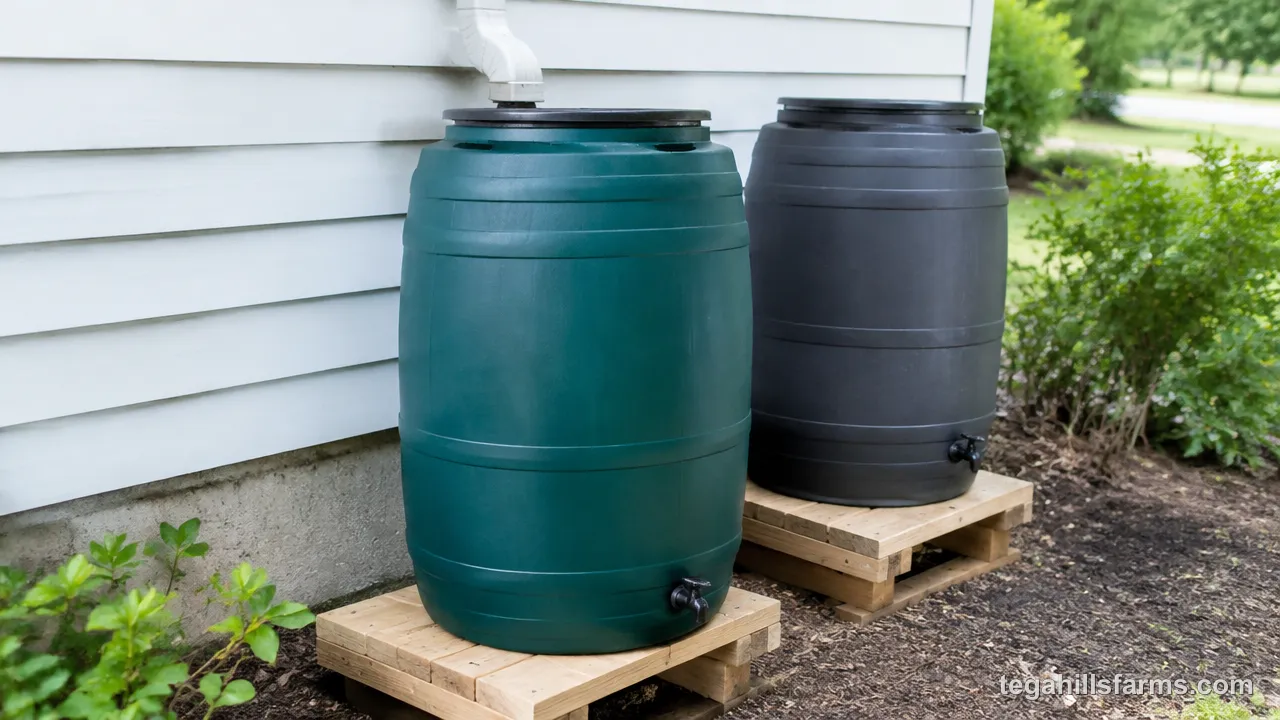
Every barrel needs a level, firm base, such as a concrete pad, compacted gravel topped with pavers, or a stand built for the full weight. Soft soil settles unevenly as it gets wet. A barrel that starts to lean can tip, which is a real hazard around children and pets.
Raising the barrel improves water flow to a hose or watering can, but the stand carries the full load, so cinder blocks or a purpose-built stand beat a wobbly wooden crate. On a deck or balcony, check what the structure was built to carry before setting a full barrel there. A compact barrel is usually the safer choice for those spots.
Does Size Change How Often You Clean It?
Size mostly changes how much you clean out, not how often. A thorough cleanout once a year, plus regular checks of the inlet screen, keeps most barrels in good shape whatever their capacity.
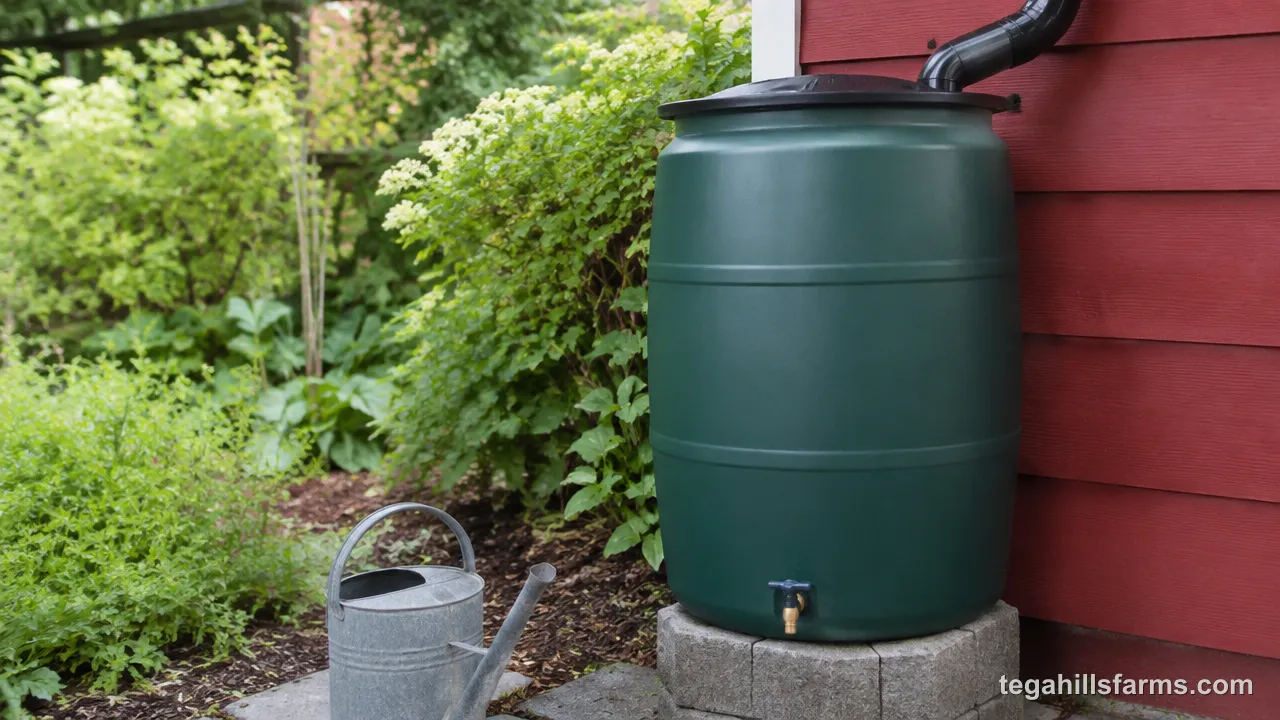
Larger barrels collect more roof grit, shingle granules and leaf debris at the bottom, and they’re harder to tip and scrub. A bottom drain or low spigot makes flushing that sediment much easier. In northern zones, the end-of-season cleanout doubles as winter prep, because a barrel left full can crack when the water freezes.
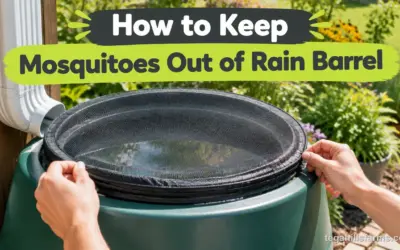
The inlet screen does most of the everyday work. Fine mesh keeps out leaves and insects, and learning how to keep mosquitoes out of rain barrel water starts with that same screen staying intact and free of debris.
Common Questions About Rain Barrel Size
Is one 55-gallon rain barrel enough for a vegetable garden?
For a few raised beds, one barrel helps but rarely covers a whole summer. Storms refill it quickly, but dry spells empty it just as fast. Linking a second barrel stretches the supply, and keeping a garden hose ready for long droughts keeps your crops from stalling.
Can a rain barrel be too big for my roof?
Rarely. Even a quarter of a modest house roof sheds more water in a one-inch rain than a standard barrel holds, so most barrels fill easily. The real limits on size are the weight your base can support and the room you have beside the downspout.
How many barrels can one downspout fill?
One downspout can fill several linked barrels, because overflow from the first barrel runs through a connecting hose into the next. The practical limits are space and a level base for every barrel in the chain, plus a final overflow route for the last one.
Do I need permission to collect rainwater?
Most US homeowners can set out a rain barrel freely, but some states and local codes limit capacity or how the water can be used. Check your state and city rules on whether it is illegal to collect rainwater at your address before you link several barrels or install a cistern.
Does a bigger barrel give better water pressure?
No. Pressure comes from height, not capacity, so raising the barrel on a sturdy stand does more for hose flow than buying a larger one. A gravity-fed barrel delivers gentle pressure, which suits soaker hoses and watering cans better than sprinklers.
Write Your Review
No reviews yet. Be the first to share your experience!