How to Choose a Rain Barrel – Sizing & Placement Guide
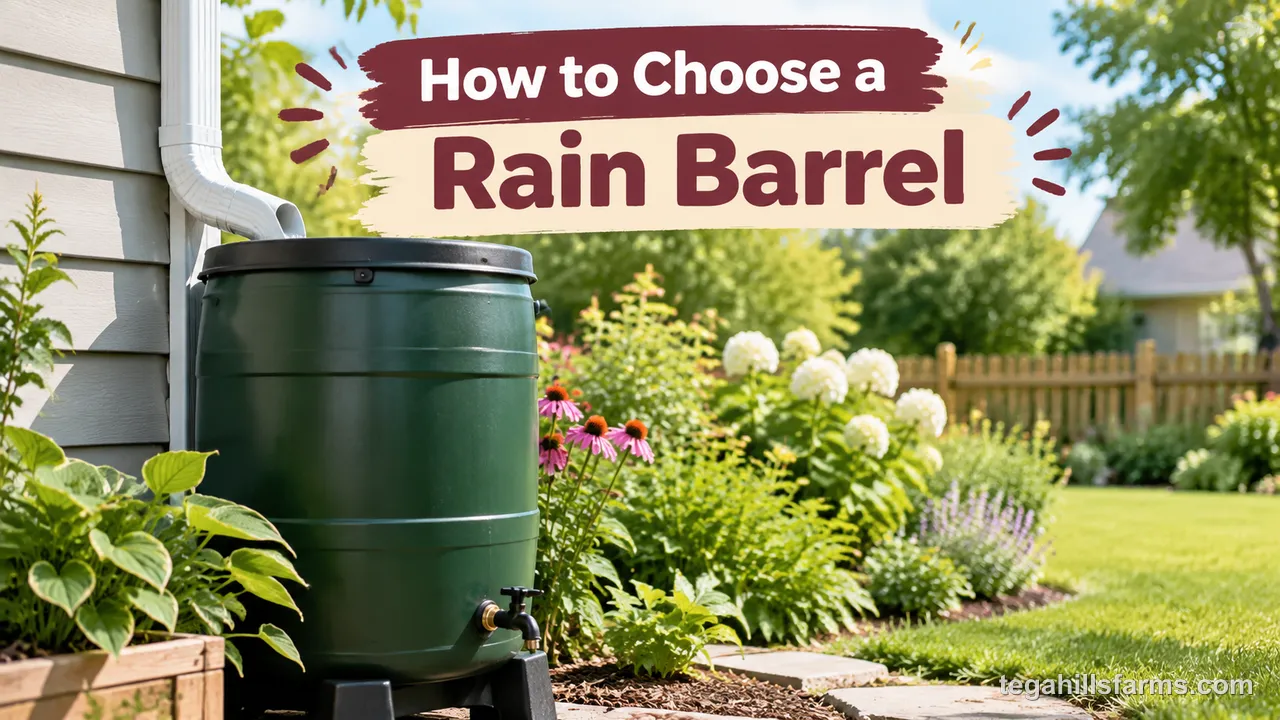
Choosing a rain barrel well means matching three things to your garden: capacity to the runoff your roof sheds and the beds you water, a material built for your summers and winters, and a spot beside a downspout on a level, raised base where overflow drains away from the house.
Capacity gets the most attention, but a gallon rating only means something alongside your roof area, your rainfall, and how long your plants go between storms. Material and style come next, because a barrel that cracks in a hard freeze or turns brittle in full sun costs more over a few seasons than one suited to your USDA zone.
The practical concerns arrive once the barrel is full. Water is heavy enough to sink a barrel into soft ground, an overflow aimed at the wrong spot can soak a foundation, and roof runoff needs a little care before it touches lettuce or basil.
If you grow mostly in containers and a raised bed or two, start with one barrel near the plants you water most. Once you’ve watched how quickly it fills through your rainy season, you can link a second.
What Should You Know Before Choosing a Rain Barrel?
Every model does the same basic job, storing roof runoff from a downspout and releasing it through a low spigot, so the right choice depends on how much water your plants need and what your site can support. A model that suits a few patio herbs would leave a vegetable plot dry by midsummer, and an oversized one can overwhelm a small deck or side yard. For anyone new to how rain barrels work, the setup is simple: gutters feed the barrel, gravity pushes water out of the spigot, and an overflow sends the excess away once the barrel is full. If styles and capacities are still a blur, our guide to the best rain barrels can narrow the field before you settle on size and placement.
How Will You Use the Collected Water?
Rain from the roof suits four jobs around a home garden: watering ornamental beds and shrubs, watering edible crops, watering lawns, and outdoor chores like rinsing tools, pots, and muddy boots. Flowers and shrubs are the easiest fit. They tolerate roof runoff well, and almost any screened barrel serves them.
Vegetables and herbs need more care. They call for a food-grade barrel and a habit of watering at the soil line, so runoff doesn’t sit on leaves you’ll harvest.
Lawns are the hardest to satisfy. Lawn and garden watering makes up nearly 40 percent of a typical household’s summer water use, and turf spreads that demand across a wide area, so a lawn-focused setup usually means several linked barrels rather than one. Household uses should stay outdoors and non-potable, because untreated rainwater isn’t safe for drinking or cooking.
What Space, Weight, and Rules Limit Your Options?
Before you shop, check the ground beside the downspout, how much load that ground or deck can carry, and what your town or HOA allows. A typical barrel takes up about four square feet. That sounds small until you add a stand, a second barrel, and enough room to reach the spigot with a watering can.
Weight is the limit beginners most often miss. A full barrel is too heavy for most decks, balconies, and wooden porches unless the structure was built for that load, so ground-level placement on gravel or pavers is the safer default.
Rules vary by place. Some states limit how much rainwater a household can store, and many homeowners associations regulate barrel size, color, or placement where neighbors can see it. Check local regulations and any HOA covenants before buying, since a decorative or smaller barrel can sometimes meet rules that a plain blue drum won’t.
What Size Rain Barrel Do You Need?
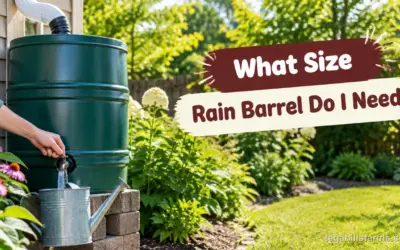
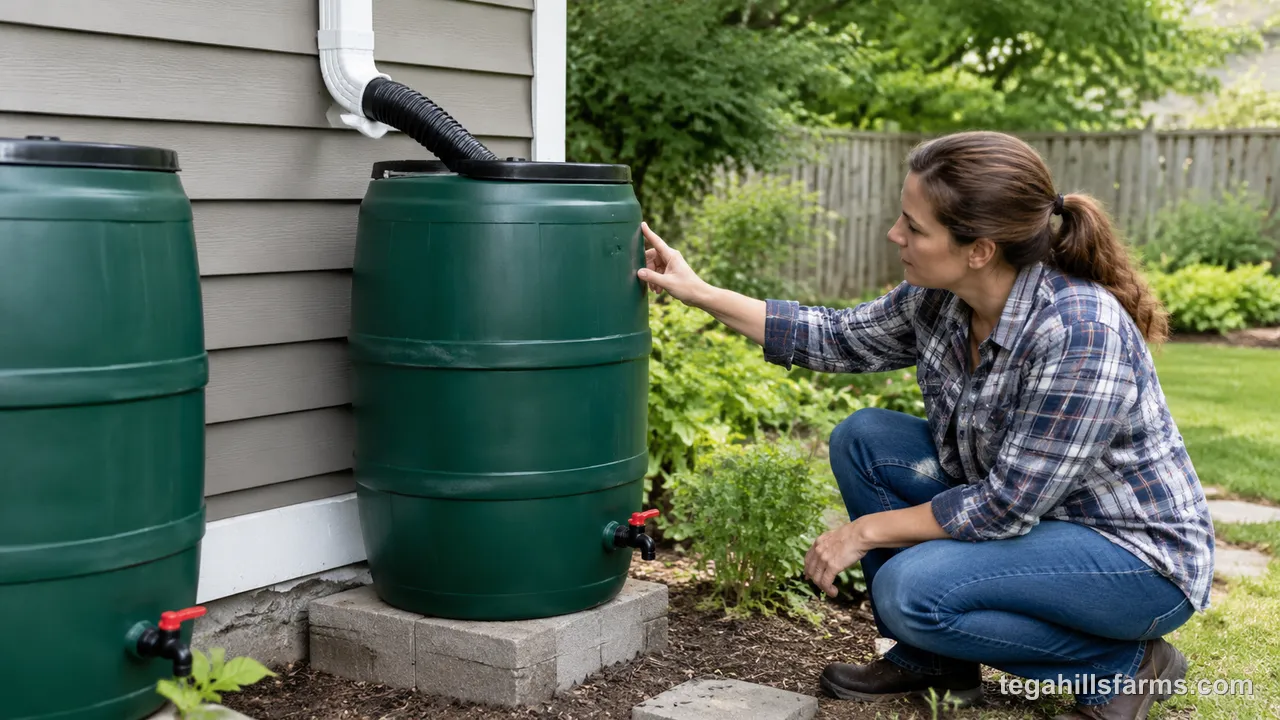
For most home gardens, a single 60-gallon barrel covers containers and a bed or two, while vegetable plots and lawns usually need two or three linked barrels holding 120 to 180 gallons. Working out what size rain barrel you need starts with your roof and your rainy season rather than the label on the barrel. An ordinary storm sheds far more water off a roof than one barrel holds, so the useful question is how much water you want stored for the dry stretch between storms. Gardeners where summer rain returns often can get by with less storage. Long, dry summers reward every extra gallon you can hold, because that stored water is all your beds get until the next storm.
How Do Roof Size and Rainfall Determine Capacity?
Runoff volume depends on two measurements: the area draining into your chosen downspout and the depth of rain falling on it. A 1,000-square-foot roof sheds roughly 600 gallons for every inch of rain, and the volume scales with area, so a smaller roof section yields proportionally less.
Measure the footprint, not the sloped surface. Rain falls vertically, so the ground area under the roof section, length times width, is what counts. Only the portion whose gutter runs to your downspout feeds the barrel.
Rainfall matters in a different way. Even a modest storm can fill a barrel from a small roof section, which means capacity rarely limits how much you catch during wet weeks. Capacity limits how much water you have left when the rain stops in July. Look at how long dry spells usually last during your growing season, and size for those gaps rather than for the storms themselves.
When Is 50 Gallons Enough and When Do You Need 100 Gallons or More?
Containers, window boxes, and a small raised bed can run on a 50 gallon rain barrel where rain returns often, because frequent storms refill it before the plants use up the supply. Two or more linked barrels, holding 100 gallons or more, earn their space when you water a full vegetable garden through midsummer or regularly go weeks without rain.
Rated capacity overstates what you can use. Water below the spigot stays in the barrel, and that bottom layer collects sediment, so it’s better left alone anyway. Water above the overflow port spills out before it’s ever stored. Your usable volume is the column between those two points.
Linking works in your favor. Barrels connected near the base share their water and drain through one spigot, while barrels chained from overflow to inlet fill one after another. For a mixed vegetable garden, I’d lean toward two linked barrels over one oversized tank, since standard barrels are easier to level, move, and replace. A single barrel is the better choice for frequent rain and small plantings. Linked barrels are the better choice for long dry spells and in-ground vegetable beds.
How Do Overflow and Footprint Affect Real-World Capacity?
A barrel stores water calmly through a downpour only when the excess has a wide enough exit. Overflow openings commonly run from ¾ inch to 1½ inches wide. A narrow port can’t keep pace with a gutter pouring in during heavy rain, so water rises over the screen and runs down the sides and around the base. A wider port, or a downspout diverter that stops feeding the barrel once it’s full, keeps that excess under control.
Footprint limits how many barrels you can realistically add. Each one needs its own patch of level, supported ground plus a connector, and the walls beside downspouts are often crowded with steps, windows, or plantings. A taller, narrower barrel can hold a similar amount of water on less ground, but it sits less steadily on a base that isn’t perfectly flat.
Which Material and Style Fits Your Garden and Climate?
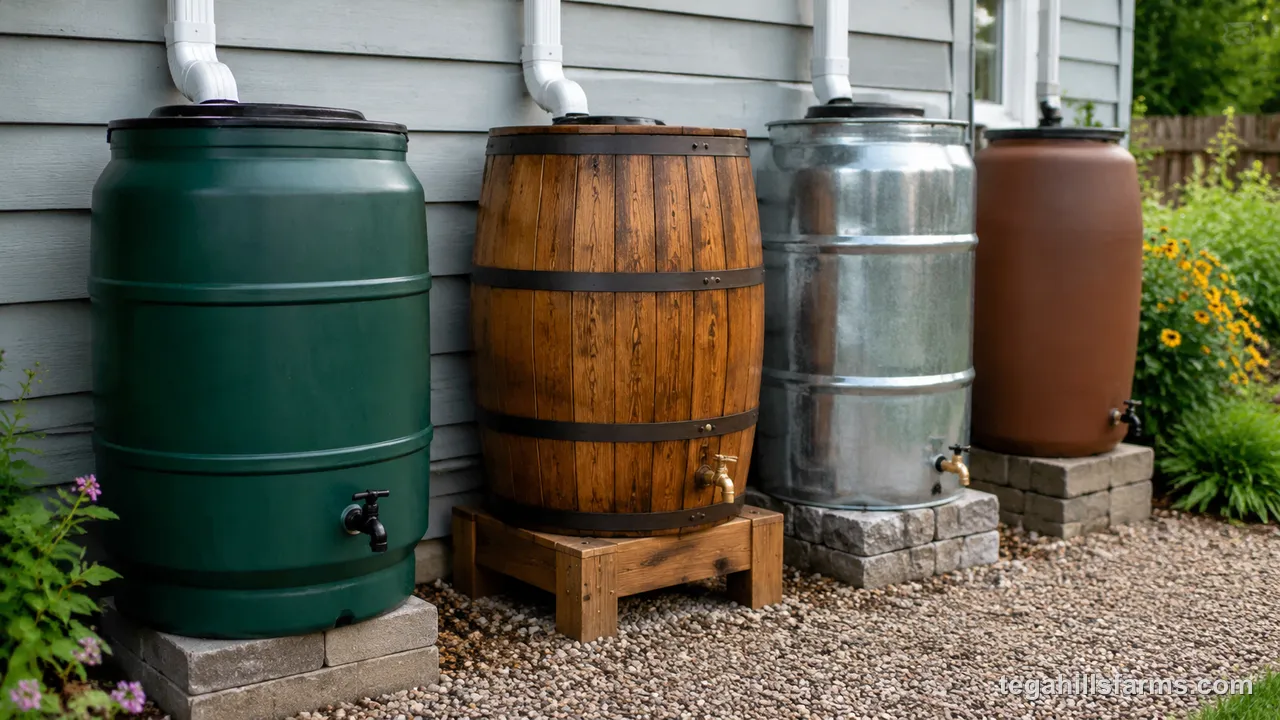
Food-grade, UV-stabilized plastic suits most yards and winters with the least upkeep, while oak barrels win on looks and galvanized steel stands up best to sun, though each asks for more care. Your local weather decides which trade-off matters. Strong sun breaks down cheap plastic, hard freezes split anything left full, and dry heat shrinks wood staves, so the right material is the one whose weakness your climate rarely tests. If the look of oak draws you in, compare the best wood rain barrels for liners and stave quality before you commit to the extra care. Style matters too: a barrel in plain view of the patio can earn its place partly on looks.
How Do Plastic, Metal, and Wood Compare Outdoors?
Across most climates, plastic is the most forgiving choice, metal handles harsh sun best, and wood looks the most natural but needs steady upkeep. Plastic barrels, usually polyethylene, don’t rot or rust and are light enough to move when empty. UV-stabilized plastic resists sun damage much longer than untreated plastic, and dark, opaque walls keep out the light that algae needs.
Galvanized steel is the usual material in metal rain barrels, and it holds up to sun without turning brittle. Rust tends to start at scratches, dents, and seams, so metal rewards a careful install.
Wood barrels, often oak, stay watertight only while the staves stay swollen with water. Left empty and dry, the staves shrink and leak until they soak up water again.
Each material handles the main outdoor stresses differently:
| Factor | Plastic | Metal | Wood |
|---|---|---|---|
| Sun exposure | Lasts well if UV-stabilized | Unaffected by UV | Dries and fades without sealing |
| Rot and rust | Won’t rot or rust | Can rust at scratches and seams | Can rot if kept damp against soil |
| Freeze risk when full | Can crack | Seams can split | Staves and hoops can be damaged |
| Weight when empty | Lightest | Moderate | Heaviest |
| Upkeep | Lowest | Moderate | Highest |
Should You Choose Decorative, Eco-Friendly, or Homemade?
For a barrel in plain view of the patio, a decorative model makes the most sense. Recycled or repurposed barrels suit gardeners who want less new plastic, and homemade barrels suit tight budgets as long as the drum started out food-grade. Decorative models are molded to look like stone, terra cotta, or wood grain, and some add a planter top where herbs or trailing flowers grow over the lid.
Eco-friendly options use recycled plastic or reclaimed drums that once held food products such as juice or syrup. Ask what the drum held before you buy it. A container that stored chemicals, oils, or detergents has no place near a vegetable bed.
Homemade barrels save the most money and teach you how the system works, but sealing the spigot, fitting a screen, and cutting an overflow are all up to you. Go homemade only with a food-grade drum and a proper spigot kit, because a leaky fitting cancels the savings quickly.
What Features Signal Food-Safe and Long-Lasting Construction?
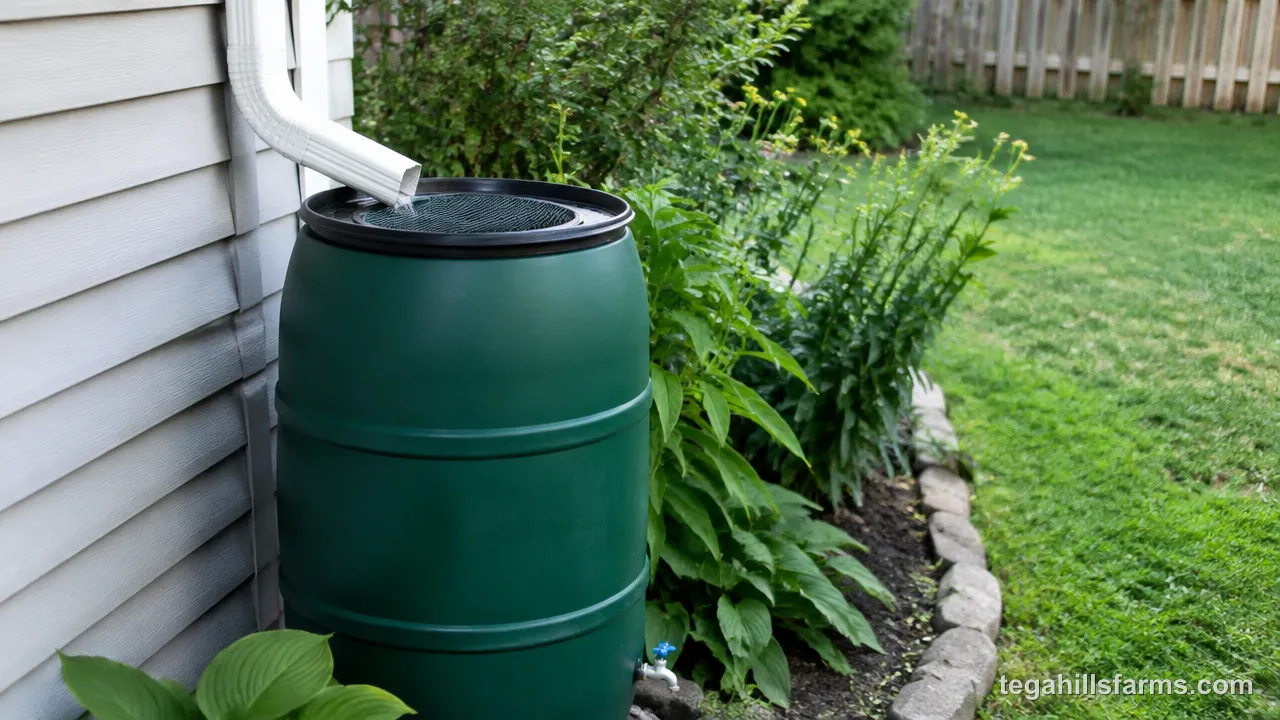
Five details show quality before you buy: a fine, removable mesh screen, a solid spigot, thick and rigid walls, an opaque color, and clear food-grade or BPA-free labeling. The screen matters most. It keeps out leaves and mosquitoes while letting rain through, and a removable screen can be rinsed instead of replaced.
Brass or heavy-duty metal spigots with rubber washers hold up to daily use far better than thin plastic taps, which tend to crack at the threads. Walls that don’t flex when pressed hold their shape once the barrel is full, and dark, opaque material blocks the light algae needs.
For edible gardens, look for food-grade or BPA-free labeling on the barrel itself, not just on the packaging. A lid that locks or screws down keeps children and pets out, which matters as much as anything inside the barrel.
Where Should You Place Your Rain Barrel?
The ideal spot sits directly under a downspout, on firm, level ground raised off the soil, with an overflow path leading away from the foundation toward plants or a drain. Placement affects how fast the barrel fills, how much pressure reaches your hose, and whether a heavy storm leaves you with a wet basement. A downspout on the side of the house nearest your vegetables saves the most walking, but only if the ground there can be leveled and the overflow has somewhere safe to go. Getting the spot right before the first rain is far easier than moving several hundred pounds of water later.
How Close Should the Barrel Be to the Downspout and Garden?
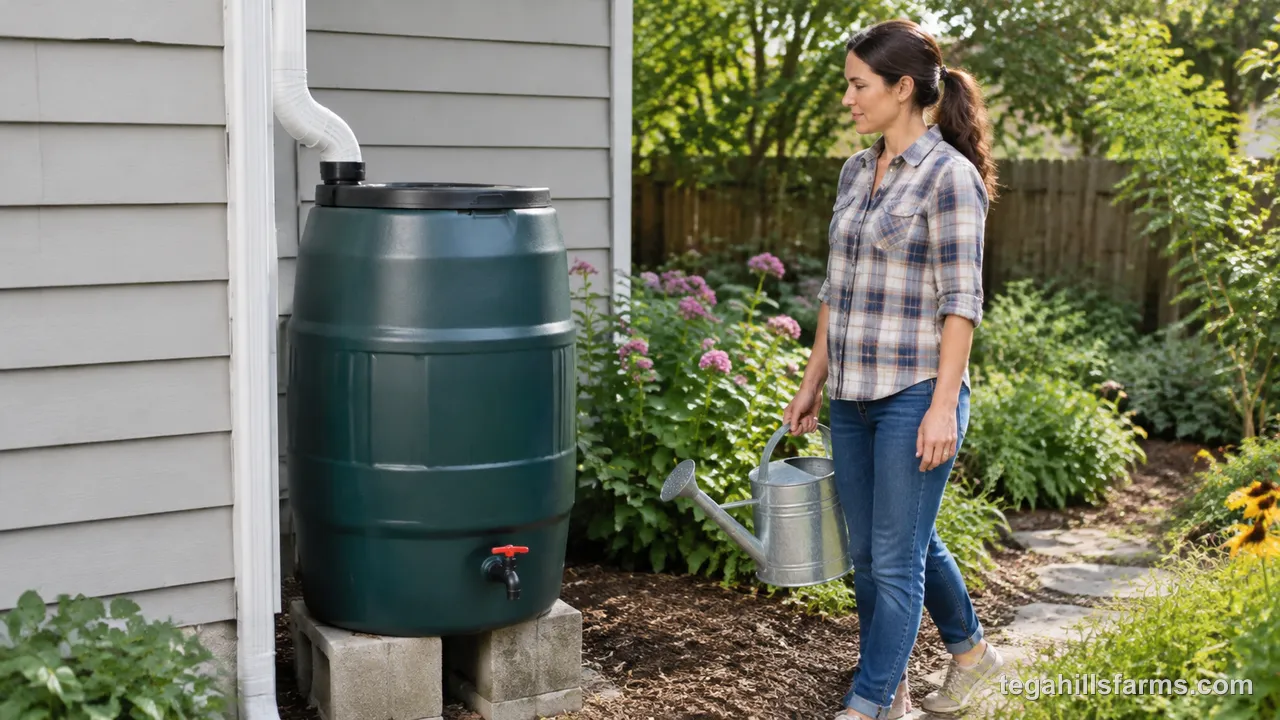
Pick the gutter outlet nearest the beds you water most, as long as it drains a fair share of the roof. A short run from gutter to barrel fills it fastest and keeps the setup simple. A short walk to the garden makes it likely you’ll actually use the water instead of reaching for the tap.
A rain barrel diverter lets you keep the downspout in place. It sends water into the barrel until the barrel is full, then lets the rest continue down the pipe, so the barrel can sit a little to the side of the downspout instead of directly underneath it.
Partial shade helps too. Cooler, darker water grows less algae than water warmed in full sun all afternoon, and that means less scrubbing at the end of the season.
How Do You Create a Level, Stable Base With Enough Height?
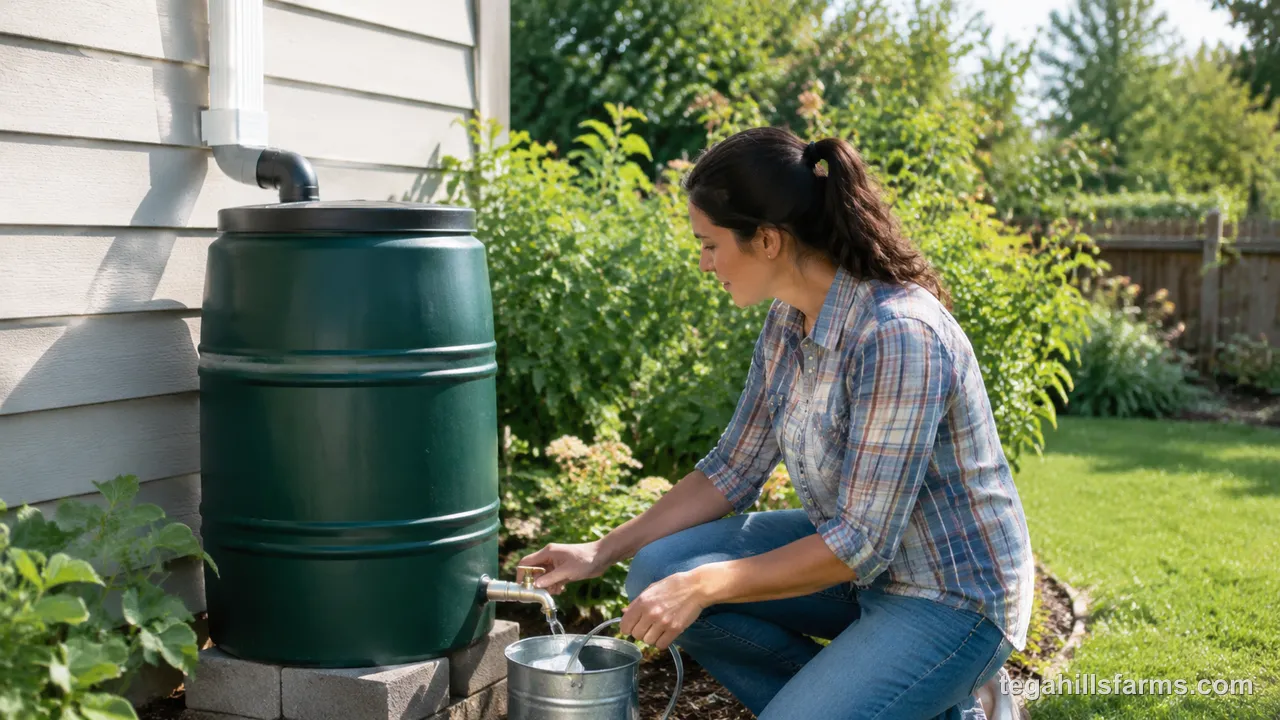
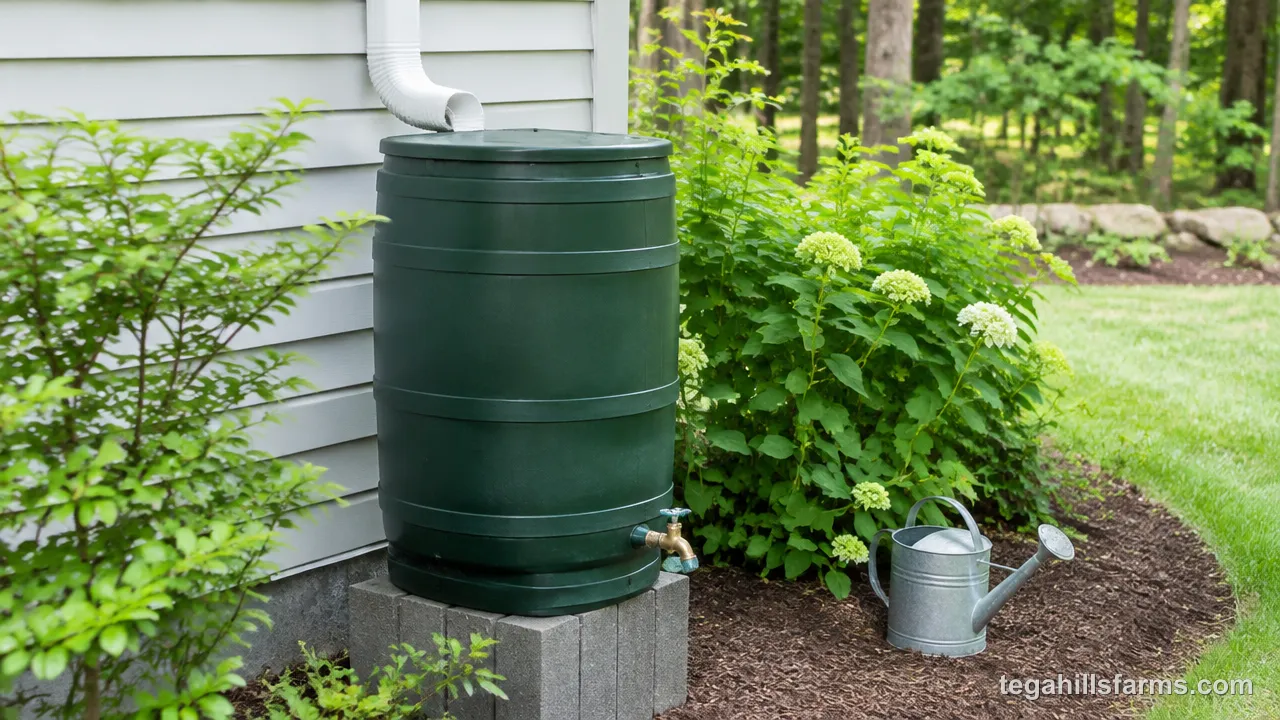
Firm, flat footing wider than the barrel, raised enough to fit a watering can under the spigot, keeps a full barrel upright and easy to use. A full 60-gallon barrel weighs more than 500 pounds, and soft soil or a single tilted paver lets that load sink unevenly until the barrel leans and tips.
Compacted gravel, concrete pavers, or solid concrete blocks laid flat make a dependable base. Check it with a level in both directions before the first rain, because correcting a lean once the barrel is full means draining it first.
Height pays off twice. Raising the barrel lets a watering can fit under the spigot, and every bit of added height increases gravity pressure at the hose. A purpose-built stand does both jobs, and the best stands for rain barrels spread the load across a wide footprint so the extra height doesn’t cost stability.
How Should You Plan Overflow and Seasonal Access?
Excess water should land where it does some good or no harm: a mulched bed, a rain garden, a lawn sloping away from the house, or back into the downspout’s path to the storm drain. Attach a hose or short pipe to the overflow port and lead it well away from the foundation, or rely on a diverter that sends the excess down the downspout automatically.
Plan for winter while you choose the spot. Leave enough room to tip the barrel, open the spigot fully, disconnect the inlet, and reconnect a downspout extension, so winter rain and snowmelt still drain away from the house once the barrel is put away.
How Much Should You Budget for a Rain Barrel?
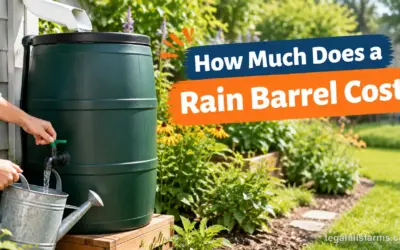
Expect roughly $130 to $300 for plastic, $100 to $300 for metal, $200 to $400 for decorative styles, and $300 to $500 for a high-quality wooden barrel, with stands and diverters often extra. Within each material, price rises with capacity, a brass spigot, a built-in diverter, linking hardware, or a planter top. Accessories are often sold separately, so compare what’s included rather than the barrel alone.
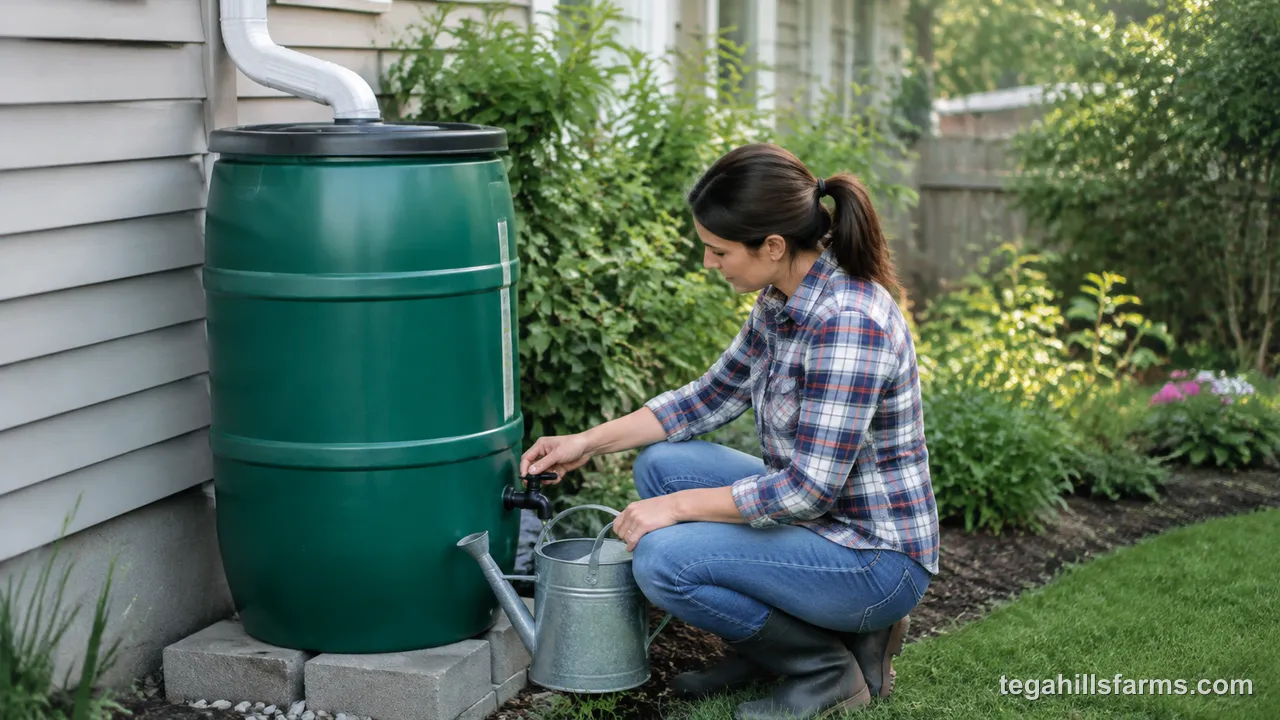
Homemade barrels cost the least when you start from a food-grade drum and a basic spigot kit. Cutting corners there, with a drum of unknown history or a flimsy fitting, saves little once you’re replacing leaky parts or throwing out water you can’t trust on vegetables.
Value also shows up on the water side. A rain barrel can save about 1,300 gallons over the peak summer months, when your beds need water most. To see how much a rain barrel costs once stands, diverters, and installation are added, price the complete setup before comparing tanks.
How Do Installation and Everyday Use Affect Your Choice?
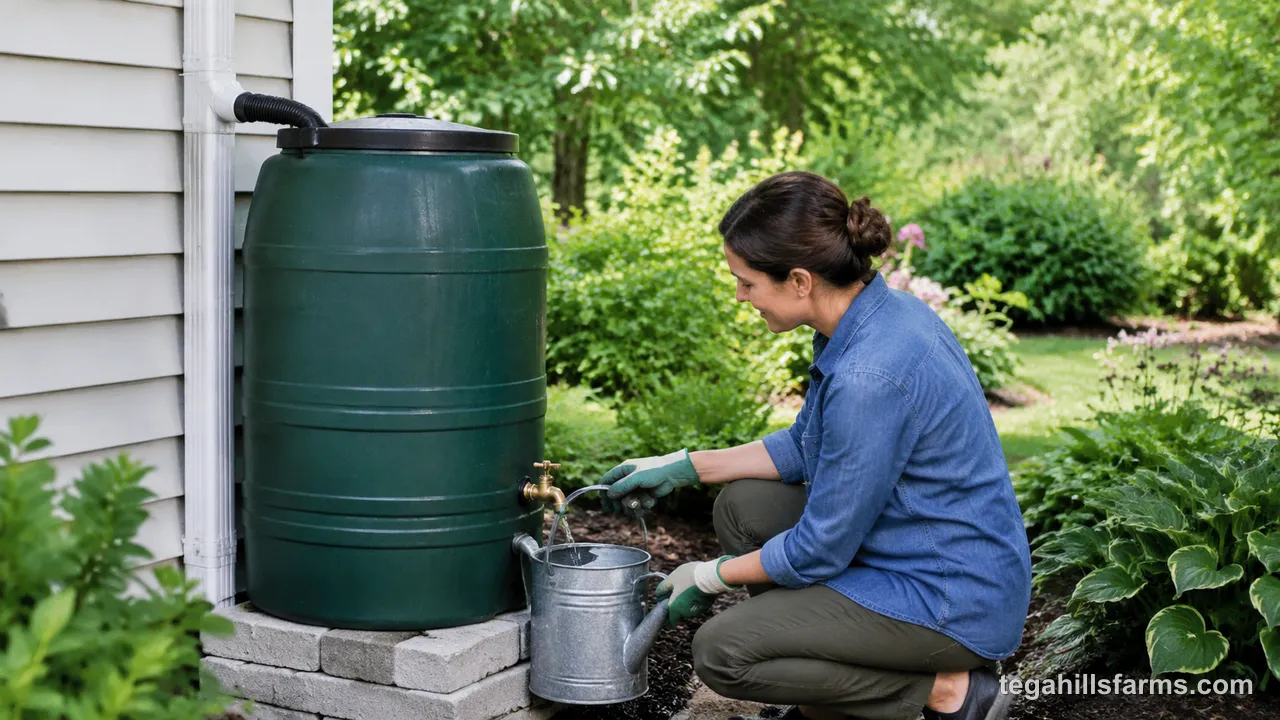
The parts you handle every week, like a diverter kit, a sturdy spigot, and standard hose threads, matter more than looks, because they decide how hard setup is and how easily water reaches your plants. A barrel that arrives with fittings matched to your downspout can be working soon after it’s unboxed. One that needs drilled ports, custom brackets, and a homemade stand becomes a bigger project. Daily use matters just as much over a full season. If filling a watering can means kneeling on wet gravel, or the hose barely trickles, the barrel ends up full and ignored while the garden hose does the work.
How Complex Is Installation for Your Placement?
Setup difficulty depends mostly on your downspout and your site. The easiest setups use a barrel with a pre-installed spigot and a diverter kit: you drill a hole in the downspout with a hole saw, fit the diverter, run its tube to the barrel, and set the barrel on a level base.
Harder setups involve cutting the downspout with a hacksaw and adding a flexible elbow, linking several barrels, or building a stand from blocks or lumber. Each step is manageable on its own, but together they add tools and time.
Basic tools cover most jobs: a drill, hole saw, hacksaw, tape measure, and level. Beginners who want a walkthrough of how to install a rain barrel do best starting with a kit that includes the diverter and all fittings.
What Will Daily Watering Feel Like?
Expect gentle flow. Gravity is the only thing pushing water out, so pressure stays far below what your outdoor faucet delivers, and it drops further as the barrel empties. Filling a watering can directly at the spigot is the most reliable daily routine, provided the barrel sits high enough for the can to fit underneath.
A garden hose works for nearby beds, especially with soaker hoses or drip lines built for low pressure. Long hose runs and beds uphill from the barrel get a trickle at best, and most sprinklers need more pressure than gravity provides.
When your beds sit far from the downspout or above it, a small submersible pump closes the gap, and the best pumps for rain barrels are sized for this low-volume job. A spigot near the bottom drains more of the stored water, while a second, higher spigot makes filling a watering can easier.
Water left sitting through warm weeks in a barrel that lets in light turns green, and a torn screen or loose lid gives mosquitoes a place to lay eggs in the same water you pour on your tomatoes. Cold brings a different risk, because a full barrel caught outdoors by a hard freeze can split along a seam or crack at the spigot. Skip seasonal care and spring brings a barrel that leaks or water too foul to use on vegetables.
How Do You Keep Your Rain Barrel Performing for Years?
Long service comes down to keeping the stored water dark, screened, and regularly used during the growing season, and getting the barrel empty before hard freezes. Most failures trace back to small lapses: a torn screen, a lid left ajar, debris rotting at the bottom, or a full barrel caught by an early cold snap. Gutters belong in the same routine, because leaves that clog them reach the screen first and choke the inflow. The timing follows your growing season and USDA zone, so spring setup and fall shutdown fit naturally alongside planting and cleanup.
How Often Should You Clean, Screen, and Treat for Algae and Mosquitoes?
Once a year, give the barrel a thorough scrub-out, and between cleanings check the screen and lid after big storms and through the warm months. Fall, right before draining, or early spring, before setup, makes the deep clean easy: empty the barrel, scrub out the sludge with a long brush and water, rinse, and let it dry.
Algae needs light, so an opaque, dark barrel in partial shade stays clear far longer than a translucent one in full sun. Painting the outside of a light-colored barrel with outdoor paint blocks light too.
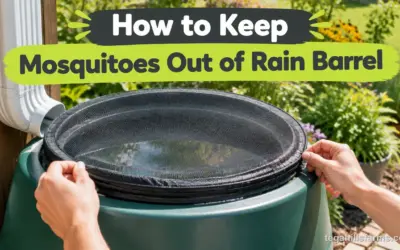
Mosquitoes need a way in and still water. An intact mesh screen, a sealed lid, and regular use of the water stop most breeding before it starts. If wrigglers have already appeared, our tips on how to keep mosquitoes out of rain barrel water cover safe fixes, including Bti dunks used according to the label.
When Should You Drain, Store, or Protect From Freezing?
Empty the barrel before the first hard freeze in any USDA zone with freezing winters, because water expands as it turns to ice and can split plastic, open metal seams, or crack a spigot. In the mildest southern zones, where frosts are light and brief, a barrel can stay in service through winter if you keep it partly drained ahead of cold nights.
How you store it depends on the material:
- Plastic: drain completely, leave the spigot open, and store it upside down or in a shed so snow and ice can’t collect inside.
- Metal: drain and dry it, then store it out of the weather, since moisture sitting inside over winter speeds rust at the seams.
- Wood: store it somewhere cool and protected rather than in a heated room, and expect the staves to weep after refilling in spring until they swell tight again.
Is Your Harvested Rainwater Safe and Legal to Use?
Roof runoff works well for ornamental plants, lawns, and outdoor chores, and it’s generally fine for vegetables and herbs when applied at the soil line rather than over the parts you eat. It isn’t safe to drink without treatment, because it carries bird droppings, dust, and residue from roofing materials.
For edibles, keep the water off leafy greens and herbs close to harvest, wash produce well, and be cautious with runoff from roofs that have treated wood shakes or copper flashing. Even the best rain barrels for drinking water only store water; making it potable takes a dedicated filtration and disinfection system.
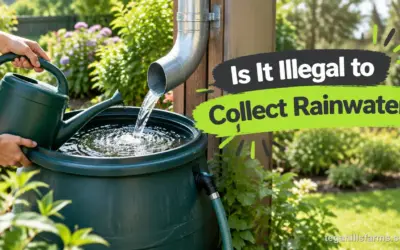
Rules differ by state and sometimes by city. Rainwater collection is permitted in most places, but some states cap how much a household can store or require a permit, so check whether it is illegal to collect rainwater where you live before installing several linked barrels.
Warranties carry their own fine print. Read the terms before you drill extra ports or leave a new barrel out through winter, since modifications and freeze damage may fall outside the coverage.
What If Your Rain Barrel Isn’t Working as Expected?
Why is my rain barrel leaking at the spigot?
Most spigot leaks come from a loose fitting, a missing or worn rubber washer, or threads that never sealed. Drain the water below the spigot, remove it, wrap the threads with plumber’s tape, add a fresh washer on the inside, and tighten. A brass spigot with a gasketed fitting prevents most repeat leaks.
Why does water barely trickle out of my hose?
Gravity alone provides very little pressure, and it weakens as the water level drops. Raise the barrel on a sturdy stand, shorten the hose, and keep beds downhill from the barrel when you can. Soaker hoses and drip lines handle low pressure well, while distant or uphill beds usually need a small pump.
Why isn’t my rain barrel filling during storms?
A clogged gutter, a diverter packed with leaves, or a screen matted with debris can block the inflow even in heavy rain. Clean the gutters and screen, make sure the diverter isn’t set to bypass, and confirm that the downspout you chose drains a meaningful share of the roof.
Why is water spilling over the top of the barrel?
The overflow is too narrow for the inflow, blocked, or missing. Clear the overflow port, attach a hose to carry the excess away, or switch to a diverter that sends extra water back down the downspout once the barrel is full. Spillage around the base also softens the ground underneath.
Why does my stored rainwater smell bad?
A foul smell usually means leaves and other debris are decaying at the bottom of stagnant water. Empty the barrel, scrub out the sludge, and replace a torn screen. Using the water regularly and keeping gutters clean prevents most odors, and water that smells off is better used on ornamentals than on vegetables.