

To keep mosquitoes out of a rain barrel, use two defenses together. First, put fine screen and a snug lid over every opening so egg-laying females never reach the water. Second, use a larvicide or a steady draining habit to stop anything that slips past. With both in place, you can keep catching rain for your beds from the first spring storm until you put the barrel away for winter.
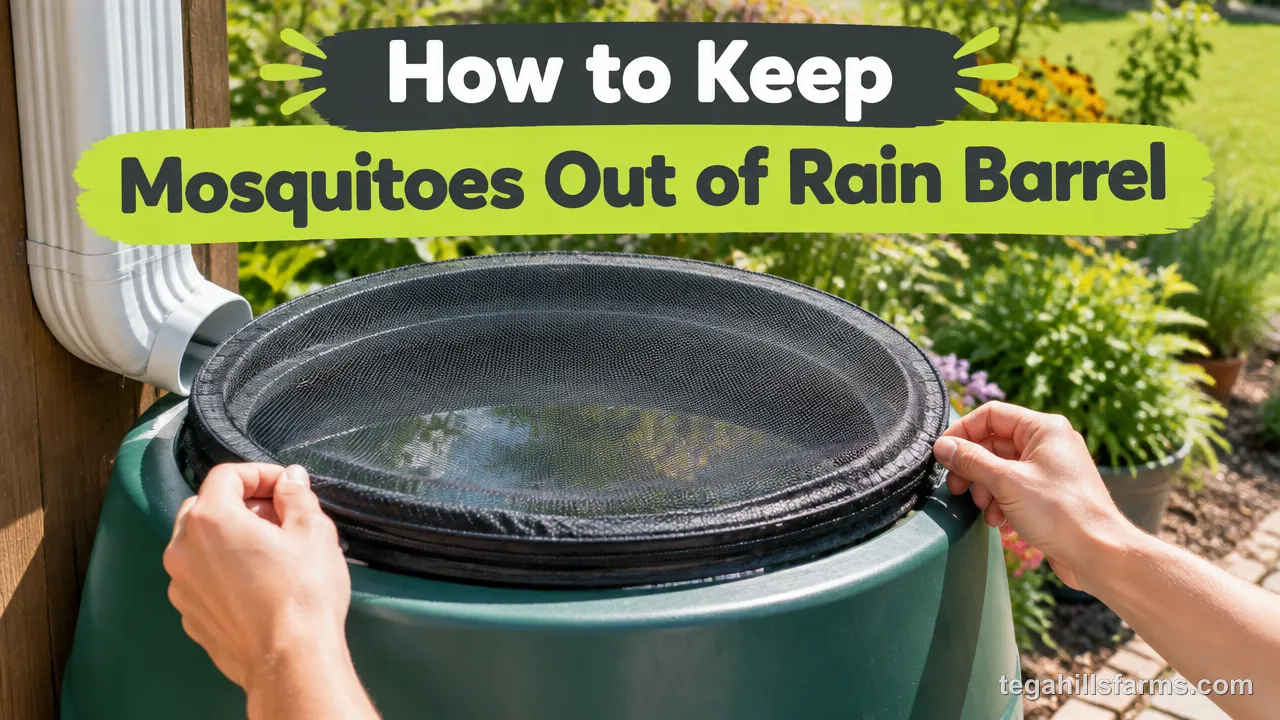
The right treatment for your barrel depends on where the water ends up. Water for tomatoes, lettuce and herbs needs a different approach than water for a flower border or for rinsing tools. Anything you add to the barrel eventually soaks into the root zone of whatever you water.
The usual worry is that a barrel meant to save water for the garden becomes a mosquito nursery right outside the back door, and that the fixes might not be safe around food plants. Both concerns have practical answers, and none of them means giving up on harvesting rain.
Why Do Mosquitoes Breed in Rain Barrels?
Still, standing water in a shaded container is exactly what an egg-laying female looks for, and once her eggs hatch, mosquito larvae can become biting adults in as little as 7 to 10 days.
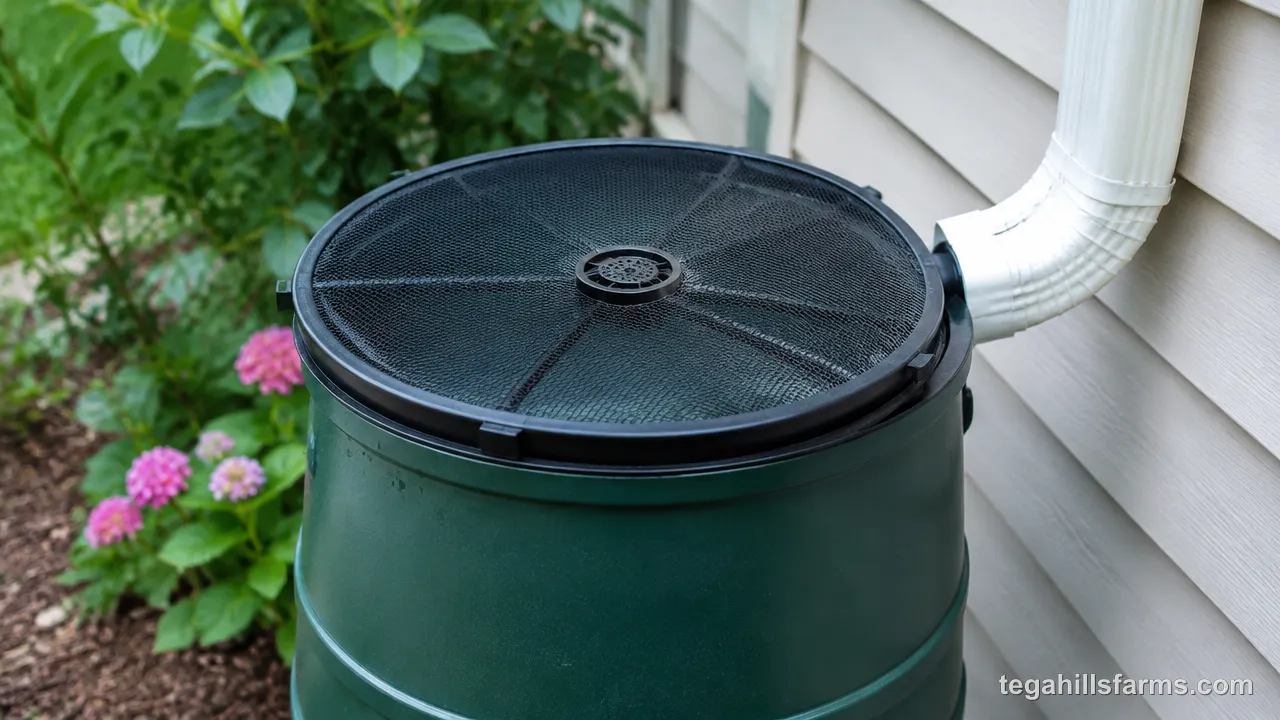
The barrel gives larvae everything they need. Eggs float at the waterline, and the wigglers that hatch hang just under the surface, breathing through a small tube. The dark interior protects them from wind, birds and the sun. One survey of 115 rain barrels at 53 households found that more than half of the homes had at least one barrel with mosquitoes. An uncovered or loosely covered barrel is easy for them to find.
Mosquitoes are drawn to the water, not the container. Scents such as citronella, lavender or peppermint may put off a few adults nearby. They won’t stop a female from slipping through a gap to lay eggs, so a smell can never stand in for a physical barrier.
This matters for gardeners in two ways. You are often out among the beds at dusk, when many mosquitoes bite, and some species carry West Nile virus. And the water you are saving goes onto vegetables, so whatever you do to it has to be safe for the soil.
Once you understand how rain barrels work, with water running off the roof, through the gutters and down the spout, it’s clear the trouble can start upstream. Gutters and downspouts can hold stagnant water before any reaches the barrel. Because barrel design has so much to do with how easily mosquitoes get in, it helps to read up on how to choose a rain barrel before you buy or retrofit one.
How Do You Seal Every Entry Point on a Rain Barrel?
A barrel is only as mosquito-proof as its weakest opening, so physical barriers come before any treatment.
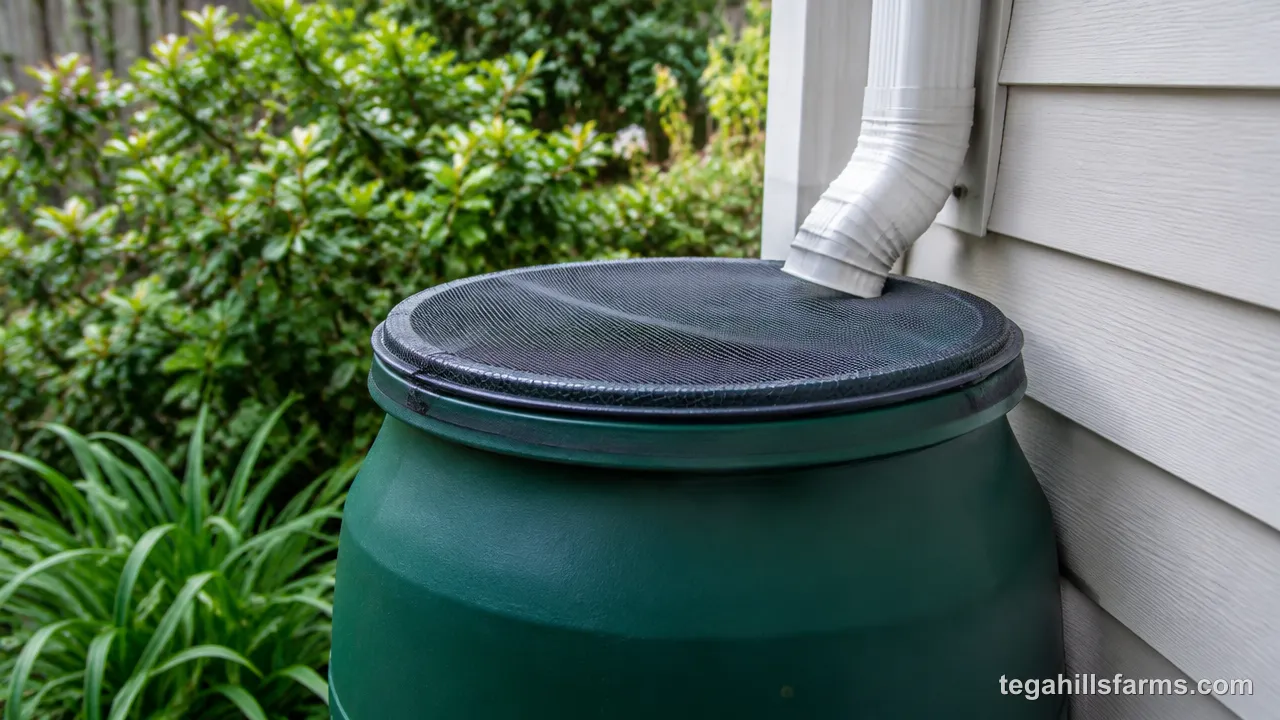
Barriers are also the one defense that never touches the water. That makes them safe whether you water lettuce, roses or the lawn. The practical approach is to walk around your barrel slowly and look at it the way a mosquito would. Start where rain comes in, work around to where water leaves, then look up at the parts that feed it. Note every gap wide enough for a small insect to squeeze through.
What Kind of Screen Should Cover the Intake Opening?
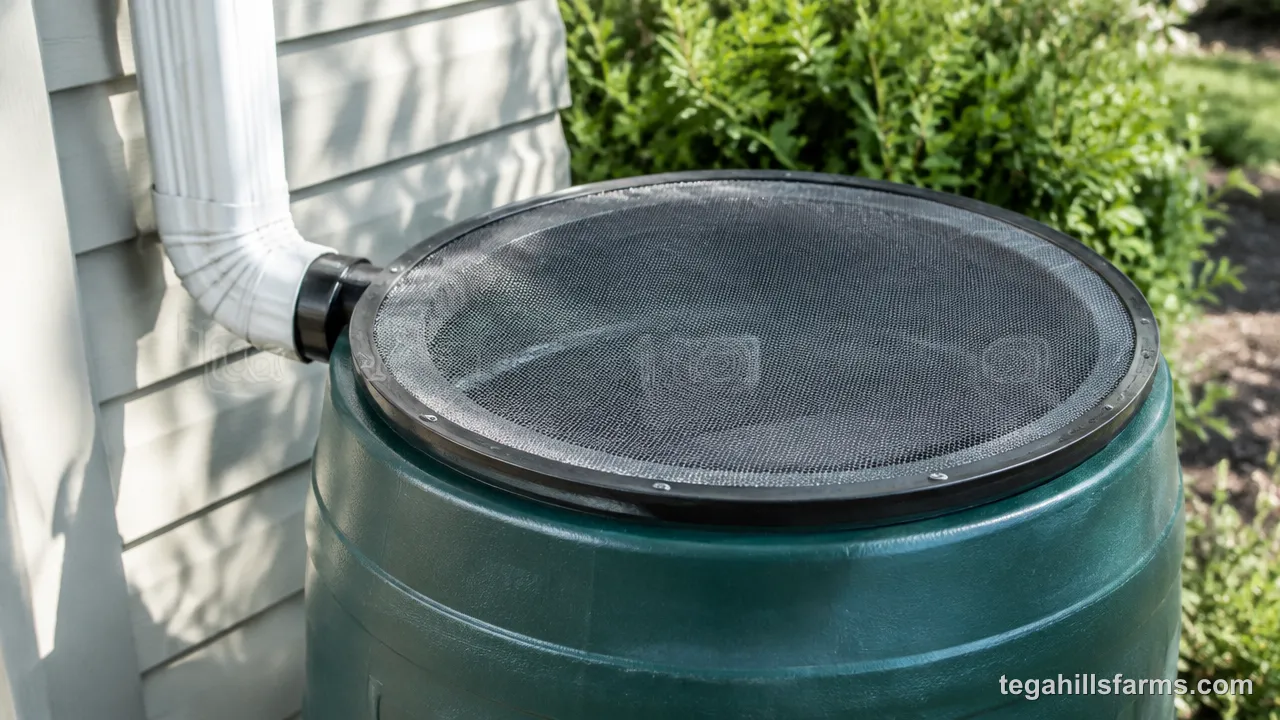
Cover the intake with 1/16-inch mesh, such as fine window screen or no-see-um screen. Mesh that fine keeps adult mosquitoes out while rain and roof runoff pass straight through. Hardware cloth is sturdy, but its openings are wide enough for a mosquito to walk through, so save it for keeping out leaves and critters.
A double layer of fine mesh on the intake is worth the small extra effort. Debris, foot traffic from squirrels and months of sun can stretch a single layer until its holes widen. A second layer keeps the barrier closed even if one sheet stretches or tears.
The screen has to sit snug against the opening with no lifted edges. A corner curling up by a fraction of an inch is all a mosquito needs. Fasten the screen with a hose clamp, a tight elastic band or an outdoor-rated sealant so wind can’t lift it and heat can’t loosen it.
Leaves cause a second problem. When they mat on top of the screen, rain can’t drain through and pools on the surface, outside the barrel. That puddle becomes a breeding spot of its own, so brush the screen clear after storms and in autumn when leaves are falling.
How Do You Close Off the Overflow Port, Outflow Valve and Lid?
Once the intake is covered, mosquitoes look for the openings you don’t think about: the overflow port, the spigot and the gap around the lid. Any one of them can let a female in even when the intake screen is perfect.
The overflow port needs two layers of fine mesh screen around it. Fit the screen so water can still discharge freely. If the screen is pinched too tight or clogs, a heavy storm backs water up inside, and the barrel spills over the top instead of draining where you planned.
At the outflow valve, check where the spigot passes through the barrel wall. A loose fitting leaves a ring-shaped gap that lets insects in and lets water seep out. Snugging the nut and adding a rubber washer or plumber’s tape usually closes it.
The lid matters more than it seems. It should sit flat and tight all the way around. Dips, hollows or a warped rim collect rainwater on top of the barrel and make small breeding puddles outside it. A lid that has bowed in the summer heat is better replaced or shimmed level than ignored, because those shallow pools go unnoticed until adults start hovering around the barrel in the evening.
Do Diverter Kits and Gutters Need Mosquito-Proofing Too?
They do, because the parts that feed the barrel can let mosquitoes in or breed them before the water arrives. A diverter kit connects your downspout to the barrel. A loose fitting or an open diverter port becomes one more entrance that bypasses your intake screen completely.
Clogged gutters are the other problem. Leaves, seed pods and roof grit form small dams, and the water trapped behind them sits still long enough for larvae to grow. Sagging sections behave the same way, holding a shallow strip of water after every rain. That stagnant water is a breeding site on its own, and it can wash larvae into the barrel during the next storm.
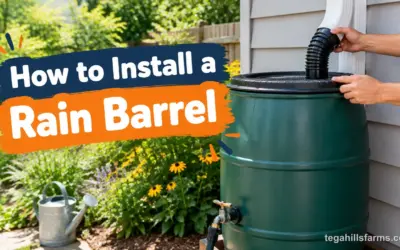
Clear your gutters of leaves and debris, and run a hose along them to spot low sections where water lingers. Rehang those sections so they drain toward the downspout. Then check that the downspout joins the diverter tightly and that any open port is screened or capped. If you are still setting up your diverter, the details in how to install a rain barrel will help you get a tight, screened connection from the start.
Which Treatments Work When Screens Alone Aren’t Enough?
A larvicide or surface treatment stops larvae that hatch despite your barrier, and the right choice depends on whether the water goes on edible plants.
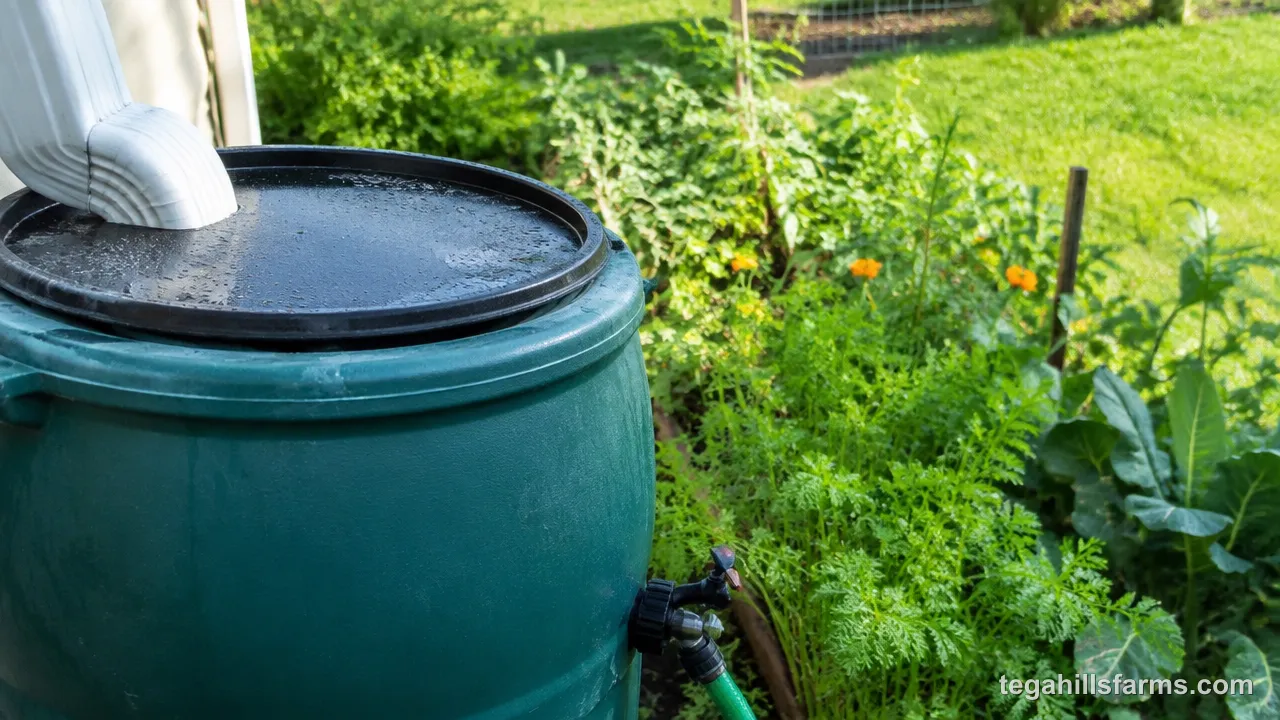
Screens fail quietly. A tear, a lifted lid or a mosquito that laid eggs before the screen went on is enough to start a population. Treating the water is a backup, not a replacement for sealing. Before you add anything, think about where the water ends up. Some treatments are fine around vegetables, while others belong only on ornamentals or cleanup jobs.
How Do Mosquito Dunks Work in a Rain Barrel?
Mosquito dunks are a bacterial larvicide made with Bacillus thuringiensis israelensis, or Bti. Larvae eat the bacteria as they feed, and the toxins it produces destroy their gut so they die before becoming adults. Bti targets mosquito larvae rather than adult mosquitoes or most other animals, which is why I reach for it first when barrel water goes onto vegetables.
The usual dose is one dunk per barrel, replaced once a month or as needed. Bacterial larvicides also come as liquids and granules. These are likewise applied monthly, following the product label. Let the dunk float on the surface so it dissolves slowly and keeps releasing Bti over the following weeks. Check the label for the water volume one dunk treats, since a large barrel may need more than one.
Bti only works on larvae that have already hatched and are feeding. It does nothing to keep females from reaching the water. That is why dunks work best alongside screens and a tight lid, not instead of them. The screen cuts down how many eggs get laid, and the dunk handles the few that get through.
Do Dish Soap and Vegetable Oil Really Stop Larvae?
They do, by working at the water’s surface, where larvae hang to breathe. One tablespoon of liquid dish soap breaks the surface tension that larvae use to stay at the waterline, so they can’t stay up to breathe and they drown. A quarter cup of vegetable oil spreads into a thin film across the top and suffocates them by sealing off the air.
Both need to be reapplied once a week or after each storm. Fresh rain dilutes the soap, and overflow carries the oil film away, so the barrel is soon unprotected again.
The drawbacks come with watering. Soap can coat leaves and build up in the soil, and oil can leave a greasy residue on foliage that blocks sunlight and air at the leaf surface. Oil also coats the inside of a spigot and garden hose, which slows the flow and is tedious to clean. For these reasons I treat soap and oil as stopgaps for barrels that water flower borders, shrubs or the lawn, or that you use for washing tools. They don’t belong on a vegetable bed, where that residue ends up on food you eat.
Which Method Fits How You Use the Water?
Match the method to the water’s destination. Screens and a tight lid belong on every barrel. Bti suits water for edible crops. Soap and oil suit ornamental watering, and chlorine suits cleanup water only.
Each option compares by what it does and what it costs you in trade-offs:
| Method | What it does | Best fit | Trade-off |
|---|---|---|---|
| Screens and tight lid | Keeps females from reaching the water | Every barrel | Needs regular checks for tears and clogs |
| Bti dunks or granules | Kills larvae that eat it | Water for vegetables and fruit | Doesn’t stop egg-laying |
| Dish soap | Breaks surface tension | Flowers, shrubs, lawn | Residue on leaves and soil |
| Vegetable oil | Suffocates larvae with a surface film | Ornamental watering | Gums up spigots and hoses |
| Goldfish | Eats larvae | Open ponds | Struggles in a dark, closed barrel |
| Chlorine | Kills larvae | Cleanup water only | Water becomes unsuitable for plants |
Goldfish sound appealing, but a sealed, dark barrel gives them little light or food and swings in temperature with the weather, so they suit open ponds far better. Chlorine works on larvae but harms the soil life and roots you are trying to feed.
For water headed to edible crops, a sealed barrel plus Bti is the sturdiest setup. The barrier keeps most mosquitoes out, and the larvicide catches the rest without adding anything harmful to your harvest.
What Should You Do If You Already See Larvae?
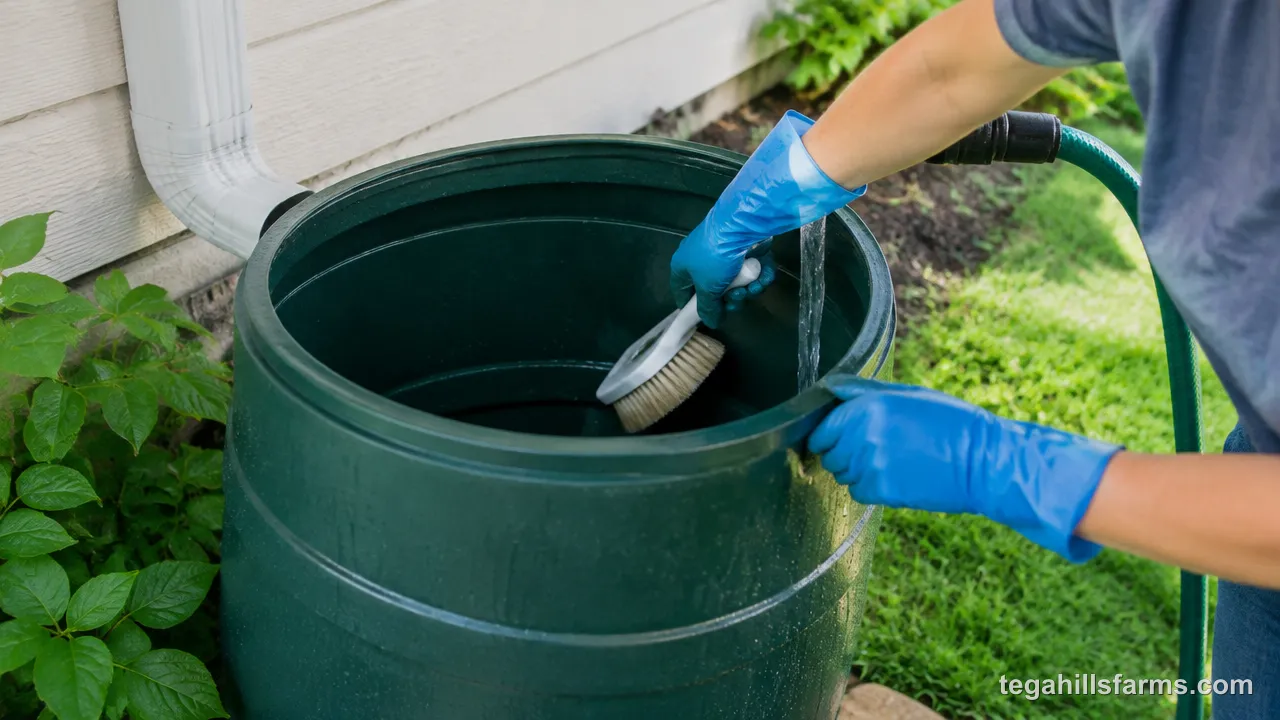
Drain the barrel completely, scrub the inside walls, and repair the opening that let mosquitoes in before you refill it with a larvicide in place.
Larvae are easy to recognize once you know what to look for. They are small, comma-shaped wigglers hanging at the surface, and they dive in a jerky, twisting motion when your shadow passes over them. Darker, rounder pupae may be mixed in, which means adults are close to emerging. Act the same day.
Pour the water onto soil, a lawn or a mulched bed well away from storm drains. Larvae die once they are stranded on dry ground, and the water still soaks into the soil instead of carrying larvae into the drainage system.
Next, scrub the inner walls with a stiff brush and a hose. Mosquito eggs can cling to the sides just above the old waterline and survive after the water is gone, so a quick rinse isn’t enough.
Then find the way in. Look for a torn or sagging screen, a lid that no longer sits flat, a loose spigot or an open diverter port, and fix it before refilling. Clear the gutters and downspout too, since they may be holding larvae that would wash straight back in. When the barrel starts filling again, float a fresh dunk in it right away so any eggs that slipped through never reach adulthood.
How Often Should You Drain and Maintain a Rain Barrel?
Use or drain stored water within five days of the barrel filling, keep the larvicide on its regular schedule, and check your screens after every storm.
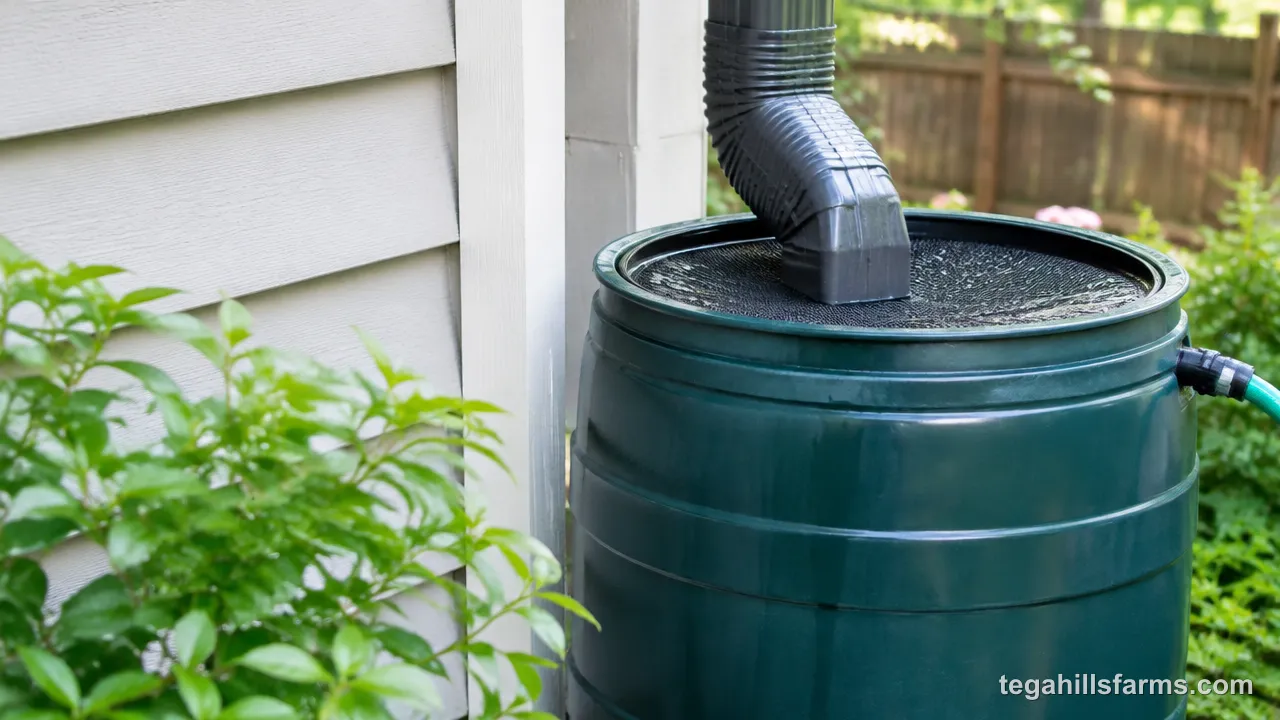
The five-day window works because it interrupts the mosquito life cycle. Water used up before the larvae can mature never produces biting adults, even if a few eggs were laid. Watering your beds steadily through the week is a good way to keep the level cycling.
Barrel size affects how easily you can keep to that rhythm. A large barrel on a small garden can sit full for weeks, and a barrel that stays full and unused for long stretches is the riskiest setup you can have. Matching capacity to how much you water is part of working out what size rain barrel you need. Pairing a big barrel with a small vegetable patch makes mosquito control harder all season.
Alongside draining, swap the dunk on time rather than waiting until you spot larvae. After strong winds or heavy rain, walk around the barrel and check that the screen is tight, the lid is flat and the overflow is draining. Clean the gutters in spring and again after the leaves fall.
A regular check catches problems while they are small. A screen corner that has just started to lift takes a minute to re-clamp. Once it has gone unnoticed for a couple of weeks, you are draining and scrubbing the whole barrel.
Months of sun make fine mesh brittle, wind works at its edges, and every autumn the leaves pile on top and pull it out of shape. A single gap no bigger than a pencil tip lets egg-laying females in, and a barrel you’ve treated as sealed all summer can be raising a fresh batch of larvae for weeks before you notice anything wrong.
How Can You Tell a Mosquito Screen Is Failing?
The surest early sign is a screen that no longer lies flat and tight. Sagging mesh, a brittle feel when you press it, or a small tear at the edge means the barrier has stopped doing its job. Watch for these other signs too:
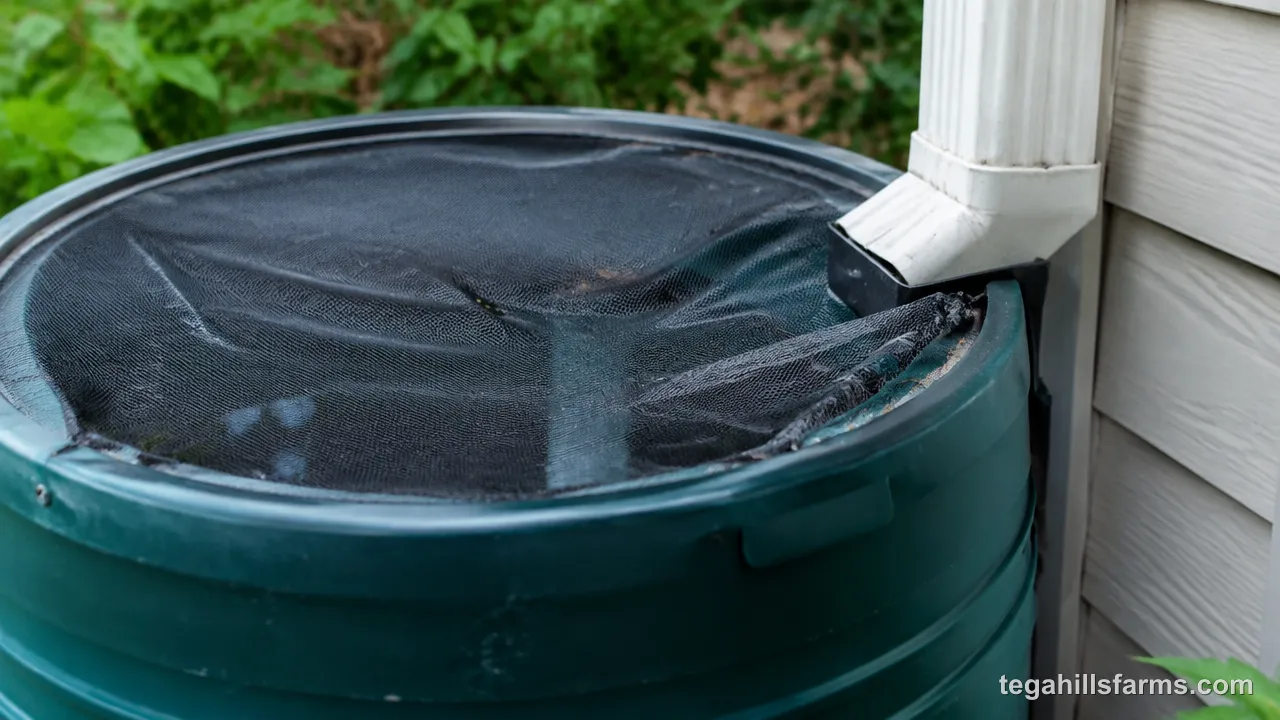
- A lid that rocks, has warped, or no longer sits flush around the rim
- Cracked or loose fittings at the spigot, overflow or diverter
- Water pooling on top of the lid or the intake screen
- Adult mosquitoes hovering around the barrel in the evening
For a quick larvae check, lift the lid on a bright day or shine a flashlight across the water from a low angle. Wigglers show up as small moving shapes at the surface, and they dive when the light or your shadow hits them.
Patch a screen only when the damage is a small, clean tear in otherwise flexible mesh. A double layer of fresh mesh over the spot will hold. If the screen has gone stiff and brittle or is torn in several places, replace the whole piece. Sun-damaged mesh keeps splitting next to every patch, and new screen is cheap compared with draining and scrubbing an infested barrel.
Do These Tips Work for a Water Trough or Rainwater Tank?
The same principles hold for any container of still water. Cover every opening with fine screen, keep lids tight, and choose a larvicide that suits how the water is used. Mosquitoes don’t care whether the water is in a barrel, a tank or a trough, only that it sits undisturbed.
A large rainwater tank has more openings, and bigger ones, than a barrel. Vents, inlets, overflow pipes and access hatches all need fine screen fitted snugly. Vents need particular care because they have to keep moving air without letting insects in. Check the inlet strainer regularly, since a clogged one holds water on top of the tank just as a clogged barrel screen does.
An open water trough for livestock, chickens or other animals can’t be sealed, so treating the water matters more there. Choose a larvicide labeled as safe for water that animals drink from, and follow its dosing exactly. Scrubbing the trough and refilling it on a regular schedule also breaks the breeding cycle, because fresh water gives larvae no time to mature.
Rain Barrel Mosquito FAQs
Is water treated with mosquito dunks safe for vegetables and fruit?
Bti-treated water is a sound choice for watering edible plants because the bacteria target mosquito larvae rather than plants or most other organisms. Check the product label for any edible-garden directions, and water at the soil line rather than over leaves and fruit you’re about to harvest.
Does a barrel with a tight lid still need a larvicide?
A tight lid cuts the risk sharply, but lids warp, screens tear and eggs can be laid before you notice a gap. A larvicide is inexpensive insurance that catches whatever slips past. Pairing the two gives you dependable protection without draining the barrel constantly during a wet stretch.
Do essential oils or scent-based repellents keep mosquitoes away from a barrel?
Scents like citronella, lavender or peppermint may discourage a few adults nearby, but they won’t stop a determined female from finding standing water and laying eggs through an open gap. Rely on screens, a snug lid and a larvicide instead, and treat any scent as a minor extra at most.
Will a mosquito dunk hurt pets or wildlife?
Bti targets mosquito larvae and a few close insect relatives rather than mammals, birds or most other animals, so a dog or bird drinking from a treated barrel faces little concern. Follow the label directions and store unused dunks out of reach, since pets sometimes chew on them.
Should rain barrels be emptied for winter?
In areas where temperatures drop below freezing, drain the barrel, disconnect it from the downspout and store it upside down or indoors. Ice expands and can crack the barrel and its fittings. In milder USDA zones, you can keep collecting through winter, but keep up the same screening and treatment routine.
Write Your Review
No reviews yet. Be the first to share your experience!