

A rain barrel catches the rain that runs off your roof, guides it through the gutter and downspout into a covered container, and holds it until you draw it out through a spigot near the base. Gravity does all the work. There is no pump and no power: water runs downhill into storage, then downhill again into your watering can or hose.
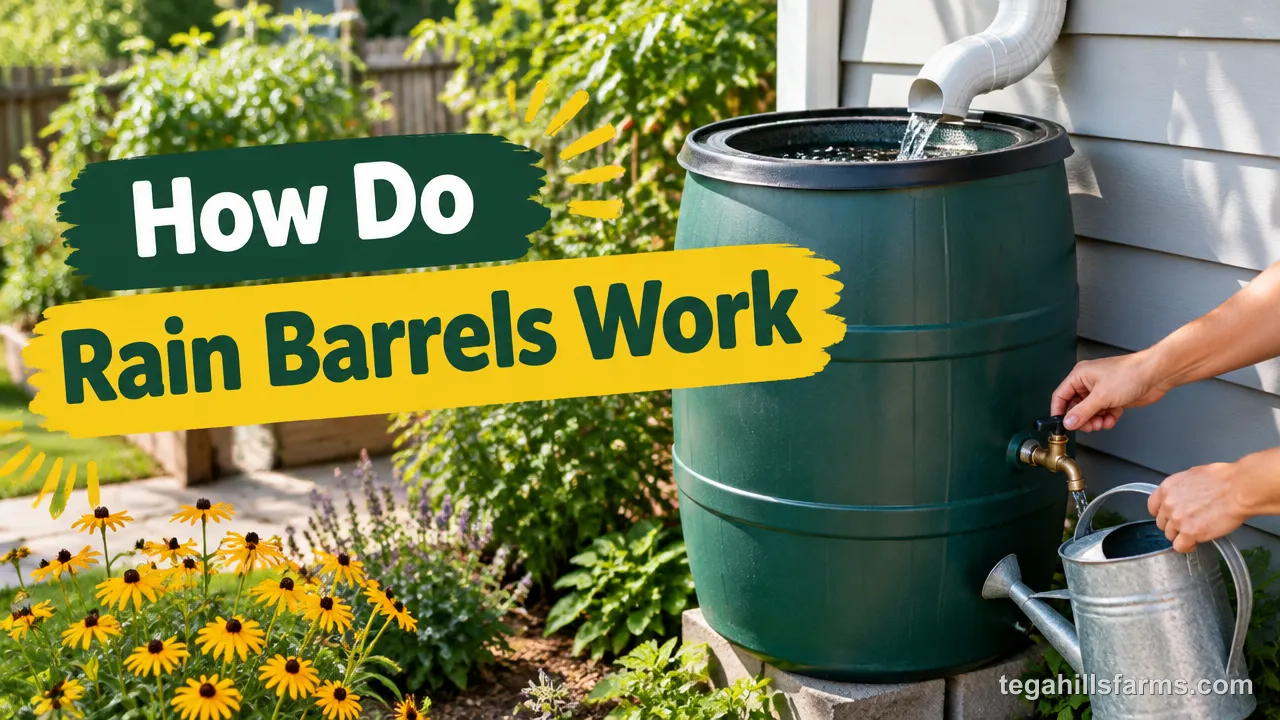
How well a barrel performs depends on a few parts. The inlet lets water in, and the screen keeps leaves and insects out. The overflow handles the extra water once the barrel is full, and the height of the spigot sets how strongly water flows back out.
Most new rain barrel owners worry about three things. The first is what happens when a summer storm fills the barrel in an hour. The second is whether stored water stays clean enough for the garden. The third is how much weight the setup puts on the ground beside the house.
The downspout that drains the largest stretch of roof fills a barrel fastest, so that is usually the best spot for your first barrel.
What Is a Rain Barrel System?
A rain barrel system is a covered storage container connected to a downspout, built around a gutter, downspout, inlet screen, spigot, and overflow valve that work together without any power source.
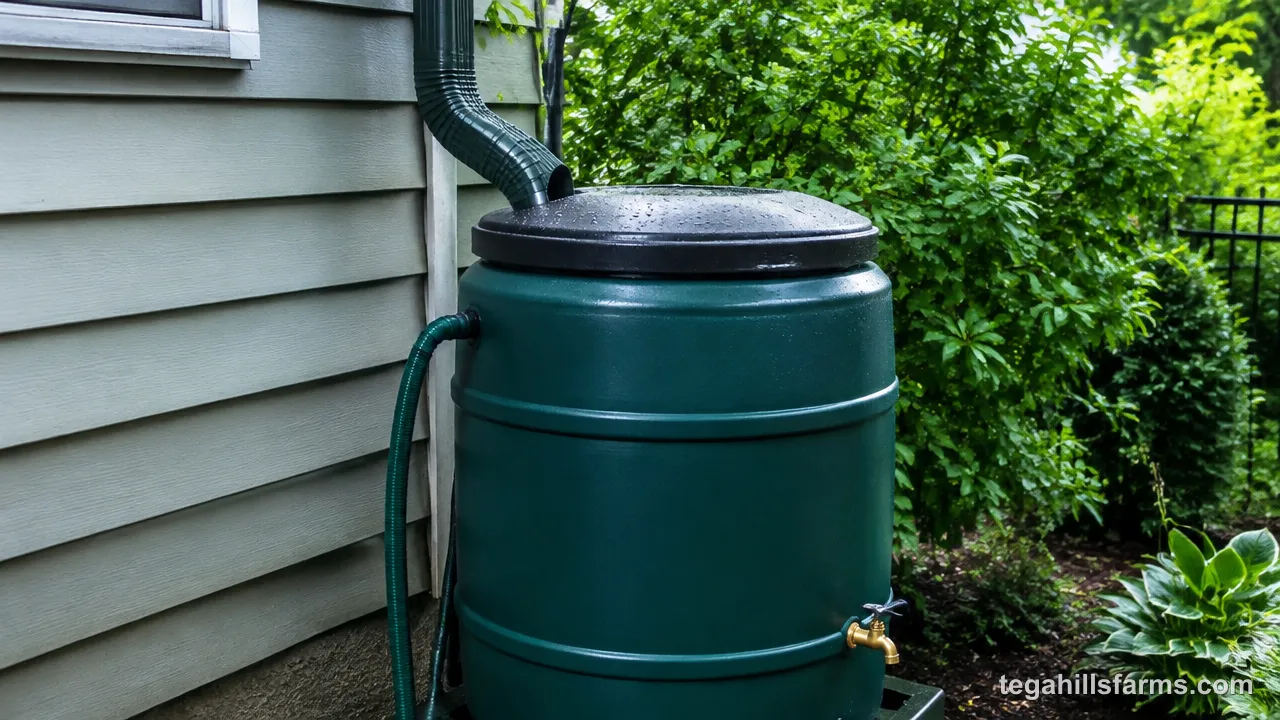
The gutter and downspout already exist on most homes. The barrel simply intercepts water that would otherwise splash onto the ground. A screen over the inlet stops leaves and mosquitoes before they reach the stored water. The spigot near the base gives you a faucet to fill cans or attach a garden hose. The overflow valve near the top is just as important as the spigot, because it sends extra water away once the barrel is full instead of letting it spill over the rim and soak the soil around your foundation.
Once you understand how these parts work together, knowing how to choose a rain barrel becomes a matter of matching capacity and features to your roof area and watering needs.
How Does Rainwater Collection Work?
Rainwater reaches the barrel entirely by gravity, following the slope your house already has. The path matters because every point where water changes direction can either stop debris or carry it into the barrel. Leaves, grit, and shingle granules collect at those points. A clog at any one of them can also send rain over the gutter edge instead of into storage, which is why a barrel that seems to fill slowly usually has a blockage upstream rather than a problem with the barrel itself.
Rain Flows from Roof to Gutter
Your roof is the catchment surface. Its pitch sheds rain toward the eaves, where the gutters catch it and carry it along a slight slope toward the downspout. Whatever sits on the roof travels with that water, including dust, pollen, bird droppings, and leaves. Asphalt shingles also shed granules.
The first minutes of a storm rinse most of that load off the roof, so the cleanest water arrives once the rain has been falling steadily for a while. Clean gutters matter as much as a clean barrel. A gutter packed with leaves backs water up and spills it over the edge before it ever reaches the downspout.
Downspout Channels Water Into the Barrel
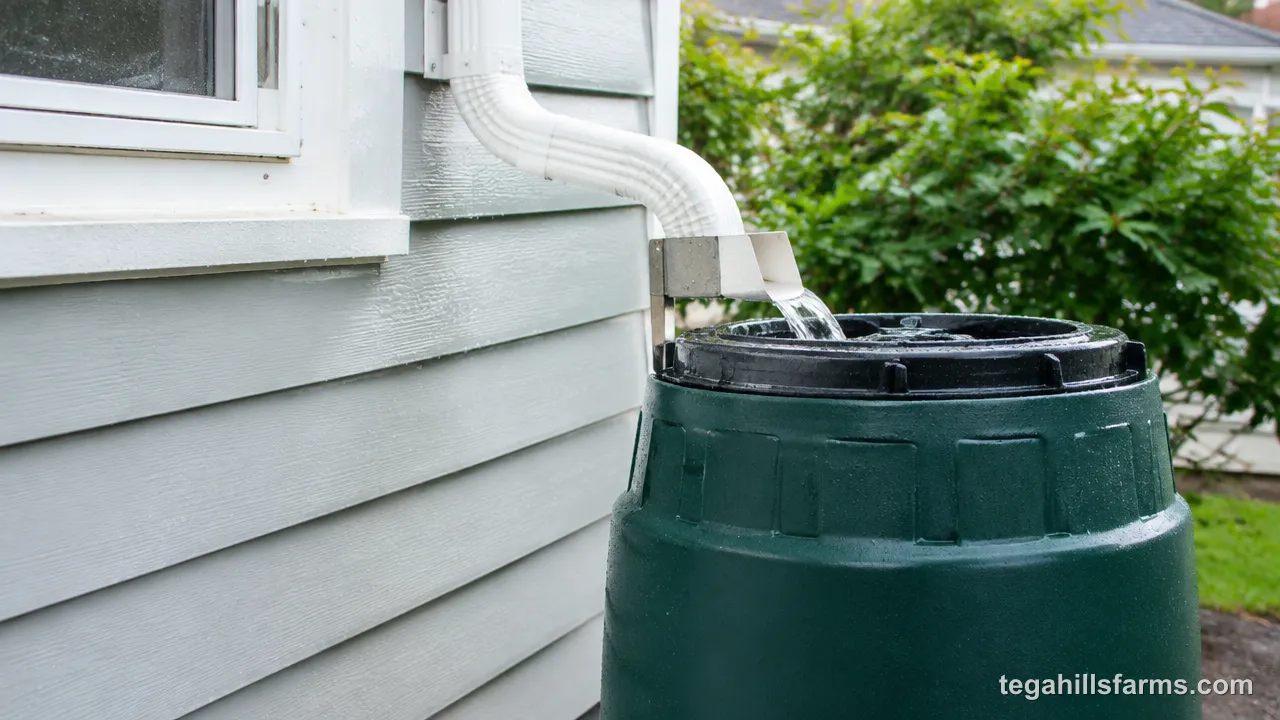
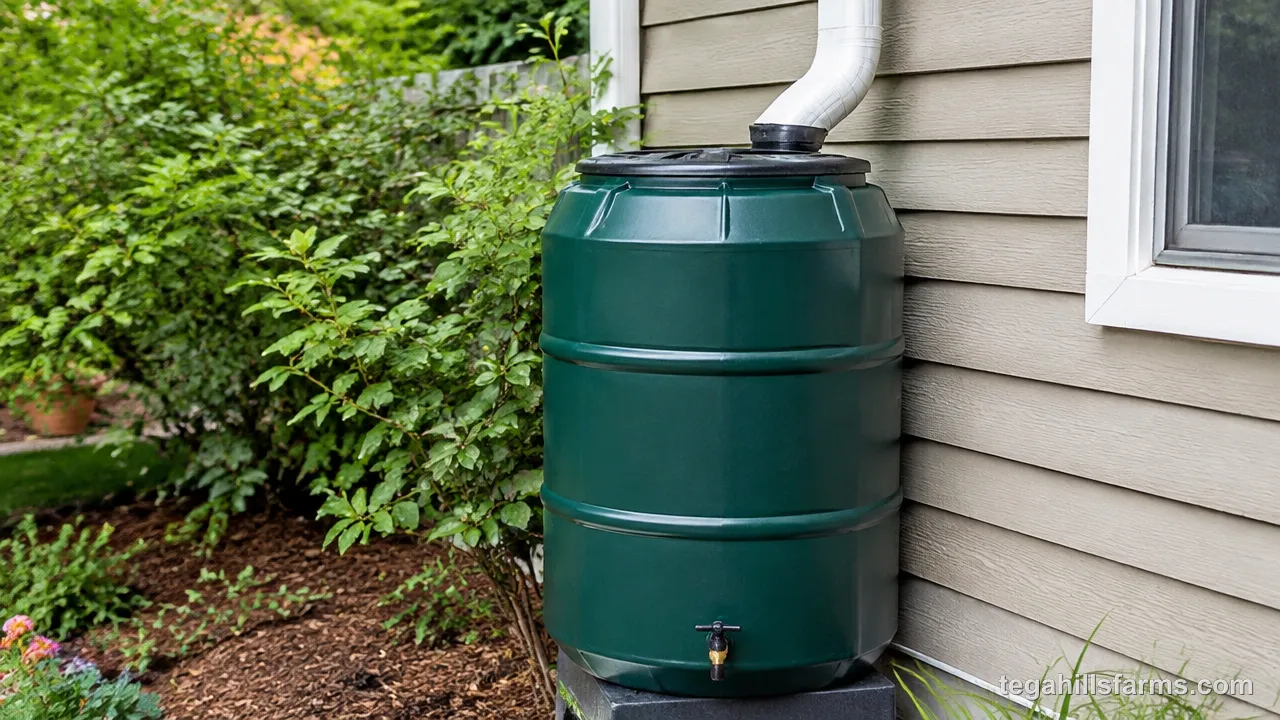
The downspout carries water straight down to the barrel through one of two setups. In the simplest setup, you cut the downspout above the barrel and let it drain through a screened opening in the lid. In the other, you fit a diverter into the downspout. The diverter catches water running down the inside wall and sends it through a short hose into an inlet on the side of the barrel.
The debris screen is what keeps the barrel clean in both setups. A cut downspout fills the barrel faster but needs its own overflow plan. A diverter keeps the downspout intact and handles some of that overflow for you. Which setup you pick shapes most of the steps in how to install a rain barrel, from where you cut to how high the barrel has to sit.
How Do You Get Water Out of a Rain Barrel?
Water leaves through a spigot near the base, pushed out by gravity pressure from the column of water stored above it.
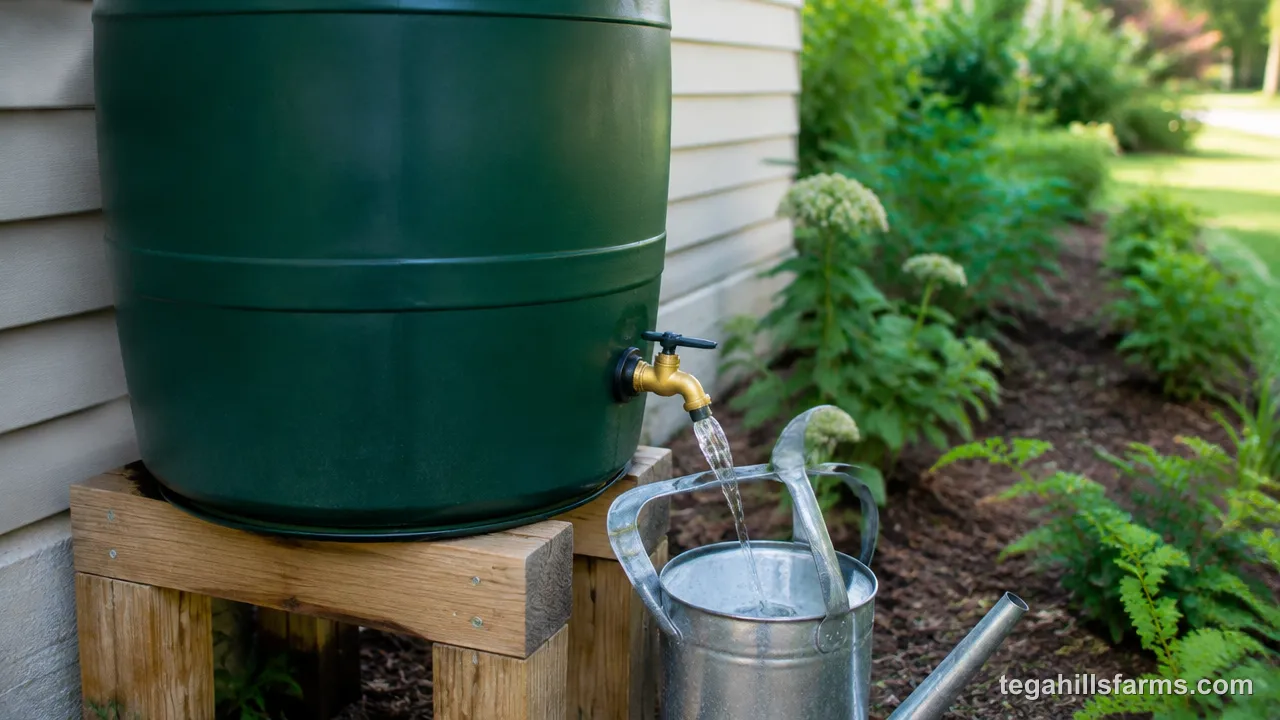
That pressure is gentle compared with your tap, so how you plan to use the water decides how you set the barrel up. Filling watering cans needs space under the spigot. Running a hose needs height. Getting this right at the start saves you from crouching at ground level all summer with a can that only half fits under the faucet.
Spigot Height Creates Usable Pressure
Spigots are usually placed six to 12 inches from the bottom of the barrel. That gap leaves a pocket below the outlet where sediment settles, so the water you draw comes off the cleaner layer above. The pressure at the spigot comes from the height of the water above it. Raising the barrel on a stand adds to that height and gives you room to set a watering can underneath.
Flow is strongest when the barrel is full and weakens as the level drops. A full barrel will run a short hose or a soaker line in a nearby bed. A long hose run or a sprinkler needs more push than gravity can supply, so plan on cans or short hoses for most watering.
What You Can Water with Barrel Water
Untreated rain barrel water suits ornamental beds, flower pots, shrubs, lawns, and vegetable beds. For vegetables, pour it at the soil rather than over the leaves, especially on greens and herbs you eat raw, since roof runoff can carry residue and droppings. Don’t drink it or give it to pets.
What Happens When the Barrel Fills Up?
Extra rain has to go somewhere, and a working system sends it away from your foundation rather than over the barrel rim.
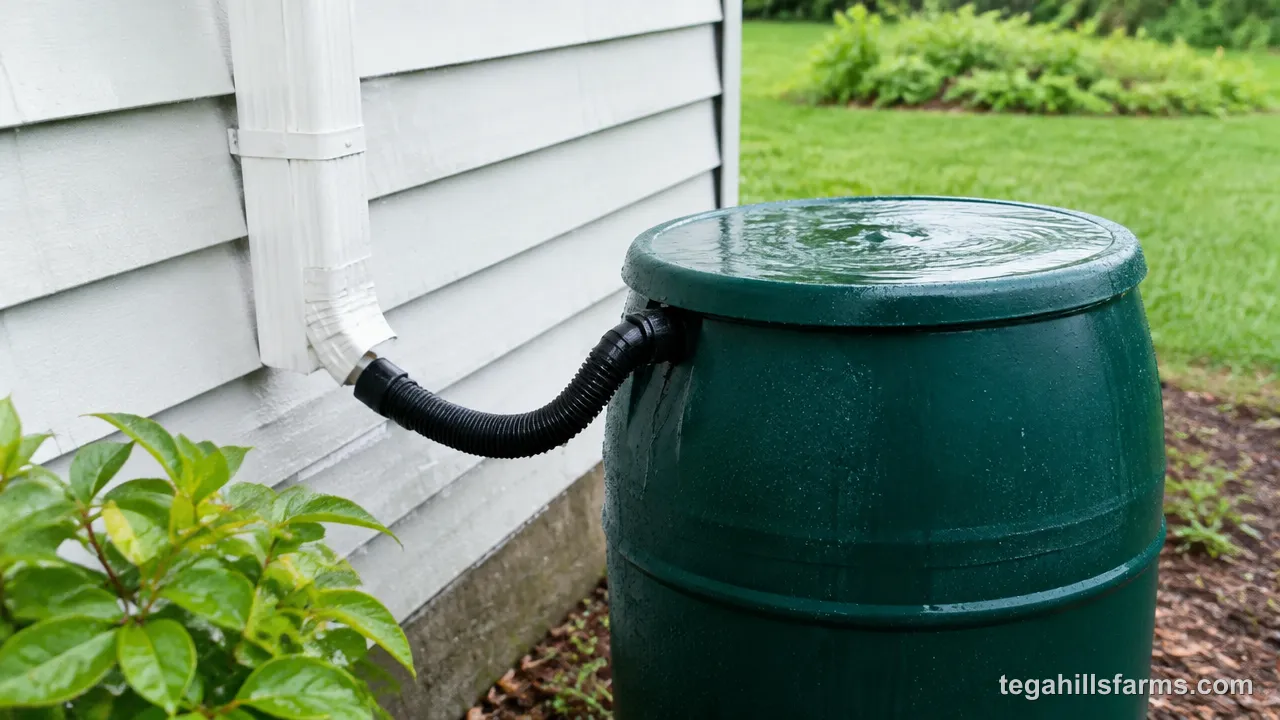
This matters because a barrel fills quickly in a heavy storm while the rain keeps coming. Water that spills over the top lands right where the downspout used to discharge, but now it pools at the barrel’s base. Over a season, that soaks the soil next to the house and softens the ground the barrel stands on. The fix is a deliberate exit route for the excess water.
Overflow Outlet Redirects Excess Water
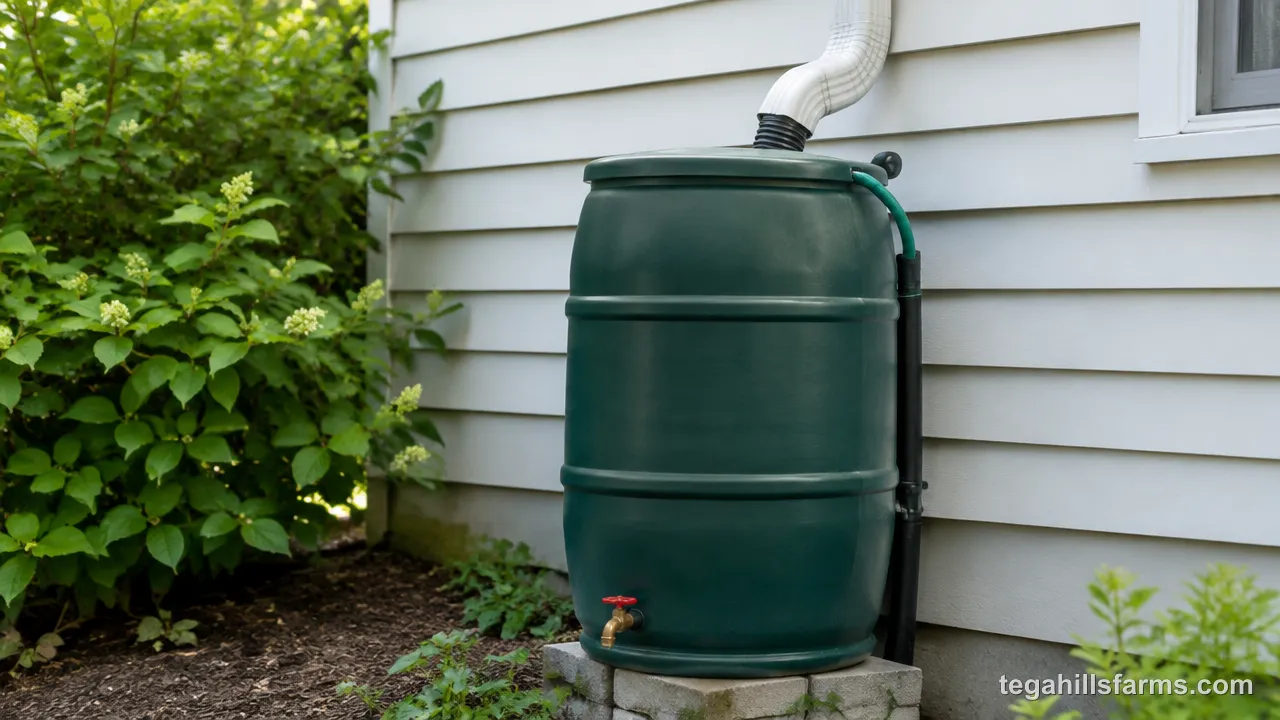
An overflow outlet is an opening near the top of the barrel that drains water once the level reaches it. A hose attached to the outlet carries that water several feet away, to a flower bed, a rain garden, or a second barrel. The goal is to discharge where the ground slopes away from the house. The outlet needs its own screen as well, because an open overflow port gives mosquitoes a way in that a screened lid does not.
Diverter Automatically Switches Flow
A diverter handles overflow on its own, with no sensor or moving switch. Because the barrel and the diverter are connected by a hose, the water level in the barrel and in the diverter stays the same. When the barrel fills to the diverter’s height, water backs up in the hose and incoming rain continues down the downspout as usual. As you draw water out, the level drops and filling resumes on its own.
How Much Rain Does It Take to Fill a Rain Barrel?
A rain barrel can fill with less than ½ inch of rain, because a roof sheds far more water than most people expect.
To estimate how many gallons a storm sends down one downspout, multiply the rainfall in inches by the square footage of roof that drains to that downspout, then multiply by 0.6. That factor converts inches of rain over square feet into gallons and allows for a little water lost to splashing and evaporation. Use the roof’s footprint, measured flat from above, not the sloped surface, since rain falls straight down onto whatever area the roof covers.
The result usually shows that a single barrel overflows in an ordinary storm, which is why overflow planning matters. Your climate shapes the rest. In a region with steady summer rain, one barrel refills often. Where summers run dry for weeks, extra storage holds more water for the gap between storms. Running the formula against your typical storm and your watering habits is the clearest way to work out what size rain barrel you need.
Why Use a Rain Barrel?
The main payoff is free water collected right where your garden needs it, water that would otherwise come from the tap or run down the storm drain.
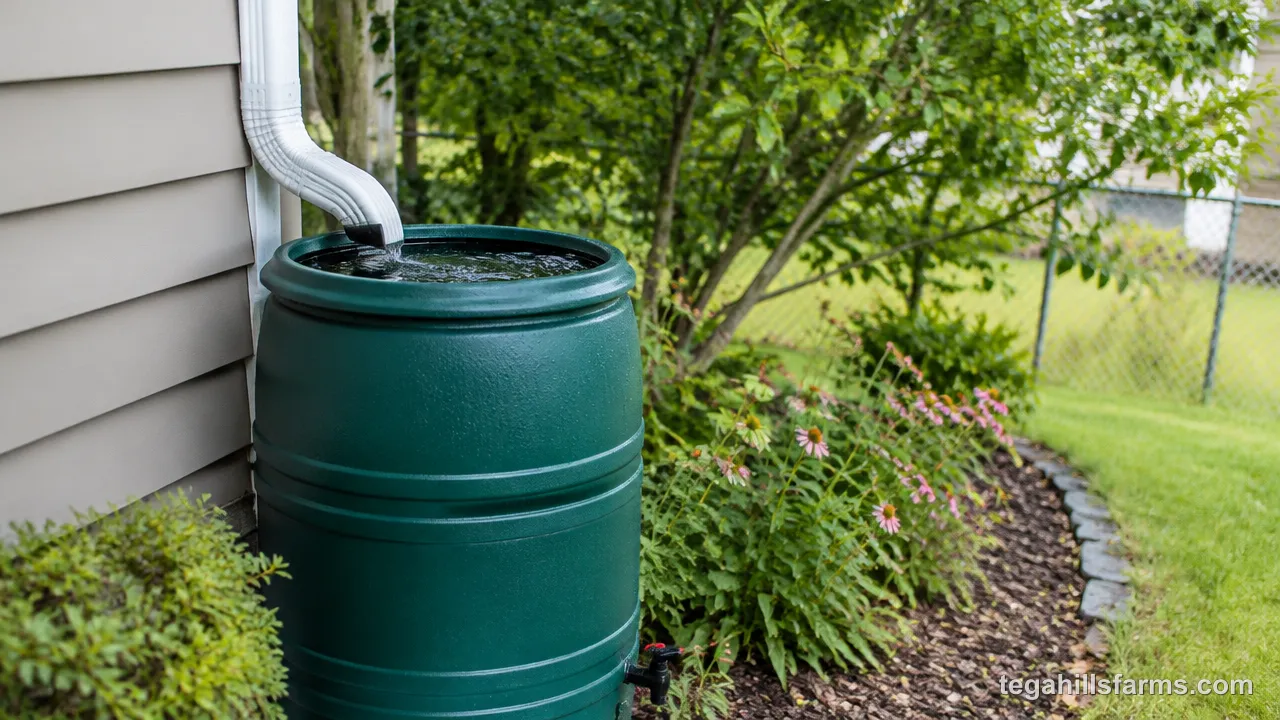
Plants benefit too. Rainwater carries no chlorine and very few dissolved minerals, so it doesn’t leave the white crust that hard tap water builds up in pots and window boxes over a season. For container growers, I think that benefit matters as much as any savings on the water bill, because containers have no surrounding soil to buffer that buildup.
Reduces Demand on Municipal Water
Outdoor use accounts for about 30% of daily water use. All of that water is treated to drinking standard before it goes onto lawns and beds. Every can you fill from a barrel is treated water you didn’t need. The barrel helps most during the short dry spells between storms. In a long drought it empties and stays empty, so treat it as a supplement to the tap rather than a replacement.
Cuts Stormwater Runoff
A roof is a hard surface, so nearly all the rain that hits it runs off at once. Downspout water often flows across lawns and driveways and picks up fertilizer, pet waste, and oil along the way. It then enters storm drains, which in many places discharge straight into streams without treatment.
A barrel holds back the first share of each storm. You later release that water slowly into garden soil, which absorbs it and filters it. One barrel makes a small difference on its own, but it also stops the erosion that a downspout cuts into the soil beside the house. When many homes on a street hold back roof water, the surge reaching local creeks after a storm drops noticeably.
Leaves and roof grit settle into a layer of sludge at the bottom of every barrel, and a screen packed with debris stops letting water through long before it looks clogged from the ground. A barrel left alone through a summer ends up holding sour-smelling water, a spigot that barely drips, and a seam that splits the first time a hard freeze catches it still full.
How Do You Maintain a Rain Barrel?
Keeping a rain barrel working comes down to a few tasks repeated through the year: clearing the screen, controlling algae, flushing out sediment, and draining the barrel before winter. None of them takes long, but skipping them is what turns a useful barrel into a clogged one.
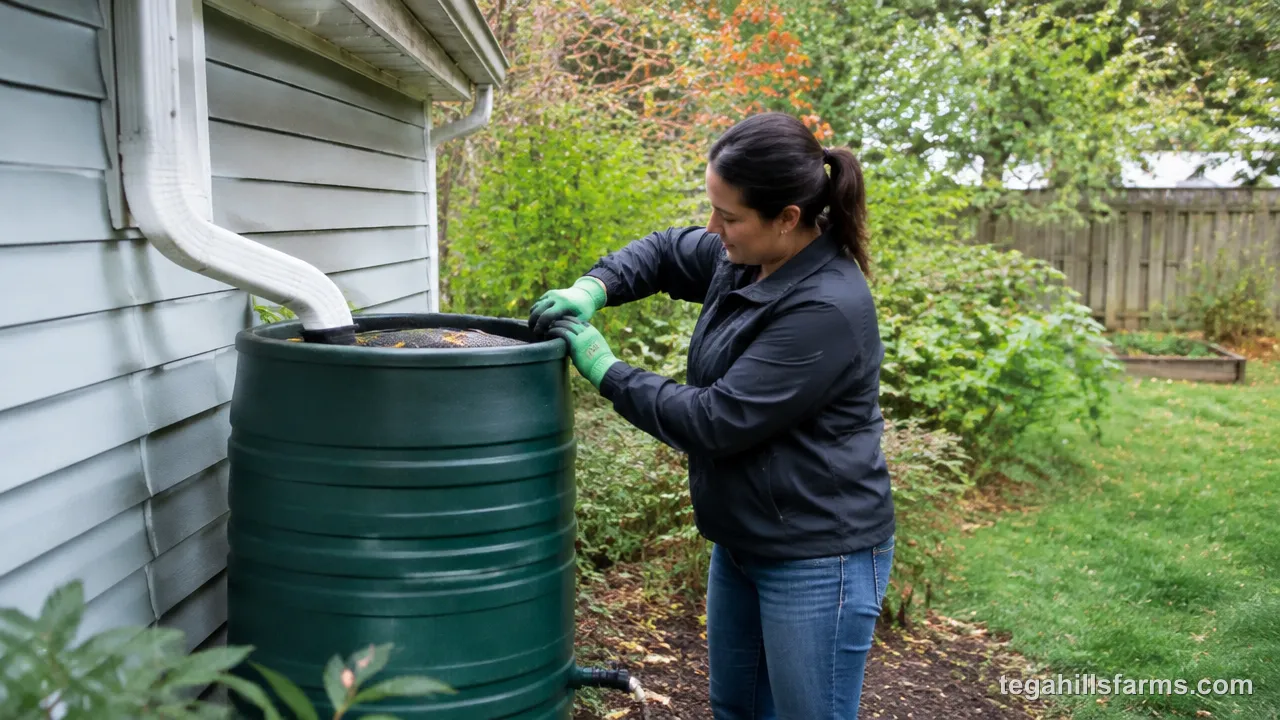
- Clear the inlet screen after big storms and every week or so during leaf fall. Clean the gutters at the same time, since they feed debris straight to the screen.
- Keep the barrel opaque and shaded. Algae needs light, so a barrel in full sun or made of translucent plastic turns green faster. Scrub any growth with a long brush when the barrel is empty.
- Drain and rinse sediment from the bottom once or twice a season. The pocket below the spigot fills up gradually.
- Check the spigot, washers, and hose connections each spring for drips and cracks.
- Before the first hard freeze, drain the barrel, disconnect it, and store it upside down or indoors. Reattach the downspout extension so winter rain still drains away from the house. In colder USDA zones this job comes earlier in fall than it does farther south.
How Do You Keep Mosquitoes Out?
Mosquitoes can only breed where they can reach still water, so the defense is to seal every opening with fine mesh and keep the water from sitting untouched. A tight-fitting lid with a fine mesh screen over the inlet handles most of the risk. The overflow port, any gaps around fittings, and the recessed lid where rainwater puddles are the openings people overlook.
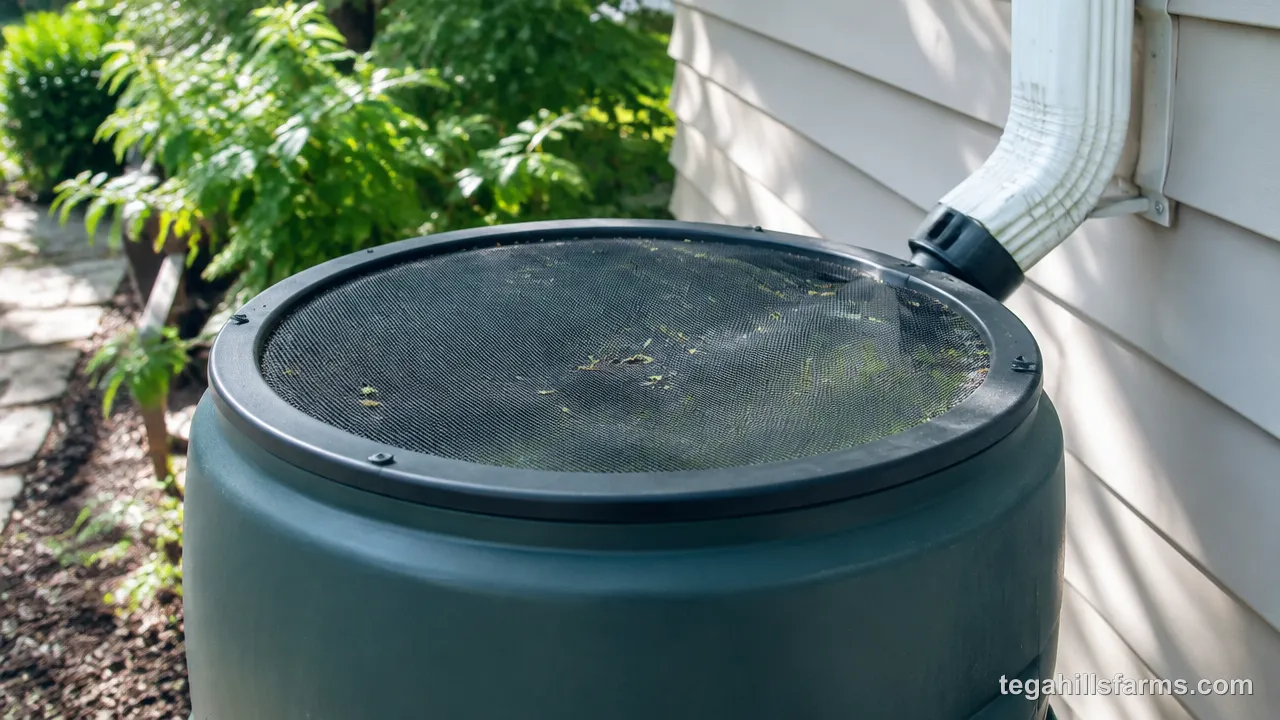
Check those spots whenever you clean the screen, because a torn corner of mesh is enough to let them in. Using the water steadily also helps: drawing from the barrel between storms disturbs the surface and replaces old water with new before larvae can develop.
If your barrel will sit untouched for a stretch, mosquito dunks containing Bti are an organic option that targets larvae and is labeled for water used on gardens. Follow the label. For a full checklist of fittings and fixes, see how to keep mosquitoes out of rain barrel setups.
Is Rainwater Collection Legal?
Collecting rain in a residential barrel is legal in most US states, and many cities and water utilities actively encourage it. A small number of states restrict collection. Those rules typically limit how much you can store or attach conditions, and they are mostly found in drier regions where rain falling on a property is tied to downstream water rights.
Local rules can add their own layer. Some cities regulate where barrels can sit or require a planned overflow route, and homeowners associations sometimes set rules about placement or appearance. Before you buy, check your state’s rules and your city’s ordinances, since whether it is illegal to collect rainwater where you live comes down to those local details.
How Heavy Is a Full Rain Barrel?
A full rain barrel can weigh up to 500 pounds, almost all of it water, since a gallon of water weighs a little over 8 pounds. That load rests on a small footprint. Soft or uneven ground settles under it, and once one side sinks a little, the barrel leans and can tip.
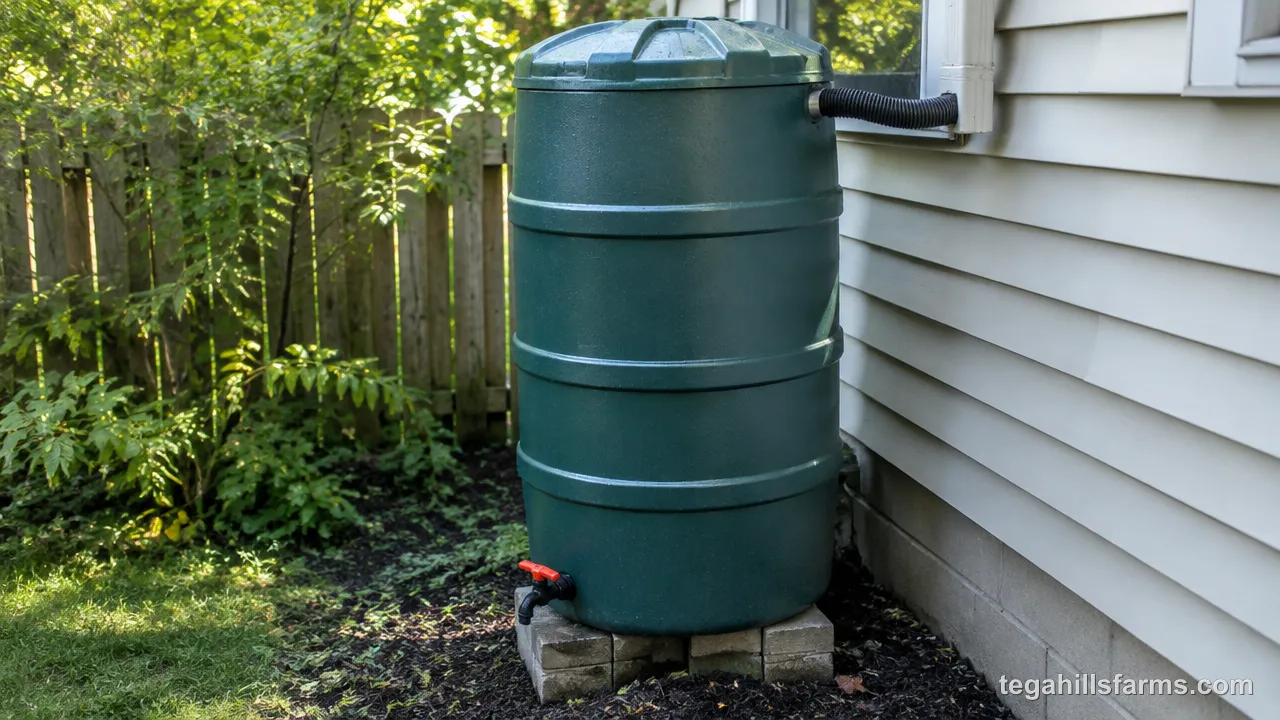
The base needs to be level, firm, and wider than the barrel. Compacted gravel topped with pavers or solid concrete blocks works well, as does a stand rated for the full weight. Raising the barrel on that base also improves spigot pressure and leaves room for a watering can underneath.
Avoid setting a barrel on a wooden deck unless you know the deck can carry concentrated loads. Keep the lid secured, too, because a tipping barrel or an open top is a real hazard where children play.
Common Questions About Rain Barrel Operation
How long can water be stored in a rain barrel?
Stored rainwater stays usable for several weeks in a sealed, opaque barrel kept out of direct sun. It stays freshest when you use it steadily, though. Light feeds algae, and warm, still water turns stale, so draw water between storms and let fresh rain refill the barrel instead of keeping the same water all season.
Can you link more than one rain barrel together?
Yes. You can run a hose from the overflow of the first barrel into the inlet of the second, so the second fills once the first is full. You can also join the barrels near their bases with a linking kit so they fill and drain together. Either way, set all the barrels at the same level so water moves between them evenly.
Do you need a filter on a rain barrel?
For watering the garden, a fine mesh screen at the inlet is all the filtering a rain barrel needs. It keeps out leaves, grit, and insects, which covers the problems that clog spigots and foul the water. Finer filtration only matters for uses beyond the garden, and barrel water still shouldn’t be used for drinking.
What is a first-flush diverter?
A first-flush diverter is a short pipe chamber that catches the first rain off the roof, which carries most of the dust, pollen, and droppings. Once the chamber fills, cleaner water passes on into the barrel. A small drain empties the chamber slowly between storms, so it is ready to catch the next storm’s dirtiest water.
Does a rain barrel collect anything in light drizzle?
A rain barrel collects very little in light drizzle. A dry roof absorbs and holds the first rain, and much of it evaporates before any runs into the gutters. Collection only begins once rain falls steadily enough to wet the whole surface and start flowing, which is why short summer showers barely change the level in the barrel.
Write Your Review
No reviews yet. Be the first to share your experience!