

If you want weeds out of your beds without kneeling, the tools I recommend as the best garden hoes for weeding are CKLT 2-in-1 Garden Hoe & Weed Puller 61in (Best Overall), WELLOPLO 2-in-1 Weed Puller 60in (Best Easy Assembly), YEELOR Heavy-Duty Garden Hoe (Editor’s Choice), Hivenlly Weed Puller Tool 2-in-1 (Also Great), Ukiupop Weed Puller Tool 2-in-1 (Also Great), BlumeTrec 2-in-1 Weed Rake & Hoe 68in (Also Great) and PIMEKOY Weed Puller Tool with Long Handle (Best Budget). Each one puts a weeding edge on a long handle, so you can work standing up instead of on your knees.
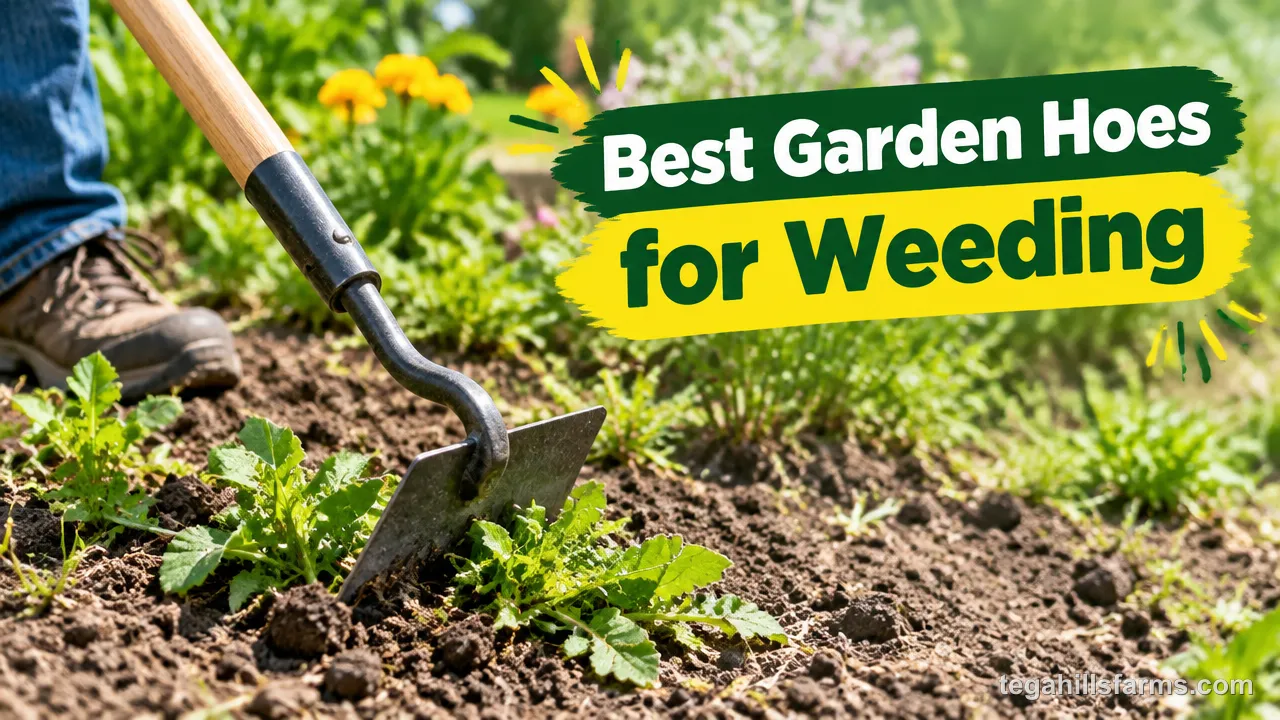
Your choice comes down to how each head grips weeds, how far the handle reaches, and how much weight you push with every stroke. A toothed rake side pries rooted weeds out whole, and a flat or pointed blade slices seedlings. Handle length decides whether you weed upright in open beds or up close in a border.
A good weeder has to solve two problems: a sore back and a tool that gives out after one season. A long handle keeps you upright instead of stooping. Hardened steel heads, rust-resistant finishes and joints that lock tight keep the tool rigid when you lever a stubborn root again and again.




Before you choose, look at what grows in your beds. Shallow seedlings in loose soil need only a sharp edge, while lawn-edge dandelions and crabgrass call for tines and a head that will not bend when you pry.
Can a Garden Hoe Remove Weeds?
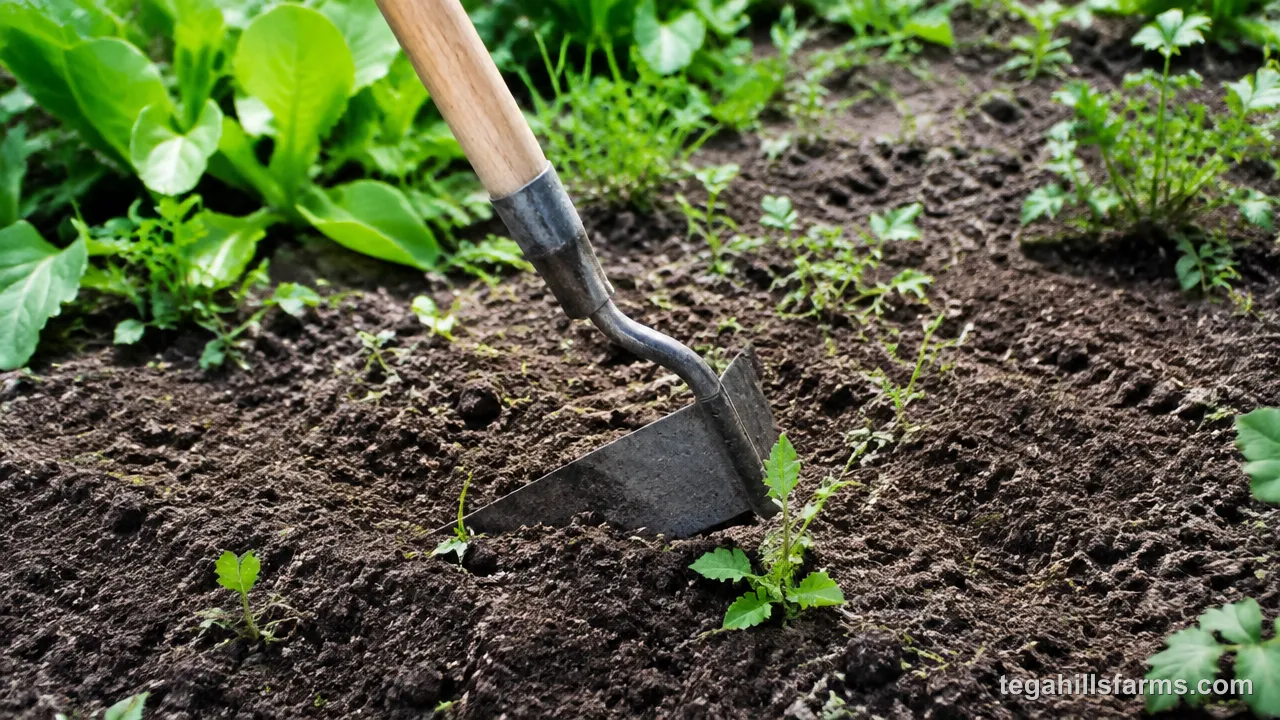
Yes. The blade works by slicing stems at the soil line rather than pulling roots, which kills young, shallow-rooted seedlings outright. A seedling’s growing point sits at or just above the surface, so a clean cut leaves nothing to regrow from, and the cut top withers on warm, dry soil. Established perennials such as dandelions, docks and bindweed store energy in deep roots, so a surface cut takes off only the leaves and new growth comes back from below. For those weeds, you either use a tined head that grips the root and pries it out, or you make repeat passes that cut each new flush of leaves until the root’s reserves run out. That split between slicing and prying is why head shape is the first thing to settle when you choose a weeding tool: a flat or angled blade for seedlings, tines for rooted weeds, and a combination head if your beds hold both. For a broader look beyond weeding, see our guide to the best garden hoes, which covers every hoe type and job.
Hoe Types for Weeding Compared
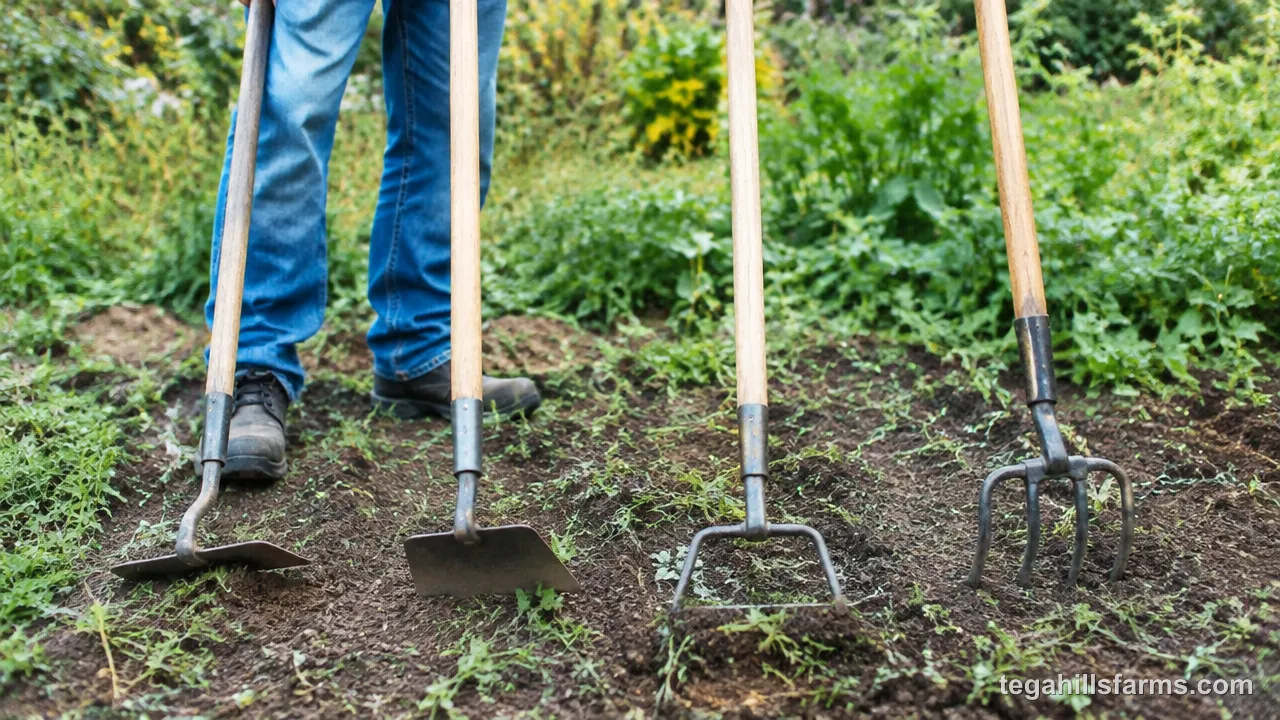
What decides the choice is how the blade meets the weed: slicing just under the surface, chopping down from above, or gripping the root with tines. That motion sets which weeds a tool kills and how much room it needs. Push-pull stirrup and scuffle blades and Dutch hoes slide flat through the top layer of soil. Draw, gooseneck and grub hoes swing down and pull toward you, using their weight to cut. Tined rake-and-hoe combos put a row of teeth on the back of the blade, so one tool can slice seedlings on one side and pry out rooted weeds on the other. Match that motion to your weeds, your soil and the space between your plants, and the work stays quick while the plants you want stay unharmed.
What Type of Hoe Is Best for Everyday Weeding?
Stirrup, scuffle and Dutch blades suit small, shallow weeds because they slide just under the surface and cut stems without turning the soil, so buried seeds stay buried. A stirrup or scuffle blade is sharpened on both edges and cuts on the push and on the pull, so you work in a steady back-and-forth rhythm driven by your arms rather than your back. A Dutch hoe cuts on the push, which lets you walk backward away from the cut weeds instead of stepping on them. A draw motion chops and pulls toward you, and over an hour it asks more of your shoulders and lower back.
Soil condition decides how easily any of these blades moves. In loose, crumbly, dry soil the edge travels just under the crust with little resistance. Wet clay grabs the steel, and compacted ground makes the blade skip over the surface instead of cutting. If your beds are light and well worked, the best garden hoes for soft soil take full advantage of this slicing action.
What Type of Hoe Is Best for Heavy Weeds?
Thick-stemmed, deep-rooted weeds and hard ground call for a heavier chopping head, such as a grub or draw hoe, or a tined rake side that grips the root and pries it out. A grub hoe’s thick, wide blade drops with its own weight, so it bites through crowns and compacted soil that would stop a stirrup blade. A draw hoe works the same way with a lighter swing and suits rows where you can stand to one side.
Tines work differently. You push them in beside the weed, then lever back so the teeth hook the root mass and lift it out whole. That matters for dandelions and docks, which regrow from pieces of root left behind.
A heavier head tires your wrists and shoulders sooner, and each chop throws soil sideways. Levering a root also loosens the soil around it, which can disturb the roots of perennials or vegetables planted close by. Near anything you want to keep, use shorter, controlled strokes.
Which Hoe Works in Tight Flower Beds and Raised Beds?
Between close-set perennials or along the edge of a container, use a small head on a short handle, or a long handle that unscrews down to a hand tool. Either lets you reach between stems without hitting the plants you want to keep. Working closer to the blade gives you control: you can see the edge, angle it around a crown and stop the stroke exactly where you want. A convertible handle helps when you move from open paths to a crowded border, because you take off a section or two and keep the same head.
What you give up is reach. With a short handle you kneel, sit on a stool or lean over the bed, which brings back some of the strain a full-length handle saves, and you cover less ground from each spot. In a raised bed at waist height, a short handle can be the more comfortable choice, since you work at a natural arm level without stooping.
What Should You Look for in a Hoe for Weeding?
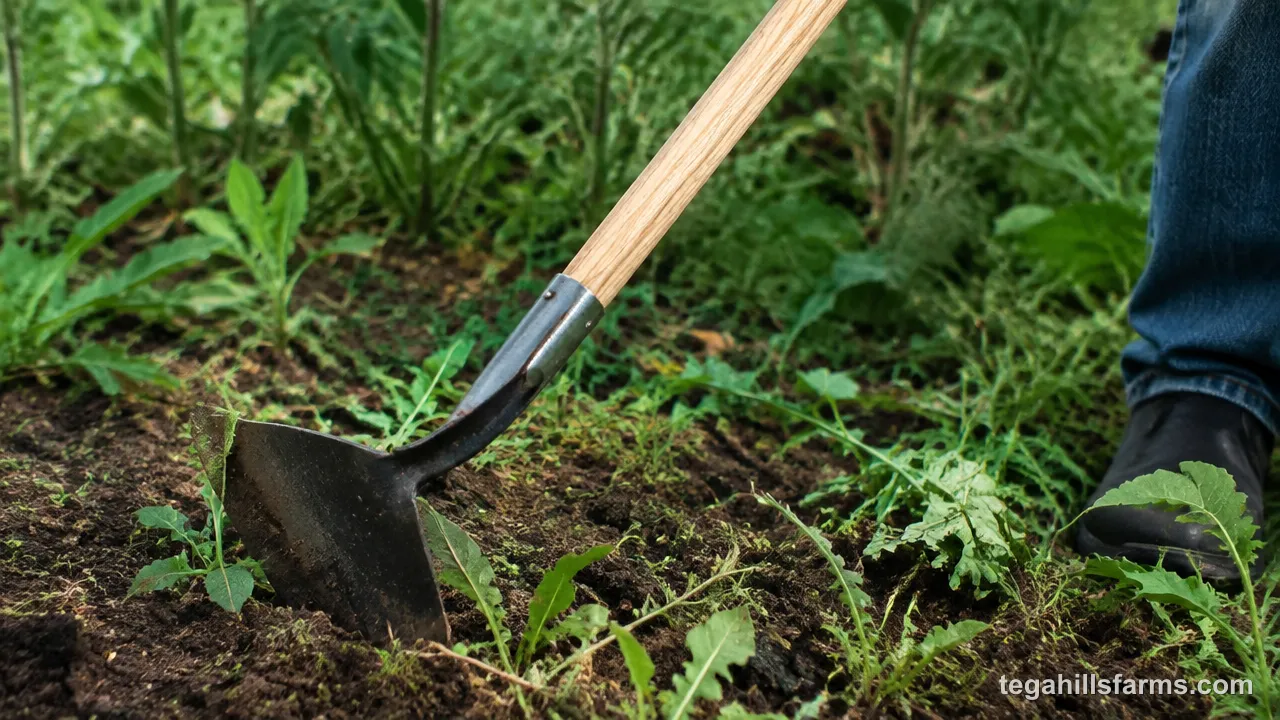
Comfort and lifespan come down to the steel in the head, how the handle is built and joined, and the overall weight you lift and push stroke after stroke. These features matter because a weeding tool repeats the same short stroke for as long as you work. A weak point shows up as a bent tine, a wobbling joint or tired wrists well before the season ends. A tool that gets these right still feels solid after an hour in the beds, not just in the store.
How Do Head Material and Build Affect Durability?
The steel in the head decides whether it bends, snaps, rusts or dulls first, and each common type fails in its own way. Tempered spring steel has been heat-treated to flex under load and return to shape, so it handles hard levering that would bend a softer blade. Cast steel is poured into a mold, which makes it hard and resistant to deformation, but a cast head can crack rather than bend if you strike a buried rock hard. Forged steel is hammered into shape, which tightens the grain and gives a tough head that stands up to repeated sharpening. Plain carbon steel takes a keen edge but rusts quickly unless you dry and oil it.
Fasteners and joints decide how long the whole tool stays rigid. Stainless bolts and nuts resist rust at the joint, and a tight socket keeps the head from rocking, which is where most loosening starts. In practice, wear looks like a rounded edge that skids instead of cutting, tines that splay outward, rust pitting along the blade, or a slight wobble where the head meets the handle. A sturdy steel head delays all of these, which is the case for the best garden hoes with steel blades, while the best garden hoes with replaceable blades let you swap a worn head and keep the handle.
How Long Should the Handle Be for Weeding?
The right length lets you stand upright with the blade flat on the soil a short step ahead of your feet, and an adjustable multi-section handle lets you set that point for your height. Too short and you stoop, which loads your lower back and knees. Too long and you lose control of the edge near plants. The bed matters too: a wide vegetable plot rewards full reach, while a narrow border or raised bed often calls for a shorter setting.
Locking joints carry the load every time you lever a root. Screw-lock or threaded joints that seat firmly stay rigid. A joint that loosens lets the shaft twist and flex, so the blade wanders and your grip works harder. A stainless steel shaft resists rust and stays smooth, but it can feel cold early in the season and slick in wet hands, so a textured or padded grip helps. Taking off a section is useful when you move into tight spots between plants.
Do Weight and Easy Assembly Matter?
Yes. A lighter tool spares your wrists and forearms over a long session, and a modular handle changes how quickly you can set it up, clean it and store it. Every stroke means lifting and pushing the head, so extra weight adds up in the wrists and elbows, especially for older gardeners or smaller hands. A head that is too light loses its bite in hard ground, though, and you end up pressing harder to make the edge cut.
Screw-together sections make setup quick. They also let you break the tool down to clean soil out of the joints, or store it on a shelf instead of finding wall space for a full-length handle. Each joint is one more place for grit to collect and threads to loosen, so check them before each session.
The 7 Best Garden Hoes for Weeding of 2026
The tools I’d hand you for this job are CKLT 2-in-1 Garden Hoe & Weed Puller 61in, WELLOPLO 2-in-1 Weed Puller 60in, YEELOR Heavy-Duty Garden Hoe, Hivenlly Weed Puller Tool 2-in-1, Ukiupop Weed Puller Tool 2-in-1, BlumeTrec 2-in-1 Weed Rake & Hoe 68in and PIMEKOY Weed Puller Tool with Long Handle. Most pair a toothed rake with a hoe edge, and the steel behind those teeth decides how hard you can pry. Spring steel and manganese tines take forceful levering, while cast steel heads stay rigid in rocky ground. The YEELOR works differently, with a forged blade built for slicing, furrowing and leveling. Handle reach and weight then set how each one feels: a long shaft covers lawns, patios and gravel driveways from one spot, and a light, small head suits flower beds and vegetable patches.
#1 CKLT 2-in-1 Garden Hoe & Weed Puller 61in — Best Overall
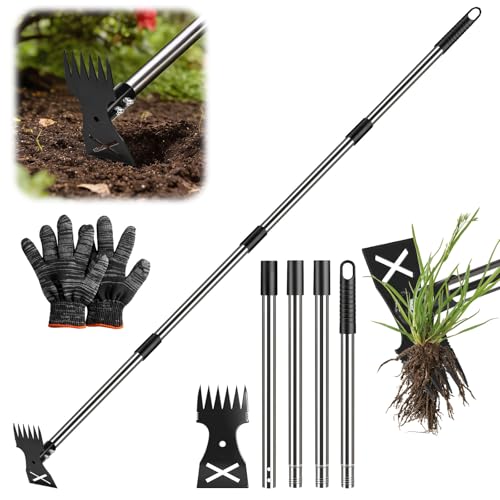
For a gardener who weeds flower beds, lawns and gravel driveways with one tool, the CKLT pairs a sharp trapezoid hoe and a rake on a tempered spring steel head that springs back when you lever out hard roots. Its stainless hardware resists rust.
Key Specs:
- Head: 3.75-inch rake and trapezoid hoe, dual-sided
- Material: tempered spring steel with sand texture finish
- Handle: 4-section locking, adjustable up to 61 in
- Hardware: 304 stainless steel bolts and nuts
- Model: 60inBCC
Detailed Review:
The tempered spring steel head takes hard levering and springs back to shape, so prying a dandelion out with the rake teeth does not leave it permanently bent. That resilience counts most in hard soil and gravel, where every pry sends a sharp jolt through the steel.
On one face, the trapezoid hoe slices seedlings and loosens compacted soil. On the other, the narrow rake slips between plants in a vegetable row and grips roots so they come out whole instead of snapping off and regrowing. With both on one head, you can deal with seedlings and rooted weeds in a single pass down the bed.
A sand texture finish on both heads adds grip and corrosion resistance, and the stainless steel bolts and nuts keep the head joint from rusting or working loose. The locking handle shortens for raised beds, flower pots and tight spots between plants, then extends again for standing work. I’d choose this one if you want a single tool for mixed ground, because the spring steel forgives the hard prying that gravel driveways and lawn edges demand.
Pros:
- Spring steel head springs back instead of bending under levering.
- Trapezoid hoe and rake handle both slicing and root pulling.
- Stainless bolts and nuts resist rust at the head joint.
- Locking handle shortens for raised beds and pots.
Cons:
- Narrow rake covers less ground per pass than wider heads.
- More handle joints mean more connections to check and tighten.
Who It’s For:
Gardeners who weed a mix of flower beds, vegetable rows, lawn edges and gravel will put every part of this tool to use. It also suits anyone who needs to stay upright to protect a sore back. If you only weed soft, open beds, a simpler blade may be all you need.
Editor’s Verdict:
A versatile, rust-resistant weeder whose spring steel head handles hard prying across beds, lawns and driveways without losing its shape.
#2 WELLOPLO 2-in-1 Weed Puller 60in — Best Easy Assembly
If you want a tool ready to use straight out of the box, this one comes with installation tools and gloves, and its stainless handle sections screw together with secure locking joints. The reinforced cast steel head stays rigid in rocky soil.
Key Specs:
- Head: 6-tine rake and hoe blade
- Material: reinforced cast steel, rust-resistant
- Handle: 4-section stainless steel, adjustable from 16 to 60 in
- Handle wall: 0.04 in (1 mm) thickened stainless steel
- Included: installation tools and gloves
- Model: 004
Detailed Review:
Each stainless section threads into the next with a screw-lock joint, and the included tools let you snug them down so the handle holds firm when you lever a root. The same joints come apart easily, so you can drop to the short setting for a tight bed or break the tool down for storage.
The reinforced cast steel head resists deformation, which suits rocky soil and tough roots. Next to the CKLT’s tempered spring steel, this cast head stays rigid rather than flexing and springing back, so it feels solid against stones while the CKLT absorbs more of the shock on a hard pry. The tines push in beside dandelions and crabgrass and grip the root mass so it lifts out instead of tearing at the crown.
The thickened stainless handle feels firmer in the hand than a thin-walled tube, and the hoe blade loosens soil and levels small patches once the weeds are out. Wear the included gloves for long sessions, since bare steel can raise blisters. I’d pick it for anyone who dreads fiddly assembly or needs a tool that packs down for a small shed.
Pros:
- Screw-lock joints hold the handle steady under levering.
- Included tools and gloves make setup quick.
- Cast steel head resists bending in rocky soil.
- Handle shortens enough for tight beds and storage.
Cons:
- Rigid cast head lacks the spring-back of spring steel.
- Bare stainless handle can raise blisters without gloves.
Who It’s For:
If you would rather spend your time weeding than assembling, this suits you, as it does gardeners with small sheds who need a tool that breaks down for storage. Anyone who wants a head with some flex for hard prying may prefer the spring steel of the CKLT.
Editor’s Verdict:
Choose this weeder when quick setup and a steady, screw-locked handle matter more to you than a flexible head.
#3 YEELOR Heavy-Duty Garden Hoe — Editor’s Choice
Gardeners who want one hoe for weeding, furrowing and leveling should start here, since the forged steel blade cuts cleanly into soil and the anti-loosening bolts keep it fixed to the shaft. Its threaded handle segments resist loosening.
Key Specs:
- Head: 6.3-inch forged steel blade with rust-proof treatment
- Handle: 5 ft (60 in) segmented stainless steel, lathe-threaded joints
- Weight: 2.4 lb
- Hardware: anti-loosening bolts
- Model: YLUS1152
Detailed Review:
Forging gives this head a dense, tough blade, and the rust-proof treatment protects the steel between sessions. The sharp edge cuts into firm soil, so the same tool slices weeds at the soil line, chops shallow roots and opens a furrow for seeding.
Anti-loosening bolts fix the head to the shaft, and the lathe-threaded handle segments screw together firmly enough to stay tight during use. When the season ends, the segments come apart for storage.
It weighs more than the PIMEKOY, and that extra mass helps the blade bite into compacted ground without you bearing down hard. In return, your wrists do a little more work over a long session, though the ergonomic long handle lets you stand upright instead of stooping.
I’d choose it if you also dig furrows and level beds, because the blade handles that soil work as well as it weeds. In a vegetable garden, that means one tool from spring bed prep through summer weeding.
Pros:
- Forged steel blade cuts firmly into compacted soil.
- Threaded segments stay tight and come apart for storage.
- One blade handles weeding, furrowing, digging and leveling.
- Rust-proof treatment protects the head between sessions.
Cons:
- Heavier build tires wrists sooner than lighter weeders.
- Wide blade is harder to steer between closely spaced plants.
Who It’s For:
Vegetable gardeners who weed, furrow and level beds through the season will appreciate a tool that does all of it, especially if bending strains your back. If you want a lighter tool for flower borders, the PIMEKOY asks less of your wrists.
Editor’s Verdict:
Expect a sturdy all-round soil tool: the forged blade and anti-loosening bolts stand up to digging and leveling as well as weeding.
#4 Hivenlly Weed Puller Tool 2-in-1 — Also Great
Because its stainless handle sets at fixed lengths, from a short seated position up to full standing reach, this weeder suits gardeners who switch between a stool and their feet. The cast steel head rinses clean.
Key Specs:
- Head: 6-tine rake and flat-edge hoe
- Material: cast steel
- Handle: stainless steel, sets at 16, 30, 45 or 60 in
- Included: 2-in-1 head and 4 stainless steel poles
Detailed Review:
Rather than sliding to any length, the stainless handle builds up pole by pole into set lengths, so you can sit at a low bed with the handle cut down to 16 inches or stand upright at full length for open ground. Fixed steps also make it easy to return to the same length each time without measuring. It goes shorter than the Ukiupop as well, which counts when you weed from a stool or kneeling pad.
The cast steel head stays rigid and resists rust, and it rinses clean under a garden hose after work, which keeps soil from drying between the tines. On one side, the tines go deep beside crabgrass and dandelions to pull roots. On the other, the flat edge clears larger patches and levels soil.
Assembly means joining the head and the stainless poles, so there is little to go wrong before you start. I’d suggest it for gardeners with limited mobility who like to sit for part of the job, because the short setting turns it into a close-range hand weeder.
Pros:
- Set handle lengths suit both seated and standing work.
- Cast steel head resists rust and deformation.
- Head rinses clean quickly after use.
- Tines and flat edge cover both pulling and leveling.
Cons:
- Fixed steps limit fine-tuning between set lengths.
- More poles mean more joints to keep tight.
Who It’s For:
When you split weeding time between sitting at a raised bed and standing in open rows, this tool adapts without fuss. It also suits gardeners who want quick cleanup after each session. If you want a handle you can set to any in-between length, look for a continuously adjustable design.
Editor’s Verdict:
Pick this weeder if you change position often; the stepped handle and easy-rinse cast head make short and long sessions equally manageable.
#5 Ukiupop Weed Puller Tool 2-in-1 — Also Great
A gardener who stores tools in a crowded garage will like how quickly this weeder screws together with screw-lock connections and breaks down again into separate poles. Its cast steel head resists rust.
Key Specs:
- Head: 6-tine rake and sharp hoe blade
- Material: cast steel, rust-resistant
- Handle: adjustable from 30 to 58 in, four stainless steel extension poles
- Assembly: 30-second screw-lock setup, tools included
- Model: CTPZ-X-02
Detailed Review:
Screw-lock connections join the stainless poles, and the included tools let you tighten them so the handle stays stable when you lever. Taking it apart is just as quick, so you can store the tool on a garage shelf or carry it to another garden.
The cast steel head is rust-resistant and deformation-proof, and it rinses clean after each use. The tines reach down beside crabgrass and dandelions to lift deep roots, while the sharp hoe blade clears wider patches and levels small areas.
Its handle tops out shorter than the BlumeTrec’s, so a tall gardener working a wide bed gets less reach, but the shorter shaft is easier to steer around a small yard. Set near the top of its range, it keeps you upright for weeding rows and open beds.
The blade is sharp enough that it belongs out of reach of children and pets, which I’d treat as a reason to hang it on a wall hook rather than lean it against a fence. That habit also keeps the head dry between sessions.
Pros:
- Screw-lock poles assemble and come apart quickly.
- Breaks down compactly for shed or garage shelves.
- Cast steel head rinses clean and resists rust.
- Tines lift deep roots of crabgrass and dandelions.
Cons:
- Top handle length may feel short for very tall gardeners.
- Sharp blade needs careful storage around children and pets.
Who It’s For:
Anyone short on storage space, or anyone who carries tools between a home garden and another plot, will appreciate how quickly it breaks down. Very tall gardeners covering wide beds may want the extra reach of the BlumeTrec instead.
Editor’s Verdict:
Count on this weeder for quick setup and compact storage, with a cast steel head that holds up against rust between sessions.
#6 BlumeTrec 2-in-1 Weed Rake & Hoe 68in — Also Great
With a handle that unscrews from full standing length down to a short hand weeder, this tool suits gardeners who move between open beds and tight borders. Its manganese steel tines grip stubborn roots.
Key Specs:
- Head: 7 manganese steel rake tines and flat hoe blade, flip to switch
- Handle: detachable poles, adjustable from 26.5 to 68 in
- Joints: threaded pole connections
- Grip: comfort grip handle
- Blade: five-point star cutout to reduce weight
- Model: MWT-001
Detailed Review:
This handle extends to 68 inches, which lets a tall gardener stand fully upright and cover a wide bed from one spot. Remove the extra poles and the same head becomes a short-handled hand weeder for flower beds, borders and tight spaces.
The rake side carries one more tine than the WELLOPLO, and those manganese steel teeth go into the ground easily and pry weeds out from the base, so crabgrass and dandelion roots come up whole and regrow less. Flip the head and the wide flat blade cuts surface weeds, breaks hardened ground and loosens compacted soil.
A five-point star cutout in the blade trims weight while keeping strength, and the comfort grip gives your hand something softer than bare steel to hold over a long session. Threaded pole connections keep the sections secure at every length.
I’d recommend it if your garden mixes long open beds with fussy borders, because one tool covers both. Switching between rake and blade takes only a turn of the wrist.
Pros:
- Long handle reach suits tall gardeners and wide beds.
- Converts into a short hand weeder for tight borders.
- Manganese steel tines pry roots out from the base.
- Comfort grip reduces hand fatigue on long sessions.
Cons:
- Full-length handle can feel unwieldy in small yards.
- Flip design means turning the tool between tasks.
Who It’s For:
Tall gardeners with wide vegetable beds will find it a good fit, as will anyone who wants one tool that also works up close in borders. If your yard is small and your beds are narrow, the shorter Ukiupop is easier to manage.
Editor’s Verdict:
Reach for this weeder when your beds are wide and your borders tight; the long, convertible handle and manganese tines cover both.
#7 PIMEKOY Weed Puller Tool with Long Handle — Best Budget
Anyone weeding around flowers will appreciate the small cast steel head, which fits between plants without knocking stems or crowding roots. At 1.8 pounds, it is easy on the wrists.
Key Specs:
- Head: 6-tine rake and triangle hoe, small size
- Material: cast steel
- Handle: 60 in stainless steel
- Weight: 1.8 lb
Detailed Review:
A small head lets this tool work between closely planted perennials, where the pointed triangle hoe picks out a single weed or cuts a stubborn root without disturbing the stems beside it. The same sharp point digs narrow ditches and shapes bed edges.
The tines pierce the soil easily to uproot weeds and loosen the surface, and the cast steel head is tough enough for steady use through the season. Because it weighs less than the YEELOR, it asks less of your wrists over a long session, though a light head needs more downward pressure in hard ground.
The long stainless steel handle lets you weed standing up without bending or kneeling, which helps if your back limits how long you can stoop. Clean the head after use, look the tool over before each session, and lay it down with the head close to the ground so the tines never point up. Its modest price makes it a sensible first weeding tool, and if cost is your main filter, compare it with the best garden hoes under $30 and garden hoes under $50 as well.
Pros:
- Small head works between closely planted flowers.
- Light build eases strain on wrists and arms.
- Triangle hoe point cuts out stubborn roots precisely.
- Cast steel head stands up to steady use.
Cons:
- Light head needs more pressure in hard, compacted ground.
- Small head covers less ground on open beds.
Who It’s For:
Flower gardeners, beginners and anyone with weaker wrists will appreciate how little this tool asks of the hands, especially when weeding around delicate plantings. For heavy furrowing and leveling in a vegetable plot, the heavier YEELOR is the better match.
Editor’s Verdict:
Treat this as a light, precise flower-bed weeder whose small head and triangle point reach weeds that wider tools would miss.
Is a Weeding Hoe Worth It?
Yes, for most home beds. Working standing up with a long handle replaces the stooping and kneeling of hand-pulling, and a few slicing strokes clear seedlings you would otherwise pull one at a time. The time saved comes from the cutting action: a sharp edge cuts every small weed along its path in a single stroke, while your fingers take them one by one. Sparing your back and knees matters more as the season goes on, because the strain of repeated bending builds over every session rather than easing.
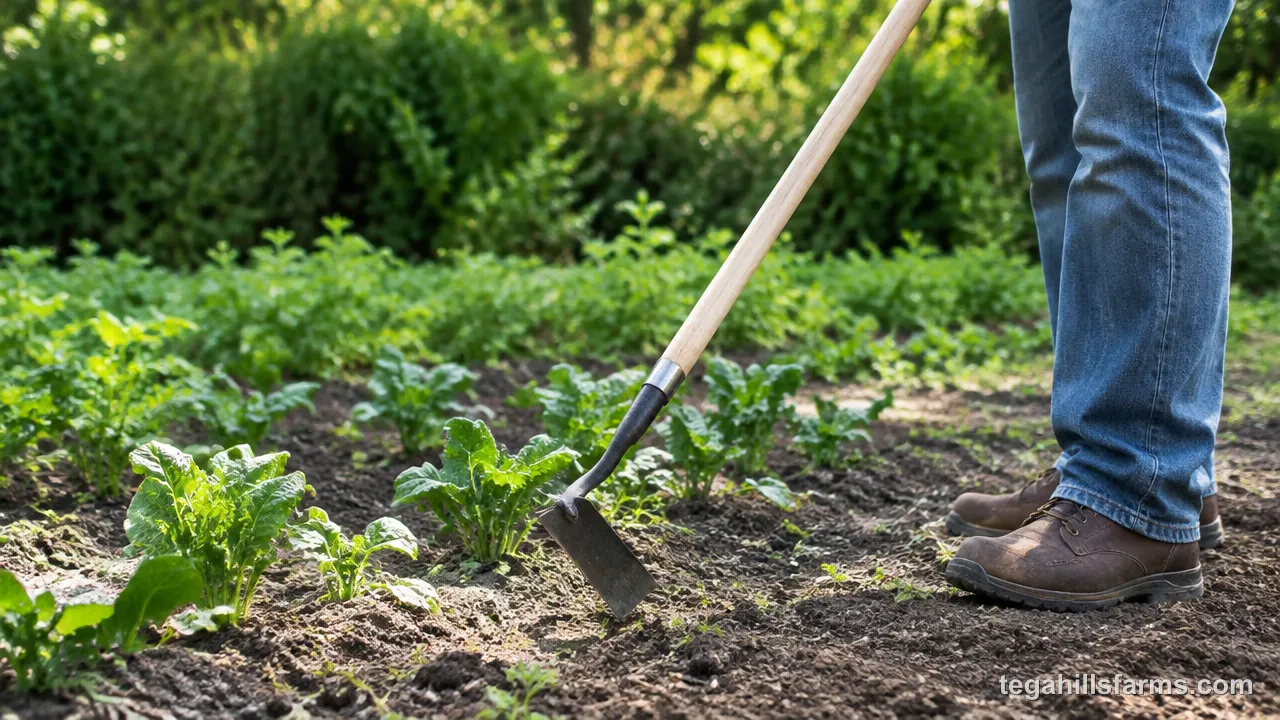
A hoe falls short with deep taproots, which regrow unless the root comes out, and in crowded plantings where the blade cannot reach without nicking stems. There, a tined head or your hands still do better. Value grows with build quality: a steel head that holds its edge and a handle whose joints stay tight can last several seasons, while a flimsy tool bends or wobbles and needs replacing. Durable build does not always mean a premium price, so compare head steel and joint design among garden hoes under $100 before you decide.
Purslane or chickweed cut on a damp morning can lie on wet soil and put down fresh roots wherever it lands, so a bed that looked clean fills back in from weeds you already cut. Hoe at the wrong time or too deep and you end up fighting the same patch week after week, with new seedlings sprouting from soil you turned over yourself.
How Do You Use a Hoe to Weed Effectively?
Pick a dry, warm day and go after weeds while they are small, because cut seedlings lying on dry soil shrivel instead of re-rooting. Small weeds also cut with a light stroke, while older ones have thicker stems and roots that resist the blade and resprout.
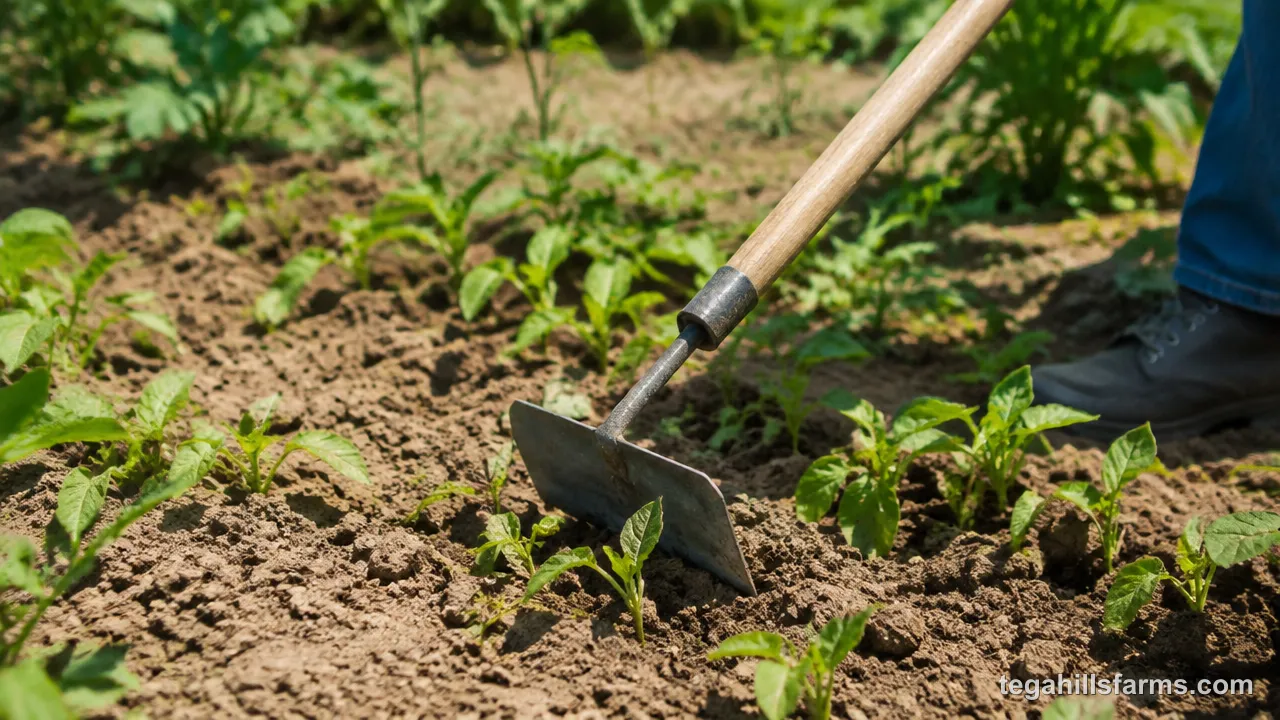
Keep the stroke shallow, right at the soil line. Chopping deep turns up buried weed seeds, and once they reach the surface and get light, many of them germinate, so deep hoeing plants your next crop of weeds. Hold the handle so the blade runs nearly flat to the ground, and let it slide rather than strike.
Work backward through the bed with a push or push-pull hoe, so you step onto uncut ground instead of treading cut weeds back into contact with the soil, where they can root again. Regular light passes in peak growing season keep each flush small enough to cut easily.
Switch to a tined head when you reach established dandelions, docks or grasses with spreading roots. Slicing off their tops only prompts new growth, while tines grip the root and lift it out.
How Do You Keep a Hoe Sharp and Rust-Free?
Clean, dry and oil the head after each session, and touch up the edge whenever it starts to skid, because soil left on steel holds moisture, and moisture is what starts rust and dulling. Knock off soil with a stiff brush or rinse it under a garden hose, then dry the head fully before you put it away. A few strokes of a mill file along the original bevel restore the edge, and a light coat of oil on bare steel protects it between sessions.
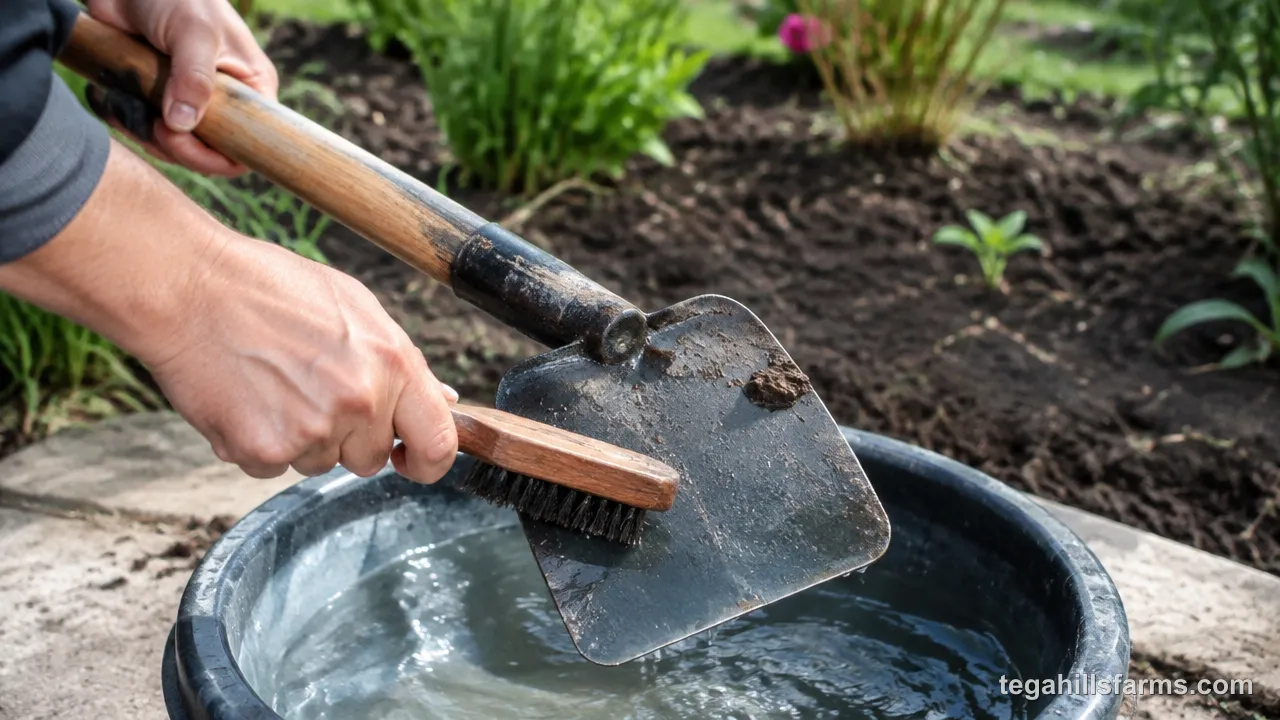
On a multi-section tool, unscrew the joints now and then, brush grit from the threads and retighten them firmly, since grit in a thread is what lets a joint work loose under load. Before winter, clean and oil the head, then hang the tool in a dry shed or garage away from a damp concrete floor.
Replace the tool rather than keep using it when the head is cracked or bent out of line, the tines splay and no longer straighten, a joint will not stay tight even after cleaning, or rust has pitted deep into the edge.
How Can Mulch and Ground Cover Reduce the Weeding a Hoe Has to Do?
A layer of shredded bark, straw or cardboard shades the soil surface. Without light, many weed seeds stay dormant, so fewer weeds sprout and you hoe far less often. Cardboard laid under mulch also smothers existing seedlings, which makes it useful when you start a new bed.
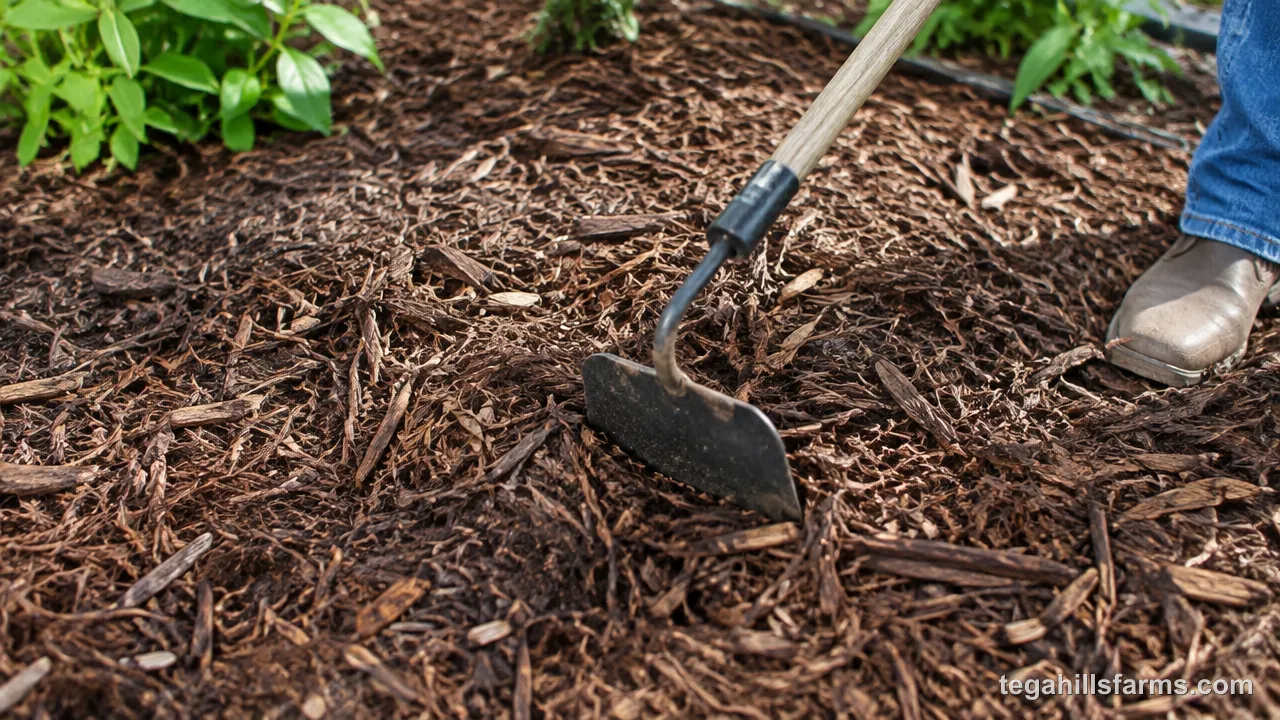
The two methods work together in sequence. Hoe the bed clean while the weeds are small, then spread mulch 2 to 3 inches deep so the fresh surface stays dark. The few weeds that push through later sit in loose mulch and pull out easily by hand.
Keep the hoe off mulched areas, because a blade dragged through mulch mixes it into the soil and exposes bare ground again. Pull the mulch back by hand before hoeing a spot, or use the tines to lift a single weed, and save full hoe strokes for unmulched paths and rows.

Write Your Review
No reviews yet. Be the first to share your experience!