

My shortlist of the best garden hoes for soft soil comes down to CKLT 2-in-1 Garden Hoe & Weed Puller 61in (Best Overall), MANXRKUI Draw Hoe 5.5ft (Best Budget), VNIMTI Heavy Duty Garden Hoe 58in (Best Ergonomic Design), AgroPro Garden Hoe 58in (Best Rust-Resistant) and AgroPro Heavy Duty Garden Hoe 58in (Also Great). Each one pairs a steel head with a handle long enough to work standing up, which is what loose, crumbly beds reward.
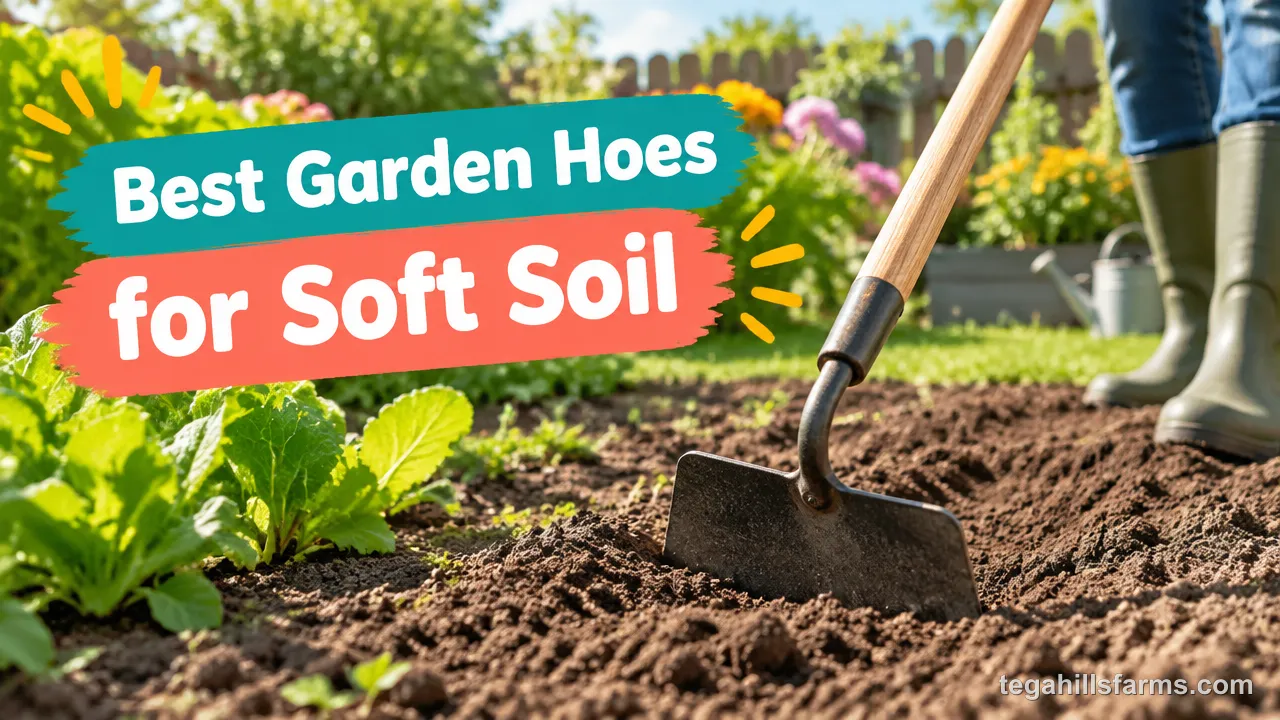
On loose ground, the differences that matter are built into the tool: the shape and angle of the blade, the steel it is made from, how firmly the head is fixed, and the length, material and grip of the handle. Those choices decide whether a stroke glides through the top of the bed or drags, and how your wrists feel after an hour of weeding.
The problems that send a hoe to the scrap pile show up slowly. A head works loose after a season of pulling, a blade rusts in beds that stay damp, or a short, slick handle pushes the strain into your lower back and grip.


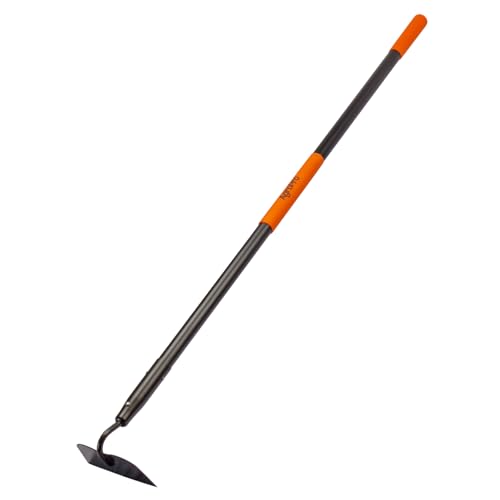

If you garden in raised beds and containers as well as open rows, I’d weigh handle adjustability before any blade detail, because a full-length shaft is awkward to steer between closely spaced plants.
What Kind of Hoe Suits Soft Soil?
Loose, crumbly ground calls for a light push-pull blade (a draw, Dutch or stirrup style) that slices just under the surface rather than breaking the earth apart.
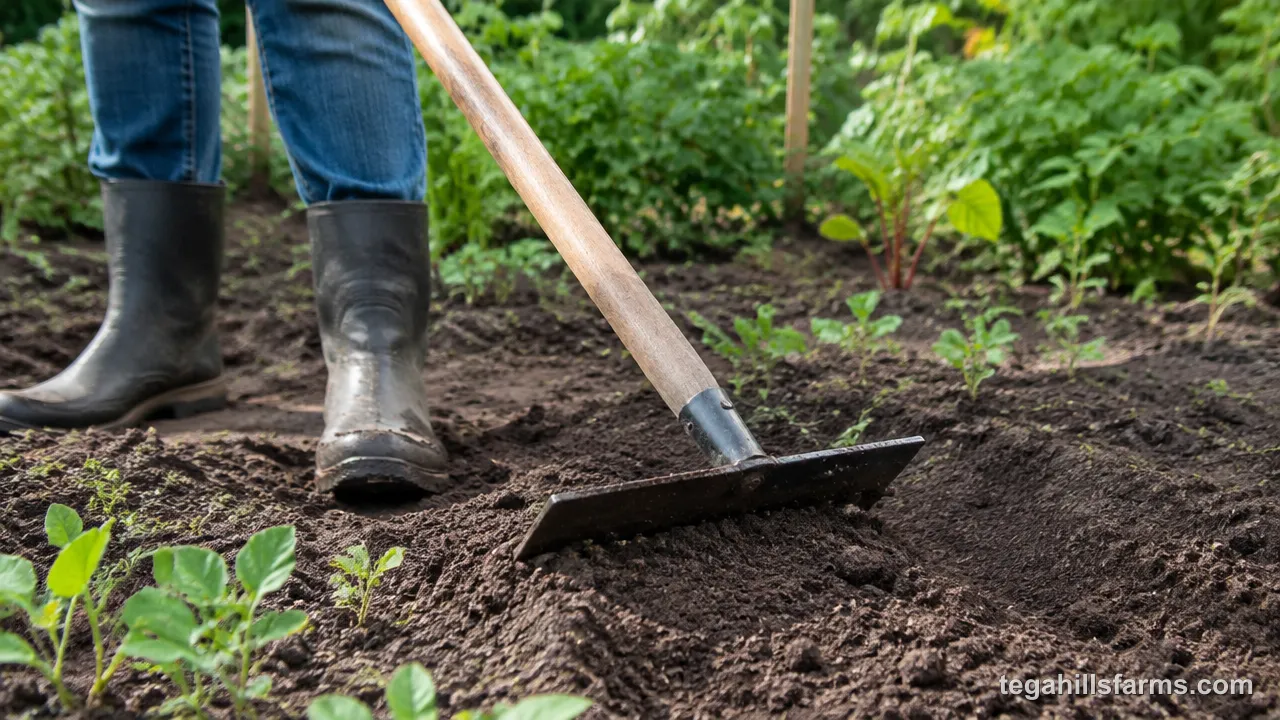
Soft soil has already done the hard work for you. Its particles sit loose and separated, so a thin, sharp edge moves through the top layer with little resistance and cuts young weeds where the stem meets the root. A push-pull hoe works with that looseness: the blade does the cutting, and your arms only guide it.
Compacted clay and rocky ground are a different job. There the soil has to be broken before anything can be cut, which is why a grub hoe or a mattock carries a heavy, thick head that you lift and swing so its weight drives the blade in. On a soft bed that weight is wasted. Every swing lifts more steel than the work needs, which tires your shoulders and back, and the deep bite churns up a bed you have spent years loosening.
What keeps the top layer soft is organic matter and restraint: compost worked in each season, mulch that stops rain and sun from crusting the surface, and staying off the beds so your weight doesn’t press them flat. Earthworms finish the job by tunneling through and mixing that material in. To see how soft-soil models fit among every hoe type, look through the best garden hoes across the wider range, from light scuffle blades to heavy grub heads.
What Should You Look for in a Garden Hoe for Soft Soil?
On loose ground, how the blade meets the soil and how the tool is put together set how much effort each stroke takes and how many seasons it lasts.
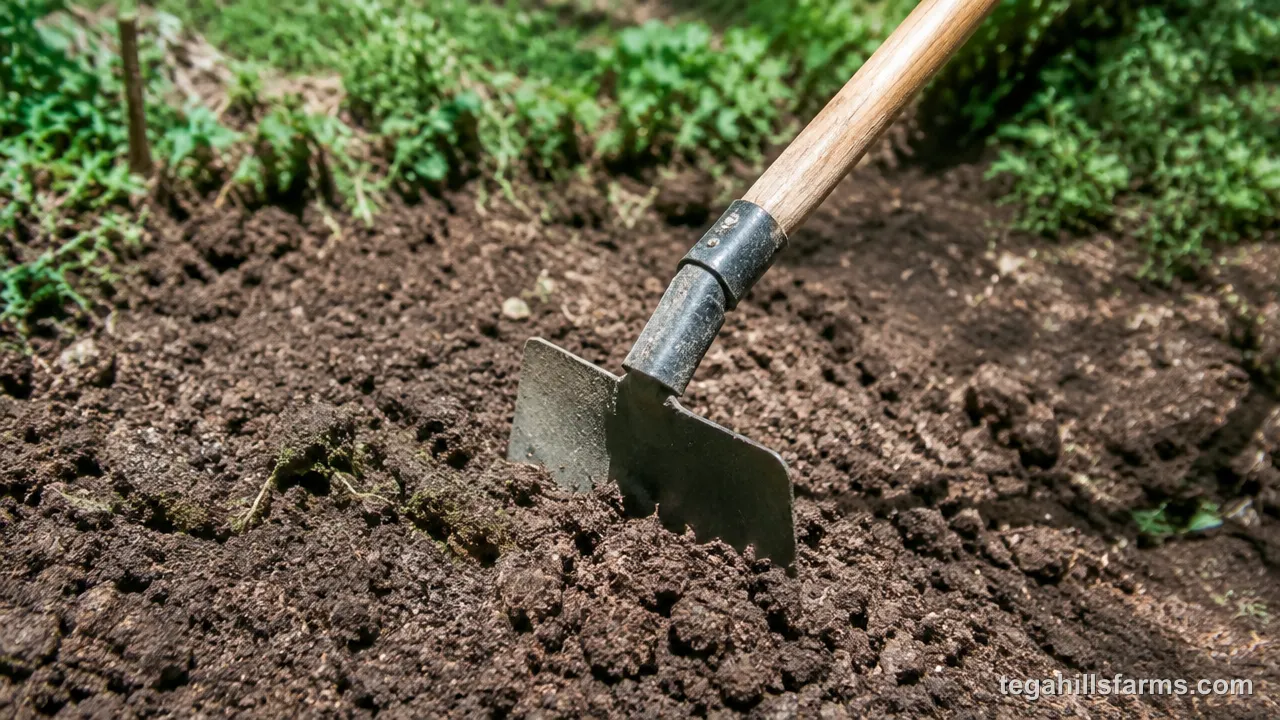
These details matter more on soft soil than you might expect, because the ground itself offers little resistance. Whatever fatigue you feel comes from the tool, not the bed. A well-built hoe stays sharp, tight and comfortable for years. A poorly built one turns an easy job into a tiring one and often fails long before its blade wears out.
Which Blade Type Works Best: Draw, Dutch or Stirrup?
Weeding between rows suits a stirrup or Dutch blade, while a draw blade earns its place for seed furrows and chopping. The stirrup, also called a loop hoe, is a thin band of steel that cuts on both the push and the pull, so it works well in tight spots in raised beds where you can only make short strokes.
The difference between a Dutch hoe and a draw hoe comes down to blade angle. A draw hoe’s blade sits roughly at a right angle to the handle, so you chop down and pull it toward you, which is right for cutting furrows and chopping thicker weeds. A Dutch hoe’s blade runs nearly in line with the handle and faces forward. You push it just under the surface while stepping backward, so you never walk on soil you have just cleared.
On loose beds, each blade type suits a different stroke and job:
| Blade type | Stroke | Best use in soft soil |
|---|---|---|
| Draw | Chop and pull toward you | Seed furrows, chopping thicker weeds |
| Dutch | Push just under the surface | Weeding long rows and open beds |
| Stirrup (loop) | Cuts on push and pull | Quick weeding in tight raised-bed spaces |
Two head variations change how the tool feels. A combined hoe-and-rake head lets you flip the tool to loosen soil and comb out the weeds you just cut, without switching tools. A perforated head lets damp soil pass through its holes instead of piling on the blade, so each pull carries less weight.
Does Blade Steel and Head Attachment Matter?
Both decide how long the edge stays sharp and whether the head is still tight after several seasons of pulling. Carbon steel takes a keen edge and is easy to file back, but it rusts quickly when left with damp soil on it. Tempered spring steel has been heat-treated so it flexes under a levering load and springs back instead of staying bent. A forged head is hammered or pressed into shape from solid steel, which makes it denser and harder to bend than a head cut from thin sheet.
A rust-resistant coating or textured finish slows corrosion in damp soil, and stainless steel bolts at the joint keep the fasteners from rusting in place. How the head is fixed to the handle matters just as much. A head riveted or bolted straight through the socket and handle stays tight under repeated pulling. A loosely fitted head starts to wobble, shifts the blade angle mid-stroke and gets looser each season. If a hard-wearing edge is your priority, start with the best garden hoes with steel blades.
How Long Should the Handle Be, and What Should It Be Made Of?
Working upright with a straight back is what spares your lower back, and that depends on a shaft long enough for the blade to reach the soil without you bending over it. An adjustable or multi-section handle lets you shorten it for raised beds, pots and tight gaps between plants, then lengthen it again for open rows. Its joints need an occasional check, since a section that loosens lets the head twist.
Fiberglass is light, won’t rot and resists snapping, and it needs nothing more than a wipe after use. Steel is strong but heavier and feels cold on early spring mornings. Wood feels warm and absorbs some shock, yet it must be kept dry and oiled, and it can crack if left outdoors.
Weight and grip work together on your hands. A lighter hoe lets your wrists guide the blade rather than hold it up, and a non-slip grip lets you hold the handle loosely without it sliding, so your fingers aren’t clenched through an hour of weeding. For older gardeners and anyone with smaller hands, I’d put both ahead of almost any other feature.
The 5 Best Garden Hoes for Soft Soil of 2026
The hoes I’d trust on loose beds are CKLT 2-in-1 Garden Hoe & Weed Puller 61in, MANXRKUI Draw Hoe 5.5ft, VNIMTI Heavy Duty Garden Hoe 58in, AgroPro Garden Hoe 58in and AgroPro Heavy Duty Garden Hoe 58in. The CKLT pairs a hoe-and-rake head with an adjustable multi-section handle that shortens for raised beds and containers, while the MANXRKUI carries a wide draw blade on a multi-section shaft for long rows. The VNIMTI and both AgroPro models keep things simpler, with fiberglass handles and plain or perforated heads. That setup suits open beds and gardeners who mainly want a comfortable, back-friendly tool for standing work.
#1 CKLT 2-in-1 Garden Hoe & Weed Puller 61in — Best Overall
If your garden mixes raised beds, pots and open rows, this tool adapts to all of them, because its locking handle adjusts up to 61 inches and shortens for tight spots. Flip the head and the rake side pulls weeds out by the root.
Key Specs:
- Head: trapezoid hoe edge plus 3.75-inch rake
- Head material: tempered spring steel
- Handle: 4-section locking, adjustable up to 61 in
- Finish: sand texture finish on the heads
- Hardware: 304 stainless steel bolts and nuts
Detailed Review:
The trapezoid hoe edge slices weeds just under the surface, and turning the tool over brings the rake’s sharp teeth into play. Those teeth grip stubborn weeds and dandelions so they come out with roots attached, which keeps them from regrowing. On loose beds, one tool cuts, loosens and clears without a trip back to the shed.
Both heads are tempered spring steel, so they flex under a hard lever and return to shape rather than bending when the rake side pries out a deep root. A sand texture finish on the heads resists corrosion, and 304 stainless steel bolts and nuts keep the joint tight without rusting in place.
I’d choose this hoe for mixed gardens because the locking sections change its reach. At full length you can weed standing upright, and removing sections brings the head close enough for raised beds, flower pots and narrow gaps between plants. As with any sectioned handle, the joints are worth checking now and then so the head stays square to the soil. If weeding is nearly all you do, the best garden hoes for weeding cover more single-purpose heads worth weighing.
Pros:
- Rake side pulls weeds out with roots attached.
- Locking handle shortens for raised beds and pots.
- Spring steel heads flex back instead of bending.
- Stainless bolts and nuts resist rust at the joint.
Cons:
- Sectioned handle has joints that need occasional tightening.
- Two working heads mean more steel to clean after each session.
Who It’s For:
Gardeners juggling raised beds, containers and open rows will get steady use from this tool, since one head and handle cover weeding, loosening and clearing at different reaches. It also suits anyone who needs to stand upright to protect their back. If you only weed long, open rows, a simpler fixed-length hoe will feel steadier.
Editor’s Verdict:
This is the hoe I’d hang by the beds in a mixed garden, because its rake side and shortening handle replace a second tool.
#2 MANXRKUI Draw Hoe 5.5ft — Best Budget
Gardeners who plant in long rows will appreciate the 6.5-inch-wide forged steel blade, which parts loose soil into neat furrows for seeding and clears weeds along the way. Total length reaches 66 inches.
Key Specs:
- Handle: stainless steel, multi-section, screw-together
- Overall length: 66 in
- Weight: 3.5 lb
- Head attachment: riveted through the handle with double bolt and nut
Detailed Review:
The wide forged steel blade handles the classic draw hoe jobs: chopping out weeds, cutting long furrows for seed and loosening soil between plants. In loose ground its width moves plenty of soil with each pull, so a row opens or clears in fewer strokes. The sharp edge cuts through weeds instead of tearing them.
The head is riveted all the way through the handle with a double bolt and nut, so repeated hard pulls don’t work it loose, which is how many simple draw hoes fail. The handle is stainless steel in multi-section poles that screw together and tighten, and those threads are worth retightening at the start of each season.
With more overall length than the VNIMTI Heavy Duty Garden Hoe 58in, this hoe lets taller gardeners keep a straight back along a row. In small raised beds, that length takes more care to guide between plants. For a forged head and a through-riveted build, it is a budget-friendly way to equip a vegetable garden.
Pros:
- Wide forged blade opens long seed furrows quickly.
- Head riveted through the handle with double bolt and nut.
- Long overall length keeps you upright along rows.
- Budget-friendly way to get a forged steel head.
Cons:
- Screw-together pole sections need occasional retightening.
- Pull-only draw stroke does no cutting on the push.
Who It’s For:
Anyone who plants vegetables in long, straight rows and wants one tool for furrowing, weeding and loosening soil will find this a practical, budget-friendly choice. Taller gardeners gain the reach to stay upright. If most of your growing happens in pots and small raised beds, a shorter, adjustable tool will be easier to steer.
Editor’s Verdict:
Its forged head, riveted through the handle, makes this a dependable draw hoe for gardeners who furrow and weed long rows.
#3 VNIMTI Heavy Duty Garden Hoe 58in — Best Ergonomic Design
When your hands tire or slip during long weeding sessions, the two non-slip grips on this lightweight fiberglass handle help, because they turn tacky in wet conditions. Its flat carbon steel edge clears shallow-rooted weeds.
Key Specs:
- Head: high-strength carbon steel
- Edge: sharp flat edge
- Handle: lightweight fiberglass
- Grips: 2 non-slip grips that turn tacky when wet
- Overall length: 58 in
Detailed Review:
The fiberglass shaft is light and hard to break, so your arms guide the blade instead of carrying its weight. The paired non-slip grips give each hand a set place to hold. Because they turn tacky in wet conditions, the handle doesn’t twist in your palm on a dewy morning or after watering.
At 58 inches long, the hoe is sized for adults to work without stooping, which takes pressure off the lower back during a long session. I’d point older gardeners and anyone with weaker grip strength toward it, since a light, secure handle asks less of the wrist and fingers through an hour of weeding.
The head is high-strength carbon steel with a sharp flat edge that enters the soil cleanly and gives you control over depth. In loose beds that suits shallow-rooted weeds, and the same edge still bites when a patch has settled into hard or wet ground. It also handles clearing roots and tidying soil, so it covers routine bed work without a second tool.
Pros:
- Paired non-slip grips turn tacky and hold when wet.
- Lightweight fiberglass handle resists breaking.
- Sharp flat edge slices shallow-rooted weeds with control.
Cons:
- Carbon steel head needs drying after use to avoid rust.
- Flat edge suits shallow weeds more than deep taproots.
Who It’s For:
If your wrists or fingers tire before the weeds do, this hoe is built around a secure, light hold, and it suits older gardeners and smaller hands well. It also works for anyone weeding beds in damp morning conditions. Gardeners who want one tool for furrows and raking will be better served by a multi-purpose head.
Editor’s Verdict:
Light fiberglass and grips that stay tacky when wet make this an easy hoe on hands and wrists through a long morning of weeding.
#4 AgroPro Garden Hoe 58in — Best Rust-Resistant
Damp beds are hard on bare steel, so the coating on this forged high carbon steel head is what keeps the blade cutting cleanly season after season. Two rivets lock it to a one-piece fiberglass handle.
Key Specs:
- Head: forged high carbon steel with rust-resistant coating
- Blade: wider blade for more coverage per stroke
- Handle: thickened one-piece fiberglass
- Grips: non-slip
- Head attachment: 2 rivets
- Overall length: 58 in
Detailed Review:
If your soil stays wet for days after rain, the coating on the forged high carbon steel head slows the corrosion that would otherwise pit and dull the edge. Because the blade stays sharp, it keeps slicing weeds cleanly instead of dragging through them.
The handle is thickened fiberglass in a one-piece design, so there are no joints to loosen, and it resists bending and breaking under hard use. A pair of rivets reinforces the head where it meets the handle, which keeps it from working loose or falling off over years of weeding. Non-slip grips let the handle sit close in your palm.
At 58 inches overall, it lets you weed standing rather than bent over, which spares your back across frequent sessions. The wider blade covers more ground with each stroke, so open beds and the spaces between rows clear faster. That width takes more care around closely planted seedlings, where a narrower edge would slip between stems more easily.
Pros:
- Coated forged blade holds off rust in damp beds.
- One-piece fiberglass handle has no joints to loosen.
- Two rivets keep the head tight on the handle.
- Wider blade covers more soil with each stroke.
Cons:
- Wide blade needs care around closely spaced seedlings.
- Fixed length can’t shorten for raised beds or pots.
Who It’s For:
Where beds stay wet after rain, or tools sometimes spend a night outside, a coated blade and a handle without joints give you less to worry about. This also suits gardeners who weed open beds standing up. Container and raised-bed growers will find a shortening handle easier to manage.
Editor’s Verdict:
Coated forged steel and a riveted, one-piece handle give this hoe the build to keep cutting cleanly in wet ground for many seasons.
#5 AgroPro Heavy Duty Garden Hoe 58in — Also Great
Sticky, damp soil that clings to a solid blade passes through this hoe’s perforated high-carbon steel head, so each pull stays light and the edge keeps working instead of caking up. It weighs 3.3 pounds.
Key Specs:
- Head: high-carbon steel, perforated
- Handle: integrated fiberglass, no assembly
- Grips: 2 non-slip rubber grips
- Overall length: 58 in
- Weight: 3.3 lb
Detailed Review:
Holes across the head let moist soil fall through instead of building up on the blade, so each stroke meets less resistance and the head stays light as you work. When you till or loosen compacted patches, the perforations also spread the soil more evenly rather than dropping it in clumps.
The high-carbon steel head is hard and wear-resistant, and it resists rust and corrosion in beds that rarely dry out. The integrated fiberglass handle needs no assembly, so there are no sections or screws to loosen, and the structure holds up without bending or breaking.
The CKLT 2-in-1 Garden Hoe & Weed Puller 61in takes the opposite approach, with locking sections that shorten for raised beds and pots. This hoe gives up that flexibility for a single solid shaft with nothing to tighten, which I prefer in open beds where reach never changes. At 58 inches, with two non-slip rubber grips, it gives you a secure hold and the leverage to work standing upright, easing back strain.
Pros:
- Perforated head sheds sticky, damp soil as you work.
- Integrated fiberglass handle needs no assembly.
- Rubber grips keep a secure hold.
- Spreads loosened soil evenly when tilling.
Cons:
- Perforated head needs rinsing so holes don’t clog with soil.
- Integrated handle won’t shorten for containers or tight beds.
Who It’s For:
Beds that turn sticky after rain, or soil you are still loosening from a compacted state, are where this hoe helps, because soil sheds through the head instead of caking on it. It also suits gardeners who want a tool that arrives ready to use. If you mostly weed tight raised beds, a hoe with a shortening handle fits better.
Editor’s Verdict:
Perforations make this a steady choice for damp, clinging soil, and its integrated fiberglass handle gives you nothing to tighten.
Which Hoe Should You Choose for Your Garden?
Match the tool to the beds you work most: a shortening handle for raised beds and containers, a wide draw blade for long rows, and a perforated head for wet or clinging soil.
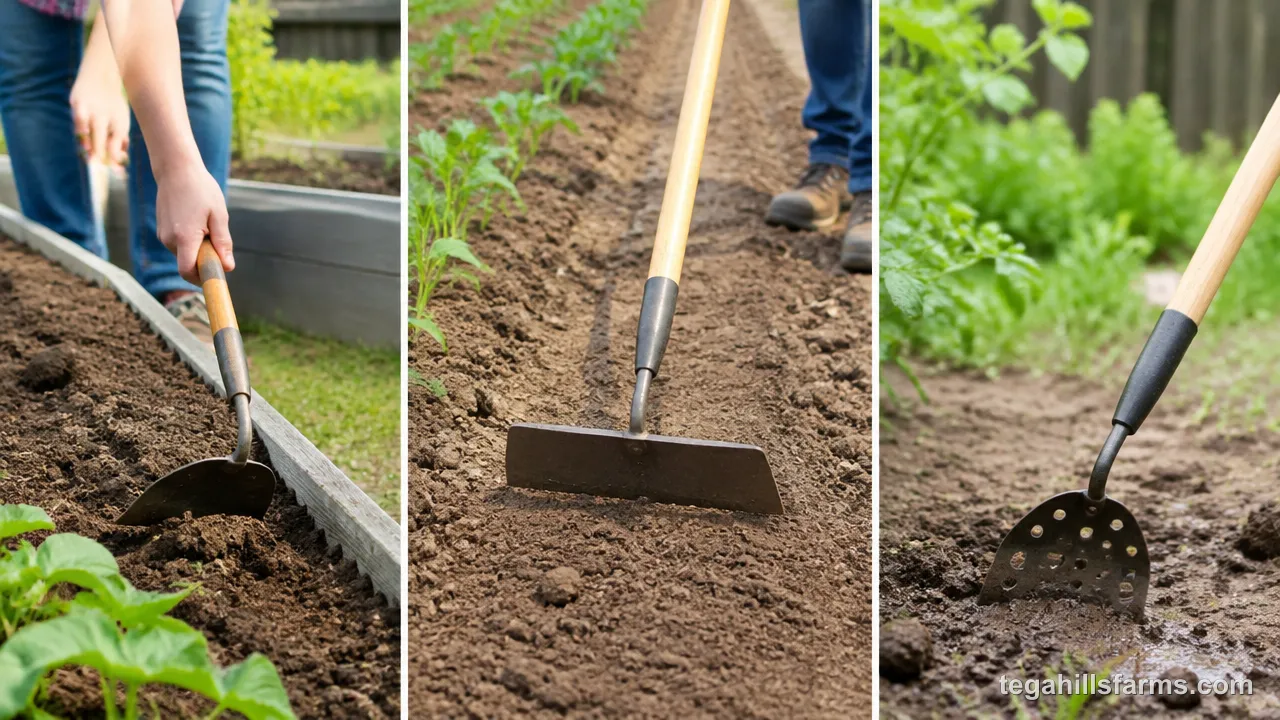
Each garden situation points to a different build:
| Your garden | Pick | Why it fits |
|---|---|---|
| Raised beds, containers, tight spaces | CKLT 2-in-1 Garden Hoe & Weed Puller 61in | Locking sections shorten the handle; rake side pulls roots |
| Long vegetable rows | MANXRKUI Draw Hoe 5.5ft | Wide forged draw blade for furrows; long reach |
| Wet or clinging soil | AgroPro Heavy Duty Garden Hoe 58in | Perforated head sheds damp soil |
| Damp climate, rust concerns | AgroPro Garden Hoe 58in | Rust-resistant coating on a forged head |
| Lighter, more comfortable grip | VNIMTI Heavy Duty Garden Hoe 58in | Lightweight fiberglass handle; grips turn tacky when wet |
In damp climates, the CKLT’s sand texture finish and stainless steel bolts also hold up well if you need its adjustable handle more than a coated one-piece tool. A plain weeding hoe and a multi-purpose tool do different jobs: the flat blades of the VNIMTI and the AgroPro Garden Hoe 58in slice weeds across open ground, while the CKLT also loosens soil and pulls roots, and the MANXRKUI cuts furrows and trenches for planting. Owning two makes sense when your garden mixes open rows with raised beds or pots, with a fixed-length weeding hoe for the rows and the adjustable CKLT for close work.
On cost, the MANXRKUI Draw Hoe 5.5ft is a budget-friendly way to get a forged head and a through-riveted build. If you are working to a tighter limit, garden hoes under $30 are the place to start, and garden hoes under $50 open up a wider mix of heads and handles.
Loose soil lets a hoe blade slide just beneath the surface, and that ease makes it tempting to push deeper than the weeds require. Each deeper stroke lifts buried weed seeds into the light, and the bed you cleared on the weekend can sprout a fresh flush of weeds after the next rain.
How Do You Hoe Soft Soil Without Pulling Up More Weeds?
Keep the blade just under the surface and nearly flat, so it slices weeds where the stem meets the root and leaves the soil below undisturbed. Weed seeds lie dormant deeper in the bed, and a deep cut lifts them into light and warmth where they germinate. Digging in also breaks up the crumbly structure that compost and earthworms built.
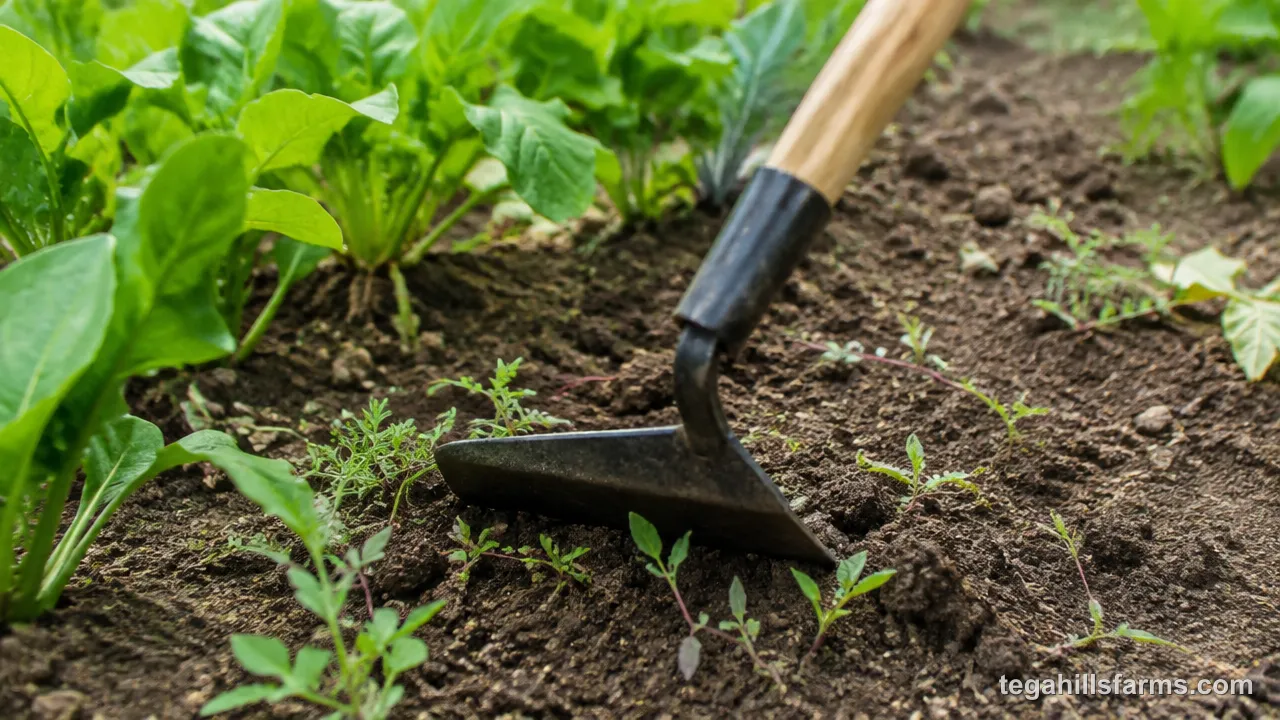
Push a Dutch hoe forward while you step backward, pull a draw hoe toward you in short, shallow strokes, and work a stirrup hoe back and forth, since it cuts in both directions. A combined hoe-and-rake head cuts on the pull, then flips over to rake the cut weeds away.
Choose a dry, sunny day, because cut weeds left on the surface wither in the sun, while in damp soil many reroot and keep growing.
A low blade angle also saves your wrists. When the blade skims flat, your arms simply guide it along. Tilt it down and you end up levering against the soil, which loads the wrist joint with every stroke.
How Do You Sharpen and Store a Garden Hoe?
File the edge along its existing bevel to restore a clean cutting line, then wipe, dry and lightly oil the steel after each use so rust has nothing to start on. Hold a mill file at the angle of that bevel and push it across and away from the edge in smooth strokes, lifting on the return, until the dull line along the edge disappears. A few light strokes on the flat back remove the burr. Following the existing bevel matters because changing it leaves the edge either too blunt to slice or too thin to stand up to stones.
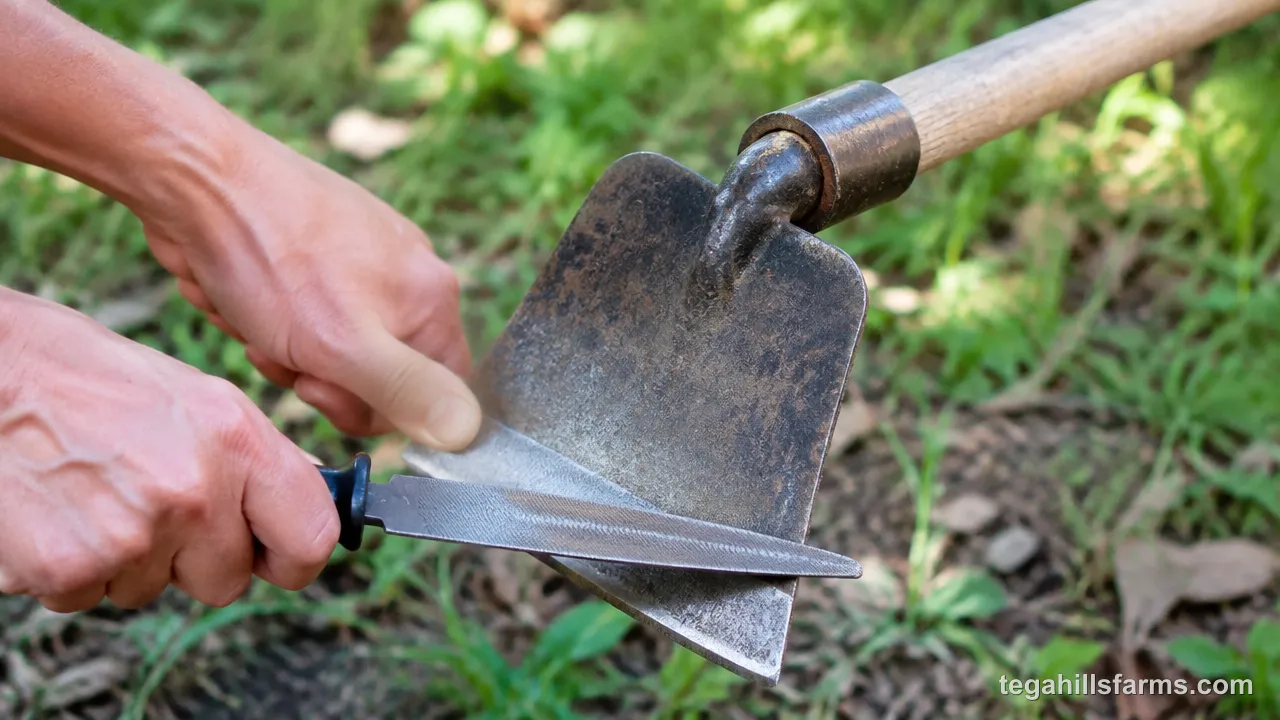
A dull edge tears weeds rather than slicing them, so you push harder, make more strokes and tire sooner, and the extra force travels into your wrists and shoulders.
After each session, scrape off soil, wipe away sap and let the blade dry before the oil goes on. Over winter, keep wooden handles dry and rub in a little linseed oil if the grain feels rough. Fiberglass handles only need cleaning. Hang hoes off the floor in a dry shed or garage, away from damp concrete.
How Can You Tell a Garden Hoe Is Wearing Out?
Trouble usually shows first where the head meets the handle: a wobble there means the fastening has worn, and the blade angle shifts with every stroke. A bent blade or shaft won’t hold a steady cutting depth, and straightening the steel weakens it. Rust pitting along the edge leaves small notches that a file cannot remove without grinding away a lot of steel.
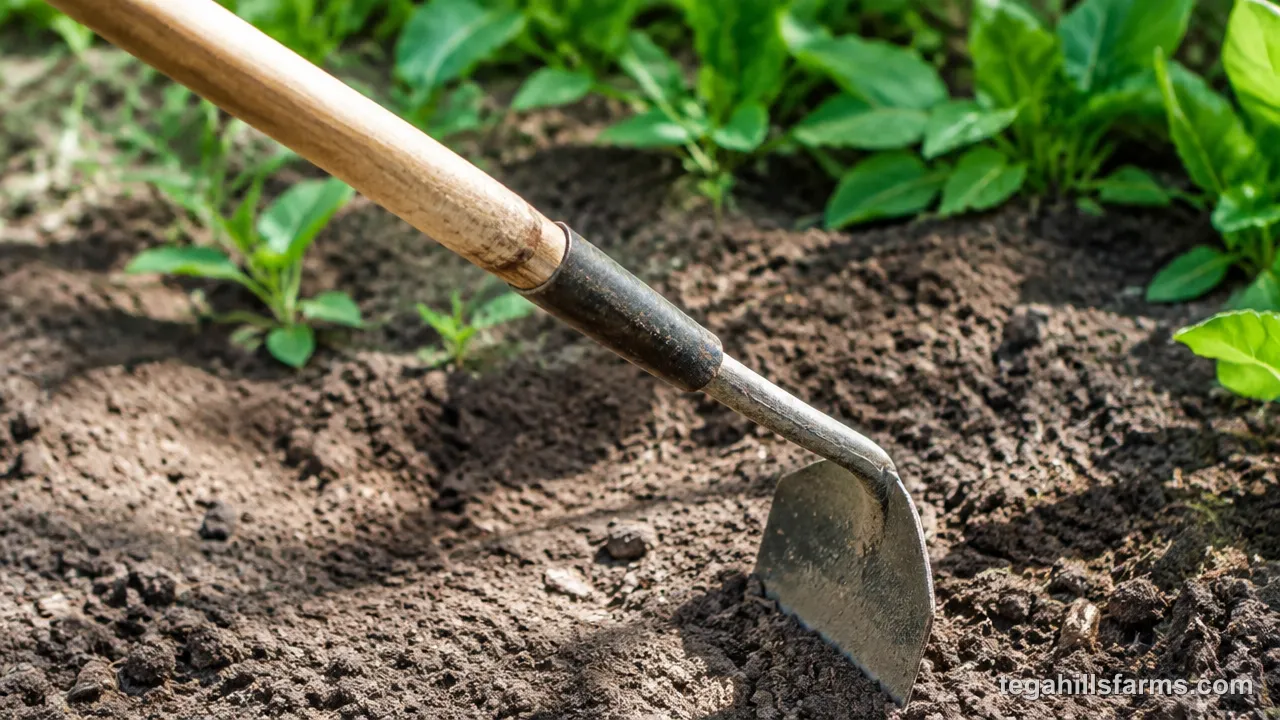
On the handle, cracks or splinters in wood and fraying or splitting in fiberglass mean it could snap under a hard pull, and loose fibers hurt bare hands. Grips that slip or spin force you to clench harder.
Sharpening is enough when the only problem is a dull edge on straight, sound steel. A wobbling head that won’t tighten, a bent or deeply pitted blade, or a cracked handle means replacing the tool, or just the blade if its design allows it. If you’d rather swap worn heads than whole tools, look at the best garden hoes with replaceable blades.
Do You Need a Hand Hoe or Wheel Hoe Instead of a Long-Handled Hoe?
Only at the two ends of the size range: a short hand hoe suits containers and crowded beds, and a wheel hoe pays off on long, straight rows in loose, sandy ground. For most beds in between, a long-handled hoe gives a better balance of reach and control.
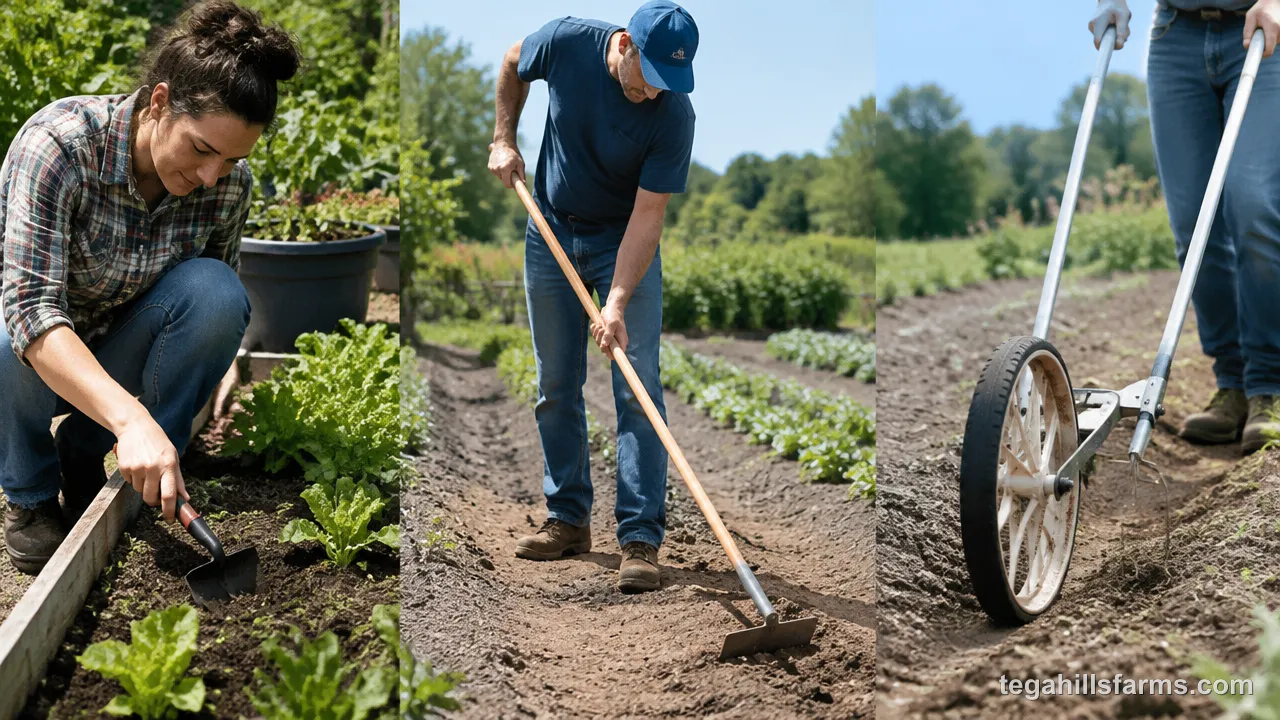
A hand hoe puts the blade close to your eyes, so you can weed around seedlings and between pot plants without disturbing them. You pay for that in posture, since you kneel, sit or bend, which is harder on knees and back than standing work.
A wheel hoe runs a blade behind a front wheel, and you push it along the row at a walking pace, so long rows get weeded with far less effort than stroke-by-stroke hoeing. It needs straight, open rows and loose soil to roll through. It can’t turn tight corners or reach between closely spaced plants, and it is bulky to store. For mixed beds, where you want to stand upright and still steer the blade around plants, the long-handled hoe remains the practical tool.
Write Your Review
No reviews yet. Be the first to share your experience!