

My picks for the best garden hoes under $30 in 2026 are CKLT 2-in-1 Garden Hoe & Weed Puller 61in (Best Overall), MANXRKUI Draw Hoe 5.5ft (Runner Up), COCONUT Garden Hoe Cultivator 45in (Best Budget), YEELOR Heavy-Duty Garden Hoe (Also Great), Lilyvane Draw Hoe 60in (Best for Limited Hand Strength), Nohovu Garden Hoe 58in (Also Great), VNIMTI Heavy Duty Garden Hoe 58in (Also Great), AgroPro Garden Hoe 58in (Also Great) and AgroPro Heavy Duty Garden Hoe 58in (Also Great). Each is a long-handled tool you use standing. They divide into draw blades, plain chopping blades and heads that pair a hoe with a rake or tiller.
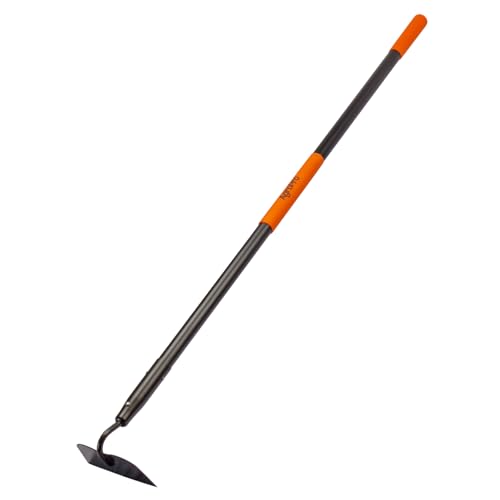
At this price, the differences that matter are physical. The handle may be a single fiberglass shaft or a set of screw-together metal sections. The head may be riveted or bolted on, and the blade may be forged, high-carbon or spring steel, with or without a rust-resistant finish. Those details decide how the hoe feels after a long session and whether it still cuts cleanly next spring.
An inexpensive hoe usually fails in one of two ways: the head works loose and wobbles, or the handle snaps when you lever against a root. Rivets, through-bolts, tight threaded joints and thick fiberglass protect against both failures. Rust on an untreated blade causes a slower kind of wear that dulls the edge season by season.



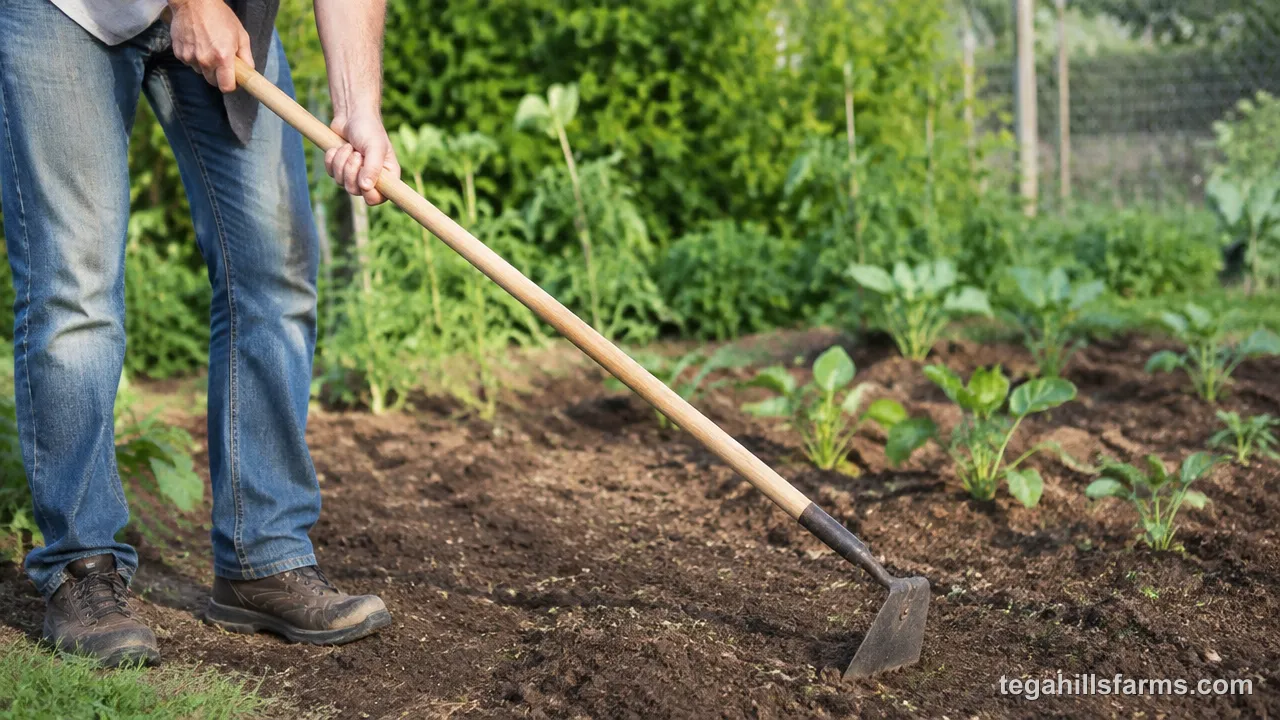
Match the blade to your soil before anything else. Loose, worked beds suit a light combination head, while compacted or sticky ground calls for a heavier forged or perforated blade.
What Should You Look for in a Garden Hoe Under $30?
Blade shape, handle length and material, and blade steel decide whether an inexpensive tool stays comfortable in your hands and keeps cutting past its first season. On a tight budget, look at how the head is built and attached before any extra features, because a sharp blade does little good once it starts to wobble on the handle. A riveted or through-bolted head on a sound handle will outlast a tool with more functions held together loosely. If you want to see how these budget picks fit into the full range of tools, our guide to the best garden hoes covers every blade type and handle style.
Which Hoe Blade Shape Suits Your Weeding Job?
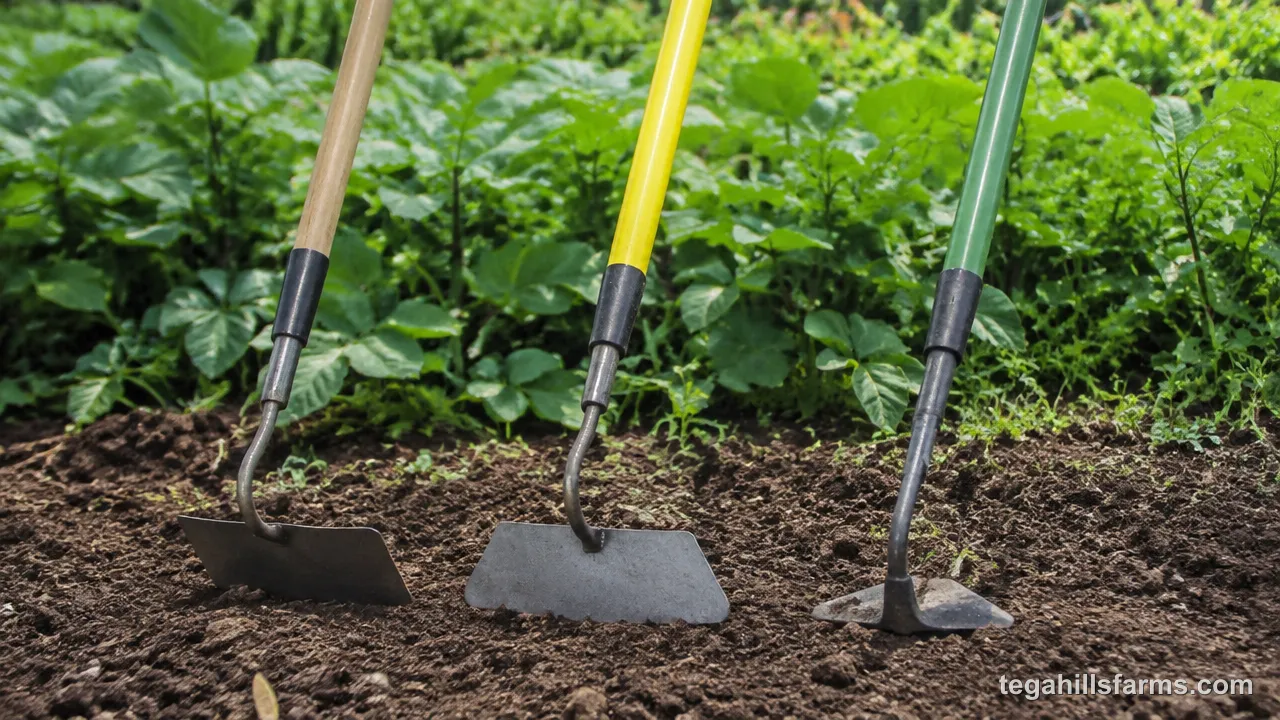
A draw hoe suits open rows and established weeds. A combination hoe-and-cultivator head suits mixed beds where you switch between chopping and loosening. A narrow blade suits crowded plantings where a wide edge would clip stems.
A draw blade sits at a right angle to the handle. You pull it toward you so the edge slices roots just under the surface, and its width clears rows quickly and cuts furrows for seed. The same width makes it clumsy between closely spaced perennials.
A combination head puts a blade on one side and tines or a rake on the other. You can break a surface crust and then pull out the loosened weed without changing tools, though neither side is as broad as a dedicated draw blade. A narrow blade reaches along edging and between plants with little disturbance, but it needs more strokes to cover open ground.
Bed layout and weed size settle the choice. Wide rows reward width, crowded borders reward a slim edge, and weeds with deep roots need tines to pull them out. If weeding is the main job, compare the best garden hoes for weeding.
How Long Should a Garden Hoe Handle Be?
A long handle lets you work standing upright with the blade out in front of you, which keeps your lower back straight. A shorter one brings your hands closer to the head, which gives you more control in raised beds and containers.
Your posture comes from where your hands sit on the shaft. With a long handle you hold it around waist and chest height and let the length do the reaching, so you can weed a whole bed without stooping. Shortened, the same hoe lets you work a container or a narrow gap without swinging the end of the handle into nearby stems.
Adjustable or sectional handles let gardeners of different heights set a comfortable length and shorten it for tight spots. Every joint is a place where wobble can start, though. Locking or screw joints that are cut cleanly and tightened before each session keep the shaft rigid. A loose joint turns every pull into a small twist at your wrist.
Should You Choose a Fiberglass or Metal Handle?
Fiberglass is the better choice if you want a handle that resists snapping and absorbs shock. Metal handles, usually stainless or coated steel in sections, make sense when you need the tool to break down for storage or shorten for small beds.
Fiberglass flexes slightly under load, so a hard strike against a root sends less jolt into your hands. After an hour of chopping, that difference shows up as less ache in your wrists. Metal is stiffer and passes more vibration through, and bare metal gets slick when wet. That is why non-slip grips matter more on a metal shaft.
A one-piece fiberglass handle has no joints to wobble, but it stores at full length. A sectional metal handle packs into a small space, but each joint needs checking.
How the head attaches matters as much as the handle material. A head held by a single fastener can pivot and slowly work loose. Two rivets or a double bolt-and-nut mount stop that rotation. You can retighten bolts, while rivets can’t back out on their own.
Is Carbon Steel or Stainless Steel Better for a Hoe Blade?
Carbon steel is usually the better blade metal because it takes a keener edge, holds it longer and resists bending. Stainless steel resists rust well but tends to dull sooner in gritty soil.
Forged steel is hammered into shape, which makes the head denser and tougher than a blade stamped from sheet. Spring steel is tempered so that it flexes under a hard pry and returns to shape instead of taking a permanent bend. That helps when you lever out roots in hard ground.
The weakness of carbon steel is rust. Coatings and rust-proof treatments slow it on tools stored in damp sheds, and stainless bolts and nuts keep the head joint from seizing or corroding. Blade steel also sets how often you sharpen: a hard carbon edge needs touching up less often than a soft one, though gritty or rocky soil dulls any blade. If blade metal is your deciding factor, compare the best garden hoes with steel blades.
The 9 Best Garden Hoes Under $30 of 2026
In ranked order, the lineup runs CKLT 2-in-1 Garden Hoe & Weed Puller 61in, MANXRKUI Draw Hoe 5.5ft, COCONUT Garden Hoe Cultivator 45in, YEELOR Heavy-Duty Garden Hoe, Lilyvane Draw Hoe 60in, Nohovu Garden Hoe 58in, VNIMTI Heavy Duty Garden Hoe 58in, AgroPro Garden Hoe 58in and AgroPro Heavy Duty Garden Hoe 58in. The real split is between screw-together metal handles that store compactly and fiberglass handles that arrive as one rigid piece. A second split separates draw blades that pull through rows from combination heads that also rake or stir the soil. Raised beds suit the sectional builds, while open vegetable rows and mixed borders suit the wide blades. Anyone easing back strain or working with limited hand strength gets a standing tool in either style.
#1 CKLT 2-in-1 Garden Hoe & Weed Puller 61in — Best Overall
The CKLT suits gardeners who want to loosen crusted soil and pull weeds by the root without carrying a second tool, because its head pairs a trapezoid hoe with a 3.75-inch rake. The handle locks at whatever height your beds need.
Key Specs:
- Head: trapezoid hoe plus 3.75-inch rake
- Material: high-density tempered spring steel with sand texture finish
- Handle: 4-section locking, adjustable up to 61 in
- Hardware: 304 stainless steel bolts and nuts
- Model: 60inBCC
Detailed Review:
A trapezoid hoe on one side and a 3.75-inch rake on the other let you break up compacted soil and then hook out the loosened weed without switching tools. The rake’s sharp teeth grip dandelions and other stubborn weeds firmly enough to lift them with the root attached. Pulling the root keeps the weed from growing back in the same spot.
Both heads are high-density tempered spring steel, so prying a deep-rooted weed out of hard ground doesn’t leave a permanent bend in the blade. A sand texture finish on the heads adds grip and corrosion resistance. The 304 stainless steel bolts and nuts keep the connection tight without rusting in place.
The four-section locking handle extends to 61 inches so you can weed standing upright, which takes the strain off your back. It shortens just as quickly for raised beds, flower pots and the narrow gaps between plants. Every section adds a joint, so I’d check the locks at the start of each session. If one hoe has to cover flower beds, lawn edges and a gravel driveway, this steel and hardware let it handle all three.
Pros:
- Hoe and rake head loosens soil and lifts roots together.
- Tempered spring steel resists bending when you pry.
- Locking handle shortens for raised beds and pots.
- Stainless bolts keep the head connection tight outdoors.
Cons:
- Four handle joints need periodic checks to stay rigid.
- Switching between hoe and rake means flipping the head.
Who It’s For:
Gardeners who fight dandelions and deep-rooted weeds in mixed beds are the natural fit, especially anyone who wants to work standing up to spare their back. If you garden in raised beds or pots, the handle shortens to suit them. Anyone who wants a handle with no joints at all may prefer a fiberglass model.
Editor’s Verdict:
Buy it if you want one tool that breaks crust and pulls weeds by the root, with spring steel and stainless hardware at the points where hoes usually give out.
#2 MANXRKUI Draw Hoe 5.5ft — Runner Up
For straight vegetable rows and seed furrows, the MANXRKUI’s wide forged blade, 5.5 in long by 6.5 in wide, moves a lot of soil with each pull. Its 66-inch length keeps you upright.
Key Specs:
- Handle: stainless steel, multi-section screw-together poles
- Overall length: 66 in (5.5 ft)
- Head mount: riveted through the handle with double bolt and nut
- Weight: 3.5 lb
Detailed Review:
The wide forged blade is built for weeding and tilling, so each pull clears a broad strip of row. Drawing a corner through the soil cuts a straight furrow for seeding. The forged steel head arrives with a sharp edge that parts soil and severs weeds instead of skating over the surface.
The head is riveted all the way through the handle with a double bolt-and-nut structure. Two fastening points stop the head from rocking on the shaft, and that rocking is how a head starts to loosen after repeated chopping.
At 66 inches overall, the stainless steel handle keeps you standing as you work, and the multi-section poles screw together and tighten by hand. At 3.5 lb, it weighs more than the COCONUT Garden Hoe Cultivator 45in at 2.05 lb. That extra mass helps the blade bite on each pull but tires your arms sooner over a long session. If you plant in rows every spring, the wide blade lets you weed, cultivate between plants and cut furrows with one tool.
Pros:
- Wide forged blade clears a row in fewer strokes.
- Double bolt-and-nut mount keeps the head from loosening.
- Long handle lets taller gardeners work fully upright.
- Sharp edge cuts clean seed furrows.
Cons:
- Heavier build tires your arms over long sessions.
- Screw-together poles need tightening before each use.
Who It’s For:
Vegetable growers who sow in long, straight rows will like a blade that weeds and cuts furrows with the same pull. Taller gardeners also benefit from the long reach. If you want a lighter tool to carry around small flower beds, look at the COCONUT Garden Hoe Cultivator 45in, which weighs noticeably less.
Editor’s Verdict:
Pick the MANXRKUI for row gardening, where its wide forged blade and double-bolted head are built for steady pulling through open beds.
#3 COCONUT Garden Hoe Cultivator 45in — Best Budget
Small flower beds and loose soil suit the COCONUT well: one end chops weed roots with a hoe blade, and the other stirs the soil with 3 steel prongs. At 2.05 lb, it stays easy on your arms.
Key Specs:
- Design: double-sided, hoe blade plus 3-prong steel tiller
- Overall length: 45 in
- Handle: steel, 1 in diameter, non-slip grip
- Assembly: 3 poles, use 1, 2 or all 3
- Weight: 2.05 lb
- Storage: hang hole
Detailed Review:
Flipping the handle switches between the hoe blade, which digs out dirt and chops weed roots, and the tiller end, whose 3 steel prongs stir the soil and loosen small weeds. That double-sided head covers most jobs in a small vegetable or flower bed. It is not meant for hard soil, so keep it to beds that are already loose.
The steel handle is 1 inch in diameter with a non-slip grip, slim enough to steer into tight corners of a backyard bed. At 2.05 lb, it moves easily, so you can work through a bed without your arms tiring quickly. The trade-off is that there is little mass behind the blade on crusted ground.
The handle comes as 3 poles. Join all three for the full 45-inch length, which cuts down on bending, or use 1 or 2 for close work in containers. A hang hole lets you store it on a wall hook, off a damp floor. If you want an affordable tool for light beds, a hoe, a tiller and an adjustable length in one purchase cover most of what a small garden needs.
Pros:
- Double-sided head chops roots and stirs soil without switching.
- Light 2.05 lb weight keeps arms fresh in small beds.
- Three-pole handle adjusts for containers or standing work.
- Hang hole makes wall storage simple.
Cons:
- Not built for hard or compacted soil.
- Full length still has taller gardeners stooping.
Who It’s For:
Anyone tending small flower beds, patio borders or a compact vegetable plot in loose soil will find this a light, easy tool to handle. It also suits gardeners who like to work close to their plants with a shortened handle. If your ground is compacted, the CKLT 2-in-1 Garden Hoe & Weed Puller 61in is a better match because it handles hard soil.
Editor’s Verdict:
Choose it for light, loose-soil beds, where having a hoe and a tiller on one handle with an adjustable length matters more than brute strength.
#4 YEELOR Heavy-Duty Garden Hoe — Also Great
The YEELOR puts a 6.3-inch forged steel head on a 5-foot stainless handle and weighs just 2.4 lb, so long sessions of loosening, furrowing and leveling stay light work. Its threaded joints resist loosening.
Key Specs:
- Head: forged steel with rust-proof treatment, 6.3 in
- Handle: stainless steel, segmented, 5 ft
- Joints: lathe-threaded connections
- Head mount: anti-loosening bolts
- Weight: 2.4 lb
Detailed Review:
One blade loosens soil, removes weeds, digs furrows for sowing and levels the bed, so routine maintenance needs only one tool. The 6.3-inch head has a sharp edge that cuts into the soil, and it is firmly connected to the shaft.
The forged steel head has a rust-proof treatment, which helps a tool that spends its off days in a damp shed. Anti-loosening bolts fix it to the stainless steel handle, and the handle sections join with lathe-threaded connections. Machined threads seat precisely, which keeps the sections from working loose mid-row while still letting you break the handle down for storage.
At 2.4 lb, the YEELOR is lighter than the AgroPro Heavy Duty Garden Hoe 58in at 3.3 lb. The lower weight eases strain on your shoulders and joints over a long stretch of weeding, though the heavier AgroPro drives more force into packed ground. For a gardener with a mix of flower beds and a small vegetable patch, my pick would be this one, because one light tool covers every soil job there.
Pros:
- Light 2.4 lb build eases shoulder strain.
- Rust-proof forged head suits damp storage.
- Lathe-threaded joints resist loosening during use.
- Segmented handle breaks down for compact storage.
Cons:
- Segmented joints still need an occasional check.
- Lighter head carries less force into packed ground.
Who It’s For:
Gardeners who want one light, upright tool for loosening, furrowing and leveling across mixed beds will find it easy to live with. It also suits older gardeners and anyone with joint pain who needs to work without bending. If you would rather never deal with handle joints, a fiberglass hoe is the simpler choice.
Editor’s Verdict:
Count on it for all-round bed maintenance where low weight matters, with a rust-treated forged head and threaded joints that stay tight.
#5 Lilyvane Draw Hoe 60in — Best for Limited Hand Strength
With limited grip or wrist strength, a push-and-pull stroke is easier to keep up than repeated chopping, and the Lilyvane’s pre-sharpened forged blade is built for exactly that motion. The 60-inch handle keeps you upright.
Key Specs:
- Blade: forged steel, pre-sharpened straight edge
- Handle: 60 in stainless steel, screw-together splicing sections
- Finish: rust-resistant handle
- Motion: push-and-pull draw stroke
- Model: MXCT-HJK-YS-4jie
Detailed Review:
The pre-sharpened straight edge on the forged steel head slices through surface weeds and tough roots with minimal effort. You slide the blade back and forth just under the surface instead of lifting and dropping it, which moves the effort away from your wrists and shoulders. That makes this hoe a good fit for older or less physically strong gardeners.
The same edge loosens compacted soil, cuts furrows and trims grass edges in one smooth motion. It gives precise control along borders and near roots, so you can work close to established plants without damaging them. It still covers open beds at a steady pace.
The 60-inch stainless steel handle splices together with screw joints, so you can work upright and take it apart for storage, and the steel resists rust outdoors. The rope included in the box helps during assembly; cut it off afterward or leave it on to reduce wobble. For stiff or weak hands, I would choose this sliding stroke over a chopping hoe, because the work comes from walking the blade along rather than gripping hard on impact.
Pros:
- Pre-sharpened edge cuts weeds with little force.
- Push-and-pull stroke spares wrists and shoulders.
- Rust-resistant stainless handle tolerates outdoor storage.
- Precise control lets you weed close to plant roots.
Cons:
- Screw-together joints need tightening to stay wobble-free.
- Assembly rope must be cut away or left hanging.
Who It’s For:
If your grip, wrists or shoulders tire quickly, this stroke is worth learning, because you slide the blade instead of swinging it. Older gardeners and anyone easing back and knee strain benefit from the upright stance. If you prefer a single-piece handle with nothing to assemble, a fiberglass model may suit you better.
Editor’s Verdict:
Reach for the Lilyvane when hand strength is the limit; its pre-sharpened edge and sliding stroke keep weeding steady without hard chopping.
#6 Nohovu Garden Hoe 58in — Also Great
A single-piece fiberglass handle leaves nothing to screw together or tighten, and the Nohovu pairs it with a 6.3-inch heat-treated high-carbon steel blade that covers ground quickly. Two non-slip grips keep your hands in place.
Key Specs:
- Blade: heat-treated high-carbon steel, 6.3 in wide, rust-resistant coating
- Handle: thickened fiberglass, single integrated piece
- Head mount: double-riveted
- Overall length: 58 in
- Grips: 2 non-slip
- Weight: 2.7 lb
Detailed Review:
The high-carbon steel blade is heat-treated for toughness, and its 6.3-inch sharp edge covers a wide strip with each pass. The edge is honed before it ships, so it lifts out weed roots cleanly from the first use. A coating on the blade guards against rust and corrosion, so a session in damp soil doesn’t leave the steel spotted.
Two rivets join the head to the handle, which keeps it from loosening as you work. The handle is a single integrated piece of thickened fiberglass, so there are no joints to wobble and the shaft resists bending and breaking.
At 58 inches overall and 2.7 lb, the hoe lets you reach awkward weeds at a comfortable angle while standing, which reduces back strain. The two non-slip grips add friction between the handle and your hands, so they stay put when you pull hard against a root. If you want a hoe that is ready to use the moment it arrives, the riveted head and solid handle protect the two spots where hoes commonly fail.
Pros:
- Double-riveted head resists loosening during hard pulls.
- Integrated fiberglass handle has no joints to wobble.
- Coated high-carbon blade resists rust and corrosion.
- Wide 6.3-inch blade covers ground quickly.
- Non-slip grips keep your hands steady.
Cons:
- Single-piece handle can’t break down for compact storage.
- Fixed length can’t shorten for raised beds or containers.
Who It’s For:
When you’d rather skip assembly and joint checks, this hoe is ready as soon as it arrives. It suits open beds and vegetable rows, where a wide blade saves passes. If you need to shorten the handle for raised beds or containers, a sectional model will serve you better.
Editor’s Verdict:
Trust the Nohovu for open-bed weeding where a rigid handle and riveted head matter more than compact storage.
#7 VNIMTI Heavy Duty Garden Hoe 58in — Also Great
The VNIMTI is aimed at shallow-rooted weeds in hard or wet soil, and its sharp, flat carbon steel edge bites in where a dull blade would skid. Its two grips turn tacky when wet.
Key Specs:
- Head: high-strength carbon steel, sharp flat edge
- Handle: fiberglass, lightweight
- Grips: 2 non-slip, tacky in wet conditions
- Overall length: 58 in
- Model: HT_33
Detailed Review:
A sharp flat edge drops into the soil at a steep angle and gives you control over depth, so you can shave off shallow-rooted weeds without churning up the bed. High-strength carbon steel keeps that edge firm in hard or wet soil, where a weaker blade deflects or dulls.
The fiberglass handle is light and hard to break, and its two non-slip grips turn sticky when wet. That helps on dewy mornings or after watering, when a smooth handle slips and you have to clench harder to keep control. Clenching like that tires your hands quickly.
The 58-inch length lets adults work upright, which takes pressure off the back over a long session. I’d hand this hoe to someone who waters heavily or weeds after rain, because both the grips and the edge suit damp ground. Beyond surface weeds, the edge also lifts out roots and smooths the soil as you go.
Pros:
- Sharp flat edge controls depth in hard soil.
- Grips turn tacky when wet for a secure hold.
- Light fiberglass handle resists breaking.
- Long handle lets adults work upright.
Cons:
- Flat edge is aimed at shallow roots, not taproots.
- Long handle feels cumbersome in tight containers.
Who It’s For:
Wet ground, irrigated vegetable plots and beds you work after rain need a grip that won’t slide, and this hoe provides it. It suits adults who want an upright tool for clearing shallow-rooted weeds. If deep taproots are your main problem, a combination head that pulls roots out whole will serve you better.
Editor’s Verdict:
Rely on the VNIMTI in damp or hard ground, where its sharp flat edge and wet-grip handle keep you in control.
#8 AgroPro Garden Hoe 58in — Also Great
Two rivets lock this AgroPro’s forged high-carbon steel head to a thickened fiberglass handle, so the joint that loosens first on many hoes stays tight when you pull through matted weeds. Its one-piece handle needs no tightening.
Key Specs:
- Blade: forged high-carbon steel, rust-resistant coating
- Handle: thickened fiberglass, one-piece, non-slip grips
- Head mount: double-reinforced with 2 rivets
- Overall length: 58 in
- Model: BGH361XL
Detailed Review:
The blade is forged from high-carbon steel, which gives it a tough head with a sharp edge for quick weed removal. A rust-resistant coating covers the blade surface. The wider blade covers more soil per stroke, so a bed of young weeds goes faster.
Two rivets reinforce the joint between head and handle, which cuts the risk of the head loosening or falling off. Combined with the one-piece handle, that leaves no handle joint that can work free mid-session.
The thickened fiberglass resists breaking and bending under hard use, and the non-slip grips fit closely to your palm. Because the grips hold without hard squeezing, your forearms tire less over long rows. At 58 inches overall, the hoe lets you stand straight and avoid the back strain that comes from frequent bending. If you weed a vegetable patch every week, the coated forged edge and riveted joint keep this hoe working season after season.
Pros:
- Forged high-carbon blade holds a sharp edge.
- Rust-resistant coating protects the blade between uses.
- Double rivets keep the head from loosening.
- One-piece fiberglass handle resists bending.
Cons:
- One-piece handle takes up its full length in storage.
- Fixed length can’t shorten for containers or raised beds.
Who It’s For:
Weekly weeders with open vegetable rows or wide borders will like a hoe that needs no assembly and has no handle joints to check. It suits anyone who wants to stand straight while working. If you store tools in a tight space or garden mostly in containers, a sectional handle will fit your routine better.
Editor’s Verdict:
Expect steady service from this AgroPro, since forged high-carbon steel, a coated blade and a double-riveted head give it a sound build for regular weeding.
#9 AgroPro Heavy Duty Garden Hoe 58in — Also Great
Sticky or damp soil clings to a solid blade and drags on every stroke, while this AgroPro’s perforated high-carbon steel head lets that soil fall through. At 3.3 lb, it has weight for compacted ground.
Key Specs:
- Head: high-carbon steel, perforated, rustproof
- Handle: integrated fiberglass, no assembly
- Grips: 2 non-slip rubber
- Overall length: 58 in
- Weight: 3.3 lb
Detailed Review:
The perforated head breaks the suction that sticky or damp soil forms against a solid blade, which cuts resistance and keeps each stroke smooth. The holes also spread soil more evenly as you till, so the bed stays level instead of building ridges where each stroke ends.
High-carbon steel gives the head hardness and wear resistance, and it is rustproof and corrosion-resistant for a tool that often comes back muddy. The integrated fiberglass handle needs no assembly, so there are no sections to screw together or loosen. It is built not to bend or break.
At 3.3 lb, it is heavier than the Nohovu Garden Hoe 58in at 2.7 lb. The extra weight adds leverage when you loosen compacted soil, though your shoulders feel it sooner on a long session. Two non-slip rubber grips give a secure hold along the 58-inch handle, and that length reduces how far you need to bend. If your soil holds water after rain, a perforated head saves you from stopping to scrape the blade clean.
Pros:
- Perforated head sheds sticky, damp soil.
- No-assembly fiberglass handle has no joints to loosen.
- Rubber grips give a secure hold.
- Extra weight drives the blade into compacted soil.
Cons:
- Heavier build tires shoulders faster on long sessions.
- Fixed-length handle won’t shorten for containers.
Who It’s For:
Heavy, moisture-holding soil that clogs a solid blade is where this hoe makes sense, along with compacted beds that need loosening. It suits gardeners who want a rigid handle that is ready to use. If you weed lightly in small beds, the lighter YEELOR Heavy-Duty Garden Hoe is easier to carry around.
Editor’s Verdict:
Get this AgroPro when your soil sticks to the blade, because the perforated head and rigid fiberglass handle keep the work smooth in damp, compacted beds.
Which Garden Hoe Should You Choose for Your Yard?
Match the head to your soil and the handle to how you work: a combination head for mixed weeding, a wide draw blade for rows, and a rigid fiberglass shaft if you never want to tighten a joint.
- Go with the CKLT 2-in-1 Garden Hoe & Weed Puller 61in if you want a hoe and a weed puller in one tool, with a handle that shortens for raised beds.
- Vegetable rows call for the MANXRKUI Draw Hoe 5.5ft, whose plain, wide draw blade also cuts seed furrows.
- Small flower beds in loose, worked soil suit the COCONUT Garden Hoe Cultivator 45in, the affordable way to get a hoe and a tiller on one handle.
- If you want one light hoe for loosening, furrowing and leveling, the YEELOR Heavy-Duty Garden Hoe has threaded joints that stay tight.
- When your wrists, arms or shoulders tire quickly, the Lilyvane Draw Hoe 60in replaces repeated chopping with a push-and-pull stroke.
- A fiberglass handle that comes as one piece points to the Nohovu Garden Hoe 58in, the AgroPro Garden Hoe 58in or the AgroPro Heavy Duty Garden Hoe 58in.
- Damp or hard ground favors the VNIMTI Heavy Duty Garden Hoe 58in, whose grips turn tacky when wet.
Soil type narrows the field further. Compacted ground needs a sturdy edge and some weight behind it, so the CKLT’s spring steel head or the heavier AgroPro Heavy Duty works better there than a light tiller. Loose, crumbly beds let a light tool do the job without strain, and if most of your garden is like that, look at the best garden hoes for soft soil. Sticky soil that clings after rain is where the perforated AgroPro Heavy Duty head pays off, because the holes let soil fall away instead of building up on the blade.
A weed sliced off on a damp, cloudy morning can settle its roots back into the soil, while a blade dragged too deep turns up buried weed seeds that sprout behind you. Get the timing or the depth wrong, and the same bed fills with weeds again soon after, leaving you with a sore back and nothing to show for the work.
How Do You Hoe Weeds So They Stay Gone?
Hoe on a dry, sunny day while weeds are still small, keep the blade just below the surface, and leave the cut weeds lying on top to dry out. Sun and dry air shrivel cut seedlings before their roots can grip the soil again. Young weeds also haven’t built up the root reserves they would need to regrow.
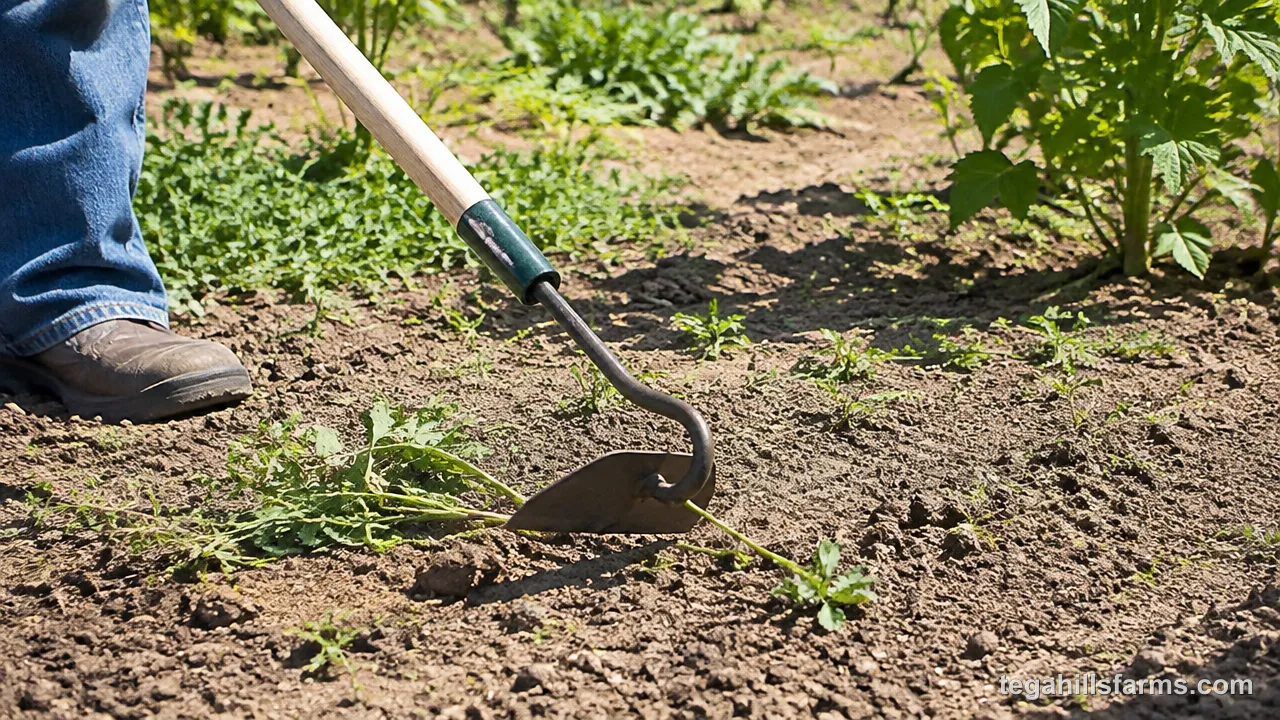
Run the edge just under the surface so it cuts stems from their roots without lifting deeper soil. Dormant weed seeds sit in that deeper layer waiting for light, so turning it up starts the next flush of weeds.
Walk backward as you work, so your feet land on ground you haven’t hoed yet. That keeps you from pressing the loosened soil back around the cut roots.
Blade style changes the stroke. With a draw blade, you set the edge, pull it toward you to slice and drag the weeds, then push it back to reset. A stirrup-style blade, a loop of steel open in the middle, scuffs back and forth just under the surface and cuts on both strokes. That suits wide patches of small seedlings, but it has less bite on established roots.
How Do You Keep a Budget Hoe Sharp and Rust-Free?
After each session, knock the soil off the blade, dry it and wipe on a light coat of oil. That habit keeps rust from pitting the edge, and a pitted edge drags through soil and dulls faster.
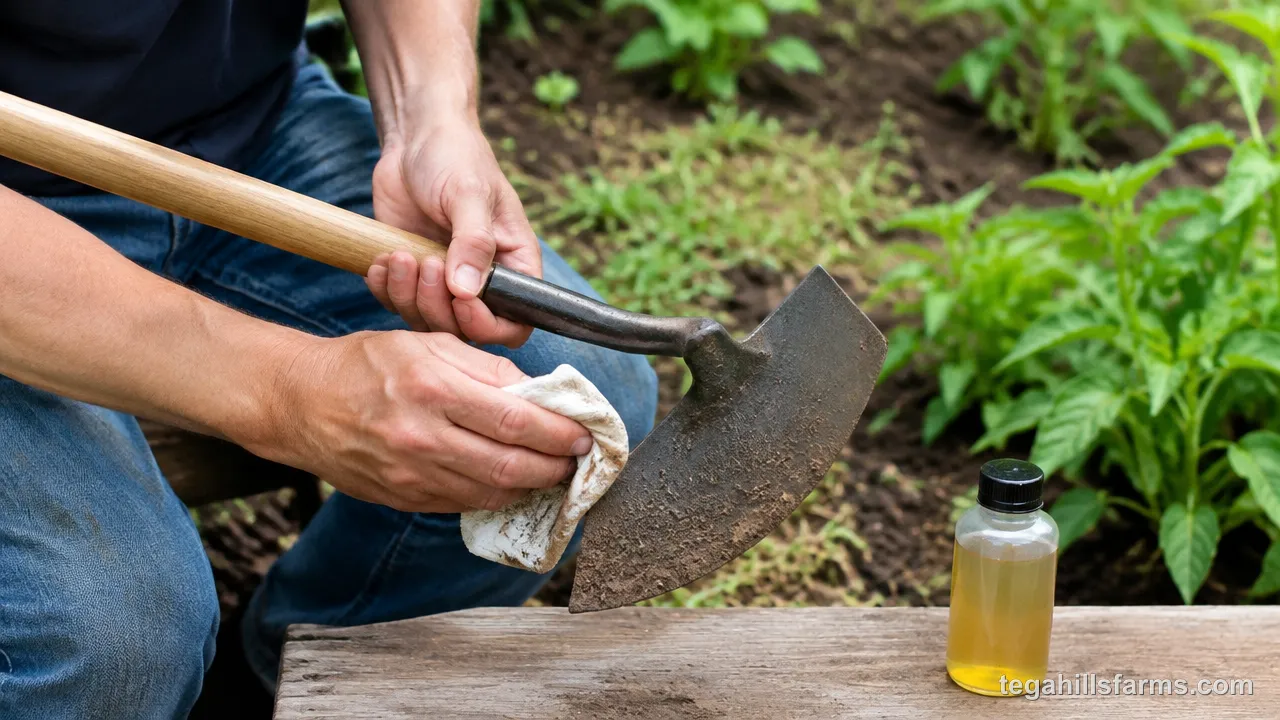
Touch up the edge with a flat file whenever the blade starts skating over weeds instead of slicing them. File along the original bevel, stroking toward the cutting edge, and stop once you feel a slight burr.
Check the bolts, rivets and sectional joints at the same time. Tighten any bolt or screw joint that has started to turn, and watch a riveted head for play that can’t be taken up. Store the hoe hanging or upright, off damp ground, because a blade resting on soil or a concrete floor draws moisture even in a dry shed.
When the blade is fixed to the head, the edge you file is the only one you get, so regular care decides how long the hoe lasts. If you would rather swap a worn edge than nurse it along, look at the best garden hoes with replaceable blades.
How Can You Tell a Budget Hoe Is Wearing Out?
A hoe that only needs sharpening still has a tight head, a straight blade and a sound handle. A hoe that is wearing out has a wobbling head, a bent blade, cracks or splinters in the handle, or joints that loosen again right after you tighten them. A file brings back a dull edge, but those other faults keep returning however often you fix them.
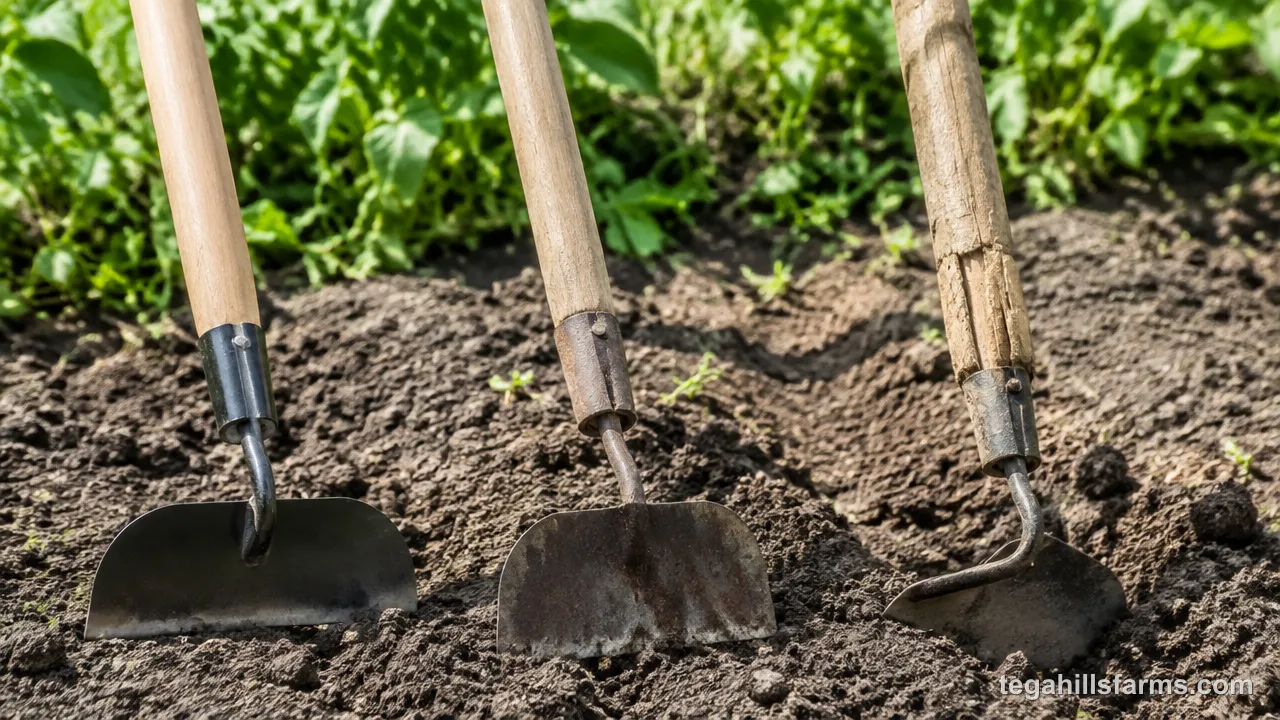
A head that rocks on its fasteners has usually worn its holes out of shape, so tightening won’t seat it again. A blade bent out of line cuts unevenly and tends to bend further at the same weak point. Splintering fiberglass sheds fibers that work into your palms, and a cracked metal section can fold under a hard pull.
Heavy clay, rocky ground and daily use push an inexpensive hoe past what its head and handle were built for. In those conditions, stepping up makes sense. The best garden hoes under $50 are the next tier to look at, and garden hoes under $100 suit daily work in hard ground.
Write Your Review
No reviews yet. Be the first to share your experience!