

My picks for garden hoes under $50 are the MANXRKUI Draw Hoe 5.5ft (Best Overall), YEELOR Heavy-Duty Garden Hoe (Runner Up), Lilyvane Draw Hoe 60in (Best for Limited Hand Strength), Nohovu Garden Hoe 58in (Also Great), Truper Lane Hoe No. 3 54in (Best Durability), VNIMTI Heavy Duty Garden Hoe 58in (Also Great), AgroPro Garden Hoe 58in (Also Great), Lilyvane Garden Weeding Hoe 55in (Best Budget) and AgroPro Heavy Duty Garden Hoe 58in (Best Easy Assembly).
At this price, the head and the handle joint decide how long a hoe stays useful. A forged, high-carbon steel head with a rust-resistant coating holds its edge through a season of chopping, while a thin stamped blade can roll at the edge in clay. The handle matters just as much: one-piece fiberglass stays rigid and needs no assembly, while screw-together stainless poles break down for storage but only stay steady if the threads stay tight.
The worry with an inexpensive hoe is rarely the first afternoon. It is the head that starts to wobble on the handle by midsummer, or a handle so short that every stroke pulls on your lower back. A head riveted or bolted through the handle, and a length that lets you stand upright, solve both problems before they cost you a season.


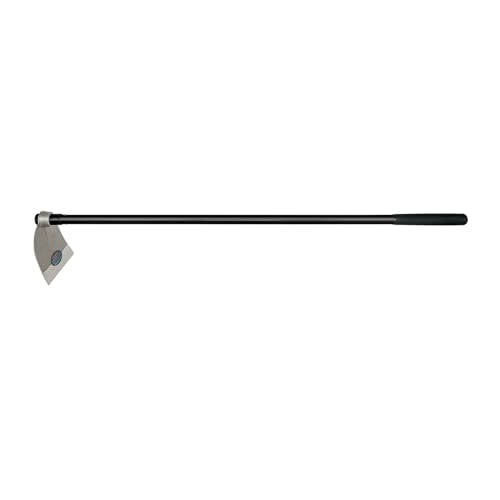

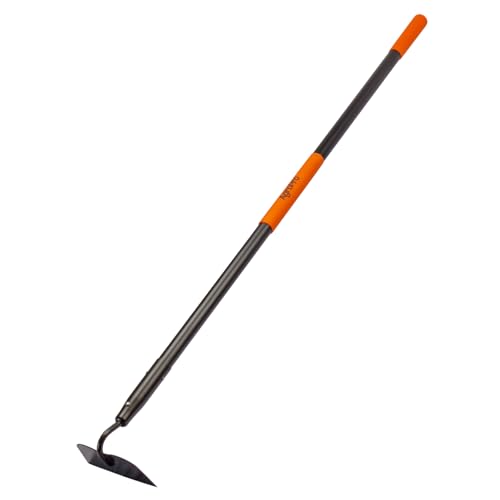


If your grip or wrists tire quickly, look at weight and stroke style before blade width. A lighter hoe drawn back and forth asks less of your forearms than a heavy one swung to chop.
What Type of Hoe Works Best for Weeding?
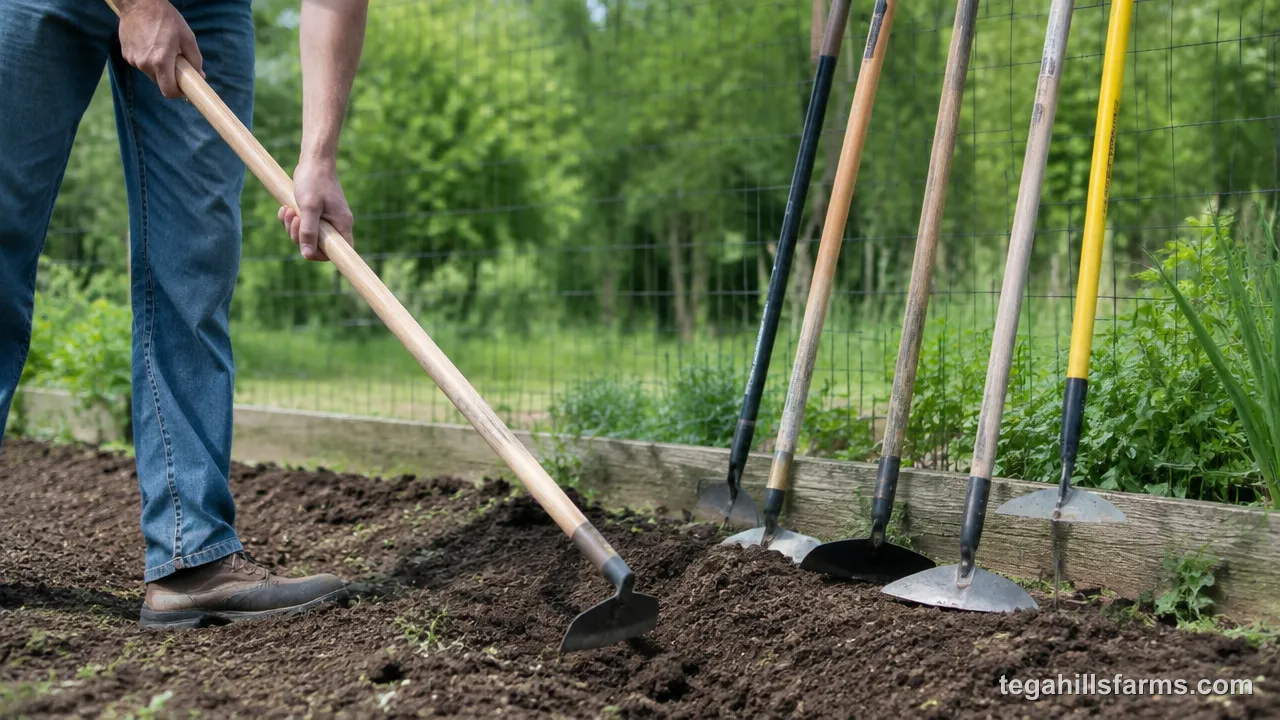
Rooted weeds and heavier soil call for a draw hoe, shallow sweeping across wide beds suits a stirrup hoe, and Dutch and onion hoes cover paths, rows and tight spots.
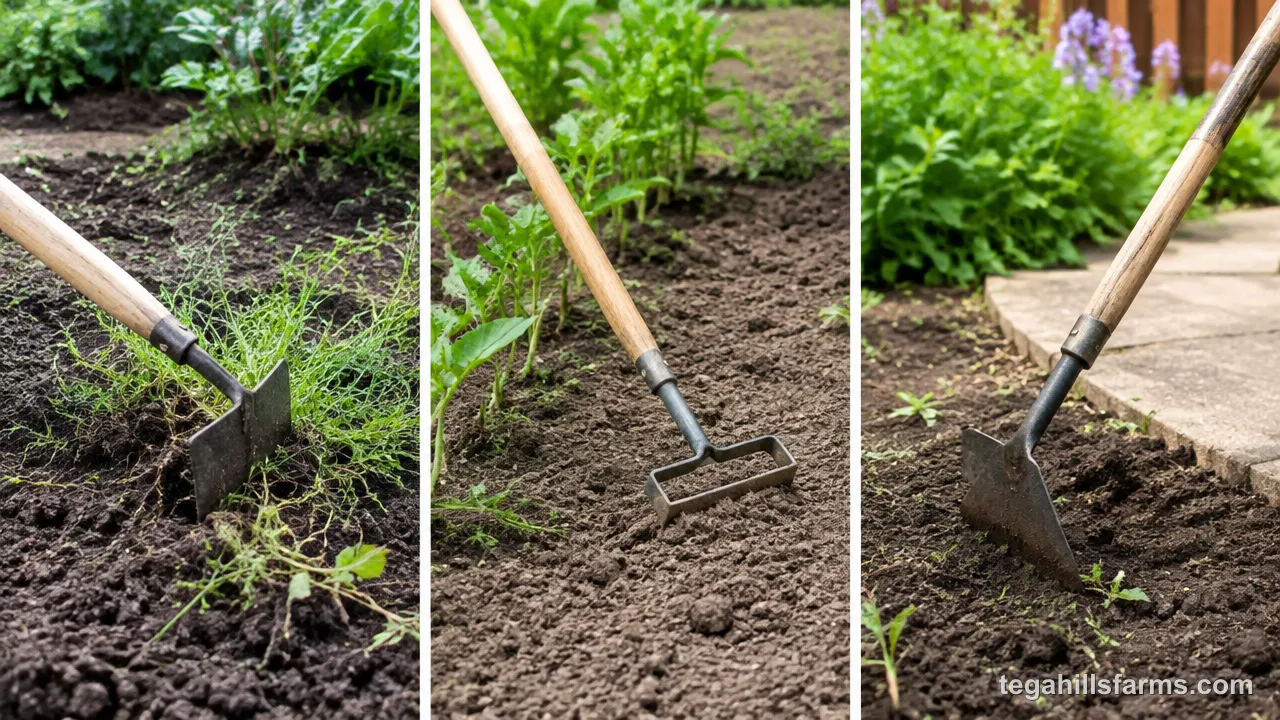
A draw hoe has a flat blade set at a right angle to the handle, and you pull it toward you in a chopping or scraping stroke. That angle lets the edge bite below the crown of a weed and cut the root. The same blade also breaks up crusted soil and drags a straight furrow for seed.
A stirrup hoe has a loop of thin steel that cuts on both the push and the pull, skimming just under the surface. It clears young weeds across a wide bed quickly, but the light blade bounces off established roots and hard ground.
A Dutch hoe has a forward-facing blade that you push while walking backward. It slices weeds at the surface along paths and between rows, and you never step on the soil you have worked. An onion hoe has a narrow, shallow blade that slips between close plantings in raised beds and tight corners, where a wide blade would clip stems.
If you are buying one inexpensive tool, a long-handled draw-style hoe is the practical choice. One flat steel blade weeds, loosens soil and cuts furrows, jobs that would otherwise take two or three specialized hoes, so the hoes I recommend under $50 all follow this layout. When weeding is the only job and your beds are already loose, the best garden hoes for weeding are worth a look, since a stirrup or Dutch blade clears young growth faster. If you want to look beyond this budget and compare every blade style, our guide to the best garden hoes covers the full range.
What Should You Look for in a Garden Hoe on a Budget?
Whether an inexpensive hoe still cuts cleanly and feels steady after a full season comes down to how the blade is made and how the handle is built and attached.
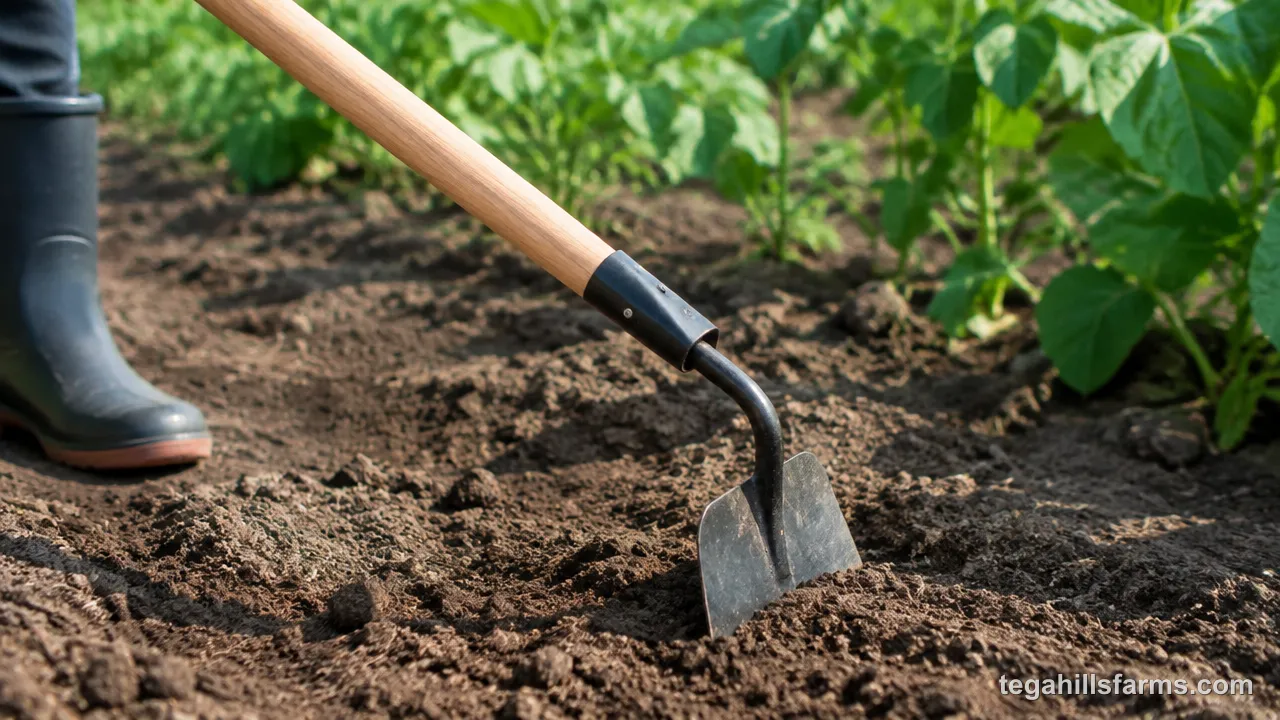
These are the parts that wear out first. A soft or thin edge dulls after a few sessions in clay, so every stroke takes more effort. A handle that is too short, or a head that works loose, sends that effort into your back and wrists. Getting both right is the difference between a hoe you replace each spring and one you sharpen and keep.
How Do Blade Material and Forging Affect Sharpness?
A forged blade is hammered from a thick piece of steel and heat-treated, so it holds an edge far longer than a thin stamped blade cut from sheet metal. A stamped blade flexes and rolls when it meets roots or stones. Thickness gives the edge metal to support it, and heat treatment sets the hardness that decides how quickly it dulls.
High-carbon steel takes a keener edge and files back to sharp easily, but it rusts when left damp, which is why a rust-resistant coating matters on carbon heads. Stainless steel resists moisture but usually holds a less durable edge, so it needs touching up more often.
A pre-sharpened edge saves you the first filing session and bites into weeds straight out of the box. Soil is abrasive, though, so even a good edge needs a file once a season. Wider blades cover more ground per stroke on loose beds, but in heavy clay that extra width means more soil to move on every pull, which tires your arms sooner. If blade construction is your top priority, compare the best garden hoes with steel blades. If you would rather swap a worn edge than sharpen it, look at the best garden hoes with replaceable blades.
Which Handle Material and Length Are Easiest on Your Back?
Fiberglass suits most gardeners because it does not rot or split. Stainless steel stays rigid and rust-resistant, and ash wood feels warm in the hand but has to be kept dry.
Fiberglass does not absorb water, so it will not swell or crack along a grain, and a little give in the shaft softens each impact. A stainless steel handle has no flex at all. That makes it precise, but more of each jolt reaches your hands. Ash absorbs shock well, but if it is stored damp, the wood swells, loosens at the head and eventually splits.
Length matters as much as material. A handle long enough to reach the ground while you stand upright keeps the work in your arms and shoulders. When it is too short, you bend at the waist on every stroke, the strain gathers in your lower back, and your wrists bend at a sharper angle to keep the blade flat.
Non-slip grips matter in wet conditions, when dew or a damp glove lets a smooth handle twist in your hand. Also check how the head is fixed. Rivets or bolts through the handle keep the head from turning or working loose, while a head held only by a friction fit tends to loosen over a season of chopping.
Are Adjustable and Screw-Together Handles Worth It?
Yes, if storage space is tight or people of different heights share one hoe. A segmented handle breaks down to fit a shed shelf or car trunk, and adding or removing sections changes the reach for each person. A one-piece handle gives up that flexibility, but it has no joints to flex, so it feels solid from grip to head and needs no assembly.
The weak point of any segmented handle is the threaded joint. Each chopping stroke twists the sections slightly, and a joint with shallow or loose threads backs off over time and lets the head wobble. A well-made connection threads in smoothly, seats firmly against its shoulder and shows no play when you twist the head by hand. A joint you can still wiggle after tightening will only get worse. If you retighten the sections at the start of each session, the convenience is usually worth the trade-off.
The 9 Best Garden Hoes Under $50 of 2026
You can weed standing upright with the MANXRKUI Draw Hoe 5.5ft, YEELOR Heavy-Duty Garden Hoe, Lilyvane Draw Hoe 60in, Nohovu Garden Hoe 58in, Truper Lane Hoe No. 3 54in, VNIMTI Heavy Duty Garden Hoe 58in, AgroPro Garden Hoe 58in, Lilyvane Garden Weeding Hoe 55in and AgroPro Heavy Duty Garden Hoe 58in. A forged head on a one-piece fiberglass handle stays rigid through heavy chopping. Screw-together stainless and adjustable handles give up some of that solidity for compact storage and a reach you can set, and weight decides how quickly your arms tire. These differences point you to the right hoe, whether you want a tough weeder that lasts, a lighter tool for weaker hands, a hoe that breaks down for a crowded shed or a dependable option for the tightest budget.
#1 MANXRKUI Draw Hoe 5.5ft — Best Overall
If you want one hoe that weeds, loosens soil and cuts seed furrows without switching tools, this is the one to buy, because its forged head is riveted through the handle with a double bolt and nut and stays tight under hard chopping. Its 66-inch overall length lets you work standing upright.
Key Specs:
- Head: forged steel with a sharp blade
- Handle: stainless steel, multi-section screw-together poles
- Overall length: 66 in
- Head fixing: riveted through the handle with a double bolt and nut
- Weight: about 3.5 lb
Detailed Review:
Forging gives the steel head a dense blade that resists bending when you hook it under a tough weed. With a blade measuring 5.5″ L x 6.5 W, it clears a useful strip of bed with each pull, yet stays narrow enough to work between established plants and into tight spaces.
The head is riveted all the way through the handle and held with a double bolt and nut, which is the detail I check first on any inexpensive hoe. That through-fixing stops the head from turning or rattling loose, a common way cheap hoes fail after weeks of chopping.
The 66-inch overall length keeps you upright with the blade flat on the soil. The stainless steel handle comes in sections that screw together, so tighten each joint fully before the first session.
At about 3.5 pounds, it is heavier than the 2.4-pound YEELOR Heavy-Duty Garden Hoe. The extra weight helps the blade drive into crusted soil with less push from you, while the YEELOR is easier to keep moving over a long afternoon.
Pros:
- Forged steel head resists bending under tough roots.
- Double bolt and nut keep the head from loosening.
- Long overall length lets you weed standing upright.
- Wide blade weeds, loosens soil and opens furrows.
Cons:
- Extra weight tires smaller arms over long sessions.
- Screw-together joints need checking before each use.
Who It’s For:
Gardeners who want a single hoe for weeding, loosening beds and cutting seed rows will get full use from this one, especially in vegetable plots with mixed soil. If your wrists or shoulders tire quickly, the lighter YEELOR Heavy-Duty Garden Hoe is the gentler choice.
Editor’s Verdict:
A forged head locked on with a double bolt and nut makes this a dependable all-rounder for weeding, furrowing and cultivating between plants.
#2 YEELOR Heavy-Duty Garden Hoe — Runner Up
At 2.4 pounds, this hoe keeps long weeding sessions easy on your arms. Its forged head has a rust-proof treatment and is fixed with anti-loosening bolts, so the low weight does not cost you a steady head when you chop into crusted soil.
Key Specs:
- Weight: 2.4 lb
- Head: forged steel with rust-proof treatment, 6.3 in
- Handle: 5 ft stainless steel, segmented with lathe-threaded connections
- Head fixing: anti-loosening bolts
- Model: YLUS1152
Detailed Review:
At 2.4 pounds, this hoe asks less of your forearms and shoulders on every lift, so a long session clearing a vegetable bed leaves you less tired. In exchange, it relies on its sharp edge rather than its own weight to break into hard ground.
The forged steel head has a rust-proof treatment, which helps if the hoe spends nights leaning against a damp fence. Anti-loosening bolts fix it to the handle, and the blade stays firmly connected to the shaft through chopping and scraping.
The stainless steel handle comes in segments joined by lathe-threaded connections. Machined threads seat more precisely than rough ones, so the sections resist backing off during use, and the broken-down handle fits on a shelf instead of taking up a corner of the garage. I would steer anyone weeding long rows toward this hoe, since the 5-foot handle keeps you upright while the low weight keeps each stroke light.
Pros:
- Low weight keeps long sessions easy on your arms.
- Rust-proof forged head tolerates damp storage.
- Lathe-threaded segments resist loosening during use.
- Handle breaks down for compact storage.
Cons:
- Low weight means less driving force in hard ground.
- Segmented joints need occasional retightening.
Who It’s For:
This hoe pays off when you weed a large vegetable garden or long rows of beds, because a light tool keeps you going without sore forearms. Older gardeners and anyone short on shed space will appreciate it too. If your soil is heavy clay, a heavier forged hoe will do more of the work for you.
Editor’s Verdict:
Choose this hoe if you want a light, rust-treated forged head on a handle that breaks down for storage and holds tight while you work.
#3 Lilyvane Draw Hoe 60in — Best for Limited Hand Strength
Gardeners whose wrists or shoulders ache after chopping will find this draw hoe easier, because its pre-sharpened forged blade is made for a push-and-pull stroke that slices weeds instead of hacking at them. The long stainless handle keeps you upright.
Key Specs:
- Head: forged steel with a pre-sharpened straight edge
- Handle: 60 in stainless steel, screw-together splicing design
- Handle finish: rust-resistant
- Stroke: designed for push-and-pull motion
- Assembly: includes a rope to help during assembly
Detailed Review:
A pre-sharpened forged blade lets you slice through roots with a smooth push or pull instead of lifting the hoe and bringing it down again and again. Cutting out that repeated chopping removes much of the jolt that travels through your wrists and shoulders, and that jolt is what wears out weaker hands first.
The straight edge also loosens compacted soil and trims grass along borders in the same motion. It gives precise control near roots and between plants, so you can weed close without nicking stems, then move into open soil without switching tools.
The 60-inch stainless steel handle screws together and is built to hold a solid, wobble-free connection during use. The included rope helps during assembly; cut it off afterward or leave it on to take up any remaining play. The handle is rust-resistant, so it suits outdoor storage.
I would point anyone with stiff joints or a weak grip to this hoe, since a sharp edge moved in a gliding stroke asks far less of the hands than a heavier blade swung to chop. Keep the edge filed, because that glide depends on it.
Pros:
- Pre-sharpened forged blade cuts weeds straight out of the box.
- Push-and-pull stroke reduces strain on wrists and shoulders.
- Precise edge works close to plants without damaging them.
- Screw-together stainless handle stores in less space.
Cons:
- Push-and-pull blade suits skimming more than deep chopping.
- Splicing joints stay steady only when fully tightened.
Who It’s For:
Older gardeners and anyone with a weaker grip or sore wrists should start here, since the blade works through a gliding stroke rather than repeated impact. It also suits careful weeding along borders and between perennials. If you mostly break new ground in heavy clay, a forged chopping hoe will serve you better.
Editor’s Verdict:
Expect gentle, controlled weeding from this hoe: the sharp forged edge and push-and-pull stroke spare tired hands and wrists without giving up the reach of a long handle.
#4 Nohovu Garden Hoe 58in — Also Great
This hoe fits gardeners who want a rigid, no-assembly tool that stays put in a wet hand. Its heat-treated high-carbon steel blade is double-riveted to a one-piece fiberglass handle with two non-slip grips, so neither the head nor your hold shifts when you pull through rooted weeds.
Key Specs:
- Blade: heat-treated high-carbon steel, 6.3 in wide, rust-preventing coating
- Head fixing: double-riveted connection
- Handle: one-piece thickened fiberglass with 2 non-slip grips
- Overall length: 58 in
- Weight: 2.7 lb
Detailed Review:
Heat treatment toughens the high-carbon steel, so the honed edge stays sharp longer between filings, and the coating on the blade guards against rust and corrosion. The 6.3-inch width covers a fair strip of soil with each pull while staying manageable in firmer beds.
The head is double-riveted to the handle, and the handle itself is a single integrated piece. With no screw joints and two rivets through the connection, nothing works loose or flexes as you chop.
Thickened fiberglass adds strength against bending and breaking, and two non-slip grips add friction where your hands sit. Your hold stays secure through a long pull, which keeps the blade under the weed instead of skating over it.
At 2.7 pounds and 58 inches overall, it strikes a balance I like for everyday weeding. It has enough weight to bite into soil but stays light enough to keep moving down a row.
Pros:
- Heat-treated high-carbon blade holds a sharp, honed edge.
- Double rivets keep the head tight on the handle.
- One-piece fiberglass handle needs no assembly.
- Non-slip grips hold steady in wet hands.
Cons:
- One-piece handle needs full-length storage space.
- Carbon steel blade still needs wiping to protect its coating.
Who It’s For:
If your beds stay damp from irrigation or morning dew, this hoe’s grips and coated blade make sense, and its one-piece build suits anyone who dislikes assembling and retightening tools. It is less convenient when your tools share a cramped closet or small shed.
Editor’s Verdict:
Rely on this hoe for steady, everyday weeding: the riveted head and one-piece fiberglass handle feel solid, and the coated high-carbon blade keeps its edge.
#5 Truper Lane Hoe No. 3 54in — Best Durability
For heavy soil prep and breaking hard ground, this lane hoe stands up to abuse. Its head is forged in one piece with a central rib that resists impact and reduces vibration, so it keeps its shape where lighter blades bend, and your hands feel less of each blow.
Key Specs:
- Head: one-piece forged steel with central rib
- Blade: 8-1/2 in x 8-1/2 in, polished and pre-sharpened
- Head weight: 2.1 lb (1 kg)
- Handle: 54 in (137 cm) fiberglass
- Model: AL-3M
Detailed Review:
Forging the head in a single piece leaves no weld or seam to crack, and the central rib stiffens the blade against impact. The rib also reduces vibration, so less shock reaches your hands when the edge hits a buried stone.
The square 8-1/2-inch blade moves a lot of soil with each stroke, which makes this a digging and loosening tool as much as a weeder. A 2.1-pound head drives the edge into packed ground, and the polished, pre-sharpened face slices into soil instead of dragging.
Next to the Nohovu Garden Hoe 58in and its 6.3-inch blade, the Truper covers a much wider strip per stroke. That width pays off when you prepare beds, but it also means more soil to pull in heavy clay and less room to work between plants.
The 54-inch fiberglass handle stands up to weather and hard use better than wood. Taller gardeners may stoop slightly more than with a longer handle, which is worth weighing if your back is sensitive.
Pros:
- One-piece forged, ribbed head resists bending.
- Central rib reduces vibration reaching your hands.
- Broad square blade moves soil fast during bed prep.
- Fiberglass handle holds up better than wood.
Cons:
- Broad blade is too wide for tight plantings.
- Shorter handle may make taller gardeners stoop.
Who It’s For:
Homeowners breaking new beds, working compacted ground or clearing a large vegetable patch each spring will value how tough this hoe is. It also suits anyone who has bent a lighter blade before. For delicate weeding between flowers, choose a narrower blade instead.
Editor’s Verdict:
Built for punishment, this forged, ribbed lane hoe handles digging and soil prep that would bend a lighter blade, giving up finesse for strength.
#6 VNIMTI Heavy Duty Garden Hoe 58in — Also Great
When your ground is often wet or hard and the weeds are shallow-rooted, this hoe’s sharp flat edge gets under them cleanly. Its two non-slip grips turn tacky when wet, so your hold gets better just when a smooth shaft would slip.
Key Specs:
- Head: high-strength carbon steel with a sharp flat edge
- Handle: lightweight fiberglass
- Grips: 2 non-slip grips that turn tacky when wet
- Overall length: 58 in
- Model: HT_33
Detailed Review:
The sharp flat edge of the carbon steel head enters the soil cleanly and gives you control over depth, so you can shave off shallow-rooted weeds whether the ground is baked hard or soaked. High-strength carbon steel keeps that edge from deforming when it meets a root.
Its two non-slip grips turn tacky as they get wet, which keeps the handle planted in your hands after rain or near a running sprinkler. On a smooth shaft, that same moisture lets the hoe twist mid-stroke, and the blade skips over the weed instead of cutting it.
The fiberglass handle is lightweight and resists breaking. At 58 inches long, it lets an adult work without stooping, which keeps pressure off the lower back.
I see this as a practical pick for irrigated beds and ground that turns slick after watering, where grip matters as much as the edge. Keep the flat edge shallow, skimming weeds rather than digging deep.
Pros:
- Sharp flat edge removes shallow-rooted weeds cleanly.
- Grips get tackier when wet for a secure hold.
- Lightweight fiberglass handle resists breaking.
Cons:
- Flat edge suits shallow weeds more than deep taproots.
- Carbon steel head needs drying after work in wet soil.
Who It’s For:
Anyone gardening in a rainy climate or tending irrigated beds should look at this hoe, since the tacky grips stay secure when hands and handle are wet. It also suits weeding shallow-rooted growth in hard ground. For prying out deep taproots, a heavier forged blade is the better tool.
Editor’s Verdict:
Pick this hoe for wet-weather weeding: the sharp flat carbon steel edge slices shallow roots, and the grips actually improve when they get damp.
#7 AgroPro Garden Hoe 58in — Also Great
Gardeners with wide beds to clear will cover ground quickly with this hoe’s wider forged blade. Its high-carbon steel has a rust-resistant coating and is held by two rivets on a one-piece fiberglass handle, so the head stays tight under hard, repeated use.
Key Specs:
- Head: forged high-carbon steel with rust-resistant coating
- Head fixing: 2 rivets
- Handle: one-piece thickened fiberglass with non-slip grips
- Overall length: 58 in
- Model: BGH361XL
Detailed Review:
The forged high-carbon steel blade takes a sharp edge and resists the bending that thinner heads suffer in rooted ground, while the rust-resistant coating protects it between sessions. Its wider face covers more soil per pass, which speeds up weeding across open beds and between widely spaced rows.
Two rivets reinforce the joint between head and handle, and the handle is a single piece, so there are no threads to back off. Together, they keep the hoe rigid when you put your shoulders into a stroke.
The thickened fiberglass resists bending and breaking even under heavy use, and the non-slip grips fit closely to the palm for a comfortable hold. At 58 inches overall, it lets you work standing upright.
I like this hoe for large, open beds where coverage per stroke matters more than squeezing between crowded plants. In a tight border, that same wide blade is harder to steer around stems.
Pros:
- Forged high-carbon blade keeps a sharp edge.
- Two rivets keep the head firmly attached.
- Wider blade clears more soil per pass.
- Thick fiberglass handle resists bending under heavy use.
Cons:
- Wider blade is harder to steer between tight plantings.
- One-piece handle needs full-length storage space.
Who It’s For:
For large, open beds and vegetable rows with room between plants, this hoe covers ground fast while staying rigid in the hand. It suits anyone who wants a tool ready to use out of the box. Gardeners with tightly packed perennial borders will find a narrower blade easier to control.
Editor’s Verdict:
Count on this hoe for fast, steady work on open ground: a forged, coated blade and a twice-riveted, one-piece handle make it a tool built to last for years.
#8 Lilyvane Garden Weeding Hoe 55in — Best Budget
If you want to spend little and still break up dry, hard soil across a big backyard, this hoe’s carbon steel head with a wide edge and pointed corners does the job. Extensions let you set the handle short or long.
Key Specs:
- Head: carbon steel with wide edge and pointed corners
- Handle length: adjustable to 25 in, 40 in or 55 in with extensions
- Rod diameter: 1-1/4 in
- Finish: coated surface to resist rust
- Warranty: 12 months
Detailed Review:
The carbon steel head pairs a wide edge for scraping and chopping with pointed corners that dig into crusted soil and pry out weeds tucked against stones or edging. It suits dry, hard ground and large yards, and it also digs small holes and builds ridges for planting.
The edge comes safe rather than keen, so file it before the first session if you want a sharper cut. Carbon steel takes a file well, and a short sharpening turns a blunt chopping edge into one that slices roots instead of tearing them.
Adding or removing extensions sets the handle at 25, 40 or 55 inches, which gives you a short tool for raised beds and a full-length one for standing work. The sturdy rod resists bending and cracking under heavy use, and the coated surface protects head and handle from rust. Broken down, it takes up little space in a garage.
Compared with the one-piece AgroPro Garden Hoe 58in, this hoe trades some rigidity at its joints for a handle you can shorten and pack away. If you want to spend even less, the best garden hoes under $30 are worth checking.
Pros:
- Pointed corners dig into dry, hard soil.
- Extensions adjust handle length for different jobs.
- Thick rod resists bending under heavy use.
- Coated surface protects head and handle from rust.
- Breaks down to store in little space.
Cons:
- Edge needs sharpening before the first use.
- Extension joints add flex compared with one-piece handles.
Who It’s For:
Homeowners with big, dry backyards who need one inexpensive tool for weeding, digging and ridging should start here. It also works for households where people of different heights share a hoe. If you want a tool that is sharp and rigid straight out of the box, a pre-sharpened, one-piece hoe will suit you better.
Editor’s Verdict:
Give this hoe a quick sharpening, and it becomes a versatile, space-saving tool for weeding, digging and ridging in dry, hard ground.
#9 AgroPro Heavy Duty Garden Hoe 58in — Best Easy Assembly
Take this hoe out of the box and start weeding, since its fiberglass handle is integrated and needs no assembly at all. Its perforated head sheds sticky soil.
Key Specs:
- Head: perforated high-carbon steel, rustproof and corrosion-resistant
- Handle: integrated fiberglass, no assembly required
- Grips: 2 non-slip rubber grips
- Overall length: 58 in
- Weight: 3.3 lb
Detailed Review:
The perforations through the high-carbon steel head let wet soil push through rather than build up on the blade face. In damp or clay-heavy beds, that means less drag on each pull and less stopping to knock off mud, and the holes spread soil more evenly when you till.
Because the fiberglass handle is integrated, there is nothing to assemble and no joint to work loose. The handle resists bending and breaking, which keeps the tool rigid under heavy pulling.
The 58-inch length gives you leverage and control without bending over, and the two non-slip rubber grips keep your hands from sliding. The head is rustproof and corrosion-resistant, so it tolerates the damp soil the perforations are built for.
At 3.3 pounds, it is heavier than the 2.7-pound Nohovu Garden Hoe 58in. The added weight helps it bite into compacted ground, though the Nohovu is easier to swing through a long session.
Pros:
- Perforated head stops sticky soil from clinging.
- Integrated fiberglass handle needs no assembly.
- Rubber grips keep hands from slipping.
- Rustproof high-carbon head suits damp soil.
Cons:
- Extra weight tires arms over long sessions.
- One-piece handle cannot shorten for storage or raised beds.
Who It’s For:
Clay soil that clings to every tool is where this hoe shines, and anyone who wants to skip assembly entirely will appreciate it. It also suits gardeners who prefer a rigid, joint-free handle. If you have limited grip strength, the lighter YEELOR Heavy-Duty Garden Hoe is easier to manage.
Editor’s Verdict:
Ready to work out of the box, this hoe pairs a rigid integrated handle with a perforated head that keeps clay from slowing you down.
Which Garden Hoe Should You Choose for Your Yard?
Match the tool to your hands, your soil and your storage: light or push-and-pull designs for limited strength, forged heads on fiberglass handles for heavy digging, and adjustable or segmented handles for tight sheds and shared use.
- Choose the YEELOR Heavy-Duty Garden Hoe or the Lilyvane Draw Hoe 60in if your hands, wrists or shoulders tire quickly. The first keeps the weight down, and the second relies on a sharp edge moved in a push-and-pull stroke.
- Choose the Truper Lane Hoe No. 3 54in or the AgroPro Garden Hoe 58in if you often dig, chop and loosen hard ground, because a forged head on fiberglass stands up to repeated impact.
- Choose the MANXRKUI Draw Hoe 5.5ft or the Lilyvane Garden Weeding Hoe 55in if shed space is tight or people of different heights share one hoe, since their handles come apart for storage.
- Choose the AgroPro Heavy Duty Garden Hoe 58in for sticky clay, or a broad blade such as the Truper for large open beds.
Soil condition changes the fit more than anything else. Wet, heavy clay favors a perforated head or a sharp edge you can pull without lifting, while dry, crusted ground rewards a heavier forged blade that will not flex. Bed size sets blade width, because a wide face speeds up open rows but clips stems in a crowded border. Storage sets handle format, since a one-piece handle needs a full-length spot on the wall. If you can spend more for a heavier build, compare the best garden hoes under $100, and if your beds are loose and loamy, look at the best garden hoes for soft soil instead.
Weeds sliced off on a dry, sunny morning shrivel on the surface by evening, while the same weeds cut in damp soil can reroot from the pieces left lying on top. Hoe too deep or on the wrong day, and you bring up a fresh flush of weed seeds and end up weeding the same bed twice.
How Do You Use a Garden Hoe Without Straining Your Back and Wrists?
Hoe on a dry, sunny day, keep the blade just below the soil surface, and work with an upright stance and a relaxed push-and-pull stroke. That way your arms and shoulders carry the load instead of your lower back and wrists.
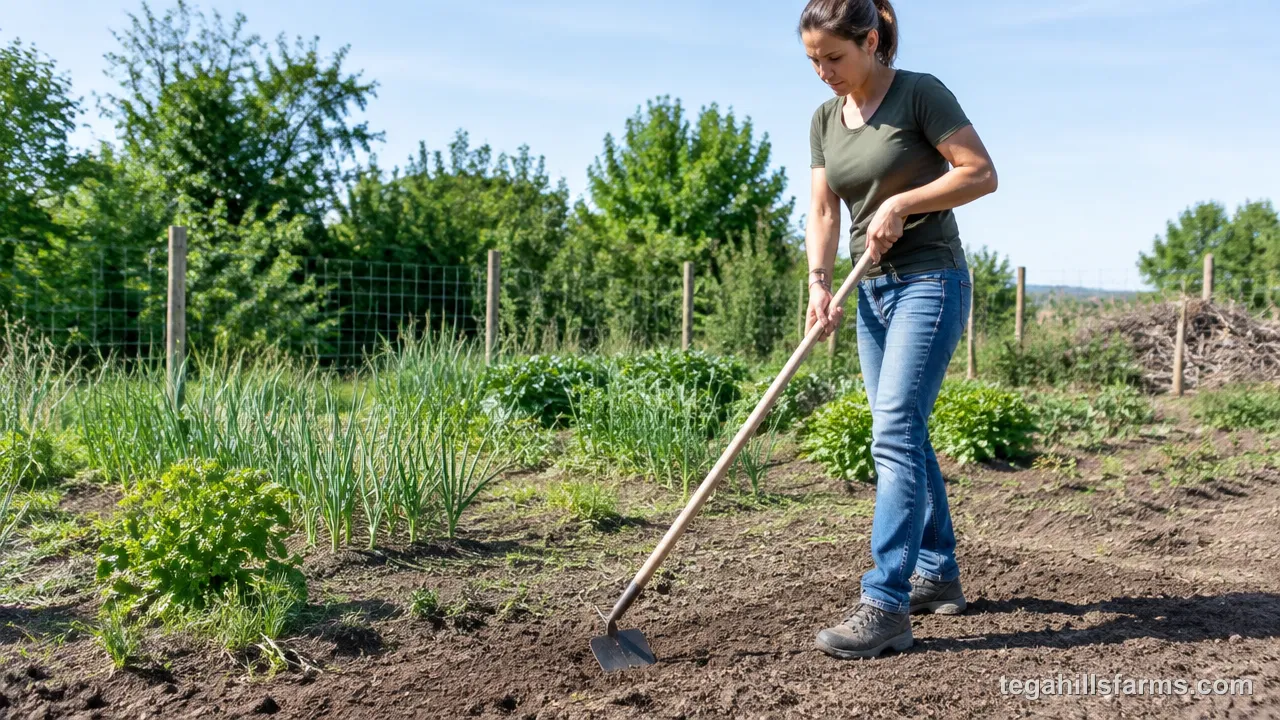
Dry weather matters because cut weeds left on the surface wilt quickly in sun, while in damp soil their roots can take hold again. A shallow blade slices roots at the crown without turning up buried weed seeds, which sprout as soon as they reach light.
Walk backward as you work. You never step on the soil you have just loosened, and the cut weeds stay on top to dry instead of being pressed back into damp ground.
Hold the handle loosely and let the blade glide. A tight grip locks your wrists and sends every jolt into them. Keep your back straight, step forward with one foot, and move the hoe with your arms and shoulders. Switch your lead hand now and then so one side does not do all the work.
How Do You Sharpen and Store a Garden Hoe?
File the edge flat along its existing bevel, wipe soil off after every use, and end each season by sanding off rust, oiling the blade and storing the hoe somewhere dry.
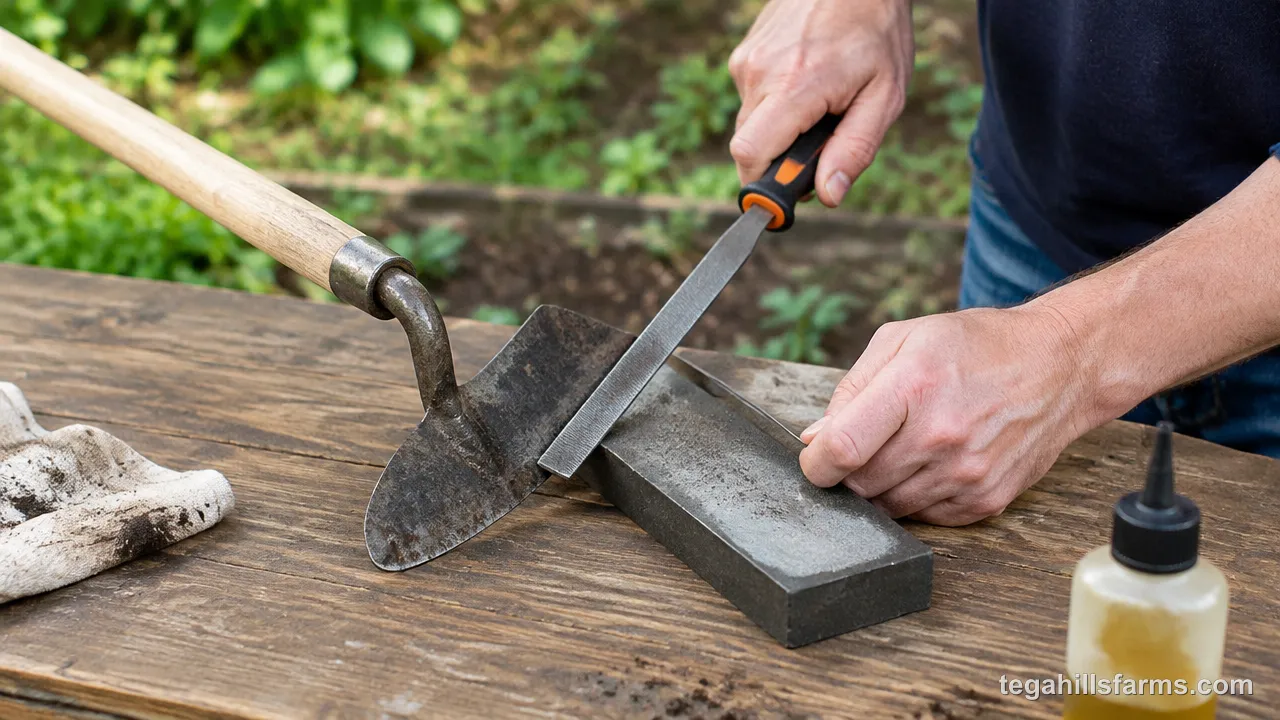
Following the factory bevel keeps the edge at the angle it was made for. Changing that angle leaves either a fragile edge or one too blunt to slice roots. Push the file in one direction, toward the edge, and stop once you feel a slight burr on the back. A quick touch-up whenever the blade starts tearing weeds instead of cutting them saves more effort than one heavy sharpening a year.
Damp soil left on carbon steel holds moisture against the metal, and rust can start under it quickly. Knock off clods and wipe the blade dry after each session.
At the end of the season, sand away any rust spots, wipe the blade with a light coat of oil and hang the hoe in a dry shed or garage. Sand splinters off wood handles and rub in linseed oil. Fiberglass needs only a wipe to keep grit off the grips.
When Does a Budget Hoe Start to Fail, and What Should You Replace?
A hoe is near the end of its useful life when the head wobbles or rattles on the handle, the blade bends or rolls at the edge, the handle cracks or flexes, or rust pits eat into the cutting edge.
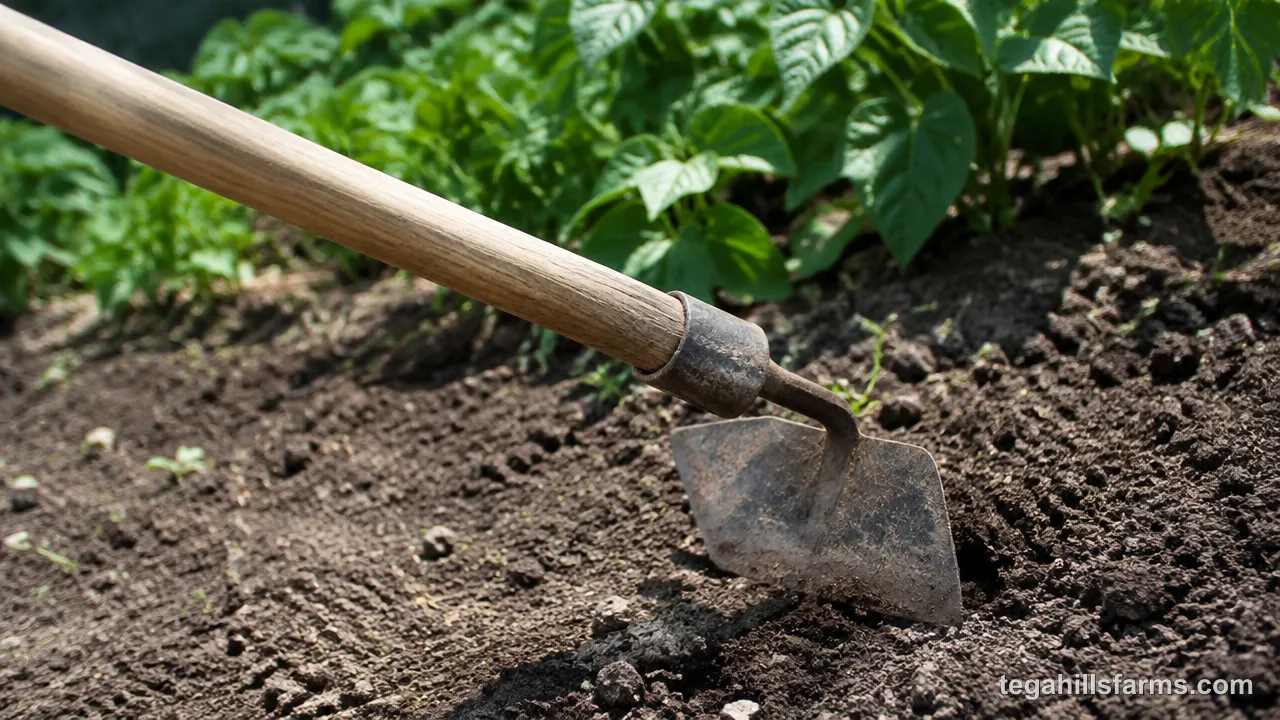
Thin stamped blades reach that point sooner than thick forged ones. Sheet steel bends under roots and stones and will not hold a filed edge for long, while a forged blade can be resharpened season after season.
Some problems are worth fixing. A loose head on a bolted or riveted hoe often tightens up with a wrench, and a screw-together handle usually needs only its joints retightened. A dull or lightly rolled edge files back into shape.
Replace the tool when the blade has bent out of line, the edge is pitted too deeply to file clean, or the handle shows cracks, since a cracked fiberglass or wood shaft can snap mid-stroke. At that point, repairs take more effort than buying a new hoe.
Garden Hoe FAQs
Is a weeding hoe worth it?
Yes, for most gardens. A sharp hoe cuts weeds at the root line while you stand upright, which is faster than hand-pulling and far easier on your knees and back. Used regularly on young weeds, it keeps beds clear with short sessions instead of long afternoons digging out established growth.
What is the difference between a weeding hoe and a regular garden hoe?
A weeding hoe, such as a stirrup or Dutch hoe, has a thin blade that skims just below the surface to slice young weeds. A regular garden hoe, usually a draw hoe, has a heavier blade set at a right angle that chops, loosens soil and cuts furrows as well as weeding.
Can a garden hoe break up hard or compacted soil?
Yes, if it has a heavy forged head and a sharp edge. Chop in short strokes to break the crust, then pull the loosened soil toward you. Watering the area the day before softens dry ground and makes the work easier. Save thin stamped or stirrup blades for loose soil.
Write Your Review
No reviews yet. Be the first to share your experience!