

For the best 3000 watt generators in 2026, the choices are Generac 3300W Gas Inverter (Best Overall), PowerSmart 3000W Portable Inverter Generator (Best Budget), RVMP Flex Power 3300W Inverter Generator (Editor’s Choice), and Honda EU3000iS Inverter Generator (Best Premium). All 4 are inverter generators. Their output is steady enough for laptops, phones and other electronics, and each one can run a refrigerator, lights and chargers during an outage.
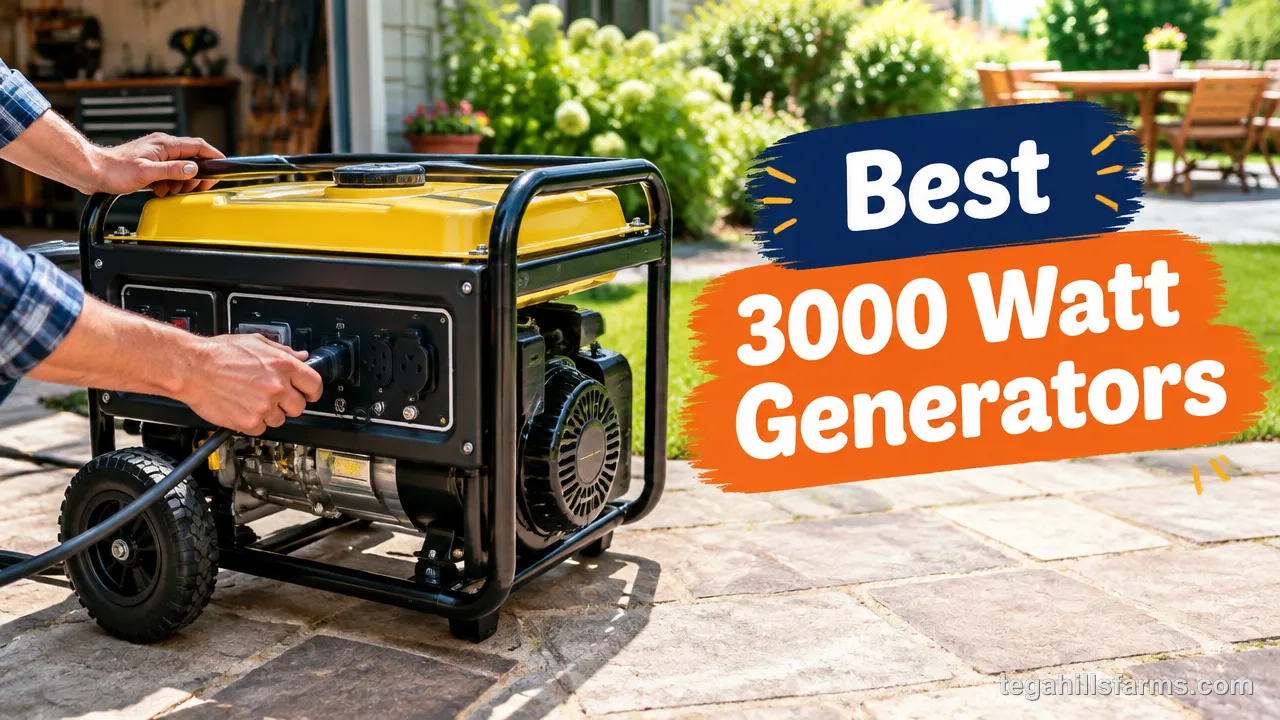
Wattage won’t separate them much, because they all sit in the same output class. The differences show up in daily use: how far you can carry the generator alone, how long it runs before you refuel, whether it has a 30-amp outlet for an RV, and how loud it is at the campsite or the property line.

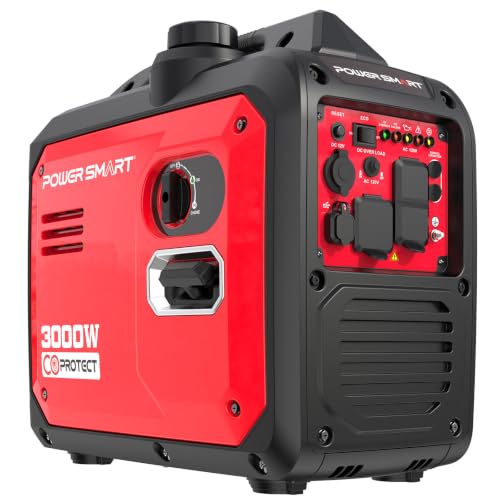


If you’re buying for outages, you need a generator that gets the refrigerator or sump pump through its startup surge and still starts after months in the garage. Starting watts decide the first part. How you handle oil, fuel and storage decides the second.
What Will a 3000-Watt Generator Run in a House?
This size covers the essentials: a refrigerator, lights, a TV, a furnace blower or sump pump, and chargers. That works as long as their combined continuous draw stays under the rating and the biggest motor’s startup surge fits under the peak.
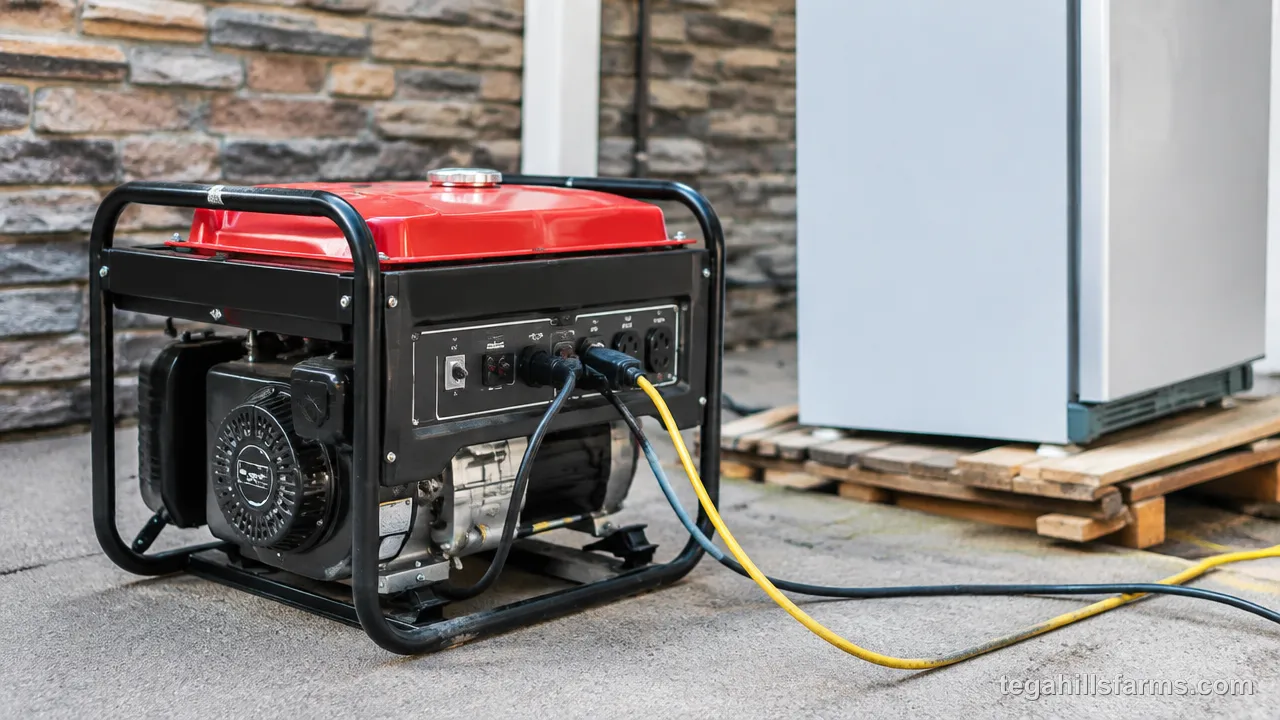
Running watts are what the generator can hold hour after hour. Starting watts are the short burst it delivers for a second or two while a motor gets up to speed. Refrigerator compressors, sump pumps and furnace blowers all need that burst, because a motor at a standstill pulls far more current than one that’s already spinning.
That’s why the total of everything running at the same moment matters more than any single appliance. A refrigerator alone is an easy load. A fridge, a sump pump and a microwave kicking on together can trip the overload, so let the fridge settle before the next motor or heating appliance comes on.
The class stops short of central air conditioning, an electric range, an electric water heater and an electric dryer. Those loads need far more capacity, and many of them run on 240 volts, which portable units in this class generally don’t supply. If your household needs the well pump, the AC and the range during an outage, the best generators for home backup come from a larger class. A 3000-watt unit is for essentials and a planned list of what gets plugged in. If you’re still weighing this capacity against other sizes, the best generators guide lays out where a 3000-watt unit fits in the full range.
4 Best 3000-Watt Generators for Home Backup, RV and Camping
The Generac 3300W Gas Inverter, PowerSmart 3000W Portable Inverter Generator, RVMP Flex Power 3300W Inverter Generator and Honda EU3000iS Inverter Generator cover outage backup, RV trips and camping, each from a different angle. Weight and fuel pull them apart. The PowerSmart is light and easy for one person to carry. The Honda is very heavy, and in return it has a much larger tank and longer runtime than the Generac or RVMP. If you need the essentials covered through an overnight outage, that runtime matters more than portability. If the generator rides to campgrounds or lives in an RV bay, the lighter units fit better, and the PowerSmart handles occasional use on a budget.
#1 Generac 3300W Gas Inverter — Best Overall
If you want one machine that keeps a refrigerator running through an outage and still rides to the campground, this Generac pairs 3,300 starting watts for compressor surges with a 59.5-pound frame and a molded handle one person can carry. Expect to refuel it overnight.
Key Specs:
- Output: 3,300 starting watts / 2,500 running watts
- Weight: 59.5 lb
- Fuel tank: 1.06 gallons
- Runtime: up to 7 hours at a quarter load, 4.5 hours at half load
- Outlets: two 120V 20A household, one 120V 30A twist-lock, two USB-A
- Warranty: 3-year residential limited
Detailed Review:
Generac’s PowerRush system pushes starting output to 3,300 watts over a 2,500-watt running load, so a refrigerator compressor or an RV air conditioner can kick on without tripping the overload. That reserve also covers motor-driven tools, whose startup draw would stall an inverter with less headroom.
The outlet panel works for both the house and the campsite. Two 120V 20A household outlets take extension cords, the 120V 30A twist-lock handles a heavier locking cord, and two USB-A ports charge phones directly. Economy Mode and COsense shutdown are built in, and the USDA-qualified spark arrestor lets you run it in national forests and other dry-condition areas that require one.
The 1.06-gallon tank keeps the frame light, and it also limits how long you go between fills. Generac rates it at 7 hours at a quarter load and 4.5 hours at half load. A refrigerator, lights and a TV running together push you past the light-load figure, so an overnight outage usually means a refuel before morning. The Honda EU3000iS runs much longer per tank, but its far heavier frame rules out the one-person lift this Generac allows. A sold-separately parallel kit joins it to a second GP3300i when you need more output.
Pros:
- 3,300 starting watts handle compressor and RV air conditioner surges.
- 30A twist-lock plus two 20A outlets cover home and camp cords.
- Molded handle makes it a one-person carry.
- USDA-qualified spark arrestor allows use in national forests.
- 3-year residential warranty backed by a nationwide dealer network.
Cons:
- 1.06-gallon tank forces a refuel during overnight outages.
- Heavier to carry than the PowerSmart or RVMP.
Who It’s For:
Homeowners who want outage backup for the fridge and lights, plus a machine that rides along to the campground or a tailgate, fit this Generac well, especially if they might pair it with another unit in parallel later. If you want to sleep through a long outage without refueling, the Honda EU3000iS suits that need better.
Editor’s Verdict:
A well-rounded inverter that starts motor loads easily and carries like a camping unit, as long as you keep a gas can handy for overnight outages.
#2 PowerSmart 3000W Portable Inverter Generator — Best Budget
For campers and households that need power only now and then, this PowerSmart keeps the cost down and the carry easy, with 2,600 rated watts in a 42-pound frame. It is also quiet enough for campground evenings.
Key Specs:
- Output: 3,000 surge watts / 2,600 rated watts
- Weight: 42 lb
- Noise: 59 dBA at 23 feet
- Power quality: THD under 3 percent
- Safety: CO sensor, low-oil shutdown, overload and short-circuit protection
- Warranty: 2 years
Detailed Review:
The PowerSmart’s 2,600 rated watts edge past the Generac 3300W Gas Inverter’s 2,500 running watts, so it holds a slightly larger steady load. Its 3,000 surge watts leave less reserve for a compressor or pump kicking on. In practice, let the refrigerator settle before you start a power tool.
Its light frame makes it the easiest of these generators to lift into a truck bed alone, and 59 dBA at 23 feet keeps it quiet enough for campground evenings. Output stays under 3 percent THD, so phones, tablets and cameras charge from it safely.
Protection goes past the CO sensor. Automatic low-oil shutdown stops the engine before it runs short of oil, and overload and short-circuit protection cut power when a load is too big or a cord faults. It is certified to ANSI/PGMA G300, ANSI/UL2201 and EPA standards, and a separate kit lets it run in parallel with a second unit.
The budget positioning shows in the 2-year warranty, which is shorter than the 3-year coverage on the Generac and Honda. PowerSmart pairs it with technician support that answers within 24 hours, which helps a first-time owner stuck on setup.
Pros:
- 42 pounds makes it an easy one-person carry.
- 59 dBA at 23 feet suits campground evenings.
- 2,600 rated watts hold a steady household load.
- Low-oil shutdown protects the engine from running dry.
Cons:
- 3,000 surge watts leave less margin for motor startups.
- 2-year warranty trails the Generac’s and Honda’s 3-year coverage.
Who It’s For:
Weekend campers, tailgaters and homeowners who rarely lose power can cover their basics on a budget, and the light frame suits anyone who loads the generator alone. If your loads include frequent motor startups, the Generac 3300W Gas Inverter gives you more surge reserve.
Editor’s Verdict:
Pick it for light, quiet, occasional-use power on a budget, and stagger motor startups to stay inside its surge rating.
#3 RVMP Flex Power 3300W Inverter Generator — Editor’s Choice
RV owners who want a generator that lives in a storage bay should start here, because the 30-amp outlet feeds the camper and the 19.5 x 17.5 x 11-inch body fits a compartment or truck bed. It weighs 46 pounds.
Key Specs:
- Output: 3,300 peak watts / 2,700 continuous watts
- Fuel tank and runtime: 1.5 gallons, up to 8–10 hours
- Weight: 46 lb
- Dimensions: 19.5 x 17.5 x 11 in
- Noise: 59 dB(A) at 23 feet
- Outlets: two GFCI household, one 30-amp, USB ports, 12V DC
Detailed Review:
Its 2,700 continuous watts and 3,300-watt peak both top the PowerSmart 3000W Portable Inverter Generator’s ratings, which gives a compressor or pump more room to start. The PowerSmart is slightly lighter, so you give up a little carrying ease for that extra output.
The 1.5-gallon tank is sized to get a campsite through the night, and Eco Mode cuts noise and fuel use when the load drops. At 59 dB(A) at 23 feet, it meets National Park Service sound requirements, which matters at park campgrounds with noise rules.
The panel is built around RV use: a 30-amp outlet for the camper, two GFCI household outlets, USB ports and a 12V DC output for 12-volt accessories. Automatic CO shutoff and parallel capability are on board, and rated performance up to 5,000 feet keeps it useful at mountain campgrounds.
RVMP builds it with the team behind its professional RV power systems, aiming at the vibration, heat, dust and long runtimes that wear down typical portables. The compact body and integrated handle let it slide into an RV compartment or the back of a truck.
Pros:
- 2,700 continuous watts carry a steady RV or household load.
- 30-amp outlet and 12V DC output suit RV hookups.
- Compact body slides into an RV compartment or truck bed.
- Rated for high-altitude use up to 5,000 feet.
- Meets National Park Service sound requirements.
Cons:
- 1.5-gallon tank still needs refills during multi-day outages.
- Slightly heavier than the PowerSmart to carry.
Who It’s For:
If you tow a camper or drive a motorhome and want the same generator to serve the campsite and the house, this is the one I’d steer you toward, because it plugs into the RV and stores in a bay. Anyone who needs it to run through a long outage unattended will do better with the Honda EU3000iS.
Editor’s Verdict:
Built for RV duty, it pairs a camper-ready 30-amp outlet with a compartment-sized body and a tank that lasts through the night.
#4 Honda EU3000iS Inverter Generator — Best Premium
For home backup that runs through the night with little attention, the Honda pairs electric start with a 3.4-gallon tank rated for up to 19.6 hours. It weighs 144 pounds, so plan on a helper.
Key Specs:
- Starting: electric start
- Fuel tank: 3.4 gallons
- Runtime: 6.9 to 19.6 hours per tank
- Noise: 50 to 57 dB(A)
- Weight: 144 lb
- Warranty: 3-year residential
Detailed Review:
The Eco Throttle System slows the engine to match the load, so runtime stretches or shrinks depending on what you plug in. For outage duty, a fridge and lights can run through the night, while heavier loads land toward the short end of the runtime range.
Honda rates it for furnaces, refrigerators and most 13,500 BTU RV air conditioners, with inverter power steady enough for computers. Electric start spares you the pull cord on a cold morning, and Honda’s CO-MINDER handles carbon monoxide shutdown.
It runs at 50 to 57 dB(A), quiet enough for campgrounds and close neighbors. The 3-year residential warranty covers the whole machine.
The premium cost buys runtime and refinement, not portability. At 144 pounds, moving it takes two people, or you set up a fixed outdoor spot near the house and leave it there. The model isn’t sold in California, so buyers there would need to look at the EU3200iAC2.
Pros:
- Electric start replaces the pull cord on cold mornings.
- Runs up to 19.6 hours on a 3.4-gallon tank.
- 50 to 57 dB(A) suits campgrounds and close neighbors.
- Rated for furnaces, fridges and most 13,500 BTU RV air conditioners.
- Three-year residential warranty covers the whole machine.
Cons:
- 144 pounds turns every move into a two-person job.
- Not available to buyers in California.
Who It’s For:
For long, quiet backup of a furnace, a fridge and a home office, with the generator parked outside the house rather than hauled around, this Honda fits the job. If you load your generator alone for camping trips, the PowerSmart 3000W Portable Inverter Generator is far easier to carry.
Editor’s Verdict:
Worth the premium if runtime and electric start matter more than portability, provided you can move its weight and don’t live in California.
What Should You Look for in a 3000-Watt Generator?
Once the wattage matches your load, where you run the generator and how often you move it decide the choice. A campsite with quiet hours, an overnight outage and an RV bay each expose a different weakness. Generators of this size make similar power on paper, so these practical traits are what separate a machine you’re glad to own from one that sits in the shed.
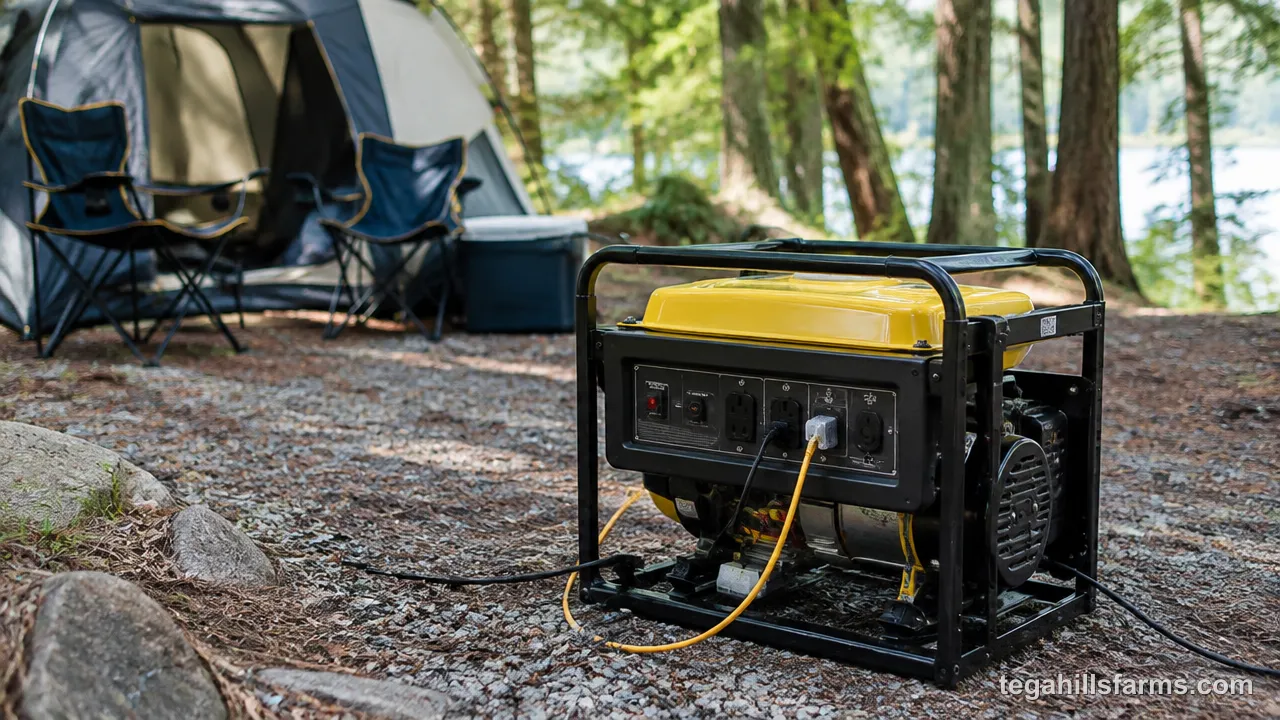
How Quiet Does a 3000-Watt Generator Need to Be?
For a campground, close neighbors or overnight running, you want an inverter with an eco or throttle mode and a published decibel rating taken at a stated distance. A decibel number without a distance can’t be compared with anything.
Ratings in this class are commonly taken at 23 feet. The decibel scale is logarithmic, so every 10 dB rise sounds noticeably louder to your ears. That means a few decibels separate a hum you can talk over from one that carries through a tent wall or the neighbor’s bedroom window. Some campgrounds and parks enforce noise limits, so check the rules where you stay.
A conventional generator has to spin at a fixed speed to hold 60 Hz output, so it runs at full speed even with only a phone charger plugged in. An inverter turns the engine’s output into DC and rebuilds clean AC electronically. That frees the engine to slow down at light loads, which is what eco and throttle modes do, and the lower engine speed is what you hear overnight. When noise ranks first on your list, the best quiet generators narrow the field further.
How Long Should a Generator Run on One Tank?
It should get through the night at your real load without a refill. Judge that by the runtime at half load, because headline runtimes are usually quoted at a quarter load.
An engine burns fuel in proportion to the work it does, so a refrigerator, lights and a TV running together drain the tank well before the light-load figure suggests. A bigger tank buys hours but adds weight. Economy or Eco Throttle modes stretch each fill by slowing the engine whenever the compressor cycles off. During an overnight outage, that’s the difference between sleeping through and heading outside with a gas can and a flashlight.
Runtime also costs you when the generator just sits. Gas left in the tank for months goes stale and gums up the carburetor. The result is a no-start on the night you need power, then a carburetor cleaning before the unit runs again.
Which Outlets and Safety Features Matter Most?
An RV owner needs a 30-amp outlet that matches the camper’s plug. Every buyer needs 120-volt 20-amp household outlets and an automatic CO shutdown. Anyone running laptops or a CPAP needs low total harmonic distortion.
RVs and travel trailers with 30-amp service use a TT-30 plug, which goes straight into a TT-30R outlet. A 30-amp twist-lock (L5-30R) takes a locking plug instead and needs an adapter for that RV cord, so match the outlet to the cord you own. The 20-amp household outlets feed extension cords to the fridge, tools and lights. GFCI versions cut power when current leaks to ground, which matters on wet grass.
Automatic CO shutdown uses a sensor on the generator that stops the engine when carbon monoxide builds up around it. It reads the air at the unit, not inside your house, so it never replaces running the generator outdoors, at least 20 feet from windows, doors and vents, with a battery CO alarm indoors. For a closer look at that feature, the best generators with CO sensors compare how each system works.
Total harmonic distortion measures how far the output strays from a smooth sine wave. Inverter units that stay under about 3 percent give laptops, CPAP machines and chargers the clean waveform their power supplies expect. Rougher output can make them run hot or shut down.
How Much Should a 3000-Watt Generator Weigh?
It should be light enough for whoever does the lifting. If you load it alone into a truck bed, an RV compartment or onto a shed shelf, a lighter unit is the right fit. A heavy one only works if it has wheels or you have a second person.
Weight follows engine and fuel capacity, so the heavier generators in this class usually carry bigger tanks and run longer per fill. That trade pays off when the unit stays near the house and only moves when the power goes out, rolling a short distance to a level spot outdoors. It stops paying off when the generator rides to every campground and tailgate, because a machine that’s a chore to lift tends to stay in the garage. In that case, the lighter unit you can carry alone over gravel and up a ramp is the one that actually comes along.
Which 3000-Watt Generator Should You Pick for Your Situation?
Choose by the job you’ll give it most often: camping and light use, RV trips or long outages. The Generac is the middle ground for a household that needs some of each.
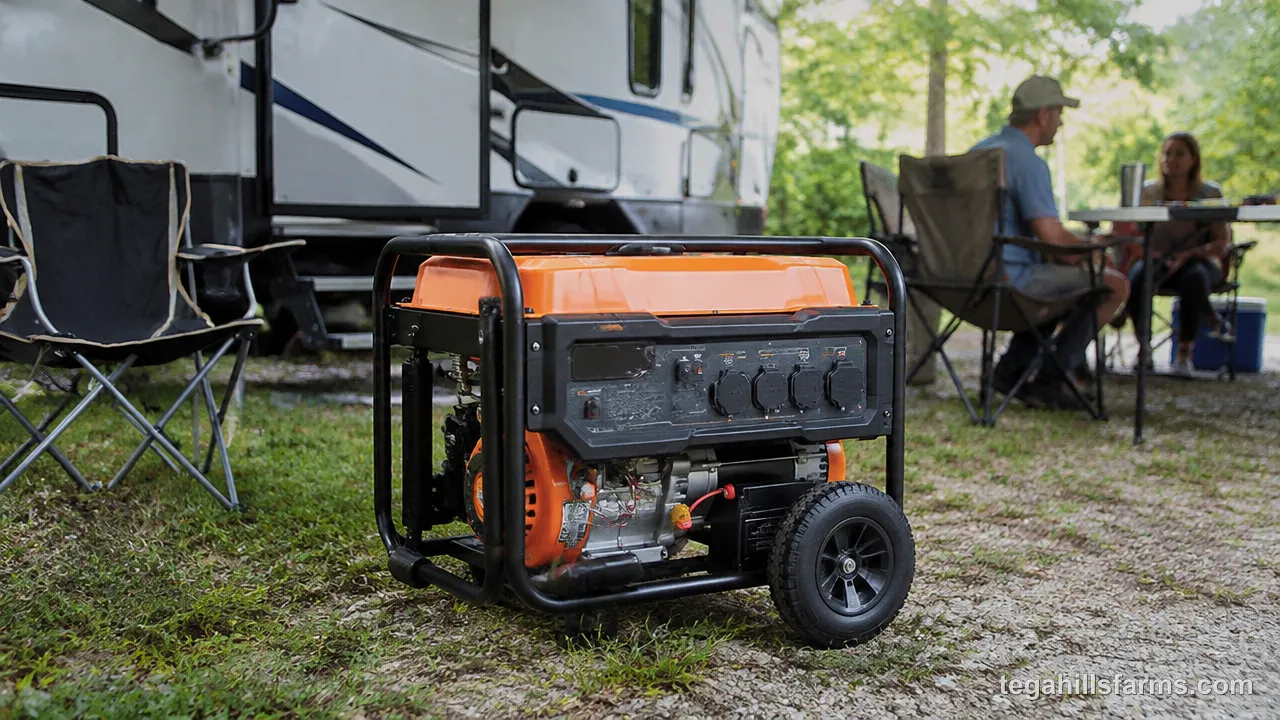
- Choose the PowerSmart 3000W Portable Inverter Generator if you load the generator alone for camping or tailgates and only need power now and then. It’s the lightest unit and the budget choice. In exchange, it has less surge reserve and a shorter warranty than the Generac.
- Choose the RVMP Flex Power 3300W Inverter Generator if it will live in an RV bay and feed the camper through its 30-amp outlet. Its compact body and strong continuous output come with a much smaller tank than the Honda’s.
- Choose the Honda EU3000iS Inverter Generator if outage backup comes first and you want electric start and a tank that keeps a fridge and lights running through the night. Its weight makes it a machine that stays near the house, and it isn’t sold in California.
- Choose the Generac 3300W Gas Inverter if the same generator has to cover outages and camping, and you might pair it with a second unit later. Its small tank means refueling partway through a long night.
Step up to a larger generator if your outage list grows past the essentials to central air, an electric range or the whole house. Sizing that bigger machine starts with the same list of running and starting watts, and the steps for how to choose a generator apply to every size class.
Gasoline left in a generator tank over winter goes stale, and the varnish it leaves behind clogs the tiny jets in the carburetor. The machine that sat ready in the garage for months then gives you a sputter and nothing else on the night the power goes out, with the fridge already warming.
How Do You Keep a Gas Generator Ready to Start in an Outage?
Fresh oil, a clean air filter, a good spark plug, a monthly run under load and fuel that can’t go stale keep a generator starting on the first pull.
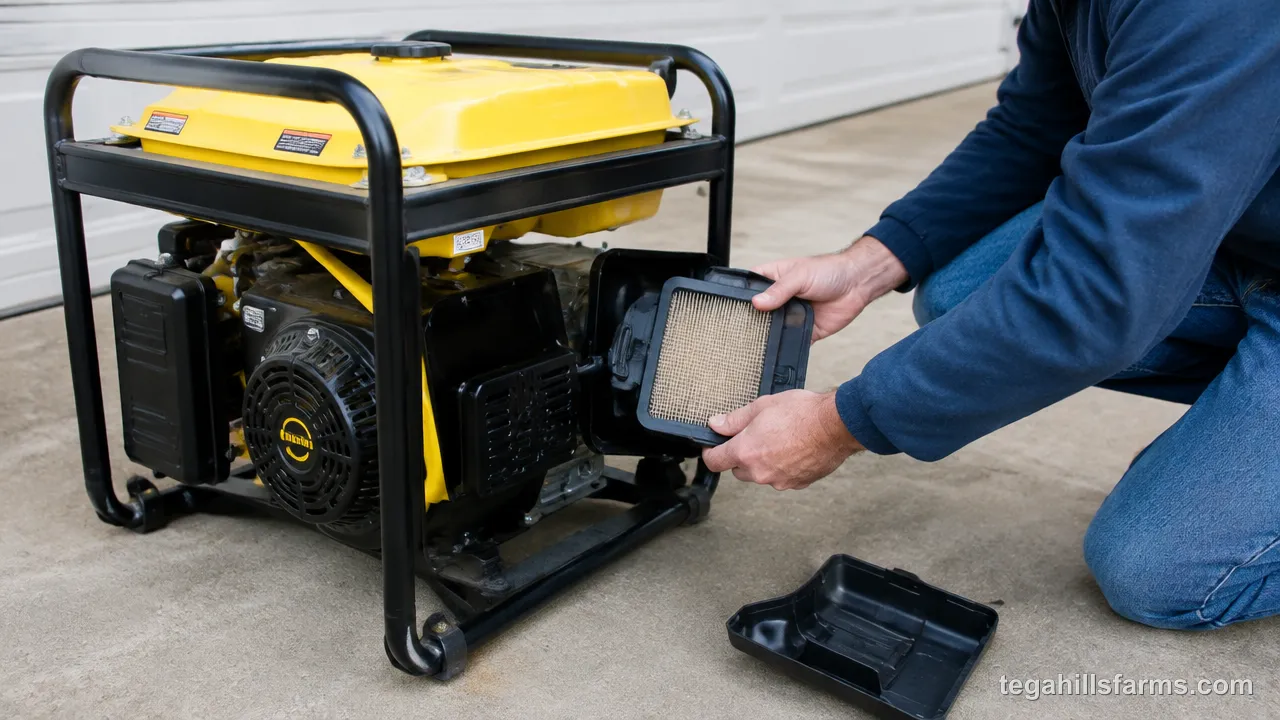
Oil breaks down with heat and age even when the engine barely runs, so change it on the manufacturer’s schedule and check the level before storm season. Many inverter units shut down on low oil, which saves the engine but leaves you without power. A clogged air filter starves the engine of air, and a fouled plug makes starting a fight. Running the generator under a real load for a while each month keeps the seals wet and burns off moisture.
Stale fuel is the usual reason a stored generator won’t start. As gasoline ages, its lighter parts evaporate and the rest leaves varnish in the carburetor’s small jets. Fuel stabilizer slows that breakdown when you add it to a full tank before storage. Shutting the fuel valve and running the carburetor dry, or draining the float bowl, removes the fuel from the carburetor entirely. Store the unit in a dry, ventilated garage or shed, away from water heater and furnace pilot lights.
A generator kept this way starts on the first or second pull when the lights go out. A neglected one gets yanked on in the rain and then needs a carburetor cleaning before it makes any power.
Is a Gas Inverter Generator or a Solar Generator Better at This Size?
For long outages, gas is the better choice because you can refuel in minutes and keep going. For short outages and quiet use, including indoors, a battery-based solar unit is better because it makes no exhaust.
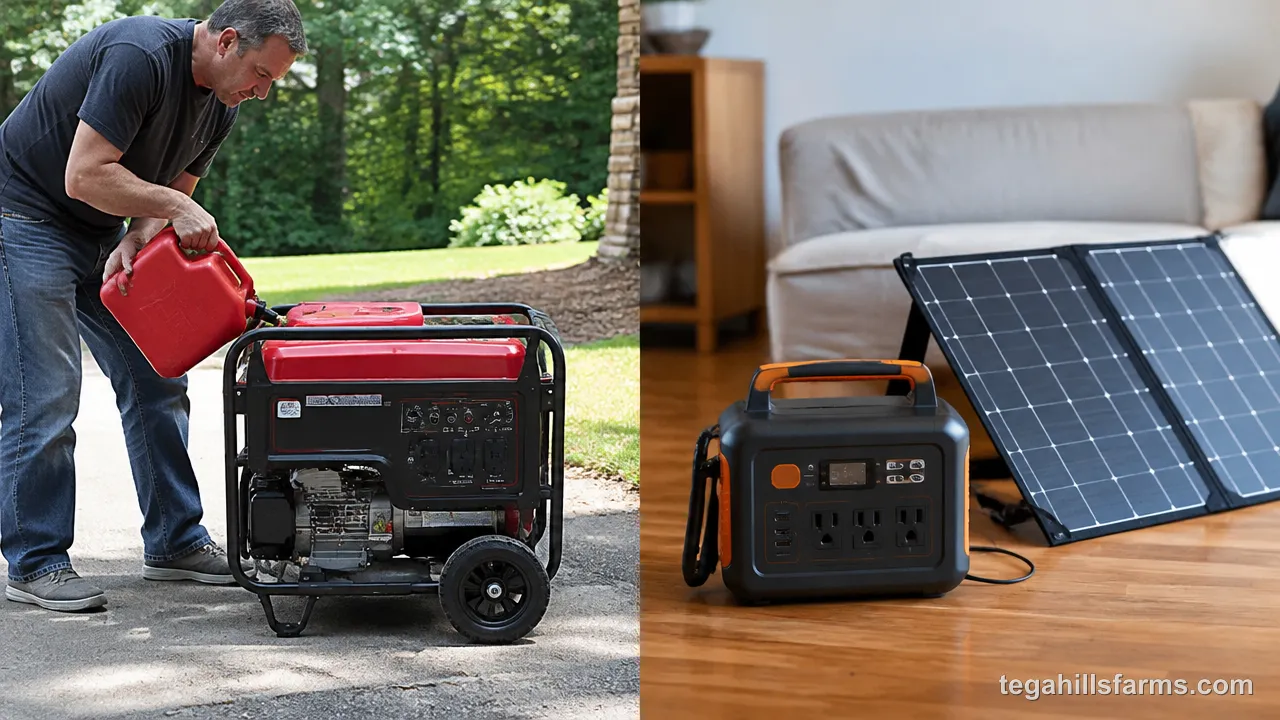
A solar generator is a portable power station with a battery and solar panels. Its runtime ends when the battery empties, and recharging depends on sun, panel size and season. A cloudy week during a winter storm can leave it short just when the fridge and sump pump need power. A gas unit keeps running as long as you have fuel on hand, but it makes noise and carbon monoxide and has to stay outdoors.
The power station’s strengths are the reverse. It has no exhaust and makes almost no noise, so a CPAP or laptop can run beside the bed. Recharging from the sun costs nothing once you own the panels, but it’s slow. If quiet, indoor-safe power matters more to you than open-ended runtime, compare the best solar generators before you commit to gas. Owning both also works: the power station covers nights and medical devices, and the gas unit keeps the fridge going through a long outage.
When Does Running Two Generators in Parallel Make Sense?
Pairing generators pays off when you want two light units instead of one heavy one, or when you’d rather buy a single unit now and add capacity later.
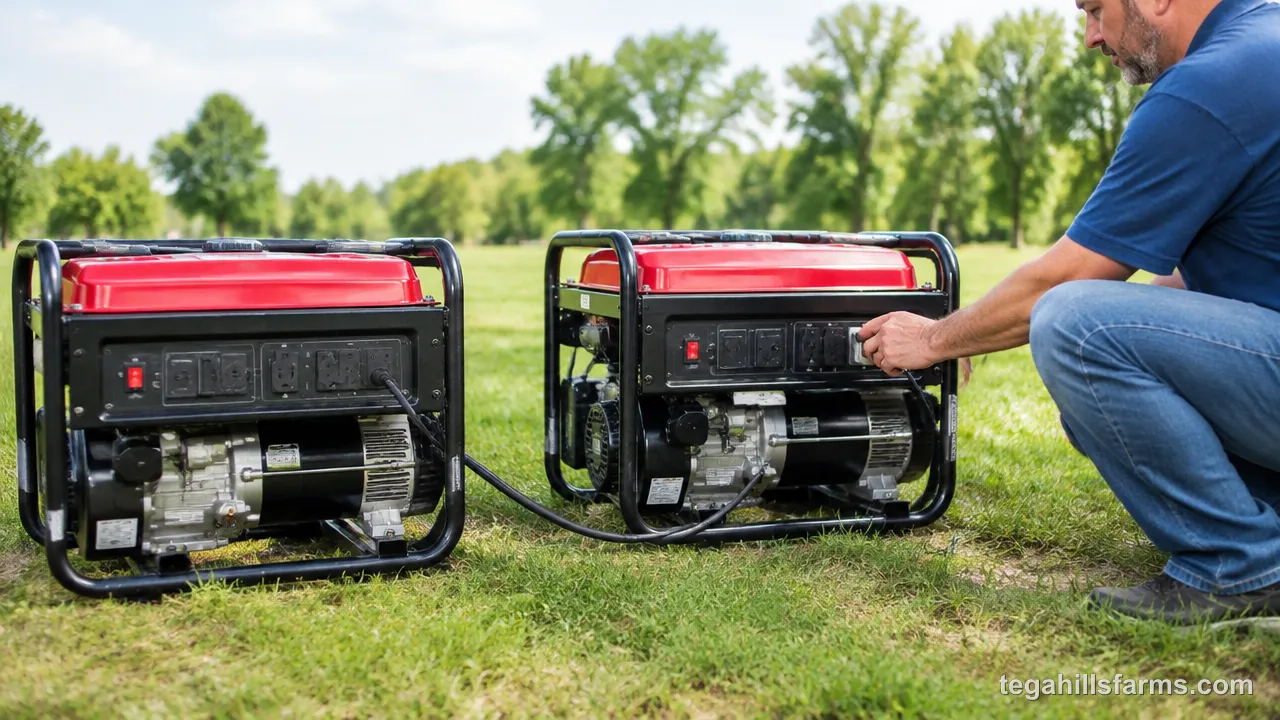
A parallel kit connects two compatible inverter generators with cables so their outputs combine at the kit’s outlets, doubling the power available. Each unit stays light enough for one person to carry. You can take one camping and leave the pair at home for outages, and the second purchase can wait until you need it. That beats a single larger generator when portability matters as much as output.
The limits are practical. The kit is sold separately, and both units generally need to be the same model; the Generac 3300W Gas Inverter, for example, pairs with a second GP3300i. You also carry, fuel and maintain two engines, which means two sets of oil changes and two tanks to stabilize before winter. If you’d run the pair together every time and never split them up, one larger generator is simpler: one engine, one tank and one machine to start.


Write Your Review
No reviews yet. Be the first to share your experience!