

The Jackery Solar Generator 1000 v2 + 200W Panel (Best Overall), the EF ECOFLOW EcoFlow Delta 3 Classic + 220W Solar (Best Durability), the BLUETTI AC180 (Best Value), the BLUETTI AC200PL + 350W Solar Panel (Best Battery Life), the Anker SOLIX C1000 Gen 2 + 200W Solar Panel (Best Compact), the Jackery Explorer 2000 v2 (Best Quiet Option), the Anker SOLIX C1000 + 100W Solar Panel (Best Lightweight), the BLUETTI Elite 200 V2 (Best Premium), the EF ECOFLOW EcoFlow Delta Pro 3 (Best Large Capacity) and the Anker SOLIX F3800 + 400W Bifacial Panel (Best Performance) are the 10 best solar generators of 2026.
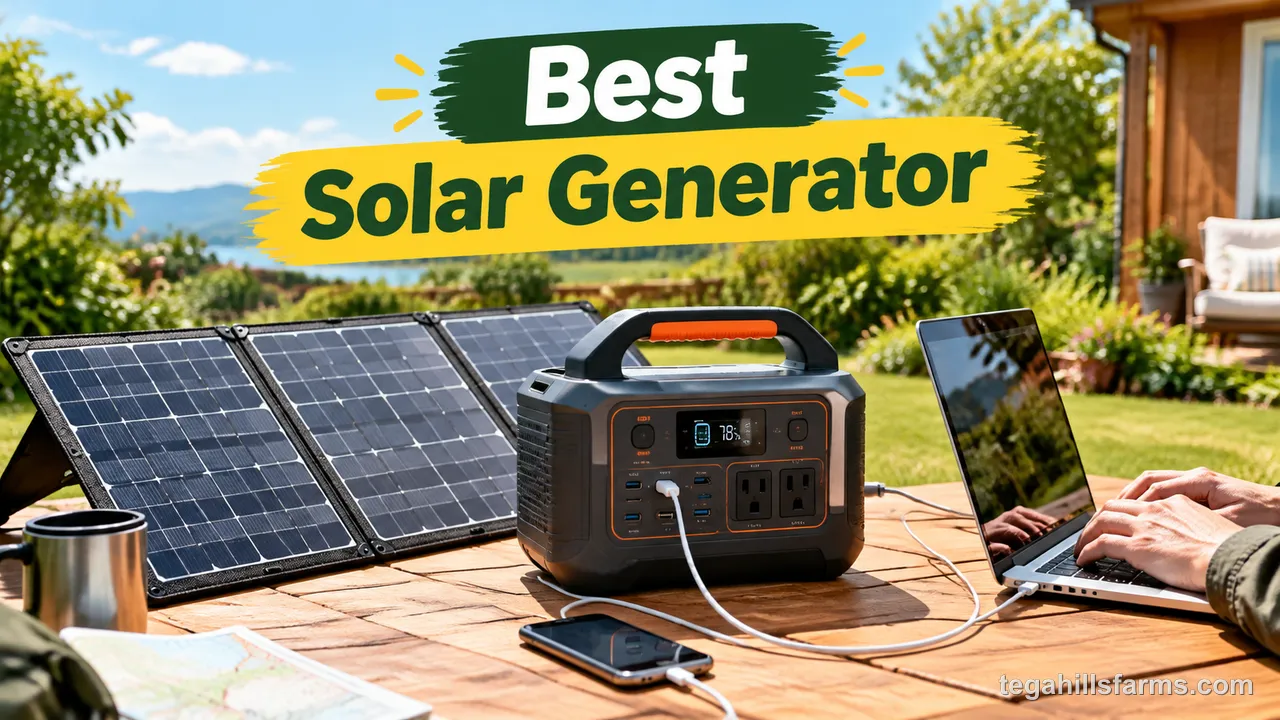
Three specs decide most purchases: AC output for what you plug in, battery capacity for how long it runs, and solar input for how fast the sun refills it. Weight starts to matter once the unit has to leave the garage.
Most buyers worry about two things. Will the unit actually start a refrigerator or another motor load, and will the battery still hold up in a few years? Surge ratings answer the first question. LiFePO4 cells with high cycle ratings answer the second.





Check the continuous AC rating against your most important appliance before anything else. A unit that can’t carry that load is the wrong fit, no matter how much capacity it has.
What Is a Solar Generator and How Does It Work?
A solar generator is a portable power station paired with solar panels. The panels charge a battery, and an inverter turns that stored energy into household AC and USB power.
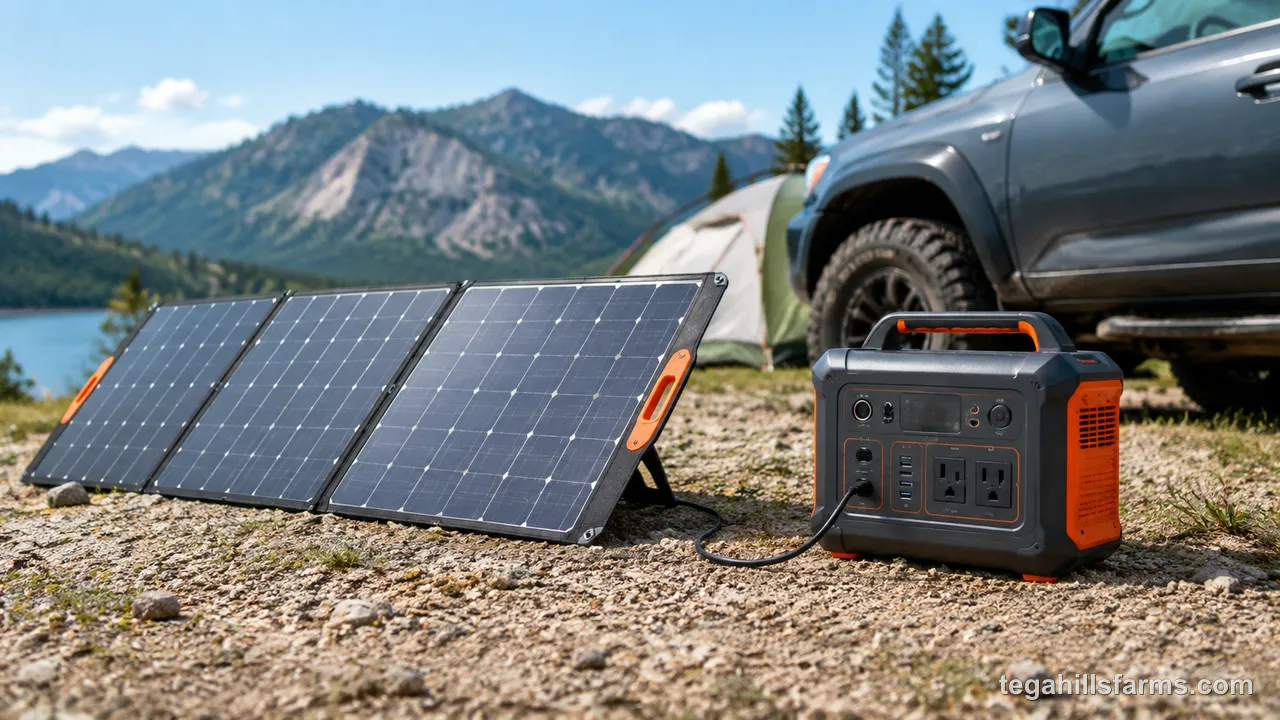
Nothing burns inside the unit, so there are no fumes and no refueling.
Sunlight flows from the panels through a charge controller into the battery. Whenever you need power, day or night, the inverter draws from that stored energy. Most stations also charge from a wall outlet or a car, which is handy when the weather turns.
A fuel-burning generator works differently. An engine turns fuel into electricity, which means exhaust, noise and a tank to keep filled. The trade-off is that a battery eventually runs out, while a tank can be topped up.
For a narrower look at stations built around solar charging, see our best solar power station roundup. If you are still weighing fuel types, our guide to the best generators compares gas, propane and battery-based options side by side.
10 Best Solar Generators of 2026
The 10 best solar generators of 2026 are the Jackery Solar Generator 1000 v2 + 200W Panel (best overall), the EF ECOFLOW EcoFlow Delta 3 Classic + 220W Solar (best durability), the BLUETTI AC180 (best value), the BLUETTI AC200PL + 350W Solar Panel (best battery life), the Anker SOLIX C1000 Gen 2 + 200W Solar Panel (best compact), the Jackery Explorer 2000 v2 (best quiet option), the Anker SOLIX C1000 + 100W Solar Panel (best lightweight), the BLUETTI Elite 200 V2 (best premium), the EF ECOFLOW EcoFlow Delta Pro 3 (best large capacity) and the Anker SOLIX F3800 + 400W Bifacial Panel (best performance).
A heavy home-backup station is overkill for a weekend camp. Its extra capacity and dual-voltage output pay off once a dryer or water pump becomes part of your outage plan.
#1 Jackery Solar Generator 1000 v2 + 200W Panel — Best Overall
Campers and road-trippers get serious output in a carryable package. At 23.8 pounds with a foldable handle, it delivers 1,500W of AC power from a 1,070Wh battery, so fridges and electric pots stay in play.
Key Specs:
- Capacity: 1,070Wh LiFePO4 battery
- AC output: 1,500W, 3,000W surge
- Weight: 23.8 pounds
- Ports: three AC, two USB-C, one USB-A, one DC car
- Solar: included 200W panel reaches 80% in 6 hours
Detailed Review:
The LFP battery is the long-term story here. It keeps over 70% of its original capacity after 4,000 charge cycles, which works out to a decade-plus of use. That matters for a unit that sits in a closet most of the year and then has to perform in a storm.
Charging gives you choices. Emergency mode, switched on in the Jackery App, refills the battery in 1 hour, while the default is a gentler 1.7 hours that protects battery health. A 600W alternator charger gets it full in 3 hours on the road. Overnight, a 30 dB quiet mode keeps the fan from bothering anyone nearby.
Three pure sine wave AC ports and a 100W USB-C port cover laptops, phones and small appliances at once. Anything needing more than 1,500W continuous is off the table, though the 3,000W surge helps with startup loads.
Next to the Anker SOLIX C1000 + 100W Solar Panel, it weighs less and holds slightly more energy. The Anker offers higher output, while the Jackery is rated at 1,500W.
Pros:
- LFP cells keep over 70% capacity after 4,000 cycles
- Light for its capacity, with a foldable handle
- Alternator charging reaches full in 3 hours
- Included 200W panel is ready for solar from day one
Cons:
- Full one-hour charge needs emergency mode enabled in the app each time
- Panel and power station ship in separate packages
- 1,500W continuous output limits heavier appliances
Who It’s For:
Weekend campers, road-trippers and anyone building a modest outage kit will appreciate a station that is easy to lift and ready for the sun out of the box. Households that need to run power-hungry appliances for long stretches should look at a larger station.
Editor’s Verdict:
A light, long-lived kit that covers camping and light backup without fuss.
#2 EF ECOFLOW EcoFlow Delta 3 Classic + 220W Solar — Best Durability
Anyone protecting a desktop PC or medical device will like the under-10ms UPS switchover. Paired with 1,800W of AC output and LiFePO4 cells rated for 10+ years of daily use, the Delta 3 Classic suits a home setup that cannot afford a dropout.
Key Specs:
- Capacity: 1,024Wh LiFePO4 battery
- AC output: 1,800W, 3,600W surge, up to 2,600W with X-Boost
- AC charging: 0 to 80% in 45 minutes
- Solar: 220W bifacial panel, 5.8-hour recharge
- UPS switchover: under 10ms
Detailed Review:
Switchover speed sets this one apart for sensitive gear. The unit moves to battery in under 10ms, fast enough to protect PCs, servers and medical devices from dropouts and data loss. That is a real advantage if your outage plan includes a work-from-home desk.
The cells are LiFePO4 rated for 10+ years of daily use, backed by an EV-grade CTC design and a battery management system. For a backup unit, that means capacity you can still count on after years of regular cycling.
Charging is quick. X-Stream AC charging takes the battery from 0 to 80% in 45 minutes. The 220W bifacial panel uses N-Type cells with up to 25% conversion and refills the unit in 5.8 hours. X-Boost lifts the 1,800W output to as much as 2,600W for heavier loads such as a microwave.
Against the BLUETTI AC180, it switches over faster, under 10ms versus 20ms. It holds slightly less energy, though, at 1,024Wh versus 1,152Wh.
Pros:
- Switches to battery in under 10ms for sensitive electronics
- 0 to 80% in 45 minutes on AC charging
- X-Boost lifts 1,800W output to 2,600W
- Bifacial 220W panel comes with the station
Cons:
- 1,024Wh capacity limits runtime for big appliances
- Station and panel arrive in separate shipments
Who It’s For:
People who keep a PC, home office gear or medical equipment on the outage plan will find the fast switchover worth having. It also suits shoppers who want solid solar recharging in a bundle. Anyone planning to run power-hungry appliances for long stretches should look at a bigger battery.
Editor’s Verdict:
Fast switchover and long-life cells make this a dependable desk-and-fridge backup.
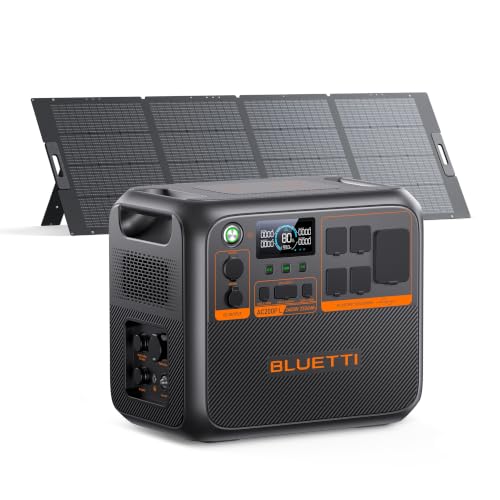
#3 BLUETTI AC180 — Best Value
Shoppers who want strong output without a bulky unit should look here. With 1,800W of output, 8 outlets and 500W of solar input for the 1,152Wh battery, the AC180 covers a lot of ground for its size.
Key Specs:
- Capacity: 1,152Wh LiFePO4 battery
- AC output: 1,800W, 2,700W with app boost
- Outlets: 8
- Solar input: up to 500W, 2.8 to 3.3 hours
- AC charging: full in 1 hour at 1,440W input
- Weight: 37.4 pounds
Detailed Review:
Output and outlet count are the headline. The AC180 delivers 1,800W across 8 outlets, and a tap in the BLUETTI App lifts that to 2,700W for higher-demand devices. A single unit can feed several devices at once without juggling cords.
Recharging is where it earns its keep. At 1,440W AC input the battery fills in 1 hour. With 500W of solar input, solar alone can recharge it, and adding an AC source brings the time down to 1 hour.
It also doubles as a home battery backup, switching over in 20ms to keep essentials running. That suits refrigerators, lights and chargers well.
At 37.4 pounds, it is heavier than the Jackery Solar Generator 1000 v2 at 23.8 pounds. That is the trade for extra output and capacity.
Pros:
- Fully charges in 1 hour on 1,440W AC input
- 500W solar input recharges the battery on solar power alone
- 8 outlets handle many devices at once
- App boost raises output to 2,700W
Cons:
- Solar panel is a separate purchase
- Weighs 37.4 pounds, so carrying it takes some effort
Who It’s For:
Households wanting strong output, quick recharging and flexible solar input without stepping up to a large station will find a sensible middle ground here. It works for essential-appliance backup and camp setups alike. Buyers who want panels in the box should look at a bundle instead.
Editor’s Verdict:
Quick to recharge and generous with outlets, it gets a lot done for a mid-size unit.
#4 BLUETTI AC200PL + 350W Solar Panel — Best Battery Life
RV owners and long-outage planners get room to grow here. The 2,304Wh battery expands to 8,448Wh, and a 30A TT30 port handles RV connections alongside four 2,400W AC outlets.
Key Specs:
- Capacity: 2,304Wh LiFePO4, expandable to 8,448Wh
- AC output: four 2,400W outlets, 3,600W power lifting
- Solar: 350W foldable panel, up to 1,200W solar input
- Ports: 11 total, including 30A TT30 and 48V/8A DC
- Battery life: 3,000+ cycles
- Weight: 72 pounds
Detailed Review:
Capacity is the draw. At 2,304Wh it holds more energy than the Jackery 1000 v2 or the Anker SOLIX C1000, and expansion batteries can take it to 8,448Wh. Four 2,400W AC outlets and 3,600W power lifting give heavy loads some headroom.
The LiFePO4 cells are rated for 3,000+ cycles, which BLUETTI equates to a 10-year lifespan. A battery management system guards against overcharging and short circuits.
Recharging is flexible. Max 2,400W AC input takes the unit from 0 to 80% in 60 minutes, and up to 1,200W of solar input can bring it to a full charge. The bundled 350W panel on its own takes it to 80% at a slower pace, so faster solar charging needs more panel wattage.
The trade-off is weight. At 72 pounds it is a vehicle-to-garage unit, not a trail unit. Next to the Jackery Solar Generator 1000 v2 at 23.8 pounds, it asks much more of your back in return for the added capacity and ports.
Pros:
- 3,000+ cycle LiFePO4 battery rated for a 10-year lifespan
- Expandable to 8,448Wh
- 11 ports including TT30 and 48V/8A DC
- 0 to 80% in 60 minutes on AC
Cons:
- 72 pounds makes it a stationary or vehicle-based unit
- Solar panel ships separately from the station
Who It’s For:
RV travelers and homeowners who want room to expand later will get the most from this kit, especially if they depend on a mix of AC, DC and RV-style connections. Anyone who needs to carry gear across a campsite or up stairs regularly should choose something lighter.
Editor’s Verdict:
Big capacity, long cycle life and a port count that rarely runs out, as long as you can handle the weight.
#5 Anker SOLIX C1000 Gen 2 + 200W Solar Panel — Best Compact
A small station that still does proper backup duty. Its under-10 ms UPS switchover keeps a CPAP machine or laptop running through a dropout, and 2,000W of output across 9 ports leaves room for much more.
Key Specs:
- Capacity: 1,024Wh LiFePO4 battery
- AC output: 2,000W, 3,000W peak, 9 ports
- Solar: PS200 bifacial panel, input up to 600W, full in 1.8 hours
- AC charging: full in 49 minutes with HyperFlash at 1,600W
- UPS switchover: under 10 ms
- Battery life: at least 80% capacity after 4,000 cycles
Detailed Review:
Anker says it is 14% smaller and 11% lighter than similar models, which matters when closet or car space is tight. The small footprint comes with real output, 2,000W with a 3,000W peak, so you are not giving up much power for the space saved.
Recharging is the other strength. Plug in 600W (60V max) of solar and it fills in 1.8 hours. With HyperFlash enabled in the Anker app, AC charging at 1,600W takes 49 minutes. The bundled PS200 bifacial panel is the starting point, though 600W is the input ceiling, not what a single panel delivers.
The battery holds at least 80% capacity after 4,000 cycles, which Anker pitches as a decade of daily use. TOU mode in the app can schedule power use to sidestep peak-rate periods.
Against the Jackery Solar Generator 1000 v2, it offers more AC output, 2,000W versus 1,500W. It gives up a little capacity, 1,024Wh versus 1,070Wh.
Pros:
- UPS switchover under 10 ms protects CPAP machines and laptops
- 2,000W output across 9 ports
- Solar input up to 600W refills in 1.8 hours
- 4,000 cycles to at least 80% capacity
Cons:
- Station and panel ship in separate packages
- 1,024Wh capacity limits runtime for heavier loads
Who It’s For:
Anyone short on storage space who also relies on a CPAP machine or laptop through outages will appreciate the small footprint paired with real backup features. It suits people who like scheduling power through an app. Those planning to run large appliances for long stretches will want a bigger battery.
Editor’s Verdict:
Small, quick to recharge and quick to switch over, which suits protecting medical or work gear.
#6 Jackery Explorer 2000 v2 — Best Quiet Option
Light sleepers and indoor users get a big battery that stays out of the way. Silent Charging mode refills the 2,042Wh pack in 5 hours at about 30dB, and the unit weighs just 39.5 pounds for its capacity class.
Key Specs:
- Capacity: 2,042Wh LiFePO4 battery
- AC output: 2,200W across 3 AC ports
- Weight: 39.5 pounds
- AC charging: 0 to 80% in 66 minutes
- Silent Charging: full in 5 hours at about 30dB
- Solar: as few as 6 hours with 400W panels (panel optional)
Detailed Review:
Noise is the reason to look at this one. In Silent Charging mode the unit refills in 5 hours at about 30dB, and smart temperature control adjusts fan speed to environmental and component temperatures. If you want a quiet solar generator for a bedroom or home-office corner, that low fan profile is the feature that counts.
LiFePO4 cells rated up to 10 years and no fumes mean it can run indoors as well as outdoors. UL1778 certification for uninterruptible power systems backs the 20ms switchover, which keeps essentials running through storms and outages.
Weight is the second advantage. At 39.5 pounds, Jackery describes it as 41% lighter and 34% smaller than typical 2kWh LiFePO4 stations. Next to the BLUETTI Elite 200 V2 at 53.35 pounds and a similar 2,073.6Wh, the difference is noticeable on carry day. The Elite offers higher continuous output, while the Explorer 2000 v2 is rated at 2,200W.
Charging is fast too. AC takes it to 80% in 66 minutes, and Emergency Super Charging in the app reaches full in 102 minutes. Plan on buying panels separately.
Pros:
- Silent Charging mode runs at about 30dB
- Weighs 39.5 pounds for 2,042Wh of capacity
- 20ms UPS switchover with UL1778 certification
- Fast AC charging reaches 80% in 66 minutes
Cons:
- Solar panels are sold separately
- Silent mode takes 5 hours for a full charge
Who It’s For:
Light sleepers, home-office workers and anyone wanting fume-free operation indoors will appreciate how little noise this unit makes while charging. It also suits people who want a large battery without hauling a heavy station. Those wanting panels in the box will need to shop for them.
Editor’s Verdict:
Large capacity without the racket or the heft, provided you add your own panels.
#7 Anker SOLIX C1000 + 100W Solar Panel — Best Lightweight
Weight stays low while output stays high. At 28.44 pounds it still delivers 1,800W with a 2,400W peak across six AC outlets, and the folding IP67 panel stows down to roughly A4 size.
Key Specs:
- Capacity: 1,056Wh LiFePO4 battery
- Output: 1,800W, 2,400W peak, 6 AC outlets, 11 ports total
- Weight: 28.44 pounds
- AC charging: 80% in 43 minutes with UltraFast
- Solar: PS100X panel, input up to 600W, full in 1.8 hours
- Panel: folds to 14 × 10.9 × 2.6 in, IP67 water-resistant
Detailed Review:
Output per pound is the draw. The 1,800W rating, with a 2,400W peak, runs through 6 AC outlets and 11 ports in total, and SurgePad technology handles startup surges. That is a lot of capability for a 28.44-pound station.
Recharging is quick. Connect to AC, activate UltraFast in the Anker app, and the battery hits 80% in 43 minutes and full in under an hour. Solar input of up to 600W can fill it in 1.8 hours, though a single 100W panel will not approach that figure.
The PS100X panel folds to nearly A4 size (14 × 10.9 × 2.6 in) and carries an IP67 water-resistant rating against splashes. Its monocrystalline cells convert up to 23% of sunlight under direct sun. It is easy to carry, but one 100W panel is modest for a 1,056Wh battery.
Next to the Anker SOLIX C1000 Gen 2 bundle, it offers slightly more capacity but less AC output, 1,800W versus 2,000W.
Pros:
- 1,800W output with 2,400W peak at 28.44 pounds
- UltraFast AC charging reaches 80% in 43 minutes
- Folding panel has an IP67 water-resistant design
- Panel folds to about A4 size
Cons:
- 100W panel recharges slowly next to the station’s solar limit
- UltraFast charging must be activated in the app
Who It’s For:
Travelers who count every pound, yet still want high output and a panel that folds away, will like this setup. It also works as an everyday home-outage kit. People wanting a large solar array out of the box should plan to add panels.
Editor’s Verdict:
Strong output and fast AC recharging in a station that is easy to carry.
#8 BLUETTI Elite 200 V2 — Best Premium
Built for heavy loads and a very long service life. It delivers 2,600W of continuous AC power from a 2,073.6Wh battery rated for over 6,000 cycles, with a standby draw of only 10W.
Key Specs:
- Capacity: 2,073.6Wh LiFePO4 battery
- AC output: 2,600W continuous, 3,900W power lifting
- Outlets: 4 AC outlets, up to 9 devices at once
- Standby draw: 10W
- Battery life: 6,000+ cycles, 17-year lifespan
- Weight: 53.35 pounds
Detailed Review:
Continuous output is the standout. 2,600W of continuous AC, with 3,900W in power lifting mode, is enough for refrigerators, hair dryers and coffee makers, and up to nine devices can run at once.
Efficiency matters just as much. Standby draw is held to 10W, which BLUETTI says is three times lower than similar power stations. Less of the battery is wasted when the unit just sits there, and over a long outage that adds up.
The battery is automotive-grade LiFePO4 rated for over 6,000 cycles and a 17-year lifespan, and it is CNAS-certified. That cycle count is higher than the 4,000 cycles listed for the Jackery Solar Generator 1000 v2 and the Anker SOLIX C1000 Gen 2.
Three charging modes let you trade speed for noise through the app. Turbo takes 0 to 80% in an hour, Standard fills in 1.6 hours, and Silent Mode runs at 16 to 30dB for a full charge in 3 hours. Solar panels are bought separately, and 1000W of panels fill the unit in 2.4 hours.
Pros:
- 2,600W continuous output with 3,900W power lifting
- 10W standby draw wastes little stored energy
- Over 6,000 cycles and a 17-year rated lifespan
- Three charging modes balance speed and noise
Cons:
- 53.35 pounds is heavy for frequent carrying
- Solar panels are sold separately
Who It’s For:
Buyers who rely on a refrigerator, kitchen appliances or other demanding gear, and plan to keep a backup unit for many years, will get the most from it. It also suits anyone who wants to choose between fast charging and silent charging. People who move their gear often may find it a lot to carry.
Editor’s Verdict:
Strong continuous output and a very long rated battery life, with low standby waste to match.
#9 EF ECOFLOW EcoFlow Delta Pro 3 — Best Large Capacity
Whole-home backup is what this one is built for. With 4,096Wh of LFP capacity, 4,000W of dual-voltage output and expansion to 48kWh, it can take on loads such as a 3-ton central AC or a 1 HP water pump.
Key Specs:
- Capacity: 4,096Wh LFP, expandable to 48kWh
- AC output: 4,000W, 6,000W with X-Boost
- Voltage: 120V/240V
- Switchover: 10 ms
- Noise: as low as 30 dB
- Weight: 115 pounds
Detailed Review:
The dual-voltage 120V/240V output is aimed at home-scale loads rather than camp gear. It delivers 4,000W of AC, 6,000W with X-Boost, and scales up to 12,000W.
Capacity starts at 4,096Wh and expands to 48kWh with extra batteries or smart generators, which EcoFlow puts at 2 to 4 days of whole-home backup. The unit accepts 7 charging methods, including wall outlets, solar, gas generators and EV charging piles.
Despite the size, X-Quiet technology holds noise to as low as 30 dB. The 10 ms switch-over protects NAS systems and servers. Automotive-grade LFP cells in an IP65-rated CTC pack protect the battery, and a 5-year warranty is included.
The trade-off is portability. At 115 pounds, this is a station you position and leave. It weighs less than the Anker SOLIX F3800 bundle, 115 pounds versus 132.28, and holds slightly more, 4,096Wh versus 3,840Wh. It gives up AC output, though, 4,000W versus 6,000W.
Pros:
- 4,096Wh capacity expands to 48kWh
- 120V/240V output of 4,000W, or 6,000W with X-Boost
- Hums as low as 30 dB for a unit this size
- 10 ms switch-over protects NAS systems and servers
Cons:
- 115 pounds limits it to mostly stationary use
- Reaching 48kWh requires additional batteries or smart generators
Who It’s For:
Homeowners planning outage protection for big loads like central cooling or a well pump, and willing to place the unit and leave it, are the target here. It also suits anyone wanting room to grow capacity later. Frequent campers or anyone moving it often should look elsewhere.
Editor’s Verdict:
Home-scale output and room to expand, as long as you plan a permanent spot for it.
#10 Anker SOLIX F3800 + 400W Bifacial Panel — Best Performance
Households with big appliances get a dual-voltage solution here. The 6,000W AC output runs from a 3,840Wh battery that can grow to 26.9kWh, and the 400W bifacial panel is part of the bundle.
Key Specs:
- Capacity: 3,840Wh LiFePO4 battery
- AC output: 6,000W, 120V/240V dual-voltage
- Expansion: up to 26.9kWh with up to 6 battery packs
- Panel angles: 40°, 50° and 60° via kickstand
- Weight: 132.28 pounds
Detailed Review:
Output is the headline. 120V/240V at 6,000W runs home-scale loads including a dryer, and pairing a second F3800 lifts the maximum to 12,000W. That puts it in a different class from the portable units here.
Capacity starts at 3,840Wh, enough to power a family’s needs for a day. Adding up to 6 battery packs reaches 26.9kWh, and a second F3800 with 12 battery packs stretches to two weeks. If you want an expandable solar generator that can grow in stages, the battery-pack route lets you start small.
The 400W bifacial panel uses monocrystalline cells with a sunlight-trapping surface to turn more sunlight into electricity. A kickstand sets 40°, 50° or 60° angles, and the IP67 design means rain does not have to cancel a camp setup.
Bulk is the trade-off. At 132.28 pounds, it stays where you put it. The station and panel also ship separately, so plan for two deliveries.
Pros:
- Dual-voltage 6,000W AC output runs home-scale loads
- Expands to 26.9kWh with up to 6 battery packs
- Bifacial panel has three kickstand angles
- IP67 waterproof panel handles rain
Cons:
- 132.28 pounds makes it a fixed-location unit
- Station and panel ship in separate deliveries
Who It’s For:
Families running appliances that need dual-voltage power, and planning to grow storage over time, will get the most from this setup. It suits permanent installations at home better than trips. Shoppers watching storage space or hauling gear should look at the lighter stations.
Editor’s Verdict:
Home-scale output and staged expansion in a bundle built to stay put.
How Do the Top Picks Compare on Size, Power and Recharging?
Carry-friendly units like the Jackery Solar Generator 1000 v2 (23.8 pounds) suit camp use, mid-size stations like the BLUETTI Elite 200 V2 (2,600W) handle heavier appliances, and the Anker SOLIX F3800 (6,000W) targets home-scale loads.
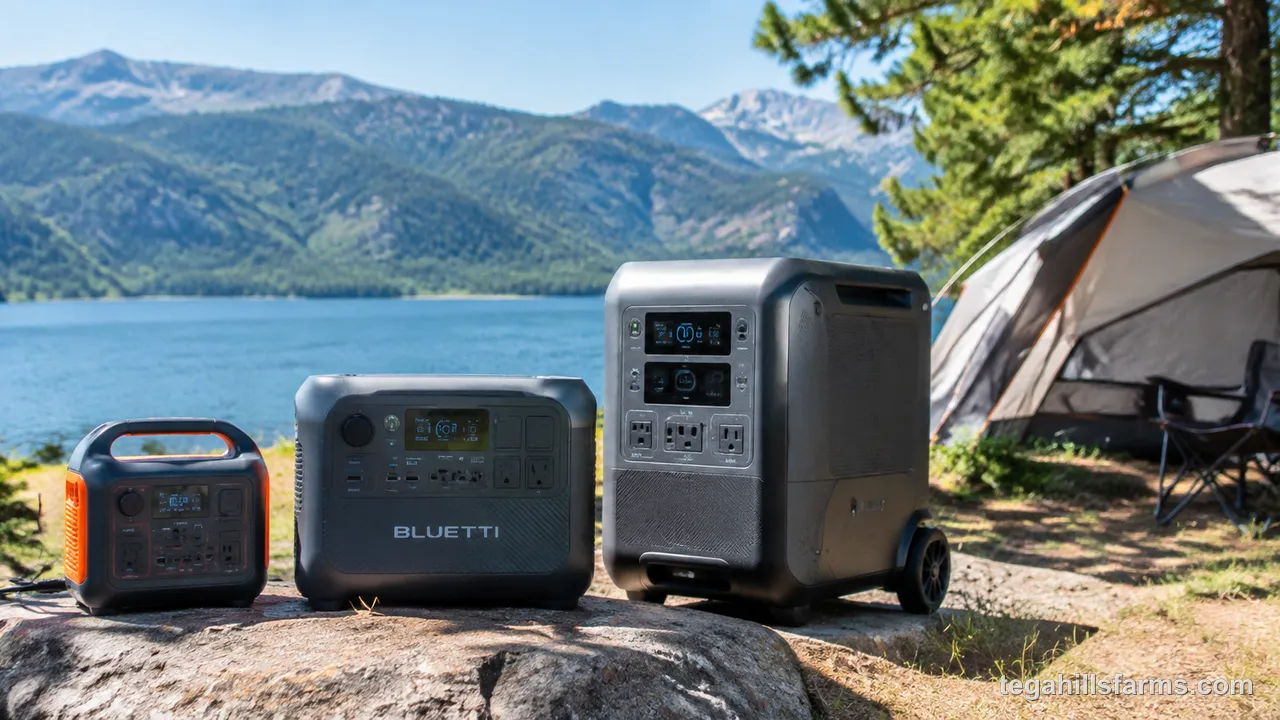
Capacity runs from 1,024Wh on the EcoFlow Delta 3 Classic and Anker SOLIX C1000 Gen 2 to 4,096Wh on the EcoFlow Delta Pro 3. The BLUETTI AC200PL expands to 8,448Wh, the F3800 reaches 26.9kWh, and the Delta Pro 3 grows to 48kWh. Weight follows capacity, from 23.8 pounds on the Jackery 1000 v2 to 132.28 pounds on the F3800.
Six bundles include a panel, from the 100W unit with the Anker SOLIX C1000 to the 400W bifacial panel with the F3800. The Explorer 2000 v2, Elite 200 V2, AC180 and Delta Pro 3 are sold as stations without a panel in the package.
Recharging is fast across the board. AC charging to 80% is quick on the Anker SOLIX C1000, Delta 3 Classic, Elite 200 V2, AC200PL and Explorer 2000 v2.
How Do You Choose the Right Solar Generator?
The right solar generator comes down to continuous output, battery capacity and chemistry, solar input and recharge speed, and ports, weight and noise.
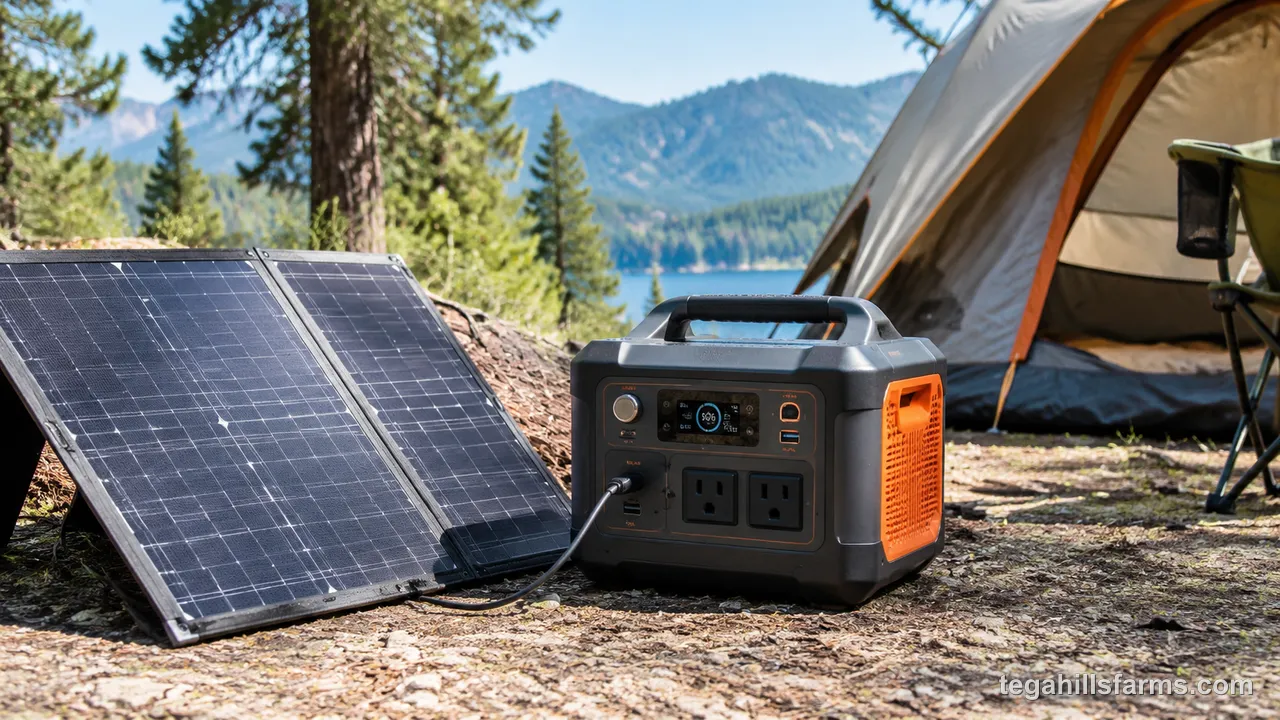
Start with the one appliance you can’t do without, then work down the list.
How Much Output Do Your Appliances Need?
Continuous output is the wattage a unit can supply steadily, while surge output is the brief peak it can deliver to start motors and compressors.
Refrigerators, well pumps and other motor loads draw a spike when they start, often well above their running wattage. That is why the surge rating matters as much as the continuous one.
Add up the running watts of everything you plan to power at once, and keep that total under the continuous rating. The Jackery Solar Generator 1000 v2 pairs 1,500W continuous with 3,000W surge, while the Anker SOLIX F3800 offers 6,000W. For fridge-specific sizing, see the best solar generator for refrigerator guide.
Rank your appliances by how much an outage would hurt. Size for the top few, and treat the rest as a bonus.
What Battery Capacity and Chemistry Should You Look For?
Watt-hours measure how much energy the battery holds, so higher capacity means longer runtime, and LiFePO4 cells outlast older lithium chemistries.
Divide the watt-hours by your load’s wattage and you get a rough runtime. Real runtime runs somewhat lower because of conversion losses.
LiFePO4 tolerates far more charge cycles before the battery wears down, which is why every pick here uses it. Cycle ratings translate into years of use. BLUETTI equates 3,000+ cycles to about 10 years, and rates over 6,000 cycles at 17 years.
Also check how much capacity remains at the rated cycle count. The Jackery 1000 v2 retains over 70% after 4,000 cycles, while the Anker SOLIX C1000 Gen 2 holds at least 80% at the same count.
How Do Solar Input and Recharge Speed Affect Real Use?
Panel wattage and the station’s maximum solar input set recharge time, and an MPPT controller pulls the most power out of the panels as light changes.
Panels beyond the input limit add nothing, so match the array to the station. The Anker SOLIX C1000 accepts up to 600W, the BLUETTI AC200PL up to 1,200W, and the Elite 200 V2 fills in 2.4 hours with 1000W of panels. If you own an EcoFlow station, the best solar panel for ecoflow shortlist narrows down compatible options.
Cloudy days are where backup charging pays off. AC and alternator charging fill the gap, and a 600W alternator charger gets the Jackery 1000 v2 full in 3 hours. Check connectors and voltage limits before buying panels.
Do Ports, Weight and Noise Change the Decision?
Ports, weight and noise matter most for how and where you use the unit: port variety for what you plug in, carry weight for moving it, and fan noise for sleeping or working nearby.
Port mix varies. Some units add USB-C PD, DC car ports or a TT30 for RV hookups, while others focus on AC outlets. Weight spans 23.8 pounds to 132.28 pounds, which decides whether you carry the unit or park it.
Fan noise drops to about 30 dB in the silent modes of the Jackery 1000 v2, Explorer 2000 v2 and Delta Pro 3, and the Elite 200 V2 runs at 16 to 30dB. No fuel burns, so these units can be used indoors.
Weight decides camping and RV trips, noise decides bedroom or apartment use, and ports decide RV hookups.
Which Solar Generator Fits Your Use Case?
The right pick depends on whether you need home backup, camping and RV power, or off-grid and small-space living.
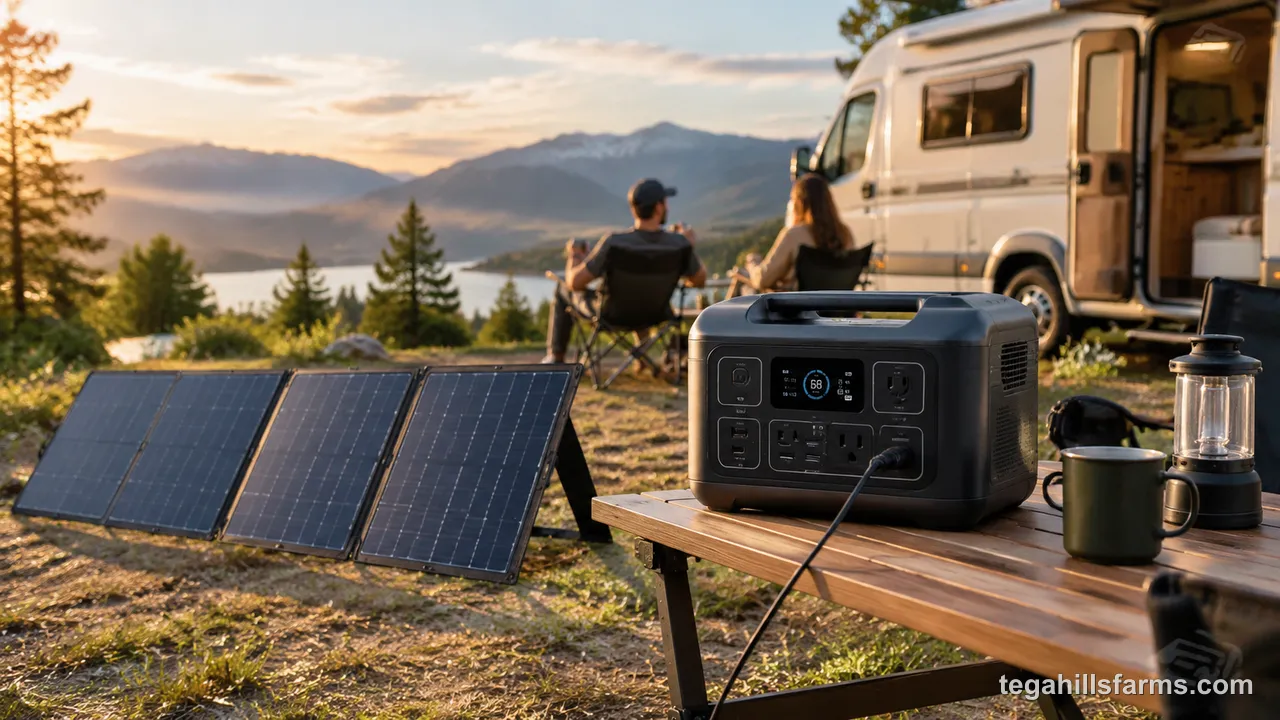
Match the situation first, then the spec sheet.
Which Solar Generator Works Best for Home Backup?
Yes, a solar generator handles home backup when it has strong output, fast UPS-style switchover and expandable capacity, with dual-voltage support for larger loads.
The Anker SOLIX F3800 pairs 6,000W of 120V/240V output with expansion to 26.9kWh. The EcoFlow Delta Pro 3 offers 4,000W, expandable to 48kWh. The BLUETTI AC200PL expands to 8,448Wh.
For desks and servers, the EcoFlow Delta 3 Classic switches over in under 10ms. Larger units are heavy, so choose a spot near your panel or inlet. For more options, see the best solar generator for home backup.
What Suits Camping and RV Trips?
Yes, camping and RV trips suit solar generators that are light, quick to recharge and quiet, with alternator or solar charging for the road.
The Jackery Solar Generator 1000 v2 weighs 23.8 pounds and charges from a 600W alternator charger in 3 hours. The Anker SOLIX C1000 pairs 28.44 pounds with a folding IP67 panel. The Jackery Explorer 2000 v2 runs near 30dB in Silent Charging mode.
The BLUETTI AC200PL offers a TT30 port for RV connections but weighs 72 pounds. Our best solar generator for camping list goes further.
Can a Solar Generator Support Off-Grid or Small-Space Living?
Yes, within limits: a solar generator can support off-grid and small-space living when panels recharge it daily and expansion batteries cover the gaps, but it suits modest loads best.
The BLUETTI AC200PL accepts up to 1,200W of solar input, and the Anker SOLIX F3800 expands to 26.9kWh. The EcoFlow Delta Pro 3 reaches 48kWh.
Practical loads include a fridge, lights, laptops and a CPAP machine. Heavy continuous loads drain the battery faster than the sun can refill it, so size the panels and batteries together.
Battery capacity fades slowly enough that many owners only notice it on the night a fridge cycles off halfway through an outage. By then, a unit that quietly lost runtime has little left for the appliances you were counting on. What gives a worn battery away before that night arrives?
How Can You Spot a Solar Generator That Will Age Poorly?
A solar generator that ages poorly usually lacks a clear cycle rating with a stated capacity retention, so you can’t tell how much runtime remains after years of use.
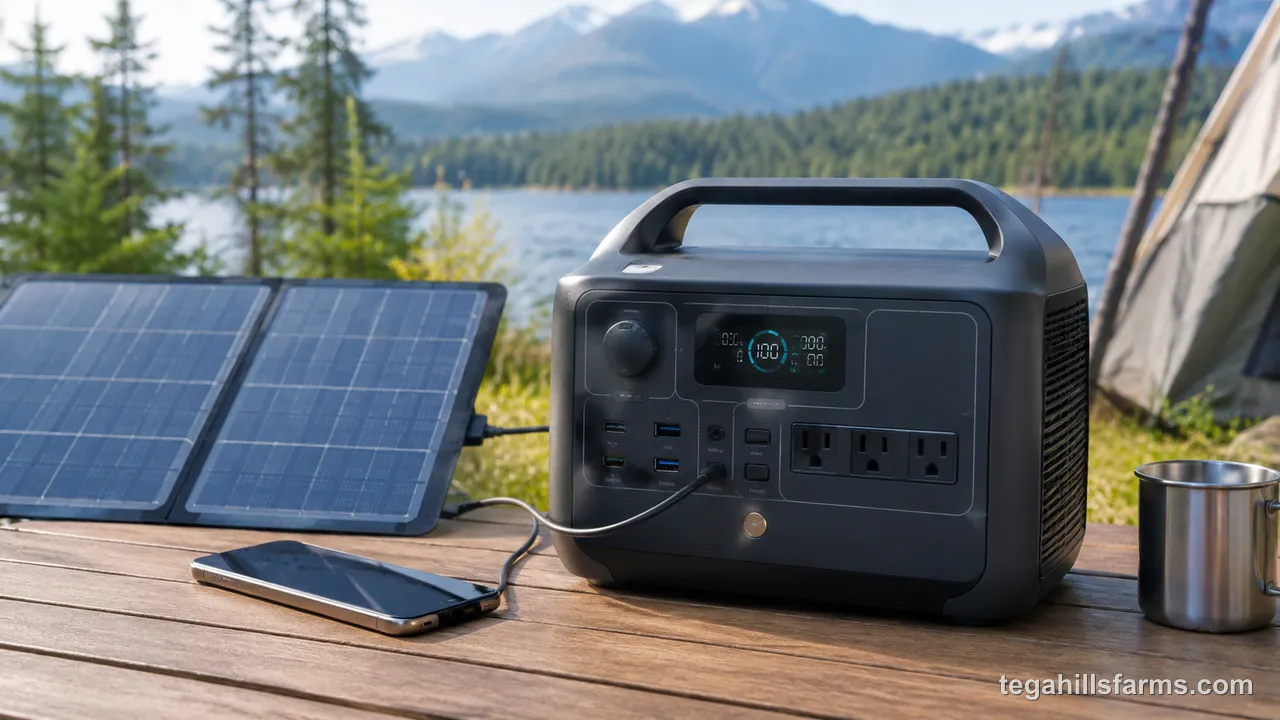
Durable units publish both numbers. The Jackery 1000 v2 keeps over 70% after 4,000 cycles, the Anker SOLIX C1000 Gen 2 holds at least 80% at the same count, and BLUETTI rates the AC200PL at 3,000+ cycles and the Elite 200 V2 at over 6,000.
Battery management matters too. The AC200PL’s BMS guards against overcharging and short circuits, which protects the cells over time. Warranty terms are another signal, and several units here carry 5-year coverage.
Early signs of wear show up in use. The unit shuts off sooner under a load it handled before, or the same appliance drains it faster. Replace the unit when runtime no longer covers the loads that matter, such as a fridge overnight.
Is a Solar Generator Worth It Compared With a Gas Generator?
A solar generator is worth it when you want quiet, fume-free, low-maintenance power for short outages, camping and indoor use, while a fuel-powered generator still wins on long outages and heavy continuous loads.
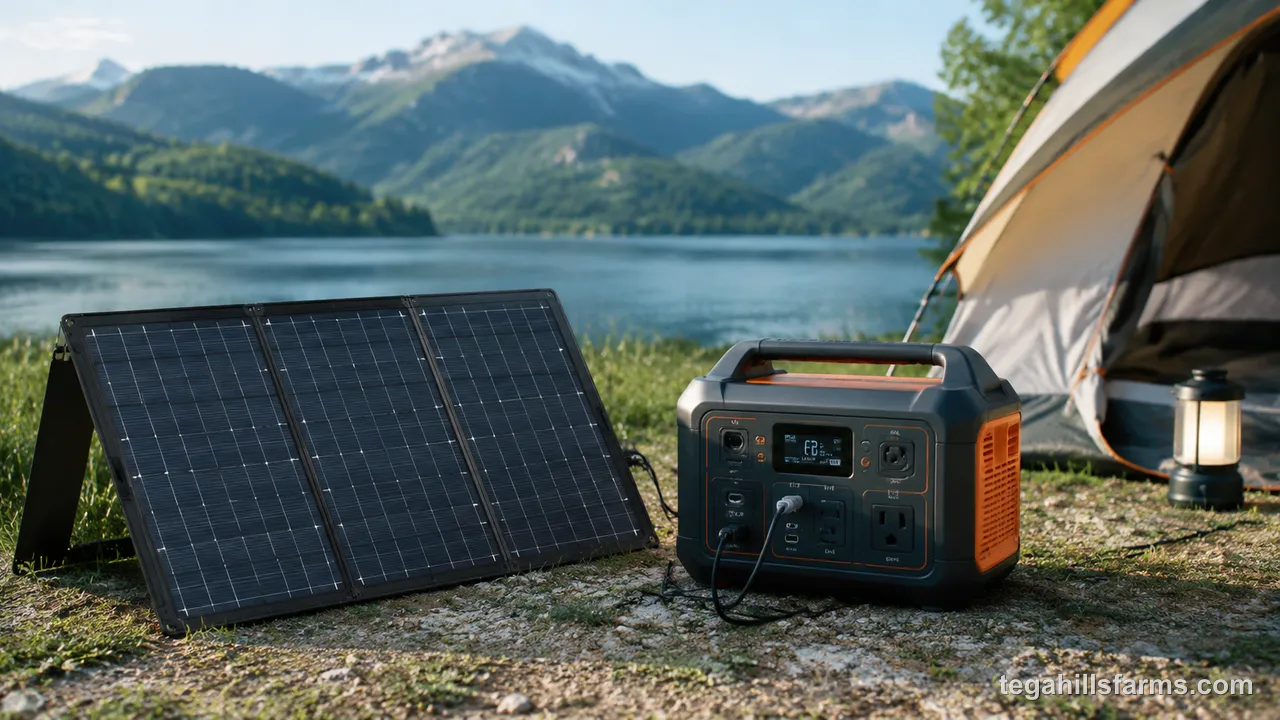
Runtime flexibility is the dividing line: batteries run out, tanks can be refilled.
When Does a Solar Generator Make More Sense?
A solar generator makes more sense when silent, fume-free operation matters more than raw runtime, as in apartments, short outages and camp setups.
There is no fuel to store and no exhaust to vent. The Jackery Explorer 2000 v2 is built for indoor and outdoor use, and several units here run near 30dB in silent modes. UPS-style switchover also protects PCs and medical gear, which a gas engine cannot do on its own.
With no engine, routine upkeep drops to charging and storing the battery. Panels let you recharge without a fuel run. If your outages are short and your loads are moderate, that convenience outweighs the runtime gap. For heavier needs, compare the best gas generators before deciding.
When Does a Fuel-Powered Generator Still Win?
A fuel-powered generator still wins when outages last for days, loads are heavy and continuous, or sun is limited.
Be honest about the limits. Even the 4,096Wh EcoFlow Delta Pro 3 eventually runs down, and recharging by sun depends on the weather. A tank can be refilled and run on.
Fuel flexibility helps for long outages, and the best dual fuel generators let you switch between gasoline and propane. Some solar generators, including the Delta Pro 3, can also charge from a gas generator. Pairing a station with a fuel generator is a sensible hedge if you face long outages. Buying the right type avoids overspending on capacity you never use.
What Do You Need to Connect a Solar Generator to Your Home?
Connecting a solar generator to your home safely takes a transfer switch or inlet connection installed by a licensed electrician.
Never plug a station into a wall outlet to power the house. That backfeeds the circuit and can energize utility lines, which endangers line workers.
A transfer switch isolates your home from the utility so only the generator feeds selected circuits. See the best transfer switches for options. An inlet connection gives you a weatherproof port outside, and the best generators inlet boxes cover that side.
Voltage matters too. Only dual-voltage units like the Anker SOLIX F3800 and EcoFlow Delta Pro 3 offer 120V/240V output for larger circuits. Single-voltage stations suit selected 120V circuits.
Local electrical codes and utility rules decide what is allowed, so confirm permit requirements with a licensed electrician before buying.
Solar Generator FAQs
Can a solar generator run a refrigerator?
Yes, as long as the unit’s continuous output covers the fridge’s running watts and its surge rating covers the startup spike. Stations such as the Jackery Solar Generator 1000 v2 (1,500W with 3,000W surge) and the EcoFlow Delta 3 Classic (1,800W with 3,600W surge) are both rated for fridges.
Can a solar generator power a CPAP machine?
Yes, a CPAP machine is a modest load that most stations here can carry. The Anker SOLIX C1000 Gen 2 switches over in under 10 ms, quick enough to keep a CPAP machine or laptop running, and the EcoFlow Delta 3 Classic matches that speed.
Can you use a solar generator indoors?
Yes, battery-based stations burn no fuel, so there is no exhaust, unlike gas generators. The Jackery Explorer 2000 v2 is built for indoor and outdoor use with no fumes, and its Silent Charging mode runs at about 30dB. Keep the panels outside in direct sun and run the cable in.
Will a solar generator charge in cloudy weather?
Yes, but more slowly, because panel output drops without direct sun. AC wall charging and car or alternator charging fill the gap. The Jackery 1000 v2 reaches full with a 600W alternator charger in 3 hours, and the BLUETTI AC200PL goes 0 to 80% in 60 minutes on AC.
Can you expand a solar generator’s capacity later?
Yes, on models built for expansion. The BLUETTI AC200PL expands to 8,448Wh, the Anker SOLIX F3800 reaches 26.9kWh with up to 6 battery packs, and the EcoFlow Delta Pro 3 grows to 48kWh. Our best whole house solar generator guide covers the larger setups in more detail.
Is a solar generator enough for off-grid living?
Yes, for modest loads, if panels can recharge the battery each day. Generous solar input and expansion batteries help, and our best solar generator for off grid living guide covers models sized for that. Heavy continuous loads or several cloudy days still call for a bigger battery or a backup fuel generator.
More Guides on Best Solar Generator
- Best Indoor Solar Generators
- Best Solar Generators for Tiny Houses & Cabins
- Best 30 Amp Solar Generators for RV
- Best 50 Amp Solar Generators for RV
- Best Solar Generators for Well Pumps
- Best 10,000+ Watt Solar Generators
- Best Goal Zero Yeti Solar Generators
- Best 5,000-Watt Solar Generators
- Best 300-Watt Solar Generators
- Best 240V Solar Generators



Write Your Review
No reviews yet. Be the first to share your experience!