

For the best garden hoes under $100 in 2026, the choices are MANXRKUI Draw Hoe 5.5ft (Best Overall), YEELOR Heavy-Duty Garden Hoe (Best Budget), Lilyvane Draw Hoe 60in (Also Great), Nohovu Garden Hoe 58in (Best Durability), and AgroPro Garden Hoe 58in (Also Great). Each one has a forged or high-carbon steel head, and that kind of blade keeps a cutting edge through roots and compacted soil.
The differences show up after an hour of work, not in the store. They come down to how firmly the head is fastened, whether the handle is segmented stainless steel or one-piece fiberglass, and how well the length fits your height. Bolts and rivets stop the head from rocking when you twist and pull at a deep root. The handle decides how the tool feels in your hands and how much room it takes up in storage.


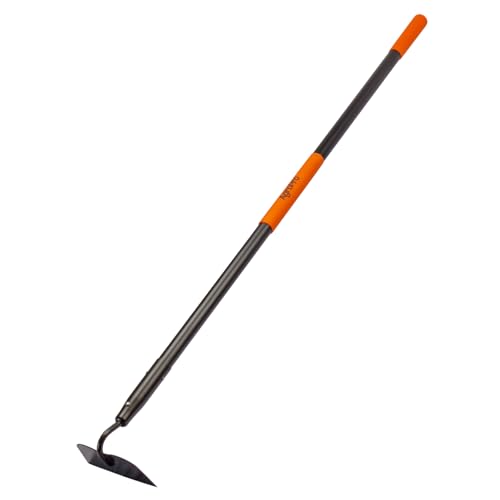
A loose head or a rusted edge makes weekly weeding a fight. A wobbling blade skips over weeds, and a pitted edge tears stems instead of cutting them. Posture matters just as much, because stooping over a short tool tires your back and knees long before the bed is clear.
Is a Weeding Hoe Worth It for a Home Garden?
Yes, if you tend beds or vegetable rows every week, a long-handled tool earns its place by slicing weeds off at the soil surface while you stay upright, and the same blade loosens soil and opens furrows.
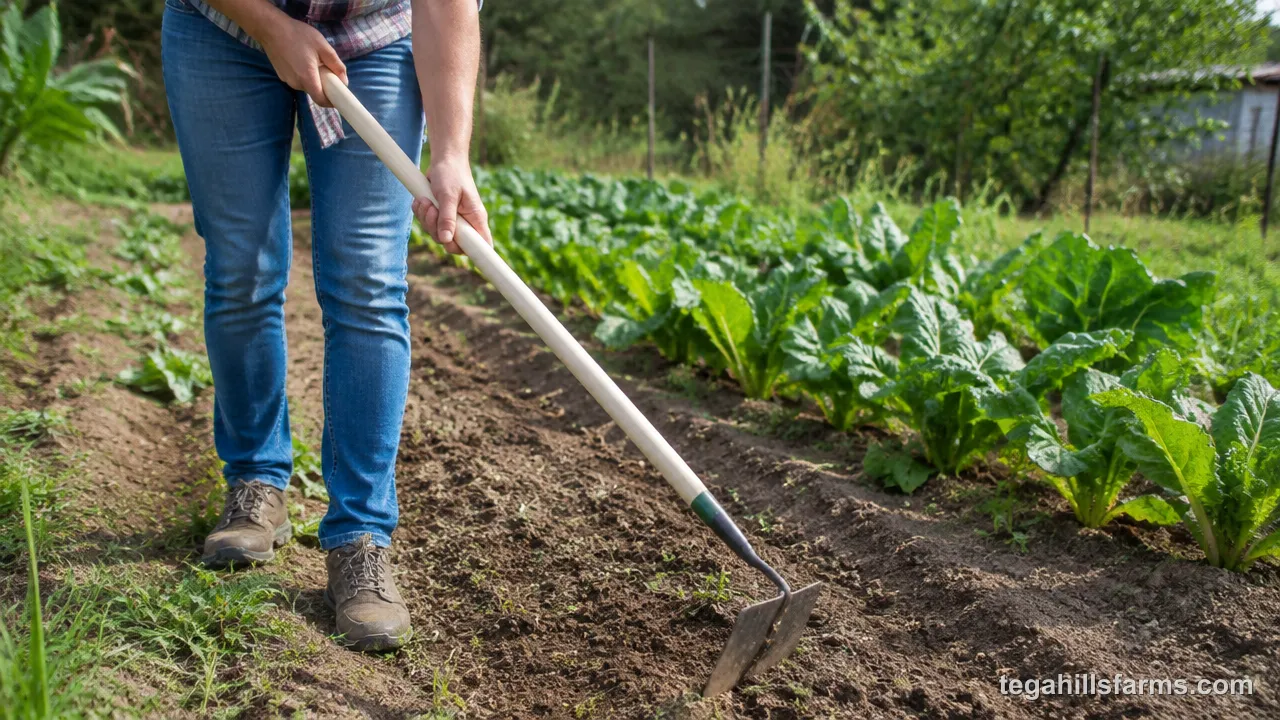
Pulling weeds by hand clears one plant at a time and keeps you on your knees. A sharp edge drawn just under the surface cuts through a whole stretch of seedlings in one pass, and the cut tops dry out where they lie. Standing upright moves the work into your arms and shoulders and off your lower back and knees, so the job is still manageable after an hour.
One hoe also covers jobs that would otherwise need extra tools. The blade breaks up crusted soil between plants, and tipped onto its corner it draws a straight furrow for seed. Within a $100 budget you can get a forged or high-carbon steel head with a rust-resistant finish on a sturdy stainless steel or fiberglass handle. With basic care, that build stays tight and sharp for many seasons. If you want to see every hoe type before you narrow things down by budget, our guide to the best garden hoes walks through the full range.
The 5 Best Garden Hoes Under $100 of 2026
The MANXRKUI Draw Hoe 5.5ft, YEELOR Heavy-Duty Garden Hoe, Lilyvane Draw Hoe 60in, Nohovu Garden Hoe 58in and AgroPro Garden Hoe 58in all let you weed beds and vegetable rows standing upright. The handles are where they part ways. The MANXRKUI, YEELOR and Lilyvane screw together from stainless steel sections that come apart to fit a crowded shed. The Nohovu and AgroPro use one-piece fiberglass with non-slip grips, so there’s no joint to work loose over the seasons. Blade shape matters too: the wide MANXRKUI head covers ground quickly, and the Lilyvane’s straight edge suits a push-and-pull stroke between plants. If you’re spending less, the best garden hoes under $50 and garden hoes under $30 are worth comparing.
#1 MANXRKUI Draw Hoe 5.5ft — Best Overall
If you weed long vegetable rows and want one tool that also opens seed furrows, this draw hoe puts a forged steel head on a long handle that keeps you working upright. A double bolt and nut fix the head through the handle.
Key Specs:
- Head: forged steel, double bolt and nut attachment
- Handle: multi-section stainless steel, screw-together
- Overall length: 66 in
- Weight: 3.5 lb
Detailed Review:
The broad blade face scrapes a wide band of seedlings with each pull, and its corner cuts a clean furrow for seed. Because the head is forged steel, the edge keeps its shape against roots and crusted soil instead of flexing. The same head loosens soil between plants and digs shallow trenches, so one tool covers most bed work.
A double bolt and nut run through the handle to hold the head, which spreads the twisting load of a stubborn root across two fastening points. That keeps the head from rocking loose as the season goes on. If the joint ever feels slack, a wrench brings it back tight.
At 66 inches overall, the hoe lets taller gardeners stand straight with the blade flat on the soil, which takes strain off the lower back. The stainless steel handle comes in sections that screw together, so it breaks down for storage, but the threads need a quick check before each session. At 3.5 pounds it is noticeably heavier than the YEELOR. The extra weight helps the blade bite into firm ground, but it tires your arms sooner over a long session.
Pros:
- Wide forged steel blade scrapes broad bands of weeds per pull.
- Double bolt and nut keep the head from loosening.
- Long overall length lets taller gardeners work upright.
- Screw-together handle breaks down for compact storage.
Cons:
- Extra weight tires arms sooner during long sessions.
- Threaded handle joints need occasional retightening.
- Wide blade is clumsy in tight spaces between plants.
Who It’s For:
Gardeners who weed long vegetable rows and open seed furrows every spring will get full use from this hoe, especially taller people who want to stand straight while they work. If you garden mostly in tight perennial beds or tire quickly with heavier tools, a lighter, narrower blade will suit you better.
Editor’s Verdict:
A forged head, a double-bolted connection and a handle long enough to stand straight make this a dependable all-season hoe for row gardens.
#2 YEELOR Heavy-Duty Garden Hoe — Best Budget
Gardeners who feel every swing in their wrists and shoulders get a light hoe that still has a forged steel head with a rust-proof treatment. The handle unscrews for storage.
Key Specs:
- Head: 6.3 in forged steel with rust-proof treatment
- Handle: 5 ft segmented stainless steel, lathe-threaded joints
- Attachment: anti-loosening bolts
- Weight: 2.4 lb
- Model: YLUS1152
Detailed Review:
At 2.4 pounds, this hoe is light enough that your wrists and elbows aren’t fighting the tool’s own weight on every stroke, and that weight is what builds joint strain over a long weeding session. The 5-foot handle keeps you upright, so your back isn’t doing the work either.
The 6.3-inch forged steel head has a rust-proof treatment. It clears a row in steady passes and still cuts furrows or levels a bed after digging. Anti-loosening bolts fix it to the shaft, so the blade stays square when it catches a root.
The stainless steel handle comes in segments joined by lathe-threaded connections, which are machined to resist backing out during use. Taken apart, the sections fit on a shelf or in a bin, which helps in a small garage or on an apartment patio.
Next to the MANXRKUI, this hoe gives up the heft that helps a blade bite into hard ground, but its noticeably lighter build stays easy to work for longer. For a budget-friendly tool, keeping a forged head and a bolted connection is what makes it worth buying.
Pros:
- Light weight eases strain on wrists, elbows and shoulders.
- Rust-proof treated forged head resists corrosion between sessions.
- Lathe-threaded segments resist loosening during use.
- Breaks down small for tight storage spaces.
- Budget-friendly without giving up a forged steel head.
Cons:
- Lighter build bites less forcefully into hard, compacted soil.
- Segmented joints add points that need occasional checking.
Who It’s For:
Older gardeners and anyone whose wrists or shoulders tire quickly will appreciate how little this hoe asks of them during weeding, and the segmented handle suits a small storage space. If your ground is heavy clay that takes real force to break, a heavier head will do that job with less effort from you.
Editor’s Verdict:
Choose this hoe when light weight and easy storage matter more than chopping power. Its treated forged head and bolted connection handle weekly bed work well.
#3 Lilyvane Draw Hoe 60in — Also Great
For older gardeners or anyone with limited arm strength, the pre-sharpened straight edge on this forged steel head works with a smooth push-and-pull stroke instead of repeated chopping. That spares the wrists.
Key Specs:
- Head: forged steel, pre-sharpened straight edge
- Handle: 60 in splicing stainless steel, screw-together, rust-resistant
- Stroke: blade designed for push-and-pull motion
- Model: MXCT-HJK-YS-4jie
Detailed Review:
The straight edge comes pre-sharpened on a forged steel head, so it slices surface weeds and fine roots from the first session instead of skidding over them. The blade cuts on both the push and the pull, so you glide it back and forth instead of lifting and dropping it to chop.
That gliding motion is why this hoe suits older gardeners and anyone with weaker arms. Moving a blade back and forth along the surface puts far less load on the wrists and shoulders than raising it and striking down. A long weeding session ends with less soreness in the joints.
The 60-inch stainless steel handle screws together in sections, which suits gardeners of different heights and breaks down for storage. Once tightened, the joints are built to stay wobble-free. You can leave the assembly cord in place for extra steadiness or cut it off.
The edge gives precise control along borders and close to roots and still covers open beds at a good pace. One tool handles both detail work and larger patches.
Pros:
- Pre-sharpened straight edge cuts cleanly from the first use.
- Push-and-pull stroke spares wrists, arms and shoulders.
- Screw-together stainless handle suits gardeners of different heights.
- Precise enough to weed close to plant roots.
Cons:
- Gliding stroke trades chopping force for comfort in compacted soil.
- Threaded joints need snugging to stay wobble-free.
Who It’s For:
If arthritis, an old injury or age has made chopping hard on your arms, this push-and-pull design lets you keep weeding without that strain. It also fits mixed beds where you weed close to roots in one spot and clear open soil in another. Gardeners breaking new, compacted ground will want a heavier chopping head.
Editor’s Verdict:
Pick this one when comfort in your wrists and shoulders comes first. The sharp straight edge and gliding stroke keep weeding steady without a heavy chopping motion.
#4 Nohovu Garden Hoe 58in — Best Durability
A heat-treated high-carbon steel blade and a one-piece fiberglass handle with no joints to loosen make this the hoe to buy if you want years of weekly use. Two rivets lock the head in place.
Key Specs:
- Blade: heat-treated high-carbon steel, 6.3 in wide, rust-preventing coating
- Attachment: double-riveted head
- Handle: one-piece thickened fiberglass, 2 non-slip grips
- Overall length: 58 in
- Weight: 2.7 lb
Detailed Review:
Heat treatment hardens the high-carbon steel, so the honed 6.3-inch-wide blade keeps its edge through roots and gritty soil and lifts weed roots out cleanly. A special coating over the steel keeps rust and corrosion off between sessions.
The handle is a single piece of thickened fiberglass, so there are no threads to back out and no joint to flex when you lean into hard ground. Compared with the YEELOR’s segmented stainless handle, it can’t break down for storage, but it has nothing to loosen over the seasons.
A double-riveted connection holds the head to the handle and keeps it seated when you pry at a deep root. Two non-slip grips add friction where your hands rest, so the hoe stays steady when your gloves are damp or your grip tires late in a session.
At 58 inches overall and 2.7 pounds, it keeps you upright without feeling heavy in the hands. I’d choose it for anyone who would rather never think about retightening a handle.
Pros:
- Heat-treated high-carbon blade holds a sharp edge.
- One-piece fiberglass handle has no joints to loosen.
- Double rivets keep the head firmly seated.
- Non-slip grips steady your hands when gloves are damp.
Cons:
- One-piece handle won’t break down for small storage spaces.
- Fixed length can’t adjust for very tall or short gardeners.
Who It’s For:
If you work the same beds week after week and want a tool that stays tight for years, this hoe is a good match, and it also suits gardeners who never want to retighten a joint. If you keep tools in a cramped closet, a handle that breaks down will fit your space better.
Editor’s Verdict:
Expect years of steady weekly work from this hoe. With a heat-treated high-carbon blade, double rivets and a one-piece fiberglass handle, very little can loosen or bend.
#5 AgroPro Garden Hoe 58in — Also Great
Open beds that need clearing in broad passes suit this hoe, whose forged high-carbon steel blade is cut wider to cover more ground with each stroke. Its handle is one-piece fiberglass.
Key Specs:
- Blade: forged high-carbon steel, wider profile, rust-resistant coating
- Attachment: head double-reinforced with 2 rivets
- Handle: one-piece thickened fiberglass with non-slip grips
- Overall length: 58 in
- Model: BGH361XL
Detailed Review:
The blade is forged from high-carbon steel and coated to resist rust, so it holds a sharp edge for slicing weeds and holds up if it’s left damp after use. Its wider profile covers more soil per stroke, so open vegetable beds take less time.
The handle is thickened fiberglass, made to resist breaking and bending under heavy use. The non-slip grips sit close against the palm so your hands don’t slide down the shaft. Because the handle is one piece, there’s no threaded joint to work loose as the seasons pass.
Two rivets reinforce the connection between head and handle, which lowers the chance of the head loosening or falling off when you pry at a stubborn root. The 58-inch overall length is sized to cut down on back strain from frequent bending.
I’d reach for this hoe on larger, open plots where the extra width pays off. In tightly planted beds, that same width makes it harder to work around stems without nicking them.
Pros:
- Wide forged blade covers more ground per stroke.
- Rust-resistant coating protects the high-carbon steel.
- One-piece fiberglass handle resists bending and breaking.
- Two rivets keep the head from loosening.
- Non-slip grips sit comfortably in the palm.
Cons:
- Wider blade is harder to steer between close plantings.
- One-piece handle needs full-length storage space.
Who It’s For:
Vegetable gardeners with open rows and larger beds to clear will put the wide blade to good use, and the riveted one-piece build suits anyone tired of tightening handle joints. For narrow borders and densely planted perennials, a narrower blade with a push-and-pull stroke gives more control.
Editor’s Verdict:
For open beds and long rows, this wide-bladed hoe gives fast coverage and a riveted, one-piece frame built to stay solid for many seasons.
What Should You Look for in a Garden Hoe Under $100?
A tool that still feels steady and cuts cleanly after a full season of weekly work owes that to solid construction at the points that take force, not to the brand on the label. The same feature can help or hurt depending on how often and how long you work. A heavy forged head that bites into clay can feel like a burden after an hour of light bed weeding. A screw-together handle that stores neatly in a small shed adds joints that need watching if you hoe every day.
How Do Head Material and Attachment Affect Durability?
A forged or high-carbon steel head lasts longer than a thin stamped one because the steel is thicker and harder, so it holds an edge and resists bending when it hits a root or compacted soil. Stamped heads are cut from sheet steel, which flexes and dulls sooner under the same work.
Forging shapes the steel under heat and leaves a stiffer head. Heat treatment on high-carbon steel adds hardness, so a filed edge stays sharp through a season of roots and grit. High-carbon steel rusts readily when bare, which is why a rust-resistant coating or treatment matters. Once the coating wears off at the edge, a wipe of oil after use does the same job.
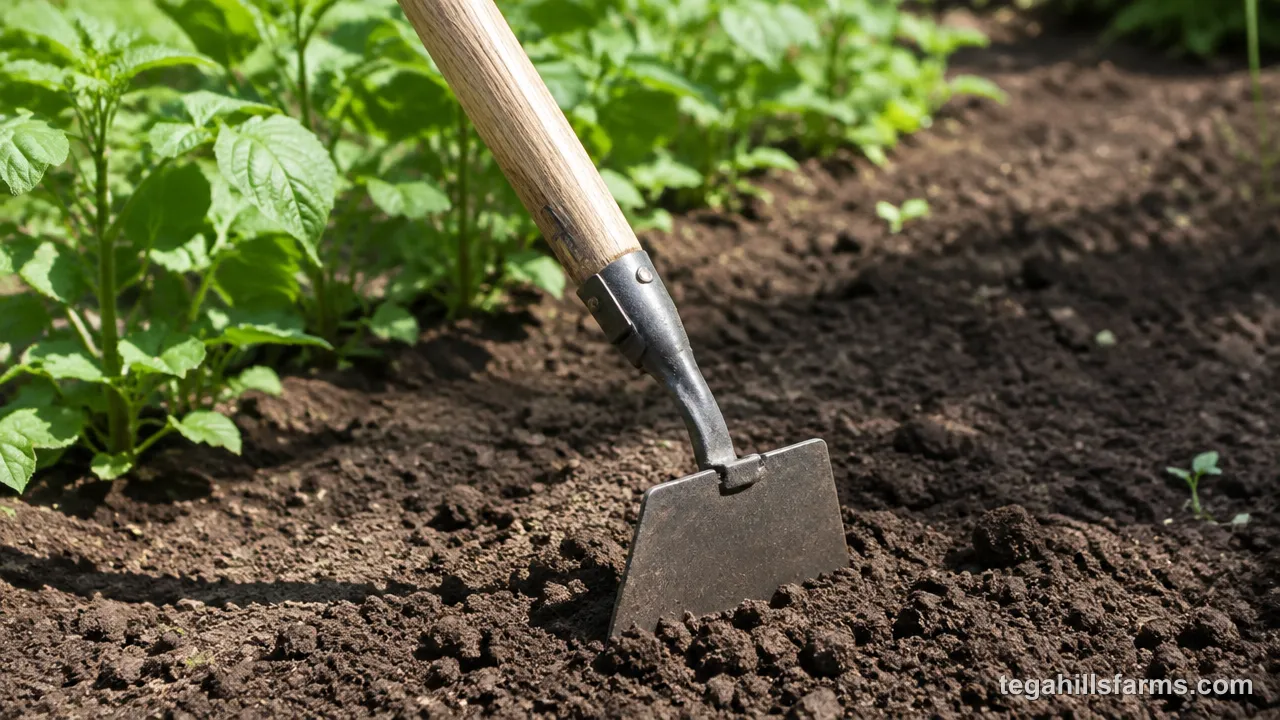
The joint where the blade meets the handle takes the most twisting force. Rivets or a through-bolt pin the head so pulling and prying can’t rock it loose. A head held only by a friction fit tends to start wobbling, and a wobbling blade skims over weeds. A hoe built this way holds up for many seasons, where one that bends at the neck needs replacing sooner. If blade strength is your main concern, the best garden hoes with steel blades narrow that choice further.
Which Handle Material Holds Up Best?
One-piece fiberglass lasts longest with the least upkeep, because it doesn’t rot, split or loosen at a joint. Segmented stainless steel is easier to store, and wood feels warmest in the hand and is the easiest to replace on some heads.
Here is how the three materials compare on the points that decide how a handle ages:
| Segmented stainless steel | One-piece fiberglass | Wood | |
|---|---|---|---|
| Feel in the hand | Cool, smooth tube | Stiff, often with molded grips | Warm, absorbs some shock |
| Bending and splitting | Resists bending | Resists bending and splitting | Can crack as it dries out |
| Joints and wobble | Threads can loosen | No joints | No joints |
| Storage | Breaks down small | Full length only | Full length only |
| Replacing the handle | Swap one section | Usually replace the whole tool | Easy on eye-style heads |
Each threaded joint on a segmented handle can open a small gap under twisting loads, and that gap lets the blade drift off line, so tighten the sections before you start. A textured or rubberized grip keeps your hands from sliding when your gloves are wet. If you might want a new handle later, check how the head attaches. An open eye lets a new wooden handle slide through and wedge in place. A riveted socket means drilling out the old rivets first.
How Long Should a Hoe Handle Be?
Stand the tool upright beside you: the top of the handle should land between your armpit and shoulder. That height lets you work standing straight with the blade flat on the soil. A shorter handle pulls you into a stoop that loads your lower back. A much longer one puts your hands so far from the blade that you lose control of where the edge cuts.
Adjustable and screw-together handles solve the fit problem when more than one person shares a hoe, or when you want a shorter reach for close work near plants. Leaving out a section shortens the tool, and adding it back restores full reach for open rows.
The right length also changes how the work feels in your joints. Standing upright, the push and pull come from your arms and shoulders in a relaxed arc, and your wrists stay straight instead of bending to hold the blade angle.
Garden Hoe Types for Weeding, Digging, and Tight Spaces
Which job a tool handles well depends on its blade shape and the stroke it makes through soil: drawn toward you, pushed and pulled, or chopped down. A blade built to glide just under the surface slices weeds but bounces off clay. A heavy chopping head breaks ground but tears up seedlings you meant to keep. Matching the stroke to the task matters more than what the tool is called.
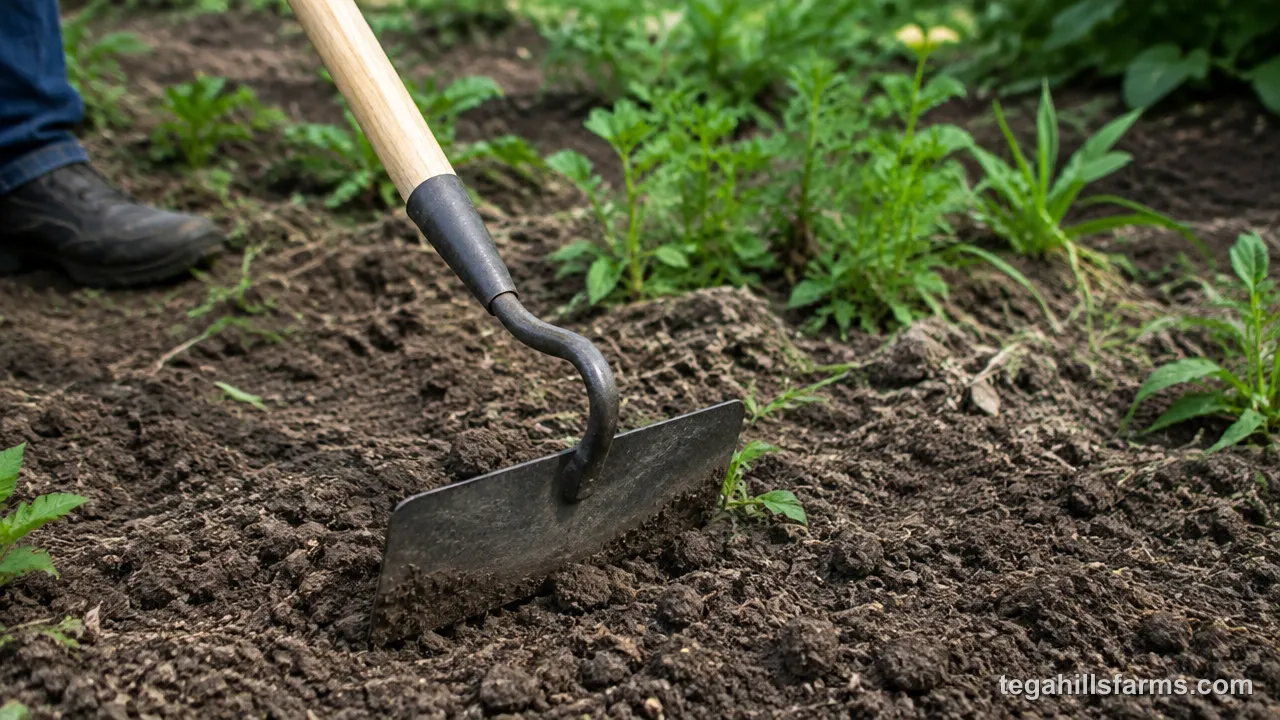
What Type of Hoe Is Best for Weeding?
A stirrup hoe is the quickest way to clear beds of small seedlings. A colinear hoe gives the lightest, most precise touch around plants. A draw hoe handles established weeds with tougher roots.
A draw hoe has a solid blade set at a right angle to the handle. You pull it toward you to scrape off surface growth or chop down into a weed’s crown, and that chopping force cuts through thick roots. It also asks the most of your shoulders and arms.
A stirrup hoe, also called a scuffle or oscillating hoe, is a loop of thin steel that cuts on both the push and the pull while gliding just under the surface. It cuts seedlings without turning much soil, so fewer buried weed seeds come up afterward. It rides over large weeds with woody stems.
A colinear hoe has a narrow, thin blade set nearly parallel to the ground. You draw it toward you with a light sweeping motion, standing upright with your thumbs up on the handle. It works best on tiny weeds between closely spaced plants.
Push-pull and sweeping strokes keep your wrists straight and let relaxed arms do the work, so they suit long sessions better than chopping. If weeding is your main job, the best garden hoes for weeding narrow the field to tools built for it.
Which Hoe Breaks Up Soil and Opens Furrows?
A heavy draw hoe or a grub-style head does this work. The blade’s weight drives it into firm soil, and its wide face drags clods apart and pulls soil into a furrow or a hill.
A grub hoe has a thick, heavy blade on a stout handle, and you swing it like an axe to break sod and compacted ground. A draw hoe works best once the ground has been loosened. Tipped onto a corner, it cuts a V-shaped seed furrow. Drawn sideways along a row, it pulls soil up around potatoes or corn when you hill them.
Blade weight decides how deep each stroke sinks, so heavy heads suit compacted clay and new beds. In loose, well-worked soil, a lighter blade is less tiring because extra weight only wears you out. Width works the same way: a wide blade moves more soil per pass in open ground but takes more force to drive into hard soil. If your beds are already loose and loamy, look at the best garden hoes for soft soil.
What Works Between Plants and in Raised Beds?
A hand hoe or a narrow-bladed long hoe gives the control you need near roots, along borders and in raised beds, because a small blade fits into the gaps without nicking stems.
Narrow blades matter most around shallow-rooted perennials and vegetables. A wide blade drawn too close can cut feeder roots you can’t see, while a slim edge takes out only the weed.
Raised beds and containers bring the soil closer to you, and a long handle gets awkward at that height. If you kneel on a pad or sit on the edge of the bed, a short-handled hand hoe is the better choice. A long handle would have to be held far down the shaft, which costs leverage and makes the blade harder to aim. The short tool keeps the edge close to your eyes, so you can see exactly what you’re cutting.
A blade put away caked with damp soil and plant sap starts to dull and rust before its next use, and the edge loses its bite well before the steel looks damaged. After that you push harder on every stroke to get the same cut, and your wrists and shoulders feel it before the row is finished.
How Do You Sharpen and Care for a Garden Hoe?
File the cutting edge along its existing bevel, wipe off soil and sap after each use, dry the blade, and give bare steel a light coat of oil before storing it out of the wet. A sharp edge slices through weed stems instead of pushing them over, so each stroke takes less force.
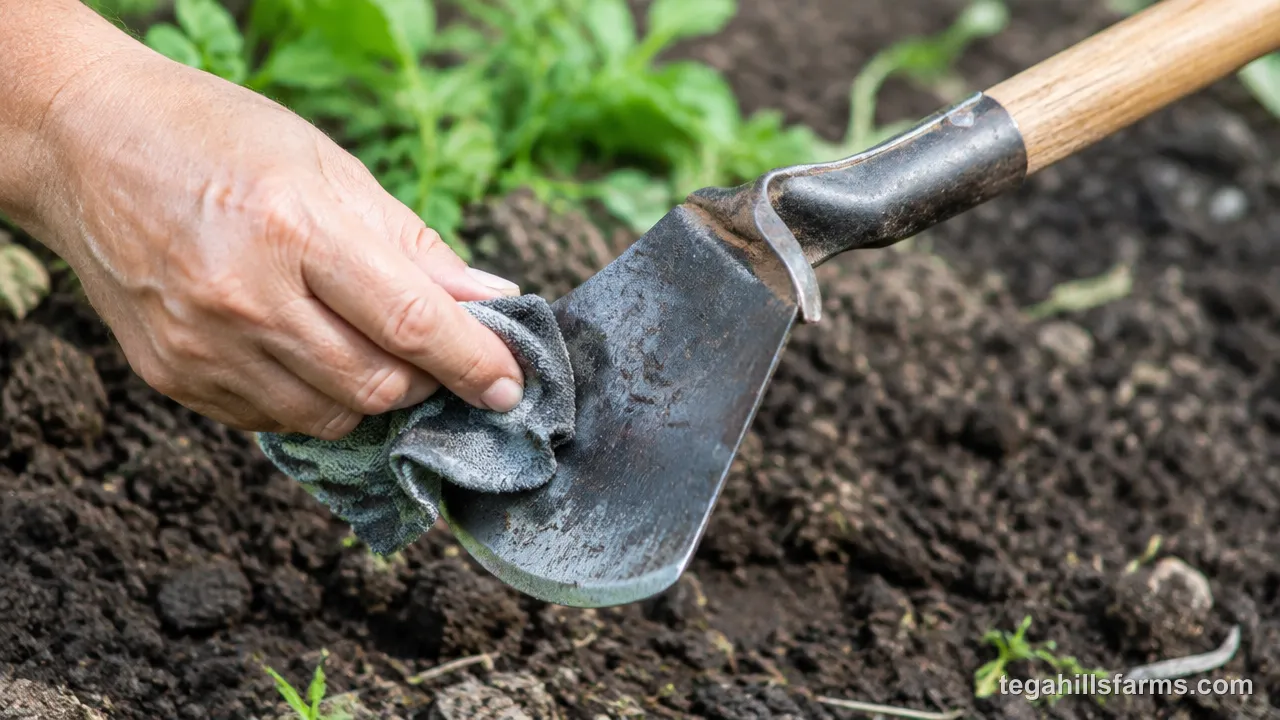
- Sharpening: Brace the head firmly and run a flat mill file along the beveled side in one direction, following the angle that’s already there. A light pass on the flat side removes the burr. Keeping the original bevel keeps the edge strong, while a thinner angle chips on stones.
- Cleaning: Scrape off soil with a stiff brush or putty knife, and wipe sap away with a rag dampened in rubbing alcohol.
- Drying and oiling: Let the blade dry fully, then wipe a thin film of oil over bare steel and put a drop on threaded handle joints so they don’t seize or corrode.
- Winter storage: Hang the hoe indoors or in a dry shed, off damp ground, so moisture can’t sit against the blade for months.
How Can You Tell When a Hoe Is Wearing Out?
The signs to watch for are a wobbling head, threaded joints that won’t stay tight, a bent or rounded edge, deep rust pitting and a cracked or splintering handle. Only some of them are worth repairing.
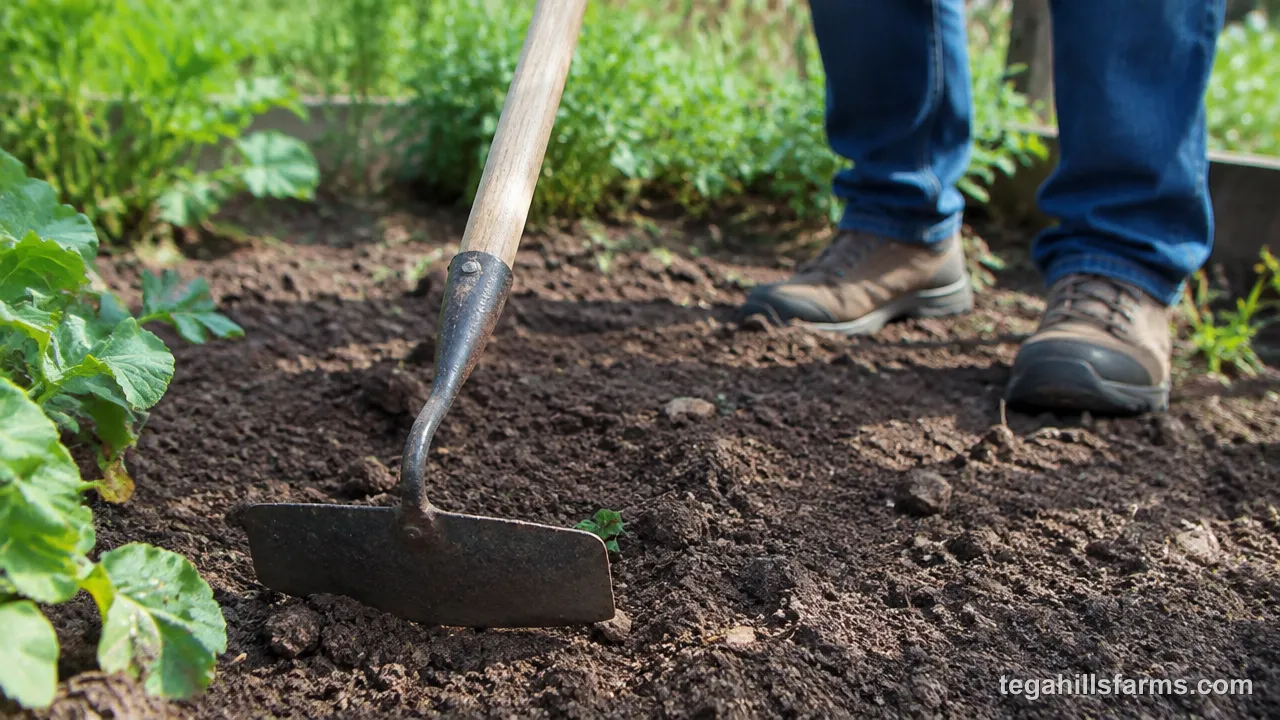
A dull or slightly rounded edge comes back with a file. A loose through-bolt or threaded section usually tightens again with a wrench or a firm twist. Surface rust scrubs off with steel wool before you oil the blade.
Other damage is harder to fix. A blade bent at the neck, rust pitted deep into the edge, a cracked fiberglass shaft or a wooden handle split near the head all weaken the tool where it takes the most force, so replacing it is the wiser choice. Rivets that have worked loose in their holes are also hard to reseat at home.
Replaceable blade designs change the decision. When the blade wears out, you swap it and keep a handle you already know fits you. If you’d rather maintain one tool for the long term, the best garden hoes with replaceable blades are built around that idea.
How Often Should You Hoe Weeds?
Hoeing about once a week through the growing season keeps beds clean with the least effort, especially on a dry day while the weeds are still small seedlings. Young weeds have shallow roots that a shallow cut removes completely. Weeds left to grow put down deeper roots that resprout after cutting.
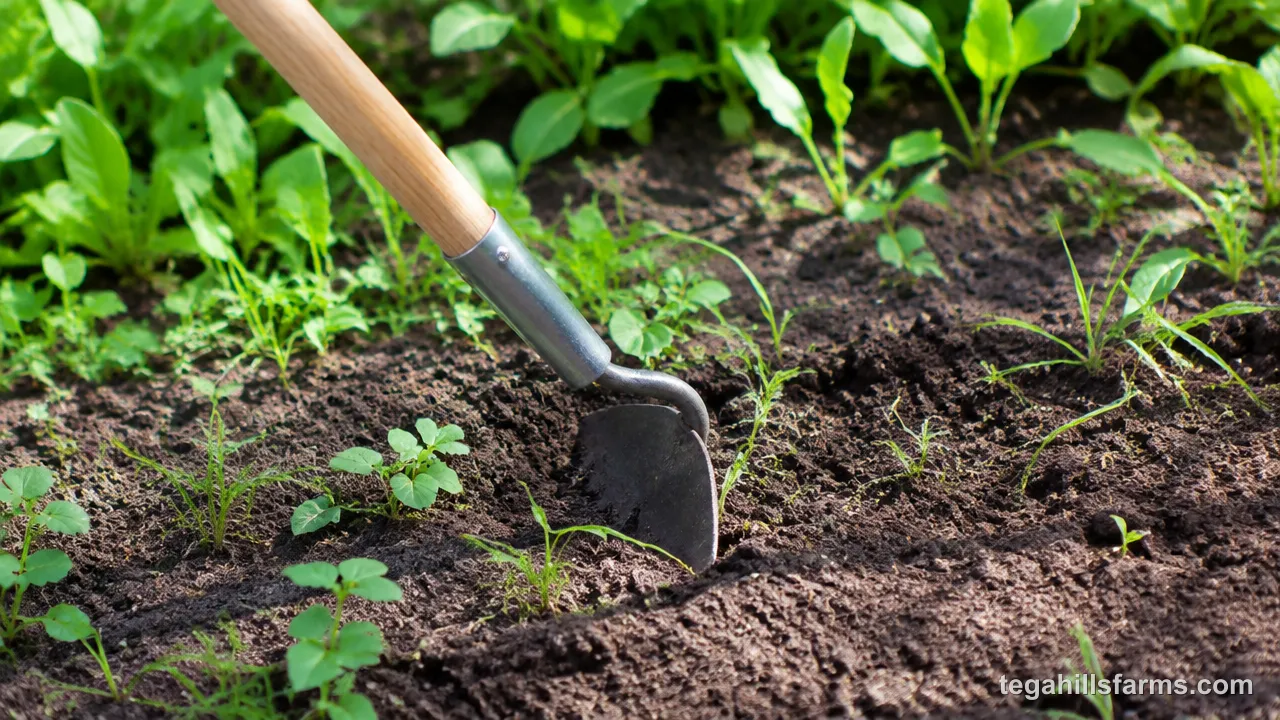
Dry weather helps in two ways. Cut weeds left on dry, sunny soil wither instead of rooting again. Dry soil also crumbles away from the blade instead of clumping on it.
Frequent short sessions beat a rare long one, because you only ever deal with seedlings and you stop before tiredness makes your posture slip. Walk backward down the row as you work, so your feet don’t press the loosened soil and cut weeds back into contact with each other.
Let a sharp edge do the cutting. Stand upright, keep a relaxed grip with your thumbs on top of the handle, and move the blade with easy strokes from your arms and shoulders. Forcing a dull edge strains your wrists, and bending over the tool strains your back.

Write Your Review
No reviews yet. Be the first to share your experience!