

Geraniums, petunias, verbena and calibrachoa fill bright, hot windows. Begonias, fuchsias and pansies suit windows with morning sun, and impatiens, coleus and ivy carry deep shade. In the cooler months, the box shifts to pansies, violas, small evergreens and trailing ivy. The right mix depends on two things: how many hours of direct sun the window gets, and which season you’re planting for.
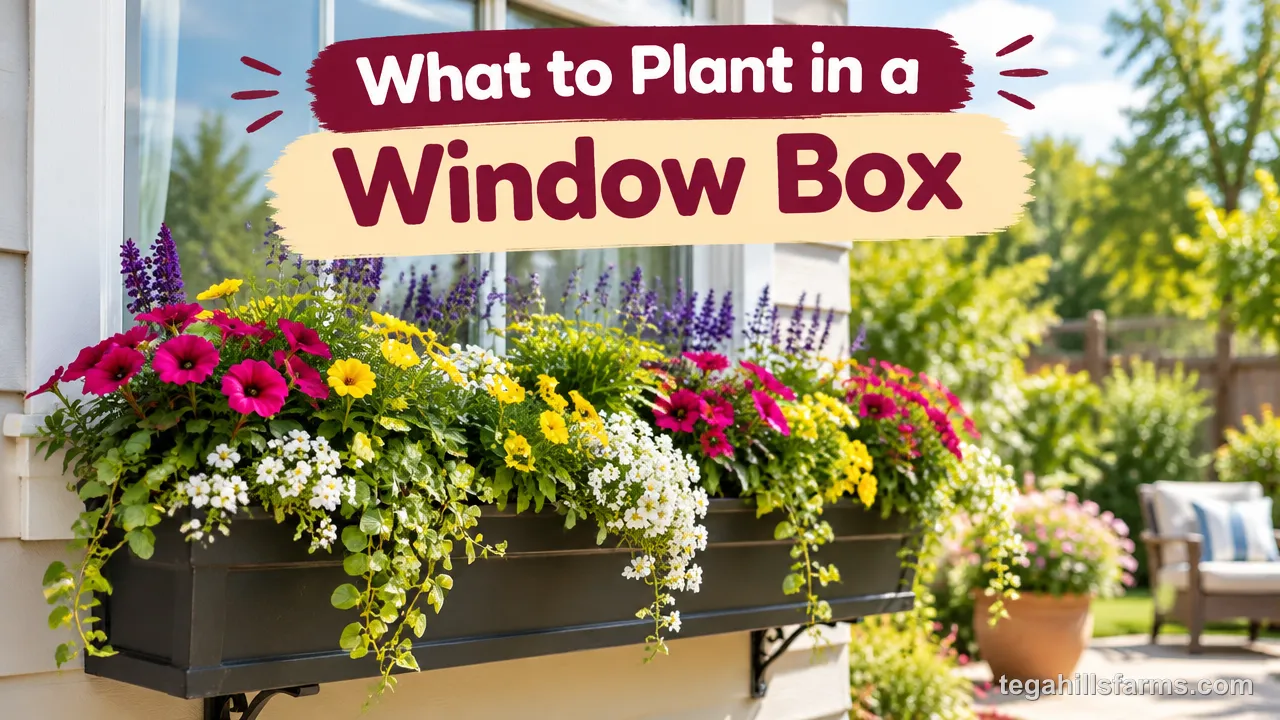
Within those limits, a good choice stays compact enough for a narrow container. It keeps flowering or holds its leaf color for weeks, and it needs about the same amount of water as the plants around it. A tall focal plant, mounding plants beside it and trailing plants along the front edge give the box a full shape without crowding.
The real challenge is the container. A window box holds very little soil, sits in wind and reflected heat, and dries out much faster than a garden bed. Plants that can’t handle those swings stretch, wilt or stop blooming by midsummer, however healthy they looked at the nursery.
What Makes a Plant Good for a Window Box?
Compact root systems, long-lasting blooms or strong leaf color, and tolerance for brief dry spells mark the strongest candidates for a narrow outdoor container. Roots that want to run deep or wide fill the limited soil quickly and then compete with their neighbors for every drop of water. Plants with a tidy, fibrous root ball share space well and recover faster after a missed watering.
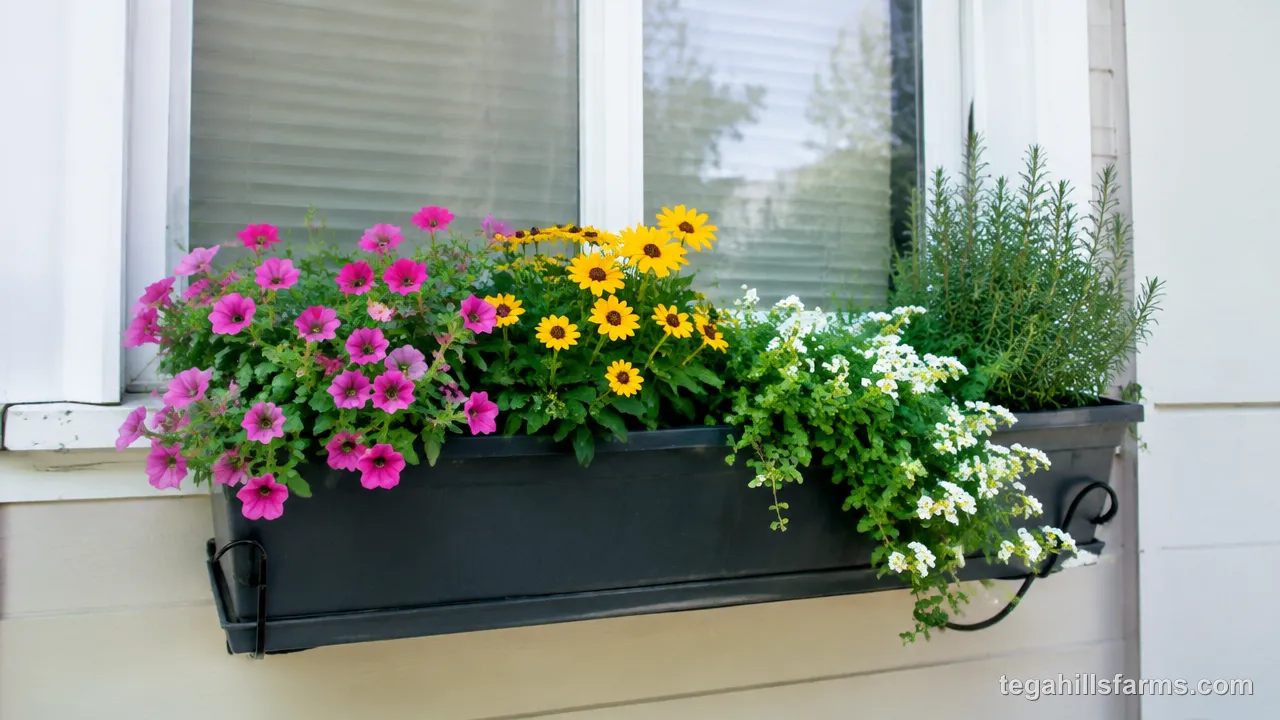
Display matters too. A box sits at eye level from inside the house and from the street, so plants that flower for a week and then fade leave a gap for the rest of the season. Drought tolerance matters because sun and wind pull moisture from shallow soil quickly, and soil depth sets how much buffer the roots get. That’s why it’s worth knowing how deep a window box should be before choosing deep-rooted herbs or bulbs.
Light exposure and season make the final call on which plants work. If you haven’t settled on a container yet, working through how to choose a window box first, including material, fit and drainage, saves you from replanting later.
Which Plants Work Best for Full Sun, Part Shade, and Full Shade?
Hours of direct sun set the plant list: shade means 0–3 hours daily, partial shade or partial sun means 3–6 hours, and full sun means 6 or more hours. A box on the north side of a house usually sits in full shade, and one on the south side usually gets full sun. Trees, awnings, deep eaves and neighboring buildings change those numbers, so watch the window for one full day before buying plants.
What Thrives in a Sunny Window Box?
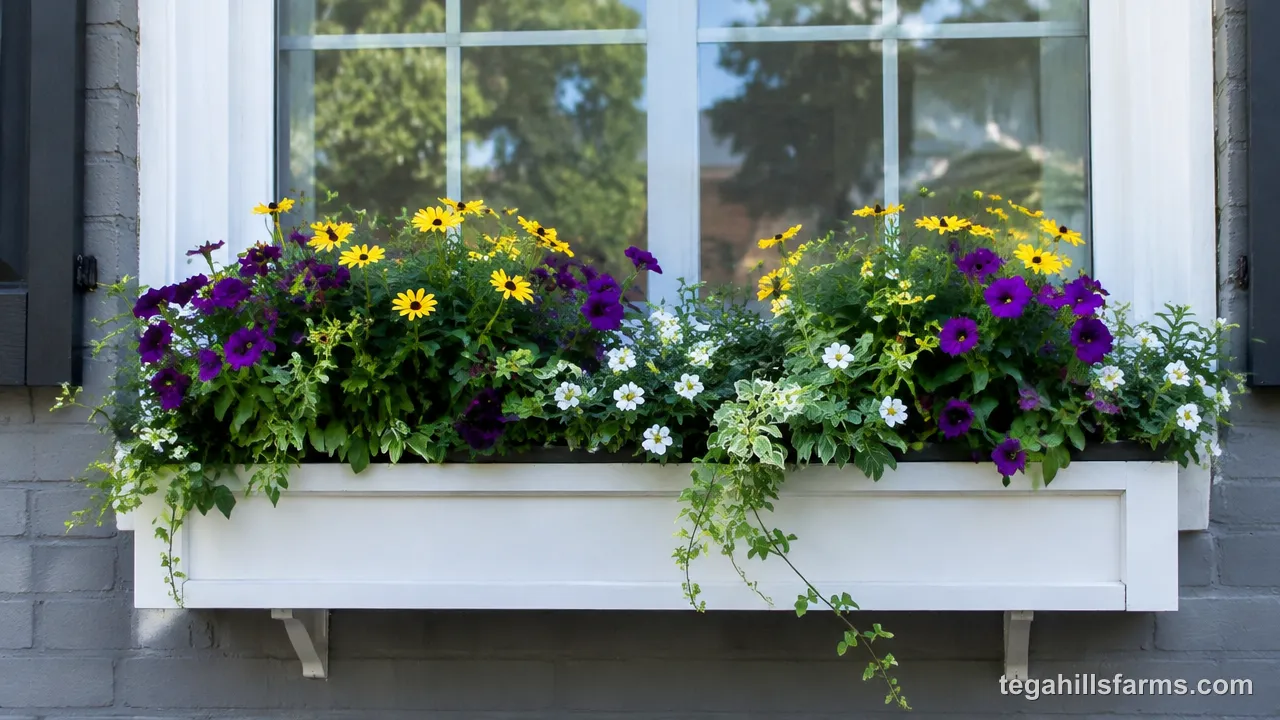
Geraniums, petunias, verbena, calibrachoa, marigolds, Diamond Frost euphorbia and ornamental sweet potato vine all handle the heat of a south- or west-facing window. Each one has a growth habit that suits a narrow box.
Geraniums grow upright and tolerate a missed watering because of their thick stems. They prefer part sun but will grow anywhere from full sun to full shade. Verbena does well in full to part sun and sprawls loosely toward the edge. Diamond Frost euphorbia likes full to part sun and tolerates shade. Its wiry stems and small white bracts take dry soil better than most fillers.
Petunias and calibrachoa bloom heavily in heat, but their fine roots dry out fast. In a hot spell they may need water every day. Marigolds form compact mounds and keep flowering through summer. Sweet potato vine grows quickly, and its large leaves wilt dramatically in afternoon heat. They usually perk up after a drink, so a midday droop alone doesn’t always mean the plant is in trouble.
What Grows Well in Part Shade?
A window with morning sun and afternoon shade, or filtered light through a tree, suits pansies, violas, fuchsias, sweet alyssum, begonias and coleus. Cool morning light gives them enough energy to flower, and afternoon shade protects them from heat stress.
Pansies and violas actually bloom longer in part shade, because hot afternoon sun pushes them to fade early. Fuchsias need that afternoon protection most: their dangling flowers drop in strong heat but keep coming in bright shade. Sweet alyssum produces fewer flowers with less light, though it still forms a soft, honey-scented edge.
Begonias and coleus are the flexible choices. Wax and Dragon Wing begonias handle everything from sun to shade. Coleus leaf color shifts with light, often richer and darker in shade and brighter in sun. That flexibility makes them a safe pick when you aren’t sure how much light the window really gets.
What Can You Plant in a Shaded Window Box?
Impatiens, begonias, coleus and ivy are the dependable choices for a north-facing or heavily shaded window. Impatiens still flower steadily in low light, and begonias produce smaller flowers backed by glossy leaves.
In deep shade, most of the color has to come from foliage. Coleus offers burgundy, lime and patterned leaves that look bright in dim light. Trailing ivy adds a green or variegated edge that stays tidy with little care. Pairing a dark-leaved coleus with pale impatiens creates contrast that reads from the street even when few flowers are open.
The most common beginner mistake with shade is watering it like a sunny box. Shaded soil dries slowly, and constant moisture invites rot. The second mistake is buying sun-loving flowers like petunias and expecting them to bloom; they stretch toward the light and produce only a few flowers.
What Should You Plant in a Window Box Each Season?
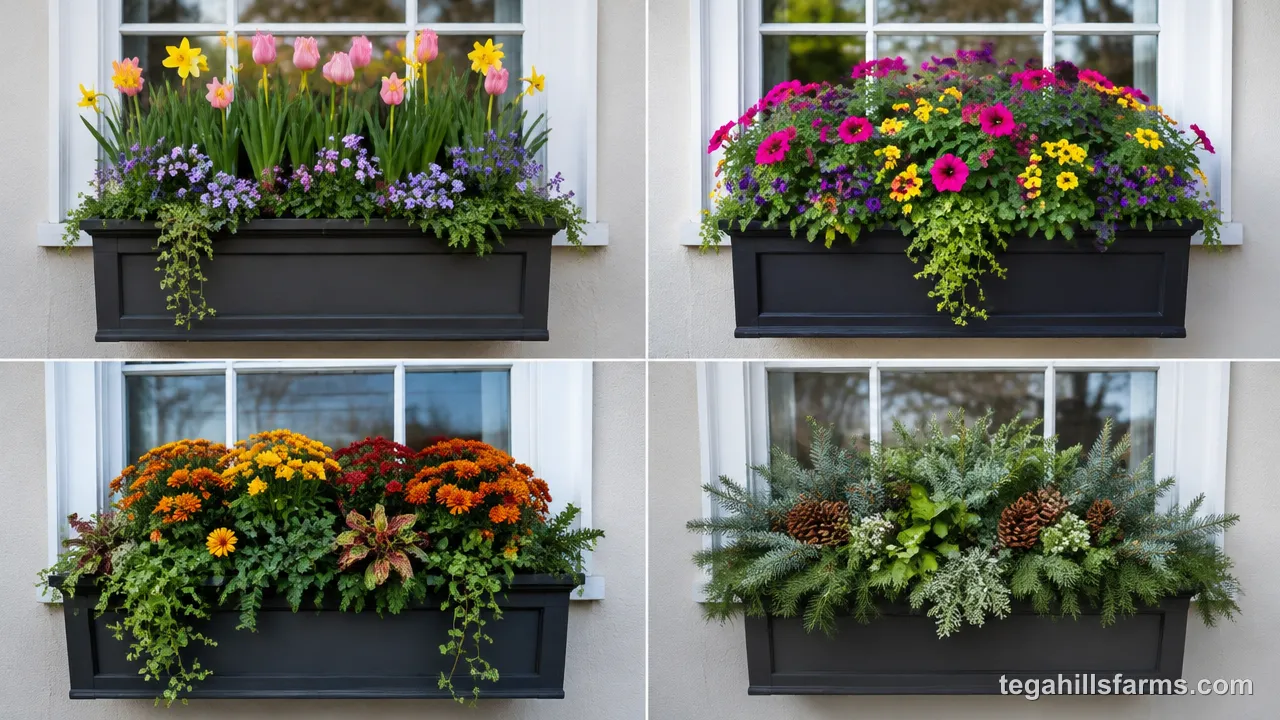
Cool-tolerant flowers and bulbs in spring, heat-loving annuals in summer, and hardy foliage for fall and winter keep one box looking planted all year. Rotating plants this way also gives you the chance to refresh tired soil between seasons. Exact timing depends on your USDA Hardiness Zone and your local frost dates. A spring planting that’s safe in a southern zone can freeze in a northern one, so check frost dates with your county extension office before each change.
What Are the Best Spring Window Box Plants?
Pansies, violas and snapdragons are the first flowers to plant in spring because they tolerate light frost that would kill summer annuals. Pansies and violas bloom in cool weather and handle a chilly night without damage. Snapdragons add upright spikes and keep flowering until the weather turns hot.
Spring bulbs bring early color: tulips, daffodils, crocuses, hyacinths and muscari. You can plant dormant bulbs in the box in fall so they bloom in spring. You can also buy pots of sprouted bulbs in early spring and tuck them in between pansies for instant color.
Bulbs fit a box well because they need depth more than width. Set them low in the soil and plant pansies or violas on top. In cold zones, bulbs left in a box over winter freeze harder than bulbs in the ground, so the pre-sprouted option is the safer route there.
What Keeps a Window Box Blooming All Summer?
Petunias, calibrachoa, geraniums, verbena and sweet alyssum keep flowering through the warm months, as long as they get regular deadheading, feeding and water. These annuals bloom continuously because they keep trying to set seed. Removing spent flowers sends their energy back into new buds.
Petunias and geraniums respond most visibly to deadheading. Newer calibrachoa and many modern petunias are self-cleaning and drop old flowers on their own. Sweet alyssum often stalls in midsummer heat, and a light shearing brings a fresh flush once nights cool.
Feeding matters more in summer than in any other season. Frequent watering washes nutrients out of the small soil volume, and heavy bloomers run short within weeks. Steady moisture matters just as much: a box that dries to dust once or twice can stop producing buds for a while, even after watering resumes.
Which Plants Suit a Fall Window Box?
Pansies, ivy, ornamental kale, ornamental cabbage and heuchera (coral bells) handle cooler nights and carry color after summer flowers fade. Pansies planted in fall often bloom until hard frost. In milder zones they come back again in spring.
You don’t need to empty the box to change it. Pull the most tired summer plants one at a time, loosen the soil in the gap, and set the new plant in at the same depth. Top up with fresh potting mix. A trailing ivy or a still-healthy filler can stay in place and tie the new plants to the old arrangement. This keeps the roots of surviving plants undisturbed and saves you from buying a full new set.
What Can You Grow in a Window Box in Winter or Year-Round?
Dwarf evergreens, trailing ivy and hardy foliage plants give a window box structure through winter. Small boxwood, dwarf conifers and wintercreeper hold their shape and color in cold weather. Cut evergreen boughs, berried branches and pinecones can fill gaps for the holidays.
Containers change the rules for cold hardiness. Roots in the ground are insulated by the surrounding soil, but roots in a box sit inches from freezing air on every side. A plant that survives winter in your garden can die in a container on the same property. A common rule of thumb is to choose plants rated a zone or two colder than your own USDA Hardiness Zone.
Your zone decides how much you can grow. In mild-winter zones, pansies and violas bloom through the cold months and evergreens are optional. In the coldest zones, evergreens and cut greens are the realistic choice. Any box planted year-round needs occasional water during dry winter spells, because evergreens keep losing moisture through their needles and leaves.
How Do Thriller, Filler, and Spiller Plants Work Together?
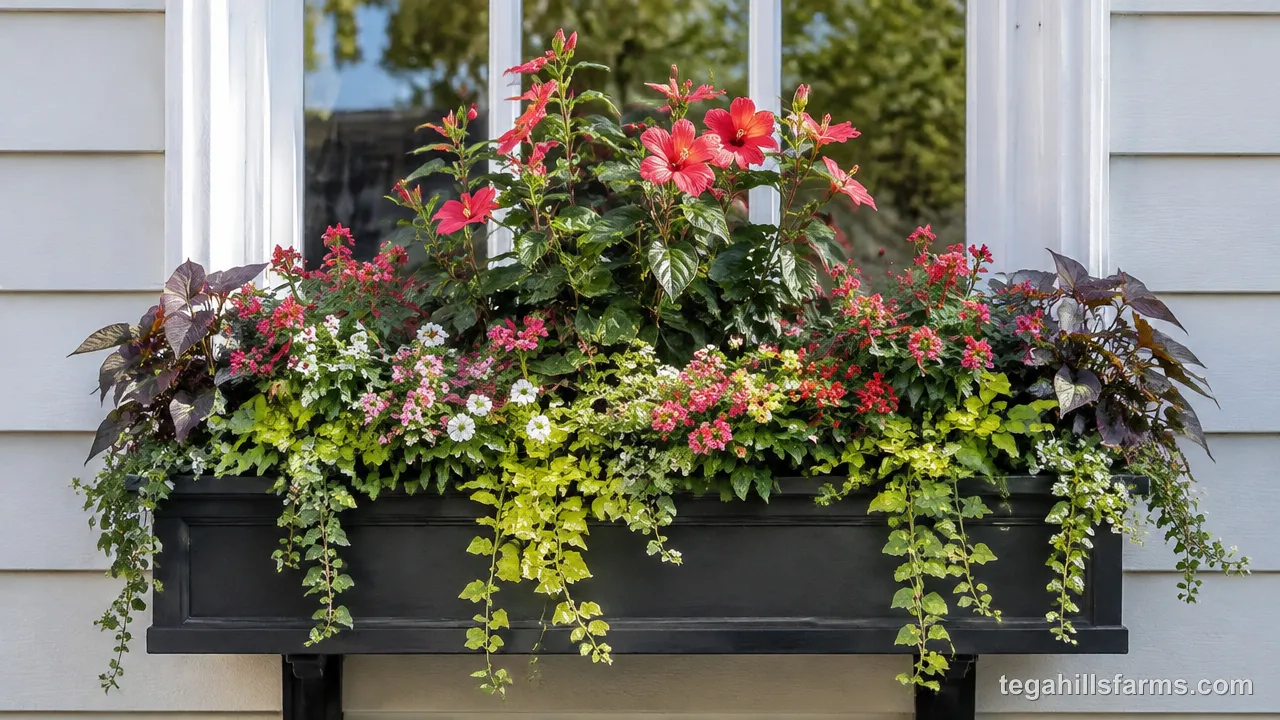
A tall focal plant, mounding plants around it and trailing plants along the front edge give a box height, fullness and movement at once. Each layer covers a weakness of the others: the tall plant draws the eye, the mounding plants hide bare soil and stems, and the trailing plants soften the hard line of the container. Repeating a small number of varieties gives a more cohesive look than one of everything.
What Is a Thriller Plant and Which Ones Work?
The thriller is the upright plant that anchors the design and gives the eye somewhere to land. Zonal geraniums are the classic sunny choice, with stiff stems and rounded flower heads that stay neat all season. Snapdragons add spiky height in spring and early summer. Tall coleus works in part shade and shade, where it carries color through its leaves instead of flowers.
Place thrillers at the back of the box when it’s mainly seen from the street or yard. Center them when the box is seen from both sides. Height should suit the window: a thriller that grows past the sill blocks light and the view from inside, and it can catch on sashes that open outward.
If you plant a box with a single annual instead of a mix, choose one at least 6 inches tall. A shorter plant on its own looks sparse in a long container.
Which Filler Plants Add Fullness?
Fillers are the mounding plants that fill the space between the tall plant and the trailing edge. Dragon Wing and Rieger begonias form full, leafy mounds with steady flowers. Impatiens cover the soil in shade. Diamond Frost euphorbia creates a cloud of tiny white bracts that blends with almost any color. Sweet alyssum forms a low, fragrant carpet that fills small gaps.
A mounding habit does more than look full. Spreading leaves shade the soil surface, which slows evaporation and keeps roots cooler in a shallow container. Bare soil, by contrast, heats up and dries out quickly.
Restraint matters most with fillers, because they take up the most space in the box. Choose one or two and repeat them along the length rather than mixing many. Repeated mounds give the box a sense of rhythm. A different filler in every gap looks patchy, even when each plant is healthy.
Which Spiller Plants Trail Best Over the Edge?
Spillers are trailing plants that grow over the front edge and soften the box’s hard outline. Ornamental sweet potato vine is the most vigorous. It can grow long enough to swamp nearby plants, so it needs regular trimming in a small box. Golden creeping Jenny (Lysimachia) forms a flat, bright chain of round leaves. It turns golden in sun and lime-green in shade.
Dichondra produces fine curtains of silver or green leaves. The silver types do best in sun, where their color shines. Calibrachoa trails with masses of small, petunia-like flowers and needs sun to keep blooming. Ivy is the dependable trailer for shade and stays evergreen through winter in many zones.
Matching vigor to the box matters as much as matching light. A slow-growing trailer gives the front edge a neat line. A fast grower like sweet potato vine suits a long box where it has room to spread without crowding the fillers.
Can You Grow Herbs and Foliage Plants in a Window Box Instead of Flowers?
Yes: culinary herbs and foliage-only plantings both do well in a window box. They just follow different rules than a flower box. Most herbs need full sun and get harvested regularly, so the box changes shape as you cut. Foliage plantings skip deadheading entirely and hold their look for months. These options suit gardeners who want something useful from the box, or a low-fuss display with texture instead of blooms.
Which Herbs Grow Well in a Window Box?
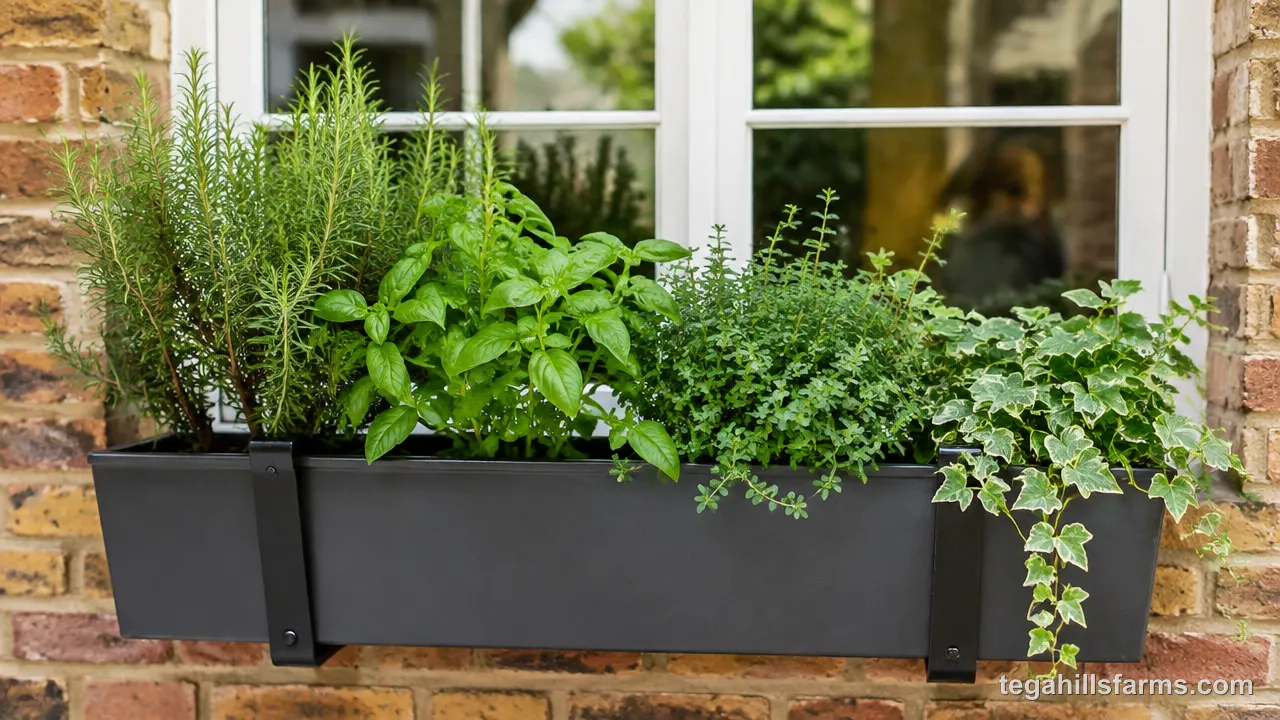
Thyme, parsley, basil, oregano, chives and mint all grow well in a window box. The best results come from grouping herbs by how much water they want. Thyme and oregano are Mediterranean plants that prefer lean, dry soil and full sun, and they lose flavor and turn soft when kept constantly moist. Parsley, chives and basil like steady moisture. Basil also wants as much heat and sun as the window can give.
Mint needs its own container. It spreads through underground runners, and in a shared box it crowds out its neighbors within a season. A separate small box or pot keeps it under control.
Sensible pairings follow those water needs: thyme with oregano in one box, parsley with chives and basil in another. Harvesting keeps herbs bushy. Cut stems just above a pair of leaves, and pinch off basil flower buds as they appear so the plant keeps putting out leaves.
Which Foliage and Evergreen Plants Add Color Without Blooms?
Coleus, ivy, dichondra, golden creeping Jenny and small evergreens can carry a box with little or no flowering, using leaf color and texture alone. Coleus offers the widest color range for shade and part sun. Silver dichondra and golden creeping Jenny brighten sunny boxes. Ivy and dwarf evergreens give structure that lasts through the colder months.
Light still matters for foliage plants. Coleus can scorch in harsh afternoon sun, and silver dichondra turns gray-green and thin in heavy shade. Choose by window exposure the same way you would for flowers.
Foliage plants also make good partners for flowers. A chartreuse creeping Jenny makes purple petunias look brighter, and dark coleus sets off white impatiens. For a low-maintenance box, foliage plants are hard to beat: no deadheading, no blooms to fade, and only occasional trimming to keep each plant within its space.
Which Plant Combinations Work Best for Each Light Level?
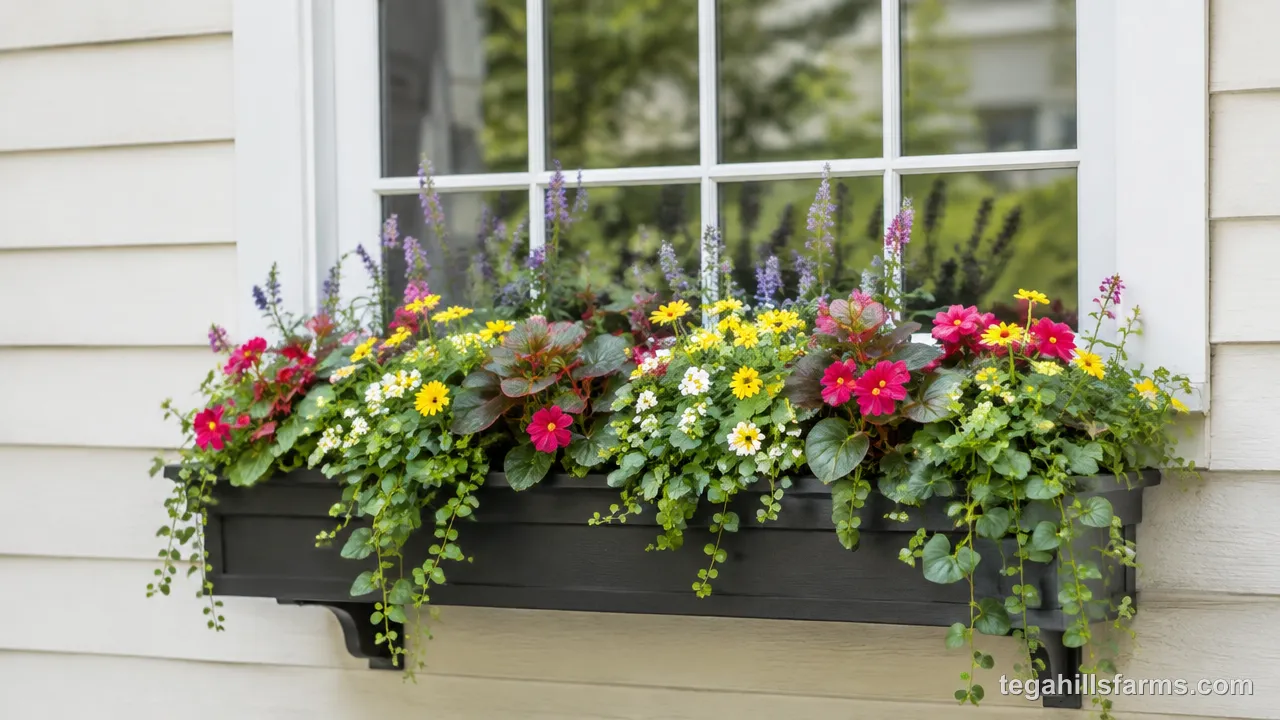
Geraniums with Diamond Frost euphorbia and calibrachoa suit full sun, coleus with Rieger begonias and creeping Jenny suit part shade, and coleus with impatiens and ivy suit full shade. Each combination pairs plants with similar water needs, so one watering schedule works for the whole box.
| Light level | Thriller | Filler | Spiller | Water needs | Maintenance |
|---|---|---|---|---|---|
| Full sun | Zonal geranium | Diamond Frost euphorbia | Calibrachoa | Check daily in hot weather | Deadhead geraniums |
| Part shade | Tall coleus | Rieger begonia | Golden creeping Jenny | Steady moisture | Pinch coleus flower spikes |
| Full shade | Dark-leaved coleus | Impatiens | Ivy | Water only when the top feels dry | Trim ivy to length |
The sun combination needs the most attention because heat dries the box fastest. The shade combination needs the least water, and overwatering is its main risk. Many of these plants, Diamond Frost euphorbia among them, are sold under the Proven Winners label, which publishes container recipes built on the same layered approach.
A combination scales by repeating its pattern along the box. In a mixed window box, the layout typically runs 3 tall plants across the back, 2 short plants in the middle offset from the tall ones, and 3 draping plants along the front edge. A longer box repeats that sequence, and a shorter one centers a single thriller with fillers and spillers on each side. Plant costs add up alongside the container itself, so it helps to know how much a window box costs before buying a full set of starters.
How Do You Plant and Care for a Window Box?
Fresh potting mix, regular watering and steady feeding keep a window box healthy after planting. These matter more in a box than in a garden bed. A shallow container holds little soil, so it dries out faster and runs out of nutrients sooner, and roots have no surrounding ground to draw on. Habits that are optional in the ground become essential in a box.
How Do You Fill and Plant a Window Box?
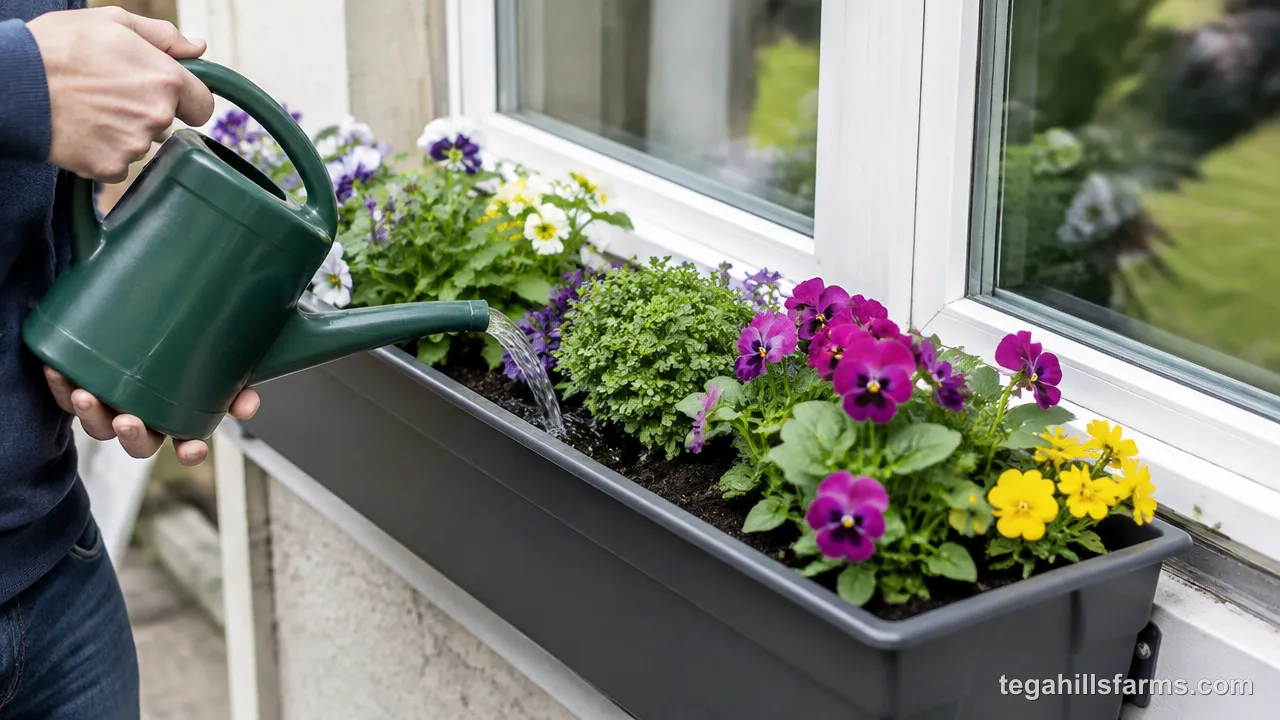
Use potting mix, not garden soil. Garden soil compacts in a container and drains poorly, which suffocates roots and holds water around them. Potting mix stays light and airy. Before filling, check that the box has drainage holes, because even the best mix turns soggy without them.
Fill the box to about two inches from the rim. That gap holds water long enough to soak in instead of running over the edge. Set the tall plants in first, at the back or center. Then add fillers around them, and tip the spillers slightly forward along the front edge so they trail outward. Gently loosen any roots circling the bottom of a nursery pot so they spread into the new soil.
An average box needs at least 5 plants when you start with annuals in 3- to 4-inch pots. Packing in more creates competition for water and nutrients and cuts airflow, which invites leaf disease. The right number follows the length of the box, which is why it helps to know what size window box you need before buying plants.
How Often Should You Water a Window Box?
Check the soil before watering instead of following a fixed schedule. Push a finger into the mix up to the first knuckle. If it feels dry, water slowly until it runs from the drainage holes. Watering until it drains moistens the whole root zone instead of just the top layer.
Exposure changes the rhythm. A sunny, windy box can need water every day in summer, sometimes twice in a heat wave. A shaded box may go several days. Plants with fine roots, such as calibrachoa, dry out sooner than thick-stemmed geraniums or euphorbia.
Wet soil makes a box much heavier than it looks when dry, and that weight hangs from the brackets every time you water. Knowing how to mount a window box with hardware rated for a fully soaked load prevents a box from pulling away from the wall or sill midseason.
When and How Should You Feed and Trim Window Box Plants?
Mix slow-release fertilizer into the potting mix at planting to give plants a steady supply of nutrients for weeks. Alternatively, skip it and use a water-soluble fertilizer once a week when you water during active growth. Either way, follow the product label for the amount.
More fertilizer doesn’t mean more flowers. Overfeeding pushes soft, leafy growth with fewer blooms, and in a small soil volume, excess salts build up and can burn roots.
Grooming keeps the box tidy and productive. Pinch or snip off spent flowers to keep buds coming. When stems stretch long and bare, cut them back by about a third so they branch and fill in again within a couple of weeks.
Most of the annuals filling garden-center racks each spring, petunias and calibrachoa among them, originally come from South America and other distant regions, and many of today’s showy cultivars offer local bees and butterflies very little nectar or pollen. A box of regionally native plants can feed those pollinators and get by on less water, but many natives grow too tall or root too deeply for a shallow container, and a poor pick leaves you with stems flopping across the window or a plant that collapses by midsummer.
Can You Use Native Plants in a Window Box?
Yes, compact native wildflowers and groundcovers work well in a window box if they stay small and match the window’s light. The best candidates are low, clumping plants rather than tall prairie species. Depending on your region, that can mean native sedums, wild strawberry, dwarf forms of coreopsis or nodding onion.
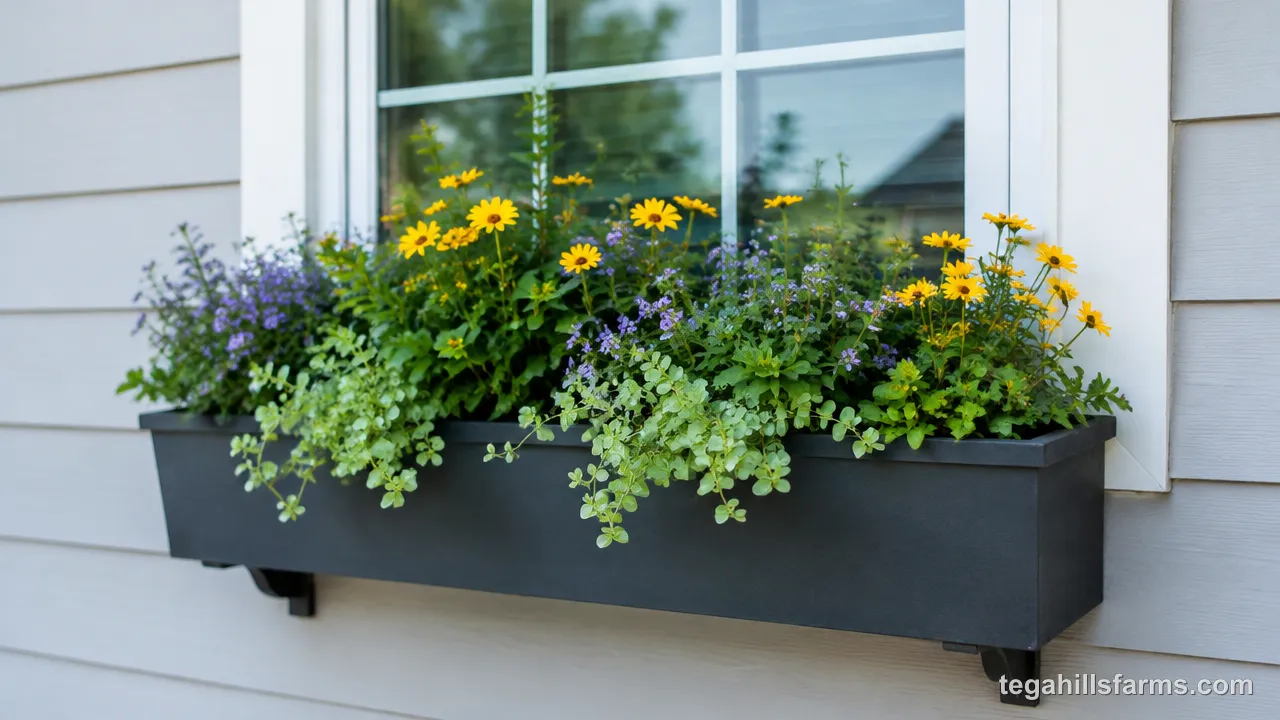
Natives adapted to your area have developed alongside local pollinators, so their flowers draw bees and butterflies that pass over many imported annuals. Once established, many need less watering because they’re suited to your rainfall and summer heat.
What grows natively in Maine differs sharply from what thrives in Arizona, so regional sourcing matters more than any national plant list. A local native-plant nursery or your county extension office can suggest species that suit your USDA Hardiness Zone and stay compact.
The trade-off is style. Natives rarely bloom nonstop like bred annuals. In return, they ask for far less fussing: little deadheading, little feeding and fewer emergency waterings. Many perennial natives also return the next year, provided they’re hardy enough to survive winter in a container.
Which Window Box Plants Suit Pets, Deer, and Pollinators?
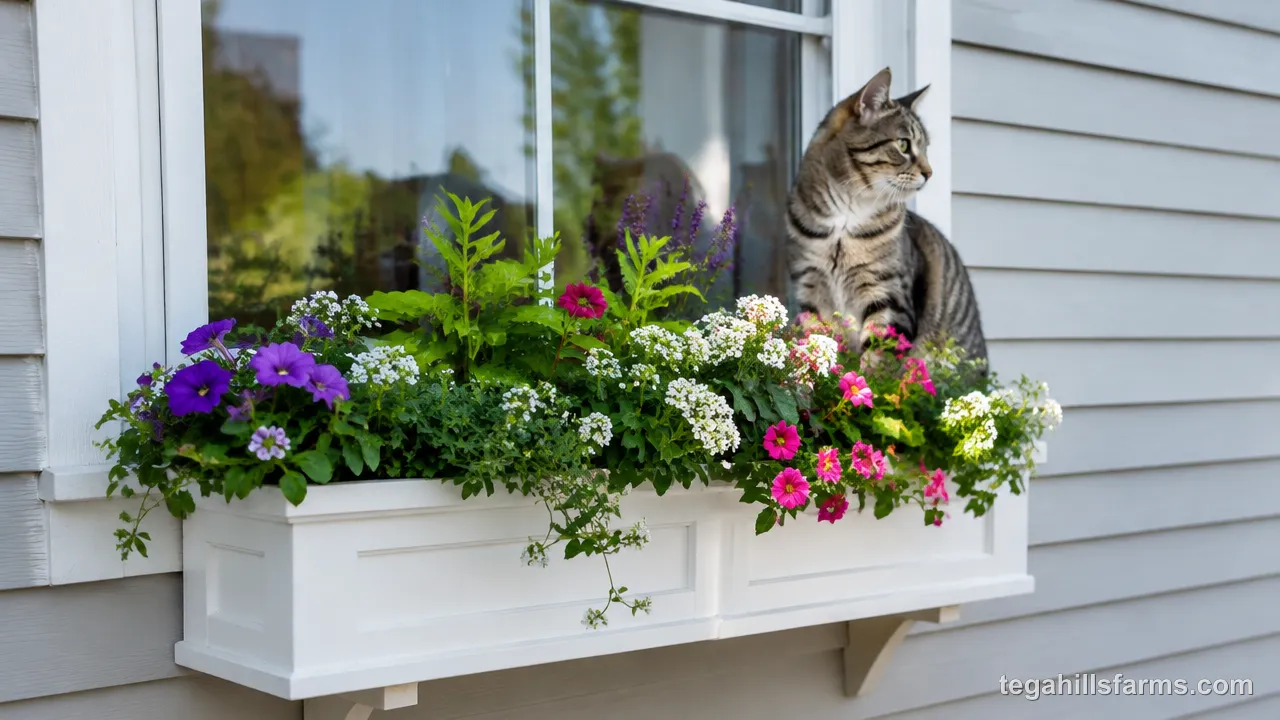
Pets, deer and pollinators each change which plants belong in the box. A cat that sits on the sill or a dog that reaches a porch box makes toxicity the first concern. A ground-level box in deer country needs plants they tend to skip. A box meant to feed bees calls for nectar-rich flowers. Check the safety of every plant with a trusted veterinary or poison-control resource before buying.
Which Window Box Plants Are Safer Around Pets?
Check each plant against the ASPCA’s toxic and non-toxic plant lists before buying. Several plants common in window boxes are a concern. Geraniums appear on the ASPCA’s toxic list, as do culinary herbs like oregano and mint. Petunias, on the other hand, appear on its non-toxic list. Plant names can be confusing, so look up the botanical name on the nursery tag rather than the common name.
Placement adds a second layer of protection. A box mounted on an upper-story window keeps leaves out of reach of dogs. A cat that sits on an indoor sill can still reach the plants if the window opens toward the box. Railing boxes on porches and balconies sit at the height a curious pet can reach most easily, so reserve those for plants on the non-toxic list.
If a pet does chew a plant, call your veterinarian or a pet poison hotline right away. Keep the plant tag so you can identify exactly what was eaten.
Which Plants Resist Deer or Attract Pollinators?
Strongly scented herbs and fuzzy-leaved plants are the usual deer deterrents. Thyme, oregano and chives carry aromas deer tend to avoid, and soft, hairy leaves like those of dusty miller are unpleasant to browse. Deer resistance is always relative, though. A hungry deer in a dry summer or late winter will eat plants it normally ignores, and browsing pressure varies widely from one neighborhood to the next. Boxes on upper windows sidestep the problem entirely.
For pollinators, nectar-rich flowers do the work. Verbena draws butterflies with its clustered blooms. Sweet alyssum’s tiny flowers feed small native bees and beneficial insects. Snapdragons attract bumblebees, which are strong enough to pry the flowers open. Letting a few herbs flower helps too, since blooming thyme, oregano and chives draw bees all summer. A box with several of these plants turns a window into a regular stop for pollinators.
How Can You Tell If Your Window Box Is Thriving or Struggling?
A thriving box shows compact, bushy growth, deep leaf color and a steady supply of new buds. A struggling box shows its problems early, through leggy stems, yellow leaves, wilting or soggy soil.
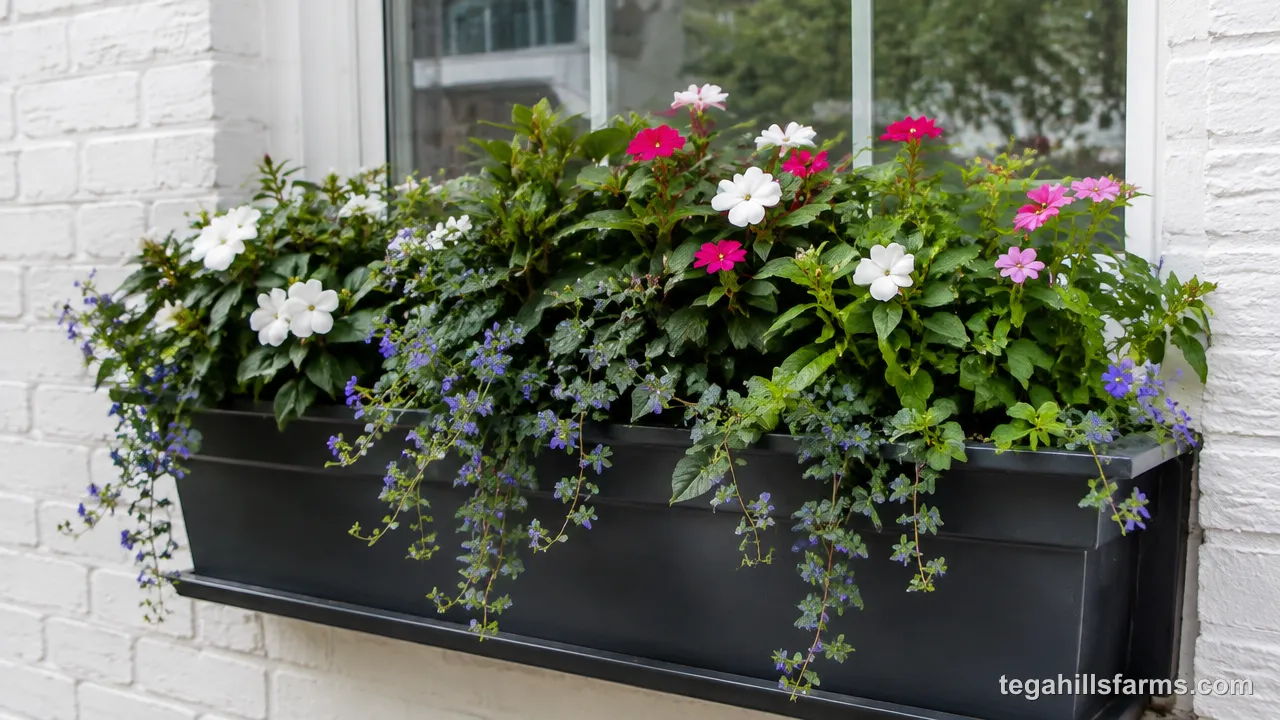
Leggy stems, with long bare sections between leaves, usually point to too little light or skipped pinching. Cutting back can help, but a sun plant stuck in shade will keep stretching. Yellowing lower leaves often mean the soil stays too wet or the plant has used up its nutrients. Check the moisture first, then the feeding schedule.
Wilting despite moist soil is the most serious sign. It usually means roots are rotting from poor drainage or overwatering and can no longer take up water. Soggy, sour-smelling soil confirms it. Crowding shows up as weak growth and mildew on leaves, because packed plants compete for water and trap humid air.
Rescue a plant when the cause is easy to fix, such as a missed feeding or a trim it needs. Replace it when roots have rotted, when it’s mostly dead, or when it simply doesn’t suit the window’s light. A fresh plant suited to the conditions recovers the box faster than nursing a mismatch.
Window Box Planting FAQs
Can you mix annuals and herbs in the same window box?
Yes, as long as they share the same light and water needs. Basil and parsley pair well with moisture-loving sun annuals like petunias. Thyme and oregano prefer drier soil, so they do better beside drought-tolerant plants like euphorbia. Avoid pairing herbs you plan to eat with plants that need pesticide treatments.
How many plant varieties should go in one window box?
Keep it to no more than 3 to 4 varieties. A small selection repeated along the box looks intentional and balanced, while many single plants of different types look scattered. Choose one thriller, one or two fillers and one spiller, then repeat them to fill the length of the container.
Can you reuse potting mix in a window box?
You can reuse it if the previous plants were healthy. Pull out old roots, loosen the mix, and blend in fresh potting mix or compost to restore structure and nutrients. Replace it completely if plants died from root rot or disease, since the problem can carry over to whatever you plant next.
Can spring bulbs share a window box with annuals?
Yes. Plant the bulbs deeper in the box and set shallow-rooted annuals like pansies or violas above them. The annuals bloom while the bulbs develop, then fill in as bulb foliage fades. Leave bulb leaves until they yellow, because they feed next year’s flowers, and in cold zones treat container bulbs as annuals.
When should you plant a window box based on frost dates?
Plant heat-loving summer annuals after your area’s last spring frost date, once nights stay mild. Cool-season flowers like pansies, violas and snapdragons can go in a few weeks earlier, since they handle light frost. Frost dates vary by USDA Hardiness Zone and location, so check yours with your county extension office.


Write Your Review
No reviews yet. Be the first to share your experience!