

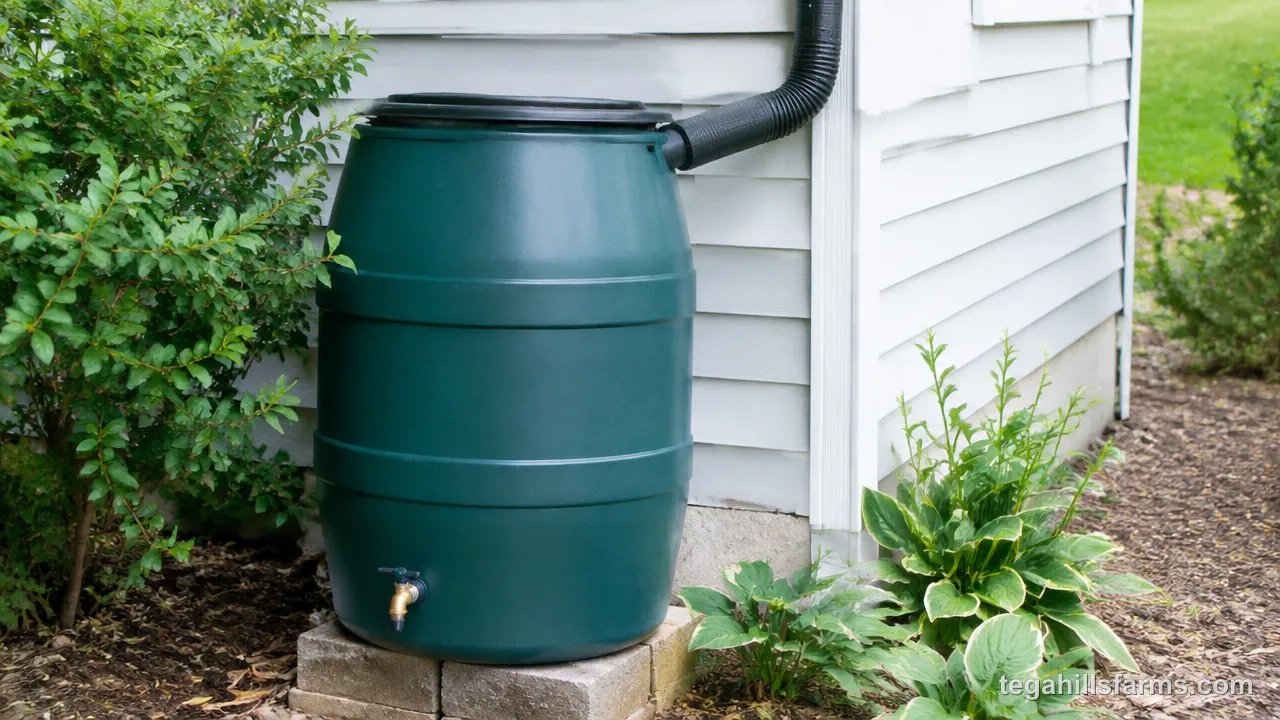
A basic 55-gallon polyethylene rain barrel with a spigot and overflow hose costs about $60 to $80. Most standard 40- to 60-gallon barrels land closer to $140. Decorative and 100-gallon units cost more, above-ground cisterns start around $1,000, and a whole-property harvesting system can reach $21,000 once filtration, pumps and plumbing are part of the job.
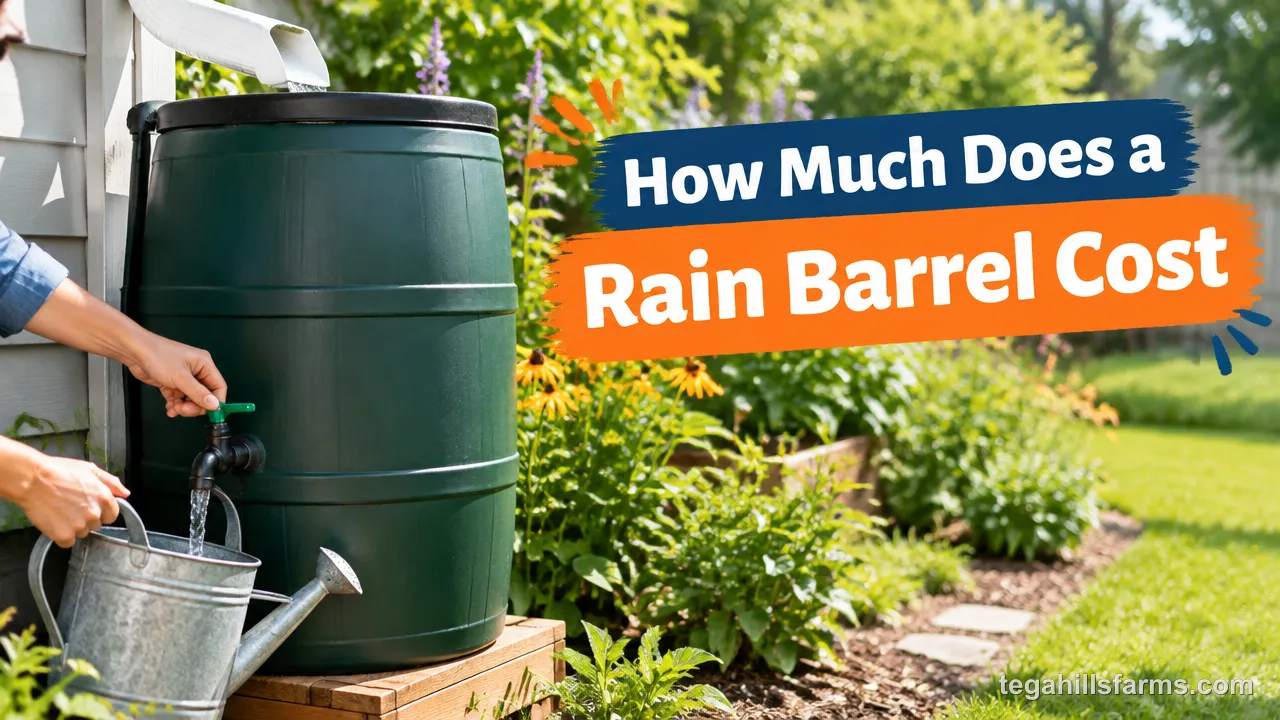
Within each type, price depends on capacity, the plastic or wood the barrel is made from, the quality of the spigot and fittings, and how much styling goes into the finish. The barrel is only part of the spend. A stand, a downspout diverter and an overflow hose decide whether that water actually reaches your tomatoes and herbs, and they add to the bill.
Most gardeners also want to know whether the barrel will pay for itself and what it costs to keep running. The answer depends on your water rate, how much rain falls during your growing season, and whether you live where barrels must be drained before winter. Local rebates can take a real bite out of the upfront price.
When you set your budget, plan for a solid stand and a screened lid at the same time as the barrel. A cheap barrel on a sturdy, level base will serve your garden better than a pricier barrel sitting on soft ground.
What Affects Rain Barrel Cost?
Storage capacity and build quality drive most of a rain barrel’s price. That means the barrel that fits your roof runoff and garden size is usually a better buy than the biggest or prettiest one on the shelf. Two barrels holding the same number of gallons can still be priced far apart, so the useful question is which extras actually help your plants. Understanding cost factors narrows your choices, but knowing how to choose a rain barrel that matches your roof size and watering needs means you invest in the right capacity from the start.
Capacity and Material
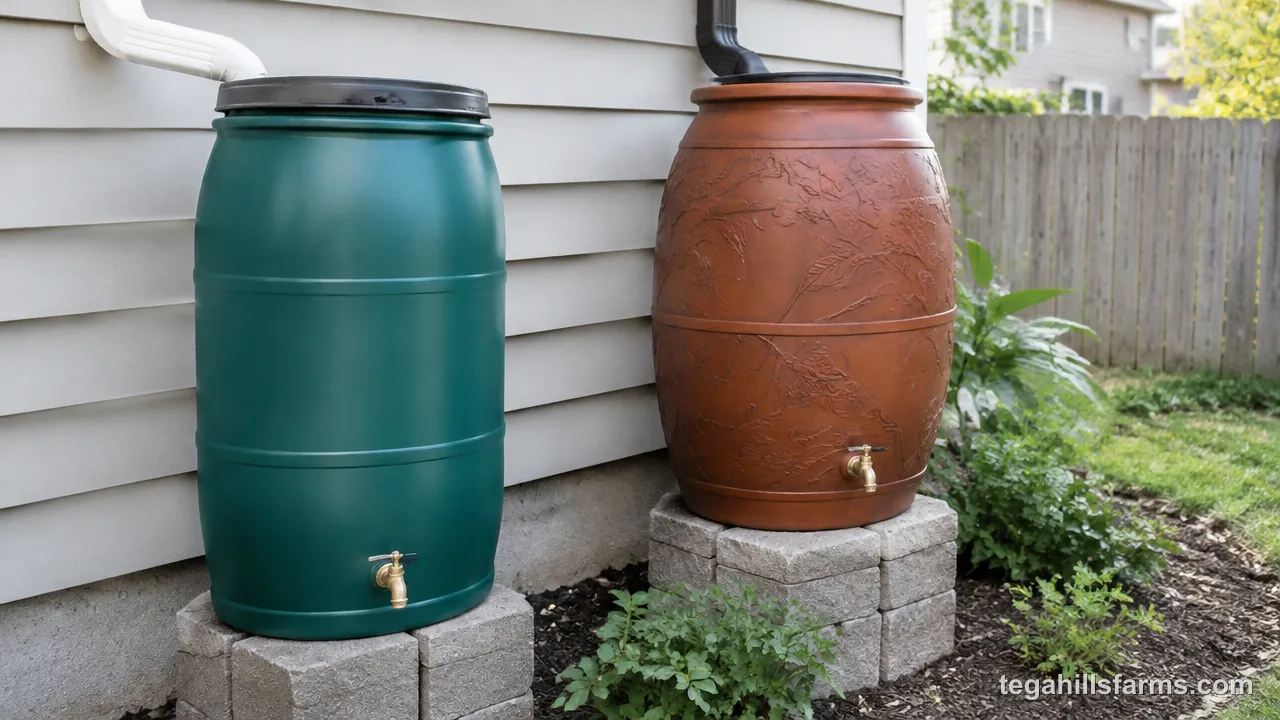
Bigger barrels and better plastics cost more, and together they explain most of the price spread between barrels. A larger barrel needs more resin and thicker walls, because a full barrel pushes hard and constantly on its sides and base. Working out what size rain barrel you need before you shop keeps you from paying for gallons your roof can’t fill between waterings.
Material sets the rest of the price. UV-stabilized polyethylene resists the cracking and brittleness that full sun causes, so it costs more than thin, untreated plastic. Recycled plastic barrels often come in cheaper. Wood barrels, usually repurposed oak, cost more for their looks and need to stay damp, or the staves shrink and leak. Fiberglass shows up mostly in larger tanks and carries a higher price for its rigidity. If you water edibles, food-grade plastic is worth paying for over a barrel of unknown origin.
Design and Features
Each step up in styling or hardware adds to the base price. Decorative barrels molded to look like terra cotta, stone or wood need more detailed molds and more color work than a plain drum. Some include a planter top, which turns the lid into a spot for herbs or trailing flowers.
Hardware matters more to the garden than looks do. A brass spigot outlasts a plastic one and holds up better to being bumped by a wheelbarrow, so it raises the price. Linking ports let you connect a second barrel later without drilling. An overflow diverter sends excess water back to the downspout instead of flooding your bed edges. A screened lid keeps out leaves and insects. Barrels that ship with all of these cost more than bare drums, but buying the parts separately usually costs more again.
Brand and Warranty
Known brands charge more than no-name barrels, and a longer warranty usually comes attached to that higher price. Unbranded barrels sold online often look identical in photos but can use thinner walls or weaker fittings, and those differences only show up after a season of sun and freeze.
Established manufacturers tend to sell replacement spigots, screens and linking parts. That support keeps a barrel working when one small part fails, instead of sending the whole thing to the curb. A longer warranty signals that the maker expects the plastic and fittings to last. Before you pay the premium, read what the warranty actually covers and whether replacement parts are easy to order.
How Much Do Rain Barrels Cost by Type?
Most home rain barrels fall between about $60 for a basic plastic unit and about $200 for decorative or 100-gallon models. DIY kits come in below that range, and big linked tanks sit above it. Once you understand how rain barrels work, the price gaps make sense: water comes in from the downspout, leaves through the spigot, and excess flows out the overflow, so extra money buys capacity, looks or sturdier hardware rather than a different system.
Basic Plastic Barrels
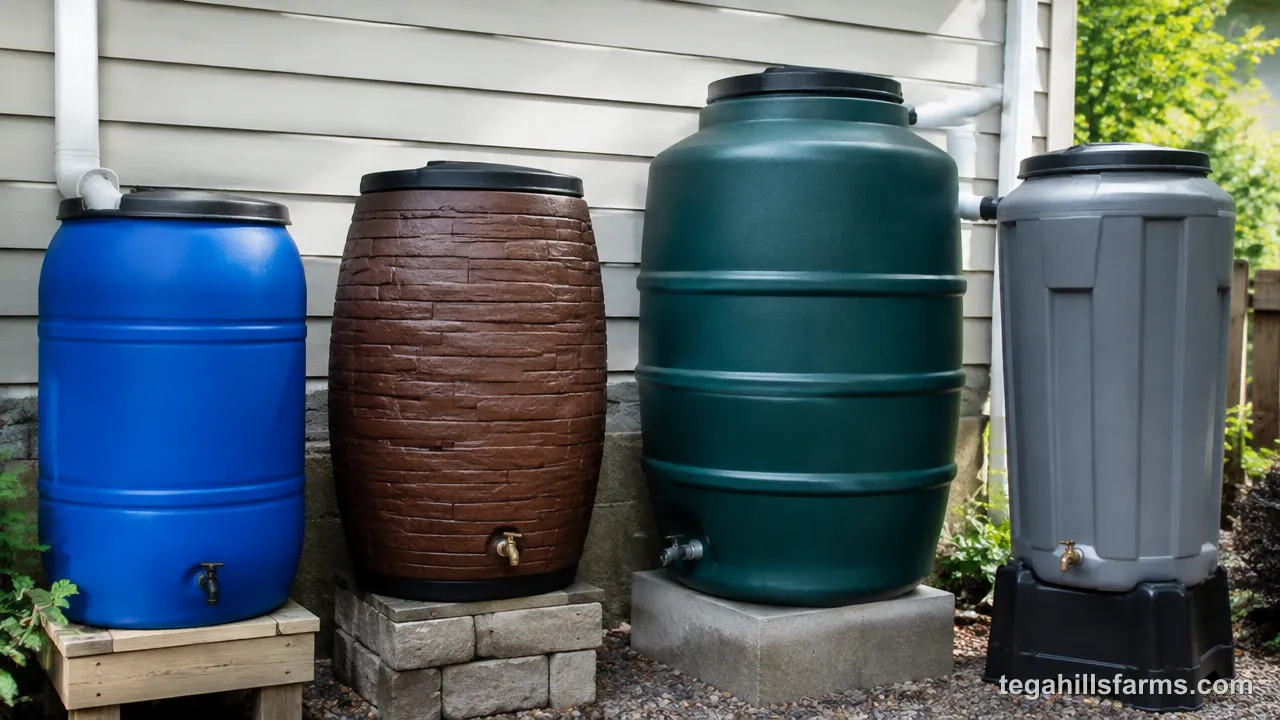
A basic 55-gallon polyethylene barrel with a spigot and overflow hose costs about $60 to $80. That price usually gets you a simple molded drum, a plastic spigot near the base, a screened opening on top, and an overflow outlet. Prefabricated 40- to 60-gallon barrels with sturdier fittings cost about $95 to $140, and the national average for that size sits around $140.
What separates a $60 barrel from a $140 one is mostly the fittings and the plastic. Higher-priced basic barrels tend to have thicker UV-stabilized walls, a tighter screen that keeps out mosquitoes, and a spigot that won’t snap the first winter. For a vegetable bed or a row of patio containers, a basic barrel holds enough water to cover dry spells between storms. I’d put the extra money toward the spigot and screen before anything cosmetic.
Decorative Rain Barrels
Decorative and 100-gallon barrels cost about $120 to $200. Within that range, finish quality decides the price. Faux wood, terra cotta and molded stone barrels look like garden features rather than utility drums, which matters when the downspout you’re tapping sits beside a patio or front walk.
Cheaper decorative barrels use shallow molding and surface paint that can fade or chalk in strong sun. Better ones carry deeper texture and color mixed through the plastic, so they still look right after several summers. Urn-style barrels often include a planter top, giving you a spot for herbs or trailing flowers right where you water from. Many decorative models have a flat back that sits snugly against the house, which helps on narrow side yards.
The trade-off is that you pay for appearance more than gallons. If the barrel will sit behind the garage, a basic barrel stores the same water for less money. Where it stays in view all season, a decorative finish lets you keep collecting water without an eyesore by the door.
Large Capacity Barrels
The smallest 100-gallon barrels share the decorative price band. Tanks holding roughly 200 to 300 gallons run about $300 to $600, and the price climbs with everything that keeps that much water contained. More capacity means heavier, reinforced walls, because a large tank full of water presses much harder on its seams and base than a 55-gallon barrel.
Commercial-grade fittings push large barrels toward the upper end of the range. Thicker bulkhead connections, larger spigots and wider overflow outlets move water faster and resist leaks under that pressure. Many large barrels also include a linking system, so a second tank can share the same downspout.
Large tanks also need more under them. A full tank can sink into soft soil or tip on an uneven base, so plan for a level gravel pad or reinforced platform. For a large vegetable garden in a region with long dry stretches, one large tank saves you from linking several small barrels. On a small roof, though, it may never fill, which makes linked 55-gallon barrels the more flexible choice.
DIY Rain Barrel Kits and Conversion
DIY rain barrel kits cost about $30 to $60. You add your own drum, so a converted barrel can come in under the price of a finished one. Most kits include a spigot, a bulkhead fitting that seals the hole you drill, an inlet screen, and sometimes a drill template and overflow fitting.
The drum is the variable cost. Food-grade drums that once held syrups, juice concentrates or olives are the safest choice for watering edibles, and they’re sold by food processors, bottlers and resellers at prices that vary widely by area. Avoid any drum that held chemicals, oils or pesticides, because residue can leach into the water you pour on your plants. Rinse even a food-grade drum thoroughly before use.
What you save on the barrel, you pay back in labor. Converting a drum means drilling clean holes, setting the bulkhead and spigot with sealant, cutting a screened inlet, and testing for leaks before the first storm. A poorly sealed spigot leaks slowly and drains the barrel before you need the water. If you’re comfortable with a drill and want several barrels, a kit stretches your budget across more gallons. If you only need one barrel this season, a finished basic barrel spares you the time and the leak risk.
Cistern and Whole-System Costs
Above-ground cisterns start around $1,000, buried tanks around $3,000, and whole-property systems around $5,000. Site work and equipment push each one well past the price of the tank alone. These systems make sense when a large garden, small orchard or long dry season needs far more water than a few barrels hold. At this scale, the tank is only one line on the bill, and preparing the site often decides the final price.
Above-Ground Cistern Systems
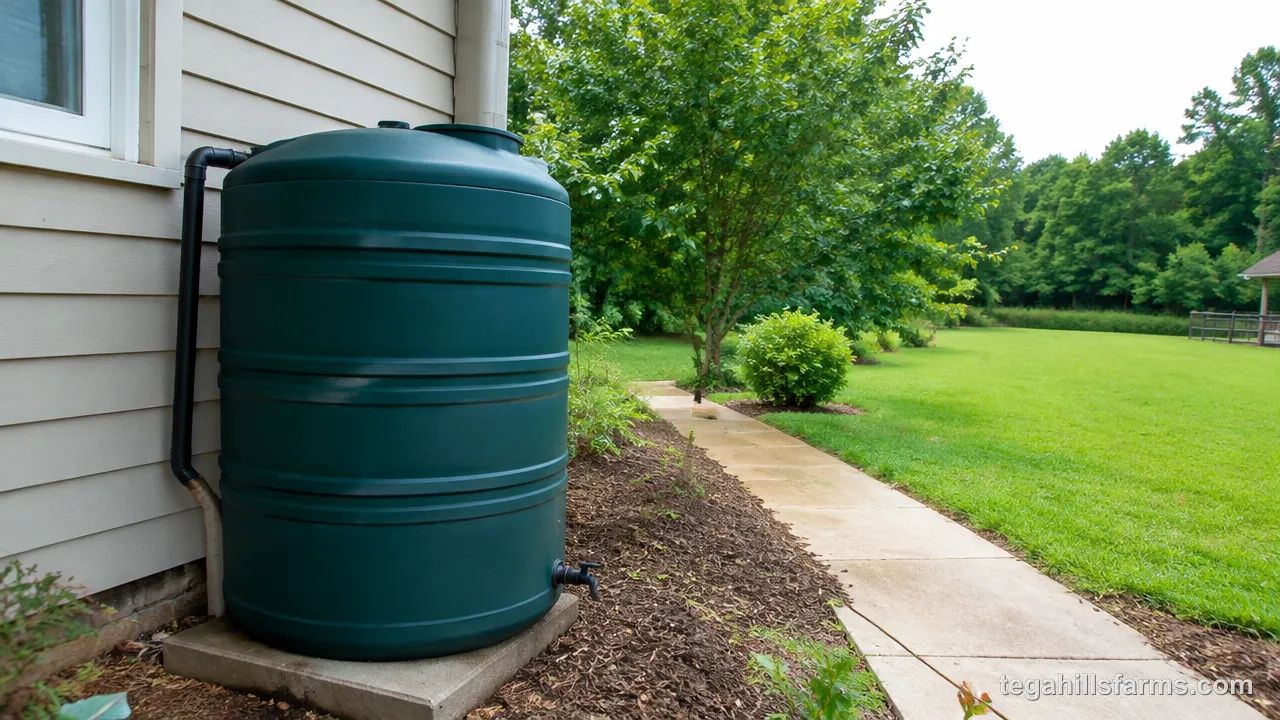
Above-ground cisterns cost about $1,000 to $5,000, with the average near $2,500. The spread comes from capacity, tank material and what the tank needs underneath it. Polyethylene cisterns are lighter and usually less expensive. Fiberglass and metal tanks cost more and hold their shape in larger sizes.
A cistern holding hundreds or thousands of gallons needs a foundation that won’t shift. A compacted gravel pad works for some tanks. Larger ones often call for a concrete pad or a built platform, and that work adds to the price. Height matters too. A gravity-feed setup works only when the tank outlet sits above the beds you water, so a low tank may need a pump to deliver usable flow to a drip line or hose.
Placement adds smaller costs: longer downspout runs, overflow piping directed away from the foundation, and screening on every opening. For gardeners whose summer watering outruns several barrels, an above-ground cistern is the step up before digging.
Underground Cistern Installation
Underground residential cisterns cost about $3,000 to $8,000, with an average near $4,000. They cost more than above-ground tanks because most of the expense is in the digging and setup rather than the tank itself.
Excavation is the first big charge. The hole has to fit the tank, leave room for backfill, and sit below the frost line in cold regions. Before any digging, call 811 so underground utilities get marked. The tank must be rated for burial, because soil pressure crushes tanks built for above-ground use.
Equipment adds the rest. A buried tank needs a submersible pump to bring water up, plus wiring for that pump. An access riser at ground level lets you inspect and clean the tank. Backfill around the tank has to be placed carefully so the walls are supported evenly. Many towns require permits for buried tanks or new electrical work, so check local requirements before you get quotes. The payoff is a yard with no tank in sight and water that stays cooler and darker, which slows algae growth.
Whole-Property Harvesting Systems
Whole-property rainwater harvesting systems cost about $5,000 to $21,000, with an average near $10,000. They collect from several roof sections, store water in one or more tanks, and deliver it to irrigation lines or, with treatment, indoor fixtures like toilets.
The extra cost comes from the equipment that keeps the water clean and moving. A first-flush diverter sends the dirtiest early runoff away from storage. Sediment filters catch grit before it reaches pumps and emitters. A distribution pump pressurizes water for sprinklers or drip zones. A storage network ties multiple tanks or a large cistern together. Any indoor use brings plumbing integration, backflow protection and often disinfection equipment, which push a project toward the upper end of the range.
These systems fit properties with large gardens, landscape beds and long dry seasons, where barrels would need refilling far too often. Local plumbing codes govern indoor rainwater use, so a licensed installer and a permit check belong in the plan.
Installation and Additional Costs
Beyond the barrel, budget for a stable stand, a downspout connection and overflow routing, plus labor if you hire out the setup. These pieces turn a barrel into a working water source, and skipping them is the usual reason a new barrel overflows against the foundation or sits too low to fill a watering can.
Professional Installation
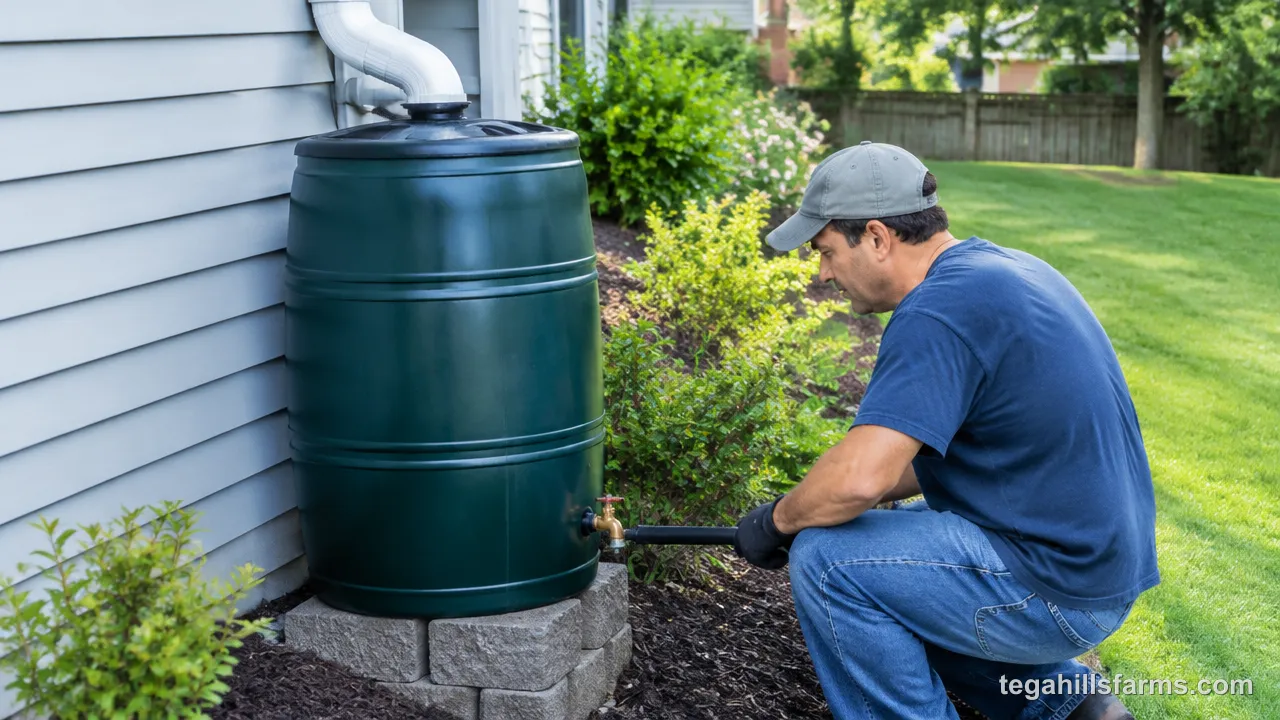
Hiring someone to set up a rain barrel adds about $100 to $300. The price depends on whether the job needs gutter work or a built platform. For that fee, a handyman usually levels the base, cuts the downspout to the right height, fits the diverter and routes the overflow away from the house. A plumber charges a higher hourly rate, which makes sense mainly when the setup ties into existing plumbing or a pump.
Gutters can raise the bill. If the gutter feeding the barrel sags, leaks or is clogged, repairs cost about $164 to $500, and a barrel collects far less water from a gutter that spills over its edge. Many gardeners skip labor entirely, since learning how to install a rain barrel takes basic tools and an afternoon. Hiring help pays off when the downspout is high, the ground slopes, or the barrel needs a raised platform you can’t build yourself.
Required Accessories
The parts most barrel setups need add about $50 to $150 together. The total depends on quality and how high the barrel must sit. A downspout diverter kit sends water into the barrel and returns excess to the downspout once the barrel fills, which keeps water away from your foundation. An overflow hose does a similar job on barrels without a diverter, carrying excess to a bed, a rain garden or a spot that drains well.
A screened lid or mesh cover keeps out leaves, debris and insects. That screen is the core of how to keep mosquitoes out of rain barrel water, so replace a torn screen right away.
The stand is the accessory people underbudget. Raising the barrel makes room for a watering can under the spigot and adds a little gravity pressure for a hose. A full barrel is heavy, though, and it will tip or sink on an uneven or soft base. Cinder blocks on a leveled gravel base are the low-cost choice. A wooden platform costs more and looks tidier beside a patio.
Optional Upgrades
Most optional add-ons cost about $15 to $75 each. A simple water filter runs higher, about $75 to $200. None of these is required for a barrel to collect and hold water, so put them in order based on how you water.
A linking kit connects a second barrel to the first, adding storage without buying a bigger tank. It’s usually the first upgrade worth making once one barrel runs dry during summer. A soaker hose adapter lets the barrel feed a soaker hose that wets the soil at the root zone. That suits vegetable beds well, because foliage stays dry and less water evaporates. A spigot extender moves the outlet to a more reachable height or spot. That helps when the barrel sits behind shrubs.
A timer valve automates watering. Gravity-fed barrels deliver very low pressure, though, so choose a timer rated for low-pressure flow, or it may not open at all. A sediment filter matters mainly if you run drip emitters, because fine grit from the roof clogs small emitters. For hand watering with a can, you can skip the filter. If you’re watering edible beds, I’d put a linking kit and soaker adapter ahead of a timer, since more stored water and gentler delivery help plants most.
Where to Buy Rain Barrels
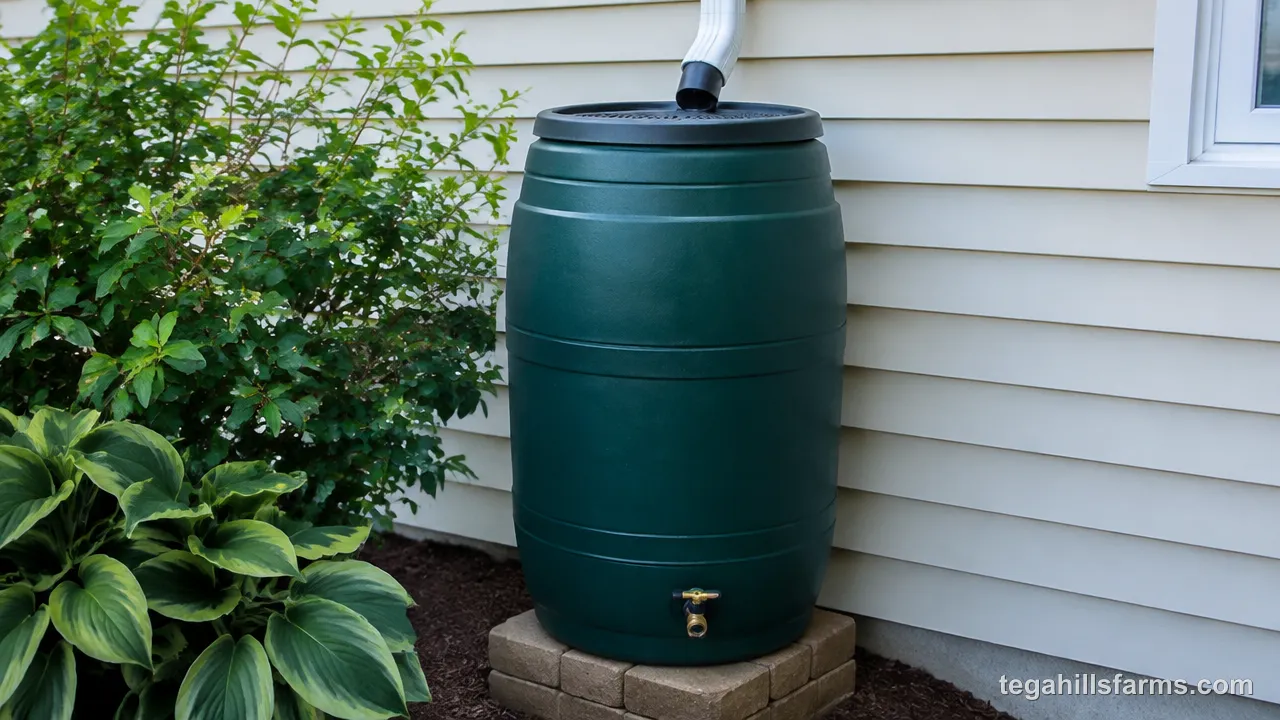
Home Depot, Lowe’s, Amazon and Tractor Supply carry most rain barrels, while local garden centers and municipal programs often have well-matched or discounted options. Each channel leans toward different barrel types, so where you shop shapes what you’ll find.
- Home Depot and Lowe’s: Basic and decorative barrels, diverter kits and stands, with the widest in-store stock in spring. Seeing a barrel in person helps you judge wall thickness and spigot quality before you buy.
- Amazon: The broadest selection, including large-capacity tanks, linking kits and replacement parts that big-box stores rarely stock. Check shipping details on large tanks, since similar-looking barrels can differ in plastic and fittings.
- Tractor Supply: Stronger on larger tanks and utility containers, which suits rural properties and big gardens that need more storage than a standard barrel.
- Local garden centers: A smaller selection, but staff who know your local rainfall and growing season and can suggest a size that fits.
- Municipal programs: Cities and water utilities sometimes sell barrels at reduced prices during spring events, usually at or below entry-level retail pricing.
Basic plastic barrels in the entry-level range turn up across all of these channels. Shopping around matters most for decorative and large-capacity models, where prices vary more.
Rain Barrel Rebates and Incentives
Rebates from cities, counties and water utilities can lower a barrel’s upfront cost and sometimes cover most of a basic unit. Eligibility depends on where you live, so check your local programs before you buy, because some require you to apply first or buy from an approved vendor. A rebate program is a good sign that collection is welcome locally. Where no program exists, check whether it is illegal to collect rainwater under your state and local rules before you set up.
Municipal Stormwater Programs
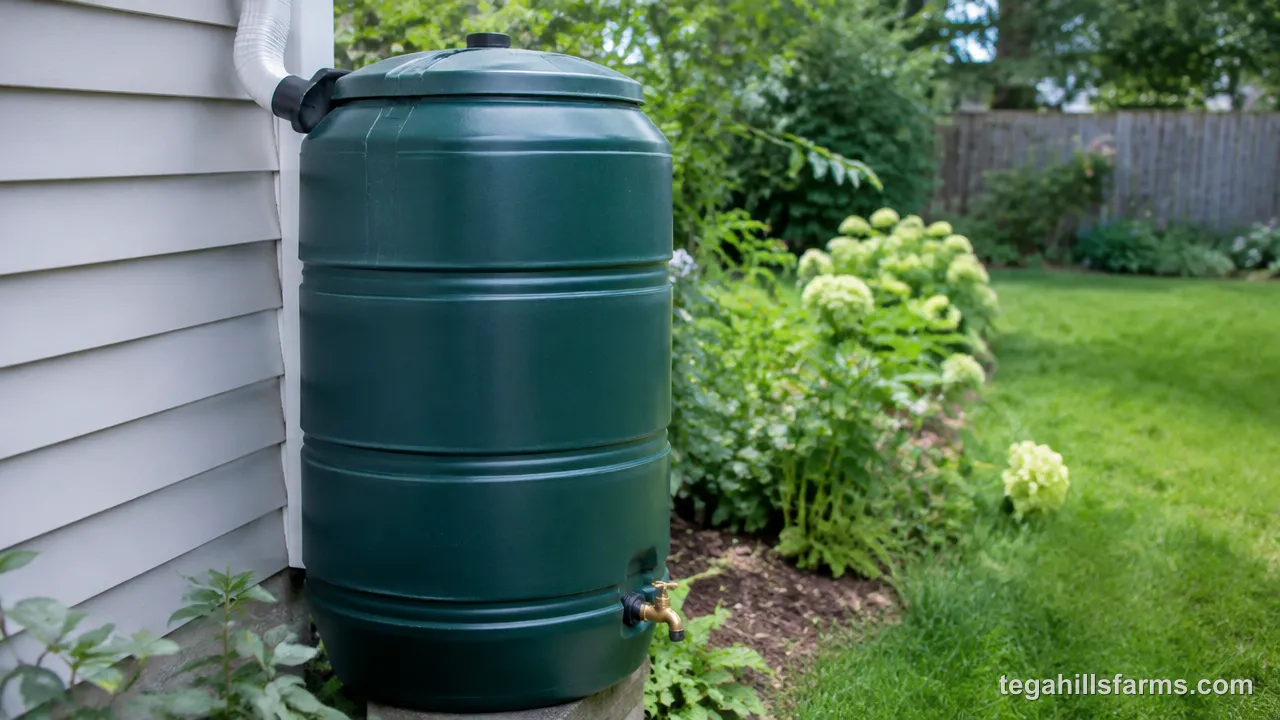
Many city and county stormwater programs rebate roughly $20 to $75 per barrel. The goal is to reduce the runoff that floods streets and overloads storm drains during heavy rain. Every barrel that holds roof water during a storm keeps that water out of the drainage system, which is why local governments pay residents to install them.
Applications usually ask for proof of purchase, such as a dated receipt showing the barrel’s capacity. Many programs also want photos of the barrel connected to a downspout, and some send an inspector to confirm the installation. Most cap the rebate per household, either by barrel count or a total dollar limit, and some set a minimum capacity.
Timing matters. Some programs require pre-approval before you buy, and others accept applications only within a set window after purchase. Look for these programs on your city’s public works, environmental services or stormwater utility pages. If your city charges a separate stormwater fee on your utility bill, ask whether a barrel or rain garden qualifies for a fee credit too.
Water Utility and State Incentives
Water utilities and some state agencies offer reduced-price or free barrels as part of conservation campaigns, often through yearly distribution events. Utilities fund these programs because every gallon you water from a barrel is a gallon they don’t have to treat and pump during peak summer demand.
Distribution events usually happen in spring, ahead of watering season. Many work on pre-order: you reserve a barrel online, then pick it up on a set date. Discounted barrels at these events often cost less than retail, and some programs give them away free to customers who attend a short workshop on setup and use.
Eligibility rules are usually strict. Most programs serve only customers of that utility, limit the number of barrels per account, and may require a service address that matches your bill. Some utilities instead offer a rebate on a barrel you buy yourself, with requirements similar to city stormwater programs.
State water agencies sometimes fund local conservation programs rather than running their own, so the money reaches you through your utility or county. Check your water utility’s conservation page first, then your state water or natural resources agency for programs that cover your area.
The same barrel that pays for itself within a few seasons in a city with steep water rates can take most of a decade to break even in a desert climate with little rain. If you buy one expecting quick savings in the wrong climate, the drop in your water bill will look small next to what you spent on the barrel, stand and fittings.
Is a Rain Barrel Worth the Cost?
A rain barrel pays for itself fastest where water rates are high and rain falls regularly during the growing season. Where water is cheap or rain is scarce, the financial return is slow, and the value lies mostly in chlorine-free water for your garden and less runoff from your roof. Your local water rate, annual rainfall and how much your beds actually need decide which side you’re on.
Calculating Payback by Region
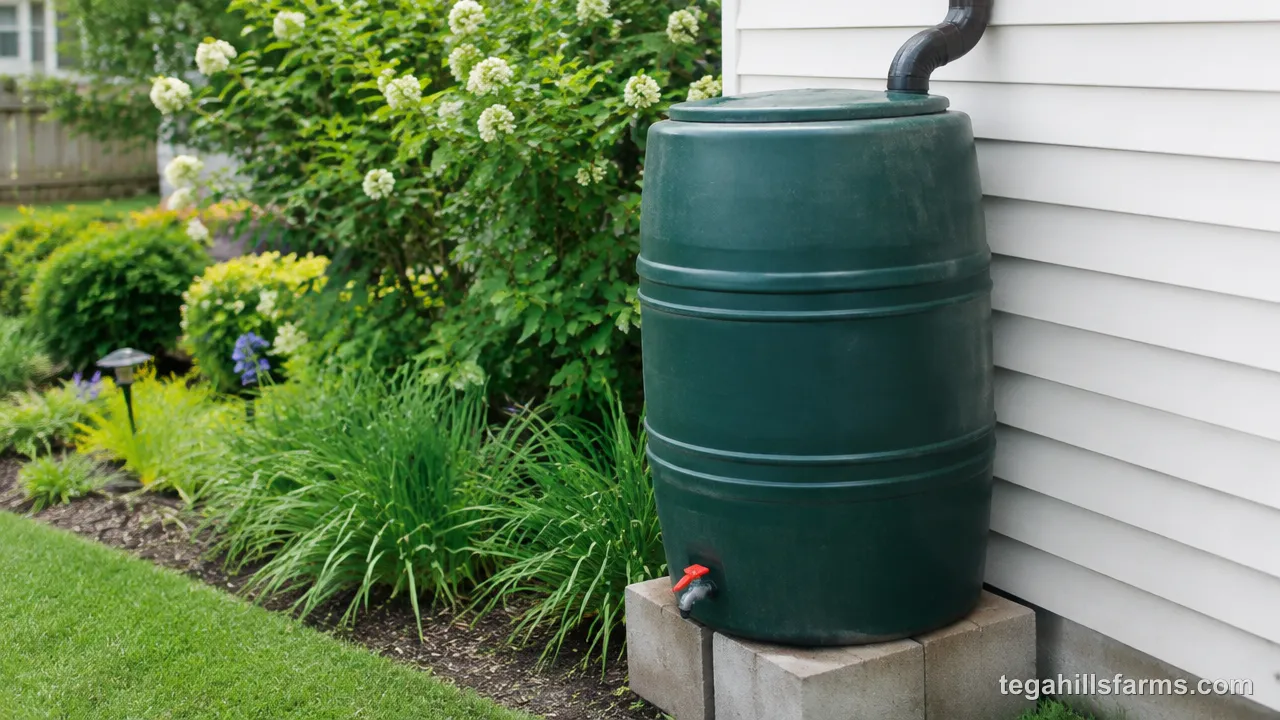
Payback runs about 4 to 5 years in Los Angeles, where water rates are high, and in Atlanta, where rainfall is good. Seattle gets plenty of rain, but low water rates stretch payback to about 5 to 6 years. Phoenix sits at the slow end, about 8 to 10 years, because limited rainfall leaves the barrel empty for long stretches.
Two numbers drive these differences. Your water rate sets how much each gallon from the barrel saves. Rainfall timing sets how often the barrel refills during the months you actually water. A barrel that refills every week through a long irrigation season replaces far more tap water than one that fills in winter and sits dry all summer.
To judge your own payback, check the per-gallon or per-unit rate on your water bill and compare your area’s rainfall pattern with your garden’s watering season. In regions where summer rain is rare, a barrel works more as storage for spring rain than as a steady supply, so expect payback on the slower end.
Environmental and Garden Benefits
Even when payback is slow, a rain barrel earns its place by giving plants water free of the chlorine or chloramine used to treat tap water. Seedlings, container herbs and leafy greens do well on rainwater, and it’s soft enough that it won’t leave mineral crust on pots or soil over a season. For a vegetable garden, I’d count that water quality as the main return, ahead of the bill savings.
Stormwater reduction helps your yard and your neighborhood. Roof water held in a barrel doesn’t rush across the lawn, wash mulch out of beds, or add to street flooding during heavy storms. Releasing it slowly onto the soil later lets it soak in where roots can use it.
A full barrel also gives you some independence from the tap. During summer watering restrictions, stored rainwater can keep young transplants and container plants alive when hose use is limited, depending on how your local rules treat collected water. Water containers and soil, not leaves, especially on edibles near harvest, and give produce a rinse before eating.
Hidden and Ongoing Costs
A rain barrel’s ongoing costs are small but recurring: cleaning, replacement screens and washers, winter preparation in cold climates, and eventually a new barrel. None of these costs much on its own, but they add up over the years you own the barrel, and skipping them shortens its life.
Routine Maintenance Expenses
Keeping a barrel clean and working takes a few inexpensive supplies and some time each season. Sediment from roof shingles and gutters settles at the bottom, so empty and scrub the barrel at least once a year with a long brush and mild soap, then rinse it well before reconnecting. Avoid harsh cleaners if you water edibles, since residue ends up in your soil.
Screen mesh wears out. Sun breaks down plastic and fabric screens, and a small tear lets in mosquitoes and debris, so replacement screens are a regular purchase. Spigots need attention too. Rubber washers harden and drip, and a slow leak drains a barrel before you need the water. Replacement washers and spigots are cheap, especially when the maker sells parts.
Algae grows when sunlight reaches the water. Opaque or dark barrels prevent most of it, while translucent barrels may need a cover or a shaded spot. Cleaning out gutters before spring rains keeps leaves and grit from piling into the barrel in the first place.
Winter and Seasonal Preparation
In colder USDA zones with hard freezes, a barrel left full over winter can crack as the water inside freezes and expands. That means buying a new one in spring. The prevention costs time more than money: drain the barrel before the first hard freeze, disconnect it from the diverter, and either turn it upside down outdoors or store it in a garage or shed.
Storage space is the hidden cost. A 55-gallon barrel takes up a real corner of a garage, and larger tanks often can’t move indoors at all, so they need to be drained, opened and left upside down or covered where they sit. Plastic spigots crack easily in cold weather, so remove them or open them fully. Reattach the downspout extension so winter rain and snowmelt still drain away from your foundation.
In milder zones with only occasional light frosts, many gardeners keep barrels running year-round and simply leave the spigot open on cold nights. Spring means reattaching everything, cleaning the barrel, checking the screen and washers, and leveling the stand again after winter ground movement.
Frequently Asked Questions
How long does a rain barrel last?
A well-made polyethylene rain barrel lasts many seasons when it has UV-stabilized walls, sits on a level stand, and is drained before hard freezes. Freeze cracks, sun-damaged plastic and failed spigots end most barrels early. Replacing worn screens and washers costs little and keeps a sound barrel working.
Is a DIY rain barrel cheaper than buying one?
A DIY rain barrel usually costs less than a finished one, since a kit runs about $30 to $60 and food-grade drums can be inexpensive locally. The trade-off is your time drilling, sealing and leak-testing. One poorly sealed fitting can drain the barrel, so take care with the bulkhead and spigot.
How much does it cost to link two rain barrels?
Linking two rain barrels usually costs about the same as one small add-on, since most linking kits fall in the lower part of the accessory price range. You’ll also need a second barrel and a stand large enough for both. Barrels with built-in linking ports are the easiest to connect.
How much rain does it take to fill a 55-gallon barrel?
About 0.52 inches of rain fills a 55-gallon barrel from a 200-square-foot roof section. That same area yields roughly 106 gallons per inch of rain, assuming about 85 percent collection efficiency from a sloped asphalt shingle roof with gutters in good condition. Larger roof sections fill barrels faster.
Do rain barrels have resale value?
Rain barrels resell modestly at best, since basic plastic barrels are inexpensive new and buyers worry about cracks or leaks. Decorative barrels and large tanks in good condition tend to sell more easily when posted locally. Cleaning the barrel and including working spigots, screens and diverter parts makes a used barrel easier to sell.
Write Your Review
No reviews yet. Be the first to share your experience!