

A backpack leaf blower is worth the extra size if you clear a large yard, deal with heavy leaf fall from several mature trees, or regularly blow for an hour or more at a stretch. On a small lot with a patio, a driveway and a few beds, a handheld does the job with less to carry, store and maintain.
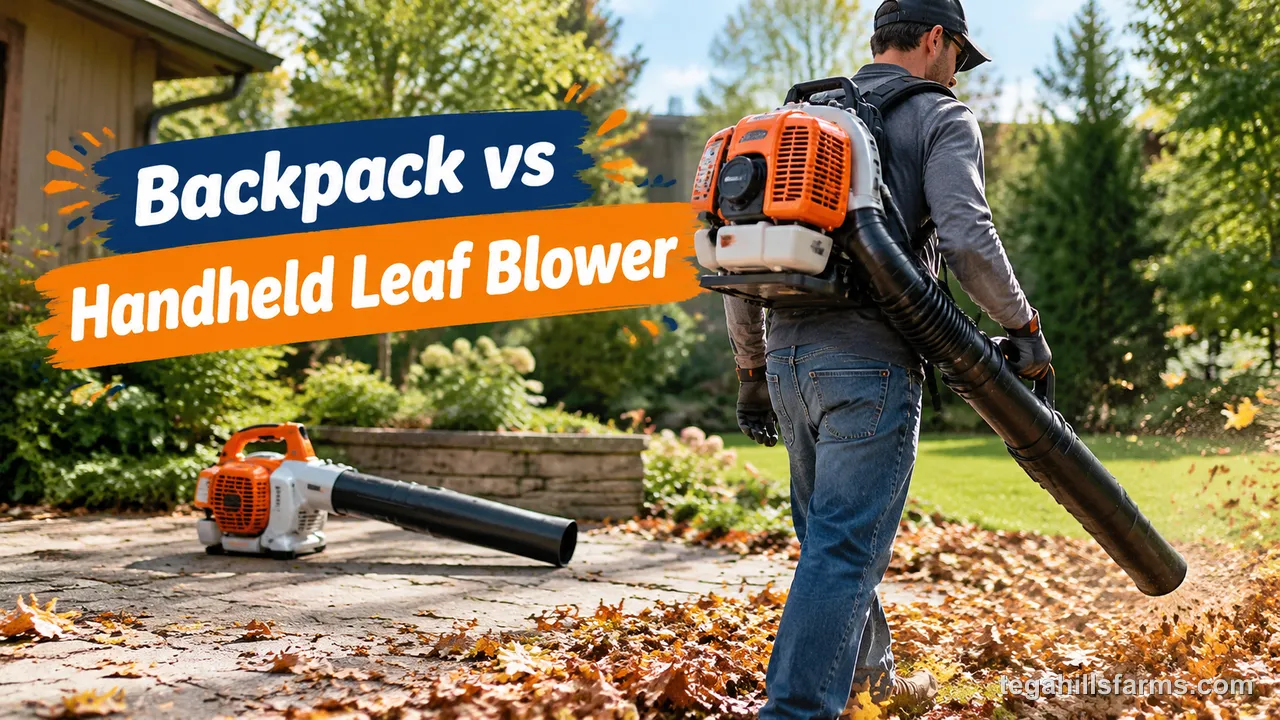
The decision rests on four things: how much air each type moves, how long it runs before you refuel or recharge, where the weight lands on your body, and how loud it is at your ear. Power source matters too, because gas, battery and corded models each change the runtime and upkeep that come with the machine.
Weight is where most buyers hesitate. A backpack unit is much heavier on the scale, yet the harness moves that load onto your back, so the heavier machine often leaves your arms in better shape at the end of a fall cleanup than the lighter one does.
When you size the machine, think about your worst week of leaf drop, not an average Saturday. The blower that clears peak leaf fall in one session is the one you will be glad you bought.
What Separates a Backpack Blower From a Handheld?
The difference comes down to where the weight rides and how the fan is built: a backpack straps to your shoulders and spins a larger centrifugal impeller, while a handheld hangs from one hand and pushes air with a smaller axial fan.
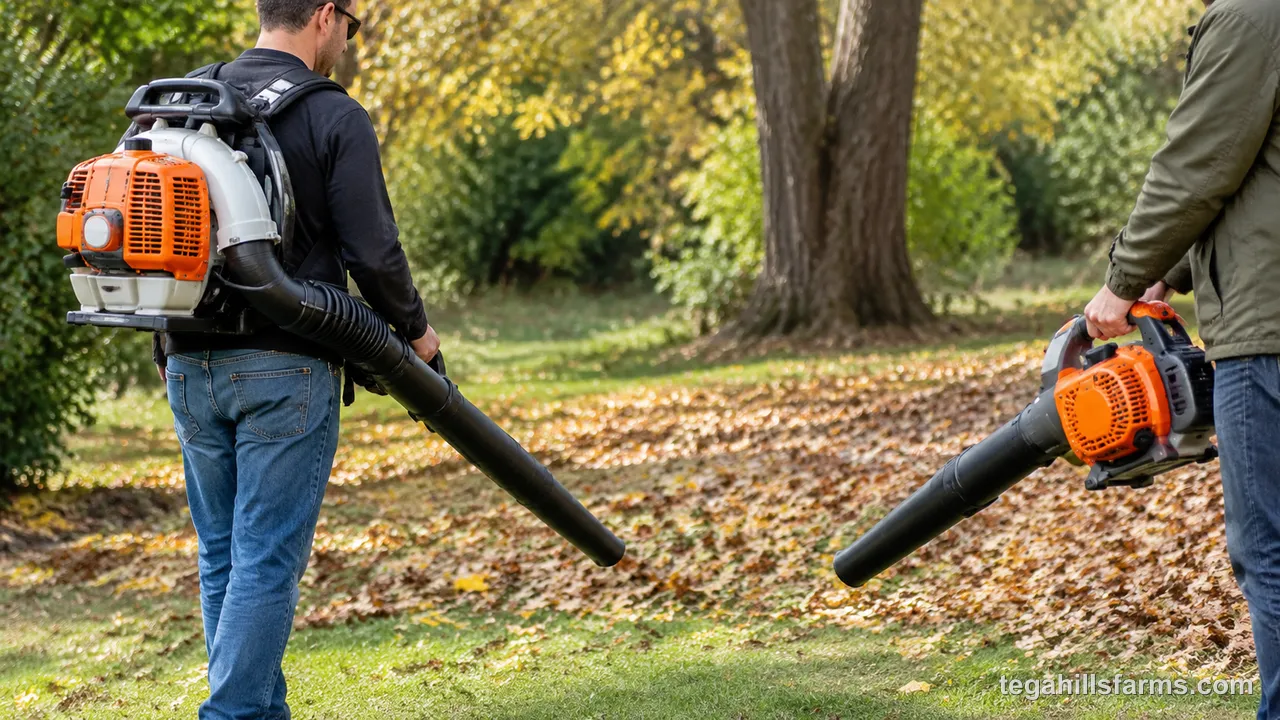
On a backpack leaf blower, the engine or motor and the fan housing sit on a frame worn with a harness. A flexible tube runs from the housing to a grip with the throttle, so your hand only steers the airstream. The centrifugal impeller flings air outward into a scroll-shaped housing, which builds pressure before the air leaves the tube.
A handheld leaf blower puts the motor, fan and tube in one body that you hold by a top handle. Its axial fan pushes air straight through like a propeller, which keeps the unit compact and light but limits how much pressure it builds.
Here is how the two types line up on the points that decide the choice:
| Criterion | Backpack | Handheld |
|---|---|---|
| Where the weight sits | Back and shoulders, on a harness | One arm and wrist |
| Fan design | Larger centrifugal impeller | Smaller axial fan |
| Airflow and air speed | Higher | Lower |
| Runtime per tank or charge | Longer | Shorter |
| Vibration at the hands | Lower | Higher |
| Noise at the operator | Louder | Quieter |
| Storage and setup | Bulkier, slower to put on | Compact, grab and go |
If you haven’t settled on a category of machine yet, our guide on how to choose a leaf blower covers every type and power source.
Which Delivers More Power: Backpack or Handheld?
Backpack blowers deliver more output, moving more air at higher speed and running longer between stops. On a driveway sweep the gap barely shows, but across a lawn buried in wet oak leaves it decides how many passes and how many breaks the job takes.
How Do Airflow and Air Speed Compare?
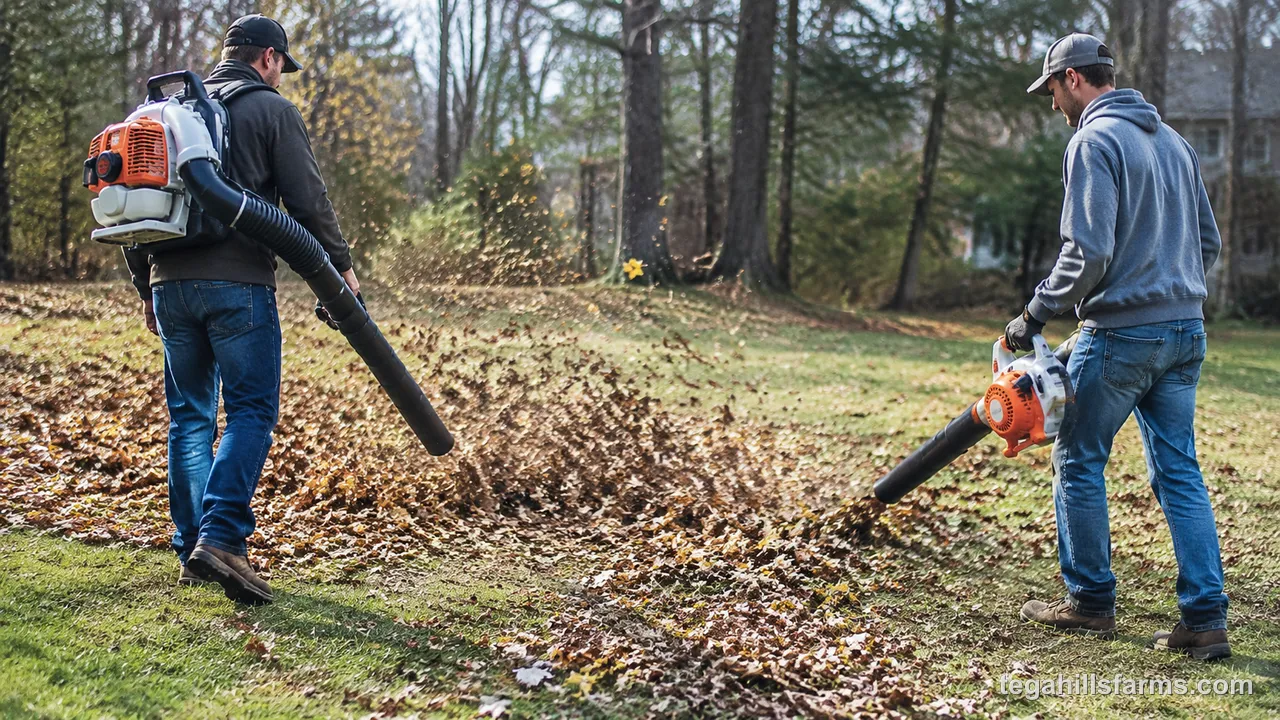
A typical backpack blower moves about 700–950 CFM at 180–210 MPH, while a typical handheld moves about 350–550 CFM at 130–160 MPH. The backpack leads on both measurements, and each one does a different job in the yard.
CFM is volume: it sets how wide a swath you can push and how big a pile moves with each pass, which is what matters on open lawn. MPH is speed: it lifts leaves stuck in grass and pulls debris out of cracks and mulch edges. A handheld’s numbers are plenty for sidewalks and patios, where leaves sit loose on a hard surface.
Brands measure these figures in different ways, at the tube end or with a particular nozzle attached, so compare numbers within one brand’s lineup rather than across brands. When you weigh cfm vs mph for a leaf blower, volume usually matters more on lawns and speed more on matted debris.
The backpack wins this criterion whenever you clear open lawn under heavy leaf cover; for hard surfaces and light debris, the handheld’s output is enough.
How Do Engine Size and Fan Design Change Output?
Gas backpack blowers typically run two-stroke engines of 50–75 cc, against 25–35 cc on gas handhelds. On the battery side, backpack units use brushless DC motors around 1,000 watts, while handheld electric motors run 600–800 watts.
The fans scale the same way. A backpack’s centrifugal impeller measures about 6.3–7.9 inches (160–200 mm) across with 9–11 curved blades, while a handheld’s axial fan measures about 4.3–5.1 inches (110–130 mm) with 5–7 blades. A larger fan moves more air per revolution, and the bigger engine turns it without bogging down.
That design holds up over a session: backpack airflow efficiency stays above 90 percent after an hour of operation, compared with about 82 percent for handhelds. The backpack wins here because its larger engine and fan keep output steady through a long cleanup, where a handheld’s smaller motor gives up more of its push.
How Long Can Each Type Run Per Tank or Charge?
A typical backpack blower runs about 60–90 minutes per tank or charge, while handhelds average about 15–25 minutes. The difference comes from capacity: a backpack frame carries a larger fuel tank or a bigger battery, and the harness makes that extra weight easy to bear.
On a short job, a handheld’s runtime never becomes a problem. On a full fall cleanup, it means stopping partway through to refuel a gas unit or swap the battery on a cordless one. Battery handheld owners who clear large areas usually end up buying a spare pack and rotating them on the charger, which adds cost and planning.
The backpack wins on runtime whenever the job outlasts a single handheld battery; for quick sweeps of a patio or driveway, the handheld finishes well before it runs dry.
Which Is More Comfortable to Use for a Long Session?
Over a long session the backpack usually leaves you less worn out, because comfort depends more on how the load reaches your body than on the number on the scale. That matters most for anyone blowing leaves for an hour or more, when small strains in the forearm and shoulder add up.
How Do Weight and Carrying Style Affect Fatigue?
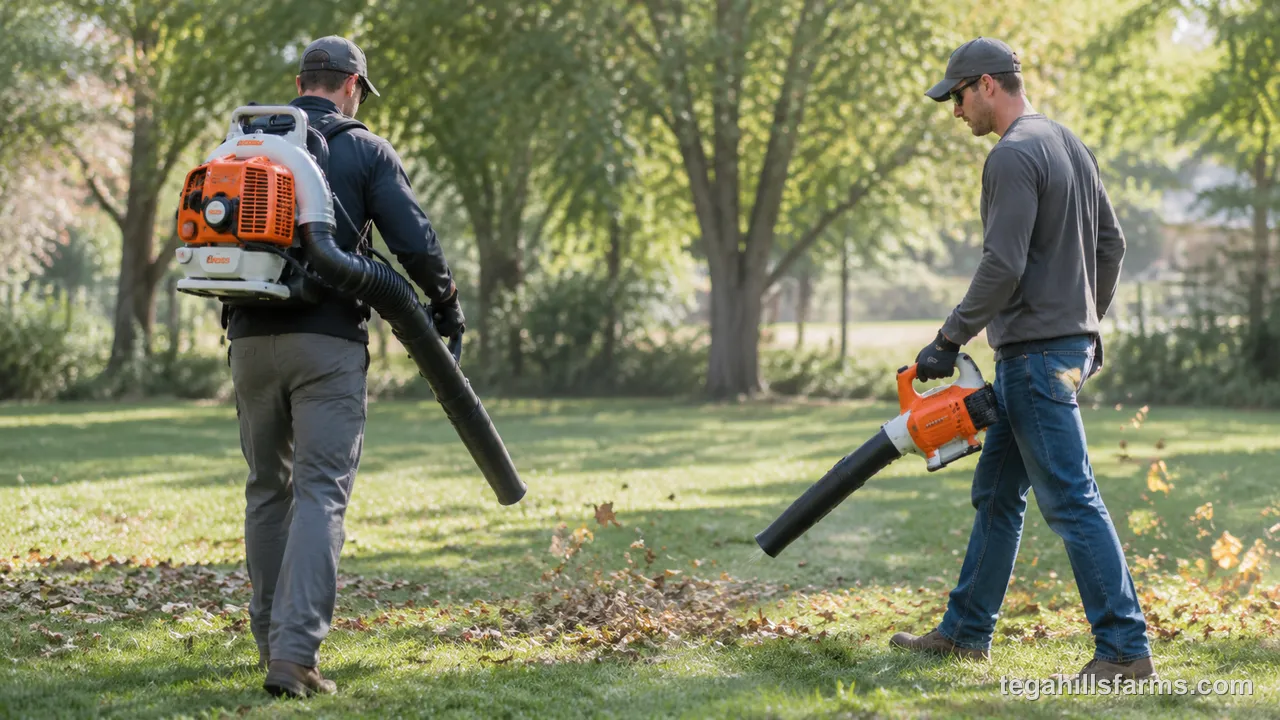
A backpack blower weighs about 20–22 lb (9–10 kg), with roughly 70 percent of that load on your back and 30 percent on your shoulders. A handheld weighs about 8.5–10 lb (3.8–4.5 kg), and 100 percent of it hangs from your arm and wrist.
The harness changes the math. Your back and core handle weight well because the load sits close to your center of gravity, while your forearm tires fast holding even a modest weight at the end of a reach. That is why the heavier machine often feels easier after the first twenty minutes or so.
Check whether a listed weight is dry or with a full tank or battery, since fuel or a large pack adds to it. Strap adjustment and how you angle the tube are part of how to use a leaf blower without wearing out your shoulders.
The backpack wins for anything longer than a quick sweep; for short jobs, the handheld’s lighter total weight is the easier carry.
Which Type Causes Less Vibration and Muscle Strain?
Backpack blowers send less than 3.5 m/s² of vibration to the hands, while handhelds run 10–12 m/s². The reason is placement: a handheld puts the engine or motor directly in the hand that holds it, so every pulse of the engine travels into your grip.
On a backpack, the engine sits on a frame mounted to the harness, and your hand holds only the tube and throttle. The vibration mostly stays on the frame instead of traveling up your arm.
Muscle effort follows the same pattern. Holding a whole unit at arm’s length works your forearm, wrist and shoulder continuously, and backpack users show 28 percent lower muscle activity than handheld users after 30 minutes of work.
The backpack wins this criterion for long sessions and for anyone prone to hand numbness or wrist pain; for a five-minute tidy, the handheld’s vibration has little time to build up.
How Loud Is Each Type for the Operator?
Backpack blowers typically run 85–95 dB(A), against 70–85 dB(A) for handhelds. The larger engine and fan push more air at higher speed, and that extra output comes with more noise from the intake, the exhaust and the airstream itself.
Decibel figures change with how far from the unit they’re measured, so a rating taken at the operator’s ear and one taken several feet away aren’t directly comparable. Either way, both ranges reach the level where earplugs or earmuffs belong on your head, and a gas backpack makes hearing protection non-negotiable.
Your neighbors hear the difference too, especially early in the morning. The handheld wins on noise, and the margin matters most on tight suburban lots where houses sit close together.
Which Type Fits Your Yard Size and Leaf Load?
Yard area and how many trees drop leaves on it decide the type, because a blower sized to the job finishes in one session without extra weight to haul around. Buying too small means repeat passes and recharge breaks; buying too big means a machine that rarely earns its bulk.
Small Lots and Light Cleanup
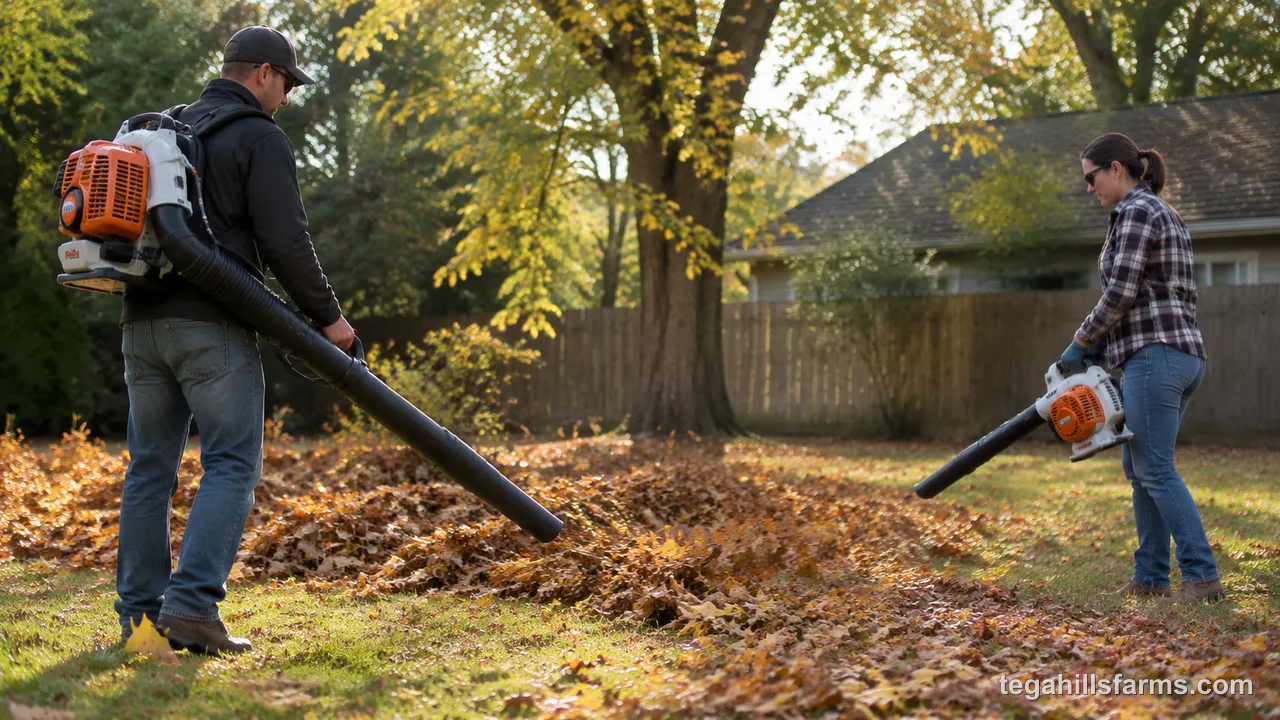
Handhelds suit spaces under about 1,100 square feet (100 m²): a patio, a driveway, front walks, a deck and a compact front yard with a tree or two. Leaves on these surfaces sit loose, so a handheld’s airflow clears them in a few passes.
Setup time matters more than raw output on a small lot. A handheld comes off a garage hook and runs in seconds, while a backpack has to be lifted, strapped on and adjusted before you start. That extra step feels out of proportion for a ten-minute job.
Storage tips the balance further. A handheld fits on a shelf or wall bracket, while a backpack frame takes up a corner of the garage or shed. A battery handheld also skips fuel mixing entirely, which suits homeowners who blow off the driveway after mowing and put the tool away.
Mid-Size Yards With Several Trees
Either type can handle the yard that falls between those small and large ranges, and the deciding factor is how you clear leaves, not just how much ground you cover.
If you blow often in short bursts, keeping up with leaf drop every weekend, a high-output handheld with a second battery works well. Each session stays short enough that runtime and arm fatigue never catch up with you.
If you wait and do one big cleanup after the leaves come down, the leaf depth changes everything. Thick, layered leaves take more airflow and more time, and a handheld turns that into extra passes and a mid-job recharge.
Your tolerance for stopping counts too. Some people don’t mind a break while a battery charges; others want the whole yard done in one go. I’d lean toward a backpack in this middle zone if you have several mature trees and prefer one long session, and a handheld if your trees are young or few and you clear as you go.
Large Properties and Heavy Leaf Fall
Backpack blowers are built for areas over about 3,200 square feet (300 m²) and sessions longer than 60 minutes, which describes most acreage and any yard under a canopy of mature hardwoods.
Airflow volume matters most over large areas. A backpack pushes a wide windrow of leaves across the lawn in one pass, so you can herd a season’s drop toward the tree line or a tarp without circling back. A handheld moves a narrower band, and the same job takes noticeably more passes.
Runtime and the harness carry the rest. A backpack covers the whole session on one tank or charge, and its weight rides on your back for the full hour. A handheld user on the same property gives up time to refueling or battery swaps, and gives up comfort as the arm and wrist tire.
The tradeoff runs against the handheld here. It can technically clear a large property, but the job takes longer and leaves you more fatigued.
How Does Gas, Battery or Corded Power Change the Choice?
Gas keeps the backpack’s output advantage intact, battery narrows the gap with less noise and upkeep, and corded power is almost entirely a handheld format.
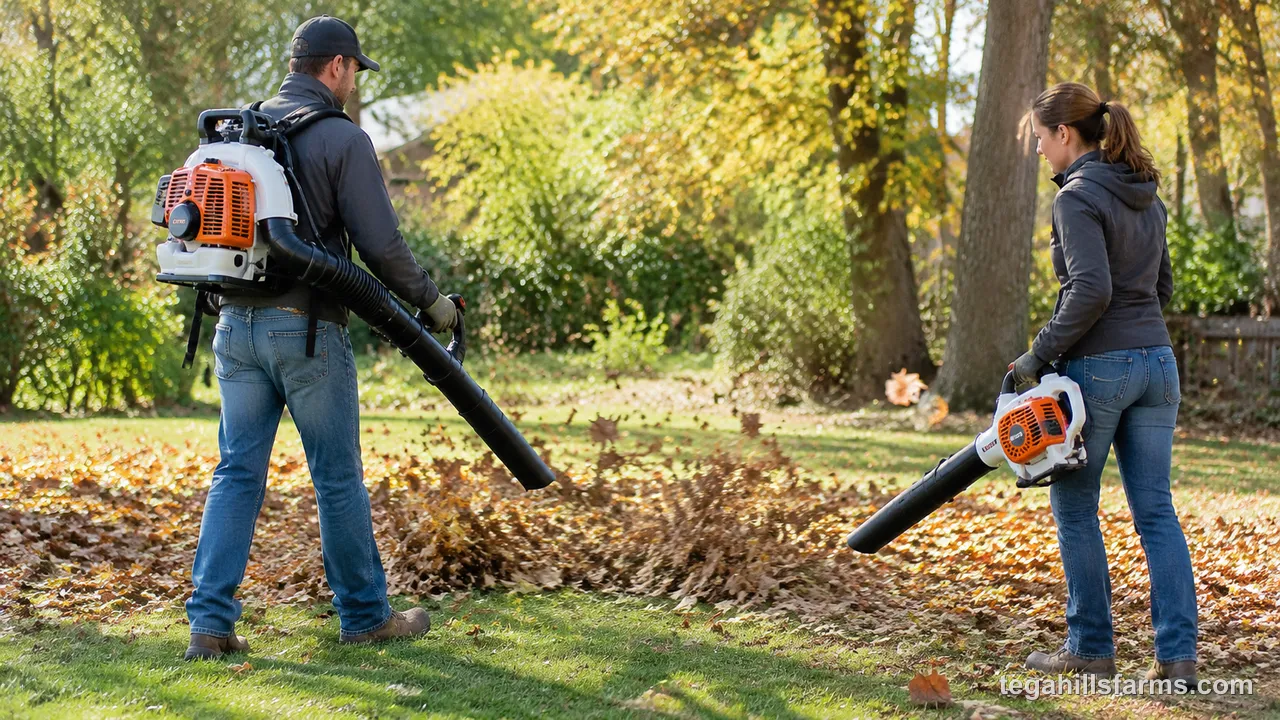
Gas backpacks are the heavy-cleanup standard because a two-stroke engine delivers the most output for its weight. The cost is upkeep: you mix oil into the fuel, change spark plugs and clean air filters. Fuel left sitting over summer gums up the carburetor, which is the usual reason a leaf blower won’t start in fall.
Battery backpacks use brushless motors and carry a large pack on the frame, so they run quieter and skip fuel entirely while keeping the harness comfort. Battery handhelds are the lightest option, but their short runtime pushes you toward spare packs. If you already own tools on one battery platform, staying with it saves money on packs.
Corded handhelds never run out of power, and they’re the lightest to hold, but the cord limits your reach. Use an outdoor-rated extension cord and plug into a GFCI outlet. The wider tradeoff between gas vs battery leaf blowers covers more than this decision, but for choosing a type, power source mostly sets how long you can work and how much maintenance you take on.
Is the Bigger Backpack Unit Actually Worth It?
Yes, for large areas, heavy leaf fall and long sessions; no, for a patio, a driveway and a small lawn, where a handheld does the work with less weight, less storage space and less money spent.
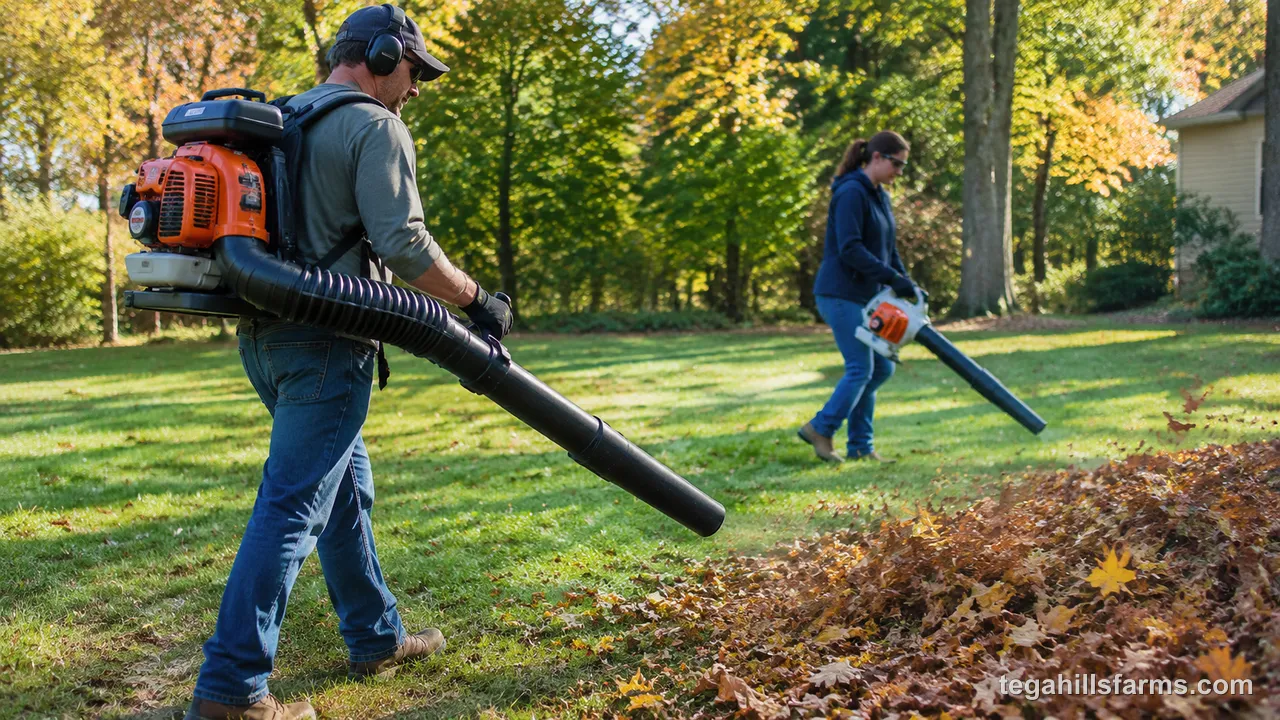
For the extra cost, a backpack buys you time and comfort. You clear the yard in one session instead of two, you skip the recharge breaks, and your arms and wrists take far less strain. Professional-grade backpacks are also built for daily commercial use, so a homeowner running one a few times a season puts relatively light wear on it.
A handheld is the smarter buy when your leaves land mostly on hard surfaces, when you tidy up often rather than all at once, or when storage is tight. Paying for backpack output you never use only adds weight and noise. I’d only step up to a backpack when you can picture the specific cleanup where a handheld would leave you stopping halfway.
Before you set a budget, it helps to know how much a leaf blower costs across both types and power sources.
How Do STIHL and ECHO Fit Into the Choice?
STIHL and ECHO both build full backpack and handheld lines, in gas and battery, so picking the right type for your yard matters more than picking between the two brands.
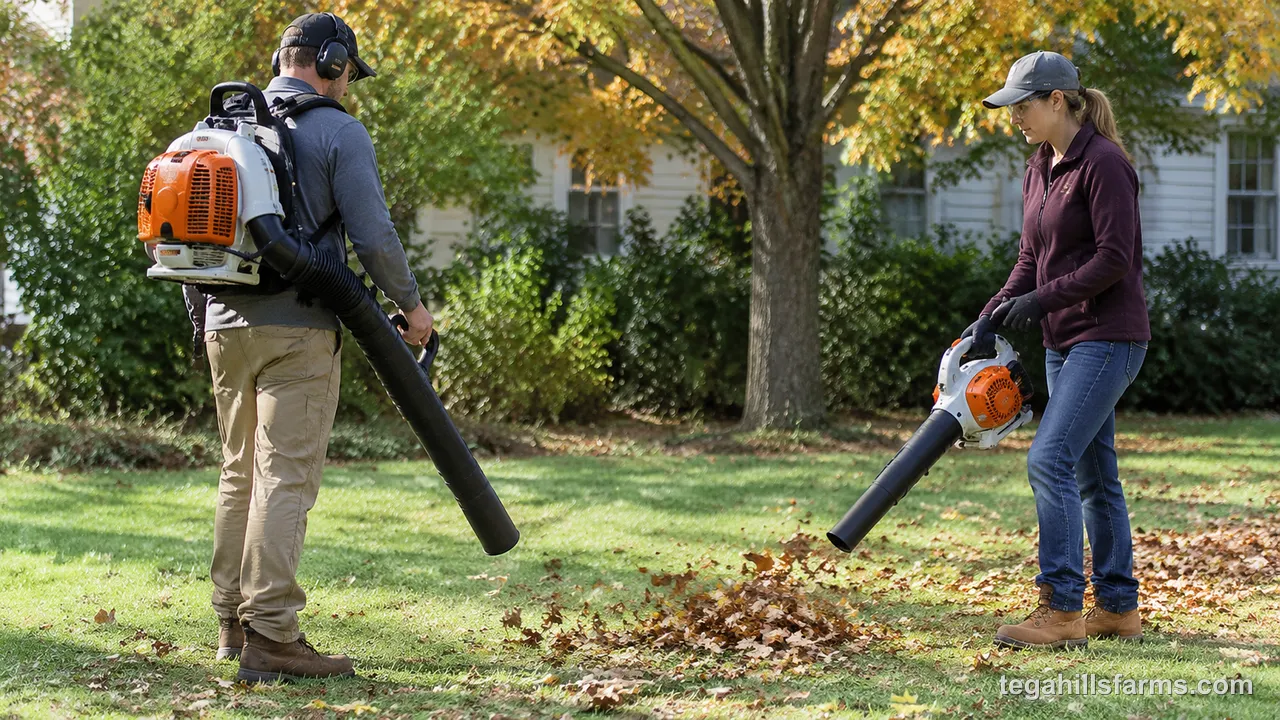
Model names help when browsing. STIHL labels its handheld blowers with a BG prefix and its backpack blowers with BR, so the type is clear before you read the description. ECHO uses a PB prefix on both handheld and backpack gas models, which means you need to check the listing for the word “backpack” or look for a harness in the photos.
Where you buy also shapes the experience. STIHL sells mainly through independent dealers, which usually means the shop that sold you the blower also sets it up and services it. ECHO is sold through dealers and big-box home centers, so it’s easier to find on a shelf. With either brand, a nearby service shop matters most for gas backpacks, which need more upkeep over the years.
Which Should You Pick? Quick Rules by Yard and Buyer
Lot size, tree count and your own body set the rule: handhelds for small, light cleanups, backpacks for big leaf loads and long sessions.
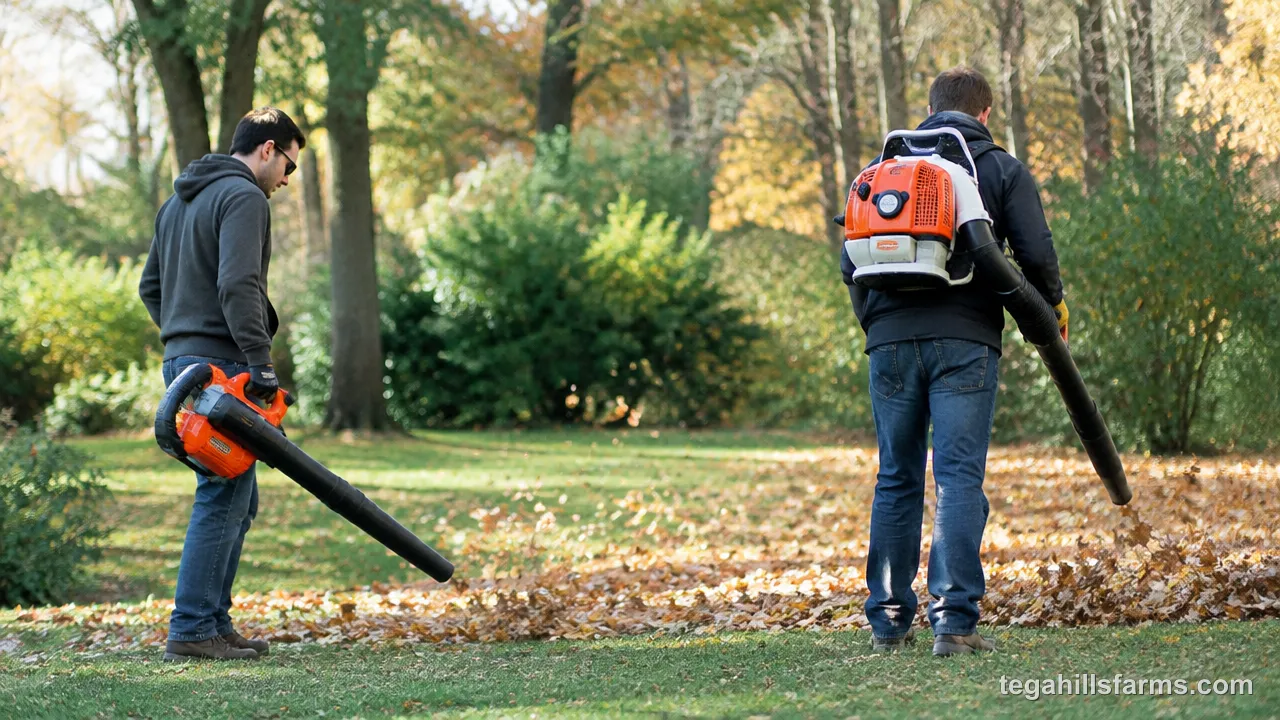
- Small-lot homeowners: choose the handheld if your cleanup is mostly a patio, driveway, walks and a compact lawn, especially when storage space is tight.
- Yards with many trees: choose the backpack if mature trees bury the lawn each fall and you prefer clearing it in one long session.
- Older buyers: choose the backpack if you can lift it onto your shoulders comfortably and work for long stretches; choose a battery handheld if lifting or pull-starting is a struggle.
- Anyone with back concerns: choose the backpack if a well-fitted harness with a hip belt feels comfortable when you try it on; choose the handheld if putting weight on your back causes pain.
Plenty of towns set quiet hours for yard equipment, and some cap blower noise at a specific decibel level or restrict gas blowers altogether. A homeowner who buys a big gas backpack in October can learn from a code notice or a neighbor’s complaint that it can’t run before a certain hour, or at all, on that street.
Do Local Noise Rules Limit Which Blower You Can Use?
Local noise rules can limit your choice, and they hit large gas backpacks hardest. Common rules include set hours when power equipment may run, decibel caps measured at a set distance or at the property line, and outright restrictions on gas-powered blowers in some communities. HOAs often add their own hours on top of city or county rules.
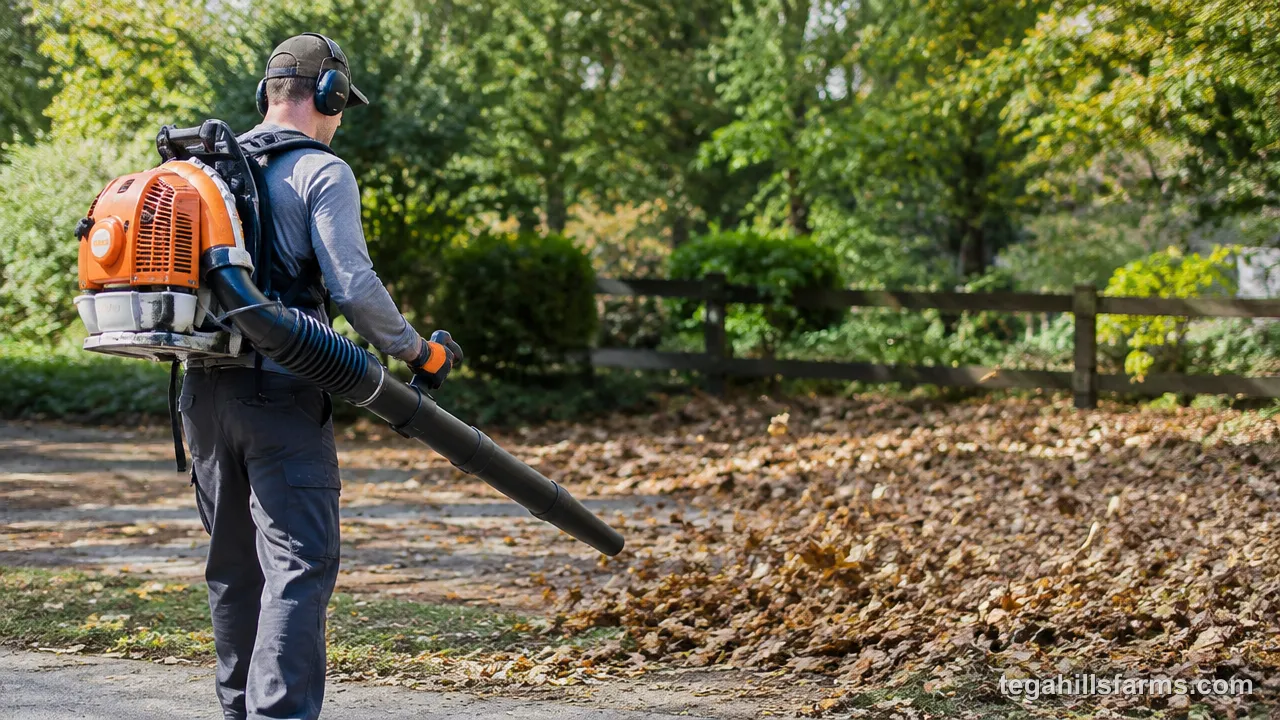
Gas backpacks get caught most often because they are the loudest blowers, and two-stroke exhaust draws added scrutiny where emissions are part of the debate. A battery handheld is the least likely to run into trouble, since it’s the quietest of the group.
Check before you buy. Search your city or county code for noise or leaf blower rules, read your HOA covenants if you have them, and look for the decibel rating printed on the blower or its box. If your area caps noise, compare that rating to the limit and note how far from the unit each figure was measured.
How Long Does Each Type Last, and When Is It Time to Replace One?
Heavy-duty backpack units are often built for longer service than consumer handhelds, because many are designed for landscaping crews who run them daily. Bigger engines working below their limit, sturdier frames and better air filtration all help them outlast a lighter machine. Knowing how long leaf blowers last in general helps you judge whether a worn unit is near the end or just needs care.
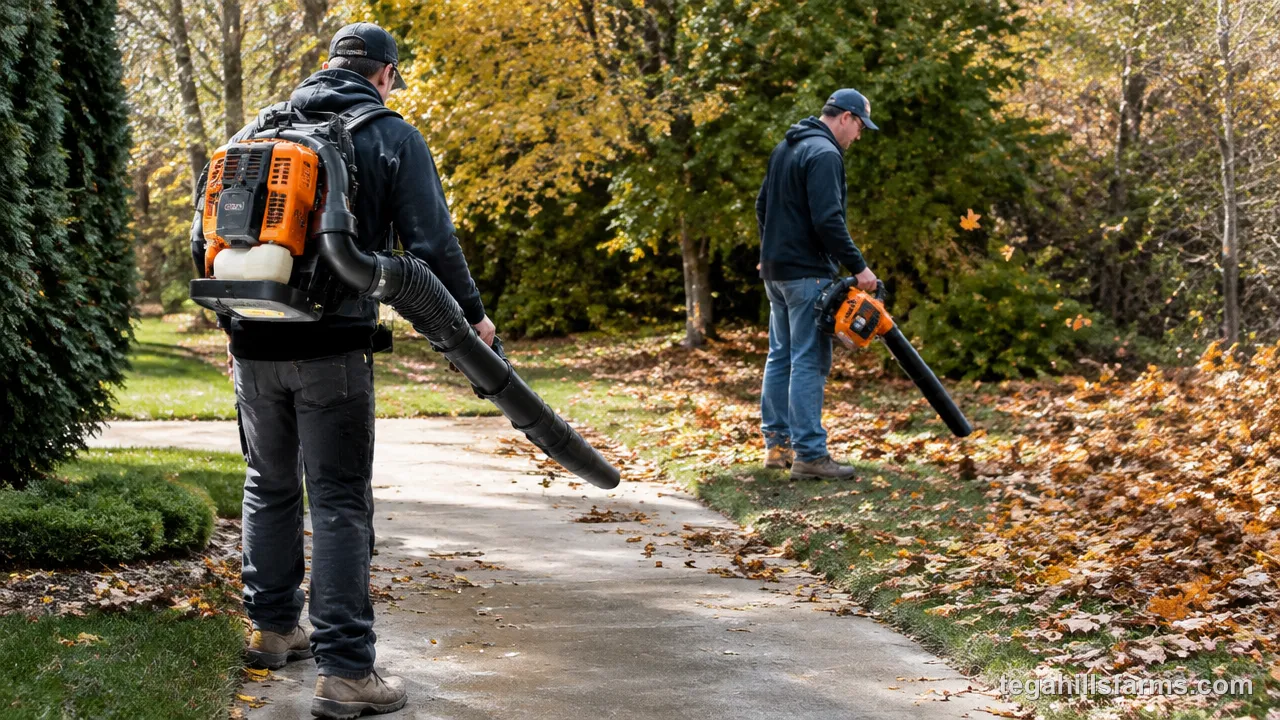
Wear shows up differently on each type. On a handheld, look for a cracked plastic housing, a loose tube connection or a battery that runs noticeably shorter than it used to. On either type, hard starting, falling power or heavy smoke from a gas engine signal trouble, and a chipped or debris-damaged impeller costs you airflow.
Gas units need clean air filters, a fresh spark plug and fuel treated with stabilizer, and they should be run dry or drained before storage. Battery units last longer when packs are stored in a cool, dry place, neither fully charged nor empty. On both, clear the intake screen and check the impeller for cracks.
Replace the blower when repair costs approach the price of a new one, or when the housing or engine itself is damaged. That point comes sooner on budget handhelds than on commercial backpacks.
Can a Backpack or Handheld Blower Move Wet, Matted Leaves?
A backpack can move wet, matted leaves; a handheld struggles with them. Wet leaves stick to each other and to the grass, so air speed has to lift the edge of the mat before airflow can carry the heavy layer away. A backpack has enough of both to peel and push a soaked layer, while a handheld often just flutters the top leaves and leaves the mat in place.
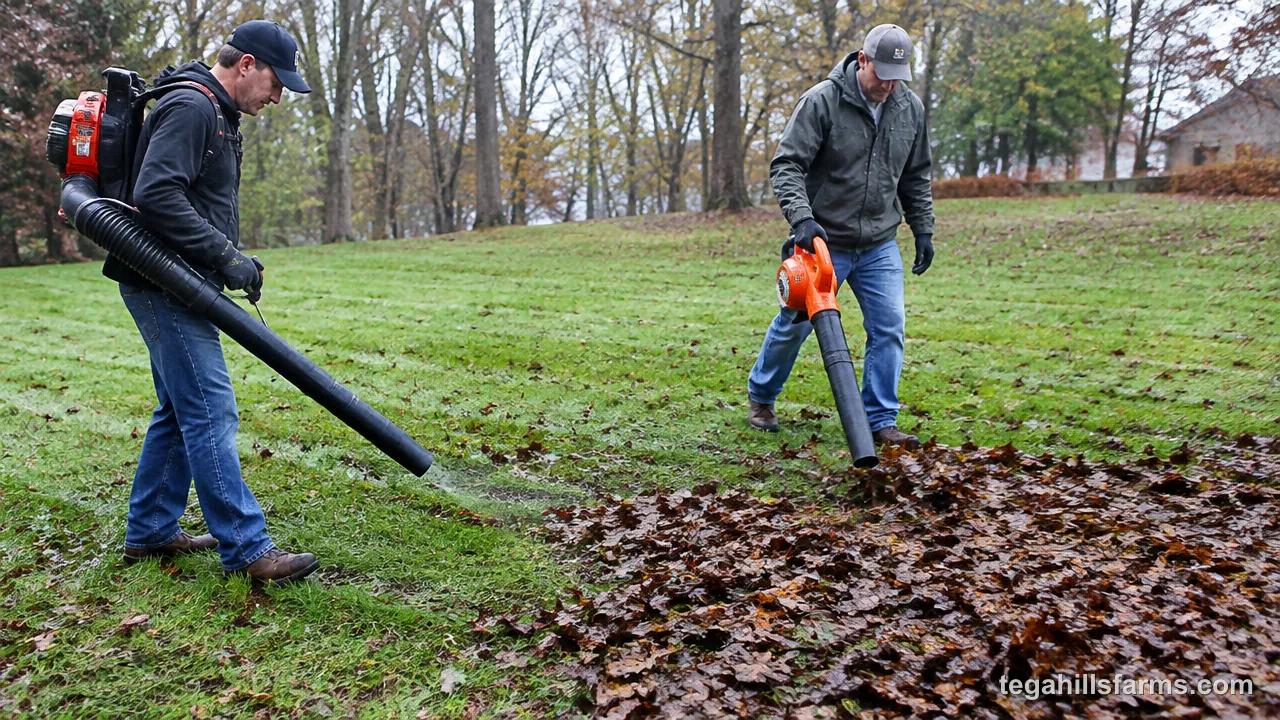
Dry leaves are a different job. They lift easily and travel far, so even a handheld clears them well on open ground.
If you use a handheld on wet leaves, set modest expectations and adjust your technique. Wait for the top layer to dry after a rain when you can. Use a flat or tapered nozzle to concentrate the airstream, hold the tube low so the air gets under the leaf edges, and work from the outside of the mat inward. For heavy, packed patches, a few minutes with a rake breaks the mat up so the blower can finish the job.
Which Type Suits Older Users or Anyone With a Bad Back?
A well-fitted backpack usually puts less strain on the body over a long session, but only if you can get it onto your back safely. Lifting the full unit to shoulder height is the hardest moment, and that motion bothers some backs more than carrying the load ever does.
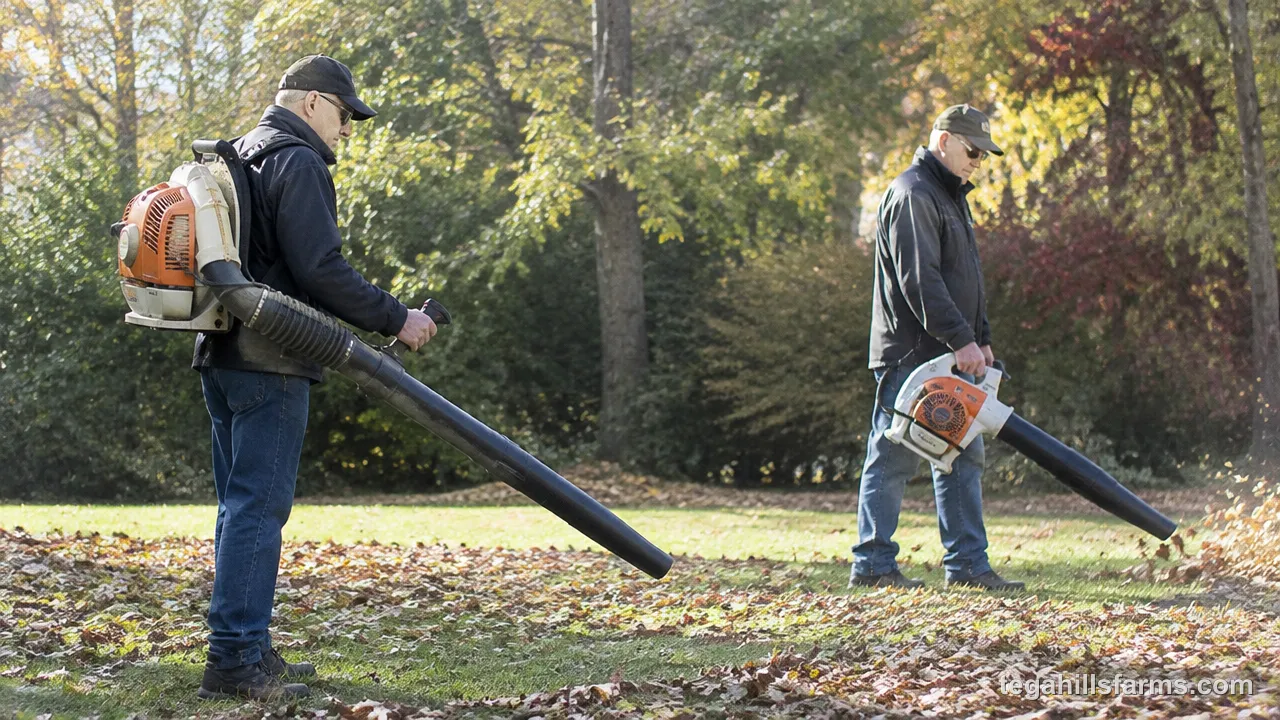
Harness fit makes the difference. Look for padded shoulder straps, a hip belt that moves weight onto your hips, and a chest strap that keeps the frame from shifting. Adjust the straps so the frame sits snug against your back rather than hanging away from it. Setting the blower on a tailgate or workbench before slipping it on spares your back the lift from the ground.
A lighter handheld is still the safer choice when your sessions are short, when lifting a heavy frame onto your shoulders causes pain, or when pull-starting a gas engine strains your shoulder. Battery handhelds start with a button.
Before committing to a backpack, try it on in the store, check how far the harness adjusts and confirm where the throttle sits on the grip.
Backpack vs Handheld Leaf Blower FAQs
Can a handheld leaf blower handle a large yard?
A handheld can clear a large yard, but it takes more passes, more time and at least one break to recharge or refuel. Your arm and wrist also carry the full weight the whole time. For occasional light cleanup on a big lot it works; for heavy fall leaf drop, a backpack finishes faster and with less strain.
Is a backpack blower overkill for a small lot?
For most small lots, yes. A patio, driveway and compact lawn don’t need backpack airflow, and the unit adds bulk, storage space and setup time to every job. The exception is a small yard under several large trees, where heavy wet leaves can still justify the extra output during peak fall.
Do battery backpack blowers make sense?
Battery backpacks make sense if you want harness comfort and strong airflow without fuel mixing, engine upkeep or gas-engine noise. They suit mid-size and larger yards well, especially in neighborhoods with noise rules. Runtime is the limit, so on very large properties a spare pack or a gas backpack may still fit better.
Do backpack blowers need more maintenance than handhelds?
Gas backpacks need about the same kinds of upkeep as gas handhelds: fuel mix, air filter, spark plug and storage prep. Their larger engines simply mean more fuel and longer service intervals per session. Battery models of either type need far less, mostly keeping the intake clear and storing packs properly.
Can I use a backpack blower on a patio or deck?
Yes, but a backpack’s strong airstream can scatter mulch, toss patio cushions and blow debris into planters or onto the house. Throttle down and angle the tube low when working close to furniture and beds. If most of your clearing happens on hard surfaces near the house, a handheld gives you finer control.
Write Your Review
No reviews yet. Be the first to share your experience!