

A flooded gas leaf blower usually comes back to life once you stop pulling the cord, open the choke, dry or replace the spark plug, and crank the engine with the plug out to push the extra fuel from the cylinder. After that, a restart that uses the primer bulb and choke only as the machine’s design calls for keeps it from flooding again.

If the engine is dry and still won’t fire, the cause sits somewhere else: the spark plug, the fuel itself, the fuel filter and lines, the carburetor, the air filter, the spark arrestor screen, or the recoil starter. Battery and corded models follow a different path entirely, because they have no fuel system or spark plug to fail.
The real risk in a no-start situation is the cycle it creates. Each extra pull or primer press adds more fuel to an engine that already has too much, and a blower that gets blamed for a dead engine can end up at a repair shop for a problem a dry plug and a few pulls would have solved.
Why Won’t a Leaf Blower Start?
Most no-start cases trace back to a flooded engine, followed by fuel, spark, air, or mechanical faults, so narrowing down the system at fault keeps you from replacing parts that were never the problem.
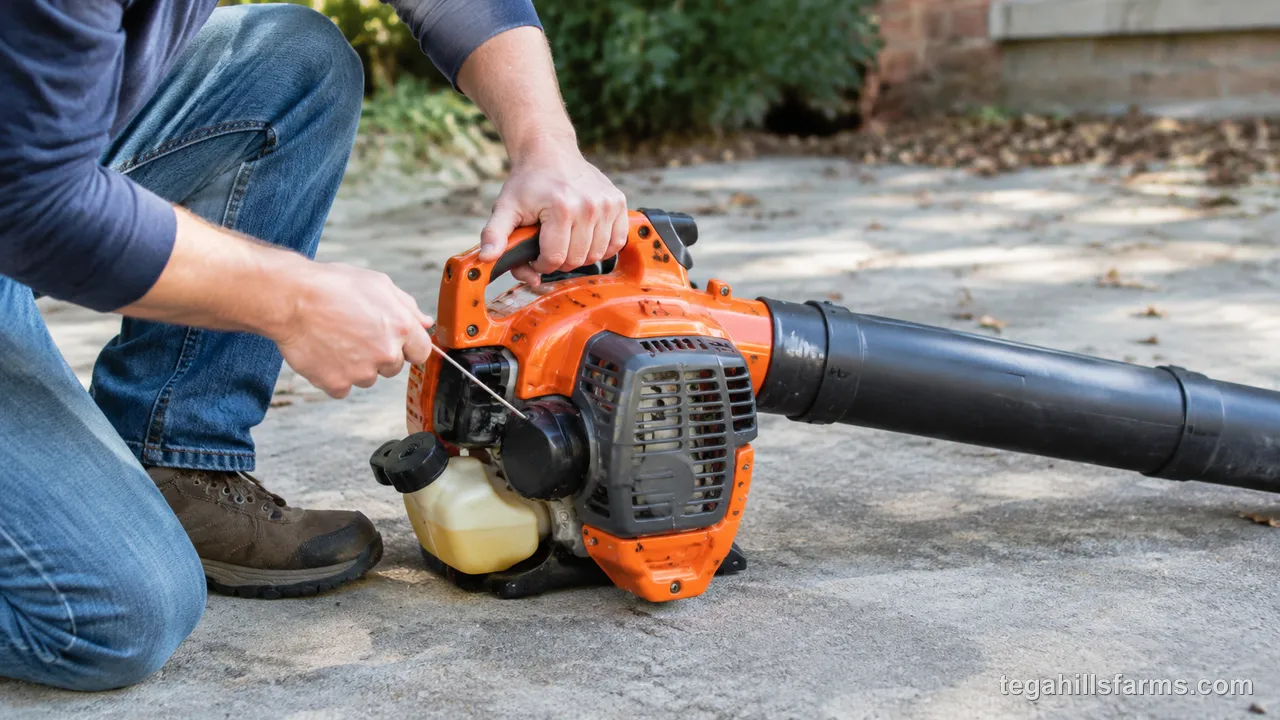
Flooding comes first because it’s the situation most owners create themselves. Heavy priming or a choke left closed puts more fuel in the cylinder than the spark can ignite, and every extra pull makes it worse.
Fuel problems come next. Gas that has sat too long, a wrong oil mix, a clogged filter, or a gummed carburetor all starve the engine or keep it from burning cleanly. Spark problems are simpler to check: a fouled, worn, or wrongly gapped plug, or a loose boot, means the fuel never ignites. Air problems include a dirty air filter on the intake side and a carbon-clogged spark arrestor screen on the exhaust side. Mechanical faults, mostly a broken recoil starter or rewind spring, stop the engine from turning over at all.
If your blower keeps giving you trouble season after season, the guide on how to choose a leaf blower can help you pick a model that fits your yard and your upkeep habits.
How Can You Tell a Leaf Blower Is Flooded?
A strong raw-gas smell, a spark plug wet with fuel, and a cord that pulls freely while the engine only coughs all point to too much fuel in the cylinder.
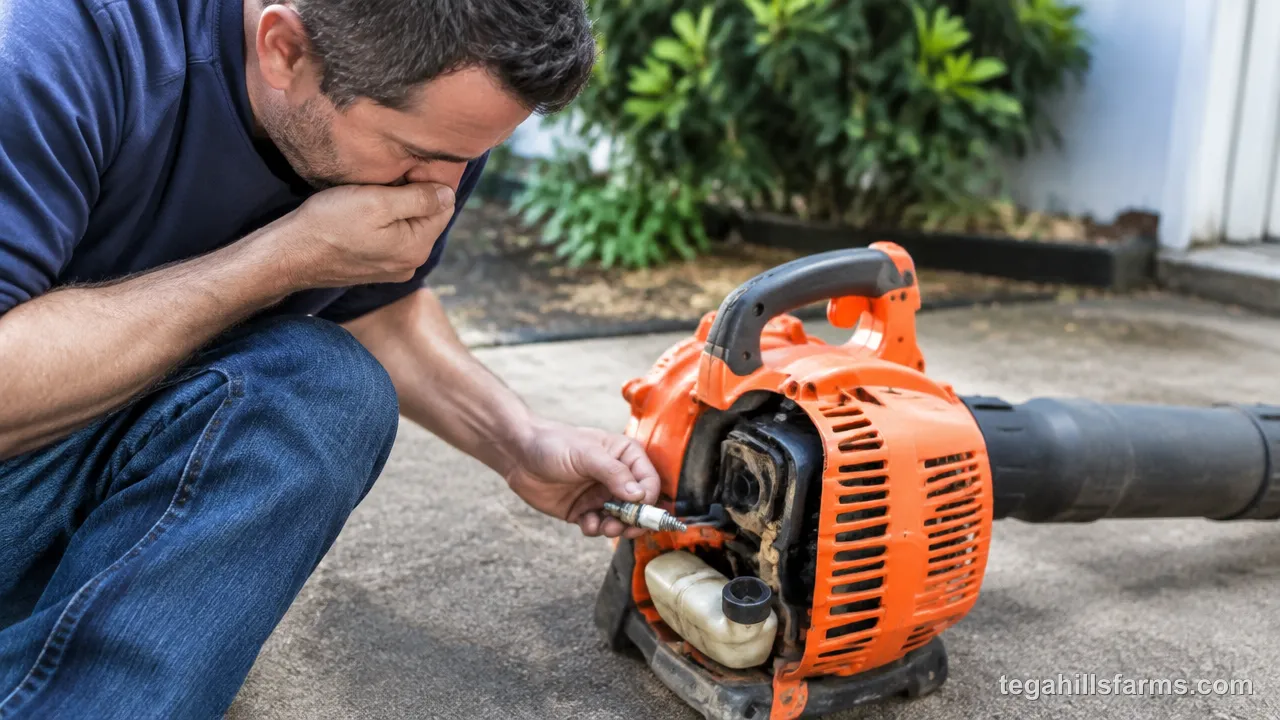
The history of the last few minutes usually confirms it. If you pressed the primer bulb many times, left the choke closed through several pulls, or kept choking a warm engine, the cylinder almost certainly holds more fuel than it can burn. A coughing sound matters here because it shows the spark is firing, just not into a mixture that can catch.
The reason is the fuel-to-air balance. A gas engine needs a mixture with enough air for the fuel to ignite and burn; when liquid fuel pools in the cylinder and soaks the plug, the spark either can’t jump across the wet electrode or can’t light a mixture that rich. The engine may sputter once and stall, or do nothing at all. If the plug comes out dry and you smell no fuel, flooding is unlikely, and the spark and fuel checks further down are the better place to start.
How Do You Clear a Flooded Leaf Blower Step by Step?
Clearing works by removing the excess fuel and restoring airflow to the cylinder, and doing it in order keeps you from soaking the plug again on the next pull.
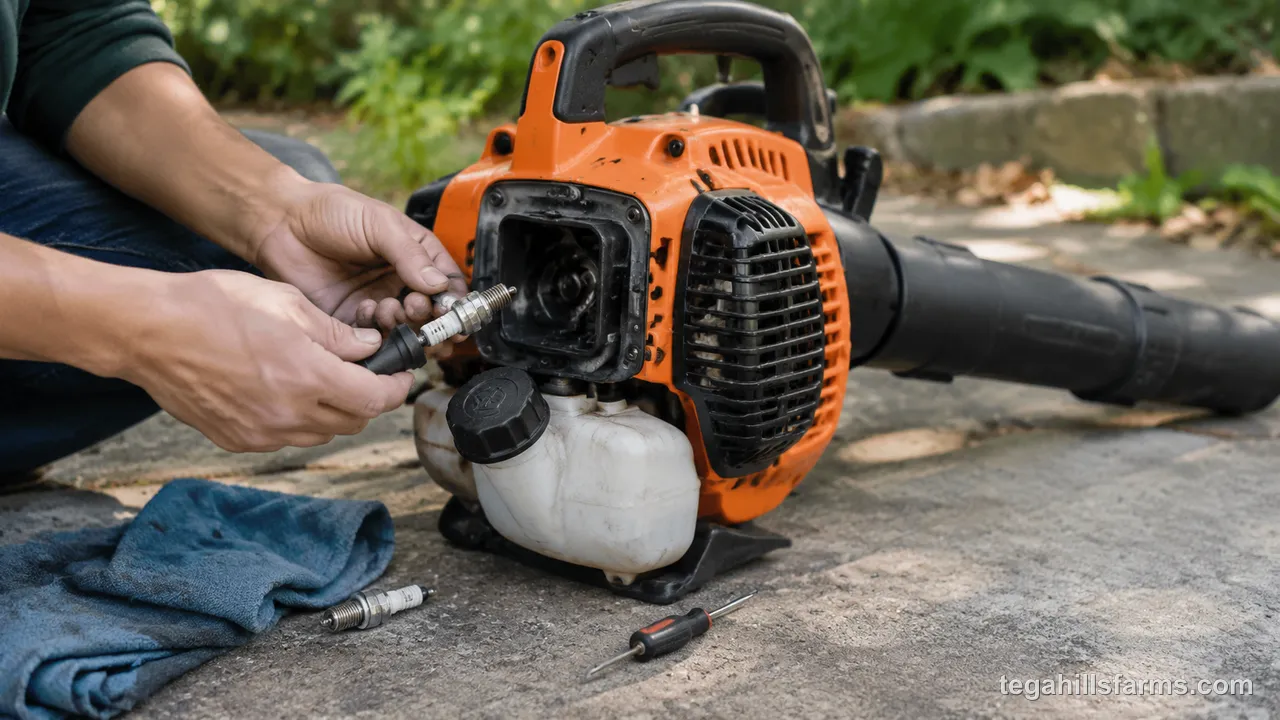
Each step depends on the one before it. Rushing to restart before the cylinder is clear simply repeats the flood, which is why most of the work happens with the engine switched off and cool.
Let the Engine Rest and Reset the Choke
Stop pulling the cord, switch the blower off, and move the choke to the open (run) position. Then leave the machine alone so the extra fuel in the cylinder and on the plug can evaporate.
Waiting works because gasoline evaporates readily, and an open choke lets air move through the intake instead of trapping a rich mixture inside. More pulling does the opposite: each pull with the choke closed draws in more fuel, pushing the engine deeper into a flooded state and wearing out your arm in the process.
Do the rest of the job on a cool, switched-off engine. A hot muffler and fuel vapor near the plug hole are a bad combination, and the stop switch in the off position keeps the engine from firing unexpectedly while you work. Set the blower on a flat, stable surface outdoors, away from pilot lights, cigarettes, or anything else that can ignite fuel vapor.
Dry Out or Replace the Spark Plug
Pull the boot off the plug, remove the plug with a spark plug socket, and look at the tip. A flooded plug looks wet and smells of gas, sometimes with dark, oily residue on the electrode.
A wet plug can’t spark properly because liquid fuel bridges or cools the gap, so the current either shorts out or produces a spark too weak to light the mixture. Wipe the plug with a clean, dry rag and let it air dry, or swap in a fresh plug of the type listed in your owner’s manual. A new plug is the more reliable choice if the old one is also sooty or the electrode looks worn.
When you reinstall the plug, start it by hand and turn it several times before using the socket. If it binds early, back it out and try again, because forcing a cross-threaded plug can damage the threads in the cylinder head. Snug it to the tightness your manual specifies, then press the boot on until you feel it seat firmly over the plug’s terminal.
Clear the Cylinder With the Plug Out
Before you put the plug back, pull the starter rope several times with the plug removed and the throttle held fully open. With nothing sealing the cylinder, each stroke of the piston pushes trapped fuel and vapor out through the plug hole.
That opening is where the risk sits. Fuel can spray out in a fine mist, so point the plug hole away from your face and keep the blower well clear of any flame, spark, or hot surface. Keep the plug and boot away from the hole as well; a stray spark near fuel mist is exactly what you’re trying to avoid. Wearing safety glasses is a good habit for this step.
Pay attention to what comes out. At first, you may see a spray of fuel or feel dampness around the hole. As you keep pulling, the spray stops and the air coming out smells less of raw gas. Once the plug hole stays dry after a few pulls, the cylinder is clear, and you can reinstall the plug and boot.
Restart Without Flooding It Again
Reinstall the plug, set the stop switch to run, and follow your machine’s cold-start or warm-start sequence exactly, using the primer bulb and choke only as far as the design calls for. Move the choke to the open position as soon as the engine fires or sputters.
The difference between a cold and a warm start is the key. A cold engine needs extra fuel and less air, which is what the primer bulb and closed choke provide. A warm engine, or one you just cleared, needs little or none of that help, so restarting a recently flooded blower often works best with the choke open and no extra priming. Overdoing either one is the usual cause of repeat flooding, because the engine ends up right back where it started.
The owner’s manual lists the exact number of primer presses and choke positions for your model, and it’s worth keeping nearby. Once the engine runs smoothly, the routine for how to use a leaf blower safely through a full yard session takes over from there.
How Do You Check Whether the Spark Plug Is the Problem?
A quick test tells you whether the plug produces a strong spark, and since fuel and air can’t burn without ignition, it’s the fastest component to rule in or out on a gas engine.
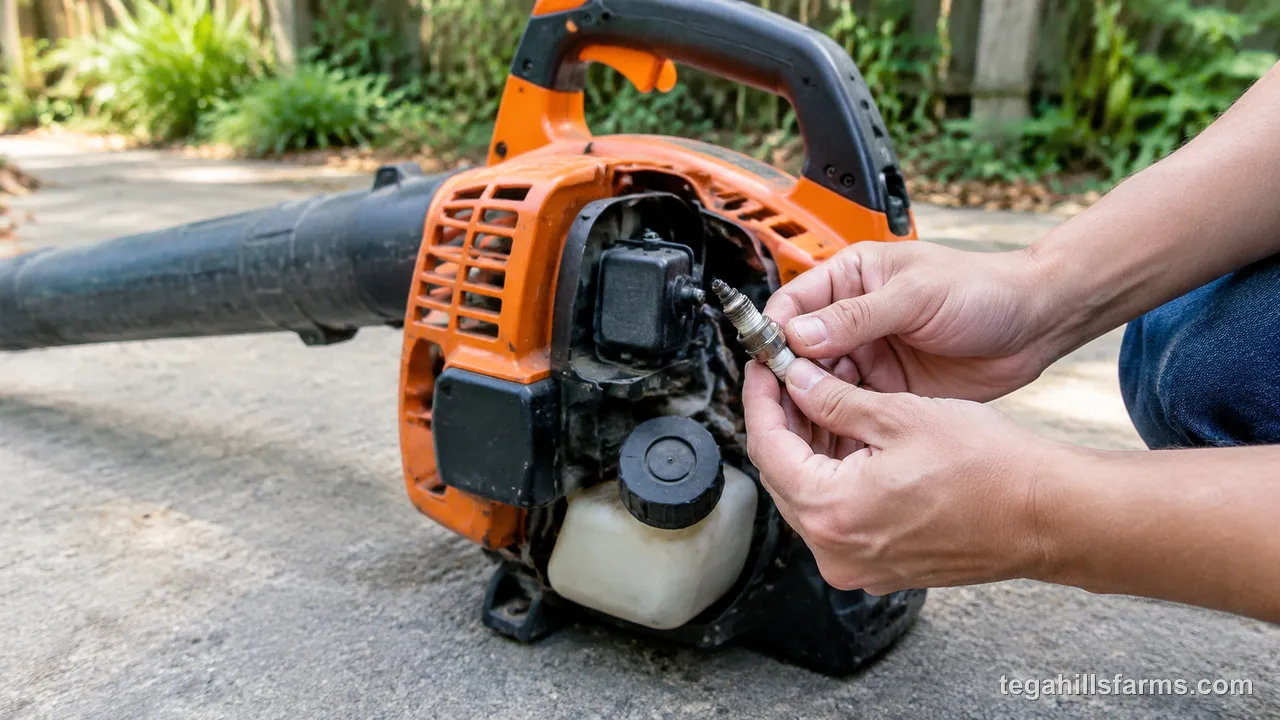
The plug sits within easy reach on nearly every blower, which makes it the logical first stop after flooding. Its condition also tells you a good deal about how the engine has been running.
Confirm the Plug Is Sparking
A spark plug tester gives you the clearest answer: connect it between the plug boot and the plug, pull the starter rope, and watch the tester’s window for a flash. Without a tester, remove the plug, reattach the boot, and hold the plug’s metal threads against bare metal on the engine while someone pulls the rope.
Handle that second method carefully. Hold the boot with insulated pliers rather than your fingers, keep the plug hole and any spilled fuel away from the test, and do it outdoors with the switch in the run position.
A healthy spark is bright, crisp, and bluish and appears with every pull. A weak, thin, orange spark, or none at all, points to a problem. Try a new plug first, since that’s the cheapest fix. If a new plug still won’t spark, check that the boot fits tightly and that the wire isn’t cracked, then look at the stop switch and its wiring; a fault beyond that usually involves the ignition coil.
Read the Plug’s Condition and Gap
The tip of a used plug works like a report card for the engine. A dry plug with a light tan or gray insulator means the engine has been burning fuel normally. A black, dry, sooty plug points to rich running, often from a choke left closed too long or a dirty air filter. A wet, oily plug on a two-stroke usually means too much oil in the fuel mix or a recent flood.
Fouling matters because carbon and oil deposits give the spark an easier path to ground than across the gap, so the spark weakens or disappears. Cleaning can buy time, but a heavily fouled plug is better replaced, and the cause, usually the fuel mix or the air supply, still needs fixing.
The gap between the center electrode and the ground electrode also has to be right. Measure it with a feeler gauge and adjust it to the specification printed in your owner’s manual, since a gap that’s too wide or too narrow weakens the spark.
How Do Fuel Problems Stop a Leaf Blower From Starting?
Fuel trouble prevents a start by starving the engine of fuel or feeding it fuel that can’t burn cleanly, and the causes run from the most common, old gas, to the least common, a clogged carburetor.
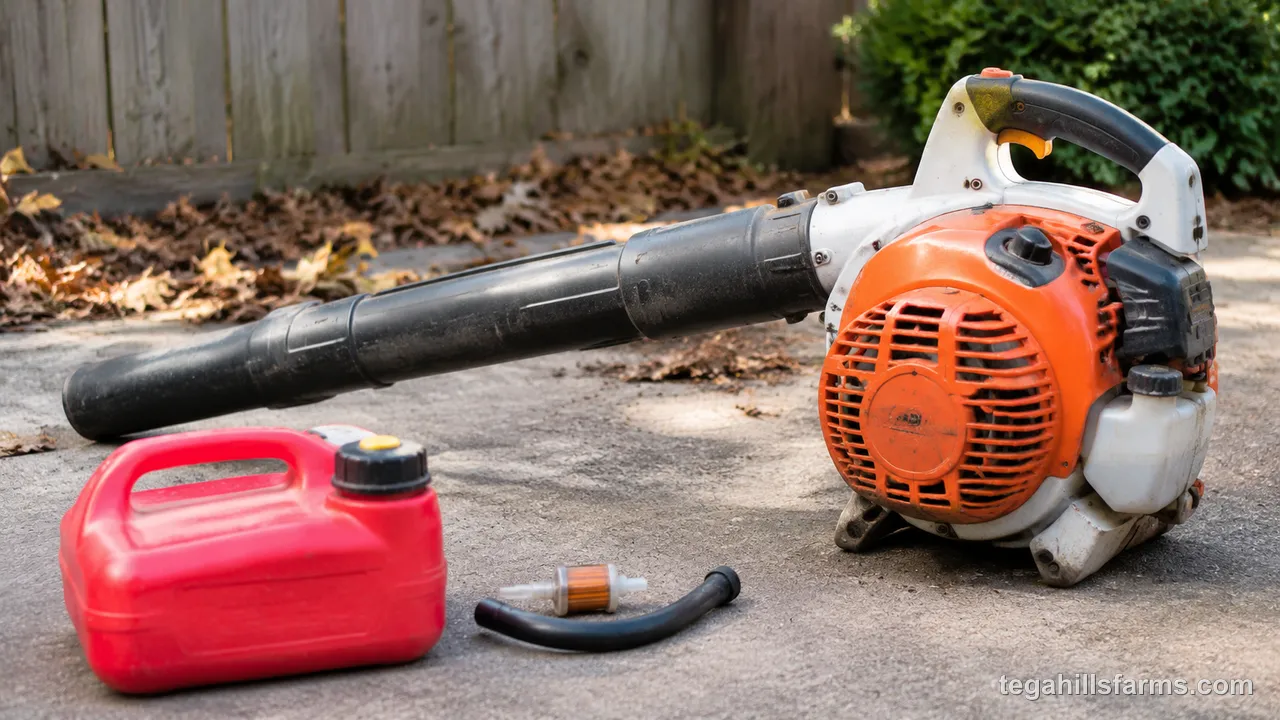
That ranking matters for your time. Checking the fuel in the tank costs nothing, while pulling the carburetor apart is a real job, so working from the tank toward the engine finds the cheap fix first.
Stale Fuel and the Wrong Oil Mix
Gasoline breaks down while it sits. Fuel left in the tank for 30 days or more can start to degrade enough to cause stalling or hard starts, and gas left for 6 months or more can turn into a thick sludge. As fuel ages, the parts of it that ignite most easily evaporate, so the remainder resists lighting and leaves deposits behind.
Two-stroke blowers add a second variable because they burn gas and oil mixed together. A common two-stroke ratio is 50 parts gas to 1 part oil, which works out to about 2.6 ounces of oil per gallon of gas, but the ratio printed on your blower or in its manual is the figure to follow. Too much oil fouls the plug, causes heavy smoke, and makes starts harder; too little oil starves the engine of lubrication and risks internal damage.
If the fuel is old or you’re unsure of the mix, drain the tank completely and refill it with fresh gas mixed to the correct ratio.
A Clogged Fuel Filter or Cracked Fuel Line
On most handheld blowers, the fuel filter sits inside the tank as a small weighted pickup on the end of the fuel line. When debris or old-fuel residue clogs it, fuel can’t reach the carburetor fast enough, and the engine either won’t start or dies soon after it fires.
Look inside the tank with a flashlight for dirt, flakes, or cloudy fuel, then fish the filter out with a hooked wire to inspect it. The fuel lines deserve the same attention: rubber or plastic tubing hardens and cracks with age, and a cracked line can draw in air instead of fuel or leak.
These parts are worth replacing rather than cleaning. A filter that has absorbed varnish rarely flows well again, and a hardened line will keep cracking. Both are inexpensive and quick to swap, which makes them an easy fix to rule out before moving to the carburetor.
A Gummed-Up Carburetor
Old fuel leaves sticky deposits as it evaporates, and the carburetor has tiny passages and jets that clog easily. When those passages narrow, the carburetor can’t deliver a steady stream of fuel, and the classic clue is an engine that fires briefly and then dies, or one that only runs with the choke closed.
Light buildup can sometimes be cleared by spraying carburetor cleaner through the passages, or by rebuilding the carburetor with a kit that replaces its gaskets and diaphragms. When deposits have hardened deep inside, or the diaphragm has stiffened, a replacement carburetor is often the more practical fix on a small engine.
This is the point where a shop becomes a reasonable call. Carburetors on many blowers have adjustment screws that are set at the factory and easy to get wrong, and a carburetor that’s cleaned but poorly adjusted can run as badly as a dirty one.
Could Airflow, Exhaust, or the Starter Be Blocking the Start?
Yes, because the engine needs clean air flowing in, exhaust flowing out, and a starter that actually turns it over, and any one of those failing can stop a start after fuel and spark check out.
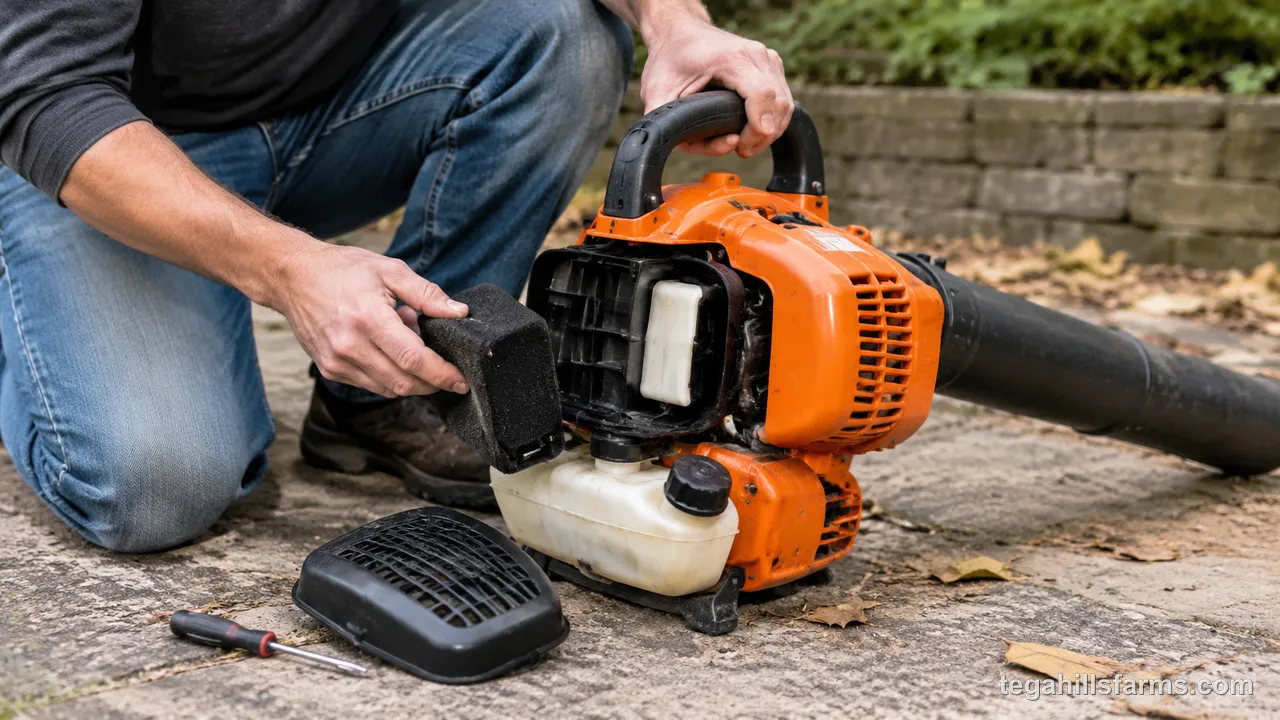
These causes are easy to miss because they don’t look dramatic. A clogged screen or a slipping starter can mimic a fuel or spark problem, so they’re worth checking before the carburetor comes apart.
Dirty Air Filter and Clogged Spark Arrestor
A restricted air filter chokes the engine from the intake side, and a clogged spark arrestor screen chokes it from the exhaust side. Either one can leave the engine unable to start or able to run only briefly.
The air filter sits under a cover near the carburetor. A filter caked with dust, grass, or oil restricts airflow, which makes the mixture too rich and fouls the plug. Foam filters can usually be washed with mild soap and water and dried fully before going back in; felt or paper filters that are torn, oily, or heavily caked should be replaced.
The spark arrestor is a small mesh screen inside or on the muffler that stops sparks from leaving the exhaust. Carbon from an oil-heavy mix or long idling builds up on it until exhaust can’t escape. Remove it and clean it with a small wire brush; replace it if the mesh is torn or won’t come clean. Don’t run the blower without it.
A Failed Recoil Starter or Rewind Spring
A rope that won’t retract, feels slack, or doesn’t turn the engine over points to the starter mechanism rather than the engine itself.
When the rope pulls out but won’t wind back in, the rewind spring has usually broken or come loose from its housing. A rope that pulls with no resistance and doesn’t spin the engine suggests the starter’s pawls aren’t engaging the flywheel, either from wear or a broken part. In both cases, the engine may be perfectly healthy; it just isn’t being cranked.
A good test is to feel for compression. On a working starter, each pull meets a rhythmic resistance as the piston rises. If you feel that and the engine still won’t fire, the starter is fine and the problem lies with fuel, spark, or air. Recoil starter assemblies are often replaced as a single unit, which is easier than rewinding a spring.
Why Won’t an Electric or Battery Leaf Blower Start?
Battery and corded blowers fail through power supply and switch faults rather than fuel or spark problems, since they have no plug, choke, or carburetor to flood or foul.
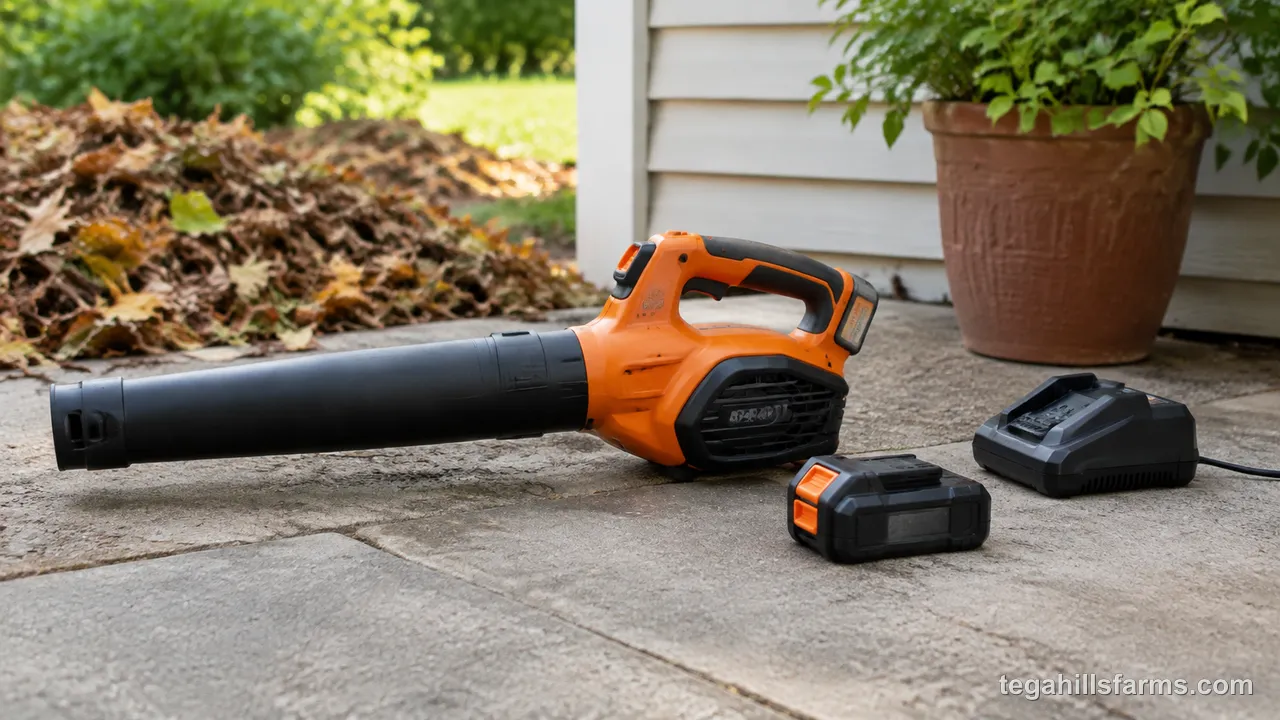
That makes troubleshooting shorter and more predictable, and it’s a big part of the upkeep gap when you compare gas vs battery leaf blowers. The two electric types still fail in different places, though: a battery model’s problems start with the pack, and a corded model’s start at the wall.
Battery Models: Pack, Contacts, and Safety Switch
A battery blower can’t flood and has no spark plug, so the checks focus on getting power from the pack to the motor. Start with the pack itself: remove it and reseat it until it clicks firmly into place, because a pack that isn’t fully seated won’t make contact.
Next, check the charge. Use the pack’s fuel gauge or the charger’s indicator, and charge the pack fully if it’s low. Cold matters too, since a pack stored in a freezing garage may refuse to deliver power until it warms to room temperature indoors.
Then look at the contacts on the pack and the tool. Dirt, grass debris, or corrosion on the terminals can block the connection; clean them with a dry cloth. Finally, check the safety lockout or trigger lock. Many battery blowers won’t run until a lock button or switch is engaged along with the trigger, and missing that step looks exactly like a dead tool.
Corded Models: Outlet, Extension Cord, and Switch
Unplug the blower before inspecting anything, then work from the wall outlet toward the machine. Plug a lamp or another small tool into the outlet to confirm it has power. Outdoor outlets are often GFCI-protected, so press the reset button on the outlet, or the GFCI outlet upstream of it, and check the breaker panel for a tripped breaker.
The extension cord comes next. Look along its full length for cuts, crushed spots, or damaged plug prongs, and replace any cord with exposed wires. An undersized cord is a quieter culprit: a cord with too thin a gauge for its length can’t deliver enough current, so check that its gauge and length match what your owner’s manual recommends.
If power reaches the blower and it still won’t run, the trigger or switch has likely failed. That’s a repair for a service center or a replacement part from the manufacturer.
Does the Fix Change by Engine Type or Brand?
The core checks stay the same on every gas blower, while fuel handling and control layout vary with engine design and brand, so the owner’s manual settles the exact procedure.
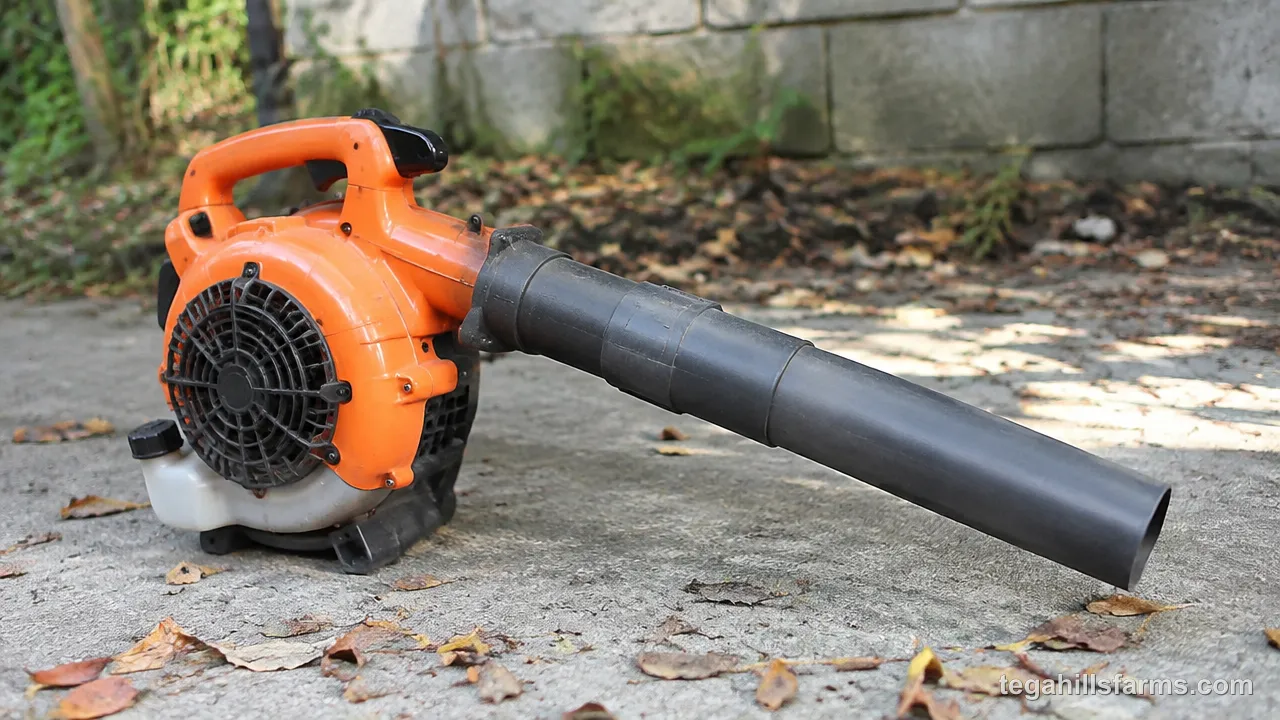
Flooding, spark, fuel quality, and airflow follow the same logic on any gas engine. What changes is which fuel problem is most likely and where the controls you need sit on the machine.
Two-Stroke vs Four-Cycle Engines
A two-stroke blower burns gas and oil mixed together in the tank, while a four-cycle blower runs on straight gasoline and keeps its oil separate in the crankcase. That single difference shifts where you look first when the engine won’t start.
On a two-stroke, a wrong mix is a prime suspect. Too much oil fouls the plug and smothers the spark, and putting straight gas in a two-stroke risks serious internal damage, so drain it before trying to start the engine. A four-cycle doesn’t have that mixing risk, but it does need the correct oil level in the crankcase, and the dipstick check belongs on the list before you pull the rope.
Fuel quality matters equally for both. Stale gas gums up a four-cycle carburetor just as readily as a two-stroke one, so the fuel checks apply to either engine type.
Stihl, Husqvarna, and Craftsman Starting Quirks
Stihl, Husqvarna, and Craftsman all build gas blowers with the same basic controls, a primer bulb, a choke, and a stop switch, but the layout and starting sequence differ between brands and between models within a brand. Some models combine the choke and stop functions into one lever, while others use separate controls, so the right setting for a cold start on one blower may flood another.
The manual for your exact model answers the questions that matter most: how many primer presses a cold start needs, where the choke goes for a cold versus a warm start, and where the plug and air filter sit.
That last point varies most with design. The weighing of backpack vs handheld leaf blowers usually centers on power and comfort, but access differs too: a backpack unit’s engine sits within a frame, so reaching the plug or filter may mean removing a cover, while a handheld’s engine is usually more exposed.
A brand-new blower that has never run often refuses to start simply because no fuel has made it past the empty lines and into the carburetor yet. Treating that silence as a dead engine leads straight to a return trip to the store or a service bill for a machine that only needed priming.
Why Won’t a New Leaf Blower Start Even With Spark and Fuel?
A new blower that has spark and fuel in the tank usually just hasn’t been primed, because the fuel lines and carburetor start out empty and the first few primer presses only fill them. Pressing the primer bulb until you see fuel in it, then following the cold-start sequence, typically solves it.
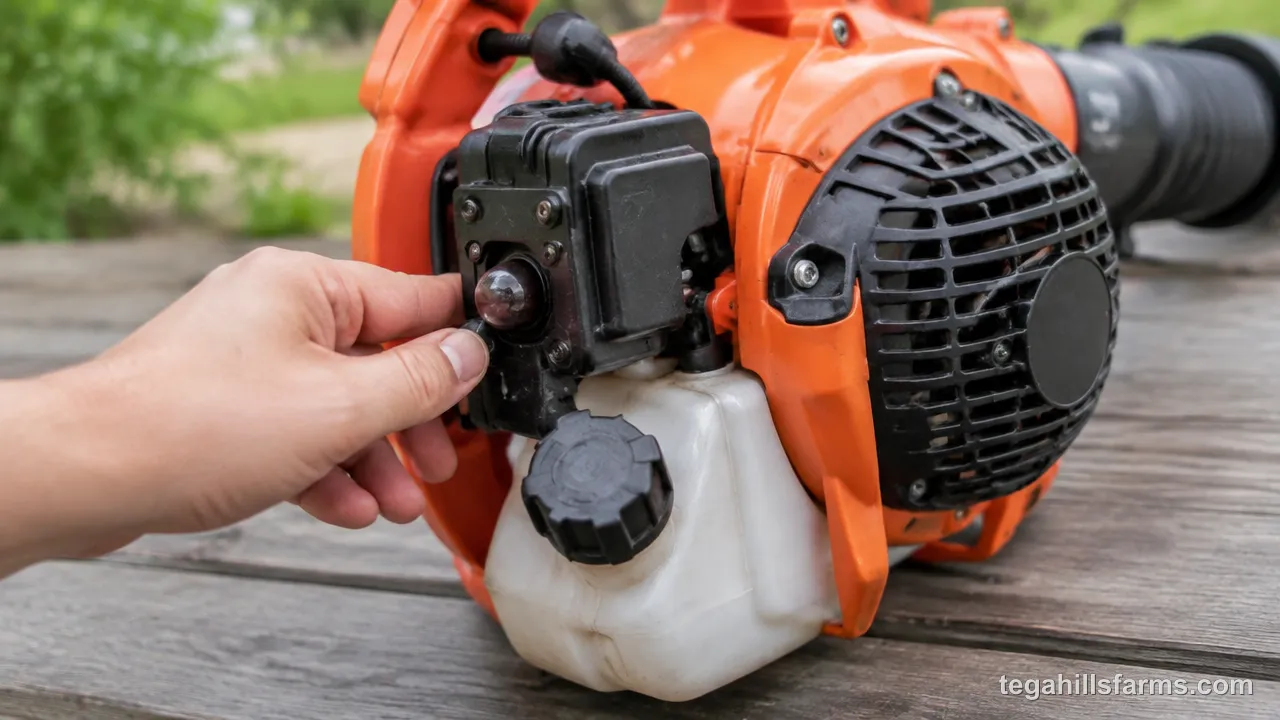
Several other setup mistakes look like a defect. A stop switch left in the off position cuts the spark entirely. A wrong mix on the first fill, straight gas in a two-stroke or the wrong ratio, can foul the plug or harm the engine from the start, so drain and refill before trying again. Some engines also leave the factory with carburetor settings that run lean until they break in, which can make the first starts stubborn.
The difference between unprimed and defective is consistency. An unprimed blower starts once fuel reaches the carburetor; a defective one still shows no spark with a fresh plug, no compression feel on the rope, or fuel leaking from the housing. Those signs point to a warranty claim, and adjusting the carburetor yourself on a new machine can complicate that claim.
When Is It Worth Repairing a Leaf Blower Instead of Replacing It?
A repair makes sense when the fault is a single, replaceable part such as a plug, air filter, fuel line, fuel filter, recoil starter, or carburetor. Replacement makes more sense when the engine itself is wearing out or the machine keeps failing in new ways.
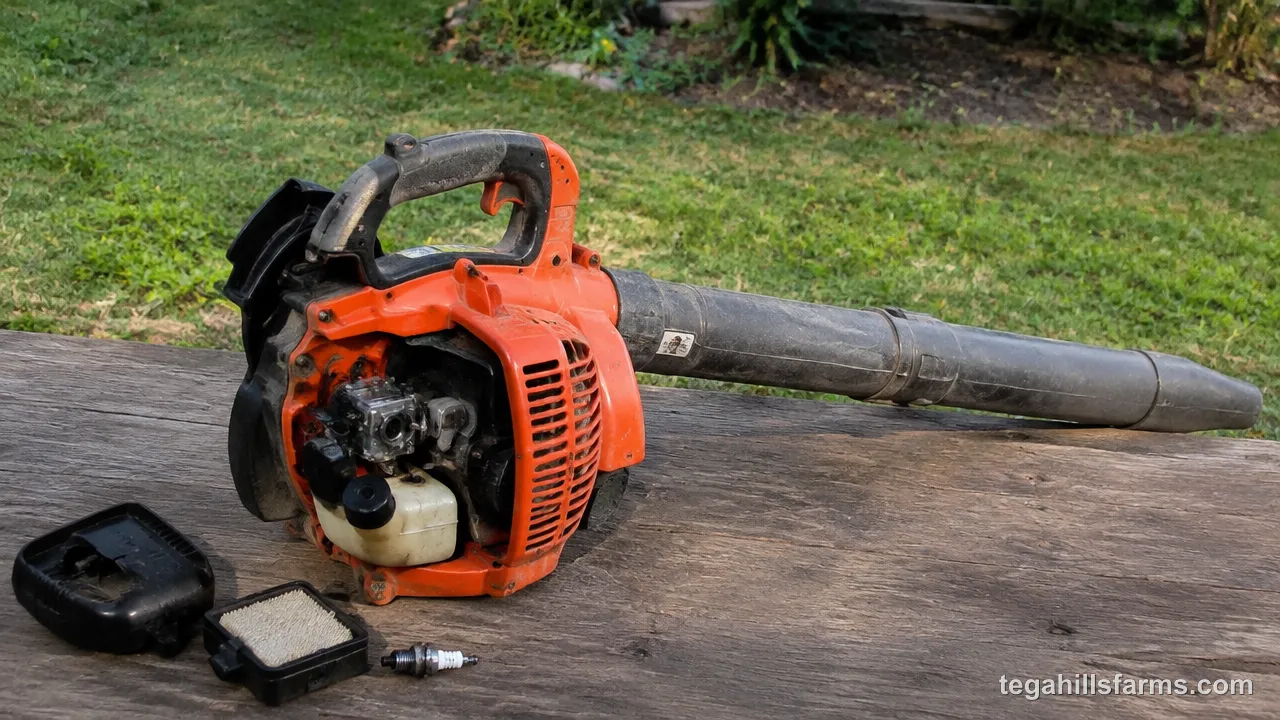
Weak compression is the clearest end-of-life sign. If the rope pulls with very little resistance, the piston rings or cylinder are likely worn, and that repair rarely pays off on a handheld blower. A cracked fan housing, a split fuel tank, or a frame that won’t hold the engine securely also tip the balance toward replacing, and so do repeated breakdowns that each need a different part.
Doing the job yourself covers most of the simple fixes: plugs, filters, lines, and a carburetor swap need basic tools and a little patience. A shop is worth paying for compression testing, carburetor adjustment, or internal engine work. Weighing how long leaf blowers last against the age of yours helps frame the decision, and a look at how much a leaf blower costs shows whether a bigger repair bill is close to the price of a new machine.
How Do You Store a Leaf Blower So It Starts Next Season?
Remove the conditions that cause most spring no-starts: stale fuel in the tank and fuel drying out in the carburetor. A blower stored ready to run gets either fresh fuel treated with fuel stabilizer or an empty system, while a neglected one sits all winter with untreated gas slowly turning to varnish.
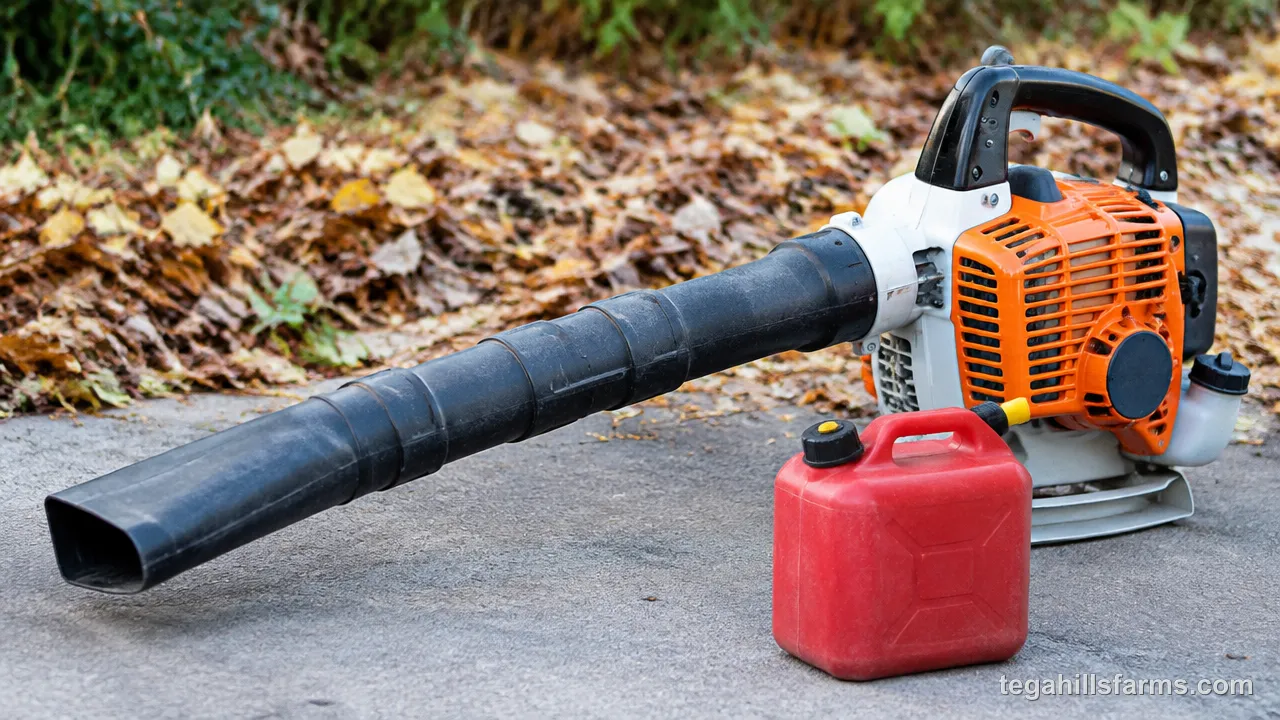
If you leave fuel in the tank, add fuel stabilizer at the rate on its label and run the engine briefly so the treated fuel reaches the carburetor. The other approach is to drain the tank, then start the engine and let it run until it stalls, which burns off the fuel left in the lines and carburetor.
Before putting it away, clean or replace the air filter and pull the spark plug to check its condition, replacing it if it looks fouled or worn. Wipe down the housing and clear debris from the cooling fins and intake.
Store the blower in a dry spot away from furnaces, water heaters, and other ignition sources. For battery models, store the pack indoors at a moderate temperature with a partial charge, as the manufacturer recommends.
What Else Do People Ask About a Leaf Blower That Won’t Start?
How long should you wait after flooding a leaf blower?
Wait until the raw-fuel smell around the engine has faded and the spark plug comes out dry. That gives the excess fuel time to evaporate. Pulling the rope with the plug out speeds up the process considerably, so you don’t have to rely on waiting alone before trying a restart.
Why does a leaf blower start and then die?
An engine that fires and quickly stalls usually isn’t getting a steady fuel supply. A partly clogged carburetor, a blocked fuel filter, a cracked fuel line drawing air, or a clogged tank vent are the usual causes. A choke moved to the open position too early on a cold engine can produce the same symptom.
Why does a leaf blower only run with the choke on?
Running only on choke means the engine is getting too little fuel for the air it draws in, so the choke’s extra fuel keeps it alive. A gummed carburetor is the most likely cause, followed by an air leak at a cracked fuel line, a loose carburetor gasket, or a restricted fuel filter.
Is starter fluid a good idea for a leaf blower?
I’d skip it on a two-stroke blower. Starter fluid contains no oil, so it washes lubrication off the cylinder walls of an engine that depends on oil in its fuel. It can also mask the real fault. Fixing the flooding, fuel, or spark problem is safer and lasts longer.
Why won’t a blower that ran fine last season start now?
Fuel left in the tank over the off-season is the usual reason. Gas degrades as it sits, leaving varnish that clogs the carburetor and fuel filter. Drain the old fuel, refill with fresh gas mixed to the correct ratio, and replace the plug if it looks fouled before cleaning the carburetor.





Write Your Review
No reviews yet. Be the first to share your experience!