

Using a leaf blower well comes down to four habits: start the machine in the right order for its power type, wear eye and ear protection, keep the nozzle pointed down at the lowest throttle that moves the debris, and work with the wind from the outer edges toward a tarp. Most wasted effort comes from skipping one of those habits, which is why some yards take twice as long to clear as they should.
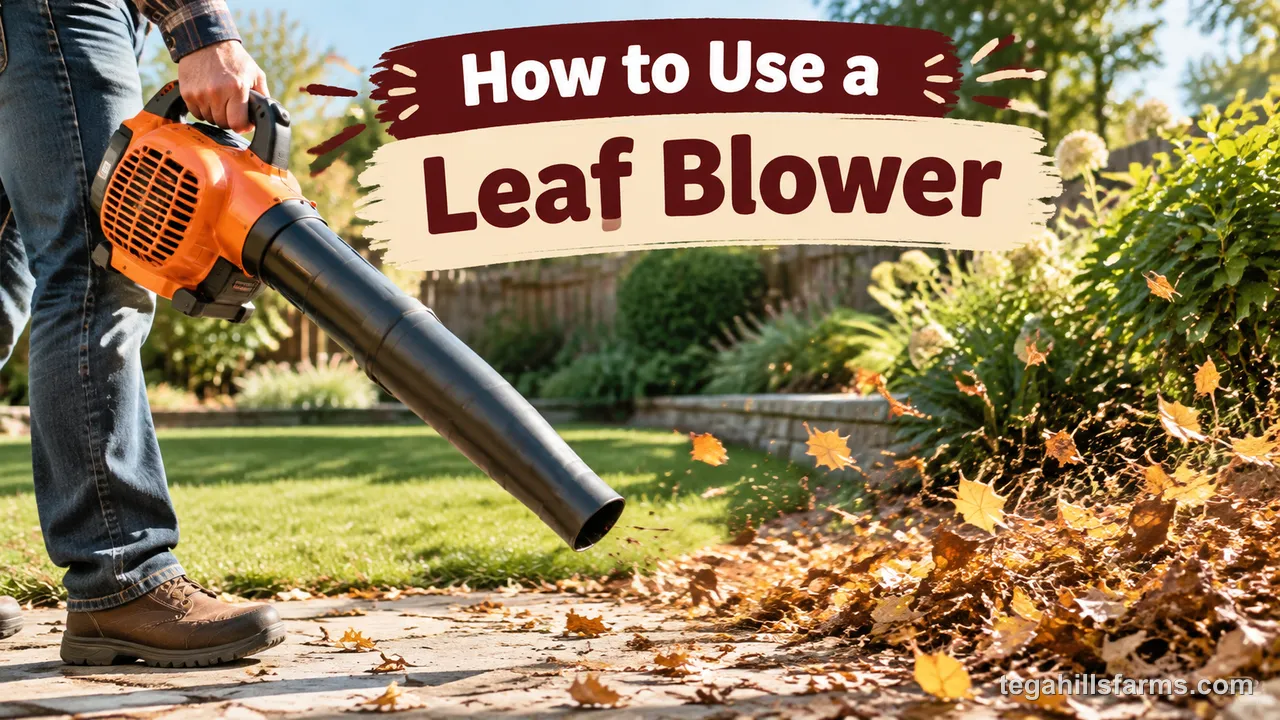
The right technique also depends on what you’re blowing and where. A handheld battery unit on a concrete patio needs different handling than a gas backpack on an acre of lawn, and wet leaves on a driveway call for more force than dry ones on grass.
Most homeowners run into the same problems: dust blowing back into their face, mulch scattered out of the beds, neighbors annoyed by noise, and leaves drifting back onto ground they already cleared. Each of these has a simple fix built on how air moves debris.
What Kind of Leaf Blower Are You Using?
Every blower pushes a stream of air through a tube to move leaves and light debris, and whether it’s handheld or backpack and battery or gas decides how it starts, how heavy it feels and how long it runs.
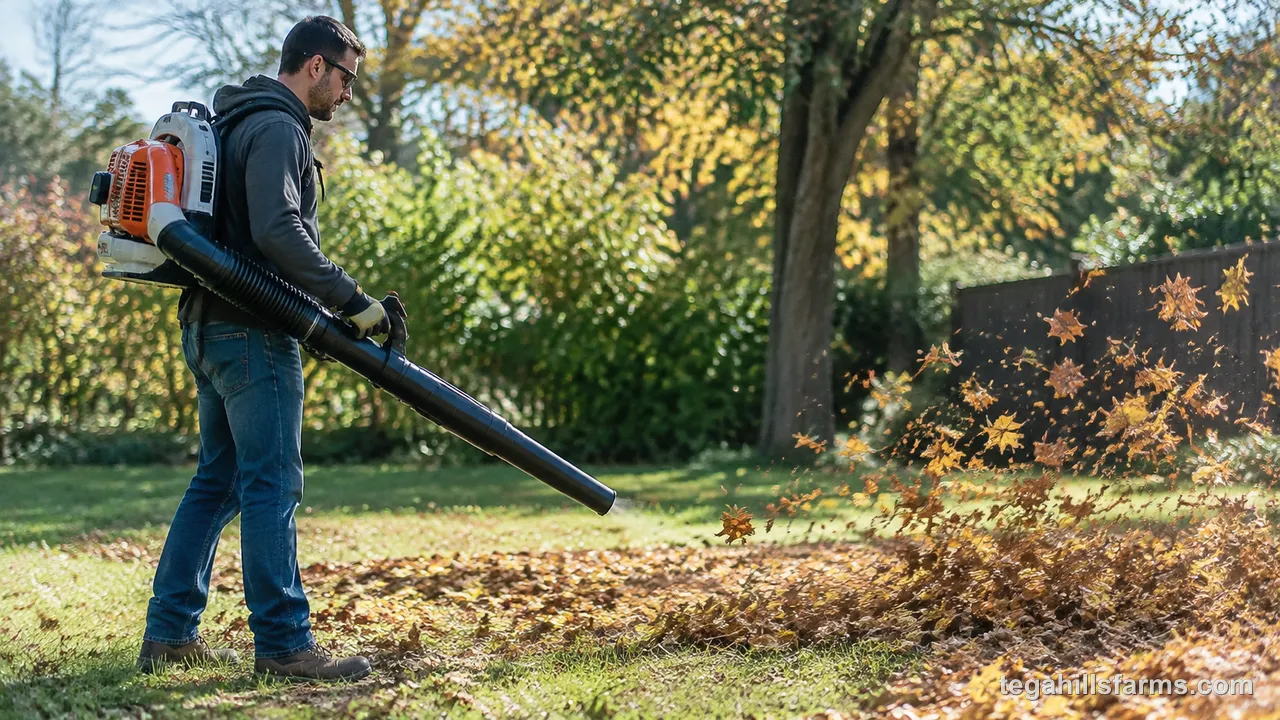
A handheld machine is carried in one hand, which makes it easy to steer around patios, steps and small lots. A backpack machine puts the engine on your back and the weight on your hips and shoulders, so you can run it longer across a bigger property without tiring your arm.
Power type changes the routine. Battery models start with a button or trigger, run quieter and need no fuel, but runtime ends when the pack drains. Gas models run until the tank is empty and refill in seconds, in exchange for pull-starting, fuel mixing and more upkeep. The full tradeoff between gas vs battery leaf blowers matters more at purchase than during use. If you haven’t bought one yet, how to choose a leaf blower is the place to start, since yard size and storage space narrow the field quickly.
How Do You Start a Leaf Blower?
Power type sets the start routine: gas engines need fuel, priming and a pull, while battery machines only need a seated pack and a pressed trigger.
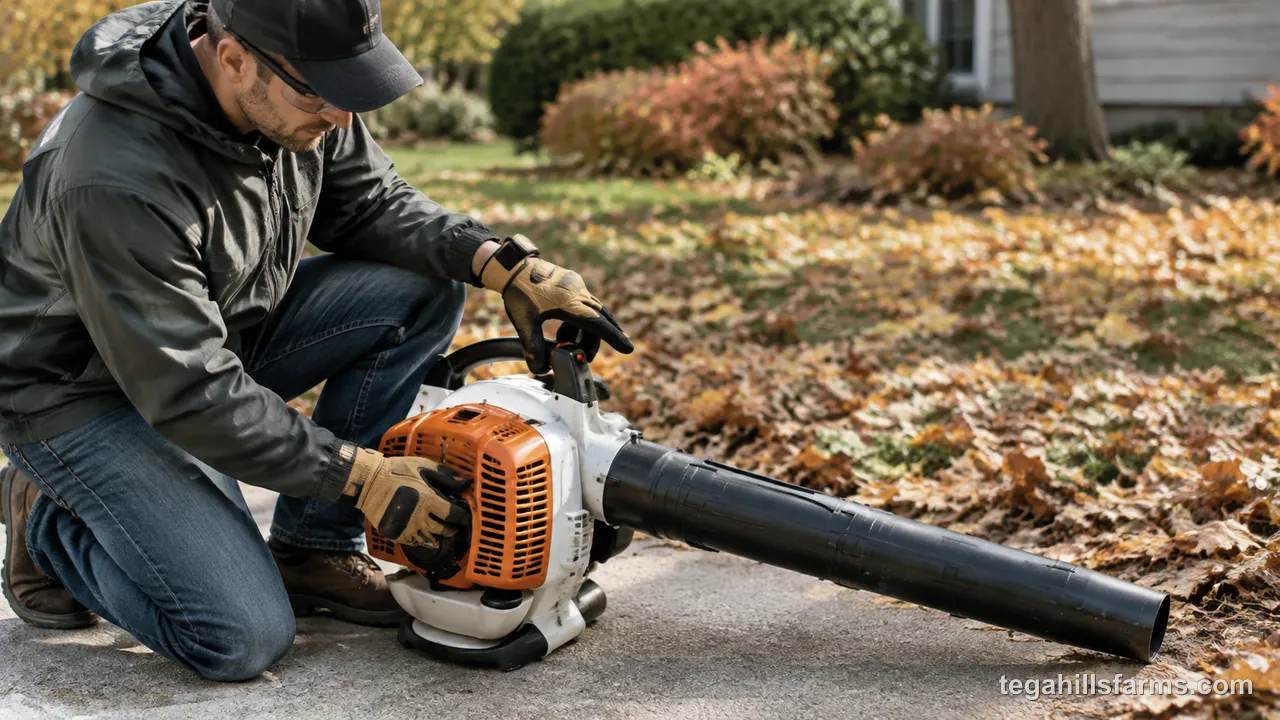
Getting this step right matters more than it seems. A gas engine started in the wrong order floods and refuses to fire, and a backpack lifted onto your shoulders before it’s running puts your back in an awkward position while you yank a cord. Knowing what each control does before the first start also keeps the machine from surging at full power the moment it comes to life.
What Do the On/Off Switch, Throttle and Cruise Control Do?
On most blowers, the on/off switch uses “I” for on and “O” or “Stop” for off, and a gas engine won’t start with the switch in the off position no matter how many times you pull. If the markings have worn away, the owner’s manual shows which way is which.
The throttle trigger controls engine speed or motor power, so squeezing harder sends more air through the tube. Releasing it drops a gas engine to idle and stops a battery motor entirely.
Cruise control locks the throttle at a set level so you don’t have to hold the trigger the whole time. On long passes across open lawn, that spares your hand and keeps airflow steady. Release it before you move near flower beds, gravel or people, because a locked throttle won’t drop when you instinctively let go.
How Do You Start a Gas Leaf Blower?
Gas handhelds follow a fairly standard sequence: fuel, switch, primer, choke, pull. Most are two-stroke engines, so fill the tank with fresh gas mixed with two-stroke oil at the ratio printed in the manual, then flip the switch to on.
Press the primer bulb until you see fuel moving through it, which draws gas into the carburetor. Set the choke to the closed or full position for a cold engine, then pull the cord with short, firm strokes until the engine sputters. Move the choke to half or open, pull again, and let the engine idle for a moment before squeezing the throttle. A warm engine usually skips the choke step.
When repeated pulls get nothing, the usual causes are stale fuel, a fouled spark plug or an engine flooded by too much choke, and the steps for leaf blower won’t start problems walk through each one.
How Do You Start a Battery Leaf Blower?
Battery models are the easiest type to start: seat a charged pack, release any safety lock, and squeeze the trigger. The most common reason one won’t run is a pack that isn’t fully seated, so slide it in until it clicks and give it a light tug to confirm it’s locked.
Check the charge indicator before you head out, because a pack that’s nearly empty may power on and then cut out mid-pass. Some models have a separate power button or a safety lock that must be pressed before the trigger responds.
Airflow is set by how far you squeeze the trigger or by a speed dial. Start low and turn it up only when the debris resists, which also stretches the runtime of each charge.
How Do You Start a Backpack Leaf Blower?
Start a backpack blower on the ground, not on your back. Set it upright on a flat, stable surface with the intake clear of leaves and loose debris, then run through the same switch, primer and choke steps as a gas handheld. Hold the frame steady with one hand, or brace the base with your foot, while you pull the cord with the other.
Once the engine idles smoothly, lift the machine onto your back from a kneeling position or from a bench at hip height, which keeps the strain in your legs rather than your lower back. Tighten the shoulder straps, then the hip belt if it has one, so the weight rides on your hips.
As with most backpack units, including large ones like the ECHO PB-9510T, the throttle sits on a handle mounted to the blower tube. Position that handle where your arm hangs comfortably before you add any throttle.
What Safety Gear and Rules Should You Follow?
Eye, ear and lung protection plus a clear work area cover most of the real risk, because a blower throws debris, makes noise and raises dust every time it runs.
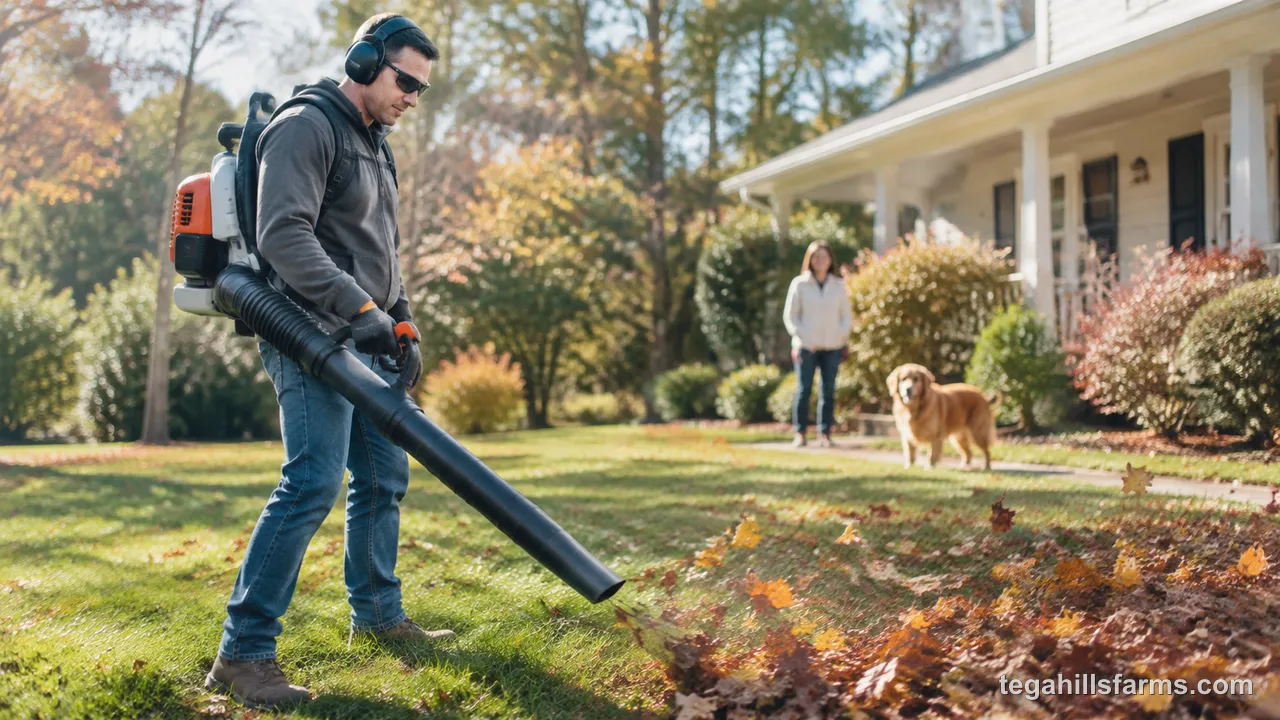
None of this takes long to set up, and it changes how the job feels. Grit in your eye or ringing ears halfway through stops the work entirely, and a bystander hit by a pebble turns routine yard work into an injury. Noise and dust also affect the people living around you, which is why timing and throttle habits belong in the same routine as goggles and gloves.
What Protective Gear Do You Need?
Safety glasses, hearing protection and a dust mask are the core three, because a blower attacks your eyes, ears and lungs at the same time. Glasses block grit and twigs that ricochet off concrete, siding and fences, often coming back at angles you didn’t aim.
Hearing protection matters most with gas engines, which run loud enough that long sessions leave your ears ringing. Battery models are quieter but still worth earmuffs or plugs on long jobs.
Dry leaf litter carries soil, pollen and mold spores, and a blower lifts all of it into the air you breathe, so a dust mask helps on dry days. Gloves improve grip and dampen vibration, and closed-toe boots with good traction keep you steady on slick leaves. Keep loose clothing and long hair away from the air intake.
How Far Should Bystanders and Pets Stay Back?
Keep people and animals at least 50 feet away while the blower is running. That distance accounts for debris traveling farther than the direction you’re aiming, since small stones and sticks bounce off hard surfaces and change course without warning.
Children and pets need the most attention, because a blowing leaf pile looks like a game to both. A dog chasing leaves can run straight into the air stream, and a child can walk up behind you while you’re focused on the nozzle.
If anyone steps inside that range, release the throttle and let the machine idle or shut off until they move away. Hearing protection makes it harder to notice someone approaching, so glance around between passes.
When Is It Okay to Run a Blower Without Bothering the Neighbors?
Manufacturers give different advice on the best time of day to run a blower, so your local noise rules should come first. Many towns and homeowners associations set quiet hours or limit when gas-powered equipment can run, and those rules vary widely from place to place.
Within those limits, a few habits make the biggest difference. Lower throttle cuts both noise and dust, and it’s usually enough for dry leaves anyway. A battery machine is noticeably quieter than gas, which makes it the better pick for small jobs close to the property line.
Dust bothers neighbors as much as noise does. On dry, dusty ground, lightly mist the area with a garden hose before you start, and avoid blowing toward open windows, parked cars or a neighbor’s patio.
How Do You Blow Leaves Like a Pro?
Planning the route before squeezing the trigger is what separates a quick cleanup from an afternoon of chasing the same leaves, because the wind and the order you clear the yard decide whether cleared ground stays clear.
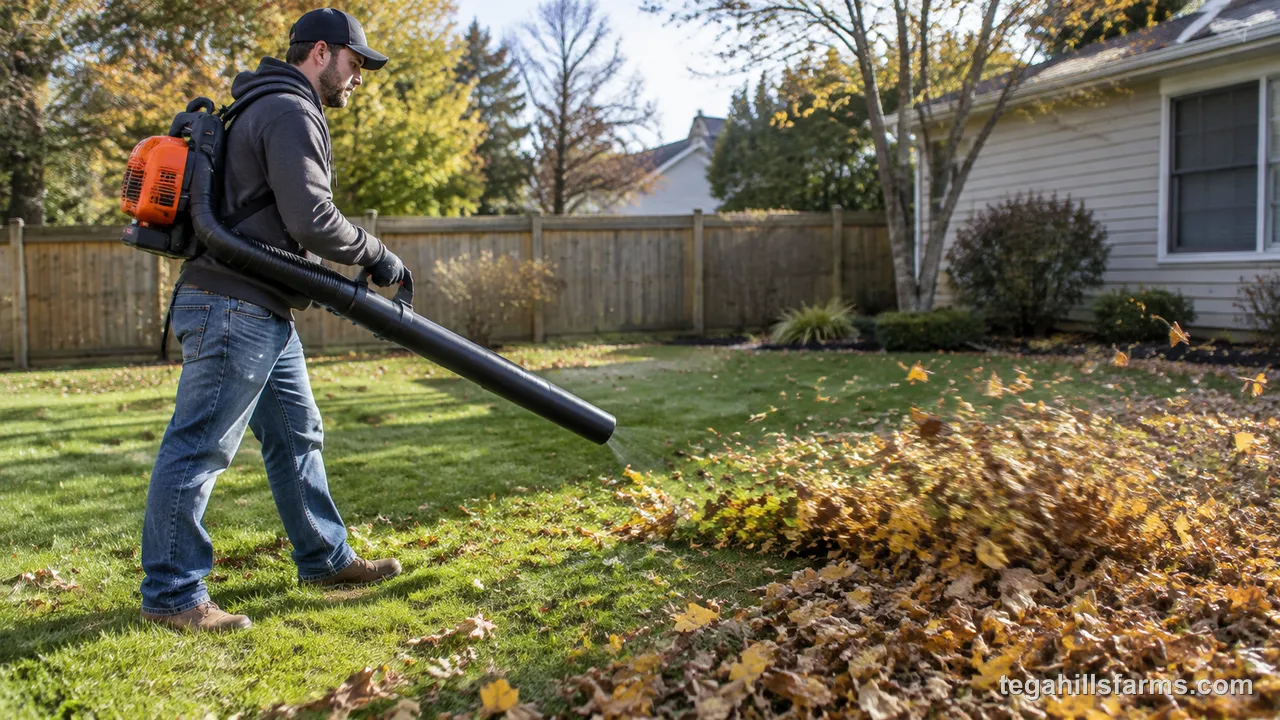
Most frustration with blowers comes from fighting the leaves instead of guiding them. Air moves debris best when it rolls leaves along the ground in one direction toward a single spot, and every choice — where you start, how hard you blow, where the pile ends up — either supports that flow or works against it.
Why Should You Work With the Wind?
Blowing with the wind lets the breeze carry leaves farther on each pass, while blowing into it sends dust and debris straight back at you and onto ground you just cleared. A tailwind adds to your airflow for free. A headwind cancels part of it, so you run higher throttle to get the same result and still end up with leaves drifting behind you.
Reading the wind takes a few seconds. Watch the tops of trees, a flag or a neighbor’s wind chime, or drop a handful of dry leaves and see which way they fall. Start at the upwind edge of your yard and push everything downwind, then put your pile or tarp at the downwind end so the breeze helps keep it there.
Light, steady breezes are ideal. Gusty days that shift direction make it hard to hold a pile together, and in that case I’d rather wait for calmer weather than spend twice as long redoing the same section. If the wind changes mid-job, move your collection point to match it.
What Throttle and Nozzle Angle Work Best?
A low throttle with the nozzle pointing down and held close to the ground moves leaves with the least dust and scattering. Angled air rolls leaves along the surface instead of launching them into the air, where the wind can carry them anywhere.
Match throttle to the material. Low throttle handles light dust, grass clippings and dry leaves on hard surfaces like concrete. Medium suits mixed debris on lawns or a moderate layer of leaves that isn’t wet or heavy. High throttle is worth it for wet leaves, large or stubborn piles and heavy debris, where lower settings can’t break things loose.
Sweep the nozzle side to side in a steady arc rather than holding it on one spot. Machines differ in how they deliver that force: blowers that lean on air volume push wide, loose layers well, while those built for air speed are better at prying up stuck debris, which is the practical side of cfm vs mph for a leaf blower.
How Do You Move Leaves in Sections From the Outside In?
Divide the yard into zones and clear each one from its outer edges toward a central collection point. Natural borders make easy dividers: the driveway, a walkway, a row of shrubs or a fence line.
Start each zone where leaves collect most: against fences, along the house foundation and under shrubs. Blowing those edges first pulls the hardest-to-reach debris into open ground, where it’s easy to move. From there, work inward in overlapping passes toward the pile, finishing one zone completely before moving to the next.
This order prevents the most common source of rework, which is blowing leaves from an uncleared area onto one you already finished. It also fits with wind planning, since you can line up zones so each one pushes downwind toward the same collection point. On a large property, several smaller piles are easier to manage than one huge pile that the wind starts picking apart before you can haul it.
How Do You Gather Leaves Onto a Tarp?
Lay the tarp flat just downwind of where your pile is forming, so the breeze pushes leaves onto it rather than away. Weigh down the upwind edge with a few rocks or a garden tool so the air from the blower doesn’t lift it.
Build the pile right next to the tarp, then switch to low throttle and short bursts. Aim from behind the pile and nudge leaves onto the tarp in small amounts instead of blasting the whole pile, which tends to blow apart and scatter. A rake helps with the last few clumps that refuse to move.
Once the tarp is loaded, fold the corners over the pile to hold it in place and drag it to the compost bin, the curb or wherever your town collects yard waste. Don’t overload it, because a heavy tarp is hard to drag and a full one spills when a gust catches it.
How Do You Blow Leaves From Different Surfaces?
Open lawn handles more airflow than garden beds or gravel, and wet leaves on pavement need the most force of all.
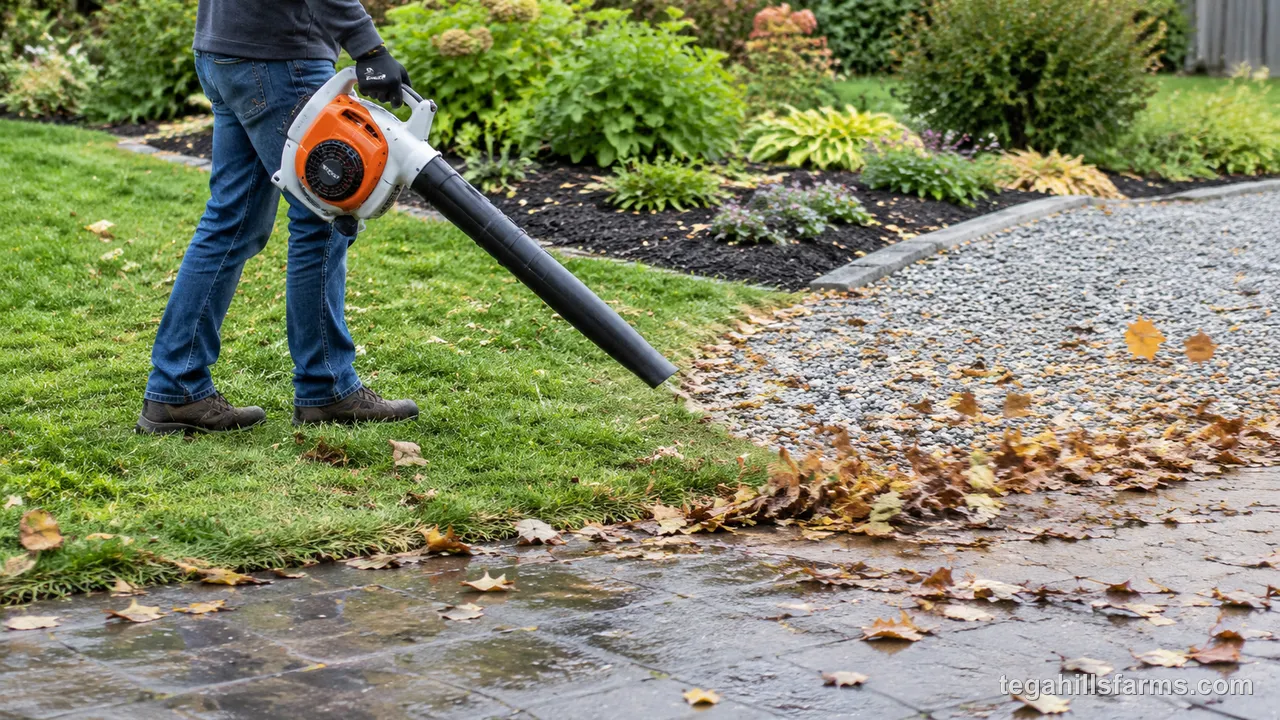
The surface decides how much air you can use before you start moving things you want to keep. Mulch, soil and small stones weigh about as much as dry leaves, so the technique that clears a driveway in seconds can empty a flower bed or pelt a car with gravel. Moisture shifts the balance the other way, making leaves stick so firmly that normal settings barely move them.
How Do You Clear Leaves From Grass and Garden Beds?
On grass, use low airflow and a gentle side-to-side sweep with the nozzle aimed slightly downward. That’s usually enough to roll dry leaves across the blades without tearing up thin turf or blasting soil out of bare patches. Turn up the throttle only for thick, matted layers.
Garden beds need more care, because mulch is light enough to move as easily as leaves. Keep the throttle low and angle the nozzle so air skims over the mulch surface rather than digging into it. Blow leaves out of the bed toward the open lawn, where you can push them on to the pile.
Around plants, avoid aiming a strong blast directly at stems, flowers or shallow roots. Short, gentle bursts from the side work better, and the last few leaves tucked against plants are often faster to pick up by hand.
How Do You Handle Gravel and Loose Material?
Hold the nozzle higher and use gentle airflow over gravel, so the air catches the lighter leaves while the heavier stones stay put. Pointing the nozzle down at full throttle, as you would on concrete, turns gravel into projectiles.
Direction matters as much as force. Work so the airflow points away from windows, cars, doors and people, and toward an edge where any stray stones land harmlessly, such as the lawn or a planting bed. A stone that leaves a gravel path can crack glass or chip paint at surprising distances.
Accept that you won’t get every leaf. Chasing the last few on gravel usually means scattering stones across the yard, so pick up stragglers with a rake or by hand instead.
How Do You Move Wet Leaves on Hard Surfaces?
Wet leaves stick to concrete and pavers because water adds weight and makes them cling to the surface, so they take high throttle and short, targeted passes to move. Leaves in that state also clump into mats that air slides right over if you aim from too far away.
Lower the nozzle close to the surface and work from the edge of each clump, peeling up the leading edge so air can get underneath. Short passes that break the mat into pieces work better than a long blast at the middle, which only presses the leaves flatter.
If a driveway or patio is covered in a soaked layer, waiting for a dry afternoon is often the faster choice. Dry leaves move on low throttle in a fraction of the time, while a rake or push broom handles a wet mat better than a blower working at its limit.
How Should You Shut Down and Store a Leaf Blower?
Release the throttle to idle, switch off and let the engine cool before handling it, then wipe it down and store fuel or batteries to match how long the blower will sit.
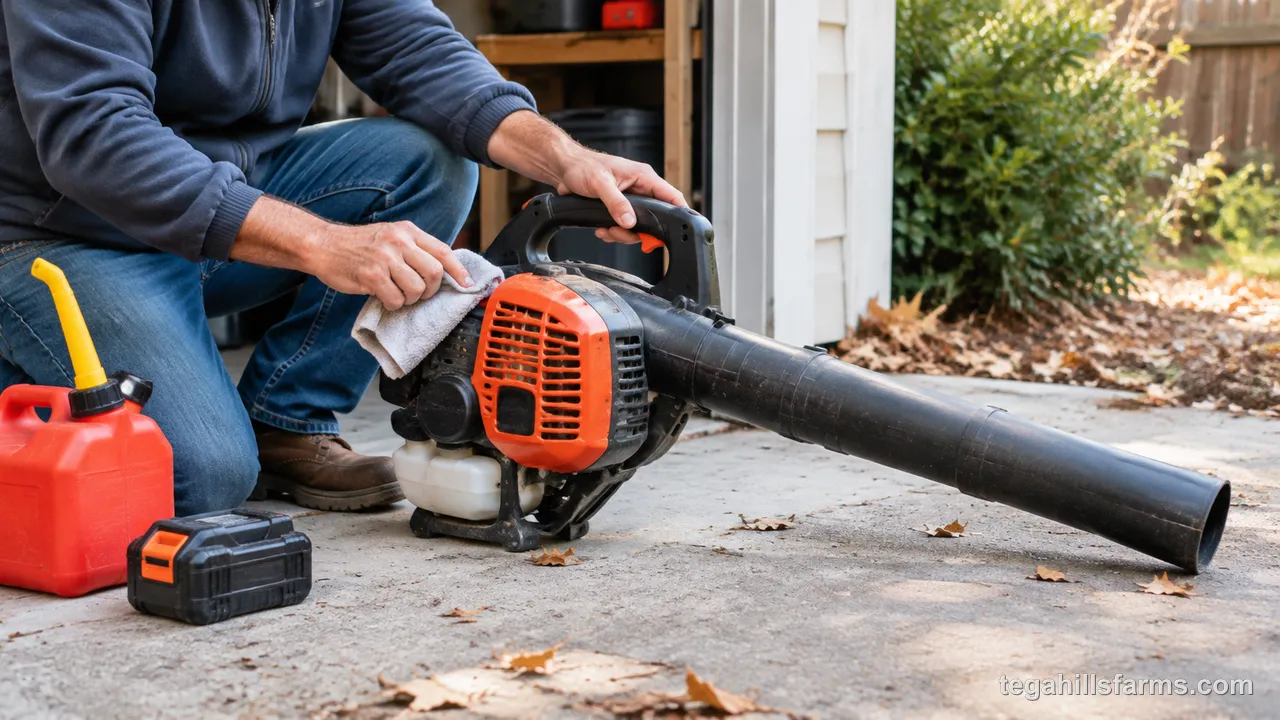
Clear leaves and dust from the air intake and the tube while you’re at it, since a clogged intake cuts airflow on the next job. For a gas machine stored over the winter, either run the tank empty or add fuel stabilizer as the manual recommends, because stale fuel is a common cause of hard starts next season. Store it upright in a dry place.
For battery models, remove the pack and keep it indoors, away from freezing temperatures, and charge it to the level the manufacturer recommends for storage.
The same air that moves leaves can strip water off a freshly washed car or chase dust out of a garage corner in a few passes. Aim that stream carelessly near a windshield or a painted panel, though, and grit picked up from the driveway turns into scratches that won’t buff out.
What Else Can a Leaf Blower Do Around the House?
A blower handles several jobs beyond leaves, including drying a washed car, clearing dust from the garage, cleaning out gutters, clearing a deck and moving light snow, as long as you adjust force and position for each one.
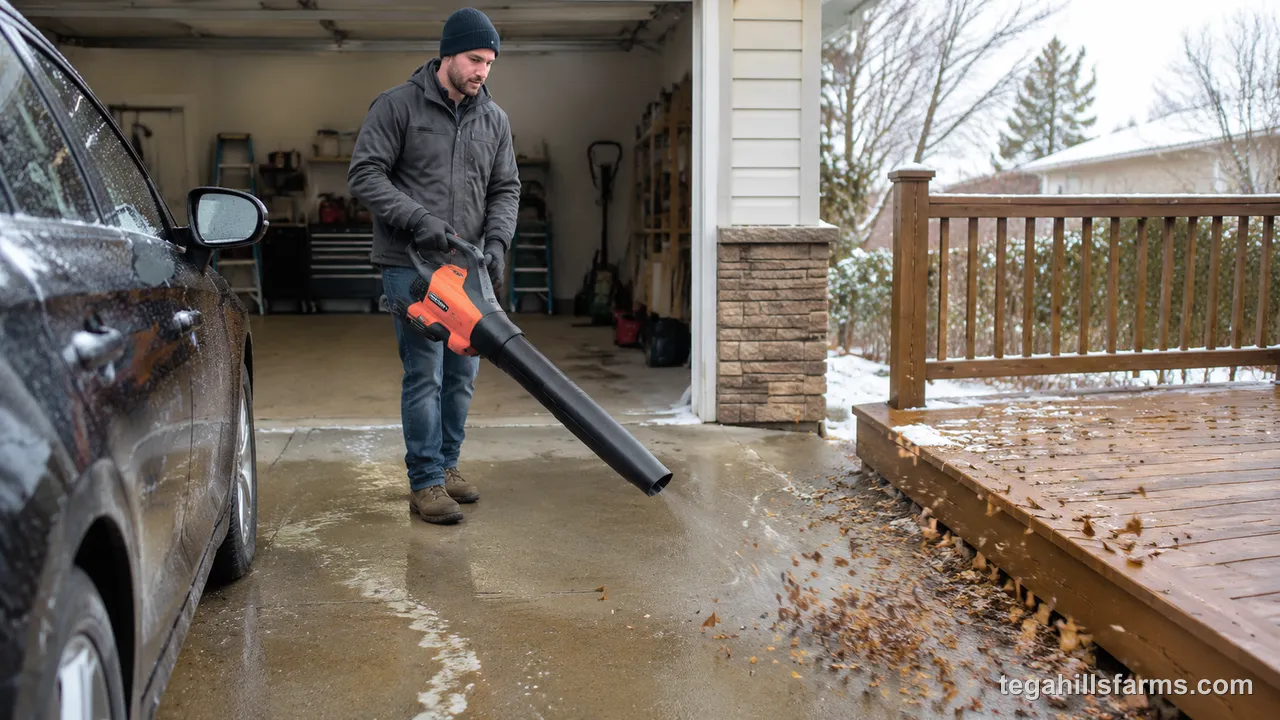
To dry a car, use low throttle and keep the nozzle pointed at the car rather than the ground, so you don’t kick driveway grit onto wet paint. Start from the roof and work down to push water off trim and mirrors.
In a garage or workshop, open the door, wear a dust mask and push dust and sawdust out toward the opening. For gutters, use an extension kit from the ground or work from a stable position on the roof; never balance on a ladder while managing a blower one-handed.
On a deck, the airflow clears leaves from between boards that a broom misses. Light, dry snow on steps and walkways also moves easily, but wet, heavy snow is beyond what a blower can push, and cold weather shortens battery runtime.
How Do You Know When a Leaf Blower Is Wearing Out?
The main warning signs are weaker airflow, harder starting, unusual vibration and, on battery models, noticeably shorter runtime per charge. Some of these point to cheap fixes, while others signal that the machine is near the end.
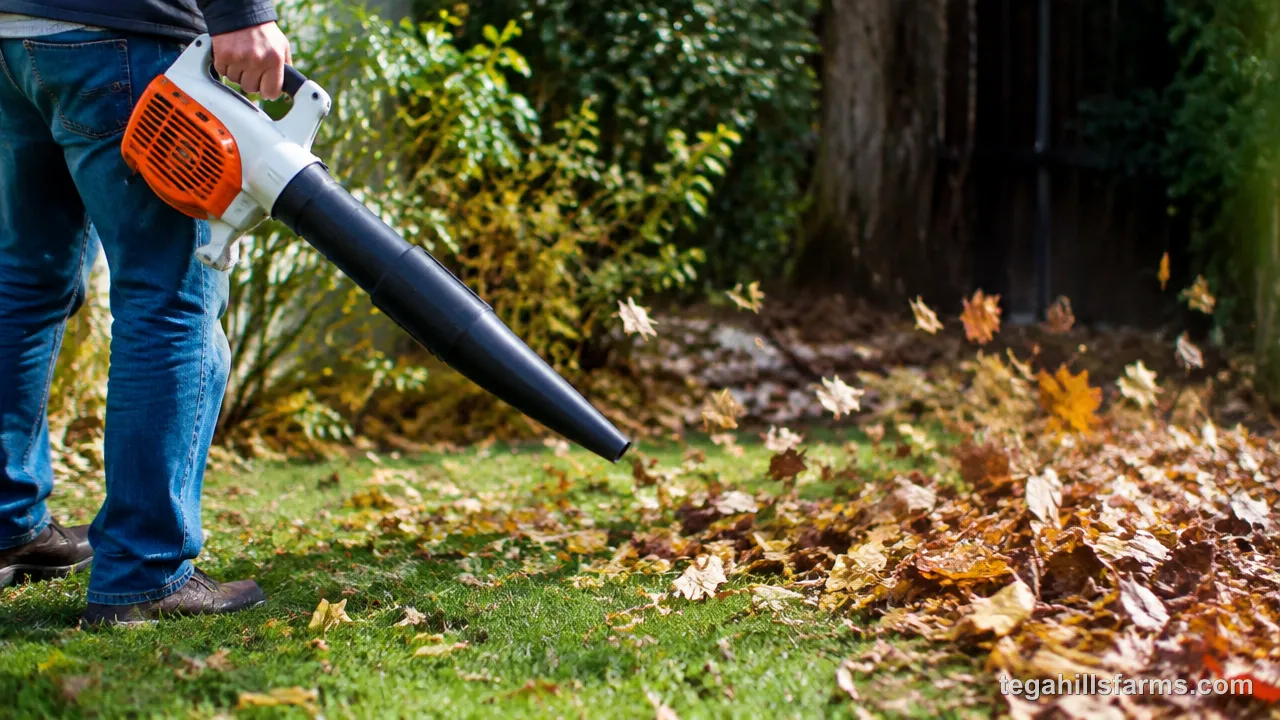
Weak airflow often comes from a clogged intake screen or dirty air filter, so clean those before assuming the worst. Hard starting on a gas engine usually traces to stale fuel, a worn spark plug or a gummed-up carburetor. Vibration that wasn’t there before can mean a cracked fan or loose housing, and the blower shouldn’t run until it’s checked. A battery that drains much faster than it used to has lost capacity, and a replacement pack is the only fix.
Try the inexpensive repairs first: filter, plug, fresh fuel. Knowing how long leaf blowers last in normal use gives you a baseline for judging whether yours is aging early. If the problem keeps coming back, compare the repair quote against how much a leaf blower costs new before paying for major engine work.
What Common Mistakes Waste Time or Harm Your Yard?
Blowing against the wind wastes the most time, because the breeze returns leaves to the ground you just cleared and sends dust into your face. Check the wind first and start from the upwind edge instead.
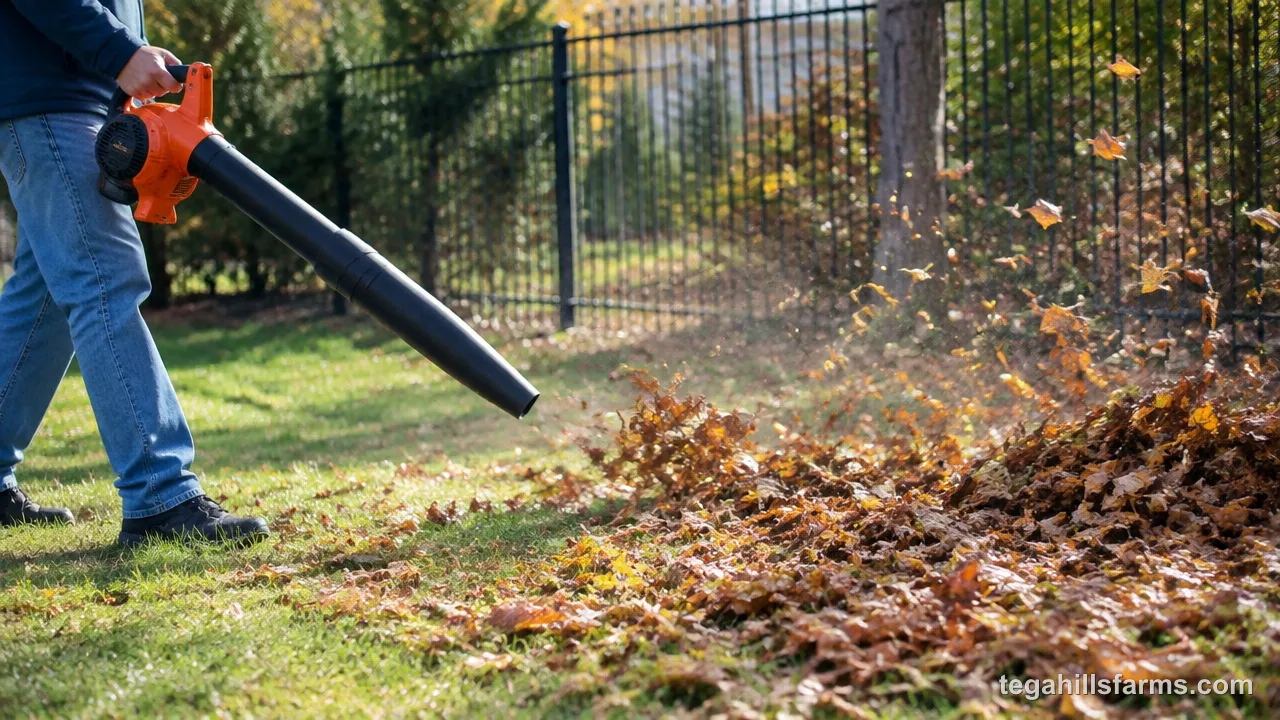
Running full throttle over mulch beds is the mistake that does the most visible damage, scattering mulch across the lawn and exposing soil and roots. Low throttle with the nozzle angled across the surface moves leaves while leaving mulch in place.
Pushing debris onto a neighbor’s property or into the street only moves the problem. Leaves in the street can clog storm drains, and the ones left on a neighbor’s lawn strain relations quickly. Gather everything onto a tarp and haul it to compost or your town’s yard waste pickup.
Working over dry, dusty ground without any precautions fills the air with soil and grit. Lightly wet down bare patches with a garden hose, lower the throttle and wear a dust mask. Holding the nozzle too high is a related habit that lifts leaves into the wind instead of rolling them toward the pile.
Leaf Blower Usage FAQs
Which switch position is on and which is off?
On most blowers, “I” means on and “O” or “Stop” means off. A gas engine won’t start with the switch in the off position, so check it first when pulls get no response. If the markings have worn off, the owner’s manual or the manufacturer’s website shows the correct positions for your model.
Does a leaf blower work on wet leaves?
Yes, but wet leaves need high throttle, a nozzle held close to the surface and short passes that break clumps apart from the edge. A soaked, matted layer often takes longer to blow than it does to rake, so waiting for a drier afternoon is usually faster on driveways and patios.
What time of day is best for using a leaf blower?
Check your local noise rules and any homeowners association quiet hours first, since they set the real limits and vary by town. Within those hours, lower throttle and a battery machine cut noise for nearby neighbors, and calm, dry conditions make the job faster regardless of the time.
Can a leaf blower clear snow?
A blower can clear light, dry snow from steps, walkways and decks, where the powder moves much like dry leaves. Wet, heavy snow is too dense for the airflow to push, so a shovel works better. Cold temperatures also shorten battery runtime, so keep packs indoors until you need them.
Are gas and battery leaf blowers used the same way?
The blowing technique is the same for both: work with the wind, keep the nozzle pointed down and move from the edges toward a pile. The differences come before and after the job, since gas models need fuel, priming and a pull start, while battery models need a charged pack and indoor storage.

Write Your Review
No reviews yet. Be the first to share your experience!