

To parallel generators, you link two compatible inverter generators with a matching parallel kit, start them in the right order, and let them split one electrical load. The kit’s cable keeps both outputs in step. Most homeowners do this with portable units rather than one big machine.
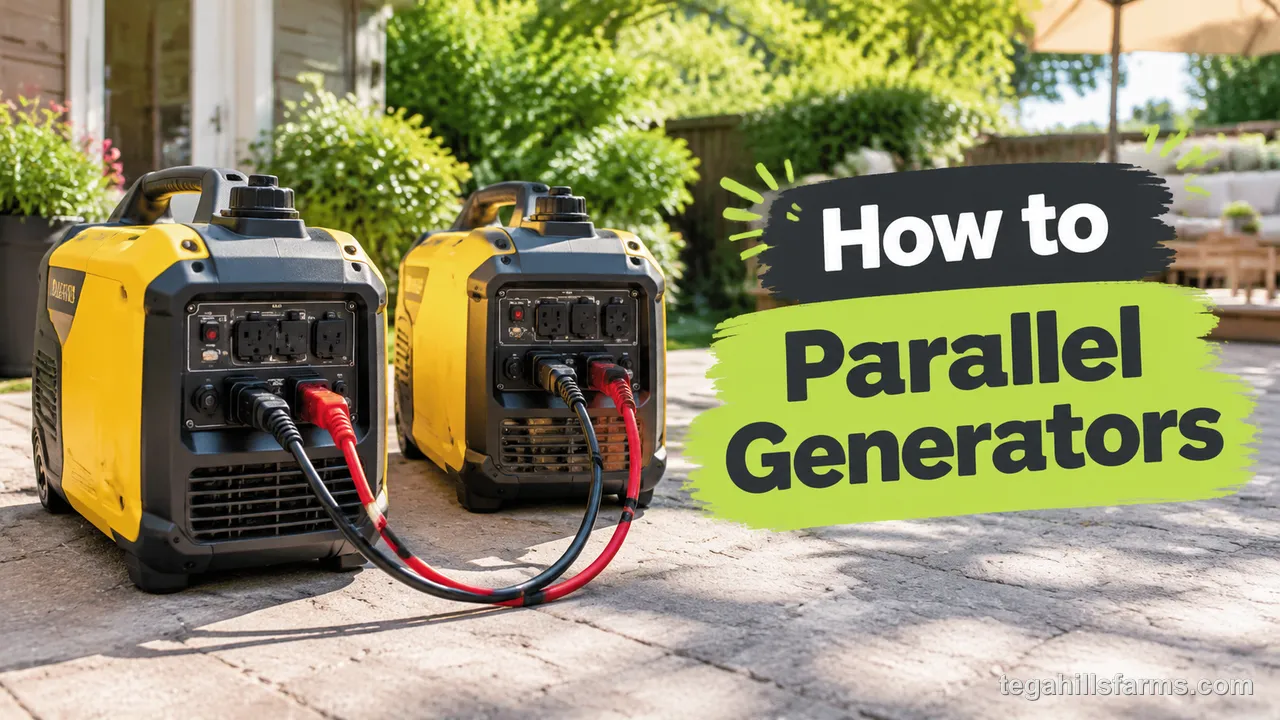
Compatibility decides everything. Voltage, frequency and fuel type have to match, and the same brand and model is the safest pairing. In the U.S. the frequency is 60 Hz, and the two units must match it exactly.
The real worry for most people is safety. Two engines share one load, and the temptation is to improvise a cord or push power into the house. Shortcuts can wreck windings, and backfeed can injure utility workers.
Before you buy anything, look for a parallel receptacle on the generator you already own. That one port tells you whether a kit exists for it.
What Does It Mean to Parallel Generators?
Paralleling generators means linking two or more generators so they share one electrical load through a connecting kit. The payoff is more capacity from portable units, a backup if one fails, and room to grow.
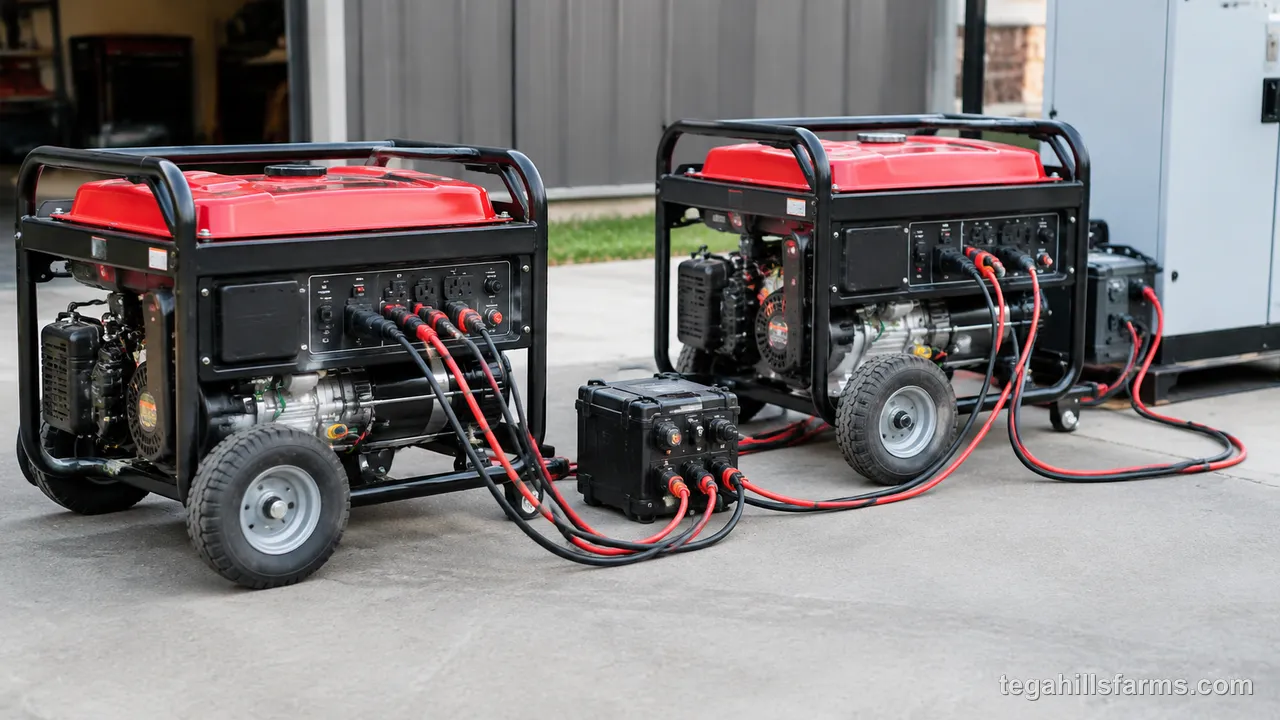
For a homeowner, that works out three ways. Two portable units can carry a load neither could handle alone. If one quits, the other can keep the essentials running. You can also start with one generator and add a second later.
Inverter models suit this job because they produce clean, stable power that two units can match. If you want the mechanics behind that output, how does an inverter generator work explains it. If you haven’t picked a first unit yet, read how to choose a generator before you settle on a model.
Can You Parallel Any Two Generators?
No, you can’t parallel just any pair: only parallel-ready models, matched in size and brand, and kept within a unit limit, can share a load safely. Three compatibility rules sit behind that answer.
First comes the hardware, then the pairing, then how far a setup can scale. The next three parts take them in that order.
Which Generators Can Be Paralleled?
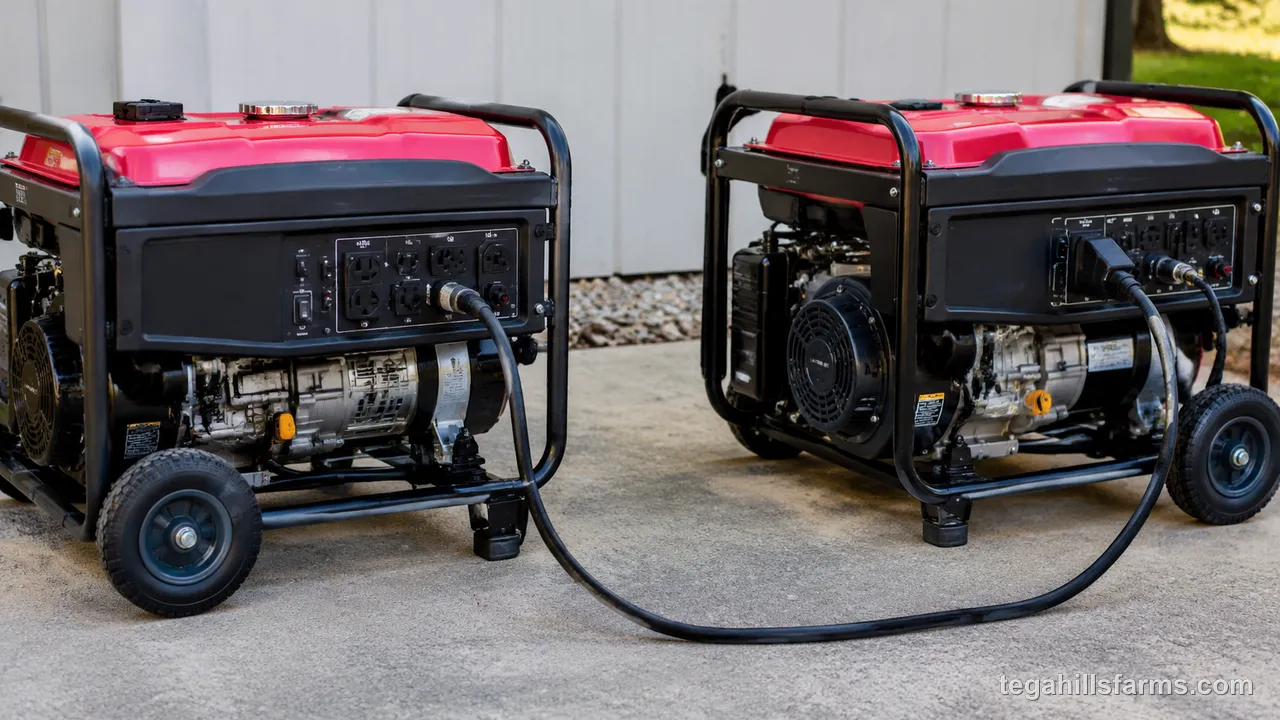
Inverter generators with a built-in parallel receptacle and the same voltage, frequency and fuel type qualify. A same-brand, same-model pair is the safest choice.
Look for a dedicated parallel port on the control panel, since a standard outlet won’t do. Many parallel-ready units use a 30-amp receptacle, either on a companion unit built for paralleling or on two identical units joined by a parallel cable.
Frequency has to match exactly. In the U.S. that means 60 Hz on both machines. Fuel type should match too, so a gasoline unit pairs with a gasoline unit.
A kit only works with the family it was built for. Confirm your model number against the maker’s compatibility list before you order. Our rundown of what to look for in a generator covers which specs to check first.
Can You Run Two Generators of Different Sizes or Brands?
In most cases, no. Makers require matching units because mismatched output characteristics keep the two from sharing the load cleanly.
Parallel operation depends on both inverters producing power that lines up in timing and voltage. Units of different wattage may not split the load in proportion. The smaller one can end up carrying more than it should and tripping.
Mixed brands add another problem. Each maker designs its own electronics and its own parallel port, and the pieces rarely talk to each other.
Some makers do sell a companion unit built to pair with a specific main unit. That is the exception, and it works because the maker designed both halves together. Stick to the pairings your manufacturer lists.
How Many Generators Can You Link Together?
Portable inverter generators usually link two at a time, while modular commercial systems can tie many units onto a single bus. Combined capacity is shared across every unit in the setup.
Portable kits are built around a pair, and the cable and receptacles have no provision for a third. For home backup, two units is the practical ceiling.
Large modular systems work differently. Generac’s Gemini MPS, for example, can parallel up to seven genset units on a single bus without extra switchgear, for a combined 7000 kW.
Your own loads set the real limit. Before you stack units, work through how to size a generator so the pair matches what you need to run.
How Do You Parallel Two Inverter Generators Step by Step?
You parallel two inverter generators in three stages: gather the kit and fuel, connect and start in the right order, and confirm load sharing before shutting down. Each stage protects the equipment, so don’t skip ahead.
What You Need Before You Connect
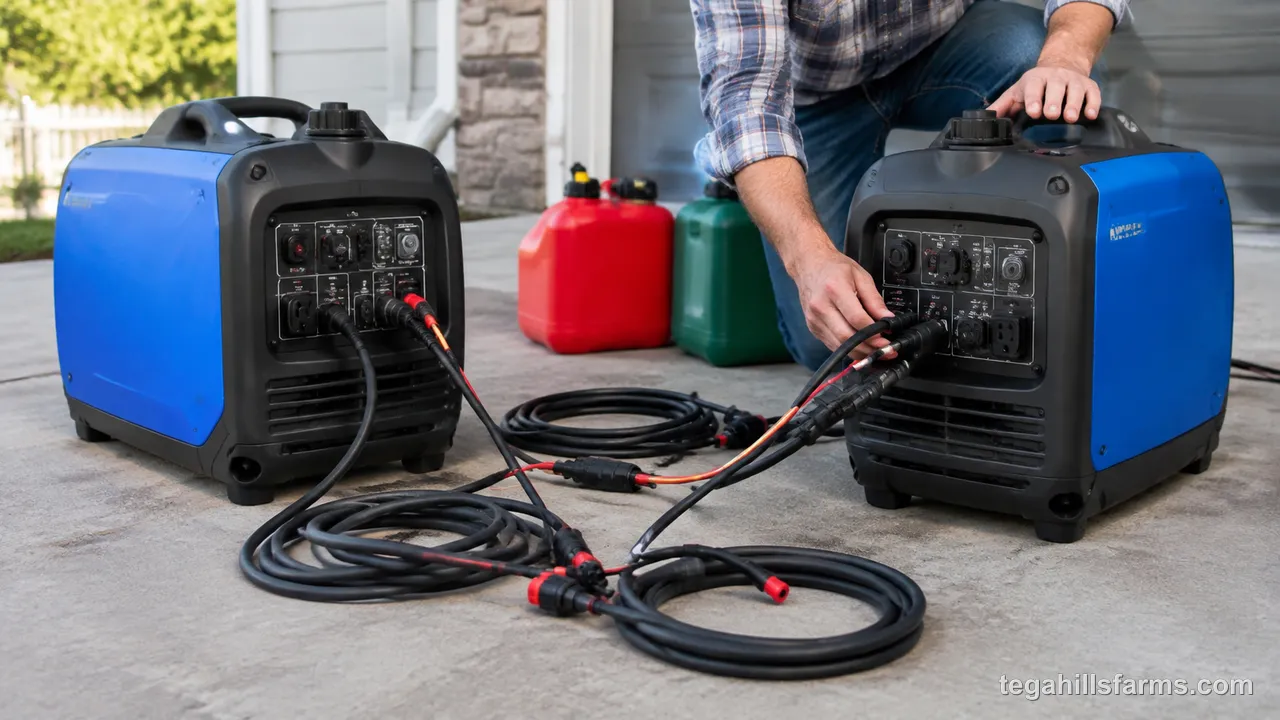
You need the matching parallel kit, both units in good running order, fuel in both tanks, and open outdoor space with a clear surface. Having these ready makes the connection quick and safe.
Work through this checklist first:
- The parallel kit made for your exact generator line.
- Fresh oil and a clean air filter on both units.
- Fuel in both tanks, matching the fuel type each unit uses.
- Open outdoor ground, well away from windows, doors and vents.
- A dry, level surface with room to reach both control panels.
A unit that runs rough alone won’t improve when paired. Fix it first. Fuel math is its own topic: how much gas will your generator use depends on load, so top off both tanks with that in mind.
Connecting the Parallel Kit and Starting the Units
Start with both units off, plug the parallel cable into each receptacle, start the units, and add appliances only after both are running steadily. That order lets the units sync before they carry any load.
Follow this sequence:
1. Confirm both generators are off and nothing is plugged in.
2. Seat the cable firmly in the parallel receptacle on each unit.
3. Start the first unit, then the second, following your manual’s order.
4. Let both settle and check the output indicators.
5. Plug in appliances one at a time.
Plugging in too early is the common mistake. The units are still finding each other, and a sudden load can trip one. If you’re new to running portable power, how to use a generator covers the basics of startup and shutdown.
Checking Load Sharing and Shutting Down
Confirm both units are carrying the load by watching their indicators and engine sound, then unplug appliances before stopping the engines. This keeps the equipment from being stressed at shutdown.
Normal operation looks balanced. Both engines respond to load changes in a similar way, and neither strains while the other idles. Indicator lights on each panel should show the same status.
To shut down, unplug the appliances first. Then stop each engine and let both cool. Only after that should you disconnect the parallel cable.
Pulling the cable while a unit is running, or killing one engine under full load, puts a sudden jolt on the other. A calm shutdown takes a minute longer and saves wear.
Which Parallel Kit Fits Your Generator?
The right kit depends on brand and model pairing and on the voltage and receptacle setup you need. Buying on price alone is how people end up with a cable that doesn’t fit.
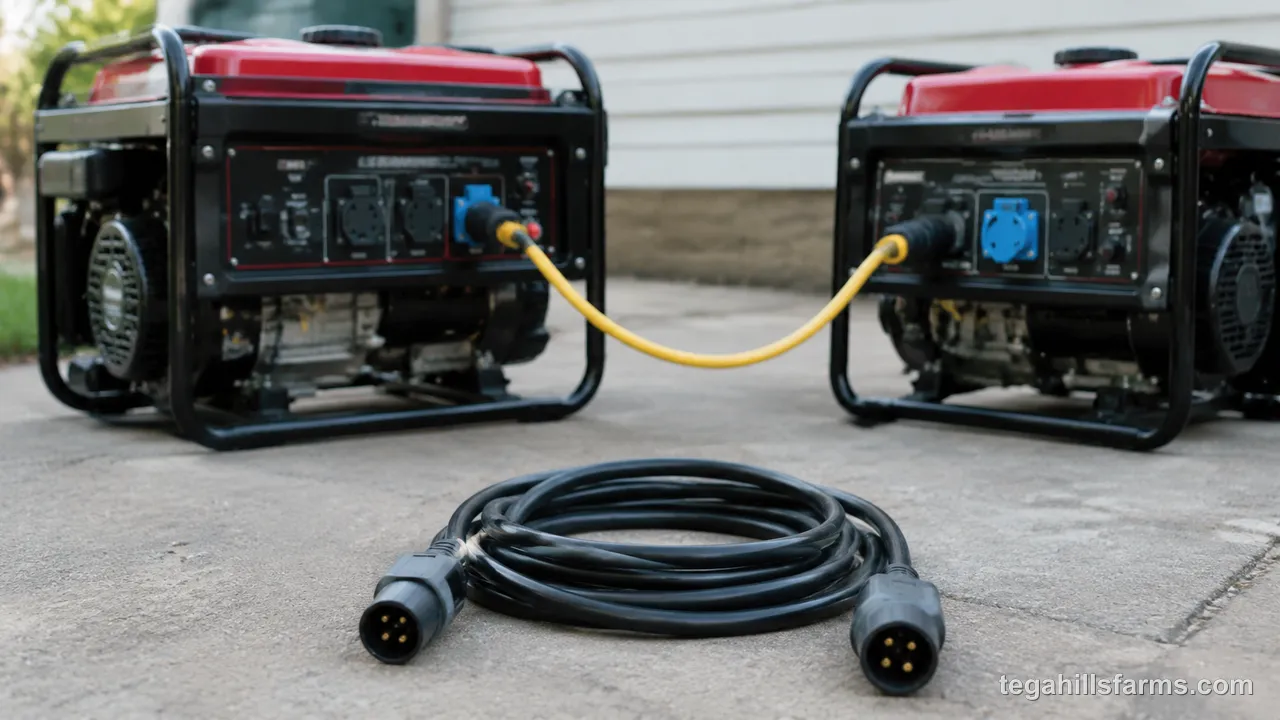
Brand-Specific Kits and Model Pairing
Kits are built for specific brands and model families, so the kit must match your exact generator line. Champion’s ParaLINK and Honda’s companion setups are good examples.
Champion’s ParaLINK is designed for Champion’s parallel-ready inverter models. Honda’s companion setups pair its own inverter units through a matching parallel cable. Neither is meant to cross over to another brand.
Before you order, find your model number and check it against the kit’s compatibility list. Two units in the same family can still differ by version, so don’t assume.
The manual usually names the approved kit. If it doesn’t, the manufacturer’s support line can confirm it. A wrong kit at best won’t connect, and at worst can harm both machines.
Voltage and Receptacle Configurations
Kits differ in voltage options and receptacle types, and those decide which appliances you can run. Match them to your loads rather than buying on brand alone.
Some pairings deliver 120-volt power only. Others support 240-volt loads through a dedicated outlet. If you plan to run a well pump or a large appliance, that difference matters.
Receptacle amperage matters too. Many parallel-ready units use a 30-amp receptacle, which limits what each outlet can feed. Check how many outlets the combined setup gives you and whether their ratings cover your essentials.
Write down the appliances you want to power, then compare them with the kit’s outlets. It takes a few minutes and avoids a second purchase.
Are Two Parallel Generators Better Than One Large Generator?
Two paralleled generators beat one large unit on portability and backup redundancy, though a single unit stays simpler to own. Which side wins depends on how you’ll use the power.
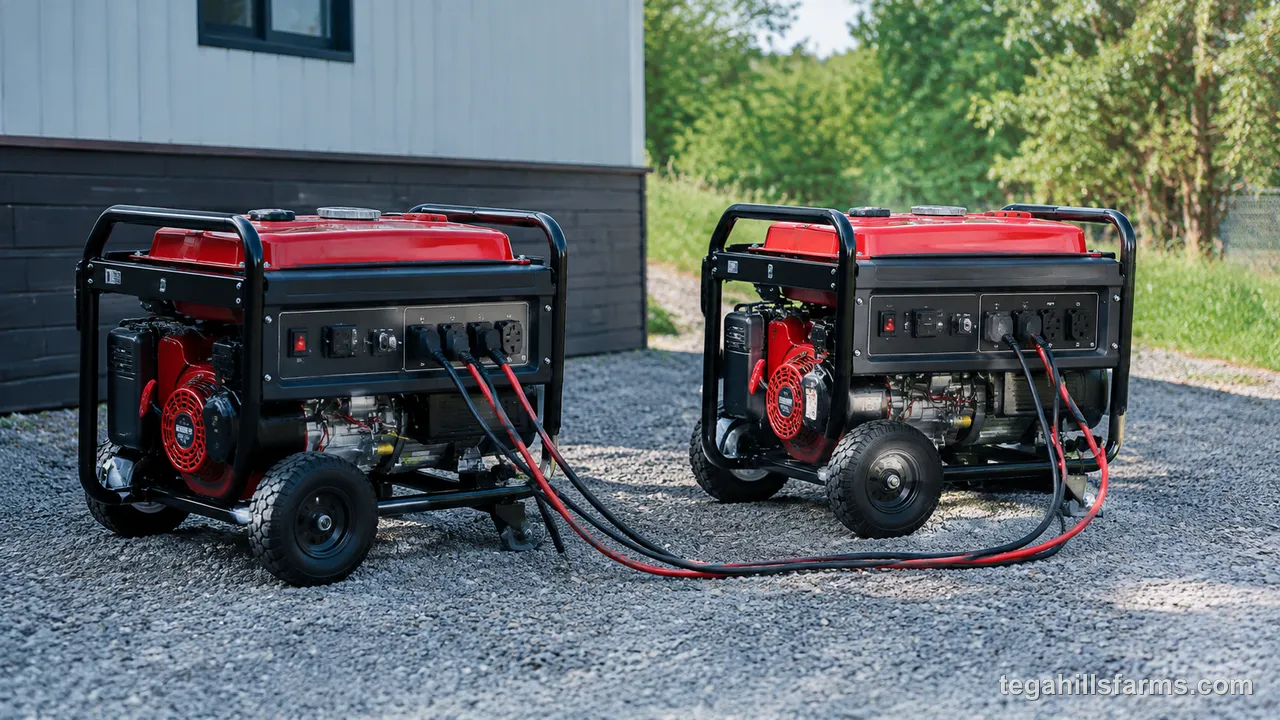
Cost, Weight and Portability
A pair is easier to carry and store, while a single large unit often costs less to own and is simpler to run. Handling is where two small generators pull ahead.
Each inverter unit is light enough for one person to move. A large generator usually isn’t, and it often needs wheels, a ramp or a second set of hands. Storage follows the same pattern: two small units tuck into corners that a big one won’t fit.
A single large unit has fewer parts to buy and maintain. You have one engine, one fuel tank and one set of controls. Price questions such as how much does a generator cost depend on size, features and fuel type, so compare similar tiers before deciding.
For a small outage kit, the pair wins. For a house you want to power with minimal fuss, one bigger unit is hard to beat.
Reliability, Redundancy and Fuel Use
A pair gives you N+1 redundancy, because if one unit fails the other keeps running. The trade-off is two engines to fuel and maintain.
N+1 means you have one more unit than the load needs. In a home setup, that lets the second generator carry the essentials while you repair the first. At large scale, this approach is why Generac cites reliability of up to 99.999% for MPS configurations with N+1, N+2 and beyond.
Partial load is another strength of a pair. When demand is light, one unit can often carry it while the other rests.
The downside is upkeep. Two engines mean two oil changes, two fuel tanks to refill and more to store in winter. Runtime questions like how long can a generator run come down to tank size and load, so plan refueling for both machines.
How Do You Run Paralleled Generators Safely?
Run paralleled generators safely by controlling placement and carbon monoxide first, then grounding, overload and fuel handling. Two engines double the exhaust, so placement matters even more than with a single unit.
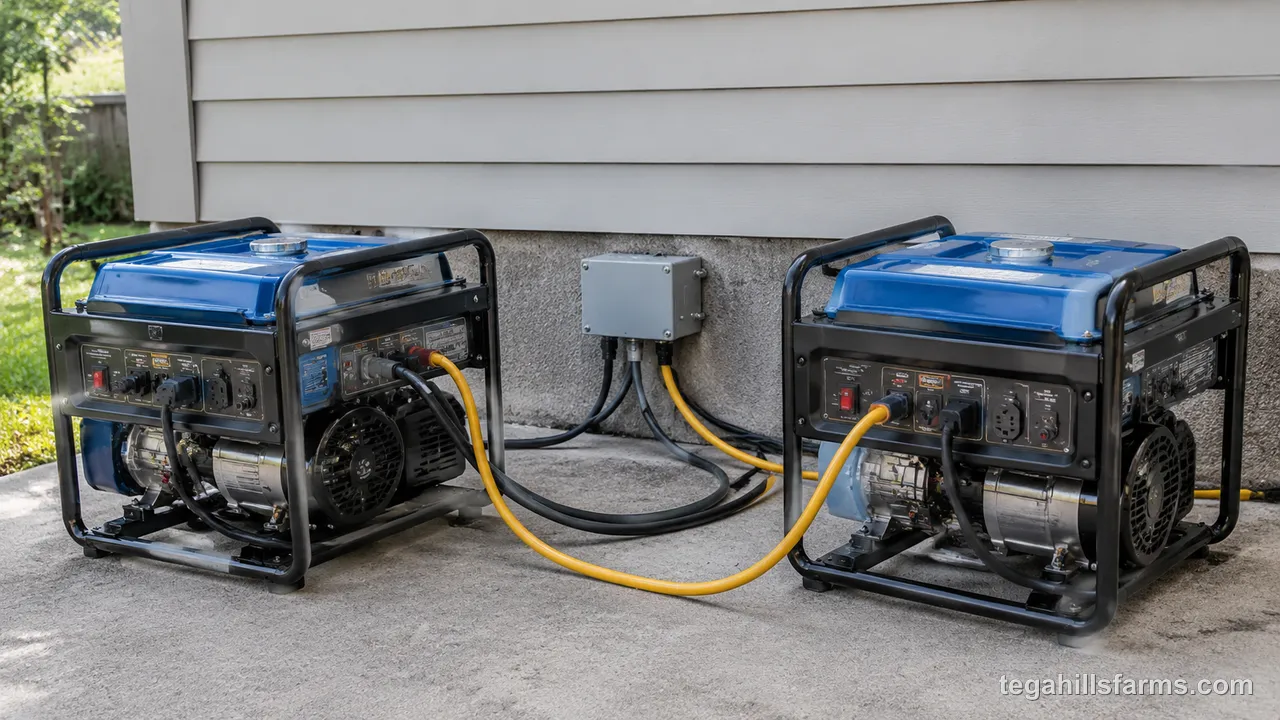
Placement and Carbon Monoxide
Both generators must run outdoors, away from windows, doors and vents, with space between each unit and its exhaust. Carbon monoxide is odorless and can build up fast near a home.
Point both exhausts away from the house. Keep the units apart enough that neither one breathes the other’s fumes. Never run them in a garage, even with the door open, or under a covered porch.
Place them on firm, level ground with open air on all sides. Keep rain off the control panels with a proper generator cover or tent made for that purpose, and never run a unit under a sealed tarp.
A battery-powered carbon monoxide alarm inside the house is cheap insurance. Test it before an outage, not during one.
Grounding, Overload and Fuel Handling
Follow your manual’s grounding instructions, keep the combined load below the paired rating, and let both engines cool before refueling. Each habit protects people or equipment.
Grounding rules vary by model, so check what the manual says for portable units. Don’t improvise a ground rod or skip the step.
Watch the load as you add appliances. Overloading the pair trips a unit or strains both. Add devices gradually and keep the heavy hitters, like space heaters, off the circuit.
For fuel, shut both units down and let them cool before topping off. Spilled fuel on a hot engine is a fire risk. Store fuel in approved containers, well away from the units.
A cord with a plug on each end looks like a clever fix when a kit is backordered, but nothing in it keeps the two outputs in step. If the units come on at different points in their cycle, they push against each other instead of sharing, and the damage lands on windings and wiring. What does that do to the generators and the circuits in your house, and what is the safe way to get power to your panel?
Can You Parallel Generators Without a Parallel Kit?
Skipping the kit is unsafe: homemade cables can’t synchronize two units, and feeding a house panel without a transfer switch or interlock risks backfeed. A kit exists because paralleling needs more than a connection.
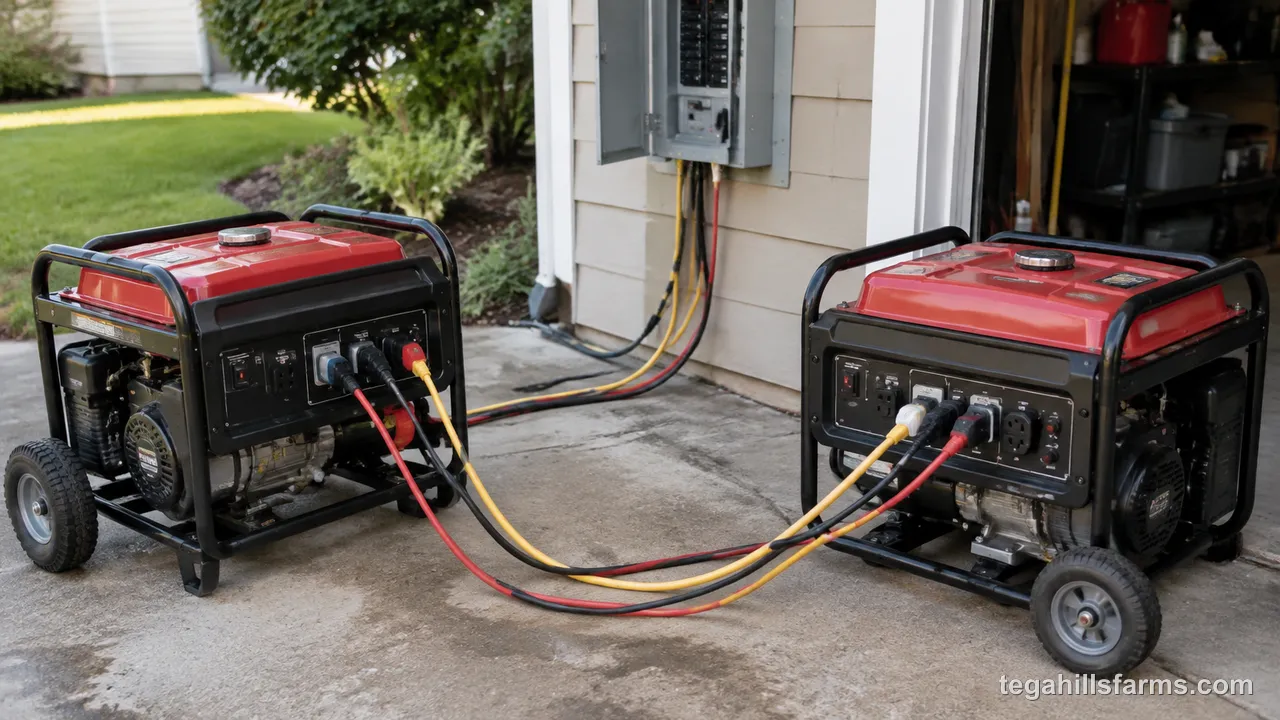
Why Homemade Cables Fail
A homemade cable is only a wire, while a kit synchronizes the units. Without matching phase, the generators fight each other and can damage their windings.
A parallel kit does more than join two outputs. It links the control electronics so both inverters produce power in step. A plain cord can’t do that.
When two outputs are out of phase, current surges between them. The result is overheating, tripped breakers and, in the worst case, burned windings in one or both generators. Wiring downstream can take damage too.
Even identical units won’t line up by luck. The fix is the maker’s kit for your model, not a cleverer cable. It costs far less than replacing a generator.
Feeding a House Panel Without Backfeed
Connect a generator to a house panel only through a transfer switch or interlock, because plugging into an outlet backfeeds the grid and endangers utility workers. A proper setup isolates the house from the utility lines.
Backfeed happens when generator power flows back out through the service lines. Linemen working on a supposedly dead line can be electrocuted. It can also damage household wiring and the generator itself.
A transfer switch or interlock prevents that by disconnecting the house from the grid before the generator feeds it. Installation involves your main panel, so it belongs with a licensed electrician in most areas. The walkthrough on how to install a generator transfer switch covers what the job involves.
For the bigger picture of running circuits in your home, how to power house with generator explains the options. Don’t use a male-to-male cord to connect a generator to an outlet.
How Can You Tell Paralleled Generators Are Not Sharing the Load Evenly?
Paralleled generators share evenly when both engines sound and respond alike, and one unit working harder is the first warning sign. Catching it early protects both machines.
Other signs follow the same pattern. Repeated tripping on one unit points to an overloaded or struggling half. One engine surging or laboring while the other idles suggests it is carrying more than its share.
Watch for uneven wear, too. If one unit runs hotter, burns oil faster or needs service sooner, the pair may not be balanced. A unit that drops out of step or won’t stay in sync is also a flag.
When you see any of this, stop and unplug the appliances. Shut the units down in order and inspect the cable, the receptacles and both machines. If one unit refuses to start, work through why a generator won’t start before you blame the kit.
Running on with a lopsided load invites a failure that could take out both units. Stopping early costs you a few minutes of power.
How Do Industrial Generator Paralleling Systems Differ?
Industrial paralleling uses switchgear and automatic synchronization to join large generator sets, while portable kits just link two inverter units through a cable. The goal is the same, but the controls are far more elaborate.
In a commercial system, a synchroscope or automatic controller matches voltage, frequency and phase before a unit joins the bus. Switchgear then connects each genset to a common line. Frequency must match exactly, which in the U.S. is 60 Hz.
Load sharing relies on two control modes. With droop, engine speed falls slightly as load rises, so units balance themselves. Isochronous mode holds frequency steady and uses dedicated controls to split the load.
Redundancy planning sits on top of that. Generac’s MPS line shows the scale: a Gemini Twin Pack puts two 500 kW units in one enclosure for 1000 kW of output, with a footprint 20% smaller than a single large genset. A single bus can take up to seven Gemini units, or 7000 kW, without extra switchgear.
None of that applies to a home setup. Two portable inverter units and a matching kit are all you need.
Parallel Generators FAQ
Can you parallel generators for marine use?
Portable parallel kits are designed for land-based use, and boats add fixed wiring, grounding and ventilation requirements. Check the generator maker’s guidance first. For any marine installation, have a qualified marine electrician confirm the setup before you connect anything.
Can you parallel a gas generator with a propane one?
Not in most cases. Makers require matching fuel type along with matching voltage and frequency. A dual-fuel pair can work if both units are rated for paralleling and run on the same fuel. Always confirm against your manual and the kit’s compatibility list.
Can you use an extension cord between the generators and the kit?
No. The parallel cable that comes with the kit is built to connect the two units directly. Extending it or swapping in a generic cord can break synchronization. Use only the cable made for your model, and keep both units close enough for it to reach.
Which generator do you start first?
Most makers have you connect the cable with both units off, then start them with nothing plugged in. Some specify an order, so follow your manual. Once both run steadily and the indicators look normal, plug in appliances one at a time.
Can you add a third generator later?
Portable parallel kits are built for a pair, so a third unit generally isn’t supported. If you need more capacity, a larger single generator or a modular commercial system is the usual route. Sizing your loads first shows whether two units are enough.
Write Your Review
No reviews yet. Be the first to share your experience!