

A generator that won’t start after sitting usually has stale gasoline in the tank and varnish in the carburetor. Fuel breaks down during storage, and the residue plugs the tiny passages the engine needs to run.
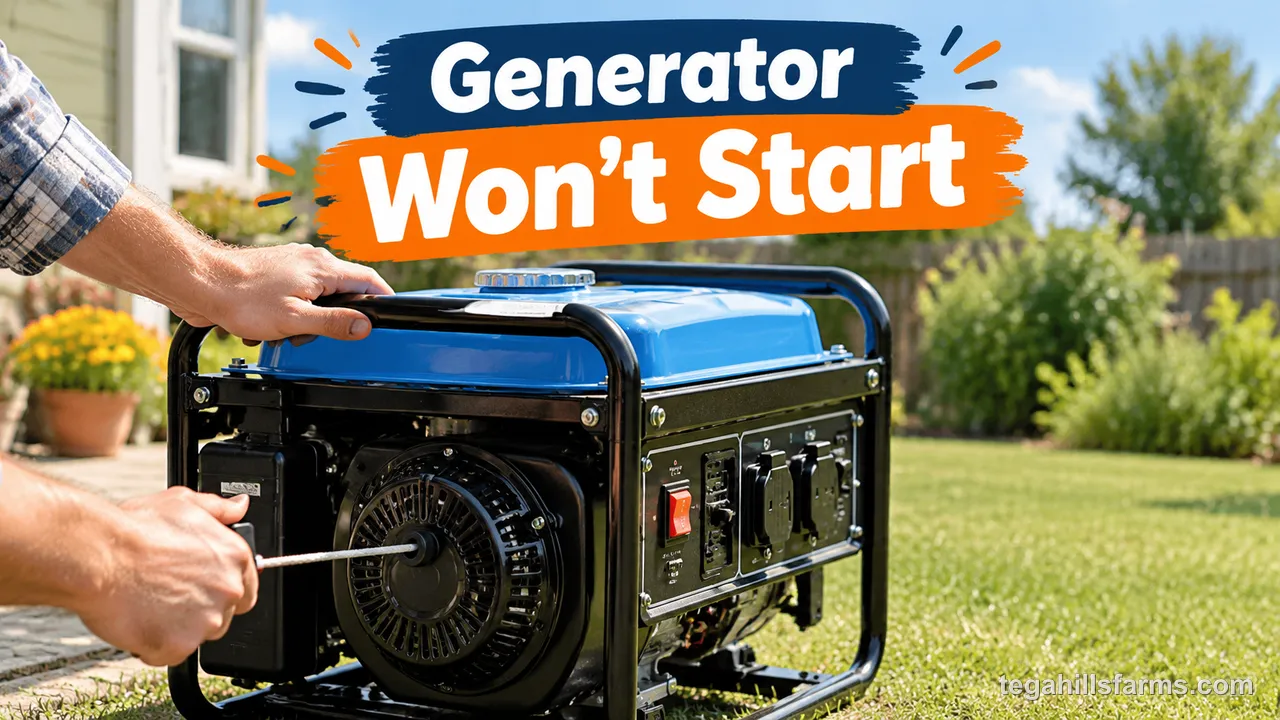
Cleaning that system and refilling with fresh gas fixes most of these cases. Spark plug, oil level, air supply and battery problems cause the rest.
Most owners worry that a repair means a shop visit or a new unit. A fuel clog is rarely that serious. It is mostly a matter of draining, cleaning and restarting in the right order.
Before you pull the cord again, open the fuel cap and smell the gas. A sour, varnish-like odor tells you where to start.
Why Won’t a Generator Start After Sitting Unused?
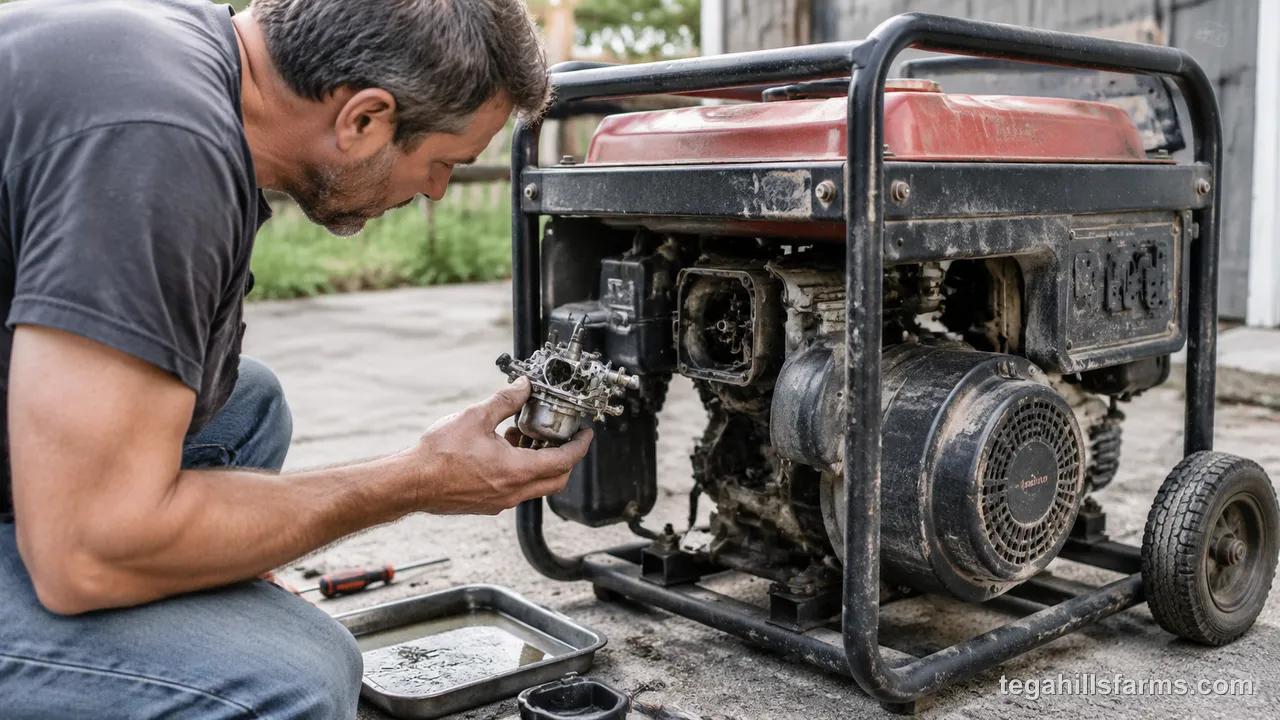
A generator that sat idle usually fails because old fuel turned into gummy residue that blocks the carburetor’s small passages. The engine cranks, but fuel never reaches the cylinder in a form it can burn.
Oil level, spark plug condition, air supply and the starter battery on electric-start models can also stop a start. Fuel is still the first thing to rule out, because it is the one thing that changes while a unit sits. Oil does not evaporate in the garage and a plug does not wear out on a shelf. Gasoline does degrade. That is why a machine that ran fine in spring can refuse to fire in fall.
If the same unit keeps leaving you stranded after storage, it’s worth reviewing how to choose a generator. Fuel system design and ease of draining differ a lot between models.
How Does Old Fuel Keep a Generator From Starting?
Old fuel stops a generator in three stages: gas breakdown in the tank, varnish in the carburetor, and telltale symptoms you can check before taking anything apart. Knowing the mechanism explains why a fresh tank alone often fails.
What Happens to Gas as It Sits in the Tank?
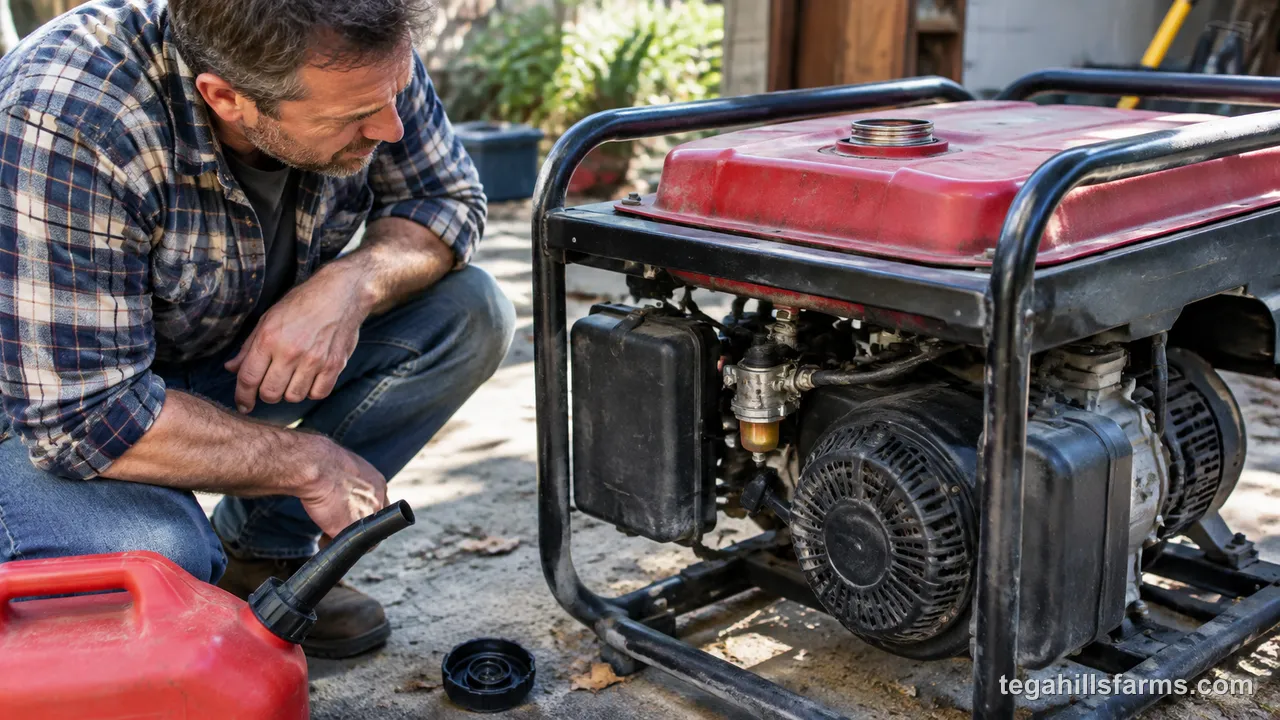
Gasoline loses combustibility as its lighter compounds evaporate, and fuel older than two months is already a risk for clogging the tank and carburetor. Fuel that looks normal can still fail to ignite.
Ethanol blends add a second problem, because ethanol absorbs moisture from the air. Water then settles in the tank and the fuel line and keeps the engine from firing cleanly.
A big volume of fuel raises the risk. More gas sitting longer means more fuel degrading and more room for moisture. Before topping off, ask how much gas will your generator use in a typical run. Whatever is left over starts aging the moment you shut the engine off.
How Does Varnish Clog the Carburetor?
As fuel evaporates inside the carburetor, it leaves sticky deposits in the float bowl, the jets and the narrow passages. The carburetor jet is the usual failure point because it meters fuel through a very small opening.
A thin film is enough to choke it. The engine then gets too little fuel to catch, even though the tank is full.
This explains why a unit may crank strongly and still never fire. The ignition side is fine, but the fuel path is partly or fully shut. Heavier varnish builds up in the bowl and can leave a hard crust, so spraying cleaner into the air intake rarely reaches where the problem is.
How Can You Tell Old Fuel Is the Culprit?
Old fuel shows up as sour or varnish-like smelling gas, darker color, and an engine that cranks without catching. Check these before you take anything apart.
- The gas smells sharp or sour, or looks darker than fresh fuel.
- The engine turns over normally but never fires.
- It sputters for a few seconds, then dies.
- The carburetor bowl is dry, or coated in a sticky film.
Several of these together point to fuel, not ignition. If the gas smells and looks normal and the engine still won’t catch, ignition becomes the stronger suspect.
How Do You Clear Old Fuel and Clean the Carburetor?
The repair runs in three steps: drain the old fuel, clean the carburetor, then refill, prime and restart. Work with a cold engine in open air, away from flames and anything that sparks.
How Do You Drain the Old Fuel Safely?
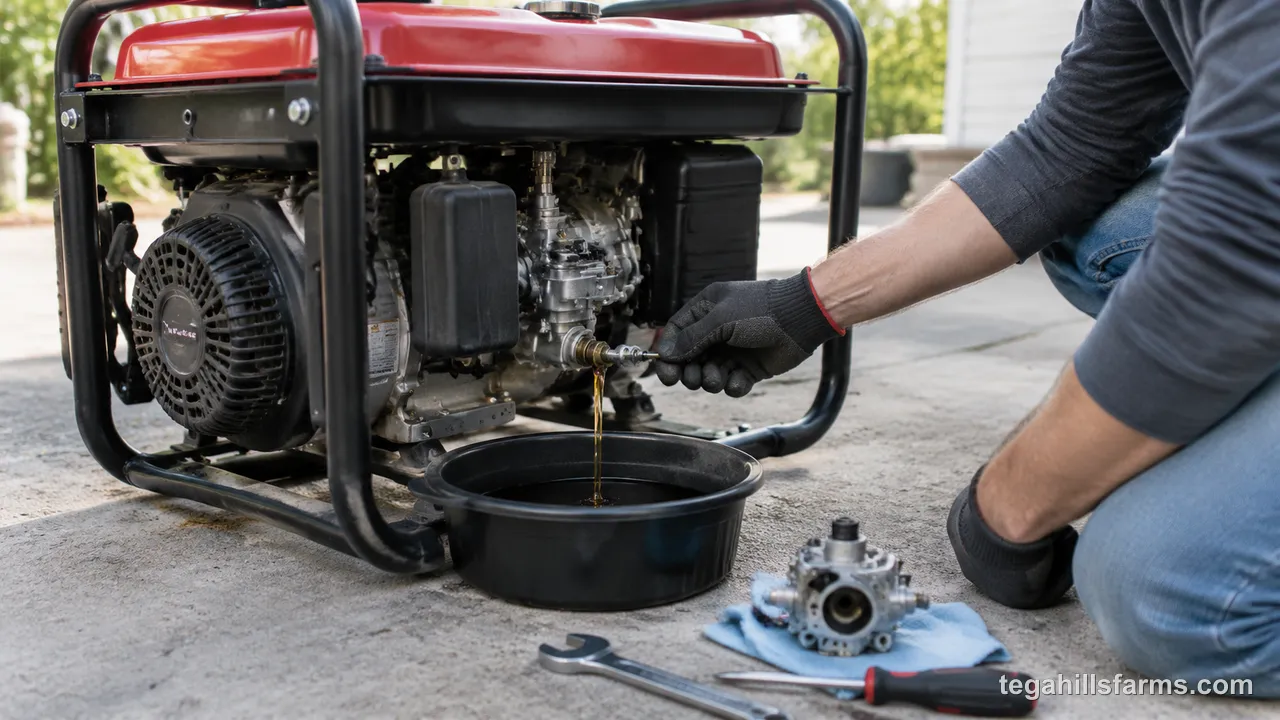
Shut the fuel valve, then empty the tank, fuel line and carburetor bowl of old gas with the engine cold and outdoors. Hot parts and fuel vapor are the main fire risk here.
Close the fuel valve first, then open the bowl drain screw over an approved fuel container. Open the valve briefly to let the tank and line empty into the container, then close it again. Wipe up any spill right away.
Do not pour old gas on the ground or down a drain. Take it to a household hazardous waste site or a collection event your community runs. Use a funnel and a container made for gasoline, and keep it away from the water heater, pilot lights and any running motor.
How Do You Clean the Carburetor?
You can clean a carburetor three ways: spray cleaner for light varnish, removing the bowl and clearing the jet for a real clog, or replacing the part when deposits are heavy. Start with the least invasive option that matches what you see.
For light buildup, remove the bowl, spray the jet and passages with carburetor cleaner, and check that light passes through the jet opening. Use a soft wire or a jet-cleaning tool, never a drill bit. Reassemble with the bowl gasket in good shape, since a worn gasket leaks fuel.
Pulling the whole carburetor is a bigger job. Photograph each linkage and spring before you disconnect anything. Work with the fuel off and the engine cold, and keep the carburetor away from open flame.
If the bowl is crusted, the jet is corroded, or cleaning doesn’t hold, a new carburetor or a repair shop usually costs you less time than repeated attempts. I’d draw that line at the second failed cleaning.
How Do You Refill, Prime, and Restart the Generator?
Add fresh fuel, open the fuel valve, set the choke and let fuel refill the carburetor before you start. The goal is for fuel to reach the carburetor bowl again.
Put fresh gas in the tank, open the valve and give it a moment to flow. Set the choke as your manual describes for a cold start, then pull or press start. If your model has a primer bulb, press it as directed.
A normal restart takes a few pulls, because the bowl has to refill. Once it catches, let it idle and ease the choke off gradually so it settles before you load it. For running procedure after that, see how to use a generator.
If it still won’t start, check for spark and fuel arrival next, then look at the oil level, plug and air filter.
What Else Can Stop a Generator From Starting?
If fresh fuel and a clean carburetor didn’t help, check oil level, the spark plug, air filter, choke and fuel valve settings, and the starter battery. Each is quick to rule out.
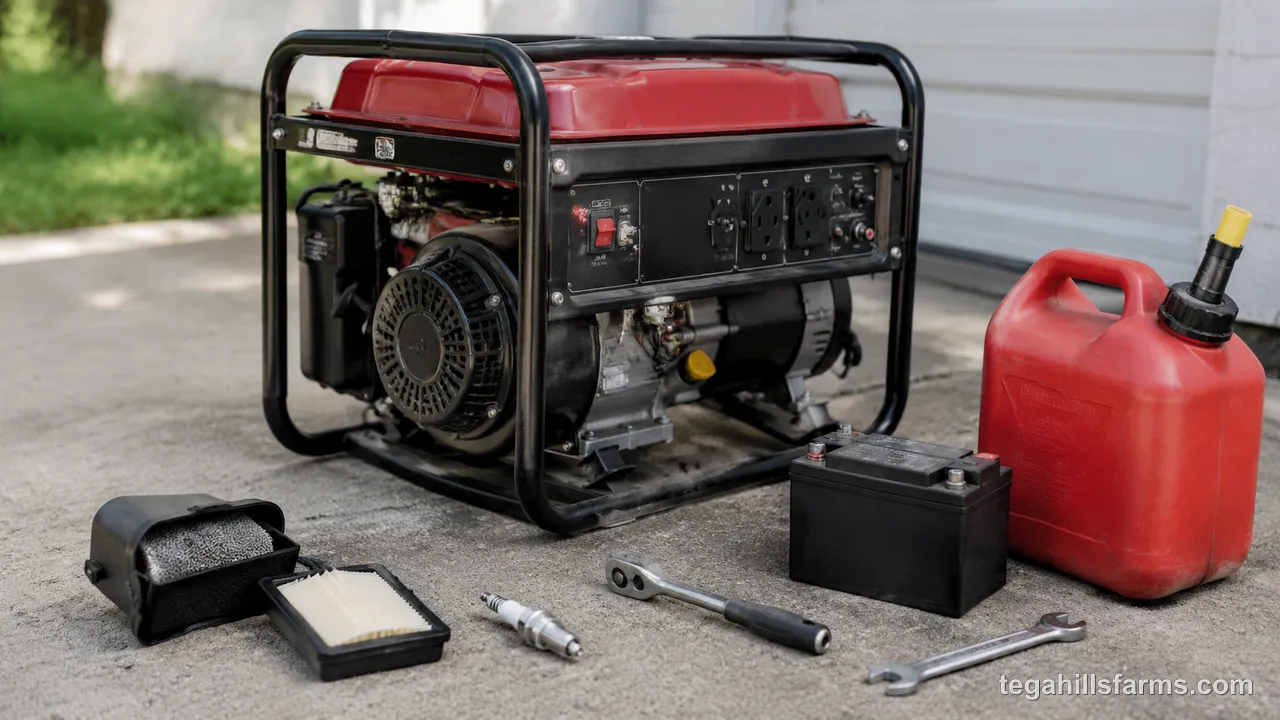
Is Low Oil Shutting the Engine Down?
A low-oil sensor can block starting entirely, so a unit with plenty of gas can still refuse to run. It exists to protect the engine from running dry.
Place the generator on level ground, since a tilt can fool both the sensor and the dipstick. Wipe the dipstick, reinsert it as your manual directs, and read the level. Top up with the oil type the manual specifies if it reads low.
Some units shut down with no warning when the level drops, while others show an indicator light. Either way, add oil before you suspect anything bigger. If the level is correct and the engine still dies at once, move on to the plug and fuel delivery.
Is the Spark Plug Fouled or Worn?
The spark plug ignites the fuel mixture, and a fouled or worn plug gives a weak spark or none. The usual replacement interval is 100 hours of use, or sooner if the plug is worn or cracked.
Pull the plug and look at it. A dry, light tan tip is healthy. Black, wet or oily deposits mean fouling, and a cracked porcelain or burned electrode means replacement. A plug fouled by old fuel can sometimes be cleaned with a wire brush, but a cheap new plug is the more reliable fix.
The right gap and plug type depend on the model, so take both from your owner’s manual. Install the new plug snugly, without overtightening, and reattach the plug cap firmly.
Are the Air Filter, Choke and Fuel Valve Set Correctly?
A clogged air filter, a wrongly set choke or a closed fuel valve each starves the engine of air or fuel. They are easy to miss because they are simple.
A dirty air filter chokes airflow. Remove it, check it, and clean or replace it per the manual. A choke left open on a cold engine leaves the mixture too lean, and a choke left closed on a warm one floods it.
The fuel valve is the one people forget after storage. If it was shut for winter, fuel never reaches the carburetor.
Check each control in turn before pulling the cord again. Fixing one of these costs almost nothing and takes minutes.
Is a Weak Battery Behind a Slow Crank?
On electric-start models, a weak or discharged battery produces a slow, labored crank or just a click. This can look like a fuel problem when the engine simply isn’t turning fast enough to start.
If the engine cranks briskly but won’t fire, the battery is probably fine and fuel or spark is the issue. If the crank is slow or silent, test the battery with a multimeter. Your manual gives the correct voltage reading for that model.
Clean corroded terminals and check that the connections are tight. If the battery won’t hold a charge, replace it. A manual pull cord, where fitted, lets you start the unit while you sort the battery out.
Is It a Fuel Problem or a Spark Problem?
A fuel problem means the plug fires but no fuel reaches the engine, while a spark problem means fuel arrives but no spark lights it. Separating the two stops the guessing and sends you to the right repair.
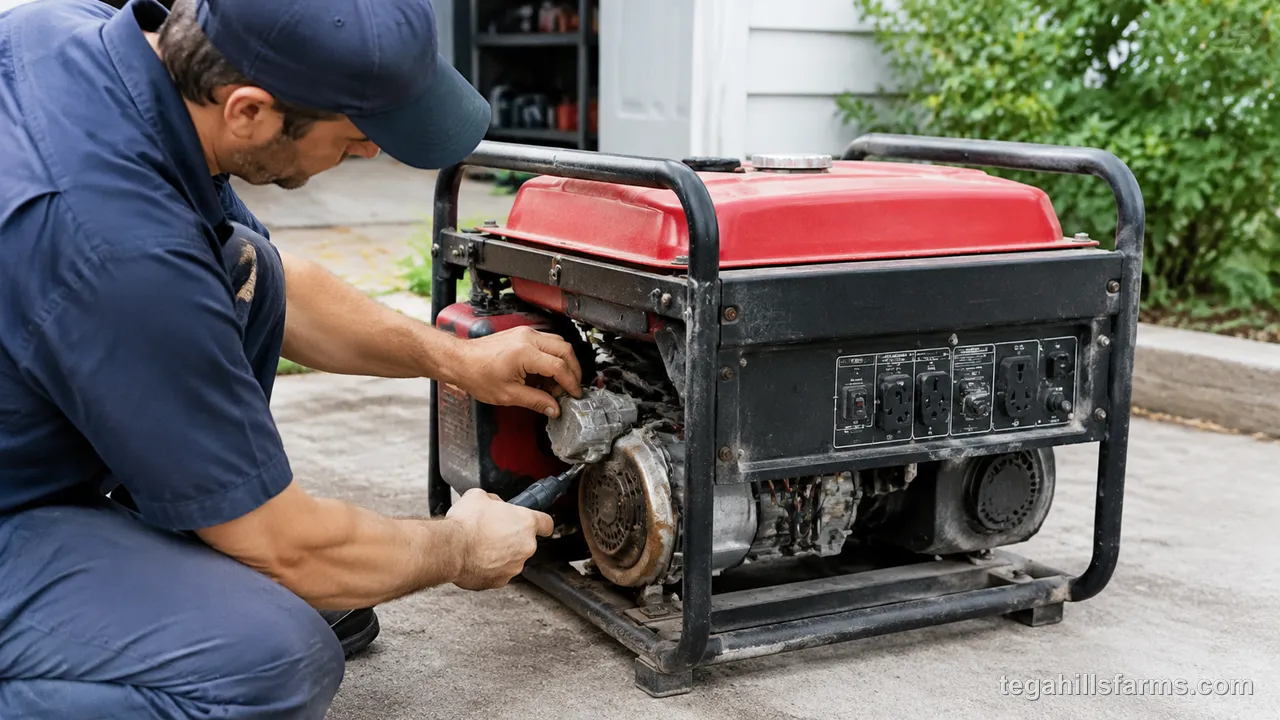
Spark Present but No Fuel Reaching the Engine
When the plug fires but the engine won’t catch, the cause is fuel delivery. Look at the fuel valve, a clogged fuel line, a dirty carburetor, and the fuel pump on models that have one.
Confirm whether fuel is arriving. Close the valve, open the bowl drain over a container, and open the valve again. A steady flow means the tank and line are clear, and a trickle or nothing points to a blockage upstream.
If fuel flows to the bowl but the engine still won’t catch, the carburetor jet is the likely culprit. Return to the cleaning steps. On pump-equipped models, a failed pump shows up as fuel that never reaches the bowl even though the line is clear.
Fuel Present but No Spark at the Plug
When fuel arrives and the engine still won’t fire, look at ignition: a fouled plug, a damaged plug cap, a failing ignition coil, or the oil-level shutoff. Each can cut spark.
Check for spark safely. Use a spark tester, which sits between the plug cap and the plug, and crank the engine with fuel vapor kept away from the area. Don’t hold the plug against bare metal near a fuel leak or wet fuel. No visible spark means a bad plug, cap or coil.
Swap in a known good plug first, since it is the cheapest test. If that doesn’t bring the spark back, check the oil level, then consider replacing the cap or coil.
How Do You Keep a Generator Starting After Storage?
Four habits prevent most of these failures: fuel stabilizer in the tank, draining or running the carburetor dry before storage, fresh fuel each season, and occasional run sessions. A few minutes of upkeep saves the repair described above.
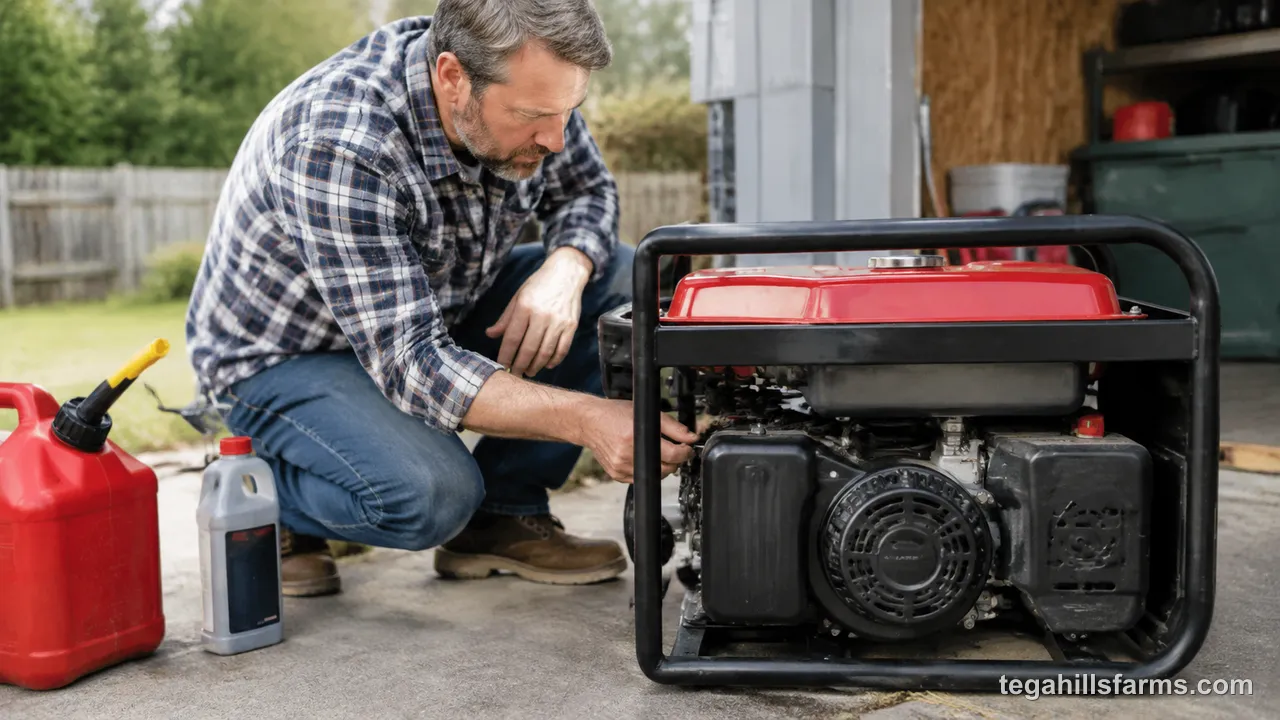
Add stabilizer to the tank and run the engine for a few minutes so treated fuel reaches the carburetor. For longer storage, shut the fuel valve and let the engine run until the bowl is empty, or drain the bowl. Use fuel you bought recently, not what was left in a can from last year.
Starting the generator now and then keeps the carburetor wet and the moving parts coated. Run it under a light load, then shut it down properly. It is the simplest insurance for a unit you rely on during outages.
A generator that quits mid-outage because the tank ran dry has pulled air into the fuel line and carburetor bowl. Pour in fresh gas and pull the cord, and it cranks without catching until fuel works its way back to the carburetor. Plenty of owners decide the engine is damaged at that point, so what actually has to happen before it fires again?
Why Won’t a Generator Restart After It Runs Out of Gas?
A generator that ran dry needs to be re-primed, not just refilled, because air in the fuel line and carburetor bowl keeps fuel from reaching the engine. A simple refill sometimes works, but often it doesn’t.
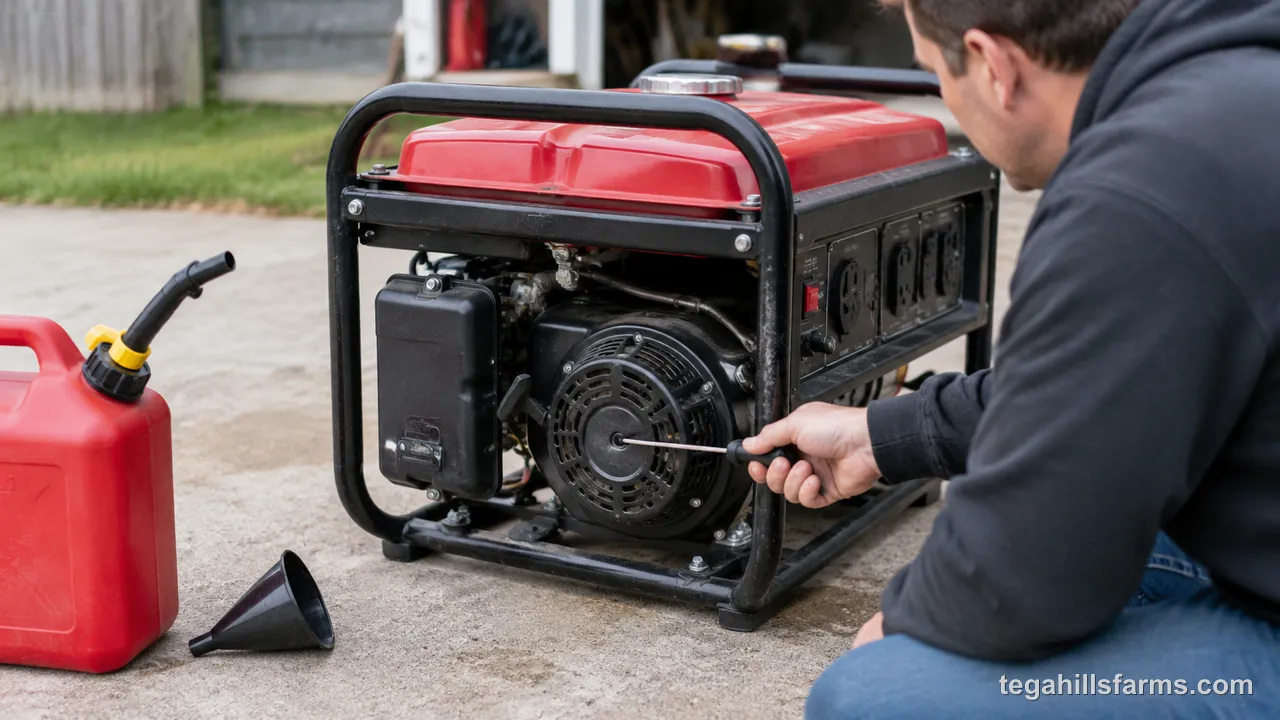
Once the tank empties, air fills the line and the bowl. Fresh gas has to push that air out before the engine gets a steady supply. Open the fuel valve, give the gas a moment to flow, and set the choke for a cold start. Then crank in short tries.
Use the primer bulb if your model has one. If the engine catches and dies, wait a bit and try again, because the bowl may still be filling.
A refill works when only a little air is in the line and the engine has recently run. It needs repriming when the line drained completely or the unit sat. If it still won’t pick up, check the fuel valve, the line for kinks or blockage, and the carburetor.
Is Starting Fluid Safe to Use on a Generator?
Starting fluid is safe only as an occasional diagnostic aid, and repeated use can damage the engine and create fire risk. A short burst tells you whether fuel delivery is the problem.
If the engine fires briefly on a spray and then dies, fuel isn’t reaching it. That points back to the valve, line or carburetor. It is a test, not a fix.
Overuse causes harm. Starting fluid has no lubrication and can burn too fast, which stresses the cylinder and can damage pistons and rings. Avoid it on engines with certain starting aids, and check the manual before using it on any model.
Fire is the bigger concern. Keep the spray away from hot surfaces, sparks and open flame, and don’t use it near a carburetor you’ve just opened or while gasoline is spilled nearby. Work outdoors. If the engine only runs on starting fluid, stop and fix the fuel supply.
Why Do New and Propane Generators Fail to Start?
These failures usually come from a setup oversight on a new unit or supply and switch issues on propane and dual fuel models, not from stale fuel. The cause changes with the situation.
Why Won’t a Brand-New Generator Start?
A new generator that won’t start is usually missing oil, has a closed fuel valve, or is tripping the low-oil safety switch. First-start oversights cause most of it.
Many generators ship with no oil in the crankcase. Add the right oil to the proper level before the first start, on level ground. Open the fuel valve, add fresh gas, and set the choke as the manual describes.
If oil is low, or the unit sits tilted, the safety switch blocks the start. Shipping-related settings can also matter, for example a switch left in the wrong position or a protective cap still on a vent. Read through the startup section of the manual once before pulling the cord, since it covers these steps for your model.
Why Won’t a Propane or Dual Fuel Generator Start?
Propane problems usually trace to the tank valve, the hose connection, the fuel selector position, or the regulator. The engine can be fine while the supply is not.
Open the tank valve slowly and check that the hose is fully seated. Confirm the selector switch is set to propane, not gasoline. A regulator that is damaged or not seated properly can restrict flow.
Test for leaks with soapy water on the connections, never with a flame. A stuck selector or a half-open valve explains many no-start cases. Some of this depends on features worth knowing before buying, so what to look for in a generator is a useful read if you’re comparing dual fuel designs.
Do Portable and Standby Generators Fail to Start for the Same Reasons?
No. Portable generators mostly fail from fuel, spark plug and manual-control issues, while standby units add battery, control panel and fuel supply factors.
A pull-start portable depends on you. Stale gas, a fouled plug, a closed valve or a wrong choke setting cover most failures. Standby generators start automatically, so they depend on a charged battery, a working controller and a steady fuel supply from a natural gas line or propane tank.
When a standby unit fails, the control panel often shows a fault code or indicator light. Those codes are model-specific, so use the owner’s manual to read them. They usually point to the failed system faster than guessing.
Even so, old fuel in a standby unit with a gasoline or propane supply can still cause trouble, and a dead battery is a common cause of an automatic unit that does nothing.
Generator Won’t Start: Common Questions
Why won’t my Honda generator start?
Work through fuel, oil and spark in that order. Check that the fuel valve is open, the gas is fresh, and the oil is at the proper level on flat ground, since a low-oil system can block starting. If those check out, inspect the spark plug and clean the carburetor.
Why won’t my Champion generator start?
Old fuel is the most common cause on any unit that has sat, so drain the tank and clean the carburetor bowl first. Then confirm the choke and fuel valve settings, the oil level and the plug. On electric-start models, test the battery. Your owner’s manual has the exact steps for your model.
Why won’t my Firman generator start?
Check the basics before anything else: oil level, open fuel valve, correct choke position, and fresh gas. On a dual fuel Firman, also confirm the fuel selector matches the fuel you’re using and the propane valve is open. If it still won’t catch, the carburetor is the next suspect.
Why won’t my Craftsman generator start?
Older Craftsman units often sit for long periods, which makes stale fuel and a gummy carburetor the likeliest cause. Drain the old gas, clean the bowl and jet, and replace a fouled plug. If it cranks but never fires, check for spark and look at the air filter.
Why won’t my pull-start generator fire even though it turns over?
An engine that turns over but doesn’t fire is getting either no fuel or no spark. Confirm fuel reaches the carburetor bowl, then check the plug for spark. Low oil can also keep the engine from firing, so verify the level on flat ground before taking parts off.
How often should I change the spark plug in a generator?
Replace it on the schedule in your owner’s manual, and sooner if the electrode is worn or the porcelain is cracked. A fouled plug can cause hard starts and rough running. Use the plug type and gap the manual lists for your model.
Write Your Review
No reviews yet. Be the first to share your experience!