

To size a generator, add up the running watts of every appliance you want powered at the same time, then add the starting watts of the single largest motor load. Round the total up with a safety margin so the unit never runs at its limit.
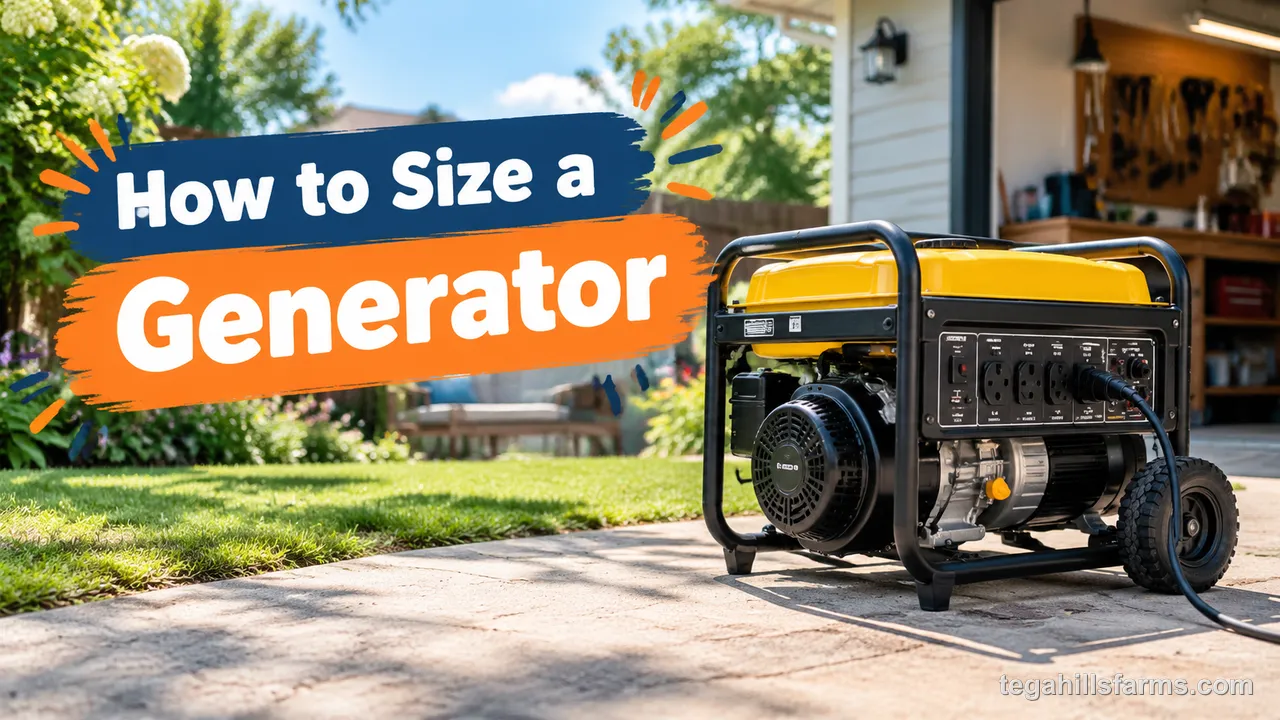
The method needs three things: a load list of what runs together, the surge from your biggest motor, and the right units, since spec sheets mix watts, kW, kVA, and amps. Most homeowners can finish it with nameplate wattages and a calculator.
The worry is getting it wrong. A unit that is too small overloads and shuts down when a compressor starts. One that is too large burns fuel and costs more than the job needs.
Start by walking the house and writing down the nameplate wattage of anything with a motor. The refrigerator and sump pump usually set the number.
What Is the Difference Between Running Watts and Starting Watts?
Running watts are the steady power an appliance draws once it is on, while starting watts are the short surge a motor or compressor pulls to get moving.
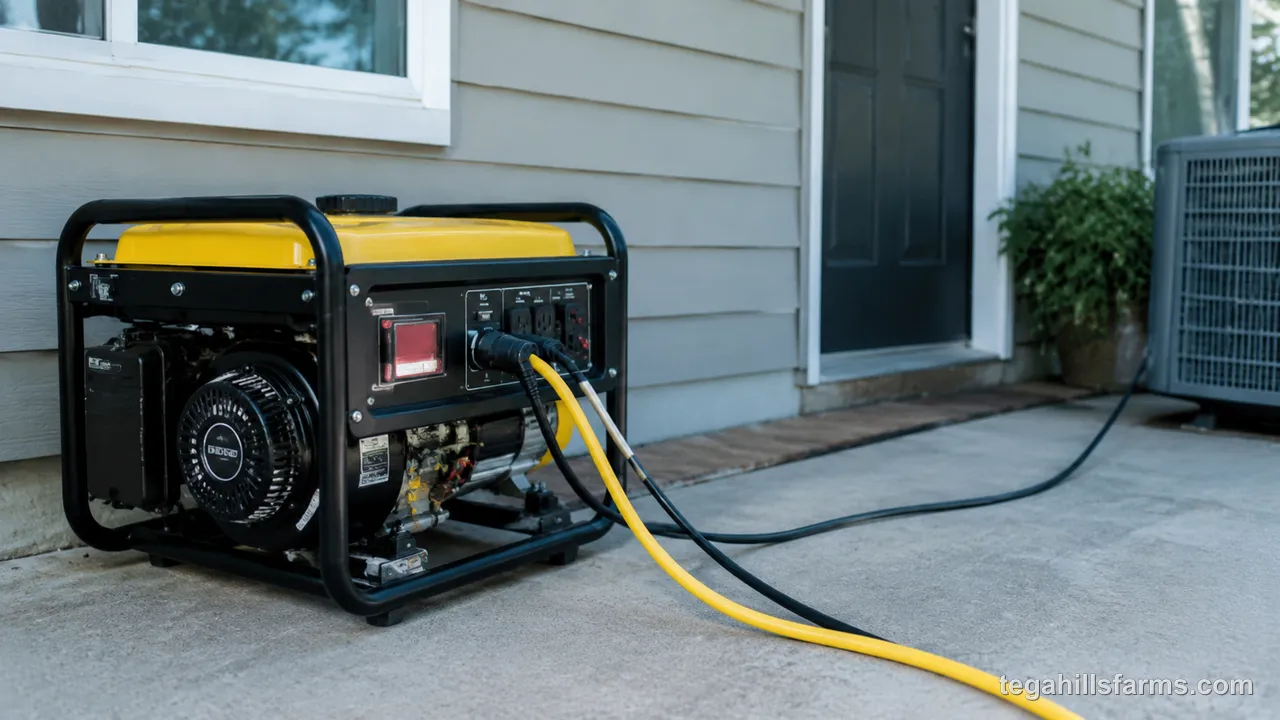
Lights and heating elements draw about the same at startup as they do while running. Motors do not. A compressor or pump needs a hard push to turn from a standstill, and that push lasts only a second or two.
The surge is what overloads an undersized generator. A unit rated for your steady load can still stall or trip its breaker when a motor kicks in, because the engine has to deliver the extra power instantly. That is why the starting figure, not the running one, often decides the rating.
Sizing is one step in the wider process of how to choose a generator, which also covers fuel type, features, and runtime.
How Do You Add Up Running Watts and Starting Watts for Your Appliances?
Sizing starts with a load list of what runs together, then adds the starting surge of your biggest motor, checked against typical wattages for each appliance type. Each step changes the final number in a different way.
Which Appliances Belong on Your Load List?
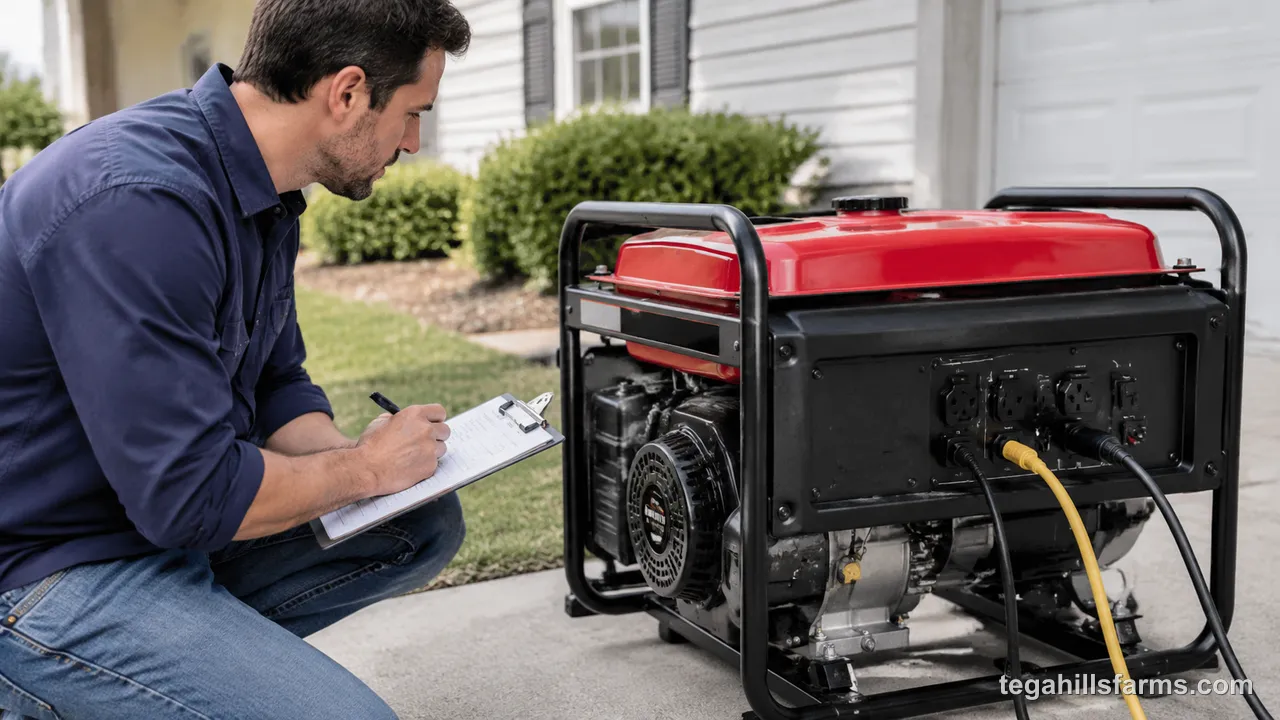
Your load list should hold the must-run items, such as refrigeration, a sump pump, lighting, and heating controls, and leave convenience loads off until the essentials fit.
Find each wattage on the nameplate or in the manual. If the label gives only amps and volts, multiply the two to get watts. Write down running watts first, then note which items are motors.
Only items that run at the same time count toward the total. A washer and a microwave that you never use together do not both belong in the sum. This is where most people overshoot, because they add every appliance in the house.
Be strict about what is truly essential. A freezer matters in a long outage, and a second television does not. For the wiring side of feeding a whole panel, see how to power house with generator.
How Do Starting Watts Change the Final Number?
The running watts of all active loads stack, but you add only the surge of the largest motor, because motors rarely start at the same instant.
The final rating is the combined running watts plus the extra surge of that one motor. A refrigerator cycling on while a sump pump is already running is a normal case. The generator carries the pump’s steady draw and absorbs the fridge’s surge on top.
Staggered startups are why the required rating stays lower than stacking every surge. Adding every motor’s starting watts would leave you with a generator far bigger than you need.
There is one catch. If two large motors might start together, for example when power returns and everything restarts at once, plan for both. A simpler fix is to switch big loads on one at a time after the generator is running.
What Do Typical Appliance Wattages Look Like?
Household loads fall into three groups by how they draw power: resistive items, motor loads, and heavy HVAC.
Resistive items, such as lights, toasters, and space heaters, draw steady power with little or no surge. Motor loads are different. A refrigerator draws about 700 watts while running, then over 2,000 watts for a few seconds when the compressor starts. A sump pump sits closer to 1,000 watts.
Heavy HVAC, especially a central air conditioner, brings the largest motor surge in most homes. Its compressor can outweigh everything else on the list.
Treat these figures as a guide. The nameplate on your own appliance beats any generic chart, since models vary widely. If you want a worked answer for your own house, how big of a generator do i need walks through one.
How Do You Convert Between Watts, kW, kVA, and Amps?
Converting units comes down to two links: kW to kVA through power factor, and amps and horsepower to watts through voltage and motor conversion.
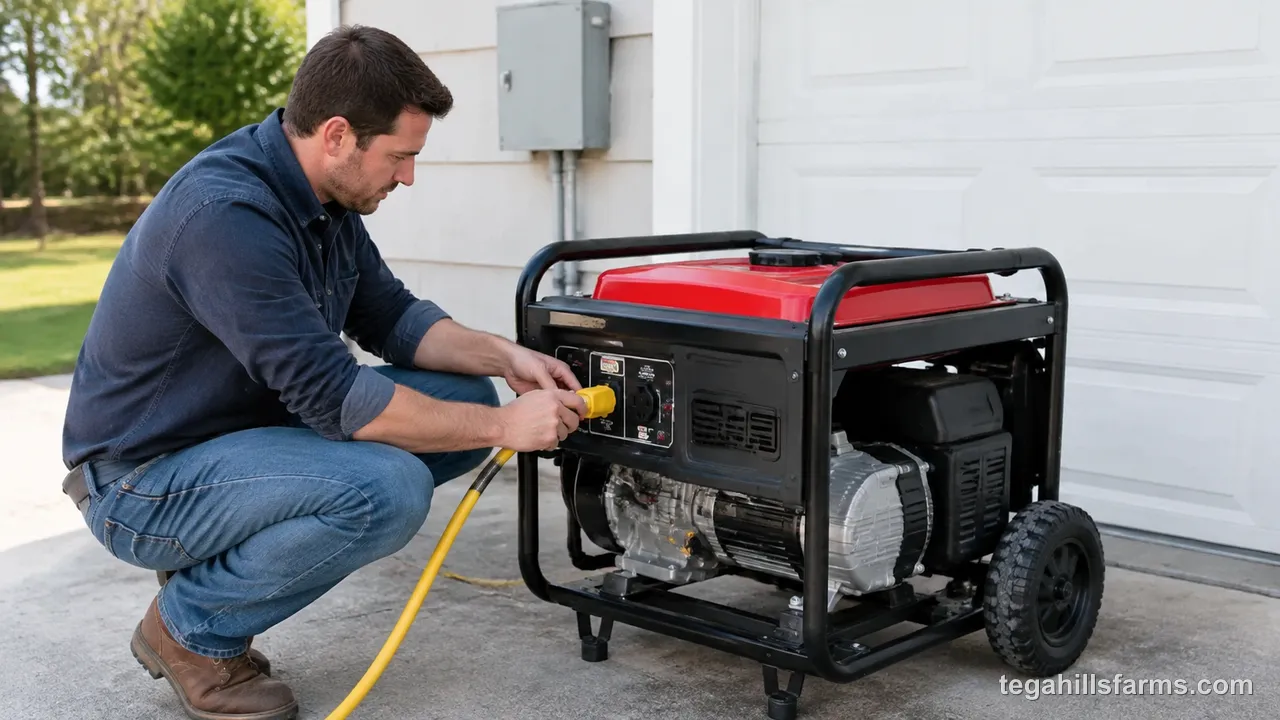
One kilowatt is 1,000 watts, so a spec sheet in kW and a label in watts describe the same thing. The same generator can also carry a kVA rating and an amp rating.
How Do kW and kVA Relate Through Power Factor?
Power factor is the ratio of real power in kW to apparent power in kVA, and generators are commonly rated at a power factor of 0.8.
Appliances are discussed in kW because that is the useful work they do. Generators are rated in kVA because the alternator must carry the full current, including the part that does no useful work. Divide the kW load by the power factor to get the kVA you need.
A 100 kW load at a 0.8 power factor calls for a minimum of 125kVA. The same real load needs a bigger kVA rating because some capacity goes to apparent power.
Do not confuse kW with kWh. The kWh on your utility bill measures energy used over time. The kW on a generator measures how much power it can deliver at one moment.
Where Do Amps and Horsepower Fit In?
Motor horsepower converts straight to electrical load at 746 watts per horsepower, and amp draw tells you the current the generator and its breakers must carry.
A 100 HP motor works out to 74.6 kW by pure unit conversion. At 93% efficiency, the motor draws about 80.2 kW, because it pulls more electrical power than it delivers at the shaft.
Amps depend on voltage. A 500 kW generator carries roughly 752 amps at 480V, but roughly 1,736 amps at 208V. The power is the same, and lower voltage means more current. Breakers and cabling are sized to that current, so the voltage on the nameplate matters as much as the kW.
How Much Extra Capacity Should You Leave as a Safety Margin?
Add a safety margin of 10 to 20 percent to your combined running and starting watts for home use, and keep a primary generator in the 70-80% load band.
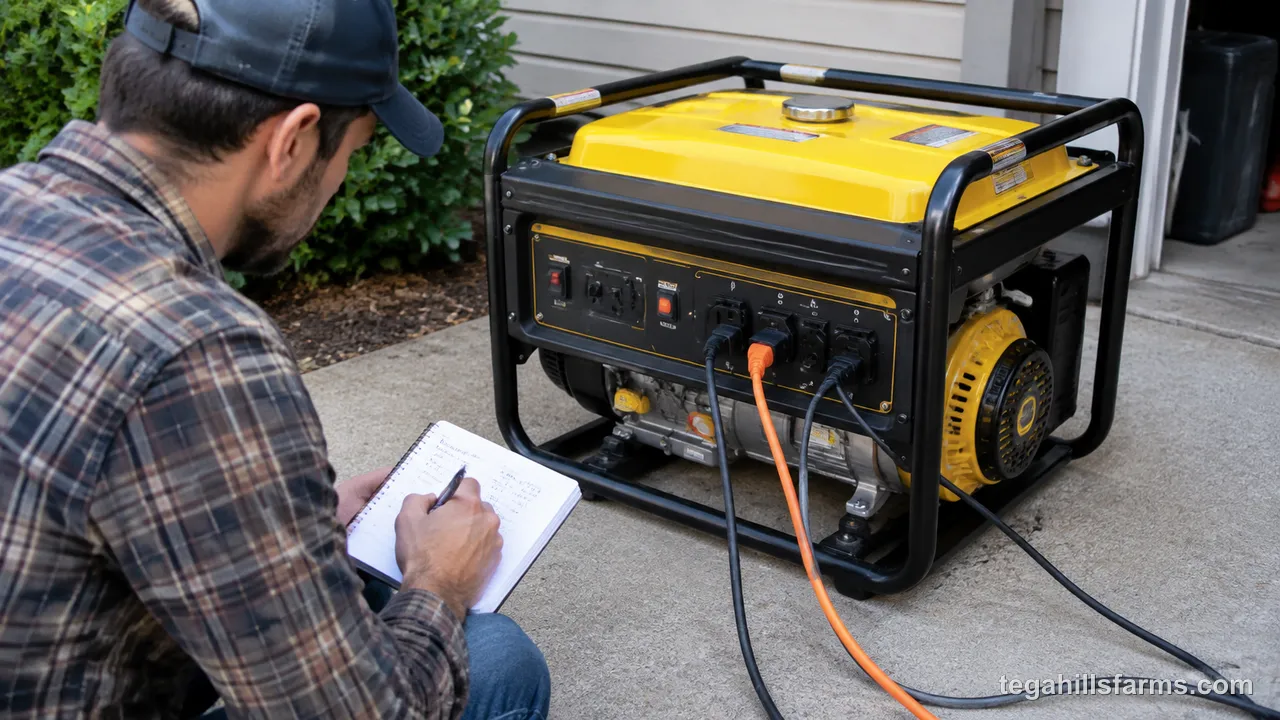
Running near the limit shortens engine life and leaves no room for a load you add later. Heat builds up, and a single extra appliance can trip the unit. Larger systems use a bigger margin of 20-30%, and one sizing tool adds 25% automatically (Power Electrics).
Maximum capacity is a short-term state, not a setting. Plan on about 30 minutes at most at full output. How long a generator can run overall depends on fuel and upkeep, which how long can a generator run covers.
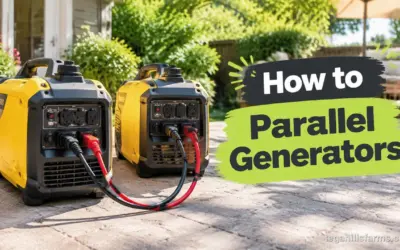
I would rather move up one size than live at the edge of a rating. If one unit cannot carry the load, how to parallel generators explains how to add capacity by linking two.
What Size Generator Does a Typical Home Need?
Home generator size depends on which circuits you back up and how large the motor loads on them are, more than on floor area. Essentials such as a refrigerator, sump pump, lights, and a few outlets fit 5,000–7,000 watts. Most appliances, including HVAC in a small home, call for 7,000–10,000 watts. Whole-house coverage runs 10,000–20,000+ watts.
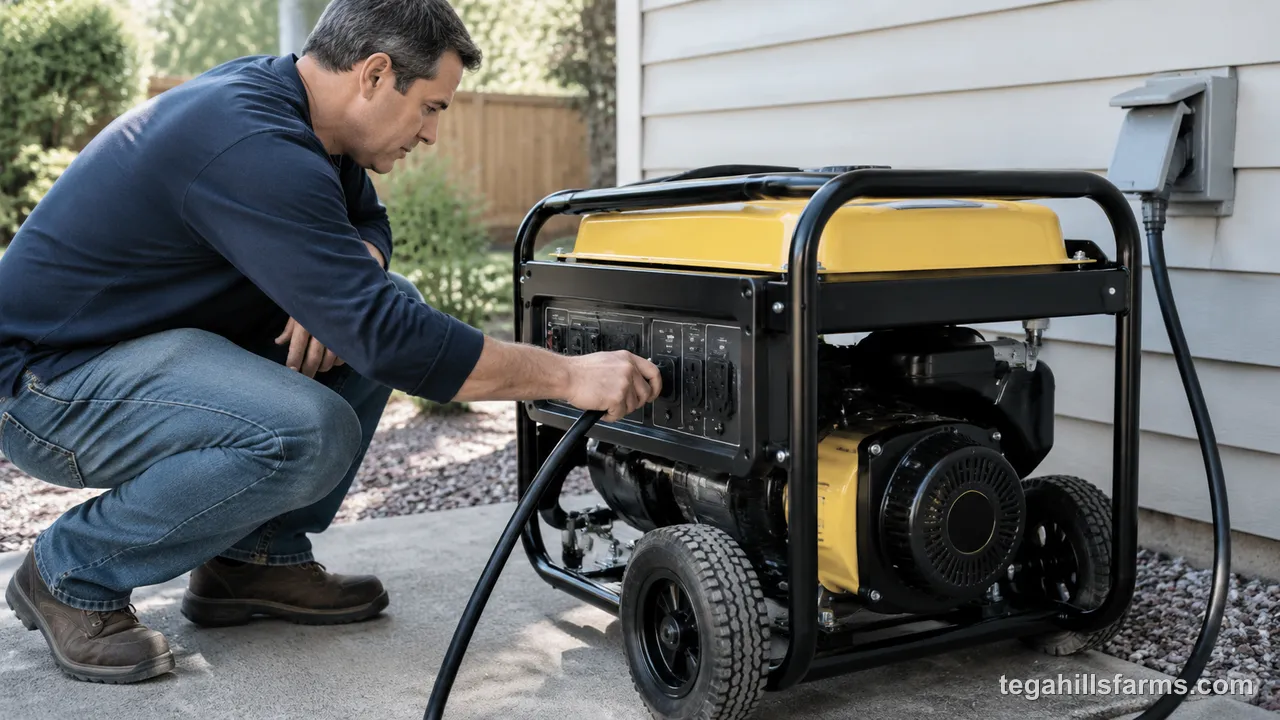
What Size Generator Fits a 1,200, 1,500, or 2,000 Square Foot Home?
A 1,200, 1,500, or 2,000 square foot home can all land in the essentials band if you back up only critical circuits, and each moves up a band as you add air conditioning or electric heat.
For a 1,200 square foot home with gas heat and no central air, the essentials band is often enough. Floor area adds little because the refrigerator and sump pump do not grow with the house.
At 1,500 square feet, more circuits tend to matter, such as a second refrigerator or a few more outlets. Central air conditioning in that home pushes you into the mid band. A 2,000 square foot home with central air or electric heat often reaches the mid band or higher if you want broad coverage.
Square footage mostly sets how many circuits you might want. Your nameplate loads set the generator.
What Pushes a Home’s Generator Size Up?
Four loads raise the requirement most: central air conditioning, well pumps, electric heat, and electric ranges.
Central air and well pumps are motor loads. Their compressors or motors surge hard at startup, and that single start can decide the rating for the entire house. Size for the biggest motor, then add everything else running at the same moment.
Electric heat and electric ranges work differently. They are resistive, so they bring little surge but a large steady draw that stacks on top of everything else.
If you can leave one of these off the backed-up circuits, you can drop a band. Gas heat and a gas range keep the requirement lower, and a well pump on a separate circuit is often worth keeping.
Which Fits Your Load: A Portable or a Standby Generator?
A portable generator suits selected appliances and circuits, a standby generator covers the whole house, and a transfer switch decides which circuits either one must carry. With a portable unit you choose which loads run together. With standby you size for the panel.
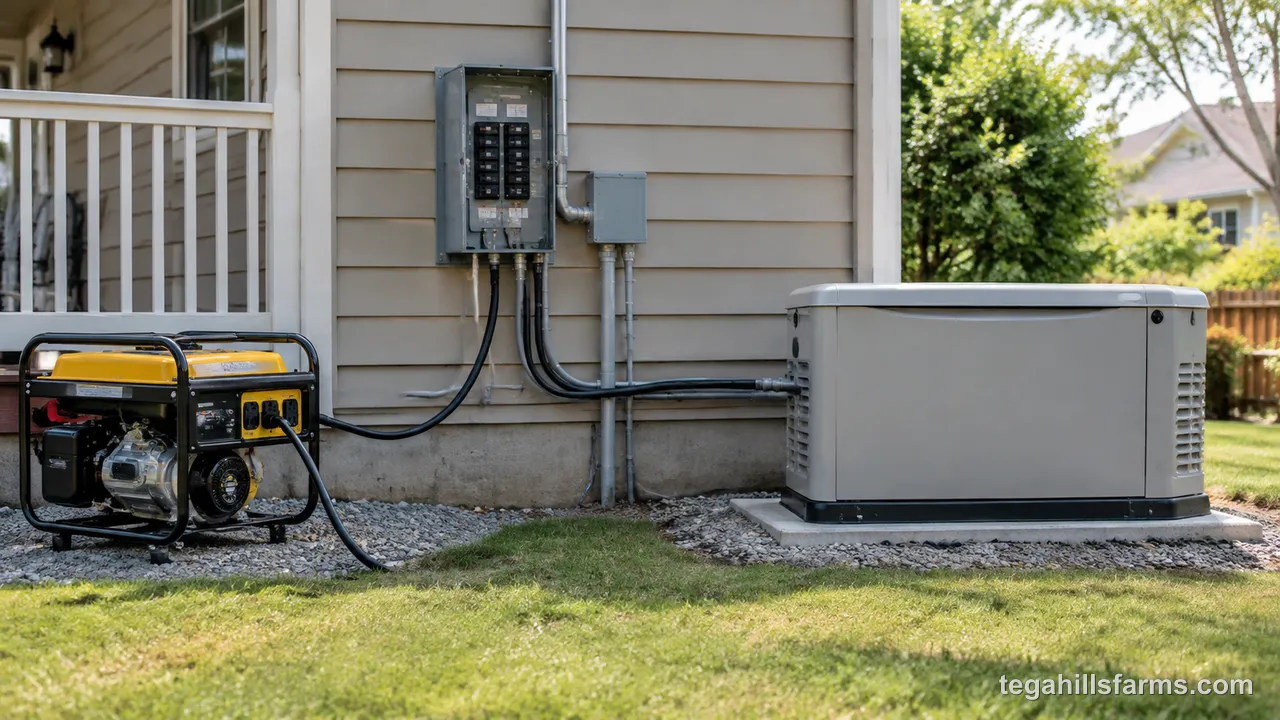
Portable Generators for Selected Appliances and Circuits
A portable generator can run a handful of must-run loads, such as a refrigerator, sump pump, and some lights, at the same time.
Its smaller output means you pick which loads share the unit. You might run the fridge and pump together and leave the microwave for later. That makes a portable unit a good fit for short outages and for people who accept some juggling.
Most portable units burn gasoline or propane and run only as long as the tank allows. They also have to run outdoors, away from windows and doors, because of carbon monoxide.
Standby Generators for Whole-House Coverage
A home standby generator is permanently installed and sized for a panel or a large block of circuits, starting automatically when utility power drops.
That makes it the better match for bigger and more automatic loads, such as central air, a well pump, and electric heat. It usually runs on natural gas or propane from a fixed supply, so refueling is rarely an issue.
Generac puts a typical installed home standby system at roughly $8,000 to $16,000, covering the unit, system materials, and installation. For cost across both types, how much does a generator cost breaks it down.
Where Does a Transfer Switch Fit In?
A transfer switch connects a generator to your home’s wiring safely and isolates the circuits it will carry, which keeps power from feeding back into utility lines.
It also limits what the generator must handle. A switch wired to a few essential circuits means the unit only has to cover those, so the rating you need stays lower. A switch tied to the full panel means the generator must be sized for everything you might turn on.
Wiring details are covered in how to install a generator transfer switch.
When Should You Bring in an Electrician for Load Calculations?
Yes, bring in a licensed electrician for a whole-house connection, for large motors, and for any code-based load analysis. A rough load list is fine for a portable unit that plugs into appliances, but not for permanent wiring.
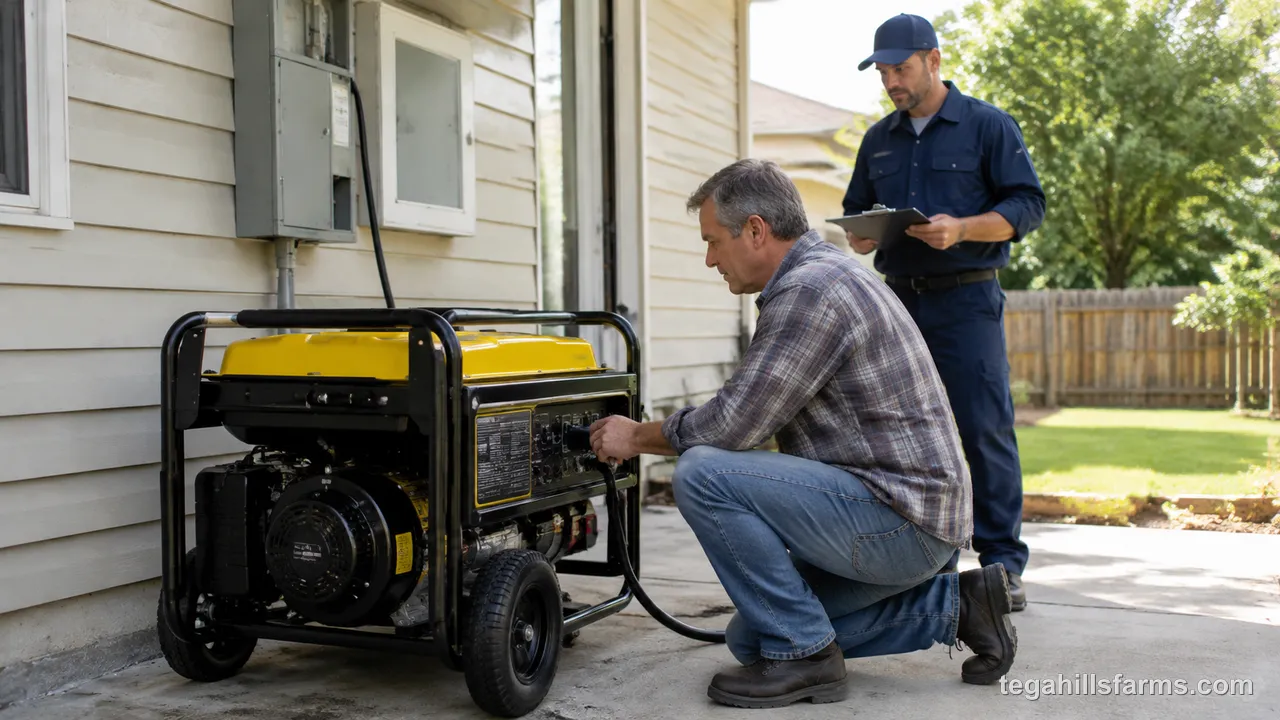
Permanent connections tie into your panel and must meet code, so the load figures need to be correct. Large motors bring heavy starting current that can overload breakers and cabling. Code-based analysis follows set rules, and an inspector may ask to see it.
Before you buy, weigh features and build quality too, as in what to look for in a generator.
A refrigerator compressor cycles on just as the sump pump starts during a storm, and an undersized generator bogs down, drops voltage, and trips its breaker with the basement already filling. A unit bought far too large avoids that moment but burns fuel at light load and can foul a diesel engine over time. Which mistake costs you more, and how to spot each one early, depends on what the generator is carrying when the outage hits.
What Goes Wrong When a Generator Is Undersized or Oversized?
Buying too small causes overload shutdowns and equipment strain, while buying too large causes wasted fuel and light-load problems. Each mistake has its own warning signs.
What Happens When the Generator Is Too Small?
Yes, a generator that is too small causes real problems: overload shutdowns, tripped breakers, and voltage dips that strain motors.
The usual warning signs are an engine that bogs down when a motor starts, lights that dim, and a refrigerator that hums or struggles to cycle. A breaker that keeps tripping is another clear sign.
Repeated overloads can damage the generator itself. They can also harm the appliances plugged into it, since motors run hot on low voltage. If you see these signs, cut loads before you add more.
What Happens When the Generator Is Too Large?
Yes, an oversized generator costs you too: it burns more fuel than needed, can develop wet stacking on diesel units at light load, and charges you for capacity you never use.
Wet stacking happens when a diesel engine runs well below its rated load. Unburned fuel and soot build up in the exhaust, which hurts the engine over time. Gas units also run less efficiently at light load.
Extra capacity is wasted money when your real load stays small. If you are weighing a pricier unit, are expensive generators worth it covers that call.
Why Do Fuel Type, Altitude, and Heat Change Usable Output?
The nameplate rating assumes standard conditions, so the fuel you burn and thin air and high temperature can both lower the output a generator actually delivers.
How Does Fuel Type Affect Output?
Gasoline, propane, natural gas, and diesel each give different output and runtime, so size for the fuel you will actually have on hand.
Many engines produce less rated power on propane or natural gas than on gasoline. Check the manufacturer’s rating for each fuel, not just the headline number. Diesel tends to use less fuel at a given load and suits long runtimes.
Storage matters as well. Gasoline goes stale, propane keeps for years, and natural gas depends on a working utility line. Fuel burn at different loads is covered in how much gas will your generator use.
How Do Altitude and Hot Weather Reduce Capacity?
Thinner air at elevation and high ambient temperature reduce engine power, so owners at altitude or in hot regions should allow more headroom.
Less oxygen reaches the engine, so each combustion stroke produces less power. Heat has a similar effect. Hot air is less dense, and a hot engine cools less effectively.
Manufacturers publish derating guidance for their units. If you live high up, or in a region with long, hot summers, move up one size rather than trusting the nameplate. Cold, sea-level conditions are the easiest case, and not everyone has them.
How Does Sizing Change for a Commercial Building or Large Motors?
Commercial buildings are sized by watts per square foot plus a fixed allowance: 10 watts per square foot for retail and 5 watts for other commercial uses, each plus 50 kilowatts.
On top of that, add 25% reserve capacity to the highest demand of the previous year, which you can read from utility bills. This covers growth and the loads you did not count.
Large motors need special attention to starting current. A big motor can pull several times its running current at startup, and that surge can overload the generator or collapse its voltage. Reduced-voltage starters are one way to tame it.
Code-based methods under the National Electrical Code set how loads are counted for permanent systems. A professional load study is worth having whenever large motors, critical facilities, or code-compliant systems are involved.
Generator Sizing FAQ
What size generator do I need for a 1,500 square foot home?
It depends on the circuits you back up, not the floor area. Essentials such as a refrigerator, sump pump, lights, and a few outlets typically fit the lowest home generator band. Central air or electric heat pushes you into the next band up. Add your largest motor’s starting surge before you choose.
What is the difference between kW and kWh?
kW measures power, the rate a generator can deliver at a given moment. kWh measures energy, the amount used over time, which is what your utility bills. You size a generator in kW or kVA because it has to meet your peak demand, not your monthly consumption.
Can I size a generator in metric units?
Yes. Watts and kilowatts are metric units, so the method is identical: add running loads, add the largest motor’s starting surge, then add a safety margin. Only motor horsepower needs converting, using the standard horsepower-to-watt conversion. Keep any manufacturer spec as listed and convert only to compare.
Do a refrigerator or sump pump need extra allowance?
Yes. Both are motor loads that surge when they start. A refrigerator compressor pulls well above its running draw for a few seconds, and a sump pump is a heavy motor load too. Count their running watts in the total, then reserve room for the largest surge on top.
Write Your Review
No reviews yet. Be the first to share your experience!