

The 7 best gas chainsaws of 2026 are the Husqvarna 120 Mark III Gas Chainsaw 14″ (best overall), the VEVOR Gas Chainsaw 25.4cc 12 Inch (best lightweight), the DOWILIN 62cc 20 Inch Chainsaw (best budget), the IVOVI 63cc Gas Chainsaw (best easy-start), the NEO-TEC 68cc Gas Chainsaw (best performance), the PROYAMA 68cc 24 Inch Chainsaw (best for professionals), and the Husqvarna 460 Rancher 24 Inch (best gas-powered). These picks cover everything from quick limb work around the yard to full-day timber cutting on larger properties.
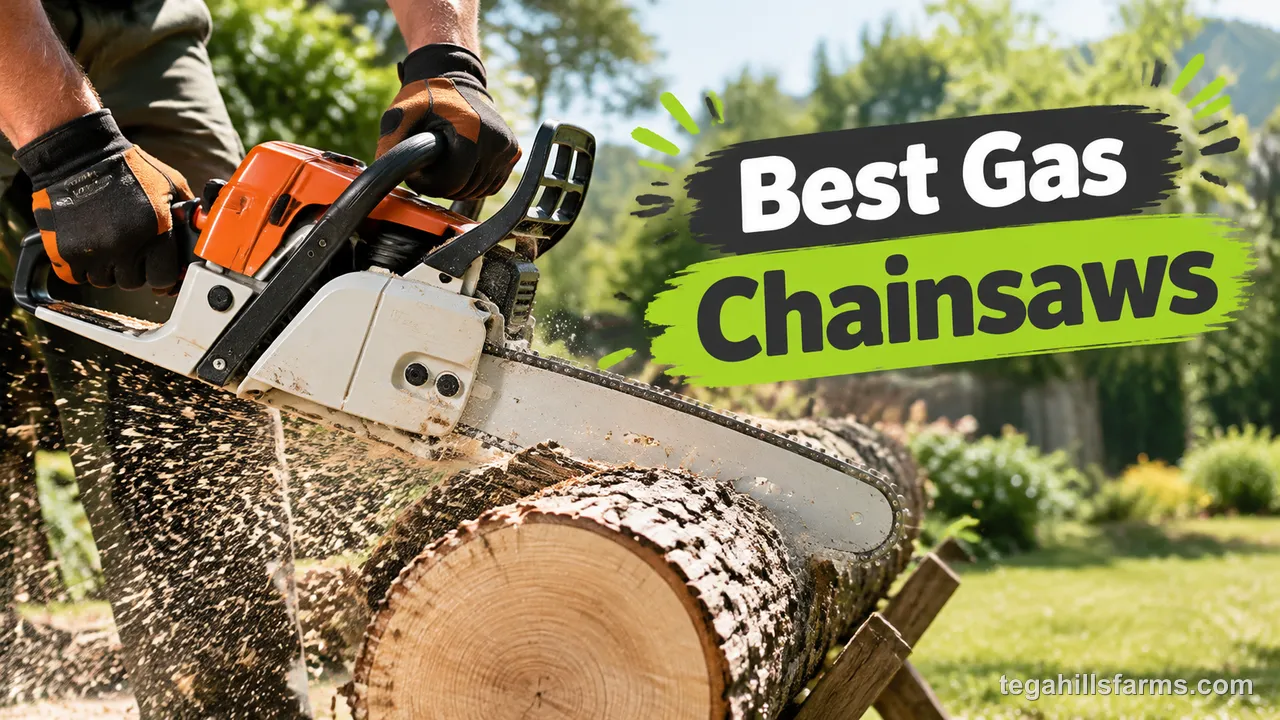
Choosing between them comes down to how much wood you cut in a session and whether you need the saw to stay light in your hands or deliver maximum power through thick hardwood. A 38-cc engine with a 14-inch bar handles storm cleanup and firewood splitting without wearing you out, while a 68-cc model with a 24-inch bar cuts through standing oak fast enough to keep a professional crew moving.
Most buyers underestimate how much a few extra pounds affect control during overhead cuts and all-day use. The weight difference between a compact 25.4-cc saw and a full-size 68-cc model shows up in your shoulders after the first hour, especially when you’re reaching into thick brush or working from a ladder.


The 38-cc Husqvarna and the 63-cc IVOVI both include features that flatten the learning curve for occasional users, while the 68-cc PROYAMA and NEO-TEC deliver the torque and bar length that commercial work demands.
What Makes a Gas Chainsaw the Right Choice?
A gas chainsaw runs on a two-cycle engine that mixes fuel and oil, giving you unlimited runtime as long as you carry extra gas and the freedom to work far from any outlet. Gas models sit at one end of the power spectrum when comparing the best chainsaws across all fuel types. Battery saws stop when the charge runs out, and corded electric models tie you to an extension cord, but a gas engine keeps cutting through a full day of storm cleanup, firewood bucking, or land clearing without hunting for a plug or swapping batteries.
The engine’s displacement—measured in cubic centimeters—determines how much torque reaches the chain. A 38-cc engine handles pruning and light firewood; a 60-cc engine powers through oak and hickory logs all morning without bogging down. That extra power costs you weight and maintenance. Gas saws need spark plug changes, air filter cleaning, and carburetor adjustments that battery models skip entirely, so the choice depends on whether your cutting tasks justify the upkeep. Most yard owners find that a mid-size gas saw balances power and portability better than dragging a cord through the woods or stopping every twenty minutes to recharge a battery. If you’re deciding between fuel types, how to choose a chainsaw walks through the trade-offs in detail.
The 7 Best Gas Chainsaws of 2026
The 7 best gas chainsaws of 2026 are the Husqvarna 120 Mark III Gas Chainsaw 14″, the VEVOR Gas Chainsaw 25.4cc 12 Inch, the DOWILIN 62cc 20 Inch Chainsaw, the IVOVI 63cc Gas Chainsaw, the NEO-TEC 68cc Gas Chainsaw, the PROYAMA 68cc 24 Inch Chainsaw, and the Husqvarna 460 Rancher 24 Inch. Engine displacement separates the compact saws from the heavy-duty models, and bar length determines whether you’re pruning branches or felling trees thick enough to block a driveway. A 12-inch bar keeps the saw nimble for one-handed limbing. A 24-inch bar lets you drop a mature oak in fewer cuts, but the extra weight and longer bar pull your arms down faster during extended sessions.
#1 Husqvarna 120 Mark III Gas Chainsaw 14″ — Best Overall
The 14-inch bar handles firewood cutting and storm cleanup without the weight of a full-size saw. The 38-cc X-Torq engine delivers enough torque for hardwood logs up to about a foot thick, and the inertia-activated chain brake stops the chain in a fraction of a second if kickback throws the bar toward you.
Key Specs:
- Engine: 38-cc, 2-cycle X-Torq
- Bar length: 14 inches
- Chain pitch: 3/8 inch, .050 gauge
- Features: LowVib dampeners, automatic oiler, separate choke/stop controls
Detailed Review:
The 38-cc X-Torq engine burns fuel more completely than older two-cycle designs, so you get better torque at lower RPMs and spend less on gas over a season. That efficiency matters most when you’re bucking a cord of oak or clearing fallen limbs after a storm—the saw keeps pulling the chain through dense wood without stalling, and you’re not refilling the tank every twenty minutes.
LowVib dampeners sit between the engine and the chassis, absorbing most of the vibration before it reaches your hands. After an hour of cutting, that difference shows up in your grip strength and how steady you can hold the bar during the next cut. The automatic oiler feeds bar oil to the chain as the engine runs, so you don’t have to stop and pump oil manually between cuts.
The separate choke and stop controls prevent accidental flooding. When you pull the choke out to prime a cold start, the stop switch resets automatically, so you’re not trying to start the saw with the ignition off—a common mistake that leaves you pulling the cord until your shoulder gives out. The 14-inch bar balances reach and control better than a 12-inch bar for cutting logs and a 20-inch bar for overhead work. It handles most yard trees without needing multiple cuts, and the balanced weight keeps your arms steady when you’re limbing branches above shoulder height.
This saw works for homeowners who need a reliable tool that starts every time and handles typical yard tasks without requiring constant carburetor adjustments or trips to the repair shop.
Pros:
- X-Torq engine delivers strong torque without excessive fuel consumption
- LowVib dampeners reduce hand fatigue during extended cutting sessions
- Automatic oiler maintains chain lubrication without manual pumping
- Separate choke/stop controls prevent flooding and starting failures
- 14-inch bar provides reach for firewood and storm cleanup without excess weight
Cons:
- 38-cc displacement limits cutting speed through thick hardwood
- Smaller engine bogs down faster in dense green oak
- Bar length requires multiple passes to drop very large trees
Who It’s For:
This saw suits homeowners with a few acres who cut firewood a few times a year and need a saw ready for storm cleanup without the weight and maintenance of a professional model. The X-Torq engine and LowVib dampeners make it comfortable enough for occasional users who don’t want their hands numb after an hour. If you’re cutting hardwood logs thicker than a foot on a regular basis, the DOWILIN or NEO-TEC will finish the job faster.
Editor’s Verdict:
The 38-cc engine and 14-inch bar cover most yard tasks without the bulk of larger saws, and the vibration dampening keeps it usable for longer sessions.
#2 VEVOR Gas Chainsaw 25.4cc 12 Inch — Best Lightweight
The 12-inch bar and 25.4-cc engine keep the saw under ten pounds, so you can work one-handed when you’re reaching into dense brush or trimming branches from a ladder. The top-handle design puts the rear grip directly behind the engine, giving you better control during overhead cuts than a rear-handle saw.
Key Specs:
- Engine: 25.4-cc, 2-cycle, 1.2 HP
- Bar length: 12 inches
- Weight: 9.26 pounds
- Max cutting diameter: 9.84 inches
- Fuel tank: 0.24 quarts; oil tank: 0.17 quarts
Detailed Review:
The 25.4-cc engine produces 1.2 horsepower and spins the chain at 8,500 RPM under load, reaching 11,500 RPM at full throttle. That speed keeps the chain cutting through green limbs without bogging down, even when the wood diameter pushes close to the 9.84-inch maximum. For pruning and limb removal, the smaller displacement works in your favor—you’re not carrying extra weight just to have power you won’t use.
The top-handle layout centers the weight closer to your hand, so the saw feels balanced when you’re holding it out at arm’s length to reach a branch overhead. The wrap-around handle gives you multiple grip positions, so you can adjust your hold depending on the angle of the cut without repositioning your whole body. At 9.26 pounds, the saw stays light enough to use one-handed for short periods, though you’ll want both hands on it for anything thicker than a wrist-size branch.
The fuel tank holds 0.24 quarts and the oil tank holds 0.17 quarts, both sized to match the smaller engine’s consumption rate. The smaller engine consumes fuel at a lower rate, and the tanks are easier to fill in the field because the caps sit on top of a compact body instead of buried behind a larger engine shroud. The high-strength steel chain and bar handle repeated cuts through hardwood without stretching or dulling as fast as stamped chains, so you’re sharpening less often and replacing the chain less frequently.
This saw fits trimming tasks around the yard and light storm cleanup where a full-size saw would tire you out before the job’s done.
Pros:
- 9.26-pound weight allows one-handed use for trimming and overhead cuts
- Top-handle design improves balance and control during branch work
- 25.4-cc engine cuts through limbs up to 9.84 inches without stalling
- Compact fuel and oil tanks reduce refueling stops on small jobs
- High-strength steel chain resists stretching and dulling
Cons:
- 1.2 HP limits cutting speed through thick logs
- 12-inch bar requires multiple passes on firewood-size rounds
- Smaller engine bogs down in dense hardwood that larger saws power through
Who It’s For:
This saw works for yard owners who prune fruit trees, clear fence lines, and trim branches after storms but don’t need to buck firewood or drop full-size trees. The light weight and top handle make it the right choice when you’re working from a ladder or reaching into thick brush where a heavier saw would pull you off balance. If your cutting list includes thick logs, the Husqvarna 120 Mark III or DOWILIN will save you time.
Editor’s Verdict:
The 25.4-cc engine and 12-inch bar keep the saw light enough for one-handed trimming without giving up the runtime and power that battery models sacrifice when the charge runs out.
#3 DOWILIN 62cc 20 Inch Chainsaw — Best Budget
The 62-cc engine and 20-inch bar cut through oak and hickory logs fast enough for firewood splitting and storm cleanup, and the tool-free chain tensioning system lets you adjust slack in the field without hunting for a wrench. The forged magnesium crankcase resists cracking under load better than aluminum cases.
Key Specs:
- Engine: 62-cc, 2-cycle, EPA Phase III and CARB compliant
- Bar length: 20 inches
- Features: 3D anti-kickback chain brake, tool-free chain tensioning, winterized carburetor with pre-heating
- Construction: Forged magnesium crankcase
Detailed Review:
The 62-cc engine sits in the middle of the displacement range for homeowner saws, delivering enough torque to power through hardwood logs without the weight and fuel consumption of larger professional models. The EPA Phase III and CARB compliance means the engine burns cleaner than older two-cycle designs, so you’re meeting emissions standards in states with stricter regulations without sacrificing power. The winterized carburetor includes a pre-heating system that warms the fuel mixture before it enters the combustion chamber, preventing the carburetor from icing over when you’re cutting in cold weather—a common failure point that leaves most saws flooding or refusing to start once the temperature drops below freezing.
The 3D anti-kickback chain brake uses an inertia-activated mechanism that stops the chain if the bar kicks back toward you during a cut. That feature matters most when you’re bucking logs on the ground and the chain catches on a knot or hidden nail—the brake stops the chain before the bar swings up into your face or chest. The tool-free chain tensioning system lets you twist a knob to tighten the chain when it stretches during use, so you’re not stopping every half hour to dig a wrench out of your toolbox and adjust the tension the old way.
The forged magnesium crankcase holds up to the stress of cutting through dense wood better than the cast aluminum cases on entry-level saws. Magnesium flexes slightly under load instead of cracking, so the saw keeps running even after you’ve put it through a few seasons of heavy use. The 20-inch bar gives you enough reach to drop large trees, and it’s short enough that you’re not fighting the weight during limbing and bucking work.
This saw delivers the power and bar length most homeowners need for firewood and storm cleanup without the higher cost of a professional model.
Pros:
- 62-cc engine handles hardwood logs and firewood splitting without bogging down
- Tool-free chain tensioning saves time adjusting slack in the field
- Forged magnesium crankcase resists cracking under heavy use
- Winterized carburetor prevents icing during cold-weather cutting
- 20-inch bar handles large felling tasks
Cons:
- 62-cc displacement consumes more fuel than 38-cc models on light jobs
- 20-inch bar adds weight that smaller saws avoid
- Mid-size engine lacks the torque of larger professional saws for all-day cutting
Who It’s For:
This saw fits homeowners who cut several cords of firewood each year and need a tool that handles storm cleanup and occasional tree removal without the cost and weight of a professional-grade model. The tool-free chain adjustment and winterized carburetor make it easier to maintain than older designs, so you spend more time cutting and less time troubleshooting. If you’re only trimming branches and cutting logs under a foot thick, the Husqvarna 120 Mark III will do the job with less weight.
Editor’s Verdict:
The 62-cc engine and 20-inch bar give you professional-level reach and power at a lower price, and the forged magnesium crankcase extends the saw’s useful life past what most budget models survive.
#4 IVOVI 63cc Gas Chainsaw — Best Easy-Start
The Easy-Start recoil system reduces the pull force needed to turn the engine over, so you’re not yanking the starter cord with your full body weight just to get the saw running. The dual-bar kit includes both an 18-inch and a 20-inch bar, letting you switch to the shorter bar for limbing work and the longer bar for felling.
Key Specs:
- Chain speed: 85 feet per second
- Bar lengths: 18 inches and 20 inches (both included)
- Features: Easy-Start recoil, automatic oiler, inertia-activated brake, shock-absorbing handles
Detailed Review:
The 63-cc engine produces 3.7 horsepower and drives the chain at 85 feet per second, so you’re cutting through oak and hickory logs fast enough to finish a cord of firewood in an afternoon instead of spreading the work over a weekend. That speed matters most when you’re bucking rounds that are too thick to split without cutting them down to a manageable size first—the saw powers through dense wood without stalling, and you’re not stopping every few minutes to let the engine cool down or clear sawdust from the bar.
The Easy-Start recoil system uses a spring-assisted mechanism that stores energy from the first few pulls and releases it to spin the engine faster on the next pull. You’ll get the engine running in two or three pulls instead of five or six, and you’re not wearing out your shoulder trying to generate enough force to turn a cold engine over. That feature pays off most when you’re restarting the saw after a break—warm engines usually fire on the first pull, but a cold engine can take a dozen yanks with a standard recoil system.
The dual-bar kit gives you flexibility to match the bar length to the job. The 18-inch bar keeps the saw lighter and more maneuverable for limbing branches and cutting smaller logs, while the 20-inch bar lets you drop larger trees without making multiple passes. Switching between bars takes about ten minutes with basic tools, so you can set up the saw for the week’s work and leave it that way until the next job calls for a different length. The automatic oiler feeds bar oil to the chain as the engine runs, and the included carrying pouch keeps your tools and spare chain organized between jobs.
The inertia-activated brake stops the chain in under 0.1 seconds if kickback throws the bar toward you, and the shock-absorbing handles reduce the vibration that reaches your hands during extended cutting sessions. Those features make the saw safer and more comfortable for occasional users who don’t have the grip strength or reaction time that professional loggers develop after years on the job.
Pros:
- Easy-Start recoil fires the engine in two or three pulls instead of five or six
- 63-cc engine and 85-foot-per-second chain speed power through hardwood logs
- Dual-bar kit includes 18-inch and 20-inch bars for different cutting tasks
- Automatic oiler maintains lubrication without manual pumping
- Inertia-activated brake stops the chain in under 0.1 seconds during kickback
Cons:
- 63-cc displacement consumes more fuel than smaller saws on light pruning jobs
- Heavier weight tires you out faster during overhead limbing work
- Dual-bar kit adds bulk to storage and requires extra maintenance for both bars
Who It’s For:
This saw works for homeowners who cut firewood regularly and need a tool that starts reliably without the struggle of a standard pull-cord system. The dual-bar kit makes it a good choice if your property includes both thick hardwood trees and smaller limbing work where the shorter bar keeps the saw lighter. If you’re only cutting logs under a foot thick, the Husqvarna 120 Mark III will handle the job with less weight and fuel consumption.
Editor’s Verdict:
The Easy-Start system and dual-bar kit solve two common frustrations with gas saws, and the 63-cc engine delivers enough power to justify the extra weight over smaller models.
#5 NEO-TEC 68cc Gas Chainsaw — Best Performance
The 68-cc engine produces 4.5 horsepower and spins at 13,000 RPM, giving you the torque needed to power through standing timber and thick hardwood logs without the chain slowing down mid-cut. The dual-tank system holds 550 milliliters of fuel and 260 milliliters of oil, so you’re cutting longer between refills than smaller saws.
Key Specs:
- Engine: 68-cc, 2-cycle, 4.5 HP, 13,000 RPM
- Bar lengths: 22 inches and 24 inches (both included)
- Fuel capacity: 550 milliliters; oil capacity: 260 milliliters
- Fuel-oil mix ratio: 25:1
Detailed Review:
The 68-cc engine sits at the top of the displacement range for homeowner and semi-professional saws, delivering 4.5 horsepower at 13,000 RPM. That power keeps the chain moving through oak and hickory logs thicker than two feet without bogging down, so you’re making steady progress instead of stopping every few minutes to let the engine catch up. The torque matters most when you’re felling standing trees—the saw cuts fast enough that you can drop a mature oak and start bucking it before the engine overheats or runs out of fuel.
The dual-tank system separates fuel and oil into leak-proof compartments that hold enough to run the saw for about an hour of continuous cutting before you need to refuel. The 550-milliliter fuel tank and 260-milliliter oil tank are sized to match the engine’s consumption rate at full throttle, so you’re refilling both tanks at the same time instead of running out of oil halfway through a tank of gas. The 25:1 fuel-oil mix ratio is clearly marked on the fuel cap—one liter of gas to 40 milliliters of oil, or one US gallon to 151.4 milliliters—so you’re not guessing at the mixture every time you fill the tank.
The kit includes both a 22-inch and a 24-inch bar, letting you choose the length that fits the job. The 22-inch bar handles most felling and bucking tasks while keeping the saw lighter, and the 24-inch bar gives you the reach to drop large trees in a single pass. The extra bar length pulls harder on your arms during overhead work, but for ground-level cutting the longer bar saves time by reducing the number of passes you need to make through a thick log.
This saw fits homeowners with larger properties and semi-professional users who cut timber regularly and need a tool that keeps up with heavy workloads without constant refueling or engine failures.
Pros:
- 68-cc engine delivers 4.5 HP and 13,000 RPM for fast cutting through thick hardwood
- Dual-tank system holds 550 ml fuel and 260 ml oil for extended runtime
- 22-inch and 24-inch bars handle everything from bucking to felling large trees
- 25:1 fuel-oil mix ratio clearly marked for accurate mixing
- High torque prevents chain slowdown during continuous heavy cutting
Cons:
- 68-cc displacement and dual bars add weight that smaller saws avoid
- Larger engine consumes more fuel on light pruning and trimming jobs
- Not CARB certified, cannot be sold or shipped to California
Who It’s For:
This saw works for property owners with acreage who fell trees regularly and process firewood by the cord, not by the armload. The engine and dual-bar kit make it the right choice when your cutting list includes standing timber and you need a saw that runs all day without overheating or stalling. If you’re only clearing storm damage or cutting logs under a foot thick, the Husqvarna 120 Mark III or DOWILIN will handle the job with less weight and fuel cost.
Editor’s Verdict:
The 4.5-horsepower engine and 24-inch bar option put this saw near professional-grade performance, and the dual-tank system keeps it cutting longer than most homeowner models between refills.
#6 PROYAMA 68cc 24 Inch Chainsaw — Best for Professionals
The magnesium alloy chain brake and crankcase resist deformation and wear during heavy cutting work, extending the saw’s useful life past what aluminum cases survive. The anti-vibration system and ergonomic handle design reduce hand fatigue during all-day sessions, so you’re still cutting accurately after six hours in the woods.
Key Specs:
- Engine: 68-cc, 2-cycle, 4.5 HP
- Bar lengths: 20 inches and 24 inches (both included)
- Construction: Magnesium alloy chain brake and crankcase
- Features: Easy-Start system, advanced anti-vibration, low-maintenance design
Detailed Review:
The 68-cc engine produces 4.5 horsepower, giving you the torque to power through oak, hickory, and other dense hardwoods without the chain slowing down when the wood diameter pushes past two feet. That displacement puts the saw in the commercial-grade category, so it’s built to handle tree felling, firewood cutting, and storm cleanup for professional crews and property owners who cut timber regularly. The magnesium alloy chain brake and crankcase deliver a balance of light weight and high strength that aluminum cases can’t match—magnesium resists cracking and deformation under the repeated stress of cutting thick logs, so the saw keeps running after years of heavy use that would bend or crack an aluminum frame.
The Easy-Start system reduces the pull force needed to turn the engine over, so you’re getting the saw running in two or three pulls instead of fighting a standard recoil cord for five minutes. That feature matters most when you’re restarting the saw multiple times a day—each cold start takes less effort, and you’re not wearing out your shoulder by midday. The advanced anti-vibration system uses dampeners mounted between the engine and the handle to absorb most of the vibration before it reaches your hands, so you’re maintaining better control and accuracy even after several hours of continuous cutting.
The dual-bar kit includes both a 20-inch and a 24-inch bar, letting you match the bar length to the job. The 20-inch bar keeps the saw more maneuverable for bucking and limbing work, while the 24-inch bar gives you the reach to drop large trees without making multiple passes. The ergonomic handle design centers the weight closer to your grip and provides better balance during angled cuts, reducing the strain on your wrists and forearms that builds up during long sessions. The low-maintenance design uses durable components that require less frequent adjustment and part replacement than entry-level saws, so you spend more time cutting and less time in the shop.
This saw fits professional users and serious property owners who need a tool that runs all day and survives years of heavy use without major repairs.
Pros:
- Magnesium alloy construction resists cracking and deformation during heavy cutting
- 68-cc engine and 4.5 HP handle professional-level tree felling and timber work
- Advanced anti-vibration system reduces hand fatigue during extended sessions
- Dual-bar kit provides 20-inch and 24-inch options for different cutting tasks
- Low-maintenance design extends service intervals and reduces repair costs
Cons:
- Professional-grade weight and size tire occasional users faster than lighter saws
- 68-cc displacement consumes more fuel than necessary for light yard work
- Premium pricing reflects professional-grade construction
Who It’s For:
This saw suits professional loggers and landowners who clear timber regularly and need a tool that survives daily use without frequent repairs or part replacements. The magnesium construction and anti-vibration system make it the right choice when you’re cutting all day and lighter saws leave your hands numb or the crankcase cracked after a season. If you’re only cutting firewood a few times a year, the DOWILIN or IVOVI will handle the job without the professional-grade cost.
Editor’s Verdict:
Magnesium construction and the anti-vibration system push this saw into the professional tier, and the 68-cc engine keeps cutting through hardwood long after lighter saws start bogging down.
#7 Husqvarna 460 Rancher 24 Inch — Best Gas-Powered
The 60.3-cc X-TORQUE engine delivers 3.6 horsepower and maximizes torque even at low RPMs, so you’re cutting efficiently through thick logs without running the engine at full throttle the entire time. The air injection system uses centrifugal force to expel dust and debris before it reaches the air filter, extending engine life by keeping abrasive particles out of the combustion chamber.
Key Specs:
- Engine: 60.3-cc, 2-cycle X-TORQUE, 3.6 HP
- Bar length: 24 inches (recommended range: 13–24 inches)
- Features: Smart Start, air injection system, LowVib technology, automatic adjustable oil pump, inertia-activated chain brake
Detailed Review:
The 60.3-cc X-TORQUE engine burns fuel more completely than standard two-cycle designs, so you get better torque at low and mid-range RPMs without pushing the throttle wide open for every cut. That efficiency matters most when you’re bucking a pile of logs or clearing a downed tree—the saw powers through dense wood at a steady pace without wasting fuel, and you’re not refilling the tank every half hour. The patented X-TORQUE technology also reduces emissions and fuel consumption compared to older Husqvarna models, so you’re meeting stricter environmental standards without sacrificing cutting speed.
Smart Start reduces the resistance in the starter cord substantially, so you’re getting the engine running in two or three pulls instead of yanking the cord until your shoulder gives out. The system uses a spring-assisted recoil mechanism that stores energy from the first pull and releases it to spin the engine faster on the next pull, so cold starts take less effort and you’re not flooding the carburetor by over-priming. The combined choke and stop control simplifies starting by reducing the number of steps—you pull the choke out to prime the engine, and the stop switch resets automatically, so you’re not trying to start the saw with the ignition still off.
The air injection system uses centrifugal force to spin dust and wood particles away from the air filter before they get pulled into the engine. Cleaner air reaches the combustion chamber, so the engine runs longer between filter cleanings and the internal components wear more slowly. That feature pays off most when you’re cutting dirty wood or working in dusty conditions—the saw keeps running at full power while other models start losing torque as the filter clogs. The automatic adjustable oil pump meters bar oil based on engine speed, so you’re not over-oiling at idle or starving the chain at full throttle.
LowVib technology uses dampeners mounted between the engine and the handle to reduce vibration substantially compared to older Husqvarna models. After an hour of cutting, that difference shows up in your grip strength and how accurately you can control the bar during the next cut. The 7-degree offset front handle improves grip angle and reduces wrist strain during angled cuts, and the inertia-activated chain brake stops the chain if kickback throws the bar toward you.
The 24-inch bar gives you the reach to drop large trees in a single pass, and it’s long enough to buck large rounds without repositioning the log between cuts. Husqvarna recommends bar lengths between 13 and 24 inches for this engine, so you can swap to a shorter bar if most of your work involves limbing and pruning instead of felling.
Pros:
- X-TORQUE engine maximizes torque at low RPMs for efficient cutting
- Smart Start reduces pull effort substantially for easier cold starts
- Air injection system extends engine life by keeping dust out of combustion chamber
- LowVib technology cuts vibration substantially
- 24-inch bar handles large trees and thick logs in a single pass
- Automatic oil pump adjusts lubrication based on engine speed
Cons:
- 24-inch bar adds weight that makes overhead limbing work more tiring
- 60.3-cc displacement may be more power than needed for small yard tasks
- Higher cost than mid-range models with similar displacement
Who It’s For:
This saw fits property owners with acreage who fell mature trees regularly and need a tool that balances power and handling for all-day use. The X-TORQUE engine and LowVib technology make it comfortable enough for extended sessions, and the air injection system keeps it running longer between maintenance intervals than saws that rely on standard air filters alone. If you’re only clearing storm damage or cutting firewood a few times a year, the Husqvarna 120 Mark III or DOWILIN will handle the job with less weight.
Editor’s Verdict:
The X-TORQUE engine, air injection system, and LowVib technology put this saw ahead of most homeowner models in both cutting efficiency and long-term durability, and the 24-inch bar handles large-property work without crossing into commercial-grade weight.
How to Choose a Gas Chainsaw
Picking the right gas chainsaw comes down to engine displacement, bar length, and weight—each one determines whether the saw fits your typical cutting tasks or leaves you fighting a tool that’s too small for the job or too heavy to control comfortably.
Engine displacement and bar length set the saw’s cutting capacity, while weight affects how long you can hold the saw steady during overhead work or extended sessions. A 38-cc engine with a 14-inch bar handles firewood and storm cleanup for most homeowners, but a 68-cc engine with a 24-inch bar cuts through standing timber fast enough for professional crews and property owners who fell trees regularly. Matching these specs to your workload keeps you from buying more saw than you need or discovering mid-job that your saw can’t power through the wood you’re cutting.
Engine Size and Cutting Power
Engine displacement—measured in cubic centimeters—tells you how much air and fuel the engine burns per cycle, which translates directly into the torque that drives the chain. A 38-cc engine delivers enough power for pruning, limbing, and cutting logs up to about a foot thick, so it fits yard owners who cut firewood occasionally and clear storm damage a few times a year. A 62-cc to 68-cc engine powers through oak, hickory, and other dense hardwoods without slowing down, making it the right choice when you’re felling standing trees or bucking multiple cords of firewood in a weekend.
Larger engines consume more fuel and add weight, so you’re carrying extra pounds and refueling more often even on light jobs. The displacement you need depends on how thick the wood is and how much cutting you do in a session. If most of your logs are under a foot across and you’re only running the saw for an hour at a time, a 38-cc engine keeps the saw lighter and easier to control. If you’re dropping trees over two feet thick or cutting all day, a 68-cc engine keeps the chain moving fast enough that you finish the job without the engine overheating or stalling.
Horsepower ratings—usually between 1.2 HP and 4.5 HP for homeowner and semi-professional saws—reflect how much power the engine produces at peak RPM. Higher horsepower keeps the chain speed steady when the bar buries deep in thick wood, so you’re not stopping mid-cut to let the engine catch up. Best chainsaws for homeowners typically use engines between 38 cc and 50 cc, which balance power and weight for typical yard tasks without the fuel consumption and maintenance that larger engines demand.
Bar Length for Your Cutting Tasks
Bar length determines the maximum diameter you can cut in a single pass and affects how the saw balances in your hands. A 12-inch bar keeps the saw light enough for one-handed limbing and trimming work, but you’ll need multiple passes to cut through logs thicker than about ten inches. A 20-inch to 24-inch bar lets you drop large trees and buck large rounds without repositioning the log, though the extra length pulls harder on your arms during overhead cuts.
Most saw manufacturers recommend matching bar length to the diameter of the wood you cut most often, with longer bars suited to felling mature hardwoods and shorter bars better for limbing and smaller logs. Longer bars also add weight and make the saw harder to control in tight spaces or when you’re working from a ladder, so you’re balancing reach against maneuverability. If you’re clearing fence lines or pruning fruit trees, a 12-inch or 14-inch bar keeps the saw nimble. If you’re felling mature hardwoods or processing firewood from thick logs, a 20-inch or 24-inch bar saves time by reducing the number of cuts you make.
The chain pitch and gauge—stamped on the bar near the mounting studs—must match the sprocket and chain, so you can’t just bolt on any bar length without checking compatibility. Most homeowner saws use 3/8-inch pitch with .050 gauge, which keeps the chain running smoothly at the engine speeds these saws deliver. If you’re choosing between two bar lengths for the same engine, pick the shorter one unless your cutting list regularly includes logs thick enough to justify the longer bar’s extra weight. Best chainsaw chain selection matters as much as bar length, since a dull or mismatched chain slows cutting speed more than a few extra inches of bar.
Weight and Handling Comfort
Weight affects how long you can hold the saw steady and how much control you have during angled cuts or overhead work. A compact 25-cc saw weighing around nine pounds stays light enough for one-handed use during trimming and limbing, while a 68-cc saw can push fifteen pounds or more, which tires your arms and shoulders faster during extended sessions. The weight difference shows up most when you’re reaching into thick brush, working from a ladder, or cutting above shoulder height—every extra pound pulls harder on your grip, and you lose accuracy as your arms tire.
Vibration adds to fatigue even when the saw’s weight feels manageable at first. Anti-vibration systems use dampeners mounted between the engine and the handle to absorb most of the shaking before it reaches your hands, so you’re maintaining better control and your hands aren’t numb after an hour of cutting. Saws without effective dampening leave your grip weaker and your aim less precise by the end of a long session, which increases the risk of kickback or binding the bar in a cut.
Ergonomic handles and balanced weight distribution let you hold the saw at different angles without straining your wrists or forearms. A top-handle saw centers the rear grip closer to the engine, improving balance for overhead cuts, while a rear-handle design puts more weight behind your hand for better control during ground-level felling and bucking. If you’re cutting for more than an hour at a time, test the saw’s weight in your hands before you buy—what feels comfortable in the store gets heavier fast once you’re holding it out at arm’s length for the twentieth cut of the day.
You pull the starter cord, the engine coughs but won’t fire, and you’re pulling until your shoulder aches. A fouled spark plug or a clogged air filter stops most saws faster than any broken part, and skipping those checks means you’re diagnosing a dead saw in the field instead of cutting.
What Maintenance Do Gas Chainsaws Need?
Gas chainsaws run on two-cycle engines, which demand spark plug changes, air filter cleaning, and carburetor adjustments to stay reliable—tasks that battery models skip entirely. Ignoring these jobs leads to hard starts, power loss, and eventually a saw that won’t run at all.
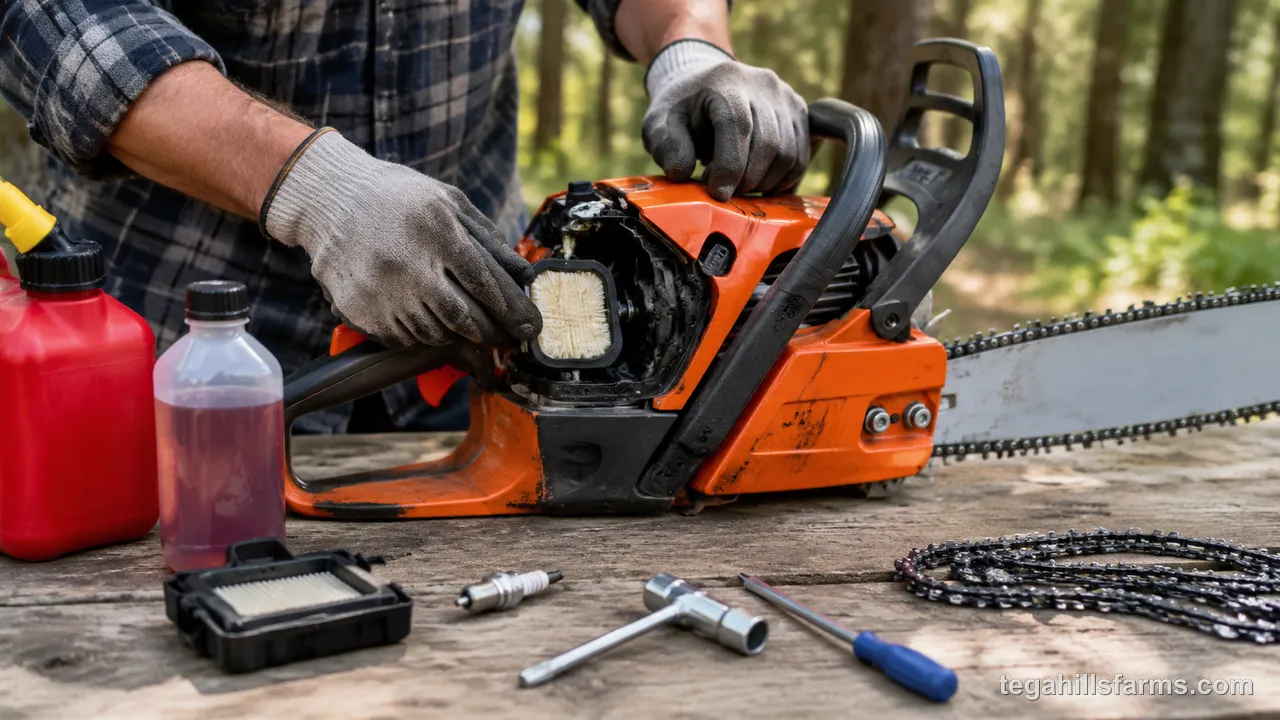
The maintenance schedule depends on how often you use the saw, but most tasks fall into three categories: engine and fuel system care that prevents starting problems, chain and bar lubrication that stops premature wear, and off-season storage steps that keep fuel from gumming up the carburetor. Following the manufacturer’s intervals—usually outlined in the owner’s manual—extends the saw’s useful life and keeps it cutting at full power instead of bogging down mid-job.
Engine and Fuel System Care
The spark plug ignites the fuel-air mixture in the combustion chamber, and carbon buildup on the electrode fouls the plug over time, causing misfires and hard starts. Most manufacturers recommend checking the plug regularly and replacing it each season or after extended use, whichever comes first. A fouled plug stops the saw from starting even when the fuel mix and carburetor are set correctly, so carrying a spare plug and a wrench lets you swap it in the field instead of hauling the saw back to the garage.
The air filter traps sawdust and debris before they reach the engine, but a clogged filter restricts airflow and causes the engine to run lean, losing power and overheating. Check the filter after every few hours of cutting in dusty conditions, and clean it by tapping out the loose debris or washing it in soapy water if it’s a foam filter. Paper filters can’t be washed, so replace them when they look gray or clogged. A clean filter keeps the engine running at full power and prevents abrasive particles from scoring the cylinder walls.
The carburetor meters the fuel-air mixture, and it needs occasional adjustment to compensate for changes in altitude, temperature, or fuel quality. If the saw bogs down under load or idles rough, the carburetor may be running too rich or too lean. Most carburetors have adjustment screws for low-speed and high-speed mixtures, but some newer saws use fixed jets that can’t be adjusted without special tools. Best chainsaw sharpener tools won’t help if the engine won’t run, so learning basic carburetor tuning keeps you cutting instead of troubleshooting a stalled saw.
Chain and Bar Lubrication
Bar oil flows from a reservoir through ports in the bar to lubricate the chain as it spins, reducing friction and heat that wear the bar and chain faster. The automatic oiler pumps oil whenever the engine runs, so you’re refilling the oil tank every time you refuel—or close to it, since most saws consume oil faster than gas. Running the saw without oil burns the bar and chain in minutes, leaving a groove worn into the bar rails and a chain that won’t hold an edge.
Chain tension changes as the chain heats up and stretches during use, so you’re checking and adjusting it before you start cutting and again after the first few minutes once the chain warms up. A loose chain derails or increases kickback risk, while an over-tight chain wears the bar and sprocket faster. Most saws use a side-mounted tensioner that you adjust with a screwdriver or a tool-free knob, and the correct tension lets you pull the chain slightly away from the bar without it coming off the rails.
Sharpening the chain restores cutting speed once the teeth dull from hitting dirt or cutting through dirty wood. A dull chain forces you to push harder on the saw, which increases kickback risk and tires you out faster. Most chains need sharpening every few hours of cutting, depending on the wood and whether you’re avoiding the dirt. You can sharpen the chain yourself with a round file and a depth-gauge tool, or take it to a shop if you’re not confident you’ll get the angles right—sharpening all the teeth to the same length and angle keeps the chain cutting straight instead of pulling to one side.
Off-Season Storage Steps
Fuel stabilizer prevents gas from breaking down and forming varnish that clogs the carburetor when the saw sits unused for more than a month. Add stabilizer to a full tank, run the saw for a few minutes to circulate the treated fuel through the carburetor, and store it with a full tank—never empty—because an empty tank lets moisture condense inside and rust the metal. Alternatively, drain all the fuel and run the saw until it stops, leaving the carburetor dry so there’s no fuel to gum up the jets.
Remove the spark plug and squirt a small amount of two-cycle oil into the cylinder, then pull the starter cord a few times to coat the piston and cylinder walls. This step prevents corrosion inside the engine during long storage periods, especially in humid climates. Reinstall the plug or leave it out and cover the hole with a rag to keep debris from falling into the cylinder.
Clean the bar and chain, wipe down the exterior, and check for loose bolts or damaged parts before you store the saw. A few minutes of cleaning now saves you from discovering a corroded chain or a cracked fuel line when you pull the saw out next spring.
How Long Do Gas Chainsaws Last?
A gas chainsaw typically runs for 10 to 20 years with consistent maintenance, though hard use and neglect shorten that lifespan to a few seasons. Engine wear, carburetor failures, and bar and chain replacement costs determine when repair expenses outweigh the saw’s remaining value.
The piston, cylinder, and crankshaft wear as the engine runs, and eventually compression drops low enough that the saw won’t start or hold idle. Most homeowner-grade saws reach this point after several hundred hours of use—roughly 10 to 15 years for someone who cuts firewood a few times a year and clears storm damage occasionally. Professional-grade saws last longer because they use better bearings, forged components, and tighter manufacturing tolerances.
Carburetor problems often show up before the engine wears out, especially on saws that sit unused for months with stale fuel in the tank. A clogged carburetor costs around $50 to $100 to rebuild or replace, and if the saw is more than ten years old and showing other signs of wear—like a cracked fuel line, worn bar rails, or a stretched chain that won’t hold tension—you’re better off replacing the saw than sinking repair money into a machine that’s near the end of its useful life. Best battery chainsaws eliminate carburetor and fuel-system failures entirely, though they trade that simplicity for limited runtime and higher battery replacement costs down the line.
Regular maintenance—spark plug changes, air filter cleaning, and proper storage—extends a gas saw’s life by preventing the small failures that cascade into major repairs. A saw that’s been maintained consistently and used within its intended workload can outlast a neglected saw by a decade or more.
Common Questions About Gas Chainsaws
What fuel mix ratio do gas chainsaws use?
Most gas chainsaws run on a 50:1 or 40:1 fuel-to-oil ratio, which means 50 or 40 parts gasoline to 1 part two-cycle oil. Check the owner’s manual or the fuel cap label for your saw’s exact ratio—using too much oil fouls the spark plug, while too little oil starves the engine of lubrication and causes seizure. Pre-mixed fuel eliminates guessing and stays fresh longer than gas you mix yourself.
Why won’t my gas chainsaw start?
A gas chainsaw that won’t start usually suffers from a fouled spark plug, stale fuel, or a flooded engine. Pull the spark plug and check for carbon buildup or a wet electrode—clean or replace the plug, drain old fuel, and let the saw sit for a few minutes if it smells like raw gas. If the saw still won’t fire, the carburetor may be clogged or the fuel filter blocked.
How loud are gas chainsaws?
Gas chainsaws produce between 100 and 120 decibels during operation, which is loud enough to cause hearing damage after a few minutes of exposure without protection. Wear earmuffs or earplugs rated for at least 25 decibels of noise reduction whenever you run a gas saw, and consider a battery model if you’re cutting near neighbors or in noise-restricted areas.
How do I reduce kickback risk?
Kickback happens when the chain at the tip of the bar catches on wood or a solid object and throws the bar back toward you. Keep both hands on the saw with your left thumb wrapped under the front handle, avoid cutting with the tip of the bar, and make sure the chain brake is working before you start. A sharp chain and proper chain tension also reduce kickback by keeping the chain cutting smoothly instead of grabbing.
Can I cut wet wood with a gas chainsaw?
Gas chainsaws cut through wet wood, though the chain dulls faster because wet wood is more abrasive than dry wood. The saw may bog down in green hardwood if the engine doesn’t have enough displacement to power through the extra resistance, and wet sawdust clogs the air filter faster. Clean the filter more often when cutting wet wood and expect to sharpen the chain after every session.
How often should I sharpen the chain?
Sharpen the chain whenever it stops cutting smoothly and starts producing sawdust instead of wood chips, or after every few hours of cutting in clean wood. If you hit dirt or a nail, sharpen the chain immediately—a single impact can dull multiple teeth and leave the chain cutting crooked. A sharp chain cuts faster, requires less pressure, and reduces kickback risk compared to a dull chain.

Write Your Review
No reviews yet. Be the first to share your experience!