

Cleaning a chainsaw means making it safe to handle, soaking and scrubbing the chain to dissolve resin and oil, clearing packed sawdust from the guide bar groove and oil outlet, and scraping out the sprocket cover and clutch area. Then you dry everything and re-oil it before reassembly. Gas, battery and corded electric chainsaws share that core routine. They differ only in the engine, battery or cord care that comes after it.
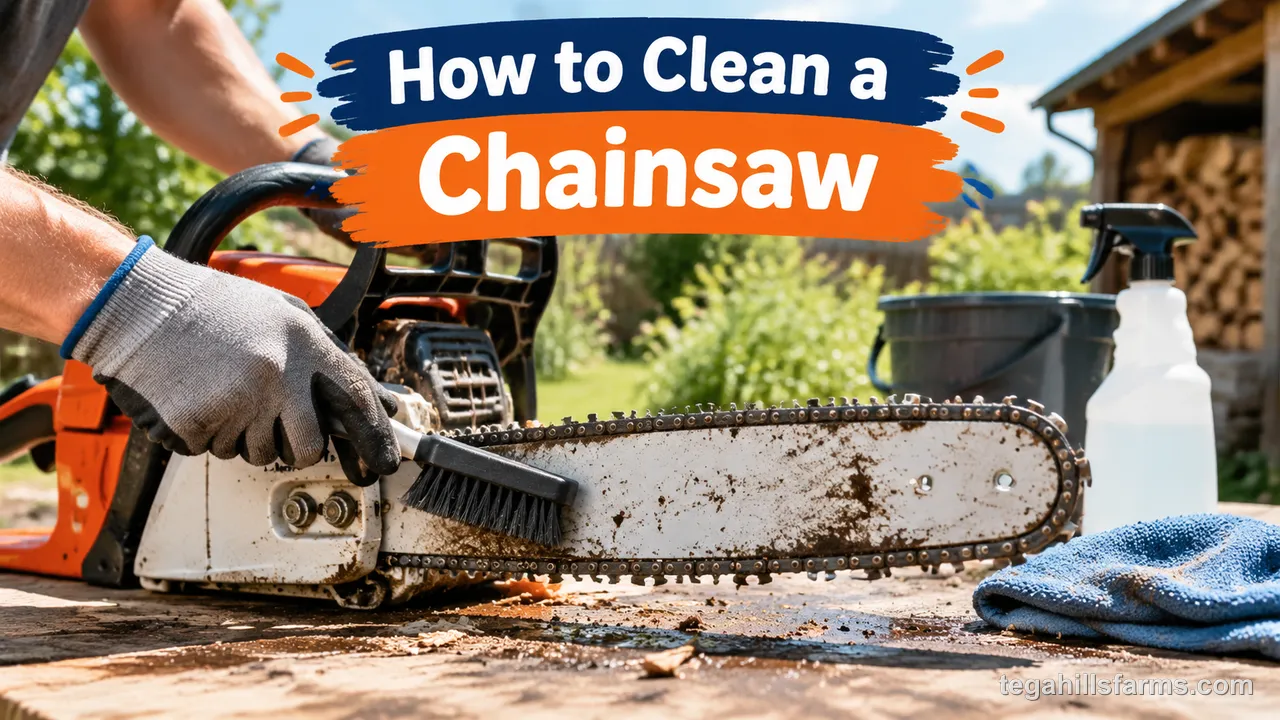
The cleaner you pick and how often you clean depend on what you cut. Pine and other softwoods leave sticky pitch that ordinary soap won’t touch. Dry hardwood mostly leaves loose dust, and a brush and compressed air clear most of it.
The bigger risk is cleaning the wrong way. A chain left wet rusts, a solvent splashed on the housing can crack the plastic, and a saw reassembled without fresh oil runs its first cut dry.
Why Does a Chainsaw Need Regular Cleaning?
Resin, sawdust and bar oil residue bake into a sticky paste that blocks oil flow to the chain and traps heat, so a dirty saw cuts slower and wears out its chain, bar and engine sooner.
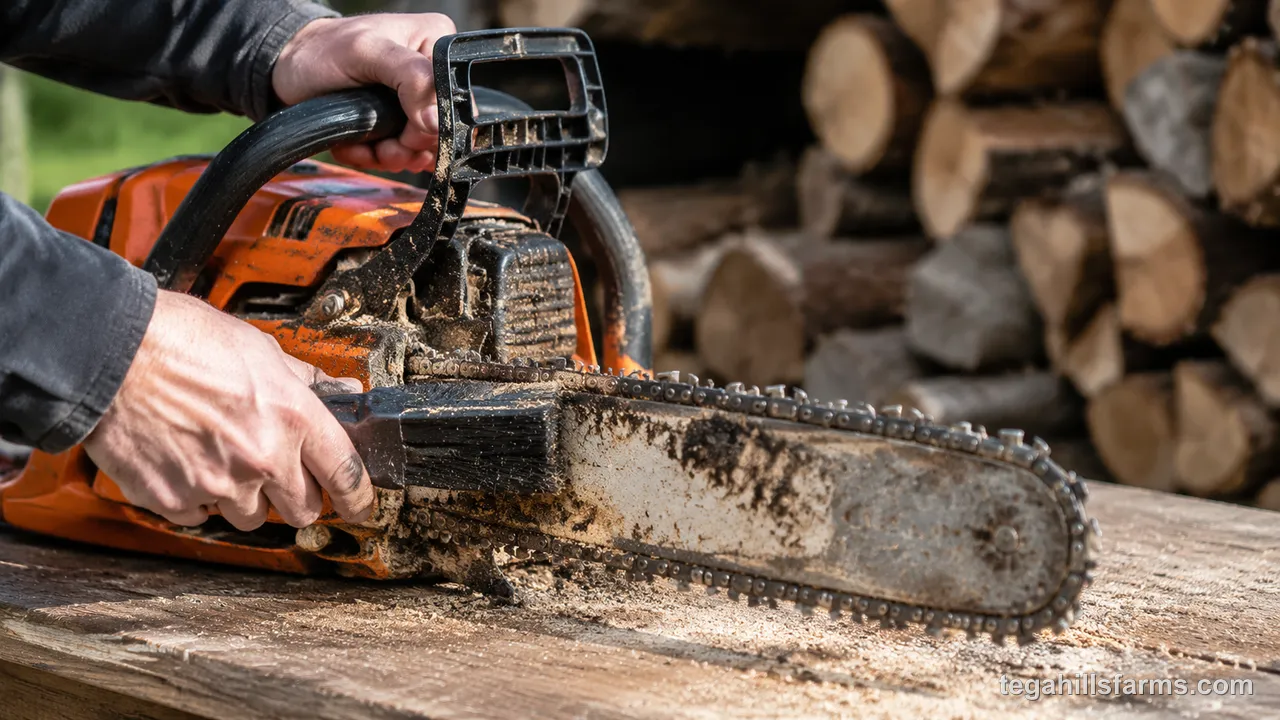
The damage starts in the bar groove. Sap binds sawdust into a plug that keeps oil from reaching the drive links, and a chain running on too little oil heats up, stretches and grinds down the bar rails. On a gas saw, dust packed into the cooling fins and air filter makes the engine run hotter and lose power.
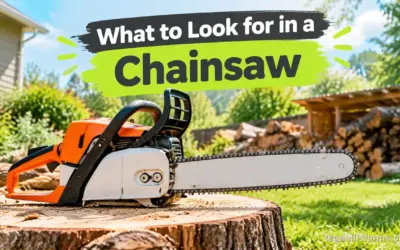
How often you clean depends on your workload. After light pruning, a wipe-down and a quick brush of the groove is enough. Regular weekend cutting calls for clearing the groove and cover after each session, and heavy or sappy work means soaking the chain more often. If you are still deciding which saw fits your property, our guide on how to choose a chainsaw covers the factors that shape how much upkeep you take on.
What Do You Need Before You Start Cleaning a Chainsaw?
Most of the job is decided before the cover comes off. A solvent that actually dissolves pitch and a saw that cannot start or spin its chain are what make cleaning quick instead of frustrating, and safe instead of risky. The supplies are cheap and mostly reusable, but the wrong cleaner can leave resin in place or damage plastic. Skipping the safety prep puts your hands on sharp cutters that can still move.
Which Tools and Supplies Should You Gather?
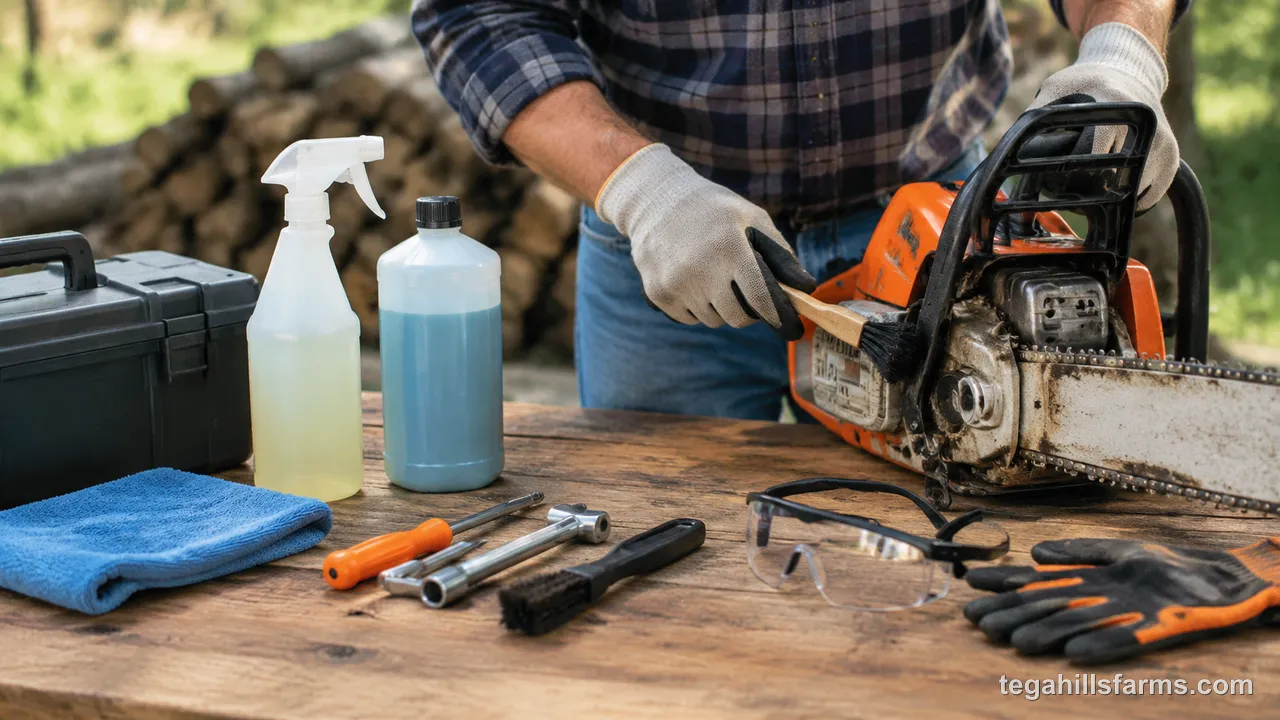
You need a short kit of household and shop items. Each one handles a specific kind of grime:
- Work gloves: a dull chain still cuts skin, and degreaser dries out your hands.
- Stiff nylon brush or old toothbrush: scrubs resin off cutters and drive links without scratching metal.
- Plastic scraper or putty knife: lifts compacted sawdust from inside the sprocket cover.
- Bar groove cleaner or a thin hook tool: reaches the bottom of the bar groove where packed dust hides.
- Rags or shop towels: for wiping, drying and applying oil.
- Shallow tray or pan: holds the chain flat while it soaks.
- Scrench (the combination wrench that came with the saw): removes the bar nuts and adjusts tension.
None of this takes mechanical skill beyond removing two bar nuts. Your first cleaning takes longer mostly because you are learning where sawdust collects on your particular saw.
Which Cleaning Solution Works Best: Degreaser, Resin Remover or WD-40?
Resin remover is the strongest choice for sappy chains, and a citrus or water-based degreaser handles everyday oil and dirt. WD-40 works only as a light-duty helper. Degreaser cuts oily grime well, and a chain left in a shallow tray of it for 10 to 15 minutes comes out ready to brush clean, though hardened pine pitch may need a second pass.
Resin remover is formulated for exactly that pitch, so it is what I’d use after cutting conifers. Check the label before letting it touch the plastic housing.
WD-40 loosens light gum and displaces water, which makes it handy for wiping a bar after rinsing. It is too thin to protect a chain under load, though, so always follow it with bar oil.
Warm water with dish soap is fine for the housing but does little against resin. Avoid gasoline as a cleaner, because the fire risk isn’t worth it, and keep acetone, brake cleaner and carb cleaner off plastic parts.
How Do You Prepare the Saw Safely Before Cleaning?
Make the saw unable to start, spin or burn you before your hands go near the chain. Shut the engine off and let it cool so the muffler and cylinder can’t burn you. On a gas saw, pull the spark plug boot so a tug on the starter rope can’t fire the engine. On a battery saw, remove the pack so a bumped trigger can’t drive the chain. Unplug a corded saw.
Engage the chain brake while you carry and position the saw so the chain stays locked. Some models need the brake released before the sprocket cover comes off, so check your manual for that step. Put gloves on before you touch the chain, because the cutters bite even when the saw is completely dead. Most of the chainsaw safety tips you follow while cutting carry over to the workbench, especially protecting your hands and eyes.
How Do You Clean a Chainsaw Step by Step?
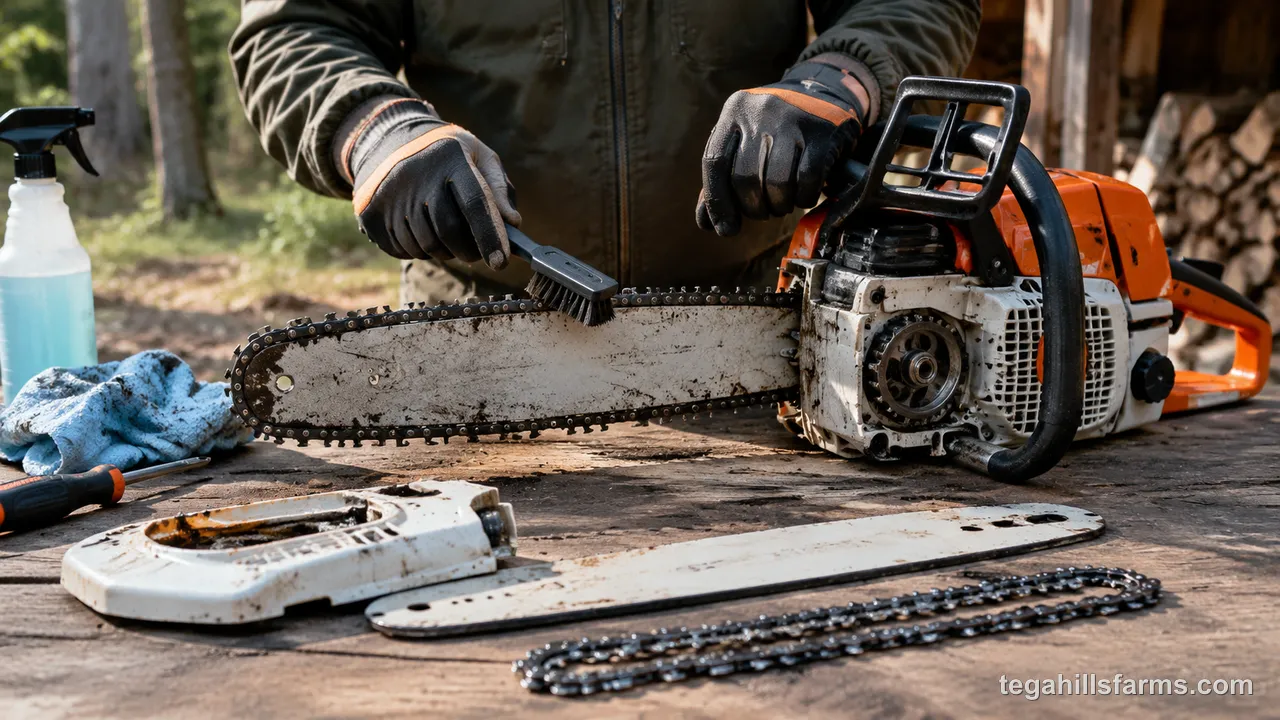
Work from the chain inward, so loosened grime falls onto parts you haven’t cleaned yet instead of the ones you just finished. Remove the sprocket cover, bar and chain together and drop the chain into its soak first. The soaking time gives you a window to clear the bar and the area behind the cover, and by the time those are done the chain is ready to scrub.
How Do You Remove Resin and Oil Buildup From the Chain?
Soak the chain flat in a shallow tray of degreaser or resin remover. The solvent softens the pitch, and a stiff nylon brush then lifts it from the cutters, depth gauges and drive links. Scrub along the chain in sections, flipping it so you reach both sides of every link. Pay extra attention to the drive link tips, because they ride in the bar groove and carry oil to the rest of the chain.
Rinse off the loosened residue, dry the chain right away with a rag, and give it a light coat of oil so bare steel doesn’t flash-rust.
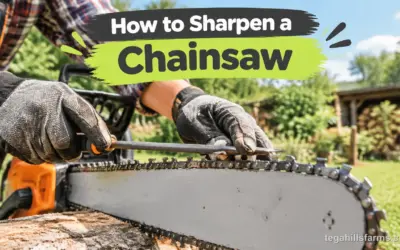
With the gunk gone, inspect it closely. Look for chipped or cracked cutters, depth gauges worn unevenly, drive links with burrs or rounded tips, and loose tie straps. A clean chain also shows the true edge of each cutter, since resin can hide a rounded or damaged tip. That makes right after cleaning the best time to learn how to sharpen a chainsaw, because the file bites clean metal instead of gumming up.
How Do You Clean the Guide Bar and Oil Outlet?
Run a groove cleaner or thin hook tool along the full length of the bar groove to pull out packed sawdust and gummed oil. Then clear the small oil holes near the bar’s mounting end so oil can reach the chain again. Wipe the bar with degreaser, and use a thin wire or the hook tool to open the oil inlet holes. Check the matching oil outlet port on the saw body too, since sawdust paste often packs around it.
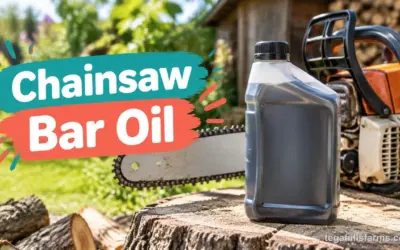
A blocked passage starves the chain even when the oil tank is full. The chain runs dry against the rails, heats up, and wears both the chain and the bar quickly. After the next refill with chainsaw bar oil, a saw that throws no oil or smokes at the bar points straight back to this passage.
While the bar is clean, sight down the rails. Burrs, a rail lower on one side, or a chain that leans in the groove all mean uneven wear. File burrs flat, flip the bar over each time you clean so both edges wear evenly, and grease the nose sprocket if your bar has a grease port.
How Do You Clean the Sprocket Cover and Clutch Area?
Scrape out the paste of sawdust and oil that packs inside the sprocket cover and around the clutch drum, sprocket and chain catcher. That buildup is the most common reason a clean chain still drags. Use the plastic scraper on the inside of the cover, then brush around the clutch drum and sprocket. Clear the chain catcher, the small hook below the bar that stops a thrown chain, along with the bar studs and tensioner screw so the bar seats flat when you reassemble.
Trapped debris causes two problems. Packed dust around the sprocket forces the chain to ride high, which loads the drive links and can derail the chain. Grime around the brake band keeps the band from closing fully on the clutch drum, so the chain brake stops the chain less reliably. Keep solvent and scrapers away from the clutch seals and use brushing and wiping only.
How Does Cleaning Differ for Gas, Battery and Corded Electric Chainsaws?
The power source decides what else needs attention after the chain, bar and cover are done. A gas engine breathes air and burns fuel, so it collects grime in places a sealed motor never sees. Battery and corded saws mostly need their electrical parts kept dry and their vents kept open. Follow only the part that matches your saw and skip the rest.
What Extra Cleaning Does a Gas Chainsaw Need?
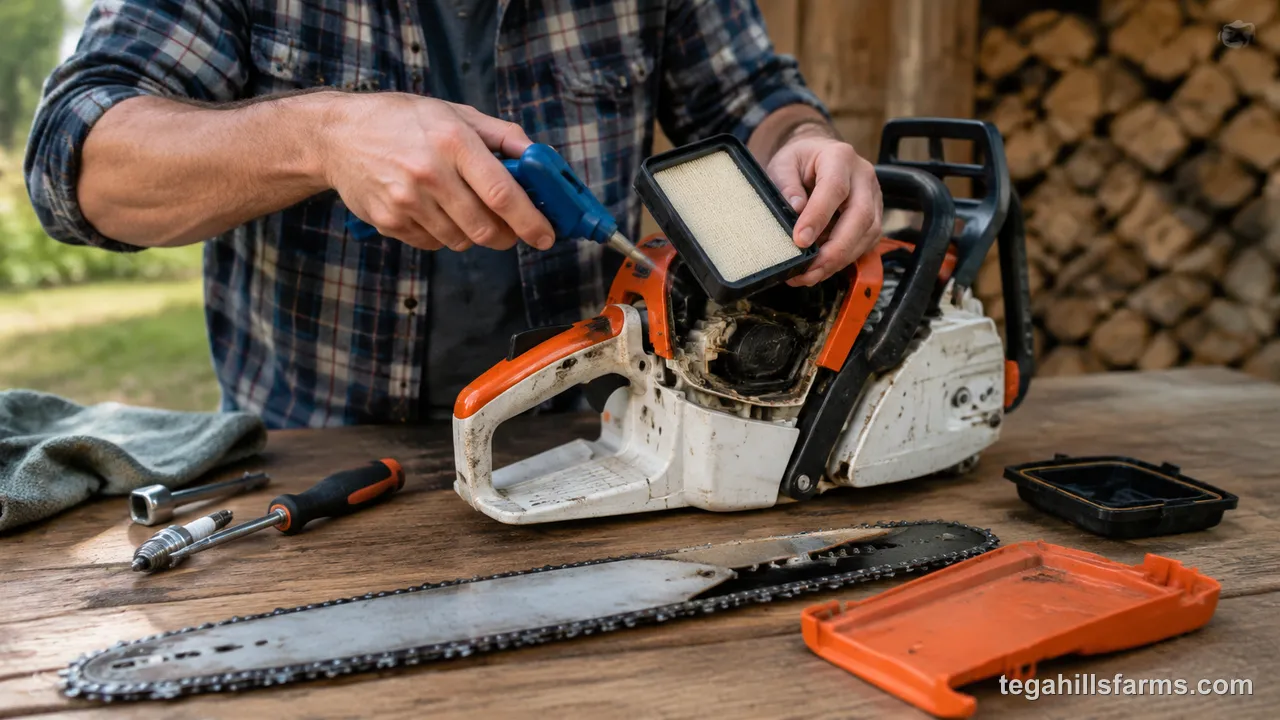
A gas saw needs its air filter cleaned, its spark plug checked and its cooling fins cleared. Neglecting any of the three shows up as hard starting, weak power or overheating. Pull the air filter and tap or brush out the dust. If your manual says the filter is washable, wash it in warm soapy water and let it dry completely. A clogged filter chokes the engine on air, so it runs rich, bogs under load and is harder to start.
Check the spark plug for black carbon or a wet, fuel-soaked tip. Clean or replace a fouled plug, because a weak spark is one of the first things to check when your chainsaw won’t start.
Brush sawdust from the cylinder cooling fins and the intake on the starter cover so the engine can shed heat. Leave carburetor adjustments and rebuilds to a dealer, especially on saws with limited-adjustment carburetors or varnish from old fuel.
How Do You Clean a Battery Chainsaw?
Clean a battery saw with the pack out, using a damp rather than wet cloth on the housing and a dry brush on the contacts and vents. Never submerge the tool or the battery. Wipe sap and oil from the body, then brush sawdust out of the motor vents so the motor can cool under load. Check the battery terminals on both the pack and the tool for dust or oil film, which can cause poor contact. Clean them with a dry brush or cloth only.
When the saw will sit unused, leave the battery partly charged at about two lit LEDs on its gauge instead of full or empty. Store it indoors in a cool, dry spot rather than in an unheated shed. Bar oil still drains and gums on battery saws, so empty or top off the oil tank according to your manual.
How Do You Clean a Corded Electric Chainsaw?
Clean a corded saw only while it is unplugged. Pay most of your attention to the power cord and the motor vents. Run the cord through a rag and look for cuts, crushed spots or exposed wire near the plug and the strain relief, and retire any damaged cord. Brush sawdust from the motor vents and wipe oil off the housing.
For a quick clean, you don’t need to remove the chain and bar. With gloves on, brush along the chain while pulling it around the bar by hand so every link passes the brush, then wipe the bar edges. Plug the saw back into a GFCI outlet only once everything is dry.
Can You Use Water or Compressed Air on a Chainsaw?
Water is fine on a removed chain after degreasing, and compressed air clears loose sawdust, but neither belongs near the engine intake, switch or battery. Both tools have a place. The risk comes from aiming them at the wrong part, where water causes rust and electrical faults and air drives dust deeper into the saw.
Is It Safe to Wash a Chainsaw With Water?
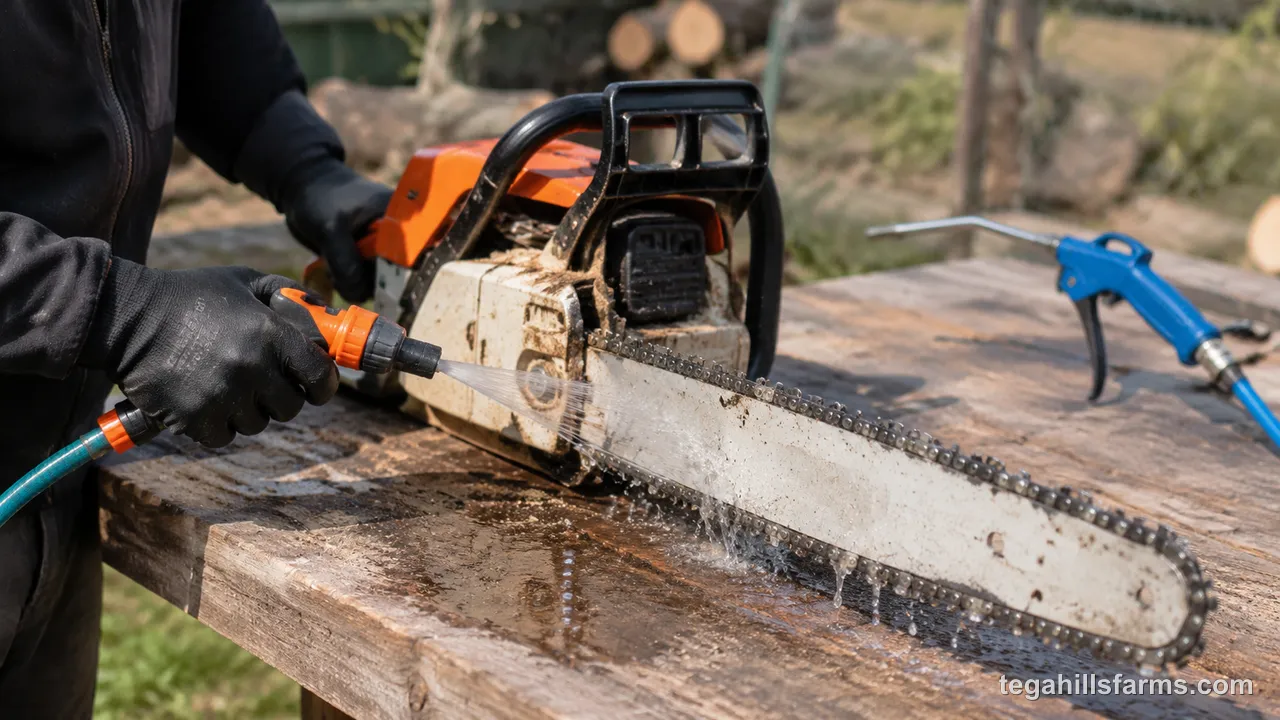
Rinsing the chain with water after degreasing is safe as long as you dry and oil it right away. Hosing down the whole saw is not. Water that reaches the air intake, carburetor, trigger switch, battery contacts or motor windings can cause hard starting, electrical faults or corrosion you won’t see until the saw fails. A pressure washer is worse, because it forces water and grime past seals.
Rust is the main risk on the parts that can take water. Bare steel on the cutters and bar rails starts to rust quickly when left damp. Towel the chain dry, let it air-dry completely, then work oil into every link before reassembly. Wipe the powerhead with a damp cloth instead of rinsing it.
How Do You Use Compressed Air for a Quick Clean?
Compressed air is the fastest way to clear loose sawdust from the sprocket cover, cooling fins, motor vents and bar groove after a day of cutting, without taking anything apart. It works best as a between-sessions clean. Air moves dry dust well but does nothing to resin or gummed oil, which still need solvent and a brush.
Wear eye protection and a dust mask, because the blast throws fine sawdust and grit in every direction. Keep the pressure moderate and hold the nozzle back from the surface at an angle that pushes dust out of the saw, not deeper into vents and the air intake. Never blow through the air filter from the clean side, since that drives dirt into the engine. Point the air away from seals and switch openings.
What Should You Do After Cleaning the Chainsaw?
A clean saw needs correct chain tension, fresh bar oil and either a ready-to-cut setup or storage prep before you put it away. A clean, dry chain rusts on the shelf and runs hot on its first cut. The last steps also confirm that the oiler and chain brake work, which is easier to check now than in the middle of a job.
How Do You Reassemble and Lubricate the Saw?
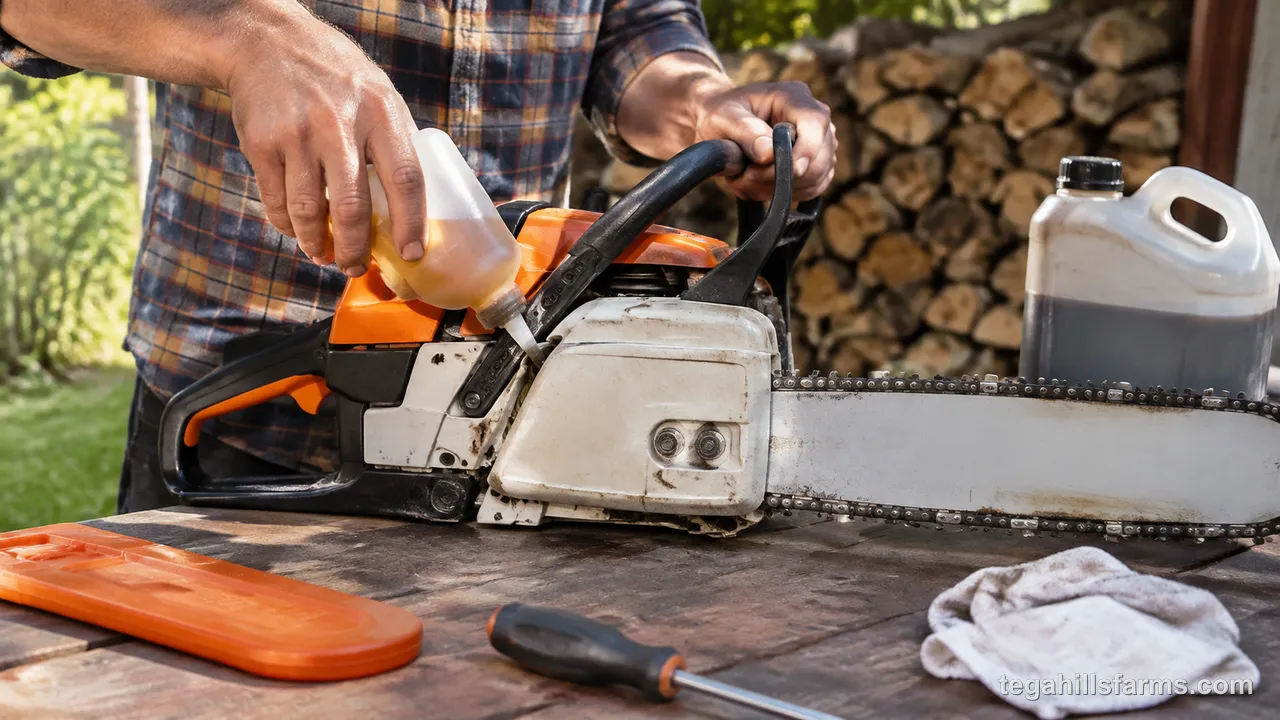
Fit the bar over the studs, seat the chain with the cutters on top facing toward the bar nose, and wrap the drive links around the sprocket. Then set the tension before fully tightening the cover nuts. Thread the nuts finger-tight and lift the bar nose. Turn the tensioner until the chain sits snug against the underside of the bar but still pulls freely around it by gloved hand, then tighten the nuts while holding the nose up.
Fill the oil tank and add a few drops of bar oil along the chain so it doesn’t start dry. Run the saw briefly and aim the bar nose at a light-colored surface. A thin line of oil spray shows the oiler is working. Engage the chain brake while the chain is moving to confirm it stops.
How Do You Prepare a Clean Saw for Storage?
A saw that will sit unused for three months or more needs a full clean before storage, because sap and oil left on it harden into a crust that’s much harder to remove later. After cleaning, wipe a light coat of oil over the chain and bar and slide on the scabbard.
For a gas saw, either drain the fuel and run the engine until it stalls, or fill it with stabilized fuel. Old fuel varnishes the carburetor. Battery saws go into storage with the pack removed and partly charged, as described above. Coil a corded saw’s cord loosely to avoid kinks. The full routine for how to store a chainsaw over the off-season also covers bar oil and where to keep the saw.
A chain that just cut through a tree with oak wilt or Dutch elm disease carries live spores and bacteria in the sap stuck to its links, and the degreaser that leaves it shiny doesn’t kill them. Take that chain straight to a healthy tree in the same yard and you can spread the disease into wood that had no problem the day before.
How Do You Disinfect a Chainsaw After Cutting Diseased Wood?
Disinfect the chain and bar any time you cut wood you know or suspect is diseased, and do it before the saw touches a healthy tree. Cleaning removes grime, but it doesn’t reliably kill the pathogens behind diseases like oak wilt, Dutch elm disease or fire blight.
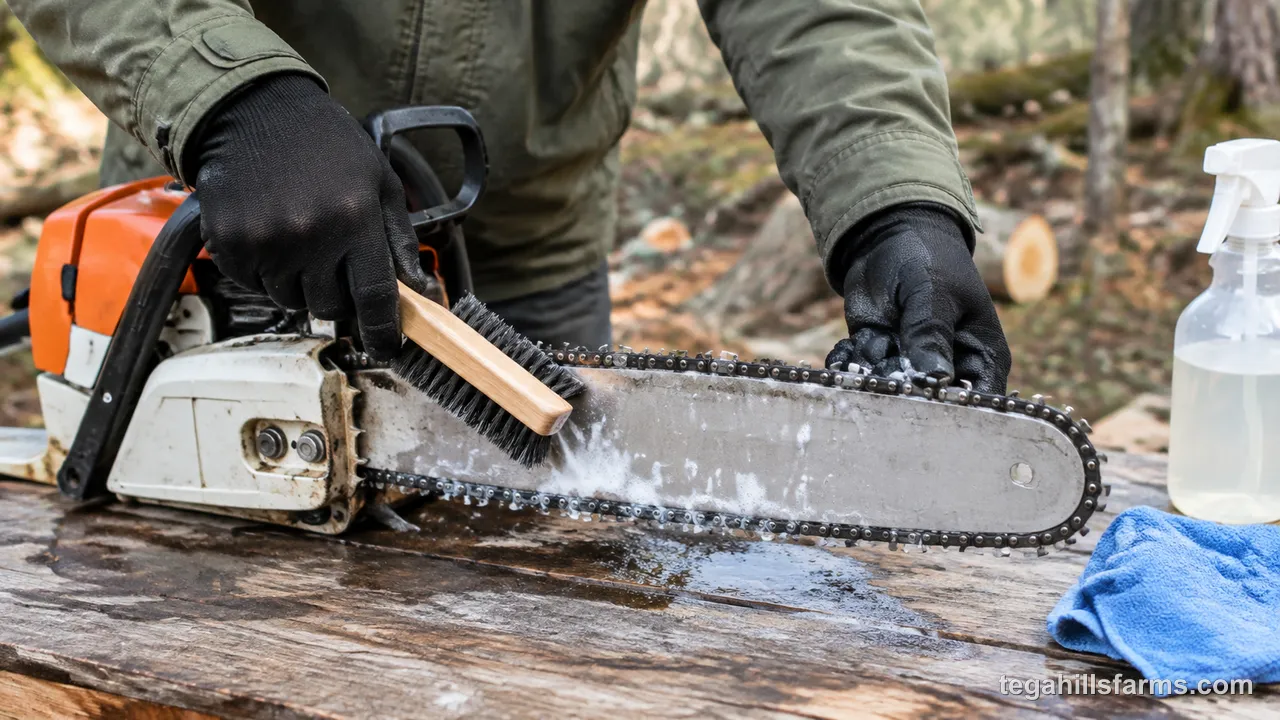
Clean first, then disinfect. A film of sap protects whatever is underneath it, so degrease and brush the chain and bar until bare metal shows. Then wipe or spray both with a disinfectant such as isopropyl alcohol or a household disinfectant. Leave it wet for the contact time listed on the label.
Bleach-based products corrode steel, so dry the chain and bar thoroughly and oil them right after disinfecting. Disease rules vary by region, and some areas restrict cutting certain species in certain seasons, so check with your county extension office before working on a tree you suspect is infected.
How Can You Clean a Chainsaw Without Damaging It?
Use the mildest cleaner that works, keep water and solvent where they belong, and finish every clean with oil. Most cleaning damage comes from solvents on plastic, moisture left on steel, and debris forced into places it can’t get out of. The housing and the chain need opposite treatment, so it helps to handle them separately.
How Do You Clean the Plastic Housing Safely?
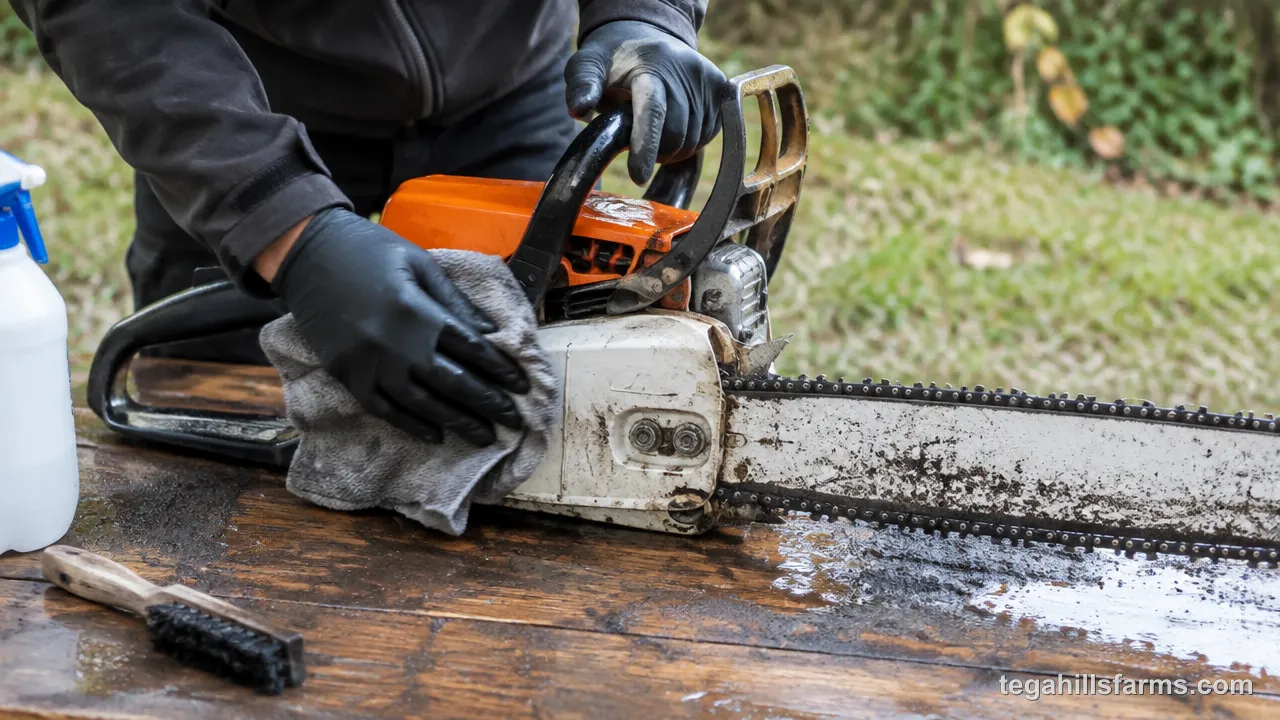
Warm water with a little dish soap on a damp rag, or a cleaner labeled safe for plastics, is all the housing needs. Gasoline, acetone, brake cleaner and carburetor cleaner can cloud, soften or crack the plastic and its decals. Harsh solvents also attack the rubber grips and the small seals around the controls, which turns a cosmetic job into a repair.
Brush dry sawdust out of the vents and seams before wiping. Wiping first turns dust into mud that packs the openings shut. Then wipe from the vents outward so loosened grime moves away from the openings instead of into them. For stubborn sap on the housing, test a resin remover on a hidden spot first and wipe it off promptly.
Which Cleaning Mistakes Cause Rust, Dry Chains or Seal Damage?
Most damage traces back to a handful of shortcuts, and each one leaves signs you can spot and correct:
- Leaving the chain wet: orange spots on the cutters or bar rails mean rust has started. Scrub light rust off with a brass or nylon brush, dry the chain and oil it.
- Skipping re-oiling: a chain that squeals, smokes or turns blue on its first cut was put back dry. Stop, fill the oil tank, oil the chain by hand and check that the oil outlet is clear.
- Soaking the wrong parts: putting the clutch, a sealed bar nose or the whole powerhead in solvent washes out grease and swells seals. Soak only the chain and wipe everything else.
- Forcing debris deeper: prying with a screwdriver or blasting air into the intake scores the housing and packs dust into the filter. Brush outward and pull the filter to clean it directly.
- Pressure washing: water past the seals shows up as hard starting or a dead switch. Let the saw dry fully and have a dealer check it if the problem persists.
Chainsaw Cleaning FAQ
Can WD-40 clean or lubricate a chainsaw chain?
WD-40 can loosen light gum and push water off a freshly rinsed chain, but it does not lubricate a chain under load. It is thin and gets flung off within seconds of cutting. Use it as a cleaning helper at most, and always follow it with bar oil before running the saw.
Does a brand-new chainsaw need cleaning before its first use?
A new saw mostly needs wiping, not cleaning. Wipe off any shipping residue, fill the bar oil tank, and check chain tension, since new chains stretch quickly during the first cuts. After that first session, clear the bar groove and cover so the break-in sawdust doesn’t harden into buildup.
Should you clean a chainsaw after every use?
Give it a quick clean after every use: brush or blow sawdust from the cover, vents and bar groove, and wipe the chain. Save the full teardown and chain soak for after heavy cutting, sappy wood, or before the saw sits for an extended stretch.
Can you clean a chainsaw chain without taking it off the bar?
You can for a light clean. With the saw unplugged or disabled and gloves on, brush the chain while pulling it around the bar by hand, then wipe the bar edges. Packed resin and a clogged bar groove still require removing the chain, since that’s the only way to reach the groove and oil holes.
What happens if you never clean a chainsaw?
The bar groove and oil holes clog, the chain runs short of oil, and friction wears the chain and bar rails quickly. On gas saws, a clogged air filter and dusty cooling fins add hard starting and overheating. Eventually you replace parts that routine cleaning would have kept working.
Write Your Review
No reviews yet. Be the first to share your experience!