

A chainsaw and a pole saw cut with the same chain-and-bar principle but solve different yard problems — a chainsaw handles heavy ground-level cutting while a pole saw handles overhead pruning from the ground.
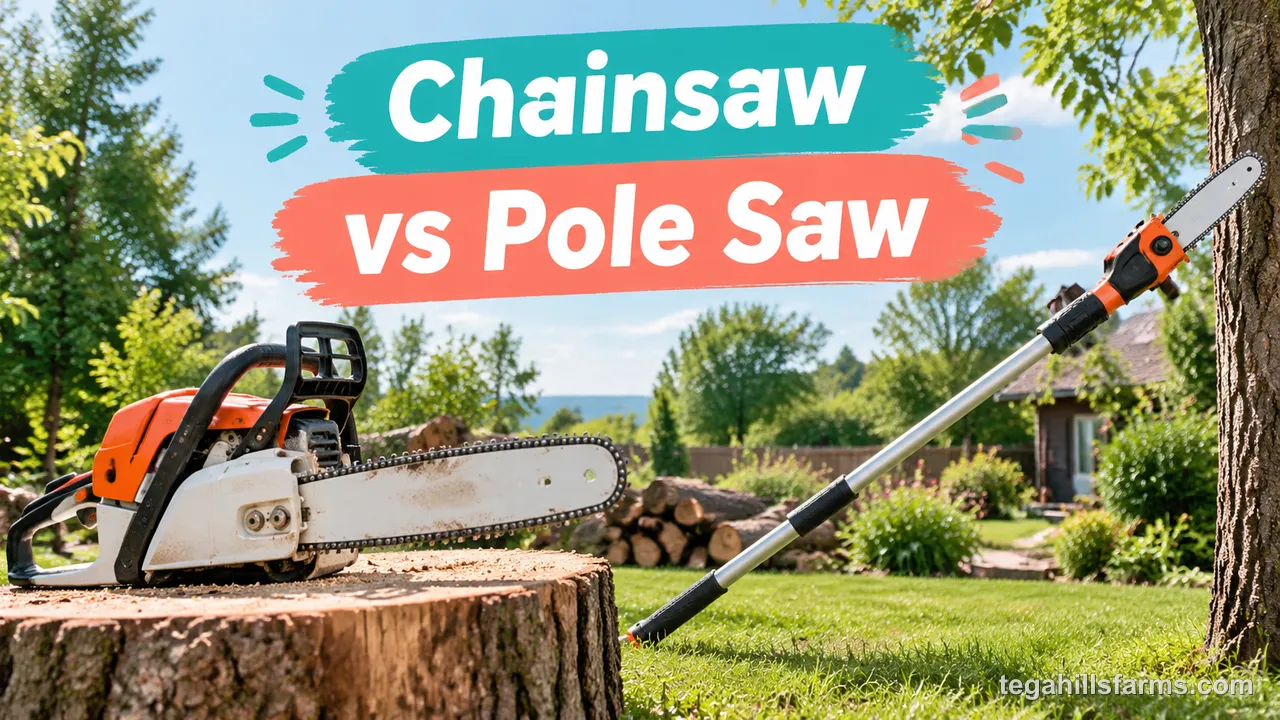
The choice comes down to bar length vs reach, control vs overhead leverage, and power source — not just which tool looks more powerful.
Pick wrong and you end up on a ladder with a heavy saw overhead or trying to limb a large downed trunk with a short pole head that cannot finish the cut.
Below, we compare design, capacity, and power side-by-side, then match each tool to the yard tasks where it actually saves time and keeps you safer.
What Is a Chainsaw vs a Pole Saw?
A chainsaw vs pole saw is a handheld ground cutter vs a pole-mounted overhead pruner that uses the same chain to cut wood in different positions.
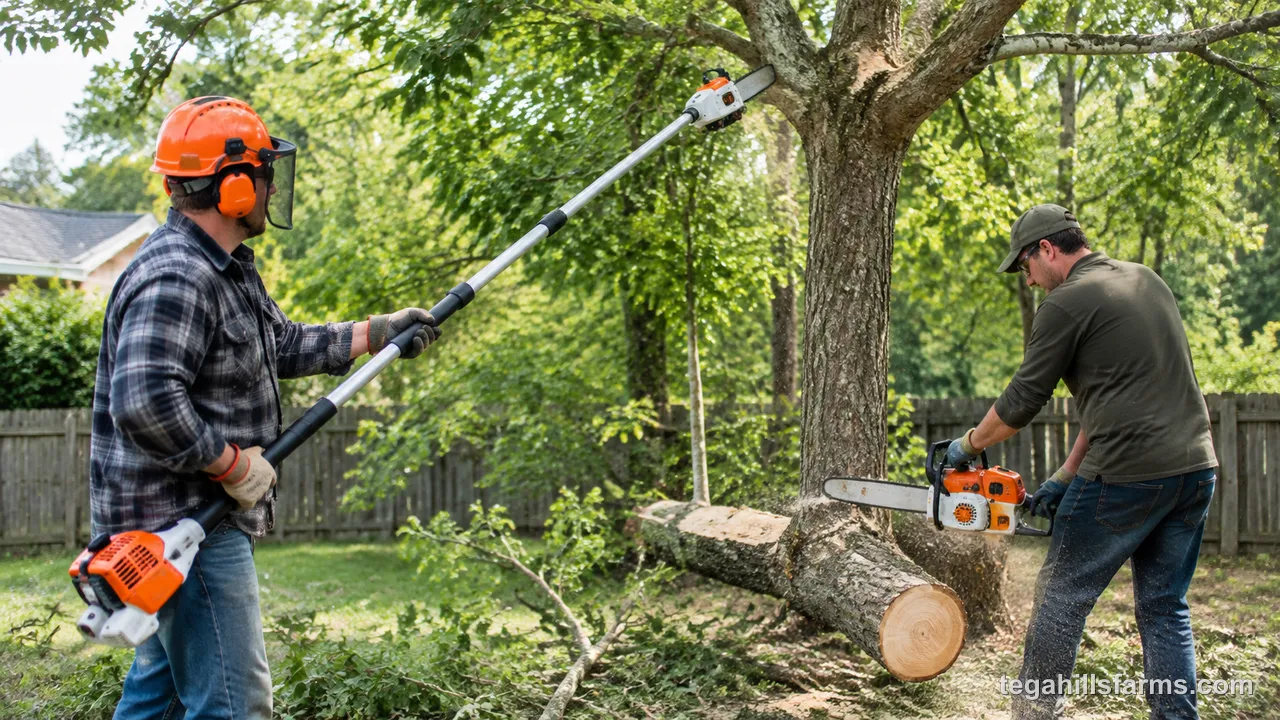
A chainsaw is a compact powerhead with a guide bar and chain you control with two hands at waist to chest height for felling, bucking, limbing, and cutting firewood. A pole saw is that same cutting head mounted on a fixed or telescoping pole — sometimes 8 to 15 feet long — so you prune branches overhead while standing on the ground.
The core difference is access, not power. A chainsaw gives you leverage and bar length for big rounds on the ground; a pole saw trades bar length for reach and keeps you off a ladder. If you are still weighing power type, bar length and budget before deciding between these two cutting tools, this overview of how to choose a chainsaw will help you match either option to your yard.
Chainsaw vs Pole Saw: How Do Design and Cutting Capacity Compare?
A chainsaw leads on bar length and cutting capacity, a pole saw leads on reach, weight and overhead handling, and power options overlap but favor different uses.
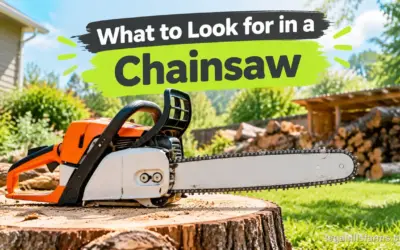
This balance explains why bar size, ergonomics, and power type decide what you can safely cut. For shoppers comparing specs, understanding what to look for in a chainsaw alongside how much does a chainsaw cost clarifies where paying for a longer bar or larger powerhead actually pays off.
How Do Bar Length and Cutting Capacity Differ?
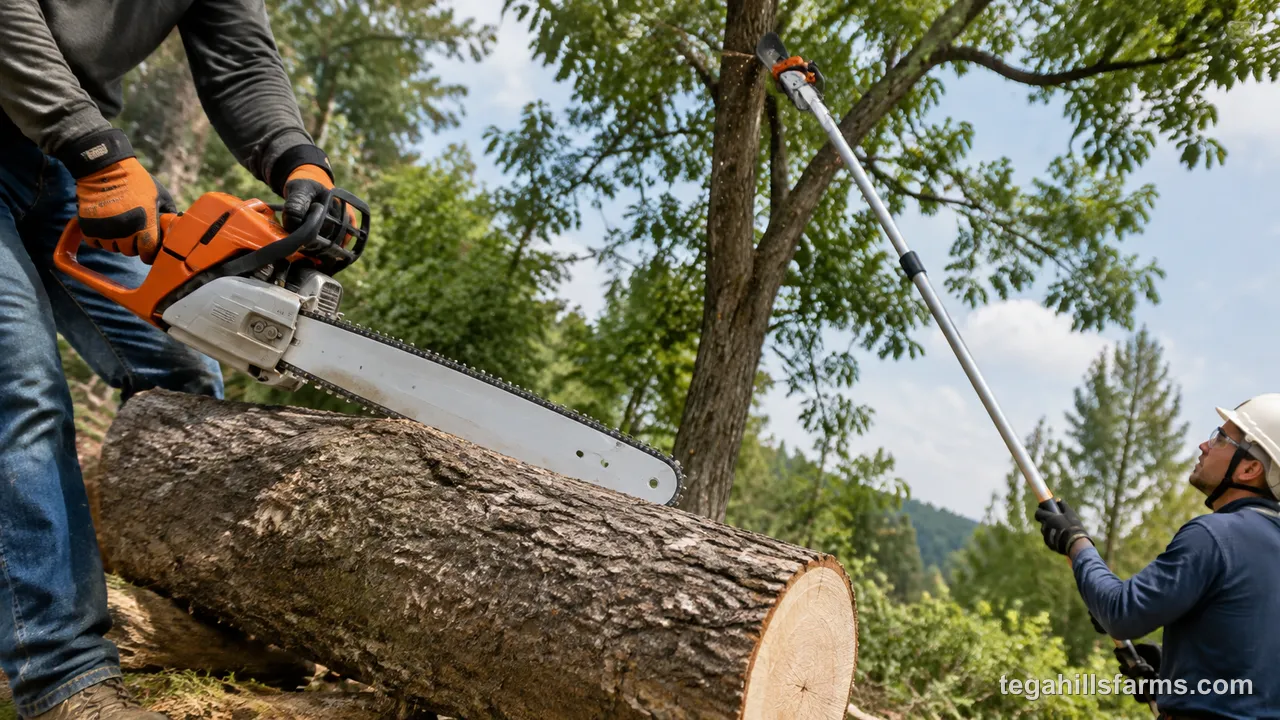
A chainsaw offers longer bar length and larger cutting capacity, while a pole saw uses a shorter bar for small-diameter pruning.
Bar length dictates the thickest wood you can cut in a single pass. Most homeowner chainsaws run a bar that handles small trees, large limbs, and firewood rounds in one cut, while most pole saws run a much shorter bar intended for branches a few inches thick. Trying to force a short pole-saw bar through a large trunk pinches the chain and stalls progress.
For yard reality, that means a chainsaw buck cuts a downed limb into firewood lengths quickly, while a pole saw is built to clip a high dead limb before it falls on a fence. Larger capacity also means more chain speed and weight in the cut, which helps on dense hardwoods but makes overhead use tiring and risky. If your regular work is on the ground and over 6 inches in diameter, bar length matters more than reach.
How Does Reach, Weight and Overhead Handling Compare?
A pole saw provides extended reach from the ground, while a chainsaw provides better control and balance at waist height but more fatigue overhead.
A chainsaw carries its weight close to your body with two handles, giving you precise control for horizontal and angled cuts. A pole saw shifts that same head weight to the end of a long lever, so even a light head feels heavy after a few overhead cuts — especially with a telescoping pole fully extended.
That leverage changes safety and accuracy. Overhead, you cut with arms raised, limited leverage to steer the bar, and branches falling toward you. On the ground, you plant your feet, brace the saw, and let the chain feed into the wood. For low work, the chainsaw’s close balance wins; for high, thin branches, the pole saw’s reach lets you stay planted instead of climbing.
What Power Options Are Available for Each?
Both tools come in gas, battery, and corded electric options, with manual pole pruners as a non-powered alternative for very light trimming.
Gas chainsaws and gas pole saws suit larger properties and extended runtime where you can manage fuel, oil, and seasonal storage. Battery models dominate the homeowner market for both tools because the same battery platform often runs your mower or trimmer, starts instantly, and stores easier over winter. Corded electric remains an option where an outlet is close and you want steady power without batteries.
Manual pole pruners with a bypass blade or pull-saw handle the smallest twigs and water sprouts quietly but require more effort as diameter increases. When choosing, match power to yard size and tree density: small lots with occasional pruning lean battery, while frequent cutting of hardwoods or larger acreage leans gas for sustained cutting.
Which Tool Should You Use for Common Yard Tasks?
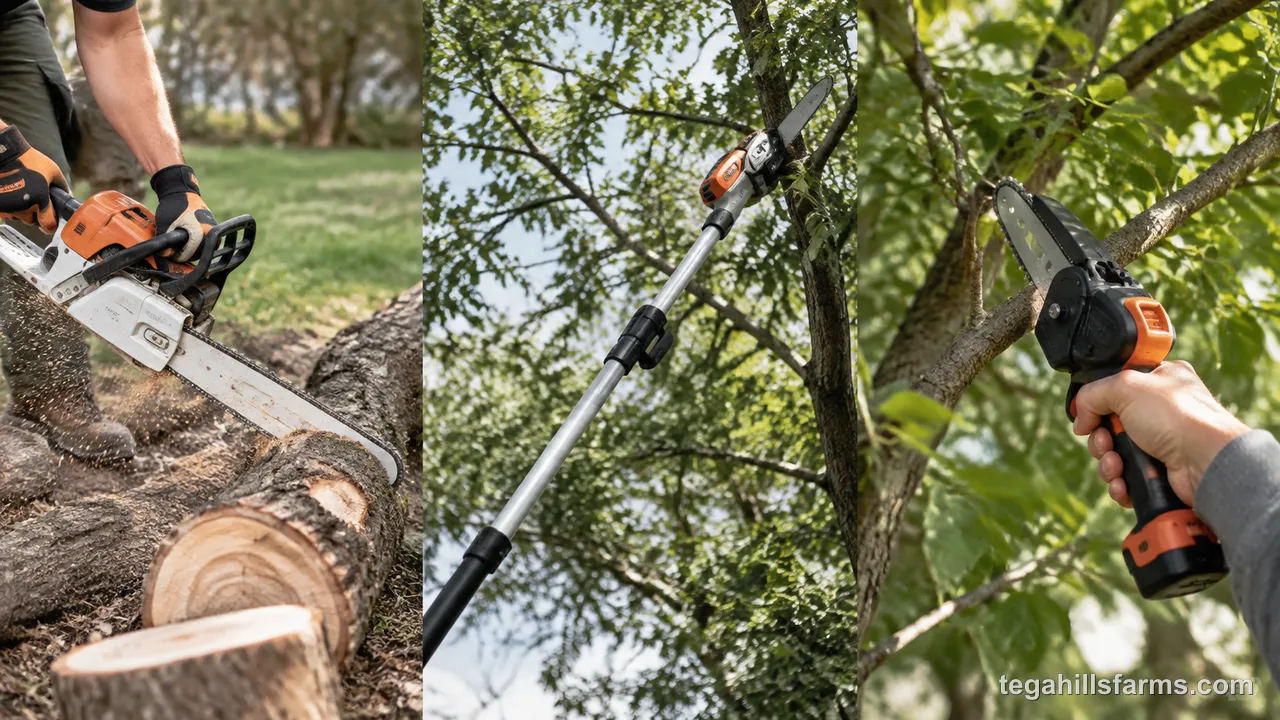
Use a chainsaw for ground-level cutting, a pole saw to save a ladder on overhead pruning, and a mini handheld chainsaw for light one-handed pruning in tight spots.
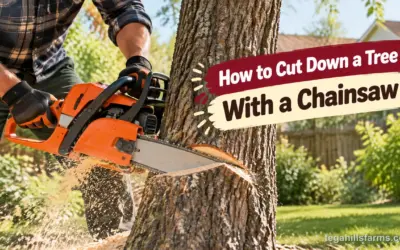
That split keeps heavy cuts low where you have control and light cuts high where you have reach. If your list includes felling or processing firewood, see our steps on how to cut down a tree with a chainsaw before you cut, and if you are curious about slabbing logs, our guide on how to mill with a chainsaw explains why that job still needs a full-size chainsaw, not a pole head.
When Is a Chainsaw the Better Choice on the Ground?
A chainsaw is better on the ground for felling small trees, bucking logs, limbing downed branches, and cutting firewood where bar length and power matter.
It excels when the wood is thick, on the ground, and requires steady feed pressure — cutting a wind-thrown limb into rounds, trimming a stump, or clearing brush piles. The longer bar and solid two-handle grip let you make controlled horizontal cuts and notch cuts without fighting a flexing pole.
A chainsaw also handles storm cleanup faster because you can work at knee to waist height with good footing. Use it for any cut you can safely reach without raising the bar above shoulder height. When branches are within arm’s reach and larger than a few inches, the ground-level power and stability of a chainsaw beats trying to steer a pole head.
When Does a Pole Saw Save You a Ladder?
A pole saw saves a ladder for overhead pruning of small to medium branches while keeping both feet on the ground up to its rated reach limit.
It is the right call for dead limbs over a roof, driveway, or fence, low-hanging branches that block a walkway, and shaping trees where a ladder would be unstable. Most homeowner pole saws safely reach 10 to 15 feet with your height added, but the effective cutting height drops as the branch gets thicker — you should not overextend or angle the pole so steeply that you lose control.
Beyond that limit, stop and call for help or use a different approach; leaning back, standing on tiptoes, or cutting above the pole’s design height invites falling wood and loss of balance. For anything you cannot cut with a clean, controlled stroke from firm ground, a ladder does not make it safer — it makes it riskier.
Where Does a Mini Handheld Chainsaw Fit In?
A mini handheld chainsaw offers one-handed maneuverability for small-diameter cuts but less capacity and stability than a full chainsaw or pole saw.
These compact battery pruners, usually with a 4 to 8-inch bar and a top handle plus guard, shine for quick pruning, cutting kindling, trimming shrubs, and cleaning up small limbs where a full chainsaw feels bulky. You can work between tight branches and make fast cuts without deploying a long pole.
The trade-off is reach and safety: they cannot replace a pole saw for high limbs or a full chainsaw for thick trunks, and one-handed use demands extra care to avoid kickback on a short bar. Think of a mini as a third tool for light, close work — keep the pole saw for height and the standard chainsaw for anything that needs a longer bar or two-handed control.
How Do Safety Requirements Differ Between the Two Tools?
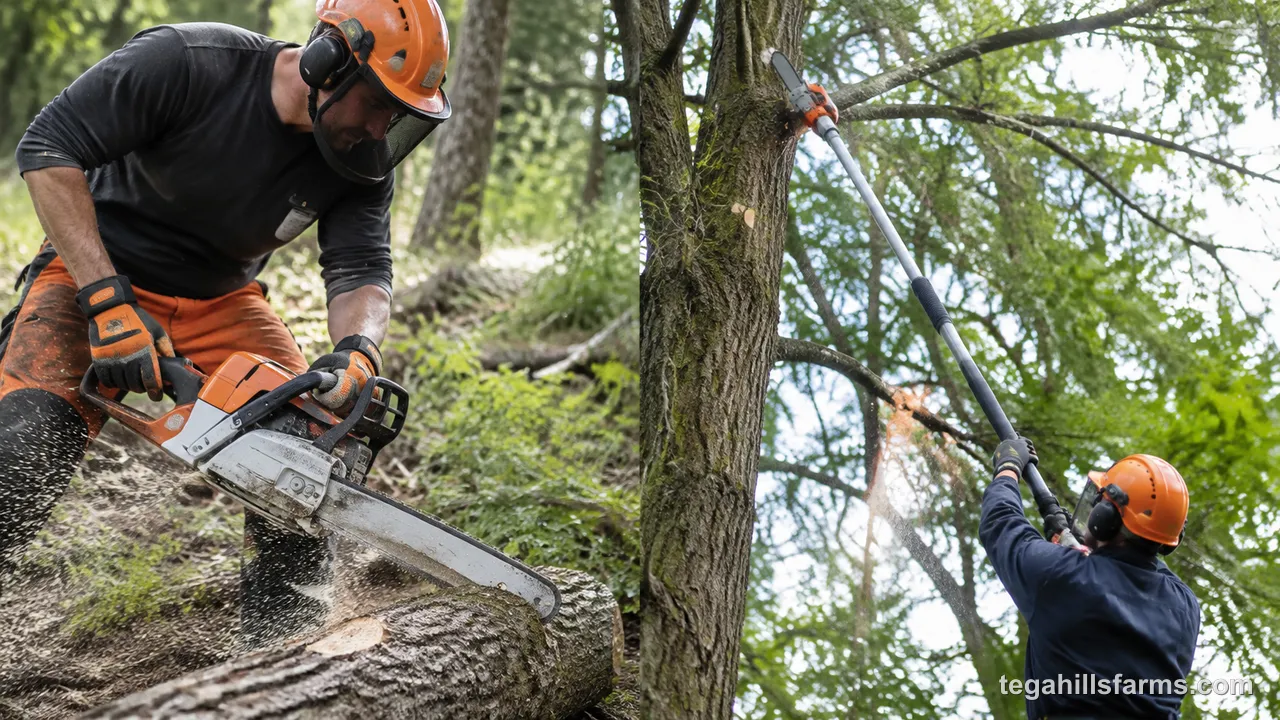
Safety differs in kickback and falling branch risks and in the PPE and height limits you need for each cutting position.
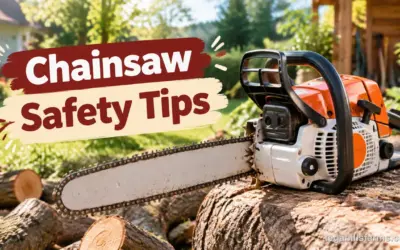
Ground-level chainsaw work concentrates risk at the bar tip and your footing; overhead pole work adds falling wood and fatigue. Understanding chainsaw kickback and following proven chainsaw safety tips helps you set the right limits for either tool before the first cut.
What Are the Main Kickback and Falling Branch Risks?
A chainsaw’s main risk is rotational kickback at the bar tip, while a pole saw’s main risk is falling branches and loss of control overhead.
Kickback happens when the upper tip of the chainsaw bar contacts wood or pinches, throwing the bar up toward you — more likely during bore cuts or when the tip digs into a limb. That motion is fast and happens inches from your hands and face.
With a pole saw, kickback is less common because the small bar stays in light wood, but the hazard shifts to wood falling onto you, the pole, or bystanders. A cut limb can swing, slide down the pole, or drop debris as it separates, especially if you cut above your head or cut a branch under tension. Different positions, different failures — both demand clear escape paths and awareness of where the cut piece will fall.
What PPE and Height Limits Keep You Safe?
Safe operation requires eye and hearing protection, gloves, and head protection, plus strict height and reach limits for pole work.
For either tool, wear safety glasses, hearing protection, snug gloves, long sleeves, sturdy boots, and a hard hat when cutting overhead; add chaps when running a chainsaw on the ground where the bar is near your legs. Keep bystanders well outside the drop zone and never cut directly overhead where a branch can fall through the ladder of the pole onto you.
Set personal limits: keep chainsaw cuts at or below shoulder height, keep pole cuts with firm footing and the pole at a controllable angle, and stop when you must overextend or cannot see the branch collar clearly. That stopping point is part of chainsaw safety equipment — knowing when the tool, not your effort, has reached its limit.
Should You Buy a Chainsaw, a Pole Saw, or Both?
Buy one tool if your yard favors one position, both if you regularly cut on the ground and overhead, based on tree density, lot size, and budget tier.
A chainsaw alone fits if you mainly process firewood, clear fallen limbs, or remove small trees and have little overhead pruning. A pole saw alone fits if your mature trees need seasonal pruning but you rarely cut large wood on the ground. Many suburban lots with a mix of shade trees and storm cleanup benefit from both, often starting with a battery platform that shares batteries between tools to stay in a mid-range tier without doubling fuel and maintenance.
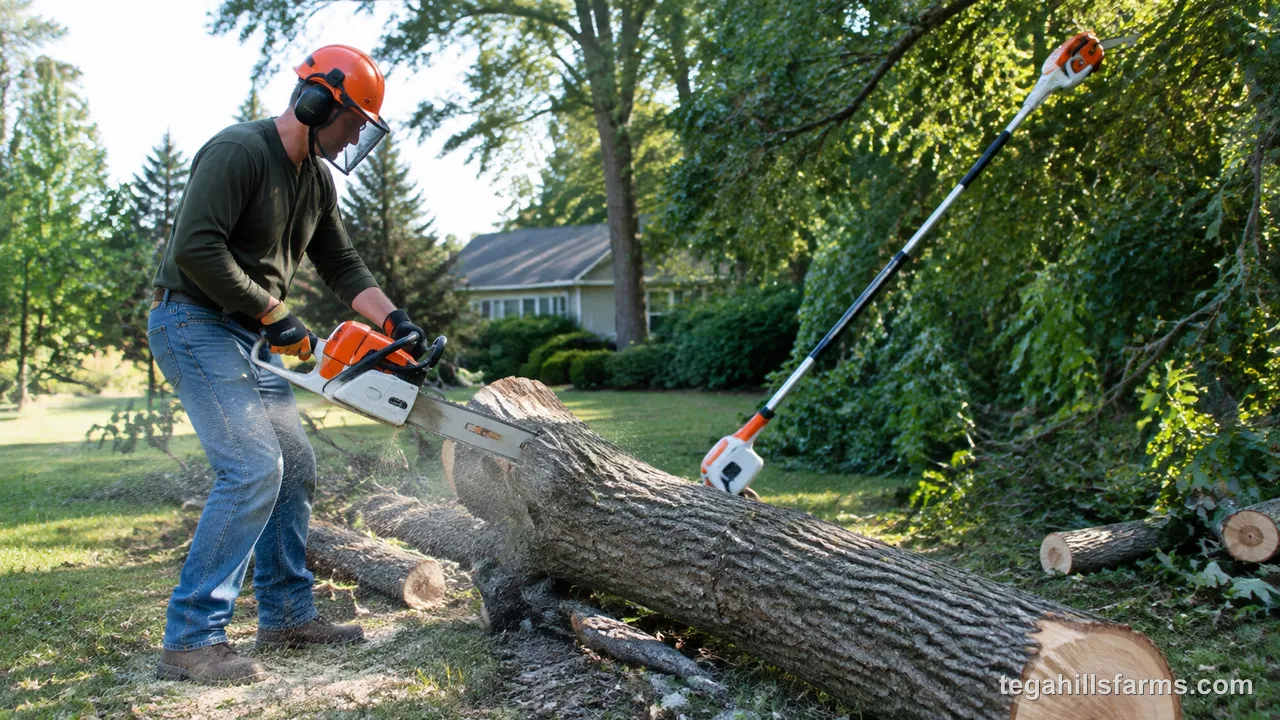
If you own acreage with large hardwoods or frequent storm damage, a gas or high-capacity battery chainsaw plus a pole saw covers the full range. For a small, lightly treed lot, one versatile battery chainsaw with a short bar handles most jobs, and you can rent a pole saw for occasional high work. Match the buy to how often you actually cut high versus low.
You have seen above how bar length, reach and power source make a chainsaw the workhorse on the ground while a pole saw keeps you off the ladder for overhead pruning.
Beyond choosing the right tool for the cut, long-term ownership comes down to details most comparisons skip, like how quickly a chain dulls overhead versus at waist height and what neglected storage does to the next start.
The notes below cover those rare maintenance and longevity trade-offs so you can keep whichever saw you pick ready when branches come down.
Maintenance, Storage and Longevity: What Most Owners Miss
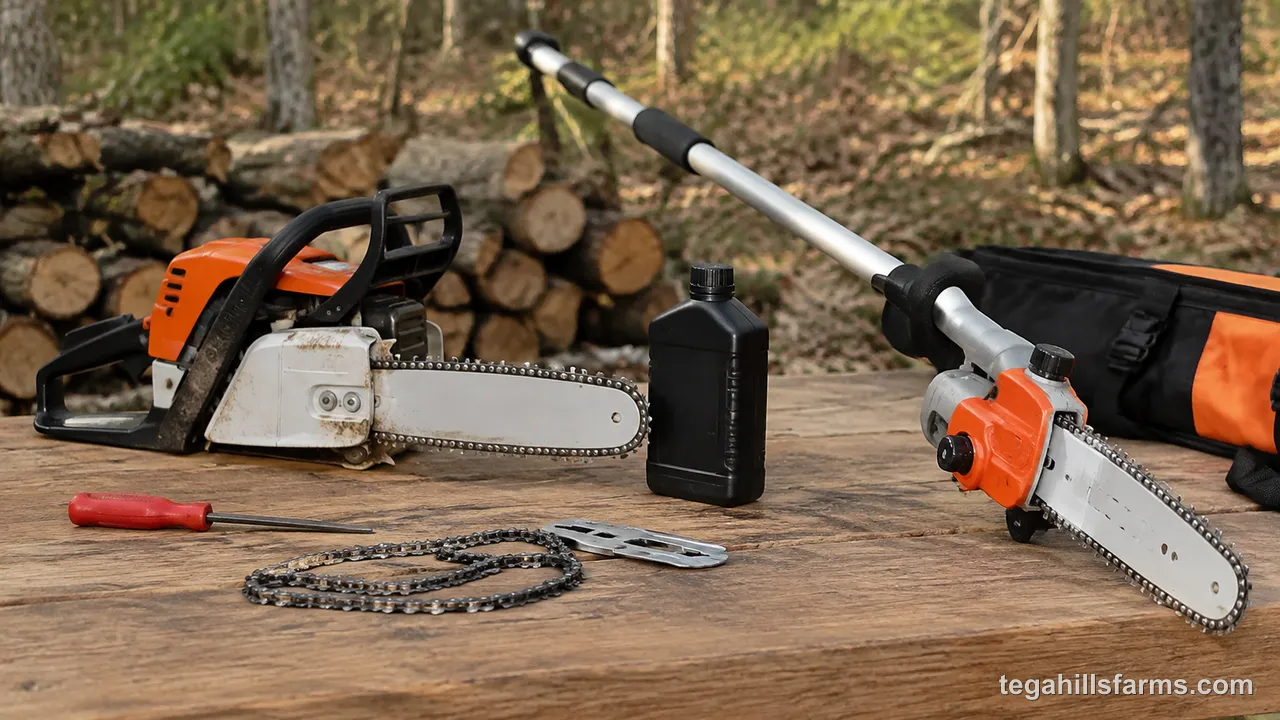
Long life depends on chain sharpness, tension and bar oil differences and on storing and transporting either saw so it starts next season.
These habits matter more than peak cutting speed because a dull or dry chain cuts slower and less safely regardless of bar length. Learning how to sharpen a chainsaw and when to check chainsaw bar oil keeps both tools cutting cleanly far longer than any upgrade.
Chain Sharpness, Tension and Bar Oil Differences
A chainsaw needs more frequent sharpening in dirty ground-level wood, while a pole saw needs more frequent tension checks from overhead heat and stretch.
Ground cuts drag the chain through grit, bark, and sometimes soil at the base of a limb, dulling cutters faster and demanding more attention to filing angles. Pole saw chains stay cleaner in live branches but run hotter overhead under longer, lighter cuts, which stretches the chain and loosens tension — check tension cold before each session and recheck after a few cuts.
Bar oil use differs too. Both tools need a full reservoir every time, but a pole saw’s uphill oil path and longer feed to the tip can starve the bar if you run low, accelerating wear on the nose sprocket. Keep the chain sharp enough to throw chips, not dust, keep tension snug enough to lift slightly but not sag, and keep oil flowing so both bars last beyond a single season of pruning.
Storing and Transporting Either Saw Between Seasons
Proper storage means emptying or stabilizing fuel, protecting the bar and chain, and storing batteries at partial charge to ensure reliable starts and longer life.
For gas models, run the fuel low or add stabilizer before months of storage, clean the air filter and bar groove, loosen chain tension slightly, and cover the bar. For battery models, remove the battery, clean debris from the housing and bar, oil the chain lightly to prevent rust, and store batteries indoors at around half charge through winter — cold garages shorten battery health.
Transport both tools with the chain covered, bar oil contained, and the pole saw collapsed or detached so it cannot swing in a vehicle bed. A simple end-of-season routine prevents the most common spring failure — a gummed carburetor or a corroded battery connection — and keeps whichever saw you chose ready when limbs come down after the next storm.
Chainsaw vs Pole Saw FAQs
Can a chainsaw do what a pole saw does?
No, not safely at height. A chainsaw can limb on the ground but cannot safely replace a pole saw overhead without a ladder, which adds fall risk and reduces control.
Can a pole saw do what a chainsaw does on the ground?
Only for small wood. A pole saw’s short bar can cut thin limbs at ground level, but it is slow and awkward for bucking large logs or felling where a longer bar is needed.
Do I need a ladder with a pole saw?
No. A pole saw is designed to keep you off a ladder. If a branch is beyond the saw’s rated reach from firm ground, use a different method or hire help rather than climbing.
Can I cut a small tree with a pole saw?
Not recommended. Pole saws lack the bar length and control for trunk cuts; use a chainsaw at waist height with proper notching and escape planning.
Which is better for beginners?
A battery pole saw is easier to learn for light pruning, while a short-bar battery chainsaw is better to start with for ground cuts — both need PPE and basic chain care.
Do both need bar oil and chain tension checks?
Yes. Both use bar oil and need regular tension checks before each use to prevent throwing a chain or burning a bar.


Write Your Review
No reviews yet. Be the first to share your experience!