

For the best husqvarna snow blowers in 2026, the choices are Husqvarna ST124 24in Snow Blower (Best Overall), Husqvarna ST227 27in 252cc Snow Thrower (Best for Hilly Terrain), Husqvarna ST224 24in Snow Blower (Editor’s Choice), Husqvarna ST230 30in Snow Thrower (Also Great), and Husqvarna ST330 30in Snow Blower (Best Performance). All of them are two-stage gas machines built to clear a driveway after a real storm, not just a light dusting.
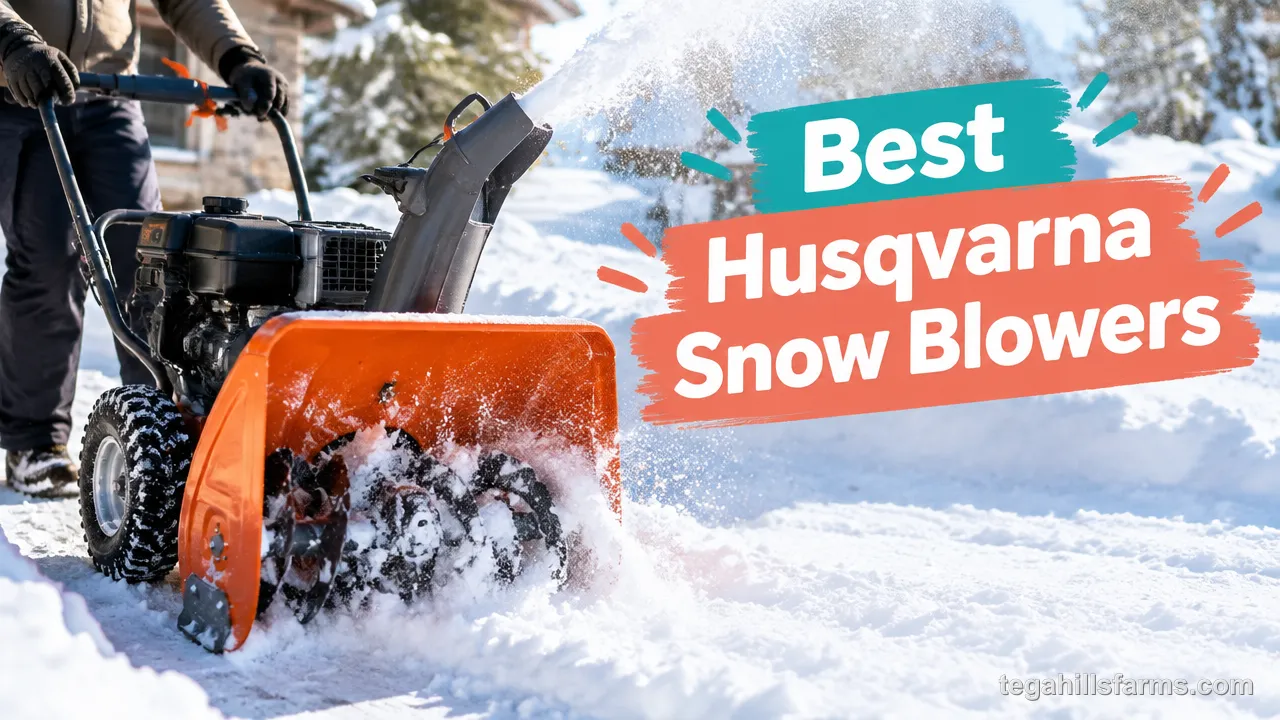
What separates them is clearing width, engine size, and how much help you get with steering and starting. Power steering and electric start show up across the 2- and 3-series machines, and both change how a heavy blower behaves at the end of every pass and on a cold morning in the garage.
Every model here is a heavy gas machine that needs floor space in a garage or shed, fresh fuel and regular oil changes. The larger the housing, the more machine you have to turn at the end of each pass and wheel back inside when you’re done.


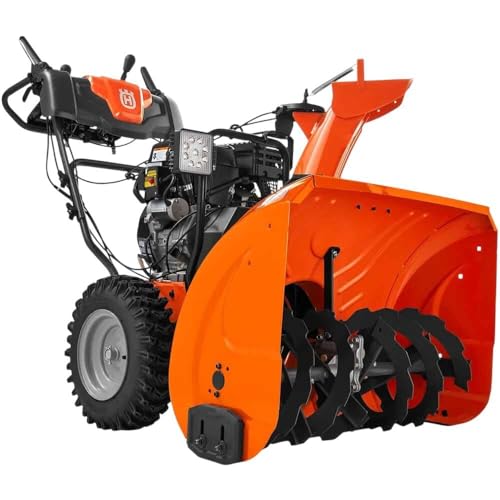

On a flat driveway where the plow rarely leaves much of a ridge, the 24-inch models do the job without the storage burden of the 30-inch machines.
Are Husqvarna Snow Blowers Any Good?
Yes. On a long driveway after a heavy, wet storm, the ST line is a dependable two-stage gas choice, built around ribbon augers, power steering and push-button electric start across most of the range.
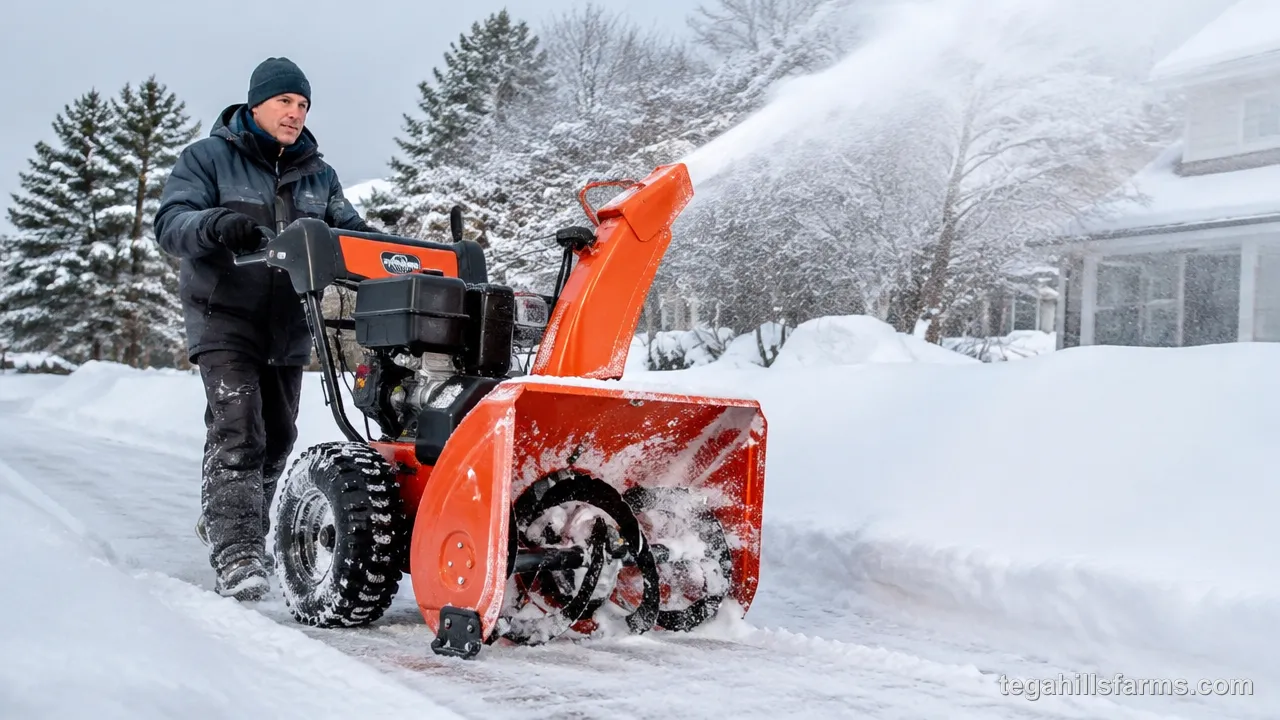
Ribbon augers chew through wet, packed snow without loading up the chute, which is where many homeowner machines struggle. Power steering lets you swing a heavy blower around at the end of each pass with a squeeze of a trigger instead of hauling on the handlebars. Electric start means you don’t have to yank a pull cord against cold, thick oil.
You also pay toward the premium end for homeowner machines, and you sign up for the upkeep every gas engine brings: oil changes, fresh fuel each season, a spark plug now and then, and proper winter storage. That deal makes sense if you clear a long or sloped driveway after the plow goes by. On a short, flat driveway that sees light snow, a lighter machine will clear it with less to store and maintain.
If you are still deciding whether Husqvarna is the right name for your driveway, the best snow blower brands comparison lines it up against the other makers. For the closest gas alternative, I’d look next at the best Honda snow blowers.
How Do You Read Husqvarna Snow Blower Model Numbers?
In an ST name, the first digit is the series and the last two digits are the clearing width in inches, so the ST230 is a 2-series machine that clears a 30-inch strip.
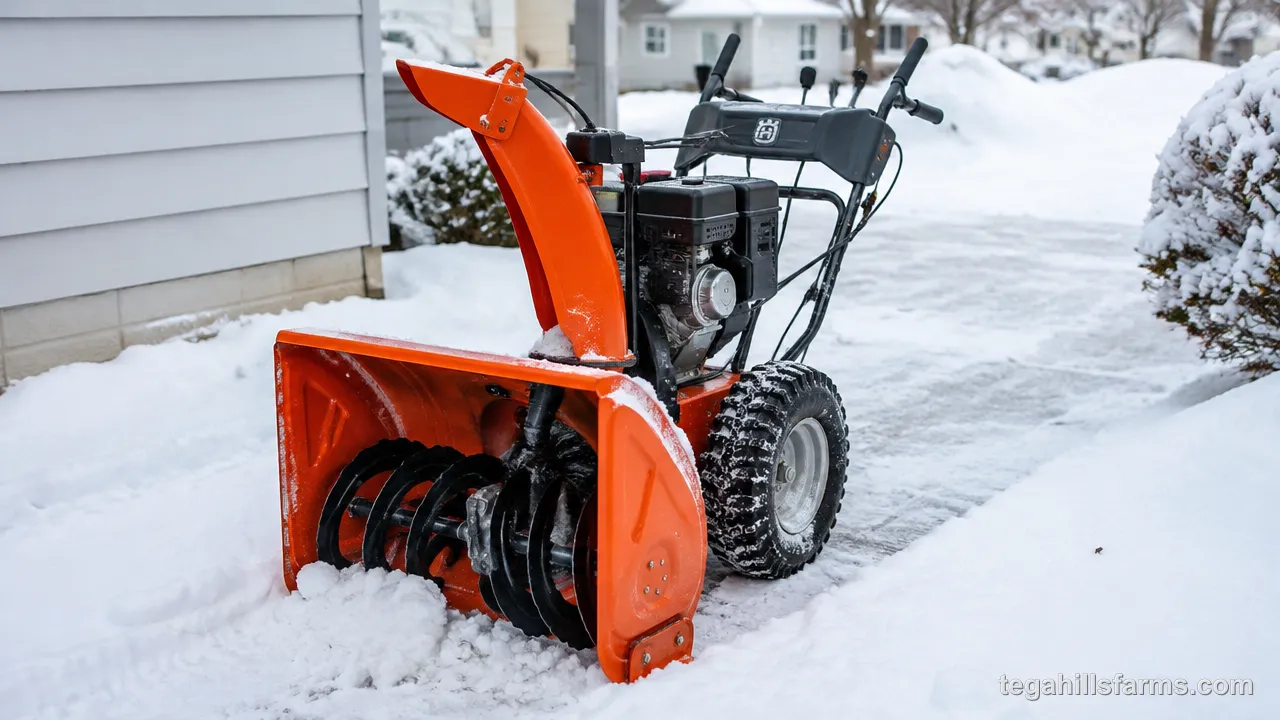
The series digit tells you how much machine sits behind that width. The ST124 is the 1-series build with a 212cc engine. The 2-series ST224, ST227 and ST230 run 212cc, 252cc and 301cc engines. The 3-series ST330 carries a 369cc engine along with a heavy-duty auger gearbox and a cast iron impeller.
Engine size isn’t part of the number, so two machines with the same width can still be quite different. The ST124 and ST224 share a 24-inch width and a 212cc engine, and the series digit is what points you to the ST224’s fuel-injected engine, power steering and hydrostatic drive. The ST230 and ST330 both clear 30 inches, but the 3-series model has the bigger engine and the heavier gearbox behind the same housing.
A letter after the digits, where you see one in Husqvarna’s wider range, usually marks a variant of the same chassis, such as a different drive or steering package. Read the feature list before assuming two similar numbers are the same machine. Read this way, the width digits tell you how many passes your driveway will take, and the series digit tells you how hard the machine can work through heavy snow.
What Should You Look for in a Husqvarna Snow Blower?
What separates one ST model from another shows up at the plow ridge, on a slope and in a cold garage, rather than in the headline numbers on the carton. A wider housing or a bigger engine only helps if the rest of the machine lets you use it. A heavy blower you can’t steer around a fence line, or start before work, costs you time instead of saving it. Judge each feature by what it does on your own driveway, so you don’t pay for capacity you’ll never use or buy a machine that stalls in the wet snow your area gets.
How Do Clearing Width and Intake Height Affect Your Driveway Time?
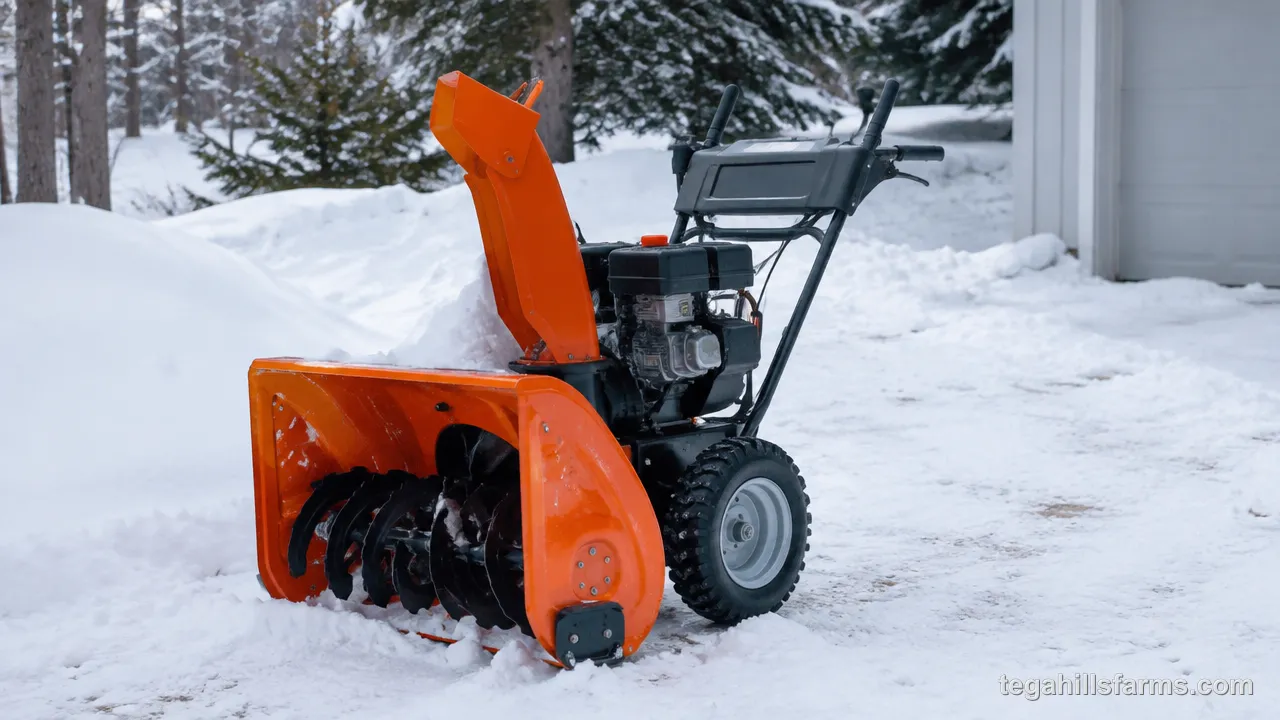
Clearing width is the strip the machine clears on each pass. Intake height is how tall the housing opening is, and it decides how deep a snowfall the machine can swallow before snow spills over the top and the blower rides up onto it. A wider housing means fewer passes down the driveway, but it also means a heavier, bulkier machine to turn at the end of each pass and fit through the garage door.
Inside the housing, the ribbon auger turns slowly, cuts into the snow and pushes it toward the center, where the impeller spins fast enough to throw it out the chute. The auger’s open spiral lets air into the snow as it feeds, so wet snow doesn’t pack into a solid plug between the auger and the impeller. Intake height matters most after a deep storm or at the plow ridge. On a typical snowfall, width decides how long the job takes.
Which Engine and Drive Features Matter on Slopes and Heavy Snow?
Engine size is pulling power. A bigger engine keeps the auger and impeller at speed when you push into wet, heavy or plow-packed snow, while a smaller one bogs down and makes you slow your pace. Drive and steering features decide whether that power reaches the ground on a slope.
A hydrostatic transmission changes speed across a continuous range instead of fixed gears. You can creep through a deep ridge and then pick up pace on a lighter stretch without stopping to shift.
Power steering, worked by trigger controls on the handles, cuts drive to one wheel so the machine pivots around it at the end of a pass. Without it, you’d be dragging a heavy machine sideways. A differential lock works the other way. Locked, both wheels drive together for straight-line traction up a grade. Unlocked, one wheel can turn freely for an easier turn.
Tire tread decides how much grip you have on a slope or an icy base. Deep, aggressive treads bite into packed snow and give the wheels something to push against. A non-clogging tread sheds snow, so the pattern keeps gripping instead of turning into a smooth, slick wheel.
How Does Electric Start Work, and What Controls Are Worth Having?
Electric start on these gas Husqvarna machines works through a power cord you plug into a household outlet. There’s no onboard battery, and the starter only turns the engine over until it fires. On a cold morning that saves you from yanking a pull cord against thick oil. It also means parking the machine within reach of an outlet, or running an extension cord to it, and unplugging before you head down the driveway.
The remote chute rotator and deflector lever let you swing the chute and change the throw angle without stopping and walking around to the front. That matters when the wind shifts or you’re passing a parked car. Trigger controls put the steering at your fingers, so turning a heavy machine takes a squeeze instead of a shove. An LED headlight lights the housing and the snow ahead on dark mornings before work and after sundown.
The 5 Best Husqvarna Snow Blowers of 2026
The machines worth a spot in your garage are the Husqvarna ST124 24in Snow Blower, Husqvarna ST227 27in 252cc Snow Thrower, Husqvarna ST224 24in Snow Blower, Husqvarna ST230 30in Snow Thrower and Husqvarna ST330 30in Snow Blower. Intake and engine size grow as you move up the series, and so does the bulk you have to store and turn. The right pick depends less on the size of the spec sheet than on what your driveway faces each winter. The 24-inch machines suit a standard driveway with a plow ridge to cut through. The 27- and 30-inch models earn their extra size on long or hilly properties that get heavy, wet snow.
#1 Husqvarna ST124 24in Snow Blower — Best Overall
For a standard driveway that collects a plow ridge every storm, the ST124 is where I’d start: its 21-inch intake height takes the deep stuff, and the machine stays manageable to push into storage. A 3-year bumper-to-bumper warranty covers the whole machine.
Key Specs:
- Clearing width: 24 in
- Engine: 212cc
- Intake height: 21 in
- Tires: 13-in snow tires
- Weight: 173 lb
- Warranty: 3-year bumper-to-bumper, 5-year engine
Detailed Review:
A 21-inch intake height lets the ST124 take a deep overnight snowfall, or the ridge the plow leaves at the curb, in a single pass instead of in layers. Its ribbon auger keeps that heavy, wet snow moving through the housing to the impeller.
The 13-inch snow tires roll over ruts and grip a packed base, so the machine tracks straight when you push into a drift. At 173 pounds, it’s lighter than the ST224, which shares its 24-inch width and 212cc engine. That makes the ST124 easier to back into a shed or steer around a tight garage.
The molded console and all-steel chute take the knocks from frozen chunks and from bumping the garage wall, and both are built for that abuse. Bumper-to-bumper coverage plus a separate, longer engine warranty means a problem in the first few winters goes back to the dealer instead of onto your workbench.
For a homeowner with a standard driveway, this mix of intake height and manageable weight covers the deep-snow days without the storage and upkeep of a bigger series. A wider series only starts to make sense once the driveway gets long or sloped.
Pros:
- 21-inch intake height takes deep snow and plow ridges.
- 13-inch snow tires grip a packed base.
- All-steel chute stands up to frozen chunks.
- Separate engine warranty extends coverage beyond the bumper-to-bumper term.
Cons:
- 212cc engine has less pull than the larger 2-series engines.
- 24-inch housing takes more passes than the 30-inch models.
Who It’s For:
Homeowners with a standard suburban driveway and a plow that leaves a ridge at the curb will get steady use from this machine, especially when storage space is tight. If your driveway is long and climbs to the garage, the ST227 suits you better because its larger engine has more pull on a grade.
Editor’s Verdict:
A well-sized two-stage for an everyday driveway, with enough intake height for deep storms and a warranty that covers the whole machine.
#2 Husqvarna ST227 27in 252cc Snow Thrower — Best for Hilly Terrain
If your driveway climbs to the garage, the ST227’s differential-locking X-Trac tires with deep treads keep both wheels driving up an icy grade, and power steering handles the turn at the top. Its 252cc engine adds pull for the climb.
Key Specs:
- Clearing width: 27 in
- Engine: 252cc, 7.75 HP
- Start: electric, via power outlet
- Tires: differential-locking X-Trac with deep treads
- Weight: 212 lb
- Headlight: LED
Detailed Review:
With the differential locked, the deep-tread X-Trac tires keep both wheels pulling up a grade instead of one wheel spinning on ice while the other sits still. At the top, the trigger controls and power steering let the machine pivot around one wheel, so you’re not dragging it sideways across the slope.
The 252cc, 7.75-HP engine gives the ST227 plenty of displacement to keep working on a slope. On a hill, that extra pull keeps the auger at speed while the drive works against gravity. The heavy-duty ribbon auger helps the impeller churn through frozen or wet snow.
That capability comes with weight. At 212 pounds, the ST227 is heavier than both the ST124 and the ST224. Give it a parking spot you can roll straight into, because moving it by hand on a garage floor takes effort.
Adjustable auger height raises the housing above the ground, which keeps the scraper bar from digging into a gravel driveway or uneven pavers. The remote rotator and deflector change the chute without a stop, and the LED headlight covers a wider area than an incandescent bulb on dark mornings.
Pros:
- Differential-locking X-Trac tires keep both wheels pulling on grades.
- 252cc engine keeps the auger at speed in wet snow.
- Power steering pivots the machine easily at each turn.
- Adjustable auger height protects gravel and uneven surfaces.
Cons:
- 212-pound weight takes real effort to move by hand.
- Electric start needs an outlet or extension cord nearby.
- 27-inch housing needs more floor space than the 24-inch models.
Who It’s For:
If your driveway runs uphill to the garage or curves across a grade, this machine is built for it, with traction and steering that keep it under control on ice. Buyers with a flat, short driveway and a cramped shed will find the ST124 easier to live with, since it carries less weight.
Editor’s Verdict:
Pick this one for a sloped driveway where traction decides whether you finish the job; locking tires and power steering keep a heavy machine pointed where you want it.
#3 Husqvarna ST224 24in Snow Blower — Editor’s Choice
The ST224 suits a standard driveway where you want easy handling every time you go out, since its hydrostatic transmission and power steering let you set speed and turn without wrestling the machine. A throttle control idles the engine during pauses.
Key Specs:
- Clearing width: 24 in
- Engine: 212cc, 5.9 HP, electronic fuel injection
- Transmission: hydrostatic
- Start: push-button electric
- Tires: semi-pneumatic with non-clogging treads
- Weight: 201.6 lb
Detailed Review:
The hydrostatic drive is why I’d hand this machine to someone who has never run a two-stage. Using the speed control lever, you can crawl through the plow ridge and pick up pace on the open driveway without stopping. Power steering then makes the pivot at the end of each pass easy.
The 5.9-HP, 212cc engine runs on electronic fuel injection, and the throttle control idles it down while you move the car or shovel a step. That keeps noise and fuel use down during the pauses in a normal clearing session.
Adjustable plastic skid shoes set the housing height, which matters on pavers, stamped concrete or a gravel apron that a low housing would scrape or chew into. The ribbon auger and the semi-pneumatic tires with non-clogging treads keep both the intake and the tread working in wet snow.
At 201.6 pounds, it’s heavier than the ST124, which has the same width and engine displacement, so the easier handling comes with more machine to store. A push-button electric starter, chute rotator, deflector lever and LED headlight complete the controls.
Pros:
- Hydrostatic transmission adjusts speed smoothly without shifting gears.
- Throttle control idles the engine during pauses.
- Adjustable plastic skid shoes protect pavers and decorative concrete.
- Power steering makes end-of-pass turns easy.
- Non-clogging tire treads keep gripping in wet snow.
Cons:
- 201.6-pound weight is more to store than the ST124.
- Narrower housing means extra passes on a long driveway.
- Plastic skid shoes wear down and need periodic replacement.
Who It’s For:
First-time two-stage owners, or households where several people take turns clearing, will find this machine forgiving to drive. It also suits driveways with pavers or decorative concrete. If you need a lighter machine to push into a tight shed, the ST124 is the better match.
Editor’s Verdict:
Choose it for smooth, low-effort control on a standard driveway; hydrostatic drive and power steering make a heavy two-stage feel manageable from the first storm.
#4 Husqvarna ST230 30in Snow Thrower — Also Great
Wide, long driveways go faster with the ST230, whose 30-inch housing and 301cc, 8.4-HP engine clear more ground per pass while keeping the auger at speed in heavy snow. Power steering keeps that width easy to turn.
Key Specs:
- Clearing width: 30 in
- Engine: 301cc, 8.4 HP
- Start: electric, via power outlet
- Steering: power steering with trigger controls
- Chute: remote rotator and deflector
Detailed Review:
Against the 27-inch ST227, the 30-inch housing takes a wider bite on every pass, so a long, broad driveway needs fewer trips up and back. The larger 301cc engine keeps that wider auger fed, which matters because more snow enters the housing with each step forward.
The heavy-duty ribbon auger mixes air into frozen or wet snow so the impeller can throw it instead of packing up. With more snow reaching the chute per pass, the remote rotator and deflector let you aim the stream away from the garage door or the street without stopping.
Power steering and trigger controls handle the turn at the end of each pass. A wide machine needs that help, because there’s more housing to swing around. Electric start runs through a power outlet connection, so you press the button in the garage, unplug and roll out.
Width saves the most time on flat ground, where traction isn’t what slows you down. On a broad, level driveway, this machine turns a long cleanup into fewer, wider passes.
Pros:
- 30-inch housing cuts passes on wide driveways.
- 301cc, 8.4-HP engine keeps the wider auger fed.
- Remote rotator and deflector redirect snow without stopping.
- Push-button electric start runs from a household outlet.
Cons:
- Wide housing needs more garage space and turning room.
- Gas engine brings oil changes and fuel care each season.
Who It’s For:
Households that clear a broad driveway, a parking pad or a shared lane will notice the time saved on every pass, and power steering keeps the wide housing easy to swing around. If your garage is cramped or your driveway is narrow, the ST124 fits that space better because its housing is narrower.
Editor’s Verdict:
Worth the extra garage space for a wide driveway, where the broader housing and bigger engine shorten the cleanup after every storm.
#5 Husqvarna ST330 30in Snow Blower — Best Performance
Large properties that get heavy, wet snow and plow-packed ridges are where the ST330 belongs, because its four-blade cast iron impeller and heavy-duty auger gearbox are built for frozen and extremely wet snow. Its 369cc engine gives it the muscle to keep the impeller turning in heavy, packed snow.
Key Specs:
- Clearing width: 30 in
- Engine: 369cc
- Impeller: four-blade, cast iron
- Auger gearbox: heavy-duty, 10-year warranty
- Handle: 4-step height adjustable
- Start: electric
Detailed Review:
Four cast iron blades give the impeller the mass to keep spinning when the auger feeds it a heavy load of wet or frozen snow. A high-capacity belt system carries the engine’s power to that impeller and auger, giving it extra capability in heavy snow.
The heavy-duty auger gearbox carries its own long warranty, and the robust auger housing and tire strap auger support add stability under load. Compared with the ST230, which shares the 30-inch width, the 369cc engine gives the auger more pull when the snow is deep and wet.
On the drive side, you can disconnect the differential lock and choose which wheel drives, so a heavy machine turns at the end of a pass without being forced around. The handle adjusts through several heights, letting taller and shorter operators stand upright through a long session.
I’d only put this machine on a property big enough to use it. On an average driveway, it’s more machine to store and maintain than the work calls for.
Pros:
- Four-blade cast iron impeller throws dense, wet snow.
- 369cc engine keeps the auger fed in deep snow.
- Heavy-duty auger gearbox carries a long warranty.
- Adjustable handle fits operators of different heights.
- Selectable drive wheel makes end-of-pass turns easier.
Cons:
- Large engine and housing take more upkeep and storage space.
- More machine than a standard driveway needs.
Who It’s For:
Owners of large properties with long driveways, farm lanes or regular storms of heavy, wet snow will put this machine’s strength to work. If you clear a standard suburban driveway, the ST124 handles that job with a smaller engine and less machine to maintain.
Editor’s Verdict:
Buy it for a large property buried in heavy, wet snow, where the cast iron impeller and heavy-duty gearbox justify their bulk.
Which Husqvarna Model Fits Your Driveway and Snow Conditions?
Size the machine to your worst storm rather than an average one: slope and plow-packed ridges call for traction and engine power, while the length and width you clear decide how much housing pays for itself. Moving up in size buys fewer passes and more pull, but each step adds machine to store, turn and push into place. On a modest driveway, that extra bulk adds more hassle than it removes.
How Do Driveway Size, Slope and Snow Type Point to a Model?
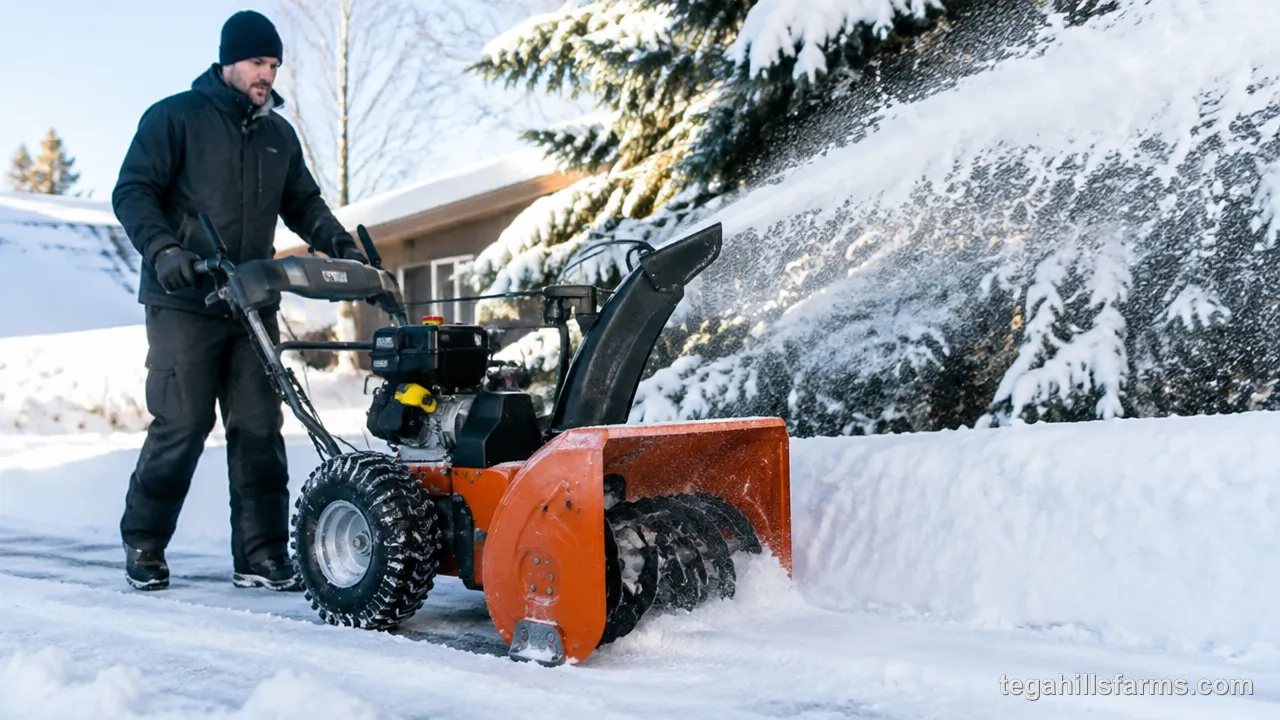
A short, flat driveway that gets light, fresh snow needs little more than a 24-inch housing and a reliable start. A long or sloped driveway with heavy, wet or plow-packed snow shifts the need toward engine power, locking or steerable drive, and treaded tires.
Here is each model by width, engine and traction and steering features:
| Model | Clearing width | Engine | Traction and steering |
|---|---|---|---|
| ST124 | 24 in | 212cc | 13-in snow tires |
| ST227 | 27 in | 252cc, 7.75 HP | Differential-locking X-Trac tires, power steering |
| ST224 | 24 in | 212cc, 5.9 HP | Power steering, non-clogging tire treads |
| ST230 | 30 in | 301cc, 8.4 HP | Power steering |
| ST330 | 30 in | 369cc | Selectable drive wheel, power steering |
On a slope, traction matters more than width. The ST227’s locking tires keep both wheels driving uphill, and its steering lets you turn at the top without the machine sliding sideways. Heavy, wet snow and the dense ridge a plow leaves put the most load on the auger, so engine size becomes the spec that decides it. That’s where the ST230 and ST330 pull ahead of the 212cc machines.
The 30-inch machines are overkill when they share a single-car garage with the car, or when the driveway is narrow enough that a wide housing barely saves a pass. You end up storing and turning more machine than the job needs, and a 24-inch model clears that space with less effort.
Is a Battery Snow Blower a Better Fit Than a Gas Husqvarna for a Small Driveway?
For a short driveway with tight storage and mostly light to moderate snow, a battery snow blower is often the more sensible machine. A gas Husqvarna earns its place once the snow turns heavy and wet, or the plow ridge freezes into a wall at the curb.
Battery machines start with a push of a button: no cord, no choke, no warm-up. They need no gas, oil changes, spark plugs or fuel stabilizer over the summer. They also run far quieter, which matters if you clear early before the neighbors are up, and most are compact enough to tuck into a corner of the garage.
Each charge covers a set amount of work, so a deep storm can mean swapping or recharging batteries partway through. Heavy, wet snow drains a pack faster and tests how well a lighter machine can throw it clear. A gas two-stage like the ST124 keeps going as long as there’s fuel in the tank, and its ribbon auger and impeller handle the dense ridge a plow leaves.
If your driveway fits that battery profile, compare the best EGO snow blowers and the best Greenworks snow blowers before taking on the upkeep of a gas machine.
Fuel left in the tank over summer goes stale and gums up the carburetor, and tires that sat all season on a garage floor slowly lose pressure. Neither problem shows until the first heavy storm, when you roll the machine out before work and it cranks without firing, or spins a soft tire on the frozen ridge at the end of the driveway.
How Do You Get a Husqvarna Snow Blower Ready for Winter?
Check the tires, fuel and oil, then test the electric start at the outlet you’ll actually use, and do all of it before the forecast turns. Each check prevents a specific failure on the first storm morning: a machine that pulls to one side, cranks without firing, or won’t turn over at all.
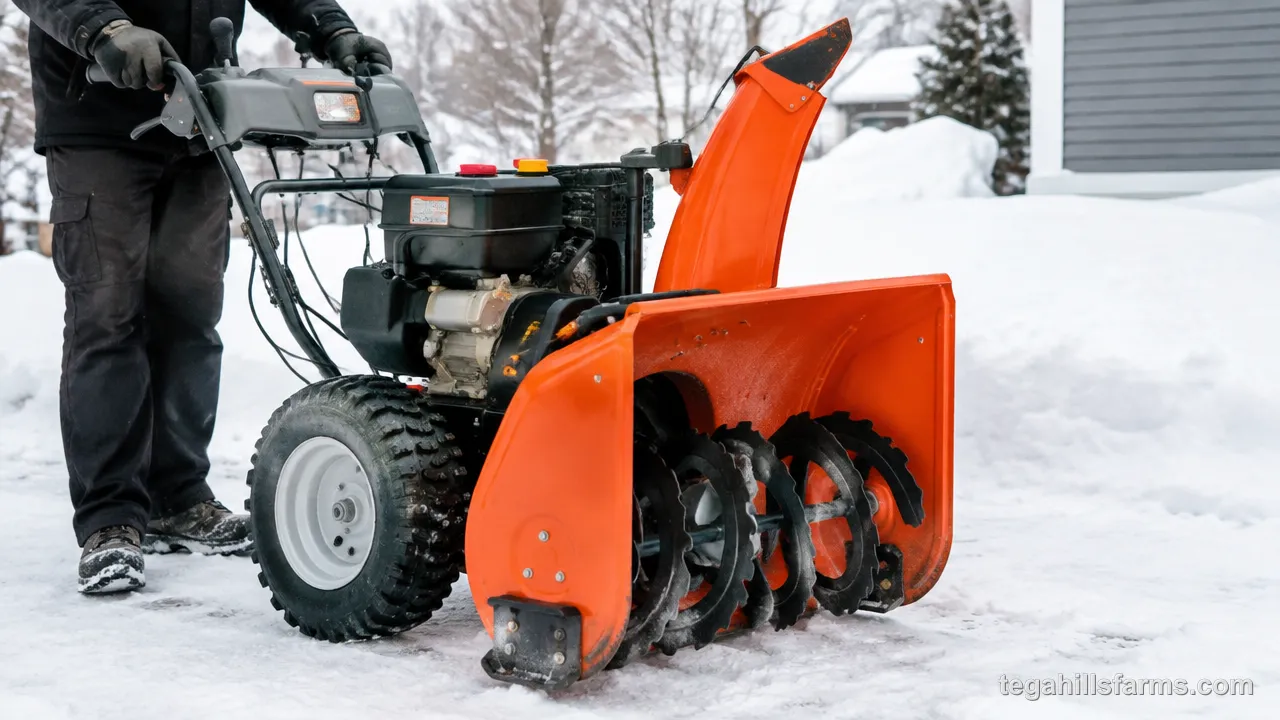
Tires on a new machine can lose pressure in shipping, and tires that sat through summer do the same. A soft tire on one side makes the blower pull and lose grip on packed snow, so inflate pneumatic tires to the pressure molded on the sidewall.
Stale fuel causes the classic crank-but-no-fire on a carbureted engine, because gas left from last season varnishes the carburetor’s small passages. Drain old fuel, fill with fresh gas treated with stabilizer, and keep a full can ready so a deep storm on a long driveway doesn’t leave you with an empty tank halfway down.
Check the dipstick on level ground before the first start, including on a brand-new machine, and top up with the oil grade listed in the manual. Finally, plug the starter cord into the garage outlet and press the button. If nothing happens, reset a tripped GFCI outlet and look the cord over for cracks before the cold stiffens it.
How Do You Stop a Snow Blower from Clogging in Wet Snow?
A snow blower clogs in wet snow when the auger feeds snow faster than the impeller can throw it. The fix is to slow your ground speed, keep the engine at full throttle and take narrower passes.
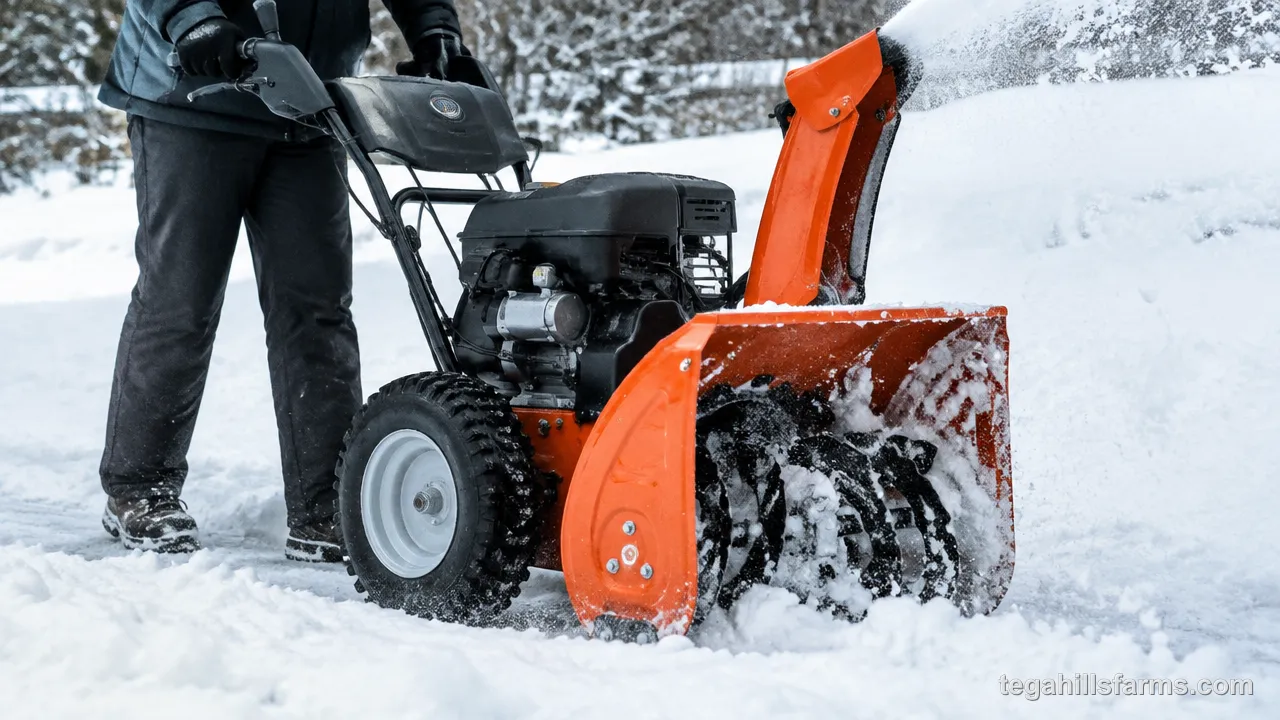
Wet snow is heavy and sticky. At a brisk walking pace, the auger crams it into the housing, the engine bogs, the impeller slows and the snow packs into the chute. A partial-width pass, or a slow creep through the deepest section, gives the impeller time to clear what it takes in. A light coat of silicone spray inside the chute and on the impeller housing also helps wet snow slide out.
Depth works differently depending on the snow. Fresh, dry snow up to the top of the intake feeds easily. The plow ridge at the curb is compacted and much denser, so the same height of packed snow can stall the machine. Take that ridge in bites from the side rather than driving straight into it.
When the chute does clog, stop the engine, wait until the auger and impeller have stopped turning, and clear the chute with the clearing tool or a broom handle, never your hand. An impeller can hold tension and spin when the plug comes free, even with the engine stopped.
What Accessories Do You Need with a Husqvarna Snow Blower?
Spare shear pins are the one accessory every owner should keep on hand. A cover is worth it if the machine lives outside, while drift cutters and tire chains only earn their keep on certain properties.
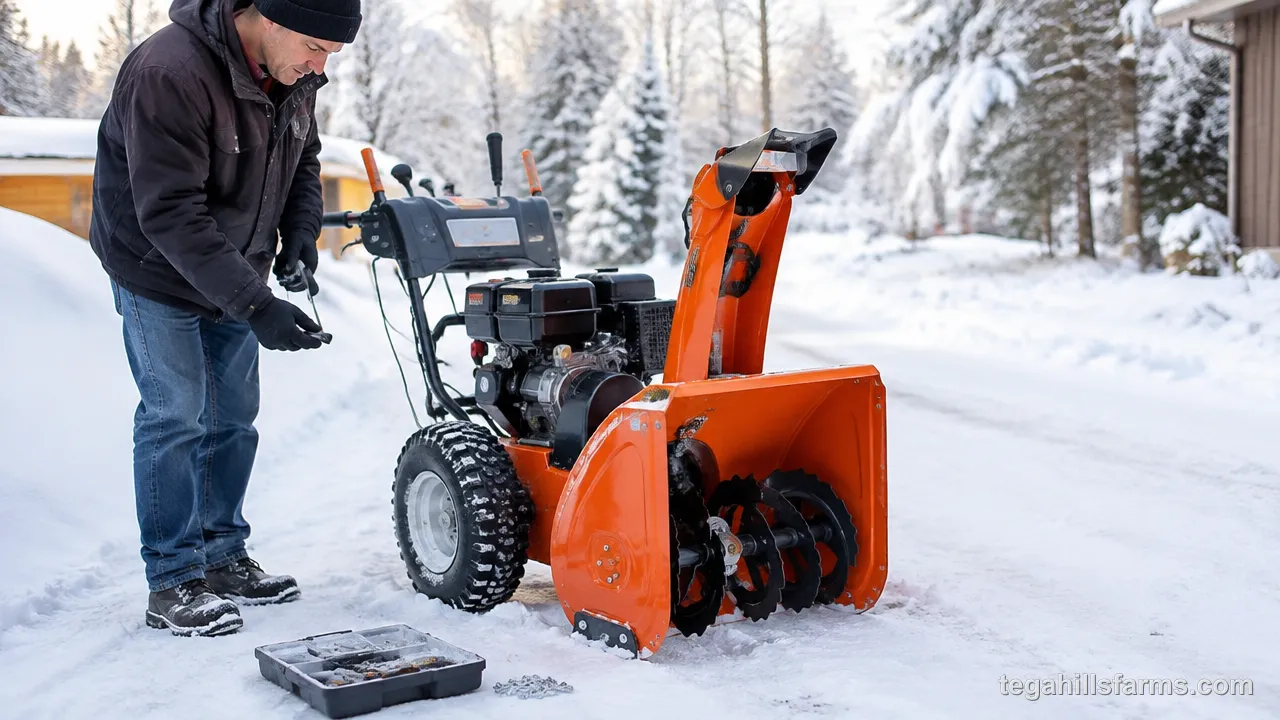
Shear pins are designed to snap when the auger hits a newspaper, a frozen chunk or a buried edging stone, which protects the auger gearbox from damage. With spares and a wrench in the garage, a snapped pin is a short repair instead of a stalled machine in the middle of a storm.
Drift cutters bolt to the sides of the housing and slice into drifts taller than the intake, so the top falls into the auger instead of over it. They suit open, windblown properties where drifts build against fences and buildings.
Tire chains add bite on an icy or gravel grade and help a machine hold its line when the base under the snow is glazed. A fitted cover keeps snow, rain and sun away from the controls and engine on a machine parked under a carport or beside the shed. In a closed garage, you can skip it.
Where Should You Buy a Husqvarna Snow Blower?
Buy from a local Husqvarna dealer if you want the machine set up and serviced in one place. Buy from Husqvarna direct, Amazon or Tractor Supply if you’re comfortable doing the final assembly and checks yourself. Either way, register the machine as soon as it arrives.
A two-stage blower ordered for delivery usually arrives boxed or crated, with the handle and chute to attach and oil to add before the first start. Look it over when it arrives for a bent housing or a cracked chute, and note any damage with the carrier before you sign. Buying at a Tractor Supply store lets you inspect the machine before you load it.
A dealer typically assembles the machine, runs it before you take it home and handles warranty repairs locally. That matters when a gearbox or engine problem shows up in the middle of winter.
Registration ties your serial number and purchase date to the warranty, so a claim doesn’t depend on finding a receipt years later. It also puts you on the list for service and recall notices. Do it online with the model and serial number from the label on the machine.




Write Your Review
No reviews yet. Be the first to share your experience!