

A stick edger suits most suburban lots with curved beds, tree rings and moderate border lengths, while a walk-behind edger earns its place on long, straight driveway and sidewalk runs, hard soil, and properties where a deep, long-lasting edge matters more than nimble handling. The right choice depends on how much border you have, how it is shaped, and how often you plan to recut it.
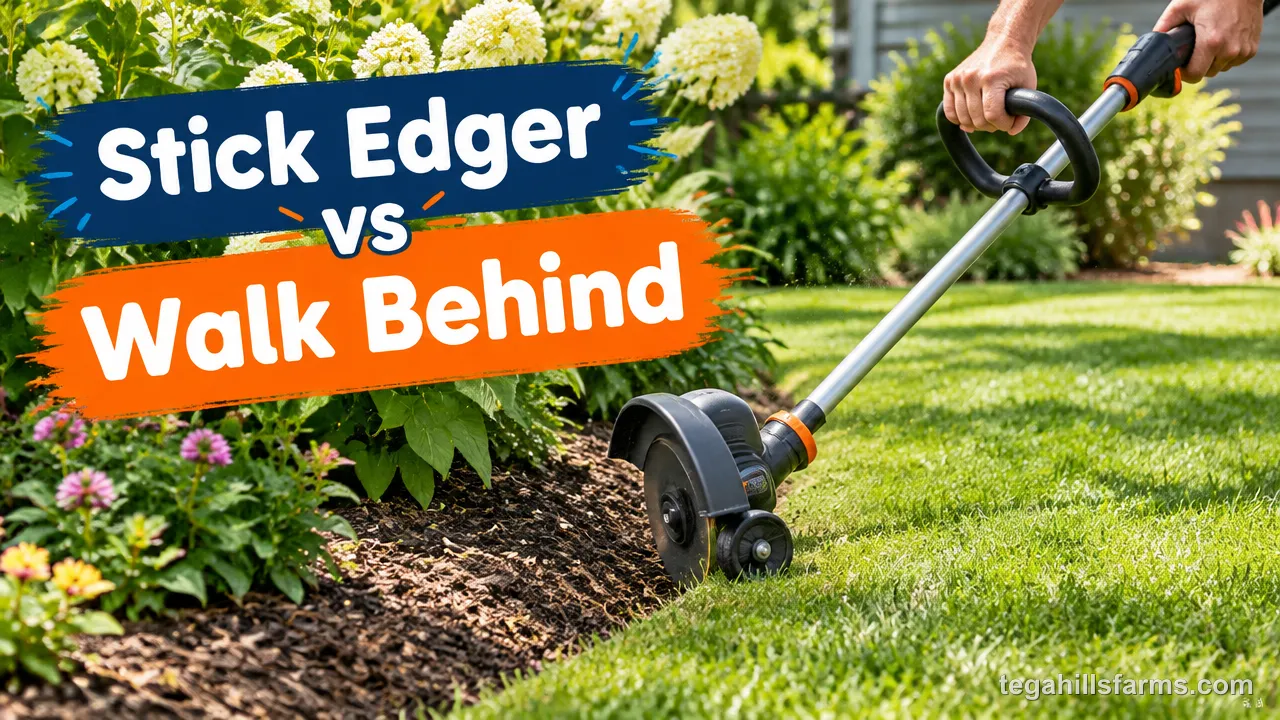
The choice comes down to a few factors: cutting speed on long runs, line quality on curves, the weight you carry or push, how deep and durable the finished edge is, and which power source reaches the far corners of your yard. Grass type and soil also change the result, because Bermuda runners and dry clay resist a light blade much more than soft turf does.
The real risk is buying the wrong tool for your yard. A heavy walk-behind can be miserable to wrestle around a kidney-shaped flower bed. A stick edger can leave your arms and back aching after a long stretch of driveway, with a shallow cut that grass covers again within weeks.
Before you shop, walk your borders with a tape measure or measuring wheel and note which sections are straight concrete edges and which are curved bed lines. That split tells you more about the right edger than any spec sheet.
What Is the Difference Between a Stick Edger and a Walk-Behind Edger?
A stick edger is a handheld shaft tool with a vertical blade at the end that you carry and steer, while a walk-behind edger rides on wheels and you push it along the edge like a small mower.
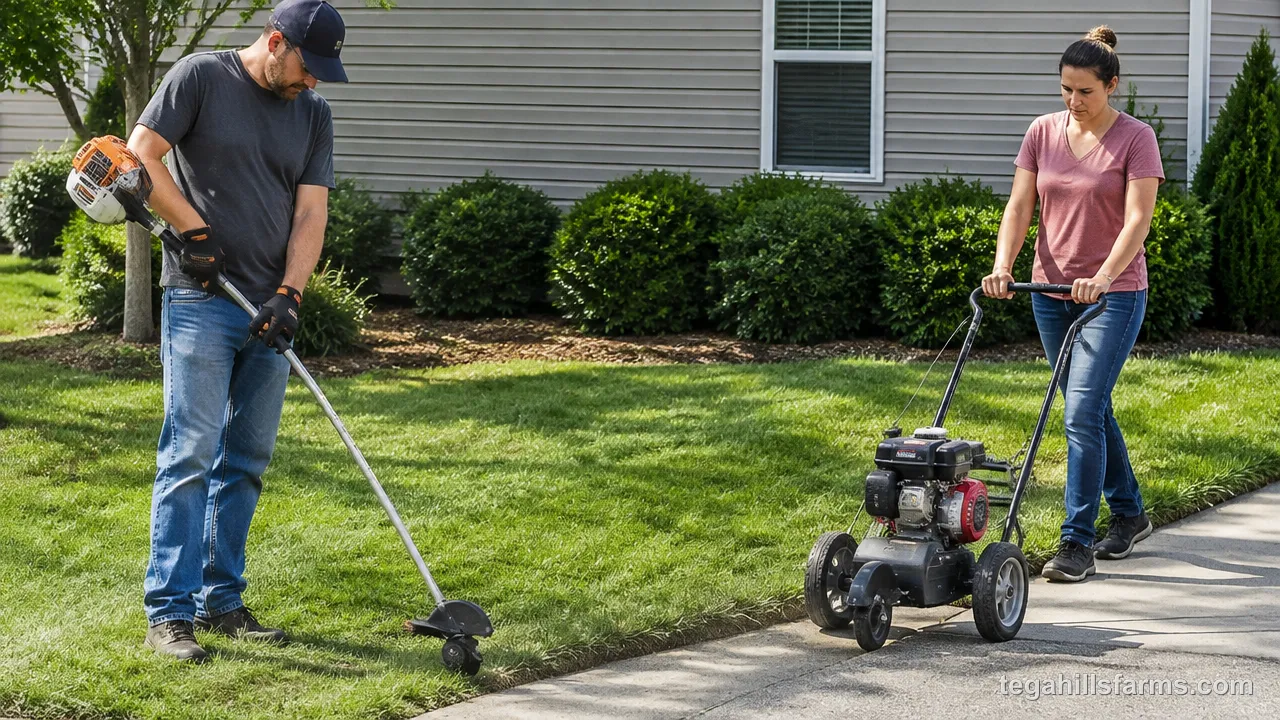
On a stick edger, the engine or motor sits at one end of a long shaft and a gearbox at the other end turns the blade. You set cut depth and angle by how you hold the tool, and a small guide wheel helps track the edge. A walk-behind edger carries its engine, blade and wheels on a single frame. A lever sets blade depth, and the wheels hold the angle steady from one end of the run to the other. That basic layout shapes every difference between the two.
| Factor | Stick Edger | Walk-Behind Edger |
|---|---|---|
| How it moves | Carried and steered by hand | Rolls on wheels, pushed |
| Depth and angle control | Set by the operator’s grip | Set by lever, held by frame |
| Best job | Curves, beds, tree rings, touch-ups | Long straight runs along concrete |
| Weight and handling | Light, carried | Heavy, rolls |
| Edge depth | Shallower | Deeper, longer-lasting |
| Storage | Hangs on a wall | Needs floor space |
A string trimmer turned on its side can also edge, but its spinning line wears away the grass rather than slicing a clean channel, so the line wanders and the edge fills back in quickly. A manual edger, a half-moon blade you step on, cuts precisely but slowly and suits only short borders. Readers still weighing every edger type can work through how to choose a lawn edger before settling on one of these two.
How Do Stick and Walk-Behind Edgers Compare Head to Head?
The walk-behind edger wins on speed and edge depth, while the stick edger wins on curves and maneuverability. Which strengths matter depends on how your borders are shaped, how long they run, and how much physical effort you can put into each session.
Which Edger Cuts Faster Along Long Borders?
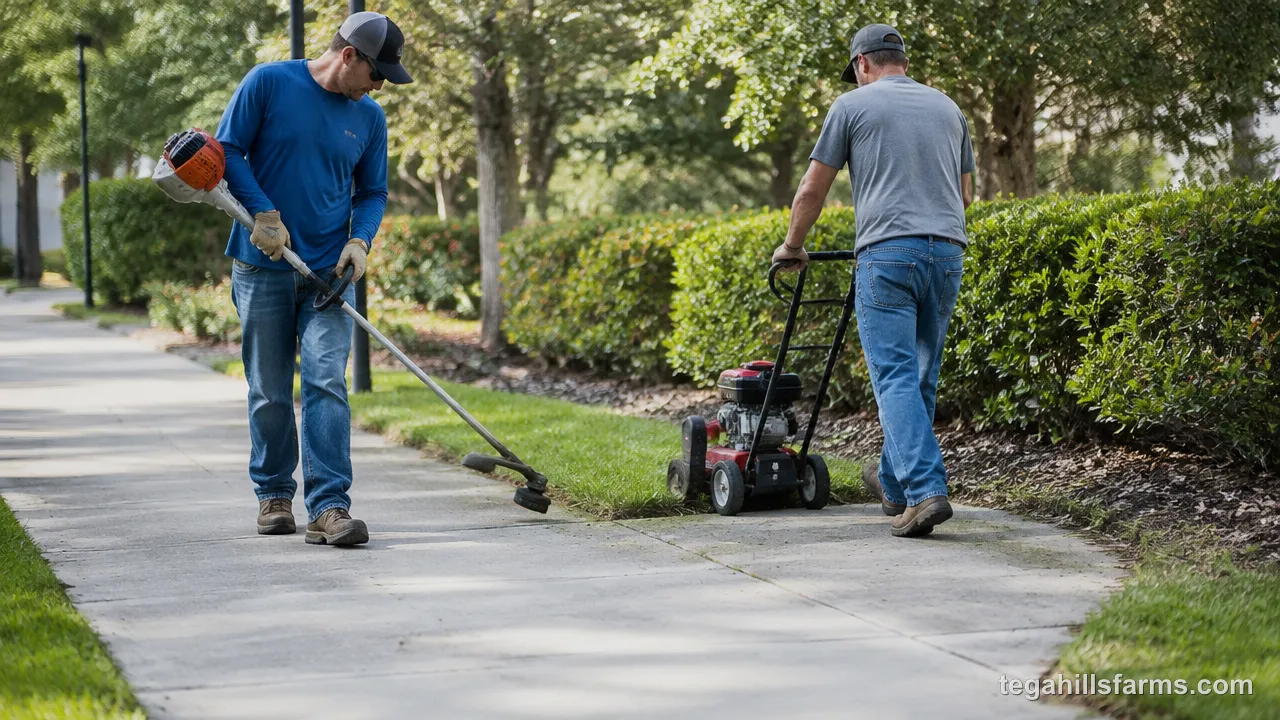
A walk-behind edger covers long straight runs faster because its wheels carry the weight and lock in the cutting angle, so you set your pace and keep it. With a stick edger, you hold the tool, guide the blade and steady the depth all at once. That control demands constant attention, and pace drops as your arms tire or as you stop to shift your grip and reposition.
Wheel guidance also shapes the finished line. On a walk-behind edger, one wheel rides on the sidewalk or driveway, so the blade follows the concrete edge on its own and the line comes out straight without much correction. A stick edger’s small guide wheel helps, but the line still reflects how steady your hands were over the full length. On a long stretch of driveway, small wobbles add up into a visibly uneven edge. For long, straight borders along concrete, the walk-behind edger is the faster tool and leaves the straighter line.
Which Edger Gives Cleaner Lines on Curves and Tight Spots?
A stick edger handles curved beds, tree rings and tight corners better because you steer the blade directly with your hands. You can follow a tight radius around a tree, angle the blade into the inside corner where a walkway meets a step, and lift the tool over a sprinkler head without stopping. Small adjustments happen instantly, so the line follows the shape you intend rather than the shape the machine prefers.
A walk-behind edger’s wheels and wide frame work against it on curves. The frame needs room to pivot, so a tight bed line forces you to stop, back up and reset, and each reset can leave a small jog in the edge. Corners near fences, posts and raised beds are often out of reach, since the frame hits the obstacle before the blade gets close. On gentle curves, an experienced operator can still edge cleanly, but the machine resists every turn. For yards with curved beds, tree rings and tight landscaping, the stick edger produces cleaner lines.
How Do Weight and Operator Fatigue Compare?
A stick edger weighs around 15 pounds, and you carry all of that weight on your arms and shoulders for the entire session, usually hunched slightly forward to keep the blade at the right depth. On a short border, that load hardly registers. Over a long session, the static hold tires the forearms and lower back because those muscles never get a break.
A 70-pound walk-behind edger is much heavier, but the wheels carry the load, so your effort goes into pushing and steering rather than holding. You stand more upright, which takes strain off the back. The weight shows up when you turn the machine, lift it over a curb, or load it into a vehicle, and on slopes, where pushing uphill takes real effort. For long sessions on flat ground, the walk-behind edger is easier on the body, while the stick edger wins wherever the work is short or involves frequent lifting.
Which Edger Makes a Deeper, Longer-Lasting Edge?
A walk-behind edger cuts the deeper, longer-lasting edge. Its blade is typically 9-inch or 10-inch versus the 8-inch blade common on stick edgers, and walk-behind 4-cycle engines exceeding 120cc can drive that larger blade through compacted soil without bogging down. The frame holds the blade at a steady angle, so the cut keeps an even depth along the whole run instead of rising and falling with the operator’s grip. A walk-behind cut can stay defined up to three times longer than a standard stick edger line, since grass needs much more time to grow back across a deeper channel.
A stick edger can still hold a useful depth in soft, moist soil, where the blade sinks in easily. In dry clay or compacted ground, the lighter tool tends to ride up and bounce, so the cut ends up shallower and grass bridges it sooner. For a deep, durable edge, especially a fresh V-groove, the walk-behind edger is the stronger choice.
Which Edger Fits Your Yard Size and Edge Length?
Total linear feet of border matters more than lawn area. Long concrete runs push toward a walk-behind edger, and curved, shorter borders favor a stick edger. Soil hardness and grass type can shift the decision either way, so check those before you settle on a tool.
Is a Stick Edger Enough for a Small or Mid-Size Suburban Lot?
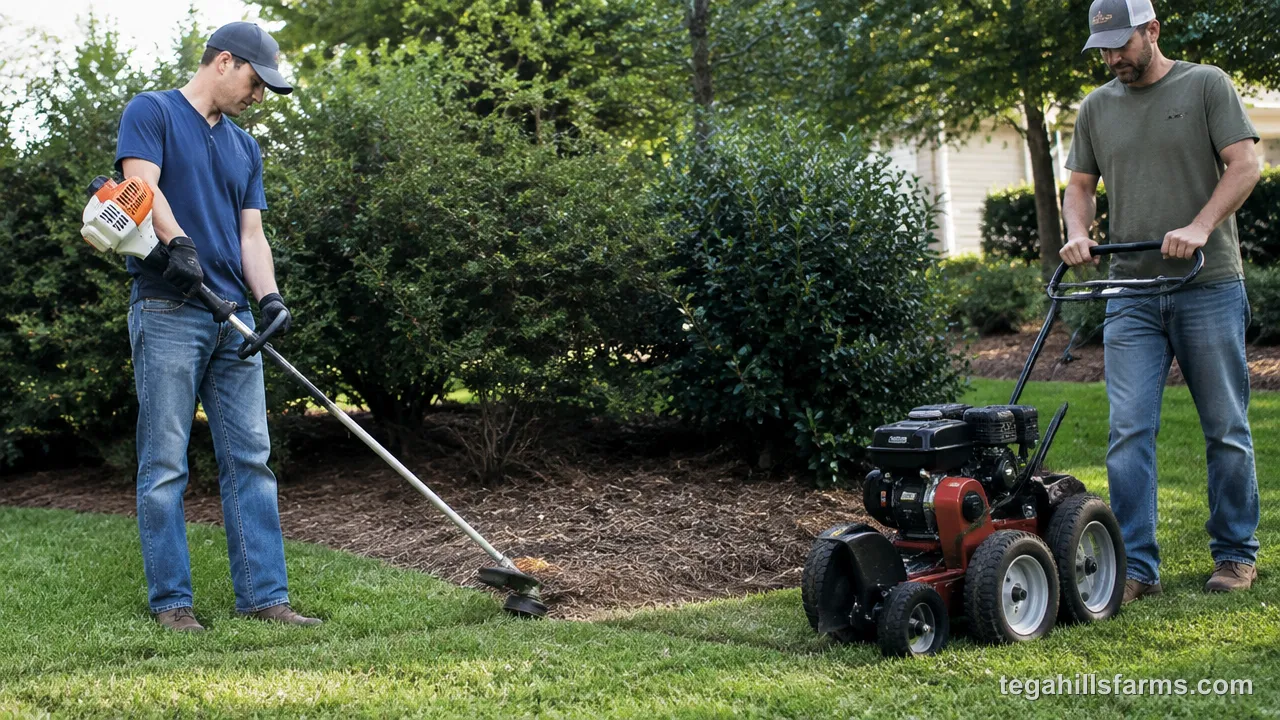
Yes, for most suburban lots a stick edger handles the work without wasted effort. A typical lot has a front walk, a driveway edge and a few beds, and that mix of short straight runs and curves suits a tool you can carry and steer. You finish before arm fatigue becomes an issue, and you can take care of the bed lines in the same session without switching machines.
Storage and ownership cost are where a stick edger helps most for homeowners. It hangs on a garage wall hook and takes no floor space, which matters when the mower, bikes and trash bins already fight for room. It costs less to buy, and many models share engines or batteries with trimmers you may already own, so there is less to maintain. If budget is part of the decision, how much a lawn edger costs breaks down the price tiers for both types.
When Does a Large Property Call for a Walk-Behind Edger?
A walk-behind edger becomes the more practical tool once your total edging length runs over 100 linear feet, especially when most of that length is straight border along concrete. Long driveways, sidewalks along the street and pathways around a large house all fit that pattern. At that length, the stick edger’s carried weight and hand-guided line start to cost you both time and edge quality, while the walk-behind keeps the same pace and depth from the first foot to the last.
Driveways and sidewalks benefit the most because the edger’s wheel rides on the concrete, which guides the blade straight. A large property usually brings harder, longer-neglected edges too, and the walk-behind’s heavier blade cuts through overgrown turf in one pass, where a stick edger would need several. On properties like this, I would still keep a stick edger or trimmer for the beds, but the long concrete borders go much faster with the walk-behind.
How Do Grass Type and Soil Affect the Choice?
Spreading warm-season grasses and hard soil both favor the walk-behind edger, while soft soil and bunch-type grass let a stick edger keep up. Bermuda and St. Augustine spread by runners that creep over concrete and into beds. The runners are tough and fibrous, so a light blade tends to tear them rather than cut cleanly, and a shallow cut gives them an easy path back across the edge. The walk-behind’s heavier blade and deeper channel slice through runners and leave them a wider gap to cross.
Soil moisture changes things as well. Dry, compacted soil makes a stick edger bounce and skate, while the walk-behind’s weight keeps the blade engaged. Soaked soil gums up any blade and smears the line, so moist but not muddy ground cuts best with either type. Buried tree roots near the border are the exception: a stick edger lets you feel the strike and lift off quickly, while a walk-behind can jolt hard and damage both the root and the blade.
Should You Cut a New Edge or Maintain an Existing One?
Cutting a new edge calls for the depth and weight of a walk-behind edger, while maintaining an established line suits the quick handling of a stick edger. A one-time trenching job and a monthly touch-up demand different things from the tool.
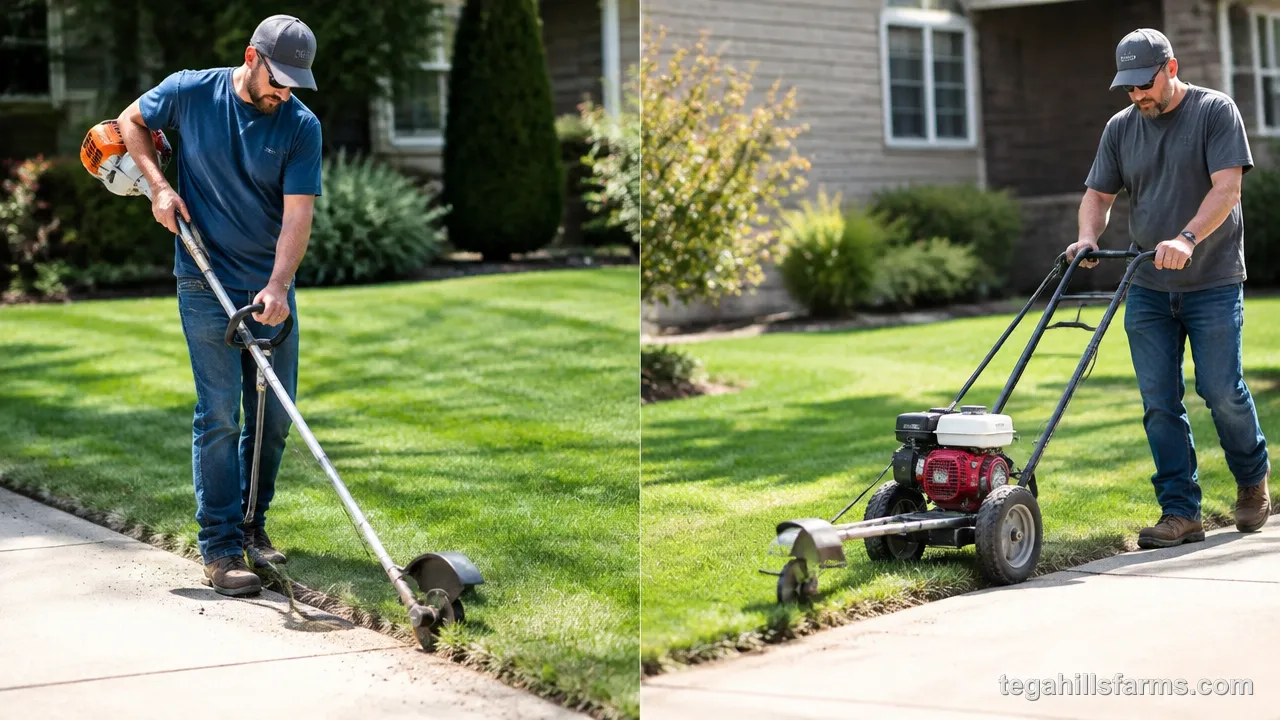
Which Edger Is Better for Cutting a New V-Groove Edge?
A walk-behind edger is better for cutting a new V-groove because the job means trenching through thick sod and root-bound soil, which takes weight and power. Its heavier frame keeps the blade pressed into the ground, and the blade-angle setting lets you bevel the cut so the channel opens into a clean V that sheds soil and resists collapse. One or two passes usually establish a usable edge along a driveway or bed.
A stick edger can still start a new line using flip edging: you turn the tool over so the blade faces down on the bed side, then work along a marked line. The lighter blade cannot cut full depth in one go, so you make a shallow first pass, then repeat to deepen and widen the channel, clearing loose sod between passes. That extra work is manageable on a short bed line but adds up fast along a long border. For cutting new edges, the walk-behind edger finishes the job in fewer passes.
Which Edger Is Better for Maintaining an Existing Edge?
A stick edger is the better tool for maintaining an existing edge. Once the channel is cut, upkeep only means trimming the grass that leans over and clearing the thin runners creeping into the groove. A light, quick pass is all that takes, and a stick edger lets you grab the tool, run the borders and hang it back up without wheeling a heavy machine out of the shed.
The stick edger’s guide wheel tracks an existing groove well, since the channel itself steers the blade. That makes touch-up passes fast even on curved beds where a walk-behind would struggle. A walk-behind edger still makes sense for upkeep on large properties with long straight runs, where its steady pace and deeper re-cut keep the edge sharp for longer between sessions. For routine maintenance on a typical yard, the stick edger does the job with less setup and effort.
Which Edger Suits a Professional Lawn Care Business?
Most crews rely on a stick edger as the daily tool and add a walk-behind edger when their route includes long commercial borders. Productivity per stop, space on the truck and the mix of jobs on the route decide which one earns its keep.
How Do Transport and Storage Compare on a Truck or Trailer?
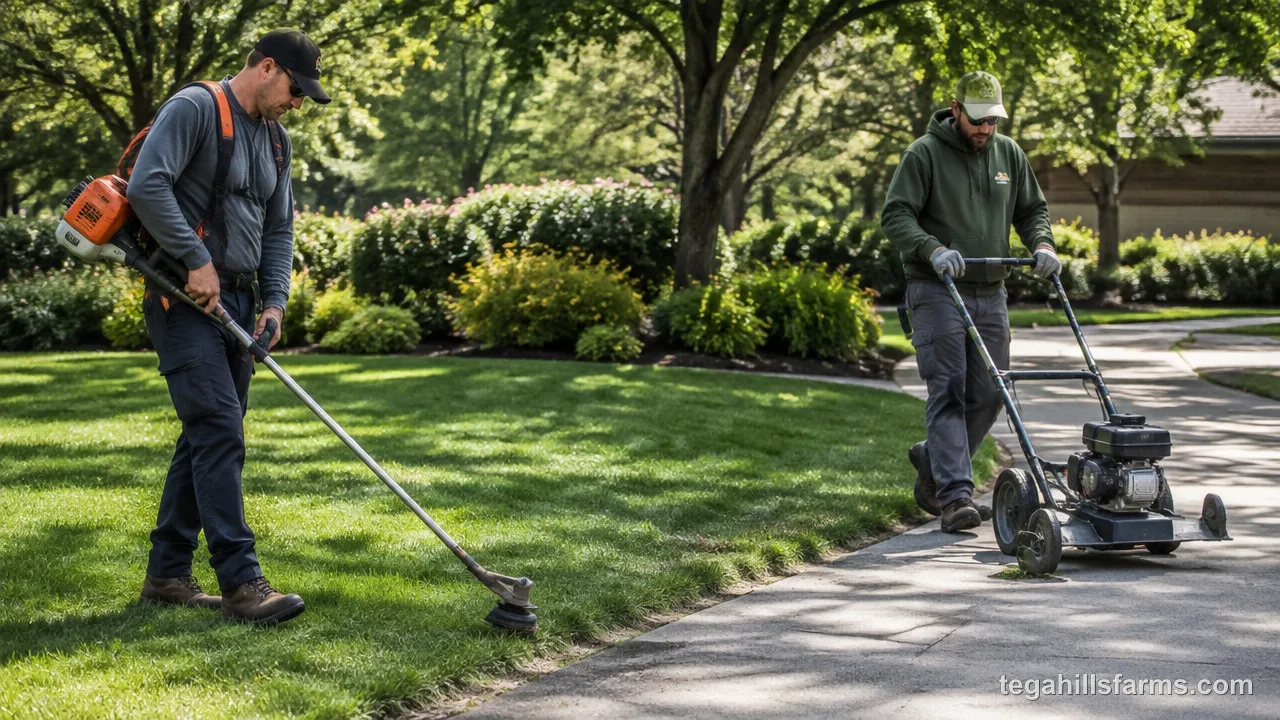
A stick edger’s slim shaft fits in a trailer rack or truck bed alongside trimmers and blowers, and loading it takes one hand and a few seconds. Racks built for long-shaft tools keep it secure and upright, so it rides safely between stops and is ready when the crew climbs out.
A walk-behind edger takes dedicated floor space on the trailer, often space that would otherwise hold a second mower or a load of mulch. Its weight means loading over a ramp or using a lift, and it has to be strapped down so it does not shift during braking or turns. Each stop adds loading and unloading time that a stick edger avoids. For crews with tight trailer space and many short stops, the stick edger is easier to transport, and the walk-behind only makes sense when the route keeps it busy.
How Do Crew Productivity and Job Mix Shape the Choice?
A route built mostly on small residential stops favors the stick edger, while large commercial properties with long sidewalk and parking-lot borders favor the walk-behind. On a residential stop, edging is a short task, and the time spent unloading a walk-behind machine can exceed the time it saves. A stick edger lets one crew member finish the borders while another mows, so the crew moves on sooner and fits more properties into the day.
Commercial properties change the math. Long runs along curbs and walkways take much longer with a stick edger, and the walk-behind’s steady pace and deeper cut mean fewer return visits for re-edging. Many crews with a mixed route carry both: the stick edger handles beds, tree rings and small yards, and the walk-behind comes off the trailer only at stops where long straight borders justify it. For mixed routes, pairing both tools gives the best balance of productivity.
Should You Choose Gas, Corded, or Battery Power?
Gas suits large properties and hard soil, corded suits small yards close to an outlet, and battery suits quiet, low-maintenance work on modest borders. The power source decides how far you can reach, how long you can run, and how much upkeep you take on.
What Do Gas Models Offer in Power and Reach?
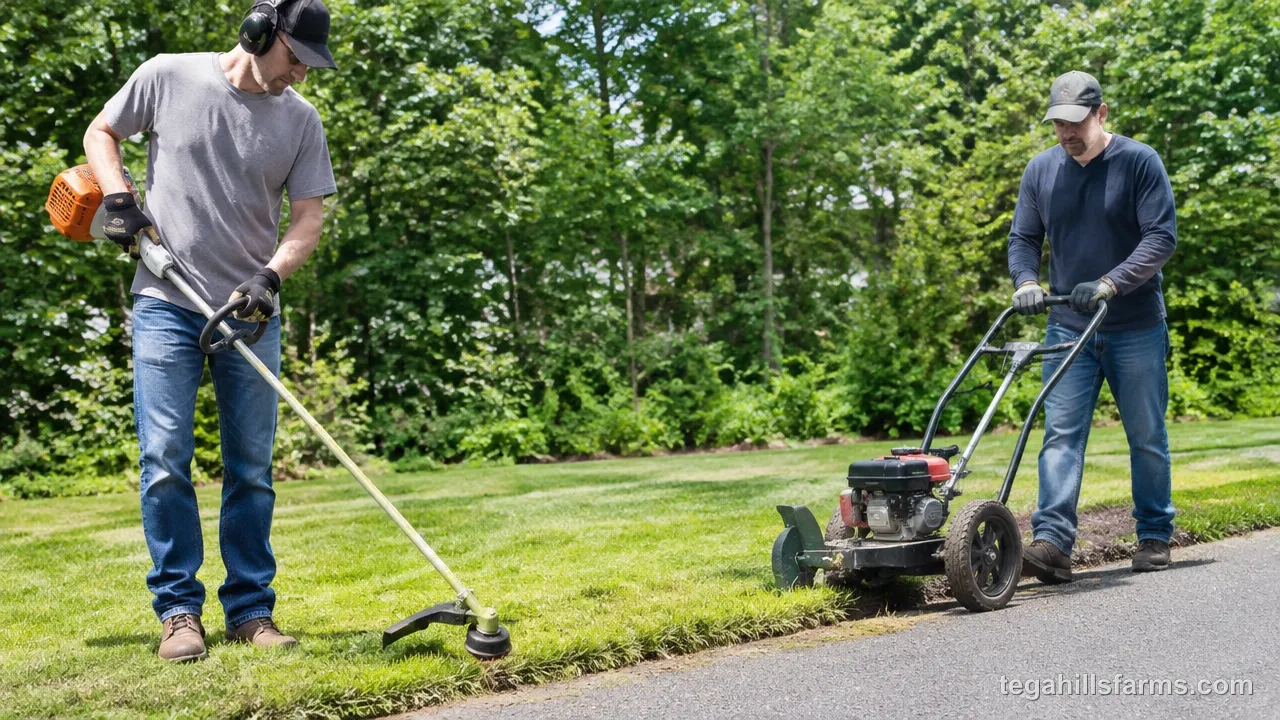
Gas engines give an edger the most cutting power and unlimited reach, which makes them the default for large properties and heavy work in tough soil. When your borders sit more than 100 feet from an outlet, gas is the only practical option, since no cord follows you there and nothing needs recharging midway through. Gas engines also hold their speed when the blade hits compacted clay or a tangle of runners, which keeps the cut depth even.
That power comes with upkeep. Two-cycle stick edgers need oil mixed into the fuel, while 4-cycle walk-behinds need regular oil changes. Fuel left in the tank over winter goes stale and gums up the carburetor, which is one of the most common reasons a gas lawn edger won’t start in spring. Pull-starting, spark plug changes and air filter cleaning are all part of owning a gas model, along with the noise.
How Do Corded and Battery Models Compare?
Corded edgers deliver steady power with no runtime limit but tie you to an extension cord, while battery edgers move freely but run only as long as the battery lasts. A corded model such as the Black & Decker LE750 Edge Hog never fades mid-job, but you have to manage the cord around beds and trees, and its length limits how far you can work from the outlet. Plug into a GFCI-protected outdoor outlet and use an extension cord rated for outdoor use.
Battery models like Ryobi’s cordless edger and the WORX GT trimmer/edger remove the cord, start with a button and run much quieter than gas. Runtime depends on battery size and soil resistance, and hard ground drains the pack faster. Buying into one battery platform locks you into that brand’s tools, which helps if you already own its batteries. Neither corded nor battery models match gas when cutting a new edge through dense sod.
Which Stick and Walk-Behind Edger Models Do Homeowners Consider?
STIHL, ECHO and Power Trim cover most of the stick edger shortlist, while McLane and Little Wonder lead the walk-behind conversation. Each line suits a different mix of yard size, workload and power preference, so the brand matters less than the fit with your yard.
Who Makes the Best Stick Edger?
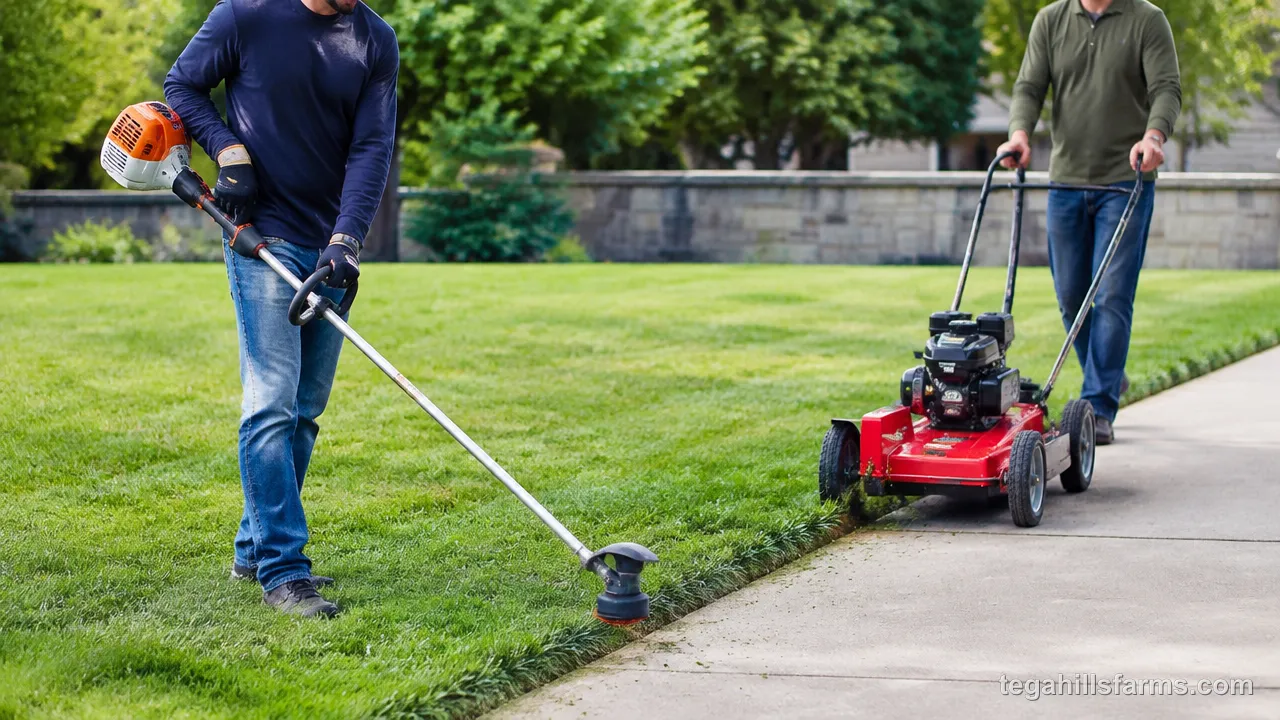
No single brand makes the best stick edger for everyone. The right pick depends on your yard, how often you edge, and whether you want gas or battery power. STIHL offers stick edgers in both gas and battery versions through its dealer network, which suits homeowners who want local service and parts.
ECHO splits its approach. The PE-225 is a dedicated gas stick edger that does one job and suits homeowners who edge regularly and want a tool built only for that. The PAS-280 belongs to ECHO’s attachment system, where one power head drives an edger, trimmer and other attachments. It suits owners who would rather store one engine than several tools, though swapping attachments adds a step each time you switch tasks.
Power Trim’s 200-8 sits on the commercial side and appears more often on crew shortlists than in homeowner garages. For a typical yard, match the power source to your property first, then choose among the lines that offer it.
Which Walk-Behind Edger Brands Are Worth Considering?
McLane and Little Wonder are the two walk-behind lines most worth a look, and both build machines aimed at long borders and heavy cutting. McLane has a long history in walk-behind edgers and suits homeowners with large properties who want a dedicated machine for driveway and sidewalk runs, as well as crews who need a durable unit for regular commercial work.
Little Wonder builds walk-behind edgers with a commercial focus, suited to crews and owners of large properties who cut new edges often or deal with hard, compacted soil. Within each line, models differ in engine choice and blade setup, so check which configuration matches your soil and how often you plan to cut new edges versus maintaining existing ones. For a property with only modest borders, either brand can be more machine than the job needs, so confirm your total border length before buying.
Which Edger Should You Buy Based on Who You Are?
Most homeowners and older users should buy a stick edger, while lawn crews and owners of long-bordered properties should add or switch to a walk-behind edger once straight concrete runs take up most of the edging time.
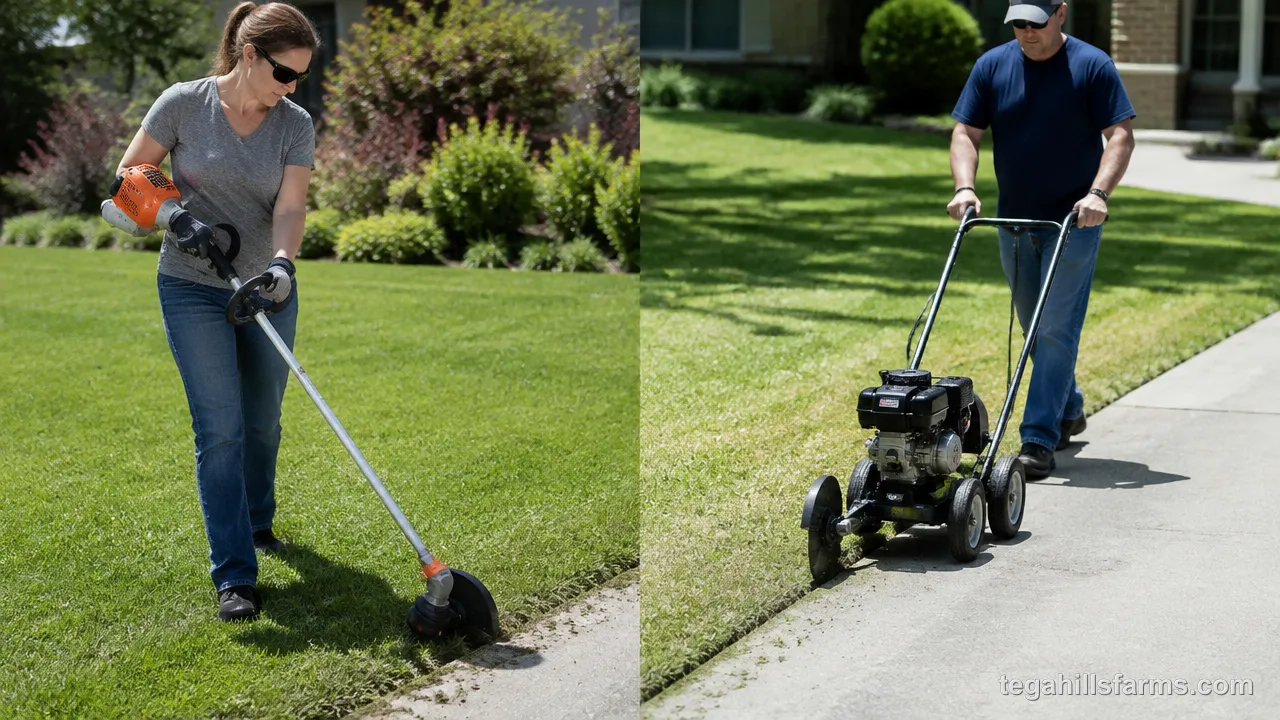
- Homeowner on a suburban lot: Choose a stick edger if your borders mix a driveway, a front walk and curved beds. It stores easily, handles curves and covers the job before fatigue sets in.
- Older user who wants less strain: Choose a walk-behind edger if you have long, flat borders and carrying weight bothers your back. Choose a light battery stick edger if your borders are short or curved, since pushing a heavy frame around beds and over curbs is harder than a quick, light pass.
- Owner of a large property: Choose a walk-behind edger if long driveway and sidewalk runs dominate, and keep a stick edger or trimmer for the beds.
- Hired lawn crew: Choose a stick edger as the everyday tool for residential routes, and add a walk-behind edger when commercial stops with long borders become a regular part of the route.
The switch point is simple: once you spend more time edging long, straight concrete than curved beds, the walk-behind edger pays back its weight.
A spinning edger blade hits gravel, chips of concrete and dried dirt at the edge of the pavement and throws them out sideways, low and fast, toward whatever is parked or standing nearby. Edge toward a parked car, a basement window or your own unprotected shins, and a single stone can leave a chipped windshield, a cracked pane or an eye injury before you even see it fly.
Which Type Throws More Debris, and What Protection Do You Need?
Both types throw debris, but a walk-behind edger’s larger blade and heavier engine throw it harder, while a stick edger’s guard depends more on how you hold the tool. On a walk-behind edger, the blade guard and fixed blade angle direct most debris to one side, so the main safety habit is planning your direction of travel so that side faces away from cars, windows and people.
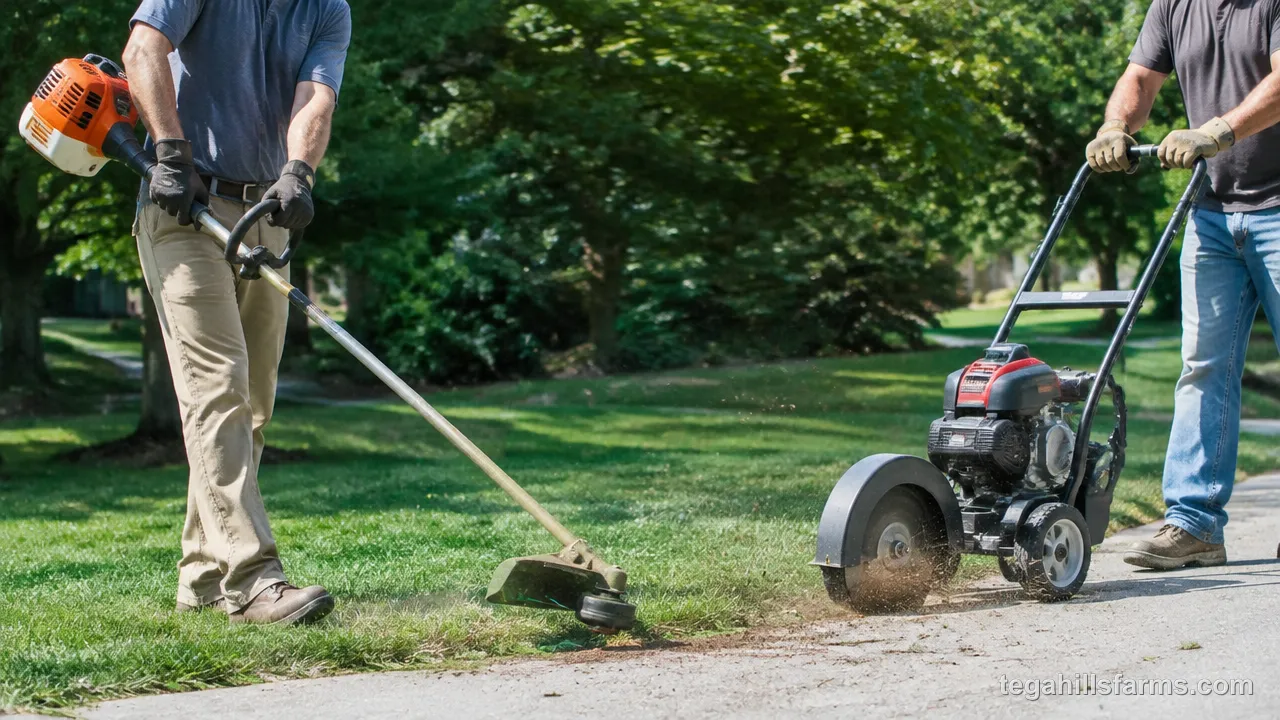
With a stick edger, the debris path shifts with your grip and stance. Tilt the shaft and the throw tilts with it, sometimes back toward your legs. Keep the guard between the blade and your body, stand to the side of the cutting line, and avoid flipping the tool toward the street when you work near traffic.
For either type, wear safety glasses, hearing protection for gas models, long pants and closed-toe boots. Before starting, sweep loose gravel off the edge and move vehicles out of range.
How Can You Tell an Edger Is Wearing Out Before It Fails?
An edger near the end of its life cuts uneven depths even when settings stay the same. That usually comes from a worn, shortened blade, play in the shaft or gearbox, or, on battery models, a pack that no longer holds a full session.
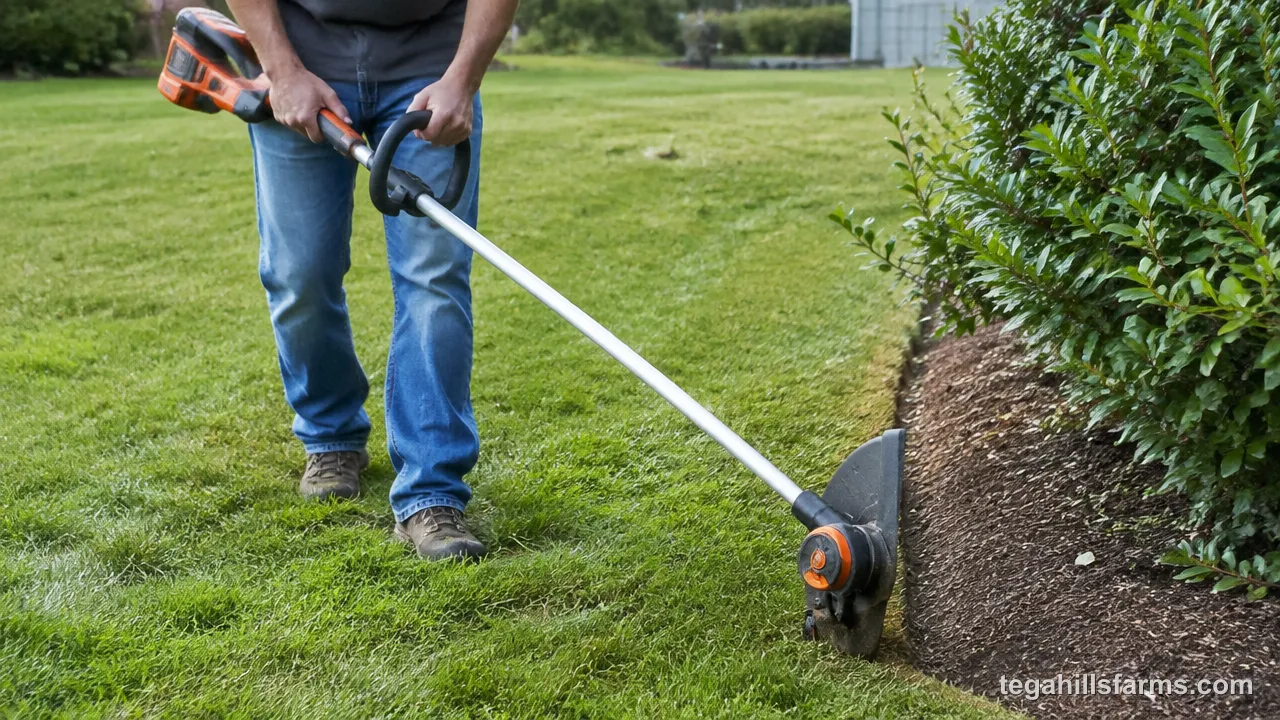
Blades wear shorter and rounder over time, which reduces cut depth and leaves torn rather than sliced grass. Blades are cheap to replace, so a worn blade alone is not a reason to retire the edger. Wobble at the blade, grinding from the gearbox or a shaft that feels loose points to deeper wear on a stick edger, and those repairs cost more.
On gas models, hard starting that persists after fresh fuel, a new spark plug and a clean air filter often signals internal engine wear. Battery models reveal age through shorter runtime and power that fades under load. Repair stops being worth it once a gearbox or engine rebuild approaches the cost of a new unit; how long lawn edgers last explains what lifespan to expect from each type.
Does the Edger Type Change How Often You Need to Edge?
Yes. A deep walk-behind cut stays defined much longer, so you edge less often, while a lighter stick edger cut needs more frequent touch-ups. During dry stretches, most lawns need edging about once a month, and the deeper channel from a walk-behind edger gives grass more space to cross before the edge blurs.
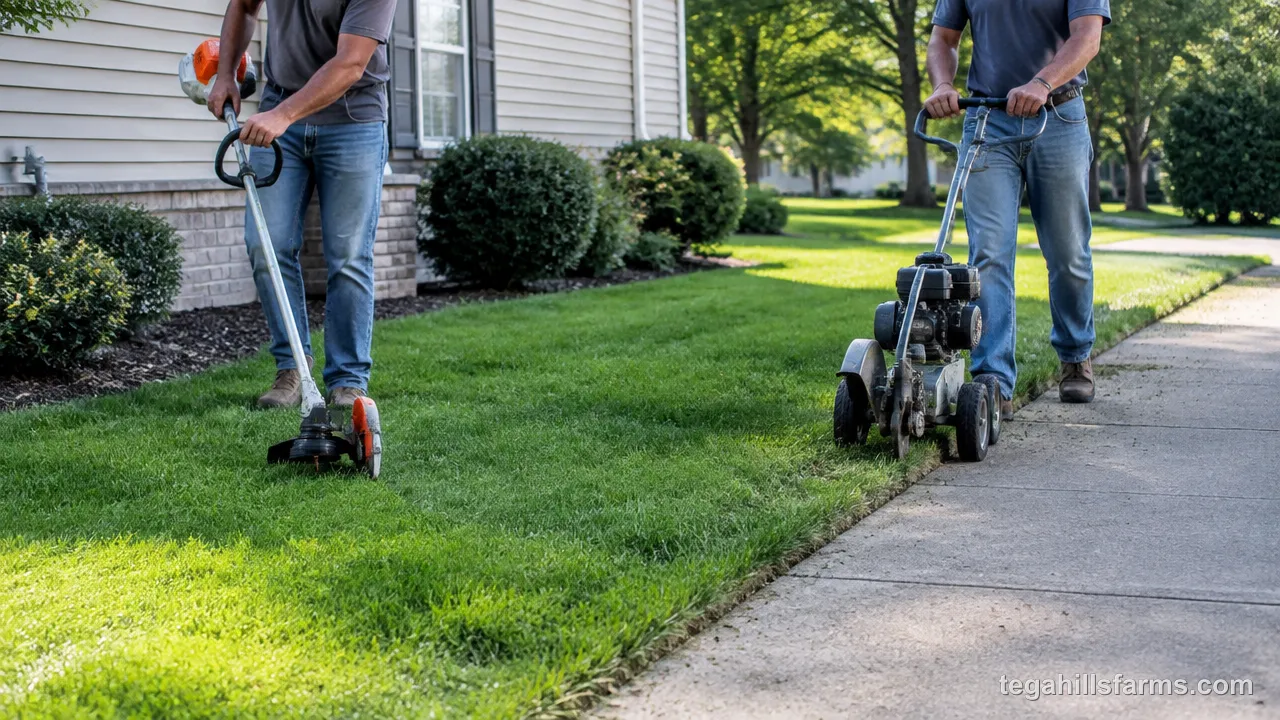
How well you keep up matters as much as which tool you own. A well-kept edge needs only a light pass, which a stick edger handles quickly. A neglected edge, where runners have bridged the channel and soil has filled back in, needs a full recut. That job is slow and tiring with a stick edger but routine for a walk-behind.
Growing-season conditions change the schedule too. Warm, wet periods push Bermuda and St. Augustine runners across borders quickly, so a shallow stick edger line may need attention more often in midsummer than in early spring or fall.
What Else Do Readers Ask About Stick and Walk-Behind Edgers?
Are manual edgers worth it?
Manual edgers are worth it for short borders and occasional touch-ups, where they cut precisely and cost little to own. They need no fuel, charging or maintenance beyond sharpening. On a long driveway or hard soil, though, stepping the blade in foot by foot becomes slow and tiring, so powered edgers make more sense for larger yards.
How is a string trimmer different from a stick edger?
A string trimmer spins nylon line, while a stick edger turns a metal blade. The core difference between edgers vs trimmers is that the blade slices a clean vertical channel into the soil, while line only whips away grass at the surface. A trimmer edge looks rougher and fills back in sooner.
Can a weed eater edge a lawn?
A weed eater can edge a lawn if you turn it on its side and run the line along the border. It works for light upkeep and saves buying a second tool. The line wanders more than a blade, though, so the edge comes out less crisp, and it cannot cut a deep channel or a new edge.
Can a stick edger cut a new edge?
A stick edger can cut a new edge by flip edging along a marked line, but it needs several passes to reach full depth through sod. The work is practical on short bed lines in soft soil. For long borders or hard, compacted ground, a walk-behind edger cuts the channel faster and with less strain.
Write Your Review
No reviews yet. Be the first to share your experience!