

A manual edger can last for many years because it has no motor to wear out. Corded electric, battery and gas edgers last as long as their weakest part holds up: the motor and cord, the battery pack, or the engine and its carburetor. On every type, the blade wears out first. You will replace it several times over the life of the tool.

How long your own edger lasts depends on three things. The first is how its power source tends to fail. The second is how much edging you do each season. The third is what the blade runs into, such as sandy soil, gravel, or the concrete lip of a driveway. Storage habits matter almost as much as build quality, especially for gas engines and lithium-ion batteries.
Most owners worry about one of two mistakes. Some replace a whole edger when only the blade or battery has worn out. Others keep edging with a dull blade that tears the grass and makes the motor work harder than it should.
When an edger starts leaving a ragged line, check the blade length before you suspect the motor. In my experience, the blade is the culprit far more often, and it is the cheapest part on the machine.
How Long Do Different Types of Lawn Edgers Last?
Manual edgers outlast every powered type, while powered edgers last only as long as their weakest component holds up. That component is the motor and cord on corded models, the battery pack on cordless models, and the engine on gas models.
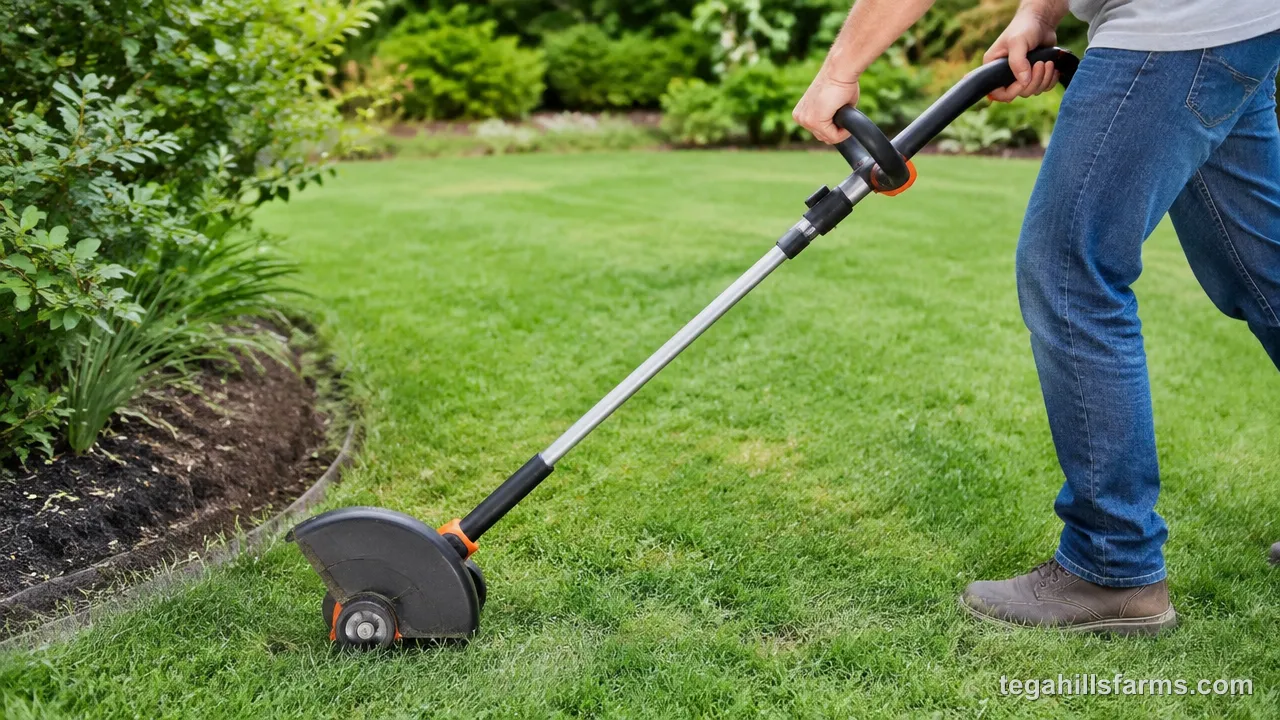
Lifespan matters when you’re deciding how to choose a lawn edger, because you want one that holds up through years of yard work without constant replacement. Ask which part of a design fails first, and whether that part is cheap to fix. A tool with an inexpensive, easy-to-swap weak point can stay in service far longer than a tool whose first failure costs nearly as much as a new machine.
Manual Edgers
A manual edger lasts many years, often longer than any powered model, because it is just a half-moon blade welded or bolted to a metal shaft. There is no motor, cord, battery or carburetor to wear out.
Rust is what usually ends one. Soil and moisture left on the blade pit the steel and weaken the weld where the blade meets the shaft. The second common failure is a bent shaft, which happens when the edger gets used as a pry bar on roots or rocks.
Prevention is simple:
- Knock the dirt off and dry the blade after each use.
- Wipe the blade with a light coat of oil before storing it.
- Keep it indoors rather than leaning against the fence.
- Restore the edge with a hand file when the cut starts to tear grass.
Corded Electric Edgers
A corded electric edger usually wears out at the cord, switch or motor long before its housing or wheels give out. The frame itself rarely fails.
The cord takes the most abuse. It gets dragged across concrete, kinked at the plug, and sometimes nicked by the blade itself. Any cut insulation means the cord or the tool has to be retired. Always plug into a GFCI outlet, and use an extension cord heavy enough for the length you need. A thin cord starves the motor of voltage, so the motor runs hot.
Most corded models draw ten to twelve amps. That is plenty for routine edging. However, forcing the motor through a season’s worth of overgrowth in one pass can overheat it. Brushed motors also wear their carbon brushes over time. When the motor starts to spark heavily or lose power, the brushes are the usual cause, and they are replaceable on some models.
Battery-Powered Edgers
On a battery-powered edger, the tool body and the battery age on separate timelines. The battery almost always wears out first.
A lithium-ion pack loses capacity with every charge cycle and with age, even when it sits unused. The decline is gradual. The day to replace the battery is the day a full charge no longer finishes your edges. A brushless motor in the tool body has few wearing parts, so the body often outlives one or more packs.
Most cordless edgers run on 18-volt platforms. If you have long runs of edging, choose a 6.0Ah or larger pack. A bigger pack finishes the job with charge to spare, so it is not drained to empty every session, and avoiding deep drains is easier on lithium-ion cells.
Heat shortens battery life faster than heavy use does. Keep packs out of a hot garage or car trunk in summer. Over winter, store them indoors with a partial charge rather than fully charged or fully empty.
Gas-Powered Edgers
A gas edger’s lifespan depends far more on fuel and carburetor care than on the engine itself. A well-maintained engine keeps running long after a neglected one has stopped starting.
Four-stroke edgers have oil in the crankcase and burn straight gasoline. Their oil changes are the main upkeep. Two-stroke edgers burn a gas-and-oil mix. Getting that ratio wrong, or running straight gas by mistake, can score the cylinder and end the engine in a single afternoon. Use the ratio printed on the engine or in the manual.
Stale, ethanol-blended fuel is what retires most gas edgers. Old fuel leaves varnish in the carburetor’s small passages, so the engine surges, stalls or refuses to start. To prevent this:
- Use fresh fuel with a stabilizer.
- Clean or replace the air filter.
- Replace the spark plug on schedule.
- Run the tank dry or drain it before winter storage.
- Check the drive belt on walk-behind models.
How Often Should You Replace Lawn Edger Blades?
Replace a 9-inch edger blade once it wears down to 7 1/4 inches, which takes about 3 miles of edging. Smaller 7-inch blades follow the minimum length listed in the manual.
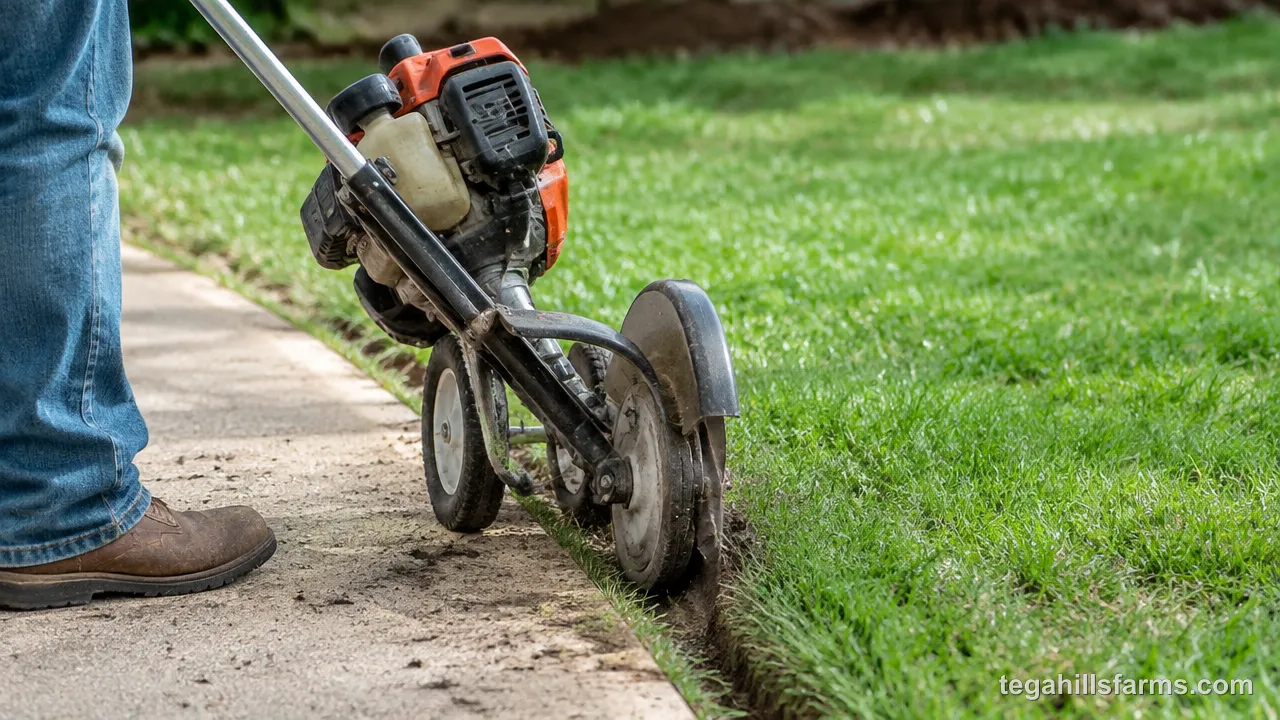
Distance is a better guide than time. The calendar interval depends on how many feet of edge your property has and how often you cut it. A short front walk takes years to add up to that distance. A corner lot with a long driveway, sidewalks and planting beds gets there much sooner.
What the blade touches matters as much as distance. Every time the blade strikes the concrete lip of a sidewalk, or cuts through gravel or sandy soil, the tip grinds down faster than it would in loam. Measure the blade with a tape every few weeks during peak season. The tip shortens slowly, so you will not notice the loss by eye until the cut has already suffered.
What Are the Signs Your Edger Blade Is Worn Out?
A blade is finished when its length falls below the manual’s minimum or when physical damage makes it unsafe to spin. Catching that point early protects more than the lawn. A worn or unbalanced blade makes the motor or engine strain and shake with every pass, and that strain shortens the life of the whole machine.
Visual Inspection Clues
Disconnect the power first. Unplug a corded tool, remove the battery, or pull the spark plug wire on a gas model. Then measure the blade tip to tip. If it is shorter than the minimum, it is done, whatever the edge looks like.
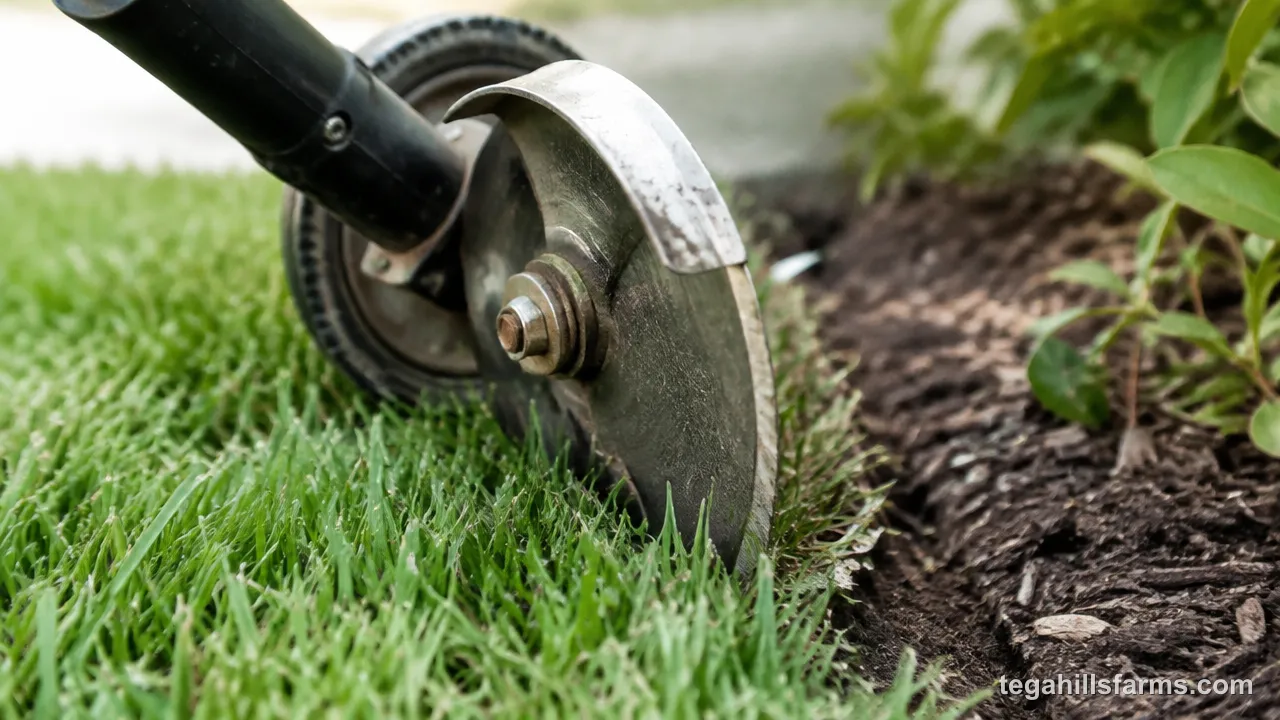
Next, look at the tips. A healthy blade has squared corners. A worn one shows rounded or flattened ends, and sometimes a thin, feathered edge where the metal has worn away unevenly.
Chips and nicks from rocks and concrete can be filed out if they are shallow. A crack is different. Cracks usually start near the mounting hole, where metal fatigue builds up. A cracked blade can break apart at speed, so it must be replaced immediately and never welded. Also lay the blade on a flat surface to check for bends, and check whether the mounting hole has worn oval.
Cutting Performance Changes
The cut gives a worn blade away before you ever pick up a tape measure. Instead of slicing a clean vertical line, a dull blade tears the grass, leaving a ragged edge with frayed blades and runners pulled loose from the soil.
The cutting depth also stops holding steady. A shortened blade no longer reaches the depth you set, so the trench comes out shallow in some places and scalloped in others. You end up pushing harder to keep the line, and the edger may bounce or veer at the curb.
Vibration that wasn’t there before usually means the blade is bent or unevenly worn. That shaking travels into the motor bearings and the handles, so don’t ignore it. A gas engine that bogs down on edges it used to cut easily often has the same cause.
Should You Sharpen or Replace Your Edger Blade?
Sharpening wins when the blade is still above its minimum length and only dull. Replacement wins once the blade is short, cracked, bent, or chipped too deep to file out.
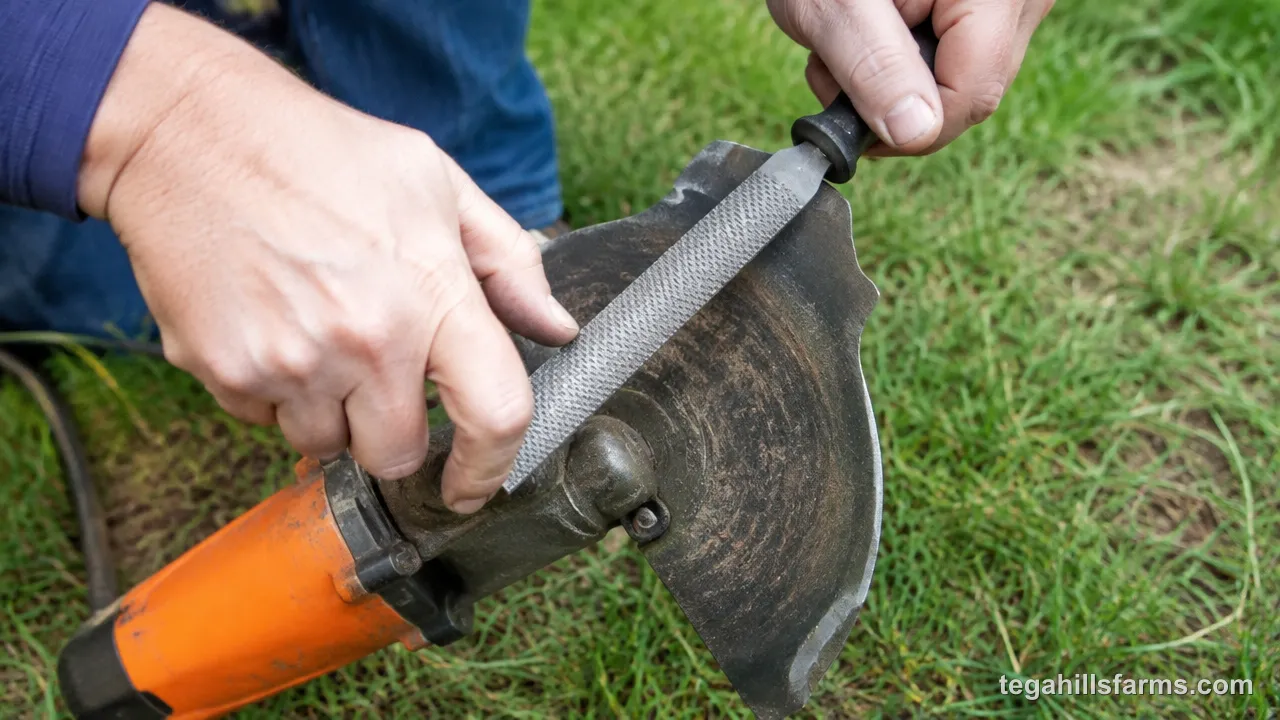
Edger blades cut largely through speed, so they don’t need a razor edge. A few strokes with a mill file restore the bevel without overheating the steel. A bench grinder works faster, but it can heat the tip until it turns blue, which softens the metal so it dulls quickly afterward. If you use a grinder, use light passes and cool the blade with water between them.
Every sharpening also removes metal and brings the blade closer to replacement length. Replacement blades cost little compared with the tool and arrive at full length with a factory edge. For a blade that is already near its minimum, sharpening buys only a short reprieve, while a new blade buys a full service life. So sharpening is the better choice for a dull blade with plenty of length left, and replacement is the better choice once the blade is near its limit or damaged.
How Often Should You Edge Your Lawn?
Edge about every other mowing during peak growing season, and less often once growth slows in late summer or fall. In regions where grass grows year-round, keep a steadier schedule.
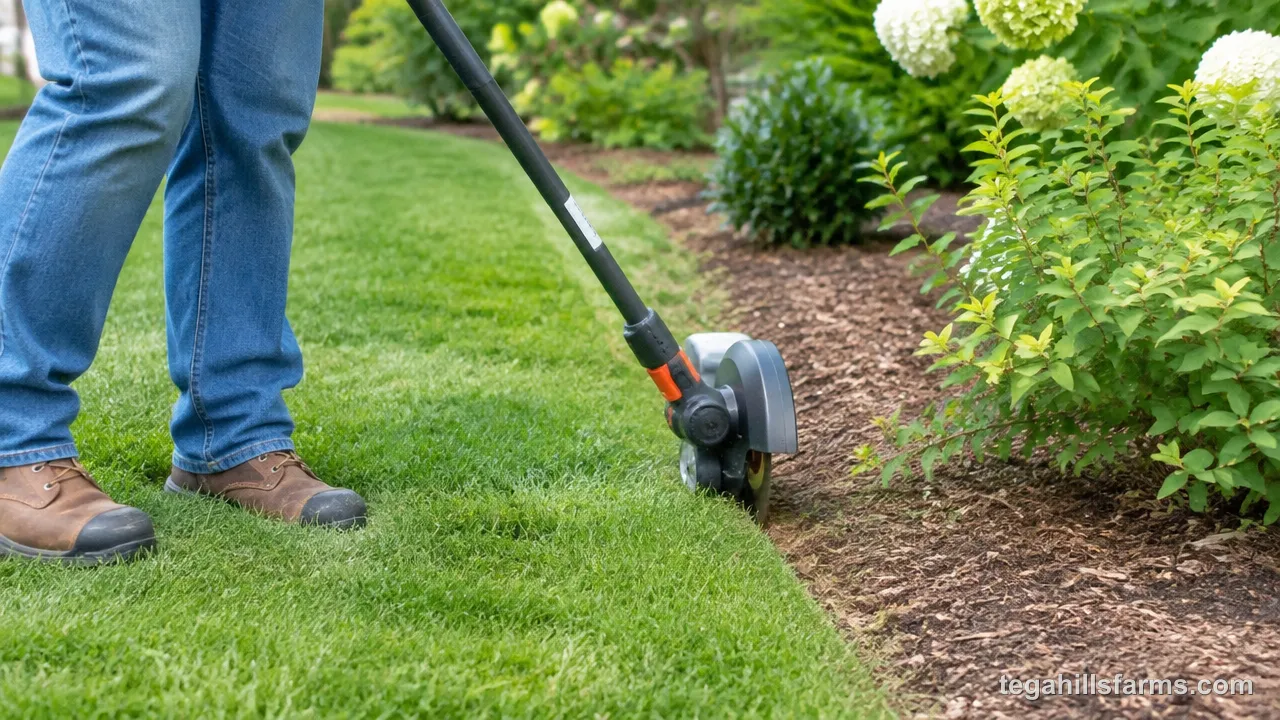
Frequent light passes are easier on the edger than occasional heavy ones. When you edge every week or two, the blade only trims fresh growth along a line that is already established. That means less resistance, less heat in the motor, and less abrasion on the blade tip. When you skip a month, runners creep over the concrete and the blade has to cut through thick turf and packed soil. That puts more load on the blade, the motor and the belt in a single session.
The first edge of spring is the hardest pass of the year, because it re-cuts a line that has grown over all winter. Take it slowly, at a shallower depth, and make two passes if needed.
A gas edger put away in fall with fuel still in the carburetor, or a battery left on a shelf in a freezing garage, can lose more working life over one off-season than it loses in a full summer of edging. Come spring, that shows up as an engine that won’t fire or a pack that dies halfway down the driveway, and it can happen even though the tool was barely used.
How to Extend Your Lawn Edger’s Lifespan
The habits that add the most years are simple: clean the edger after every use, keep the motor cool, avoid striking concrete, and store the tool dry with its power source prepared for the off-season. Most premature failures trace back to skipping one of these.
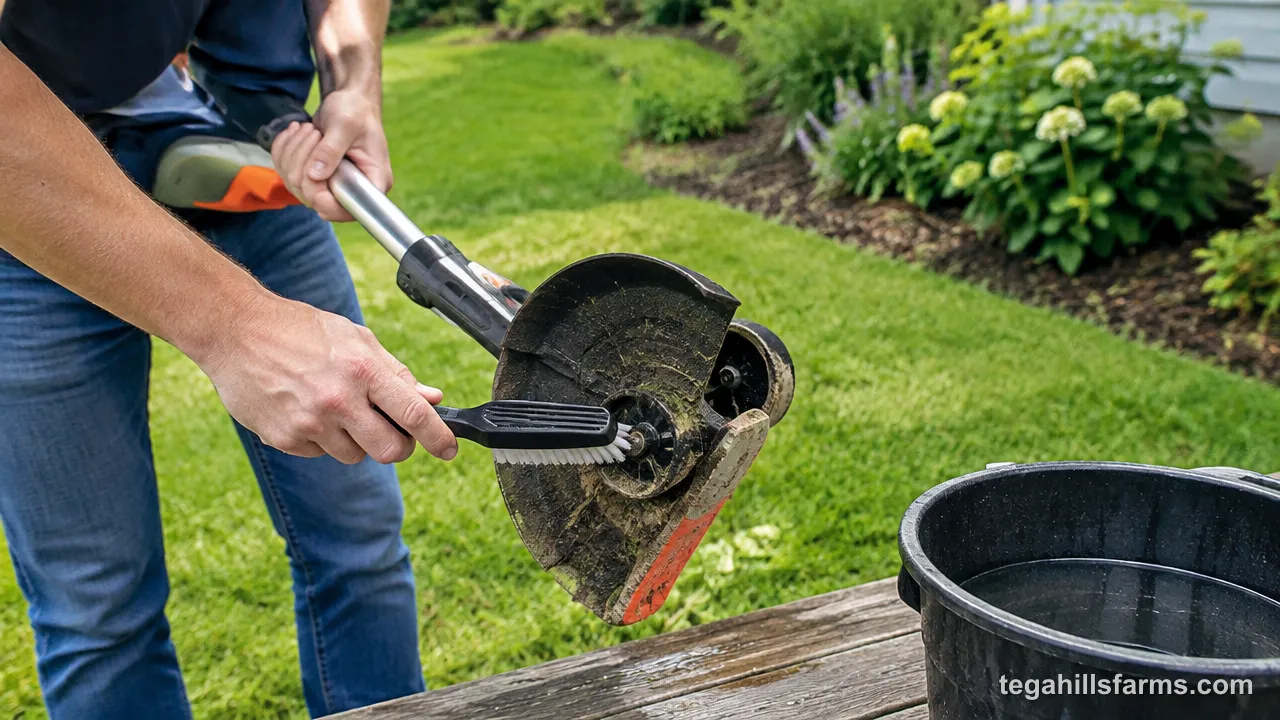
After each session, scrape packed soil and grass from the blade, guard and wheels. Wet clippings hold moisture against the steel, and debris clogs the motor vents so the motor runs hot.
Guide the blade along the soil side of the sidewalk rather than riding it into the concrete. Grinding concrete wears the tip quickly and sends shock into the bearings.
Every few weeks, check that the blade bolt is tight. Put a drop of oil on the wheel axles and depth-adjustment pivots.
For winter storage:
- Gas models: Drain or stabilize the fuel, and change the oil on four-stroke engines.
- Battery models: Store packs indoors with a partial charge.
- Corded models: Coil the cord loosely, without sharp kinks.
When Should You Replace the Entire Edger Instead of Just the Blade?
Replace the whole edger when a core component fails and the repair costs close to the price of a new one. The usual culprits are a burned-out motor, a cracked frame or shaft, a battery pack that is discontinued or priced near a full kit, or a gas engine that has lost compression.
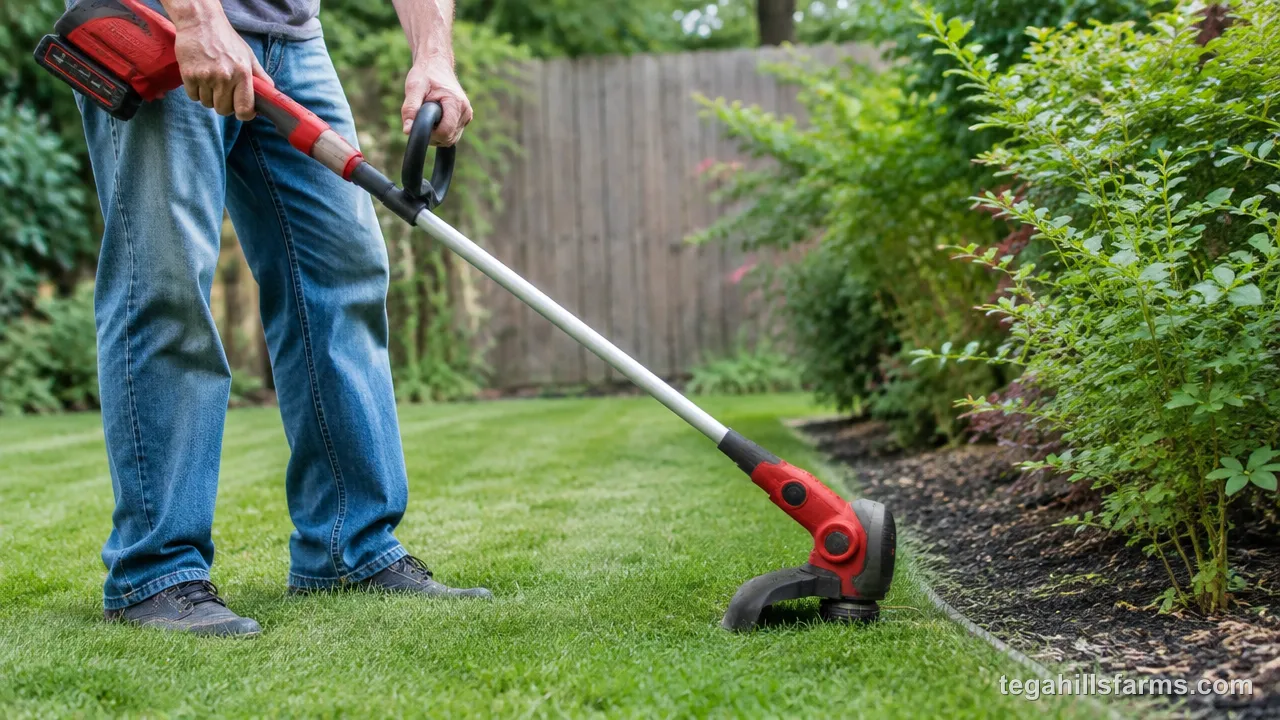
A gas edger that won’t start is usually a fuel problem, not a dead engine. Before writing one off, work through why a lawn edger won’t start. A carburetor cleaning or rebuild often brings it back for little money. Replacement makes sense when the same carburetor clogs again right after a rebuild, or when the engine runs but has no power under load.
On electric models, a motor that smells burnt or trips the GFCI every time it starts is rarely worth the repair. A cracked housing near the blade arbor is another point of no return, because the blade can no longer run true.
Common Questions About Lawn Edger Lifespan
Do battery edgers last as long as gas edgers?
The tool body can, because a brushless motor has few wearing parts. The battery pack, however, ages on its own schedule and eventually needs replacing. A gas edger avoids that cost but depends on fuel habits, and stale fuel and a neglected carburetor end more gas edgers than worn-out engines do.
Does soil type change how fast an edger blade wears?
Yes. Sandy and gravelly soil acts like an abrasive on the blade tip, and rocky ground chips the edge, so blades in those yards reach replacement length sooner. Loam and clay are gentler. Wet clay does pack into the guard, though, so clear it out after every session.
How long does an edger last under professional use?
A crew edging several properties a day piles up blade miles and motor hours far faster than a homeowner does. For crews, blades become a routine consumable and engines need scheduled service. Homeowner edgers see light, intermittent work, which is why a well-kept one often stays in service for many seasons.
Are replacement parts easy to find for lawn edgers?
Blades are the easiest part to find because many share common sizes, including 7- and 9-inch blades. You still need the right arbor hole and mounting hardware. Belts, carburetors and batteries are model-specific, so a brand with a local service dealer or an online parts catalog keeps an older edger running longer.
Is it worth repairing an older edger instead of buying a new one?
Blades, belts and spark plugs are cheap fixes worth doing on any edger with a sound motor and frame. Major repairs are another matter. Knowing how much a lawn edger costs new, with manual models starting around $15, tells you quickly when a repair bill no longer makes sense.


Write Your Review
No reviews yet. Be the first to share your experience!