

A bladed edger gives cleaner lawn edges than a string trimmer, because its steel blade cuts a straight vertical line into the soil instead of chopping grass blades from the side. A string trimmer can still keep a border tidy, and in many yards it does the job well enough that a second machine never earns its spot in the garage.
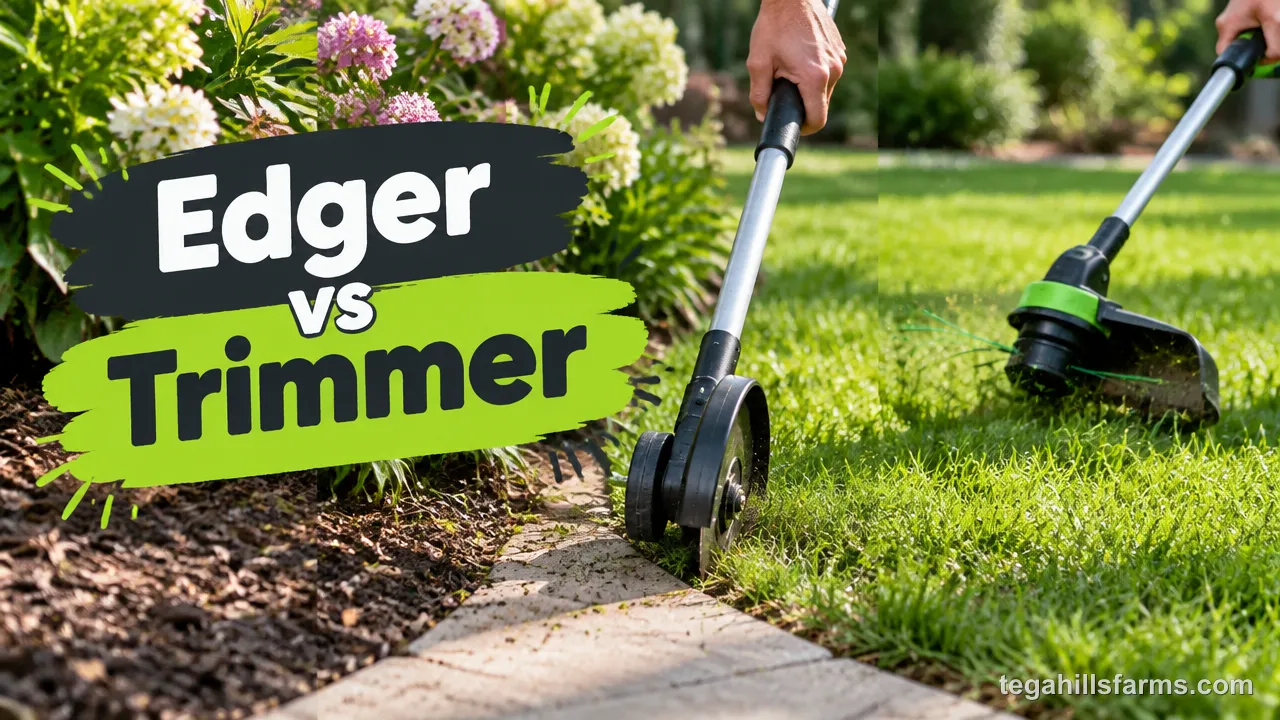
The choice depends on three things: what your borders are made of, how sharp you want the line, and how much edging you do over a season. Long concrete runs beside a sidewalk or driveway favor a dedicated edger. Curved mulch beds and a few short stretches of border favor the trimmer you probably already own.
Most homeowners face two risks here. One is paying for and storing a tool that sits idle most of the year. The other is settling for a ragged edge that grass creeps over by midsummer, which makes the whole lawn look unkept even when it’s freshly mowed.
Before you buy anything, it’s worth testing your current trimmer. If its head rotates or tilts, edge your longest hard border with it and see how the line looks a few weeks later. If it has already blurred, a bladed edger will make a visible difference. If it still looks crisp, a second tool won’t add much.
What Is the Difference Between an Edger and a String Trimmer?
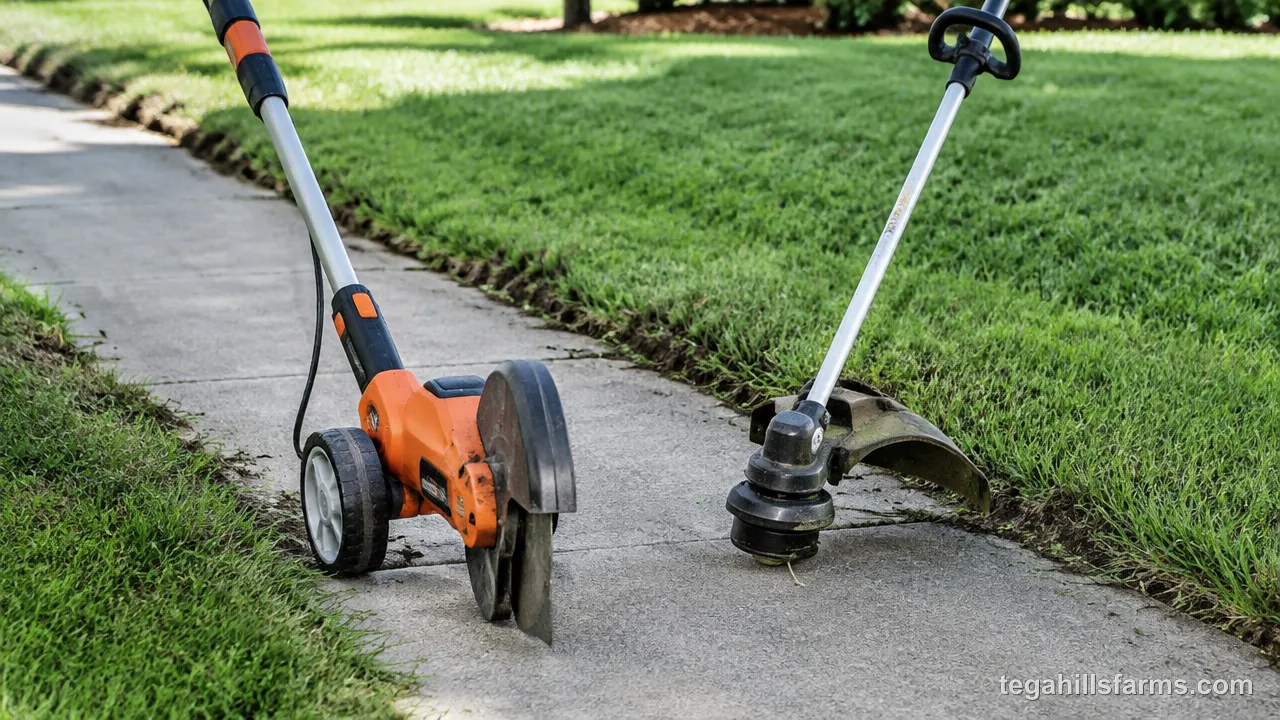
An edger cuts a vertical line into the soil with a steel blade, while a string trimmer uses spinning nylon line that snaps grass off at the tip. That difference decides how long an edge stays sharp. A blade cuts through the roots and runners along the border, so grass has to regrow before it can spill onto the concrete. Line only shortens the blades you can see, so the border looks neat for a while and then blurs as the runners keep spreading. If you are still deciding which kind of machine suits your yard, start with how to choose a lawn edger, since border length and power type narrow the field quickly.
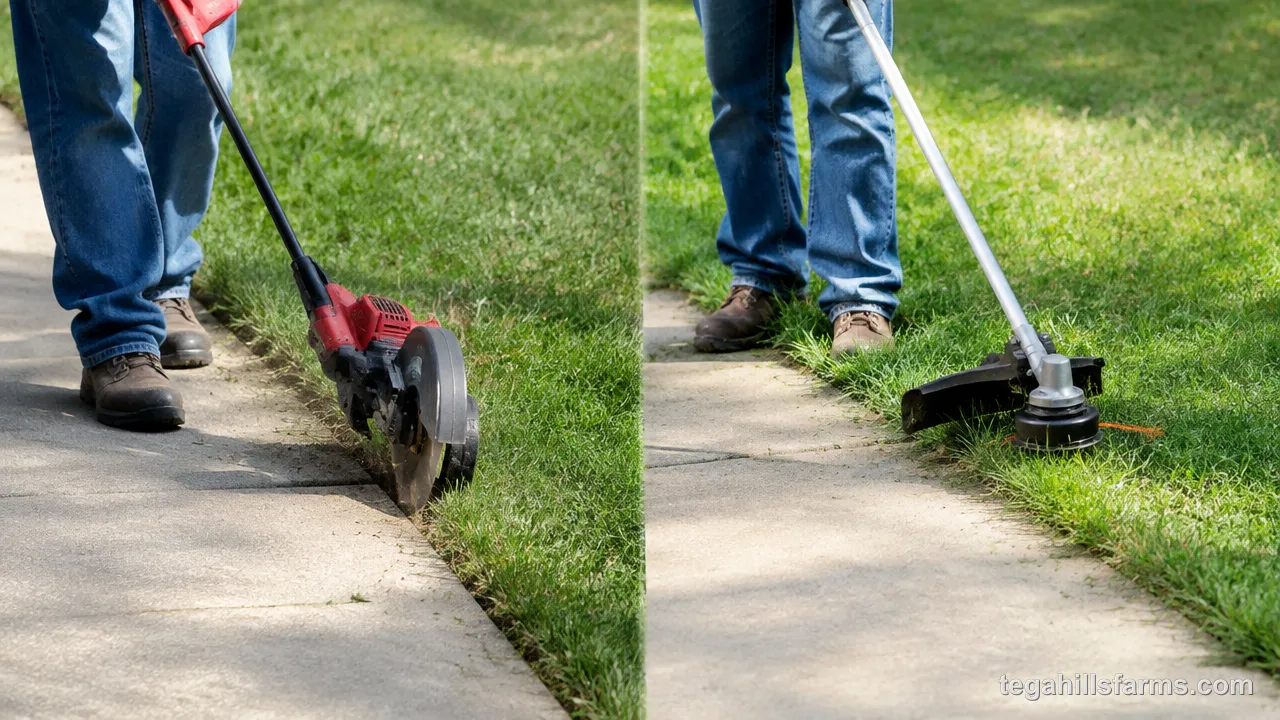
The two tools compare as follows on the points that matter most for edging:
| Criterion | Edger | String Trimmer |
|---|---|---|
| Cutting part | Steel blade spinning vertically | Nylon line spinning at the tip |
| Edge it leaves | Clean trench cut into the soil | Trimmed grass with a softer line |
| Best borders | Sidewalks, driveways, straight paths | Curved beds, fences, around obstacles |
| Other jobs | Edging and light trenching only | Trimming, edging, light clearing |
| Main wear part | Blade that dulls and chips | Line that wears down and needs reloading |
| Typical cost | Usually higher | Usually lower |
How Does a Bladed Edger Cut a Lawn Edge?
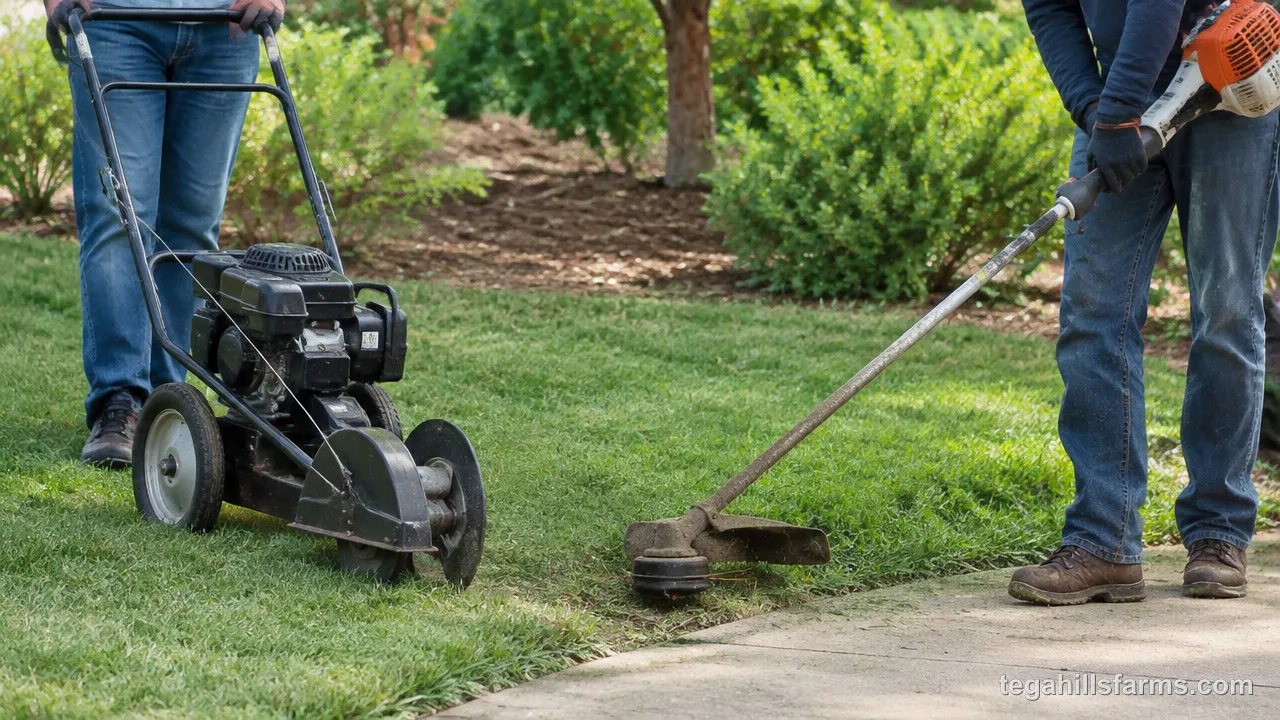
A bladed edger lowers a steel blade vertically into the strip where turf meets pavement. The blade spins fast enough to slice through grass, roots and the top layer of soil. Most machines run on wheels, and one of those wheels rides on the concrete as a guide, so the blade follows the hard edge instead of wandering.
On many models the blade cuts about 3 to 5 inches deep. At that depth it severs the runners that grass sends sideways over the curb. This is why an edged border stays defined longer: the grass has to regrow those runners before it can creep back onto the sidewalk. The wheel and the blade height set the line, so each pass matches the one before it. For that reason, edging with a blade gets easier with each pass instead of more ragged.
How Does a String Trimmer Cut Along an Edge?
A string trimmer cuts with nylon line spinning at high speed. Only the last bit of the line does the work, snapping grass blades on contact. Trimmers were built to cut along fences, trees and foundations where a mower can’t reach, so edging is a secondary job. To edge a border, you tilt the head so the line spins vertically and walk it along the concrete.
The line has no fixed depth and no guide, so the cut follows your hands. A steady arm gives a decent edge, and a tired one leaves a wavy line. Line also stops at grass and loose soil and doesn’t cut through roots. Because the runners stay intact, they grow back over the border sooner than they would after a blade cut.
Can You Use a String Trimmer Instead of an Edger?
Yes, a string trimmer can edge a lawn if you rotate the head vertically or fit an edging attachment, but the line comes out softer and needs redoing sooner than a bladed cut.
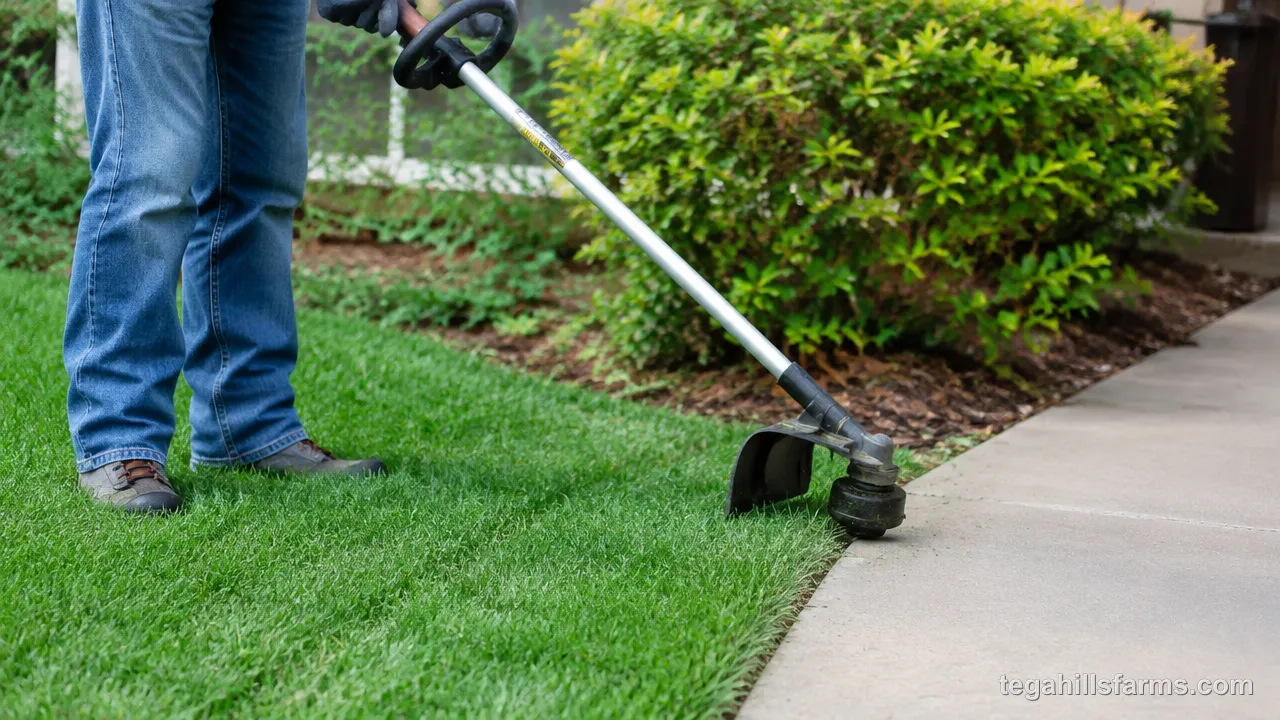
A trimmer is good enough when your borders are short, curved or mostly soft soil. A front walk, a few beds and a mailbox post don’t justify a second machine. If you only edge before a cookout or a home showing, a careful pass with the trimmer gets you most of the look. Trimmers with a rotating head and a small guide wheel make the job steadier because the wheel holds the line height for you.
The trimmer falls short on long straight runs of concrete. Every inch of contact with the pavement wears the line down and throws grit. It also struggles once grass has spread well onto the sidewalk, because the line bounces off the thick mat instead of cutting it back to the true edge. An edging attachment on a multi-head system changes that, since it uses a real steel blade and behaves much more like a stick edger.
Which Tool Gives Cleaner Lawn Edges?
The bladed edger leaves the cleaner edge: a sharp vertical line that keeps its shape longer, while a trimmer gives a softer border that blurs sooner. The gap between the two widens as your borders get longer and straighter, and it widens further when the grass has already spread onto the hard surface. Edgers also differ among themselves. Weighing a stick edger vs a walk behind matters here too, because wheels carry the machine’s weight and hold the blade steady in a way that your arms can’t.
How Do They Compare Along Sidewalks and Driveways?
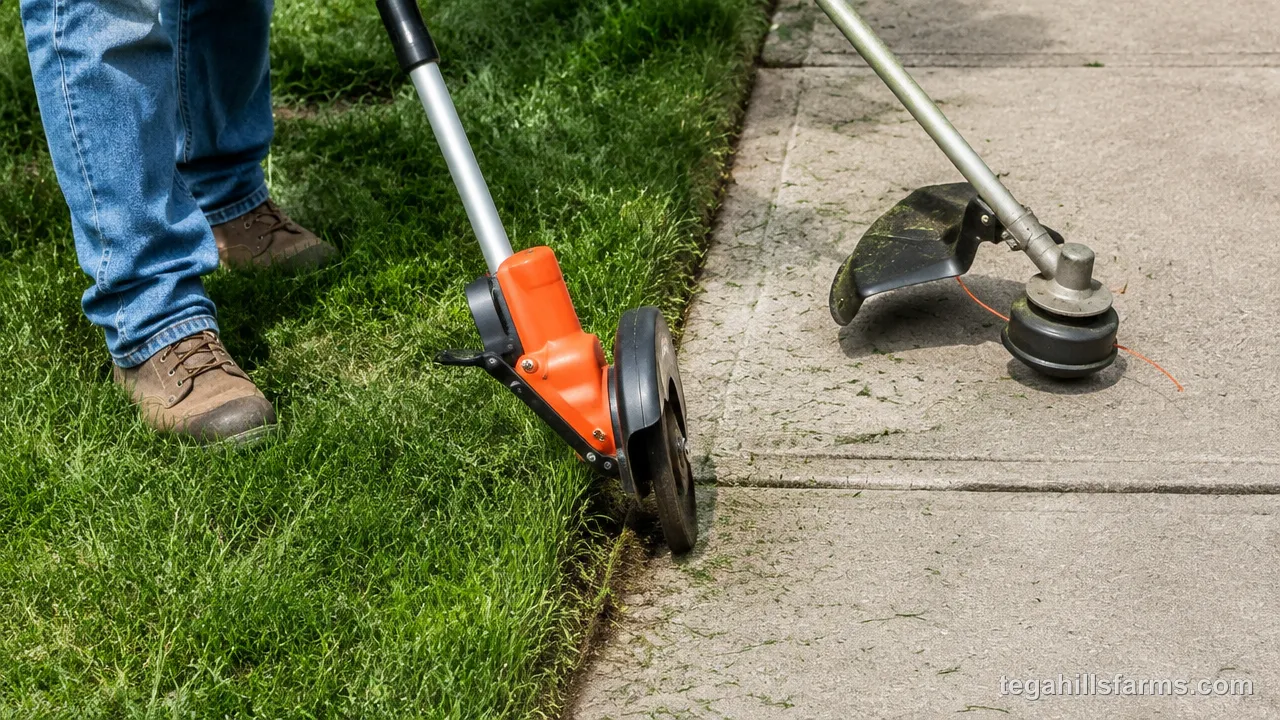
Along concrete and pavers, the edger’s guide wheel rides on the hard surface and keeps the blade at a fixed distance from the slab. The result is a straight trench that follows the edge exactly. A trimmer held on its side depends on your arm to keep that distance. Because the line touches the concrete on almost every inch, it frays quickly and leaves gray scuff marks on the curb.
The two tools also differ in how much touch-up they need. After the first full cut, an edger only needs a light pass along the existing trench, which takes less time than the original job. A trimmer edge leaves the roots in place, so the grass softens the line again sooner and each session starts nearly from scratch. Along sidewalks and driveways, the edger wins whenever the hard border is long and straight.
How Do They Compare Around Garden Beds and Patios?
Around soft soil and mulch, an edger blade cuts a defined trench that separates the lawn from the bed and keeps mulch from washing onto the grass. On gentle curves this gives beds a crisp outline. On tight curves a wheeled walk-behind edger turns awkwardly, and a stick edger handles the bend better.
A string trimmer bends around plants, stepping stones and patio corners easily, but it doesn’t cut a trench. It also throws mulch and soil when the line hits the bed. Around patios with irregular pavers, the trimmer’s flexibility helps because an edger’s guide wheel needs a consistent surface to follow. The string trimmer is the better fit for tight curves and small beds. The edger wins when you want a lasting trench around beds with gentle curves.
How Much Effort and Upkeep Does Each One Need?
A walk-behind edger is heavier to push, but the wheels carry that weight, so your arms only steer. A trimmer is lighter, but holding it on its side for long stretches tires your wrists and shoulders. Because a bladed edge holds longer, you edge less often over a season.
The two tools wear in different ways. An edger blade dulls and chips when it hits concrete and buried stones, so it eventually needs replacing. Trimmer line burns down quickly against pavement, so you may stop to reload it more than once in a single session. Gas models of either tool add oil, fuel and spark plug upkeep. Blade wear is only part of how long lawn edgers last, since the engine or motor and the wheel bearings set the machine’s real lifespan. Over a season, the edger takes more effort per session but needs fewer sessions. The trimmer is easier to handle but needs more frequent passes and line reloads.
Is a Separate Edger Worth Buying?
A separate edger is worth buying if you have long hard-surface borders and want a crisp line all season. If you only have a few short edges, the trimmer you already own is enough.
Cost is usually the deciding factor. Entry-level electric edgers start at around $80, and gas edger models can run over $150. Basic corded or battery string trimmers start near $50. Since most homeowners already own a trimmer, an edger is an added purchase rather than a replacement. Power type accounts for most of the spread, and it’s worth checking how much a lawn edger costs at each tier against how much border you actually edge.
Storage matters too. A walk-behind edger takes up floor space much like a small mower. A stick edger hangs on a wall hook next to your trimmer. I’d only add an edger once the trimmer edge along the driveway stops looking good enough to you. Owning both machines pays off only when that difference bothers you every time you pull into the driveway.
Which Tool Fits Your Yard?
The right tool depends on your border surface, how often you edge, and the power type that fits your yard. Long concrete edges favor an edger, while curved beds and occasional edging favor a trimmer.
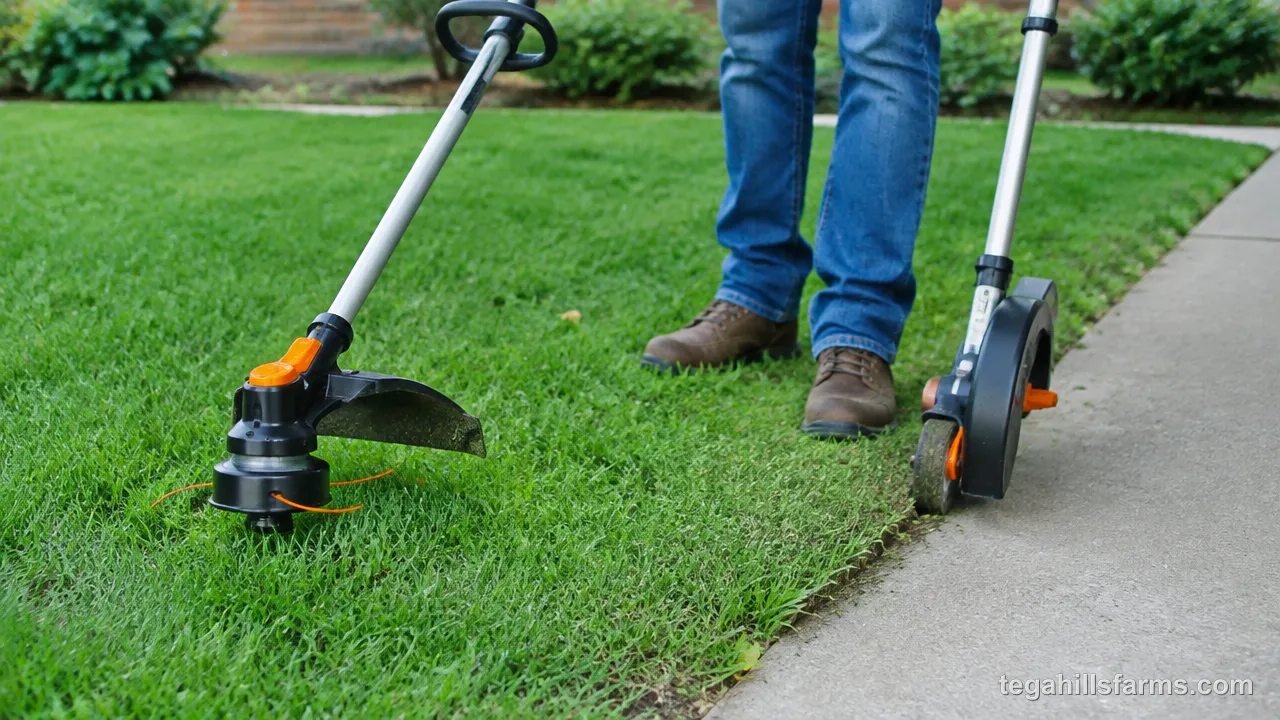
- Choose the edger if your lawn borders long sidewalks or a driveway, you want a sharp trench that lasts, and you edge regularly through the growing season.
- Choose the string trimmer if your borders are short or mostly curved beds, you edge only now and then, and storage space is tight.
- Choose a combo system if you want a bladed edge without storing a second machine, and you’re willing to swap heads between jobs.
How Do Yard Size and Border Type Affect the Choice?
A small lot with a short front walk and a couple of beds is trimmer territory. The edging takes only minutes, and a separate machine would spend most of the year in storage.
A typical suburban lot with a public sidewalk along the front and a driveway down the side is where an edger starts to pay off. These straight concrete borders are exactly what a guide wheel and a steel blade handle best. On a larger property with a long driveway, a walk-behind edger saves the most effort, because its wheels carry the machine over long distances.
The border surface can change this answer regardless of lot size. Yards dominated by mulched beds, stone walls or curved paths suit a trimmer or a stick edger. Yards bordered mostly by poured concrete suit a walk-behind.
Should You Choose Gas, Battery or Corded?
Gas edgers usually have engines in the 25cc to 40cc range. That gives them the power to cut through compacted, overgrown borders, and they run as long as you have fuel. The tradeoff is noise, weight, oil and fuel upkeep, and stabilizer before winter storage. Gas suits large properties and borders that haven’t been edged in a long time.
Corded electric edgers draw 7 to 12 amps. They are light, quiet and need almost no upkeep. They do need an outdoor-rated extension cord and a GFCI outlet, and the cord limits how far you can reach. Corded models fit small and medium lots where the borders aren’t far from the house.
Battery string trimmers range from 18V to 80V, and edgers on the higher-voltage platforms handle tougher cuts. The battery limits runtime, but sharing one platform with your mower or blower cuts both cost and clutter. Battery power suits most suburban homeowners who want quiet, low-upkeep edging.
Is an Edger and Trimmer Combo a Good Idea?
A combo works well when storage is tight and your edging is moderate. Multi-attachment systems use one powerhead with swappable trimmer and edger heads. You store one motor and one set of batteries, and you still get a real steel blade for the borders.
The edger attachment gives a finish close to a stick edger, since it cuts with the same type of blade and usually has a small guide wheel. What it lacks is the steadiness of a walk-behind, where the wheels carry the weight and fix the blade’s position. On long driveways that you edge often, that difference shows up in both the line and in your shoulders.
A shared battery platform makes combos especially practical. If you already own the powerhead’s battery for a mower or blower, the attachment is the cheapest way to add a bladed edge. A dedicated walk-behind is still the better choice when concrete borders make up most of your edging.
An edger blade spinning at ankle height hits gravel, curb chips and buried stones on almost every pass, and it can throw them toward your shins, your car or the house next door. A chipped blade or a cracked trimmer guard makes that risk constant rather than occasional, and the first warning is often a stone hitting something that’s expensive to replace.
What Safety Risks Come With Edging?
The main risks are flying debris, a blade striking stones or the curb, and noise. Wear impact-rated safety glasses, long pants, closed boots and gloves, and add hearing protection with gas models.
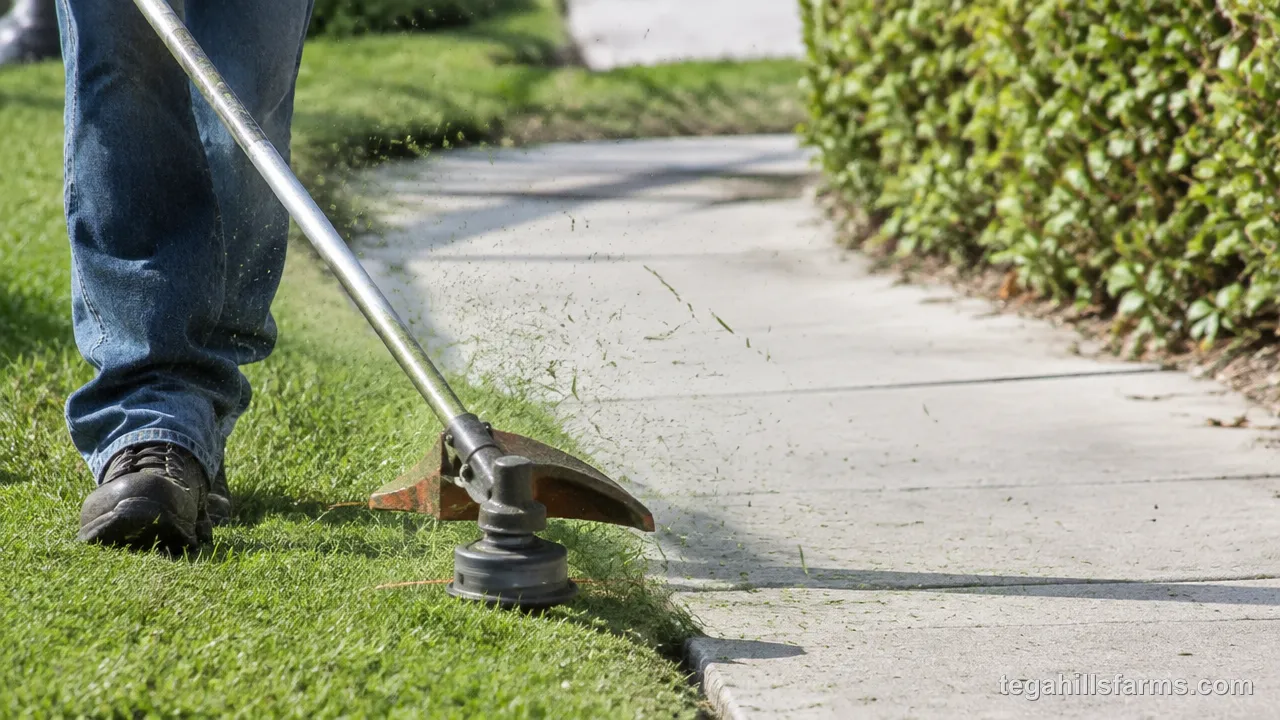
The two tools throw debris differently. An edger blade launches stones low and forward from the cut. A blade that catches a curb or buried rock can also kick the machine sideways, which is why a firm two-handed grip matters. A trimmer flings grass, grit and pieces of line in a wider arc, so the guard needs to stay in place and undamaged.
A few habits remove most of the danger. Walk the border first and pick up loose stones. Keep kids and pets well back while you work. Stop the tool before clearing anything from the blade or head: unplug a corded model, remove the battery, or disconnect the spark plug wire on a gas edger. A blade cutting several inches deep can also reach shallow sprinkler lines and low-voltage landscape lighting wire, so mark those before your first pass.
When Do Edger Blades and Trimmer Line Need Replacing?
Replace an edger blade when it is cracked or bent. When the edge looks torn instead of sliced, the blade is dull. A sharp blade leaves a clean trench with crisp walls. A worn one leaves strands of grass hanging over the cut and soil smeared along the concrete, even though you’re using the right tool.
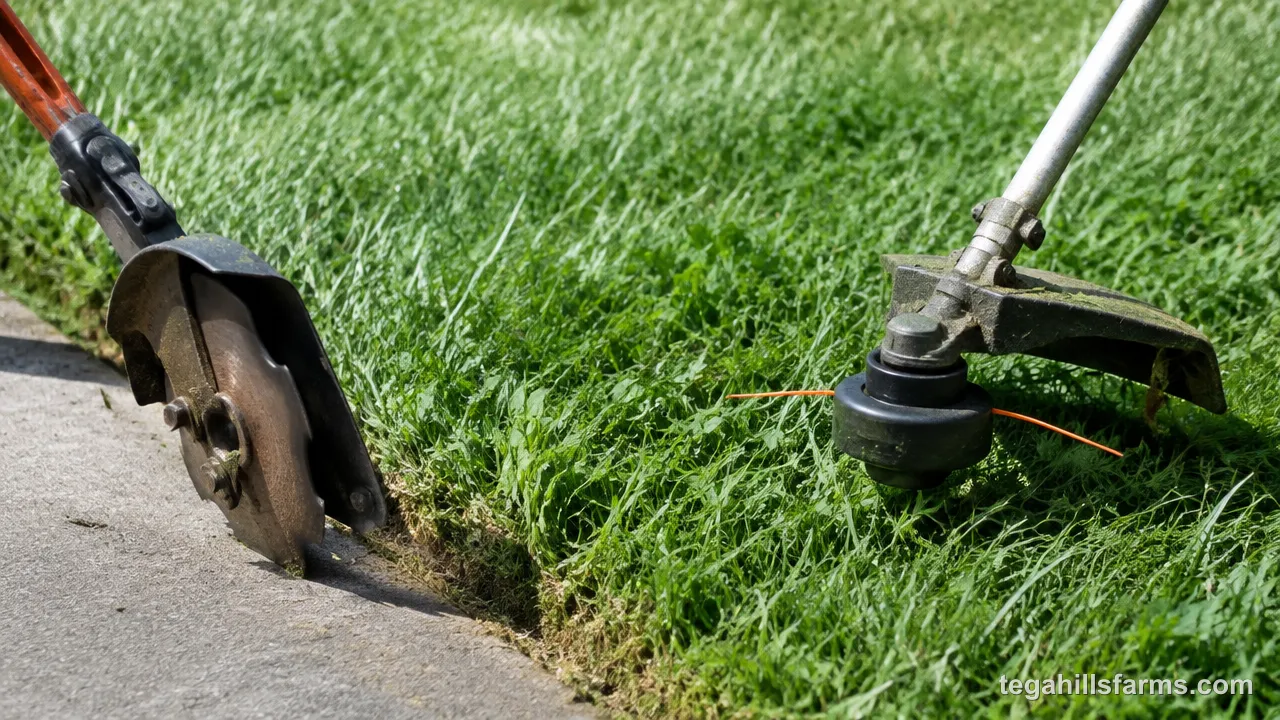
Look at the blade itself as well. Rounded corners, a shortened tip and chips along the edge all mean it is cutting less and tearing more. A dull but intact blade can sometimes be sharpened if the manufacturer allows it. A cracked or bent blade should come off right away, because it can break apart at full speed.
Trimmer line shows wear differently. Frayed tips shred the grass instead of cutting it, and the border turns brown and whiskered a day or two later. Line that keeps snapping often has dried out in storage, and keeping spare line in a sealed bag helps. In both cases, a ragged edge usually comes from a worn part rather than the wrong tool.
What Are Common Mistakes When Buying Between the Two?
The most common mistake is buying a walk-behind bladed edger for a yard that only has a few short curves. It ends up taking floor space and rarely gets used. The opposite mistake is relying on a trimmer to edge long concrete runs, which burns through line and leaves a border that needs constant redoing.
Storage is easy to overlook. A walk-behind edger needs a spot on the garage floor, while a stick edger or attachment hangs on the wall. Power type causes trouble too. Buying a gas edger when you already own a battery mower means paying for a second fuel routine you didn’t need. Choosing a corded edger for borders far from an outlet means dragging a long extension cord across the lawn every time.
Expectations can be off as well. A combo attachment gives a good bladed edge, but it won’t feel as steady as a walk-behind on a long driveway. Matching the tool to the borders you actually have avoids most of these mistakes.
Edger vs Trimmer: Frequently Asked Questions
Is a weed eater the same as a string trimmer?
Yes. “Weed eater” started as a brand name and became the everyday name for string trimmers, as did “weed whacker.” All three refer to the same tool, which cuts with spinning nylon line. Gas, battery and corded versions all count, whatever the label on the box.
How often should you edge your lawn?
Many properties need edging every few weeks during the growing season to keep borders crisp. A bladed edge holds its shape longer because it cuts through the runners, so you may edge less often with an edger. A trimmer edge usually needs more frequent passes to keep the same look.
Can one tool do both jobs?
A string trimmer can trim and edge, especially one with a rotating head or a guide wheel. A multi-attachment system goes further by letting you swap in a bladed edger head on the same powerhead. A dedicated edger can’t trim, so it only replaces part of what a trimmer does.
What should you check when a gas lawn edger won’t start?
When a gas lawn edger won’t start, stale fuel, a fouled spark plug and a clogged air filter are the usual causes. Fuel left in the tank over winter is a frequent culprit. Draining old gas, cleaning or replacing the plug, and checking the filter fix many no-start cases before a repair shop is needed.
What is a string edger?
A string edger is a string trimmer used for edging, often fitted with a guide wheel that holds the head vertical and steadies the line along the border. It cuts with nylon line, so its edge is softer than a bladed cut. It works well for occasional edging and curved beds.

Write Your Review
No reviews yet. Be the first to share your experience!