

For snow blowers under $500, my picks are the WORX WG461 40V 20in Snow Blower (Best Overall), SENIX 40V 21in Snow Blower (Best for Large Yards), Snow Joe 24V-X2-SB18-TV1 Snow Blower (Editor’s Choice), Snow Joe 24V-X2-SB18-XR Snow Blower (Also Great), NOVUS 18in 99cc Single-Stage Snow Blower (Also Great), HEINPRO 36V Snow Blower Bare Tool (Also Great), Skil PWR CORE 40 SB2001C-10 20in Snow Blower (Also Great), FORDWALT 36V Cordless Snow Blower (Best Budget) and Greenworks 48V 16in Snow Thrower (Best for Small Yards). Each one fits a different property, from a deck and front steps up to a multi-car driveway.

Start by matching clearing width and intake depth to your driveway and the storms you usually get. Then check whether the machine comes with batteries or runs on a platform you already own, and make sure the auger suits your surface. A rubber-tipped auger that wipes pavement clean is the wrong tool on gravel.


Small augers bog down and batteries drain early in heavy, wet snow and in the ridge a plow leaves at the street. If you clear in stages and break that ridge down in layers, a modest machine can stay ahead of most storms. A long, sloped driveway or a deep-snow region will eventually need a bigger machine.
What Can a Snow Blower Under $500 Realistically Handle?
A machine in this tier clears paved driveways, walks and patios after light to moderate snowfall, and it runs short in very deep, heavy or plow-packed snow.
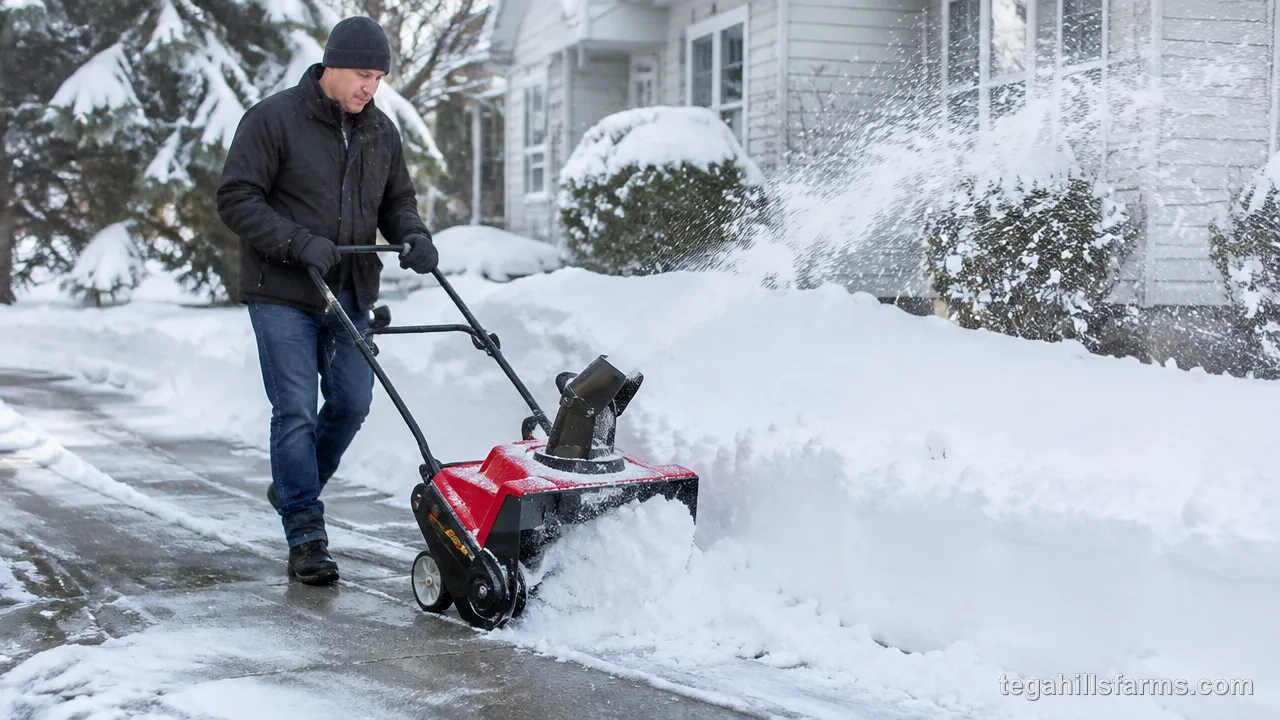
Cordless electric machines and small single-stage gas units make up most of this price range. The single-stage design uses one auger to both gather and throw snow, so the machine stays light, simple and cheap to build. Brushless motors and lithium batteries now run that design well enough that most budget models have no engine at all. A full-size two-stage gas machine adds a separate impeller, a larger engine and often powered wheels, and those parts push it into a higher price tier.
Within the tier, clearing width sets how many passes your driveway takes. Intake depth sets how much snow the machine takes in one bite, and the power source sets how long and how hard it can keep going. To see how this budget tier stacks up against larger two-stage machines, compare it with the best snow blowers at every price.
The 9 Best Snow Blowers Under $500 of 2026
The machines worth your money at this budget are the WORX WG461 40V 20in Snow Blower, SENIX 40V 21in Snow Blower, Snow Joe 24V-X2-SB18-TV1 Snow Blower, Snow Joe 24V-X2-SB18-XR Snow Blower, NOVUS 18in 99cc Single-Stage Snow Blower, HEINPRO 36V Snow Blower Bare Tool, Skil PWR CORE 40 SB2001C-10 20in Snow Blower, FORDWALT 36V Cordless Snow Blower and Greenworks 48V 16in Snow Thrower. The HEINPRO and FORDWALT ship as bare tools that run on Milwaukee 18V packs you already own. The WORX, SENIX, both Snow Joes, the Skil and the Greenworks come with batteries, and the NOVUS uses a gas engine instead. That split decides the fit for small and mid-size driveways, walkways and patios, owners already invested in a battery platform, and buyers who need something light enough to store in a crowded shed.
#1 WORX WG461 40V 20in Snow Blower — Best Overall
A long paved driveway is where the WG461 earns its keep, because two 20V 6.0 Ah PowerShare Pro batteries supply the runtime to clear up to a 15-car driveway in 6-inch snow. The 35-foot throw keeps banks off the path.
Key Specs:
- Clearing width: 20 in
- Intake depth: 10 in
- Throw distance: up to 35 ft
- Batteries: two 20V 6.0 Ah PowerShare Pro, charger included
- Motor: brushless
- Chute: 180° rotating with adjustable deflector
Detailed Review:
Clearing 20 inches wide and 10 inches deep in one pass, the WG461 takes a moderate storm in a single sweep per strip rather than needing shallow repeat bites. That cuts the laps you walk on a long driveway, and fewer laps leave more battery for the heavier snow at the street.
Snow thrown well past the edge of the driveway doesn’t pile into a bank you have to move again after the next storm. The rotating chute and adjustable deflector let you aim it away from the car, the front walk or the neighbor’s side. You can also drop the arc low when wind pushes snow back at you.
Two 20V PowerShare Pro packs combine to run this 40V machine. The PowerShare system powers WORX 20V, 40V and 80V tools as you add batteries, so the packs you buy with the snow blower keep working on other WORX tools in spring and summer.
I’d steer a reader with a long paved driveway and no battery platform yet toward this one. It arrives complete and starts a system worth building on.
Pros:
- Clears a 20-inch by 10-inch path in one pass.
- Throws snow well clear of the driveway edge.
- 180° chute and adjustable deflector aim snow precisely.
- Two 6.0 Ah batteries and a charger come included.
- PowerShare packs also run other WORX tools.
Cons:
- Clearing stops when both batteries run down mid-job.
- Spare batteries have to come from the WORX PowerShare line.
Who It’s For:
Homeowners with a long paved driveway who want it cleared without fuel cans or an extension cord will get real use from it, especially if they already run WORX 20V tools. If you only clear a walk or front steps, you’d be paying for more path and battery than the job needs.
Editor’s Verdict:
A wide intake, a long throw and batteries that outlast the winter make the WG461 an easy machine to build a cordless yard around.
#2 SENIX 40V 21in Snow Blower — Best for Large Yards
Multi-car households with a wide paved driveway should look hard at the SENIX, since its 21-inch path covers more ground on each pass while the whole machine weighs 30 pounds. It folds down for storage.
Key Specs:
- Clearing width: 21 in
- Clearing depth: adjustable, 8–12 in
- Throw distance: up to 33 ft
- Snow removal: up to 680 lb per minute
- Motor: 1800W brushless with variable speed control
- Weight: 30 lb
Detailed Review:
The wide path means each strip takes a bigger bite out of an open driveway, so a multi-car apron needs fewer turnarounds. The steel auger is rated to move up to 680 pounds of snow per minute, so you can keep a steady walking pace without the chute falling behind.
Variable speed control lets you run the motor slower in light powder and turn it up when snow gets denser near the street. Holding back on fluffy snow saves charge for the end of the job. The extra power in reserve keeps the auger from bogging down when conditions change partway through.
Clearing depth adjusts across a range up to a foot, but the machine is optimized for fresh, powdery snow. Wet slush asks more of it, so it works best when you clear soon after the snow falls. Dual LED lights cover the dark hours before work and after dinner.
The foldable, height-adjustable handle and 7-inch rear wheels make it easy to roll out and tuck away. It runs on SENIX Power Share 20V and 40V batteries, which fit the brand’s other tools and outdoor power equipment.
Pros:
- Wide 21-inch path covers more driveway per pass.
- Variable speed matches motor output to snow density.
- Light 30-pound build with a foldable, height-adjustable handle.
- Dual LED lights brighten early-morning and evening work.
- Batteries fit other SENIX Power Share tools.
Cons:
- Optimized for powdery snow rather than wet, heavy slush.
- Wide housing is harder to steer through tight gaps.
Who It’s For:
Households with a wide, multi-car driveway and mostly fresh snowfall will like how fast it covers ground and how little space it takes once folded. Owners of SENIX 20V or 40V batteries can put them straight to work. If your storms usually arrive wet and heavy, you need a machine built for denser snow.
Editor’s Verdict:
For wide driveways that mostly see fresh powder, the SENIX covers ground quickly and still stores like a small machine.
#3 Snow Joe 24V-X2-SB18-TV1 Snow Blower — Editor’s Choice
Walks, patios and mid-size driveways suit the TV1, whose 18-inch path fits between parked cars and along sidewalks while two 24V batteries work together as 48V. Each charge is rated to move up to 14 tons of snow.
Key Specs:
- Clearing width: 18 in
- Clearing depth: 10 in
- Motor: 1200W brushless
- Batteries: two 24V 4 Ah (48V total), charger included
- Throw distance: up to 20 ft, 180° chute
- Weight: 38.1 lb
Detailed Review:
An 18-inch intake needs more strips across a wide driveway. In return, it slips between a parked car and the garage wall, down a sidewalk and across a patio without catching the edges. The 10-inch clearing depth lets that narrower path take a full moderate snowfall in one pass, so each extra strip is still just one pass.
The brushless motor runs off two 4 Ah packs in tandem, so both go on the charger after a storm. The kit also includes a cover for off-season storage and a scraper for ice on steps and thresholds.
The chute throws snow up to 20 feet, well short of the WORX WG461’s throw, so on a long driveway the banks build closer to the edge. Along a sidewalk, that shorter arc keeps snow out of the street and off the neighbor’s walk, which works in its favor.
At 38.1 pounds, it outweighs the SENIX. The extra weight helps the auger stay planted on crusty snow, but lifting it onto a step takes more work. The 2W LED headlight keeps the path visible after dark.
Pros:
- 18-inch path fits sidewalks and gaps between parked cars.
- Two 24V batteries combine for 48V of power.
- Brushless 1200W motor handles a full mid-size driveway per charge.
- 2W LED headlight lights the path after dark.
- Kit includes a cover and a scraper.
Cons:
- Narrow path means more strips on wide driveways.
- Heavier build takes more effort to lift onto steps.
Who It’s For:
If you clear sidewalks, patios and a mid-size driveway with cars parked close together, this one steers easily through the gaps. If your driveway is wide and open, the SENIX 40V 21in Snow Blower’s wider path will clear it in fewer passes.
Editor’s Verdict:
Pick the TV1 when most of your clearing is sidewalks and a driveway hemmed in by parked cars; it fits spaces a wide intake can’t reach.
#4 Snow Joe 24V-X2-SB18-XR Snow Blower — Also Great
When your clearing sessions run long, the XR makes sense, because you can add packs to its two 5.0 Ah IONMAX batteries and double the runtime. A rubber-tipped steel auger works the pavement clean.
Key Specs:
- Clearing path: 18 in wide × 10 in deep
- Auger: heavy-duty rubber-tipped steel blade
- Batteries: two 24V 5.0 Ah IONMAX (48V total)
- Charger: dual-port
- Throw distance: up to 20 ft, 180° chute
- Headlight: 2W LED
Detailed Review:
The TV1 runs on a smaller pair of packs, while the XR’s 5.0 Ah batteries store more charge. You get further down a sidewalk or driveway before both packs need the charger. The two machines share the same path size and throw, so battery capacity is the real difference between them.
Adding more IONMAX batteries doubles the runtime, which covers a long sidewalk run or a storm that keeps falling while you work. The dual-port charger refills both packs between rounds, so a second pass later in the day starts at full power.
The rubber-tipped steel blade auger works at pavement level. It leaves blacktop and concrete bare after each pass instead of covered in a packed layer that freezes overnight. On a walk that gets foot traffic between storms, that clean scrape keeps ice from forming under the next snowfall.
The 180° chute aims snow away from doors and parked cars. The 2W LED headlight keeps early-morning and after-dark sessions on track.
Pros:
- Rubber-tipped steel auger scrapes pavement down to the surface.
- Two 5.0 Ah batteries and a dual-port charger included.
- Extra IONMAX batteries double the runtime.
- 180° chute directs snow away from doors and cars.
- 2W LED headlight supports nighttime clearing.
Cons:
- Narrow intake multiplies passes across an open driveway.
- Rubber-tipped auger design is a poor match for gravel.
- Short throw piles snow close beside the path.
Who It’s For:
If you have long sidewalks, patios or a paved driveway and often work through a whole storm, you’ll value runtime you can extend. Anyone who already owns Snow Joe IONMAX 24V batteries can add them. If your driveway is gravel, look for a design whose auger rides above the surface.
Editor’s Verdict:
Runtime you can extend and an auger that wipes pavement clean make the XR a dependable machine for long sidewalk and driveway sessions.
#5 NOVUS 18in 99cc Single-Stage Snow Blower — Also Great
Homeowners who want a gas engine for cold mornings get one here, since the 99cc NOVUS uses cold-start engine technology for reliable starts in cold weather. Its runtime depends on the fuel tank, not a battery.
Key Specs:
- Engine: 99cc with cold-start technology
- Clearing width: 18 in
- Intake height: 10.5 in
- Throw distance: up to 23 ft
- Chute: one-hand 190° remote control
- Weight: 54 lb
Detailed Review:
A refill is all it takes to keep this machine going through a long sidewalk run or a second round after the plow passes. Session length never depends on charge. The cold-start engine technology targets the moment that trips up small gas engines: the first pull on a frigid morning.
The steel-reinforced rubber auger is built to grind through compacted snow without the bulk of a larger machine. The intake is tall enough to take a moderate storm in one pass.
The one-hand 190° remote chute control lets you swing the discharge without stopping, and the soft-grip handle stays comfortable through long sessions. Two 7-inch never-flat wheels keep it rolling in rough conditions. At 54 pounds, it is heavier than the Greenworks 48V 16in Snow Thrower. That gives it heft in crusty snow but makes it harder to lift onto a porch.
The engine comes with the fuel and upkeep of any gas machine. NOVUS backs it with a 2-year limited warranty and lifetime technical support. If you’re set on gas, compare it with the best gas snow blowers to see what a larger engine adds.
Pros:
- Cold-start engine technology helps it fire in freezing weather.
- A quick refill keeps it running through long sessions.
- One-hand 190° remote chute changes direction on the move.
- Steel-reinforced rubber auger grinds through compacted snow.
- 7-inch never-flat wheels handle rough winter ground.
Cons:
- Gas engine adds fuel storage and engine upkeep.
- Heavy build is more machine to lift and push.
- Single-stage rubber auger isn’t suited to gravel driveways.
Who It’s For:
Buyers in cold regions who want a machine that starts on frigid mornings and runs as long as the tank lasts will like the gas engine and remote chute. If you’d rather skip fuel cans, oil changes and engine upkeep, a cordless machine is the better fit.
Editor’s Verdict:
Choose the NOVUS when cold starts and tank-based runtime matter more to you than quiet, low-upkeep operation.
#6 HEINPRO 36V Snow Blower Bare Tool — Also Great
If Milwaukee M18 batteries already fill your tool shelf, the HEINPRO turns them into a snow blower with a 21-inch path that throws snow up to 40 feet. Batteries and charger are sold separately.
Key Specs:
- Power: two Milwaukee M18 batteries (not included), up to 5Ah each
- Clearing width: 21 in
- Snow depth: up to 12 in of fresh snowfall
- Throw distance: up to 40 ft
- Chute: 180° adjustable with 9-position deflector
- Weight: 28.5 lb
Detailed Review:
As a bare tool, the HEINPRO makes sense for someone who already owns two M18 packs. That owner gets a full-width snow blower without paying for another battery system. Anyone without the packs has to buy batteries and a charger first. The compartment takes packs up to 5Ah, so larger M18 batteries stay on your other tools.
The high-torque outrunner brushless motor throws snow much farther than the FORDWALT, which runs on the same Milwaukee 18V packs. Banks land well clear of a long driveway’s edge. It handles up to a foot of fresh snowfall per pass.
A steel auger and a scraper bar that clears down to the pavement give it bite in packed snow, ice crust and the heavy slush city plows leave behind. The 180° chute and 9-position deflector let you set both the direction and the height of the arc.
Sponge-wrapped ergonomic handles reduce vibration, LED headlights cover dark mornings, and a dual safety switch prevents accidental startup. It weighs little and folds down compact, so it stores easily in a garage or shed.
Pros:
- Runs on Milwaukee M18 batteries you may already own.
- Long throw keeps banks well clear of the driveway edge.
- Steel auger and scraper bar bite into plow slush.
- 9-position deflector fine-tunes the throw height.
- Folds compact for garage or shed storage.
Cons:
- Batteries and charger cost extra without M18 packs.
- Compartment fits packs only up to 5Ah.
- Needs two charged batteries before every session.
Who It’s For:
Milwaukee M18 owners who want a capable snow blower without buying into another battery system are the natural fit, especially with a long driveway and plow slush at the street. If you don’t own any M18 packs, you’re better off with a machine that ships with batteries and a charger.
Editor’s Verdict:
An M18 household gets a strong, far-throwing snow blower here while paying only for the tool itself.
#7 Skil PWR CORE 40 SB2001C-10 20in Snow Blower — Also Great
The Skil suits a paved-driveway owner who wants nothing else to buy, since the kit ships with a PWR CORE 40 6.0Ah battery and an Auto PWR JUMP charger. Its rear crank turns the chute from the handle.
Key Specs:
- Clearing width: 20 in
- Throw distance: up to 30 ft, 180° directional control
- Auger: rubber-tipped steel
- Battery: PWR CORE 40 6.0Ah, Auto PWR JUMP charger included
- Motor: digital brushless
- Weight: 35.3 lb
Detailed Review:
Running on a single PWR CORE 40 pack keeps charging simple: the battery goes on the charger after a storm, with nothing to pair. Each cell is wrapped in cooling material to extend runtime and battery life. That helps on a pack you’ll charge through every storm of the season.
The rubber-tipped steel auger improves pavement cleaning, so asphalt and concrete come up close to bare after a pass. The digital brushless motor drives it with no pull cord and no fuel.
The rear crank chute control sits at the handle, so you can swing the 180° chute as you turn at the end of a strip instead of stopping to reach forward. Snow travels up to 30 feet, enough to send it past the edge of the driveway rather than onto it.
At 35.3 pounds, it is heavier than the HEINPRO, which you feel when lifting it onto a shelf. The quick-fold steel handle shrinks it for storage, and the LED headlight helps in low light.
Pros:
- Kit includes a 6.0Ah battery and Auto PWR JUMP charger.
- Rear crank changes chute direction from the handle.
- Rubber-tipped steel auger improves pavement cleaning.
- Cooling-wrapped battery cells extend runtime and battery life.
- Quick-fold steel handle stores compactly.
Cons:
- A single battery ends the session when it drains.
- Pavement-scraping auger suits paved surfaces, not loose stone.
Who It’s For:
Paved-driveway owners who want everything in the box and a chute they can redirect without leaving the handle will find this kit easy to live with. Current PWR CORE 40 owners already have the batteries it runs on. If your driveway is gravel, you need a design whose auger rides above loose stone.
Editor’s Verdict:
Simple to charge, easy to aim and complete out of the box, the Skil keeps a paved driveway clear without extra purchases.
#8 FORDWALT 36V Cordless Snow Blower — Best Budget
Milwaukee 18V owners who want an affordable snow blower can run the FORDWALT on two packs they already have and clear a 20-inch path up to 10 inches deep. Intelligent speed control resists stalling.
Key Specs:
- Power: two Milwaukee 18V batteries, 4Ah or larger (not included)
- Clearing path: 20 in wide × 10 in deep
- Throw distance: up to 23 ft
- Motor: brushless, up to 2,200 RPM, intelligent speed control
- Chute: 180° horizontal, 5–55° vertical
- Warranty: 5 years
Detailed Review:
For an owner with Milwaukee 18V packs, this is a budget-friendly way into cordless snow clearing because you only pay for the tool. The enlarged battery compartment accepts packs larger than the 4Ah minimum, so your bigger batteries fit.
The brushless motor with copper components adjusts its speed to clearing resistance, which reduces the risk of stalling. That pays off at the street edge, where a denser patch would otherwise stop the auger and leave you restarting with a packed housing.
The chute turns 180° and tilts across a wide vertical range. You can lob snow over an existing bank or keep it low on a windy morning. Two 100-lumen LED lights and 7-inch wheels help on dark sidewalks and patios.
Built-in protection guards against low voltage, overcurrent, over-discharge and overheating, which protects packs you also use on other Milwaukee tools. Dual safety switches prevent accidental startup, and the handle folds for a garage or shed. The machine weighs about 27.6 pounds, and the warranty covers several winters.
Pros:
- Runs on Milwaukee 18V batteries you already own.
- Speed control adjusts to resistance and resists stalling.
- Chute tilts vertically as well as turning 180°.
- Battery protection guards packs against overheating and over-discharge.
- Long warranty backs seasonal use.
Cons:
- Batteries and charger are not included.
- Throws up to 23 feet, short of the HEINPRO’s reach.
- Requires two 4Ah or larger packs to run.
Who It’s For:
Budget-minded Milwaukee 18V owners who need to clear a driveway, walkways and a patio will get real value here, since their packs do double duty. If you’d have to buy batteries and a charger first, consider a machine that includes them.
Editor’s Verdict:
Affordable for Milwaukee 18V owners and backed by a 5-year warranty, the FORDWALT stretches a battery platform into winter.
#9 Greenworks 48V 16in Snow Thrower — Best for Small Yards
Small driveways, front steps and decks are where the Greenworks fits, because its 16-inch path and 28.9-pound weight let you steer it into tight spots and lift it up the steps. Two 4.0Ah batteries and a charger come with it.
Key Specs:
- Clearing width: 16 in
- Clearing depth: 10 in
- Batteries: two 24V 4.0Ah (48V total), charger included
- Motor: brushless
- Chute: 180° rotating
- Weight: 28.9 lb
Detailed Review:
The narrow path is deliberate, and it makes this machine handy on a deck, a set of front steps or a walk squeezed between a fence and the house. It is light enough to carry onto a porch or down to a patio, so you don’t have to shovel those spots by hand.
The 10-inch clearing depth lets the narrow path take a moderate snowfall in one pass. Two 24V batteries work together as 48V through a brushless motor. With the charger in the box, the machine is ready to run out of the box.
Next to the Snow Joe TV1, the Greenworks gives up some path width but weighs much less. That makes it better for steps, decks and storage, and less suited to an open driveway. The 180° rotating chute still aims snow off a deck or away from a door.
On a long or wide driveway, the narrow path turns each storm into many extra strips, and that work belongs to a wider machine. If your property has a big driveway plus decks and steps, I’d treat this as the second machine rather than the main one.
Pros:
- Light build lifts easily onto porches and decks.
- 16-inch path fits steps, decks and narrow walks.
- Two 4.0Ah batteries and a charger included.
- 180° rotating chute aims snow away from doors.
Cons:
- Narrow path turns a wide driveway into many strips.
- Light frame puts less weight behind the auger in packed snow.
Who It’s For:
People with a small driveway, front steps, a deck or a narrow walk will like that it’s light enough to carry and easy to fit into a shed or closet. It also works as a second machine for the tight spots. A household with a long, multi-car driveway would spend far more time per storm with it than with a wider machine.
Editor’s Verdict:
Light, narrow and ready to run out of the box, the Greenworks makes steps and decks quick work.
What Should You Look for in a Snow Blower Under $500?
The right machine matches the snow your region gets, the surface you clear and the batteries already in your garage, because a mismatch shows up as extra passes, a battery that dies early or gravel in the chute. Machines in this tier look alike at a glance. What decides the fit is a short list of numbers and design choices that are easy to misread.
Should You Choose Battery Power or Gas at This Budget?
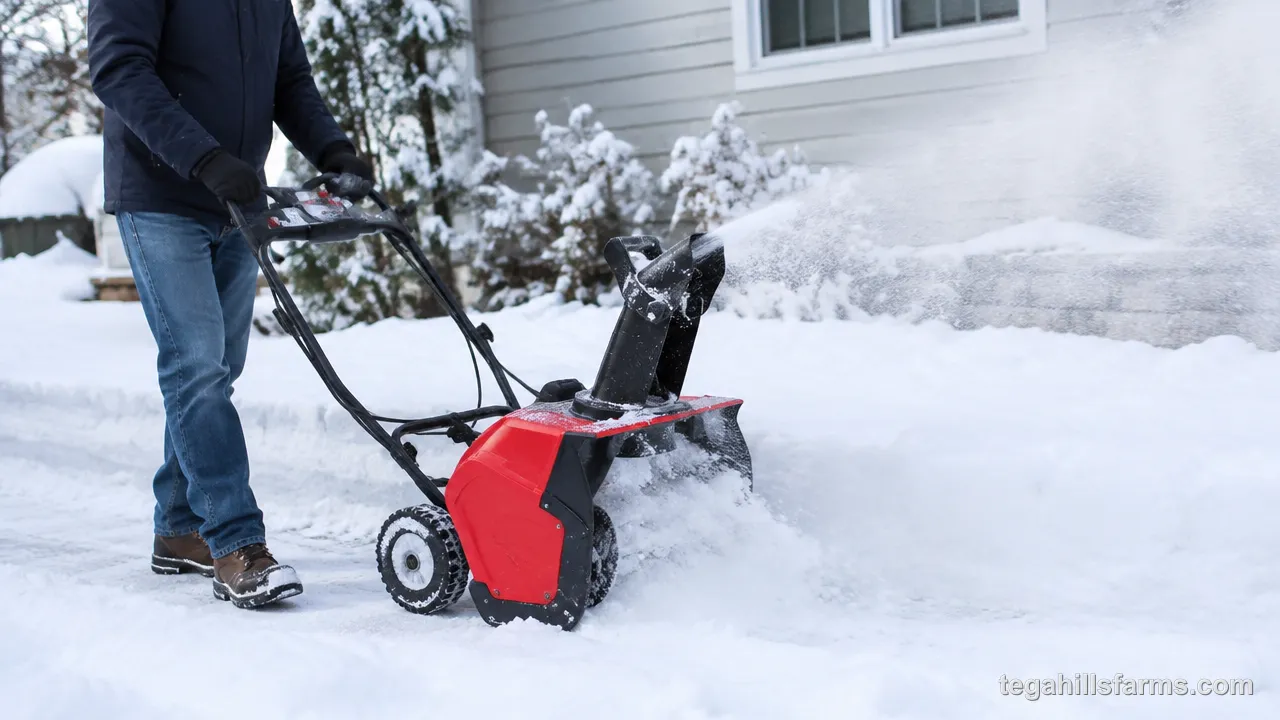
At this budget, battery power suits most paved driveways. It starts at the push of a button, runs quietly and needs no fuel or tune-ups. Gas earns its place when you clear for long stretches in hard cold.
A small gas engine needs a pull start, fresh fuel, oil changes and an occasional spark plug. Before summer, you either add stabilizer or drain the tank. In return, the tank sets its runtime, so a long session only needs a refill. A cordless machine stops when its batteries run down, and lithium batteries deliver less power in deep cold, so keep the packs indoors until you head out. Brushless motors, common on cordless machines at this price, waste less of each charge as heat.
The battery platform can decide the real cost. A kit includes batteries and a charger, while a bare tool runs only on packs you already own, and batteries make up a large share of what a cordless machine costs. If your garage already holds compatible packs, a bare tool puts them to work in winter. If not, a kit is the simpler buy. To see how far cordless platforms reach above this price tier, look at the best battery snow blowers.
How Much Clearing Width and Intake Depth Do You Need?
Clearing width is the strip each pass removes. Intake depth is how deep the snow can be before the housing starts pushing it instead of taking it in. Together they set how many passes your driveway takes and whether each pass clears cleanly.
A narrow path multiplies strips on a long or multi-car driveway, and every extra strip adds walking, turning and battery drain. A wider path cuts the strip count but makes the machine heavier and harder to maneuver around parked cars and along narrow walks.
Intake depth matters when a storm drops more snow than the housing can swallow. Snow spills over the top or packs in front of the auger, so you have to take half-width bites, or clear the top layer and come back for the rest. That doubles the passes over the same ground, and on a cordless machine it can drain the batteries before you reach the street. Size both numbers to the storms your region usually gets rather than the rare blizzard, and plan to clear in stages when a big one arrives.
Is a Single-Stage Machine Enough for Your Driveway Surface?
Yes, for paved driveways, walks and patios in light to moderate snow, a single-stage machine is enough. Gravel driveways and very deep or heavily packed snow rule it out.
In a single-stage design, a rubber-tipped auger spins against the pavement, gathering snow and throwing it out the chute in one step. Because the rubber edge touches the surface, it wipes asphalt and concrete close to bare, which leaves less to freeze into ice overnight.
That same contact is the problem on gravel or loose stone. The auger picks up rocks and throws them out the chute toward windows, cars and people, and the stones chew up the rubber paddles. A gravel surface needs a machine whose auger rides above the ground.
Very deep or packed snow strains the design because one auger has to cut, lift and throw all at once. Dense snow slows it, wet snow clogs the chute, and snow deeper than the intake has to be taken in layers. If your driveway is paved and your storms stay moderate, the best single stage snow blowers handle the job without the weight of a larger machine.
Do Throw Distance, Chute Control and Weight Make a Difference?
Yes. They decide where the snow lands, whether you can work in the dark, and how easily the machine turns and fits into storage.
Throw distance puts snow past the edge of the path. A short throw leaves banks that creep inward with every storm until the driveway narrows. A rotating chute aims snow away from cars, doors and the street. An adjustable deflector sets the arc: keep it low on windy days so snow doesn’t blow back at you, and raise it to clear an existing bank.
Headlights matter because winter clearing often happens before sunrise or after dark. Weight has trade-offs both ways. A lighter machine turns easily in tight spots and is easy to lift onto steps, while a heavier one sits firmer on crusty snow. A folding handle makes the machine small enough to hang on a shed wall or tuck beside the car in a tight garage.
Which Snow Blower Under $500 Fits Your Driveway?
Your pick comes down to how much paved area you clear, which battery platform you already own and how long and cold your sessions run.
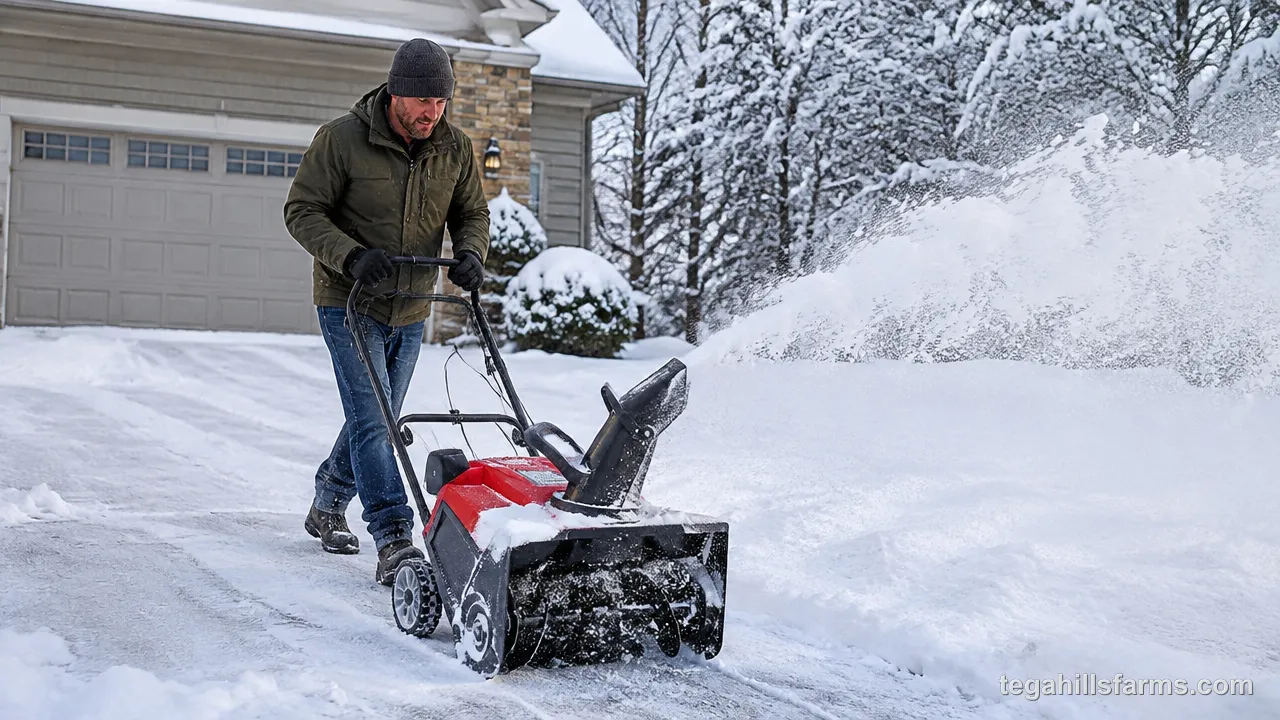
- Small driveways, front steps and decks: the Greenworks 48V 16in Snow Thrower. Its narrow path and light weight let you carry it where a wider machine won’t go.
- Sidewalks, patios and mid-size driveways with cars parked close: the Snow Joe 24V-X2-SB18-TV1 for maneuvering in tight spaces, or the Snow Joe 24V-X2-SB18-XR if you want to add batteries for longer sessions.
- Larger or multi-car paved driveways: the WORX WG461 for its deep intake, long throw and included batteries, or the SENIX 40V if you also want variable speed and a machine that folds small.
- Milwaukee 18V owners: the HEINPRO for its longer throw and steel auger with scraper bar, or the FORDWALT for budget-friendly value and a long warranty.
- Gas engine for cold regions and long sessions: the NOVUS, which keeps running as long as there’s fuel in the tank.
- Battery and charger included, nothing else to buy: the Skil PWR CORE 40, with a rear crank that turns the chute from the handle.
- Light weight above all: the FORDWALT, HEINPRO, Greenworks and SENIX all weigh less than the Skil, Snow Joe TV1 or NOVUS.
Some driveways need a different kind of machine. Gravel and loose stone call for an auger that rides above the surface, which is what the best snow blowers for gravel driveways are built around. If your driveway is long enough to drain a set of batteries before you reach the street, or it sees deep storms all winter, look at the best snow blowers for large driveways, where bigger two-stage machines move more snow per pass.
The snow a plow shoves against the driveway mouth is compressed and mixed with road slush, so it is far denser than the fresh layer on the rest of the driveway. A budget auger that glides through the open stretch can bog down in that ridge. If the ridge freezes overnight, you face a frozen wall at the street with a battery that runs out halfway through it.
Handling Heavy, Wet and Plow-Packed Snow With a Budget Machine
A budget machine runs into trouble when snow is denser than its auger can cut or deeper than its intake can swallow, and both happen most at the end of the driveway and after a long storm. Technique can’t add power, but it can reduce the load on each pass. That’s often the difference between finishing the job and running out of battery partway through.
How Do You Clear the Plow Pile at the End of Your Driveway?
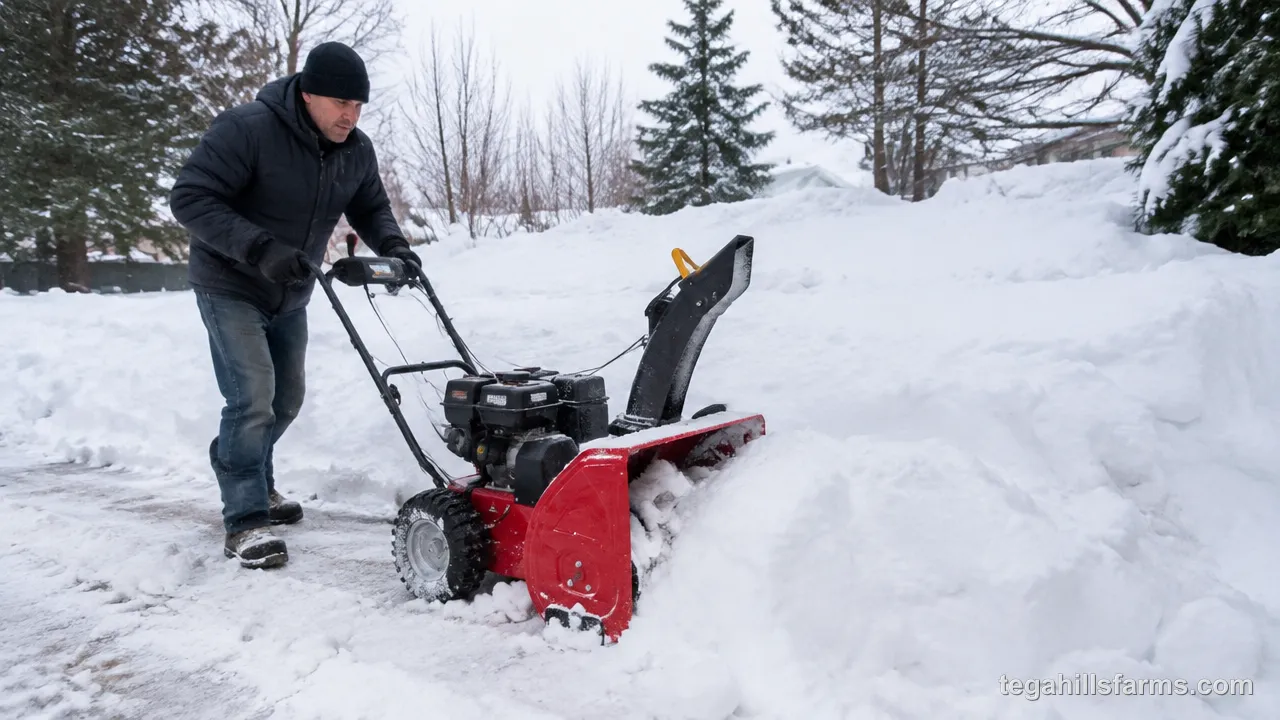
Break the ridge down from the top in thin layers, and get to it while it’s still soft. Plow-pushed snow is compressed and icy enough to stall a small auger if you drive straight into its base.
A plow blade packs snow together and mixes in slush from the road, so the ridge is far denser than the fresh snow on the rest of the driveway, and it hardens as it refreezes. Pushing a budget machine into the full face of it spikes the motor load, drains the battery fast and packs wet chunks into the chute.
Skim the top first with partial-width bites. Let the auger throw each bite before you move forward, and work down to the pavement in layers. Clearing soon after the plow passes, before the ridge sets overnight, makes the biggest difference. If it has already frozen into chunks, break it up with a steel shovel or ice chopper and shovel the hardest pieces aside before the machine goes in. When the chute clogs, shut the machine off and clear it with a stick, never your hand. If your storms routinely arrive wet and heavy, the best snow blowers for wet snow are built for that density.
Why Should You Clear Snow in Stages Instead of After the Storm?
Going out while the snow is still shallow keeps every pass within the intake depth. The motor runs at a steady load, the battery lasts longer and the chute stays clear.
If you wait until the storm ends, the deeper snow settles and packs under its own weight, and tire tracks or footprints compress it further. The machine then has to cover the same ground in layers, which doubles both the passes and the battery use.
Plan each round the same way. Start down the middle, throw toward the downwind side with the most room, and work outward, overlapping each pass slightly so no ridge is left behind. Charge the batteries between rounds, and clear before anyone drives on the driveway. Where storms bury the driveway faster than you can keep up, the best snow blowers for heavy snow carry more capacity per pass.
When Is the Best Time of Year to Buy a Snow Blower?
The widest selection is in fall, before the first storm. Stock thins quickly once mid-winter storms arrive, and late winter into spring brings clearance prices on leftover units.
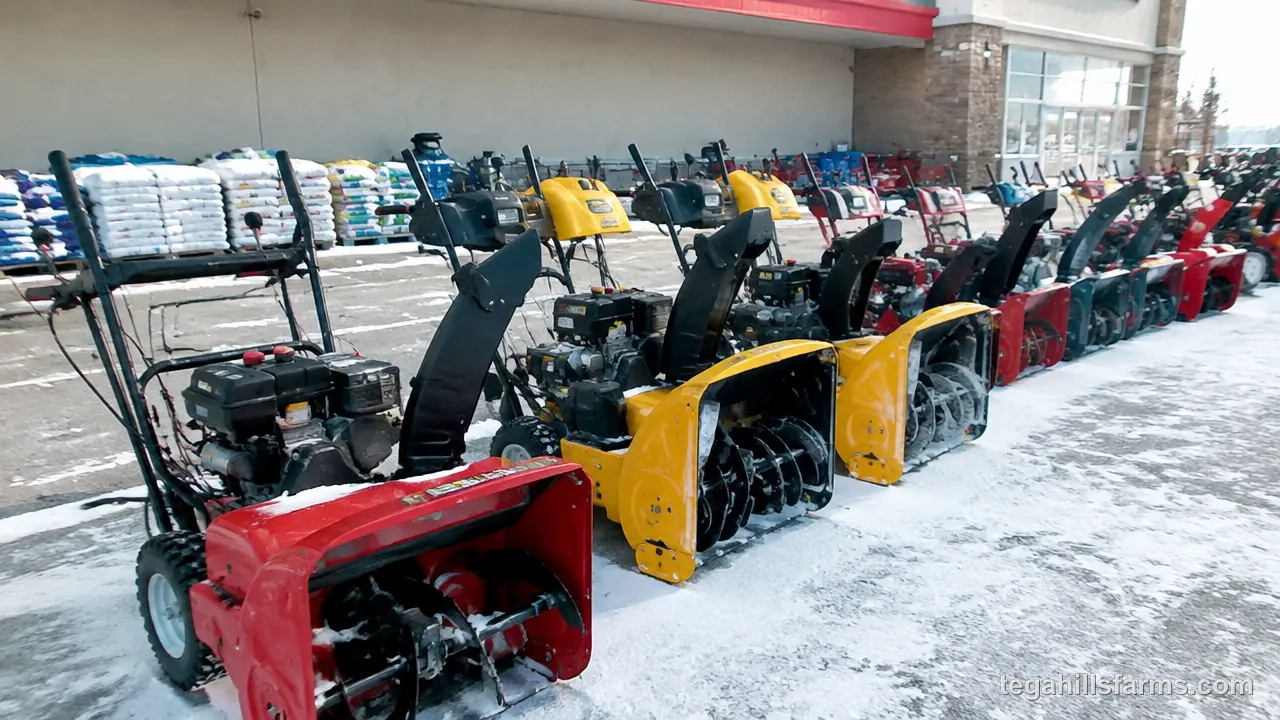
Early in the season, retailers carry the full range of kits and bare tools, so you can pick the clearing width and battery platform you want. A forecast for a big storm empties shelves and online inventory fast. Buying then often means taking whatever model is left, sometimes without the battery kit you wanted. Late-season clearance trims prices on remaining stock, but the selection is thin and you’re buying for next winter.
The trade-off depends on whether you already have a machine. If an older one still runs, waiting for clearance costs you little. If you have nothing, the first heavy storm can arrive before any deal does, and you’ll be clearing it with a shovel. First storms come at different times in different parts of the country, so time your purchase to your own region’s season rather than the calendar.
How Do You Store and Maintain a Budget Snow Blower?
A budget machine lasts when you keep the scraper bar and rubber paddles in shape, store batteries indoors at partial charge, and drain or stabilize the fuel in a gas model before summer.
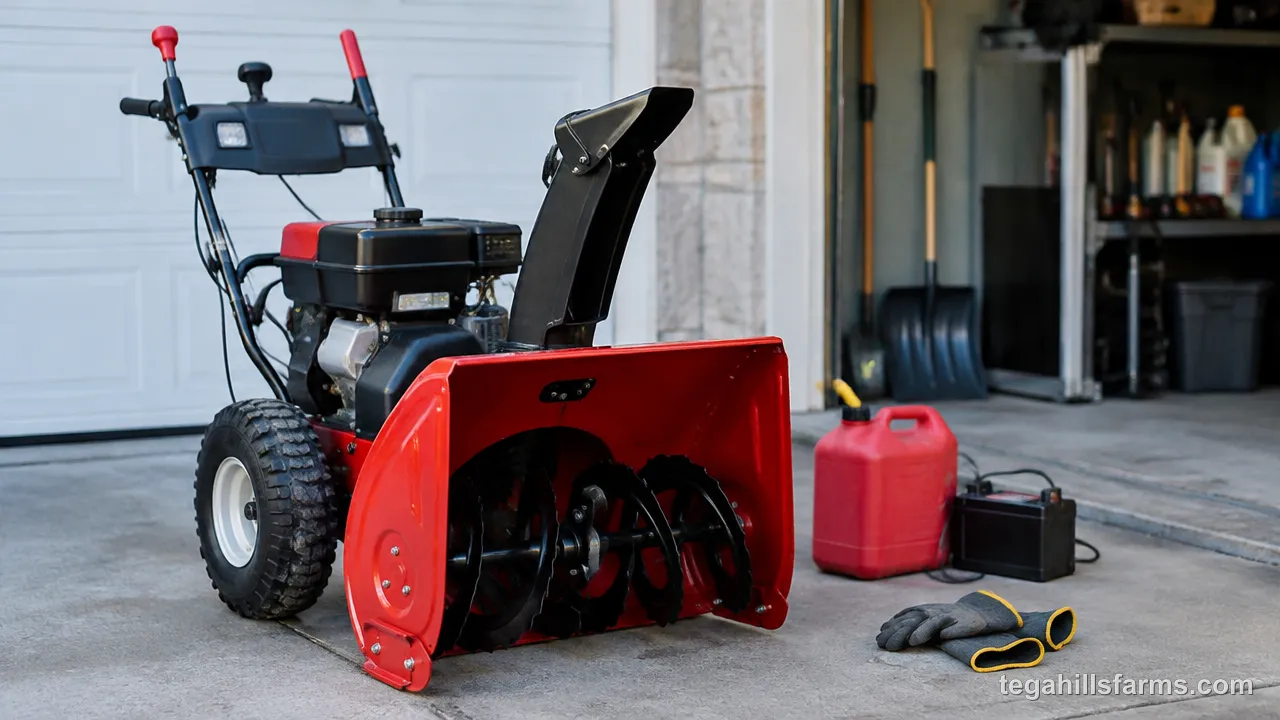
On single-stage machines, the scraper bar and rubber paddles do the work at pavement level, and they wear down. If you see a thin strip of snow left on the pavement after each pass, or the throw gets weaker, they need adjusting or replacing. Check them at the start of each season and follow the manual for flipping or swapping parts.
Between storms, bring the batteries inside so they stay warm and fully charged for the next snowfall. For the off-season, store them in a cool, dry spot at the charge level the battery manual recommends rather than leaving them on the charger all summer.
On a gas machine, run the tank dry or add fuel stabilizer before storage, change the oil and check the spark plug. Stale fuel is a common reason small engines won’t start in fall.
After each use, knock off the snow and let the machine dry before you fold it away. Keep it in a dry garage or shed, off wet ground, and under a cover if it shares space with a car.
When Is It Worth Spending More Than a Budget Snow Blower?
Spend more if your driveway is long or sloped, deep storms are routine, the plow pile is a constant problem, or your budget machine keeps clogging or running out of battery before the job is done.
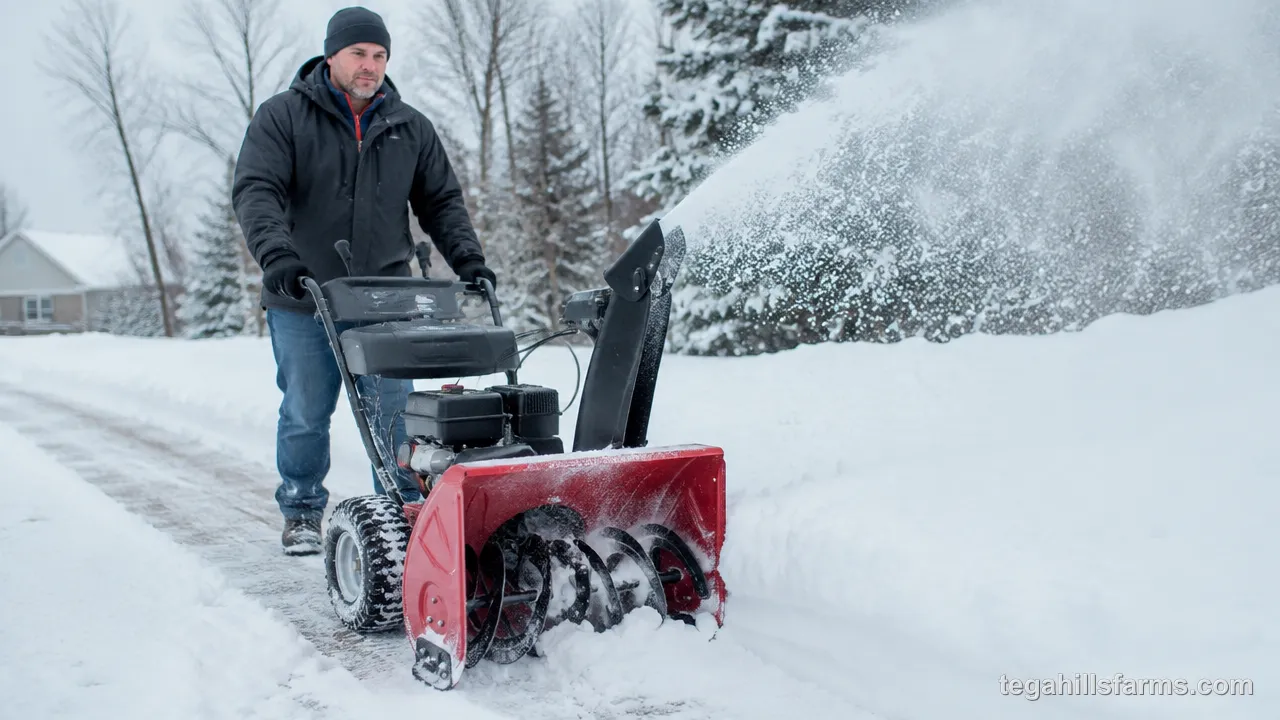
Each of those signs comes from the same limit: a small auger and intake handling more snow, or denser snow, than they were built for. A sloped driveway adds a second problem, because a machine without powered wheels has to be pushed uphill through the snow.
A step up in price brings two-stage designs, which split the work. An auger gathers the snow and feeds it to an impeller that throws it, so dense, wet snow travels farther and clogs less. These machines usually add wider and taller intakes, self-propelled drive, and an auger housing that rides above gravel on skid shoes. You’ll start to find two-stage machines among snow blowers under $1000, and the best two stage snow blowers show what that design can do with deep, packed snow.

Write Your Review
No reviews yet. Be the first to share your experience!