

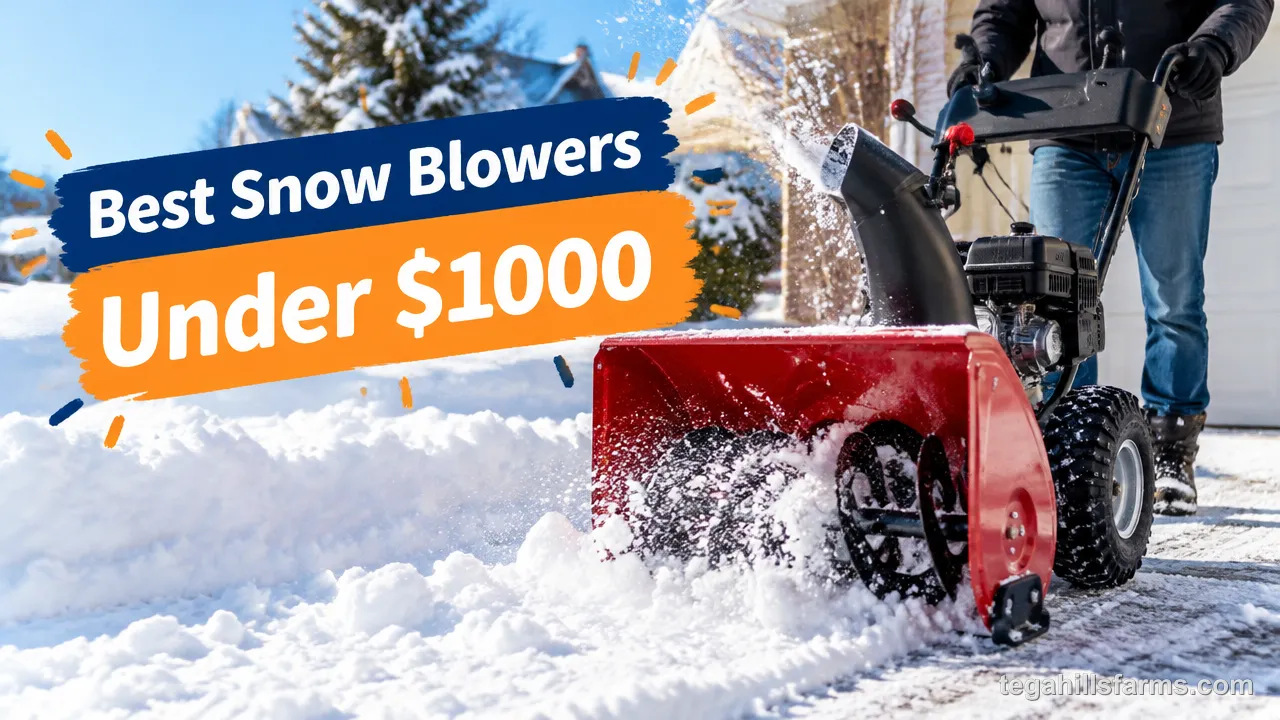
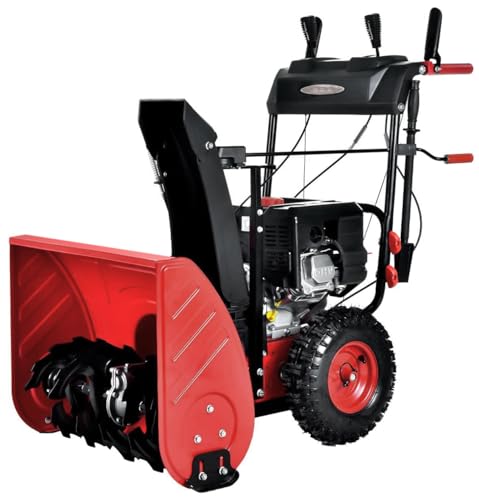
Our picks for the best snow blowers under $1000 in 2026 are the EGO Power+ SNT2122 21in Snow Blower (Best Overall), EGO Power+ SNT2134 21in Snow Blower (Best for Cold Climates), EGO Power+ SNT2400 24in Snow Blower (Best Battery Life), PowerSmart 24in 212cc 2-Stage Snow Blower (Best Budget), BILT HARD 24in 212cc 2-Stage Snow Blower (Also Great), PowerSmart 26in 252cc Self-Propelled Blower (Best Performance), Husqvarna ST124 24in Snow Blower (Best Durability), AMERISUN 212cc 26in Gas Snow Blower (Also Great), AMERISUN 26in 212cc Two-Stage Snow Blower (Also Great) and gasxcel 24in 2-Stage Gas Snow Blower (Also Great). The EGO models run on EGO’s battery platform, and the rest burn gas and push snow through an auger and an impeller.
Clearing width and intake height tell you how many passes your driveway takes and how deep a storm the machine can take in at once, so they matter more than the badge on the engine cover. Power source comes next. Battery machines start with a button and run quietly, while gas machines keep going for as long as you refuel them.
At this budget, the real risk is a machine that won’t start before dawn or stalls on the frozen ridge the plow leaves across the end of the driveway. A gas engine that sat all summer on stale fuel, a battery pack that dies halfway down a long driveway and a machine too heavy to get out of a packed garage cause more trouble than any spec-sheet gap.




If you already run EGO battery yard tools, factor that in first. The packs swap between machines, and the EGO Power+ SNT2400 24in Snow Blower ships without batteries or a charger.
What Does a Snow Blower Under $1000 Actually Get You?
This budget buys a full-size gas machine with an impeller, a wide path and electric start, or a battery machine that pairs two packs for gas-like power.
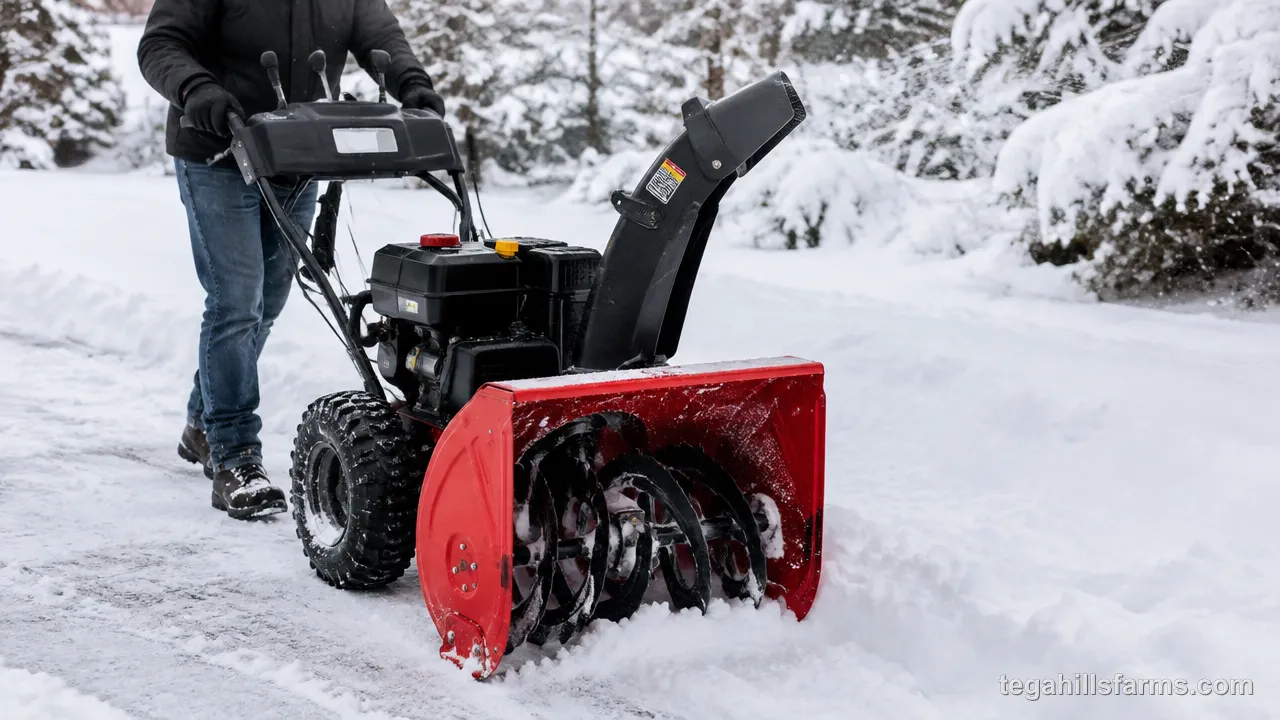
On the gas side, that means self-propelled drive with several forward speeds and reverse, snow tires, an LED light and a chute you aim from the handle. On the battery side, the top models add push-button start, self-propel and enough charge for a long driveway.
Each side has trade-offs. Gas machines in this tier are heavy, take up a lot of garage floor and need oil, spark plug and fuel care every season. Battery machines skip all of that, but they stop when the packs run down, extra packs add to the bill, and the self-propelled EGO ships without batteries.
If you want to see how this budget tier compares with every other type and size, the best snow blowers guide lays out the full range. For sizing a machine to your own property step by step, our guide on how to choose a snow blower walks through it.
The 10 Best Snow Blowers Under $1000 of 2026
EGO Power+ SNT2122 21in Snow Blower, EGO Power+ SNT2134 21in Snow Blower, EGO Power+ SNT2400 24in Snow Blower, PowerSmart 24in 212cc 2-Stage Snow Blower, BILT HARD 24in 212cc 2-Stage Snow Blower, PowerSmart 26in 252cc Self-Propelled Blower, Husqvarna ST124 24in Snow Blower, AMERISUN 212cc 26in Gas Snow Blower, AMERISUN 26in 212cc Two-Stage Snow Blower and gasxcel 24in 2-Stage Gas Snow Blower split between battery and gas clearing at this budget. The EGO machines skip fuel, oil and pull cords, but they stop when the packs run down. The gas machines keep throwing snow while there’s fuel in the tank and need engine care every season in return.
That split matters more than brand. A short paved driveway in a town with light, frequent storms suits a battery machine. A long gravel lane that collects a frozen plow berm points toward gas.
#1 EGO Power+ SNT2122 21in Snow Blower — Best Overall
If you want gas-like clearing without ever buying fuel, this single-stage EGO pairs two 56V ARC Lithium batteries through Peak Power and throws snow up to 42 feet. Both batteries and the charger come with it.
Key Specs:
- Clearing path: 21 in
- Clearing height: 13 in
- Throw distance: up to 42 ft
- Power: Peak Power, two 56V ARC Lithium 4.0Ah batteries and 320W charger included
- Auger: 6-inch steel
- Warranty: 5-year limited tool, 3-year limited battery
Detailed Review:
Peak Power draws on two 56V ARC Lithium batteries at once. That gives a single-stage machine enough push for packed snow and the icy ridge a plow leaves at the curb. The 6-inch steel auger bites into heavy snow instead of riding over it, and variable auger speed lets you slow down for slush or speed up for light powder.
With the included 4.0Ah batteries, one charge clears up to a 10-car driveway under 8 inches of snow. The 21-inch clearing path and 13-inch clearing height set its limits: deep drifts come off in layers, and a wide driveway takes extra passes. The 180-degree chute sends snow far enough to clear a walk or a low hedge instead of dropping it on the strip you clear next.
Adjustable skid shoes let you raise the housing for gravel or uneven pavement. IPX4 weather-resistant construction and bright LED headlights suit mid-storm and pre-dawn clearing. The quick-fold handle lets it stand in a narrow slot in the garage, and multi-year warranties cover both the tool and the batteries.
Pros:
- Peak Power runs two 56V batteries for gas-like clearing.
- A 180-degree chute places snow precisely.
- Adjustable skid shoes suit gravel and uneven driveways.
- Quick-fold handle fits a tight garage corner.
- Batteries and charger come in the box.
Cons:
- Single-stage auger takes deep drifts in layers.
- Clearing stops when both packs drain.
- Narrow 21-inch path adds passes on wide driveways.
Who It’s For:
Homeowners on paved or gravel driveways who would rather charge batteries than store gasoline get the most from it, especially if they already run EGO 56V tools and can swap packs. It suits people who clear after every storm. A driveway buried by a big nor’easter and left overnight calls for a machine with an impeller.
Editor’s Verdict:
Expect quiet, fume-free clearing with enough power for packed snow, as long as you stay ahead of storms instead of waiting for deep drifts.
#2 EGO Power+ SNT2134 21in Snow Blower — Best for Cold Climates
Heated handle grips and chute levers on the handle keep your hands warm and on the controls through a bitter morning of clearing, and push-button start means no pull cord in the cold. It weighs 66 pounds.
Key Specs:
- Clearing width: 21 in
- Throw distance: up to 45 ft
- Weight: 66 lb
- Batteries: two 56V ARC Lithium 6.0Ah, dual-port charger included
- Motor: high-efficiency brushless, steel auger
- Start: push-button
Detailed Review:
Heated handle grips keep your fingers working on the controls, so you can finish a whole driveway in sub-freezing weather without going inside to warm up. The chute control levers sit on the handle, which lets you change where snow lands without stopping or reaching toward the chute. Push-button start needs no priming or pull cord, so your gloves stay on.
Peak Power combines two EGO ARC Lithium batteries, and the included 6.0Ah packs clear up to a 14-car driveway under 8 inches of snow on one charge. That covers noticeably more ground per charge than the smaller packs that come with the EGO Power+ SNT2122 21in Snow Blower. The extra charge counts when the plow comes back and buries the end of the driveway a second time.
A brushless motor turns the steel auger through heavy, wet snow and the chunks the city plow leaves behind, and the throw reaches 45 feet. At 66 pounds, it’s easy to pull back for the next pass or turn around at the end of a row. The handle folds for compact storage.
Pros:
- Heated grips keep hands warm on cold mornings.
- Handle-mounted levers redirect the chute without stopping.
- Push-button start replaces priming and pull cords.
- Included 6.0Ah packs stretch each charge further.
- Light enough to maneuver easily around a garage.
Cons:
- Single-stage auger limits how deep a drift it takes in.
- Battery charge caps how much one session covers.
Who It’s For:
Anyone who clears before sunrise in bitter cold and loses feeling in their fingers will appreciate grips that heat up and chute levers right under the hands. Owners already on EGO’s 56V platform can run packs they own. People facing deep, wet drifts after most storms are better off with a machine that has an impeller.
Editor’s Verdict:
Choose it if cold mornings are your real problem: warm grips, push-button start and long-running packs make winter clearing far less of a chore.
#3 EGO Power+ SNT2400 24in Snow Blower — Best Battery Life
With two recommended 7.5Ah packs, this self-propelled two-stage EGO clears up to an 18-car driveway under 8 inches of snow on one charge. Batteries and charger are sold separately.
Key Specs:
- Clearing width: 24 in
- Intake height: 20 in
- Throw distance: up to 50 ft
- Weight: 150 lb
- Drive: variable-speed self-propel, forward and reverse
- Batteries: two 56V ARC Lithium (7.5Ah recommended, not included)
Detailed Review:
This is a two-stage battery machine. The variable-speed steel auger breaks up heavy snow and ice, and the directional chute sends it up to 50 feet where you want it. Its 24-inch clearing width and 20-inch intake height cut a wider path than the EGO Power+ SNT2134 21in Snow Blower, so a long driveway takes fewer trips up and back.
At 150 pounds, it’s also far heavier than the EGO Power+ SNT2134 21in Snow Blower, so the variable-speed self-propel does the pushing. You set the pace on the handle-mounted dashboard and steer, and reverse backs it out of a tight corner without dragging it.
It runs on any EGO 56V ARC Lithium pack. Owners of EGO yard tools can start with packs already on the shelf, while a newcomer needs to buy packs and a charger before the first storm. Push-button start and four bright LEDs handle dark, early starts.
Pros:
- Self-propel with reverse moves the weight for you.
- 20-inch intake height takes deep snow in one pass.
- Throws snow up to 50 feet.
- Runs on any EGO 56V ARC Lithium battery.
- Four LEDs light the driveway for night clearing.
Cons:
- Ships without batteries or a charger.
- At 150 pounds, it’s hard to lift over steps.
- Wide two-stage housing takes real floor space.
Who It’s For:
Households with long driveways who want battery convenience without giving up an impeller for deep snow fit this machine well. If your garage already holds EGO 56V tools, those packs carry over. Buyers starting from scratch on batteries, or anyone who has to lift a machine up steps, should look at a lighter option.
Editor’s Verdict:
Pick this when you want gas-level depth and reach from batteries and can live with a heavy machine and buying packs separately.
#4 PowerSmart 24in 212cc 2-Stage Snow Blower — Best Budget
For a cost-conscious buyer who needs real two-stage capacity, this PowerSmart’s 212cc engine moves 2400 lbs/min of snow and throws it up to 45 feet. The electric start needs an outdoor extension cord.
Key Specs:
- Engine: 212cc 4-cycle OHV
- Plowing capacity: 2400 lbs/min
- Clearing width / intake height: 24 in / 20 in
- Snow depth: up to 12 in
- Drive: self-propelled, 6 forward and 2 reverse speeds
- Weight: 143 lb
Detailed Review:
The 212cc 4-cycle OHV engine drives steel augers and a high-speed impeller. That two-stage layout resists clogging in heavy, wet snow, and the remote deflector control lets you adjust the throw from the handle.
The 24-inch clearing width and 20-inch intake height take up to 12 inches of snow per pass, and anything deeper calls for a slower gear and a second bite. Six forward and two reverse speeds let you crawl through the plow pile and move quickly over light snow. The 13-inch snow tires keep the 143-pound machine tracking straight, and the LED light helps on dark mornings.
The electric start needs an outdoor extension cord plugged in before you press the button, so you start it at the garage door rather than out at the curb. I’d still steer a cost-conscious buyer here. Plugging in quickly becomes habit, and the impeller capacity behind it is what a long winter actually tests.
Pros:
- 212cc OHV engine handles heavy, wet snow.
- Steel augers and impeller resist clogging.
- Six forward and two reverse speeds match snow depth.
- Remote deflector control adjusts the throw from the handle.
- Affordable way into impeller-driven gas clearing.
Cons:
- Electric start needs an outdoor extension cord and outlet.
- Gas engine brings oil changes and fuel storage chores.
- At 143 pounds, it’s heavy to move without the drive.
Who It’s For:
Budget-minded homeowners who want impeller-thrown clearing for heavy storms, and who can start the machine near an outdoor outlet, get the most from it. It also fits buyers comfortable with basic engine care each fall. People who want to skip gasoline and oil entirely should stick with a battery machine.
Editor’s Verdict:
Strong value for a first gas machine with an impeller, provided you start it near an outlet and keep up with seasonal engine care.
#5 BILT HARD 24in 212cc 2-Stage Snow Blower — Also Great
Concrete patios, pavers and gravel all get gentler treatment from this BILT HARD’s adjustable polymer skid shoes, which protect delicate surfaces from scratches. The engine runs at 3600 rpm.
Key Specs:
- Engine: 212cc 4-stroke OHV, 3600 rpm
- Clearing width: 24 in
- Throw distance: up to 40 ft
- Augers: 10-inch serrated steel
- Tires: 13-inch pneumatic
- Drive: self-propelled, 6 forward and 2 reverse speeds
Detailed Review:
The 212cc 4-stroke OHV engine turns 10-inch serrated steel augers. The serrated edges cut into compacted snow and the hard ridge at the street instead of pushing against it. The 24-inch path and 40-foot throw suit a driveway lined with walks you also clear.
The polymer skid shoes carry the housing on plastic rather than metal, so stamped concrete, pavers and a deck come through winter without scrape marks. That counts most where the driveway meets a paver walkway or a finished garage apron. The 13-inch pneumatic tires grip concrete and gravel, and the air in them softens the ride over uneven ground.
Six forward and two reverse speeds let you match ground speed to snow depth. Push-button electric start fires the engine without a pull cord even in frigid temperatures, and the extended 180° steel chute aims snow precisely. The built-in LED headlight helps when you clear before work or after dark.
Pros:
- Polymer skid shoes protect pavers and stamped concrete.
- Serrated steel augers bite into compacted snow.
- Pneumatic tires grip on concrete and gravel.
- Push-button electric start skips the pull cord on frigid mornings.
Cons:
- Pneumatic tires need air checks before each winter.
- Gas engine means seasonal oil and stabilizer chores.
Who It’s For:
If your driveway runs into a paver walkway, a stamped concrete patio or a deck you also clear, the polymer skid shoes are the reason to buy it. Gravel owners who want air-filled tires for grip will like it too. Anyone who wants no fuel to handle belongs on a battery machine.
Editor’s Verdict:
Buy it for surface-friendly skid shoes and serrated augers that cut packed snow while treating finished hardscape gently.
#6 PowerSmart 26in 252cc Self-Propelled Blower — Best Performance
Long driveways that collect deep, wet snow are where this 252cc PowerSmart earns its place, with a 26-inch path and 2650 lbs/min of throwing capacity. It clears up to a 16-car driveway.
Key Specs:
- Engine: 252cc gas
- Throwing capacity: 2650 lbs/min
- Clearing width / intake height: 26 in / 20 in
- Throw distance: up to 45 ft
- Drive: self-propelled, 6 forward and 2 reverse speeds
- Weight: 142 lb
Detailed Review:
Compared with the PowerSmart 24in 212cc 2-Stage Snow Blower, this model steps up to a bigger engine, more throwing capacity and a wider path, yet weighs about the same. You get more engine and more width per pass with no extra mass to steer. In return, the wider housing needs more garage room and fits narrow side paths less easily.
The all-steel auger cuts through tough, icy snow, and the high-speed steel impeller throws it up to 45 feet. With its 20-inch intake height, it handles anywhere from 1 to 12 inches of snow.
Six forward and two reverse speed settings help on slopes, where a slow gear keeps the 13-inch rubber tires biting instead of spinning. One-hand 180° chute control redirects snow while your other hand stays on the handle. Adjustable steel skid shoes help protect surfaces from scratches and scuffing. The 120V push-button electric start needs a cord to an outlet, so plan to start it near the garage.
Pros:
- 252cc engine is built for heavy, wet snow.
- 26-inch path cuts the number of passes.
- One-hand 180° chute control redirects snow mid-pass.
- Six forward and two reverse speeds help on slopes.
Cons:
- Wide 26-inch housing needs room in a crowded garage.
- 120V electric start depends on a nearby outlet.
- Gas engine needs stabilizer before summer storage.
Who It’s For:
Owners of long, sloped driveways who get heavy, wet storms and want the drive doing the work on the climb should look here first. Its extra width pays off on open pavement rather than narrow side paths. On a short, flat driveway with a crowded garage, the PowerSmart 24in 212cc 2-Stage Snow Blower saves storage room.
Editor’s Verdict:
Go with it when capacity matters more than storage space, since the 252cc engine and wide path move heavy snow quickly.
#7 Husqvarna ST124 24in Snow Blower — Best Durability
Buyers who plan to keep a machine for many winters get a molded console, an all-steel chute and 3 years of bumper-to-bumper coverage backed by 5 years on the engine. It weighs 173 pounds.
Key Specs:
- Engine: 212cc
- Clearing width: 24 in
- Intake height: 21 in
- Tires: 13-inch snow tires
- Weight: 173 lb
- Warranty: 3-year bumper-to-bumper, 5-year engine
Detailed Review:
The ribbon auger is an open spiral that mixes air into the snow as it breaks it up. That loosens heavy, packed snow so it moves through the machine and out the chute efficiently. With a 21-inch intake height, the 212cc engine has room to take deep snow in full bites instead of nibbling at it.
The 13-inch snow tires grip slick pavement for control and maneuverability. At 173 pounds, the ST124 needs a clear, level parking spot near the garage door, and moving it by hand takes real effort.
The molded console and all-steel chute are built for durability, which matters on a machine that gets bumped against door frames and other equipment for years. The warranty backs that up with bumper-to-bumper coverage plus a longer term on the engine alone. When a machine has to last, I put more stock in engine coverage than in a wider path, because a worn-out engine is what sends an old snow blower to the scrap pile.
Pros:
- Ribbon auger mixes air into snow for easier throwing.
- 21-inch intake height takes deep snow.
- All-steel chute and molded console are built for durability.
- Bumper-to-bumper coverage plus longer engine warranty.
Cons:
- At 173 pounds, it’s a handful in a tight garage.
- Needs oil, spark plug and fuel care every season.
Who It’s For:
Long-term owners who want a machine to outlast several winters will value the warranty coverage and the all-steel chute. It fits a garage with a level, open spot near the door. People who have to lift or carry a machine around tight corners will find it a handful.
Editor’s Verdict:
Trust it for the long haul: the ribbon auger, steel chute and engine coverage all point to a machine built to stay in service.
#8 AMERISUN 212cc 26in Gas Snow Blower — Also Great
Mid-length paved or gravel driveways suit this AMERISUN, which pairs a 26-inch path with a 212cc engine built for driveways up to 12 parking spaces. Push-button electric start skips the pull cord.
Key Specs:
- Engine: 212cc 4-cycle OHV
- Clearing width / intake height: 26 in / 20 in
- Throw distance: up to 45 ft
- Snow depth: up to 12 in
- Drive: self-propelled, 6 forward and 2 reverse speeds
- Tires: 13-inch snow tires
Detailed Review:
The 26-inch clearing width and 20-inch intake height let this AMERISUN take a wide, deep bite, up to 12 inches of snow per pass, and throw it up to 45 feet. The engine is sized for driveways up to 12 parking spaces, which puts it in its element on a mid-length driveway rather than a long rural lane.
It matches the PowerSmart 26in 252cc Self-Propelled Blower on path width but has a smaller 212cc engine, so the PowerSmart has more power behind the same width when snow turns heavy and wet. On a mid-length driveway with ordinary storms, the full-width path matters more than the extra displacement.
Six forward and two reverse speeds let you slow down for the plow pile and speed up on the open stretch. The 13-inch snow tires hold traction on slippery surfaces, and adjustable skid shoes set the housing for paved or gravel driveways. Push-button electric start and an LED headlight make cold, dark starts easier.
Pros:
- 26-inch path clears a driveway in fewer passes.
- Push-button electric start skips pull-cord starts.
- Adjustable skid shoes work on paved and gravel.
- Snow tires grip on slippery surfaces.
Cons:
- Smaller engine has to push a wide 26-inch housing.
- Wide housing takes up garage space.
Who It’s For:
Households with a mid-length driveway, paved or gravel, who want a wide path and an easy start without stepping up in engine size will find it a practical fit. Those who regularly face heavy, wet snow on a long lane should look at the PowerSmart 26in 252cc Self-Propelled Blower for its larger engine.
Editor’s Verdict:
A wide, easy-starting machine for mid-length driveways that see moderate storms more often than heavy, wet ones.
#9 AMERISUN 26in 212cc Two-Stage Snow Blower — Also Great
This AMERISUN suits buyers who want a 26-inch, 212cc two-stage machine at 130 pounds and don’t mind putting it together themselves. It ships in two boxes.
Key Specs:
- Engine: 212cc 4-cycle OHV
- Clearing width / intake height: 26 in / 20 in
- Throw distance: up to 45 ft
- Weight: 130 lb
- Start: 120V electric
- Tires: 13-inch snow tires
Detailed Review:
This AMERISUN pairs a 212cc 4-cycle OHV engine with a 26-inch clearing width and a 20-inch intake height. It takes up to 12 inches of snow per pass and throws it up to 45 feet. The engine is sized for driveways up to 12 parking spaces, which suits a mid-length paved or gravel driveway.
At 130 pounds, it’s manageable to steer with the self-propelled variable-speed drive, and the 13-inch snow tires hold traction on slick surfaces. Adjustable skid shoes work on paved and gravel driveways. The 180-degree rotating deflector chute lets you aim snow away from walks and the street.
The machine ships in two separate boxes that may arrive on different days, and assembly can’t start until both are in hand. Order it well before the forecast turns and set aside time to build it in the garage. Once it’s assembled, the 120V electric start fires it without a pull cord.
Pros:
- 26-inch path and 20-inch intake take big bites.
- 120V electric start avoids pull-cord starts in cold.
- 180-degree chute rotation aims snow away from walks.
- Snow tires and skid shoes handle paved or gravel.
Cons:
- Ships in two boxes that may arrive separately.
- Gas engine needs stabilizer and oil before summer.
Who It’s For:
People who order online and are comfortable bolting a machine together in the garage get a wide gas machine with electric start for a mid-length driveway. Order early enough that the full kit is in hand before snow is in the forecast. Those who want no fuel or engine care should consider a battery model.
Editor’s Verdict:
Worth it for a wide path and electric start, provided you plan around a split delivery and some assembly.
#10 gasxcel 24in 2-Stage Gas Snow Blower — Also Great
Icy, compacted snow is where this gasxcel’s patented ice-crushing auger and Anti-Clogging System pay off, and having both electric and recoil start covers frozen mornings away from an outlet. It is not sold in California.
Key Specs:
- Engine: 209cc RATO
- Clearing width / intake height: 24 in / 21 in
- Throw distance: up to 40 ft
- Drive: self-propelled, 6 forward and 2 reverse speeds
- Tires: 13-inch airless
- Weight: 142 lb
Detailed Review:
The reinforced, patented ice-crushing auger breaks ice and compacted snow on contact, which is what a driveway that thaws by day and refreezes overnight needs. The Anti-Clogging System keeps snow moving through the machine. The included Snow Clearing Stick lets you clear blockages without putting a hand near the chute.
Electric start covers normal mornings, and the recoil start takes over when no outlet is within reach or an ice storm has knocked out the power. The 13-inch airless tires give up the air-filled cushion of the pneumatic tires on the BILT HARD 24in 212cc 2-Stage Snow Blower, but they can’t go flat in summer storage.
The 24-inch clearing width, 21-inch intake height and focused 40-foot throw keep snow concentrated, so it doesn’t fall back along the edges you just cleared. Six forward and two reverse speeds let you go slow in deep, heavy snow and faster in light snow, but you have to stop the machine before every gear change. The LED headlight helps in low light.
Pros:
- Ice-crushing auger breaks compacted snow on contact.
- Electric and recoil start give a backup on cold mornings.
- Airless tires can’t go flat over summer storage.
- Included clearing stick keeps hands away from clogs.
Cons:
- Not available for sale in California.
- Must stop moving before every gear change.
Who It’s For:
Owners in freeze-thaw areas whose driveways turn to packed crust will lean on the ice-crushing auger. The recoil backup makes it easier to clear far from an outdoor outlet. California residents can’t buy it, so they should choose another gas machine.
Editor’s Verdict:
Count on it for icy, crusted driveways where an aggressive auger and a backup recoil start matter more than extra width.
Single-Stage or Two-Stage: Which Fits Your Snow?
A lighter, auger-only machine is enough for routine storms on pavement, while a machine with an impeller is the safer main tool for deep, wet or plow-packed accumulation.
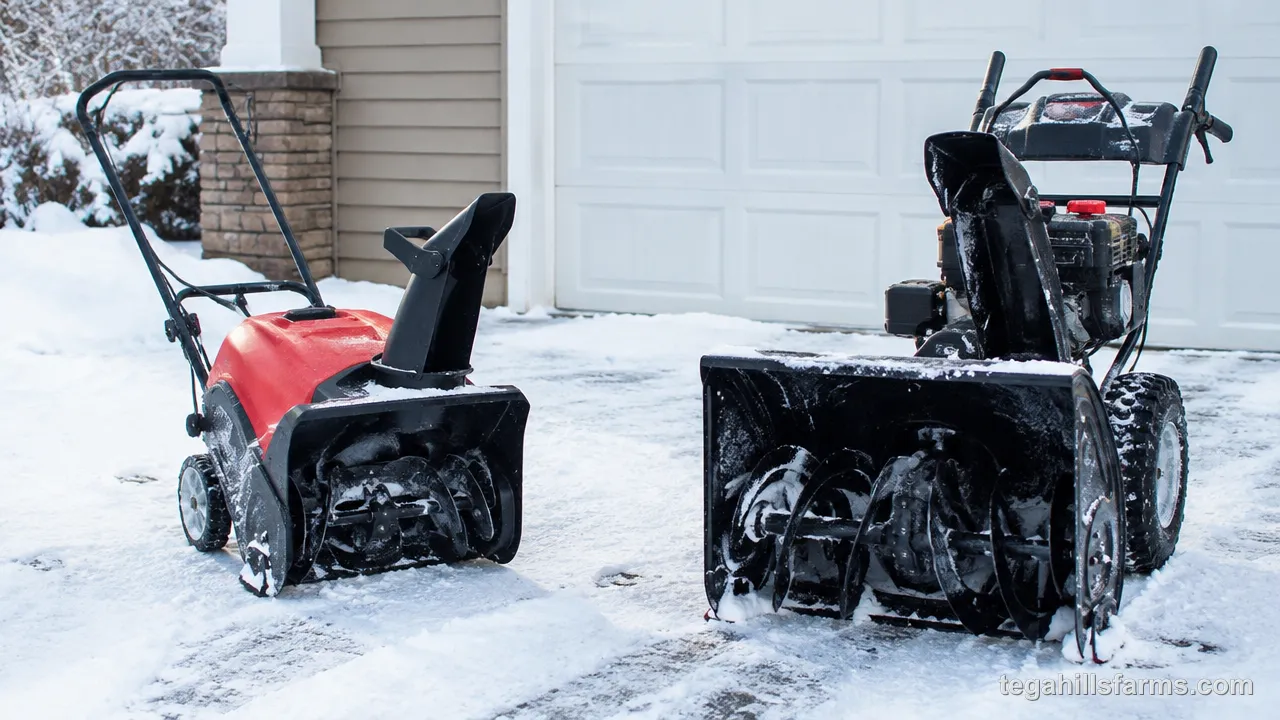
A single-stage auger does two jobs at once. It scoops snow and flings it out the chute, and its edge runs against the ground as it turns. That contact scrapes pavement clean and helps pull the machine forward, which is why single-stage machines stay light and compact. It also limits depth, because the auger can only take in what fits under its housing. On bare gravel it can pick up stones unless the skid shoes are set up for it.
A two-stage machine splits the work. A slower auger breaks up snow and feeds it to a fast impeller that throws it out the chute. The housing rides on skid shoes above the surface, so it handles gravel and deep snow well, and the extra mass is why these machines usually have self-propelled drive. The cost is weight and a bigger footprint in storage.
Here’s how the two designs compare on the factors that decide a purchase:
| Factor | Single-stage | Two-stage |
|---|---|---|
| How it throws | Auger scoops and throws in one motion | Auger feeds an impeller that throws |
| Snow it suits | Light to moderate storms | Deep, wet or plow-packed snow |
| Gravel | Needs skid shoes set to keep stones out | Housing rides on skid shoes above the surface |
| Drive | Auger contact helps pull it forward | Usually self-propelled |
| Weight and storage | Lighter, often folds | Heavier, needs floor space |
If you clear a short paved driveway after every light storm, a single-stage machine can be your only snow machine, and the best single stage snow blowers are the place to compare. Long driveways, gravel, wet snow or a plow berm at the street call for a two-stage machine as the main tool, and the best two stage snow blowers cover that end of the range.
Gas or Battery: Which Power Source Suits Your Yard?
The decision rests on how much snow you move per session, whether tools you already own could share packs with it and how much engine upkeep you will accept.
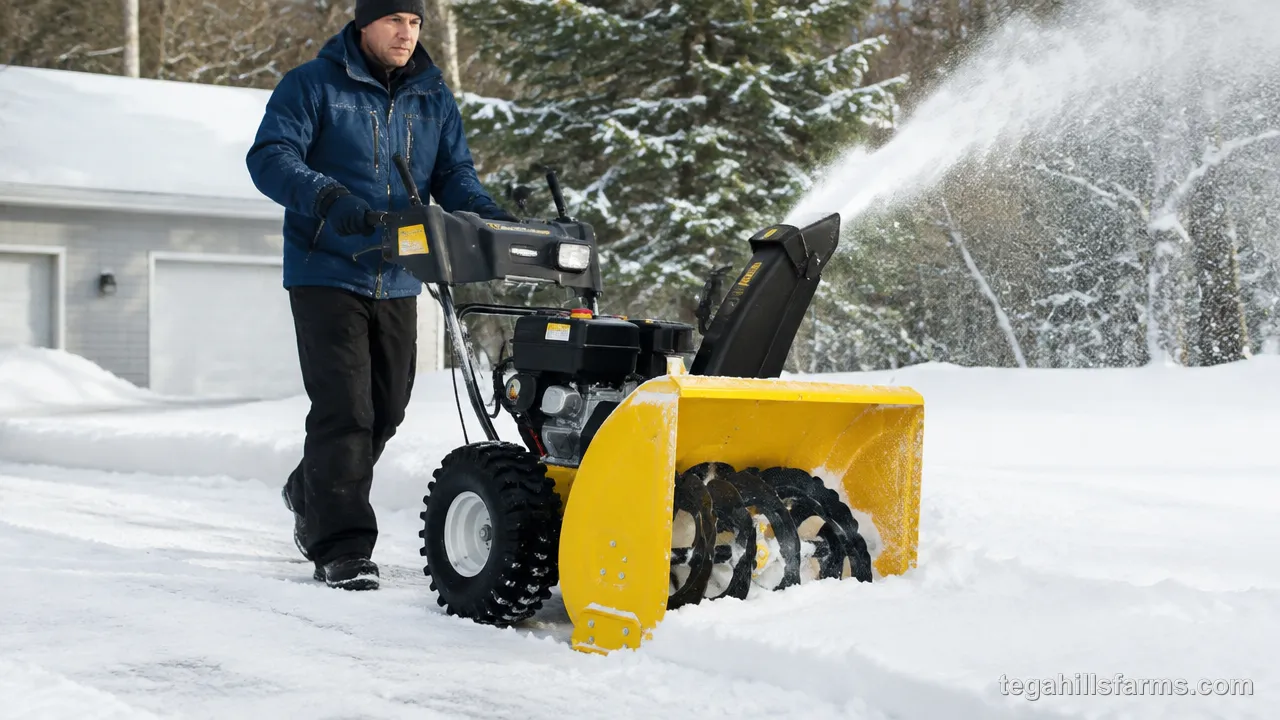
It also shapes how the machine starts, how loud it is in the driveway at dawn, what it weighs and where it sits the rest of the year. A battery machine that folds against a wall and a gas machine that needs a ventilated corner and a fuel can are different commitments, even when they clear the same driveway.
How Do Power and Runtime Compare Between Gas and Battery?
Fuel is the only limit on an engine-driven machine, so a long driveway or a second round after the plow just means topping off the tank. A cordless machine stops when its charge runs out, and the number of packs you own sets how much you can clear in one go.
Dual-battery designs close the power gap. EGO’s Peak Power draws on two packs at once, which is how these battery machines run steel augers and throw heavy snow.
Driveway length and snow depth decide how fast the packs drain. A deep, wet storm makes the motor work harder per foot than a light dusting, so the same charge covers less ground. That’s why sharing a battery platform matters. Spare packs are what extend runtime, and if your mower, string trimmer or leaf blower already runs on EGO 56V batteries, those packs work in an EGO snow blower. For households already on a platform, the best battery snow blowers make the most sense.
How Much Maintenance Does Each Power Source Bring?
An engine needs an oil change, a spark plug check and fresh or stabilized fuel every season, and cold starts take choke and primer work. A battery machine has no fuel or engine to service and needs only sensible battery care.
On the gas side, fuel left in the tank over summer goes stale and makes cold starts harder. A plug that fouls over the off-season adds to the trouble. Battery packs last longest stored indoors, in a dry place away from freezing garage temperatures and summer heat, and kept partly charged.
Noise and fumes count too. A gas engine is loud enough that hearing protection makes sense, and its exhaust means it should never run inside a closed garage. A battery machine runs quietly with no fumes, which matters when you clear early near bedroom windows.
Storage follows the same pattern. A battery machine with a folding handle stands in a corner, while a gas machine needs floor space plus a safe spot for a fuel can away from pilot lights. If the extra runtime is worth that upkeep to you, compare the best gas snow blowers.
How Do You Match a Snow Blower to Your Driveway and Climate?
A machine is the right size when it finishes your whole property in one session and still handles the deepest storm your area normally sees.
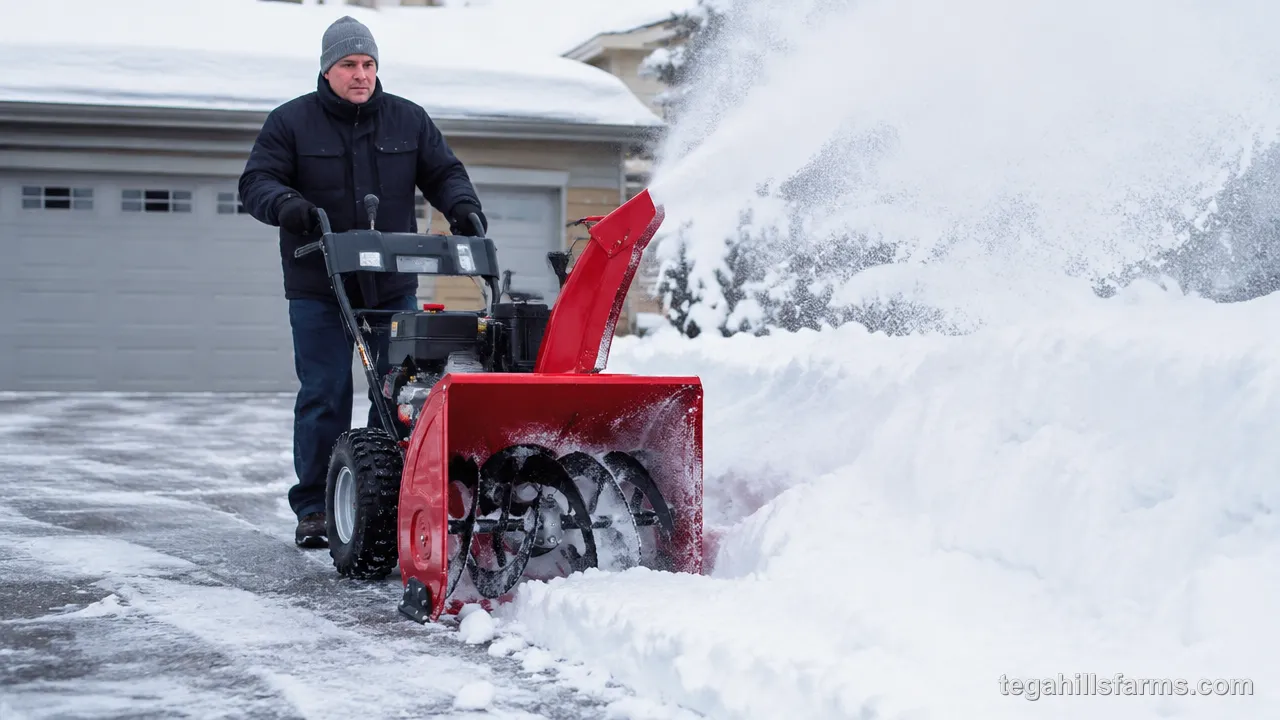
An undersized machine leaves you working the end of the driveway twice and fighting the plow berm. An oversized one is heavier to steer, harder to get in and out of tight storage, and takes floor space you may need for a car. The right pick is the smallest machine that finishes the job, because every extra pound and inch costs you storage space and effort for the rest of the year.
What Do Clearing Width and Intake Height Mean for Your Driveway?
One figure is the path the machine cuts on each pass, which sets how many passes your property takes. The other is how tall a wall of snow the housing can take in at once, which decides whether a storm comes off in a single pass or in layers. The first is clearing width and the second is intake height.
On a long or double-wide driveway, a wider path saves real time, and a taller intake keeps you from going back over the same strip after a big storm. Both come with size. Wider, taller housings make for heavier machines that need self-propelled drive, more garage floor and a straight path to the door. They can also be awkward on a narrow walk between a house and a fence.
A short single driveway and a front walk rarely justify a big housing. Long driveways are where the best snow blowers for large driveways earn their storage space.
Does Your Driveway Surface or Slope Change the Choice?
Gravel calls for adjustable skid shoes, an incline calls for self-propelled drive with traction tires, and decks or pavers call for shoes that won’t mar them.
Skid shoes are the adjustable runners on either side of the housing. Raising them lifts the scraper bar and auger off the ground, so the machine skims over gravel instead of picking up stones and firing them at a window or a car. On asphalt or concrete, you set them low for a clean scrape down to the surface.
On a sloped driveway, a self-propelled machine with several speeds and reverse holds a steady pace uphill and lets you back down under control. Snow tires keep it from sliding sideways on the grade. Polymer shoes protect stamped concrete, pavers and decks from the scrape marks steel can leave. If gravel is your daily reality, the best snow blowers for gravel driveways narrow the field further.
How Much Snow Does Your Region Get, and Which Machine Does That Call For?
Light, occasional dustings can be handled by a lighter single-stage or battery machine. Frequent storms or heavy, wet accumulation call for a two-stage machine as the main tool.
In the upper Midwest and around the Great Lakes, lake-effect bands can bury a driveway overnight and keep coming, which favors a two-stage machine with a tall intake. The Northeast gets nor’easters that drop dense, wet snow, the kind that can clog an auger-only machine. In the Rockies and on the high plains, snow tends to be drier, but wind piles it into drifts deeper than the storm total suggests.
The mid-Atlantic, the Ohio Valley and the upper South get fewer storms, often wet snow or a crust of sleet. There a lighter machine can carry most winters, and a rare heavy event can be waited out. If your normal winter looks more like the snow belt, the best snow blowers for heavy snow are the right starting point.
Which Starting, Drive and Visibility Features Are Worth Having?
On a gas machine, electric start, a headlight and self-propelled drive earn their place. Heated grips and remote chute control are comfort extras you can skip when your sessions are short.
A 120V electric start turns the engine over from a household outlet through an extension cord, so you don’t have to yank a cold recoil cord. Battery machines go further with push-button start and no cord at all. A recoil start as backup matters if you clear far from an outlet or lose power in a storm.
Self-propelled drive with several forward speeds and reverse is what makes a heavy two-stage machine steerable, and reverse gets you out of tight corners. Headlights matter because much of your clearing happens before work or after dark. Heated grips keep hands working in bitter cold, and remote chute control lets you redirect snow from the handle without stopping. Both are welcome, but neither is essential.
What Makes a Snow Blower Under $1000 Good Value?
At this budget, warranty coverage, parts availability and local service matter more than extra width or engine size, because a machine you can’t get repaired mid-winter leaves you shoveling.
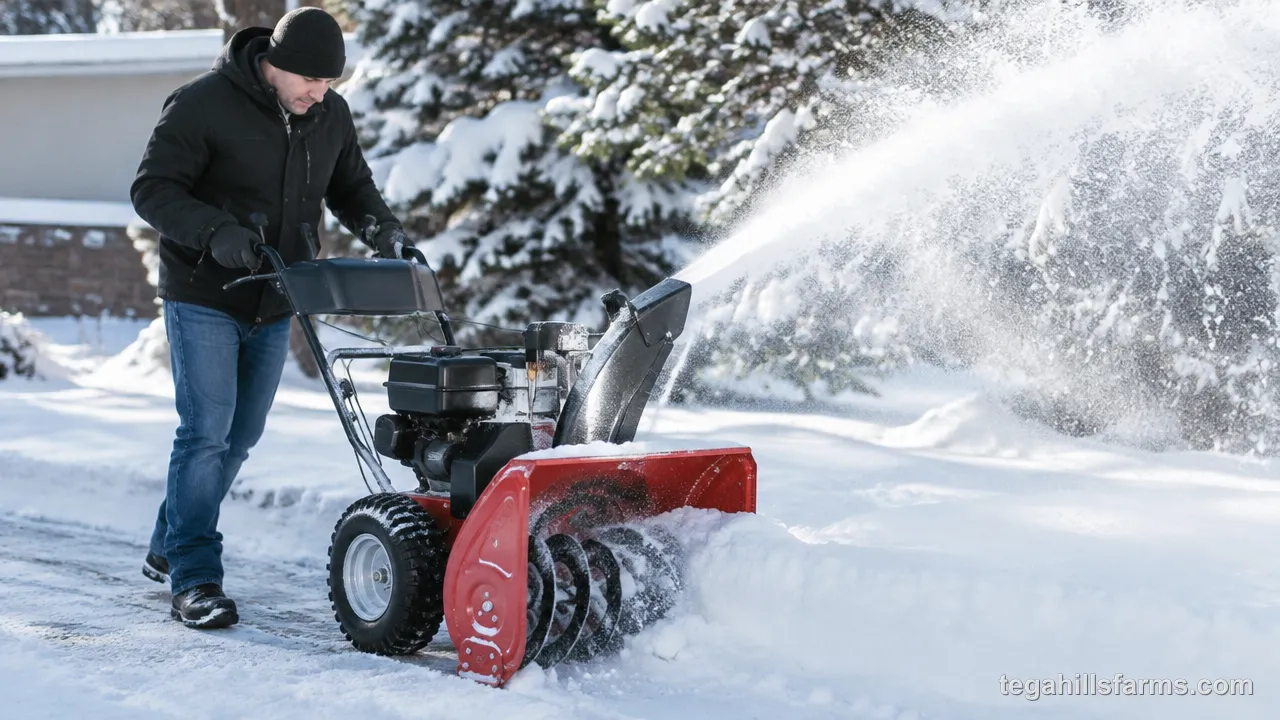
Lesser-known brands often pack wider paths, bigger engines, LED lights and extra speeds into this tier. The catch is that parts like belts, shear bolts, scraper bars and skid shoes can be harder to find, and there may be no local shop that services them. Established names with dealer networks often offer less on the spec sheet here, but they make a broken belt a quick fix. Comparing the best snow blower brands on dealer support and parts is worth doing before you commit to a name.
Warranty terms are the clearest reliability signal you can check. Separate engine coverage on a gas machine, as on the Husqvarna ST124 24in Snow Blower, or separate battery coverage on a cordless one, as on the EGO Power+ SNT2122 21in Snow Blower, tells you the maker expects those parts to last.
To weigh build quality against engine size, look at the parts that take abuse. A steel chute, steel augers and a solid console hold up better than a few extra cc when the machine gets knocked around in a crowded garage.
For occasional use, like a short driveway cleared a handful of times a winter, a lesser-known gas machine or a battery model with modest packs is an acceptable compromise because the parts see little wear. For heavy use on a long driveway in snow country, I’d pay for warranty and parts support before any extra speed or headlight.
Ethanol-blended pump gas left in a carburetor over summer breaks down into a varnish that narrows the fuel passages. The machine that ran fine in March then floods, sputters or refuses to start on the December morning the plow has buried the end of your driveway.
How Should You Store a Snow Blower and Its Fuel Over the Off-Season?
Before summer, either fill the tank with fresh gas treated with stabilizer and run the engine long enough to pull treated gas through the carburetor, or run the tank completely dry. Then keep the machine in a dry, ventilated spot away from pilot lights and furnaces.
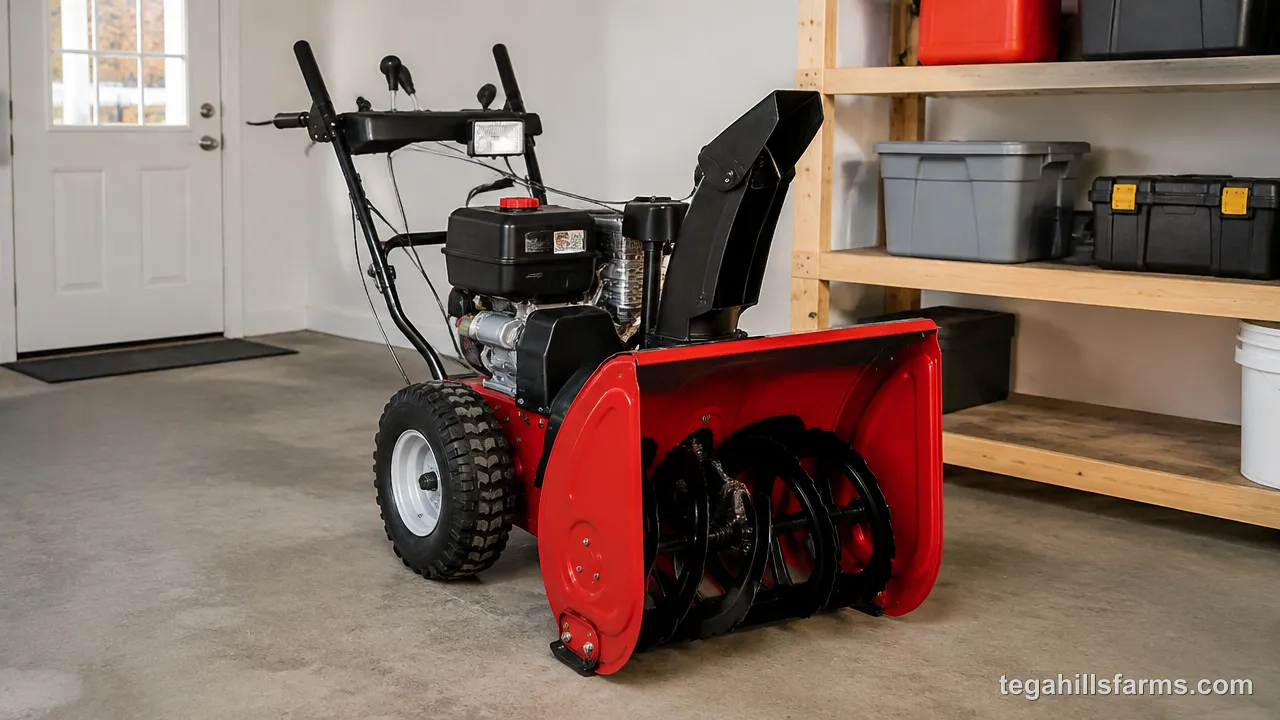
Ethanol in pump gas absorbs moisture and breaks down as it sits, leaving gum and varnish that clog the small jets in the carburetor. That’s why an untreated tank turns into a no-start by the next winter. Change the oil before storage so used oil doesn’t sit in the engine all summer. Cover the machine loosely, because a tight tarp traps moisture against the metal.
Battery models need only battery care. Store the packs indoors, out of a freezing garage and away from summer heat, at a partial charge rather than empty, and follow the manufacturer’s storage guidance. The machine itself just needs to be clean and dry.
What Should You Check Before the First Snowfall?
A dry run in early fall, before the forecast turns, catches the worn parts and dead batteries that would otherwise fail halfway down the driveway in the first storm. Go through these items:
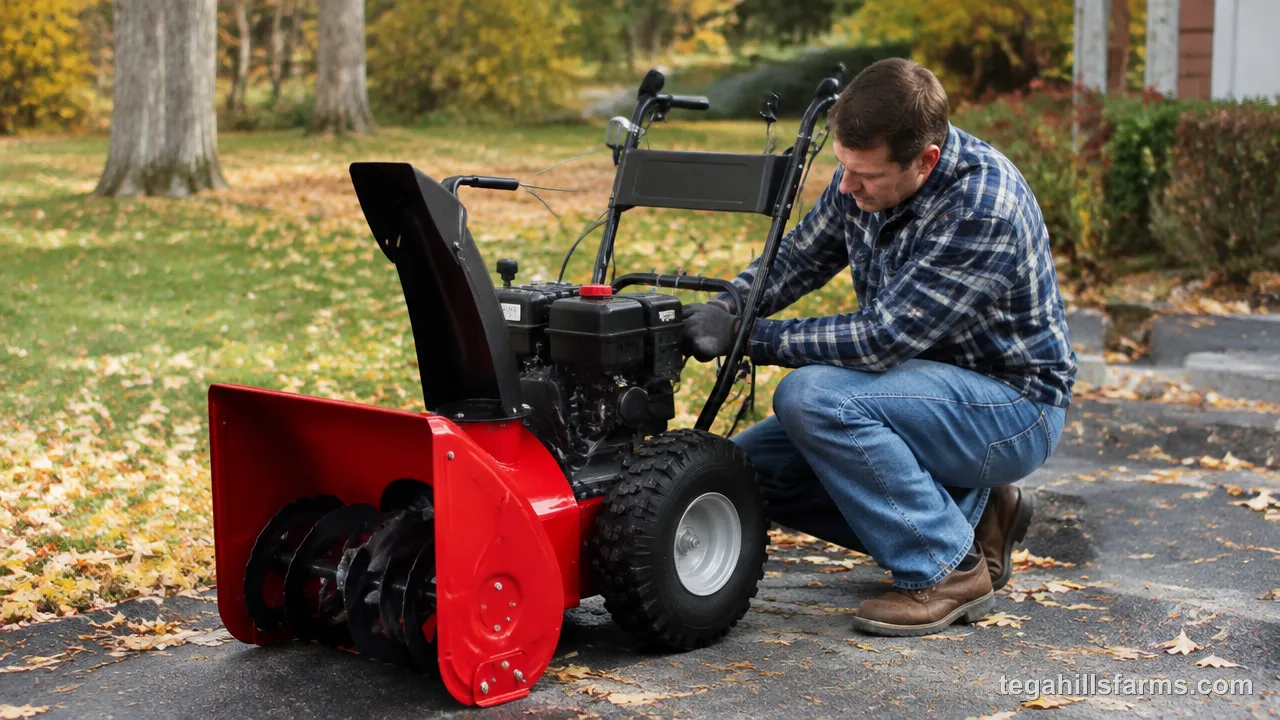
- Auger and paddles: worn paddles or a damaged auger leave snow behind and throw it short, and a sheared bolt stops the auger entirely.
- Drive and auger belts: cracked or glazed belts slip under load, so the auger stalls in the plow pile just when you need it.
- Tires: low pressure in pneumatic tires or worn tread costs traction on slopes and slick pavement.
- Electric start and battery: test the starter on a cord and fully charge battery packs, since a dead start shows up on the coldest morning.
- Lights: a dead headlight means clearing half-blind before dawn.
- Chute and deflector: a seized chute rotation locks your throw in one direction, sending snow back onto the driveway or at the house.
How Do You Get Better Results From a Budget Snow Blower?
Set the skid shoes for your surface, pick a gear that keeps the auger full without bogging the engine, overlap each pass and throw downwind. Done that way, a budget machine leaves a clean driveway instead of ridges and frozen streaks.
- Skid shoes: set them low on pavement for a clean scrape, and raise them on gravel so stones stay on the ground.
- Gear and ground speed: go slow in deep or wet snow so the machine can clear what it takes in. If the engine labors, drop a gear instead of forcing it.
- Overlapping passes: overlap each strip slightly so no ridge stays between passes and freezes overnight.
- Throwing with the wind: check the wind before you start and aim downwind, so snow doesn’t blow back onto cleared pavement or into your face.
- The plow pile: take the berm at the end of the driveway in small bites, in a slow gear, before it freezes solid.
- The thin layer: clear soon after the storm and before cars pack it down, because a thin layer left behind melts and refreezes into ice.
How Do You Clear a Clogged Chute Safely?
Shut the engine off or remove the battery, wait until the auger and impeller stop completely, then clear the chute with a clearing tool or a broom handle, never your hand.
An impeller can hold tension against packed snow and snap around when the clog breaks free, even with the engine off. That’s how hands get hurt on these machines. Wet, heavy snow and slush stick to the chute walls, and ice chunks from the plow pile jam the opening. A slower ground speed with the engine at full throttle cuts down how often it happens.
Wear eye protection against ice chips and ear protection around gas engines, and keep children and pets well away from the chute while you work. If most of your storms bring that slushy snow, the best snow blowers for wet snow are worth comparing.
Write Your Review
No reviews yet. Be the first to share your experience!