

For the best gas snow blowers in 2026, the choices are PowerSmart 24in 212cc 2-Stage Snow Blower (Best Overall), BILT HARD 24in 212cc 2-Stage Snow Blower (Runner Up), PowerSmart 26in 252cc Self-Propelled Blower (Editor’s Choice), NOVUS 18in 99cc Single-Stage Snow Blower (Best Budget), PowerSmart 26in 252cc Electric Start Blower (Also Great), AMERISUN 26in 212cc Two-Stage Snow Blower (Also Great), Husqvarna ST227 27in 252cc Snow Thrower (Best Premium), and gasxcel 24in 2-Stage Gas Snow Blower (Best Performance).
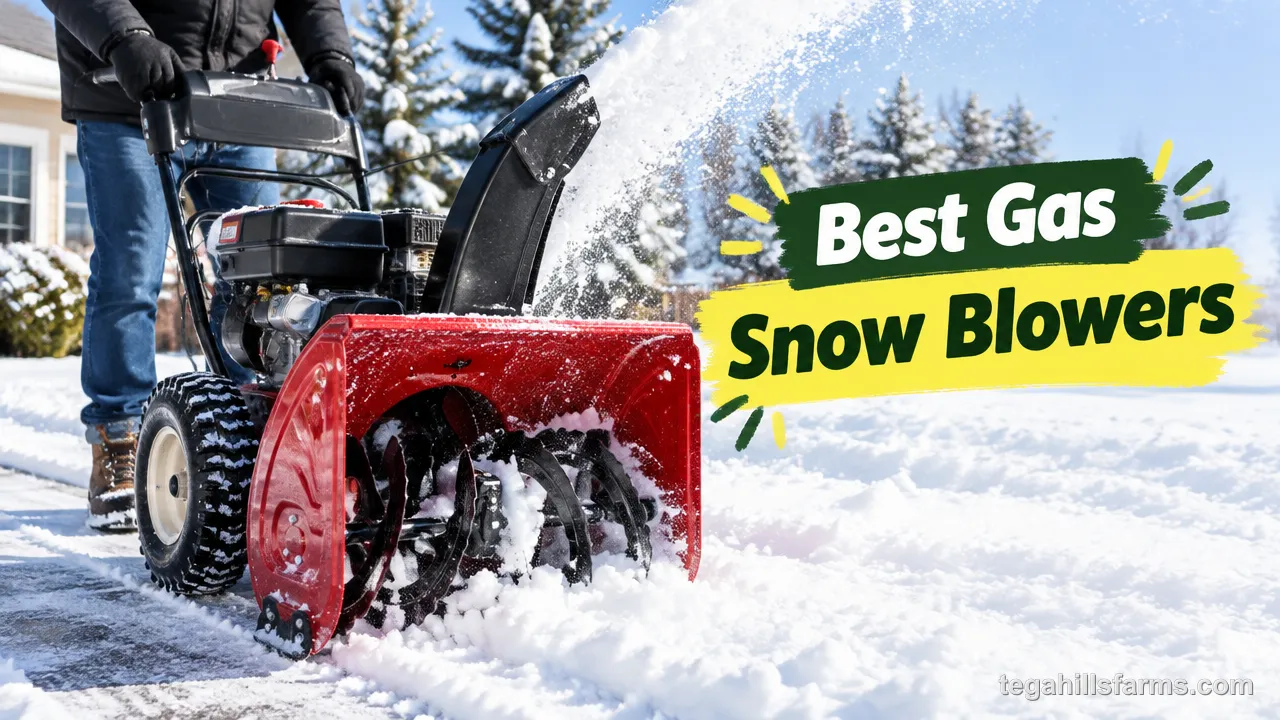
In a real storm, these machines differ in four ways: how the snow moves through the machine, how much engine sits behind the auger, how wide and tall the intake is, and whether the wheels drive themselves. A wider path means fewer passes. A taller intake can take the plow ridge at the end of the driveway. Driven wheels carry a heavy machine up a slope so your arms don’t have to.
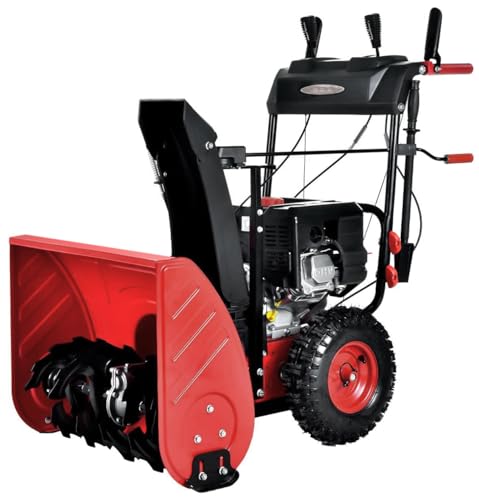


On a frozen morning, what you need is a machine that starts and keeps throwing once the snow turns wet and heavy. Electric start through an outlet takes care of the cold engine. A steel auger feeding a fast impeller takes care of the wet snow, because wet snow packs inside a housing that only scoops.
What’s the Difference Between Single-Stage, Two-Stage and Three-Stage Gas Snow Blowers?
The name tells you how many parts handle the snow before it leaves the chute: an auger alone, an auger feeding an impeller, or an auger, an accelerator and an impeller working in sequence.
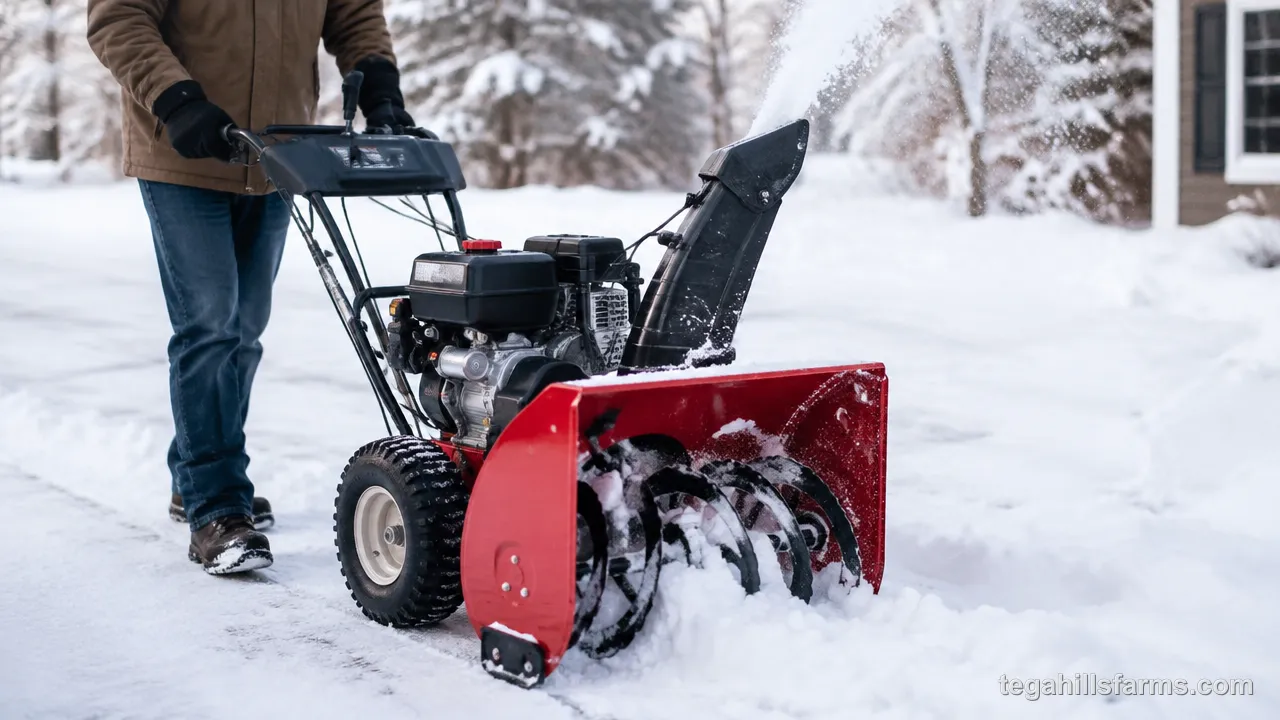
A single-stage machine uses one fast-spinning auger, usually rubber-edged, to scoop snow and fling it out the chute in a single motion. That keeps it light and compact, and the auger scrapes pavement clean. The shallow intake and shorter throw limit it to lighter snowfalls, though, and because the auger touches the ground it’s a poor match for gravel.
A two-stage machine splits the job. A slower steel auger breaks up the snow and feeds it to a high-speed impeller that throws it much farther. The housing rides on skid shoes above the surface, so it handles deep, wet snow and gravel driveways. Three-stage designs add an accelerator in front of the impeller that chops snow and pushes it in faster. That helps most in heavy, packed snow and plow ridges.
Size changes how you move the machine. A two-stage unit carries a big housing and engine, so pushing it through deep snow or up a slope wears you out fast. Self-propelled drive with several forward speeds and reverse lets the wheels set the pace. That’s why the best single stage snow blowers are built light enough to push by hand, and the best two stage snow blowers rely on driven wheels. If you’re still deciding between gas, battery and corded power, our roundup of the best snow blowers puts every power type side by side.
The 8 Best Gas Snow Blowers of 2026
The machines I’d put on a driveway this winter are the PowerSmart 24in 212cc 2-Stage Snow Blower, BILT HARD 24in 212cc 2-Stage Snow Blower, PowerSmart 26in 252cc Self-Propelled Blower, NOVUS 18in 99cc Single-Stage Snow Blower, PowerSmart 26in 252cc Electric Start Blower, AMERISUN 26in 212cc Two-Stage Snow Blower, Husqvarna ST227 27in 252cc Snow Thrower and gasxcel 24in 2-Stage Gas Snow Blower. The NOVUS is the only compact single-stage machine, light enough to steer around a sidewalk. The rest are two-stage machines that differ in engine class, path width and extras like power steering or a recoil backup. Together they cover everything from short sidewalks to long multi-car driveways, gravel and paved surfaces, and budgets from entry-level to premium.
#1 PowerSmart 24in 212cc 2-Stage Snow Blower — Best Overall
A driveway that gets regular wet, heavy storms suits this machine, because its steel augers and high-speed impeller keep snow moving instead of packing the chute. Six forward speeds set the pace.
Key Specs:
- Engine: 212cc 4-cycle OHV
- Clearing width / intake height: 24 in / 20 in
- Throw distance: up to 45 ft
- Drive: self-propelled, 6 forward and 2 reverse speeds
- Tires: 13 in snow tires
- Weight: 143 lb
Detailed Review:
Steel augers break up the snow and feed it to a high-speed impeller, so heavy, wet snow leaves through the chute instead of packing inside the housing. Behind that system, the engine delivers 2,400 pounds per minute of plowing capacity and powers through snow up to 12 inches deep.
The self-propelled drive lets the wheels carry the machine’s weight. The range of forward speeds lets you crawl through the wet pile at the end of the driveway, then speed up on the lighter stretch near the garage. Reverse helps when you’re backing out from between a parked car and the garage door.
To start it, you plug an outdoor extension cord into the electric start and push the button, which matters most on mornings when a cold engine is least willing to turn over. The LED light covers dark early clearing. Remote deflector control changes the throw angle from the handle, so you can send snow away from the neighbor’s side.
I’d call this the sensible default for a self-propelled two-stage machine: enough engine for wet snow without the bulk of a wider housing.
Pros:
- Steel augers and impeller keep wet snow from clogging.
- Push-button electric start works from an outdoor outlet.
- Forward speed range matches pace to snow depth.
- Remote deflector control adjusts the throw from the handle.
Cons:
- Electric start needs an extension cord within reach.
- Two-stage housing takes more garage floor than compact machines.
Who It’s For:
Homeowners who face regular storms of wet, heavy snow and want a self-propelled machine that starts with a button will get the most from it. If your garage is tight or you only clear a short sidewalk, a compact machine will be easier to store and steer.
Editor’s Verdict:
Strong enough for wet storms and simple to start from an outlet, this PowerSmart covers what a home driveway asks of a gas machine.
#2 BILT HARD 24in 212cc 2-Stage Snow Blower — Runner Up
For clearing before sunrise or after dark, the built-in LED headlight and push-button electric start make this BILT HARD easy to get going. Serrated steel augers bite into compacted snow.
Key Specs:
- Engine: 212cc 4-stroke OHV, 3600 rpm
- Clearing width: 24 in
- Throw distance: up to 40 ft
- Augers: 10 in serrated steel
- Chute: 180° adjustable, steel
- Tires: 13 in pneumatic
Detailed Review:
The serrated augers cut into compacted snow instead of riding over it. That counts at the end of the driveway, where the plow leaves a packed ridge. The engine feeds the snow to the second stage and out through an extended steel chute, which you can aim to keep snow away from the house or the walk.
Pneumatic tires grip concrete and gravel. The adjustable skid shoes are high-impact polymer, which protects pavers, stamped concrete and sealed asphalt from scratches as the housing slides along. Set the shoes higher for gravel and lower for smooth pavement.
The LED headlight lights the path on early mornings and late evenings, and push-button electric start gets the engine going in frigid temperatures. Self-propelled drive with six forward and two reverse speeds lets you clear at your own pace.
Its throw distance falls a few feet short of the PowerSmart 24in 212cc 2-Stage Snow Blower. That only shows when you need snow to clear the far edge of a wide area.
Pros:
- Serrated steel augers cut into compacted, plowed snow.
- Polymer skid shoes protect pavers and decorative concrete.
- LED headlight lights the path for dark clearing.
- Steel chute swings 180 degrees to aim the throw.
Cons:
- Shorter throw than the PowerSmart 24in 212cc 2-Stage Snow Blower.
- Pneumatic tires need air checks through the winter.
Who It’s For:
Anyone who clears before sunrise or after dinner on a driveway with pavers or a sealed surface gets real use from its headlight and polymer skid shoes. If you need snow to land farther from the edge, the PowerSmart 24in 212cc 2-Stage Snow Blower throws a longer arc.
Editor’s Verdict:
Pick this BILT HARD if you clear in the dark or over delicate surfaces, where its headlight, serrated augers and polymer shoes earn their place.
#3 PowerSmart 26in 252cc Self-Propelled Blower — Editor’s Choice
If your driveway is long, sloped or buried under heavy, wet snow, the 252cc engine and 26-inch path on this PowerSmart clear it in fewer passes. Driven wheels handle the slope.
Key Specs:
- Engine: 252cc gas
- Throwing capacity: 2,650 lbs/min
- Clearing width / intake height: 26 in / 20 in
- Throw distance: up to 45 ft
- Snow depth: 1–12 in
- Weight: 142 lb
Detailed Review:
The bigger engine shows up in how much snow moves, not how far it goes. Next to the PowerSmart 24in 212cc 2-Stage Snow Blower, it moves more pounds per minute and cuts a wider path, yet both throw to the same distance and weigh nearly the same.
That extra capacity and width pay off in heavy, wet snow. The all-steel auger cuts through icy layers, and the high-speed steel impeller keeps the throw going instead of letting slush pack the chute. The machine is sized for driveways of up to 16 cars.
Driven wheels with six forward and two reverse speeds keep it climbing on slopes and across larger areas without you pushing its full weight uphill. One-hand chute control rotates the throw through 180 degrees while your other hand stays on the handle. Adjustable steel skid shoes help protect the surface from scuffing.
I’d steer anyone with a big lot or a sloped driveway toward this one over the 24-inch model, since the extra engine adds almost no weight.
Pros:
- Larger engine moves heavy, wet snow faster.
- Wider path means fewer passes on long driveways.
- Driven wheels with reverse handle slopes and tight spots.
- One-hand chute control rotates the throw on the move.
Cons:
- Wider housing is harder to fit through narrow gates.
- Electric start depends on an outlet and cord.
Who It’s For:
Owners of long, sloped or wide driveways in snowbelt areas, where storms bring heavy, wet snow, will put its engine and path to full use. If you clear only a short walk and a small parking pad, a compact machine is easier to store and push around.
Editor’s Verdict:
A wider path, a bigger engine and driven wheels make this PowerSmart the machine I’d buy for a big or sloped driveway.
#4 NOVUS 18in 99cc Single-Stage Snow Blower — Best Budget
Sidewalks, patios and short driveways suit this compact machine, whose 18-inch path and light build fit easily around steps and planters. Its cold-start engine is built for frozen mornings.
Key Specs:
- Engine: 99cc with cold-start technology
- Clearing width / intake height: 18 in / 10.5 in
- Throw distance: up to 23 ft
- Chute: one-hand 190° remote control
- Wheels: two 7 in never-flat wheels
- Weight: 54 lb
Detailed Review:
A single-stage machine scoops and throws in one motion. The steel-reinforced rubber auger here grinds through compacted snow while keeping the whole machine small and easy to maneuver. The price of that size is a shorter intake and throw, so it does its best work on fresh, moderate snow on small and medium driveways, sidewalks and patios.
The cold-start engine is built to fire in freezing weather, which matters on a machine that sits for weeks between storms. The one-hand remote chute swings the throw across a wide arc, so you can send snow to either side of a narrow walk without stopping.
Never-flat wheels mean no tire-pressure checks, and the soft-grip handle stays comfortable through a long session. NOVUS backs it with a 2-year limited warranty and lifetime technical support, a useful cushion on an entry-level machine.
Next to the PowerSmart 24in 212cc 2-Stage Snow Blower, it gives up intake height and throw distance but weighs far less. That matters when it has to share a garage with a car and roll out over a threshold.
Pros:
- Light build steers easily around tight spaces.
- Cold-start engine is made for freezing mornings.
- Remote chute swings 190 degrees from the handle.
- Never-flat wheels skip tire-pressure upkeep.
- Covered by a 2-year limited warranty.
Cons:
- Single-stage design limits intake for deep drifts.
- Shorter throw leaves snow closer to the cleared edge.
Who It’s For:
Townhouse owners, and anyone with a sidewalk, patio or short driveway who wants a gas machine that’s easy to maneuver and store, will find it a good fit. Long driveways, plowed-in ends and deep storms call for a bigger machine with an impeller instead.
Editor’s Verdict:
Light, quick to aim and built for cold starts, the NOVUS handles small jobs well and needs little storage space.
#5 PowerSmart 26in 252cc Electric Start Blower — Also Great
This PowerSmart suits a long, sloped driveway that gets heavy, wet snow, with a 252cc engine and an all-steel auger that cuts icy layers. It carries a few more pounds than its self-propelled twin.
Key Specs:
- Engine: 252cc gas
- Throwing capacity: 2,650 lbs/min
- Clearing width / intake height: 26 in / 20 in
- Throw distance: up to 45 ft
- Tires: 13 in rubber
- Weight: 150 lb
Detailed Review:
On engine, path, throw, drive and controls, this machine matches the PowerSmart 26in 252cc Self-Propelled Blower spec for spec. The one measurable difference is weight. It comes in a few pounds heavier, which you feel only when you push it by hand with the drive disengaged.
The engine is rated for heavy, wet snow from an inch to a foot deep. Its all-steel auger cuts icy layers before the high-speed steel impeller throws them, so wet snow moves through instead of packing the chute.
Driven wheels with six forward and two reverse speeds keep it climbing on slopes and across larger areas, and the rubber tires give that drive something to grip. Push-button electric start, one-hand chute control through 180 degrees and adjustable steel skid shoes cover starting, aiming and surface protection.
I’d treat the two 252cc PowerSmart machines as interchangeable and buy whichever is easier to get. The extra weight on this one shows up only when you’re moving it around the garage.
Pros:
- Larger engine handles heavy, wet snow.
- All-steel auger cuts through icy layers.
- Driven wheels with reverse manage slopes.
- Steel skid shoes protect surfaces from scuffs.
Cons:
- Heavier than the PowerSmart 26in 252cc Self-Propelled Blower.
- Wide housing needs a generous storage spot.
Who It’s For:
Buyers facing heavy, wet storms on a long or hilly driveway can treat it as equal to its sibling with the same engine and choose whichever is easier to find. People who often move their machine by hand may prefer the PowerSmart 26in 252cc Self-Propelled Blower, which weighs less.
Editor’s Verdict:
Equal to its sibling where it counts, this PowerSmart is a capable heavy-snow machine with slightly more weight to steer.
#6 AMERISUN 26in 212cc Two-Stage Snow Blower — Also Great
Owners with gravel or mixed driveways get a 26-inch path on a 130-pound frame, with adjustable skid shoes that set the housing height for either surface. Its snow tires hold on slick spots.
Key Specs:
- Engine: 212cc 4-cycle OHV
- Clearing width / intake height: 26 in / 20 in
- Throw distance: up to 45 ft
- Snow depth: up to 12 in
- Tires: 13 in snow tires
- Weight: 130 lb
Detailed Review:
It cuts the same wide path and tall intake as the PowerSmart 26in 252cc Self-Propelled Blower on a lighter frame, though it runs a 212cc engine where that machine runs a 252cc. The lighter frame makes it easier to turn and roll out of a shed. The smaller engine leaves less reserve when deep, wet snow loads the impeller.
The engine is sized to clear heavy snow on driveways of up to 12 parking spaces. A 120V electric start and variable-speed self-propelled drive keep that job manageable, and the deflector chute rotates 180 degrees to send snow where you want it.
Snow tires give traction on slippery surfaces, and the adjustable skid shoes let you raise the housing for gravel or lower it for pavement. If gravel is your main surface, compare it against the best snow blowers for gravel driveways before you decide.
It ships in two boxes that may arrive separately, and you need both to assemble it. Plan the build for when everything has arrived, not the evening before a forecast storm.
Pros:
- Wide path and tall intake on a lighter frame.
- Adjustable skid shoes work on paved and gravel driveways.
- Snow tires add traction on slick surfaces.
- Deflector chute rotates 180 degrees.
Cons:
- Smaller engine than the 252cc PowerSmart machines.
- Ships in two boxes that may arrive separately.
Who It’s For:
Households with a mix of gravel and pavement, or anyone who wants a wide path without the weight of a bigger engine, should look closely at it. Where storms usually bring deep, wet snow, the PowerSmart 26in 252cc Self-Propelled Blower brings more engine to the same path width.
Editor’s Verdict:
Set up for both gravel and pavement, the AMERISUN gives up some engine in exchange for a lighter machine that still cuts a wide path.
#7 Husqvarna ST227 27in 252cc Snow Thrower — Best Premium
On a large driveway with long paths, power steering and trigger controls let you swing this heavy Husqvarna around with a squeeze of the handle instead of a shove. Its X-trac tires lock for grip.
Key Specs:
- Engine: 252cc, 7.75 HP
- Clearing width: 27 in
- Auger: heavy-duty ribbon auger
- Tires: X-trac, differential locking
- Start: electric, via power outlet
- Weight: 212 lb
Detailed Review:
Trigger controls and power steering let you turn this machine with your hands on the grips instead of dragging it around at the end of each pass. You choose from several speeds to match the snow. On a large driveway with long side paths, that handling saves your back on every turn.
The heavy-duty ribbon auger has open spirals that mix air into the snow, which helps the impeller fan churn through frozen or wet snow instead of choking on it. The engine gives that system enough power to throw snow efficiently across the full width.
Differential-locking X-trac tires with deep treads keep both wheels pulling on packed snow and ice. The adjustable auger height raises the housing for extra protection over uneven ground. The remote rotator and deflector change the chute’s direction and angle from the handle, and the LED headlight lights a larger area than incandescent bulbs on dark mornings.
It weighs far more than the PowerSmart 26in 252cc Self-Propelled Blower, so it needs a ground-level storage spot and a flat path out. A shed with a step turns every storm into a moving job.
Pros:
- Power steering and trigger controls make turns easy.
- Ribbon auger mixes air to move frozen snow.
- Differential-locking X-trac tires grip in all snow conditions.
- LED headlight lights more area than incandescent bulbs.
- Adjustable auger height protects the housing on rough ground.
Cons:
- Heavy build needs a level, ground-floor storage spot.
- Electric start depends on a power outlet connection.
Who It’s For:
If you clear a large driveway and long paths and want steering and traction that don’t wear you out, it’s worth stepping up to. Anyone storing a machine in a small shed or rolling it over a step should look at the PowerSmart 26in 252cc Self-Propelled Blower, which weighs much less.
Editor’s Verdict:
Built around power steering and locking tires, the ST227 makes a big, heavy machine easy to control, as long as you have room to park it.
#8 gasxcel 24in 2-Stage Gas Snow Blower — Best Performance
Icy, plow-packed snow suits this gasxcel, because its patented ice-crushing auger breaks ice and compacted snow on contact. A recoil start backs up the electric one.
Key Specs:
- Engine: 209cc RATO
- Clearing width / intake height: 24 in / 21 in
- Throw distance: 40 ft, focused discharge
- Drive: self-propelled, 6 forward and 2 reverse speeds
- Tires: 13 in airless
- Weight: 142 lb
Detailed Review:
The reinforced ice-crushing auger breaks ice and compacted snow on contact, and the anti-clogging system keeps heavy, wet snow flowing toward the chute. When something does jam, the included snow clearing stick lets you clear the blockage without reaching toward the auger.
The discharge concentrates the throw into a tight stream, so snow doesn’t scatter in the wind and build up along the edges you just cleared. The tall intake lets you push straight into a drift instead of chipping at it from the top.
Electric and recoil start both come standard, so the engine still fires on a cold morning away from an outlet. The airless tires can’t go flat, which removes a winter chore, and the LED headlight covers dark mornings and storms.
Use slower speeds for deep, heavy snow and faster ones for light snow, and stop the machine before shifting gears. It isn’t sold in California, so buyers there need a different machine.
Pros:
- Ice-crushing auger breaks compacted snow on contact.
- Electric and recoil start cover cold mornings anywhere.
- Airless tires can’t go flat.
- Focused discharge keeps snow from scattering back.
Cons:
- Not available for sale in California.
- Speed changes require stopping the machine first.
- Airless tires ride harder over rough driveways.
Who It’s For:
People whose driveway ices over or gets packed by the plow, and who want a machine that starts with or without an outlet, will get the most from it. California residents can’t buy it, and light, dry snow won’t make full use of its ice-crushing auger.
Editor’s Verdict:
When ice and packed snow are the real problem, this gasxcel brings the auger and starting backup to deal with them.
What Should You Look for in a Gas Snow Blower?
Judge each spec by what it changes in your own clearing (the snow your region gets, the length of your driveway and the space you have to store the machine) rather than by the biggest number on the box. A larger engine or wider housing only helps if your storms and driveway call for it, and every step up adds weight you’ll steer and park all winter. If you’d like the whole decision laid out step by step across every power type, start with how to choose a snow blower.
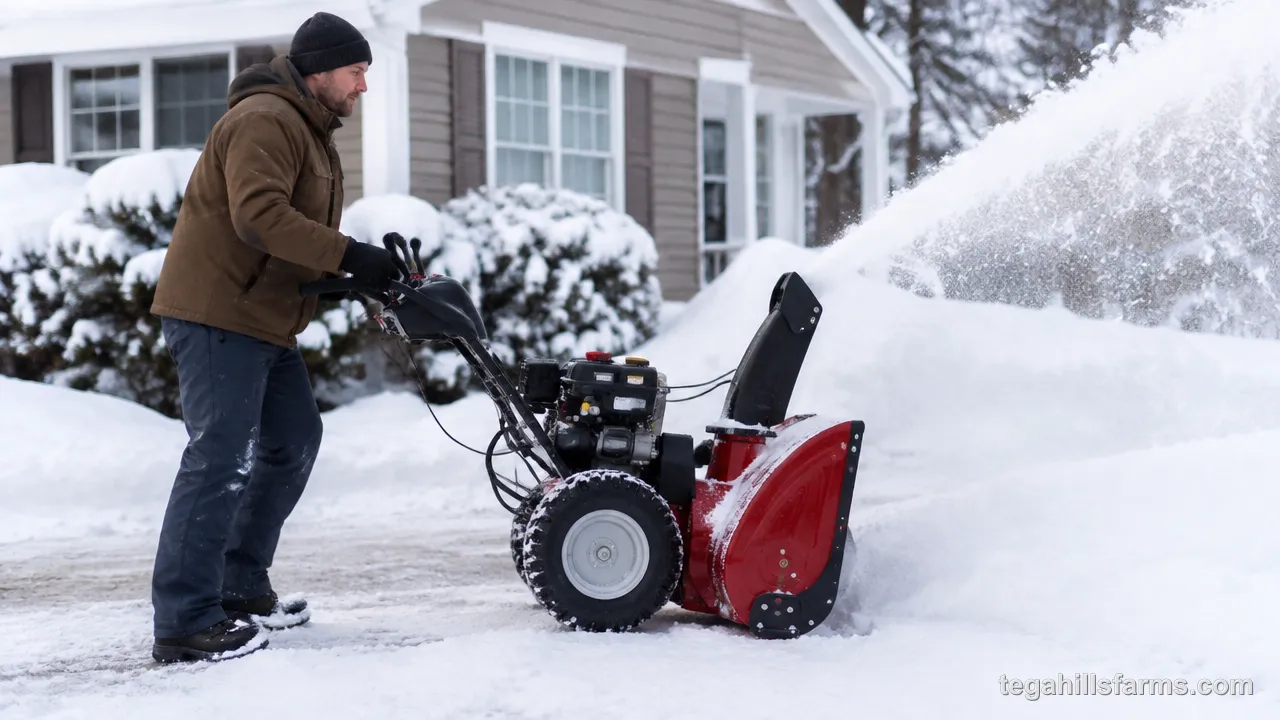
Does Engine Size Decide How Well a Gas Snow Blower Throws Snow?
No. Engine displacement, listed in cc, is the volume the piston sweeps. A bigger figure means more torque to keep the auger and impeller spinning under load, not a longer throw. How far snow travels depends on impeller speed and size and on the shape of the chute. Clogging in wet snow depends on how well the auger breaks snow up and how cleanly the impeller clears it.
The PowerSmart pair shows the difference. The 26in 252cc model moves more pounds of snow per minute than the 24in 212cc model, yet both throw to the same distance. The larger engine pays off when the snow is deep and heavy enough to slow the impeller, and it adds little in a light, dry snowfall. Wet snow exposes a weak impeller first, so the best snow blowers for wet snow are chosen on auger and impeller design as much as engine size.
How Do Clearing Width and Intake Height Change Your Clearing Time?
Clearing width is how wide a strip the machine clears on each trip down the driveway. Intake height is how deep a layer of snow the housing can take in at once. A wider path means fewer trips to cover the same area. A taller intake lets you push straight into a drift or the hard ridge a plow leaves at the end of the driveway, instead of chipping at it from the top.
Both numbers come from the size of the housing, so they bring weight and bulk with them. A wider, taller housing needs more engine to keep snow moving, more floor space in the garage, and more effort to turn between parked cars or along a narrow walkway. On a short sidewalk, a narrow path costs little time and saves you from wrestling a big machine around corners.
Which Features Are Worth Having: Electric Start, Power Steering and Lighting?
Electric start and self-propelled speeds are worth paying for on a gas machine. Power steering earns its place on the heaviest machines, while lighting and heated grips are comforts. Each one changes a storm morning in a different way.
- Electric start plugs into an outdoor outlet and cranks a cold engine with a button, so you don’t have to yank a recoil cord on a frozen morning. A recoil backup matters if the machine sits far from power.
- Self-propelled speeds let you crawl through a deep pass and move faster through light snow, and reverse helps when you back out of a tight spot.
- Power steering lets you turn a heavy two-stage machine at the end of each pass with a squeeze instead of a shove, and that adds up on a long driveway.
- Remote chute and deflector control changes where snow lands without stopping or reaching over the housing, which helps when the wind shifts mid-pass.
- An LED headlight matters if you clear before sunrise, and heated grips matter on long, bitter sessions; neither changes how well the machine clears.
Which Tires, Tracks and Skid Shoes Suit Your Driveway Surface?
Wheels with tires turn easily on flat ground. Tracks grip better on slopes and ice but take more effort to steer. Among tires, pneumatic ones grip and cushion well but need their air checked through winter, while airless tires can’t go flat but ride harder over rough spots.
Here’s how the options compare on slope grip, turning and winter upkeep:
| Drive | Grip on slopes and ice | Turning on flat ground | Winter upkeep |
|---|---|---|---|
| Pneumatic tires | Good | Easy | Check air pressure |
| Airless tires | Good | Easy | No pressure checks |
| Tracks | Strongest | Harder | Track tension and wear |
The surface also decides which auger design you want. A two-stage auger housing rides on skid shoes, so raising the shoes lifts the auger above loose gravel. A single-stage rubber auger touches the ground to scrape pavement clean, which also means it throws stones. Skid shoes set the housing height and take the wear, and polymer shoes are gentler on pavers than steel.
Which Gas Snow Blower Should You Choose for Your Situation?
Match the machine class to the length of your driveway, the kind of snow your storms bring and how much machine you can handle and store. A long driveway under wet snow calls for one kind of machine and a short walk under light powder calls for another, and a cramped garage can rule out both. Get one of these wrong and you end up with a machine that stalls in heavy storms or one too heavy to pull out of the garage.
Which Gas Snow Blower Suits a Long or Wide Driveway?
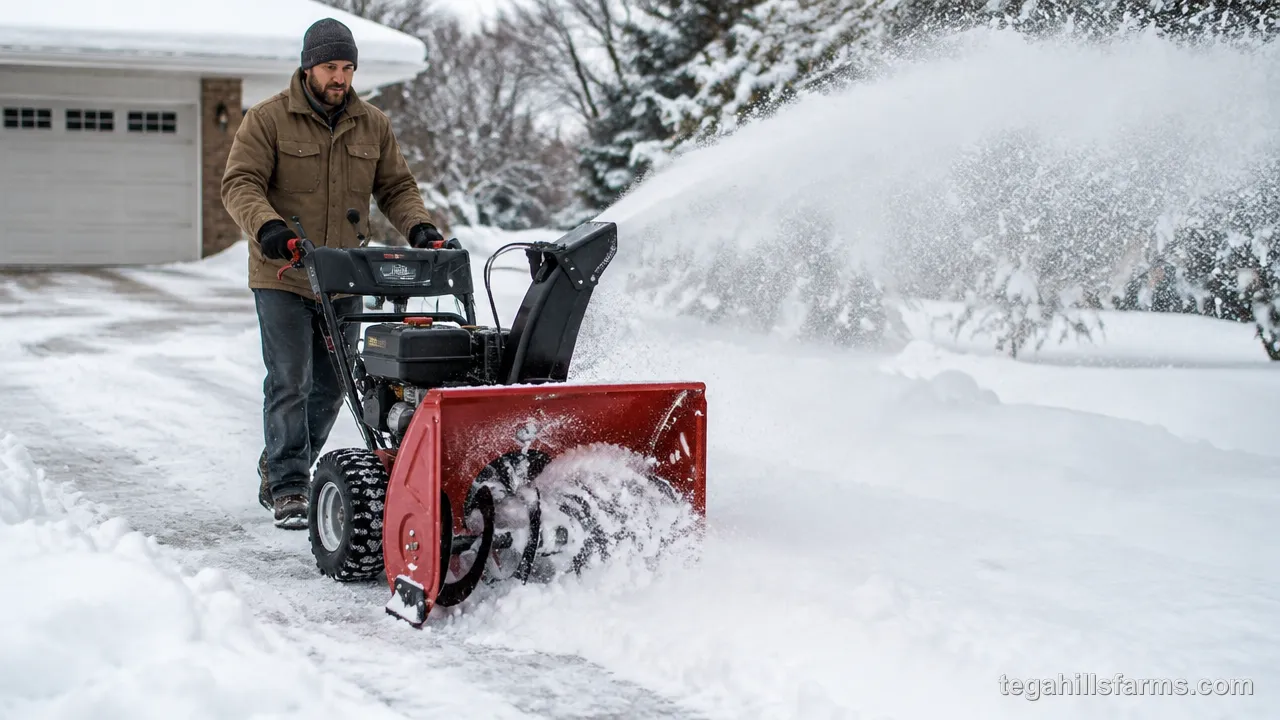
A long or wide driveway points to a wider two-stage machine with self-propelled drive. Extra path width cuts down on trips, and driven wheels keep a heavy machine moving for the whole run. A stronger engine class keeps the impeller at speed across the full width when the snow is deep, so you don’t have to slow down halfway.
The PowerSmart 26in 252cc Self-Propelled Blower and PowerSmart 26in 252cc Electric Start Blower pair a wide path with the larger engine. The AMERISUN 26in 212cc Two-Stage Snow Blower brings the same width on a lighter frame, and the Husqvarna ST227 27in 252cc Snow Thrower adds power steering for the turns at each end. For more machines built around long runs, look at the best snow blowers for large driveways.
Which Gas Snow Blower Handles Heavy, Packed Snow?
Heavy, packed or icy snow needs four things: an auger that cuts rather than skates, an impeller that keeps wet snow from packing the chute, enough engine to hold speed under load, and tires that keep pulling once the surface turns slick. Miss one of those and the machine rides up over the snow, clogs or spins its wheels.
The gasxcel 24in 2-Stage Gas Snow Blower is built around ice, with its ice-crushing auger and anti-clogging system. The BILT HARD 24in 212cc 2-Stage Snow Blower uses serrated steel augers for compacted snow. The PowerSmart 26in 252cc pair puts all-steel augers behind the larger engine, and the Husqvarna ST227 27in 252cc Snow Thrower combines a ribbon auger with differential-locking tires. If your region gets this kind of snow every winter, the best snow blowers for heavy snow are built for exactly that job.
Is a Compact Single-Stage Gas Snow Blower Enough for a Short Driveway?
Yes, for a short driveway, a sidewalk or a patio in an area that mostly gets light snowfall. A light single-stage machine like the NOVUS 18in 99cc Single-Stage Snow Blower turns quickly around steps and parked cars, and it takes far less floor space than a two-stage machine. It can stand against a garage wall or sit in a shed corner without crowding the car.
Its limits show up when snow gets deep or dense. A shorter intake means it has to chip away at a deep snowfall in layers. A scoop-and-throw auger also can’t chew quickly through the heavy, packed ridge a city plow leaves at the end of the driveway. If your street gets plowed often or storms regularly drop deep, wet snow, a two-stage machine will save you that work.
A gas engine that sat all summer with old fuel in the carburetor and last spring’s oil in the crankcase is the one that coughs and dies on the first storm morning. Worn belts and a fouled spark plug fail the same way, and they wait until the driveway is already buried and the plow ridge is freezing solid.
What Maintenance Does a Gas Snow Blower Need Each Season?
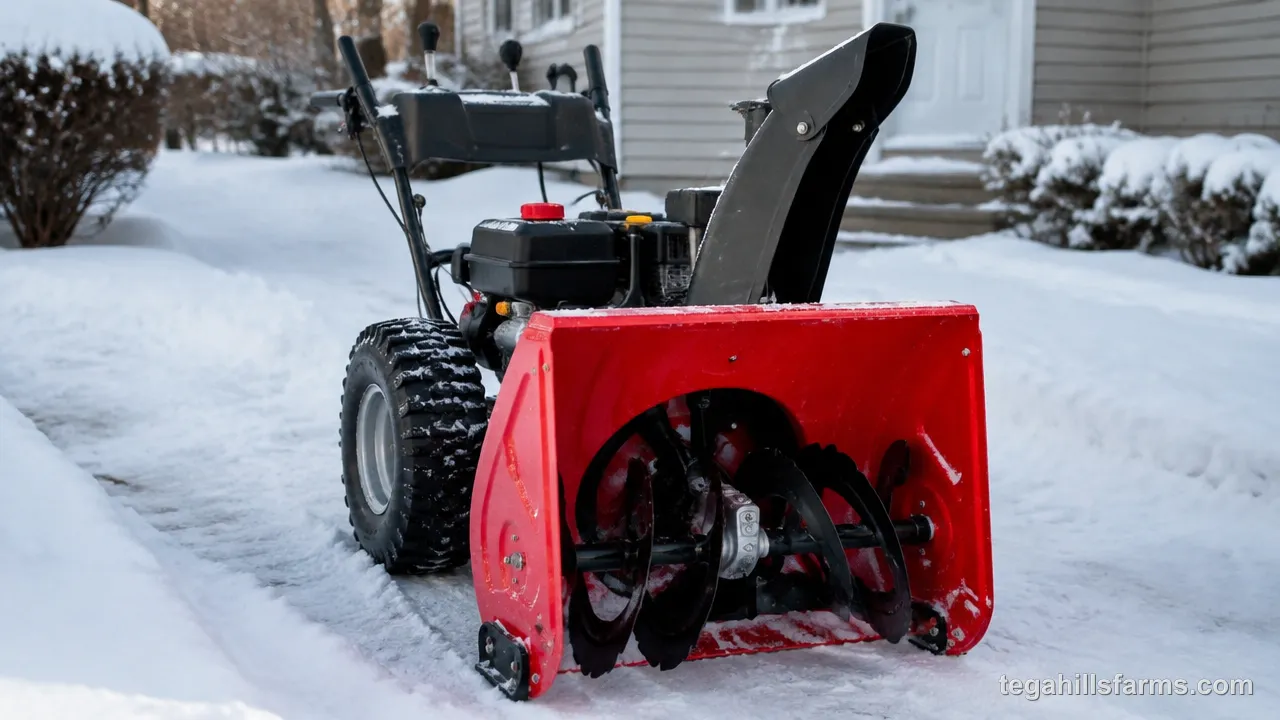
Each fall, a gas snow blower needs fresh oil, a new or cleaned spark plug, a check of the belts and shear pins, and fresh, stabilized fuel. Each spring, it needs its fuel dealt with and its engine protected before summer storage. Skipping either round is what leaves an engine refusing to start or an auger that stops turning mid-storm.
Before the first storm:
- Change the oil, since old oil thickens in the cold and makes the engine hard to crank.
- Replace or clean the spark plug, because a fouled or worn plug is behind many hard starts.
- Check the drive and auger belts for cracks, glazing or fraying. Keep spare shear pins on hand, because they’re built to snap when the auger hits a rock or a frozen newspaper.
- Inspect the auger edges and skid shoes for wear, and flip or replace the shoes before they grind through.
- Fill the tank with fresh fuel treated with stabilizer.
Before summer storage:
- Run the tank dry or fill it with stabilized fuel so old gas doesn’t gum up the carburetor.
- Change the oil so used, acidic oil doesn’t sit in the engine for months.
- Store the machine clean, dry and under cover.
Watch for the warning signs. An auger that stops while the engine runs points to a broken shear pin or a slipping belt. Squealing under load means a belt is glazing. A machine that starts and then dies usually has stale fuel.
Is a Gas Snow Blower Still Better Than a Battery or Electric Model?
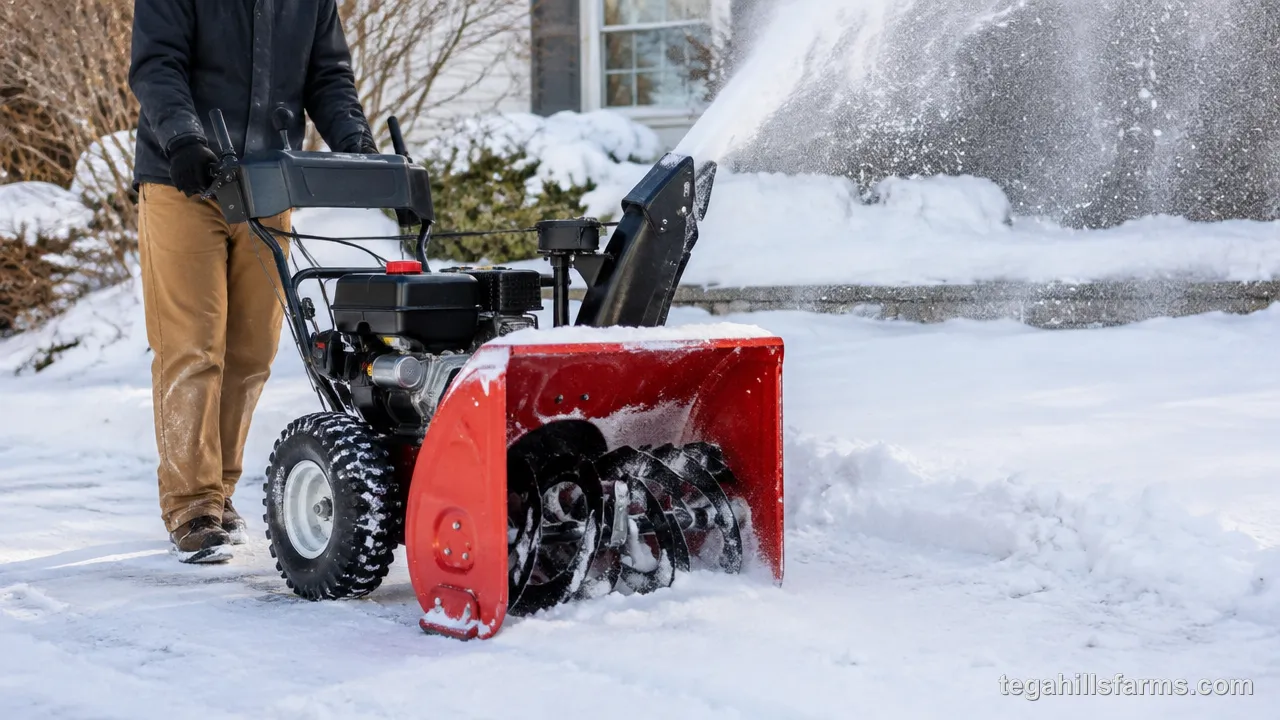
For deep, wet snow and long driveways, gas still has the edge. An engine keeps full power for as long as there’s fuel in the tank, while a battery machine stops when the pack runs down. Battery models win on noise, fumes and cold-morning starts, and corded electric models suit light snow on short paths within reach of an outlet.
Here’s how the three compare on the things that matter over a winter:
| Factor | Gas | Battery | Corded electric |
|---|---|---|---|
| Power in deep, wet snow | Strong and sustained | Fades as the pack drains | Light snow only |
| Runtime | As long as fuel lasts | Limited by charge | Limited by cord length |
| Noise and fumes | Loud, with exhaust | Quiet, no exhaust | Quiet, no exhaust |
| Cold starts | Electric or recoil start | Push button | Push button |
| Upkeep | Oil, plug, fuel, belts | Charging, battery storage | Cord care |
Upkeep is where the choice usually tips. Gas needs oil changes, fresh fuel and engine care every season, while battery needs its packs charged and stored indoors over the summer. If your driveway is short and paved, your snow is usually light and your neighbors are close, the best battery snow blowers will do the job with less upkeep. If an outlet sits right by the work, the best electric snow blowers are the simplest option of all.
How Can You Tell a Bargain Gas Snow Blower from a Money Pit?
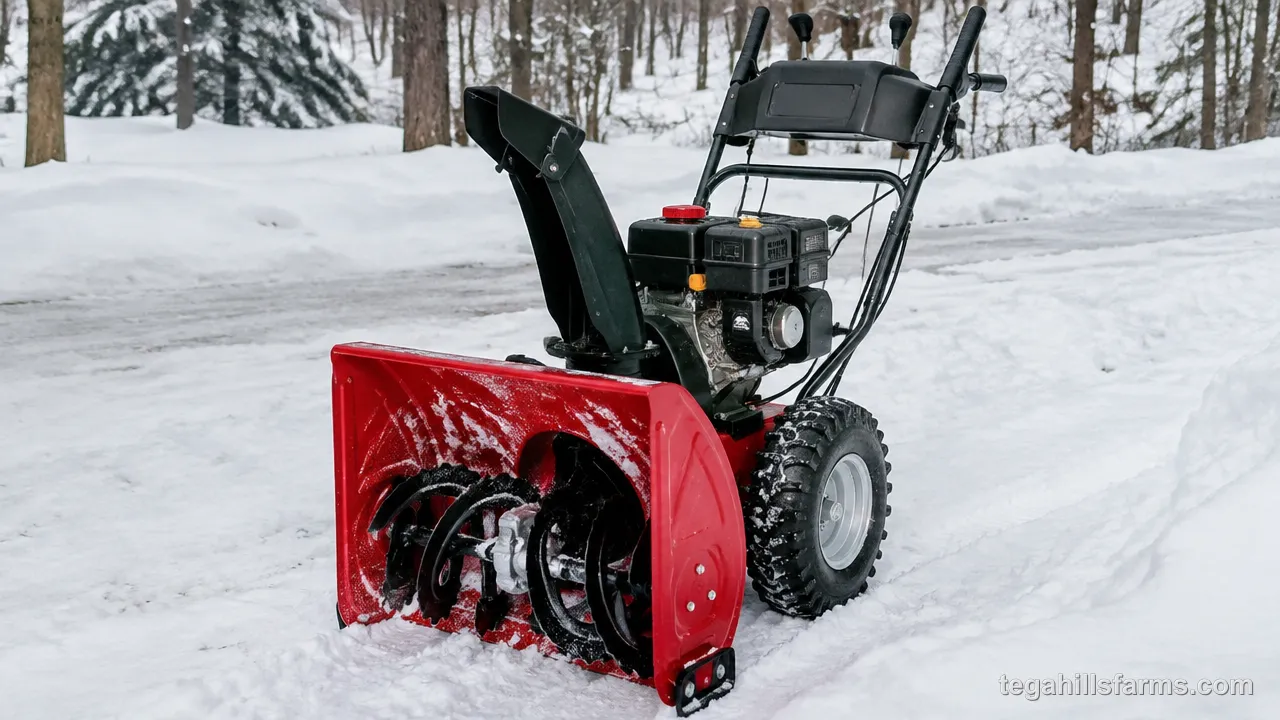
A bargain machine turns into a money pit when you can’t get parts or help for it, and a good-value one lets you check both before you buy. Shear pins, belts, skid shoes and auger parts wear out on every snow blower. A machine with no published model number, no parts diagram and no named support channel can sit useless over one broken pin.
Warning signs to watch for:
- A listing that leaves out intake height, engine type or auger material
- Support limited to marketplace messages, with no phone line or parts lookup
- An auger with no visible reinforcement, or a thin housing
- Several shipping boxes with no clear assembly instructions or damage policy
A good-value machine lists full specs, a model number you can search for parts, stated warranty terms and a support channel you can actually reach. Those checks matter whether you’re shopping snow blowers under $500 or a tighter budget like snow blowers under $300, where trimmed specs and thin parts support deserve a second look.
How Much Garage Space Does a Gas Snow Blower Need?
A two-stage gas snow blower needs a ground-level floor spot with room for its wide housing and tall handlebar. A compact single-stage machine fits against a wall or in a shed corner. The bigger the machine class, the more floor it claims and the more clearance you need to get it in and out.
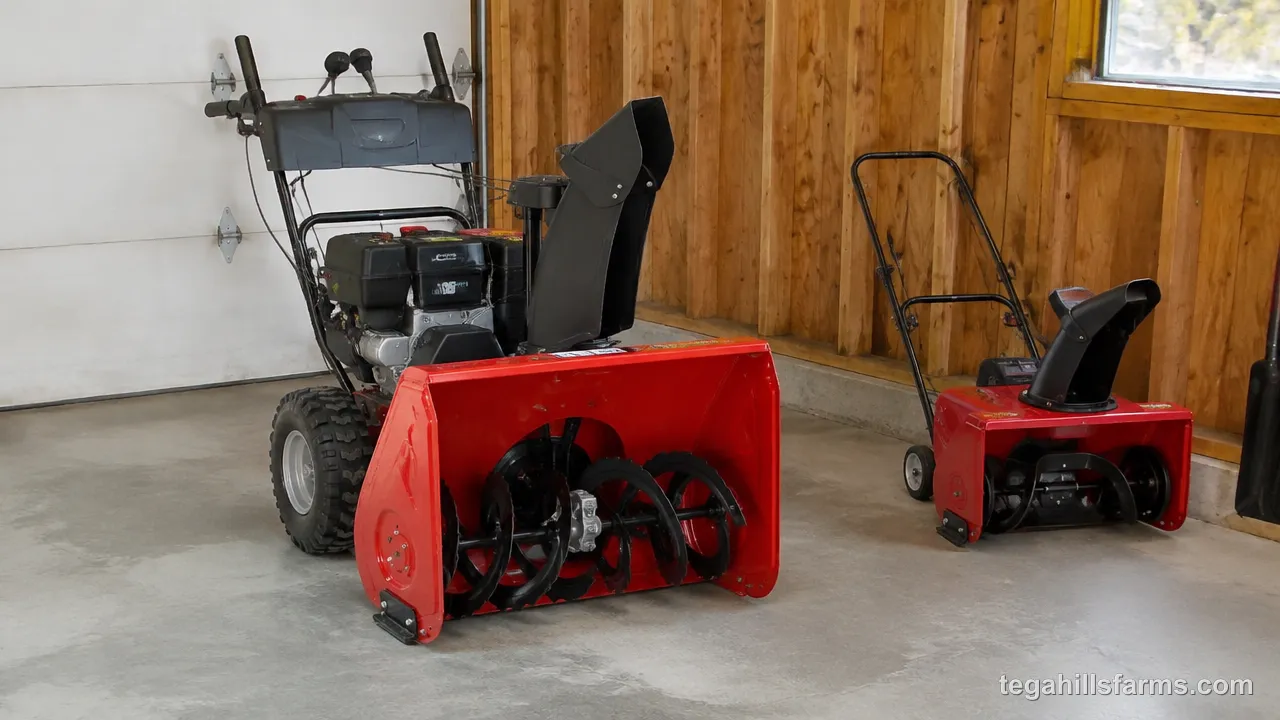
Weight decides how you move it. A heavy two-stage machine is easiest to drive in and out under its own power over a flat threshold. A step or a steep ramp into a shed turns every trip into a struggle. Some handlebars fold down to clear a low shelf or shorten the footprint.
While it sits, keep it dry and level. A level floor keeps oil and fuel where they belong. A dry spot away from melting slush keeps the auger, skid shoes and chute from rusting between storms.






Write Your Review
No reviews yet. Be the first to share your experience!