

My picks for the best machetes for brush removal in 2026 are the Grand Way Machete with Saw 19in (Best Overall), Gerber Gator Machete 25in (Runner Up), FLISSA Machete 11in (Best Budget), Cold Steel 97KMS Kukri Machete,Black (Also Great), Fiskars 28in Machete Axe (Best Rust-Resistant), Golden Bird Parang Machete (Also Great), Corona MA 60062 ErgoHandle Machete 22in (Also Great) and Kershaw Camp 10 Machete 10in (Also Great). They run from a light blade for tidying beds to a heavy machete-axe for roots and woody saplings, so the right one depends on what grows where you clear.
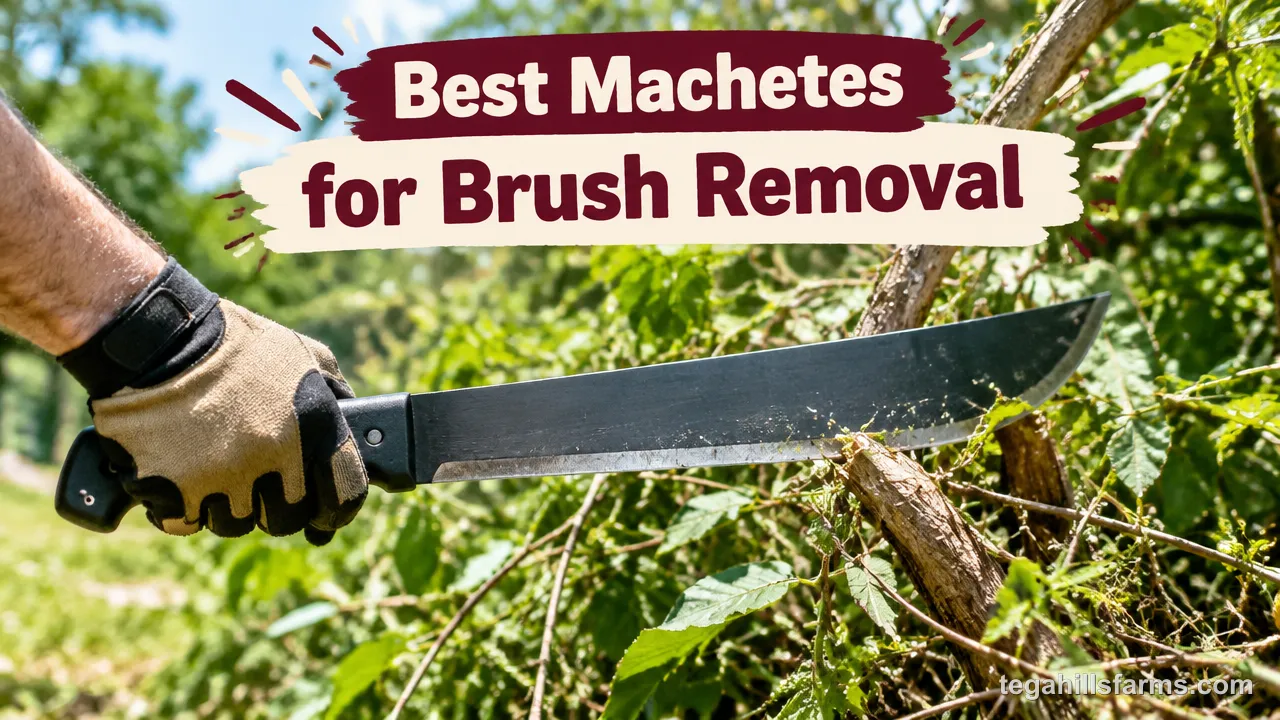
Four build choices decide how a machete handles brush. Blade length and weight set your reach and how hard each swing lands. The steel and tang decide whether the blade holds an edge and survives woody stems. The handle decides how your hand and wrist feel after an hour, and the blade shape changes how the edge bites into vines, thorns and wood.





A poor clearing blade usually shows its problems partway through the job, not in the first few swings. A handle that twists in a damp palm sends shock into your wrist. A thin blade that flexes in thick stems makes every stroke harder, and carbon steel left wet in the shed comes back rusted in spring.
What Should You Look for in a Machete for Brush Removal?
A clearing blade earns its place when it carries enough weight to cut through stems yet stays comfortable and intact after an hour of swinging. Brush is harder on a tool than most yard work, because every stroke lands on stems that spring back, twist the blade or jar the handle. A blade that suits your growth finishes the job in fewer strokes. One built to take that abuse keeps its edge, its handle and its shape over many seasons. For yard work that goes past clearing, the best garden machetes cover a broader range of cutting jobs.
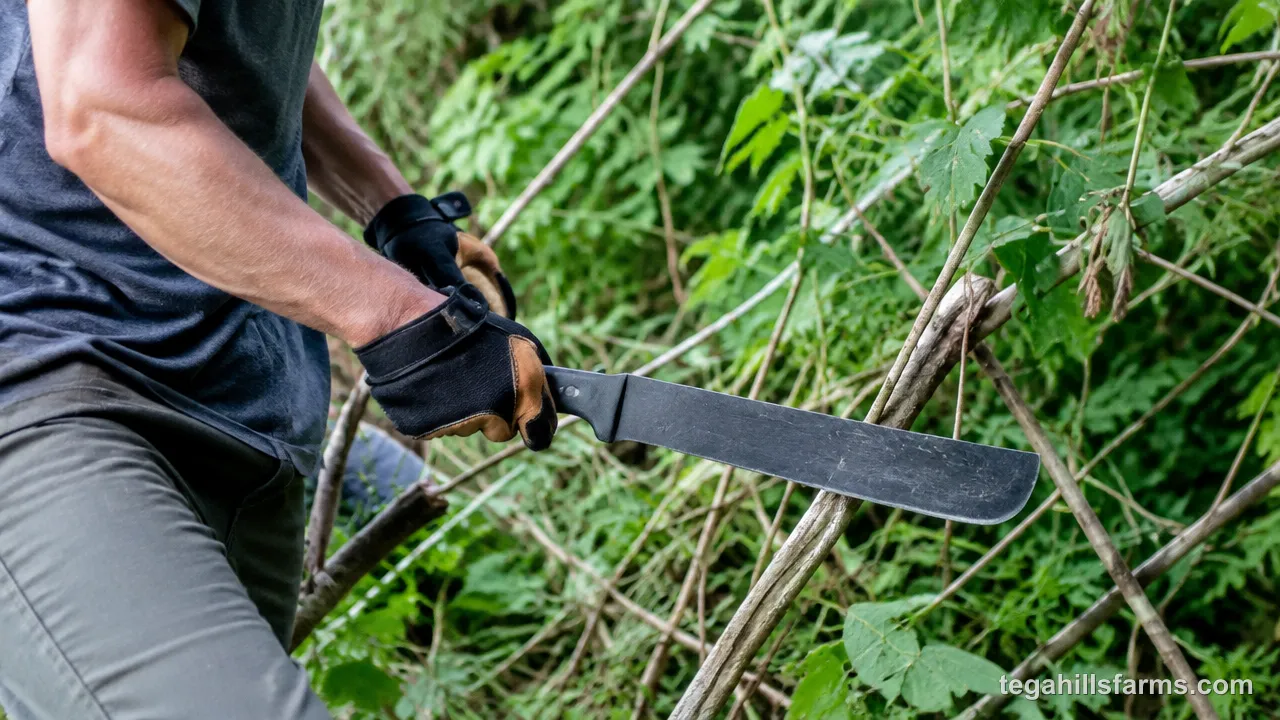
How Long and Heavy Should a Brush-Clearing Machete Be?
A longer blade reaches farther into tall, open growth, while a shorter one keeps the tip under your control in tight beds. How much the blade weighs, and where that weight sits, decides whether each swing carries through a stem or just tires your arm.
A heavier blade, or one that balances toward the tip, keeps moving after it meets a fibrous stem, so the steel does more of the cutting and your muscles do less. The cost lands on your wrist and shoulder, because you lift, swing and stop that same weight on every stroke. Over an hour the strain builds even when each swing feels easy.
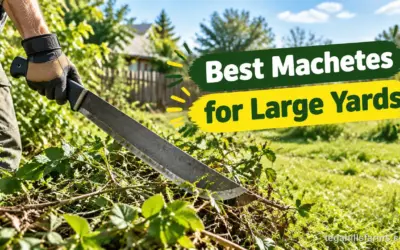
A long blade lets you stand back from briers and tall grass and cut a wide arc, which suits open ground and big jobs; if that describes your property, the best machetes for large yards lean toward reach. In a flower bed or along a fence, the same length catches on stakes and perennials, so a shorter blade gives cleaner, safer strokes. The bigger your total workload, the more a lighter blade pays off, even if it needs a few extra strokes.
What Makes a Machete Strong: Steel Type and Tang?
Carbon steel is tough and easy to sharpen but rusts when sap and moisture sit on it. Stainless steel resists rust with less care, though softer grades dull sooner. A full tang, where the blade steel runs the whole length of the handle, keeps the tool in one piece under heavy chopping and prying.
Carbon steels such as 1055 or 65Mn flex slightly on a hard strike instead of chipping, and a few passes with a mill file bring the edge back. That makes them forgiving on woody brush, as long as you dry and oil the blade after work. Softer stainless grades sharpen easily but lose their edge faster in fibrous stems, while harder grades hold an edge longer and take more effort to restore.
A baked-on finish, powdercoat or low-friction coating slows rust on the flat faces of the blade and helps it slide through sap-heavy growth. The sharpened edge is bare steel, though, and still needs a wipe and a light oil.
A partial tang ends inside the handle, so the shock of each strike concentrates where the steel meets the handle, and that joint can loosen or crack over time. A full tang spreads the load through the entire grip, which is why it stays solid when you pry at a root or chop a sapling at an awkward angle.
What Handle Feels Best After an Hour of Clearing?
A textured rubber overmold, or a contoured handle with a textured finish, holds best when your palm is wet or sweaty. A hand guard stops your fingers from sliding forward onto the edge if the grip slips.
Rubber and other soft overmolds absorb some of the vibration that a springy stem sends back up the blade, so less of it reaches your wrist. Hard polypropylene and glass-filled nylon hold up well to moisture and rough use, though they pass more shock through unless they have an overmold or a cushioned design. Wood feels warm in the hand and grips well when textured, but it needs an occasional coat of oil to stay sealed.
Shape matters as much as material. A slimmer, contoured grip lets smaller or weaker hands close fully, so you can hold the tool securely without squeezing hard, and hard squeezing is what tires the forearm. If you wear work gloves, look for enough texture and a guard or flared end so the handle doesn’t twist or slide out of a padded palm.
Which Blade Shape Suits Which Brush: Kukri, Parang, Recurve or Sawback?
Each shape puts its weight and its edge in a different place. A kukri carries its mass forward for chopping woody stems. A parang has a heavy chopping profile for branches and saplings. A recurve belly slices vines and grass on the pull, and a sawback adds teeth for limbs the edge can’t cut cleanly.
A kukri’s bent, forward-heavy blade hits hard for its length, which makes it strong on saplings and thick stems, but the angle feels awkward for long sweeping cuts through grass. A parang leans toward chopping in the same way and bites deep into wood, yet it is slower in soft growth, where speed matters more than force. A recurve pulls its curved belly across stems, so vines and tough grass part with less force, though there is less mass behind it for wood. A sawback lets you cut through a branch without fetching another tool, but you can’t rest a hand on the toothed spine.
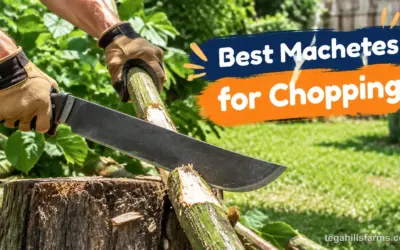
The machete-axe hybrid sits at the heavy end. Its axe-like head splits branches and chops roots but tires your arm quickly in grass and vines. If woody growth makes up most of your clearing, the best machetes for chopping favor these forward-weighted shapes.
The 8 Best Machetes for Brush Removal of 2026
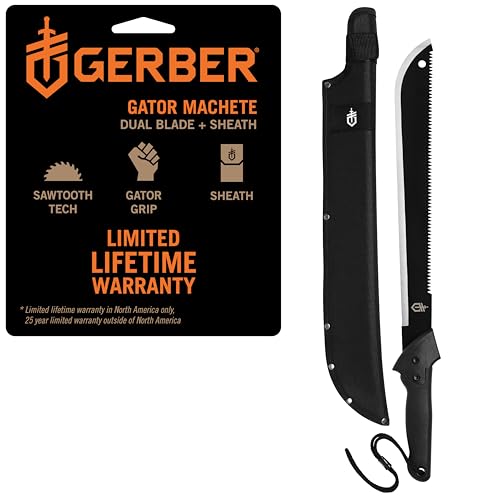
Garden beds, trail edges and woody thickets each find a fit in the Grand Way Machete with Saw 19in, Gerber Gator Machete 25in, FLISSA Machete 11in, Cold Steel 97KMS Kukri Machete,Black, Fiskars 28in Machete Axe, Golden Bird Parang Machete, Corona MA 60062 ErgoHandle Machete 22in and Kershaw Camp 10 Machete 10in. The FLISSA and Kershaw Camp 10 have short blades that stay controllable in beds and along paths, while the Gerber Gator and Corona trade compactness for reach across tall grass and vines. The Cold Steel kukri, Golden Bird parang and Fiskars machete-axe carry their force forward, which pays off when saplings and roots make up most of your clearing. The Grand Way pairs a compact blade with a saw for the occasional branch.
#1 Grand Way Machete with Saw 19in — Best Overall
If your clearing mixes vines, brush and the occasional branch, this compact machete covers all three with a 12-inch blade and a built-in saw. Its black-coated 440C stainless steel resists rust from wet growth.
Key Specs:
- Blade: 12 in, black-coated 440C stainless steel
- Overall length: 19 in
- Design: machete with built-in saw
- Handle: rubber-covered
- Sheath: heavy-duty nylon Cordura, belt carry
- Model: 111084
Detailed Review:
The 12-inch blade sits in a 19-inch overall length, which keeps the tip close enough to your hand to steer around shrubs you want to keep. Short, repeated strokes stay controlled in a bed or along a fence, and the blade still reaches into a tangle of vines. Compared with the 18-inch blade on the Gerber Gator Machete 25in, it gives up reach in tall grass but is easier to handle.
The built-in saw takes care of limbs that the edge would only notch. You can switch from slashing to sawing without walking back for another tool, which matters along a fence line where one woody sapling stands among softer growth.
The blade is black-coated 440C stainless steel. Stainless holds up to dew-soaked grass and sticky sap, and the coating adds another layer of protection on the flat faces, so a wipe and a dry towel after work keep it in shape.
The rubber-covered handle is built for comfortable, continuous use and stays secure as your palm warms up. The heavy-duty nylon Cordura sheath carries the blade on your belt between jobs. I’d choose it for a gardener who wants one compact tool that clears and saws.
Pros:
- Built-in saw cuts branches the edge cannot chop cleanly.
- Black-coated 440C stainless steel resists rust from wet growth.
- Compact overall length steers easily in tight beds.
- Rubber-covered handle stays secure through continuous use.
- Nylon Cordura sheath carries the blade on a belt.
Cons:
- 12-inch blade gives up reach in tall, open growth.
- Saw teeth collect sap and need a brush to clean.
Who It’s For:
Gardeners who clear mixed growth around beds, fences and trail edges will get the most from this one, since it handles vines and a stray limb without a second tool. If you mostly cut wide stretches of tall grass, a longer blade such as the Gerber Gator Machete 25in covers ground with fewer strokes.
Editor’s Verdict:
Choose it for clearing that keeps switching between soft growth and woody stems; the saw and rust-resistant blade make it a practical everyday tool.
#2 Gerber Gator Machete 25in — Runner Up
For open ground covered in tall grass and vines, the 18-inch plain edge gives you enough reach to keep your feet well back from the cut. A saw on the back of the blade handles the branches.
Key Specs:
- Overall length: 25 in
- Blade: 18 in plain edge, saw on the reverse side
- Steel: corrosion-resistant high carbon stainless
- Weight: 1.125 lb
- Handle: textured Gator Grip, rubberized
- Warranty: limited lifetime
Detailed Review:
The 18-inch plain edge lets you sweep a wide arc through grass, briers and vines from a comfortable stance, so you bend and step into the growth less often. At 1.125 lb, it gives you that reach without much weight for your wrist to stop at the end of each swing. Compared with the Corona MA 60062 ErgoHandle Machete 22in, it gives up some reach but weighs less, which helps over a long afternoon.
The saw on the reverse side turns the blade into a limb tool when a branch is too thick to chop cleanly. Because the spine has teeth, the back of the blade is no place to rest your other hand.
The blade is corrosion-resistant high carbon stainless steel, so a wipe after damp work is usually all the rust care it needs between sharpenings. That matters on dewy mornings, when wet grass coats the steel for the whole session.
The textured Gator Grip is rubberized and holds securely in wet or dry conditions, which helps once sweat builds up inside a glove. A nylon sheath covers the edge for carrying and storage, and Gerber backs the tool with a limited lifetime warranty.
Pros:
- 18-inch blade reaches tall grass from a comfortable stance.
- Saw on the reverse side handles limbs and woody stems.
- Textured Gator Grip stays secure in wet or dry hands.
- Corrosion-resistant high carbon stainless steel keeps upkeep light.
- Backed by a limited lifetime warranty.
Cons:
- Long blade is harder to steer in tight flower beds.
- Toothed spine leaves no safe spot to rest a hand.
Who It’s For:
Homeowners with open ground, fence lines or field edges overgrown with grass and vines will appreciate the reach here, and the saw side saves a trip back to the shed for loppers. If your clearing happens mostly between shrubs and perennials, a shorter blade will be easier to steer.
Editor’s Verdict:
Pick it when reach matters more than compactness; the long plain edge and saw back cover grass, vines and limbs with one tool.
#3 FLISSA Machete 11in — Best Budget
Light cleanup in beds and along paths suits this blade, because its Air Tech handle uses air columns to soak up vibration before it reaches your wrist. At about 0.72 lb, it stays easy to swing.
Key Specs:
- Blade: 11 in, 3Cr13 stainless steel
- Blade thickness: 0.1 in (2.3 mm)
- Weight: about 0.72 lb
- Handle: shock-absorbing Air Tech handle with air columns
- Sheath: Oxford fabric with plastic inner lining, 2 safety buckles
Detailed Review:
Air columns inside the Air Tech handle absorb vibration, so the jolt from a springy stem fades before it reaches your wrist. That matters most for older gardeners and anyone whose wrists ache after an afternoon of yard work.
The 11-inch blade is 3Cr13 stainless steel, 0.1 in (2.3 mm) thick, and the whole machete weighs about 0.72 lb. That thin, light build slices grass, weeds and green stems with little effort, but keep it away from woody saplings, where a thin blade can flex. Next to the Kershaw Camp 10 Machete 10in, it is much lighter and uses stainless instead of 65Mn carbon steel, so it is easier on your arm and needs less rust care, while the Kershaw holds up better to chopping.
The Oxford sheath has a plastic inner lining and a stiff shape, and two safety buckles keep the blade from slipping out when you kneel or bend over a bed. The edge stays covered while you carry it between jobs around the yard.
For an affordable machete, it covers light cleanup well. I’d keep it near the potting bench for quick jobs rather than ask it to clear a thicket.
Pros:
- Air Tech handle absorbs vibration before it reaches the wrist.
- Light weight makes short jobs easy on the arm.
- 3Cr13 stainless steel blade resists rust from wet growth.
- Two safety buckles hold the blade securely in the sheath.
- Affordable way to handle occasional bed cleanup.
Cons:
- Thin blade suits soft growth better than woody chopping.
- 11-inch blade limits reach in tall growth.
Who It’s For:
If you tidy beds, paths and patio edges now and then and want a light tool that spares your wrist, this is a sensible place to start. If you face thick woody brush, you’ll want a heavier, thicker chopping blade that can take hard strikes without flexing.
Editor’s Verdict:
Expect a light, wrist-friendly blade for green growth and tidy edges rather than a chopper for saplings.
#4 Cold Steel 97KMS Kukri Machete,Black — Also Great
Woody saplings and thick, fibrous stems suit this kukri, since its forward-weighted 13-inch blade of 1055 carbon steel keeps driving after it meets wood. At 1 lb, it carries easily on a belt.
Key Specs:
- Blade: 13 in kukri, 1055 carbon steel
- Finish: black baked-on anti-rust matte
- Handle: 5 in polypropylene over a full tang
- Weight: 1 lb (16 oz)
- Sheath: Cor-Ex
Detailed Review:
The kukri profile widens toward the tip, so most of the blade’s weight lands where it meets the stem. That forward weight gives a 13-inch blade more chopping force than its length suggests, and saplings and thick stems part in fewer strokes. Set beside the Fiskars 28in Machete Axe, it weighs far less, so it gives up some splitting power but you can swing it longer before your arm tires.
The blade is 1055 carbon steel, a tough choice for repeated strikes on wood. A black baked-on anti-rust matte finish protects the flat faces, so care comes down to drying the edge and giving it a light oil after work.
The full tang is completely enclosed in a polypropylene handle shaped for comfort and safety. That construction keeps the blade and grip solid on hard strikes, and the handle keeps a secure hold in wet weather, when a smooth grip would slide.
At 1 lb with a 5-inch handle, the whole tool rides on a belt or straps to a pack in its Cor-Ex sheath. I’d recommend this one to someone whose brush is more stems than grass.
Pros:
- Forward-weighted kukri blade chops woody stems efficiently.
- Full tang runs inside the polypropylene handle.
- Baked-on anti-rust finish protects the 1055 carbon steel.
- Light enough to carry on a belt all day.
- Cor-Ex sheath covers the blade for carry.
Cons:
- Bent kukri shape is awkward for sweeping cuts through grass.
- Carbon steel edge needs oiling to prevent rust.
Who It’s For:
Clearing woody saplings, thick stems and tangled shrubs calls for chopping weight, and this kukri delivers it in a compact package you can wear on a belt. For tall grass across open areas, a longer blade like the Corona MA 60062 ErgoHandle Machete 22in covers more ground per stroke.
Editor’s Verdict:
Reach for it when woody stems outnumber soft growth; the full tang and carbon steel make it sturdy enough for that work.
#5 Fiskars 28in Machete Axe — Best Rust-Resistant
Thick brush, roots and palms call for a hardened steel axe blade like this one, and its rust-resistant, low-friction coating helps it glide through tough material without rusting between jobs. At 2.62 lb, it rewards deliberate swings.
Key Specs:
- Blade: hardened steel with rust-resistant, low-friction coating
- Edge: sharpened curve for pull-cuts, sharpened tip for push-cuts
- Weight: 2.62 lb
- Handle: textured, designed for one-handed use
- Sheath: nylon
- Warranty: lifetime
Detailed Review:
The hardened steel axe blade is built for chopping and splitting, and at 2.62 lb it carries real momentum into roots, palm fronds and woody stems. That weight does work a lighter machete leaves to your arm, but each swing also takes effort to start and stop. Against the Gerber Gator Machete 25in, it is much heavier, so you lose easy sweeping cuts but gain force on tough material.
A sharpened curve lets you hook a vine or stem and draw it through in a pull-cut. The sharpened tip handles push-cuts and chiseling, which helps around roots where a full swing would hit the soil.
A rust-resistant, low-friction coating covers the blade, which helps it glide through sappy, fibrous material and keeps rust off between jobs. The hardened steel stays sharp through heavy use, so you sharpen less often.
The textured handle is designed for one-handed use and adds control when you swing hard. A nylon sheath covers the blade, and Fiskars backs it with a lifetime warranty. I’d keep it for the woody end of a clearing job and switch to something lighter for grass.
Pros:
- Hardened steel head chops roots and splits branches.
- Rust-resistant, low-friction coating glides through tough material.
- Sharpened curve and tip add pull-cuts and push-cuts.
- Textured handle improves control during one-handed swings.
- Backed by a lifetime warranty.
Cons:
- Heavy build tires the arm during long grass sessions.
- Axe-style head is slow for light, sweeping cuts.
Who It’s For:
Property owners clearing roots, palms and woody brush will get real splitting power from this hybrid, plus a coating that keeps rust off between jobs. For quick passes through weeds and vines, a lighter blade like the Gerber Gator Machete 25in will tire your arm less.
Editor’s Verdict:
Count on it for roots, palms and woody brush, where the hardened steel and coated blade justify the extra weight.
#6 Golden Bird Parang Machete — Also Great
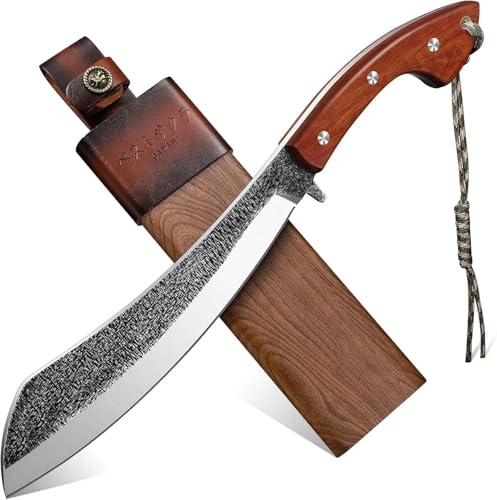
If you chop more than you slash, this parang suits you: its 9.5-inch high-carbon steel blade runs full tang through the handle, so heavy strikes on branches don’t work it loose. The hardwood sheath protects the edge.
Key Specs:
- Blade: 9.5 in parang style, high-carbon steel
- Construction: single-piece full tang
- Handle: contoured wood with textured finish
- Sheath: hardwood
- Model: GB-Machete01
Detailed Review:
The parang-style blade is shaped for chopping, driving deep cuts into branches and woody stems while staying balanced for controlled swings. Its 9.5-inch length keeps those strikes close to your hand, which suits work along a property edge where you choose each cut. Beside the 13-inch blade on the Cold Steel 97KMS Kukri Machete,Black, it gives up some reach for a shorter, tighter swing.
The blade is a single piece of high-carbon steel that runs through the entire handle. That full tang keeps it from breaking or working loose under hard splitting and chopping, and the carbon steel needs drying and oiling after damp work.
The contoured wooden handle is shaped for a natural hold that reduces hand strain over a long session. Its textured finish stays firm in wet or sweaty hands, and an occasional coat of oil keeps the wood sealed.
The hardwood sheath protects the blade in storage and transport and keeps the edge sharp. Let a wet sheath dry fully before you store the blade in it, since wood holds moisture against carbon steel.
Pros:
- Parang geometry delivers deep cuts into branches.
- Single-piece full tang resists breaking under heavy chopping.
- Textured wooden handle stays firm in sweaty hands.
- Hardwood sheath protects the edge in storage.
Cons:
- 9.5-inch blade limits reach in tall, open growth.
- High-carbon steel and wood both need regular oiling.
Who It’s For:
Woody brush, fallen limbs and saplings along a property edge are where this parang belongs, especially if you like the feel of a wooden grip in your hand. If you’re clearing mostly grass and soft vines, a longer blade built for sweeping cuts will serve you better.
Editor’s Verdict:
Trust it with chopping work where a loose handle would be a hazard; the one-piece full tang and wooden grip feel solid strike after strike.
#7 Corona MA 60062 ErgoHandle Machete 22in — Also Great
Tall grass, vines and property lines that need clearing every season suit this 22-inch blade, which lets you cut a wide swath from where you stand. The ErgoHandle eases hand fatigue.
Key Specs:
- Blade: 22 in, heavy-duty
- Weight: 1.5 lb
- Handle: ErgoHandle ergonomic grip
- Brand: Corona Clipper
- Model: MA 60062
Detailed Review:
The 22-inch heavy-duty blade gives you extended reach into brush, tall grass, vines and dense vegetation, so you can cut a wide swath without wading into the growth. That reach also keeps your hands and arms back from thorny canes along a property line. Next to the Gerber Gator Machete 25in, it has a longer blade and more weight, so you get more reach and momentum but put more load on your arm.
Its balanced design keeps swings controlled and the cutting power steady through thick weeds and undergrowth. At 1.5 lb, the blade has enough mass to carry through a stand of stems without feeling like a chopping tool.
The ErgoHandle is shaped for a secure, comfortable grip that reduces hand fatigue during long clearing sessions. That matters on the long, repetitive jobs this blade suits, like trail maintenance and property line clearing, where thousands of small jolts add up in your hand. For keeping a trail or fence line open season after season, I’d lean toward this one.
Pros:
- 22-inch blade reaches far into tall grass and vines.
- ErgoHandle grip reduces hand fatigue on long jobs.
- Balanced design keeps swings controlled and consistent.
- Enough blade mass to carry through dense growth.
Cons:
- Long blade needs a wide, clear space to swing safely.
- Length makes close work around shrubs and perennials awkward.
Who It’s For:
Anyone keeping trails, fence lines or overgrown field edges in check will get the most from this blade’s reach and comfortable grip. When the job is mostly saplings in tight spots, a shorter chopper like the Cold Steel 97KMS Kukri Machete,Black keeps strikes tighter and easier to aim.
Editor’s Verdict:
Use it to reclaim long stretches of grass and vines; the reach and ErgoHandle make big clearing days more manageable.
#8 Kershaw Camp 10 Machete 10in — Also Great
For cleanup in tight beds and along garden paths, the 10-inch recurve blade draws through vines and stems with a slicing pull, and a built-in hand guard keeps your fingers off the edge. Its 65Mn carbon tool steel runs full tang.
Key Specs:
- Blade: 10 in recurve, 65Mn carbon tool steel, black powdercoat
- Overall length: 16 in
- Weight: 1 lb 2.3 oz
- Handle: glass-filled nylon with sure-grip overmold and hand guard
- Sheath: glass-filled nylon with gear straps and belt loop
Detailed Review:
The recurve blade swells into a curved belly toward the tip, so a pulling stroke draws the edge across vines and stems and slices rather than chops. At 16 in overall, it stays easy to steer between shrubs and along garden paths. Next to the FLISSA Machete 11in, it is heavier at 1 lb 2.3 oz, which costs a little arm comfort but puts more force behind each stroke.
The full-tang blade is 65Mn carbon tool steel, which offers toughness and wear resistance. A black powdercoat protects the flat faces, but the edge is bare steel and needs drying after wet work.
The glass-filled nylon handle has a tan sure-grip overmold for a secure, comfortable hold, and a built-in hand guard keeps your fingers from slipping forward. That guard matters for smaller hands and for gloved hands, when a grip can slide. Lanyard holes at both ends let you add a wrist strap.
The glass-filled nylon sheath includes gear straps and a belt loop, so the blade rides securely between jobs. I’d pick it for close work where control matters more than reach.
Pros:
- Recurve blade slices vines with a clean pull-cut.
- Full-tang 65Mn carbon tool steel stands up to hard use.
- Built-in hand guard keeps fingers off the edge.
- Sure-grip overmold holds well in a sweaty hand.
- Sheath includes gear straps and a belt loop.
Cons:
- 10-inch blade limits reach in tall grass.
- Carbon steel edge needs drying and oil after wet work.
Who It’s For:
Gardeners with smaller hands, or anyone working close to shrubs and perennials they want to protect, will appreciate the hand guard and the easy-to-control recurve edge. Open stretches of tall grass need more reach than this blade offers, so look to a longer straight blade for that work.
Editor’s Verdict:
Keep it for close work in beds and along paths, where the recurve edge and hand guard give you control.
Which Machete Should You Choose for Your Yard?
Match the blade to what grows on your property and how often you cut it, because thin, soft growth rewards a light, fast blade while woody stems reward forward weight and tough steel. A mismatch shows up quickly: soft stems fold under a heavy chopper instead of cutting cleanly, and a light slicing blade bounces off saplings and dulls its edge. How often you clear then decides how much weight, handle shock and upkeep you can live with.
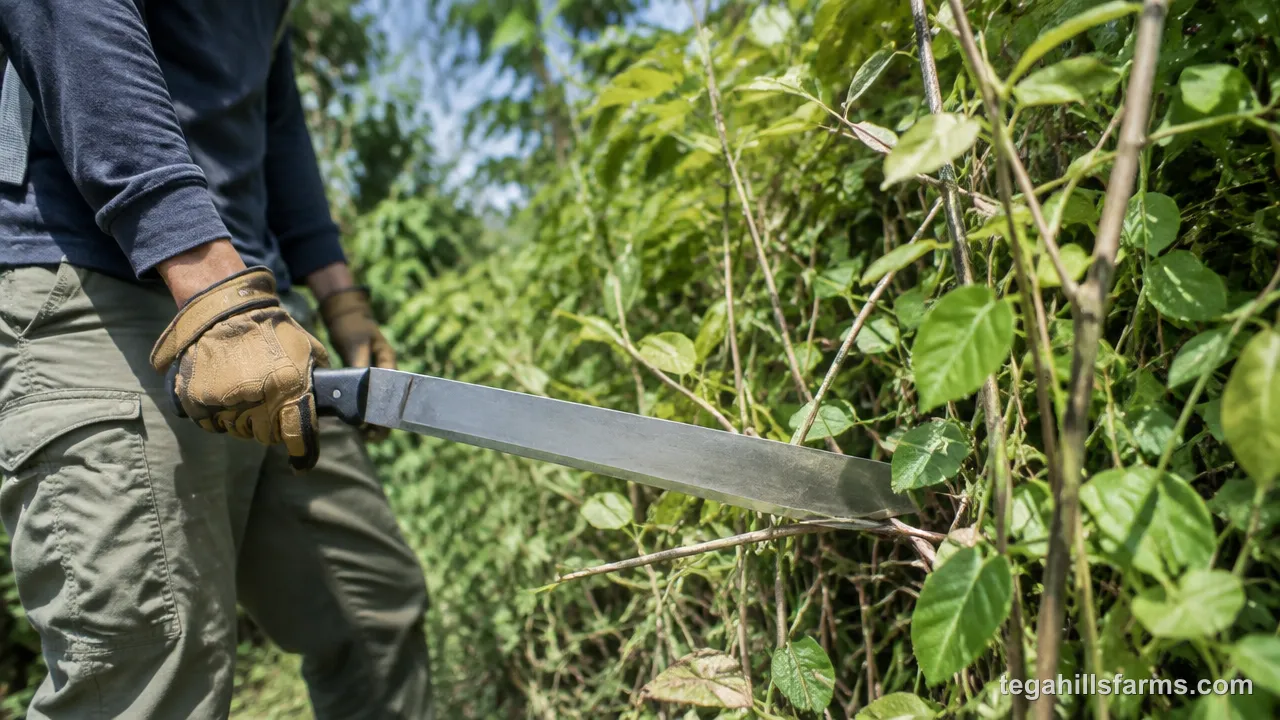
Which Machete Fits Grass, Vines, Thorny Brush or Woody Saplings?
Grass and vines cut best with a light, quick blade that slices as it swings. Thorny brush and woody saplings need more forward weight and thicker steel to get through the stem before it springs back.
Soft growth gives way to speed, so a long, light edge clears more ground per swing, and a recurve or slicing pull handles vines that wrap around the blade instead of snapping. With thorny brush, reach matters too, because a longer blade keeps your hands and forearms out of the canes. Woody saplings reverse the priority. There, mass behind the edge matters more than reach, and a saw spine finishes limbs the edge only notches.
Region shifts the balance too. Dense, humid undergrowth in the Southeast is mostly vines and fast soft growth that stays wet, so reach and rust resistance count for more. Dry western scrub is woodier and tougher, which favors a chopping blade with a full tang.
Each type of growth matches up with blade traits and models like this:
| Growth type | Blade traits that help | Picks that fit |
|---|---|---|
| Grass and weeds | Long, light edge for wide sweeping cuts | Gerber Gator, Corona ErgoHandle |
| Vines | Slicing edge or recurve belly for pull-cuts | Kershaw Camp 10, Gerber Gator |
| Thorny brush | Reach to keep hands back, enough mass to sever canes | Corona ErgoHandle, Cold Steel kukri |
| Woody saplings and limbs | Forward weight, full tang, saw for limbs | Fiskars machete-axe, Golden Bird parang, Grand Way |
How Much Machete Do You Need for Your Workload and Budget?
Occasional bed cleanup works with almost any weight and needs little upkeep. Frequent land clearing is hard on you with a heavy blade, a hard handle or steel that needs constant care. The more hours you swing, the more those traits add up in your hands and back.
For a handful of spring and fall sessions, a light stainless blade with a cushioned handle covers the work and can sit in the shed without much attention. Regular clearing raises the stakes. Handle shock reaches your wrist on every stroke, so a rubber overmold or shock-absorbing grip is worth more, and a full tang matters because the blade takes more hard hits.
Budget machetes typically pair softer stainless steel with molded handles. That keeps them light and rust-resistant but means sharpening more often, and the best machetes under $50 suit that kind of occasional cleanup. Mid-range and premium machetes more often add carbon tool steel, full tangs, protective coatings and better grips, so if clearing is a regular chore, machetes under $100 open up more of those builds.
Take breaks before your grip weakens. Keep your back straight and let the blade’s reach do the work instead of bending into the growth, since swings go wide when your hand is tired and your back is bent.
A long blade that skips off a springy stem keeps traveling, and the natural follow-through of a swing points it toward your shins and the hand holding the brush. Clearing in shorts or bare-handed leaves nothing between that edge and your skin, and one glancing stroke is enough to turn an afternoon of yard work into a trip for stitches.
How Do You Use a Machete to Clear Brush Safely?
Plant your feet shoulder-width apart, swing on a downward diagonal that ends away from your legs, keep a clear circle around you, and wear gloves, eye protection and long pants. Each habit keeps a blade that glances off a stem from reaching you or anyone nearby.
A wide, balanced stance lets you stop a swing that overshoots instead of stepping into it. Cutting at a downward angle severs fibers with less resistance than a flat chop, and if the blade skips, it travels toward the ground rather than your shin. Short, controlled strokes keep fatigue down, which matters because a tired arm is the first to lose control.
Before you start, check for people, pets, wire, stones and stumps within reach of the blade, since a hidden obstacle can stop the edge or send it sideways. To hold a stem steady, grip it well above and behind the cut line, or pull it taut with a hooked stick, so your hand is never in the swing path.
Gloves protect against thorns and improve grip, safety glasses stop flying chips and snapped twigs, and long pants with sturdy boots cover your legs. Sheathe the blade whenever you walk between areas.
How Do You Sharpen, Clean and Store a Machete?
Wipe sap and moisture off after every use, file the edge at its factory angle when it starts to drag, give carbon steel a light coat of oil, and store the machete dry in a dry sheath over winter. Those habits keep the edge cutting cleanly and stop rust before it starts.
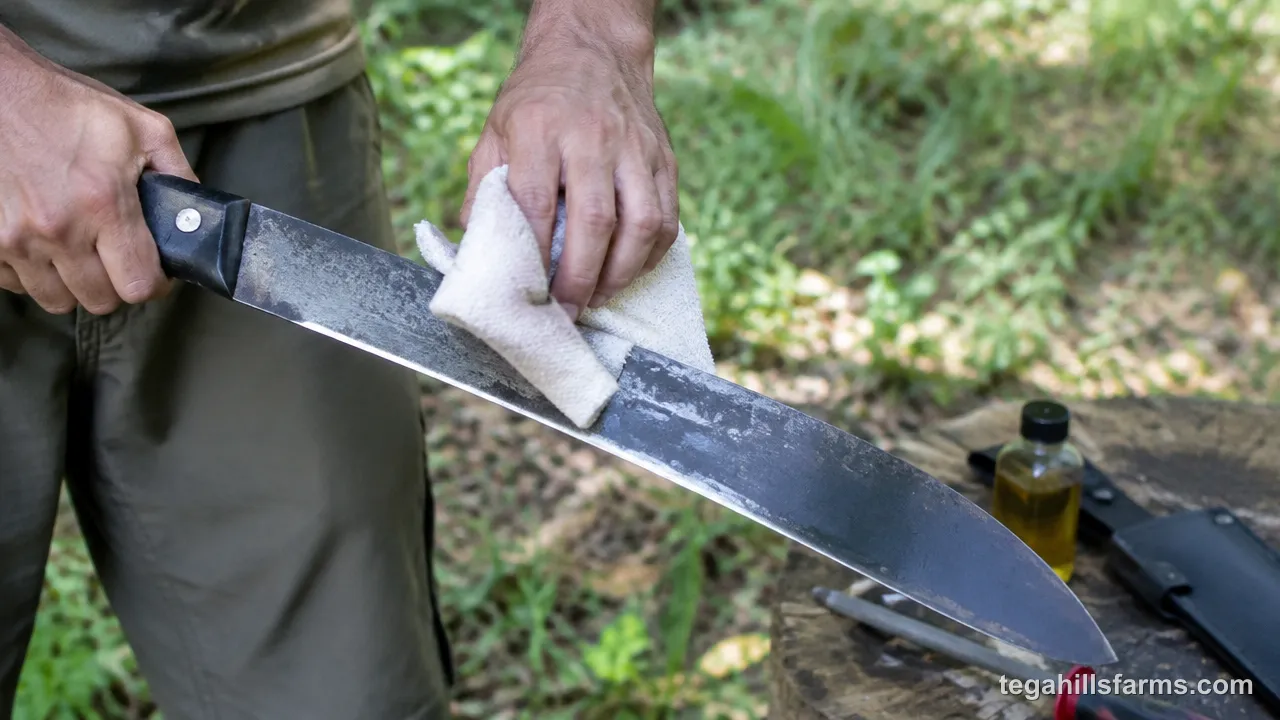
Sap dries into a sticky film that holds moisture against the steel. Wipe the blade with a damp rag, or a little mineral spirits for stubborn sap, then dry it fully.
Sharpen with a mill file or a coarse stone, working from the spine side of the bevel toward the edge and matching the angle already ground into the blade, since changing that angle thins or thickens the edge and alters how it cuts. Work both sides evenly, finish with a finer stone, and wear gloves while you do it.
A thin film of oil on carbon steel keeps out the humidity that causes rust, and a light coat helps coated and stainless blades too. Before winter storage, make sure the sheath is completely dry, because a damp sheath traps moisture against the blade for months. Hang the tool or store it flat in a dry spot, off a damp floor.
How Can You Tell a Machete Is Worn Out or Poorly Made?
A handle that moves or rattles, pitted rust, deep chips, a warped spine, an uneven grind or a sheath that lets the blade slide out all mark a machete to retire or avoid, because each one makes the blade less predictable in a swing.
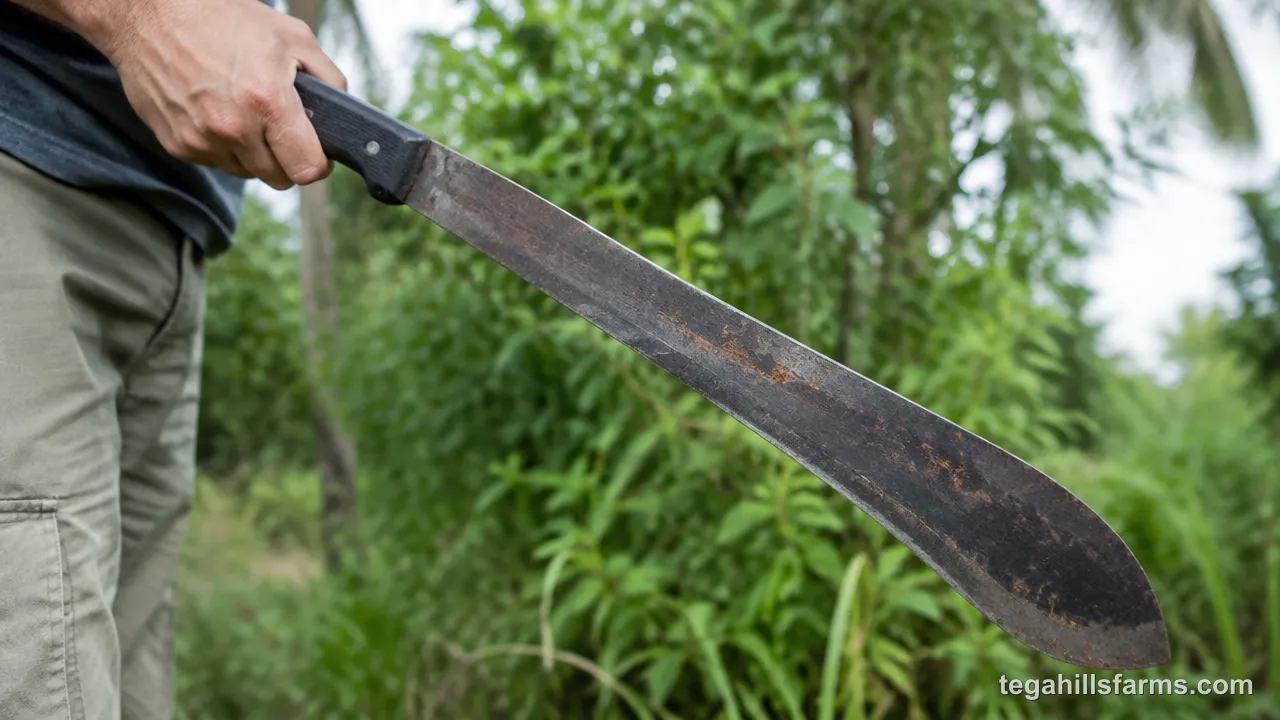
Play in the handle means the tang or its fasteners have loosened, so the blade can shift on impact and twist your wrist or glance off a stem. Surface rust wipes off, but pitting eats into the steel and leaves weak spots and an edge that won’t hold. Deep chips can spread into cracks under heavy chopping, and a warped spine makes the blade strike at an angle instead of square.
On a new machete, check the grind as soon as it arrives. An edge that is thicker on one side or wavy along its length bites unevenly and pulls off line, and it suggests careless finishing elsewhere. Check the sheath as soon as it arrives too. If the blade drops out when you tip the sheath down, it can fall out when you bend or kneel.
What Else Can Clear Brush Besides a Machete?
A brush axe handles thick woody brush and saplings, a sickle handles grass and low weeds, loppers handle individual branches and woody stems, and battery-powered trimmers or saws clear larger areas with less arm effort. A machete fits the middle ground: mixed growth on a modest scale.
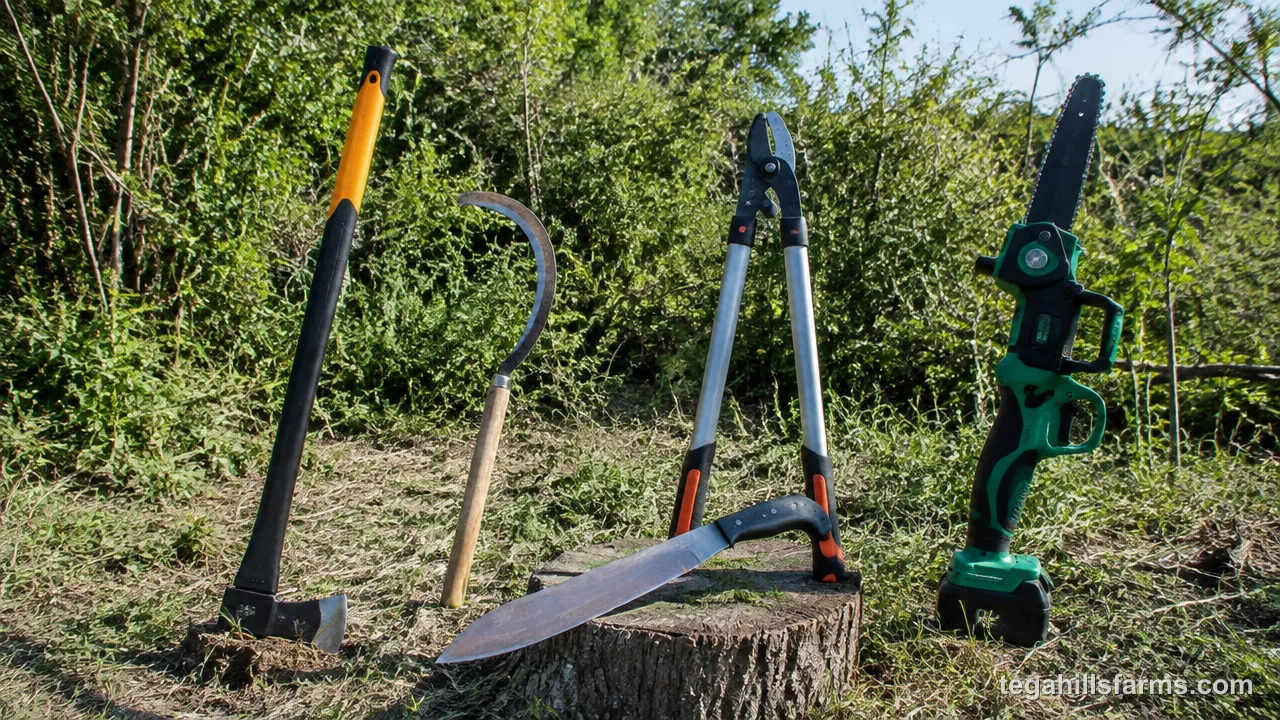
A brush axe, also called a bush hook, has a heavy hooked blade on a long handle. You swing it with both hands and drive more force into stems than a machete can, but it takes more effort and more room to swing. A sickle’s curved blade gathers and slices grass and weeds close to the ground with precise control, though you work bent over and progress is slow across a large area.
Loppers make clean, controlled cuts on branches and woody stems within their jaw capacity, with no swing at all, which makes them the safer choice beside shrubs and perennials. They are slow for tangled growth, since you cut one stem at a time.
Battery-powered string trimmers fitted with brush blades, along with pruning and reciprocating saws, cover ground fastest and spare your arm. The trade-offs are noise, weight on your shoulders, battery runtime and less precision around plants you want to keep.
Is Owning a Machete Illegal in the US?
No, owning a machete as a garden or yard tool is generally legal across the US. What varies are the rules on carrying and transporting one, which differ by state and often by city.
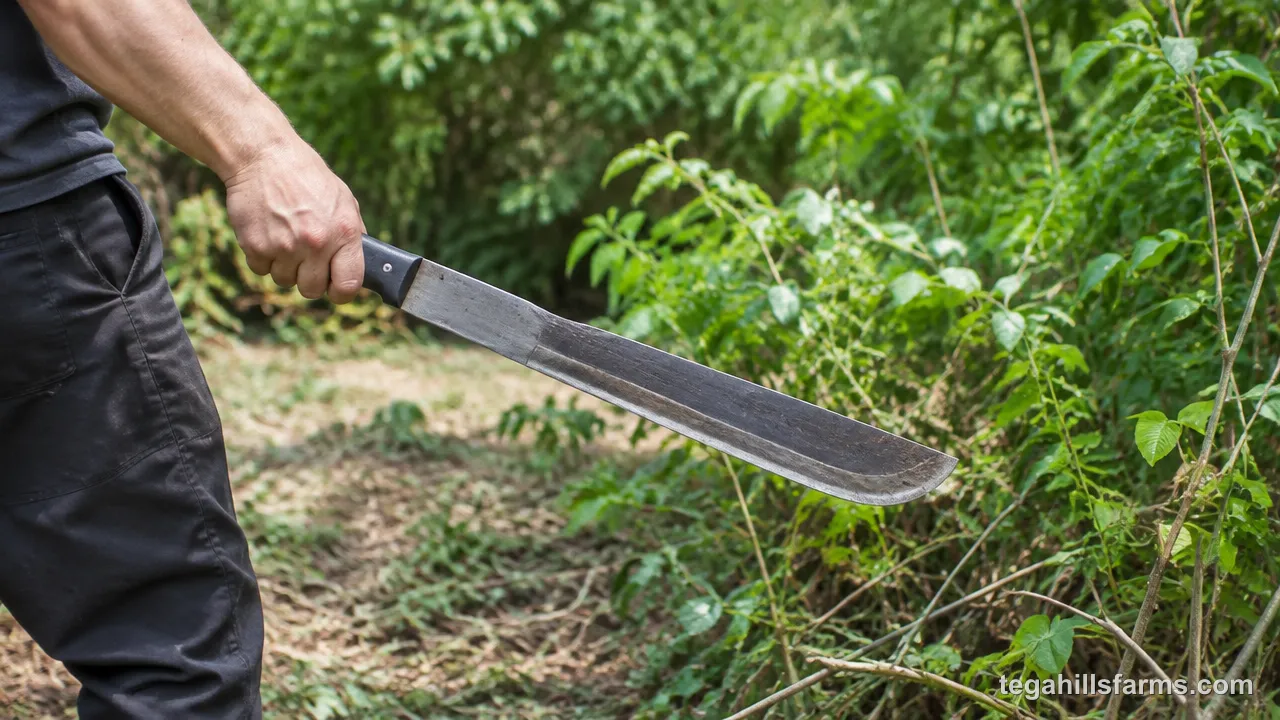
Some places restrict blade length or the open or concealed carry of large blades, and many ban knives and machetes in schools, government buildings and some parks. There may also be rules on how you carry a blade in a vehicle. Because these rules change from one place to the next, check your state and local regulations before carrying a machete off your property, and keep it sheathed and stowed out of reach when you move it between job sites.
Write Your Review
No reviews yet. Be the first to share your experience!