

Aerate while your grass is growing hard: early fall for cool-season lawns and late spring to early summer for warm-season lawns. Prepare a day or two ahead by watering deeply, mowing short and flagging anything buried in the top few inches. Core aeration works only when the tines can reach moist soil and the grass can fill the holes before weeds move in.
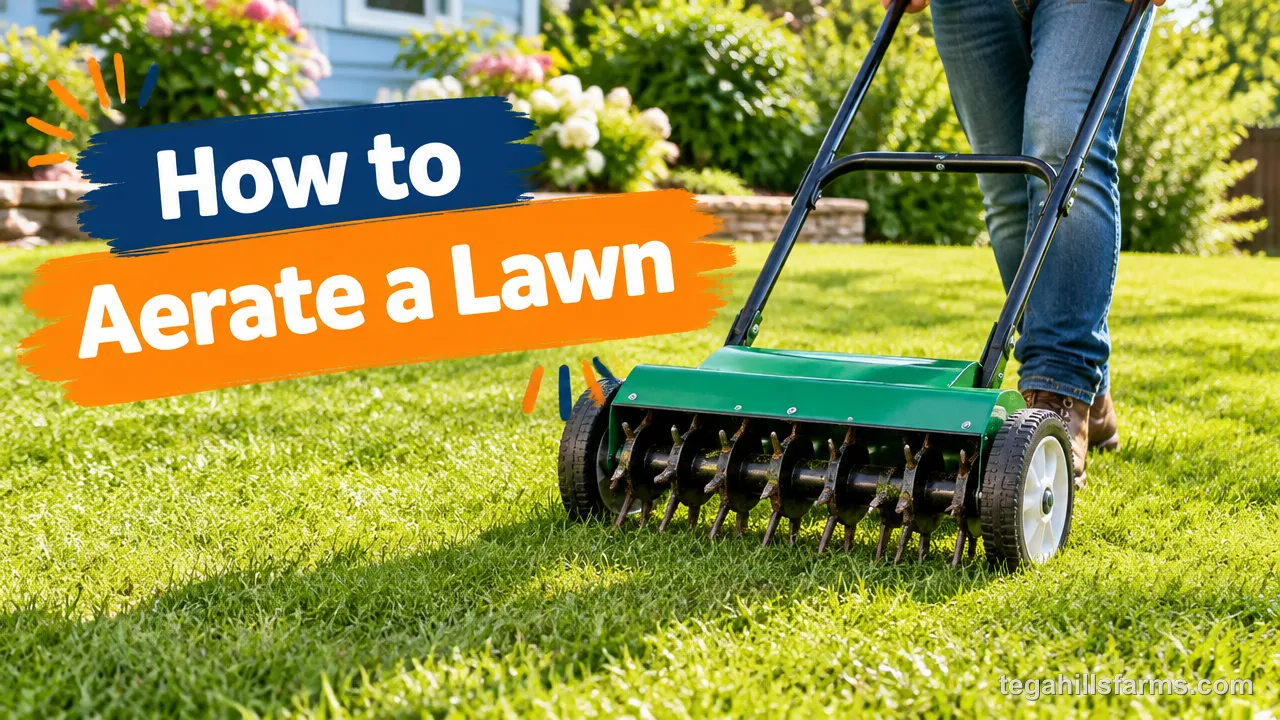
The choice of when and how starts with three facts about your own yard. First, check whether the soil is compacted. Second, identify which grass you grow. Third, consider how much ground you have to cover. Together they decide whether you aerate at all, which season suits your lawn, and whether a hand tool, a push tool or a rented machine fits the job.
Most of what goes wrong with aeration comes from small preparation mistakes rather than the tool. Dry clay throws the tines back up, soggy soil smears the holes shut, and a sprinkler head hidden in the turf cracks under a steel tine. Aerating the wrong grass at the wrong time can leave open holes for weeds through a whole season.
Does Your Lawn Actually Need Aerating?
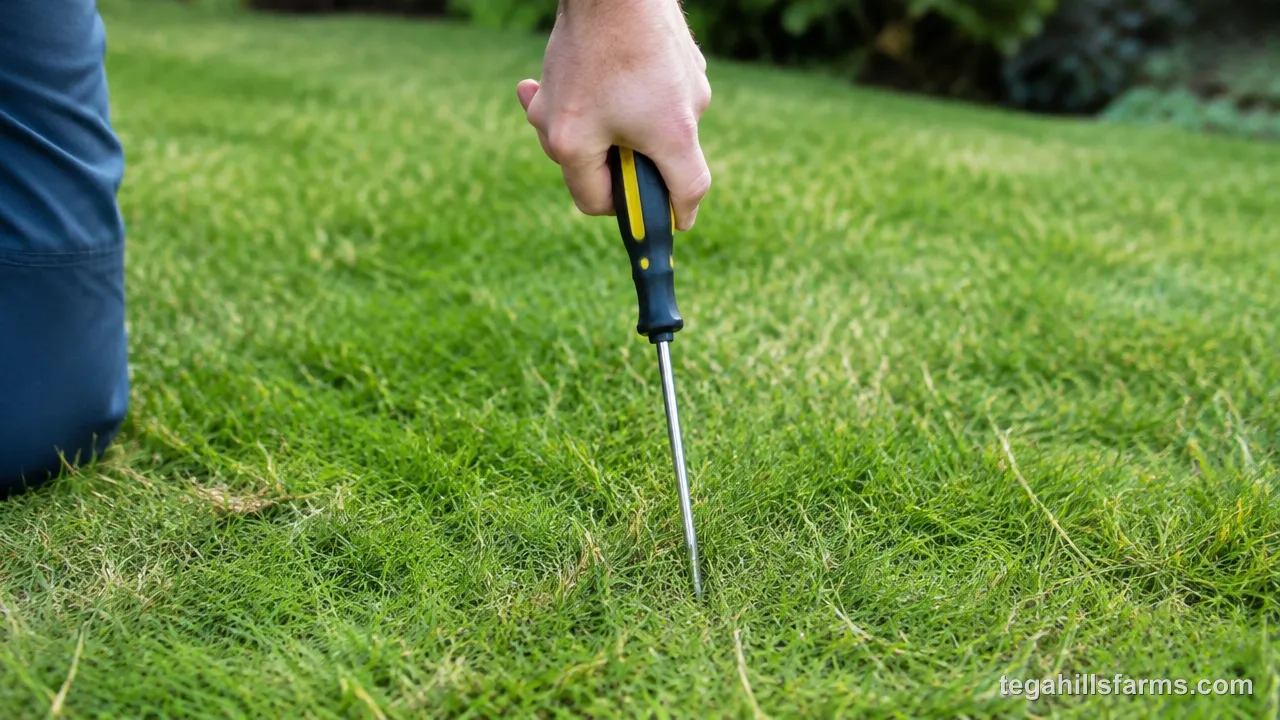
Aerate only when the soil is compacted or the grass sits on a thick thatch layer. A lawn where a screwdriver slides in easily gains little from the work.
Compaction happens when soil particles are pressed together until the small air spaces between them close. Roots need those spaces for oxygen. Water also needs them to soak in, so on compacted ground rain runs off or pools instead of reaching the root zone. Fertilizer sits near the surface for the same reason. The grass responds with shallow roots, thin patches and a lawn that browns quickly in dry spells.
Clay soil compacts fastest because its particles are fine and flat, so they pack tightly under pressure. Foot traffic adds to it. The path to the shed, the strip beside the driveway and the area where children play turn hard long before the rest of the yard.
The screwdriver test tells you more than looking at the grass does. A day after watering, push a long screwdriver into the lawn with hand pressure only:
- If it slides in six inches, the soil is loose enough and you can skip aeration.
- If it stops after two or three inches, or you have to lean your weight on it, the soil is compacted and worth aerating.
Test several spots, because compaction is often patchy. Then cut a small wedge of turf with a trowel and look at the spongy brown layer between the green blades and the soil. A thin layer is normal. A thick, springy mat holds water at the surface and keeps roots from growing down.
Once the screwdriver confirms compaction, the next step is matching the tool to the job, and the guide on how to choose garden tools explains what separates a well-built hand tool from one that bends or clogs.
When Is the Right Time to Aerate a Lawn?
Aerate while your grass is in active growth, so new roots and shoots can fill the holes within weeks instead of leaving bare soil open to weeds.
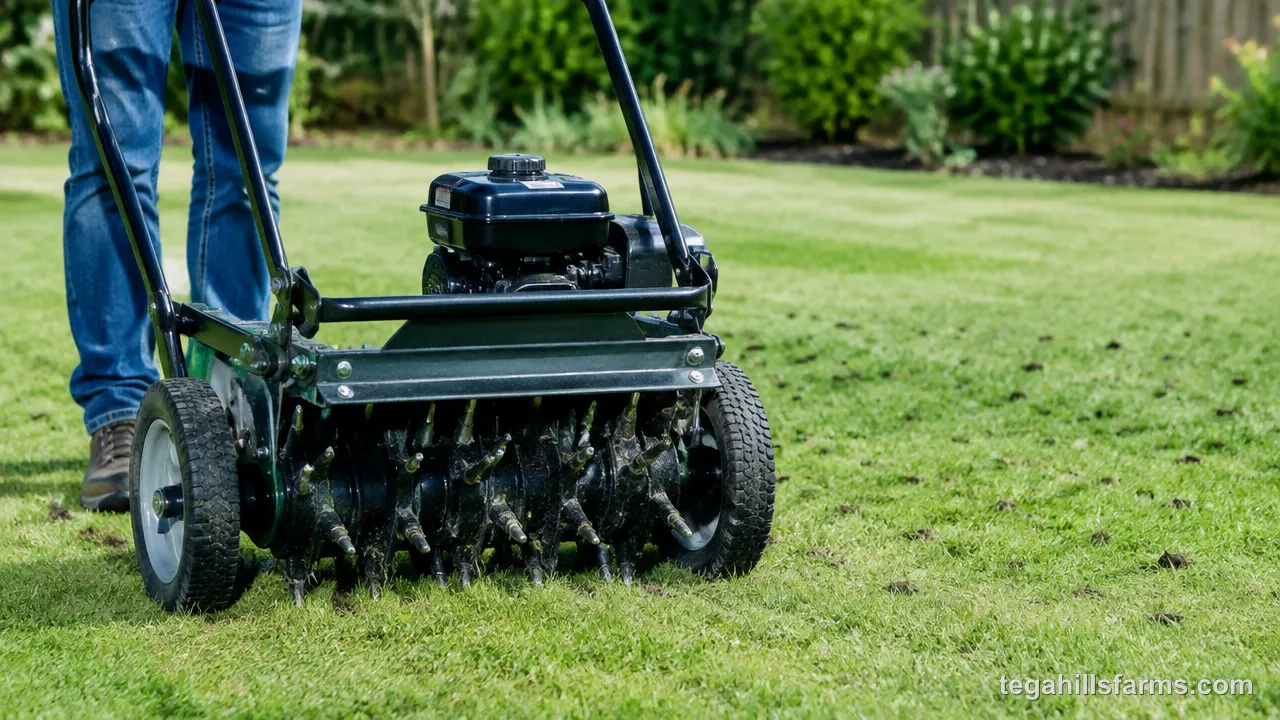
Which months count as active growth depends on whether your lawn is a cool-season or warm-season grass. The two types grow strongest at opposite ends of the year. Soil moisture and weather still decide the exact day. Tines only reach full depth in soil that is moist, and grass already stressed by heat or drought loses more water through fresh holes than it can replace. A cool, damp stretch inside the right season is a better signal than a date on the calendar.
Cool-Season Grasses: Early Fall or Early Spring
Kentucky bluegrass, fescue and ryegrass lawns are best aerated in early fall. Early spring is a second choice.
Fall works well because the soil is still warm from summer while the air has cooled. Warm soil keeps roots growing, and cooler air takes the heat stress off the blades, so the grass puts its energy into filling the holes. Fewer weeds germinate as days shorten, and the lawn has the rest of the growing season to recover before the ground freezes.
Fall timing also suits overseeding. Seed dropped into fresh holes lands on moist, loosened soil just as cool-season grass is growing most actively, so a thin lawn thickens before winter.
Spring aeration works, but with less margin. The grass is pushing top growth rather than roots, and the open holes meet the season when crabgrass and other summer weeds sprout. If you aerate in spring, do it early and treat the lawn as you would after any disturbance. Recovery looks the same in either season: plugs crumble, the holes fill with new roots, and the turf feels firm again underfoot.
The exact window shifts with your USDA Hardiness Zone. Early fall arrives sooner in colder zones and later in milder ones, so watch your own soil and weather rather than a fixed date.
Warm-Season Grasses: Late Spring to Early Summer
Bermuda, zoysia, St. Augustine and centipede lawns should be aerated once they have fully greened up and are growing strongly. That usually means May or June.
These grasses spread by runners above and below the ground. At the height of their growing season, those runners grow across the open holes quickly, and roots fill the space the plugs left. Aerating at that point puts the stress on the lawn exactly when it is best able to repair itself.
Aerating in dormancy or in fall does the opposite. Warm-season grass slows down as nights cool and stops growing once it browns off, so the holes stay open for months. Winter annual weeds germinate in that bare, loosened soil and have the whole cool season to establish before your grass wakes up.
Expect about 3–4 weeks for a warm-season lawn to recover and show new growth after aerating in its peak season. Keep traffic light during that time.
Newly seeded or sodded grass needs at least a year before its first aeration. Until then, its roots are still knitting into the soil underneath, and tines pulling plugs can tear the young turf loose from the ground.
Core Aerator or Spike Aerator: Which Works Better?
A core aerator works better on compacted soil because it removes plugs of soil, while a spike aerator only pushes soil aside and can tighten the walls around each hole.
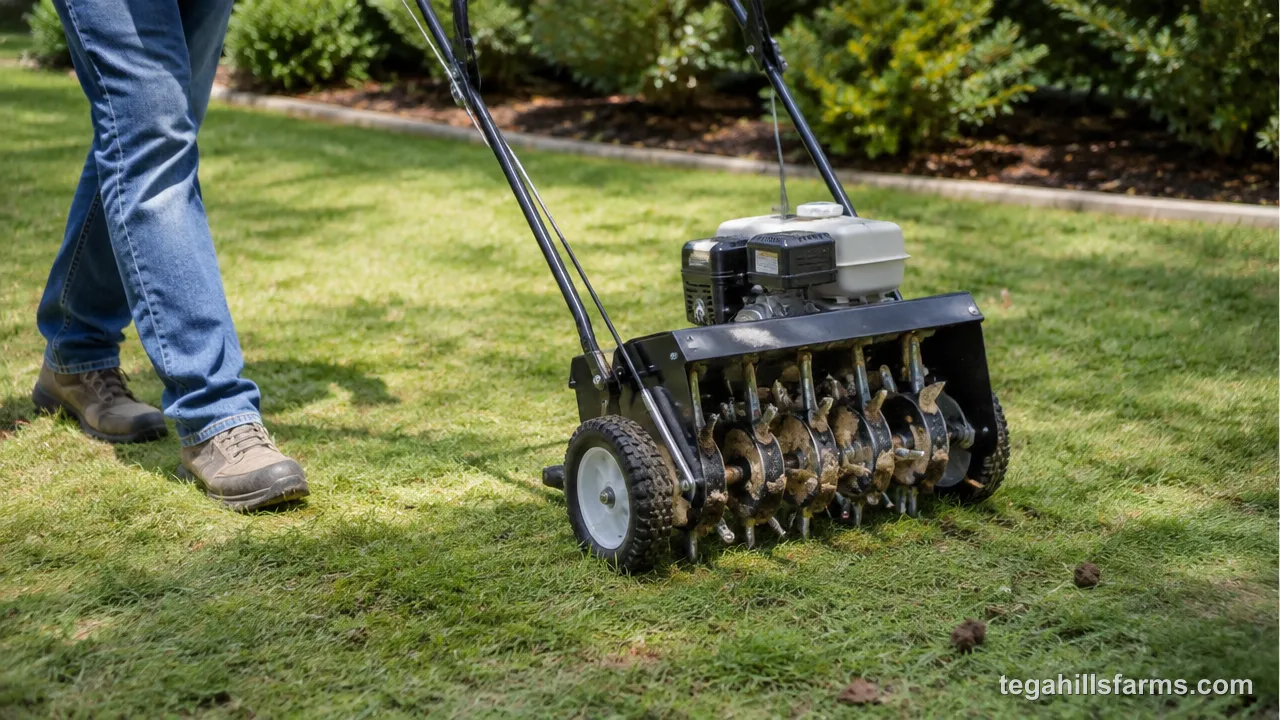
A core tool drives hollow tines into the ground and lifts out cylinders of soil. Typical plugs are 2–3 inches deep and 0.5–0.75 inches in diameter. Each hole is real open space. Air reaches the roots, water soaks down instead of running off, and roots grow into the gap as the surrounding soil relaxes into it.
A spike tool uses solid tines. Each spike makes a hole by shoving soil sideways, which packs the soil around the hole tighter than before. On loose ground that hardly matters. On compacted clay, you trade one tight layer for a ring of even tighter soil around every puncture. That is why I treat core aeration as the fix for compaction and spikes as something else.
Spikes and aerator shoes have a narrower place. On sandy or loamy soil that passes the screwdriver test, a spike pass can help water soak in before a dry spell or open the surface slightly before seeding. Aerator shoes work the same way, with spikes strapped under your boots, and give you little control over depth or spacing.
The two tools also feel different in use. A spike tool goes in with less effort, because nothing has to come out with it. A core tool asks for a firm step on the foot bar and a pull to lift the tines, and the effort rises in clay. Wet clay also packs inside hollow tines until they stop cutting clean plugs. Usually the next plug pushes the stuck one out. When it doesn’t, poke the soil free with a stiff wire or an old screwdriver, then rinse the tines with a garden hose before the soil dries hard inside them.
Which Aerating Tool Fits Your Lawn Size and Soil?
Lawn size and soil type set the choice, along with how much stepping and pulling your knees, wrists and back can take in one session.
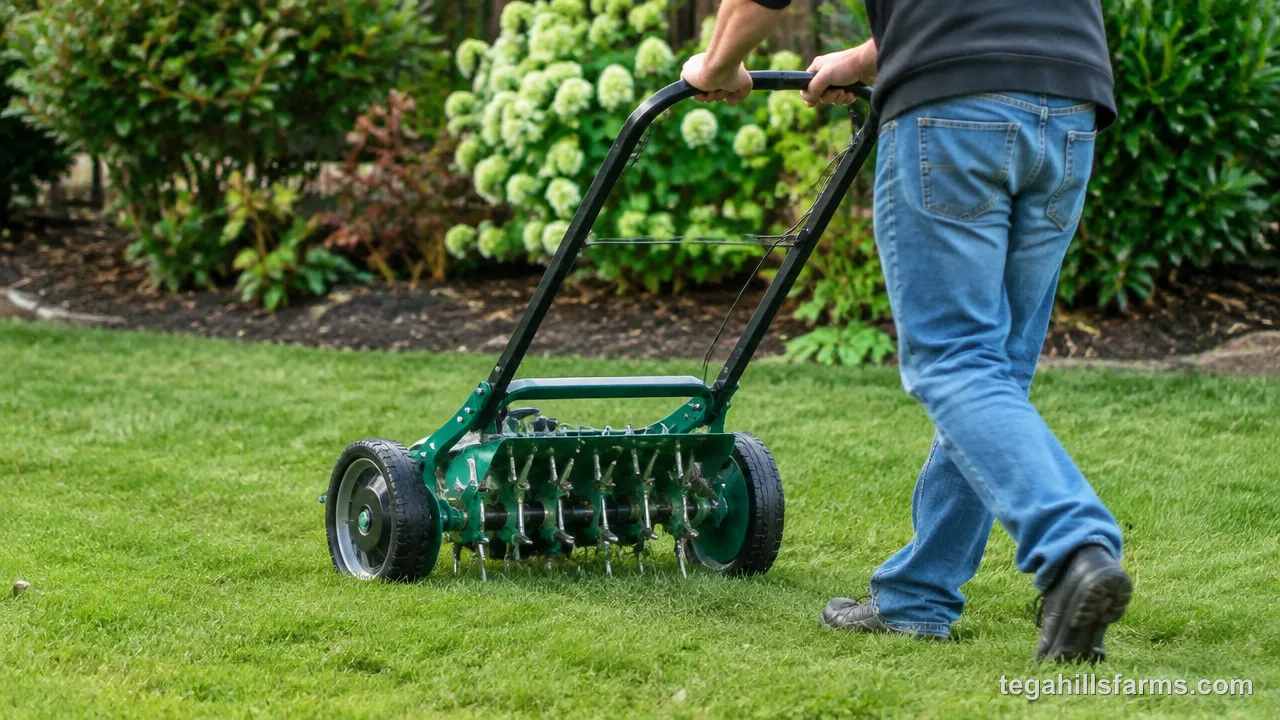
A small lawn on workable soil is a reasonable job for a hand tool. A large lawn, or heavy clay across a wide area, pushes you toward a machine. Build quality matters as much as tool type, and a rundown of what to look for in garden tools covers the handle materials and joints that keep a frame from flexing under your weight.
Manual Core Aerators for Small and Medium Lawns
A manual core aerator is a steel frame with hollow tines at the bottom, a foot bar above them and a T-handle at the top. The Yard Butler Manual Lawn Coring Aerator is a common example of the type. You set the tines on the turf, step on the foot bar to drive them in, rock the handle back slightly and lift. Each push pulls two plugs, and the next push ejects the previous ones from the top of the tines.
That rhythm is steady but slow. At about two plugs per push, a thousand square feet takes a couple of hours, and clay soil slows the pace further because each step needs more weight and the tines clog more often.
The build decides how your body feels at the end of that time. A wide foot bar spreads the pressure across the sole of your shoe instead of a narrow strip under the arch. A handle that reaches about waist height lets you stand upright and push down with your body weight rather than bending over the tool. Wide or padded grips spread the load across your palms, which matters when you rock the tool back dozens of times. Welded joints hold their shape, while bolted ones can loosen and wobble over a season. If grip strength is limited, the garden tools for arthritis guide explains handle shapes that put less load on finger and wrist joints.
Push Spike Tools, Tow-Behind Plug Aerators and Rented Machines
Push spike aerators from Agri-Fab and Brinly roll a drum of solid spikes across the lawn as you walk. The Agri-Fab push spike aerator covers a 16-inch width and makes holes up to two and a half inches deep, but it removes no soil. That makes it a tool for loosening the surface of soil that is already in reasonable shape, not a cure for compaction.
Tow-behind plug aerators hitch to a lawn tractor. A weighted tray presses rows of hollow tines into the ground as the tractor pulls the frame, so you get true core aeration across a large area without stepping on anything. They make sense if you already own the tractor.
Without a tractor, renting a gas-powered core aerator makes sense on lawns over about 5,000 square feet. These machines pull plugs about 2–3 inches apart, closer than you would space holes by hand, and cover ground far faster than a manual tool. The trade-off is different work rather than less work. A rental machine is heavy to load and unload, it pulls hard against your arms when the tines bite, and turning it at the end of each row takes upper-body strength.
Aerator shoes sit at the other end of the range. They suit a small patch of loose soil, and they share the same limits as any spike tool.
How Do You Prep the Lawn Before Aerating?
Moist soil, short grass and marked hazards let the tines reach full depth without damaging anything underneath.
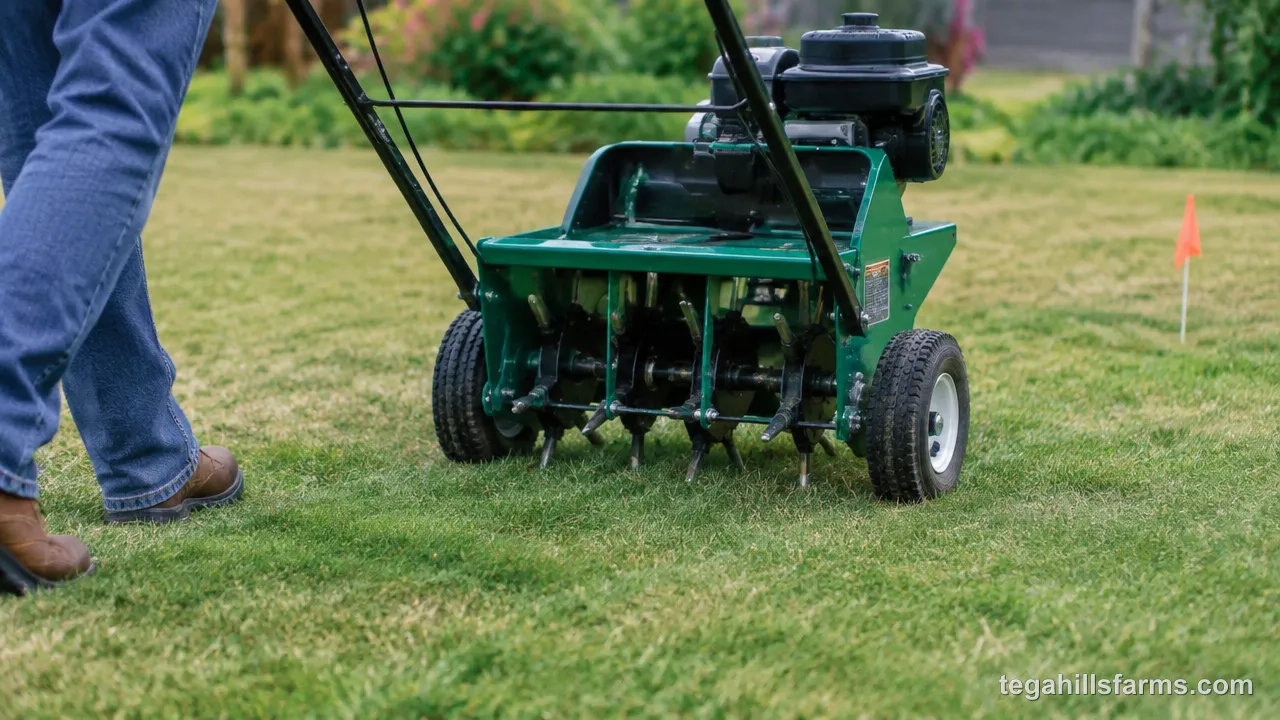
Soil moisture affects the result more than any other factor. Dry, hard soil throws the tines back up, so you get shallow holes and broken plugs that do little for the roots. Soggy soil fails the opposite way: the tines smear the sides of each hole smooth, which seals them against air and water, and wet soil packs inside the hollow tines. Mowing comes next, because tall grass cushions the tool. Marking comes last, and it protects both your irrigation and your tool.
Water and Mow So the Tines Can Reach the Soil
Water the lawn deeply a day or two before you aerate, then wait until the surface has dried enough to walk on without leaving footprints. The goal is soil that is moist at depth but firm on top.
The screwdriver from the compaction test works as a moisture check too. It should go in with steady pressure and come out with a little damp soil clinging to it, not mud. If it stops short, water again and wait. If water pools around it, give the lawn another day.
Rain can do the watering for you. Plan to aerate after a soaking rain once the surface drains, not during a storm or right after one. Heavy, wet ground is also easy to rut under foot or under a machine.
Mow to about 1.5–2 inches, but don’t scalp the crown, the growing point at the base of each grass plant. Shorter grass lets the tines reach the soil instead of riding on a cushion of blades, and it makes the plugs easier to see as you work. Bag the clippings so they don’t mat over the holes.
Plug quality tells you whether the soil was ready. Dusty soil gives crumbly fragments and shallow holes. Muddy soil gives smeared, sticky plugs that clog the tines. Moist soil gives clean cylinders that drop out whole.
Mark Sprinkler Heads, Cables and Other Hazards
Before the first push, walk the lawn and put a flag beside every sprinkler head and valve box. Mark any shallow buried lines you know about too, including drip irrigation tubing, invisible fence wire and low-voltage cables for landscape lighting. These often sit only a few inches down, well within reach of an aerator tine.
A steel tine hitting any of them causes damage you may not see right away. A sprinkler head cracks and sprays sideways the next time the system runs. A poly irrigation line splits and leaks slowly into the soil. A cut fence wire breaks the loop, and the boundary stops working. A nicked lighting cable can fail at a splice weeks later.
A hand tool still needs this check. Your full body weight on the foot bar drives the tines down with real force, and you cannot feel a thin cable through the frame until it is already cut.
Clear the surface while you are walking it. Sticks, stones and old landscape staples can bend a hollow tine or knock it out of line, and a bent tine no longer cuts a clean plug. Pick up dog toys and hoses as well, since the tines will punch straight through them.
How Do You Aerate a Lawn by Hand, Step by Step?
Work the tool in straight rows, pulling a clean plug at each step and spacing holes evenly, then cross the most compacted areas with a second pass.
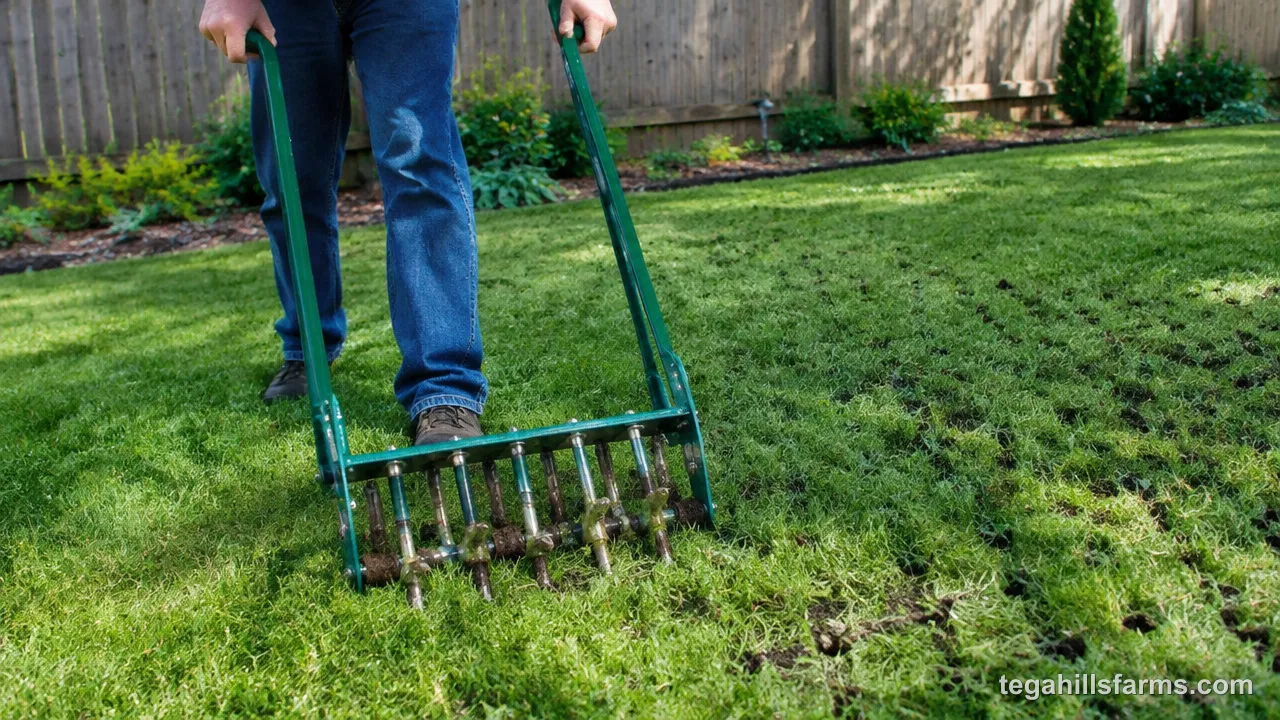
- Start at one edge of the lawn so you never step back across ground you have already done. Set the tines flat on the turf with the handle upright.
- Step on the foot bar and let your body weight drive the tines to full depth. Shallow holes leave the compacted layer below untouched, so keep pressing until the foot bar meets the grass.
- Rock the handle back slightly and lift straight up. The tines should come out carrying clean plugs, and the next push will eject them.
- Move forward and repeat, putting holes every four to six inches. Closer spacing means more open soil for roots to reach, so tighten the spacing where the screwdriver test was hardest.
- Work in straight rows across the lawn, overlapping the edge of each row slightly with the one before it.
- In compacted areas, make a second pass at right angles to the first. The crosswise holes break up the soil between the first set.
- Give heavy-traffic spots such as paths, gate areas and play zones the most holes, since they compact fastest and need the most relief.
Pace the work so your back holds up for the whole lawn. Break the yard into sections and rest between them. Switch the foot you press with from row to row. Keep your back straight and let your weight, not your arms, do the driving. Three short sessions leave you in better shape than one long one.
Clear mud as soon as plugs stop ejecting cleanly. Tap the tines against a hard surface, push stuck soil out with a stiff wire, and rinse the tines when you finish. Hollow tines dull over time, and the steps for how to sharpen garden tools apply to their cutting edges as much as to a spade.
Without a dedicated aerator, a garden fork is a weaker substitute. Push the tines in to full depth, rock the fork back slightly to open the holes, and move on. A fork punches holes like a spike tool and removes no soil, so it gives only mild relief on compacted ground. It works for small patches and for spots too tight for a coring tool, such as around tree roots.
What Should You Do After Aerating?
Leave the plugs where they fall, then overseed, fertilize and water, in that order, while the holes are still open.
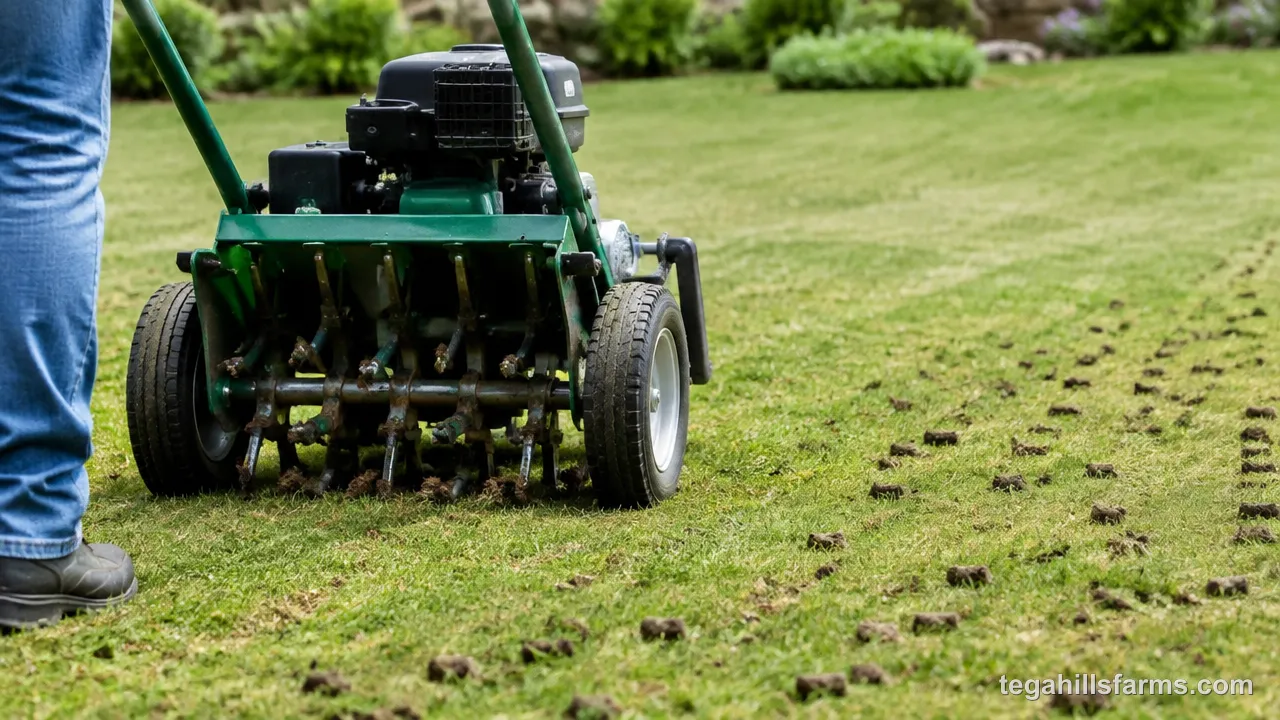
The days right after aeration give you the best access to the root zone you will have all year. Seed, nutrients and water drop straight into loosened soil instead of sitting on top of thatch or running off a hard surface. That access doesn’t last. As new roots fill the holes and the plugs break down, the surface closes again. The steps that follow aeration matter as much as the aeration itself.
What Happens to the Soil Plugs, and When Should You Overseed?
The plugs break down on their own over two to four weeks. Watering speeds this up, because moisture softens the soil and lets rain and irrigation wash it back into the turf. If the scattered plugs bother you, mow over them once they dry, or break them up with the back of a leaf rake. Either way, the soil and organisms in each plug return to the surface instead of leaving the lawn.
Overseed right after aerating. Seed scattered across the lawn rolls into the open holes, where it sits in direct contact with loose, moist soil. That contact is what makes seed germinate reliably, and the walls of each hole shade the seed and shelter it from drying wind and birds. Seed spread on a hard, unaerated lawn mostly sits on top of the grass and dries out.
Dethatching is a separate job. It tears out the dead layer of stems and roots at the soil surface, while aeration opens holes through it. Both put stress on the grass, so doing them on the same day piles two shocks onto the turf at once. If your lawn needs both, schedule them as separate jobs and give the grass time to recover between them.
Should You Fertilize and Water After Aerating?
Yes. Fertilizer applied right after aeration falls into the open holes and reaches the root zone directly, instead of sitting on thatch or washing off compacted soil. If you overseeded, use a starter fertilizer made for new grass. If you didn’t, use the fertilizer that matches your grass type and season.
Watering depends on whether you seeded. New seed has to stay moist on the surface until it germinates, so water lightly and often rather than with one long soaking. Run the sprinkler in short cycles so water soaks into the holes instead of running across the surface and carrying seed with it. Once the seedlings are up and rooted, switch to deeper, less frequent watering so roots grow down. Without new seed, water deeply and less often from the start.
The lawn has recovered when new growth has filled the holes and the turf feels firm again underfoot. Hold off on mowing new seedlings until they reach your normal mowing height. Mow established grass as usual once the surface is firm, and keep the mower blade sharp so it cuts cleanly rather than tearing tender growth.
A clay lawn beside a busy back door can turn hard again within a single season, while a sandy lawn across the street can stay loose for years after one aeration. Treating both lawns the same way costs one of them: the clay lawn stays starved for air between sessions, and the sandy one loses roots and turf to every pass it never needed.
How Often Should You Aerate: Clay Versus Sandy Soil?
Clay soil and lawns with heavy foot traffic usually need aeration every year, while sandy or loamy soil often goes several years between sessions. The difference comes from the soil itself. Fine clay particles pack back together under feet, mowers and rain, so the holes you opened close again within a season or two. Coarse sand resists compaction, and loam sits in between.
Watch for the lawn telling you the holes have closed. The screwdriver test turns hard again in the same spots. Water pools after rain or runs off instead of soaking in. Grass thins along paths and in play areas while the rest of the lawn looks fine. Any one of these is a reason to test, and two or three together are a reason to aerate.
Aerating a healthy lawn more often gives little benefit. Loose soil already lets air and water through, so extra holes add nothing for the roots. Each pass still tears some roots and opens bare soil, which gives weeds a place to start and costs you an afternoon of work.
What Mistakes Make Aeration Fail?
Most failed aeration comes down to timing, soil moisture or the wrong tool, and each mistake has a predictable effect on the lawn.
- Wrong season for the grass type. Cool-season grass aerated in summer heat, or warm-season grass aerated in fall, can’t grow back into the holes, so weeds take the open soil.
- Dry or soggy soil. Dry soil throws the tines back and leaves shallow holes. Soggy soil smears the hole walls shut and clogs the tines.
- Spikes on compacted ground. Solid spikes press the soil sideways and tighten the ground around each hole, which works against the reason you aerated.
- Aerating new seed or sod too soon. Young turf hasn’t rooted into the soil underneath, and the tines pull it loose.
- Skipping overseeding on a thin lawn. The holes fill with weeds instead of grass, and the bare patches stay bare.
- Not marking buried lines. A tine through an irrigation line, fence wire or lighting cable turns a lawn job into a repair job.
Aerating a Lawn: Quick Answers
How long does a lawn take to recover after aerating?
Most lawns show new growth in the holes within a few weeks, as long as you aerate during active growth and keep the soil moist. Warm-season grass at its summer peak fills in quickly. Recovery slows if the lawn is stressed by drought, heavy traffic or aeration done outside its growing season.
Should you mow before aerating?
Yes. Mow a little lower than usual a day or two before aerating, but stop short of scalping the crown at the base of the plants. Shorter grass lets the tines reach the soil instead of riding on blades. Bag the clippings so they don’t cover the holes or clog the tines.
Does a lawn need aerating every year?
Only if the soil compacts quickly. Clay soil and lawns with heavy foot traffic usually benefit from yearly aeration. Sandy and loamy lawns often go several years between sessions. Let the screwdriver test decide: if it slides in easily, the lawn doesn’t need aerating that year.
Can you aerate wet soil?
Moist soil is ideal, but wet, muddy soil is not. Waterlogged ground smears the walls of each hole smooth, which seals them against air and water, and packs sticky soil inside hollow tines. After heavy rain, wait until the surface drains and you can walk across the lawn without leaving footprints.
How long do the soil plugs take to break down?
Plugs break down on their own within a few weeks, faster with regular watering or rain. You can leave them on the surface, mow over them once they dry, or break them up with the back of a rake. The soil and organisms in them return to the lawn either way.




Write Your Review
No reviews yet. Be the first to share your experience!