

PSI measures how hard the water hits, and GPM measures how much water does the hitting. Cleaning speed depends on both. A machine with strong pressure and weak flow breaks stains loose but rinses them away slowly. A machine with strong flow and weak pressure rinses fast but leaves bonded grime on the surface.
The right balance depends on three things: what the surface is made of, how much area you clean, and how often you pull the machine out. A homeowner washing a car and a patio needs a different mix than someone stripping a whole driveway every spring or washing a fleet of trucks every week.
The common worry runs in two directions. Buy too little machine and every job takes twice as long, with stains that never fully lift. Buy too much pressure and you can splinter deck boards, etch concrete, or force water behind siding.
Check whether a spec sheet lists both numbers and whether they are continuous ratings. A machine that advertises only a headline PSI is hiding half of what decides how it cleans.
What Are PSI and GPM in Pressure Washers?
Pounds per square inch (PSI) rates the force of the water stream, and gallons per minute (GPM) rates the volume of water the pump moves through the nozzle each minute. Pressure decides what the spray can break loose. Flow decides how fast that material leaves the surface.
PSI and GPM are the two numbers that shape how to choose a pressure washer for the jobs around your house, and each one describes a different half of the work. The two ratings differ on every point that matters at the spray tip:
| Criterion | PSI | GPM |
|---|---|---|
| What it measures | Force of the water stream | Volume of water delivered |
| Unit | Pounds per square inch | Gallons per minute |
| Main cleaning job | Breaking stuck-on grime loose | Rinsing loosened grime away |
| Most noticeable on | Concrete, rust, oil stains | Large areas, siding, vehicles |
| Changed by nozzle tip | Yes, a smaller orifice raises it | Stays close to the pump’s output |
| Residential range | 1,500 to 4,000 PSI | 1.2 to 4.0+ GPM |
| Risk when set too high | Etched wood, stripped paint | Higher water use |
PSI: Water Pressure That Breaks Through Grime
Each pound per square inch is force pressed onto a small patch of surface. A higher rating means the stream hits harder and can work under dirt that has bonded to the surface. The pump builds that force by pushing water through the nozzle orifice, a small opening that squeezes the flow into a fast, concentrated jet.
Force matters most on dried mud, mildew stains, oil spots, and rust. Water without enough pressure just runs over these materials. On hard surfaces like poured concrete or brick, more PSI means fewer passes before the stain lets go. The same force works against you on softwood, painted trim, and window seals, where a strong jet can raise wood fibers, lift paint, or push water past a gasket. PSI decides whether a stubborn stain comes off at all, and also how carefully you have to aim.
GPM: Water Volume That Rinses Away Debris
Flow is the volume of water leaving the tip each minute. It decides how quickly loosened dirt gets carried off and how wide a path you can rinse in one pass. More water means more mass moving across the surface, so grime and cleaning solution wash away before they can settle back into pores or dry into streaks.
Low flow shows up as extra passes. The spray breaks the dirt free, but the thin stream can’t flush it off, so you go over the same strip again to clear the slurry. On a two-car driveway, a long fence, or a vehicle, that repetition adds up quickly. Higher flow also wets a wider area at once, which helps when you are rinsing detergent off before it dries. GPM matters most once the job grows larger than a single stain.
How Do PSI and GPM Work Together?
Pressure loosens dirt and flow carries it off, so a machine’s total cleaning power comes from multiplying the two ratings rather than from reading either one alone. This matters as soon as you compare two machines with different strengths. It also shapes how to use a pressure washer on a given job, because tip choice and wand distance shift the balance between prying force and rinsing volume.
The Cleaning Units Formula
Cleaning units (CU) are PSI multiplied by GPM. The result is one score for the total work a machine can do on a surface. A higher CU means more area cleaned per hour, because the machine loosens and removes grime faster at the same time.
The formula responds equally to both inputs. Raising either rating raises the CU in proportion, so a machine with modest pressure and generous flow can match one with a big pressure number and a weak pump. CU works best for comparing machines in the same class, such as two gas units you are considering for a driveway.
The score has limits. It does not tell you whether the pressure is safe for a given surface, and two machines with the same CU behave differently: one is better at prying, the other at rinsing. Multiply continuous ratings, not peak figures, because an inflated PSI makes the CU look better than the machine performs.
Why One Metric Alone Doesn’t Tell the Whole Story
A high-pressure, low-flow machine is common among compact electric units. With a narrow tip it cuts a clean line through grime on concrete, but the small volume of water can’t clear the loosened slurry. You make pass after pass over the same strip, and the dirty water dries back into an uneven, striped finish. The spec sheet looks strong, but the driveway takes all afternoon.
Flip the balance and the opposite problem appears. A high-flow, low-pressure setup floods the surface and moves loose dirt and pollen easily, but oil, algae stains, and dried mud stay put because nothing has enough force to break their grip. You end up relying on chemicals or a scrub brush to do what the spray can’t.
When the specs are balanced, removal and rinsing happen in the same pass, so you cover each section once and move on. Read both numbers together, and treat a spec sheet that leads with only one of them as an incomplete picture of how the machine will clean.
Which Matters More: PSI or GPM?
Neither wins outright: PSI matters more on hard, stained surfaces, while GPM matters more on large or delicate surfaces where speed and gentle rinsing count. The material and the size of the area decide which one leads, because the same stream that clears an oil stain can splinter a cedar deck.
When PSI Takes Priority
Hard surfaces with bonded stains need pressure first. Concrete, brick pavers, and stone hold oil, rust, tire marks, and old sealer deep in their pores, and only a forceful jet reaches into that texture and breaks the bond. Extra flow at low pressure just runs across the top and carries off the loose dust while the stain stays in place.
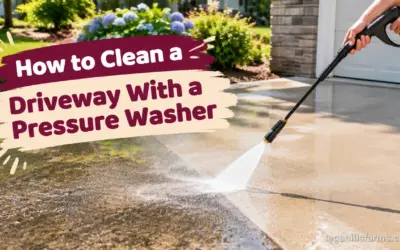
For concrete, a common starting point is 1,800 PSI on residential slabs and 2,500 PSI for commercial jobs. Heavier traffic and older stains call for more force. Those starting points apply directly to how to clean a driveway with a pressure washer, where a surface cleaner attachment spreads that pressure evenly and prevents the stripes a single jet can leave. GPM still affects how fast the job goes, but it can’t make up for a pressure rating that’s too low to lift the stain. On concrete and masonry, PSI is the spec that decides the result.
When GPM Takes Priority
Soft or large surfaces flip the priority. Vinyl and painted siding, stucco, roofs, and building exteriors can be damaged by high pressure, which forces water behind laps and lifts paint. On these surfaces, cleaning chemicals do the loosening and the job of the water is to rinse a wide area thoroughly.
Soft washing siding typically runs at only 100 to 800 PSI but uses 4.0 to 10 GPM, a gentle stream delivered in volume. That pairing is the basis for how to clean vinyl siding with a pressure washer without water getting into the wall cavity. The same logic applies to fleet washing and storefronts: when the surface takes little force and the job covers hundreds of square feet, flow is what shortens the work. For delicate materials and big areas, GPM is the more important spec.
Balancing Both for Versatile Cleaning
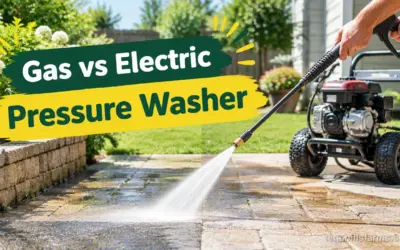
Most homeowners need one machine for a car, a deck, siding, and a driveway, so a balanced spec works better than an extreme in either direction. A unit in the middle of the residential pressure range, with flow toward the upper end of the residential range, can handle the driveway at full force and soften for everything else through nozzle changes and distance. That middle ground also frames the choice between gas vs electric pressure washers, since gas models usually deliver the extra flow.
- Choose higher PSI if most of your jobs are concrete, masonry, rust, and oil stains.
- Choose higher GPM if you wash siding, vehicles, or large areas and want fewer passes.
For a typical suburban lot with siding and a driveway, I’d lean slightly toward flow, because it speeds up the jobs you do most often.
What PSI and GPM Do You Need for Common Cleaning Tasks?
Most home jobs fit within the residential class, while daily commercial work needs both higher pressure and much higher flow. A few specialty tasks break the usual pattern entirely. Matching the machine to the job you do most often prevents both underpowered frustration and surface damage.
Residential Applications
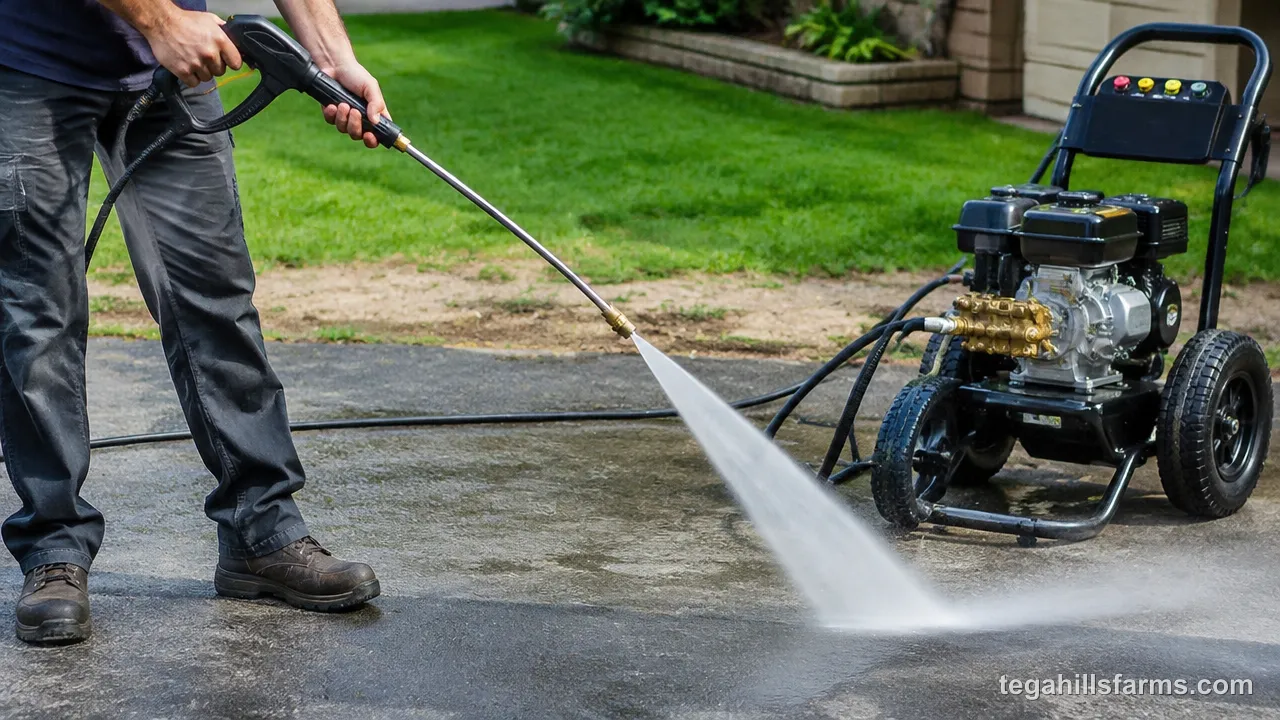
Vehicles need the least force. A starting recommendation for car detailing is 1,000 to 2,000 PSI with 1.2 to 3.0 GPM, which is enough to lift road film without risking the clear coat, trim, or the seals around windows and doors. The flow does most of the work here, flushing soap and grit off before they can scratch the finish.
Decks sit in a similar pressure band, typically 800 to 2,000 PSI, but they benefit from more water at 3 to 8 GPM for both wood and composite boards. The lower pressure protects soft wood fibers from furring, and the higher flow rinses mildew and cleaner out of the grain in fewer passes.
The driveway is the job that sets the upper limit for most homeowners. Concrete needs the higher pressure covered earlier, so if a driveway is on your list, size the machine for it and turn the force down for everything else. Siding follows the low-pressure, high-flow soft-wash approach rather than a strong jet.
Commercial Applications
Professional work pushes both numbers up, because you are paid by the job and every extra pass cuts into the margin. Typical commercial gas trailer units run 3,000 to 4,000 PSI. A minimum viable commercial setup is about 3,500 PSI paired with at least 4.0 GPM, enough to handle building exteriors and parking lots without wearing out the crew.
Production-grade equipment means 4,000 PSI with 6.5 GPM or more. That’s where fleet washing and daily contracts start to pay off, because the extra flow clears a parking garage level or a row of trucks noticeably faster. Powerline’s 23HP Vanguard gas unit delivers that exact production pairing, and its 35HP Full Power unit pushes flow past 9.0 GPM at the same pressure for operators who cover large flat areas every day.
Moving into this class changes how much a pressure washer costs, because the engine, pump, and trailer all scale up with the flow. For a business, though, the time saved on each job usually decides the purchase more than the sticker.
Specialized Cleaning Scenarios
A few jobs ignore the usual balance. Soft washing deliberately runs low pressure with high flow and lets chemicals do the cleaning, which is why it suits roofs and stucco that a normal jet would damage.
Surface preparation before painting or staining needs enough pressure to strip loose, flaking material but not so much that it gouges the substrate, so the operator relies on tip choice and distance more than raw specs. Paint and graffiti removal sit at the opposite extreme: a tight, high-pressure stream breaks the coating’s bond, and flow matters mainly for clearing the debris. Grease-heavy work on equipment or restaurant pads often adds hot water, because heat softens oil faster than pressure alone. In each case, the job’s main obstacle determines which spec you push to the limit.
How Does Nozzle Orifice Size Affect PSI and GPM?
A smaller orifice raises pressure and a larger orifice lowers it, because the pump pushes roughly the same volume of water through whatever opening the tip gives it. Squeezing that volume through a tighter hole forces the water to move faster, which you feel as higher pressure. Flow stays close to the pump’s rated GPM until the tip is so small that the system starts bypassing water.
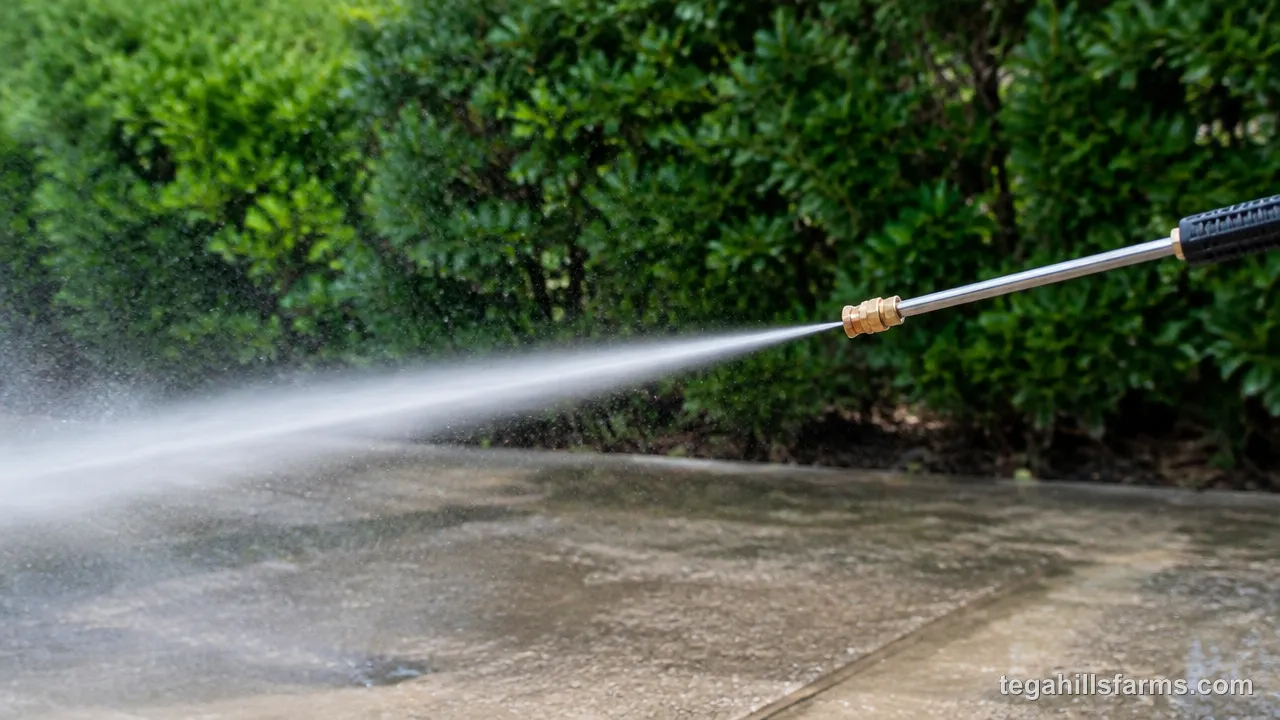
The color-coded tips that come with most machines work on this principle. The red 0° tip concentrates force into a single point, the yellow 15° and green 25° tips spread it into fans for stripping and general cleaning, the white 40° tip spreads it wide for gentle rinsing, and the black soap tip uses a large orifice to drop pressure low enough for the detergent injector to draw in solution.
Tips are also sized for the machine itself. A tip with an orifice too small for the pump pushes pressure past the rating, triggers the unloader, and strains the pump. A tip that’s too large drops pressure below useful levels. Replacement tips should match your machine’s PSI and GPM, not just its spray angle.
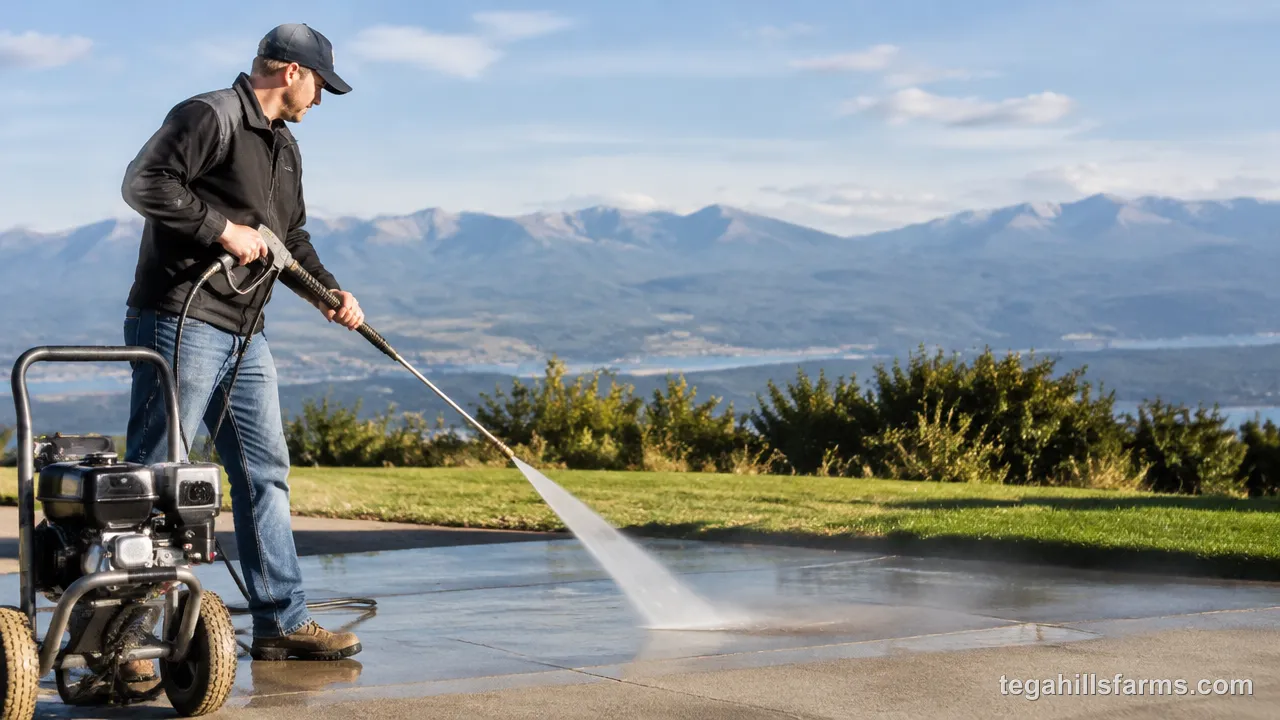
A gas pressure washer that hits its rated numbers at sea level can lose noticeable force on a mountain property, and a spigot that can’t keep up with the pump starves it of water before the spray even reaches the wand. Those losses show up as a weak stream and a pulsing pump that looks like a defective machine, and they lead to replacement parts or returns for a problem that the setup caused.
How Elevation and Water Source Affect Performance
Altitude and water supply both pull real output below the rated PSI and GPM, and most buyers never factor either one in. At higher elevations the air is thinner, so a gas engine draws in less oxygen per stroke and produces less horsepower. With less power turning the pump, the machine can’t reach its rated pressure under load. Thin air also makes the carburetor run rich, which causes rough idling and is a common reason a pressure washer won’t start at altitude until the carburetor is adjusted or fitted with a high-altitude jet.
The water source limits flow from the other end. The pump can only push out what reaches it, so a spigot or well that delivers less than the pump’s GPM rating starves it. A starved pump pulses, loses pressure, and can cavitate, which wears seals. Timing how long your spigot takes to fill a 5-gallon bucket shows whether it can keep up with the machine.
Reading Pressure Washer Specs: What Manufacturers Don’t Tell You
The PSI and GPM printed on the box often describe the best moment under the best conditions, not the output you get while cleaning a driveway. Two gaps account for most of the difference: how the rating was captured and where it was measured.
Peak vs Continuous Ratings
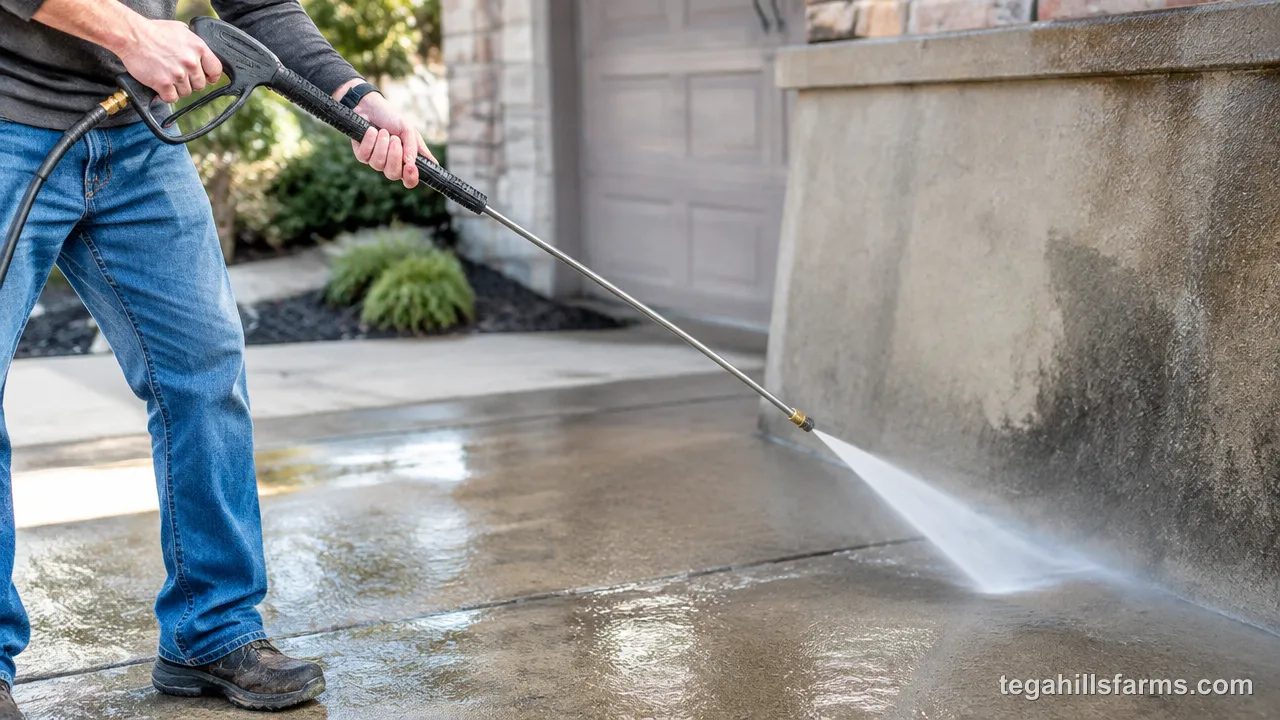
A peak rating is the highest pressure a machine reaches for a moment, often at startup or with the trigger just released, when pressure briefly spikes. It makes an attractive headline number, but it doesn’t last once water flows steadily through the tip.
The continuous rating, sometimes called working pressure, is what the pump holds during actual spraying, and it determines how the machine cleans over a full job. A machine advertised with a big peak figure can fall well below it during sustained use, which makes it look stronger on the shelf than on the patio. Some manufacturers certify their ratings through the Pressure Washer Manufacturers’ Association, which tests machines to a standard procedure. That certification gives you a more trustworthy number than an uncertified peak claim.
Factory Testing vs Field Conditions
Rated figures come from controlled test benches: a short hose, strong and steady supply pressure, cool water, and a fresh pump. A real job site changes each of those variables, and each change costs some output.
A long pressure hose loses pressure to friction on the way to the wand, so the tip sees less force than the pump produces. Weak supply pressure from a spigot or well starves the pump of the volume it needs to hold its rated flow. Water temperature matters as well. Feeding hot water into a cold-water pump can damage its seals, and very cold supply water affects how the system runs. Expect field performance to land somewhat below the spec sheet, and size your purchase with a margin rather than to the exact number your toughest job requires.
Common Questions About PSI and GPM
Can I increase the PSI on my current pressure washer?
Yes, within the pump’s limits, by switching to a tip with a narrower spray angle or a smaller orifice. That concentrates the same flow into a harder jet. Don’t fit a tip smaller than the size matched to your machine, because forcing pressure past its rating triggers the unloader and strains the pump.
Is higher PSI always better for cleaning?
No. Extra pressure helps on concrete and masonry, but it damages softwood, painted siding, and vehicle trim. A machine with balanced pressure and flow cleans most home surfaces faster and more safely than one with a headline PSI and weak flow, which loosens dirt it can’t rinse away.
If my budget forces a tradeoff, should I prioritize PSI or GPM?
Prioritize PSI if most of your jobs are concrete, brick, and stubborn stains, because flow can’t make up for missing force there. Prioritize GPM if you mostly wash siding, decks, and vehicles, where gentle rinsing over a large area matters more than raw pressure.
How do I compare two pressure washers with different specs?
Multiply each machine’s continuous PSI by its GPM to get cleaning units, then compare the totals. A higher score means more area cleaned per hour. Then check that the pressure suits your most delicate surface, because two machines with matching scores can still handle siding and concrete very differently.
Does running at high pressure shorten a pressure washer’s life?
Constantly running at the top of the rating, especially with an undersized tip or a starved water supply, wears pump seals and valves faster. Proper tip sizing, adequate water flow, and winter storage have a bigger effect on how long pressure washers last than how often you use the machine.


Write Your Review
No reviews yet. Be the first to share your experience!