How to Choose a Pressure Washer: PSI, GPM & Power Type
Choosing a pressure washer comes down to three decisions. First, how much pressure (PSI) and water flow (GPM) your cleaning jobs need. Second, which power type fits your yard and storage space: gas, corded electric or battery. Third, which nozzles, hoses and pump build make the machine easy to live with. Match those to the surfaces you actually clean, and the field of sensible models shrinks fast.
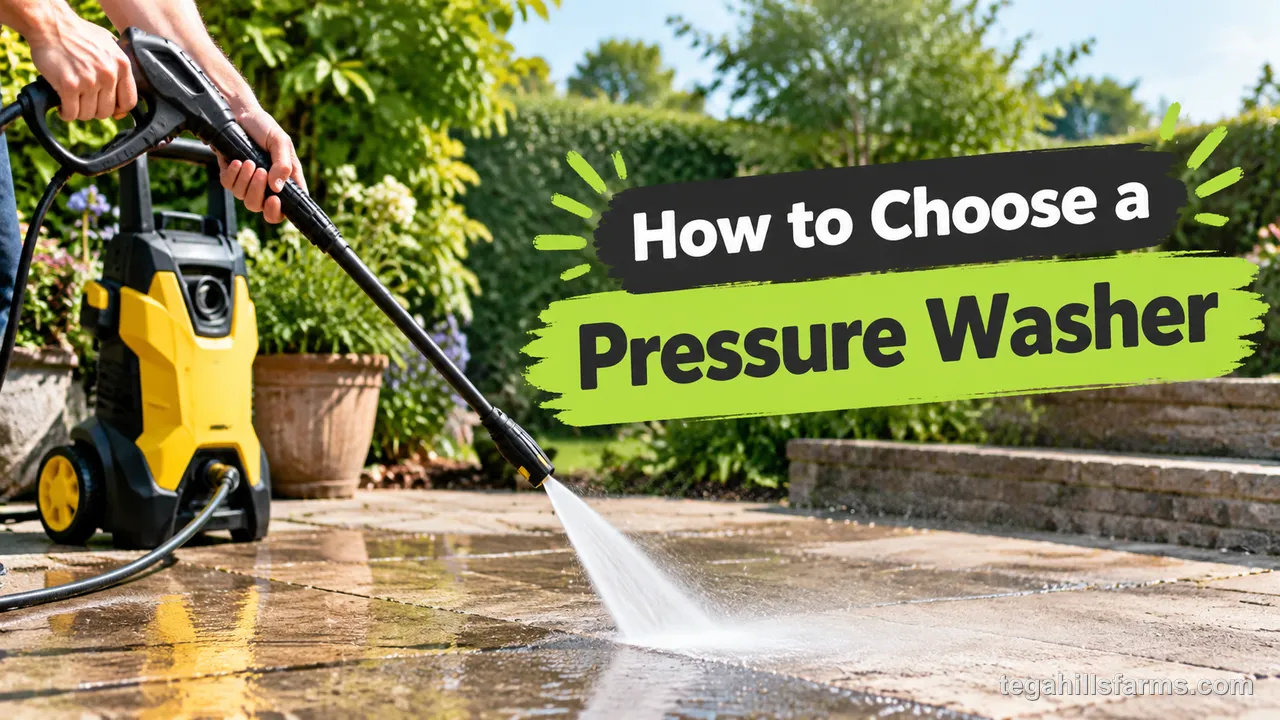
The criteria that separate one machine from another are cleaning power (PSI and GPM read together), reach and portability, noise, upkeep, and how long the motor and pump hold up. Price tiers track those specs closely. A clear list of your jobs keeps you from paying for capacity that never leaves the garage.
Damage is the core worry for most homeowners. Too much pressure strips paint, splinters deck boards and drives water behind siding. Too little leaves a driveway half clean after an afternoon of work. Getting the balance right protects both the surface and your weekend.
Size the machine for the jobs that come around every season, such as the deck, the car and the patio. Rent for the once-in-a-decade project. That one choice usually settles whether a corded electric unit is all you need.
What Is a Pressure Washer and Which Specs Decide the Choice?
This machine uses a motor- or engine-driven pump to force water through a narrow nozzle at 30 to 80 times a garden hose’s pressure. Four things decide which one fits: pressure, water flow, power type and features.
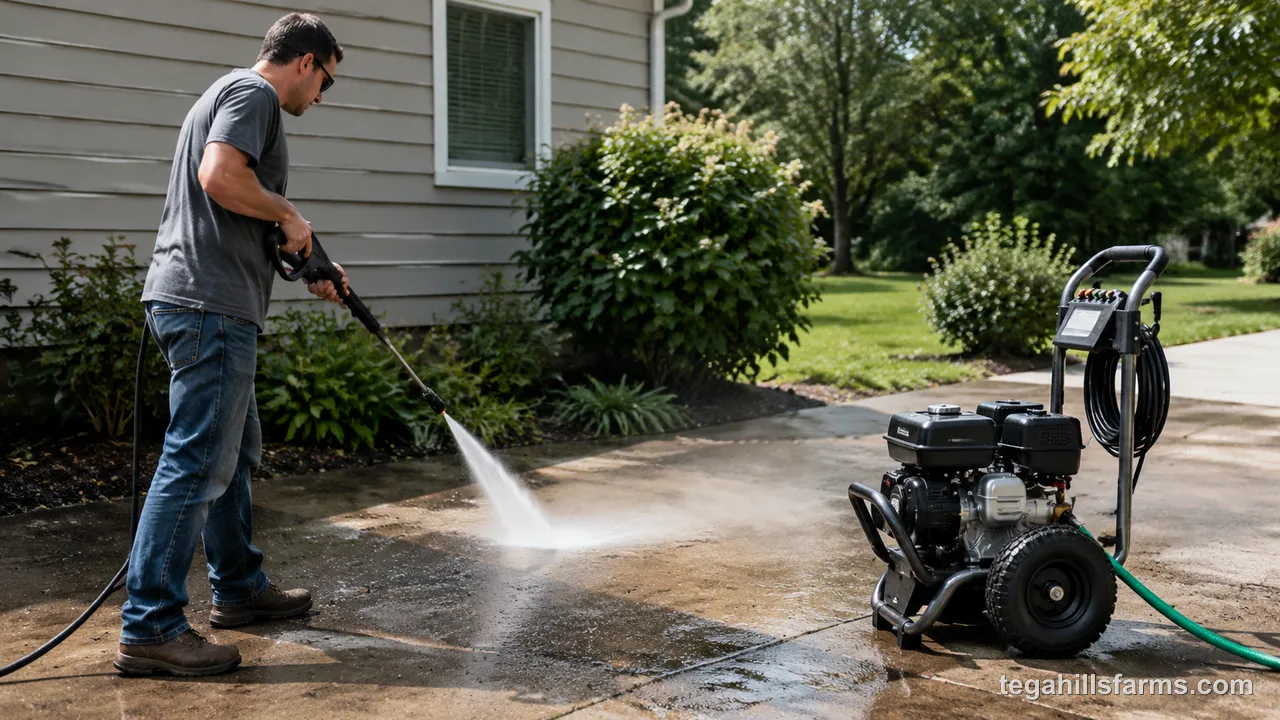
Pressure, rated in PSI, is what breaks dried mud, mildew and grime loose from a surface. Water flow, rated in GPM, carries that loosened dirt away, so it sets how quickly a patio or driveway rinses clean.
Power type decides where the machine can work and how much care it needs. Gas runs anywhere but needs fuel and engine upkeep. A corded electric unit is tied to an outlet. A battery model is limited by its runtime.
Features such as the nozzle set, hose length and soap system decide how easy the machine is to use once you’re standing in the yard.
If you would rather compare ready-made options once you know what to look for, our guide to the best pressure washers ranks the top models by use case.
How Do PSI, GPM and Cleaning Units Work Together?
Pressure loosens dirt and flow carries it off, so real cleaning ability depends on both numbers together. A rating that advertises only one of them tells you half the story. A buyer who shops by the biggest pressure figure alone can end up with a machine that etches surfaces but rinses slowly.
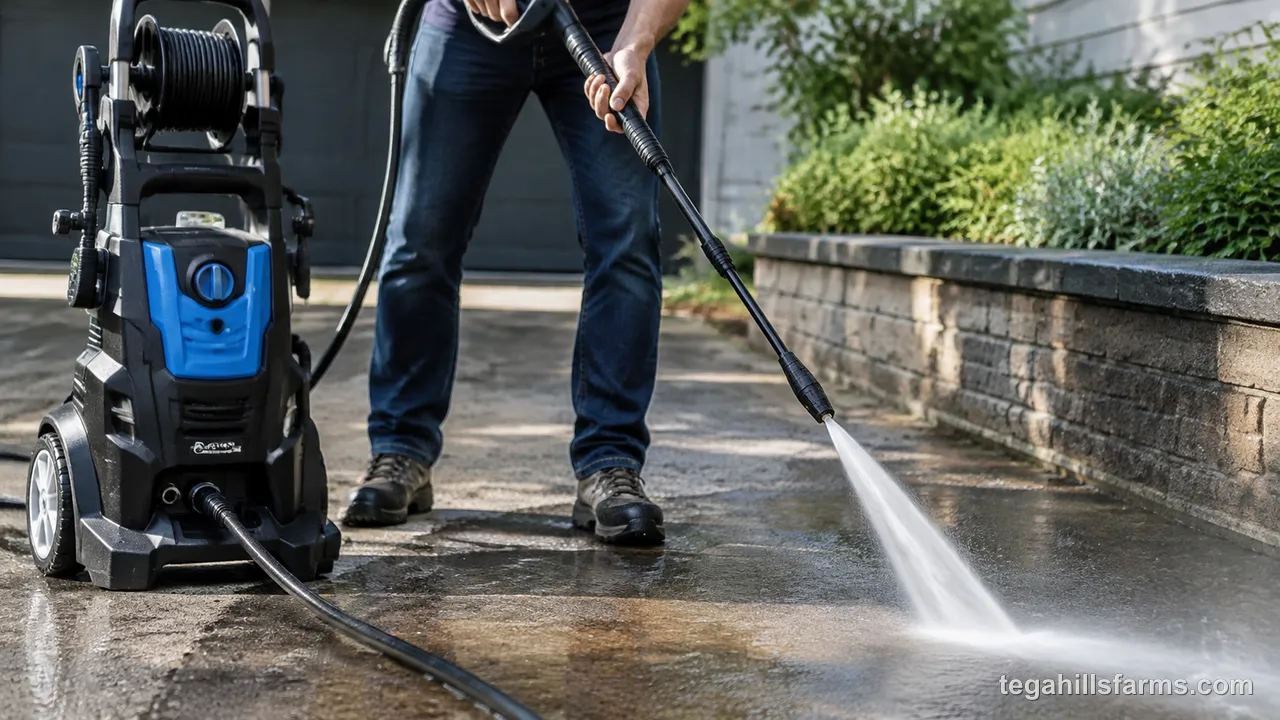
What does PSI control?
PSI (pounds per square inch) measures the force of the water when it hits a surface. That force is what breaks stuck-on dirt, mildew and old stains loose. More of it lifts set-in grime faster. The same force that strips a stain will also strip paint, raise wood grain and cut into mortar joints if the nozzle gets too close.
Very high ratings earn their keep on hard surfaces like concrete and stone, which can absorb the impact. Most home jobs need far less force: washing a car, cleaning patio furniture, rinsing vinyl siding or refreshing a deck.
How hard the water actually lands also depends on the nozzle angle and how far you hold the wand from the surface. Those two factors matter about as much as the rating. That’s why a moderate-pressure machine with the right tips handles a typical yard better than an oversized one used carelessly.
What does GPM control?
GPM (gallons per minute) measures how much water the pump moves. That volume carries loosened dirt off the surface and sets how fast each section rinses clean. Pressure knocks grime free; flow sweeps it away before it settles back down.
On a long driveway or a wide patio, higher flow lets each pass cover more ground and flush the dirty slurry off the edge. With low flow, you end up pushing the same slurry back and forth, and the job drags on.
On a car or a lawn chair, flow matters less because the area is small and rinsing takes seconds either way. Extra volume speeds up rinsing more than it adds cutting force. That makes a higher-flow machine faster on big flat areas without being much harsher on the surface.
How do Cleaning Units combine both?
Cleaning Units multiply the two ratings, using PSI x GPM = CU, to produce one figure for the total cleaning work a machine delivers. That makes CU the fairest single number for comparing models across brands and power types.
Two machines with similar pressure can clean at noticeably different speeds when one moves more water. The higher-flow unit posts a bigger CU figure and clears each strip of concrete faster, even though both hit the dirt with similar force.
The reverse happens too. A high pressure rating paired with weak flow produces a modest CU figure and a slow afternoon on the driveway.
Use CU to compare machines within the same job tier. It doesn’t tell you whether a surface can take the pressure, so check the PSI against what you plan to clean before you compare Cleaning Units.
Which Power Type Fits You: Gas, Corded Electric or Battery?
Gas models clean fastest, corded electric units suit most homeowners, and battery models trade power for portability, so the right choice depends on how large your jobs are, where you store the machine and how often it runs. Noise and upkeep differ just as sharply as cleaning speed, and they matter once the machine lives in your garage.
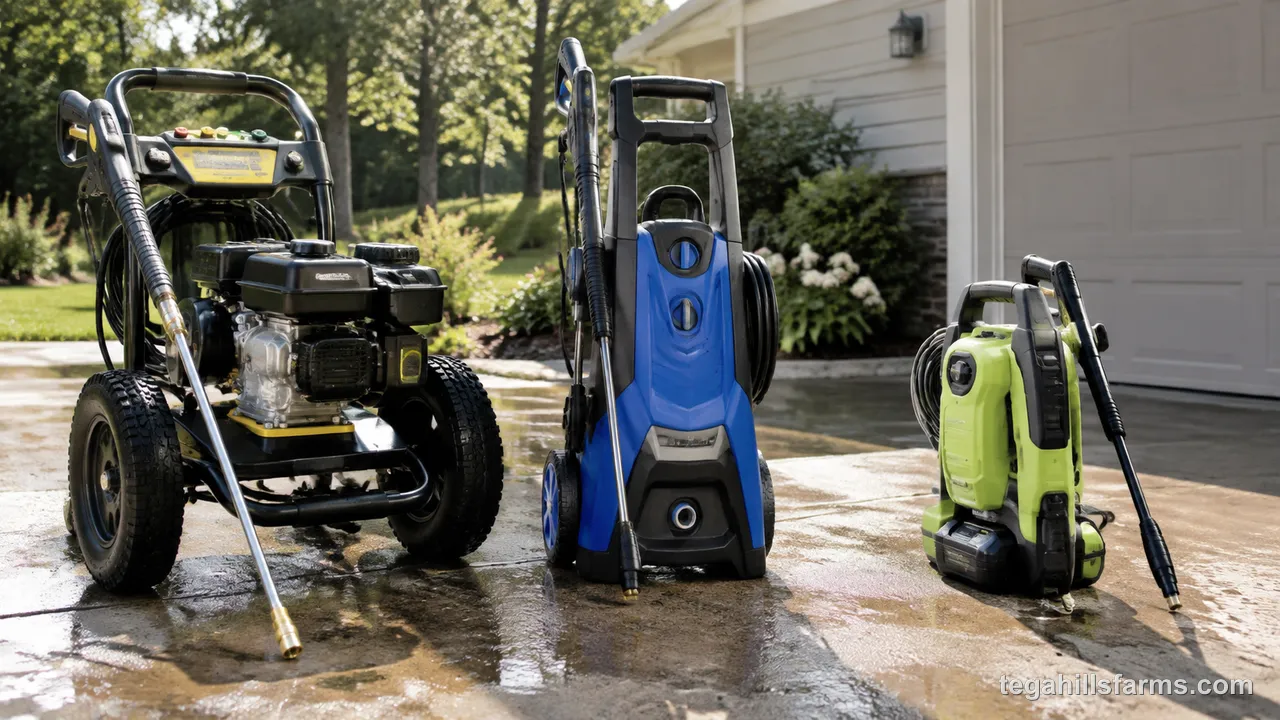
When does a gas pressure washer make sense?
A gas model makes sense when you regularly clean big or stubborn surfaces: long driveways, large decks, stained concrete, farm equipment. It delivers the most cleaning power of the three types. The best midrange gas machines clean about 50 percent faster than an average electric model, and that adds up to real hours saved across a large property.
That speed comes with costs:
- Noise. The engine is loud enough that hearing protection becomes part of the routine.
- Fuel. You store gasoline and add stabilizer if the machine sits between jobs.
- Engine upkeep. It needs oil changes, a clean spark plug and proper winter storage.
- Weight. Gas units are heavy, so wheels and a flat path to the job matter.
Typical homeowner gas units run roughly $250 to $500.
I’d only sign up for that upkeep if the big jobs come around every season. If your work is mostly a car and a small patio, the extra power sits idle. Owners with acres of concrete, fencing or equipment to clean are the ones who get full value from the best gas pressure washers.
When is a corded electric model enough?
A corded electric model is enough for most homeowners whose jobs range from cars and patio furniture to a mid-size deck or a short walkway. Typical prices run roughly $90 to $350.
It starts with a switch instead of a pull cord. It runs much quieter than a gas engine and weighs less. It needs no fuel or oil changes, which makes it the easiest of the three types to store and maintain. Plug it into a GFCI-protected outdoor outlet, and follow the manual’s guidance on extension cords, since many manufacturers restrict or advise against them.
The cord and hose are the real limit. Both tie the machine to an outlet, so reaching the far side of the house means moving the unit or adding a longer high-pressure hose.
Lower pressure and flow also mean a large concrete pad takes longer than it would with gas. That trade-off is worth it for most suburban lots.
What are the limits of a battery pressure washer?
Battery models are the most portable option: no cord, no fuel, no outlet. They give up pressure and runtime in exchange. Many top out around 600 psi, and a single battery may run down before a long job is finished.
That makes them a poor fit for driveways and stained concrete. They are a good fit for light work:
- Rinsing a car, bikes or a kayak
- Washing outdoor furniture and grill grates
- Spot-cleaning a dirty corner of the patio
Models that can pull water from a bucket also work where no spigot reaches. Prices run roughly $125 to $800.
The biggest practical benefit is the battery platform. If you already own a mower or string trimmer on the same platform, its batteries can power the washer, so you don’t pay for a second set. The best battery pressure washers make the most sense for owners already invested in one brand’s batteries.
How Much Power Does Each Cleaning Job Need?
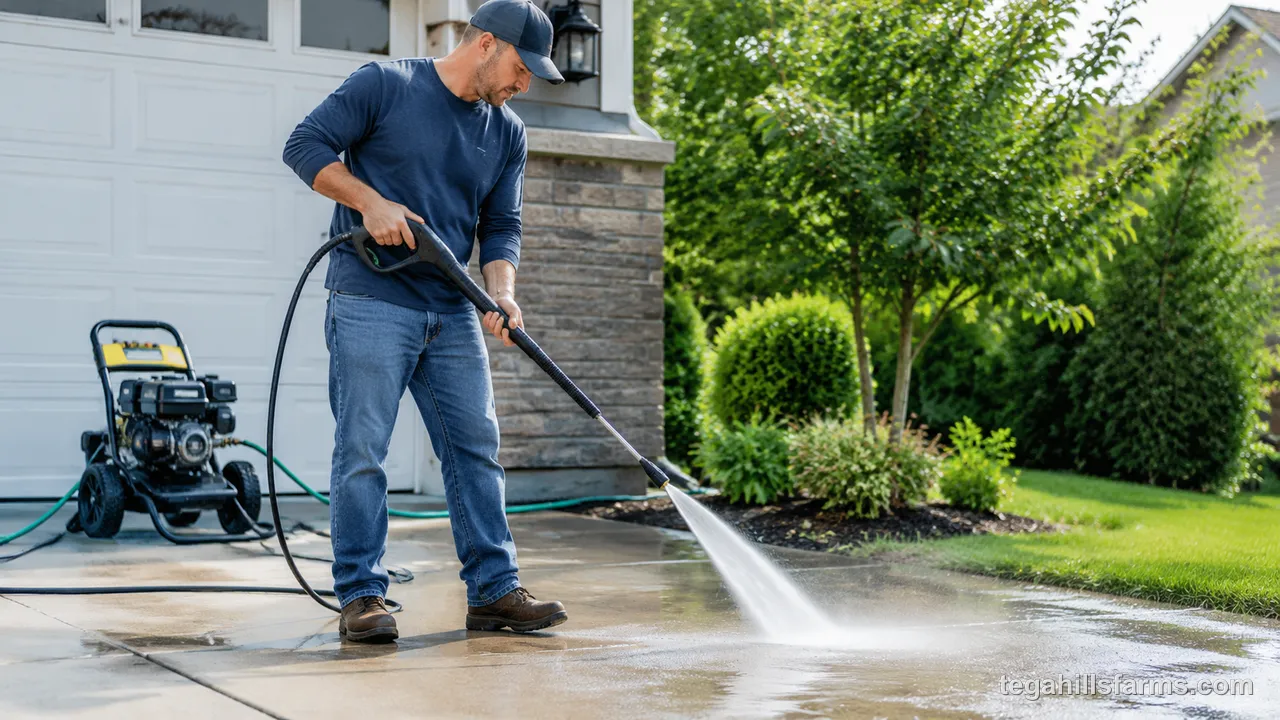
Light, medium and heavy duty describe how much pressure and flow a job calls for. Matching the tier to your toughest regular task keeps you from buying too little machine or paying for far too much. The surface’s material matters as much as how dirty it is.
What suits light-duty jobs like cars and outdoor furniture?
Cars, bikes, plastic and resin furniture, grills and window screens need gentle pressure. A lower-powered corded electric or battery model is the right fit for them.
These items are small, so flow barely affects how long the job takes. What matters is keeping the force low enough to protect the finish. Too much pressure can lift car clear coat at a chip, peel decals and trim, and force water past seals into wheel bearings or electrical connectors.
Paired with a wide-angle nozzle and a pressure-washer-safe soap, a light-duty machine loosens road film and pollen without that risk. The soap does much of the work, so the spray only needs to rinse.
Owners whose list stops at this tier can skip gas entirely. A light machine is easier to carry, store and start.
What suits medium-duty jobs like decks and fences?
Wood decks, fences, vinyl siding and outdoor steps need a balance between enough force to lift mildew and enough restraint to avoid cutting the surface. A mid-range corded electric model or an entry-level gas unit covers most of these tasks.
Wood is the tricky material. Softwoods like cedar and pine gouge easily, and a narrow stream held too close leaves fuzzy, furrowed boards that need sanding before they’ll take stain.
Technique matters as much as the machine:
- Use a wider nozzle.
- Keep the wand moving.
- Spray along the grain instead of across it.
- Start well back and move closer only until the grime lifts.
Readers whose main project is a deck can compare the best pressure washers for decks, which favor controllable pressure over raw power.
What suits heavy-duty jobs like driveways and concrete?
Large hard surfaces and set-in stains call for higher pressure and higher flow together. That points to gas models or strong induction-motor electric units.
Concrete, brick pavers and stone tolerate the extra force, and their size is why flow becomes the deciding spec. A two-car driveway is mostly rinsing area. A high-flow machine clears each pass in one sweep, while a weaker unit forces you to go back over the same strip several times.
The time difference grows with the area. A job that drags across a full day with a light-duty electric can finish in an afternoon with a heavy-duty machine.
Oil drips and rust stains may still need a degreaser or a dwell-time cleaner before spraying, since pressure alone often won’t lift them. Homeowners facing long driveways or large patios can narrow their search with the best pressure washers for driveways.
Which Surfaces Are Safe to Pressure Wash?
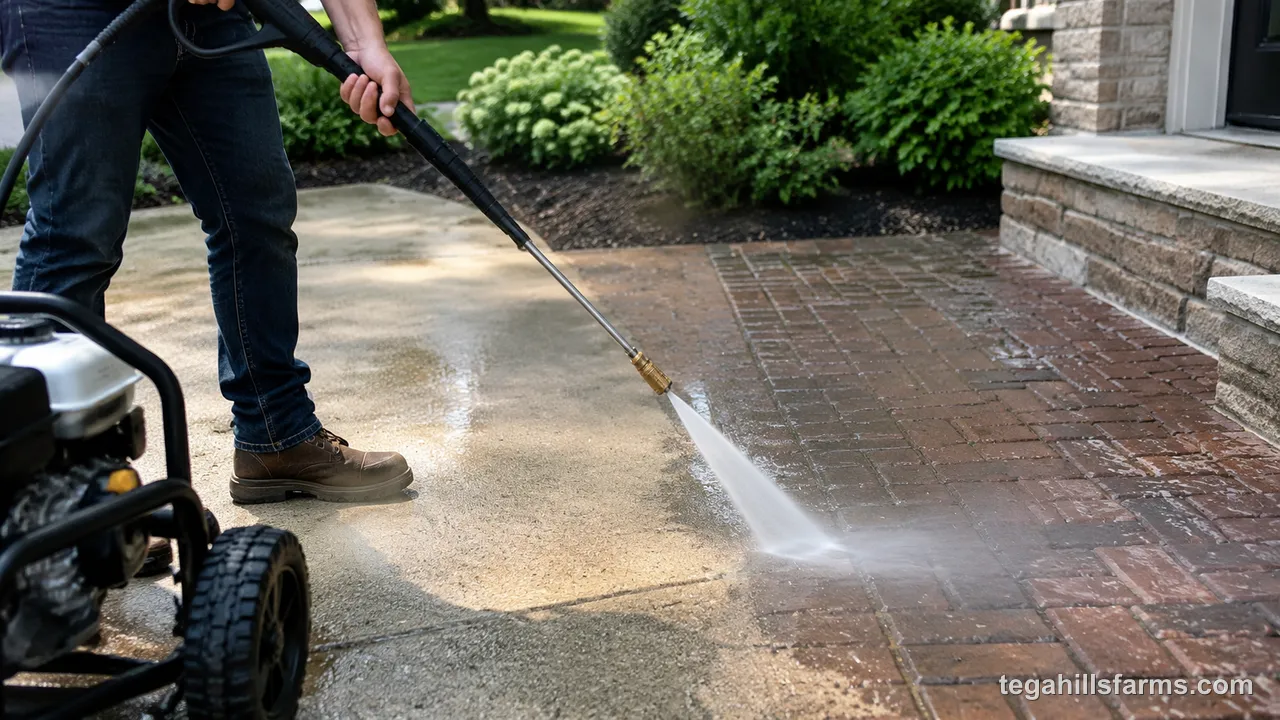
Concrete, brick, stone and most vinyl siding handle a pressure washer well. Car paint, wood and other soft materials need a lower setting, a wider nozzle or a different method.
Car paint tolerates a wide spray held well back. A narrow tip aimed at a chip, an edge or a seal can peel clear coat and push water where it doesn’t belong.
On siding, spray at a downward angle so water runs with the laps. Aiming upward drives water behind the panels and into wall cavities. Stay clear of window seals, dryer vents, light fixtures and outdoor outlets. Owners planning regular siding work can look at the best pressure washers for house siding.
Soft and fragile materials need the most caution. Softwood decking, stucco, old mortar, painted surfaces and asphalt shingles can all be damaged. Shingles lose their protective granules, and stucco can crack or soak up water. For these, use low pressure with a cleaning solution, or skip the pressure washer and use a garden hose and brush.
Three mistakes cause most of the damage: using the zero-degree tip, holding the wand too close, and lingering in one spot. Each concentrates force until it gouges the surface instead of cleaning it.
Which Nozzles and Soap Options Do You Need?
Nozzles are grouped by spray angle: 0, 15, 25 and 40 degrees, plus a low-pressure soap tip. The narrower the angle, the more force lands on a smaller spot. Most machines follow the same color code:
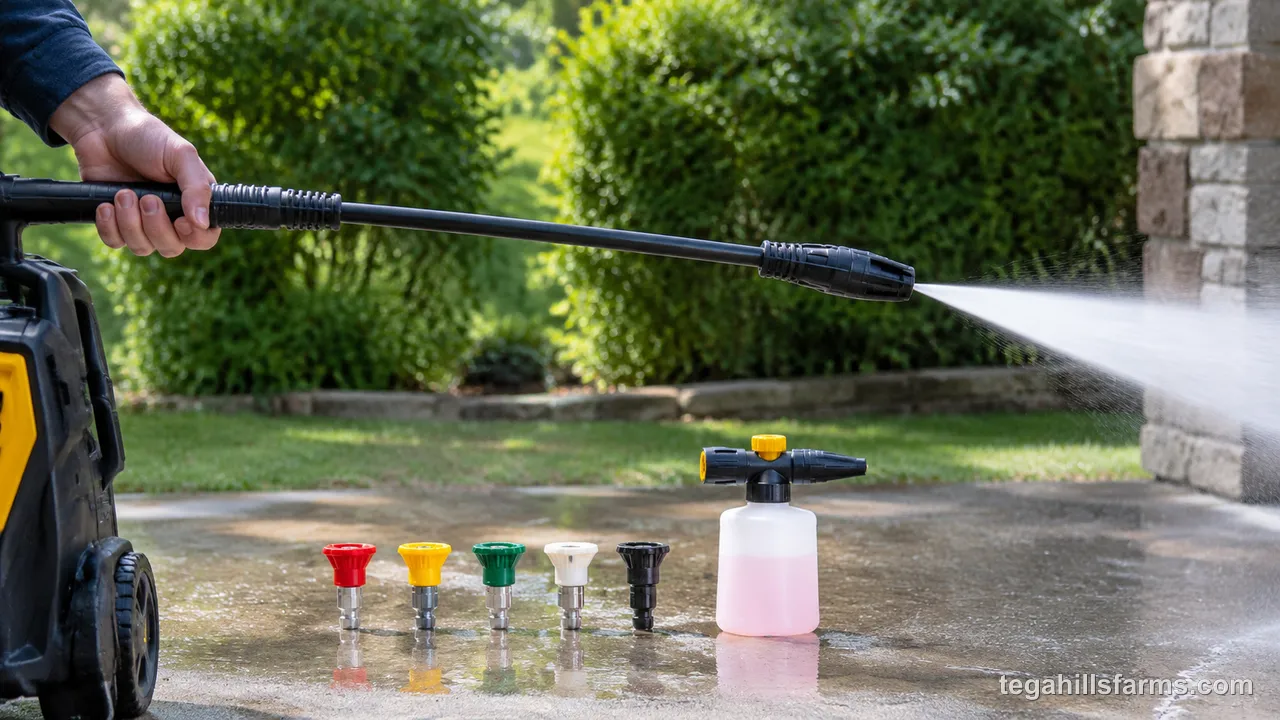
- Red (0°): a pinpoint jet. It is risky because it can cut skin and gouge wood or concrete. Most homeowners rarely need it.
- Yellow (15°): stripping work on concrete and other hard surfaces.
- Green (25°): the everyday tip for decks, fences and patios.
- White (40°): cars, windows and anything delicate.
- Black (soap): low pressure, used to apply detergent.
For soap, an onboard tank keeps detergent on the machine and switches over with the black tip. A siphon injector draws soap from a bottle you set beside the unit. A foam cannon attachment lays down a thicker coat that clings to car panels and siding longer. Use only detergents labeled for pressure washers.
Whatever tip you use, start well back from the surface and move closer only as far as the dirt requires. Wear safety glasses and closed-toe shoes. Wear hearing protection whenever you work within 25 feet of a running unit.
If the tips that came with your machine have worn or gone missing, the best pressure washer nozzles cover replacement sets and specialty tips.
Which Hose, Wand and Cord Features Are Worth Having?
Reach, handling and storage decide whether a machine is easy to use across a whole yard. The hose, wand and cord shape all three more than the spec sheet suggests, and the gaps show up the first time you try to reach the back fence.
How do hose, wand and cord length affect reach?
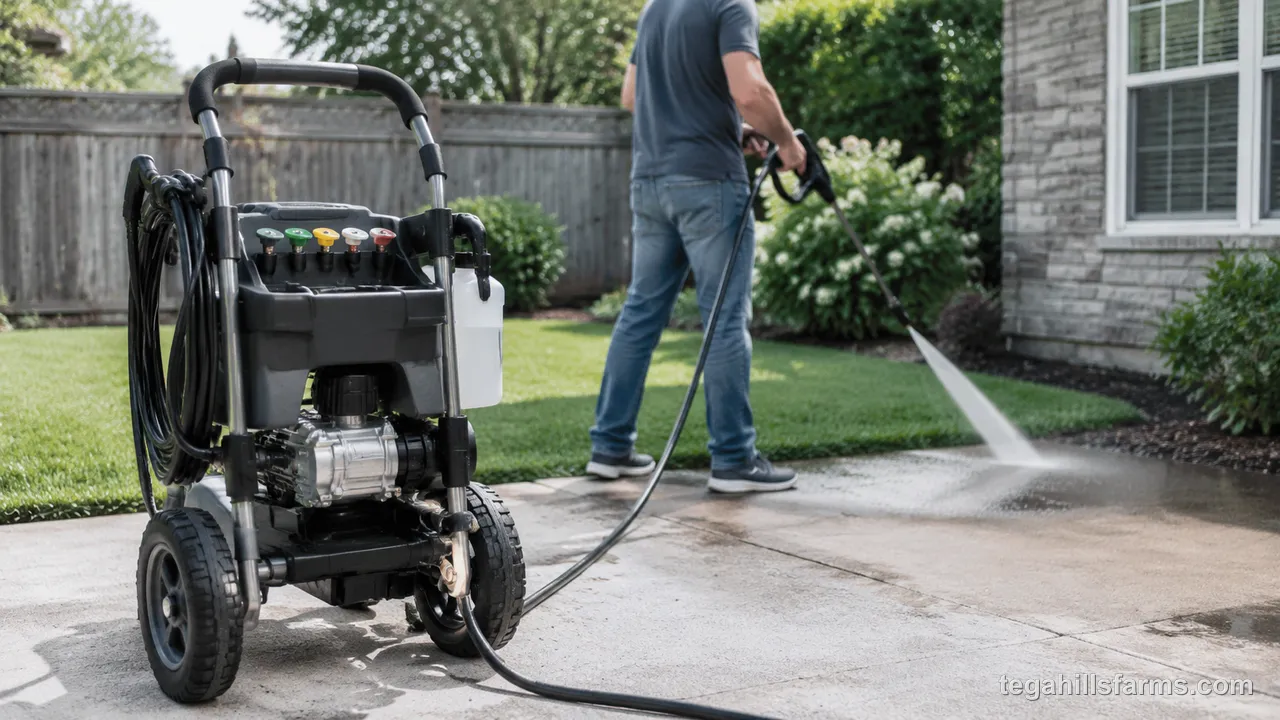
Corded electric models typically come with a 25- to 30-foot high-pressure hose and a power cord of around 35 feet. Together, those lengths set a working circle around your outlet.
Aim for at least 30 feet on both the hose and the cord. Longer reach means you move the machine less often, so you spend less time dragging it across wet grass, through flower beds or up steps mid-job.
Anything beyond the original circle means relocating the unit or adding hose. If you add hose, it needs to be a high-pressure hose rated for the machine, not a garden hose. When the stock hose is too short or too stiff, the best pressure washer hoses cover longer, more flexible replacements.
Wand design affects comfort and control. A longer wand keeps you clear of rebound spray and saves your back on low surfaces. A comfortable trigger, ideally with a lock, reduces hand fatigue over a long session. The best pressure washer wands include extension and angled options for gutters and second-story siding.
Which convenience features actually help?
The features worth paying for are the ones that save effort every time you use the machine:
- Large wheels make it easier to roll the unit over gravel, lawn and thresholds. This matters most with heavier gas models.
- Onboard nozzle storage keeps the tips on the frame instead of scattered across a workbench.
- Quick-connect fittings let you swap nozzles and attach the hose in seconds.
- A hose reel or cord wrap keeps the machine compact enough for a crowded garage shelf, and stops kinks that weaken the hose over time.
Extras like oversized soap tanks or elaborate attachment bundles add little for owners who wash a few times a year. They mostly take up storage space. Judge each feature by whether it shortens setup, cleanup or storage.
Do Motor and Pump Type Affect How Long a Pressure Washer Lasts?
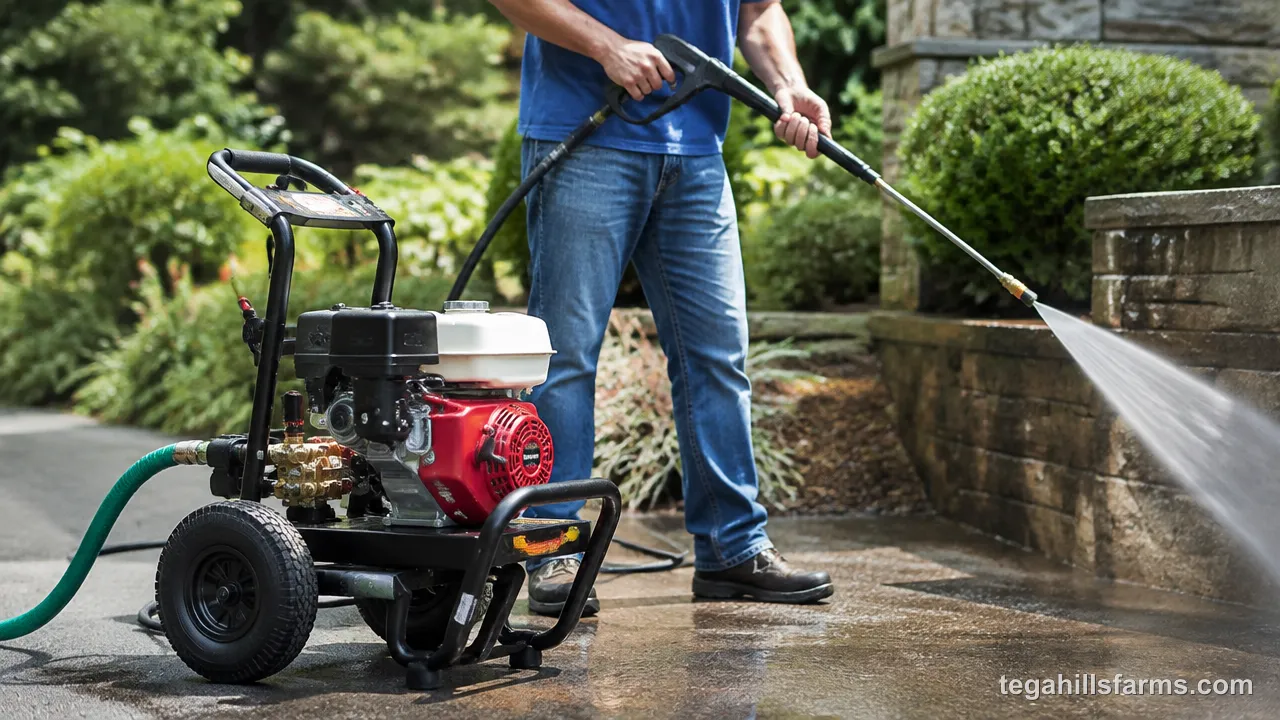
Motor and pump design shape durability, noise and price tier, and pump quality is one of the main factors in how many seasons a machine lasts. Two units with identical PSI and GPM can age very differently depending on what’s driving the water.
What is the difference between universal and induction motors?
Universal motors use brushes and spin at high speed. They are common in compact, lower-priced electric models because they are light and inexpensive to build. That high speed makes them louder. The brushes also wear with use, so these motors suit occasional users who clean a car or patio a few times a year.
Induction motors are brushless. They run quieter and cooler, and they stand up better to long sessions and frequent use. They add weight and cost, and they usually appear on stronger electric machines aimed at driveway-sized jobs.
If you’ll use the machine often or for long stretches, I’d put an induction motor high on the list. Readers weighing both motor types can compare the best electric pressure washers.
How do axial cam and triplex pumps compare?
Axial cam pumps are compact, sealed units found on most consumer electric models and entry-level gas machines. They keep weight and cost down. Most aren’t designed to be rebuilt, so a worn axial pump usually means replacing the pump or the whole machine.
Triplex pumps use three plungers driven by a crankshaft. They run cooler and at lower speed, which reduces wear on seals and valves. Those parts can also be serviced and replaced, so the pump can be rebuilt instead of thrown away. The trade-offs are weight, size and price, which is why triplex pumps show up on premium gas and commercial units.
Pump build is one of the main factors in how long pressure washers last. For owners planning years of frequent use, a serviceable pump often matters more than a higher pressure rating.
Should You Rent or Buy a Pressure Washer?
Buying pays off once you’ll use the machine three or more times a year. For less frequent jobs, renting avoids the purchase, the storage space and the upkeep.
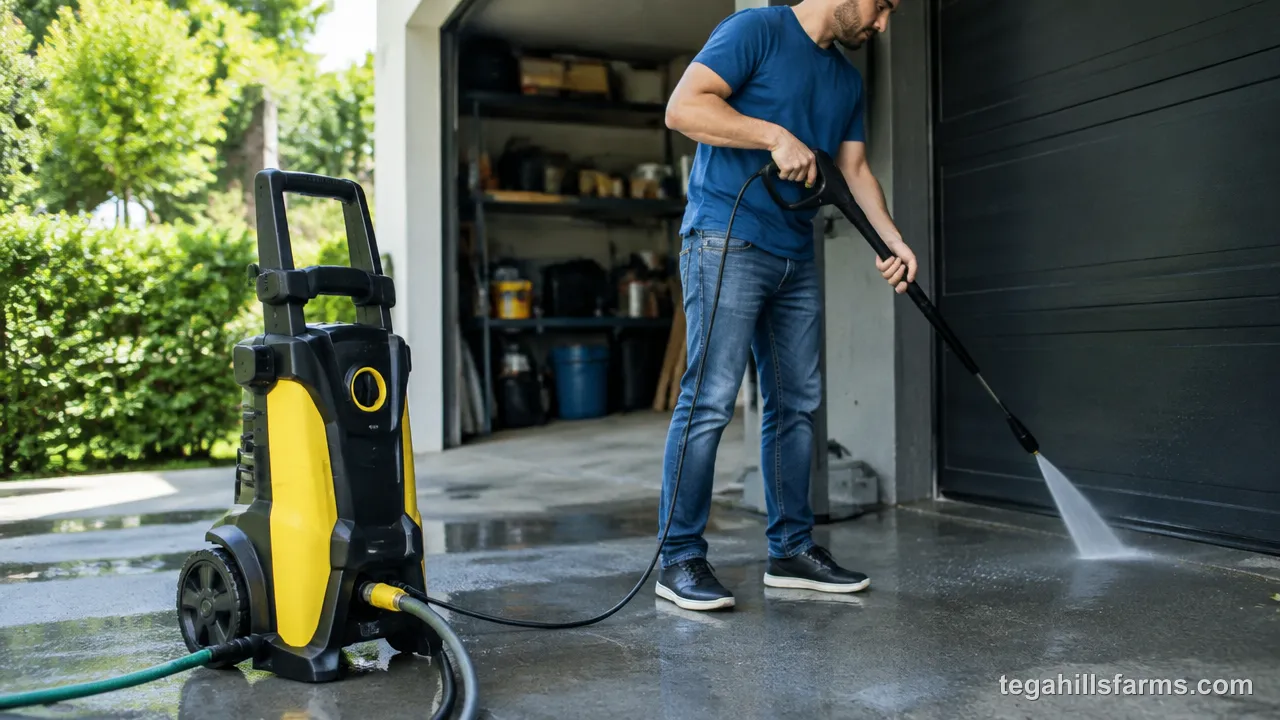
Renting is especially useful for one-off heavy jobs, like stripping an old deck before restaining or cleaning a whole driveway before sealing. Rental shops often stock commercial-grade machines a homeowner wouldn’t otherwise buy, and the shop handles the maintenance.
Buying makes sense when the car, patio and siding get washed every season. It also means finding garage space for the machine and taking on winter storage, plus fuel care for a gas model.
Before deciding, compare local rental rates against how much a pressure washer costs in the tier your jobs need.
What Should You Check Before You Buy?
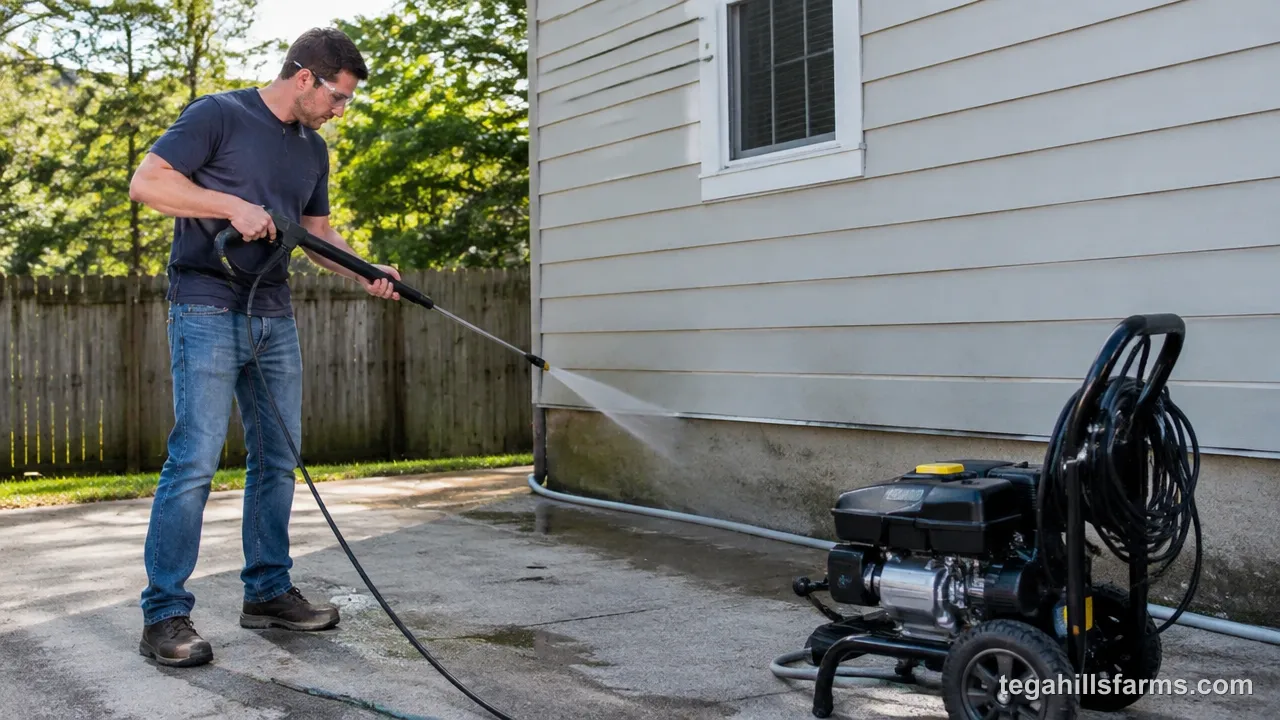
Before buying, confirm the toughest job you’ll do regularly, the power type your yard and storage allow, and pressure and flow sized to that job. Then check reach and accessories.
- Name the surfaces you clean every season, and note which ones are delicate.
- Choose gas, corded electric or battery based on job size, outlet access and storage space.
- Compare PSI and GPM together, using Cleaning Units within the same tier.
- Confirm hose and cord reach of at least 30 feet.
- Make sure the nozzle set and soap system match your jobs.
- Weigh motor and pump build against how often you’ll use the machine.
If your list points to a corded electric unit for light and medium jobs, start with the best pressure washers under $200. For gas or induction-motor machines aimed at concrete and large decks, look at the best pressure washers under $500.
Grease, motor oil and cooking residue cling to engines, equipment and shop floors in a way cold water barely moves, which is the work heated-water machines are built for. A cold-water unit bought to clean greasy equipment leaves an oily film behind, and you end up scrubbing by hand the same spots you expected the machine to strip.
When Does a Hot-Water or Commercial Pressure Washer Make Sense?
Most homeowners never need either type. A hot-water machine makes sense for grease and oil on engines, tractors, shop floors and food-service equipment. A commercial build makes sense for daily professional use that would wear out a consumer pump within a season.
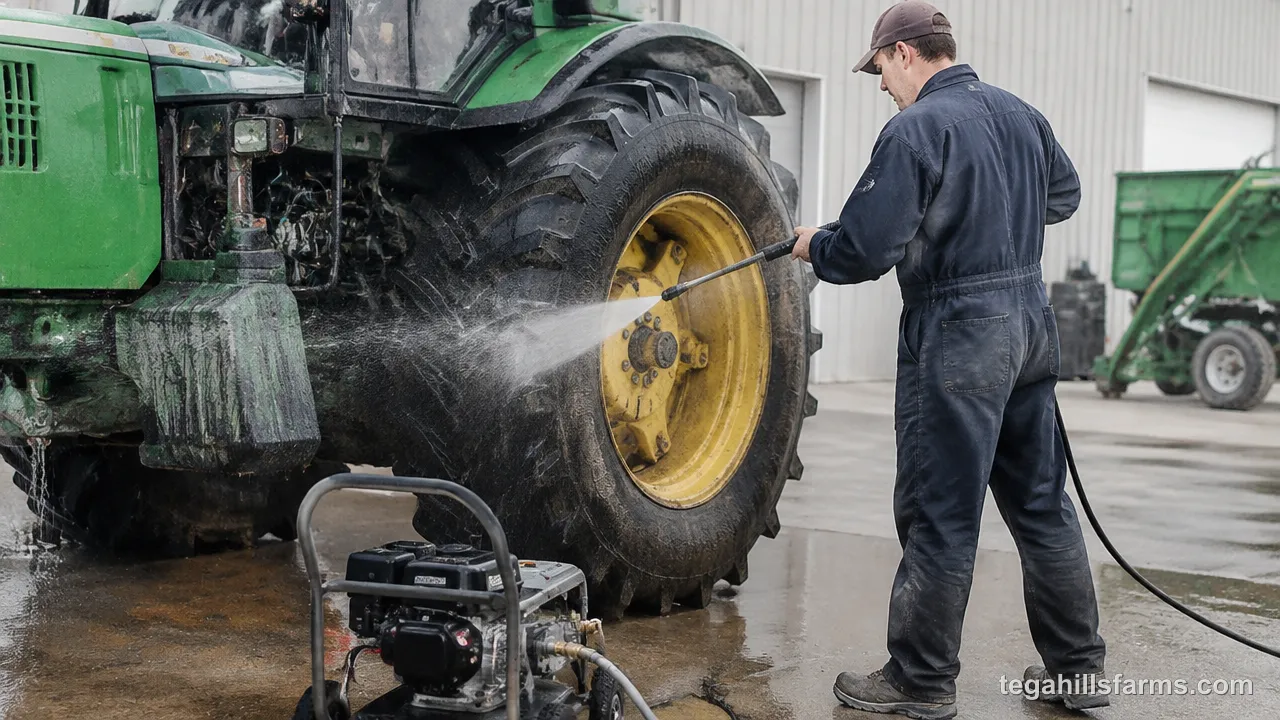
Heated water softens grease and oil so the spray can lift them, which cold water and even strong detergent struggle to do on heavy buildup. That ability comes from an onboard burner. The burner adds its own fuel supply, more maintenance, and a lot of size and weight.
Commercial units add heavy frames, triplex pumps and drive systems built to run for hours every day. They cost more to buy, take up far more storage space, and need regular service to justify that build.
For a house, a deck and a driveway, a homeowner who buys either one pays for capacity that sits unused. The occasional oil spot on concrete usually responds to a degreaser and dwell time ahead of a cold-water rinse.
Which Spec Claims Lead to a Wasted Purchase?
A wasted purchase usually starts with a headline pressure figure read on its own. A high PSI number paired with weak flow cleans slowly. That gap only shows up after you’ve spent an afternoon on a driveway the machine was never sized for.
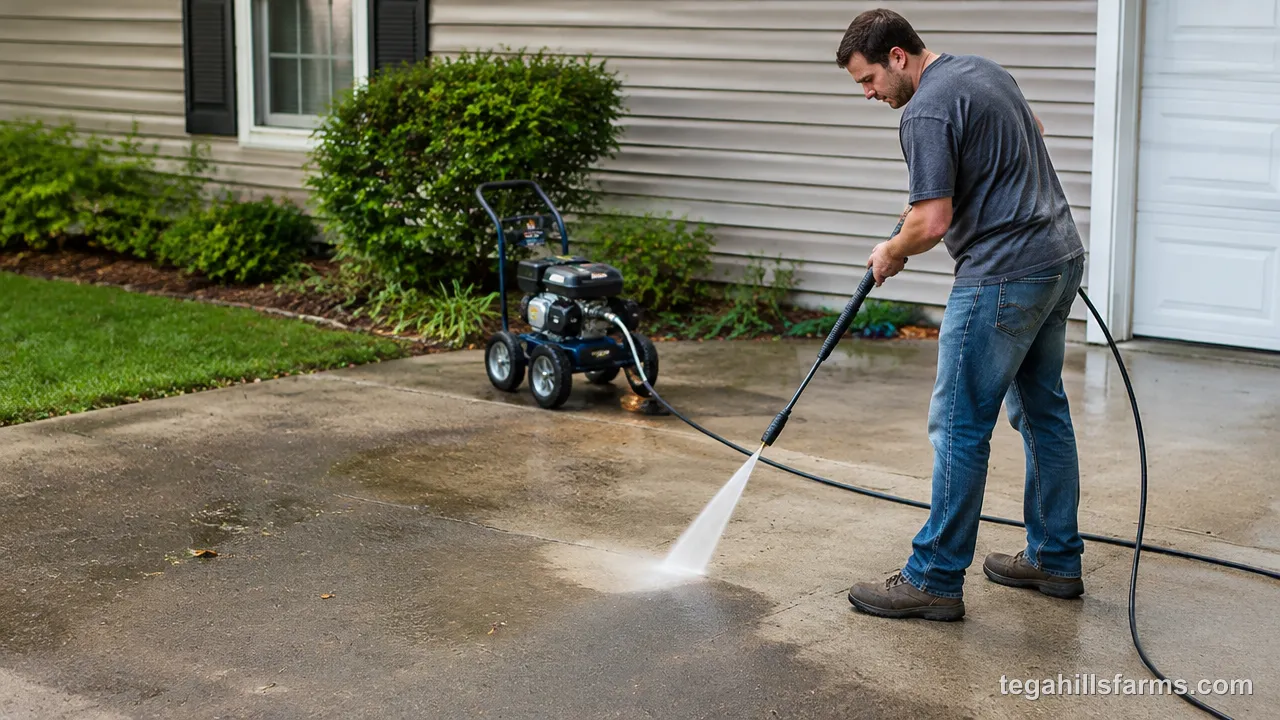
Some labels list a maximum figure that the machine reaches only briefly. When a spec sheet gives both a maximum and a rated number, the rated one is closer to what actually hits your surface.
Reach is the second trap. A strong machine with a short hose or cord forces constant moving, and you may give up before reaching the far side of the house.
Buying more power than your jobs need causes problems too:
- Extra weight and a larger footprint in storage.
- A higher risk of gouging wood and stripping paint.
To read a spec label for real cleaning ability, look for PSI and GPM listed together, and compare Cleaning Units within the job tier you need. Then confirm the hose and cord lengths match your yard before trusting any single big number.
How Do You Spot Wear and Keep a Pressure Washer Running?
Weak output, pulsing spray and hard starting are the three warning signs. Most of them trace back to skipped basic care rather than a failed pump.
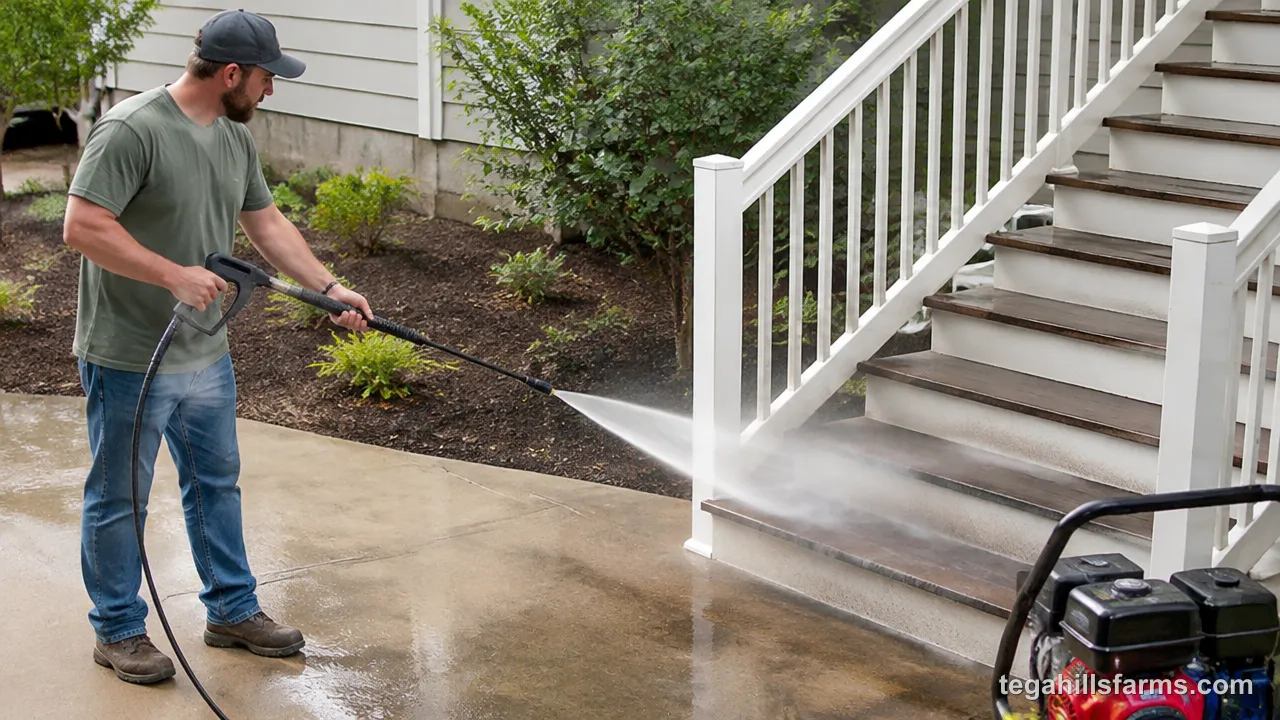
Weak output often comes from one of these:
- A clogged or worn nozzle
- A dirty inlet screen
- A kinked hose
- A garden hose that can’t supply enough water
Pulsing usually means air in the pump or a restricted water supply. Hard starting on a gas model typically comes from stale fuel, a gummed carburetor or a fouled spark plug. If a gas pressure washer won’t start after sitting for months, stale fuel is the first thing to check.
Routine care prevents most of these problems:
- Run water through the system before starting the pump, so it never runs dry.
- Clean the inlet screen and nozzles regularly.
- Release trapped pressure after each use.
- Where winters freeze, drain the pump and treat it with a pump protector before storage, then keep the machine somewhere above freezing.
- On gas models, change the oil on schedule and either stabilize the fuel or run the carburetor dry before long storage.
Repair stops being worth it when a sealed axial pump fails on a consumer machine. Replacing it often costs close to the price of a new unit.
Pressure Washer Buying FAQs
Does PSI or GPM matter more?
Neither matters more on its own, because pressure loosens dirt and flow carries it away. PSI decides whether a surface can take the machine safely. GPM decides how fast large areas get done. Compare Cleaning Units within the right job tier, and check that the PSI suits the surfaces you clean.
Is very high pressure too much for a house?
Very high pressure is more than siding, painted trim and window seals need. It can crack panels, strip paint and force water into wall cavities. A moderate setting with a 25- or 40-degree nozzle, sprayed at a downward angle, cleans siding safely. Save high pressure for concrete and stone.
Where should you start once the pressure washer arrives?
Start by reading the manual’s setup steps. Connect the water supply and run water through before switching on the pump, then practice on concrete with a wide nozzle before moving to delicate surfaces. A walkthrough of how to use a pressure washer covers setup, technique and shutdown in order.
Do you need detergent for every job?
No. Plain water handles dust, pollen and light dirt on most surfaces. Detergent earns its place on mildew, grease and road film, where it loosens grime so you can clean with less pressure. Use only cleaners labeled for pressure washers, since other products can damage pump seals.