

A gas pressure washer that won’t start almost always has a fuel, spark or oil problem. The usual causes are stale gasoline varnishing the carburetor, a fouled spark plug, an oil level low enough to trip the shutdown sensor, or a cylinder flooded by too much choke. An electric model that stays silent usually has a tripped GFCI, a damaged cord, a blown thermal fuse or a trigger lock that is working as designed.
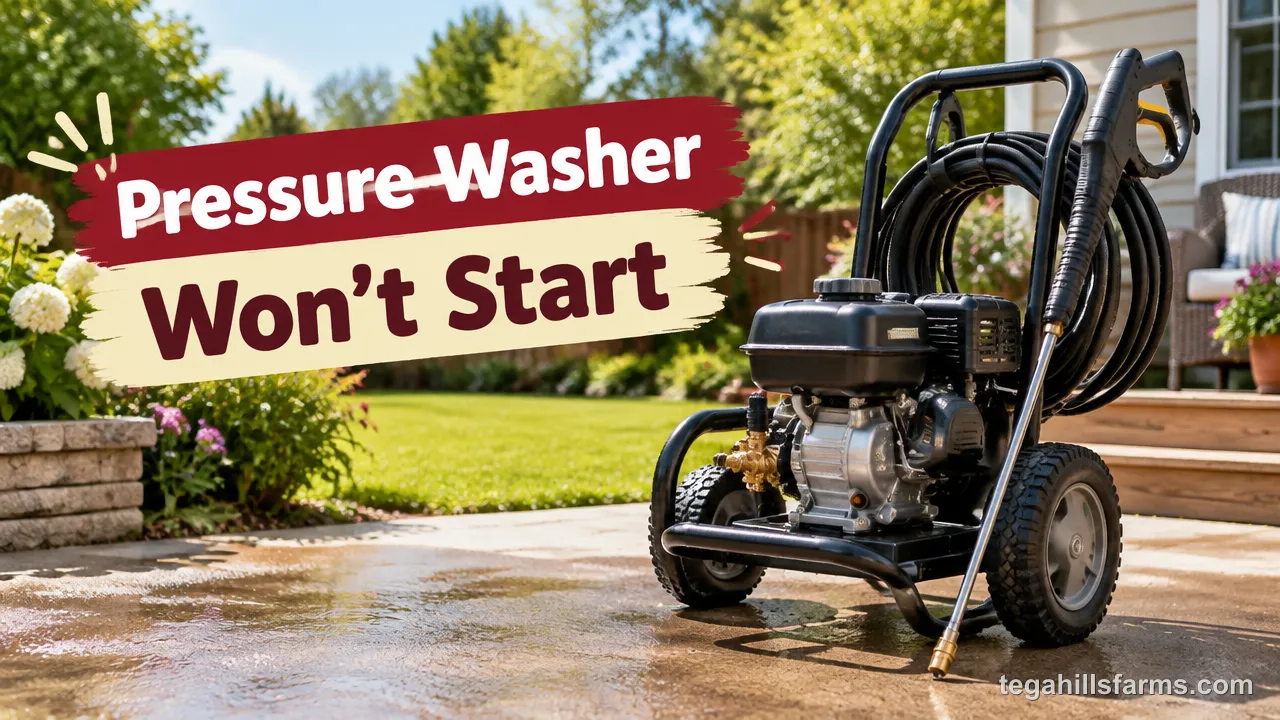
The order of your checks saves more time than any special tool. Fuel and oil take a minute to inspect and explain most gas failures. The outlet and cord explain most electric failures. A carburetor teardown only makes sense once those quick checks come up clean.
Most owners also want to know whether a dead machine means an expensive repair. Most of these fixes need only a socket wrench, a can of carburetor cleaner and fresh gas. The repairs that belong at a shop are easy to spot once the simple causes are ruled out.
What Are the Most Common Reasons a Pressure Washer Won’t Start?
Nearly every no-start comes down to one missing ingredient: fuel, spark or air on a gas engine, or electrical current on an electric motor. The type of machine you own narrows the search, because gas engines and electric motors fail in different ways and need different tools to diagnose. Reliability also begins at the purchase: knowing how to choose a pressure washer that fits your maintenance habits and storage conditions keeps many of these failures from showing up at all.
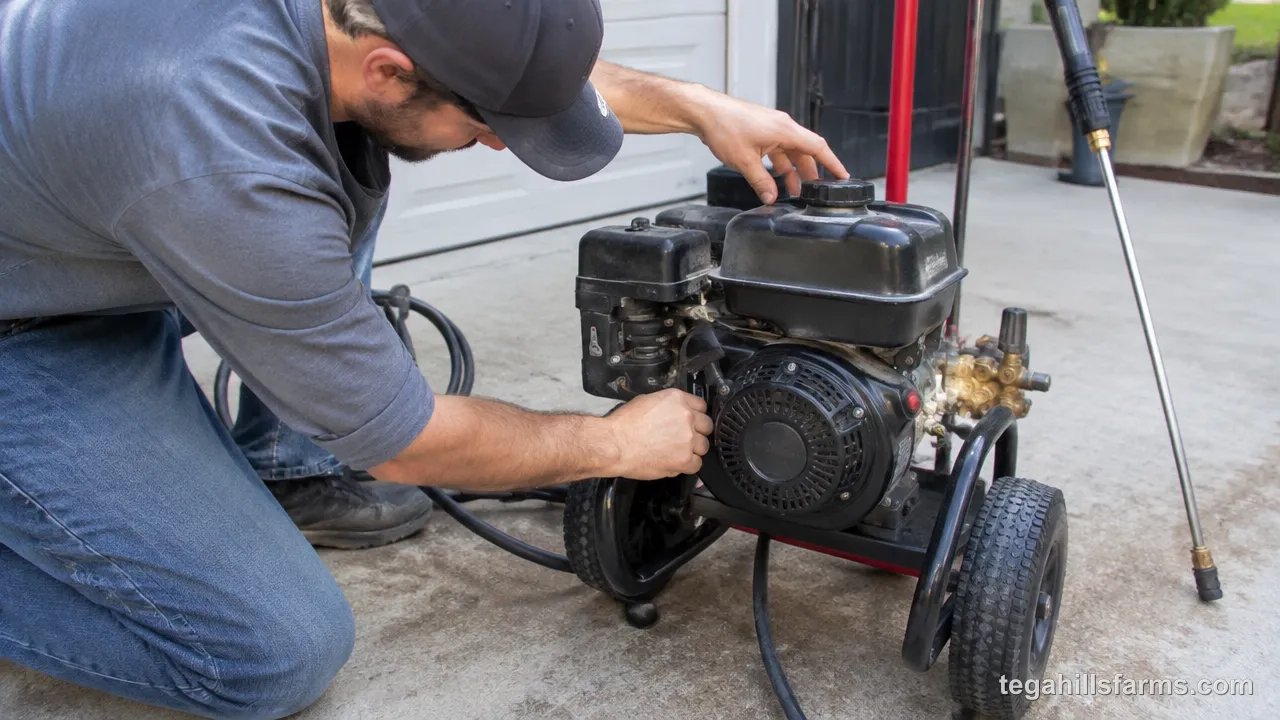
Gas Pressure Washer Starting Problems
Stale fuel is the first suspect on a gas machine, especially one that sat since last season. As gasoline ages it leaves gummy varnish in the carburetor’s small jets, so too little fuel reaches the cylinder to fire. A spark plug fouled with carbon or oil can’t light the mixture even when fuel arrives.
Low oil causes a different symptom. Many engines carry a shutdown sensor that cuts ignition when the crankcase runs low, so the rope pulls normally but nothing happens. Choke misuse is the other common mistake: leaving full choke on a warm engine floods the cylinder with fuel. A clogged air filter has a similar effect, since it starves the engine of air and makes the mixture too rich to ignite cleanly.
Electric Pressure Washer Starting Problems
An electric pressure washer has fewer failure points, and nearly all of them sit between the wall and the motor. A tripped GFCI is the most frequent one. The trip can happen at the outlet or at the GFCI plug built into many power cords, and either one cuts power completely.
A cord that has been crushed, kinked or run over can break internally while looking fine outside. A thermal fuse protects the motor from overheating and may blow after a long, hot run or a bad extension cord. Many electric models also run the motor only while the spray gun trigger is squeezed, so an engaged trigger lock can look like a dead machine. Fewer, simpler parts is one of the real tradeoffs between gas vs electric pressure washers, and it is why electric models are usually quicker to diagnose.
How Do You Fix a Pressure Washer That Won’t Start After Sitting?
Old gasoline is almost always the problem, because fuel left inside the machine breaks down into varnish that blocks the carburetor’s fuel passages. A full recovery means removing that bad fuel from every place it can sit, the tank, the fuel line and the carburetor bowl. If any of it stays behind, it contaminates the fresh gas you add, and the engine either refuses to start or surges and dies within minutes.
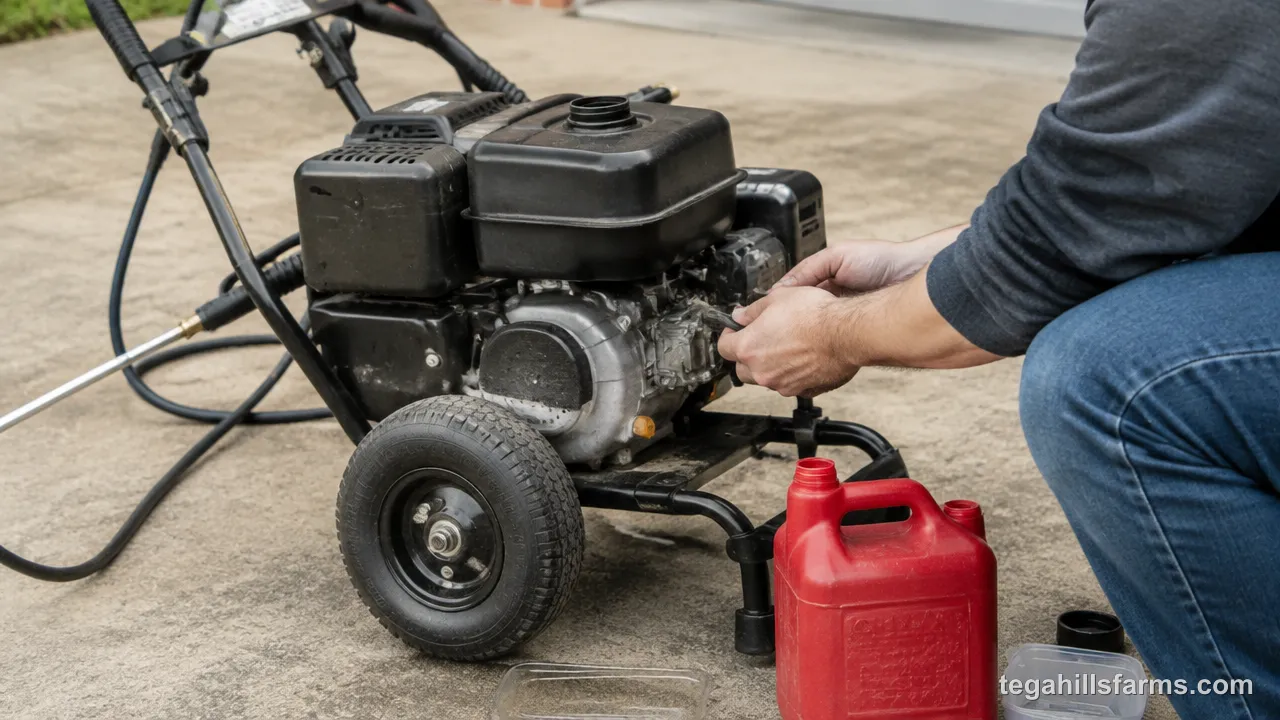
Drain and Replace Old Fuel
Gasoline that has sat in a pressure washer for more than a month can start gumming the carburetor. After six months or more it has usually oxidized enough that the engine won’t run on it reliably. Draining it completely comes before any other repair.
Close the fuel shutoff valve if your engine has one. Then siphon the tank, or disconnect the fuel line at the carburetor and drain it into an approved gas container. Many carburetors also have a drain screw on the bowl, and opening it clears the fuel sitting closest to the jets. Take the old gas to a household hazardous waste collection site, and check local rules for drop-off.
Refill with fresh gasoline mixed with fuel stabilizer at the rate printed on the bottle. Let the new fuel flow through the line before your first start attempt.
Clean the Carburetor
If fresh fuel alone doesn’t bring the engine back, varnish has probably closed off the main jet. The fix is to remove the float bowl and clear the passages with carburetor cleaner.
Turn off the fuel valve and take a photo of the linkage and springs before removing anything. That photo saves a lot of guessing during reassembly. Remove the air filter housing for access, then unscrew the bowl nut or bolt at the bottom of the carburetor. On many small engines that bolt also contains the main jet, so check its small holes for blockage.
Spray cleaner through every jet and passage until it flows freely. Clear stubborn holes with a strand of thin wire, never a drill bit, because widening a jet changes the fuel mixture. Check that the float moves freely and the needle seats cleanly. Seat the bowl gasket or O-ring evenly before tightening, and replace it if it is torn or flattened, since a leaking bowl drips fuel and pulls in air.
How Do You Test and Replace a Spark Plug?
Remove the plug with a spark plug socket, read the condition of its tip, and confirm the ignition system produces a spark before replacing anything. A plug is an inexpensive wear part, and checking it takes far less effort than opening the carburetor. That makes it one of the first stops on a gas engine that won’t fire. What the tip looks like also points to problems elsewhere, such as rich fuel, a dirty air filter or oil getting where it shouldn’t.
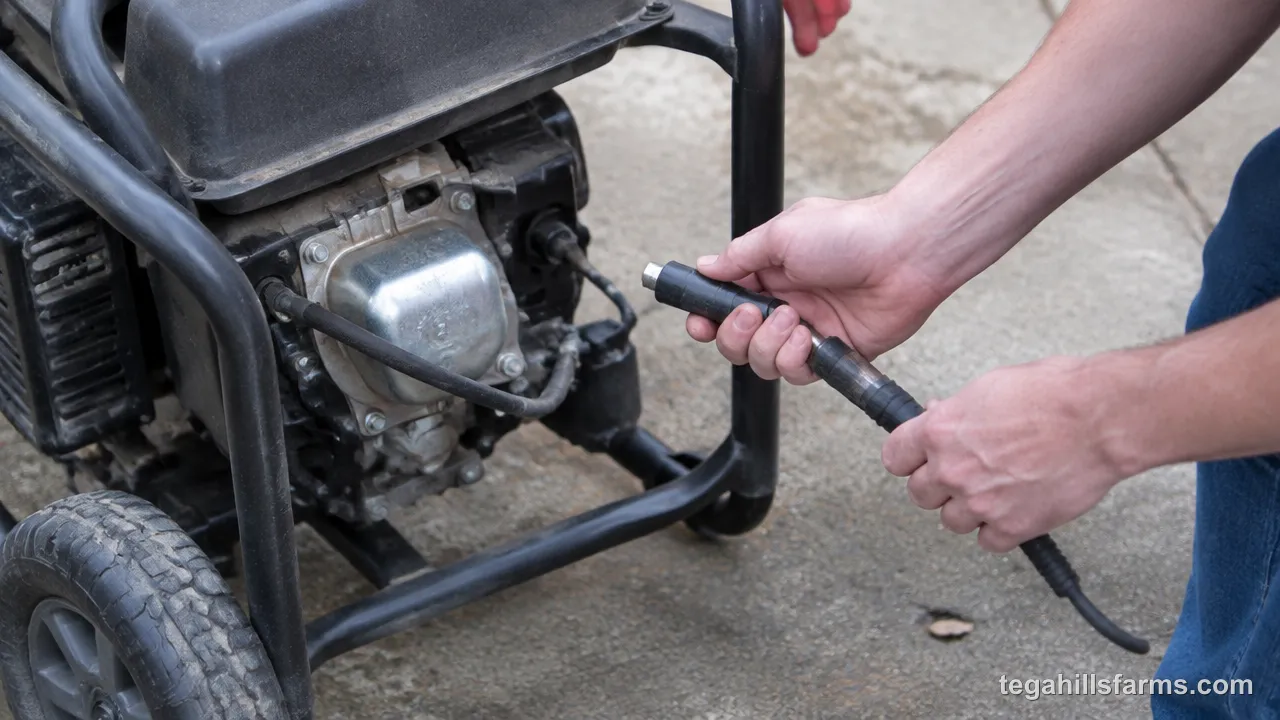
Remove and Inspect the Plug
Pull the rubber boot straight off the plug, then brush away dirt around the base so debris can’t fall into the cylinder. Unscrew the plug counterclockwise with a spark plug socket.
The electrode tells you why the engine struggled. Dry black soot points to a rich mixture from too much choke or a clogged air filter. A wet, gas-soaked tip means the cylinder is flooded, and an oily tip suggests oil is reaching the combustion chamber. A light tan or gray tip is healthy. Light deposits come off with a wire brush. Replace the plug if the electrode is rounded or eroded, the porcelain insulator is cracked, or the carbon buildup won’t clean off. Use the same part number, set the gap listed in your manual, and start the threads by hand to avoid cross-threading the head.
Test for Spark
The spark test shows whether the ignition system delivers current to the plug or the problem lies upstream. Reconnect the plug to its boot and hold the threaded metal base against bare metal on the engine with insulated pliers. Then pull the starter rope. A crisp blue spark across the gap means the ignition is working. An inline spark tester gives the same answer with less risk of a shock. Do this test away from spilled fuel and open gas cans.
If a known-good plug shows no spark, the ignition coil is next in line. The air gap between the coil and the flywheel magnets is usually between .010 and .014 of an inch, and you can set it with a feeler gauge. A coil set too far from the flywheel produces a weak spark or none at all. Remember that a low oil sensor also kills spark, so check the oil before blaming the coil.
Why Won’t Your Pressure Washer Start Even With Fresh Fuel?
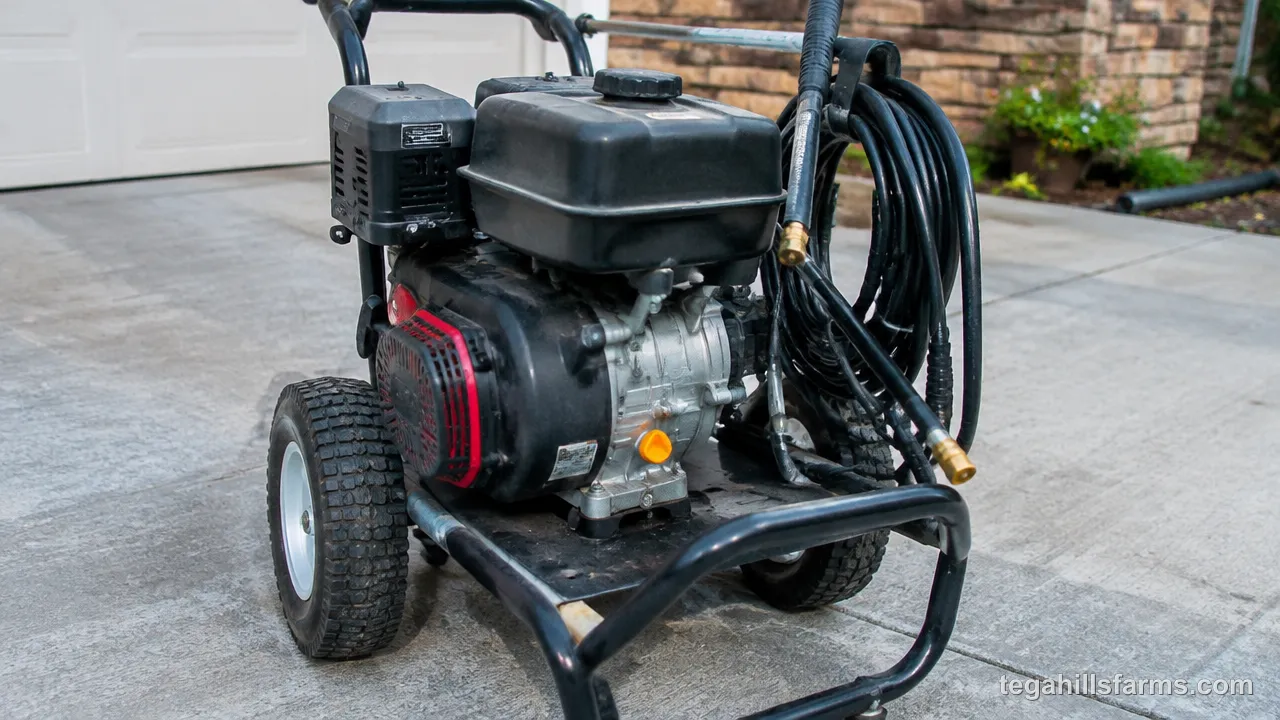
Low engine oil is the most likely reason, because a low oil shutdown sensor grounds the ignition whenever the crankcase level drops below its trigger point. The engine cranks normally but never fires, or it fires briefly and dies once the oil sloshes away from the sensor. This protects the engine from running dry and seizing, so the sensor is doing its job, even though it looks like a breakdown.
Check and Top Off Engine Oil
Checking the oil is quicker than any other diagnostic step. It should come before you assume a failed coil or a clogged carburetor.
Set the pressure washer on level ground first. Even a slight tilt shifts the oil away from the dipstick and the sensor, so a full crankcase can read low and trip the shutdown. Unscrew the dipstick, wipe it clean, and reinsert it the way your manual specifies. Some engines read with the cap threaded in and others with it resting on the threads. Add the oil grade listed in the manual a little at a time, rechecking as you go. Overfilling causes its own trouble, including smoke and oil pushed into the air filter.
Reset the Low Oil Sensor
The low oil sensor on most pressure washer engines is a float switch inside the crankcase, so it rarely needs a manual reset. After you add oil, the float has to rise and break the ground circuit before the ignition works again. That can take a short wait, especially in cold weather when the oil is thick.
If the oil is full, the machine is level, and there’s still no spark, the sensor may be stuck or faulty. Some engines have an oil alert light that flickers while you pull the rope, which confirms the sensor is the cause. A shop can test it by unplugging the sensor lead briefly. Never run the engine that way, because the protection against seizing is gone.
What Should You Do If Your Pressure Washer Floods From Too Much Choke?
Move the choke to the off or run position and clear the excess fuel from the cylinder before pulling again. Each pull on full choke adds more gasoline the plug can’t ignite, so repeated attempts only make the flooding worse. A strong smell of gas and a wet spark plug confirm it.
Clear the Flooded Cylinder
Waiting sometimes fixes a mild flood, since the extra fuel evaporates on its own. A heavily flooded engine needs a faster approach.
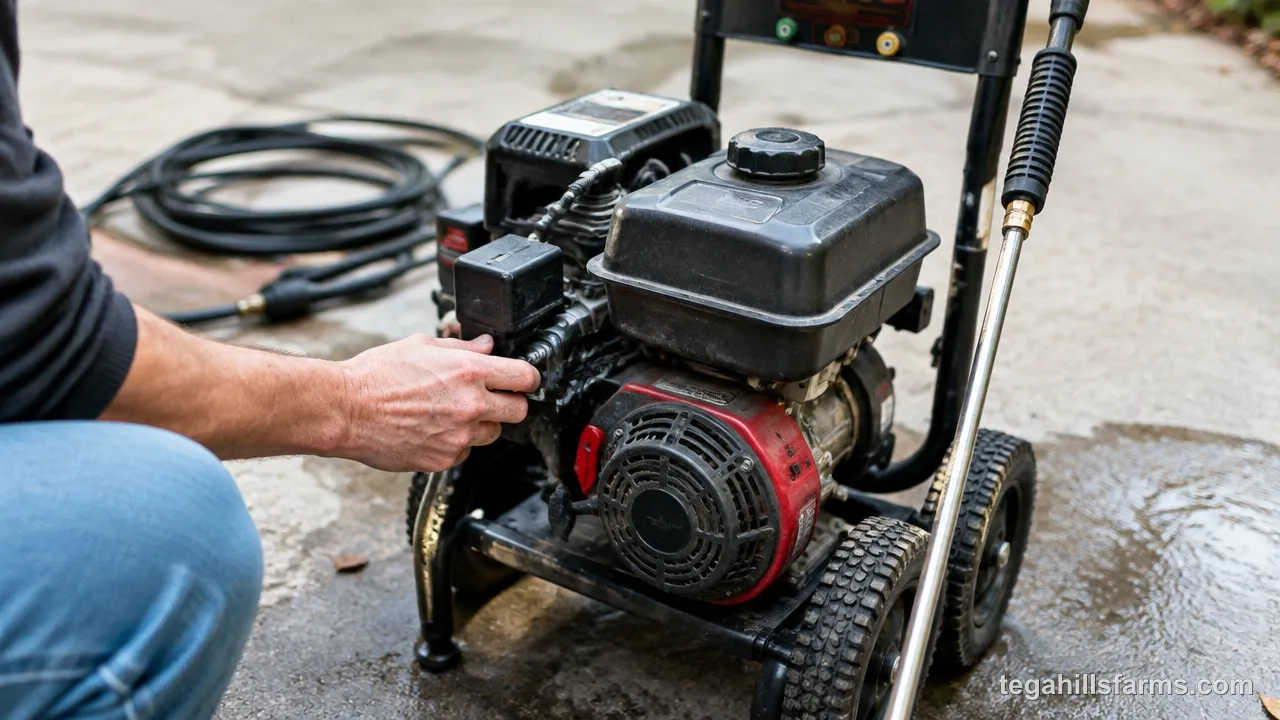
Set the choke fully open and turn the fuel valve off so no more gas enters the carburetor. Remove the spark plug and pull the starter rope several times. The piston pushes the excess fuel out through the plug hole, so keep your face clear and wipe up any spray. Dry the plug, or swap in a new one if it stays wet. Reinstall the plug, open the fuel valve and pull with the choke still off. A cylinder that has just been cleared rarely needs choke to fire, and adding it again puts you back where you started.
Use the Choke Correctly
A cold engine needs full choke because cold fuel vaporizes poorly and the engine needs a richer mixture to fire. Once it starts, or sputters as if it is about to, move the lever halfway. Open it fully once the engine runs smoothly, usually within a short warm-up.
A warm engine needs no choke at all. Restarting after a break with the lever on full choke is one of the most common ways owners flood a machine that was running fine minutes earlier. The full starting sequence, including connecting the water supply and squeezing the trigger to release pump pressure, is part of how to use a pressure washer without fighting it every time.
How Do You Troubleshoot an Electric Pressure Washer That Won’t Start?
Start at the power source and work toward the motor, because most electric no-starts come from a tripped outlet or a damaged cord rather than a failed motor. Testing in that order costs nothing at first and only reaches the parts that need a multimeter or a screwdriver once the easy causes are ruled out.
Verify Power and Reset the Outlet
A pressure washer plugged into a dead outlet looks just like one with a burned-out motor. Confirming power comes first.
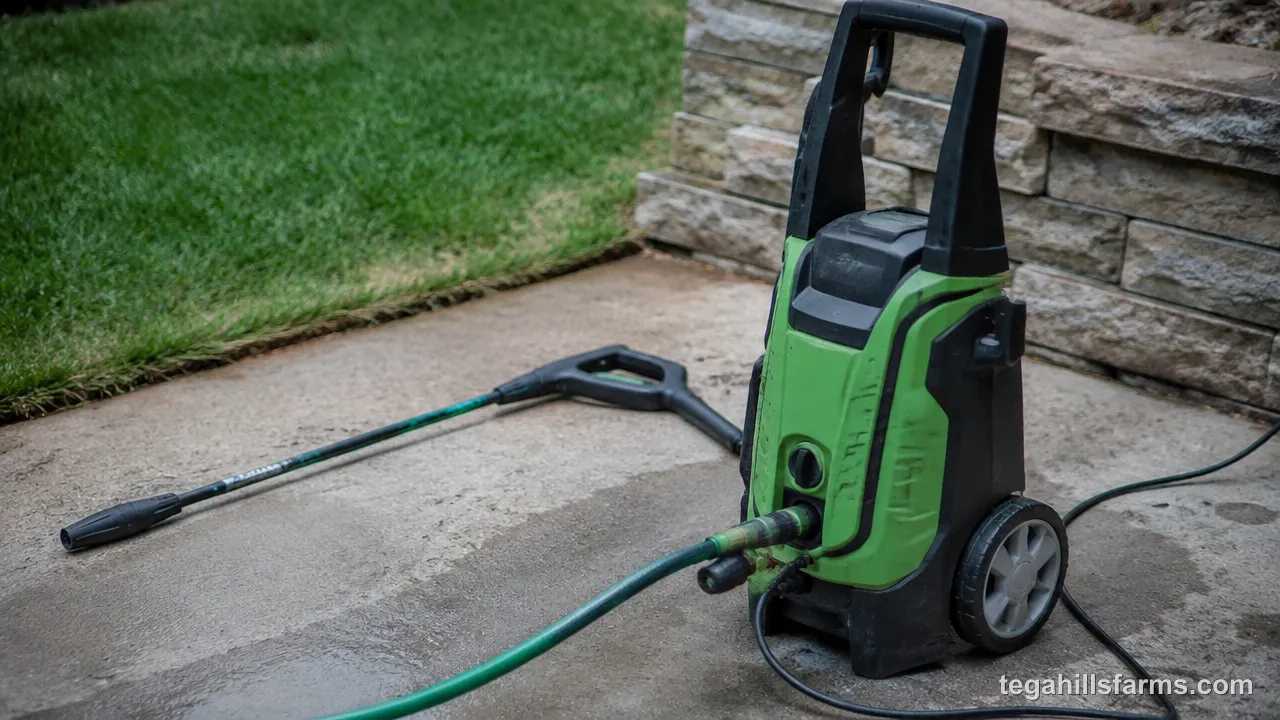
Plug a lamp or phone charger into the same outlet. If it doesn’t work either, look for a tripped GFCI outlet nearby, since one GFCI can protect several downstream outlets in a garage or on a porch. Then check the circuit breaker panel. Many electric pressure washers also have their own GFCI device molded into the plug. Press its reset button and watch for the indicator light. If the GFCI trips again the moment you switch on, there is a ground fault, often moisture in the plug or cord. Let everything dry before trying again.
Test the Power Cord and Thermal Fuse
Once the outlet is confirmed live, an electrical open between the plug and the motor is the next suspect. Check the full length of the cord for cuts, crushed spots and scorched insulation. Then, with the machine unplugged, check each conductor end to end for continuity with a multimeter. A wire that reads open means the cord needs replacing. Taping it is not a safe fix around water. An undersized extension cord can starve the motor and lead to overheating, so use only the gauge and length your manual allows.
The thermal fuse sits inside the motor housing, usually wrapped near the windings. A blown fuse reads open on the multimeter and has to be replaced, while some thermal protectors reset on their own once the motor cools. On motors with carbon brushes, a brush worn shorter than 1/4 inch can stop the motor from running and needs replacement.
Are There Brand-Specific Starting Issues?
The brand matters less than the engine’s start system: an automatic choke, a fuel shutoff valve or a primer bulb each changes the correct starting routine. Skipping one of those steps looks exactly like a mechanical failure. Check your manual for which system your engine uses before taking anything apart, because the fix may be a lever you haven’t moved.
Honda and Briggs & Stratton
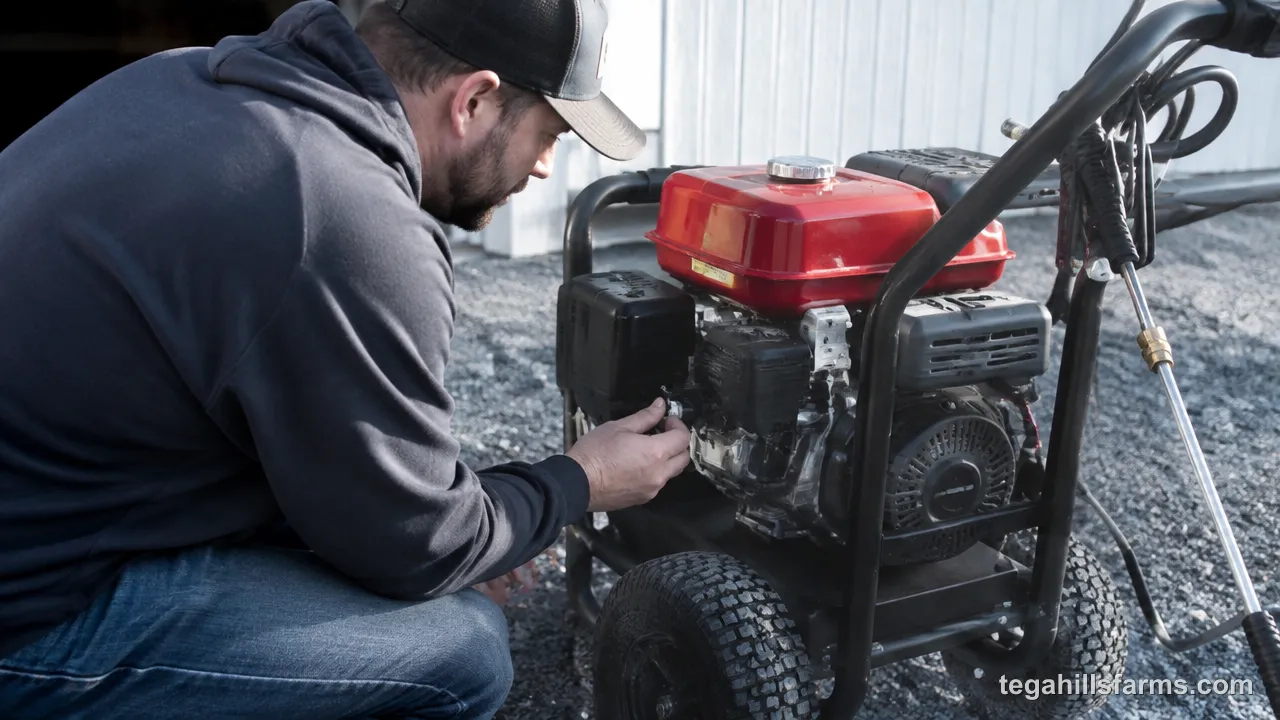
Many current Honda and Briggs & Stratton pressure washer engines use an automatic choke that adjusts the mixture without a manual lever. Owners who go looking for a choke lever that doesn’t exist sometimes suspect a broken part. On these engines, a no-start after sitting usually points straight to stale fuel or a gummed carburetor, since there is no choke setting to get wrong.
Both brands commonly fit a low oil shutdown sensor. That makes an engine that pulls easily but never fires an oil check first. No reset button is involved. Topping off the oil on level ground and giving the float a moment to rise is the reset. If an automatic choke sticks closed from varnish, the engine floods repeatedly, and cleaning the carburetor and linkage usually frees it.
Kohler and Westinghouse
Westinghouse pressure washers and many Kohler-powered models put a fuel shutoff valve on or near the tank. It is easy to forget after storage or transport. With the valve closed, the engine may fire briefly on the fuel left in the carburetor bowl and then die, which looks like a clogged jet. Check the valve position before any other diagnosis.
Some of these engines use a primer bulb instead of, or alongside, a choke. Press the bulb the number of times your manual specifies to push fuel into the carburetor. Pressing too few times leaves the engine dry, and pressing too many floods it. A cracked or soft bulb can’t build pressure and needs replacement.
A carburetor that was spotless in October can be varnished shut by April simply because a half tank of untreated gas sat in it all winter. The same goes for a spark plug that was never swapped or an air filter packed with grass dust, which make each start a little harder until the engine finally refuses on the morning you need it.
What Maintenance Prevents Starting Problems?
Fuel hygiene and a few cheap wear parts prevent most of the failures that keep a pressure washer from starting. Stabilized fuel keeps the carburetor clean, and a fresh plug and clean air filter keep the engine easy to start. Routine upkeep also has a large effect on how long pressure washers last, since a carburetor that never varnishes and an engine that never runs low on oil avoid the repairs that send machines to the curb.
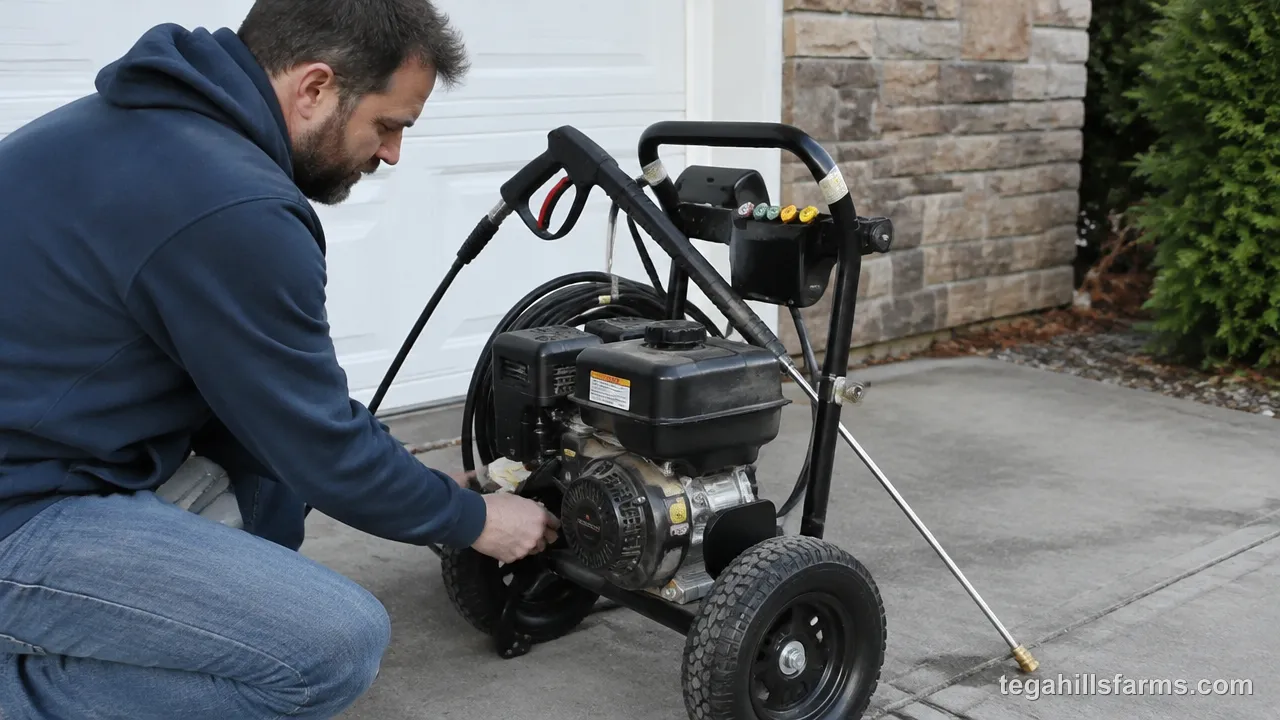
Fuel and Carburetor Care
Stale gas causes more no-starts than anything else, so fuel care deserves the most attention. Add fuel stabilizer whenever you buy gas that won’t be used soon, not only before winter. Stabilizer slows oxidation but can’t reverse it.
Before any long break, either run the engine until it stalls from an empty tank or drain the tank and carburetor bowl. Run-dry storage leaves nothing in the jets to turn into varnish. If the engine has a fuel shutoff valve, close it and let the engine run until the carburetor empties. A yearly carburetor cleaning, or a quick bowl inspection at the start of each season, catches early varnish before it blocks the main jet.
Ignition and Air Filter Maintenance
A spark plug wears gradually, so the engine starts a little harder each season before it refuses outright. Replacing it once a season, or at the interval in your manual, costs less than a frustrating morning of pulling the rope.
The air filter deserves the same attention. A filter clogged with dust or grass clippings restricts airflow, so the mixture runs rich, the plug fouls with soot, and starting gets harder. Foam filters can be washed and lightly re-oiled. Paper filters should be replaced when they look dirty or are damaged. Changing the oil at the recommended interval also keeps the low oil sensor from tripping and protects the engine.
How Should You Store a Pressure Washer to Avoid Starting Issues?
Store the machine with no untreated fuel in it and no water in the pump, in a spot that stays above freezing. Those three steps prevent carburetor varnish, corrosion and a cracked pump, which are the failures that show up most often next spring.
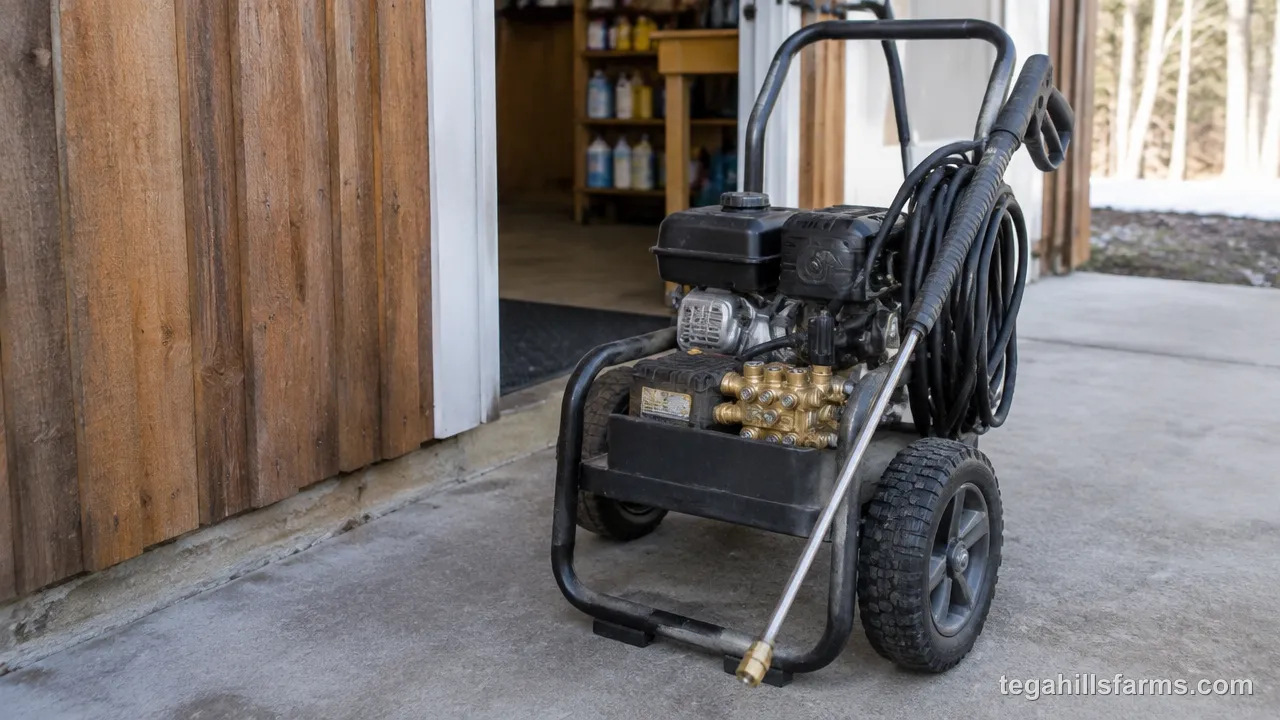
At the end of the season, add stabilizer to fresh gas and run the engine so the treated fuel reaches the carburetor. Then either run it dry or drain the tank and bowl. Change the oil so acidic, used oil isn’t sitting in the crankcase all winter.
Water left in the pump can freeze, expand and crack the pump head or seals. Disconnect the hoses, let the water drain, and push pump antifreeze through the inlet until it comes out the outlet. Cover the machine and keep it in a dry garage or shed rather than outdoors.
When Should You Call a Professional Instead of DIY?
Hand the machine to a small engine repair shop when the simple checks pass and the problem points to internal parts. That includes no spark with a good plug and a correctly gapped coil, a carburetor that still won’t run after a thorough cleaning, or a pump leaking from its body.
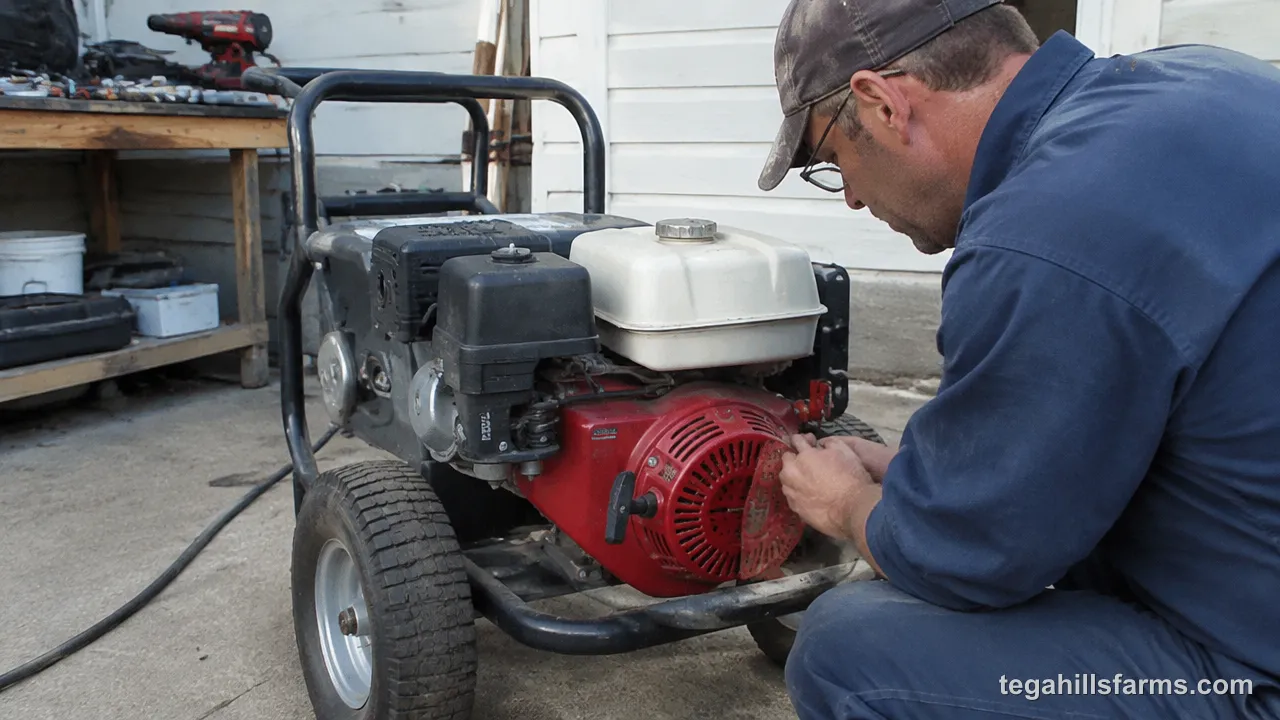
Cost helps with the decision. A carburetor rebuild typically runs about $25 to $100 depending on the engine’s year, brand and model. A new carburetor costs about $30 to $200, and shop labor to install one adds roughly $50 to $150. I’d weigh those figures against how much a pressure washer costs before investing in an older machine. If a job can’t wait, hiring someone to pressure wash a house typically costs about $100 to $650.
Common Questions About Pressure Washer Starting Problems
Why does my pressure washer start and then die right away?
A partly clogged carburetor jet is the usual cause, because it lets enough fuel through to fire but not enough to keep running. Low oil can do the same thing when the sensor trips as oil moves around the crankcase. Check the oil first, then clean the carburetor if the problem continues.
Why is the starter rope so hard to pull?
Trapped water pressure in the pump is the most common reason. When the hose is connected and the trigger is closed, the pump resists turning over. Squeeze the spray gun trigger while pulling to release that pressure. If the rope stays stiff with no hose attached, the engine or pump may have an internal problem.
Why won’t my pressure washer restart when the engine is hot?
Hot engines flood easily, especially when someone sets the choke out of habit. After a long job, such as learning how to clean a driveway with a pressure washer, restart with the choke fully open. If it still won’t fire, let the engine cool briefly so vaporized fuel in the carburetor can clear.
Why does my electric-start pressure washer only click?
A clicking starter usually means the 12-volt battery is too weak to turn the engine. Charge it with a charger made for that battery type, then check the terminals for corrosion or loose connections. Most electric-start models also have a recoil rope, so you can still start the engine while you sort out the battery.
Why does the engine run fine but the spray has no pressure?
That is a pump or nozzle problem, not a starting problem. Check for a clogged nozzle, a kinked garden hose, or a water supply that can’t keep up with the pump. Understanding psi vs gpm pressure washers helps you tell whether the machine was ever rated for the cleaning power you expect.





Write Your Review
No reviews yet. Be the first to share your experience!