

Run water through the machine before you give it power. Choose the widest nozzle that still lifts the dirt, keep the wand moving at a distance that cleans without marking the surface, and release the pressure before you shut down and store the unit. That order applies whether the job is a stained driveway, a mildewed deck or a dusty car.
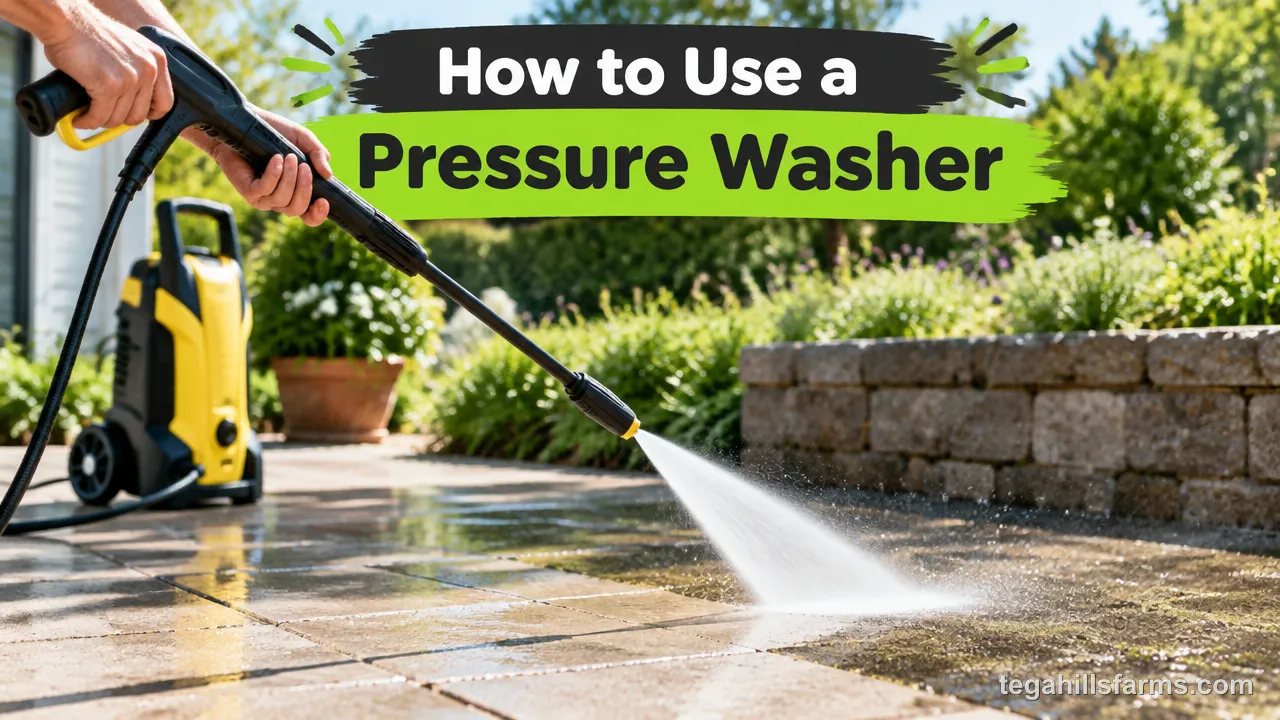
The settings that make the biggest difference are nozzle angle, wand distance and whether you add detergent. The nozzle sets how concentrated the stream is. Distance sets how much force reaches the surface. Detergent loosens grime so you don’t have to compensate with pressure that can damage softer materials.
Most owners worry about two kinds of damage. The first is to the surface: gouged wood, stripped paint, or water forced behind siding. The second is to the machine. A pump that runs without water flowing through it overheats fast. Most of the steps below are the same for both power types, but startup and storage differ, and that difference is one practical point when you compare gas vs electric pressure washers.
Before you clean anything visible, test your nozzle and distance on a hidden spot, such as the back corner of the deck or a strip of siding behind a shrub. A mistake there costs you nothing, while the same mistake on the front walk stays visible for years.
What Do You Need to Set Up a Pressure Washer?
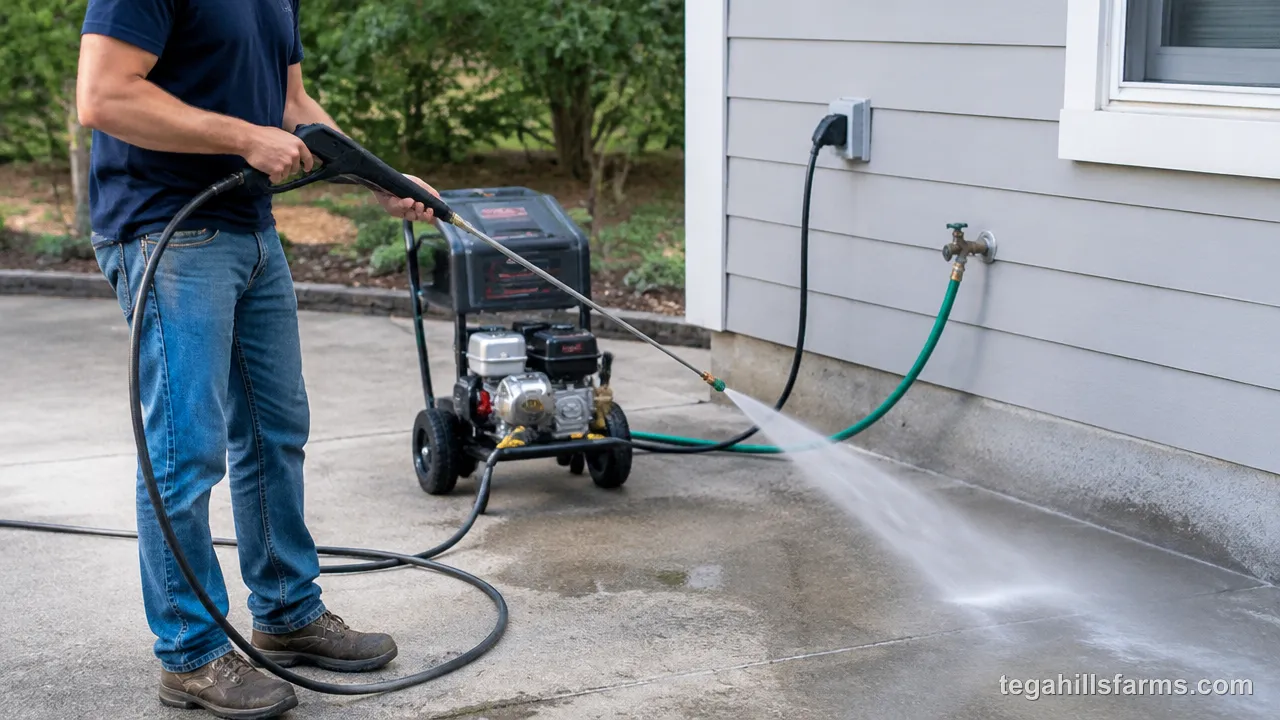
You need a garden hose with full water flow, the high-pressure hose, the spray wand with its trigger handle, and a power source: a GFCI-protected outlet for electric models, or fresh fuel and engine oil for gas models.
Before you connect anything, confirm the machine fits the work you have planned. Pressure output and flow rate decide which surfaces you can clean safely, so knowing how to choose a pressure washer puts the right tool in your hands from the start.
The garden hose supplies all the water the pump moves. A kinked hose or a half-open spigot starves the pump, so unroll the hose completely and open the spigot all the way. The high-pressure hose runs from the pump outlet to the trigger handle. Thread the connection on fully, because a loose fitting sprays sideways under pressure.
The spray wand attaches to the trigger handle, and the nozzle snaps into the end of the wand. Leave the nozzle off until the water is flowing. For electric units, plug directly into a GFCI outlet whenever you can, since the cord and the water share the same work area.
Which Nozzle Should You Use for Each Surface?
Spray angle sets how concentrated the force is. A narrow tip puts all the pressure on a small spot, and a wide tip spreads the same output across a broader fan. The softer or more finished the surface, the wider the angle it needs. The nozzle only shapes what the pump produces, so the same tip hits harder on a high-output machine. The tradeoff between psi vs gpm for a pressure washer explains why one unit cleans faster than another with an identical nozzle.
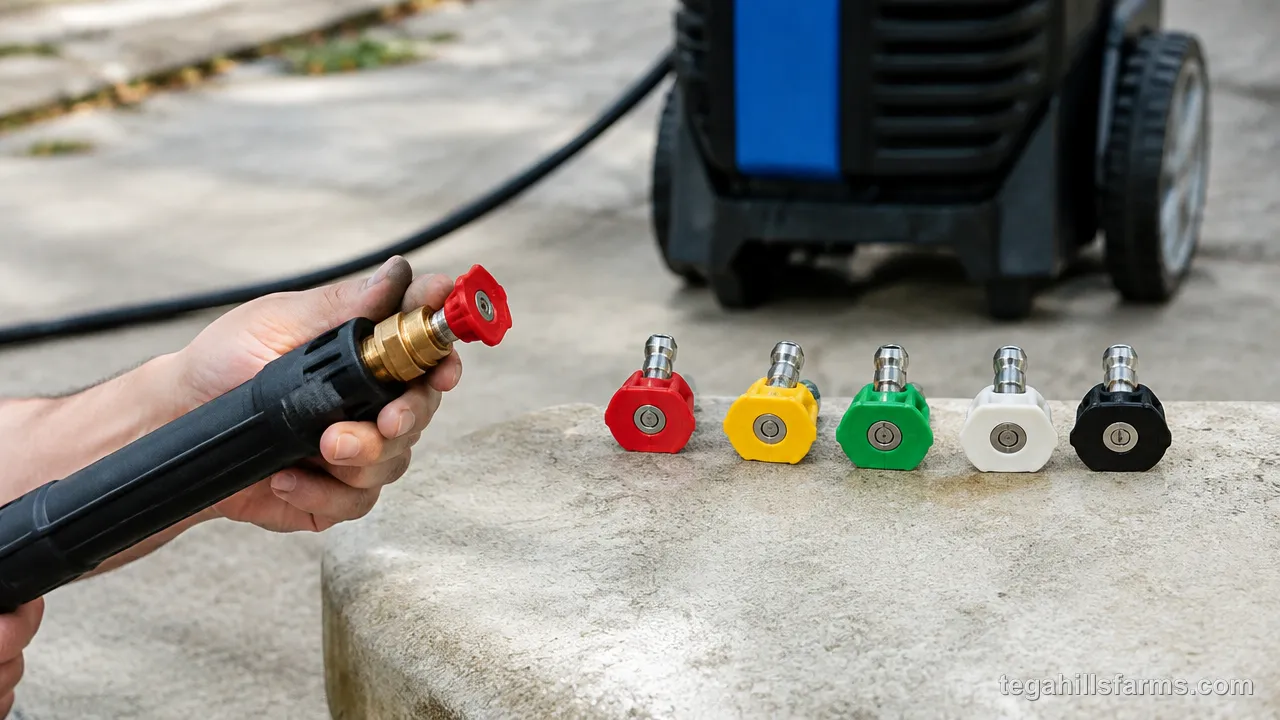
Pressure washer nozzles are color-coded by angle, which lets you swap them without reading the stamped numbers. Keep the narrowest tip in a pocket, away from the others, so you never grab it by accident when you’re reaching for a general-purpose nozzle.
Red (0-Degree): Pinpoint Jet
The red 0-degree nozzle is for hard-to-remove dirt and oil on durable surfaces only, such as bare concrete and metal. It sends all of the machine’s pressure out in one solid stream, so the force lands on a spot about the size of a coin.
That concentration is what makes it risky. On wood, vinyl, paint or skin, a 0-degree jet can cut, gouge or strip in a single pass. Even on concrete, holding it still for too long can etch the surface and leave a visible line.
Use it for spot work, like a dried oil patch or rust on a steel trailer frame, and keep it moving. For any area wider than a small stain, a wider tip covers ground faster and is far less likely to scar the surface.
Yellow, White, Black: General Cleaning and Soap
The yellow 15-degree nozzle is for stripping old paint from decks or siding before refinishing. Its stream is still aggressive, so it’s meant for prep work rather than routine washing.
The green 25-degree nozzle handles most cleaning around the house, including driveways, walkways and car exteriors. It balances cleaning force against coverage. The white 40-degree nozzle spreads the spray wider for windows, window screens and light fixtures, where you want gentle rinsing. On vinyl siding and wood decks, start with the white tip and move to green only if the grime won’t come off.
The black 65-degree nozzle is the soap nozzle. Its wide opening drops the pressure low enough for the machine to draw detergent, and it’s gentle enough for cars, patio furniture and small, delicate outdoor items.
How Do You Start a Pressure Washer Safely?
Startup can be safe as long as water flows through the pump before power reaches it. A dry pump heats up within moments and can damage its seals before you pull the trigger even once.
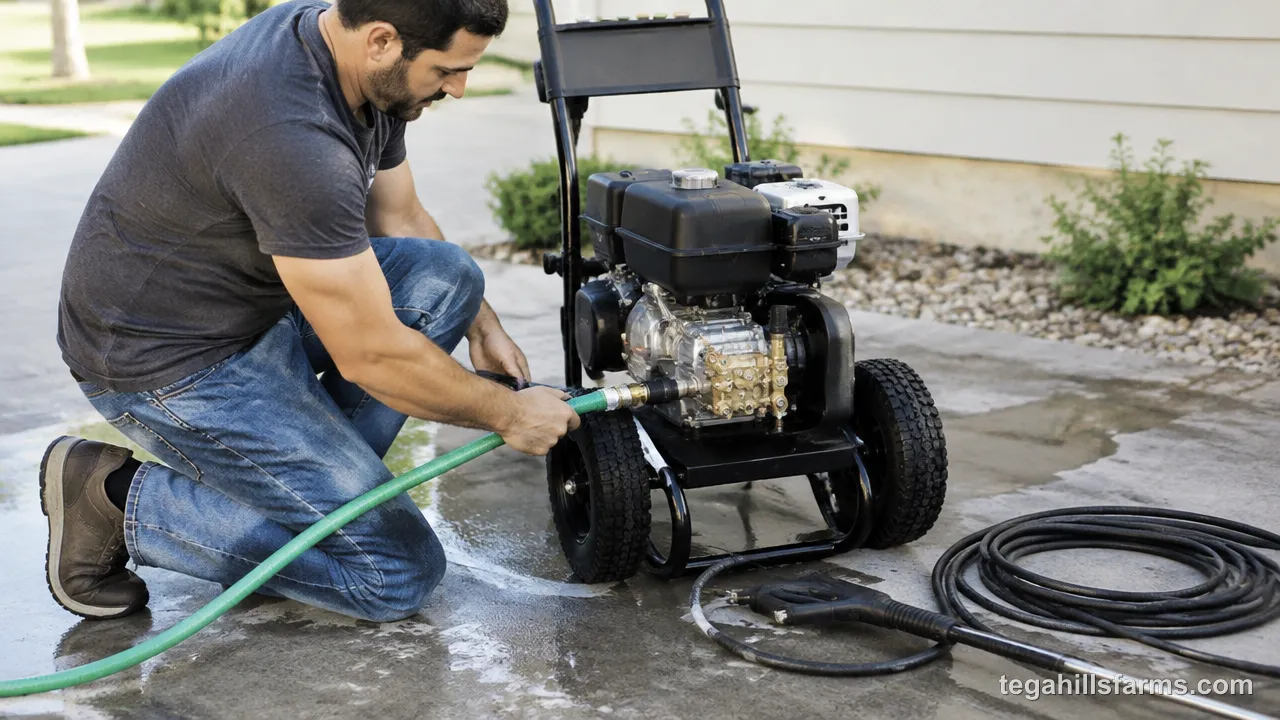
Electric and gas machines share that rule but get there differently, because one starts with a switch and the other with an engine that needs choke and warm-up. If a pressure washer won’t start after a careful sequence, the cause is usually fuel, choke position or air trapped in the pump, not the machine itself.
Electric Models
On an electric pressure washer, the water connection comes first and the power cord comes last. Connect the garden hose to the inlet and the high-pressure hose to the outlet and trigger handle, then open the spigot fully.
Next, squeeze the trigger handle with no nozzle installed and let water run until the stream is steady and free of sputtering. That step pushes trapped air out of the pump. Air pockets make the pump run dry inside, even with the hose connected.
Once the stream is steady, snap in your nozzle, plug the power cord into a GFCI outlet and turn the switch on. If you need an extension cord, use the gauge your owner’s manual specifies, because an undersized cord starves the motor.
Gas Models
On a gas-powered pressure washer, check engine oil and fuel, connect and purge the water the same way as an electric model, and only then set the choke and pull the recoil starter. Starting the engine before water flows lets the pump run dry.
For a cold engine, move the choke to the closed position and set the throttle if the unit has one. Squeeze the trigger handle while you pull, which relieves pressure in the pump and makes the recoil starter easier to pull. Pull smoothly instead of yanking.
Once the engine catches, open the choke gradually as it warms, and give it a short warm-up before spraying. Run gas units outdoors only, well away from open windows and garage doors, because the exhaust carries carbon monoxide.
How Do You Spray Without Damaging the Surface?
Safe spraying means starting farther back than you think you need, holding the wand at an angle rather than straight on, and keeping it moving in steady, overlapping sweeps. Force drops off quickly with distance, so you control damage mostly with your feet.
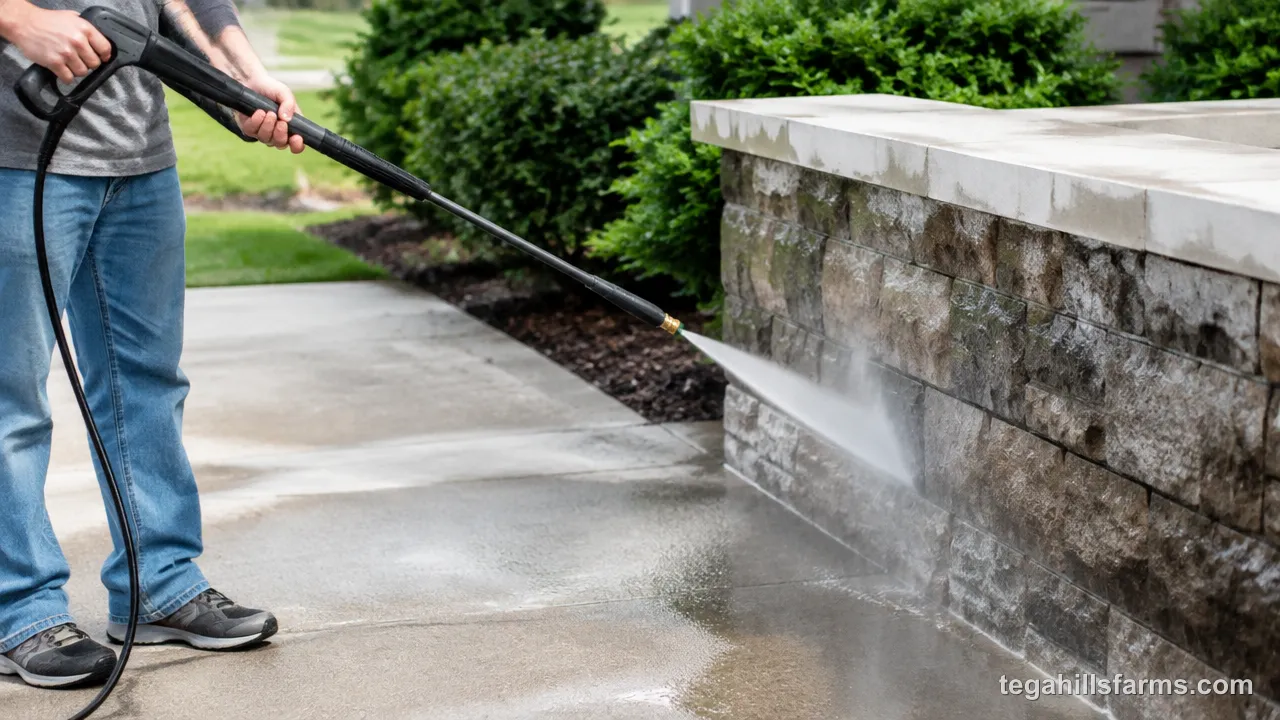
Begin with the tip well away from the surface and step closer until the dirt lifts without leaving marks. A nozzle held still concentrates force in one spot, and that’s how lines and etching get into wood and concrete. Sweep side to side at an even pace and overlap each pass slightly to avoid stripes.
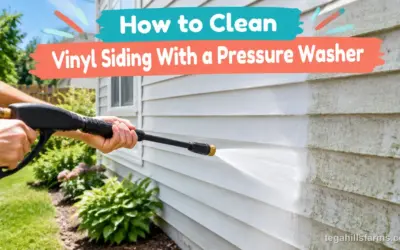
An angled spray lifts dirt off the surface instead of driving it in. On lap siding, aim downward so water runs with the overlap rather than under it. That detail matters most when you learn how to clean vinyl siding with a pressure washer. For second-story work, an extension wand keeps your feet on the ground, which is much safer than using a ladder against spray kickback.
How Do You Apply Detergent Through the Pressure Washer?
Detergent goes on through the black soap nozzle at low pressure, drawn from the onboard detergent tank or through a siphon tube placed in a container of pressure-washer-rated cleaner.
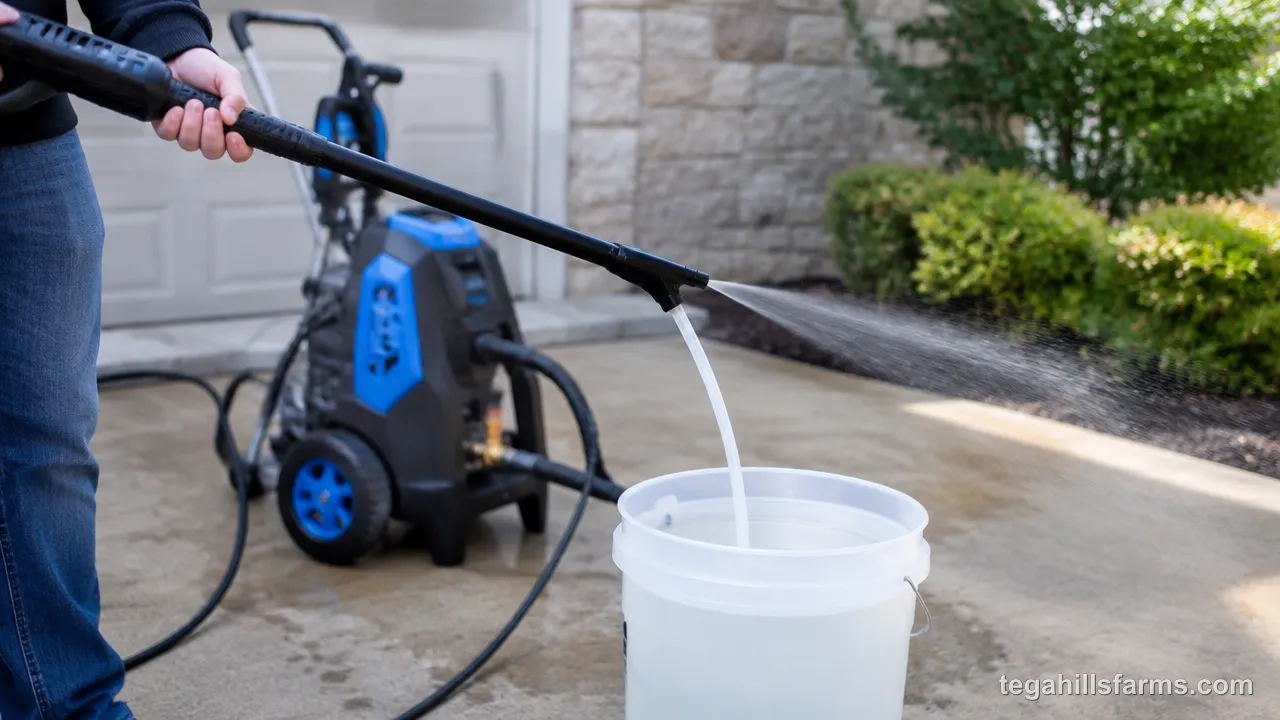
Most home units draw soap after the pump. The suction only works when a wide, low-pressure nozzle is installed. A high-pressure tip keeps the line from drawing, so if no soap comes out, the nozzle is usually the reason. Use only cleaners labeled for pressure washers, because household products like undiluted bleach can harm pump seals.
Apply detergent from the bottom up so it doesn’t streak down dry surfaces, then let it sit long enough to loosen grime. Don’t let it dry, or it leaves a film. Switch to a cleaning nozzle and rinse from the top down. When you finish, run clean water through the soap system so residue doesn’t harden in the tube.
Which Surfaces Can You Pressure Wash?
Surface hardness and finish decide the answer. Bare masonry tolerates far more force than wood, vinyl or paint. Asphalt shingles fall outside both groups, because pressure strips the protective granules, so roofs need low-pressure soft washing instead.
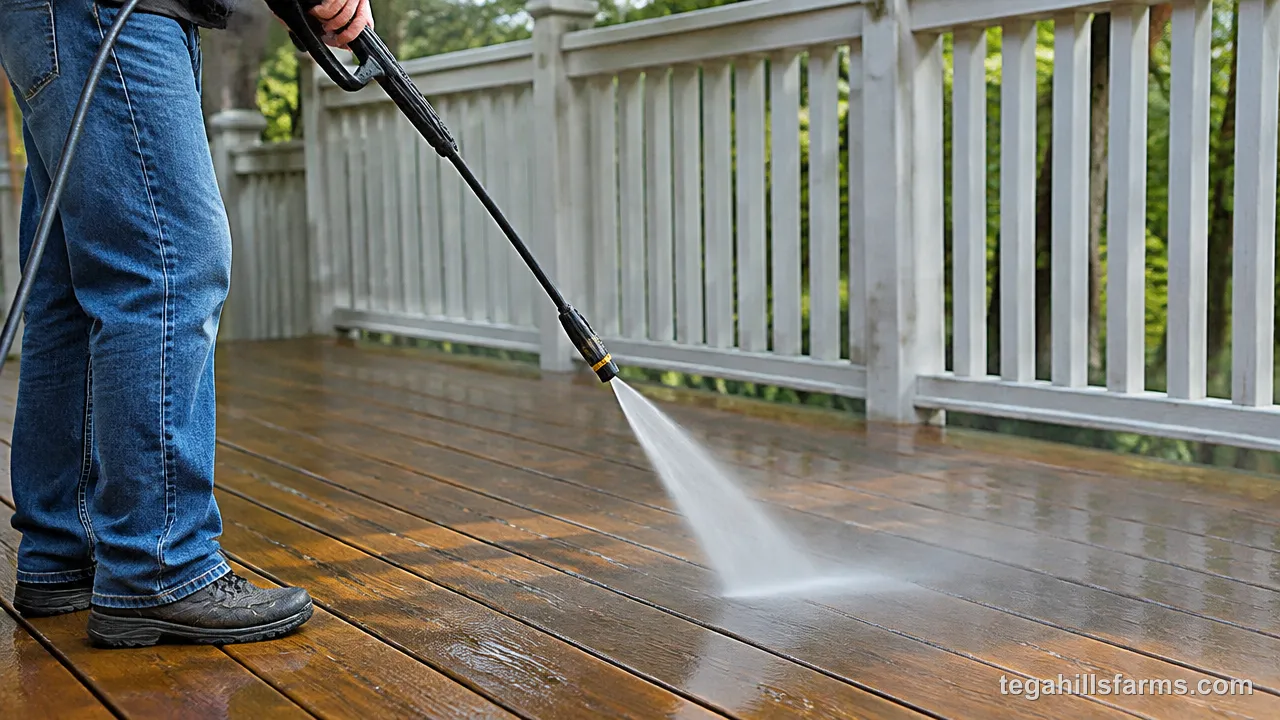
The practical question is how much margin a surface gives you. On some, an imperfect nozzle choice only slows you down. On others, the same mistake leaves permanent damage.
Safe for Most Pressure Washers
Concrete, brick, stone and metal siding handle standard settings on most home pressure washers. The green 25-degree nozzle is the usual choice, and the red tip is reserved for spot stains. Their hard, unfinished surfaces don’t absorb water or splinter, so you can get closer to them than you would to wood.
Even hard surfaces have limits. Old brick mortar can crumble if you hold a narrow stream on the joints, and fresh concrete should cure before it sees any pressure. Sweep the surface first so loose grit doesn’t become a projectile. For flatwork, the full process of how to clean a driveway with a pressure washer covers pre-treating oil stains and keeping your passes even so the finished slab doesn’t look striped.
Use Lower Pressure or Test First
Wood decks, vinyl siding, painted surfaces and stucco need the white 40-degree nozzle, extra distance and a test patch before you commit. Each of them fails differently under too much force.
Softwood decking fuzzes and splinters when the stream raises the grain, and the marks show once it dries. Vinyl siding can crack, and water forced behind the panels can soak the sheathing. Paint you only meant to clean comes off in strips. Stucco is porous and brittle, so a narrow jet can chip it and push water into the wall.
On all of these, let detergent do most of the work and use pressure mainly to rinse. If the test spot shows any mark, step back further or switch to a wider tip.
What Safety Equipment Do You Need?
At minimum, wear safety glasses, closed-toe shoes and, on gas units, hearing protection. Treat the spray as a tool that can cut skin and throw debris back at you.
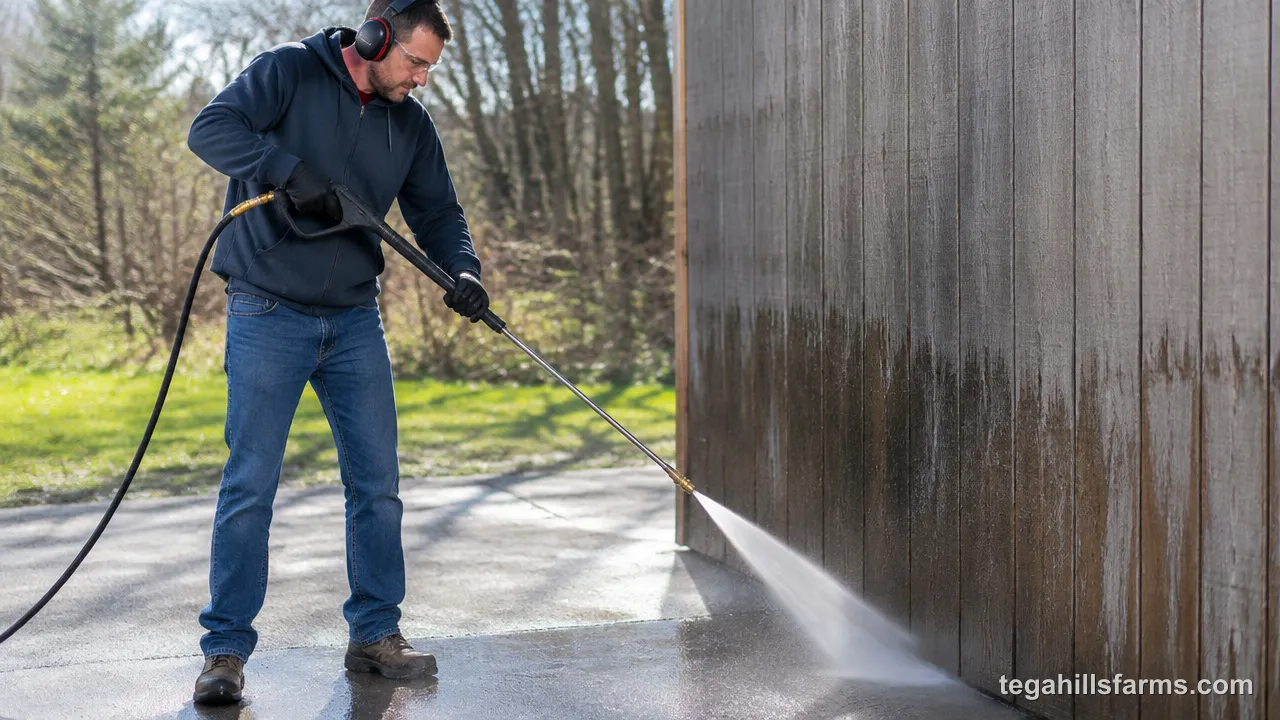
Glasses matter because the stream ricochets grit, paint chips and dirty water toward your face. Sturdy closed-toe shoes protect your feet from a stream that’s only a misstep away, and they give you better footing on wet, soapy surfaces. Gas engines are loud enough over a long session that earplugs or earmuffs make sense, and gloves help your grip.
Spray kickback is the other hazard. Pulling the trigger produces a jolt that can knock you off balance, so hold the wand with both hands and keep a stable stance. Never point the wand at people, pets or plants you want to keep. Never spray toward outlets or light fixtures, and stay off ladders while spraying.
How Do You Turn Off and Store the Pressure Washer?
Shut down by turning off the motor or engine first, then the water, and then squeezing the trigger to release the trapped pressure. Store the unit only after it’s drained and cool.
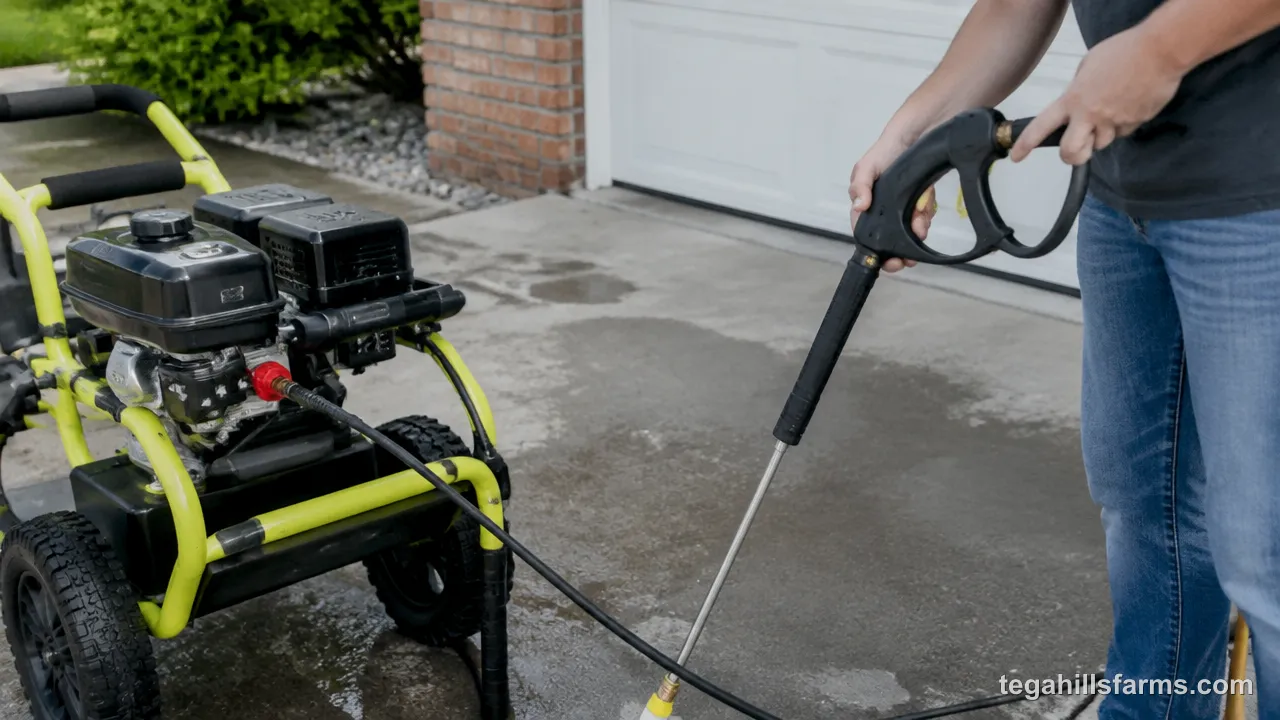
That order protects both you and the pump. With the power off and the water closed, the hose and wand still hold pressure. Squeezing the trigger releases it, so fittings don’t spray when you loosen them. Disconnect the hoses and drain water from the pump, hose and wand.
Gas models need time for the engine to cool before they go into a shed or garage near anything flammable. For storage between seasons, flush the pump with clean water, then add a pump protector so the seals stay lubricated and leftover water can’t freeze and crack the housing. Coil the high-pressure hose loosely, because tight bends weaken it over time, and keep the whole machine somewhere dry and above freezing whenever possible.
A pump that ran dry for even a short stretch, or gas left in the carburetor since spring, often shows up as a machine that won’t build pressure or won’t start on the first warm Saturday of the year. Pulling the cord with no result at that point usually means seals have dried out or fuel has gummed the jets, and those repairs cost more time than the prevention ever would have.
What Maintenance Does a Pressure Washer Need?
Routine upkeep comes down to five tasks: keep the inlet filter clean, keep oil fresh in the engine and the pump if the pump uses oil, stabilize or drain fuel before storage, replace the spark plug on schedule, and winterize the pump before freezing weather.
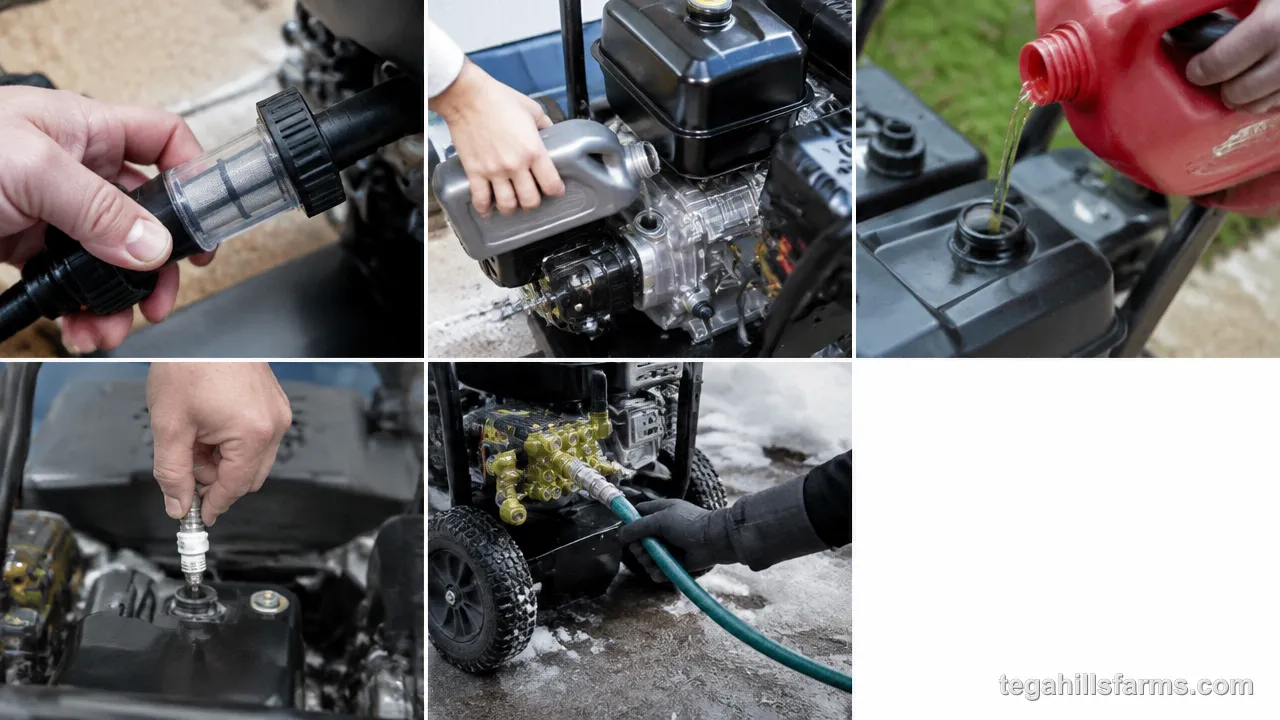
The inlet filter is a small screen where the garden hose connects. Grit trapped there starves the pump, so rinse it every few uses. Many residential pumps are sealed and never need oil, while others have an oil fill and their own change interval. Your manual tells you which type you have. Gas engines need oil changes and a spark plug check just like a mower.
Fuel causes most off-season trouble. Add fuel stabilizer and run the engine briefly before storage, or run the tank dry, so stale gas doesn’t clog the carburetor. Winterization means draining the water and adding pump protector anywhere temperatures drop below freezing. How well you keep up with these tasks largely determines how long pressure washers last in real-world use.
Common Pressure Washer Problems
Why did my pressure washer lose pressure?
Pressure loss usually comes from a partly clogged nozzle, a dirty inlet filter or a garden hose that can’t supply enough water. Clear the nozzle tip with a nozzle cleaning pin, rinse the inlet screen and open the spigot fully. If pressure stays weak, worn pump seals or valves may need service.
Why won’t the pump prime?
A pump that won’t prime almost always has air trapped inside it. Turn off the power, connect the water and squeeze the trigger with the nozzle removed until a steady stream runs out. Check that the hose fittings are tight, since a leak at the inlet pulls air into the pump.
Why does my gas pressure washer stall?
Engine stalls usually trace back to stale fuel, a choke left closed after warm-up, or low engine oil that triggers the shutoff. Refill with fresh gas, open the choke as the engine warms and check the oil level. Stalls that happen when you release the trigger can indicate a pressure-unloader problem.
Why does the spray pulse instead of staying steady?
Pulsing means the pump isn’t getting a consistent flow of water, usually from air in the pump, a kinked supply hose or a restricted inlet filter. Straighten the garden hose, clean the filter and purge the air again. A clogged nozzle can also cause surging because pressure builds unevenly behind it.
Why won’t the detergent come out?
Most home units draw soap only with the low-pressure black nozzle installed. A high-pressure tip blocks the siphon from pulling cleaner. Check that the siphon tube is fully submerged and the filter at its end isn’t clogged. A very long high-pressure hose can also weaken the draw on some machines.
Write Your Review
No reviews yet. Be the first to share your experience!