

A gas pressure washer suits large, dirty jobs far from an outlet, such as long driveways, oil-stained concrete, fence lines and equipment parked out by the barn. An electric pressure washer suits lighter cleaning close to the house, such as cars, patio furniture, vinyl siding and small decks. PSI alone rarely settles it. The better guide is how much surface you clean, how deep the dirt has set, and how far the work sits from the nearest outlet.
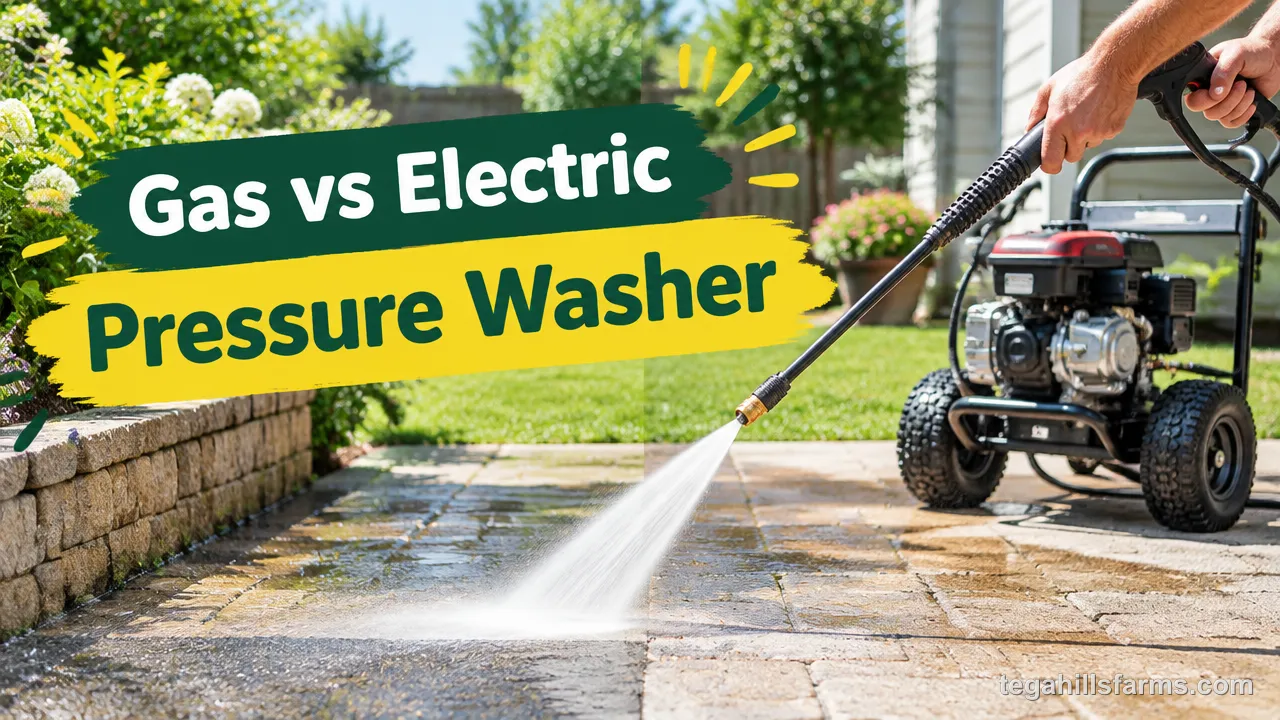
Four things separate the two types in a real yard: cleaning power from pressure and flow, how long and how far each one runs, how easy each is to move and start, and how much upkeep you take on. Gas wins some of those and electric wins others. The right pick depends on which ones your jobs actually test.
Most buyers worry about choosing wrong in one of two directions. Buy too much machine and you end up hauling and servicing a gas engine just to rinse a car. Buy too little and your driveway comes out striped while the motor trips its overload halfway through.
Size the machine to the toughest job you repeat every year, not to the easy chores or the once-a-decade project. That one job usually makes the decision for you.
What Separates Gas and Electric Pressure Washers
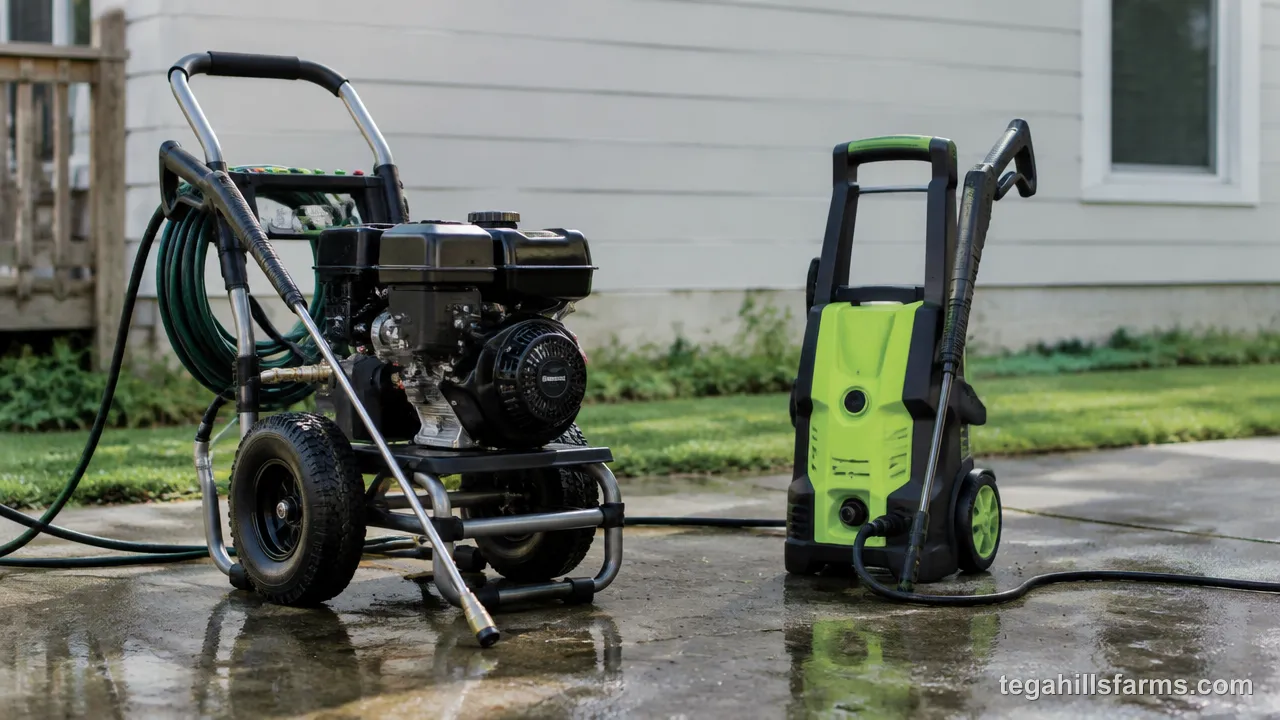
The core difference is the power source. A gasoline engine drives the pump on a gas model, and an electric motor running on household current drives it on an electric model. That difference decides where each machine can work. A gas unit goes anywhere you can roll it, but it has to run outdoors in open air because its exhaust carries carbon monoxide. An electric unit gives off no exhaust and works right next to the house, but it only reaches as far as its cord from a GFCI outlet. The engine also lets gas models spin a bigger pump, and that is where their extra flow comes from.
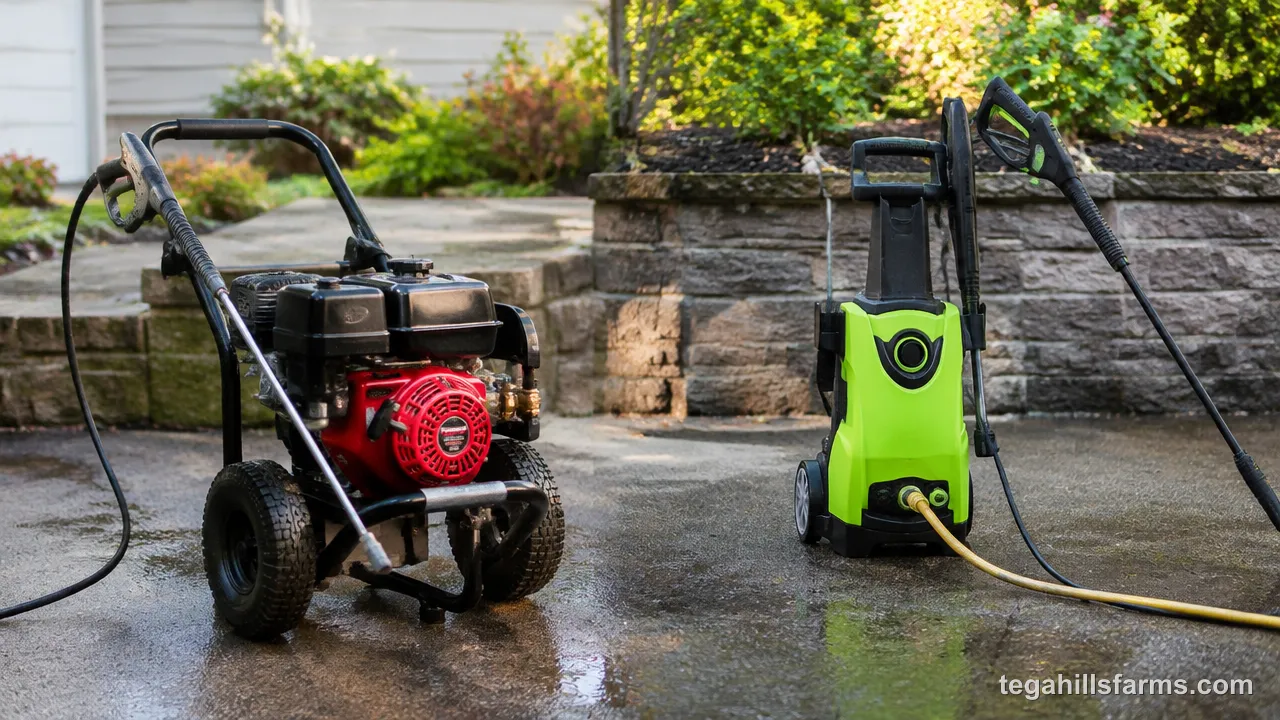
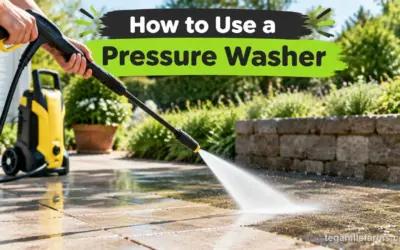
This split shapes every other tradeoff when you’re working out how to choose a pressure washer that fits your property and how often you clean. Even the basics of how to use a pressure washer differ: a gas unit means checking oil and fuel before each session, while an electric unit means finding a GFCI outlet and laying out the cord.
The two types compare as follows on the factors that matter most in a home setting:
| Factor | Gas | Electric |
|---|---|---|
| Power source | Gasoline engine | Electric motor on household current |
| Flow rate | Higher | Lower |
| Heavy buildup | Handles large concrete and set-in grime | Handles routine dirt on most home surfaces |
| Where it runs | Anywhere outdoors in open air | Within cord reach of a GFCI outlet |
| Noise | Loud engine | Much quieter |
| Startup | Choke and recoil pull on most models | Switch and trigger |
| Upkeep | Oil, air filter, spark plug, fuel care | Cord, pump and freeze protection |
| Typical price range | $300 – $1,000+ | $150 – $900 |
How Do Gas and Electric Pressure Washers Compare for Cleaning Power?
Gas pressure washers have more cleaning power because their engines drive much higher flow at similar or greater pressure. Electric models handle routine dirt well but slow down on large concrete and set-in stains. Cleaning power comes from two numbers working together. Pressure loosens the dirt, and flow carries it away. A machine that is strong on one and weak on the other leaves streaks or makes you pass over the same spot several times. Which type you need depends less on the biggest number on the box and more on the surfaces you clean and how stubborn the dirt on them is.
PSI Ranges and What They Clean
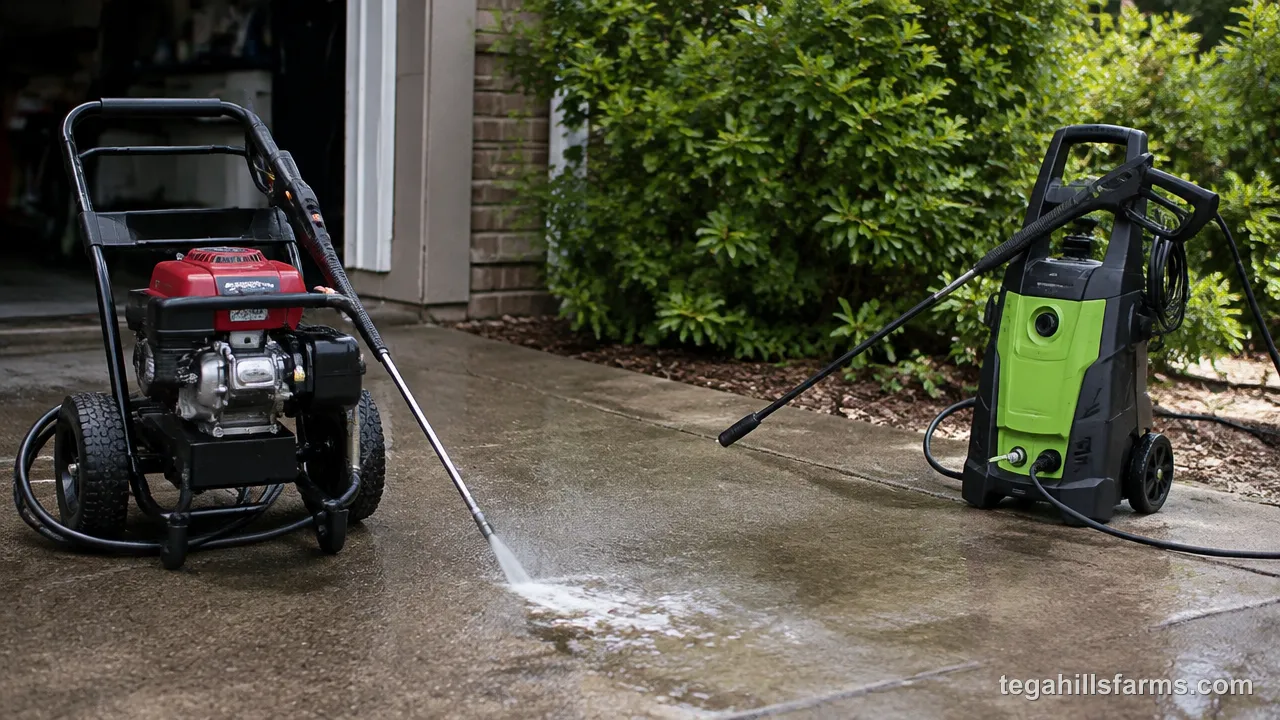
Most home surfaces need 2,000–3,000 PSI. That covers cars, decks, fences, siding, patios and concrete driveways, and both gas and electric models reach that range. More pressure is not automatically better. Softwood decking and vinyl siding are the surfaces most easily damaged by too much force: a tight nozzle at high pressure can raise the wood grain or push water behind siding laps. On those jobs a wide nozzle and a little distance matter more than reserve PSI.
Concrete is where the gap opens up. An electric unit can clean a driveway when it delivers 2,900–3,700 PSI with a 25° or turbo nozzle, which puts it at the top of what electric models offer. Gas models usually sit comfortably in that territory and still have headroom, so they don’t need to run flat out to get through it. On pressure alone, an upper-range electric covers what most homes need. Gas pulls ahead when you want spare pressure for large or heavily stained concrete.
Flow Rate and Cleaning Speed
Flow rate sets how fast a job gets done. Electric pressure washers typically move 1.1–2.0 GPM, and gas models typically move 2.3–4.0+ GPM. Pressure breaks dirt loose, but water volume flushes it off the surface. More gallons per minute means each pass rinses more area and leaves less slurry behind to re-clean.
On a car or a set of patio chairs, the difference barely shows, because the surface is small and rinses fast either way. On a long driveway or a full fence line, low flow means more passes and more time spent re-tracing lines where loosened dirt settled back. Higher flow also helps a surface cleaner attachment work evenly across wide concrete, because it needs a steady supply of water to avoid leaving swirl marks. Gas wins clearly on flow, and the advantage grows with the size of the area. Electric is enough when the surfaces are small and broken up.
Handling Heavy Buildup and Stains
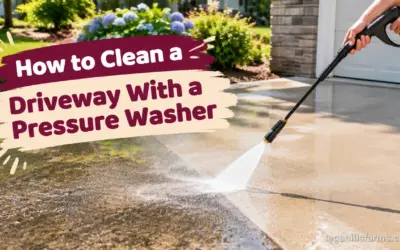
Gas handles oil-stained concrete and deeply embedded grime better, because sustained pressure and high flow together flush out what detergent has loosened from the pores. Oil and grease don’t lift with water alone. A degreaser has to soak in first, and then the machine has to push enough water through to carry the emulsified oil off instead of spreading it around. That’s why people looking up how to clean a driveway with a pressure washer usually find degreaser, a turbo nozzle or surface cleaner, and a long rinse, which is the kind of work that favors gas.
Mold and mildew on siding or fences work differently. A cleaning solution kills and loosens the growth, and a low-pressure rinse finishes the job, so an electric unit holds its own there. Ground-in dirt on old concrete and caked mud on equipment fall back to gas territory. Choose gas for oil, grease and embedded grime. Electric is enough when detergent does most of the work.
Which Type Offers More Convenient Runtime?
Electric pressure washers run without stopping to refuel as long as they stay plugged in. Gas models run until the tank is empty but can reach any spot you can wheel them to. The real question is where your work happens and how long your sessions last. A job that sits within reach of the house favors the cord. A job spread across the property favors the tank, because no outlet ties the machine to one wall.
Gas Tank Duration vs Cord Length Limits
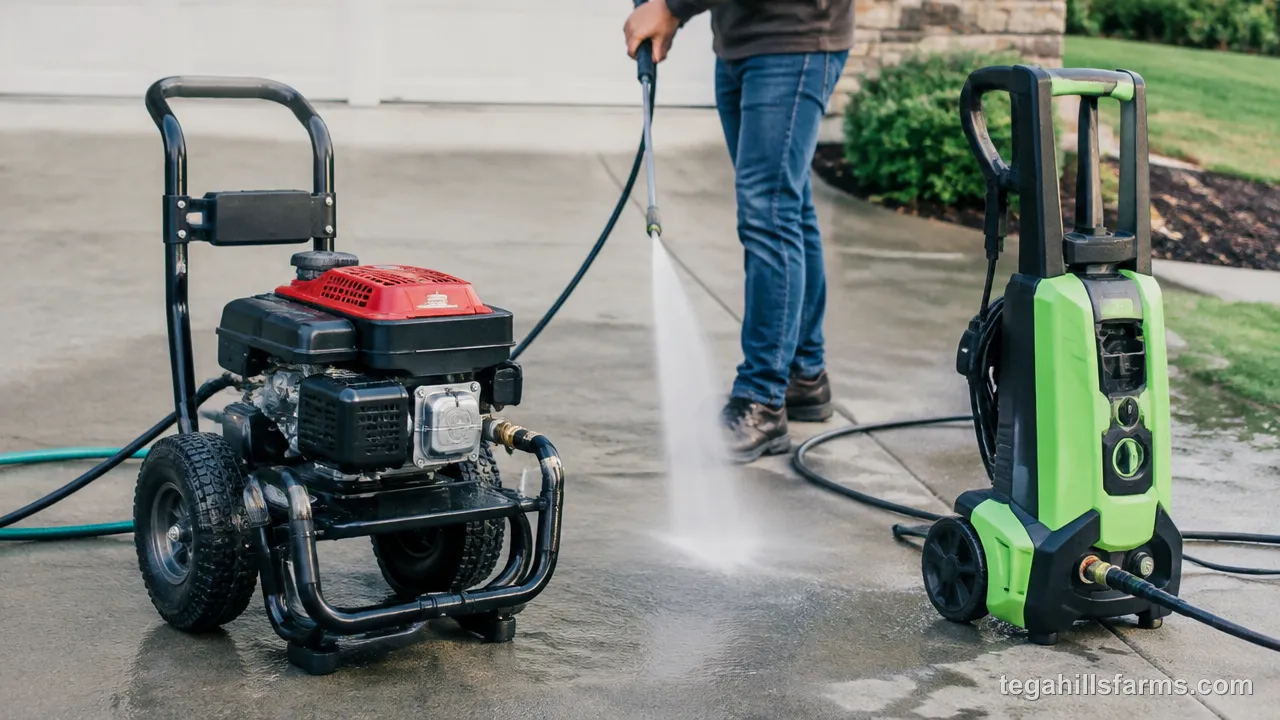
A gas pressure washer’s working range is limited only by its hose and how far you can roll it. Its runtime is limited by the fuel tank. A full tank on a homeowner gas unit covers a solid working session before you need to refill, and the manual lists the expected runtime for that engine. Out by the fence line or the barn, nothing tethers it.
An electric unit’s reach ends at its power cord. Many manufacturers advise plugging straight into a GFCI outlet rather than adding an extension cord, or they specify a heavy-gauge cord if you must use one. A long, thin cord drops voltage, which makes the motor work harder and run hotter. The usual fix is adding garden hose or pressure hose length instead of cord length. Gas wins on reach anywhere outside the area around the house. Electric wins on steady, uninterrupted running close to an outlet.
Refueling vs Finding an Outlet
Keeping a gas unit running means managing fuel. You need a fuel can on hand, fresh gas or gas treated with stabilizer, and patience to let a hot engine cool before you top it off, since spilling gas on a hot muffler is a real fire risk. None of that is hard, but it adds one more thing to carry and one more pause in the job.
Keeping an electric unit running means managing the outlet and the cord. Outdoor GFCI outlets can trip when water reaches the plug, so the connection has to stay off wet ground and out of the spray. The cord also runs across the same wet pavement you’re cleaning, and you have to step around it as you work. Both types still need a garden hose connected to a spigot, so neither one is fully free of the house. Electric takes less planning for work near the house. Gas takes less planning once the job moves away from it.
Which Type Is Easier to Move and Operate?
Electric pressure washers are easier to handle: they weigh less, start with a switch instead of a recoil pull, and run far quieter than a gas engine. Day-to-day convenience matters more than it seems in the store, because a machine that’s a chore to drag out and start tends to stay in the shed. How easy each type is to live with comes down to your terrain, your storage space and how close your neighbors are.
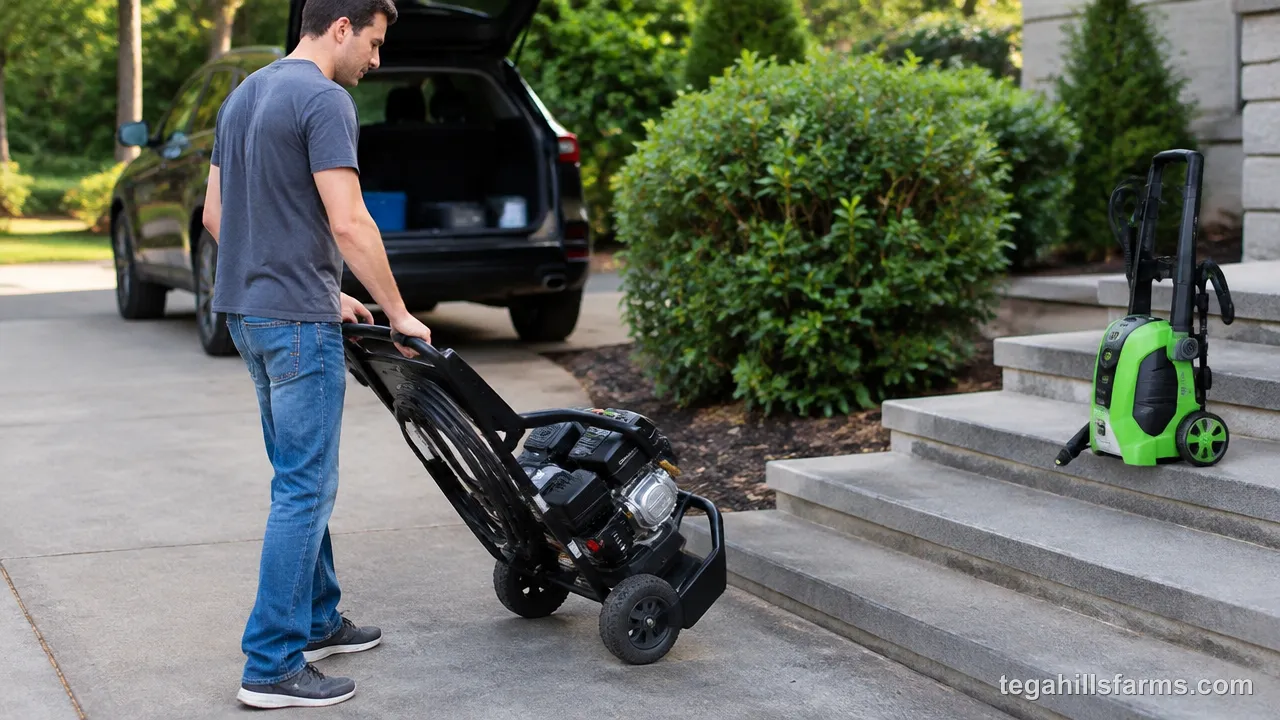
Weight and Maneuverability Around the Property
Gas pressure washers are heavier because they carry an engine, a larger pump and a sturdier frame. Many come with bigger wheels that roll better over lawn and gravel. On flat ground that weight is manageable, but going up porch steps or lifting into a truck bed is often a two-person job. Storage takes floor space in the garage or shed.
Electric units are compact enough that many have a carry handle and sit on a shelf. Their smaller wheels, though, can bog down on soft lawn or loose gravel, so a long trip across the yard takes more pulling than the low weight suggests. Electric is easier to lift, carry and store. Gas rolls better across rough ground once it’s moving.
Startup Process and Readiness
An electric pressure washer is ready as soon as the hose is connected, the air is purged from the line and the switch is on. A gas model needs more steps: open the fuel valve, set the choke, pull the recoil starter, then let the engine warm before you push it hard.
Each type fails to start for its own reasons. On gas units, stale fuel left in the carburetor over the off-season is the most common cause of hard starting, followed by a fouled spark plug. Electric units are more likely to quit than refuse to start, usually from a tripped GFCI, a thermal overload after long running, or low voltage from an undersized extension cord. Electric wins on readiness. Gas starts reliably when its fuel and plug get attention before storage.
Noise Levels and Neighbor Impact
Gas pressure washers are much louder because the engine runs at full speed the whole time you’re working. Electric motors are quieter, and on many electric units the motor shuts off when you let go of the trigger, so the machine goes silent while you move the hose or reposition.
That difference matters most on weekend mornings, on small lots with houses close together, and in neighborhoods with noise rules, which vary by town and HOA, so check local rules before an early start. Running a gas engine for a long session also calls for hearing protection, which makes it harder to hear someone calling you across the yard. Electric clearly wins on noise. Gas is fine on properties where the nearest neighbor is far away.
What Maintenance Does Each Type Require?
Electric pressure washers need much less upkeep because there’s no engine to service. Gas models add oil changes, air filter and spark plug service, and fuel care on top of the pump care both types share. Skipped maintenance is what shortens most pressure washers’ lives, so the upkeep you’re willing to do should weigh on the purchase as much as price and power.
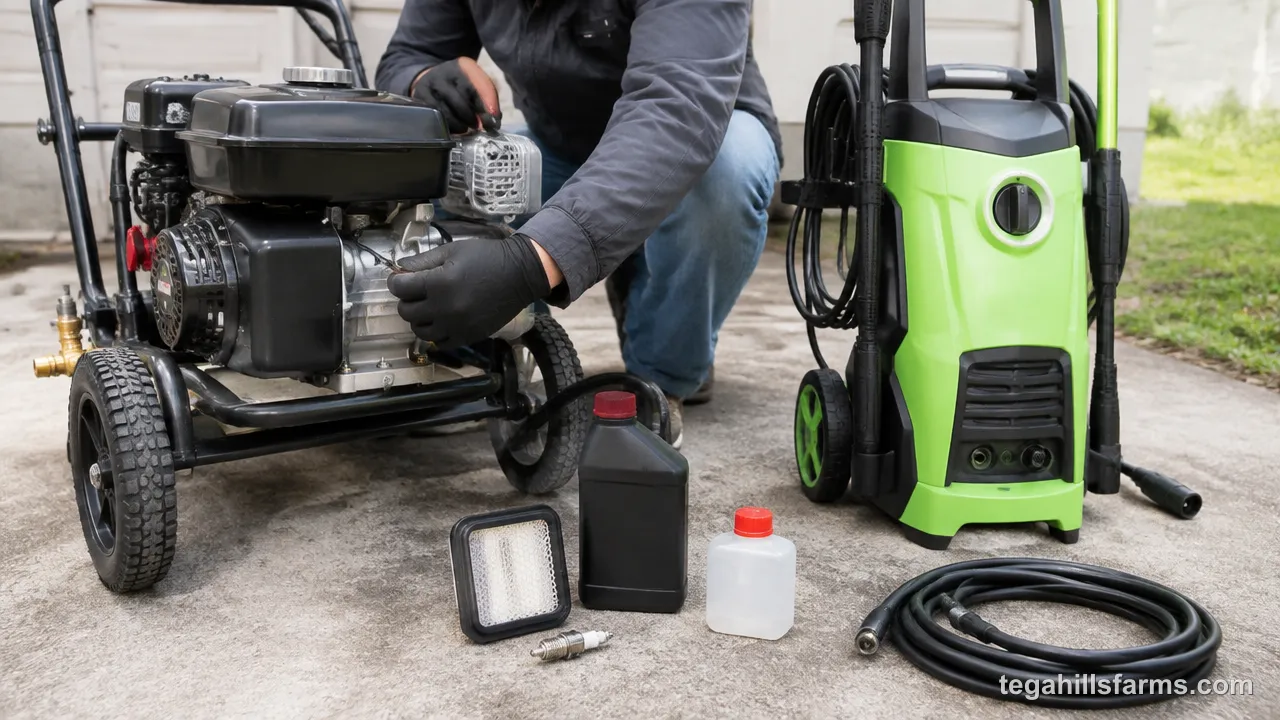
Routine Upkeep Tasks
A gas pressure washer needs regular engine maintenance. The oil gets changed at the intervals in the manual, with the first change coming early after break-in. The air filter needs cleaning or replacing, the spark plug needs checking and replacing, and the fuel needs stabilizer or a drained carburetor before storage. Some gas units with crankshaft pumps also have pump oil to change on its own schedule.
Both types share the pump routine. Flush clean water through after using detergent, clean the inlet screen, check the O-rings at the hose fittings, and winterize with pump antifreeze if the machine sits through freezing temperatures. Water left inside a pump expands as it freezes and can crack the pump head.
An electric unit adds only a few checks: inspect the cord and plug, keep the motor vents clear, and never run the pump without water flowing. Electric wins on upkeep by a wide margin.
Lifespan Expectations
Pump type predicts lifespan more than the power source does. A triplex pump with a crankshaft can run 1,000+ hours and can be rebuilt when its seals wear, which is why it’s standard on higher-end gas machines. Most homeowner electric units and many budget gas models use axial or wobble-plate pumps that aren’t built to be repaired, so when the pump fails, the machine is usually done. Keep that in mind when you’re estimating how long pressure washers last.
Common failures follow predictable causes. Running the pump without water, letting it freeze, or leaving it running with the trigger released overheats the seals. On gas models, stale fuel and skipped oil changes wear the engine. On electric models, long runs through an undersized cord stress the motor until it burns out. A gas unit with a triplex pump lasts longest. An electric unit lasts well when it isn’t pushed past light work.
Which Pressure Washer Type Should You Choose for Your Cleaning Tasks?
Electric fits light residential cleaning, while gas fits heavy-duty property work and frequent or commercial use, where flow, reach and a rebuildable pump pay off. Sort your chores by the hardest one you repeat, not by how many you have. Ten easy jobs and one oil-stained driveway still point toward gas if the driveway comes back every spring. In my view, being honest about that one recurring tough job saves more money than any feature comparison.
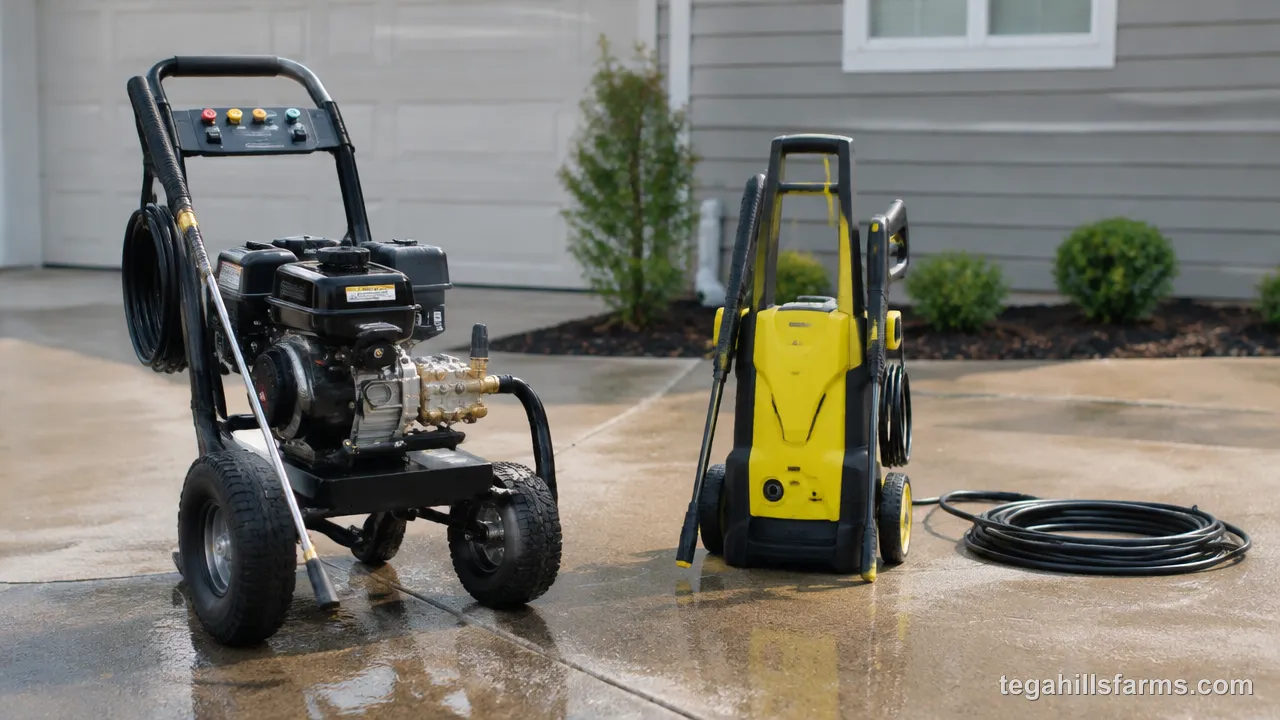
Light Residential Tasks
An electric pressure washer handles routine home cleaning well, and a gas engine adds noise and upkeep without adding results. For washing a car, a 40° nozzle with a foam soap applicator does the job, and that setup works the same on any electric unit. Patio furniture, small decks, grills and vinyl siding all clean best with moderate pressure and a wide spray, which is exactly what an electric model delivers. If you’re working out how to clean vinyl siding with a pressure washer, low pressure and detergent matter far more than extra force.
These jobs also tend to sit close to the house, so the cord rarely limits you. Each one is short enough that the gas model’s flow advantage barely shows.
- Choose electric if your list is mostly cars, patios, small decks and siding within cord reach of an outdoor outlet.
- Choose electric if noise, storage space or minimal maintenance matter more to you than speed on big surfaces.
Heavy-Duty Property Cleaning
Large concrete driveways, oil-stained garage aprons, two-story exteriors, long fence lines and farm equipment are gas jobs. They need sustained pressure, high flow and freedom from the cord at the same time. On a big driveway, an electric unit can get the surface clean, but it takes many more passes and often leaves lines that a gas machine with a surface cleaner avoids.
Distance matters as much as power. A fence line at the back of the property or a tractor parked by the barn is usually far beyond any cord. A two-story house means long hose runs and extension wands, and a gas machine’s extra flow keeps that setup effective at the top of the wall.
- Choose gas if you clean large or stained concrete every year.
- Choose gas if your jobs sit far from an outlet, such as fences, outbuildings or equipment.
Frequent or Commercial Use
Gas with a triplex pump is the type built for daily or professional use. It is designed to run for long stretches, and it can be rebuilt instead of replaced when the seals wear. Contractors and property managers who move from site to site also need the machine to run wherever the work is, with no outlet required.
That durability comes with tradeoffs. Daily use means oil changes and filter service come around often, fuel becomes a running expense, and the engine noise affects every job site. Most homeowner electric units aren’t built for that pace: long sessions build heat in the motor and in pumps that can’t be rebuilt, so heavy daily use shortens their lives quickly.
- Choose gas with a triplex pump if you run the machine most days or across many properties.
- Choose electric only if frequent use stays light, such as daily vehicle rinsing near a reliable outlet.
A machine that cleans the patio perfectly can still bog down halfway across a stained driveway, leaving lighter stripes where the pressure held and gray streaks where it dropped. Keep forcing it, by holding the trigger longer, moving closer or switching to a tighter nozzle, and the pump overheats or the surface etches, so you end up with a damaged machine and a driveway that needs a second round anyway.
When a Pressure Washer Type Won’t Finish the Job
A pressure washer that’s wrong for the job shows it in a few predictable ways. On an electric unit, the motor stalls, the GFCI or thermal overload trips, or the pressure surges and drops as the motor struggles. On either type, the surface comes out uneven, with clean stripes next to dirty ones, because the flow can’t carry away what the pressure loosened.
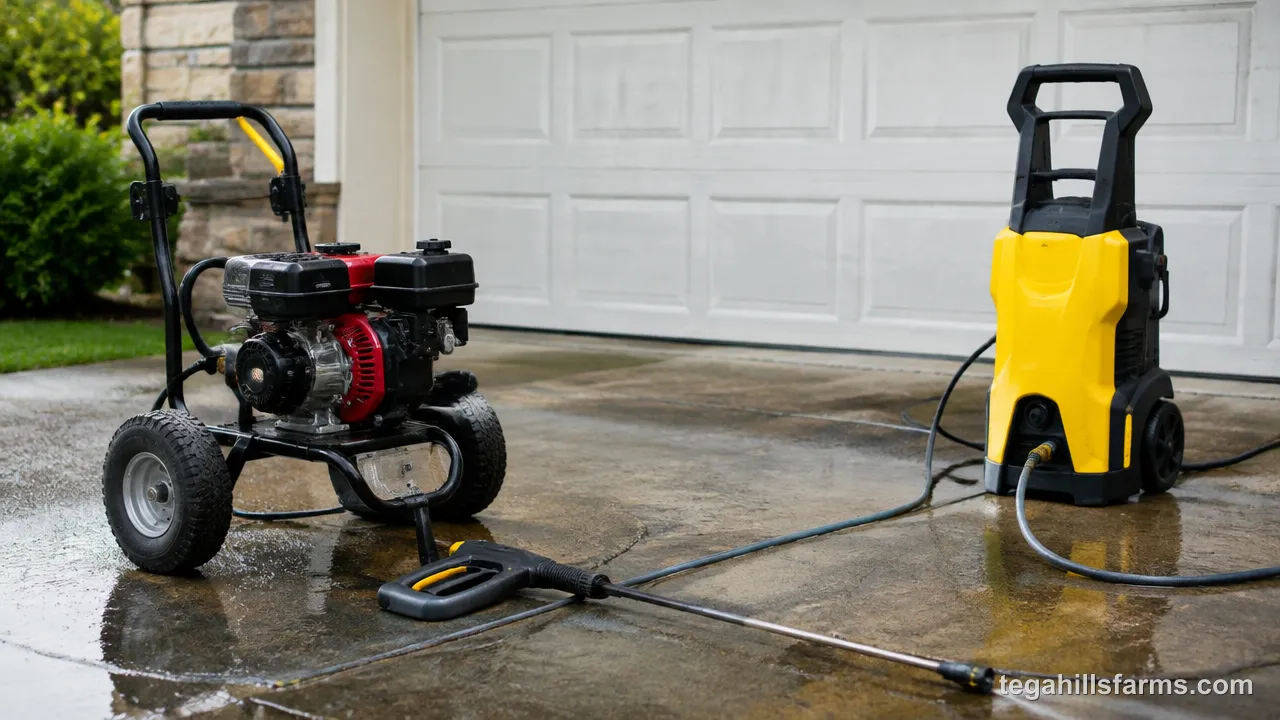
Pushing through those signs causes damage. Repeatedly restarting an overheated electric motor wears out the windings. Running a pump while the trigger is released for long periods cooks the seals, because water circulating in the bypass heats up. Moving the nozzle closer to make up for low power can etch concrete, splinter decking and force water behind siding.
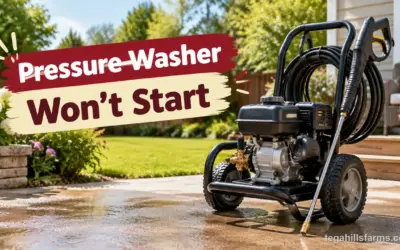
Some problems that look like a lack of power are really maintenance problems. A clogged inlet screen, a worn nozzle or a kinked supply hose all cut performance, and the same is true of an engine running on old fuel. When the issue is that a gas pressure washer won’t start or keeps dying, check the fuel and spark plug before blaming the machine’s size. If a clean, well-fed machine still can’t finish the job, it’s undersized.
Extending Lifespan vs Knowing When to Replace
Most pressure washers wear out from neglect rather than use, which means a few habits decide whether a machine lasts for many seasons or quits early. Those same habits also make it easier to tell when a failure is worth fixing and when it’s time to replace the machine.
Preventive Care Habits
Freezing and old fuel kill more pressure washers than hard work does. Before cold weather, run pump antifreeze through the pump or store the machine somewhere frost-free, because water trapped inside can crack the pump head. After every detergent job, flush clean water through the system so soap residue doesn’t dry on the seals and valves.
Gas models need fuel care before storage. Add fuel stabilizer and run it through the carburetor, or run the engine until the carburetor is dry, so gum doesn’t clog the jets over the off-season. Change the oil before storage too, so old oil doesn’t sit in the engine for months.
Electric models need cord and motor care. Coil the cord loosely instead of wrapping it tight around the handle, keep the plug dry, and store the unit where the motor vents stay free of dust and nesting pests. For both types, release the trapped pressure in the hose and wand after shutting off, before you disconnect anything.
Failure Signs That Mean Replacement
Water leaking from the pump body, not from a fitting or O-ring, usually means a cracked pump head or a failed internal seal. On sealed axial pumps that typically ends the machine, because rebuild parts aren’t made for them. Pressure loss that stays after you’ve replaced the nozzle, cleaned the inlet screen and checked the supply hose points to the same worn-out pump.
Motor burnout on an electric unit shows up as a burning smell, a hum with no spin, or breakers tripping as soon as you switch it on. On gas units, a knocking engine, blue smoke or a crack in the frame near the engine mounts are signs that the repair will cost more than the machine is worth. Rust that has eaten through a frame is a safety problem as well as a cosmetic one, since the engine and pump depend on that frame to hold steady under vibration.

Write Your Review
No reviews yet. Be the first to share your experience!