

A corded hedge trimmer gives you unlimited runtime and a lighter body, while a cordless model frees you from the cord and limits you to a battery. Neither wins everywhere. The right pick depends on your yard.
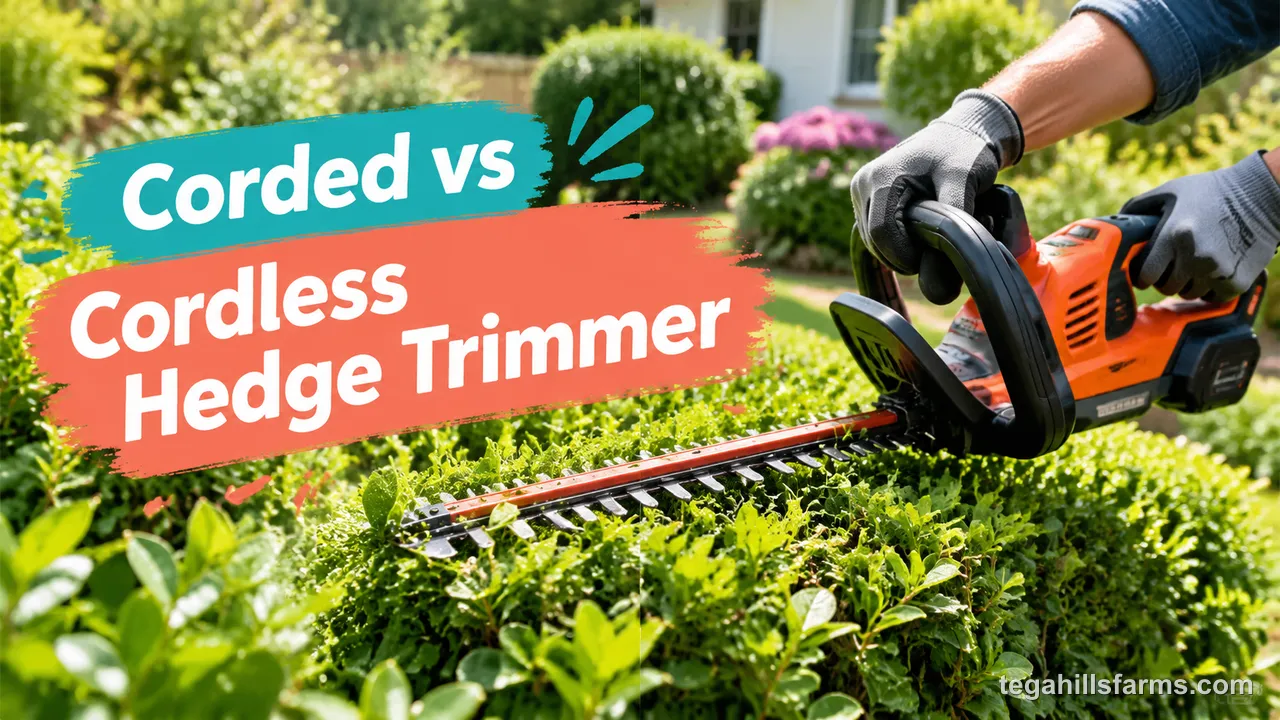
Runtime, reach, weight, cutting power, safety, and lifespan are where the two types really differ. Each one changes how a trimming session feels, especially on a long hedge line.
Most buyers worry about one of two things. They either run out of battery halfway down a hedge, or find the cord won’t stretch to the far corner of the property.
Before you compare anything else, measure the walk from your nearest outdoor outlet to the farthest hedge. That one distance settles more cases than any spec on the box.
What Is the Difference Between Corded and Cordless Hedge Trimmers?
A corded hedge trimmer draws household current through an extension cord, while a cordless hedge trimmer runs on a rechargeable battery you clip onto the tool. That single difference drives nearly everything else.
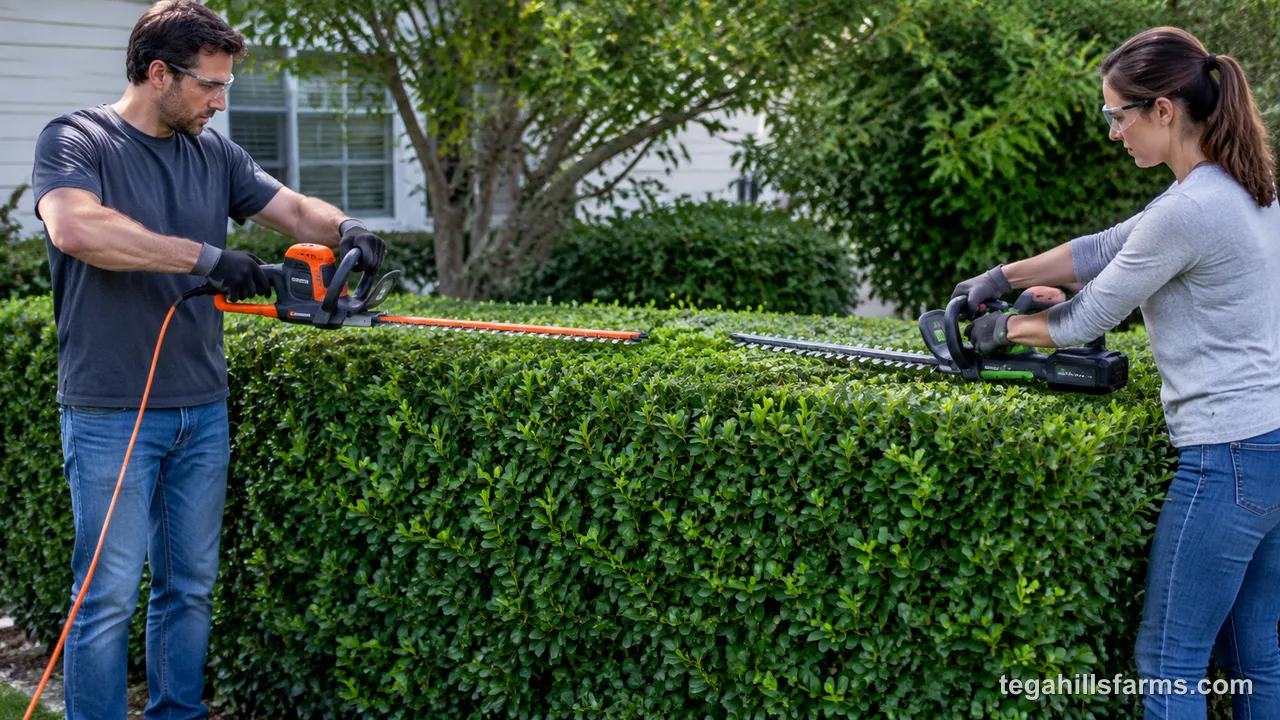
Corded power means the trimmer runs as long as it stays plugged in. You never charge anything, but the cord limits where you can work. A battery lets you walk anywhere, but the charge runs out.
Think of it as continuous power on a leash versus freedom with a time limit. If you are still narrowing down the field, our guide on how to choose a hedge trimmer covers the factors that matter beyond power type.
What Are the Pros and Cons of Each Type?
Corded trimmers trade a cord for unlimited runtime, while cordless trimmers trade a finite battery for freedom of movement. Each type’s strengths are the other’s weak spots.
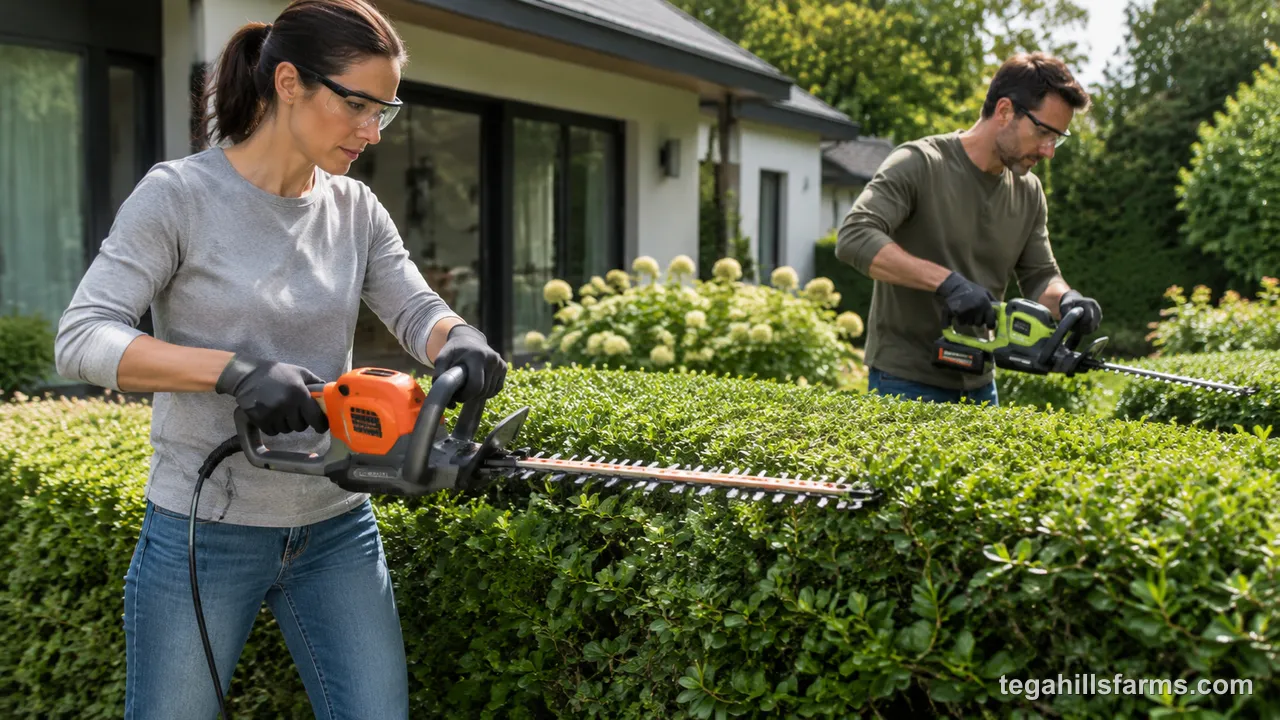
Corded Hedge Trimmer Pros and Cons
A corded trimmer’s biggest strengths are steady power and no charging, and its biggest drawback is cord management. You plug in, pull the trigger, and keep cutting for as long as the job takes.
There is no battery to charge or replace, and the body is usually lighter because it carries no cell pack. Corded models typically weigh 5 to 7 pounds, which adds up over a long session.
The cord is the catch. You have to keep it behind you and away from the blades. Your reach is limited to the nearest outdoor outlet plus whatever extension cord you add.
That makes a corded trimmer a strong fit for hedges close to the house. It is a poor fit for a shrub line at the far edge of a property.
Cordless Hedge Trimmer Pros and Cons
A cordless trimmer gives you freedom to move, an instant start, and generally lower noise, but its runtime is finite. You grab the tool, click in the battery, and go anywhere on the property.
Without a motor running off a wall socket, there is no cord to snag on branches or step over. The tradeoff is the battery itself. A charge lasts 30 to 90 minutes depending on the model and the load, and the battery adds weight.
Buying the battery and charger along with the tool also raises the upfront outlay. If you already own batteries from the same brand, that sting mostly disappears.
For jobs spread around the yard, the freedom is hard to give up. For one long hedge line, the runtime limit becomes the thing you plan around.
Which Is More Powerful, Corded or Cordless?
On typical residential hedges the two types land close together. The differences show up in cutting capacity and blade speed and in how amps, voltage, and brushless motors deliver power. Where a trimmer struggles tells you more than its label does.
How Do Cutting Capacity and Blade Speed Compare?
Cutting capacity is the thickest branch the blades can cut cleanly, and most residential models handle up to 3/4 inch. Thicker, older growth can call for a capacity of 1 inch or more.
Blade speed, measured in strokes per minute, decides how clean the cut is on soft, leafy growth. Faster strokes slice through new shoots instead of tearing them. Slower blades leave ragged ends and get pushed around by thin twigs.
The blade gap, the space between teeth, sets how thick a branch can feed in. A wider gap takes bigger stems but can leave a rougher finish on fine foliage.
Both power types can deliver these traits. Match capacity to your thickest branch, not your average one. A trimmer that stalls on woody growth costs you more time than a slower one that never bogs down.
Do Amps, Voltage, and Brushless Motors Close the Gap?
Corded models are rated in amps, while cordless models are rated in volts, and the two numbers don’t compare directly. Amps tell you how much current a corded motor can draw. Voltage on a battery trimmer reflects the platform’s power class.
Cordless trimmers at 40V or 60V have the muscle to go from light shaping to thick branches. A brushless motor adds efficiency and holds its speed better under load, which also stretches runtime on a charge.
Higher-tier motors make a visible difference on dense, woody growth. On light annual trimming you will barely notice. Whether that upgrade pays off is a bigger question, and are expensive hedge trimmers worth it comes down to how often you trim and how thick the growth is.
How Do Runtime and Reach Compare?
A cordless trimmer is limited by battery runtime, a corded one by cord reach, and an existing battery platform can tip the choice either way. Which constraint hurts less depends on your yard.
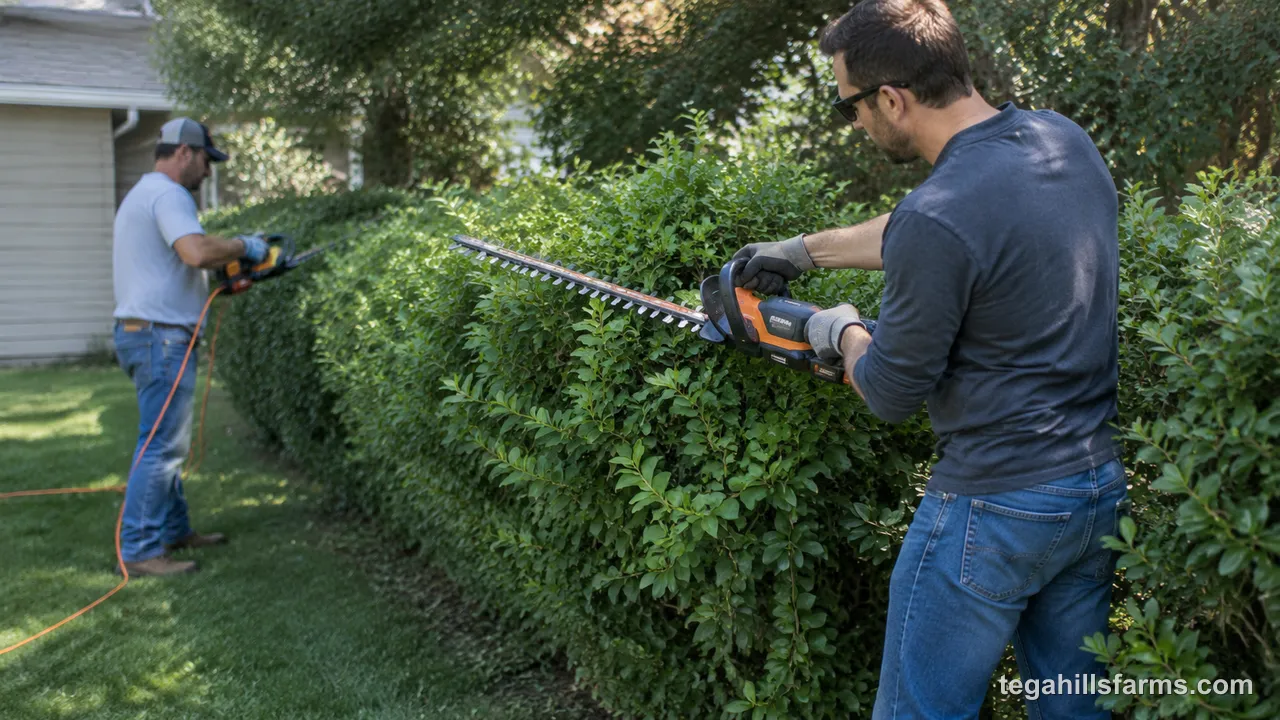
How Long Does a Cordless Trimmer Run on One Charge?
A cordless trimmer typically runs 30 to 90 minutes per charge, depending on battery size and how hard the blades work. A 40V trimmer with a 2Ah battery lands around 30 to 45 minutes.
Amp-hours (Ah) measure battery capacity. A 4Ah battery of the same voltage roughly doubles the runtime of the 2Ah version. Dense, woody hedges drain a battery faster than light shaping, because the motor draws more current under load.
For most residential hedges, a charge of 20 to 40 minutes is enough for a single session. That covers a typical foundation hedge or a short row.
Longer jobs change the math. If you are trimming a long hedge line or working through overgrowth, a spare battery lets you swap and keep cutting while the first one recharges. People often skip this and then stop mid-job.
How Far Can a Corded Trimmer Reach from an Outlet?
A corded trimmer works best within 50 to 100 feet of an outdoor outlet. Past that, you are stringing multiple cords together and fighting the leash.
Your working range is the distance to the nearest outdoor outlet plus the length of the extension cord. Hedges along a driveway or the back of the house are easy. A shrub line at the property edge can sit well outside that range.
The workaround is a longer cord, but length costs you. A longer run means more cord to drag, more chances to snag it on stems, and some power loss at the far end.
If your hedges cluster near the house, reach is a non-issue. If they sit across the yard, it becomes the deciding factor.
Does a Shared Battery Platform Change the Decision?
Yes. If you already own batteries from a brand like EGO, Ryobi, Makita, or DeWalt, a cordless trimmer from the same line becomes a bare-tool purchase. You skip the battery and charger and use the ones in your garage.
That flips the cost question. If you are starting from scratch, how much does a hedge trimmer cost changes once you add a battery and charger to the cordless tool.
Without a platform, the balance shifts toward corded. You get unlimited runtime without buying into a battery ecosystem you may not use for anything else.
With a platform, cordless gets easy to justify. Your mower, blower, and trimmer share the same batteries, and a spare is already on the charger.
Which Is Lighter and Easier on Your Arms?
Corded trimmers are usually lighter, at about 5 to 7 pounds, while cordless models run about 6 to 10 pounds with the battery attached. That gap matters more as a session stretches past the first few minutes.
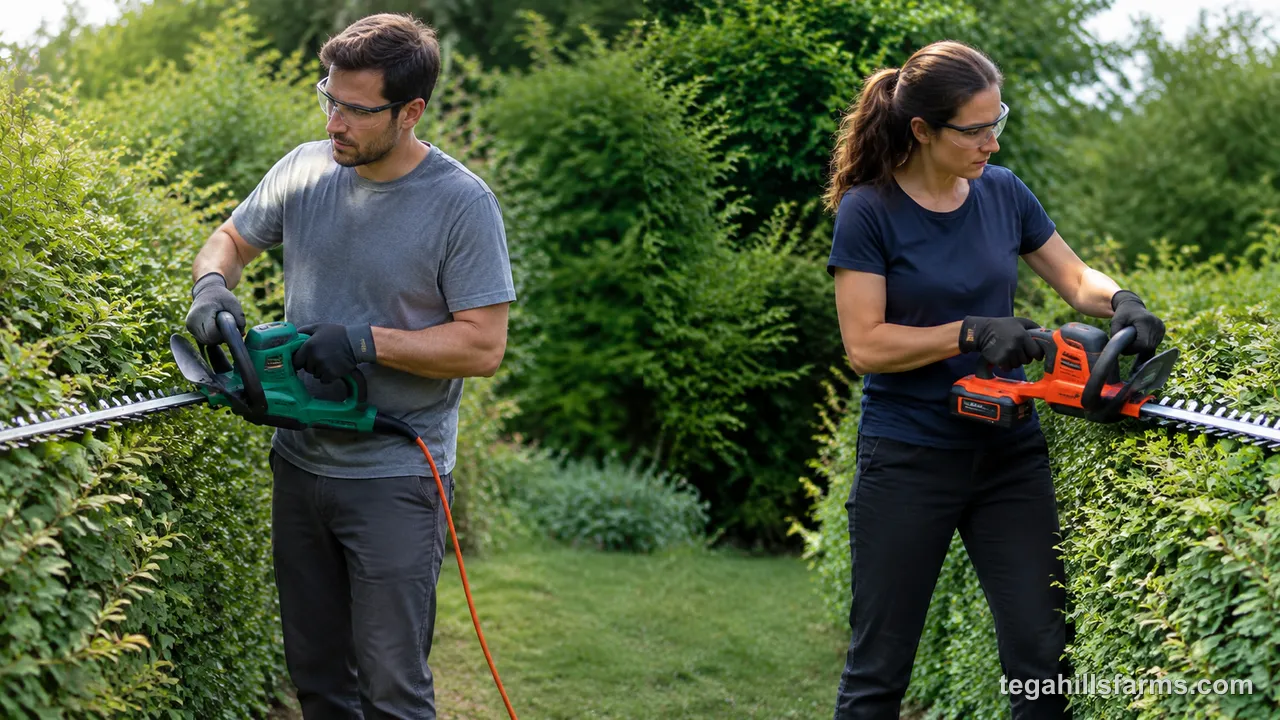
The weight depends on whether the battery is included and on blade length. Shorter blades of 16 to 18 inches suit detailed shaping and tight spaces. Longer blades of 22 to 24 inches suit long, flat hedge runs, but you carry the extra length at arm’s reach, which tires you faster.
Balance changes with where the weight sits. A cordless trimmer carries its battery on the tool. A corded one stays lighter, though a cord that drags and tugs can pull at your wrists.
Vibration and noise follow the motor and blade design, but cordless models tend to be quieter, which is easier on your ears and your neighbors. Good technique helps as much as weight does, and how to use a hedge trimmer correctly, with smooth sweeping strokes, cuts fatigue noticeably.
If your arms tire quickly, pick the lightest build with a blade length that fits your hedges, then take breaks before you need them.
Which Type Is Safer Around the Yard?
Corded trimmers add cord cutting and tripping risks, while cordless ones bring silent start-ups and battery handling concerns. Neither is risky if you respect the tool.
What Are the Risks of Cutting or Tripping Over the Cord?
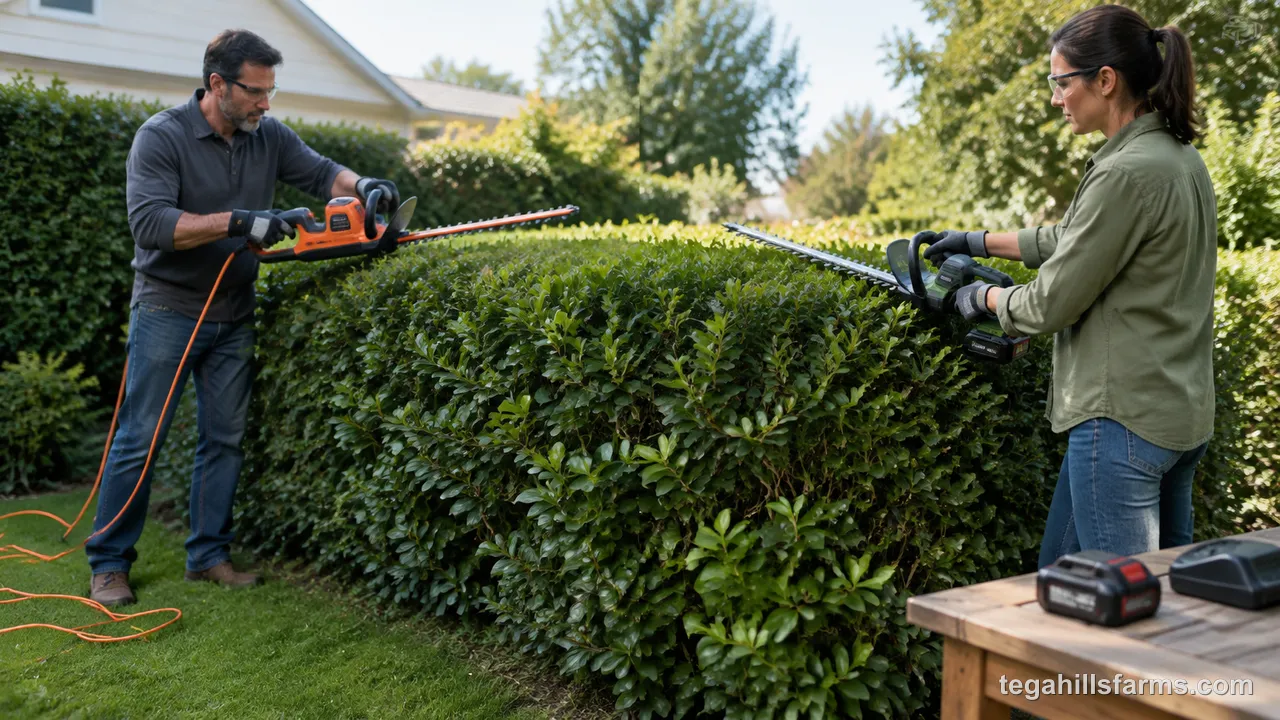
The main corded risks are cutting the cord with the blades, tangling, and tripping. A cut cord exposes live wire, so the hazard goes beyond a dead trimmer.
Keep the cord behind you and over your shoulder or draped away from the cutting path. Work away from the outlet so the cord trails behind rather than crossing the area you are trimming.
Plug into a GFCI outlet, or use a GFCI-protected extension cord. Ground-fault protection cuts power fast when current leaks, which lowers the shock risk if the cord is damaged.
Check the cord for nicks before every session. For safe handling beyond the cord, see these hedge trimmer safety tips.
What About Battery Safety, Kids, and Pets?
A cordless trimmer can start with no warning once the battery is installed, so removing the battery is the main safeguard around children and pets. With a battery in place, a bumped trigger can start the blades.
Most models have a safety switch or two-hand control to prevent accidental starts. Don’t rely on it alone. Pop the battery out whenever you set the tool down, change blades, or walk away.
Store the tool and battery out of reach of kids. Lithium-ion batteries also need care: keep them away from extreme heat and don’t use a battery that is swollen or damaged.
A corded trimmer is inert when unplugged. That makes it simpler around curious kids and pets, since the tool does nothing until someone connects the cord.
Which Type Lasts Longer?
The motor on either type tends to outlast the parts around it: a cordless trimmer’s battery wear is the main limit, and routine upkeep keeps both types cutting cleanly.
How Long Do Cordless Batteries Last?
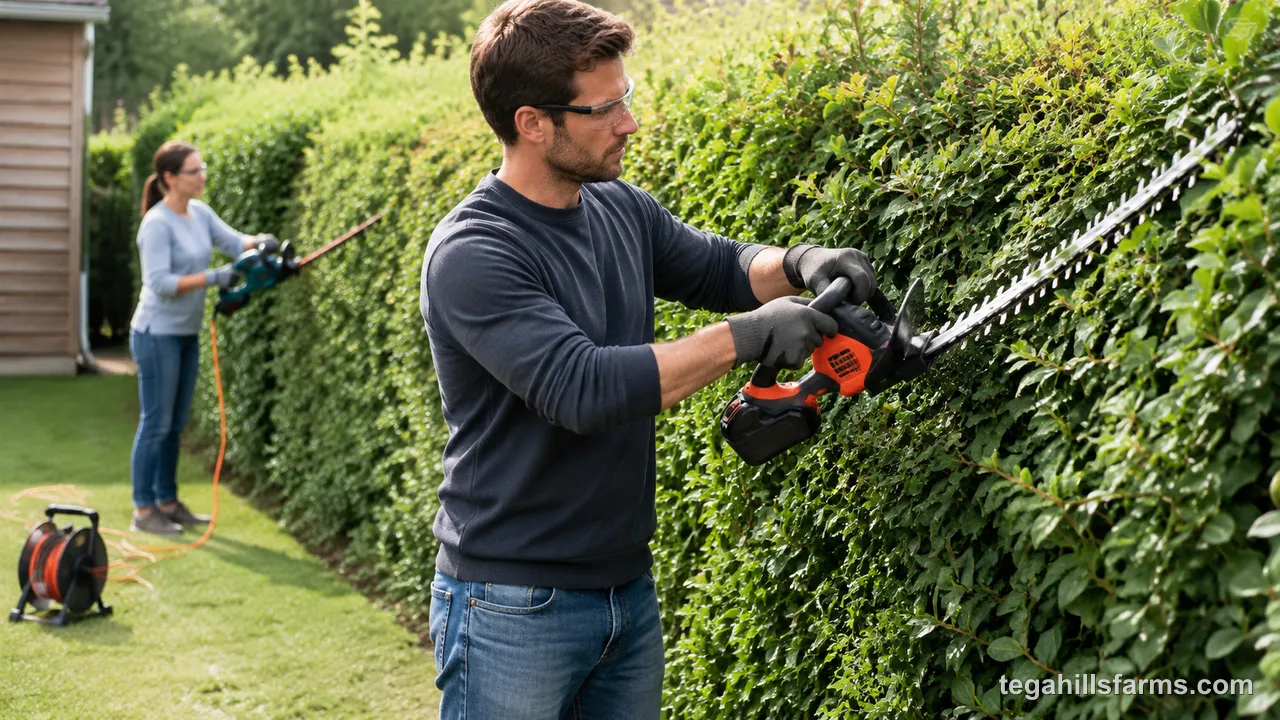
Lithium-ion batteries wear out through charge cycles, heat, and poor storage, and the battery is usually the first part to go on a cordless trimmer. Every full charge and discharge uses up some of the cell’s capacity.
You notice it as shorter runtime over the seasons. The battery, not the motor or blades, usually decides when a cordless trimmer’s useful life ends.
Heat is the quiet killer. Leaving a battery in a hot truck or a sun-baked shed speeds up aging. Storing it partly charged in a cool, dry place helps it last.
People often ask how long do hedge trimmers last, and on a cordless model the battery usually answers it first. Replacing it is part of long-term ownership, so factor that in.
What Upkeep Does Each Type Need?
Both types need clean, lubricated blades, and each adds its own check: the cord on a corded model, the battery contacts on a cordless one. Wipe sap and debris off the blades after each use, then add a light coat of blade oil.
On a corded trimmer, inspect the cord and plug for cuts or bent prongs. Damage there is the most common failure, and it’s a safety issue as well.
On a cordless trimmer, keep the battery contacts clean and free of dirt or corrosion. A dirty contact can cut power or stop the tool from running at all.
When a hedge trimmer won’t start, the culprit is usually a dirty battery contact or a tripped GFCI outlet. Check those two before assuming the motor is bad.
Which Type Fits Your Yard and Hedges?
Corded suits small lots with an outlet nearby, cordless suits medium yards with mixed shrubs, and long or thick hedge lines strain both types. Match the type to your layout first.
Small Lots Near an Outdoor Outlet
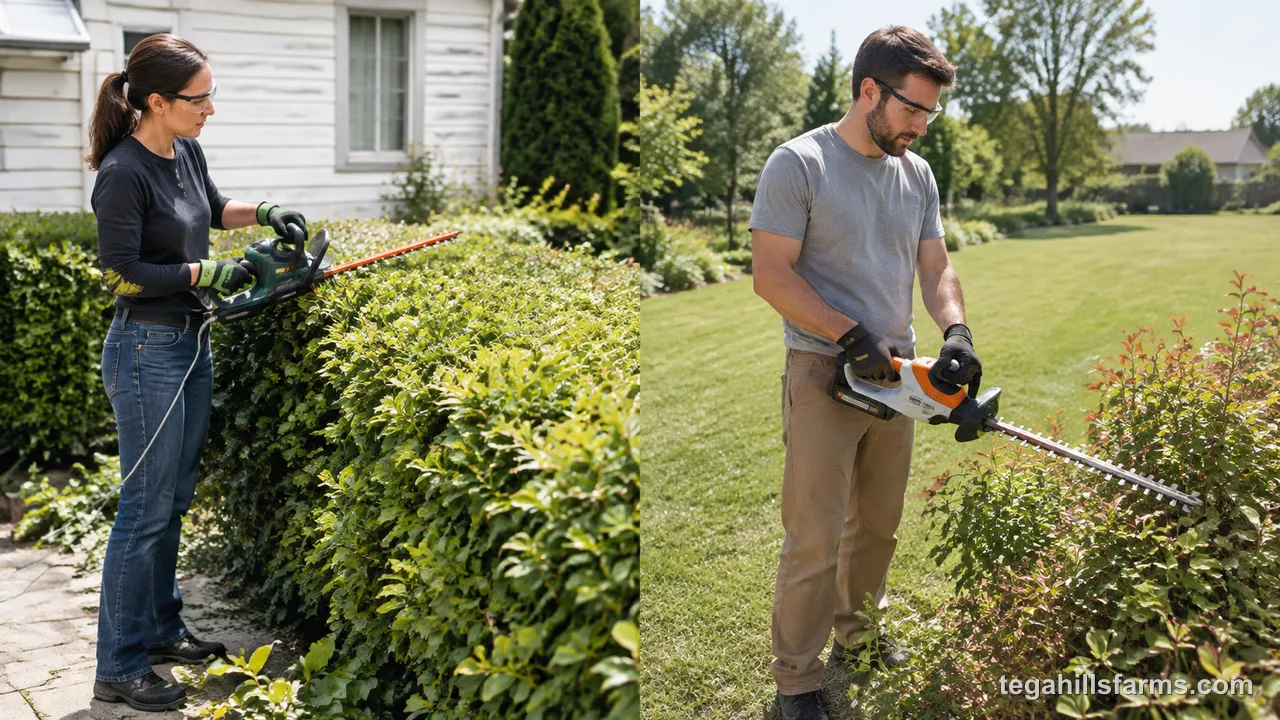
A corded trimmer often does the job for a compact yard with an outlet close by. Hedges within the 50 to 100 foot range keep the cord manageable, and you get unlimited runtime with a lighter body.
On a small lot, a battery’s freedom rarely earns its weight. You finish before a charge would run low, and you never think about recharging.
A light cordless model is still worth it if you hate dragging a cord or want to grab the trimmer and go without finding an outlet. The convenience is real, even on a small property.
For a short hedge near the house, corded is the simpler, lighter choice. Go cordless only if the cord annoys you.
Medium Yards with Mixed Shrubs
A cordless trimmer suits a medium yard with scattered shrubs such as boxwood and privet, especially when outlets aren’t close to every planting. You walk from bed to bed with no cord to reroute.
These hedges are usually short sections with moderate density, so a mid-size battery covers a normal session. Match capacity to how much you trim. If a session usually fills most of a charge, a spare is cheap insurance.
A 40V or 60V model handles the mix of light shaping and the occasional thicker stem. Boxwood rewards a shorter blade for tight shaping, while privet trims faster with a longer one.
If you already own a compatible battery platform, this is where cordless makes the most sense.
Large Properties and Thick, Overgrown Hedges
Large properties and dense hedges such as laurel push both types to their limits. A long hedge line drains batteries quickly and stretches cords past comfortable reach.
On the cordless side, plan on spare batteries so you can swap and keep cutting. On the corded side, long cord runs add drag and power loss, and the outlet may be too far away.
Thick, overgrown growth is the harder problem. Stems past a trimmer’s rated capacity stall the blades whichever power type you choose. That is when the job calls for something stronger, like a heavy-duty or gas model.
If most of your hedges look like this, treat either electric type as a compromise rather than a perfect fit.
Should You Buy Corded or Cordless?
Buy corded if your hedges sit near an outlet; buy cordless if they don’t. Three factors settle it: distance to power, hedge size, and whether you already own a battery platform.
Pick corded for compact yards, regular light trimming, and anyone who wants a lighter tool with no charging. Pick cordless for scattered shrubs, hedges beyond cord reach, or when you already have batteries in the garage.
I lean cordless for most mixed yards, because not having to hunt for an outlet changes how often you actually get the trimming done. Then again, a short hedge by the back door doesn’t need one.
Once power type is settled, what to look for in a hedge trimmer comes down to blade length, capacity, and balance.
A trimmer that bogs down halfway through a hedge often has a perfectly healthy motor. The cord feeding it may be too thin or too long, which starves the motor of current and lets it run hot. What gauge and length keep a corded trimmer cutting at full strength?
Which Extension Cord Works Best with a Corded Hedge Trimmer?
The best cord is a thicker gauge, a short run, and an outdoor-rated jacket, plugged into a GFCI-protected outlet. These four keep a corded trimmer at full power and safe.
Gauge is wire thickness, and a lower number means thicker wire. A 16-gauge cord handles short runs, and you step down to 14-gauge as the run gets longer. A thin or overlong cord drops voltage, which makes the motor work harder and run hot, shortening its life.
Use the shortest cord that reaches your hedge. Every extra foot adds resistance. An outdoor-rated jacket resists moisture, sun, and abrasion, so skip indoor cords entirely.
Finally, plug into a GFCI outlet or use a GFCI-protected cord. A poor cord causes sluggish cutting, heat, and early motor wear.
How Should You Store Each Type Between Seasons?
Cordless trimmers need the battery stored partly charged in a cool, dry spot, while corded trimmers need a neatly coiled cord and protected blades. Both take only a few minutes and prevent a dead tool next spring.
For the battery, avoid leaving it fully charged or fully drained through winter. Keep it indoors where temperatures stay moderate. In cold-winter regions, an unheated garage or shed that freezes hard can damage cells and shorten battery life.
For a corded model, coil the cord loosely instead of wrapping it tight around the handle, which stresses the wire at the plug. Check it for cuts before putting it away.
On both types, clean and oil the blades and fit the blade cover. That keeps rust off the edge and protects you when you grab the tool in spring.
When Does a Gas-Powered Trimmer Make More Sense?
A gas-powered trimmer makes more sense for long hedge lines and thick branches that exceed what either electric type handles comfortably. It runs as long as you have fuel and has no cord or battery to manage.
The tradeoffs are real. Gas models are heavier, louder, and need more upkeep, including fuel mixing, spark plugs, and carburetor care. They also vibrate more and take more effort to start and store.
If your hedges are mostly under the electric capacity range and close to the house, gas adds hassle for little benefit. If you routinely cut heavy growth over a large property, the extra work can be worth it.
For a full comparison, see gas vs electric hedge trimmer.
What Buying Mistakes Waste Money on Either Type?
The most common regrets come from mismatched needs: too little battery, a corded model for distant hedges, or a blade that is the wrong length for the job. Each one is easy to avoid with a quick look at your yard.
On the cordless side, buying one small battery for a big job leaves you stopping mid-hedge. A spare or a larger battery fixes that, but it’s cheaper to plan for it up front.
On the corded side, buying for hedges far from any outlet means fighting long cords and power loss. Measure the distance before you commit.
Blade length is the quiet mistake. A short blade makes long, flat hedges slow, while a long blade is clumsy for detailed shaping. Pick the length for your most common job, not your rarest one.
Corded vs Cordless Hedge Trimmer FAQs
Can a cordless hedge trimmer cut thick branches?
Yes, within limits. Most residential models cut up to 3/4 inch, and 40V or 60V cordless models cover that range. Older, thicker growth can need a capacity of 1 inch or more. Forcing a trimmer through wood beyond its rating stalls the blades and strains the motor.
Can I use a hedge trimmer in light rain?
Avoid it with either type. Wet conditions raise the shock risk with a corded trimmer, and moisture can reach a cordless trimmer’s battery contacts and electronics. Wet foliage also gums up the blades. Wait for dry hedges, and follow the manufacturer’s guidance on wet use.
Is a cordless trimmer enough for a whole yard?
Often yes, for typical residential hedges. A charge runs roughly 20 to 40 minutes, which covers a single session on most hedges. Larger yards usually need a second battery, so you can swap and keep cutting while the first one charges.
Does a corded hedge trimmer still make sense?
Yes, when your hedges sit within 50 to 100 feet of an outdoor outlet. You get unlimited runtime, a lighter body, and no battery to charge or replace. The cord is the only trade-off, so it suits compact yards and regular trimming.
Which type is easier on my arms?
Corded, usually. Corded models run about 5 to 7 pounds, while cordless models run about 6 to 10 pounds with the battery attached. Blade length adds weight too, so a shorter blade helps either type if your arms tire quickly.


Write Your Review
No reviews yet. Be the first to share your experience!