

Most garden hoses fail early because of sun, freezing water, kinks and constant pressure, not heavy use alone. A hose made from the right material and cared for properly can serve for many years. A neglected one may not make it through two summers.
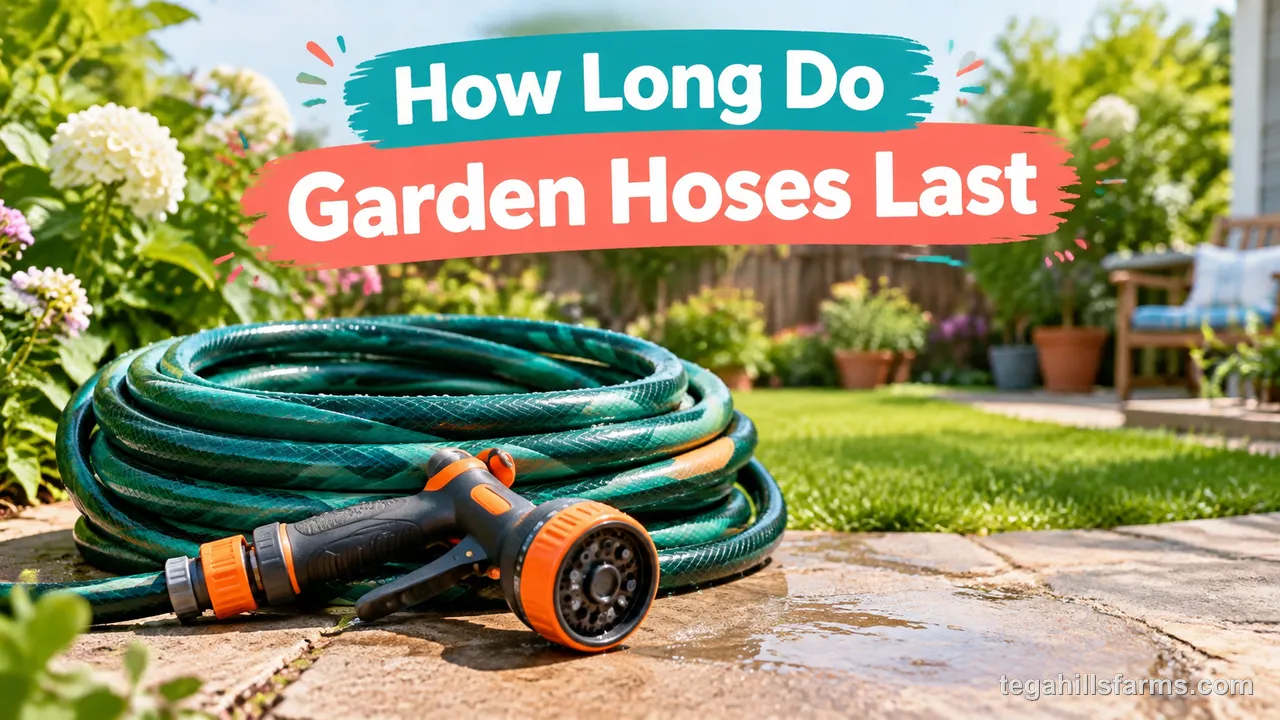
Material, wall thickness, fitting quality and storage habits explain most of the gap between a hose that lasts and one that doesn’t. Rubber, polyethylene, PVC and expandable hoses each age differently. The connectors often give out before the hose body does.
The usual frustration is a leak, a bulge or a stiff, cracked section just a few seasons in, even though the packaging promised more. A kinked hose that fights you across the yard makes it worse on sore wrists.
Before you replace or buy, squeeze the wall and look at the fittings. A thick, flexible wall and solid brass ends tell you more about how long a hose will last than the label does.
How Long Do Garden Hoses Last?
A good-quality garden hose typically lasts 5 to 10 years, though the exact figure shifts with material, build and care.
That spread is wide because a thin vinyl hose left baking on a driveway and a thick rubber hose coiled on a reel are barely the same product. Material sets the ceiling. Build quality, such as wall thickness and fitting construction, decides how close the hose gets to it. Storage and watering habits then add or subtract seasons.
Most hoses don’t wear out evenly. A hose often looks fine along its length while one stressed spot, usually near a connector or a repeated bend, starts leaking. That is why two hoses of the same age can be in very different shape.
If you are still deciding what to buy, our guide on how to choose a garden hose covers what matters beyond lifespan.
How Long Does Each Type of Garden Hose Last?
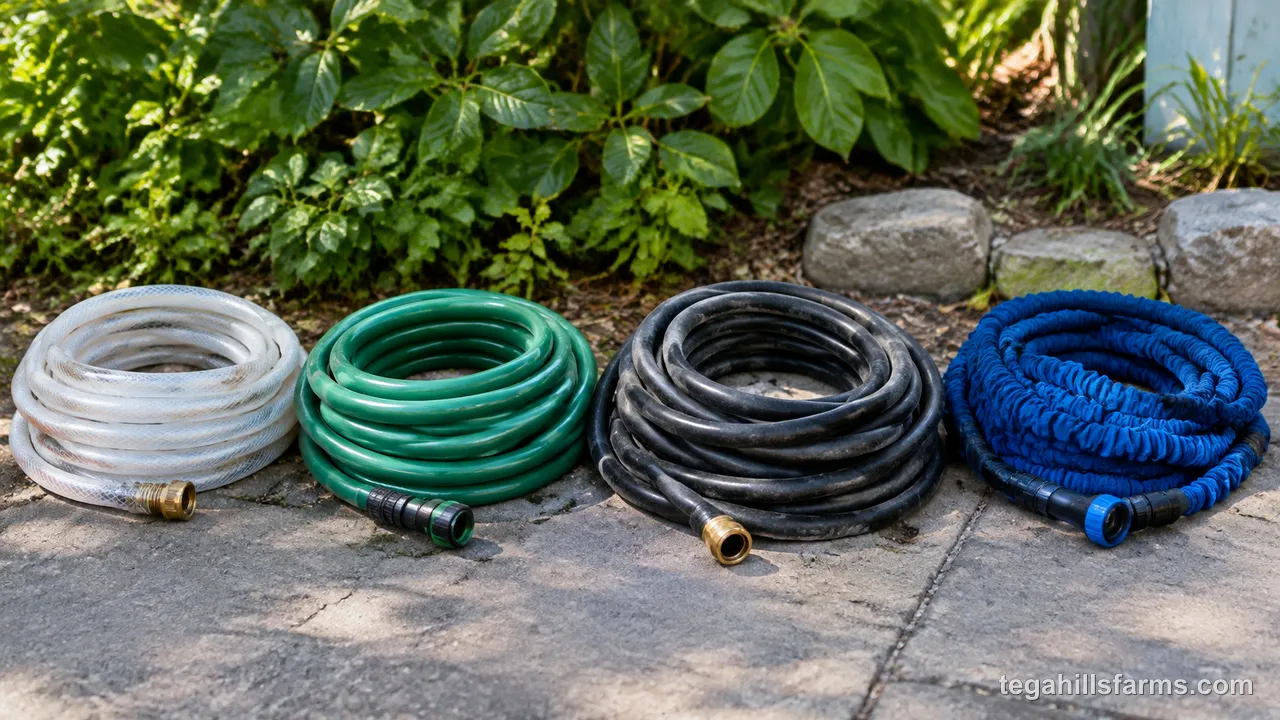
Garden hose lifespan follows material: PVC and vinyl wear out first, polyethylene lasts somewhat longer, rubber outlasts both, and expandable hoses depend heavily on care. Denser, more flexible walls generally stand up better to sun and pressure cycles.
PVC and Vinyl Hoses
PVC and vinyl hoses last about 2 years, which suits light, occasional watering better than daily use.
These are the budget plastic hoses most people pick up first. The material stiffens in cold weather, softens in heat and kinks easily, and sunlight breaks it down quickly. Once the surface turns brittle, small cracks turn into leaks.
They still make sense for a few container pots or a quick weekly rinse. Weight is a real advantage here, since a light hose is easy on hands and wrists. For a yard you water every day, expect to replace one sooner than you’d like.
Polyethylene Hoses
Polyethylene hoses last up to 5 years, which puts them between basic plastic and rubber.
They are generally lighter and more flexible than rubber, which makes them easy to drag around beds and shrubs. That lightness is the draw for gardeners who tire quickly handling a heavy hose.
The limit is the wall itself. It is still plastic, so it ages under sun and temperature swings, and it doesn’t shrug off abuse the way thick rubber does. They hold up well with moderate weekly use, sheltered storage and gentle handling. Left outside all season, they tend to reach the upper limit only on paper.
Rubber Hoses
Rubber hoses last the longest, at least 10 years, because the dense, flexible wall resists kinking, heat and sun better than plastic.
A good-quality hose is often put at 5 to 10 years, while rubber is credited with a decade or more. The gap comes down to grade and conditions. Thick, premium rubber that is drained and stored out of the sun can reach the high end. Thinner grades left in direct sun and dragged over concrete land closer to the low end.
Rubber is heavier and usually asks for a higher upfront spend, and that is the tradeoff. Questions like how much does a garden hose cost across materials come back to this same exchange of price now for years of use later.
Expandable Hoses
Expandable hoses are advertised at 5 to 10 years, but frequent use with poor upkeep can end them in one or two seasons.
The design explains the risk. The inner tube stretches to about three times its resting length when water flows, then contracts when the water stops. Every cycle flexes the material, so wear builds with use.
They are light and compact, which appeals to anyone with limited hand strength. Real-world results tend to run shorter than the claim, and much depends on how the hose is drained, shaded and handled.
Why Do Garden Hoses Fail Early?
Early failure usually traces to sun, heat and freezing, kinks and constant pressure, and a gap between rated and real-world lifespan. Weather does the slow damage, and handling does the fast damage.
Sun, Heat and Freezing Weather
Ultraviolet light, heat and freezing water break down hose material from the outside in, so exposure often does more harm than watering itself.
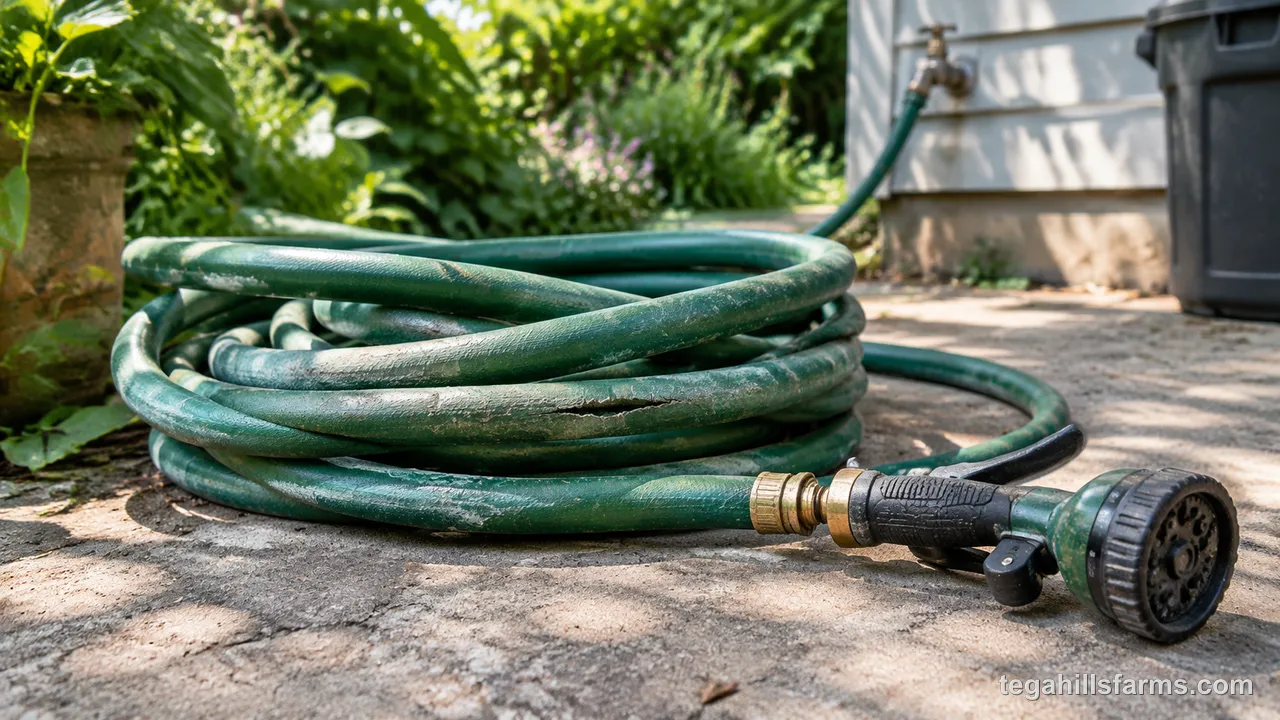
UV light dries out the outer wall, turning a flexible hose stiff and chalky. Heat softens the material, which makes it easier to kink and to deform at the fittings. Then comes winter. Water left inside a hose expands as it freezes and stresses the wall from within.
You can see this on a hose left across a sunny patio all summer. The side facing the sun cracks first, and the hose feels stiff in the morning cold.
Most of this damage is preventable. Shade and drainage cost nothing, and they target the exact causes of this wear. Plastic hoses are hit hardest, but rubber isn’t immune.
Kinks and Constant Water Pressure
Repeated kinking and a hose left pressurized stress the walls and fittings, and leaks and bulges tend to start at those points.
A kink folds the wall sharply. Do it at the same spot again and again, and that section thins and weakens. The next time water pushes through, the weak spot may bulge or split.
Constant pressure adds to the strain. A hose left connected to a live spigot keeps its walls and connectors loaded around the clock. The connector area takes the most stress because it is rigid while the hose around it flexes.
Thin-walled hoses kink more readily, and that’s a daily annoyance as well as a durability problem. Gentle, wide curves and a little slack at the spigot reduce the strain a lot.
Why Real-World Lifespan Falls Short of Manufacturer Claims
Published lifespans assume good materials and good care, so everyday habits, cheaper builds and rough storage cut the result.
A figure like 5 to 10 years describes a hose that is drained, coiled loosely and kept out of harsh weather. Real yards are messier. Hoses get dragged over gravel, run over, left in the sun and forgotten under snow.
Build matters too. Cheaper hoses often have thinner walls and plastic connectors, so they hit the weak points sooner. Many owners report replacing hoses every few seasons, and that fits what you’d expect when a hose faces all of these stresses together.
None of this means the claims are false. They describe the best case. Matching your habits to that best case is what closes most of the gap.
What Build Details Make a Garden Hose Last Longer?
A longer-lasting hose usually has thicker, layered walls, brass fittings and a diameter and length suited to the yard. Those three details separate hoses that survive seasons from ones that don’t.
Wall Thickness and Layers
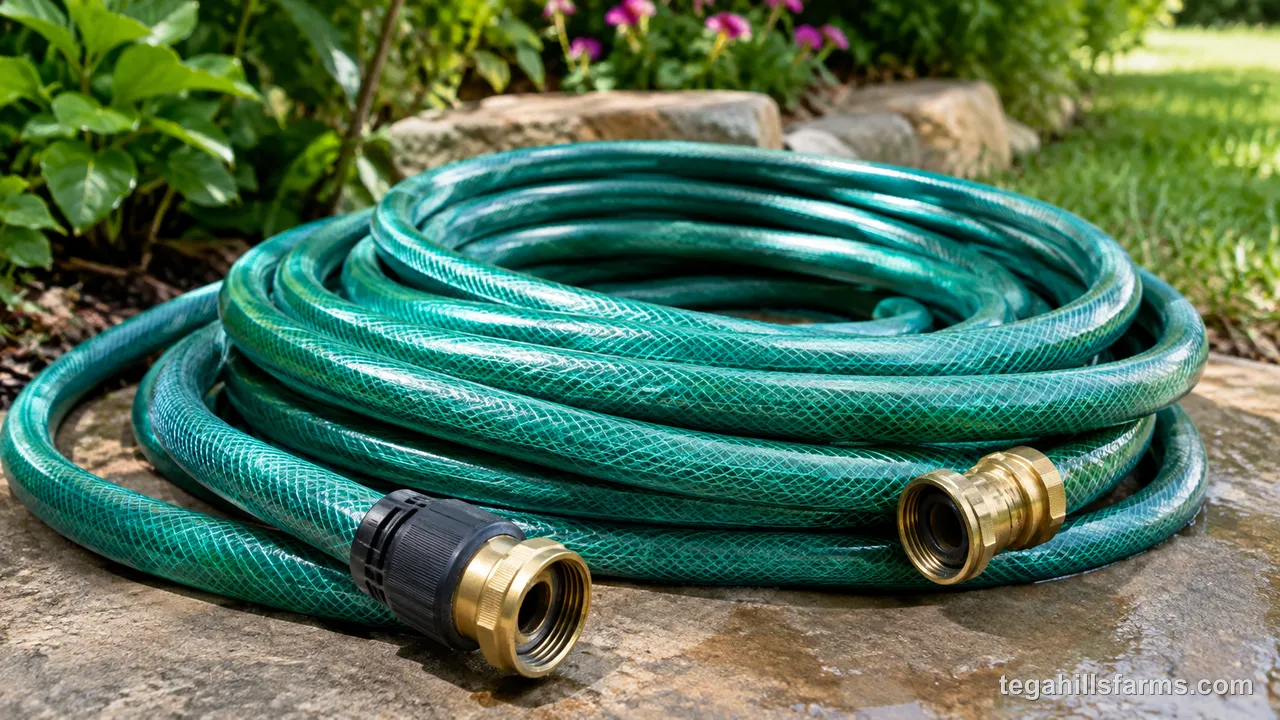
Thicker walls with reinforced layers resist kinking, abrasion and bursting better than thin-walled hoses.
You can judge a lot by hand. A sturdier hose feels heavier and springs back when bent, while a thin one folds flat and stays creased. Check the product details for any mention of layers or reinforcement, since those tell you more than price does.
There’s a tradeoff. A thicker, heavier hose is harder to drag, which matters if you have limited hand strength or a large bed to cover. A good middle ground is a wall that resists kinks without feeling like a chore to move around the yard.
Brass vs Plastic Fittings
Brass fittings hold up better than plastic ones, which crack and strip their threads sooner.
The connector is often the first part to fail, long before the hose body. Plastic ends can split from a knock or overtightening, and worn threads leak at the spigot. Solid brass resists cracking and keeps its threads through repeated connecting.
Look at the grip as well. A wide, easy-to-turn collar is easier on the hands, especially when wet. Check that the collar is firmly attached to the hose, since a loose collar leaks no matter what the metal is.
Diameter and Length That Fit the Job
A 1/2-inch (12 mm) internal diameter is the standard size, and a 25-foot or 50-foot length covers most yards without overworking the hose.
A hose that is too short gets pulled taut at the spigot, which strains the connector. One that is far too long ends up in tangled loops that kink. Matching length to the distance you actually water cuts that wear.
Diameter affects flow and pressure on the hose walls. For the details, garden hose diameter has its own guide. If you’re asking what size garden hose do I need for a particular yard, that question gets its own walkthrough too.
How Can You Make a Garden Hose Last Longer?
Hoses last longer when you connect them correctly, drain and store them sheltered, and release pressure between uses. These habits cost little and address the main causes of early failure.
Connect and Set Up the Hose Correctly
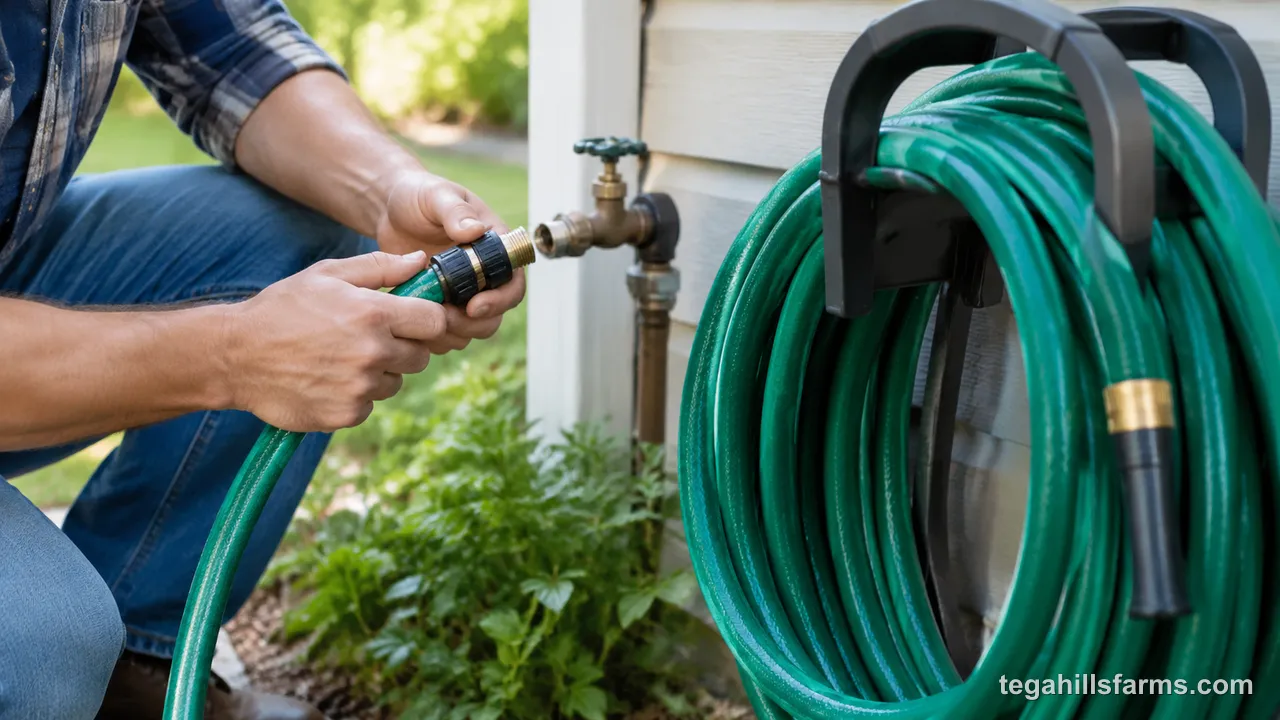
A correct connection removes stress points before the hose is ever used: a good washer, a hand-tight fit and a route with no sharp bends.
Start with the washer inside each female coupling. A worn or missing one is the most common cause of a drip at the spigot. Tighten by hand until snug. Overtightening with pliers can crack plastic fittings and deform the threads.
Then think about routing. Leave a little slack at the spigot so the hose doesn’t pull sideways on the connector. Avoid running it around sharp corners where it will kink under pressure.
For the full walkthrough, how to set up a garden hose gets its own guide. A few minutes here prevents leaks that otherwise nag you all season.
Drain, Coil and Store It Out of the Elements
Draining the hose, coiling it loosely and storing it in shade or indoors protects the material from sun and freeze damage.
After use, lift the hose and let the water run out. Trapped water is what expands when it freezes, and it also heats up in the sun. Next, coil in wide, loose loops. Tight coils make creases that become weak spots.
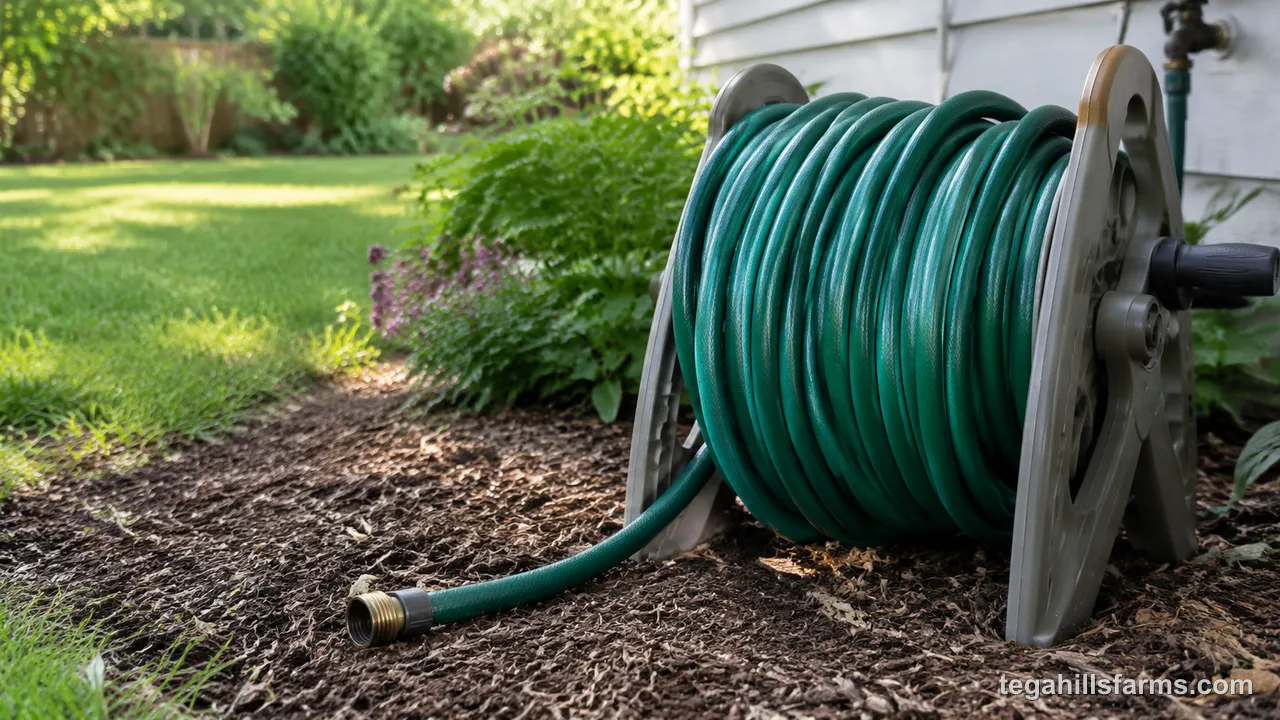
A hose reel makes this easier. It keeps the hose off the ground, prevents kinks and shades most of its length if you place it well. A wall-mounted reel under an eave works nicely.
In cold weather, bring the hose into a garage or shed. Even a shaded corner of the yard is better than lying across the lawn. It’s a small routine, and it targets exactly the damage that sun and freezing cause.
Relieve Pressure When the Hose Is Not in Use
Shutting off the spigot and releasing pressure between uses reduces stress on the walls and connectors.
When water stays on, the hose and its fittings stay loaded, and heat from the sun adds to it. Turn the spigot off after you finish, then open the nozzle to let the trapped pressure bleed out. The hose relaxes, and the connectors get a rest.
Leaving a hose connected is fine when it feeds a sprinkler or timer on a schedule, as long as it is shaded and checked often. For everyday hand watering, shutting it off takes seconds and saves wear. Think of it as the cheapest form of maintenance you can do.
How Do You Know When a Garden Hose Needs Replacing?
A garden hose needs replacing when it shows cracks, bulges, persistent leaks or weak flow that a new fitting or washer doesn’t fix.
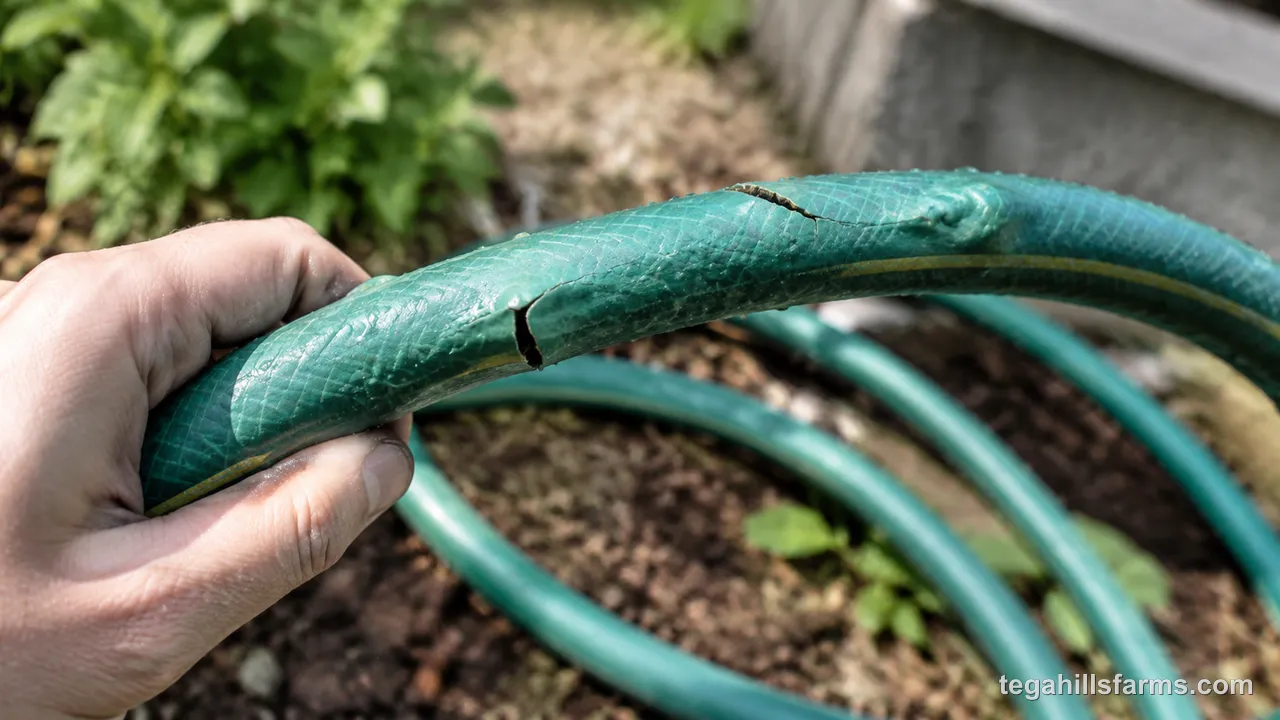
Cracks in the outer wall mean the material has aged, and they spread. Bulges show a weakened section that can burst under pressure. Leaks along the hose body, rather than at the connector, rarely stay small.
Weak flow is easy to miss. If water trickles even with the spigot fully open, the inside may be collapsing or clogged. A hose that stays kinked and stiff even after you straighten it has lost its flexibility.
One leak at a fitting is a repair. Several problems at once point to a hose at the end of its life.
A hose that doubles in length every time the water comes on is working hard, and that stretch is where the damage builds. If you bought one trusting the packaging alone, you might be shopping for another one by next summer. What does an expandable hose really do under everyday use?
Do Expandable Garden Hoses Really Last as Long as Advertised?
Expandable hoses often show a shorter real-world lifespan than advertised, because the stretch-and-contract design adds wear with every use.
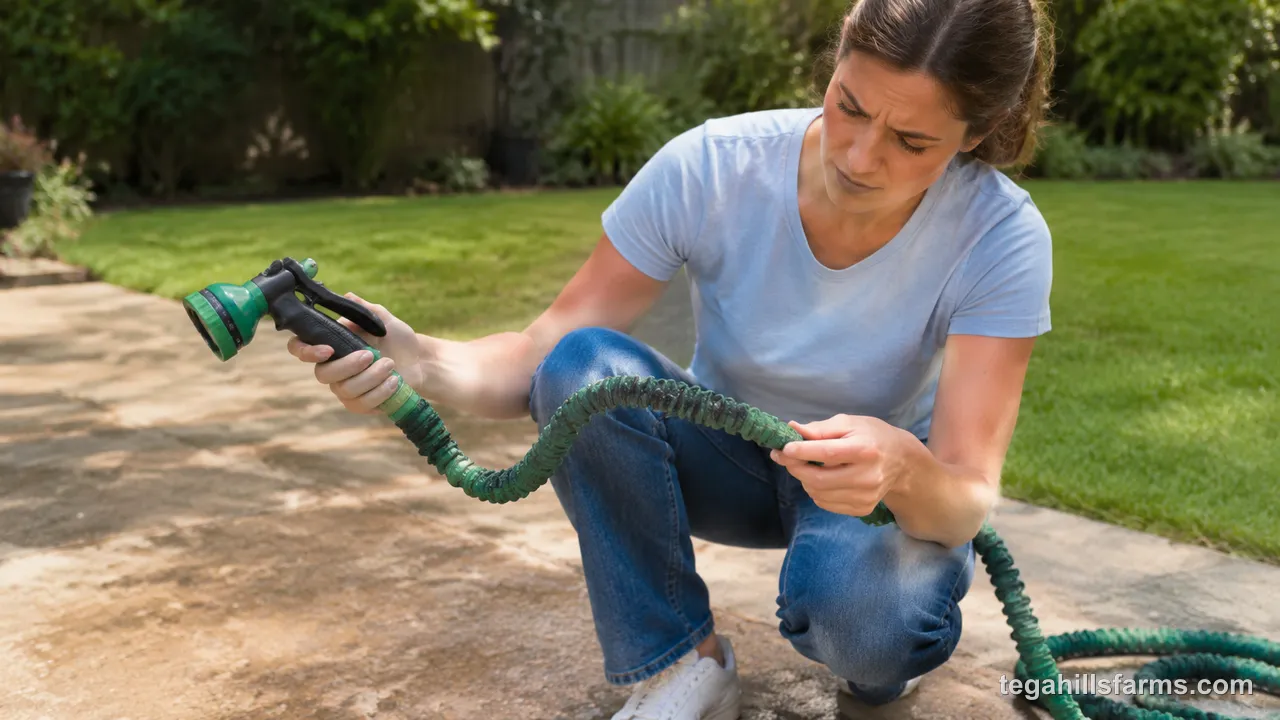
Each time water flows, the hose extends well beyond its resting length, then shrinks back. That repeated cycling puts constant strain on the inner tube and outer fabric. Add sun exposure, rough ground or a pressurized hose left sitting, and the weak points show up fast. Many owners describe splits or leaks after a season or two of regular use.
Conditions can help them hold up. Drain the hose fully after each use, keep it out of the sun, and avoid dragging it across rough surfaces. Turn off the water at the spigot between uses so the hose isn’t kept stretched under pressure.
They suit people who value a light, compact hose for short, occasional jobs. For daily watering across a large yard, a sturdier build usually pays off.
Can You Repair a Leaky Garden Hose or Should You Replace It?
Repair makes sense when the damage is limited to a fitting or one short section. Once the hose body itself is failing, replace it.
A leak at the connector is usually the easy case. Swap in a new washer or replace the fitting with a repair coupling, and the hose is often good as new. If a single spot in the middle has a puncture or split, you can cut out the damaged piece and join the two ends with a mender.
Those fixes work because the rest of the hose is sound. Check that before you commit. Run your hand along the length and look for stiffness, fine cracks and bulges.
If the wall is cracked in several places, feels brittle or leaks again after repair, the material is wearing out. More patches just shift the failure elsewhere. In that case, replacing the hose saves you the frustration of repeated fixes.
Garden Hose Lifespan FAQs
Which type of garden hose lasts the longest?
Rubber hoses last longest, with an expected life of at least a decade when stored out of the sun. Their dense, flexible walls resist kinking and heat better than plastic. Polyethylene comes next, and basic PVC or vinyl hoses wear out first, often within a couple of years.
Is a rubber hose better than a plastic one?
For durability, usually yes. Rubber stays flexible in heat and cold, resists kinks and handles sun exposure better than PVC or vinyl. The tradeoff is weight, which can tire hands and wrists during long sessions, and a higher upfront spend. For occasional watering, a lighter plastic hose may be enough.
Can a garden hose stay under pressure for hours?
It can, but it shortens the hose’s life. Constant pressure keeps stress on the walls and fittings, and heat from sun makes it worse. Sprinklers and timers are the common reason to leave water on, so shade the hose, check connections often, and shut the spigot off once the job is done.
How do I check a garden hose for damage?
Run your hands along the whole length with the water on, feeling for soft spots, bulges and wet patches. Then inspect the fittings for cracks, loose collars and stripped threads. Look for fine surface cracks too, especially on sun-facing sections. Damage limited to a fitting can be fixed; widespread damage means replacement.
Does leaving a hose in the sun ruin it?
Over time, yes. Sunlight breaks down hose material, and heat softens it, so surfaces turn brittle and crack. Plastic hoses suffer fastest. Leaving the hose coiled in shade or on a reel when you’re done is one of the simplest ways to add seasons to its life.
Write Your Review
No reviews yet. Be the first to share your experience!