

Most home yards do best with a 5/8 inch hose, while a 1/2 inch hose suits light watering and a 3/4 inch hose suits long runs and high-volume jobs. The right pick shifts with how far the water has to travel and what it has to do when it gets there.
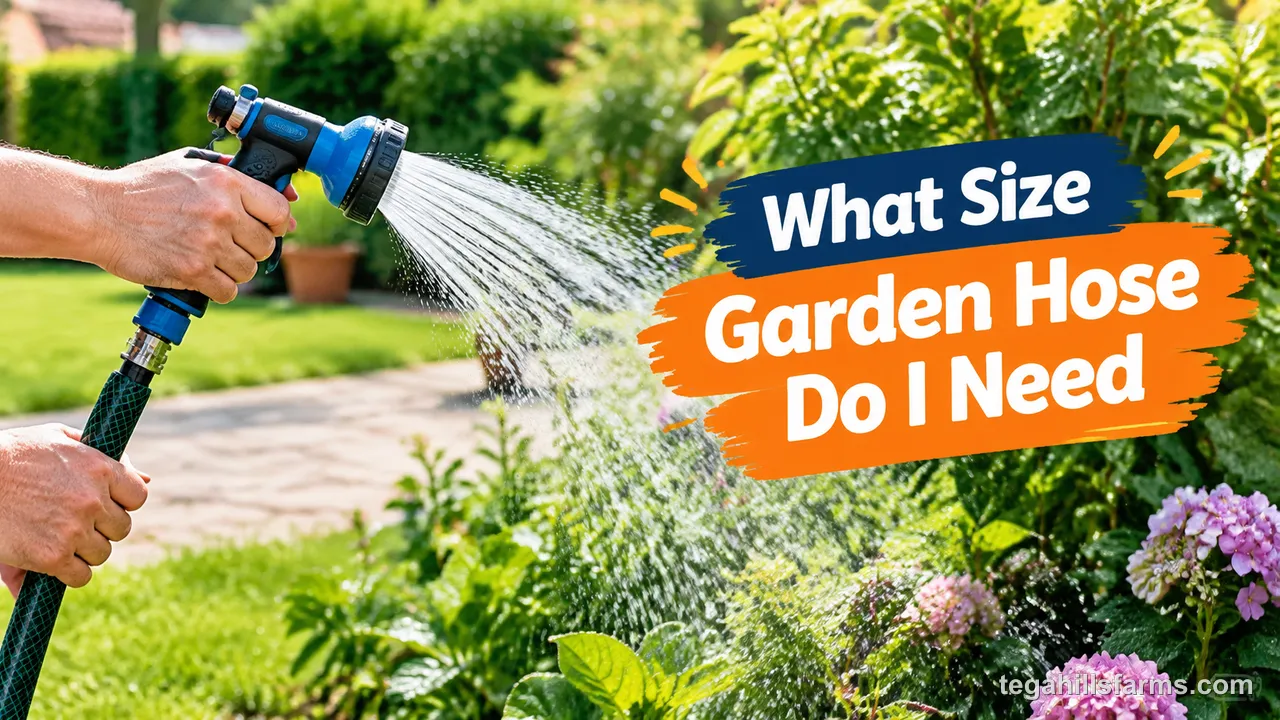
Four things decide the size: how far the spigot sits from the farthest bed, how much water the spigot can supply, what you water, and how much weight your hands will tolerate. Each pulls in a different direction, which is why one size never wins for everybody.
Buying too small gives you a weak trickle at the nozzle. Buying too big gives you a heavy, stiff hose that is tiring to coil and no extra water when the spigot is the limit.
Before you buy, measure the distance from the spigot to the farthest spot you water. Run length can change the answer more than yard size does.
What Does Garden Hose Size Actually Mean?
Garden hose size is the inside diameter (ID) of the hose, the width of the channel the water travels through. It is separate from hose length and fitting size. Store shelves often blur the three, so it helps to keep them apart.
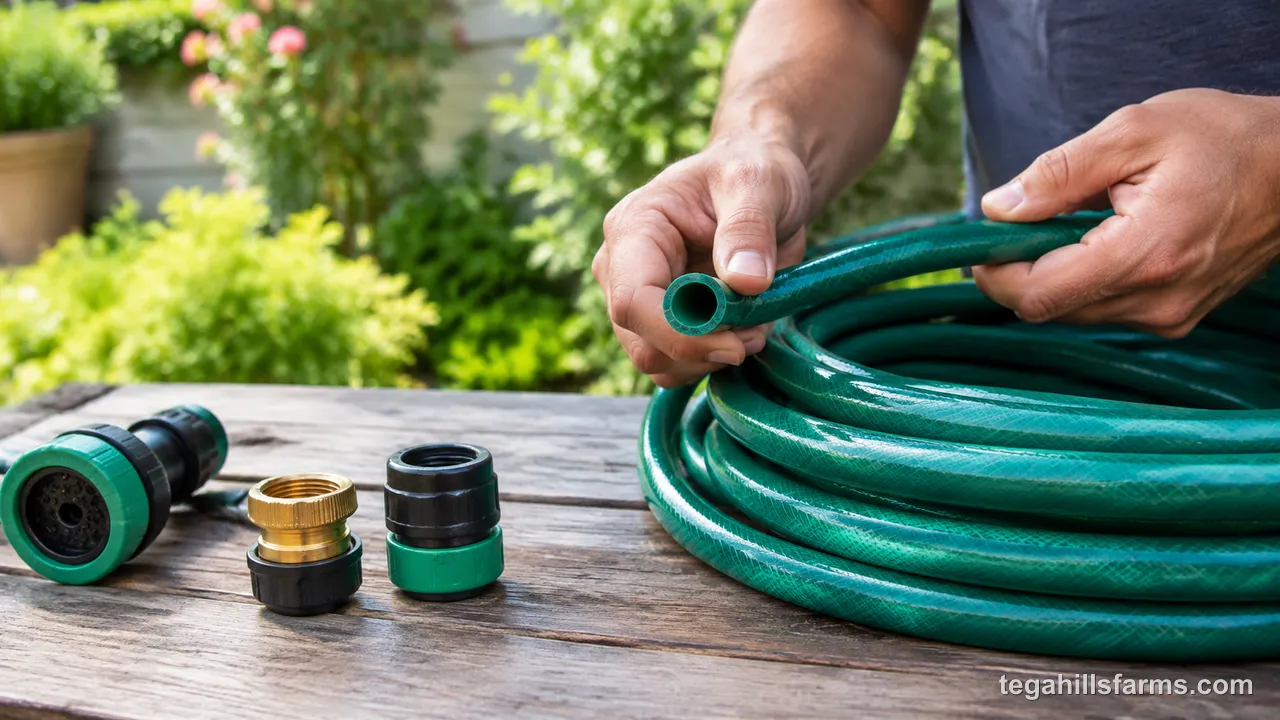
Water only moves through the open channel. A thick wall can make a hose look bulky without widening that channel, so the outer look tells you little. Garden hose diameter, read as the inside measurement, sets how much water can pass at once.
Length is a different number, and the fittings on each end follow their own standard. A 5/8 inch hose and a 3/4 inch hose can end in the same connector.
Diameter is only one part of the decision, so for the full picture of how to choose a garden hose, including material, fittings and use, the main buying guide is the place to start.
Which Garden Hose Diameter Is Right: 1/2, 5/8 or 3/4 Inch?
A 1/2 inch hose handles light watering, a 5/8 inch hose covers most home yards, a 3/4 inch hose suits high-volume work, and retailer “standards” differ from store to store. Each size trades flow against weight and flexibility, so it helps to take them one at a time.
When Is a 1/2 Inch Garden Hose Enough?
A 1/2 inch hose is enough for light watering, such as potted plants, a small deck and a few beds close to the spigot. It is also the easiest of the three to handle.
This is the lightest and most flexible size. It coils without a fight and doesn’t wear out your wrist on a daily round. Gardeners with limited hand strength often find it the easiest to drag around corners and shrubs.
The limit is flow. For light watering, a hose this size moves roughly 9 GPM. That is fine for containers and gentle watering, but slow for filling a big tub or feeding a large sprinkler.
Length matters too. A 1/2 inch hose works at 25 feet, but at 75 feet it is best avoided because the pressure loss shows up at the nozzle.
If your beds sit near the spigot and the jobs are small, this size saves effort and costs you very little.
What Makes a 5/8 Inch Hose the All-Round Choice?
A 5/8 inch hose is the all-round choice because it delivers roughly 17 GPM without becoming a burden to drag. That is enough flow for a medium lawn, car washing and general household watering.
Next, consider how it behaves over distance. At 50 feet, 5/8 inch is the recommended size. It also works at 25 feet and still holds up at 75 feet, where 1/2 inch starts to struggle. That range covers the run most homeowners actually have.
For a typical homeowner, a 5/8 inch, 50-foot rubber hose is the usual recommendation. It gives you steady flow at the nozzle and a weight you can still manage.
In the hands, it feels noticeably heavier than a 1/2 inch hose once it fills with water. Over a long Saturday session of moving between beds, that difference is real. It is still far easier on the wrists than the largest size.
If you only own one hose, this is the safest place to start.
When Is a 3/4 Inch Garden Hose Worth the Extra Bulk?
A 3/4 inch hose is worth the bulk when you need high volume or very long runs: roughly 23 GPM is the flow figure for commercial use, large sprinklers and fast pool filling.
Compared with 5/8 inch, the gain is real but the cost shows in your hands. The hose is heavier, stiffer and bulkier to coil and store. A full 100-foot length is a workout to move.
Length is where it earns its place. At 100 feet, 3/4 inch is the recommended size, and it is needed for high-pressure tools. At 75 feet, either 5/8 or 3/4 inch works.
Professional landscapers typically run a 3/4 inch, 100-foot reinforced hose. Most homeowners never need that.
Before buying, check two things. Confirm the couplings fit your nozzles and sprayers, since the end thread stays the standard hose thread. Then make sure your reel or hanger can hold the extra bulk.
Why Do Retailers Disagree on the Standard Hose Size?
Retailers disagree because each assumes a different typical user: stores pitching homeowners lean toward 5/8 inch, while commercial and heavy-use sources lean toward 3/4 inch.
Region and product line play a part as well. A brand may build most of its range in one diameter, so its “standard” follows what it sells. Another may assume light watering and point shoppers to a smaller size.
None of these claims is wrong. They answer different questions.
Ignore the label “standard” and decide from your own yard. Three questions settle it: how long is the run, how much water do your jobs need, and how heavy a hose can your hands handle for an hour?
For many households the answer lands on 5/8 inch. If your answers point elsewhere, trust them over a shelf tag.
How Does Hose Length Affect the Diameter You Need?
Longer hoses lose more pressure to friction inside the hose, so the diameter you need grows with the run. It helps to look at why the loss happens first, then at which size suits each length.
Why Do Longer Hoses Lose Water Pressure?
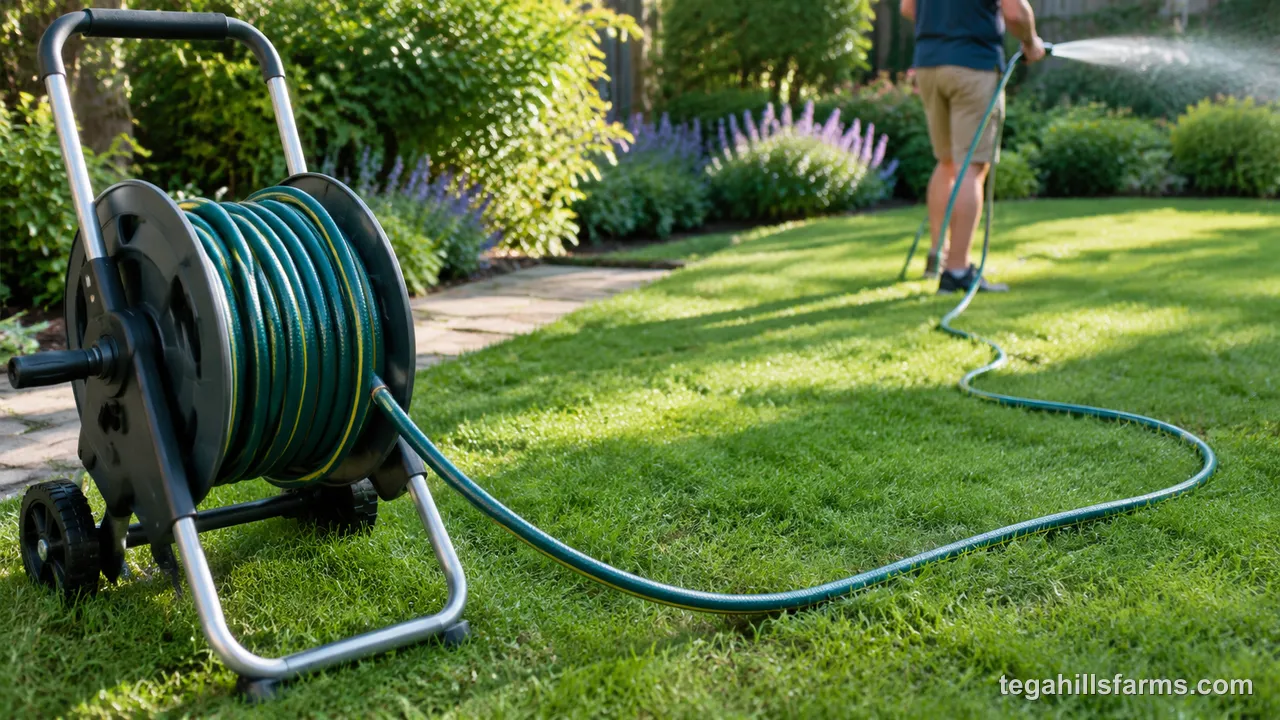
Longer hoses lose pressure because friction against the inner wall slows the water, and the loss builds with every foot of hose.
Think of drinking through a straw. A short, wide straw is easy, and a long, narrow one takes effort. A hose behaves the same way. The narrower the channel, the more the water rubs against the walls, and the more pressure drops before it reaches the nozzle.
On a short run, the loss is negligible. On a medium run with a narrow hose, it becomes moderate and you start to notice a softer spray. On a long run with a narrow hose, it turns significant.
You see it at the nozzle first. The spray weakens, a sprinkler at the end of the run doesn’t throw as far, and slow filling becomes routine.
Going wider is the main fix, since a larger channel cuts the friction. Shortening the run also helps.
Which Diameter Works for Short, Medium and Long Runs?
Short runs work with 1/2 or 5/8 inch, medium runs with 5/8 inch, and long runs with 3/4 inch. Here is how that plays out.
- Short (about 25 feet): 1/2 inch or 5/8 inch both work. Choose 1/2 inch if weight matters most, 5/8 inch if you want more flow.
- Medium (50 to 75 feet): 5/8 inch is the right size at 50 feet. At 75 feet, 5/8 inch or 3/4 inch works, and 1/2 inch should be avoided.
- Long (100 feet): 3/4 inch is recommended, and it is needed for high-pressure tools.
Length also adds weight and makes coiling harder. A longer hose in a wider diameter is a lot to wrestle.
So don’t buy more length than you need. Pick the shortest hose that reaches your farthest bed, then match the diameter to that run.
Can Your Home’s Water Pressure Handle a Larger Hose?
Yes, but only if your spigot supplies enough GPM (gallons per minute), because a bigger hose can’t deliver more water than the supply provides. Three things decide the result: what the spigot can give, how long the run is, and how much flow your nozzle or sprinkler draws.
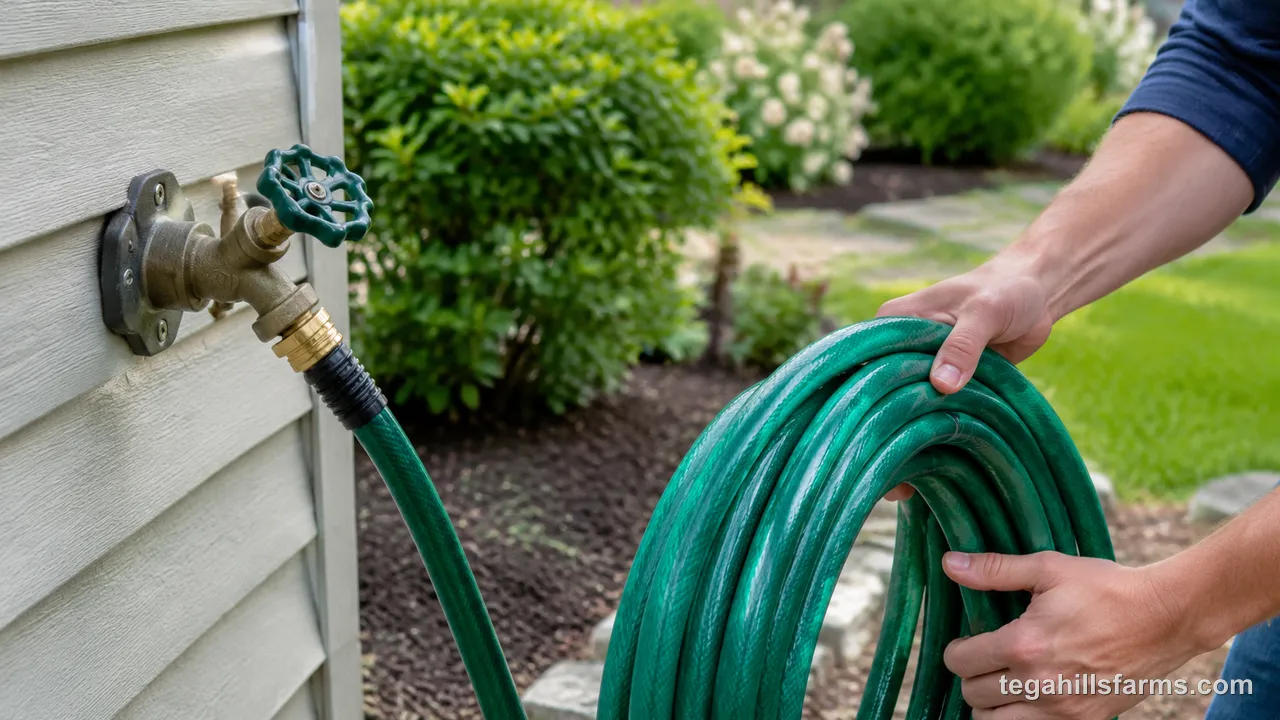
You can check the supply in a few minutes. Disconnect the hose, open the spigot fully, and fill a bucket of known size, such as a 5-gallon bucket, while you time it. Divide the gallons by the minutes and you have your GPM.
Compare that number with the flow of the size you’re considering. If the spigot is already the bottleneck, a wider hose adds weight and bulk but no extra water.
This matters for newer homes, too. A recent build doesn’t guarantee strong supply, and an older one doesn’t rule it out. First-time hose buyers in particular are better off measuring than guessing.
What Hose Thread and Fitting Size Do You Need?
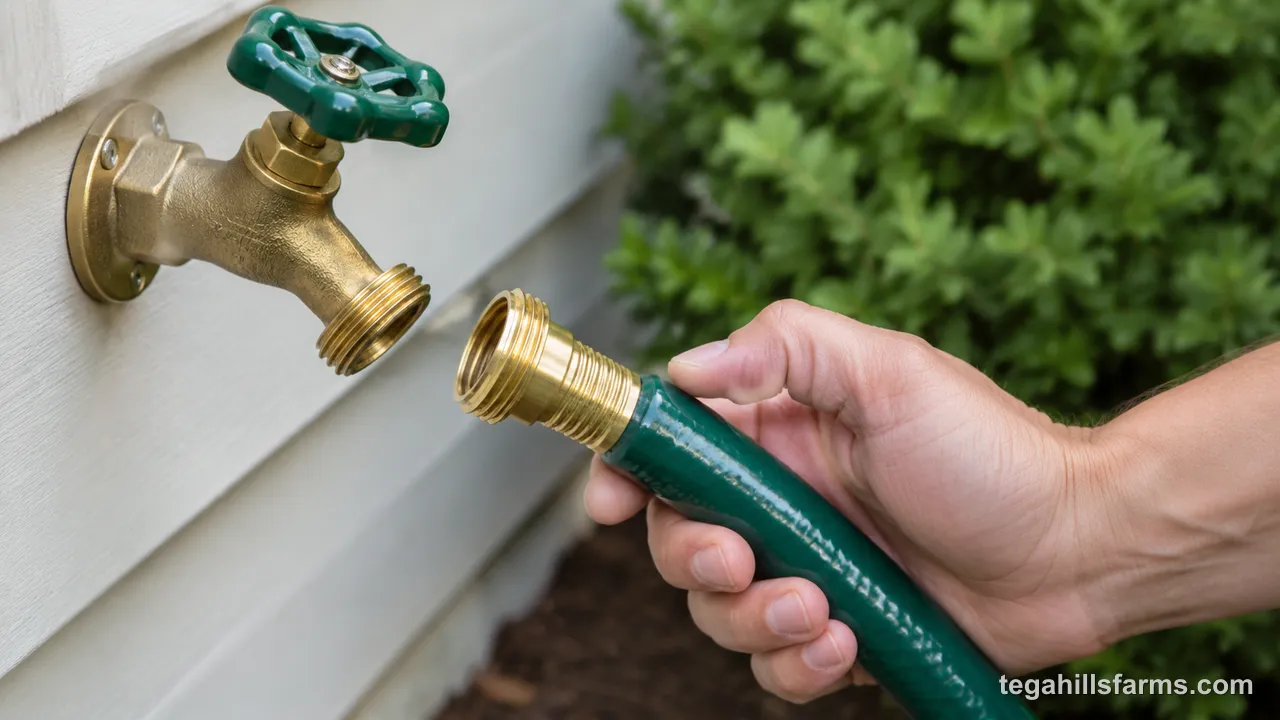
Hose fittings use 3/4-inch GHT (Garden Hose Thread) whatever the hose diameter, so what matters is the thread match at your spigot and accessories, and how to read the size of a hose you already own.
Will a Hose Fit Your Spigot, Nozzle and Sprayer?
Spigots, nozzles and sprayers use GHT, a different standard from NPT pipe thread, so the two only join with an adapter.
Garden hose thread is straight and seals with a washer. Pipe thread is tapered and is meant for plumbing. They look similar but don’t mate cleanly.
Most garden gear already uses GHT, so you rarely need an adapter. You run into trouble when a fitting has pipe thread, such as some threaded outlets, and then an adapter bridges the gap.
Changing the hose diameter doesn’t change the thread on the end. A 1/2 inch, 5/8 inch and 3/4 inch hose all connect to the same standard spigot.
Details such as washers and hand-tightening belong to how to set up a garden hose, but the thread match comes first. Get that right and the wrong connector stops being a problem.
How Can You Identify the Size of a Hose You Already Own?
You can identify a hose by its printed markings on the jacket or coupling, or by checking the inside diameter at the cut end of the hose.
Start with the markings. Many hoses print a size and length along the jacket, and some stamp the coupling. If the print has worn off, look at the end instead.
Hold a ruler across the opening and measure the inside of the channel, not the outside of the hose. The wall adds to the outer size, so an outer reading will make the hose seem larger than it is.
That outer-versus-inner mix-up is the most common mistake. If you measure the outside, you may buy a hose a size too big.
When the numbers are unclear, compare the old hose against a candidate in the store, end to end.
Which Hose Material Works Best With Each Size?
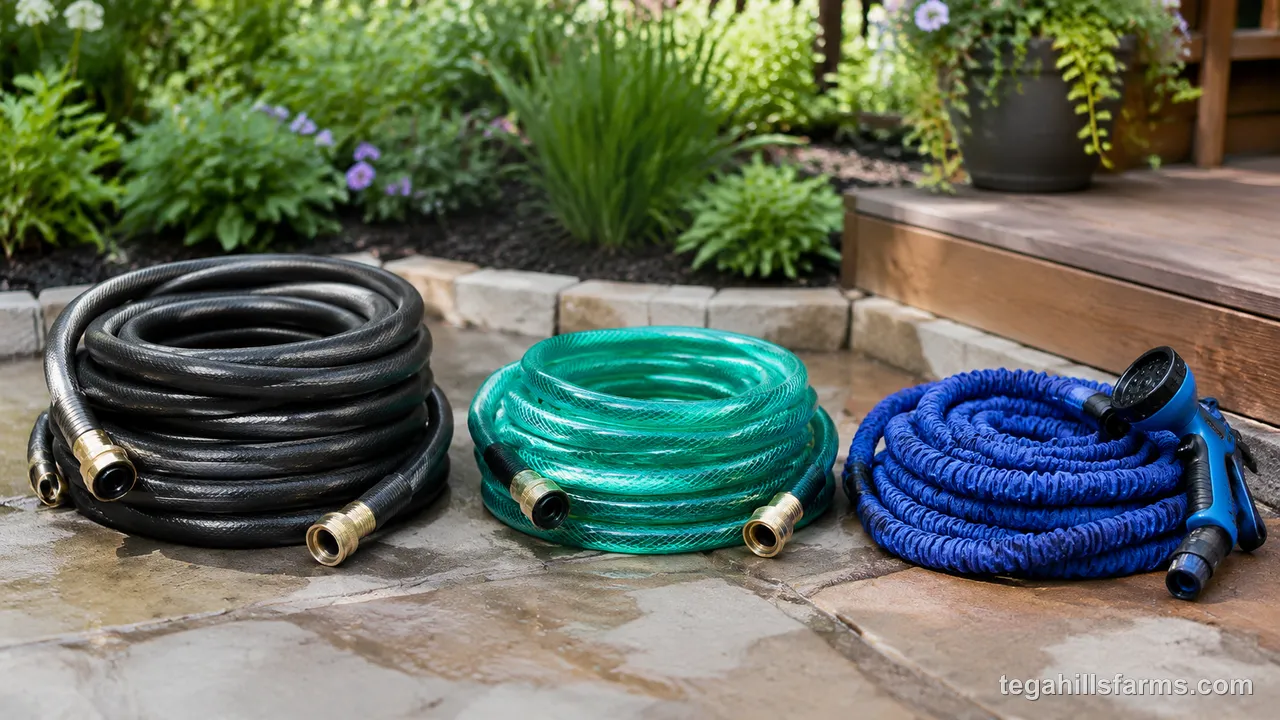
Choose rubber for heavy use, vinyl or polyurethane for lighter casual work, and an expandable hose when storage and weight matter most. Material changes how any diameter feels, so it deserves a look alongside the size.
How Do Rubber Hoses Handle Heavy Use?
Rubber hoses handle heavy, frequent use best, resisting kinks and wear, at the cost of extra weight.
Rubber stays supple and tends to hold up against dragging and repeated bending. That is why it is the usual material for the recommended 5/8 inch, 50-foot homeowner hose. It also holds up in 3/4 inch reinforced builds for professional work.
The weight is the catch. A rubber hose gets noticeably heavier as the diameter grows, and a large size full of water is a lot to drag.
This material suits people who water every week, move a lot of hose, and want one that lasts.
Care helps. Drain the hose after use, coil it loosely and keep it out of harsh sun. Those habits slow wear on any material, rubber included.
Where Do Vinyl and Polyurethane Hoses Fit?
Vinyl and polyurethane hoses sit below rubber in toughness but are lighter and easier to handle, which suits casual and mid-level watering.
Vinyl is typically the lightest and most budget-minded option, though it tends to kink and stiffen more readily. Polyurethane is also light and usually more flexible, which makes it pleasant for gardeners who coil and uncoil often.
Neither is built for the same abuse as rubber. If you drag a hose over concrete or leave it out in all seasons, expect wear sooner.
For a small yard, a short run and a 1/2 or 5/8 inch hose, they make sense. Budget often drives this choice, and how much does a garden hose cost explains what separates the materials.
How Do Expandable Hoses Differ in Everyday Use?
Expandable hoses change shape with water, so they are light and compact when empty and lengthen as they fill.
That makes them easy to carry and simple to store. They suit small spaces, patios and gardeners who struggle with a heavy hose.
Durability is the trade-off. The thin inner tube is more vulnerable than a thick rubber wall, so rough handling shortens the life.
Labeling is also different. A label often gives the stretched length rather than a fixed inside diameter, because the diameter changes with water. Check the manufacturer’s flow details instead of assuming a fraction-of-an-inch size.
For light, careful use, they are a handy option.
Which Hose Size Fits Your Watering Job?
There are five common home watering jobs, and each leans toward a different class: beds and containers, car washing, pool filling, drip setups and drinking-water-safe use.
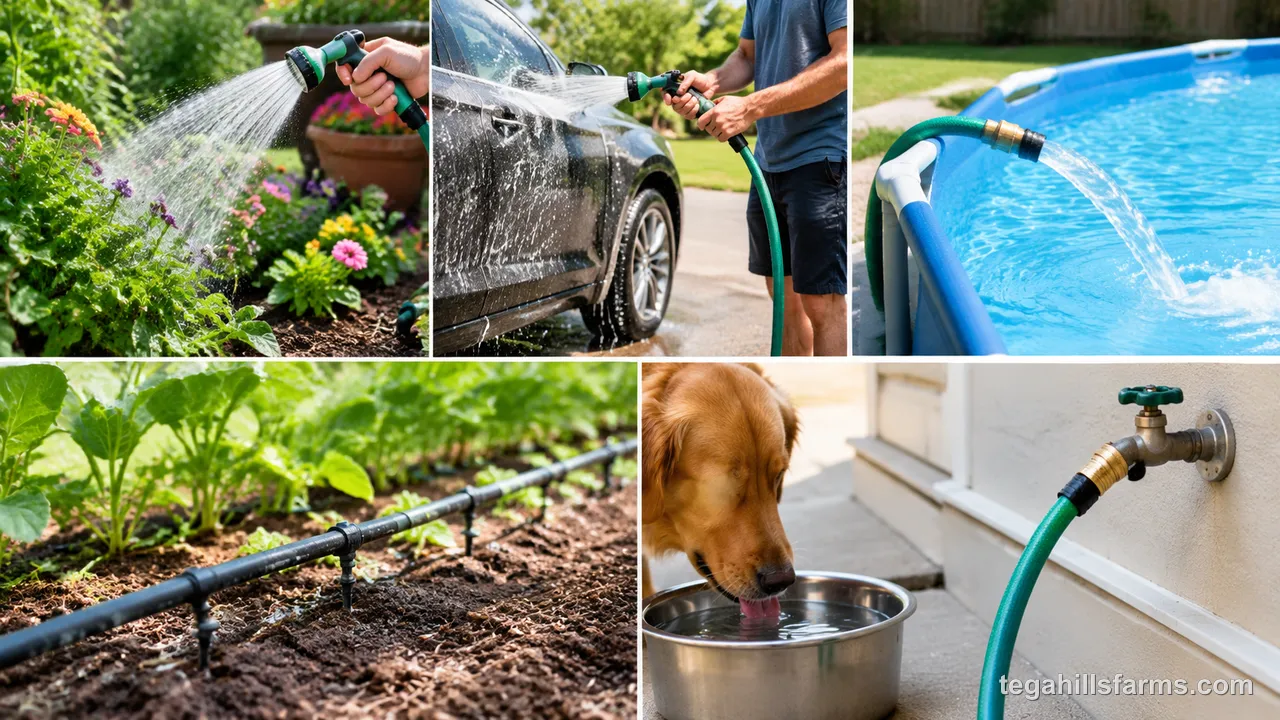
- Beds and containers: 1/2 inch is enough for light watering close to the spigot.
- Car washing: 5/8 inch gives the steady flow this job wants without too much weight.
- Filling pools: 3/4 inch moves water fastest, which matters when the job is volume.
- Drip setups: the hose only feeds the system, so 1/2 or 5/8 inch usually does it.
- Drinking-water-safe use: this depends on a safe-for-drinking label, not on diameter.
To match a situation quickly, start with the heaviest job you do regularly. Then check your run length and how your hands feel after an hour. Size for that job, not the rare exception.
A hose that has been dragged across concrete for a few summers rarely fails all at once. It picks up a kink that never fully relaxes, a hairline crack near the coupling, a bulge that grows each time the water comes on. Miss those, and the first real warning is a burst in the middle of watering, with the spigot running and your shoes soaked.
How Can You Tell When a Garden Hose Needs Replacing?
A hose needs replacing when it shows cracks, bulges or leaks at the couplings that repair can’t fix. Smaller problems can often be repaired, so it helps to know which is which.
Watch for stiffness, kinks that stay put and flow that drops even though the spigot hasn’t changed. Cracks along the body and bulges mean the wall is failing, and a burst is close. A leak right at a coupling is different, because a replacement coupling can often fix it.
Care slows all of this. Drain the hose after use, coil it loosely, keep it out of direct sun and don’t leave it pressurized in the heat. Material and storage change how soon wear shows, a question covered in how long do garden hoses last.
If the damage runs along the length of the hose, replace it. If it is only at one end, repair first.
How Can You Tell If Your Hose Is Too Small or Too Big?
Too small shows up as weak flow at the nozzle, and too big shows up as hand and wrist strain from weight. Both are easy to spot once you know what to watch for.
What Are the Signs of an Undersized Hose?
An undersized hose shows weak flow at the nozzle, especially at the end of a long run.
A sprinkler that doesn’t spread properly is a common clue. So is slow filling of a bucket, tub or pool, and a spray that sags when you add length.
Confirm the cause before you buy. Run the same job with a shorter length, or with the hose straightened out, and see if flow improves. Kinks can mimic a size problem.
Then check the supply with the bucket test. If the spigot gives plenty of water and the hose still starves the nozzle, a wider diameter is the likely fix.
What Are the Signs of an Oversized Hose?
An oversized hose shows up as hand and wrist strain, with no gain in water.
The weight adds up over a long session, and a wide hose is stiff and awkward to coil. Storage gets harder too, because it takes up more room on a reel or hanger.
The sharper sign is that flow doesn’t improve. If the spigot is the limit, a larger hose just carries the same water in a heavier package.
When your jobs are light and the run is short, a wider hose is wasted money and effort. Stepping down a size often makes watering easier with no loss.
Where Do 3/8 Inch and 1 Inch Hoses Fit?
3/8 inch and 1 inch hoses are uncommon sizes outside the three main diameters, which is why they are rarely recommended for home use.
3/8 inch sits below 1/2 inch, and 1 inch sits above 3/4 inch. Some retailers list them, but most home yards are well served by 1/2, 5/8 or 3/4 inch.
Who might still look at them? Mainly people whose existing equipment is built around one of those sizes, or who have an unusual setup. Gardeners with standard needs should stay within the main three.
If you’re unsure, a measured run length and a bucket test will usually point to one of the common sizes.
Garden Hose Size FAQs
Does a bigger diameter always mean more water?
No. A larger hose can carry more water, but only if your spigot supplies it. When the supply is the limit, a wider hose just adds weight and bulk. Check your spigot’s output with a bucket and timer before upsizing.
Can you connect hoses of different diameters?
Yes. The end thread is the same standard whatever the diameter, so couplings join. Flow is limited by the narrowest section, though, so a small hose anywhere in the line holds back everything after it.
Does hose length affect water pressure?
Yes. Friction builds along a longer run, and narrower hoses lose more. A weak spray at the nozzle on a long run is a common sign. Moving to a wider diameter or shortening the run helps keep pressure up.
Do you need a hose labeled for drinking water?
Only if you plan to drink from it, fill pet bowls or use it for similar purposes. A standard garden hose may not be made for drinking use. Look for a clear drinking-water-safe label, and let the hose drain before use.
Write Your Review
No reviews yet. Be the first to share your experience!