

A cold start and a warm start are not the same procedure, and getting them mixed up is why most chainsaws flood or refuse to fire.
A cold start means the engine is at ambient temperature and needs extra fuel, so you use the choke and primer, while a warm start means the engine still has heat and residual fuel, so you start with the choke off. Understanding that difference prevents flooding, saves pulls, and keeps the chain brake from surprising you. If you are still deciding between gas and battery power or what size saw fits your yard, see our guide on how to choose a chainsaw before diving into starting procedures.
Below, you’ll get the exact sequence for both starts, the safety checks to do first, and the fixes when it won’t fire.
What Is a Cold Start vs a Warm Start on a Chainsaw?
A cold start needs a richer fuel mix with the choke closed, while a warm start needs normal airflow with the choke open, because a cold engine condenses fuel and a warm engine already holds vapor. The distinction decides whether you prime and choke or skip them. For a closer look at engine size and fuel type, the concepts here tie directly to cold and warm behavior.
What Is a Cold Start?
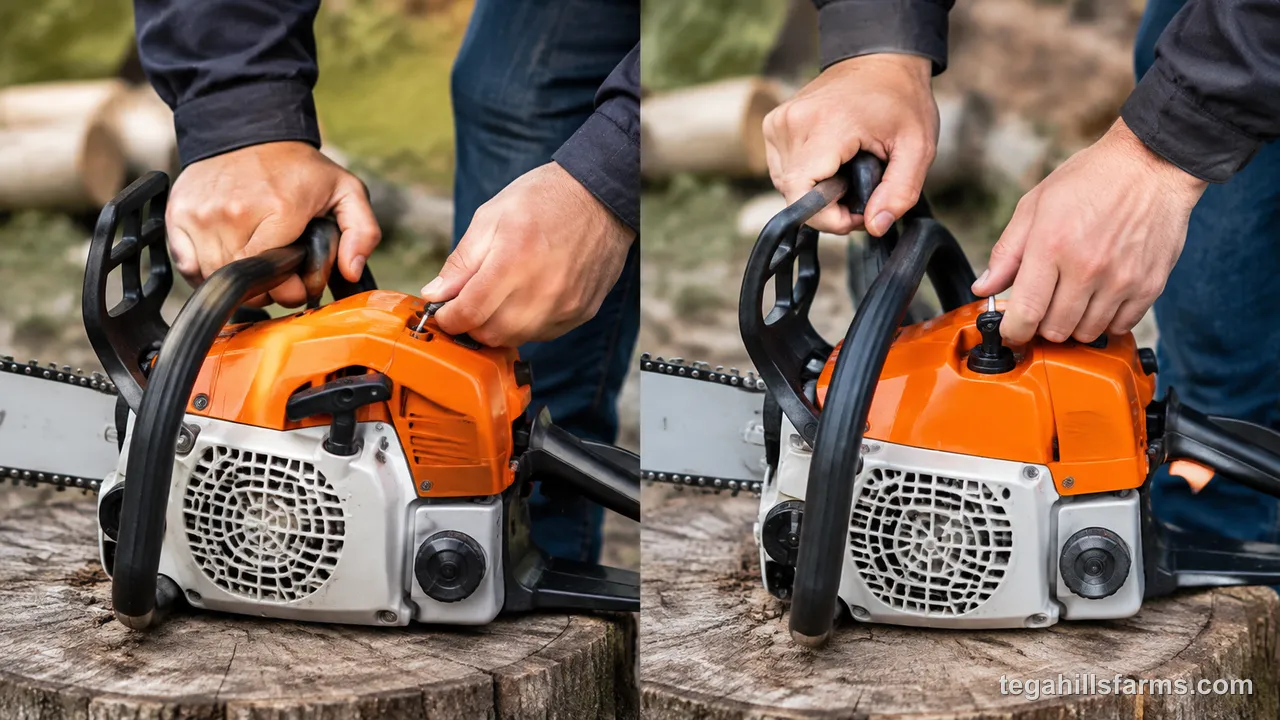
A cold start is when the engine has cooled to air temperature and the cylinder, fuel lines, and carburetor need a choked, primed mix to vaporize. This happens after overnight storage, hours of sitting, or in cold weather below about 50°F, even if you ran the saw earlier that day.
In that state, gasoline does not atomize well. The choke closes off air to enrich the mix, and the primer bulb pushes fuel to the carburetor so the first few pulls have something to ignite. If you skip those steps when cold, you will pull many times with no pop.
What Is a Warm Start?
A warm start is when the engine retains heat from running in the last 10-15 minutes and needs no choke and little or no priming. The cylinder walls are warm, so fuel vaporizes immediately.
Using the choke when warm over-fuels the engine and floods the plug. That is why a warm engine often starts on the first or second pull with the Master Control Lever in the run or warm-start position and the throttle at idle.
What Safety Checks Should You Do Before Starting a Chainsaw?
Before you pull, complete workspace and PPE setup, chain brake, chain tension, and bar inspection, and fuel and oil checks to prevent kickback and no-starts.
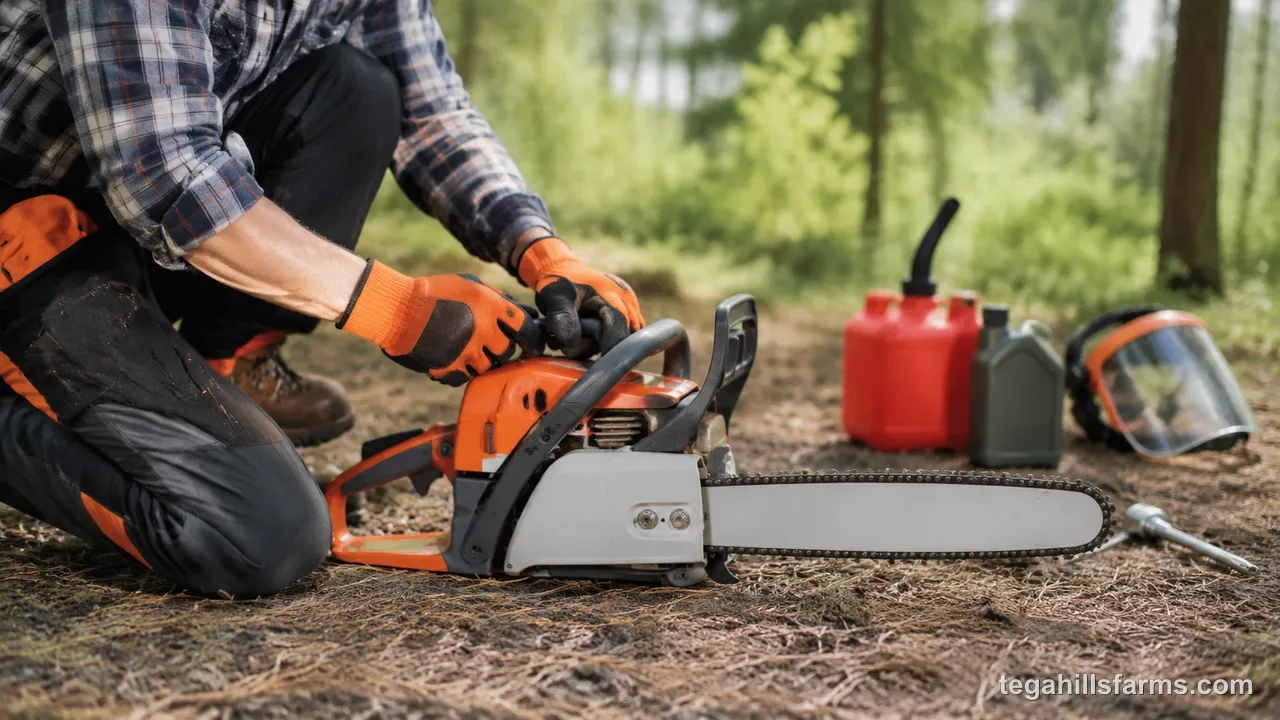
These three groups take less than two minutes and catch the most common reasons a saw kicks, throws a chain, or floods on the first pull. They also keep you clear of the bar while the engine catches.
How Should You Set Up Your Workspace and Safety Gear?
Your setup should include 15 feet of clear space, solid footing, and chainsaw chaps, eye and hearing protection, and gloves before you touch the starter. This gear and distance keep a kickback or a thrown chain from finding you or a bystander.
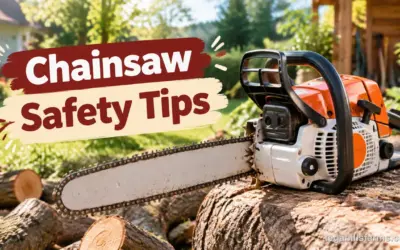
Work on level ground away from fuel cans, kids, and pets. Put on close-fitting clothes, steel-toe boots if you have them, and a helmet with visor for limbing. For a fuller checklist of protective habits beyond starting, see our guide on chainsaw safety tips.
How Do You Check Chain Brake, Chain Tension, and Bar?
Your bar assembly is ready when the chain brake is engaged, chain tension allows a slight lift without sagging, and the bar and guide groove are clear. That combination stops the chain from moving at startup and keeps it on the bar under load.
Push the front hand guard forward until it clicks to engage the brake. Lift the chain at mid-bar; it should lift about 1/8 inch and snap back, with drive links still seated. Clear chips from the groove, check the bar oil hole, and keep the scabbard off but out of the cut path. A correctly tensioned and braked chain also reduces the sudden rotation that causes chainsaw kickback on first contact.
How Do You Check Fuel and Oil Before Starting?
Fuel and oil are ready when the fresh 50:1 mix is full, chainsaw bar oil reservoir is topped off, and the primer bulb is firm after 4-6 presses without flooding. Fresh fuel and oil prevent lean seizures and dry starts.
Use fuel mixed within the last 30 days, or pre-mixed canned fuel if the saw sat longer. Fill bar oil to the line and check for flow by briefly running and looking for a light spray off the tip. Press the primer until you see fuel move and feel resistance, then stop; over-priming floods a cold engine. If you are unsure what oil weight or fill level your saw needs, our overview of chainsaw bar oil explains reservoir care and winter viscosity.
How Do You Cold Start a Chainsaw Step by Step?
A cold start succeeds with correct choke, primer, and chain brake settings, a secure ground-start position, and a controlled pull and warm-up sequence that avoids flooding.
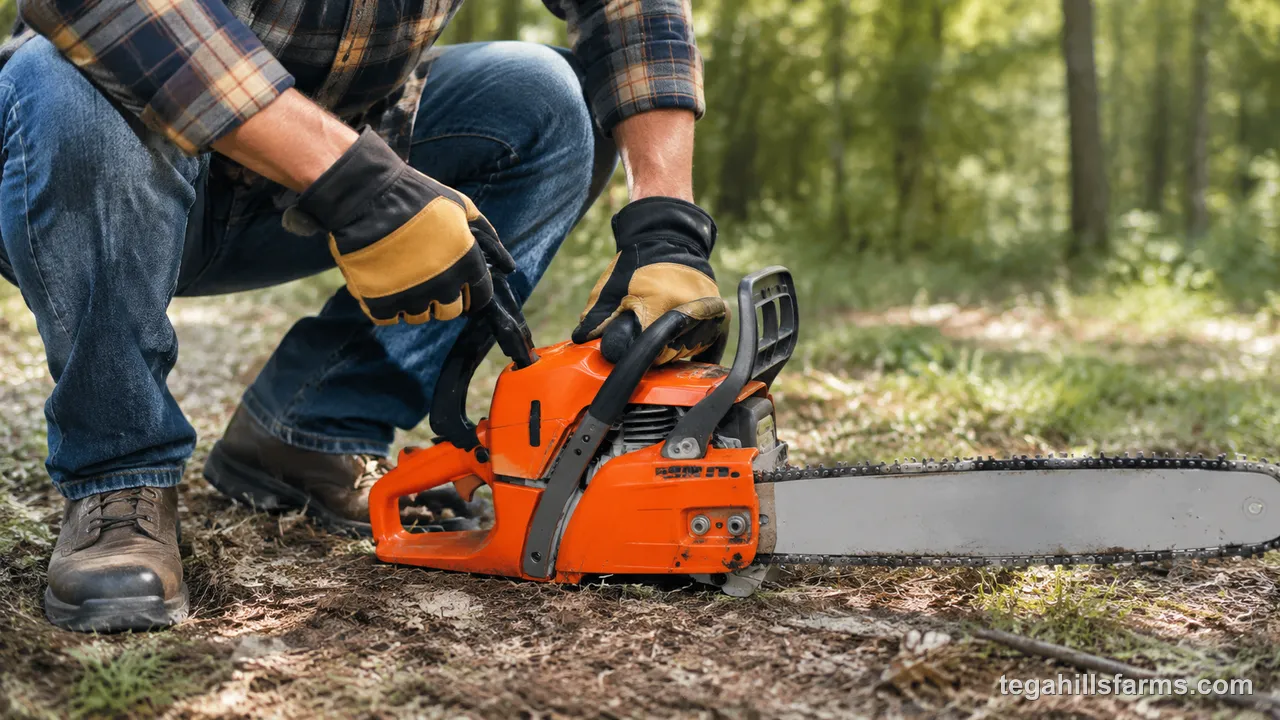
Each step builds on the last, so do not jump to pulling before the controls are set. The sequence below works for most gas STIHL, Husqvarna, and Echo saws with a Master Control Lever or separate choke switch.
How Do You Set the Choke, Primer, and Chain Brake for a Cold Start?
For a cold start, set the chain brake engaged, choke closed or Master Control Lever to cold start, and primer bulb pressed 4-6 times plus decompression valve if equipped. This primes a rich mix while keeping the chain still at ignition.
Push the chain brake forward, switch the Master Control Lever to the lowest cold-start detent which closes the choke, and press the decompression valve on larger saws to reduce pull force. Pump the primer until fuel is visible and the bulb firms up. Leave the throttle locked in the start position as your manual shows; do not touch the trigger yet.
What Is the Safest Starting Position?
The safest positions are foot-lock on the ground or knee-lock between your legs, while drop starting in the air is unsafe because you lose control of the bar if the engine kicks. Both grounded methods brace the saw against your body weight.
For foot-lock, place the rear handle on the ground, put your right foot through the handle to pin it, and grip the front handle with your left hand. For a compact saw on a bench, kneel and pin the rear handle with your knee. Never hold the saw by one hand and yank the cord with the other; a hot chain can swing into your leg before the brake catches, which is exactly how chainsaw kickback injuries often begin.
How Do You Pull the Starter and Warm Up the Engine?
Pull with short, firm strokes to the pop, then move choke to run and pull again to start, letting it idle 20-30 seconds. This staged approach clears the rich mix without flooding.
Pull smoothly 2-4 times until you hear a brief cough or pop; that means fuel ignited in the choke position. Immediately push the choke in or move the lever to warm/run, then pull once more and the saw should fire. Let it idle without revving so oil reaches the bar and the engine stabilizes. If equipped with STIHL ElastoStart, the elastic cord section smooths the jerk and reduces hand fatigue on repeated pulls.
How Do You Warm Start a Chainsaw?
A warm start works with choke off and minimal priming, unlike a cold start, and follows a short chain-brake-on sequence without re-choking. Because heat keeps fuel vaporized, extra fuel only hurts.
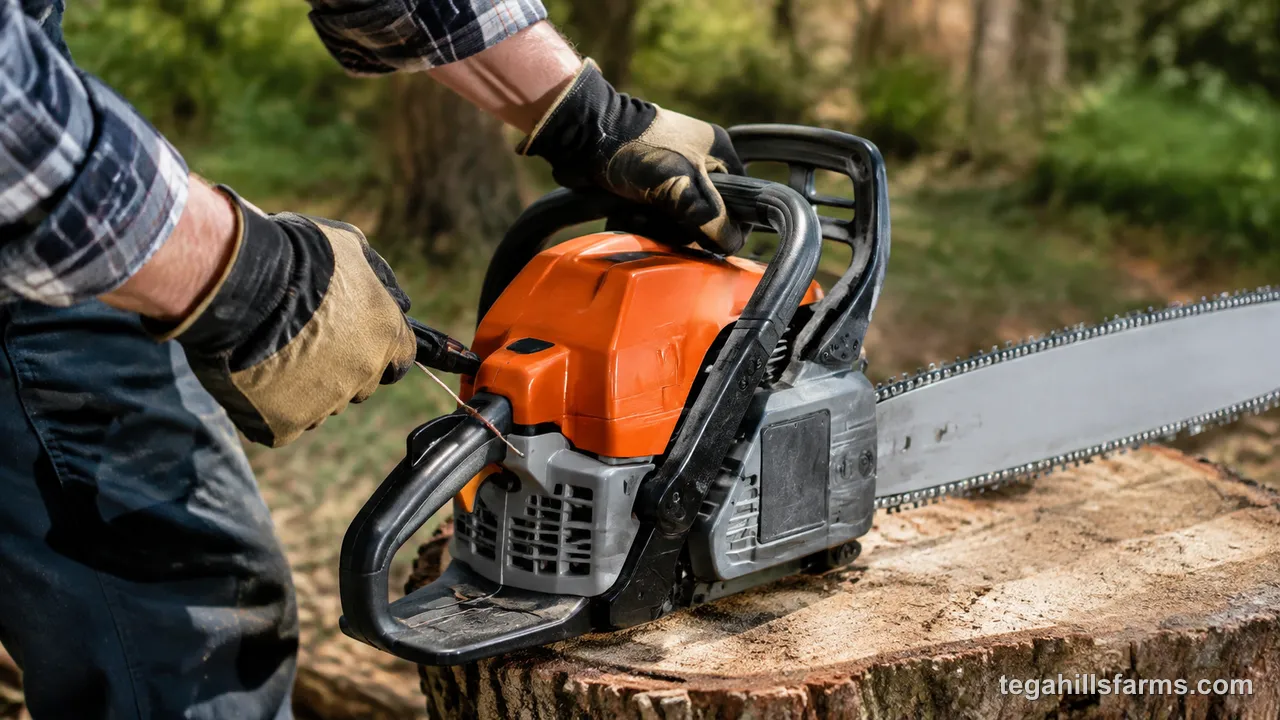
Most warm engines restart within one or two pulls if you leave them alone. If you re-choke a warm saw, expect a flooded plug and a longer recovery.
How Is a Warm Start Different From a Cold Start?
A warm start differs because the engine needs leaner air, no choke, and no extra primer pushes, while a cold start needs restricted air and a primed rich mix to compensate for condensation. Warm engines also flood much faster.
When warm, the crankcase is already coated with fuel and the spark plug is hot, so closing the choke dumps raw gas onto the plug. That is why you keep the Master Control Lever in the run or warm-start position and avoid pumping the primer again. If the saw sputtered and quit right after firing, that symptom is often not a warm-start error but a fuel delivery issue covered in our guide on chainsaw starts then dies.
What Are the Steps for a Warm Start?
The warm start steps are engage the chain brake, set Master Control Lever to warm/run, and pull once or twice at idle without priming. No choke and no extra fuel are needed.
First, confirm the brake is forward and the bar is clear of wood and ground. Move the lever up one notch from cold to the warm-start or run position, which opens the choke but may keep a slightly fast idle. Keep the throttle untouched, brace the saw as for a cold start, and pull sharply; it should catch quickly. Let it idle a few seconds before touching the throttle to avoid loading a cold-ish bar with a hot engine.
Why Won’t Your Chainsaw Start After Cold or Warm Starting?
Your saw usually fails because of a flooded cylinder, stale fuel or airflow restriction, or a tune-up need like a fouled plug or carburetor drift that shows up as hard starting every time.
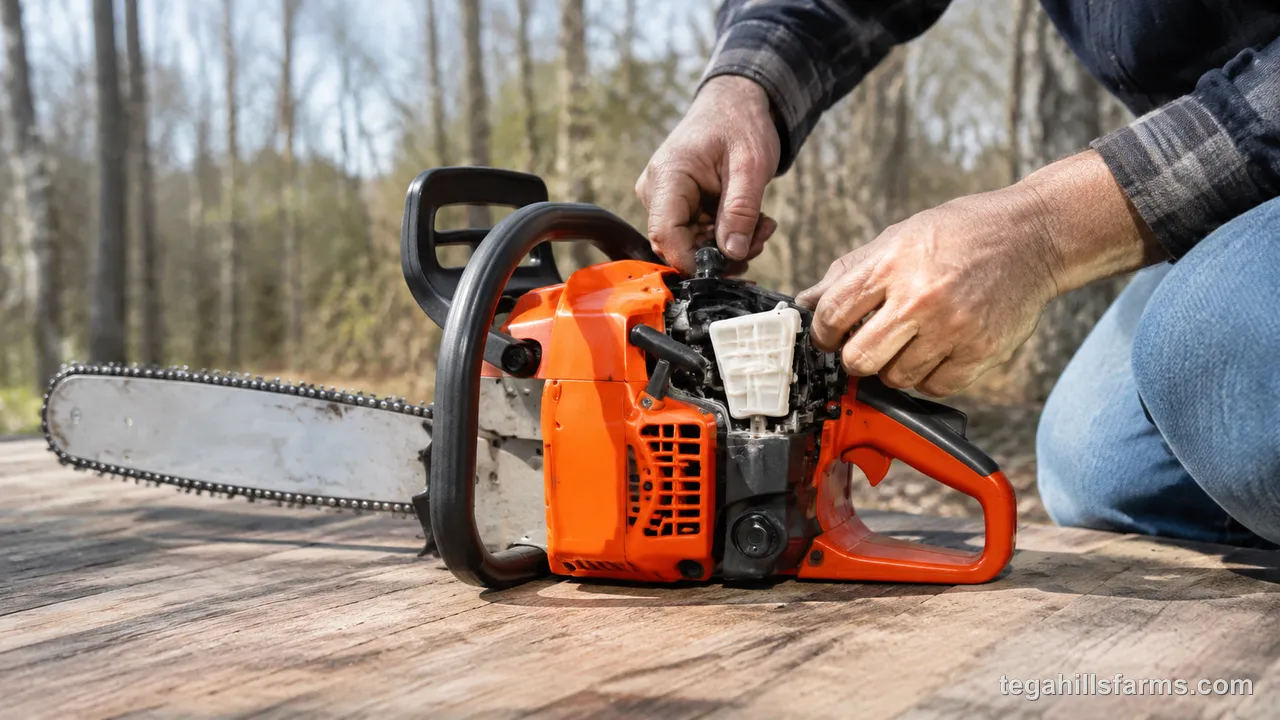
Work through these three causes in order; flooding is the fastest to fix, while repeated hard starts point to fuel system wear.
How Do You Fix a Flooded Chainsaw?
A flooded chainsaw shows strong gas smell, wet spark plug, and no pop after 6-8 choked pulls, and you fix it by clearing excess fuel with choke off and throttle wide open. The goal is to vent the cylinder.
Move the Master Control Lever to run with choke open, hold the throttle wide open if your manual allows, and pull 6-10 times with the brake engaged to push fuel out. Remove and dry the plug if it is soaked, then reinstall and try a normal warm start without priming. Prevent the next flood by using the choke only on true cold starts and stopping primer pushes once the bulb is firm.
What Else Causes Hard Starting or No Starting?
Hard starting also comes from stale fuel over 30 days old, a clogged air filter, a fouled chainsaw spark plug, or a gummed carburetor from sitting. Each restricts fuel or spark just enough to need many pulls.
Drain old mix and refill with fresh 50:1 or canned fuel, and clean or replace the air filter if you see dust packing. Check the spark plug for carbon or oil fouling and set the gap to spec; a dark, wet plug often means flooding while a white, dry plug hints at lean fuel. If the saw sat for months with fuel in the tank, varnish in the carburetor jets is common and explains why basic troubleshooting of a chainsaw won’t start often ends at a carb cleaning.
When Does Hard Starting Mean You Need a Tune-Up?
You need a chainsaw tune up when hard starting persists after fresh fuel, a clean filter, and a good plug, or when you need 8+ pulls every time. That pattern means wear has shifted fuel metering.
If the saw needs choke even when warm, idles unevenly, or dies when you blip the throttle, the carburetor, fuel filter, or impulse line likely needs service. Replace the fuel filter and spark plug, clean the cooling fins and spark arrestor screen, and have the carburetor adjusted to factory settings. For saws that sit seasonally, scheduling this before heavy cutting season restores one-pull starts faster than repeated field fixes.
You now have the full cold start and warm start sequences above, plus the safety checks and flooded-engine fixes that keep starting reliable.
Mastering the pull is only half the job, because long-term starting ease comes down to micro-habits in cleaning, fuel freshness, and seasonal storage that most guides gloss over.
The sections below zoom into those overlooked details so your next start — even after weeks in the shed — feels as easy as a warm restart.
Rare Starting Killers Most Owners Overlook
Even a good cold-start technique struggles when hidden drag from a dull chain and poor storage habits raise friction and foul fuel before you pull.
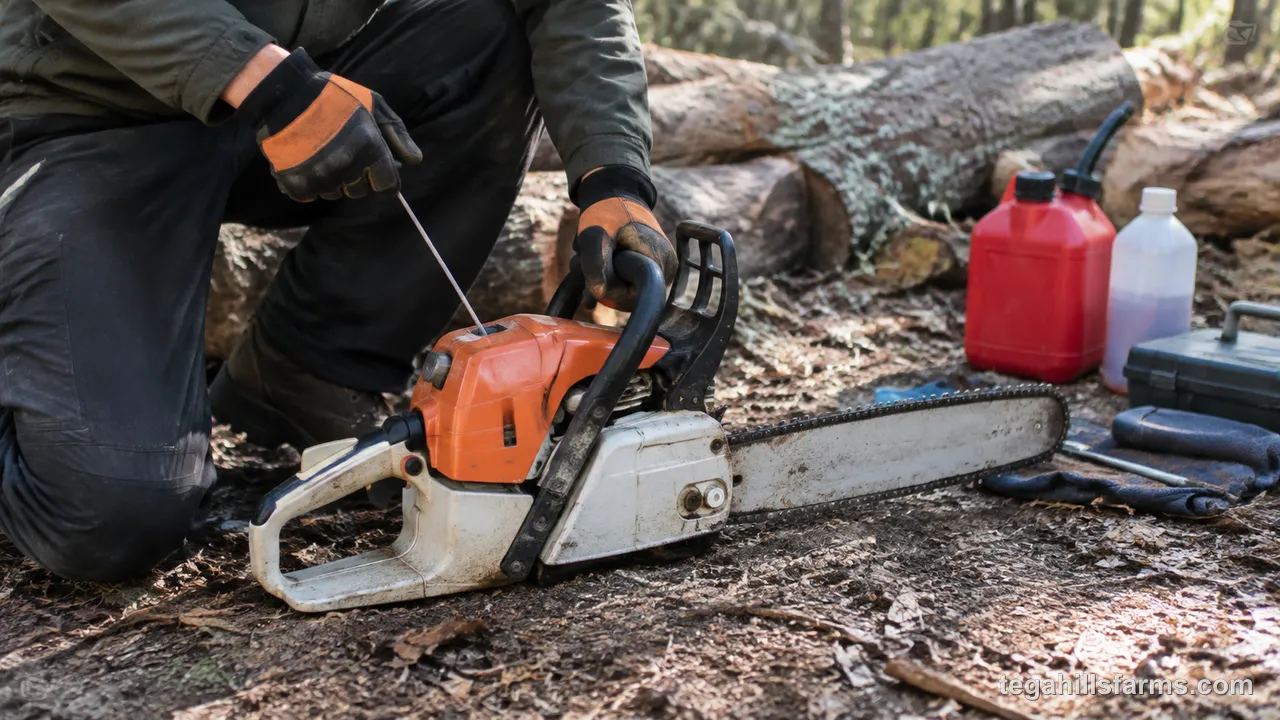
These micro-factors do not feel like starting problems, so owners chase the carburetor when the real culprit sat in the shed all winter. Addressing them keeps compression and fuel fresh.
Can a Dull Chain Make Starting Feel Harder?
Yes, a dull chain can make starting feel harder because it increases bar drag, raises load at idle, and masks as a weak engine that bogs the moment you touch wood. The engine is not weaker; the chain is fighting it.
A dull cutter needs more force to bite, so the engine labors at low rpm, vibrates more, and stalls sooner after a cold start, making you think the start failed. Sharpen or swap the chain when chips turn to dust, cutting requires leaning into the saw, or the saw pulls to one side. Keeping cutters sharp restores clean idle and makes the next pull feel lighter, even though the fix was at the bar, not the cylinder.
How Does Storage and Winterizing Affect the Next Cold Start?
Storage affects the next start because stale ethanol fuel and condensation gum the carburetor, so a treated full tank or a drained dry system starts easier than fuel left untreated for weeks. Temperature swings also draw moisture into the tank.
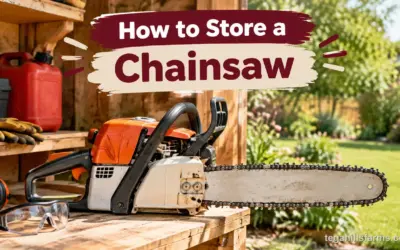
For a few weeks, fill with fresh mix dosed with fuel stabilizer and run for a minute to circulate it. For winter, either drain and run dry or store full with stabilized canned fuel, then clean the bar, chain, and air filter before putting it away. Our step-by-step on how to clean a chainsaw shows the quick wipe-down that keeps sap and fines out of the intake, and our guide on how to store a chainsaw details the fuel choice, bar covering, and cool dry placement that prevents that dreaded spring no-start.
Chainsaw Starting FAQ: Quick Answers Before You Pull
Quick answers cover the edge cases owners ask before pulling the cord — fuel type, brand quirks, and unsafe habits — so you do not undo a good start procedure.
Do gas and battery chainsaws start the same way?
No. A gas saw needs choke, primer, and pull steps, while a battery saw starts with a button and brake check and no fuel system. If the gas sequence above feels like a lot of ritual, a battery platform removes fuel and flooding entirely for light yard work.
Do STIHL and Husqvarna start differently?
The pull principle is the same, but lever labels differ. STIHL uses a combined Master Control Lever with four detents, Husqvarna often has a separate choke pull and stop switch, so check the symbol for choke closed versus run before pulling.
Is drop starting ever okay?
No. Drop starting is never recommended because the bar swings uncontrolled if the chain moves before the brake catches. Always brace the saw on the ground with your foot or knee and keep the brake engaged.
How long should I let a chainsaw warm up?
Let it idle 20-30 seconds after a cold start, then cut lightly for a minute before heavy bucking. That time lets bar oil reach the tip and the piston expand evenly, which reduces scuffing on a cold morning.
Why does my saw pop but not keep running?
A single pop then die usually means you left the choke closed too long or fuel delivery is restricted. Move to run immediately after the pop, and if it repeats, check fresh fuel, air filter, and plug before assuming a carburetor problem.


Write Your Review
No reviews yet. Be the first to share your experience!