

A clean chainsaw cuts more reliably, stays cooler under load, and avoids the premature wear that comes from packed sawdust and oil. Before you dive in, learn how that grime affects the bar, chain, and engine so you know what to target, what to use, and how often to do it.
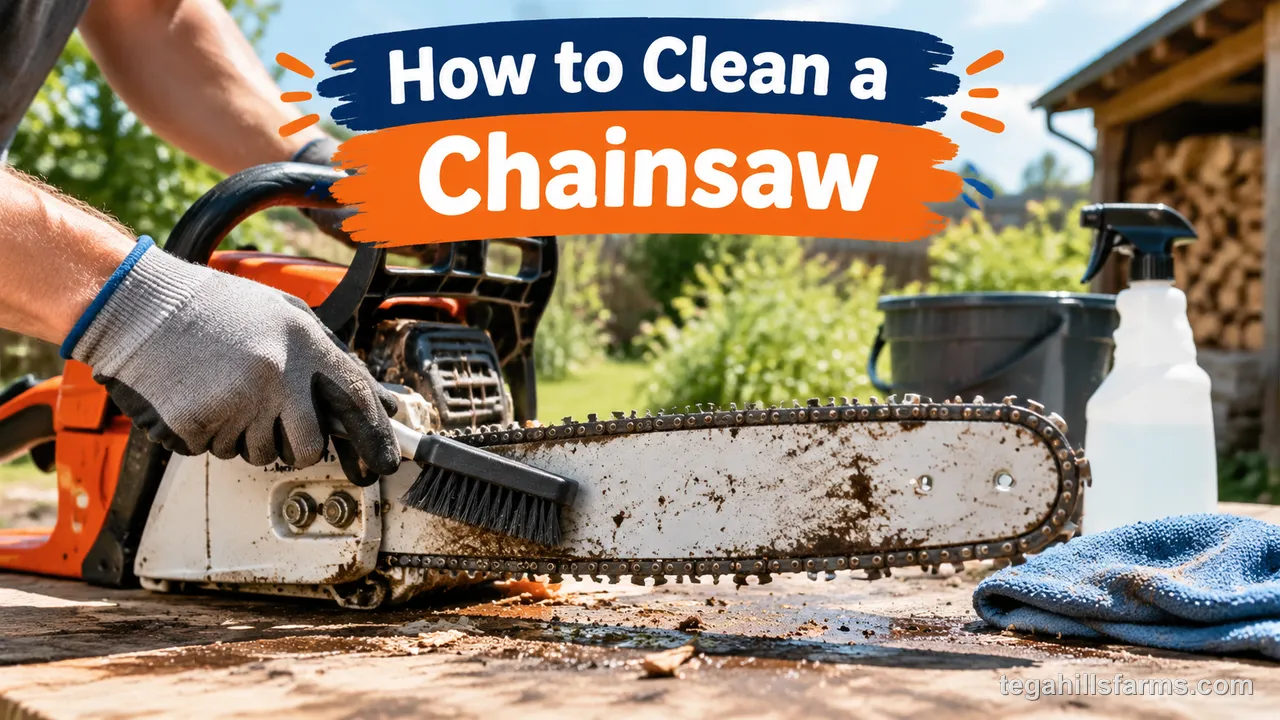
Cleaning is not just cosmetic. Sawdust mixed with bar oil forms a paste that clogs the bar groove, blocks oil holes, and insulates the engine, which raises friction and heat on every cut.
This guide walks through the safe tools and cleaners, the full after-use workflow for any power source, and the extra steps for gas models, so you can keep the saw ready without causing damage.
Below, you will find a practical, step-by-step process you can repeat after every job, plus the periodic checks that prevent hidden problems.
Why should you clean a chainsaw after every use?
You should clean a chainsaw after every use because sawdust and oil buildup, blocked oil passages, and restricted airflow accelerate wear and reduce cutting performance.
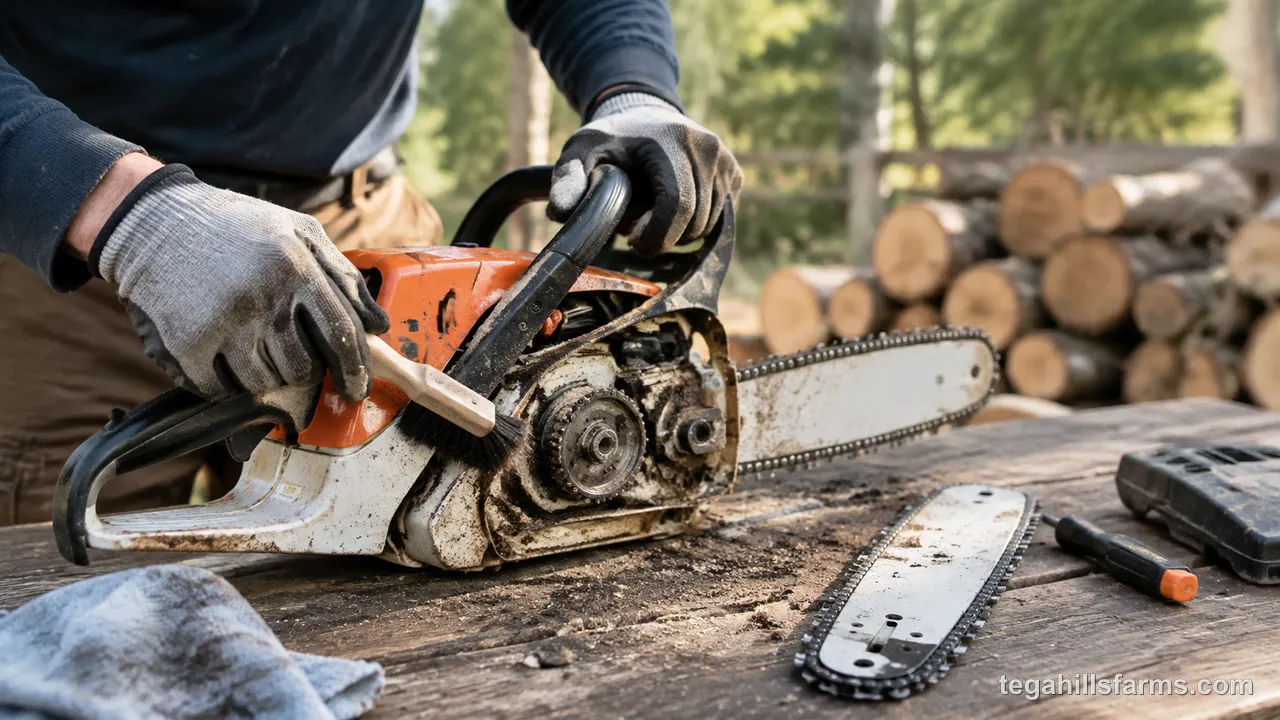
That mix of fine dust and sticky oil does not just sit on the surface. It packs into the guide bar groove, covers the sprocket area, and coats the air filter, which starves the chain of lubrication and the engine of air. The result is more friction, hotter running, faster chain dulling, and harder starts next time.
Regular cleaning also makes inspection easy. You will spot a loose chain, nicked cutter, or cracked bar before it becomes a failure. Over time, that habit directly affects how long do chainsaws last, since abrasion and heat are the two biggest life-shorteners. If you are still deciding on the right saw for your yard, see our guide on how to choose a chainsaw before diving into daily maintenance.
What tools and cleaners do you need to clean a chainsaw safely?
You need safe solvents and sprays and brushes, air, and protection to clean a chainsaw without damaging the chain, bar, or your hands.
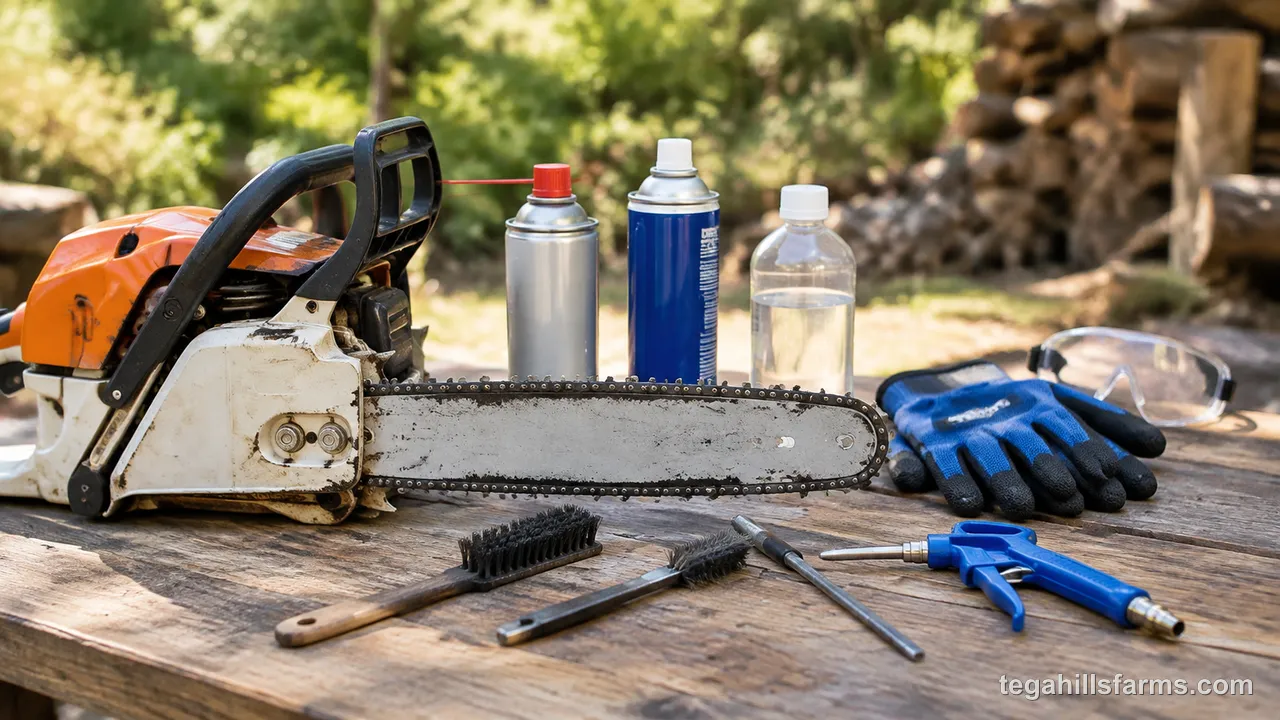
The right combination removes resin and oiled dust without stripping needed lubrication or forcing debris into bearings. The sections below separate what to spray from what to scrub and wear. For any hands-on work, review basic chainsaw safety tips and use proper chainsaw safety equipment like gloves and eye protection before you start.
Which solvents and sprays are safe for chains and bars?
Dedicated degreaser and resin remover beat household cleaners for chains and bars, while WD-40 Specialist Degreaser and similar purpose-built products are safer than harsh solvents.
A water-based degreaser or a chainsaw cleaner spray lifts oiled sawdust without attacking seals and paint. A resin remover dissolves hardened sap on the bar and chain that soap leaves behind. By contrast, strong alkaline cleaners, oven cleaners, or undiluted gasoline can dry out O-rings, strip bar oil film, and create fire risk.
For light after-use cleaning, warm soapy water on a rag is enough for the housing. For the cutting system, spray degreaser, let it dwell briefly, then agitate with a brush and wipe dry. Always re-oil the chain lightly after any degreasing so bare metal is not left exposed.
What brushes, air, and protection do you need?
You need soft and stiff brushes, low-pressure air, and gloves and eye protection to clear debris safely, especially around the air filter.
Have on hand a small nylon brush or old toothbrush for the bar groove and sprocket area, a stiffer nylon or brass brush for stubborn deposits, and a plastic scraper for packed dust. Use compressed air at low pressure or a manual blower to clear cooling slots and the air filter housing — never high-pressure air directly into bearings or seals.
Wear cut-resistant gloves when handling the chain, plus safety glasses to keep fine dust out of your eyes. A drop cloth keeps small screws and clips from disappearing, and a bar groove cleaner or thin gauge tool helps clear the rail without gouging it.
How do you clean a chainsaw after every use step by step?
Cleaning a chainsaw after every use covers preparation, bar, chain, and sprocket area, air filter, oil passages, and cooling slots, and housing and reassembly.
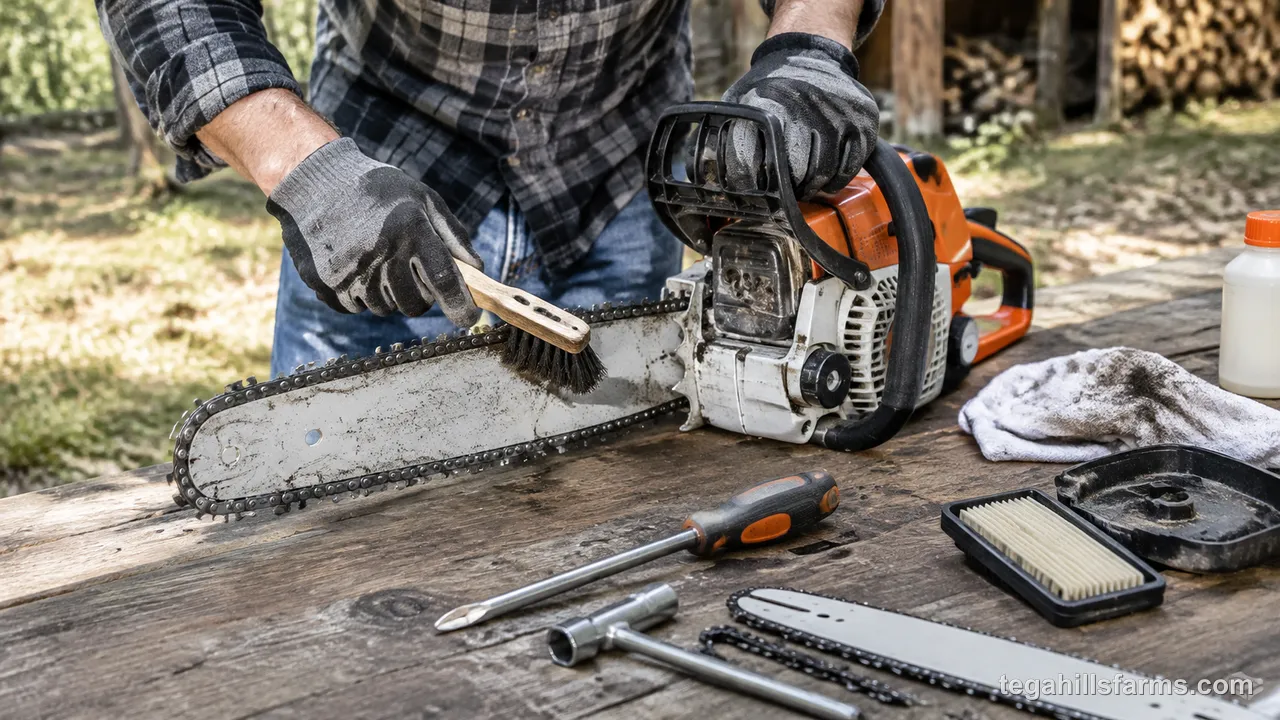
Work in that order so debris falls away from clean areas rather than into them. The steps below keep the chain oiled, the bar groove open, and airflow clear without soaking electrical or fuel components. If you already follow how to clean a chainsaw carburetor for deeper service, think of this as the routine that prevents that deeper clean from being needed. A clear air path also lowers the risk of chainsaw overheating on long cuts.
How do you prepare the chainsaw for cleaning?
Prepare by shutting down fully and securing the saw chain so it cannot move during cleaning.
For gas models, switch off, engage the chain brake, and let the engine cool until the muffler is safe to touch. For battery models, remove the battery; for corded models, unplug. Set the saw on a stable bench, brake on, and remove loose wood chips by hand so they do not fall into open ports.
Lay out brushes, rags, and cleaner nearby, and wear gloves and eye protection from the start. If the chain is hot or heavily oiled, give it a minute to cool so cleaner does not flash off and you avoid burns.
How do you clean the bar, chain, and sprocket area?
Clean the guide bar by clearing the groove, oil holes, and sprocket area where oiled dust compacts most.
Remove the side cover and lift the chain and bar off. Scrape packed dust from the clutch and sprocket pocket, then use a brush and degreaser on the cover itself. Clear the bar groove with a groove tool or thin plastic edge, pushing debris out toward the tip, and poke the oil inlet holes and bar oil slot clean with a small pin.
Wipe the chain with a rag dampened with degreaser, brushing between cutters to lift resin, then wipe dry and leave a light oil film. Inspect the bar rails for burrs and the sprocket nose for free rotation while everything is exposed.
How do you clean the air filter, oil passages, and cooling slots?
Cleaning the air filter means tapping out dust, washing only if washable, and clearing oil and air paths so lubrication and cooling stay open.
Open the air filter cover and lift the filter out without shaking dust into the intake. Tap it gently, brush off loose fines, and if it is a washable fleece or foam type, wash in warm soapy water, rinse, and let dry completely before reinstalling. Never wash a paper filter or reinstall a damp one.
While the filter is out, wipe the housing, clear the oil outlet near the bar mount, and brush sawdust from cylinder fins and cooling slots. A blocked oil passage starves the bar, and blocked slots trap heat — both show up as a hot, smoking chain.
How do you finish with the housing and reassembly?
Finish by wiping the housing dry and reassembling with the oil inlet hole aligned and chain tension set correctly.
Wipe the body, handles, and side cover with a soapy rag, then dry — avoid soaking switches, vents, or battery contacts. Reinstall the bar, ensuring the oil inlet hole lines up with the saw’s oil outlet, loop the chain around the sprocket, refit the side cover, and tension the chain so it pulls freely but does not sag below the bar.
Add bar oil if low, run the chain brake check, and briefly run the saw to confirm oil slings lightly off the tip. Wipe any excess oil so it does not attract dust in storage.
How does cleaning differ for gas, battery, and electric chainsaws?
Gas chainsaws need extra fuel and exhaust care, while battery and corded electric models need dry, contact-safe cleaning around batteries and motors.
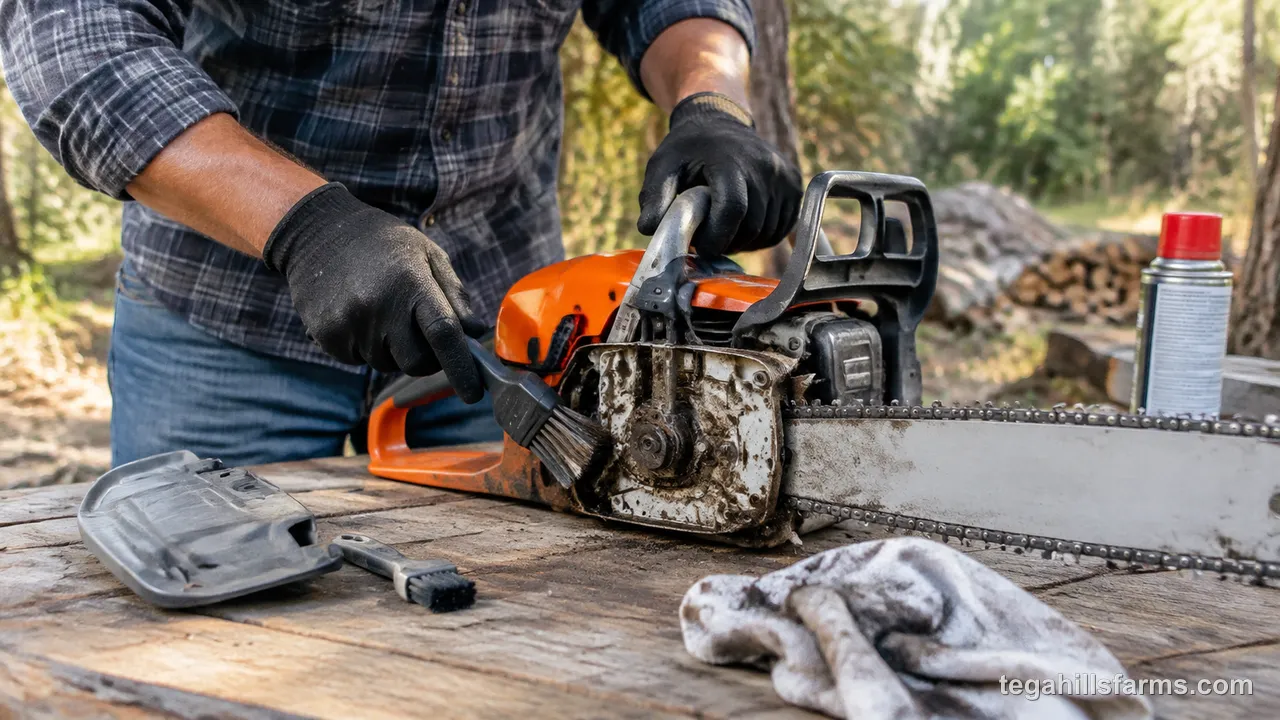
The cutting system cleans the same on all types, but what you avoid getting wet and what residue you remove changes. Gas saws leave carbon and fuel film; electric saws are sensitive to moisture at terminals and vents. Choose the steps below for your power source to avoid both contamination and corrosion, and remember that seasonal care like how to winterize a chainsaw builds on this routine. A quick look at the chainsaw spark plug during deep cleans also tells you if the air filter is doing its job.
What extra steps does a gas chainsaw need?
A gas chainsaw needs fuel-system and exhaust attention in addition to the standard bar and air filter clean.
Wipe any fuel spills immediately and keep cleaners away from the fuel cap and tank vent to avoid drawing solvent into the tank. Brush sawdust from around the muffler and spark arrestor screen once cool, since carbon and oiled dust bake on there. If you remove the spark plug for inspection, brush debris away from the plug well first so grit does not fall into the cylinder.
Drain or stabilize fuel only as part of seasonal storage, not daily cleaning. For daily care, just keep the area around the pull starter, fuel cap, and air intake free of oily dust so starts stay easy.
How do you clean battery and corded electric models?
A battery chainsaw requires no fuel handling and no liquids near battery contacts or motor vents.
Remove the battery and wipe its housing and contacts with a dry cloth — never spray cleaner directly on the battery or its compartment. For the saw body, use brushes and a slightly damp rag, keeping moisture out of the motor housing, switch, and charger port. For corded models, unplug and apply the same dry-first approach, clearing vents with a soft brush or low-pressure air.
After cleaning, store the battery separately in a dry place and leave the bar lightly oiled. Avoid compressed air at close range on electronics, and never hose down an electric saw.
How often should you clean your chainsaw beyond a quick wipe?
You should wipe the housing and bar after every use and deep-clean the bar groove, sprocket, and air filter every 3 to 5 hours of cutting or sooner in dusty or sappy wood.
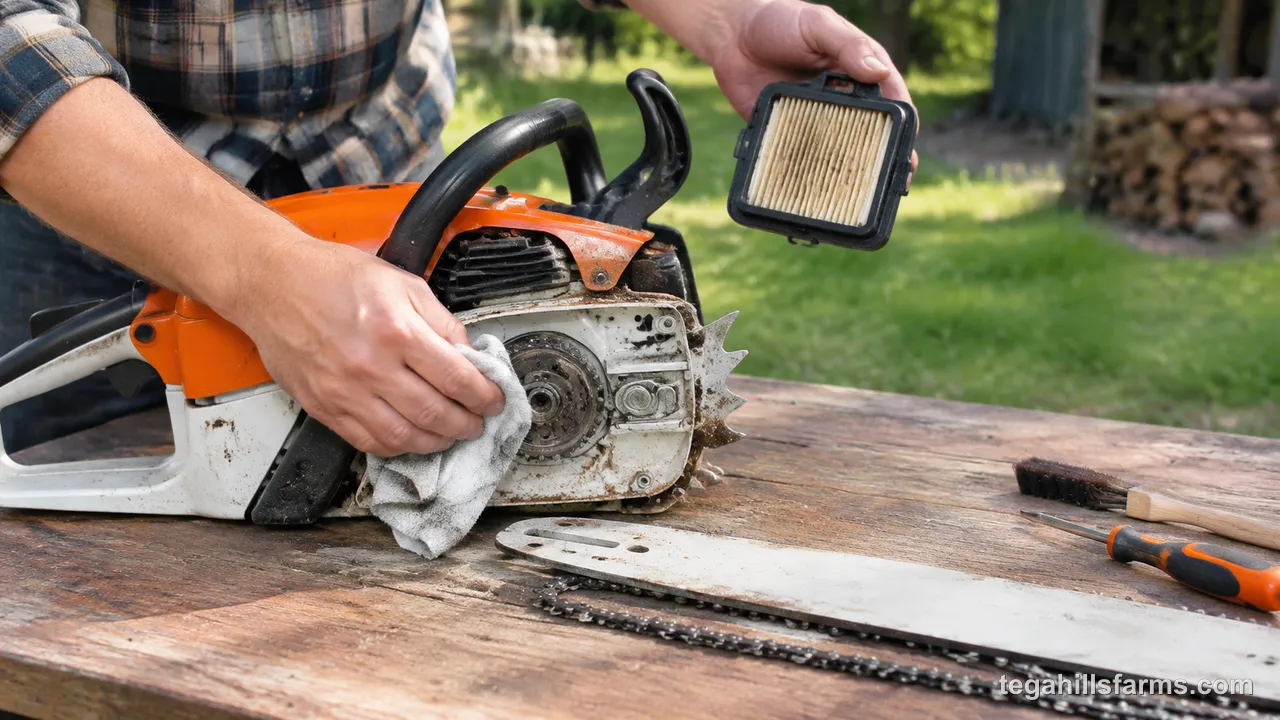
The quick after-use wipe prevents oil and dust from hardening. The periodic deep clean resets the parts that affect performance most. If you cut resinous pine, very dry hardwoods, or on sandy ground, shorten the interval — that dust is more abrasive and that sap sets faster.
Sync cleaning with other maintenance: check chain tension each use, and pair a deep clean with a chainsaw tune up checklist and a check of how to sharpen a chainsaw when cutters look dull. That rhythm keeps cuts straight and reduces load on the motor.
What common cleaning mistakes should you avoid?
Avoid soaking electrical parts, using harsh solvents, and reassembling with wrong chain tension because each causes damage or a chainsaw won’t start.
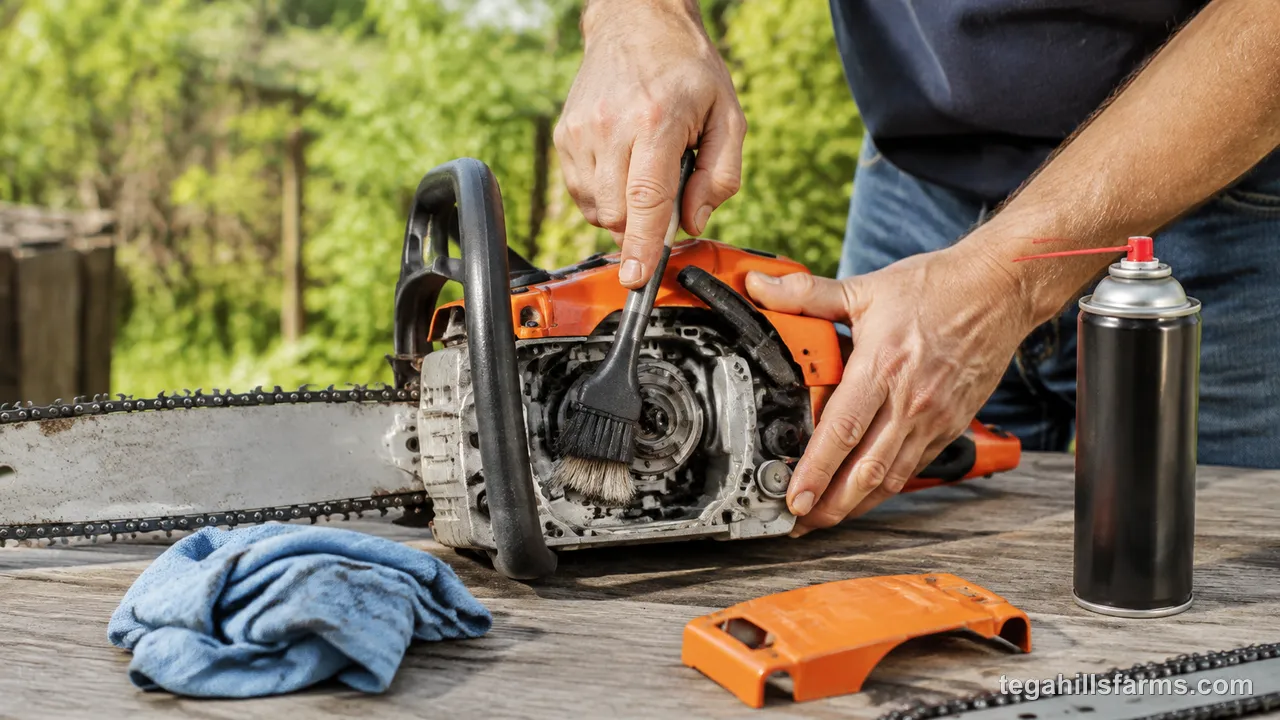
Common missteps include pressure-washing the saw, which drives water into bearings and the air intake; using gasoline or brake cleaner on the chain, which strips protection and risks fire; and wire-brushing the chain aggressively, which can dull cutters.
Other errors are reinstalling a wet or torn air filter, blocking the bar oil hole with gummed oil, and forgetting to learn how to tighten a chainsaw chain correctly after cleaning — too tight overheats the bar, too loose derails. Always re-oil lightly after degreasing and double-check that oil flows before the next cut.
You have seen above how a quick after-use wipe, a thorough bar and chain clean, and periodic attention to the air filter and oil passages keep any chainsaw cutting smoothly.
While that routine covers the visible wear, the rarer long-term issues come from what you do not see — trapped resin that hardens, moisture that invites corrosion, and the line between cleaning and disinfecting.
The next section zooms in on those micro-details so your cleaning prevents hidden damage and keeps the saw ready for storage.
How do you remove hardened sap and disinfect without harming the saw?
Hardened sap and disinfection need targeted resin removal and corrosion control without soaking the saw chain or bar in harsh chemicals.
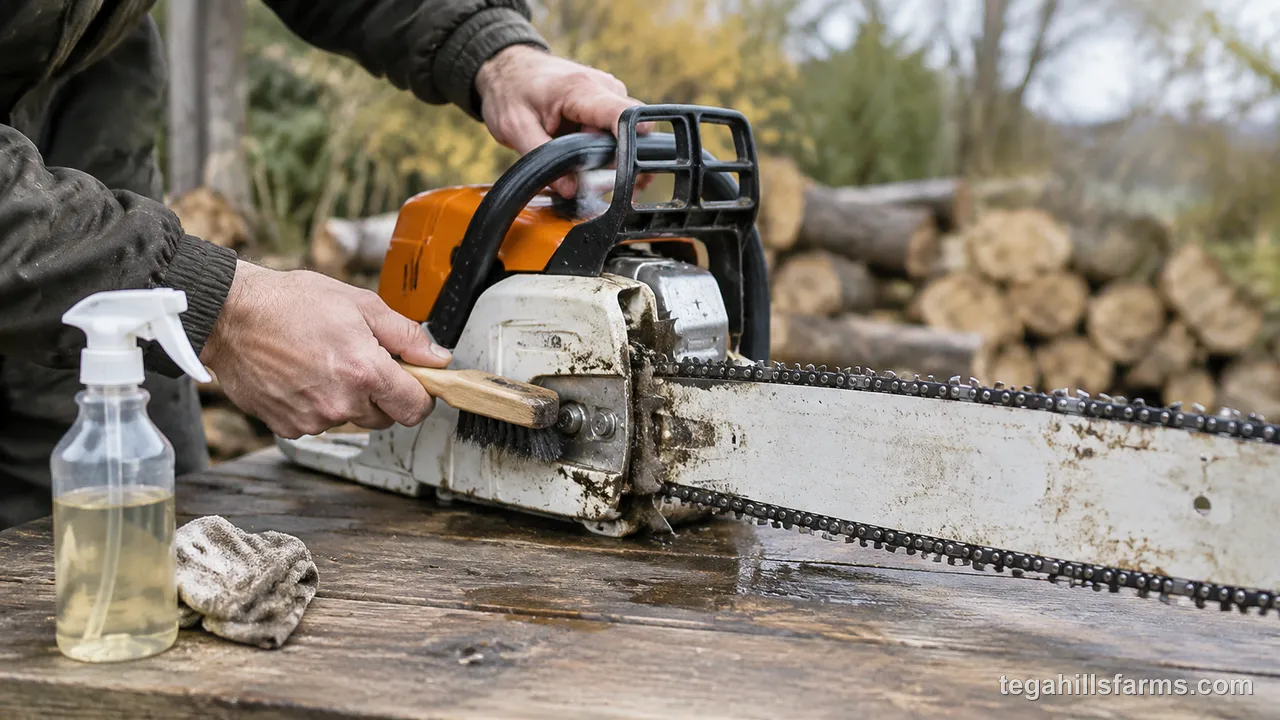
For hardened sap, apply a resin remover or citrus-based cleaner directly to the affected links and bar rails, let it soften for a minute, then scrub with a nylon brush and wipe fully dry. Avoid scraping with a steel tool that can nick chrome or rails, and always re-oil the chain after the solvent step so bare steel does not flash-rust.
Disinfecting is rarely needed unless you cut diseased wood and want to avoid spreading pathogens to healthy trees. In that case, wipe the bar and chain with a lightly dampened cloth using diluted household disinfectant, then immediately rinse with a water-dampened cloth and dry and oil thoroughly. Never soak the chain or pour bleach into the bar groove — trapped moisture under oil invites corrosion.
For long pauses, keep the chain lightly oiled, store the saw dry, and review how to store a chainsaw so humidity and temperature swings do not undo your cleaning.
Quick answers about cleaning a chainsaw
Can I clean a chainsaw without removing the bar and chain?
Yes, you can do a quick clean without removing the bar and chain for light after-use dust, but periodic removal is still needed for a full clean.
With the saw cool and power disconnected, brush the bar groove, wipe the chain with a lightly oiled rag, and clear cooling slots and the filter cover. That handles surface dust. Every few hours of cutting, remove the bar and chain to clear packed material around the sprocket and to ensure the oil holes are open.
How do I prepare a chainsaw for storage after cleaning?
Prepare for storage by cleaning, drying, lightly oiling, and protecting the bar and chain so corrosion does not start.
After the full clean, dry all surfaces, apply a thin bar oil film to the chain and bar rails, loosen chain tension slightly if the manual suggests it for storage, and fit a bar scabbard. Store in a dry, covered space off concrete, and for advice on cases and position, see our notes on how to transport a chainsaw, which cover the same protection principles.
Can I use water to clean my chainsaw?
You can use a damp rag with soapy water on the housing, but avoid hosing the saw or soaking air and electrical openings.
Wipe and dry immediately, keeping water away from the air intake, fuel cap, battery compartment, and motor vents. After any water contact, re-oil the chain and bar lightly to displace moisture.
How often should I clean the air filter?
Clean the air filter after every few hours of heavy cutting or when you notice power loss or harder starting.
In dusty conditions, check it daily. Tap out dust, wash only washable types and dry completely, and replace if torn or deformed. A clean filter keeps the fuel mix correct on gas saws and keeps any saw running cooler.



Write Your Review
No reviews yet. Be the first to share your experience!