

Buy a wood chipper if your yard waste is mostly branches and limbs. Buy a shredder if it is mostly leaves, twigs and soft garden clippings. The two machines can look alike on a store floor, but they cut in opposite ways and leave very different piles behind.
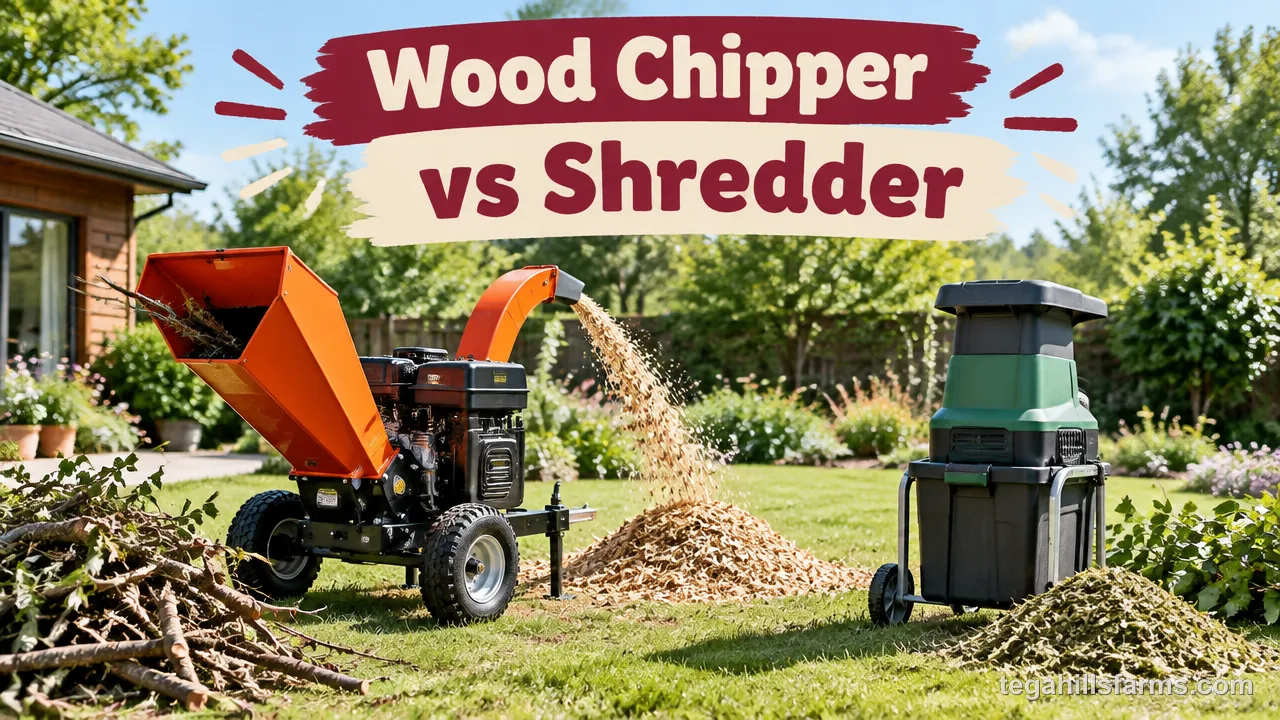
Four things decide the choice: how thick your branches run, what you plan to do with the output, whether there is an outlet near the work, and how much upkeep you will accept. These matter more than the horsepower claim on the box. A machine that can’t take your material stays in the garage no matter how strong it is.
The expensive mistake is a machine that clogs on half your debris, or one that sits idle because your waste never matches it. Combo units promise to cover both jobs, but each side has its own limits. Knowing what actually lands in your pile over a season is the best protection against a bad purchase.
What Is the Difference Between a Wood Chipper and a Shredder?
A chipper slices solid branches into coarse wood chips with sharp blades. A shredder tears leaves, twigs and soft clippings into fine mulch with swinging flails or hammers.
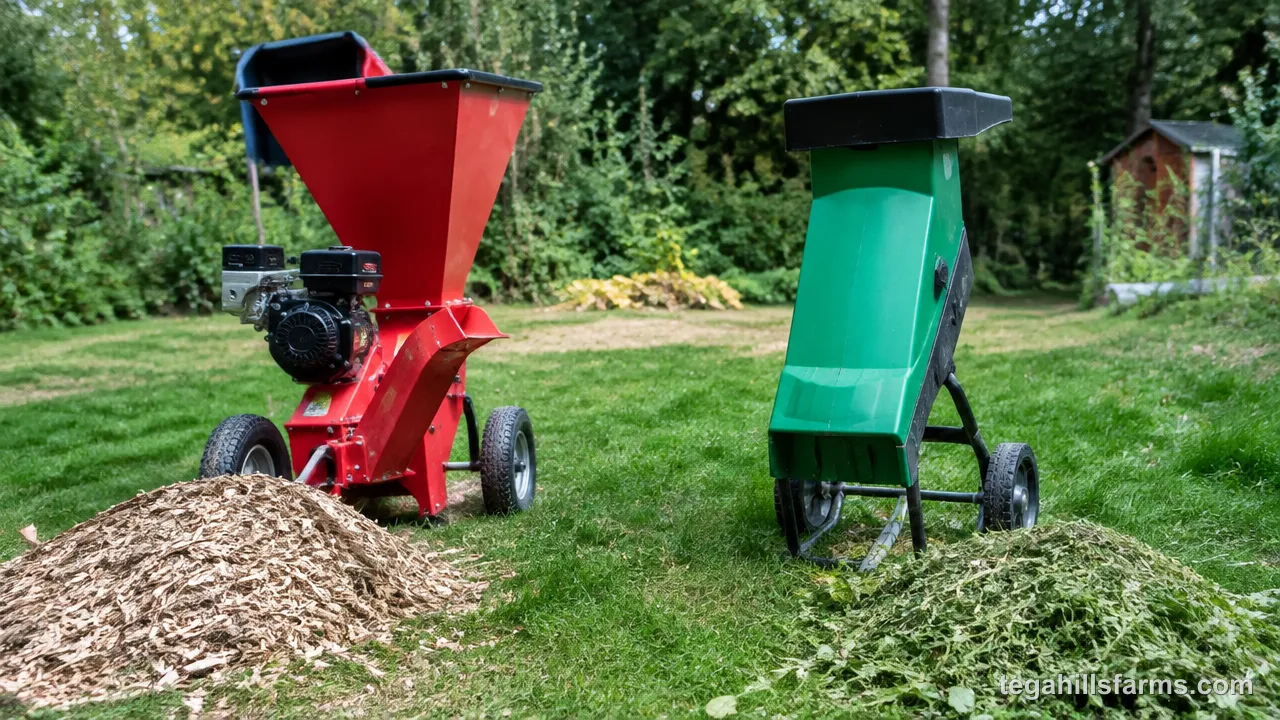
Side by side, the two machines differ on material, cutting action, branch thickness, output and usual power source:
| Criterion | Chipper | Shredder |
|---|---|---|
| Built for | Solid branches and limbs | Leaves, twigs, soft garden clippings |
| Cutting action | Blades on a drum or disc slice the wood | Flails or hammers batter the material |
| Branch thickness | Much thicker limbs | Thin twigs only |
| Output | Coarse, uniform wood chips | Fine, fluffy mixed mulch |
| Usual power source | Gas | Electric |
Retailers and forums use “shredder” and “mulcher” for machines that overlap heavily, and some electric units sold as mulchers handle only leaves. When a machine is called a mulcher, treat it as a shredder: a flail or hammer machine meant for leafy, soft material. A chipper always means a blade machine built for wood. A chipper shredder combo puts both systems in one frame.
If you’re still comparing models beyond these two machine types, our guide on how to choose a wood chipper walks through the rest of the decision.
How Do a Chipper and a Shredder Cut Material Differently?
The cutting action is sharp blades that shear on a chipper and flails that batter on a shredder. That difference sets each machine’s branch limit, output texture and wear pattern. A machine built to slice wood handles leaves badly, and a machine built to tear leaves handles wood badly, so the cutting method explains most of the comparison that follows.
How Does a Wood Chipper Slice Branches?
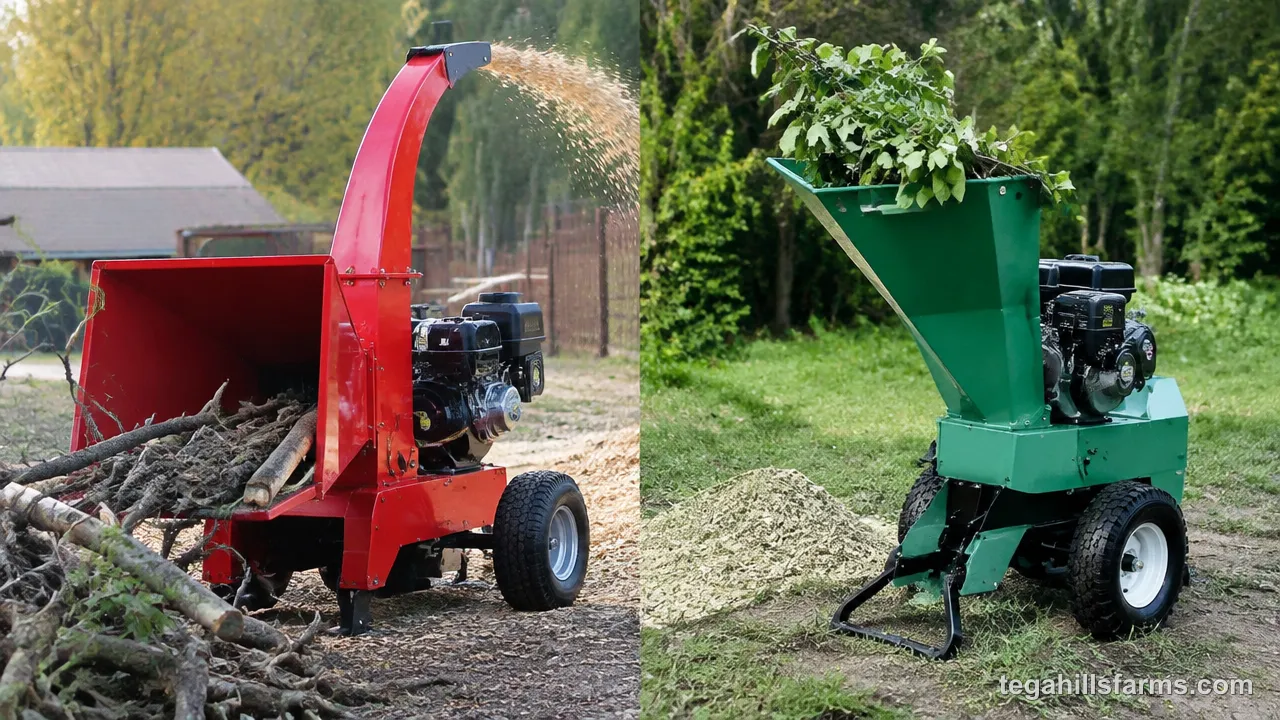
A wood chipper has sharp blades mounted on a spinning drum or a heavy disc. They shear branches across the grain, much like an axe taking a slice off a log. You feed limbs into an angled infeed chute. On larger machines, powered rollers grip the branch and feed it to the cutters at a steady pace. Gravity-fed homeowner units rely on the slope of the chute and the bite of the blades to pull the wood in.
Slicing only works on a rigid target. A solid branch holds still long enough for the blade to cut it cleanly, which is why chippers handle thick wood well. Loose leaves give the blade nothing to push against, so they flutter, pack into the chute and blow back out instead of being cut. The chipper is the right machine whenever your waste is solid wood. On soft, loose material, the shredder handles what a chipper can’t.
How Does a Shredder Tear Apart Leaves and Twigs?
A shredder breaks material by impact rather than a clean cut. Inside the chamber, flails or hammers hang loosely from a spinning shaft and swing outward as it speeds up. They batter whatever drops through the open hopper until it breaks into small, ragged pieces. Leaves, thin twigs and garden clippings tear or shatter easily under that pounding, so they come out as fine mulch with little effort from you.
Thick wood is a different matter. A swinging flail can’t split a solid limb. The branch bounces around the chamber, slows the shaft, and eventually stalls the motor or wedges in place. The shredder is the better machine for leafy, mixed garden waste. The chipper takes over once branches are thick enough to resist a hammer blow.
Which Machine Handles Thicker Branches?
Branch thickness is the clearest dividing line: a chipper takes far thicker limbs than a shredder. Your actual limit depends on the machine class and on the wood itself. A manufacturer’s maximum assumes ideal conditions that a pile of storm limbs rarely meets.
How Does Branch Capacity Change From Electric Models to Commercial Chippers?
Most wood chippers are rated for branches 3–6 inches thick, depending on the model. The machine class decides where a given chipper falls:
- Electric chippers sit at the small end. They are built for pruning cuttings and light limbs, not storm debris.
- Gas-powered homeowner chippers cover the middle of the range, with enough torque to keep cutting solid wood.
- PTO-driven chippers and the largest non-industrial units often reach up to 8 inches (20 cm), because they draw power from a tractor or a large engine.
- Commercial chippers go well beyond that, depending on brand and capacity.
Shredders sit far below all of them, typically topping out at 1–2 inches of dry twigs and thin branches.
Published limits conflict because they describe different machines under different conditions. A rating usually reflects the best case: soft, straight wood fed carefully. Dense or crooked limbs bring the real limit down. If you want to size a machine against your own trees, our wood chipper capacity guide matches limb sizes to machine classes. On thickness alone, the chipper wins at every class level.
Do Green, Dead and Hardwood Branches Behave Differently in the Machine?
Dead branches can go through a chipper, but dry wood is harder on the blades than fresh cuttings. Seasoned limbs resist the cut more, especially dense hardwood like oak. The edges dull faster and the machine runs closer to its limit. Freshly cut green wood slices easily because its fibers are still moist and flexible. The same moisture, though, lets stringy bark and leafy tips wrap around the cutters and pack the discharge chute.
Dense hardwood fed near the rated limit is where most stalls and jams happen. Staying well under the maximum with that kind of wood keeps the machine cutting instead of choking.
A shredder reacts the opposite way. Dry, brittle twigs shatter cleanly under the flails, while wet green clippings mat together and clog the chamber. For dead or hard branches, the chipper is the safer choice. The shredder does best with dry, thin material and struggles once it turns wet and stringy.
What Do You End Up With: Wood Chips or Shredded Mulch?
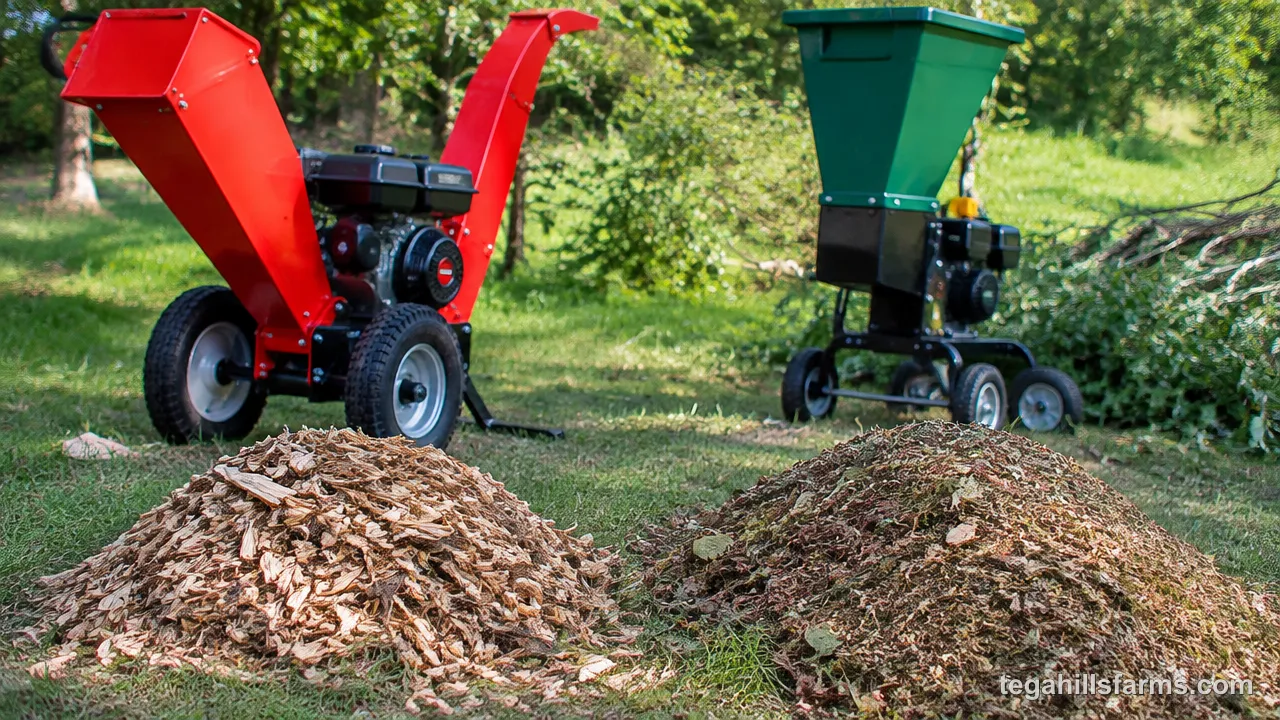
A chipper leaves coarse, uniform wood chips. A shredder leaves finer, fluffier mulch made up of whatever went in. That difference decides where the pile goes in your yard, because chips and shredded material spread, settle and break down at very different rates.
How Do Chip Size and Texture Differ Between the Two Outputs?
Wood chips typically measure ½ inch to 2 inches (1.3 cm to 5 cm). Their faces are clean because a blade sliced them off the branch. They come out fairly uniform, shovel easily, and spread in an even layer that holds its shape.
Shredded output is closer to torn confetti: bits of leaf, shattered twig and bark in mixed sizes. It is fluffy when fresh and compacts quickly once it gets wet. That mix rakes into soil easily but is harder to keep in place on a slope or in wind.
The chipper wins if you want a tidy, consistent product you can spread like bagged mulch. The shredder wins if you want fine material that blends into soil or compost.
Which Output Works Better for Mulch Beds, Paths and Compost?
Wood chips belong on paths and in thick mulch layers around trees and shrubs. Their coarse size lets water through, smothers weeds and breaks down slowly, so a path or bed stays covered a long time before it needs topping up. That slow decomposition also makes fresh chips a poor fit for a compost pile, where they linger long after everything around them has rotted.
Shredded material is the better fit for compost. Small, torn pieces give microbes more surface to work on, so they break down fast and blend easily with grass clippings and kitchen scraps. Shredded leaves count as browns, the carbon side of the pile. Balance them with greens like fresh clippings, and add more browns whenever the pile turns wet and smelly.
For paths and long-lasting beds, chipper output wins. For compost and quick soil building, shredder output wins.
Which Machine Fits a Homeowner and Which Fits a Contractor?
The type of waste you produce and how often you run the machine decide which one pays off, more than lot size alone. A light seasonal workload and a daily commercial one put very different stress on a machine. A model that suits one buyer can be wasted money or a constant breakdown for another.
Which Type Suits Small Suburban Lots and Seasonal Cleanup?
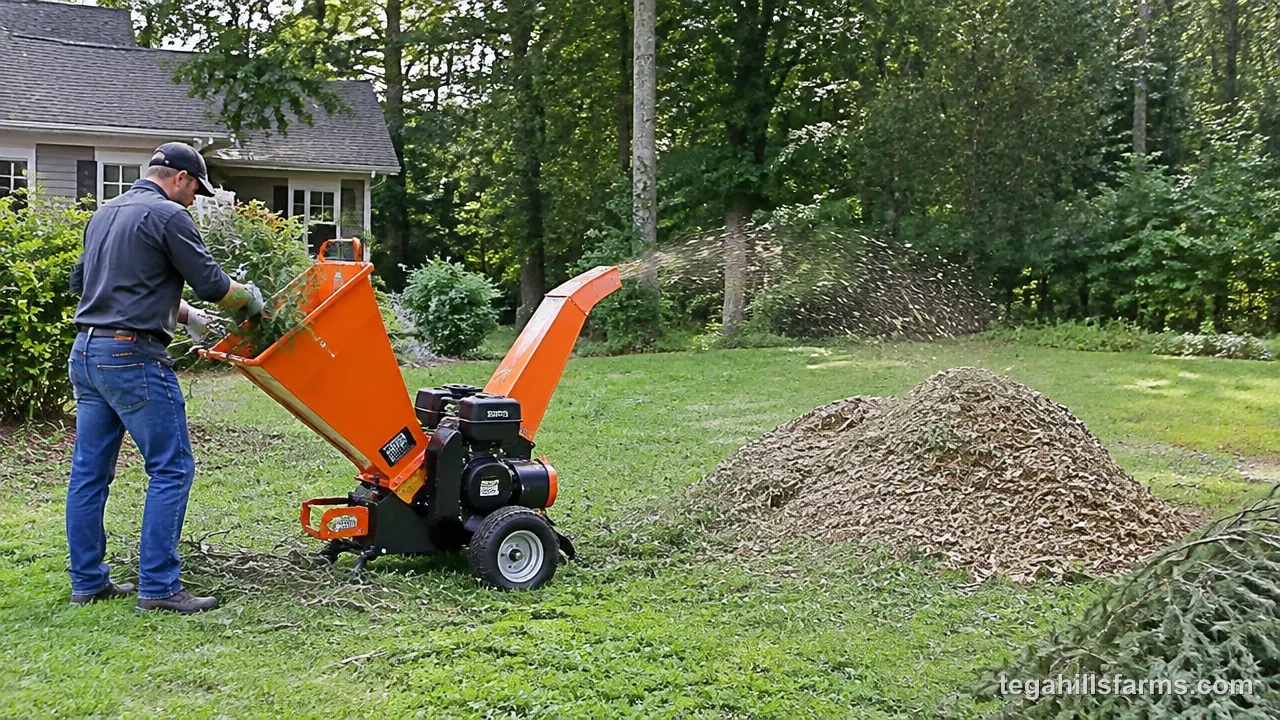
On a small suburban lot, most of the waste is leaves, light pruning and spent garden plants. That favors a shredder or a compact electric chipper. Neither needs fuel or engine upkeep, both start with a switch, and both fit in a corner of the garage or shed between cleanups.
Electric power works well when every part of the yard is within extension cord reach of an outdoor GFCI outlet. A large gas chipper on the same lot would sit parked most of the year, taking up space for the few limbs a small yard drops.
For small lots, a shredder is usually the better buy. Add a compact electric chipper only if you prune shrubs and small trees regularly.
Which Type Suits Acreage and Heavy Brush?
Larger properties produce storm limbs, fallen branches and brush piles that would overwhelm a shredder in one afternoon. A gas-powered chipper has the torque to take solid wood near its rated limit and keeps going with no cord tying it to the house. So does a PTO-driven chipper, if you already run a tractor.
A shredder alone can’t keep up with that workload. It chokes on anything thicker than twigs, and feeding a season of downed limbs through it in small handfuls turns cleanup into a job that never ends.
With acreage and trees, the chipper is the machine to own. A shredder becomes an optional second tool for leaves.
Which Type Suits Tree Services and Landscapers?
Tree services and landscapers chip all day, so they need a machine built for continuous feeding. That means powered rollers that pull whole limbs in, a heavy drum or disc that holds its momentum, and a frame built for hours of vibration and daily towing. Commercial chippers deliver that, with capacity well beyond homeowner models and wear parts designed for routine replacement.
A homeowner-grade machine won’t last in that role. Its smaller engine strains under constant load, its blades dull quickly, and its lighter frame isn’t made for road miles.
For contractors, a commercial chipper is the only sensible choice. A shredder has little role beyond occasional leaf jobs.
Is a Chipper Shredder Combo Worth Paying Extra For?
A chipper shredder combo pays off when your yard produces both branches and leaves in real volume and you want one machine to store and maintain. If your waste leans heavily one way, you pay extra for a side you will rarely use. The mix in your pile matters more than the convenience.
What Does a Combo Do Well, and Where Does It Compromise?
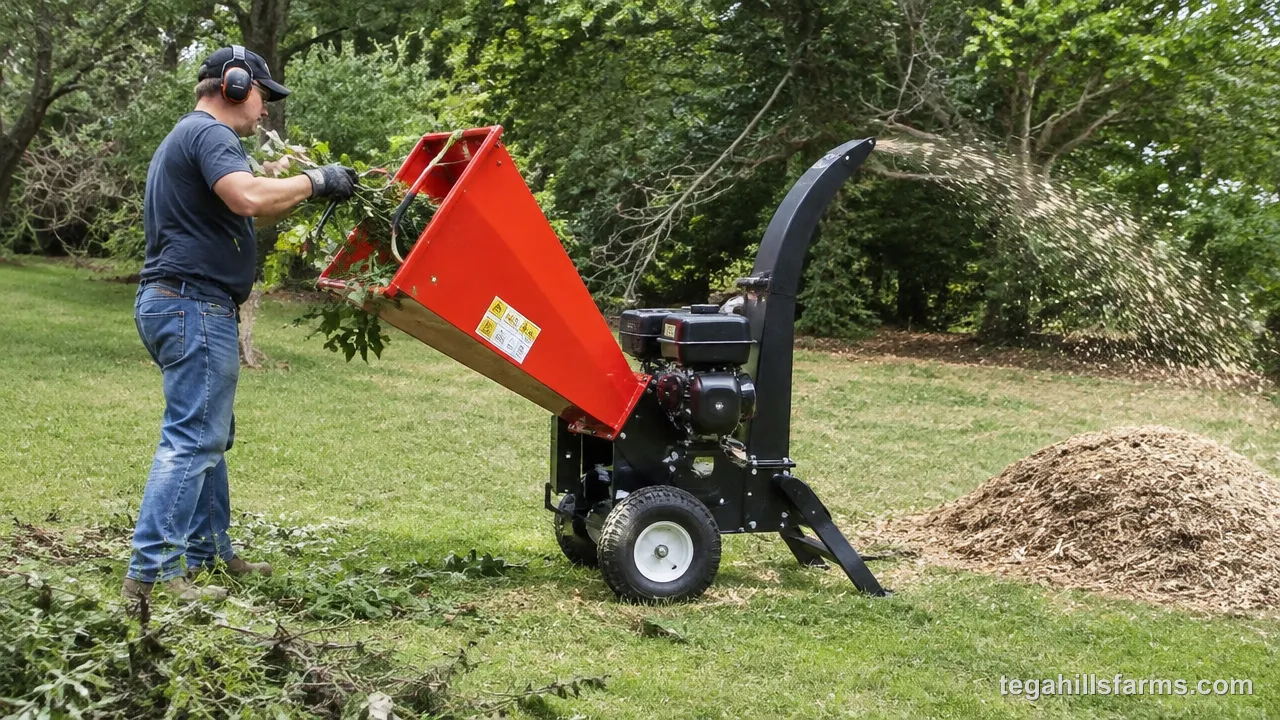
A combo has two entry points on one frame. A narrow chipper chute, angled toward the blades, takes branches. A wide shredder hopper on top takes leaves and soft clippings. Each side keeps its own limit: the chute accepts branches but rarely matches a dedicated chipper, and the hopper handles light material only.
Leaves and soft clippings usually make up the bulk of yard waste. So on most yards, the shredder side ends up processing most of the volume, and the chipper side handles the occasional limb.
That pattern affects how you should think about price. A combo costs more than a single-function shredder, but its branch side seldom reaches dedicated-chipper capacity, so the extra money buys convenience more than cutting power. Weigh that premium against how much a wood chipper costs at the size your branches actually need.
A combo wins on versatility for a mixed yard. A dedicated chipper wins once branch thickness is the main concern.
When Do Separate Machines or a Rental Make More Sense?
Separate machines make sense when both jobs are big. Suppose you clear storm limbs every year and also bag a mountain of leaves each fall. A dedicated chipper and a dedicated shredder each run at full strength, and if one breaks down you still have the other. Owning both also lets you size each machine to its job instead of settling for a combo’s middle ground.
Renting fits a one-time job better. After a single storm or a lot clearing, a rented chipper handles the pile and goes back, with no storage or winter upkeep to deal with. Before pickup, confirm the largest branch size it accepts, whether your vehicle can tow it, and what safety gear comes with it.
For repeat heavy work, separate machines win. For a single cleanup, renting beats buying either one.
Should You Choose an Electric or Gas Machine?
Shredders usually run on electricity, while chippers that take real branches usually run on gas for the torque solid wood demands. The split follows the work. Tearing leaves and twigs takes modest power, which an electric motor provides. Slicing solid branches near a machine’s limit calls for an engine that won’t bog down.
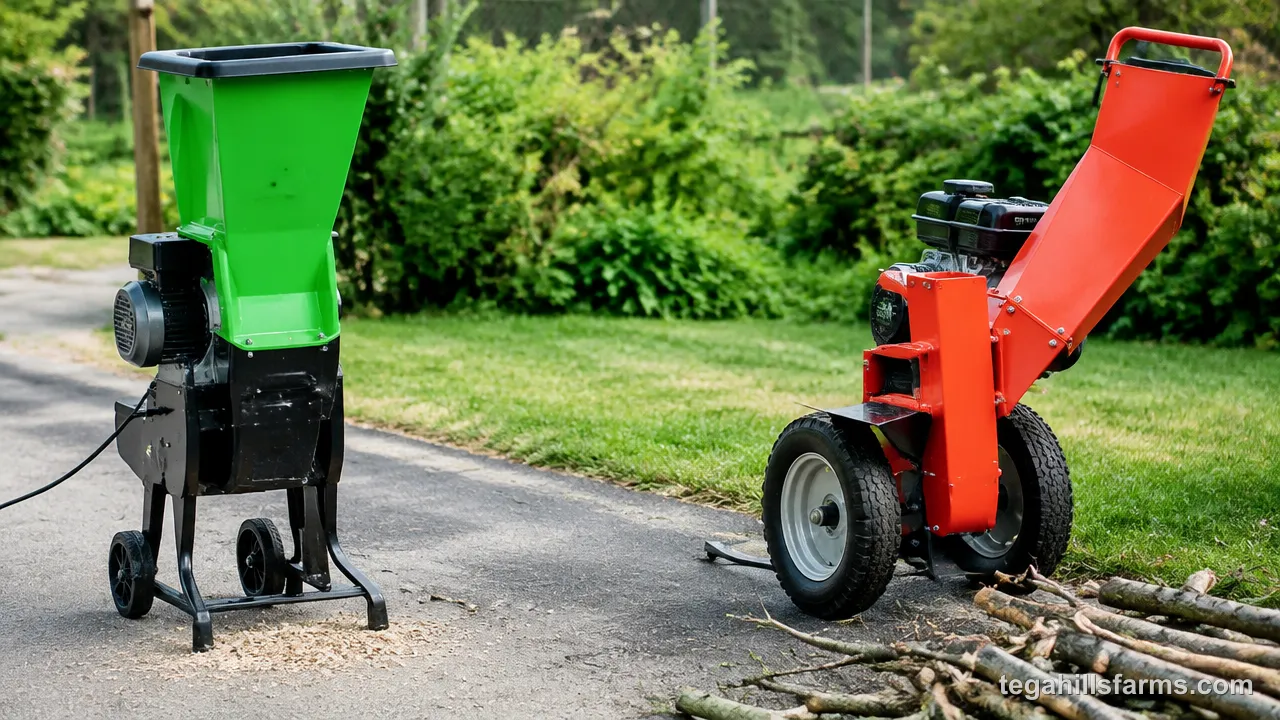
Electric machines start with a switch, run quieter and need no fuel or oil, but they stay tied to an outlet. Some electric chippers exist, though they sit at the small end on branch thickness. The cord limits how far into the yard you can work. A long or undersized extension cord can also starve the motor, so use the gauge the manufacturer specifies and plug into a GFCI outlet.
Gas machines go anywhere and take thicker wood. In exchange, they need oil changes and spark plugs, and their fuel goes stale in storage.
Electric wins on a small lot with nearby outlets. Gas wins once branches get thick or the work sits far from the house.
How Do Upkeep and Lifespan Compare?
A chipper needs you to keep the blades sharp. A shredder needs you to flip or replace worn flails and keep the chamber clear. Both machines last for years with routine care. The material you feed, and the dirt that comes with it, decides how often those wear parts need attention.
Which Wears Out Faster: Chipper Blades or Shredder Flails?
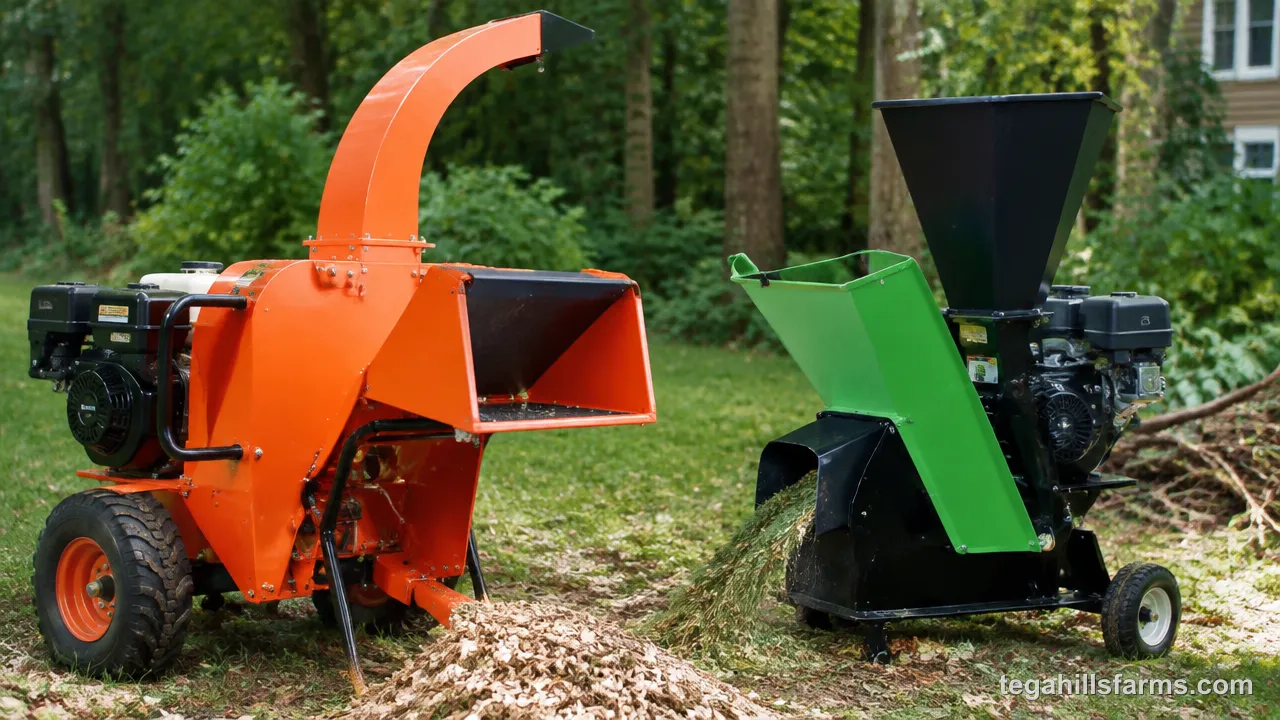
Chipper blades usually need attention sooner, and a dull edge shows up right away. The machine pulls wood in more slowly, leaves ragged, stringy chips, and works the engine harder on every branch. Blades can be sharpened more than once before they need replacing, so sharpening on a regular schedule stretches each set.
Shredder flails wear more gradually because they batter rather than cut. When they do wear, the output gets coarser and processing slows, but the machine keeps feeding.
For both machines, dirt matters more than wood type. Sand, grit and small stones caught in bark or raked up with leaves grind edges down far faster than clean material. Shake out root balls, keep soil out of the pile, and grease the bearings as the manual directs. Those habits have more say in how long wood chippers last than most spec sheets suggest.
On wear alone, the shredder is more forgiving. The chipper rewards owners who sharpen on schedule.
What Causes Jams and Hard Starts in Each Machine?
Most jams come from feeding material the machine wasn’t built for. On a chipper, wet, stringy green wood and leafy tips wrap the cutters and pack the discharge, and pushing branches in faster than the blades can cut stalls the drum. On a shredder, wet clippings and long vines mat in the hopper, and woody stems that are too thick wedge in the chamber. Dull cutters make both problems worse.
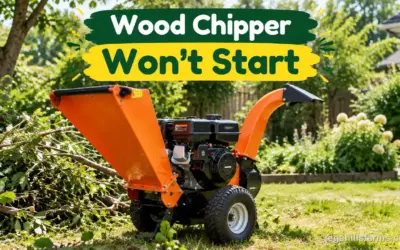
Hard starts are mostly a gas chipper problem. Fuel left in the tank over winter goes stale and gums up the carburetor, so drain it or add stabilizer before storage. If your wood chipper won’t start in spring, check for stale fuel and a fouled spark plug first. An electric shredder that won’t run usually points to a tripped GFCI, an undersized extension cord, or a safety interlock that isn’t seated.
The shredder is simpler to keep running. The chipper needs more seasonal care to start reliably.
What Should You Never Feed Into a Chipper or Shredder?
Both machines must stay clear of rocks, metal, plastic and other non-organic material, as well as palm fronds, vines and bamboo, which their cutters can’t process cleanly. Keeping those out protects the blades and flails. Safe feeding habits protect the person standing at the chute.
Which Materials Damage the Machine or Create Hazards?
Keep these material groups out of both machines:
- Palm fronds and palm branches: tough, fibrous strands wrap around blades and flails instead of breaking, then bind the shaft.
- Vines and bamboo: long vines tangle in the cutters, and hard bamboo stalks split into sharp pieces that jam the feed.
- Stones and metal: a rock or nail chips blades, bends flails, and can be thrown back out of the chute at speed.
- Plastic and other non-organic material: plastic shreds into litter in your mulch, and hidden ties or wire can snag on the cutters.
- Manure or other animal waste: it packs into the chamber and contaminates the mulch.
- Tree trunks: they exceed the capacity of most models and can stall or damage the machine.
How Do You Feed Material Safely and Clear a Blockage?
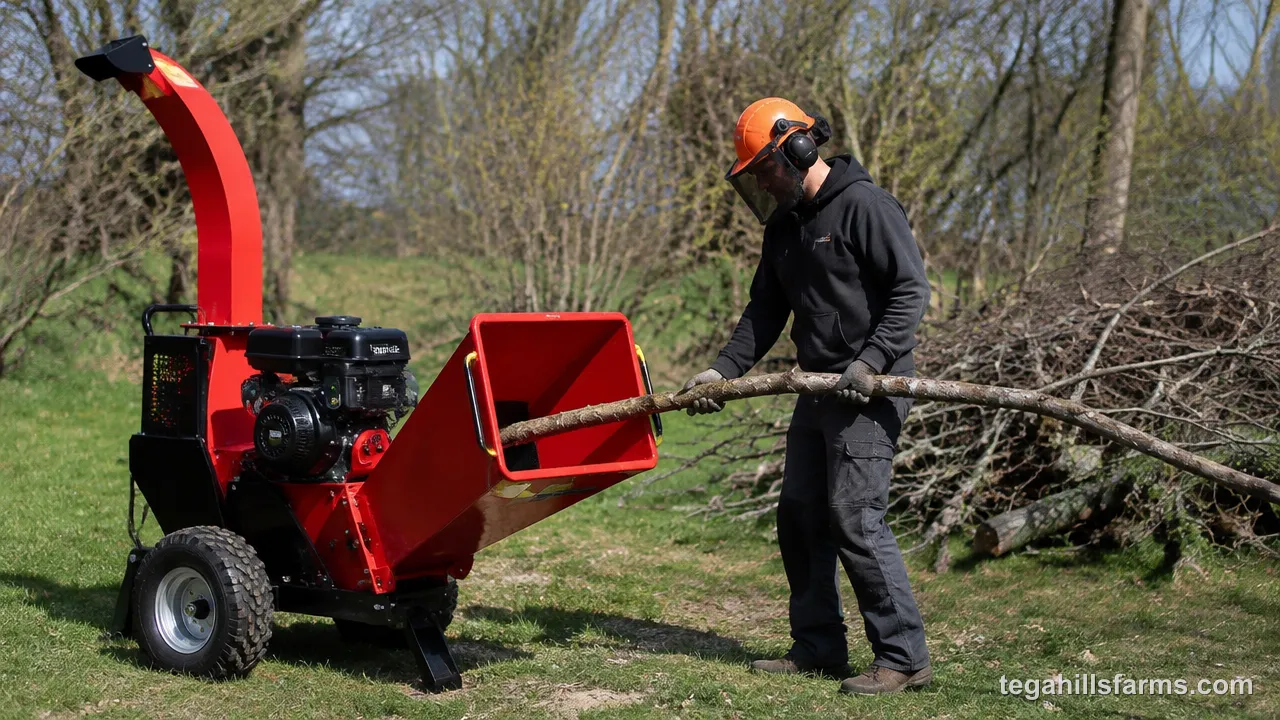
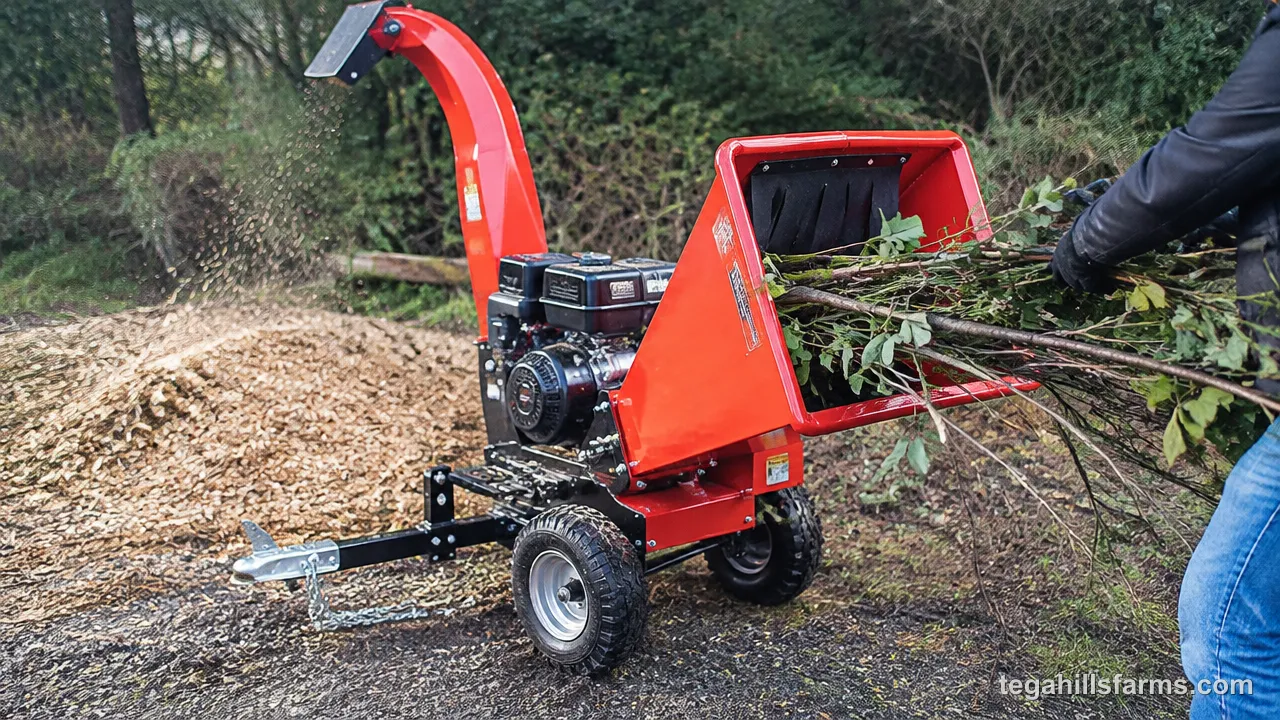
Safe feeding starts with the right gear. Wear safety glasses or a face shield, hearing protection, heavy gloves without loose cuffs, and close-fitting clothes with no dangling straps or drawstrings a feed roller could catch. Stand to the side of the chute or hopper, feed branches butt end first, and let go as soon as the machine takes hold. Push short pieces in with the next branch or a stick, never with your hand.
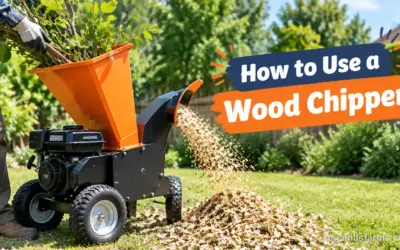
When a blockage happens, shut the machine off and wait for the blades or flails to stop completely. Then disconnect the spark plug wire on a gas model, or unplug the cord on an electric one, before reaching in. A coasting rotor can still cut, and reaching in too early is how hands get hurt. The full routine for how to use a wood chipper covers setup and feeding in more detail.
How Do You Decide Between a Chipper and a Shredder for Your Yard?
The type of waste in your pile decides first, followed by how much of it builds up and how often you’ll run the machine. Storage room and outlet access settle the rest, since a gas chipper needs floor space and a shredder needs a reachable outlet.
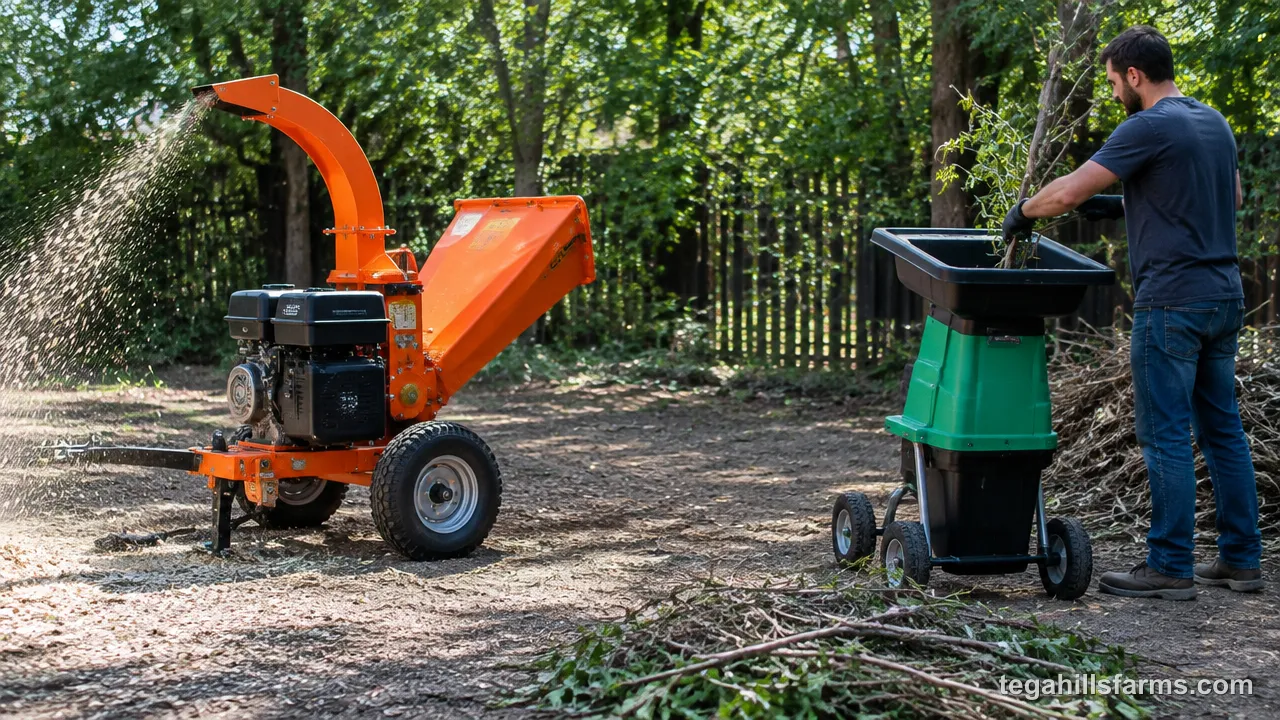
- Choose a chipper if most of your waste is branches and limbs, storms regularly drop wood in your yard, or you want chips for paths and beds.
- Choose a shredder if most of your waste is leaves, twigs and soft clippings, you compost, and you have an outdoor outlet within cord reach.
- Choose a chipper shredder combo if your yard produces both branches and leaves in real volume and you only have room for one machine.
- Rent a chipper if the branch pile comes from a single storm or a one-time clearing.
For most suburban yards I’d lean toward a shredder, and for mature trees on acreage, a gas chipper. Either machine earns its storage space only when it gets steady work.
A chipper bought for a leaf-heavy yard tends to sit in the garage while bagged leaves pile up at the curb. Every idle season makes that purchase harder to justify, and the waste still ends up hauled to a drop-off site or pushed toward a second machine you never planned to buy.
What Are the Signs You Bought the Wrong Machine?
The clearest sign is a gap between what the machine handles and what your yard drops. A chipper that sees only a few branches a year, while you bag leaves by hand, was bought for a yard you don’t have. A shredder that clogs every time you feed it pruned limbs, forcing you to stop and clear the chamber, is working above its capacity. On a combo, a chipper chute that stays clean all season, or a hopper that never sees leaves, means you paid for a side you don’t use.
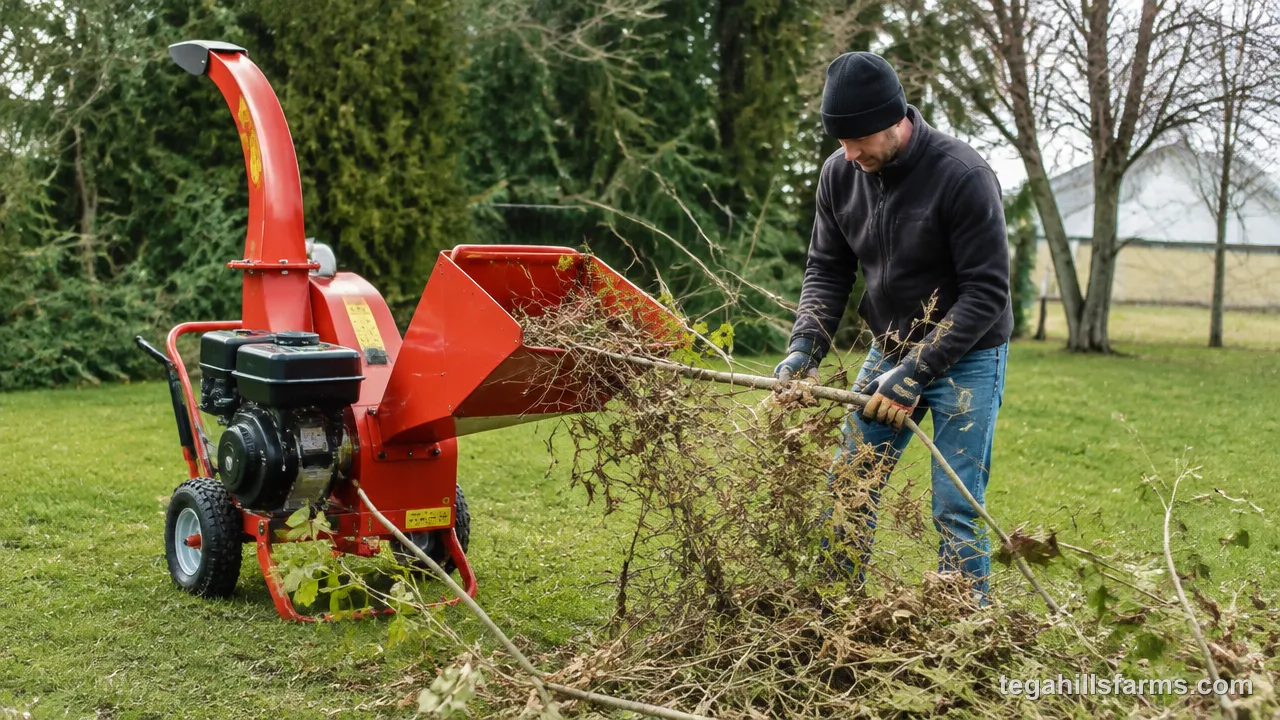
Each case has a fix short of living with it. You can sell an idle chipper while it’s still in good shape and buy a shredder instead, or keep it for storm years if you have the space. You can limit a clogging shredder to leaves and twigs and rent a chipper for the occasional branch pile. The unused side of a combo is a sunk cost, but it tells you exactly which dedicated machine to buy when the combo wears out.
Which Machine Is Quieter Around Neighbors?
An electric shredder is the quieter machine by a wide margin, because an electric motor runs far quieter than a gas engine. A gas chipper adds engine noise to the crack of branches hitting the blades, and that combination carries over fences on a tight suburban street.
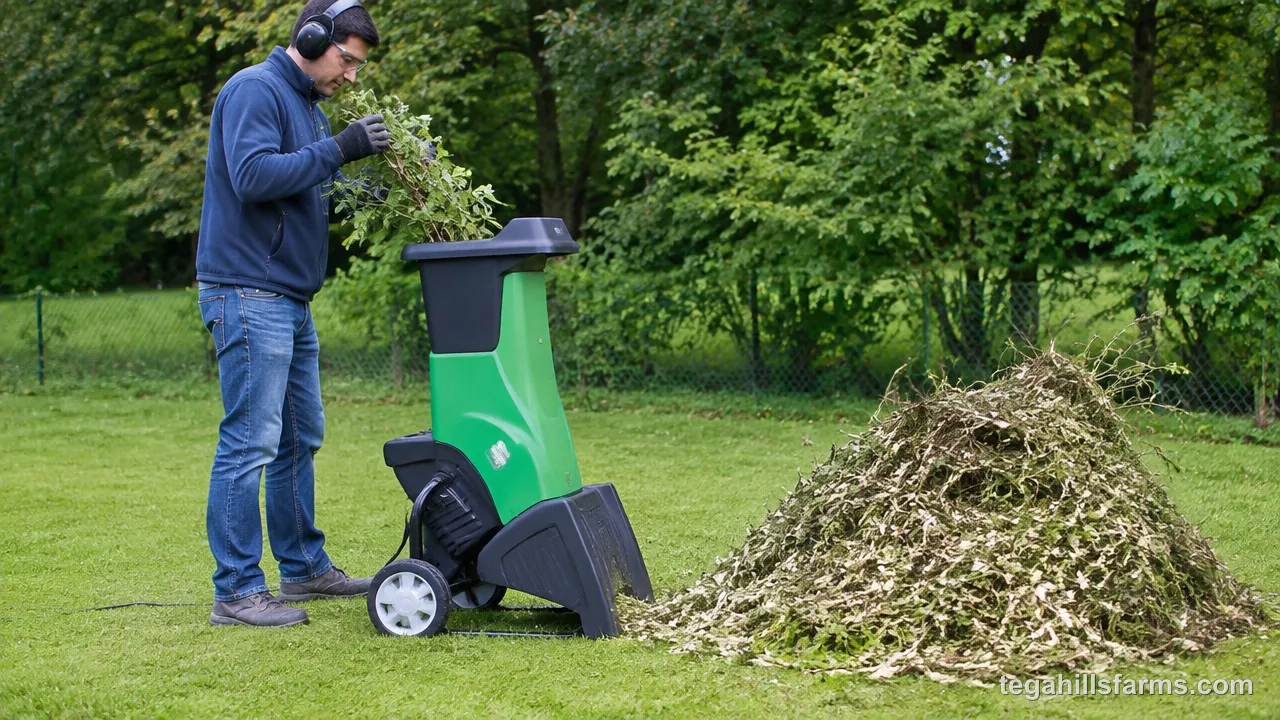
Neither machine is quiet enough to skip hearing protection. Wood and debris striking the cutters stay loud even on electric models, so wear earmuffs or plugs on every job.
Timing does as much for neighbor relations as the machine itself. Running a chipper mid-morning on a weekday instead of early Sunday goes a long way toward keeping the peace. Many towns and HOAs set hours for loud power equipment, so check your local rules before a big cleanup. On a lot close to neighbors, the noise gap is a fair reason to lean toward an electric shredder when your waste allows it.
Wood Chipper vs Shredder FAQs
Can a wood chipper handle leaves?
Not well. A chipper’s blades need a solid target, so loose leaves flutter in the chute, pack against the cutters and blow back out instead of being cut. A few leaves mixed in with branches will pass through, but a pile of fall leaves calls for a shredder, a combo’s hopper or a mower with a bagger.
Are a shredder and a mulcher the same machine?
In most cases, yes. Retailers use shredder and mulcher for overlapping machines that tear leaves, twigs and soft clippings with flails or hammers instead of slicing wood with blades. Check the stated branch capacity and power source rather than the name, since those tell you what the machine can actually handle.
Can you run wood chips through again for finer mulch?
Yes. Running chips through a shredder or a combo’s hopper breaks them into finer pieces, which blend into soil or compost faster. Feed them in small amounts so they don’t pack the chamber, and keep dirt and stones out, because grit dulls flails quickly on a second pass.
Is renting a wood chipper enough for a one-time cleanup?
For a single storm or lot clearing, renting is usually the better deal. You get a machine sized for the job without paying for storage, fuel upkeep or winter care afterward. Before pickup, confirm the maximum branch size, towing requirements and included safety gear, and stage the pile so your rental hours go toward chipping.
Write Your Review
No reviews yet. Be the first to share your experience!