How to Choose a Wood Chipper by Yard Size & Branch Type
The right wood chipper is the one whose chipping capacity matches the thickest limbs your yard drops in a normal season, paired with a power source that fits your property and how close your neighbors live. Once those two choices are settled, feed design, weight and storage space narrow the field quickly.
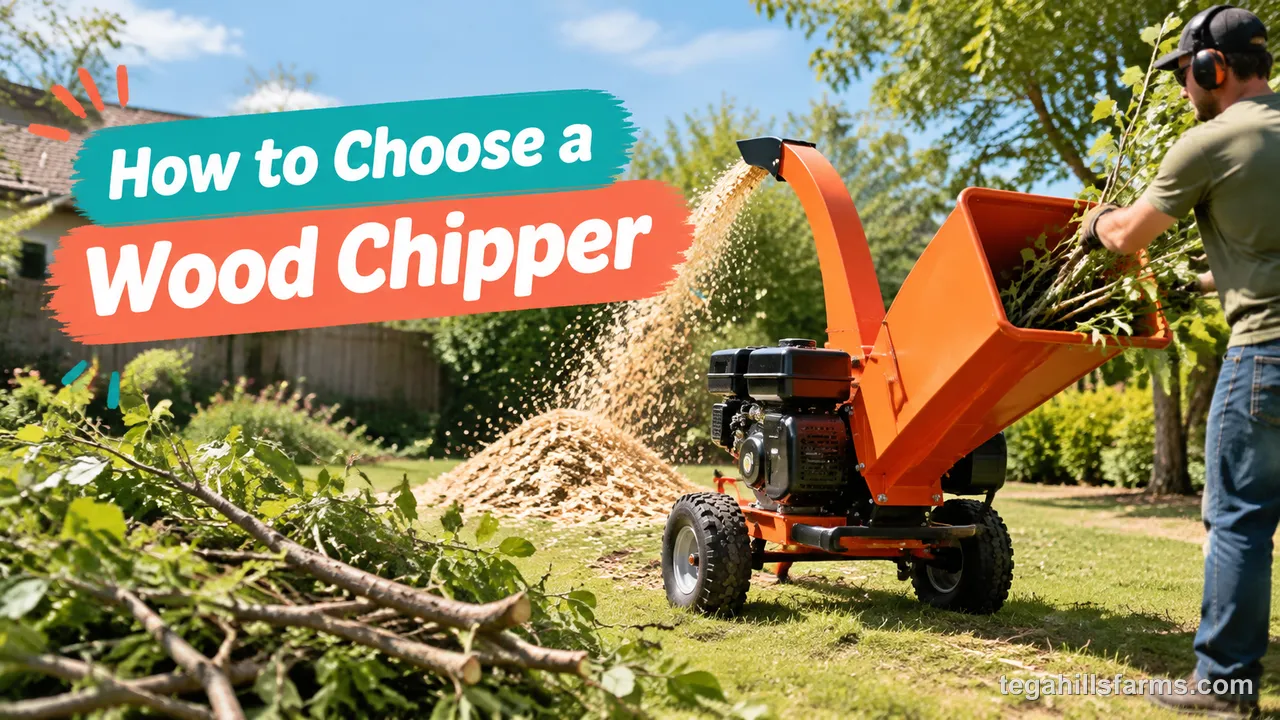
Capacity comes first because it caps everything the machine can take. A chipper rated for small limbs will not clear a fallen oak branch, however long you work at it. Power source then decides how far from the house you can work and how much upkeep you take on. The feed system and cutting mechanism decide how fast brush disappears into the hopper.
The mistake most homeowners worry about runs both ways. An undersized chipper stalls, jams and leaves a pile you end up hauling to the curb anyway. An oversized one takes up garage space and needs fuel and maintenance, even though it runs only a few afternoons a year.
Before shopping, walk the property after the next windy day and measure the thickest branches on the ground with a tape. Size around that measurement, not around the biggest tree on the lot.
What Does “Size” Actually Mean for a Wood Chipper?
Manufacturers rate chippers by maximum branch diameter, known as chipping capacity, and by the horsepower, wattage or engine displacement driving the cutters. A machine’s physical bulk follows from those two ratings. Together they set the thickest limb the machine accepts and how steadily it keeps cutting when a dense piece hits the knives. The same two ratings move a machine from one price tier to the next, so they also shape how much a wood chipper costs at each level. If you’re still comparing models side by side, the best wood chippers roundup shows how these size tiers line up with real yard needs.
How Is Chipping Capacity and Power Measured?
Chipping capacity is the largest branch diameter the chute and cutters are built to accept, listed in inches. Imported models sometimes list it in millimeters. Electric motors are rated in amps or watts, and gas engines in horsepower and cubic centimeters (cc). The two ratings rise together because a thicker branch takes more force to keep the cutters at working speed.
A few real ratings show the spread. One electric chipper uses a 4 HP (2,800 W) motor, and a compact gas model uses a 6 HP engine, yet both top out at 2 inches (50 mm). At the heavy end, a 14 HP, 420cc four-stroke engine handles branches up to 4 inches.
Corded machines reach their limit sooner because typical 110V home models draw up to 14 amps from the outlet. That ceiling holds no matter how the motor is built. To see those ratings matched against specific branch types, the wood chipper capacity guide sorts them by job.
Why Rated Capacity Is Not the Same as Usable Yard Capacity?
No, the two are not the same. The rated diameter is a ceiling, and it works best with straight, green wood that feeds cleanly. Your actual brush pile rarely looks like that.
Dry hardwood, knots, forks and crooked limbs all resist the cutters harder than a clean green stick of the same diameter. The engine bogs, the feed slows, and on a small machine the rotor can stall outright. Feeding at the limit day after day also strains the drive belt and dulls the knives faster, which adds sharpening and replacement to your upkeep.
In practice, size the chipper so most of your brush sits comfortably below the rated maximum. Save the top of the range for the occasional thick limb. If your typical branch already sits right at a model’s limit, that model will feel undersized every time you use it.
How Do You Match Chipper Capacity to Your Yard and Branches?
Choose the diameter class from the thickest limbs you cut every season and the type of debris your lot produces. That debris might be twigs and prunings, mature-tree limbs, or storm-felled wood spread across acreage. Sizing for routine debris matters because a chipper bought for a rare storm sits oversized for years. A chipper sized only for hedge clippings fails the first time a mature maple sheds a heavy limb.
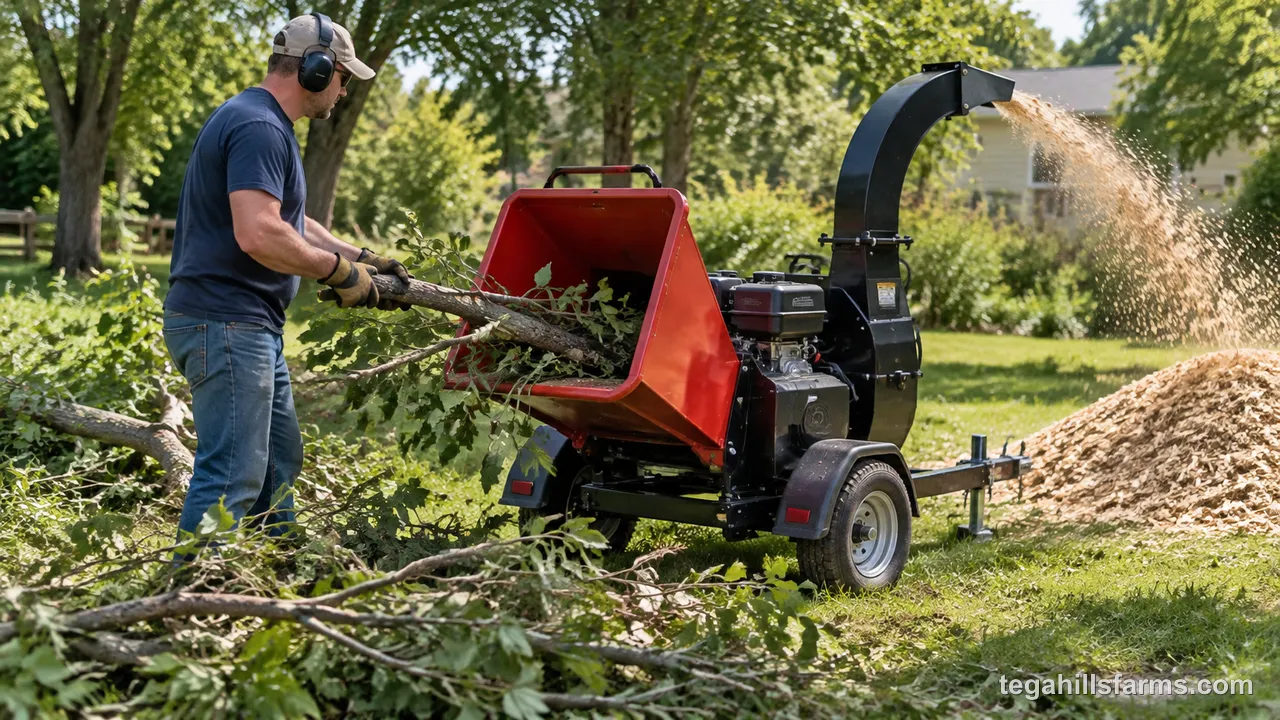
Is a Small 1.5 to 2-Inch Chipper Enough for a Suburban Lot?
Yes, for most suburban lots. General guidance treats a 2-inch capacity as enough for most home gardens, which covers hedge prunings, shrub trimmings, suckers and the small branches young trees drop.
Machines in this class are usually electric or compact gas units. They are light enough to roll from the garage to the flower beds and quiet enough for a weekend morning in a neighborhood. Their limit shows up when an established tree drops a limb thicker than the chute accepts. That piece goes to the chainsaw and the firewood stack, or out to the curb.
If your lot has mostly ornamental shrubs and young trees, this class does the job without the storage and maintenance load of a bigger machine. The best wood chippers for small yards come from this size range for that reason.
When Should You Step Up to a 3-Inch Capacity Chipper?
Step up when mature trees on your lot regularly drop limbs thicker than a small chipper accepts, every season and not only after a storm. For homeowners with established oaks, maples or fruit trees, this is usually the most practical class.
General guidance places capacity beyond 3 inches (75 mm) in serious chipping territory. That makes the 3-inch class the upper end of what stays comfortable for home use. It handles fall pruning, spring cleanup and the occasional broken limb without moving into tow-behind or tractor-powered machines.
Most chippers in this class run on gas, because a corded circuit can’t supply the power needed to drive cutters through limbs this thick. That brings oil changes, fresh fuel and a heavier machine to move around the yard. The rated-versus-usable gap still applies here. If your thickest routine limbs already approach 3 inches, look one tier higher so the machine isn’t working at its limit every session.
Do You Need a 4-Inch or Larger Chipper for Acreage and Storm Cleanup?
Yes, if you manage several acres, a small farm, wooded fence lines or frequent storm debris. Guidance puts capacity approaching 4 inches (100 mm) in the range of serious, near-professional chipping work, and the heaviest home-range engines are built to feed it.
This class pays off when volume is high and limbs are thick, such as clearing a fence row, thinning a woodlot or cleaning up after high winds take down sections of trees. The tradeoffs scale with the machine. Expect more weight, possibly towing between work sites, more engine maintenance, and a dedicated parking spot in a shed or barn.
Even at this size, a fallen trunk still goes to the saw, so match the class to limb volume rather than the largest tree on the property. For machines built around that heavy-limb workload, the best wood chippers for large branches cover this tier.
Which Power Source Fits Your Property Size and Noise Tolerance?
Corded electric suits small lots near an outlet with close neighbors. Gas handles mid-size to large lots far from power, and PTO or tow-behind units belong on acreage where a tractor or truck already works. The power source matters as much as capacity because it caps capacity. A household circuit limits electric models, gas machines scale with engine size, and tractor-driven units borrow the tractor’s engine.
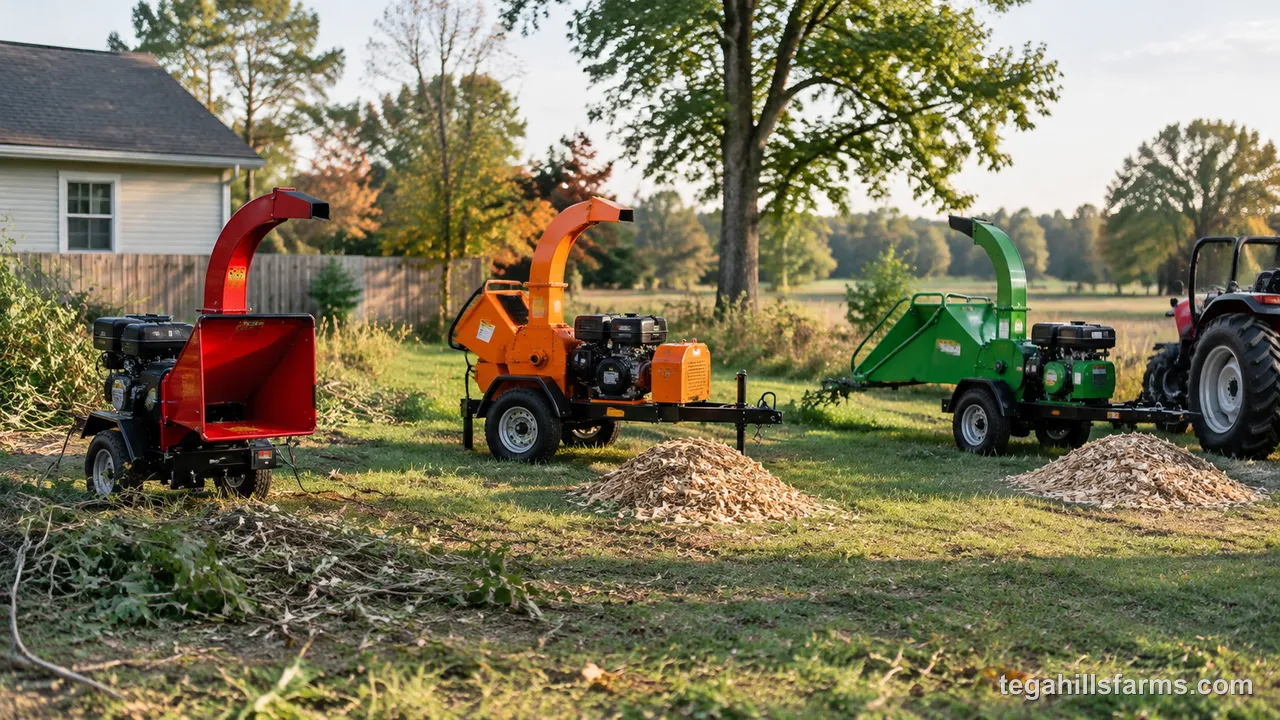
| Electric | Gas | PTO / tow-behind | |
|---|---|---|---|
| Capacity range | Light duty, small limbs | Small limbs to heavy limbs | Heavy limbs, high volume |
| Reach | Limited by cord length | Anywhere you can roll it | Anywhere the tractor or truck goes |
| Noise | Quietest | Loud | Loud, plus the tractor |
| Upkeep | Minimal | Oil, fuel, spark plug | Chipper plus tractor PTO care |
Are Electric Chippers the Right Size for Small Yards and Close Neighbors?
Yes. A corded electric chipper fits a small yard with an outdoor outlet and neighbors within earshot. It runs quieter than a gas engine and needs no fuel, oil or spark plugs, so the upkeep comes down to keeping the knives sharp.
The tradeoff is reach and capacity. The machine has to stay within cord distance of a GFCI-protected outdoor outlet. A long, thin extension cord drops voltage, so the motor works harder and runs hotter. Use the heavy-gauge cord the manual recommends and keep the run as short as practical.
Because the household circuit limits amperage, electric models sit at the light end of the capacity range. Battery-powered chippers are still uncommon and sit at the same light-duty end. For pruning-scale debris near the house, the best electric wood chippers are often the easiest machines to live with.
When Does a Gas Engine Make Sizing More Flexible?
A gas engine makes sizing flexible because capacity grows with the engine and nothing ties the machine to an outlet. Engines run from compact units that roll easily across a lawn, through mid-size engines such as 8 HP models, up to engines built for 4-inch limbs. You can match the machine to your debris rather than to your electrical panel.
Mobility is the other gain. A gas chipper goes to the brush pile at the back fence line, so you don’t drag branches to the house. On a half-acre or larger lot with trees spread across it, that saves a lot of carrying.
The cost is upkeep and noise. You take on oil changes, fresh or stabilized fuel, spark plugs and winter storage, along with a sound level that carries well past your property line. I’d only go gas when the brush pile regularly sits beyond cord reach or above what an electric model accepts. The best gas wood chippers cover the full range, from compact to heavy-duty.
Should Acreage Owners Consider PTO or Tow-Behind Sizing?
Yes, if you already own a compact or utility tractor with a rear PTO and a three-point hitch. A PTO chipper borrows the tractor’s engine, so you get heavy cutting capacity without buying or maintaining a second engine.
The fit depends on your tractor. Check the chipper manufacturer’s required PTO horsepower and hitch category against your tractor before buying, because an underpowered tractor bogs down the same way an undersized engine does.
Tow-behind chippers carry their own engine and hitch to an ATV, UTV or truck. That suits owners without a tractor who still need to reach fence lines, trails and wooded corners far from the barn. Both styles need serious storage space and add a second machine’s worth of maintenance. They make sense only when acreage and limb volume justify that commitment.
What Key Features Determine If a Chipper Fits Your Workflow?
The feed system, cutting mechanism, and weight and storage footprint decide how much of the rated capacity you actually use and how often the machine leaves the shed. Two chippers with identical capacity ratings can clear the same brush pile at very different speeds. A machine that’s hard to move or store tends to stay parked while branches pile up.
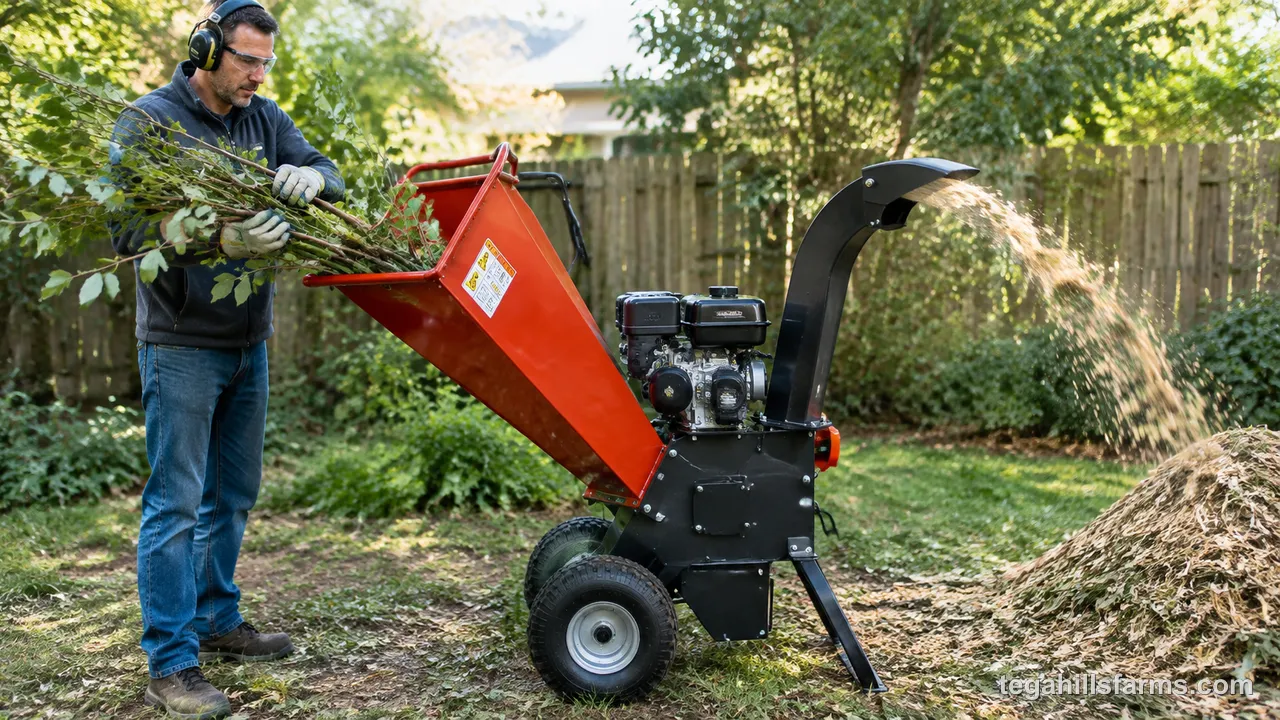
How Do Feed Type and Cutting System Affect Real-World Capacity?
Gravity feed with a disc rotor is the typical homeowner setup and works well if you’re willing to push material in. Drum cutters and powered feed rollers pull branches in on their own, which keeps throughput closer to the rated capacity on larger machines.
A disc chipper mounts its knives on a heavy flywheel. The flywheel’s momentum helps carry the knives through a dense branch, and the result is fairly uniform chips that work well as mulch. With gravity feed, you guide each branch down an angled chute. Bushy, forked limbs can catch at the opening and need trimming before they’ll go in.
A drum chipper uses a rotating drum fitted with knives that grabs the branch and draws it forward. That aggressive self-feeding moves volume quickly, which is why the design shows up mostly on bigger, heavier units.
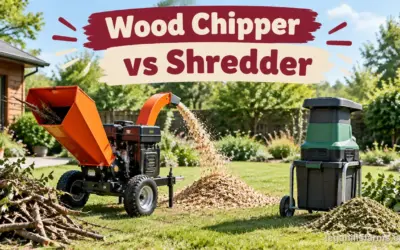
Leafy, soft debris behaves differently from woody limbs. If most of your debris is leaves and garden waste, settle the question of wood chippers vs shredders before choosing a cutter style.
How Do Safety, Weight and Storage Change the Right Size for Home Use?
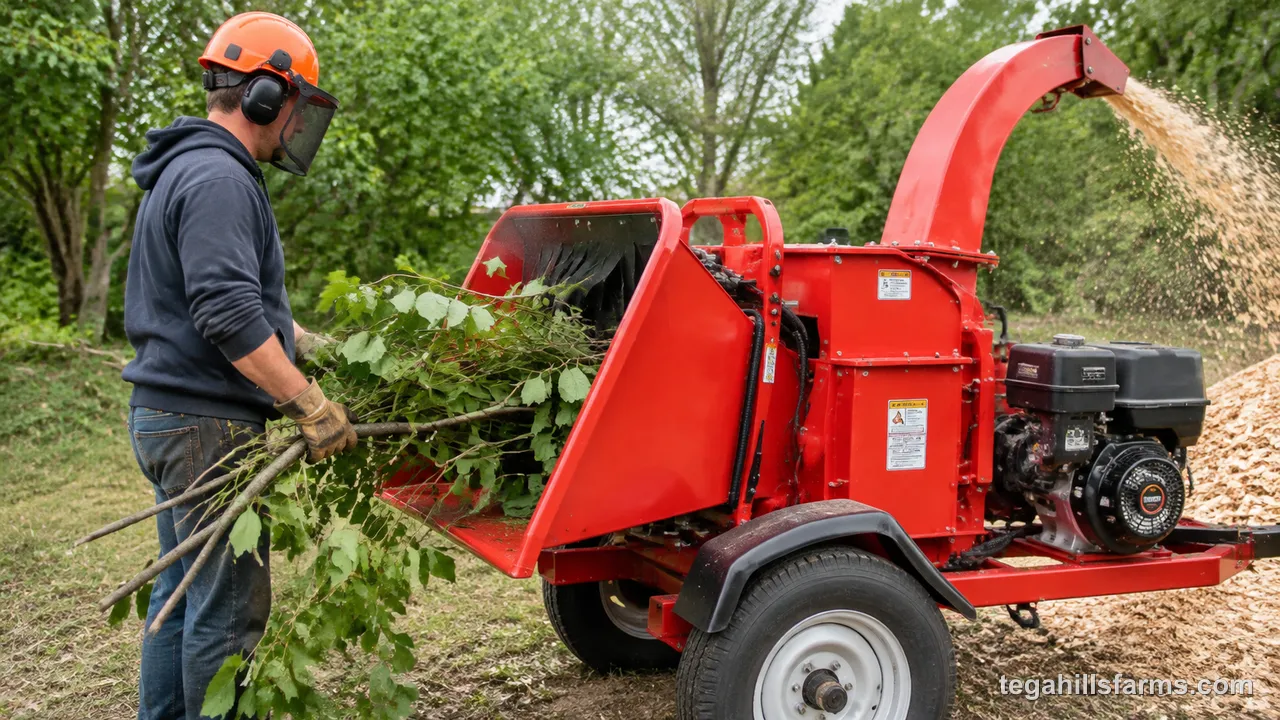
A home chipper should keep your hands well away from the cutters through a long feed chute and have a shutoff you can reach quickly. You should also be able to move and store it without help. A bigger model that fails those tests is the wrong size for you, even if its capacity looks right.
Weight decides how often you use the machine. A compact gas model weighs around 84 lb (38 kg), which one person can roll on two wheels across flat ground. Heavier machines need towing or a second person, and on sloped yards that changes whether the chipper reaches the brush at all.
Storage matters just as much. Check garage or shed floor space before buying, and count the fuel can and safety gear too. Eye and hearing protection, gloves and snug-fitting clothing belong with the machine. Learning how to use a wood chipper safely before the first load matters as much as any guard built into the frame.
A gas chipper bought for one storm can spend the following seasons parked behind the mower while its fuel goes stale and its carburetor gums up. An undersized machine causes the opposite problem, stalling on every other limb until the brush pile takes over a corner of the yard. Either mistake shows up months after the purchase, as repairs, rental fees or the curbside hauling you bought the chipper to avoid.
How to Avoid Sizing Mistakes That Waste Money, Space and Time?
Most sizing mistakes come from buying for the worst branch you can imagine or for the lowest price you can find. Each fails in a predictable way. An oversized chipper wastes storage space and upkeep, and an undersized one wastes time and wears out early.
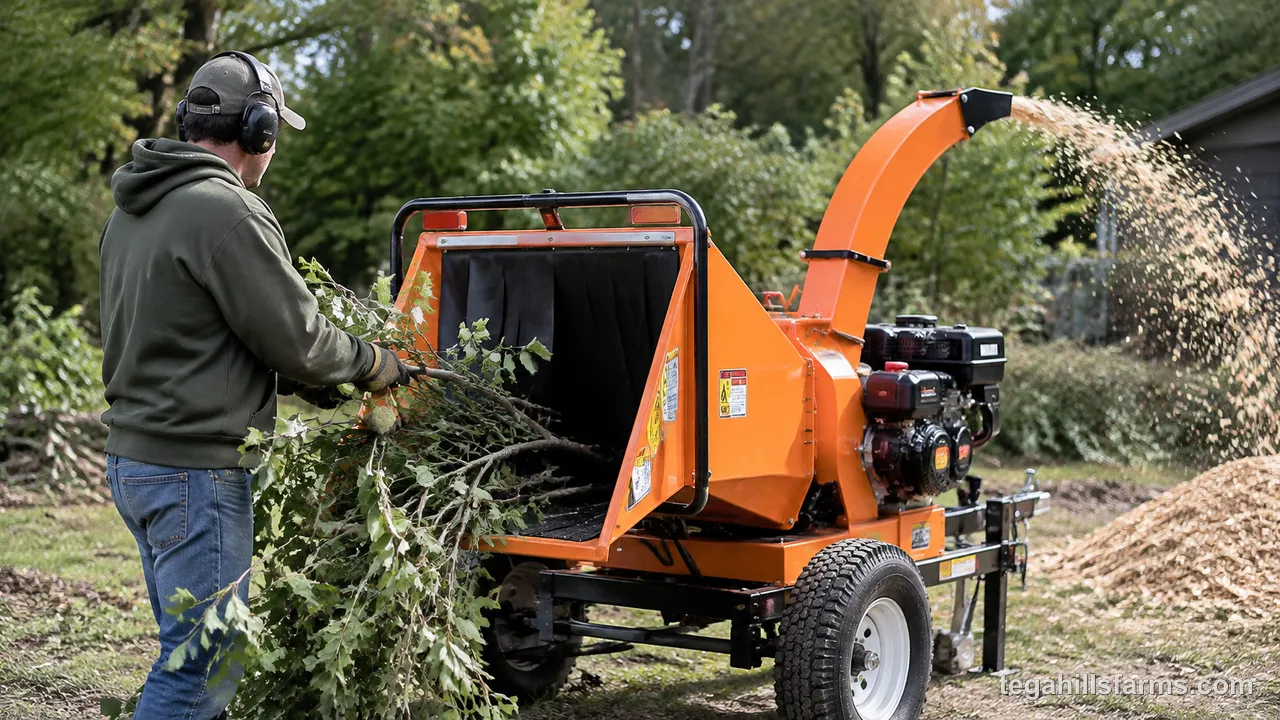
Oversizing hurts most on suburban lots. Residential-grade chippers typically run around $600 to $1,500, and moving toward the top of that range buys capacity you may use once a year. A big gas engine that sits idle for months collects stale fuel and varnish in the carburetor. The next cleanup then starts with figuring out why your wood chipper won’t start. You also give up garage space to a machine heavy enough that moving it is a chore.
Undersizing costs time instead. Feeding at the rated limit stalls the rotor, dulls the knives quickly and strains the belt. You spend more of each session trimming forked limbs to fit the chute than chipping. Leafy green material clogs small chutes, and you stop to clear it again and again. Eventually the thick limbs go to the curb, which defeats the purpose of owning a chipper.
The practical fix is to size for the debris you handle every season and rent for the exceptions. I’d rather own a chipper that covers regular pruning and rent a larger unit for the occasional storm than store a machine sized for a once-a-decade event.
Quick Answers to Common Sizing Questions
Should I rent or buy a wood chipper?
Rent when you face a single large cleanup, such as storm damage or clearing an overgrown lot, and won’t need a chipper again soon. Buy when you prune, clear brush or handle leaf and branch drop every season. Owning lets you chip material as it falls instead of letting piles build until a rental weekend.
How long does a home wood chipper last?
Maintenance affects lifespan more than brand does. Sharp knives, correct belt tension, clean engine oil and proper winter storage keep a chipper running for many seasons, while neglected machines wear out early. A closer look at how long wood chippers last covers which parts wear first and how to stretch their service life.
Can a wood chipper handle leaves and soft garden waste?
Small chippers often clog on wet leaves and soft, leafy material, because the knives are built to slice wood rather than shred pulp. Chipper-shredder combos add a separate hopper with flails or hammers for that kind of debris. They are the better fit if leaves make up most of your yard waste.
Does a bigger engine always mean a bigger branch capacity?
Not by itself. The chute opening, cutter design and feed system also set the maximum branch diameter, so two machines with similar horsepower can accept different sizes. Always check the manufacturer’s rated chipping capacity rather than estimating it from horsepower, then leave room below that rating for knotty or dry wood.
Do I need a special outlet for an electric chipper?
You don’t need a special outlet, but you do need a GFCI-protected outdoor outlet on a circuit that isn’t shared with other heavy loads while you work. Pair it with the heavy-gauge extension cord the manual specifies and keep the run short. A thin or overly long cord drops voltage and makes the motor run hot.